Masters rebranded, Motor Racing Legends with a GT3 Revival series, Peter Auto's calendar renamed the Le Mans Classic Series: 2026 looks like a reset for European historic racing. Matty White opens the season at the Circuit de Catalunya.

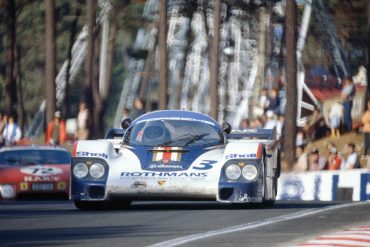
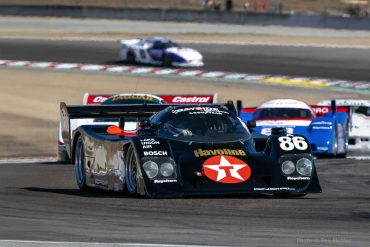
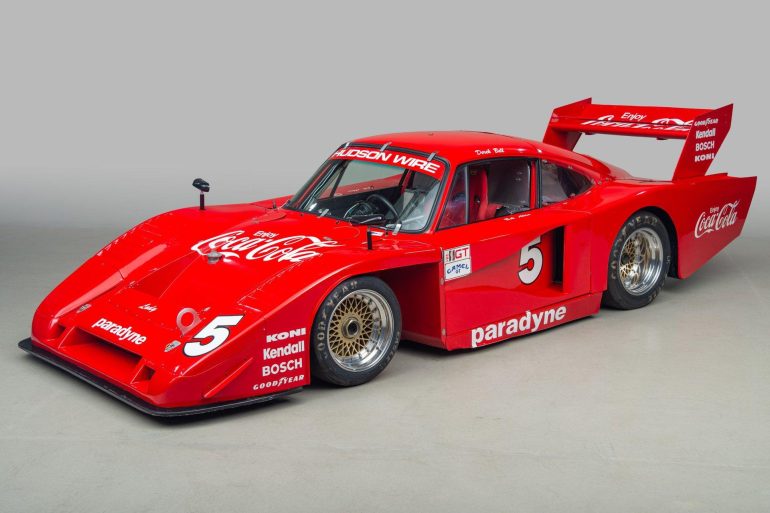
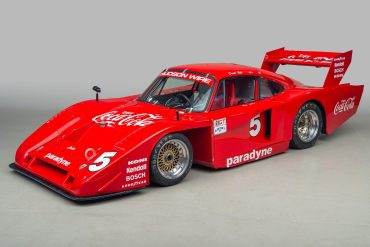
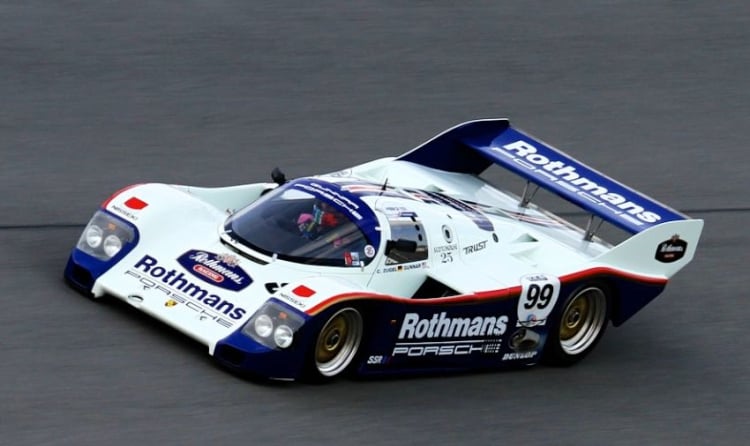
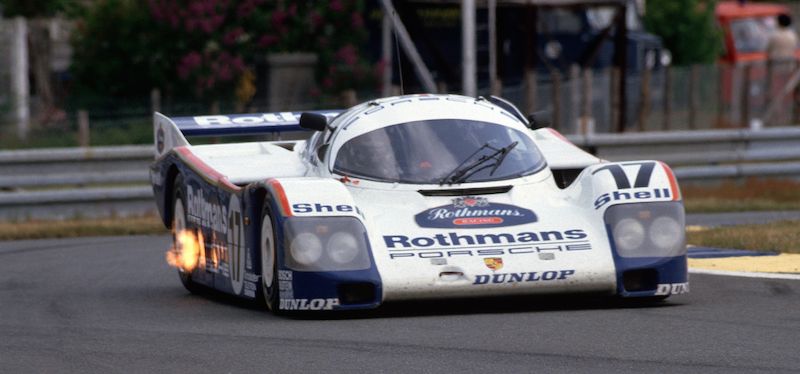
The car that owned the 1980s. Norbert Singer's ground-effect Group C coupé of 1982, the 956, won Le Mans four years running and the World Championship with it; the 962, built in 1984 to put the driver's feet behind the front axle for IMSA, won Le Mans twice more for the works, Daytona five times, three IMSA titles for Holbert Racing and, as the Dauer 962 of 1994, Le Mans one last time twelve years after its ancestor's first. Rothmans and Löwenbräu, Joest and Kremer and Brun, Ickx and Bell and Stuck and Mass and Holbert, 150-odd cars from the works and the privateers who built their own, the Schuppan and Dauer road cars, and a decade of grids where everything behind the front row was a Porsche. 111 Porsche 962 stories in the archive, in order.
The pieces to start with
Eight pieces on the cars: Djordje Sugaris's 962, John Starkey's Porsche High Life, Ed McDonough's Derek Bell interview and Robert Newman's Bell, Bob Harmeyer's 1982 Le Mans, Porsche at Le Mans 1982–87, the 1985 962 guide and the Jim Busby interview.
Porsche’s first Le Mans, 1953, brought a class win for the 550 Spyder; it lacked the size to chase victory. Djordje Sugaris on the 956 and 962: three Le Mans wins in Rothmans stripes, and a car built for IMSA GTP.
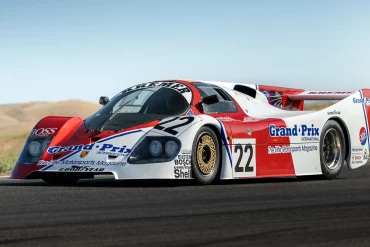
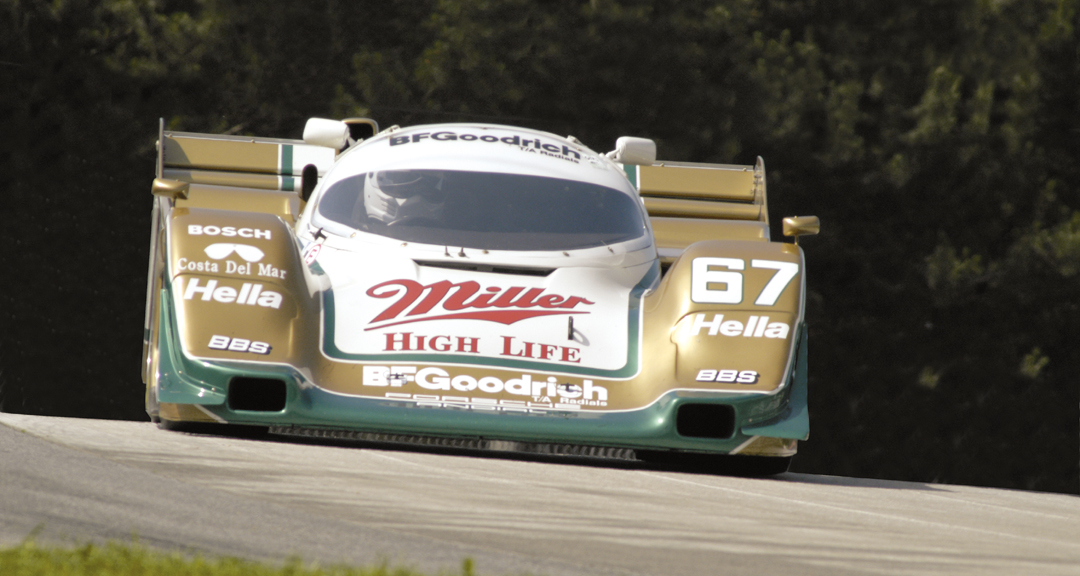
Porsche 962 chassis 108 went new to Jim Busby Racing of Laguna Beach in 1985, one of four bought for BF Goodrich’s IMSA GTP program, and ran Daytona 1986 with Halsmer, Morton and Quester. One 962 of more than 100.
“A monocoque, which we have never done; a flat-six in a ground-effect car, which nobody has done; and we have never been wrong.” Professor Bott’s pitch for the 956, as Derek Bell recalls it for Ed McDonough at Silverstone.
Five Le Mans wins, three at Daytona, three Spa 1000 Kms and two world sports car titles, yet a single Formula One point, sixth at Watkins Glen in a vibrating Surtees TS7. Robert Newman on “Mr. Nice Guy”.
Sports Car Digest has been running a series of photo retrospectives drawn from the film archive of Bob Harmeyer.
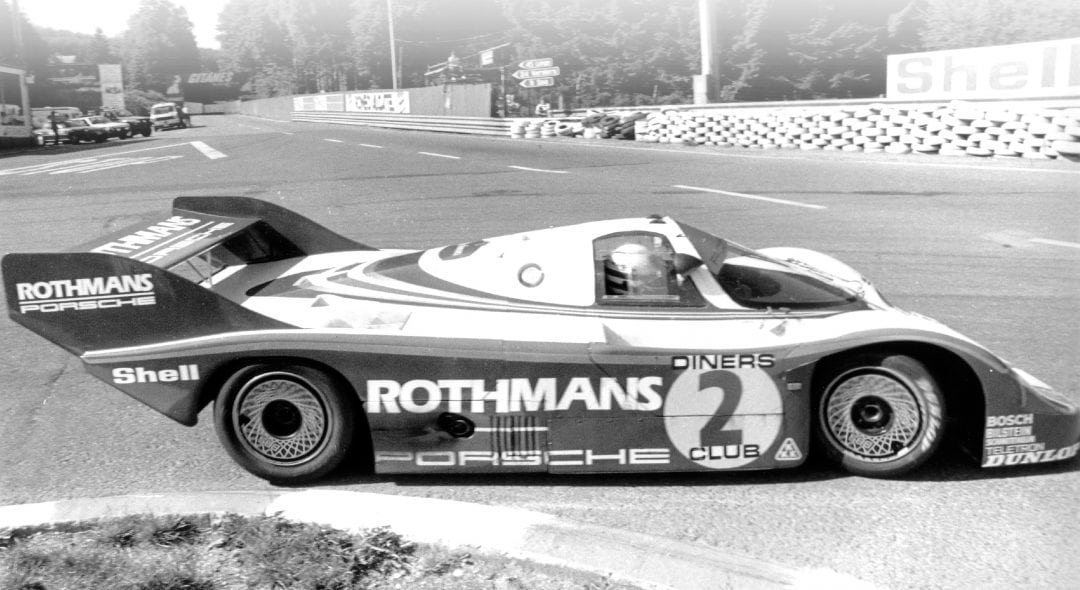
Fifth in the series from Porsche’s Le Mans archive: the 956, first run at Weissach on 27 March 1982, an 800 kg ground-effect car with an aluminium monocoque 80 per cent stiffer than the 936’s frame.
IMSA’s John Bishop would not have the 956: too fast, too complex, and the driver’s feet sat ahead of the front axle. Porsche moved the wheels forward 120 mm, fitted a steel cage and shortened the nose. Result: the 962.
Jim Busby was a small boy at the Rose Bowl in 1948 when the midgets fired up on alcohol and settled his future. From a 1926 Ford drag roadster to two Le Mans wins; Casey Annis visits Laguna Beach.
The newest writing on the Porsche 956 and 962, as it is published.
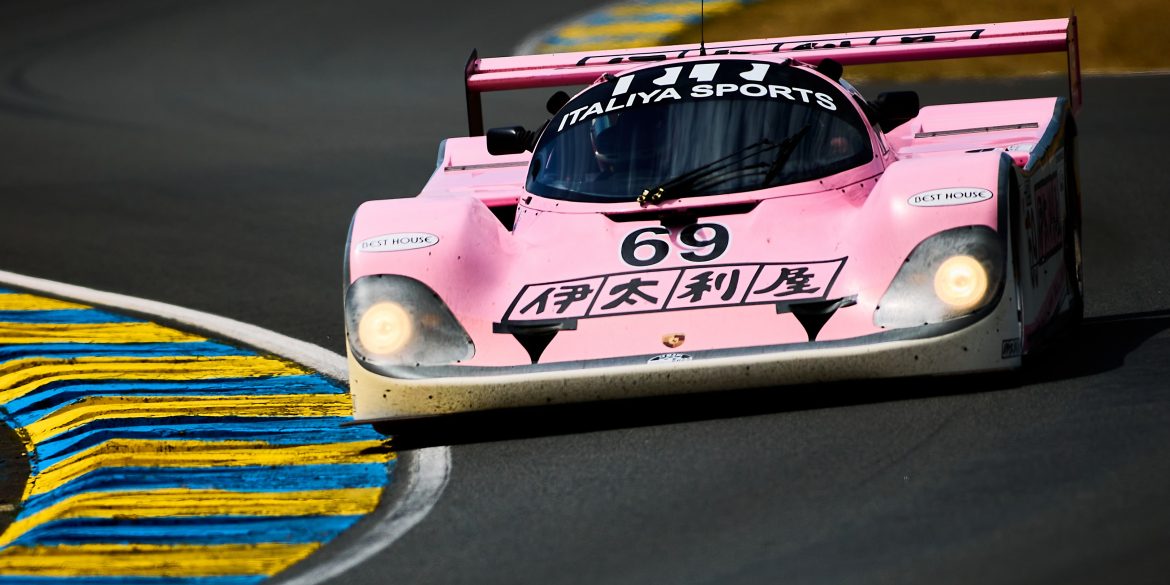
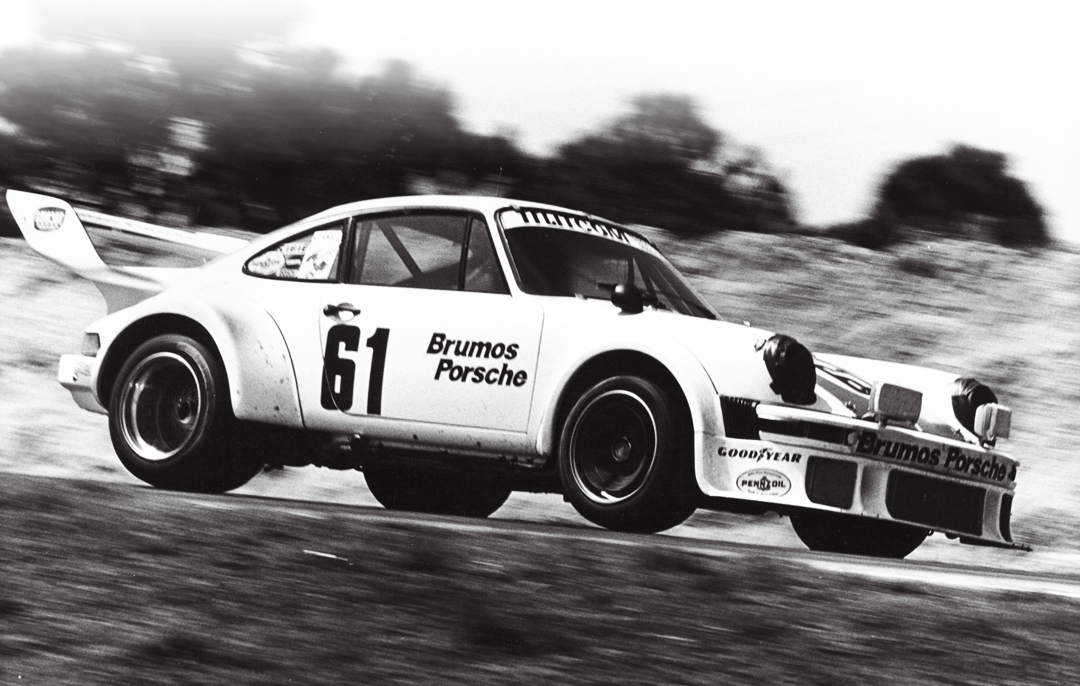
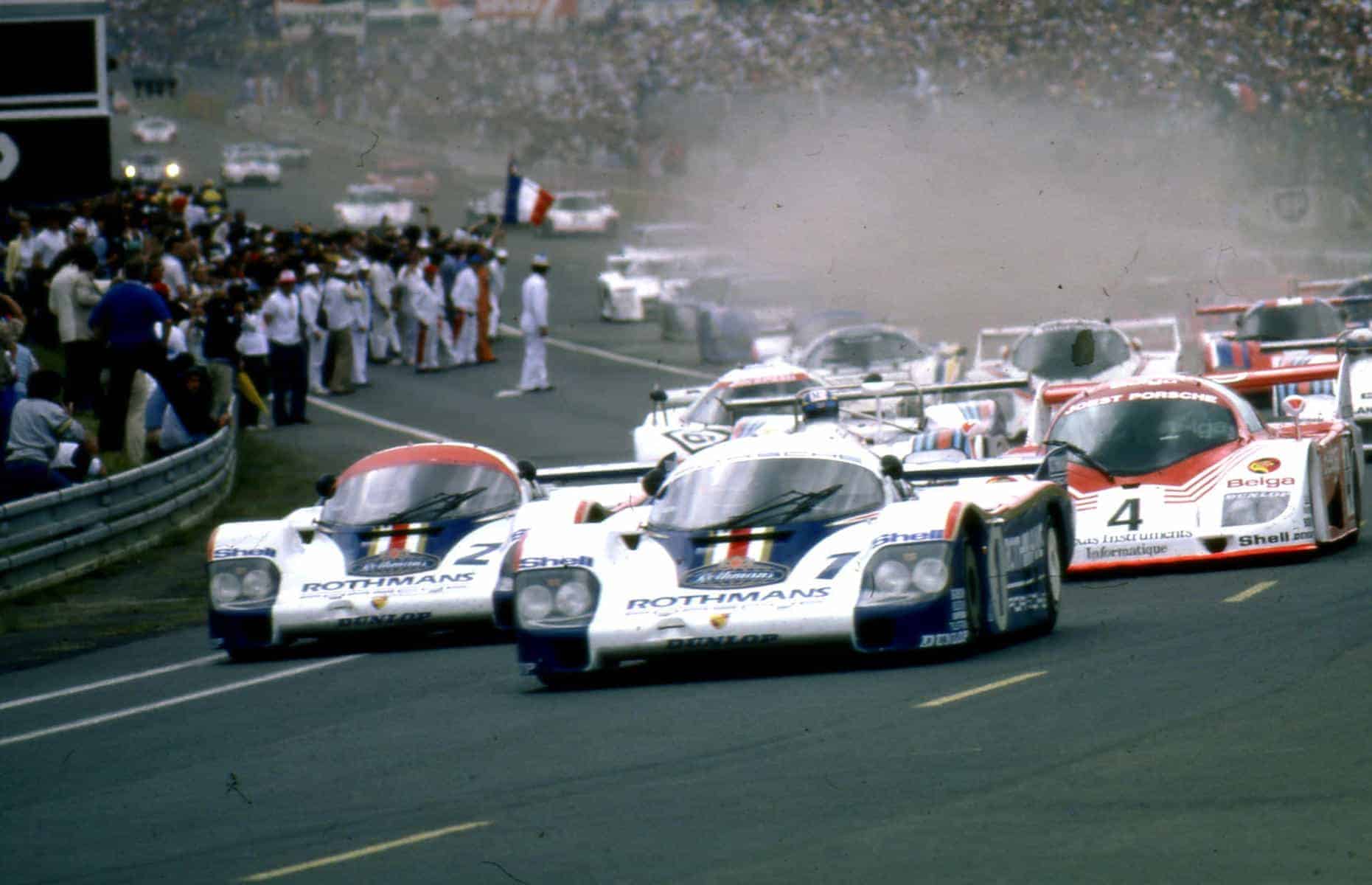
The Porsche 956 and 962 are one design in two lengths: the Group C sports-prototype Porsche built from 1982 as the 956 and from 1984, with 120 mm more wheelbase and the pedals behind the front axle, as the 962, for the two great endurance formulas of the decade, the FIA's Group C and IMSA's GTP, and built by the works until 1991 and by its customers until 1994. The 956 was Norbert Singer's design for the fuel-limited Group C formula of 1982: Porsche's first aluminium monocoque, a ground-effect underbody with venturi tunnels that Singer had learned from the Indianapolis cars, the 2.65-litre twin-turbo flat-six with water-cooled four-valve heads from the 936/81 at 620 horsepower, a five-speed gearbox, and a body shaped in the Weissach wind tunnel; it won Le Mans first time out in June 1982, 1-2-3 in Rothmans colours with Jacky Ickx and Derek Bell leading, and then 1983, 1984 and 1985, and the World Championship for Makes and drivers' titles from 1982 to 1985, Ickx, Ickx, Stefan Bellof and Bell and Hans Stuck. IMSA would not have it, because its rules required the driver's feet to be behind the front axle line, so for 1984 Singer stretched the monocoque by 120 mm, moved the pedals back, fitted the single-turbo air-cooled 2.8- and then 3.2-litre engine IMSA's rules preferred, and called it the 962; the 962C of 1985, the long car with the 956's twin-turbo water-cooled engine, replaced the 956 in Group C and won Le Mans in 1986 and 1987 with Bell, Stuck and Al Holbert, the World Championship in 1985 and 1986, and the drivers' titles for Bell and Stuck and Bell again. In America the 962 was the Camel GT: Holbert Racing's Löwenbräu Special won the IMSA championship in 1985 and 1986, and 1987 with Chip Robinson, and the Daytona 24 Hours in 1986 and 1987, Preston Henn's and Bob Akin's and Jim Busby's and Rob Dyson's 962s won the rest, and the Daytona win of 1989 for Busby's BFGoodrich car and the 1991 win for Joest's 962C, nine years after the 956's debut, bracket the decade; Robinson's 1987 title was the last for the car before the Nissans and Jaguars and Toyotas caught up.
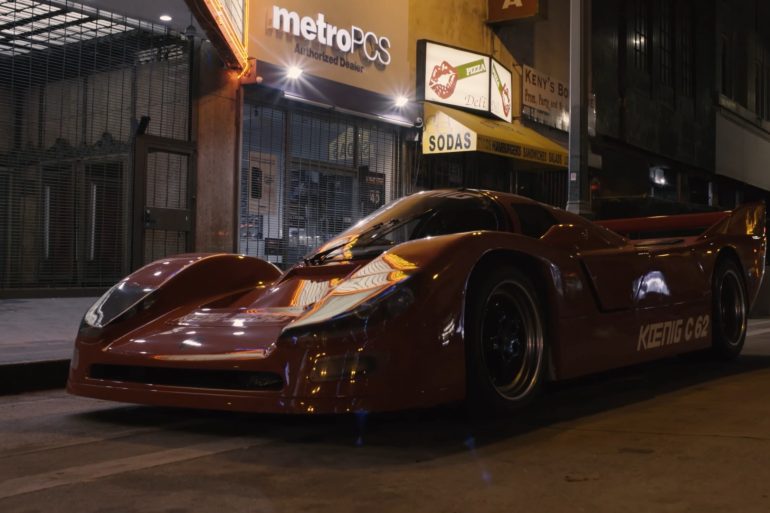
Porsche built 10 works and 18 customer 956s and 91 962s, and because the aluminium tub cracked and the customers wanted stiffer ones, Fabcar, Richard Lloyd Racing, Kremer, Brun and Jochen Dauer built their own tubs, honeycomb and carbon, so that some 150 962s of all kinds existed by the end, which the archive's "Porsche High Life" and McDonough's "Alpha & Omega" sort out. The 956 and 962 won Le Mans seven times, Daytona five, Sebring four, and more championship races than any sports car before the Audi R8; Bellof was killed in a 956 at Spa in 1985 and Jo Gartner in a 962C at Le Mans in 1986, and the 956's pedal position, which the 962 corrected, is why. The Dauer 962 LM, a road-registered 962 entered as a GT1 car in 1994, won Le Mans outright for Yannick Dalmas, Hurley Haywood and Mauro Baldi, the car's last and strangest victory; the Schuppan 962CR, the Koenig C62 and Dauer's own road cars were the civilian versions. The archive has 111 Porsche 962 stories: Djordje Sugaris's history, John Starkey's "Porsche High Life", Ed McDonough's "Alpha & Omega" and his interview with Derek Bell, Robert Newman's Bell and Jochen Mass, Bob Harmeyer's 1982 Le Mans, the Le Mans 1982–87 history and the 1985 962 guide, the Busby interview, the Löwenbräu Special and the Daytona-winning 962 for sale, the 962 class at Amelia Island in 2018, and the Daytona Classic 24s, Rennsport Reunions and Spa Classics where the Group C cars still run. The Porsche 935 page carries the car before it, the Turbos, Group B and Group C era page the formula, and the Porsche page the company.
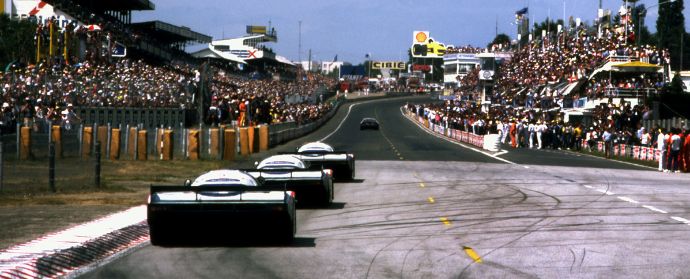
Group C, the FIA's formula for 1982, replaced horsepower limits with a fuel limit, 600 litres for 1,000 km, and left the rest to the engineers, which suited Weissach exactly. Singer's 956 took the 936's engine, Hans Mezger's 2,649 cc flat-six with twin KKK turbos and the water-cooled four-valve heads first seen on the Moby Dick 935, detuned to about 620 horsepower for economy with Bosch Motronic management, the first in racing, and put it in a monocoque, Porsche's first, of folded and bonded aluminium with the engine as a semi-stressed member behind it; underneath were the venturi tunnels that made ground effect and gave the car grip no spaceframe racer had, and the five-speed gearbox and inboard rear suspension were packaged to keep the tunnels clear. The long-tail Le Mans body and the short-tail sprint body came from the tunnel. Ickx and Bell won Le Mans in June 1982, the works cars first, second and third in order of their numbers; Bob Harmeyer's photographs of that race are in the archive. In 1983 the works and the customers, Joest, Kremer, Brun, John Fitzpatrick, Richard Lloyd and Obermaier, filled the first eight places at Le Mans, Schuppan, Haywood and Holbert winning the works' third car's race from Ickx and Bell; in 1984 the works stayed away over a fuel-rule dispute and Joest's 956B won with Klaus Ludwig and Henri Pescarolo; in 1985 the same Joest chassis, 117, won again with Ludwig, Paolo Barilla and "John Winter", the only car to win Le Mans twice since the Ferrari 275 P. Stefan Bellof's 6 minutes 11.13 seconds round the Nürburgring Nordschleife in qualifying for the 1983 1000 km in a 956 stood as the lap record there for 35 years; he was killed at Spa in September 1985 in Brun's 956, trying to pass Ickx's works car at Eau Rouge. Derek Bell's two archive interviews and Newman's portrait, Jochen Mass's two profiles and the Le Mans 1982–87 history are the drivers' side; McDonough's "Alpha & Omega" drives a 956 and a 962 back to back.
Every story on the site about the 1982–85 car, newest first.
Every story on the site about the formula, newest first; the era page has it in full.
IMSA's John Bishop would not admit the 956 because the driver's feet sat ahead of the front axle, so Singer lengthened the tub by 120 mm, moved the front bulkhead and the pedals back, and fitted the single-turbo 2.8-litre air-cooled flat-six, with the 935's two-valve heads, that IMSA's equivalency rules preferred; the first 962, chassis 001, ran at Daytona in February 1984 for Mario and Michael Andretti and led before the gearbox broke, and the customer cars followed that summer. Al Holbert's Löwenbräu Special, prepared by Holbert Racing with Al Holbert and Derek Bell driving, won the IMSA Camel GT championship in 1985 and 1986 with Holbert and in 1987 with Chip Robinson, and the Daytona 24 Hours in 1986 and 1987 with Al Unser Jr and Robinson, and the car's archive profile when it was offered for sale tells its story; Preston Henn's 962 won Daytona in 1985 with A.J. Foyt, Bob Wollek, Al Unser and Thierry Boutsen, Bob Akin's won Sebring in 1986, Busby's BFGoodrich 962s, Dyson's, Bayside's and Hotchkis's filled the grids, and Jim Busby's interview is the owner's view. For Group C the 962C of 1985 put the 956's twin-turbo water-cooled engine, grown to 3 litres, in the long tub; it won Le Mans in 1986 with Bell, Stuck and Holbert, the race in which Gartner was killed, and in 1987 with the same three after the works' first-lap engine failures had left only one Rothmans car, the World Championship for Makes in 1985 and 1986 and the drivers' titles for Bell and Stuck in 1985 and Bell in 1986. By 1987 the Jaguar XJR-8 had the Group C title and the 962C was a customer car again; Joest, Brun, Kremer, Richard Lloyd and Schuppan ran them into the 1990s, and the archive's 1985 962 guide, the 1987 962C and the Brun 962C of 1990 in the for-sale pages are the type.
Every story on the site about the Camel GT prototypes, newest first.
Every story on the site about the race the 962 won five times, newest first.
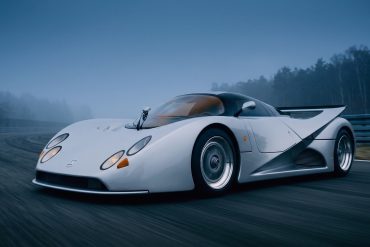
The works withdrew from Group C after 1988, when Jaguar won Le Mans and the 962Cs were second and third, and in America Holbert died in his aeroplane in September 1988 with the car still competitive; Geoff Brabham's Nissan took the Camel GT title that year and the Jaguar XJR-10 and Toyota Eagle followed it. But the car kept winning the long ones. Busby's BFGoodrich 962 won Daytona in 1989 with Bell, Wollek and John Andretti; Joest's 962C won Daytona in 1991 with Haywood, Wollek, Pescarolo, Frank Jelinski and "John Winter", the car's last 24-hour win in its own name; and in 1994 Jochen Dauer, who had homologated a road-going 962 under the new GT1 rules with Porsche's quiet help, entered two Dauer 962 LMs at Le Mans with works backing, and Dalmas, Haywood and Baldi won outright, the seventh Le Mans win for the 956/962 design and the last for a car conceived in 1981. The privateer tubs are the other story: because Porsche's aluminium monocoque flexed and cracked, Dave Klym's Fabcar built honeycomb tubs for the Americans, Richard Lloyd's GTi Engineering built its own 962s with Nigel Stroud, Kremer the carbon CK6 and Brun and Joest their own, so that a "962" by 1990 might contain no Porsche part but the engine, which is why the chassis numbers and the market need Starkey's book and the archive's "Porsche High Life". Vern Schuppan's 962CR, Dauer's road cars and the Koenig C62 put the car on the road; Schuppan's archive thread is below.
Every story on the site about the 1994 Le Mans winner and road car, newest first.
Every story on the site about the car that beat the 962C in 1988, newest first.
Group C historic racing began almost as soon as Group C ended, and the 962s have been the core of it: the Group C Racing series in Europe, Spa Classic and Le Mans Classic's Group C grid, the Daytona Classic 24 and the Rennsport Reunions, where the archive's reports from 2011 to 2026 show them; Amelia Island honoured the 962 with a class of its own in 2018, Bell and Haywood presiding. A works Rothmans 956 is the most valuable Porsche racing car after the 917, the 1982 Le Mans-winning 956 having sold for $10.1 million at Gooding's Pebble Beach sale in 2015; a works 962C with a Le Mans win would be of that order; a customer 962 or 962C with IMSA or Group C wins is $2–4 million, a privateer-tubbed car $1–2 million, and the Dauer and Schuppan road cars $1.5–3 million. The questions are which tub, since Porsche, Fabcar, Lloyd, Kremer and Brun tubs all carry 962 numbers, whether the number was reassigned after a crash, as several were, and the engine, since IMSA and Group C units differ; the Porsche auction and for-sale feeds below carry them as they come up.
Where the 962s race now, newest first.
A table of the car and its racing from the 936 of 1981 to the historic grids of 2026, with the archive's story of each year linked, follows this chapter. The model names link to every story on the site; the People, Race and Event links open their threads.
Thirteen racing seasons and thirty years of historic racing: the cars, the racing and the archive's story of each. Model names link to every story on the site; the People, Race and Event links open their threads.
| Year | The car | The racing | In the archive |
|---|---|---|---|
| 1981 | 936 · Jacky Ickx · Derek Bell · Le Mans | The 936/81 wins Le Mans with Ickx and Bell on the water-cooled-head engine; Group C written for 1982; Singer draws the 956 | Porsche at Le Mans, 1974 to 1981 · Porsche 935 page |
| 1982 | 956 · Rothmans · Jacky Ickx · Derek Bell · Le Mans | The 956 at Silverstone in May; Le Mans 1-2-3 in June, Ickx and Bell winning; the World Championship for Makes and Ickx's drivers' title | 1982 24 Hours of Le Mans · 1982 Porsche 956 and 1988 962: Alpha & Omega |
| 1983 | 956 · Vern Schuppan · Hurley Haywood · Al Holbert · Nürburgring | Customer 956s to Joest, Kremer, Brun, Fitzpatrick and Lloyd; Le Mans first to eighth, Schuppan, Haywood and Holbert winning; Bellof's 6:11 at the Nürburgring; Ickx's second title | Interview: Derek Bell · Porsche at Le Mans, 1982 to 1987 |
| 1984 | 962 · 956 · Daytona 24 Hours · IMSA · Henri Pescarolo | The 962 debuts at Daytona for the Andrettis; the works miss Le Mans and Joest's 956B wins with Ludwig and Pescarolo; Bellof champion; customer 962s to America | 1985 Porsche 962: Ultimate Guide · Porsche 962: endurance racer of the 80s |
| 1985 | 962 · Al Holbert · Preston Henn · Daytona 24 Hours · Sebring | The 962C for Group C; Henn's 962 wins Daytona with Foyt, Wollek, Unser and Boutsen; Akin wins Sebring; Holbert's Löwenbräu Special takes the first IMSA title; Joest's 117 wins Le Mans again; Bellof killed at Spa; Bell and Stuck champions | Löwenbräu Special Porsche 962 · Daytona-winning Porsche 962 · 24 Hours of Daytona in the 1980s |
| 1986 | 962 · Derek Bell · Hans Stuck · Al Holbert · Le Mans | Bell, Stuck and Holbert win Le Mans in the 962C; Gartner killed; Holbert's Daytona and second IMSA title; Bell champion | Derek Bell · Porsche uses every trick in the book |
| 1987 | 962 · Chip Robinson · Jochen Mass · Le Mans · Jaguar XJR-9 | Le Mans again for Bell, Stuck and Holbert after the works' first-lap failures; Robinson's IMSA title and the Löwenbräu Daytona; the Jaguar XJR-8 takes Group C | Jochen Mass · 1987 Porsche 962C for sale |
| 1988–89 | 962 · Jim Busby · Daytona 24 Hours · Sauber C9 | Jaguar wins Le Mans from the 962Cs; Holbert dies in September 1988; Busby's BFGoodrich 962 wins Daytona 1989 with Bell, Wollek and John Andretti; the privateer tubs | Interview: Jim Busby · Porsche High Life |
| 1990–91 | 962 · Hurley Haywood · Bob Wollek · Daytona 24 Hours | Joest's 962C wins Daytona 1991 with Haywood, Wollek, Pescarolo, Jelinski and Winter; the last works-built 962s; Brun's 962C of 1990 | 1990 Porsche 962C, Brun Motorsport, for sale |
| 1994 | Dauer 962 · Hurley Haywood · Le Mans | The Dauer 962 LM wins Le Mans with Dalmas, Haywood and Baldi, the seventh and last for the design; the Schuppan and Dauer road cars | Hurley Haywood |
| 2011–16 | 962 · Classic 24 Hours · Rennsport Reunion · Amelia Island Concours | Rennsport Reunions IV and V; the Daytona Classic 24s; a works 956 makes $10.1 million at Gooding Pebble Beach 2015; the Löwenbräu and Daytona cars offered | Rennsport Reunion IV · Classic 24 Hour Daytona 2015 · Spa Classic 2016 |
| 2018–26 | 962 · Amelia Island Concours · Classic 24 Hours | Amelia Island's 962 class with Bell and Haywood; competition Porsches at auction; the Daytona Classic 24 and the Group C grids | Amelia Island to honor the Porsche 962 · Amelia Island Concours 2019 · The 2021 Daytona Classic 24 |
The Porsche 935 page carries the car before it and the Turbos, Group B and Group C era page the formula; the World Sportscar Championship page has the titles year by year; the Le Mans, Daytona and Sebring races are on their own pages.
Nine cards follow for the 956s and 962s and their rivals: the 936/81, the works 956, the Joest 956B, the IMSA 962, the Löwenbräu Special, the 962C, the privateer tubs, the Dauer 962 LM and the road cars, and the Jaguar XJR-9 and Sauber C9 that beat it; each links to its thread here, and below them the 956, XJR-9 and Sauber threads.
Nine cars from the archive, from the 936/81 to the Dauer 962 LM and the rivals; each links to every story on the site.
Norbert Singer, who designed the 956 and 962; Hans Mezger and Valentin Schäffer, the engines; Helmuth Bott and Peter Falk; Jacky Ickx and Derek Bell, who won Le Mans in it together; Hans Stuck, Jochen Mass, Stefan Bellof, Vern Schuppan, Hurley Haywood, Al Holbert, Al Unser Jr, Chip Robinson, Bob Wollek, Klaus Ludwig, Henri Pescarolo, Price Cobb, John Fitzpatrick, Jo Gartner, Yannick Dalmas, Mauro Baldi; Reinhold Joest, Walter Brun, Erwin Kremer, Richard Lloyd, Jim Busby, Rob Dyson, Bob Akin, Preston Henn, Jochen Dauer, Dave Klym of Fabcar; John Bishop, who made Porsche move the pedals. The Bell, Ickx, Stuck and Mass threads open below.
Every story on the site about the man who won Le Mans three times in the 956 and 962C, newest first.
Every story on the site about the 956's first champion, newest first.
Every story on the site about the 1985 champion and two-time Le Mans winner in the 962C, newest first.
Every story on the site about the works' other great 956 and 962 driver, newest first.
The 956/962 market runs from the works Rothmans cars at $8–12 million, the 1982 Le Mans winner's $10.1 million being the mark, through works 962Cs and the IMSA championship cars at $3–6 million, customer 956s and 962s with wins at $2–4 million, privateer-tubbed 962s and late cars at $1–2 million, to the Dauer, Schuppan and Koenig road cars at $1.5–3 million. What decides it: the tub, its maker and whether it is the one the chassis number was issued to; the race record under that number; the engine specification; and the livery, since a Rothmans or Löwenbräu car in its colours is what the market wants. The archive's for-sale pieces, the Löwenbräu Special, the Daytona-winning 962, the 1987 962C and the Brun car of 1990, and Starkey's "Porsche High Life" are the way in; the feeds below carry the Porsches as they come up.
Auction previews and results, the prototypes among them, newest first.
962s and other Porsches offered by dealers and collectors, newest first.
956 1982–85: 10 works and 18 customer cars; 962 1984–91: 91 works-built, about 150 with the Fabcar, Lloyd, Kremer, Brun and Dauer tubs; 962C from 1985. Engine 2,649 cc twin-turbo flat-six, water-cooled heads, Motronic, 620 hp (956); 2.8 and 3.2-litre single-turbo air-cooled (IMSA 962); 3.0-litre twin-turbo (962C), 700 hp and more in qualifying. Le Mans wins 7: 1982, 1983, 1984, 1985 (956), 1986, 1987 (962C), 1994 (Dauer 962 LM). Daytona 24 Hours wins 5: 1985, 1986, 1987, 1989, 1991. World Championship for Makes 1982–86; drivers' titles Ickx 1982–83, Bellof 1984, Bell/Stuck 1985, Bell 1986. IMSA Camel GT champions Holbert 1985 and 1986, Robinson 1987. Bellof's Nordschleife lap, 6:11.13, 1983. Market: works 956 $8–12 million ($10.1 million, 2015); works and championship 962s $3–6 million; customer cars $2–4 million. 111 stories in the archive.
Short answers, with the long ones above.
120 mm of wheelbase and the position of the pedals: the 962 of 1984 moved the driver's feet behind the front axle line to satisfy IMSA's rules, and took a single-turbo air-cooled engine for America; the 962C of 1985 put the 956's twin-turbo water-cooled engine in the longer tub for Group C. Everything else is the same design.
Seven: 1982, 1983, 1984 and 1985 with the 956, 1986 and 1987 with the 962C, and 1994 with the Dauer 962 LM, a road-registered 962 entered as a GT car.
Jacky Ickx and Derek Bell, Hans Stuck, Jochen Mass, Stefan Bellof, Vern Schuppan, Hurley Haywood and Al Holbert for the works and Holbert Racing; Bob Wollek, Klaus Ludwig, Henri Pescarolo, Al Unser Jr, Chip Robinson, Price Cobb, John Fitzpatrick and a hundred others for the customer teams.
Al Holbert's Holbert Racing 962 in the beer company's colours, which won the IMSA Camel GT championship in 1985, 1986 and 1987 (the last with Chip Robinson) and the Daytona 24 Hours in 1986 and 1987 with Holbert, Derek Bell, Al Unser Jr and Robinson.
Porsche's folded-aluminium tub flexed and cracked under the loads of the later, faster cars, so Fabcar, Richard Lloyd Racing, Kremer, Brun and Dauer built stiffer honeycomb and carbon tubs to take the Porsche running gear; many late 962s have no Porsche part but the engine and gearbox.
Jochen Dauer's road-going 962, homologated under the 1994 GT1 rules, which let Porsche enter two works-backed 962s at Le Mans in 1994; Dalmas, Haywood and Baldi won outright, the design's last victory.
The German driver who set the Nürburgring Nordschleife lap record of 6 minutes 11 seconds in a 956 in 1983, won the 1984 World Championship in one, and was killed in Walter Brun's 956 at Spa in 1985 while trying to pass Ickx at Eau Rouge.
Ninety-one by Porsche between 1984 and 1991, plus 28 956s; with the privateer-built tubs some 150 962s have existed.
From $1–2 million for a late privateer-tubbed car to $3–6 million for a works 962C or an IMSA championship car; the works Rothmans 956s are $8–12 million, the 1982 Le Mans winner having made $10.1 million in 2015.
Nothing from Porsche for a decade: the works left Group C after 1988 and IMSA GTP after 1988, and the next works prototype was the WSC-95 of 1996, built by Joest on a Jaguar tub, then the 911 GT1 and the RS Spyder.
The whole 962 thread, newest first; the 956 thread runs in its own chapter above.