The Best Cars Ever Made

The greatest cars of all time. We tell you their stories.
Ultimate Cars. Ultimate Profiles.

The greatest cars, the greatest brands, the best drivers.

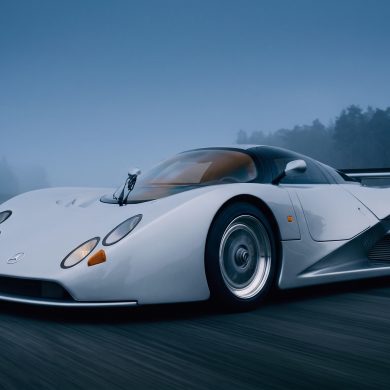
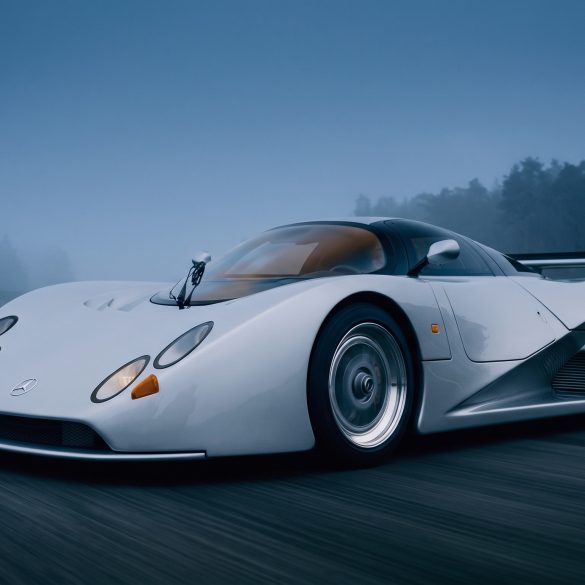
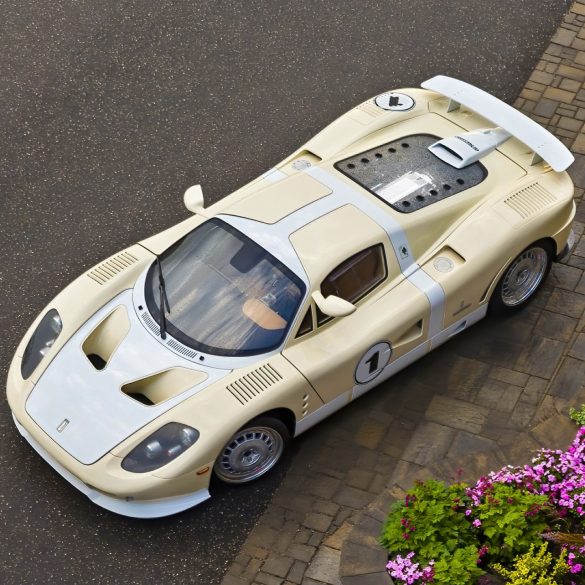
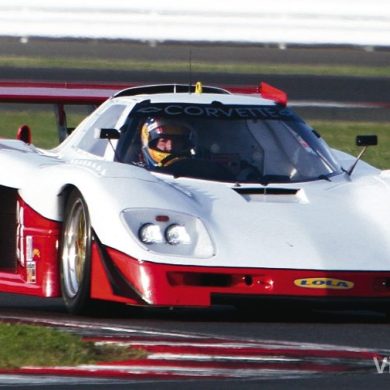
Heo Ja-Hong "Keyser" Hur, great-grandson of the founder of Korea's GS Group, chose to start a car company rather than buy another limited-run supercar. Lorenzo Baer on de Macross and its only product, the Epique GT1.
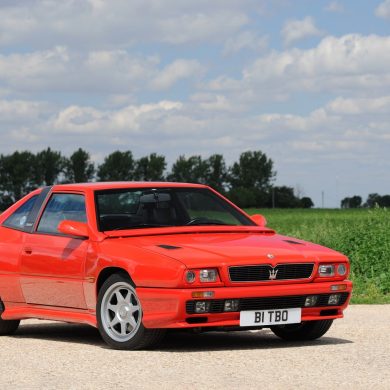
December 14, 1989: Alejandro de Tomaso unveiled the Shamal in Modena nine days after Fiat had quietly signed for 49 percent of Maserati. The last coupe of his era, and one of the least discussed grand tourers of the decade.
There's a start button under the steering wheel, an immobilizer sequence, switches on the wheel instead of stalks and a hidden door button under the mirror. Thirty years on, the Cerbera and Al Melling's from-scratch V8 have not mellowed.
GM Europe's president was tired of being called boring, so he sent Vauxhall's executive saloon, a fleet car with a 0.28 drag coefficient, to Lotus with one brief: the fastest-accelerating saloon in the world. The Carlton was the result.
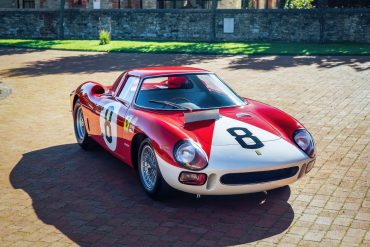
Riley Technologies and Kar-Kraft built a new Ford GT40 Mk IV from the original 1967 Le Mans winner's drawings in nine months from late 2022. Martin Raffauf on why that is possible, beginning with Enzo Ferrari's 1963 cash problem.
In 1964 Honda became the world's biggest motorcycle maker, entered Formula 1 and put the S600 on sale: 606cc, twin cams, 55 horsepower and a 9,500 rpm redline, built after customers told Soichiro Honda the S500 wasn't enough.
3/4 front view of a red Ferrari 208 GTB Turbo
Italy's VAT jumped sharply on engines over two liters, so Ferrari kept the 208 GTB's 1,991cc V8, added a single KKK turbo and Bosch injection and took output from about 155 hp to 220. Its first turbocharged road car.
Three-quarter side view of a 1995 black Aston Martin Vantage V550
Gauntlett couldn't afford a clean-sheet car, so the 1989 Virage reworked the 1960s DBS bones with Callaway heads and 330 hp. Birmingham 1992 brought the twin-supercharged Vantage: nearly 150 hp more than a Porsche Turbo, only the McLaren F1 stronger.
The M1 began as a homologation special with Lamborghini building it, until Italian money ran out and BMW took over a production scattered across countries. The i8 shares none of its hardware, only the experience of being misunderstood, then admired.
The F40 was the last Ferrari Enzo signed off, built from the bones of the canceled 288 GTO Evoluzione program at 1,110 kg with a 2.9-liter twin-turbo V8. The F80 of 2025 answers with hybrid power and extreme aerodynamics.
Ferrari took 37 orders for the Testarossa during the October 1984 Paris show alone. Leonardo Fioravanti led the Pininfarina team, Emmanuele Nicosia's concept the starting point. Lorenzo Baer on the car and its rare Spider variant.
The sleek lines of the Tornado Ventury are well illustrated in this photo, ca. 1967. ©Wally Vorlaufer Wally Vorlaufer
Wally Vorlaufer emigrated from Austria to South Africa at 14 and designed his first car at 17 on Opel parts. Glen Smale on his third, the Tornado Ventury, begun in 1963 on a ten-year-old Riley RMF 2½ litre.
Blue GMA T.50 next to a blue McLaren F1
The McLaren F1 of 1992 put Gordon Murray's ideas into carbon: a central seat, a 6.1-liter BMW V12 with 627 horsepower, and balance over brute force. Thirty years on, the GMA T.50 restates them against touchscreens and electrified hypercars.
The benefit of wider tires of this M-B 500E are visible as it’s pressed hard through a bend. The Porsche touch ensured a near-50/50 front/rear weight distribution.
In 1989 Porsche had an empty Reutter building in Zuffenhausen, the 959 line finished, and a falling dollar. A contract signed on 19 March 1990 put Daimler-Benz's 500E on that floor. Karl Ludvigsen on Michael Hölscher's first big project.
General Motors of Brazil built only trucks for decades after 1925, then imported Impalas and Opel Kadetts, Olympias and Rekords to learn what Brazilians wanted. Project 676 was the answer: Impala space, Opel maneuverability. Lorenzo Baer on the Opala.