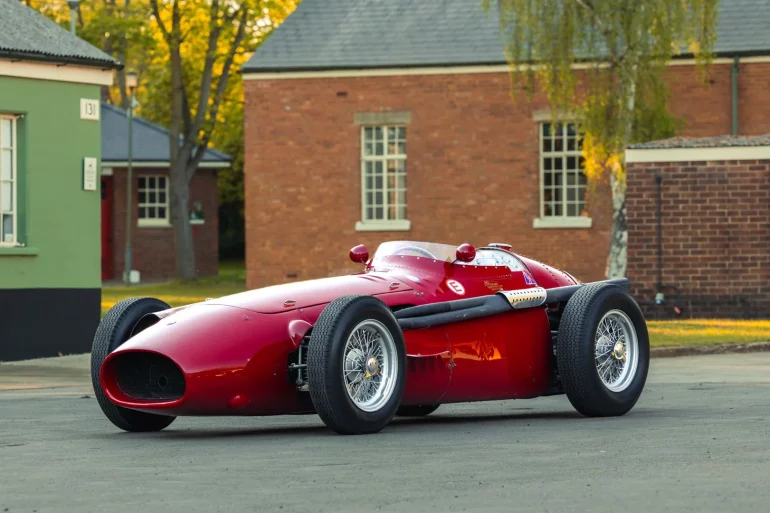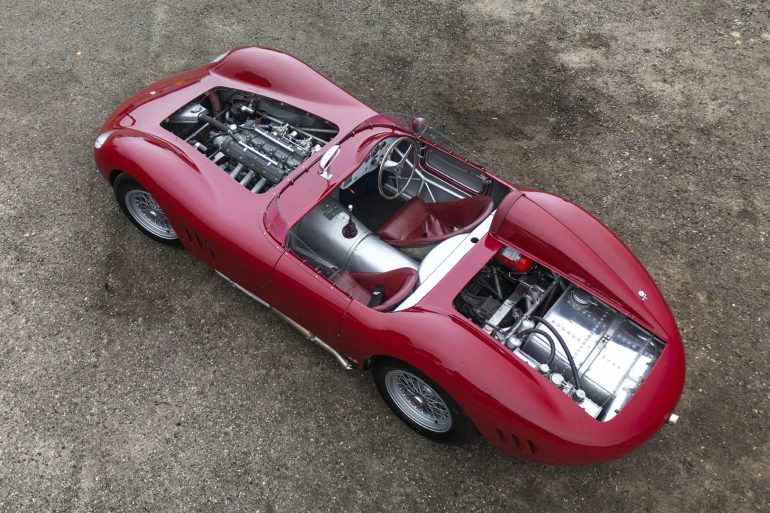
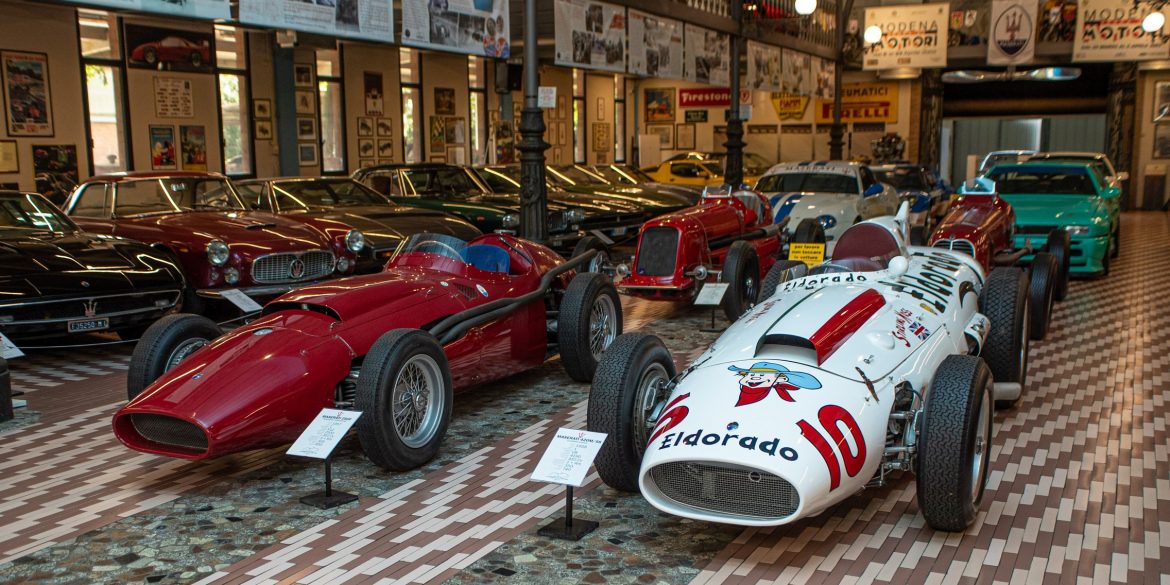
Maserati has no factory museum; the Umberto Panini collection fills the gap. Glen Smale had a last look before its move to a new building opening in April 2025, and traces the seven Maserati brothers from Alfieri's 1914 Bologna garage.

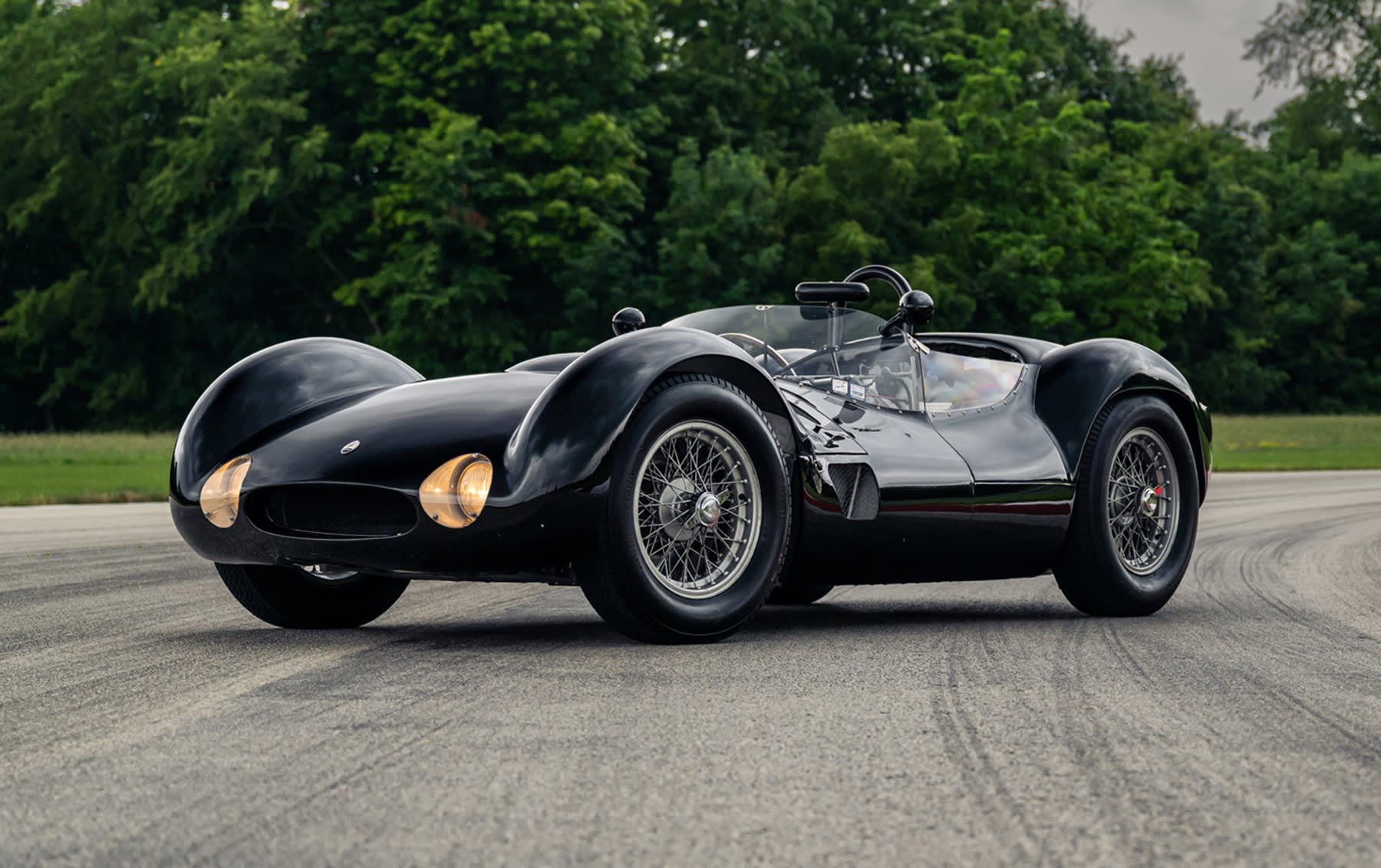
Giulio Alfieri's answer to a factory with no money: a chassis made of two hundred small steel tubes, welded into a lattice that weighed thirty kilos and looked like an aviary, with a four-cylinder engine lying half on its side and the lightest, lowest body Maserati had ever built. The Tipo 60 won first time out at Rouen in July 1959 with Stirling Moss; the 2.9-litre Tipo 61 won the Nürburgring 1000 km in 1960 and 1961 for Lucky Casner's Camoradi team, the second time by Moss and Dan Gurney in the rain; and in America, where most of them went, Jim Hall, Carroll Shelby, Roger Penske, Bill Krause and Walt Hansgen made it the car to beat in the big SCCA races. Twenty-two front-engined cars, a handful of rear-engined Tipo 63s and 64s, and one of the great names in racing. 96 Maserati Birdcage stories in the archive, in order.
The pieces to start with
Eight pieces on the car: Djordje Sugaris's overview, Stirling Moss on the Birdcage and on driving it with Gurney, Willem Oosthoek's Fort Worth Flyer and A Coke and a Smile, Ed McDonough's Tipo 63, Bill Krause's The Last Birdcage and Rex McAfee's 1959 Tipo 61.
Officially the Tipo 60 and Tipo 61, the Birdcage came from a Maserati that had been purely a racing-car builder since the six brothers founded it in 1926. Djordje Sugaris on how a short racing career left a long mark.
Stirling Moss started 13 races in the Maserati 300S and won nine, yet rates the Tipo 61 Birdcage above it: nearly 200 bhp from a 2-liter four canted at 45 degrees, built in 1959 by a struggling Maserati.
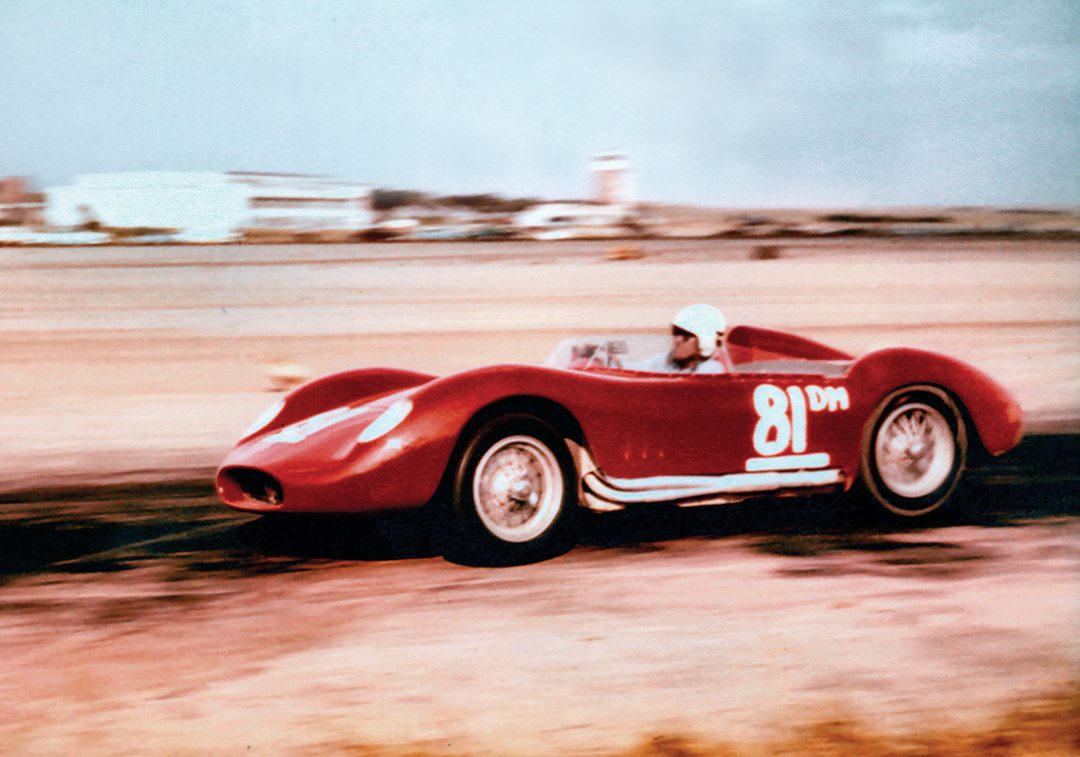
Alan Connell, owner of a 50,000-acre Fort Worth ranch, saw his first race at Eagle Mountain in June 1958, watched Jim Hall finish third in a Maserati 250S, and within days bought the car for $11,000 plus $10,000 in spares.
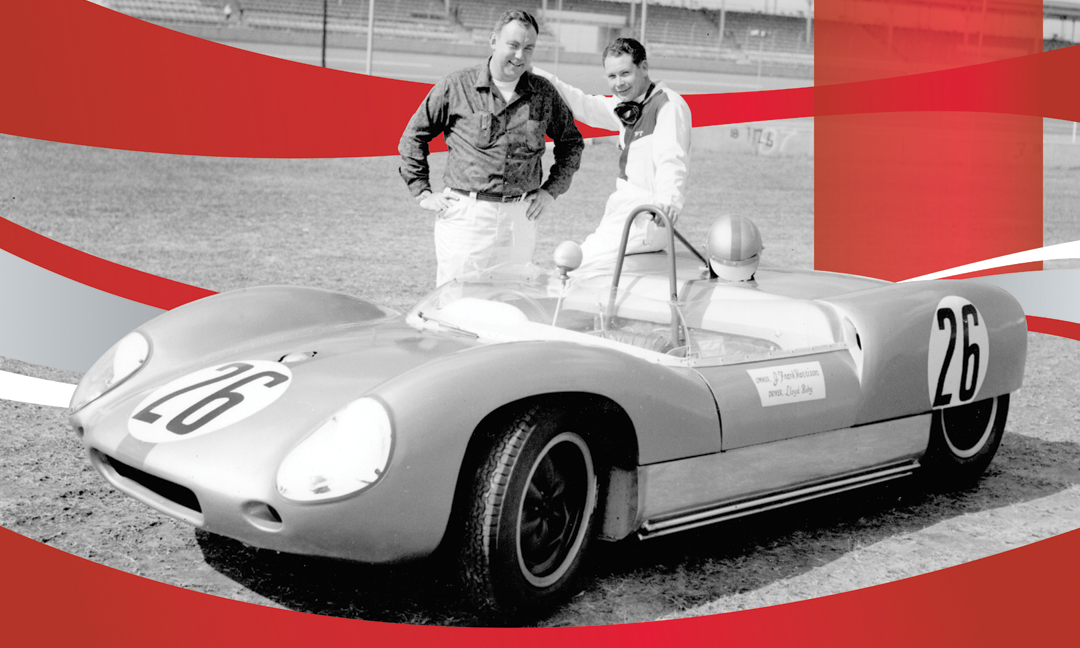
J. Frank Harrison of Chattanooga put a Formula One car on the Watkins Glen grid, entered a Lotus in USAC Championship racing a month before Chapman did, and built his own sports and Indy cars. The story of a “sportsman.”
Alfieri distrusted the semi-monocoque for long road races, so he built Maserati frames from hundreds of small tubes; the first Birdcage, the Tipo 60, had a 70-pound chassis. People laughed, until it won. Ed McDonough on the Tipo 63.
Elinor Von Neumann promised a Testa Rossa for Riverside in 1960, then gave it to Phil Hill without a word. The jilted Bill Krause got the last Tipo 61 Birdcage built, collected at LAX, and lapped Hill in the race.
About 200 small-diameter chromoly tubes welded into a frame weighing under 70 lb gave the Tipo 61 its name; the De Dion rear, front suspension and five-speed transaxle came from the 250F. Alfieri’s front-engined last stand, built on a shoestring.
Stirling Moss rates Dan Gurney with Fangio as the best co-driver he ever had, though they shared a car only a few times. He recalls testing the Maserati Tipo 60 Birdcage at Modena and winning first time out at Rouen.
The newest writing on the Maserati Birdcage, as it is published.
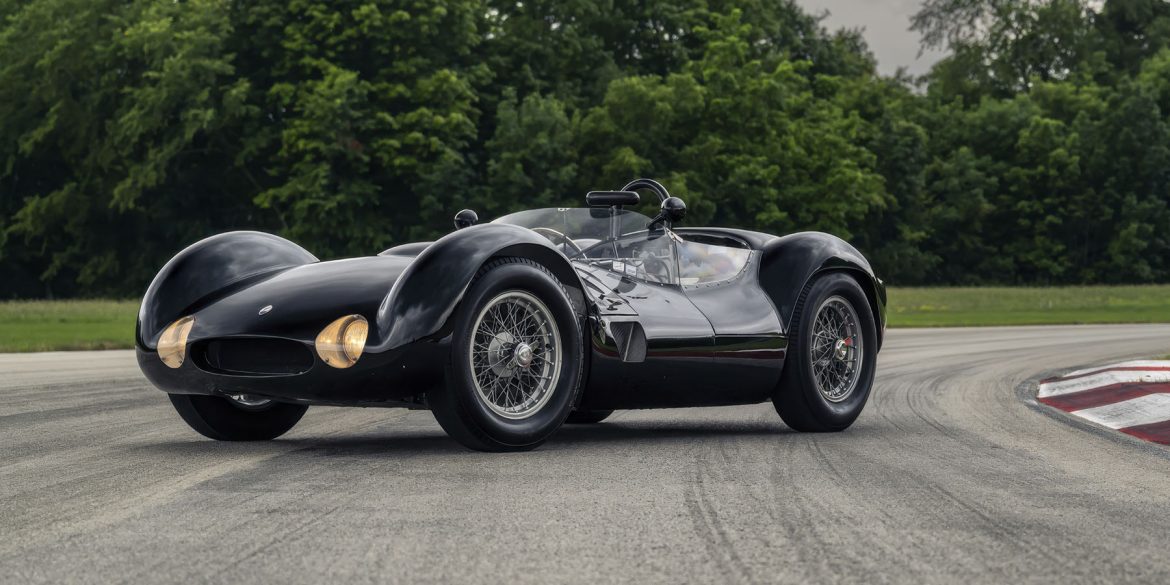
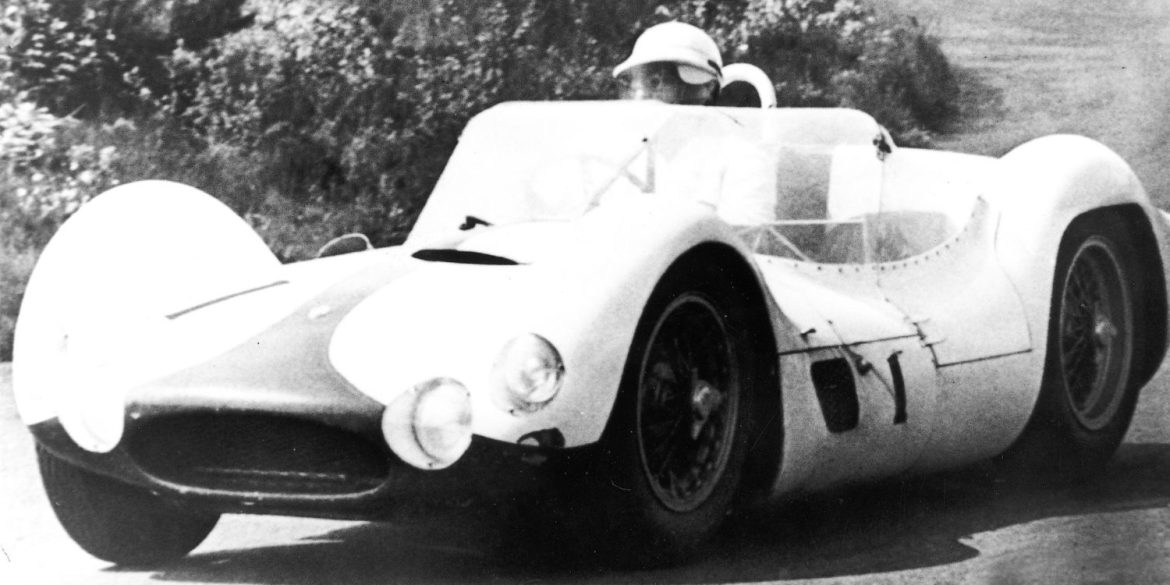

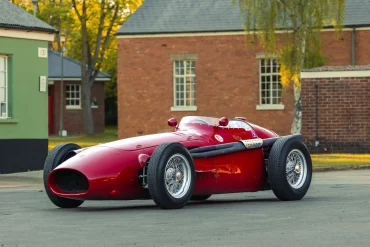
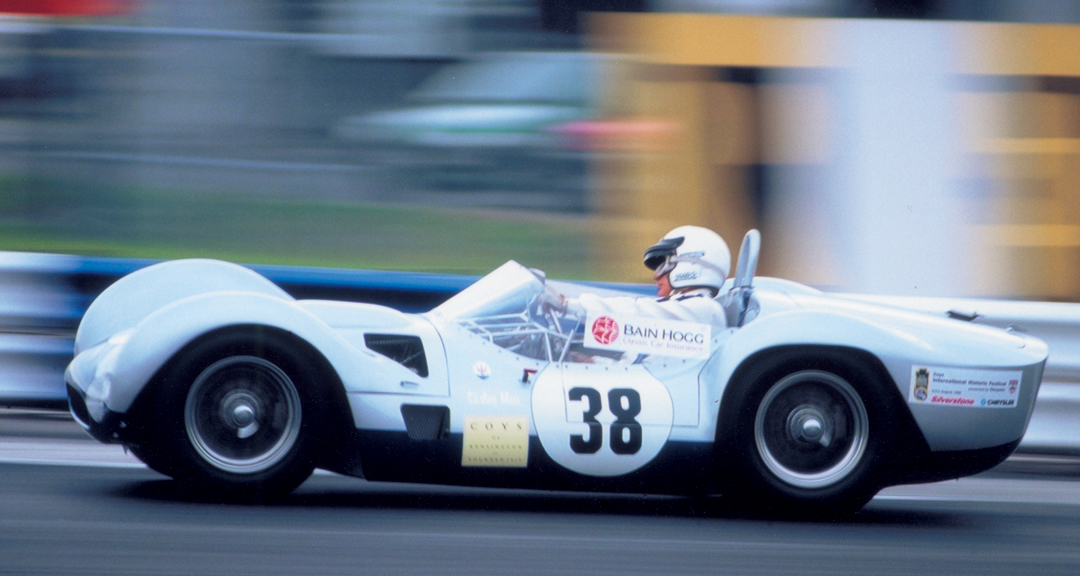
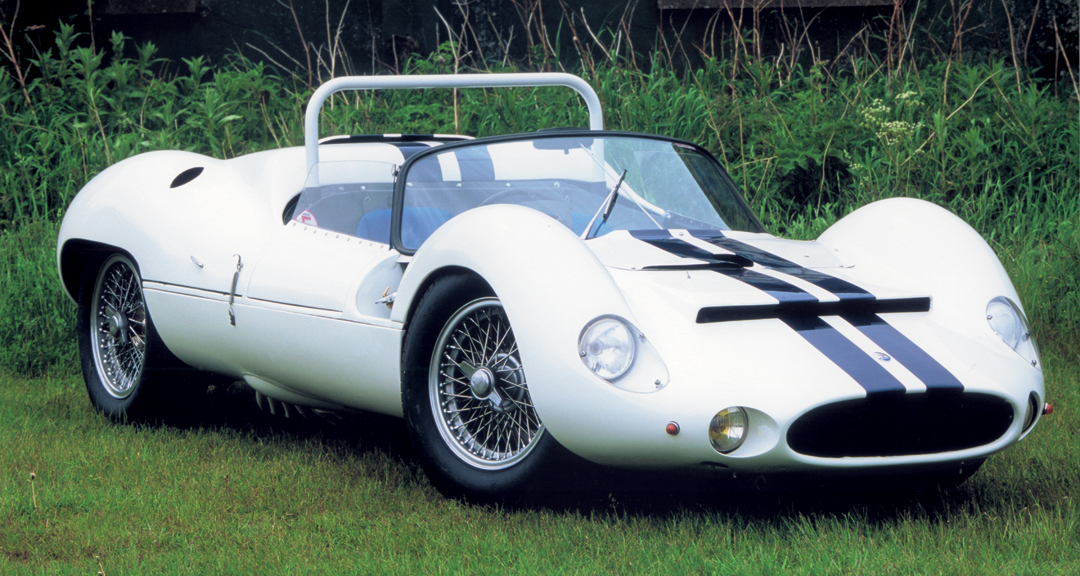
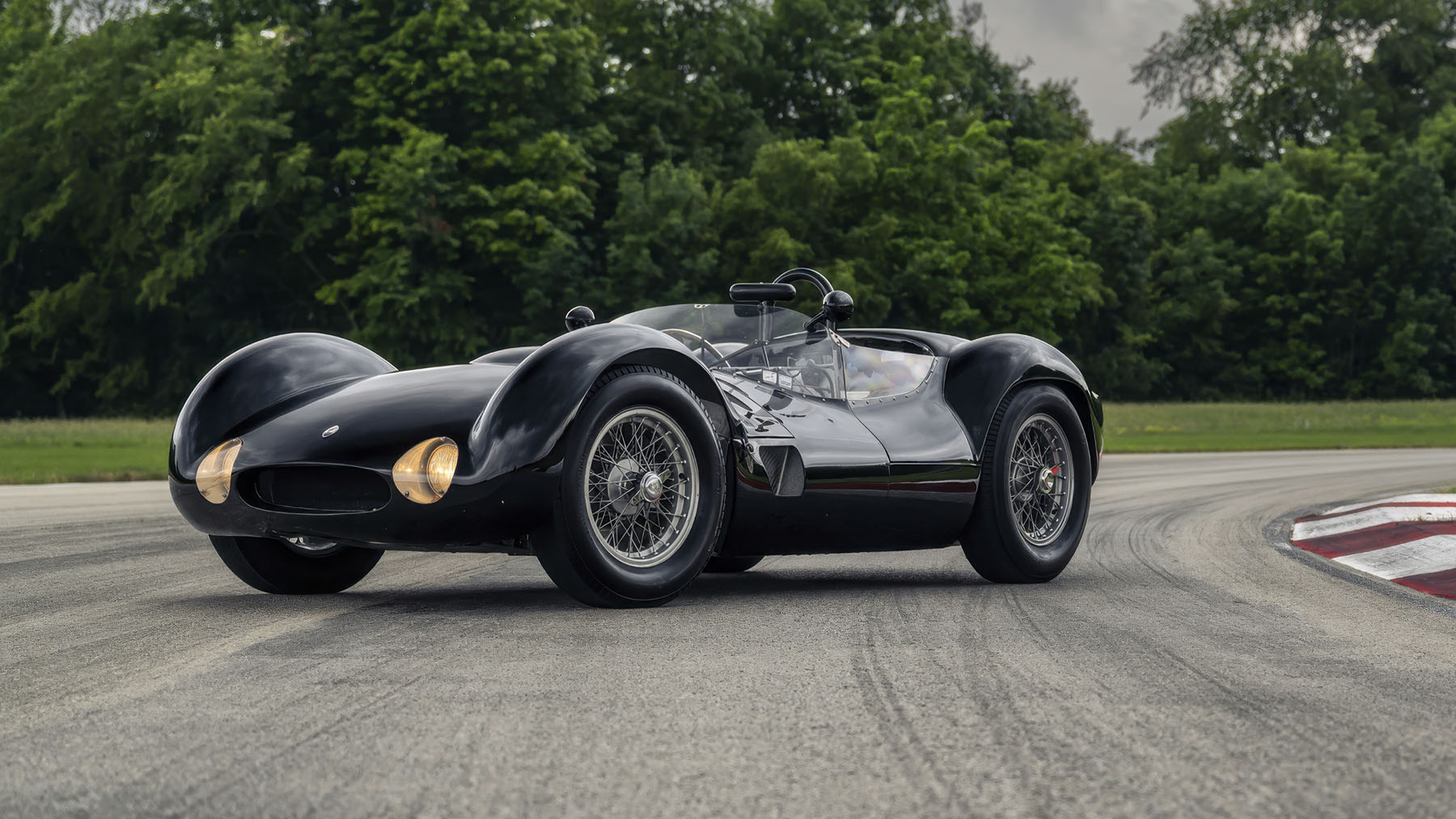
The Maserati Birdcage is the name, given by the press, for the Tipo 60 and Tipo 61 sports-racing cars Maserati built at Modena in 1959 and 1960, and by extension for the rear-engined Tipo 63, 64 and 65 that followed them to 1965, all of them on the multi-tubular spaceframe that Giulio Alfieri designed after the factory withdrew from works racing at the end of 1957. The Orsi family's Maserati was nearly bankrupt after the 450S and the 250F, and the rule was that any racing car had to be sold to a customer at a profit; Alfieri's chassis was the cheapest strong frame he could devise, some two hundred chrome-molybdenum tubes of 10 to 15 mm diameter welded into triangles, 30 kg in all, stiffer than the 300S's ladder and so dense that the body sat directly on it, with the 250F's double-wishbone front end, a de Dion rear with a transverse leaf spring, Girling discs all round and a five-speed transaxle. The engine was the 2-litre four of the 200S in the Tipo 60, canted 45 degrees to the right to get the bonnet line down, with 200 horsepower, and the 2,890 cc four of the 250F-based 250S in the Tipo 61, 250 horsepower, built because the Americans wanted a 3-litre class car. The body, by Allegretti, was the lowest thing on a grid, 600 kg all up, and the car was faster through corners than anything front-engined before or since. Moss drove the prototype at Modena, as he tells in "Driving with Dan", said it was superb, and won the Coupe Delamare-Debouteville at Rouen on 12 July 1959 in it, the Tipo 60's first race; the archive's "Debuted with Victory" is that day.
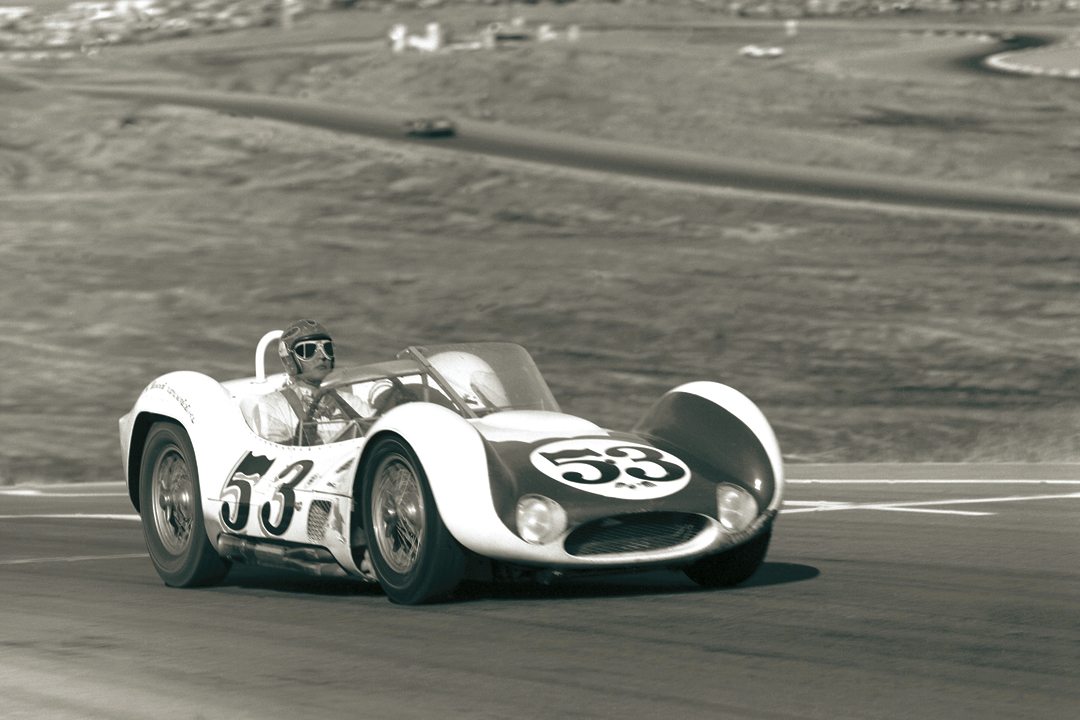
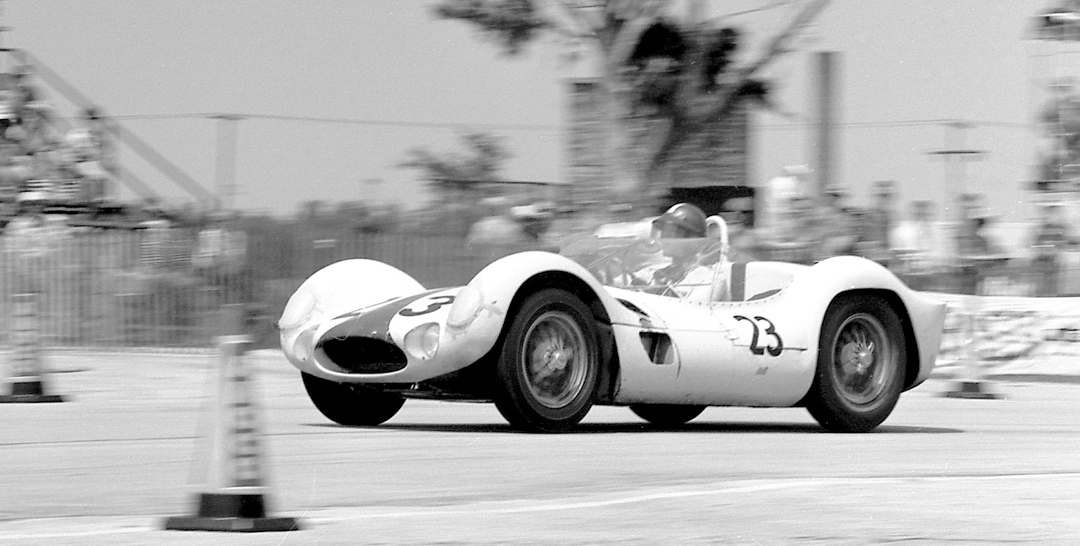
The Tipo 61 was the American car. Sixteen were built against six Tipo 60s, and most went across the Atlantic, to Camoradi, Lloyd "Lucky" Casner's Casner Motor Racing Division, which ran the works-supported cars in the World Championship, and to the private owners who dominated the SCCA's C-Modified class and the big West Coast professional races in 1960 and 1961: Jim Hall and Carroll Shelby, Roger Penske, Bill Krause, Walt Hansgen for Briggs Cunningham, Gaston Andrey, Bob Drake, E.D. Martin and J. Frank Harrison. Camoradi's Birdcages won the Nürburgring 1000 km twice, Moss and Gurney in 1960 after a five-minute stop and a drive back through the rain, Casner and Masten Gregory in 1961, and led Le Mans in 1960 in the long-tailed streamliner before the engine let go; they never finished a 24-hour race, because the chassis flexed enough to crack the tubes and the gearbox was fragile, but for an hour or three they were the quickest sports cars in the world. Alfieri's rear-engined Tipo 63 of 1961, with the four and then a 3-litre V12, and the Tipo 64 of 1962, were less than their predecessors and the Tipo 65 of 1965 was one car for one Le Mans. The Birdcage went into historic racing almost at once, as Moss says, because nobody could bear to leave it in a garage, and it is the most valuable of all the Maseratis. The archive has 96 Birdcage stories: Casey Annis's "Gilded Cage" and Rex McAfee's 1959 Tipo 61, Stirling Moss's own two pieces on the car and on driving it with Gurney, Willem Oosthoek's long histories of the Texas and Tennessee owners, Ed McDonough's Tipo 63, Bill Krause on the last Tipo 61 and his interview, Djordje Sugaris's overview, Louis Galanos's 1960 and 1961 Sebrings, and the Birdcages at Goodwood, Laguna Seca, Monterey and the auctions. The Maserati page carries the company and the 250F has its own thread; Oosthoek, the Maserati Club's historian, is in the archive in person.
Maserati's works team had ended in the autumn of 1957 at the top, Fangio's fifth title in the 250F and the 450S the fastest sports car in the world, and in receivership, the Orsis' machine-tool business having been broken by a failed Argentine contract; the racing department became a customer shop under Guerino Bertocchi, and Giulio Alfieri, the engineer who had run the 250F and 450S programmes, was told to make cars that paid. The 200S and 300S were old; the rules for 1959 were moving towards 3 litres; and the customers were in America. Alfieri's idea was to build a chassis stiff enough and light enough that an old engine would do: the lattice frame, which took a week to weld and could be repaired with a torch anywhere, carrying the fuel in a tank wrapped round the passenger's side and the oil tank in the tail, with the driver sat low and the engine laid over so the bonnet could be cut to the level of the front wheels. The prototype Tipo 60, chassis 2451, was tested at Modena in the spring of 1959 and handed to Moss, who drove it there, said it would be superb, and won with it at Rouen in July. The archive's "Four Maestros" and Robert Newman's "The Brothers and Others" set it in the Maserati story; McDonough's Tipo 63 piece and McAfee's 1959 car explain the frame.
The six Tipo 60s stayed mostly in Europe, where the 2-litre class mattered, and won it everywhere in 1959 and 1960; the Tipo 61, announced that autumn with the 2.9-litre engine, a longer nose for the bigger radiator and the same frame, was the car the Americans had asked for, at about $12,000. Casner's Camoradi, with Goodyear money and an American flag on the nose, bought three for the 1960 World Championship and ran them with Moss, Gurney, Gregory, Carroll Shelby and Gino Munaron; at Sebring in March both retired, as Louis Galanos's race profile tells, at the Targa Florio Umberto Maglioli and Nino Vaccarella led until the fuel tank split, and at the Nürburgring on 22 May Moss and Gurney won by three minutes after a fuel-line leak had cost them a lap, Moss's drive back through the rain and fog being one of the ones he counted; his account of that day with Gurney is in the archive. Le Mans in June had the two long-tailed streamliners that Camoradi had Maserati build, Gregory and Chuck Daigh's leading the first hour at 170 mph before the transmission failed, and in America the Tipo 61 took over the SCCA. Jim Hall's and Carroll Shelby's cars, which Oosthoek's "A Coke and a Smile" follows through J. Frank Harrison's Tennessee team, Roger Penske's, Walt Hansgen's Cunningham car, Bob Drake's for Joe Lubin, E.D. Martin's and the one Willem Oosthoek calls the Fort Worth Flyer were the field; Bill Krause won the Los Angeles Times Grand Prix at Riverside in October 1960 in the last Tipo 61 built, flown in ten days before the race, as he tells in "The Last Birdcage" and his interview; and Hansgen, Penske and Hall took the C-Modified races of 1960 and 1961 between them. The archive's 1960 and 1961 Sebring profiles, the Camoradi thread and the Krause, Hall and Penske threads carry the detail.
Every story on the site about Lucky Casner's team, newest first.
For 1961 Camoradi was broke and Casner was running on credit, but the Tipo 61 won the Nürburgring 1000 km again on 28 May, Casner himself and Masten Gregory in the one car that still worked after the works Ferraris and Porsches had gone, Maserati's last victory in a world-championship race; at Le Mans the Tipo 61 and the new rear-engined Tipo 63s of Camoradi and Briggs Cunningham all retired, the Cunningham cars having been bought because Cunningham liked anything Italian and difficult. Camoradi's last race was the 1961 Nassau Speed Week; Casner was killed testing a Maserati Tipo 151 at Le Mans in April 1965. The Tipo 61s went on in American hands through 1962 and 1963, in the USAC road-racing series that the archive's two-part history covers, at Pomona where Krause came from last to first in Steve Diulo's car, and in the SCCA nationals until the Chaparrals and the Cooper Monacos and the Lotus 19s outran them; Hall's own Chaparral 1 and then the 2 were what a Birdcage owner built when he wanted to win again.
Every story on the site about the team that ran Birdcages and Tipo 63s, newest first.
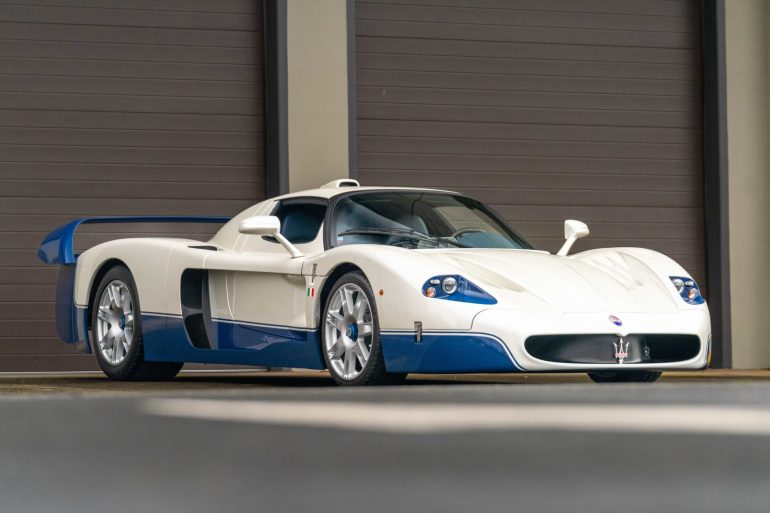
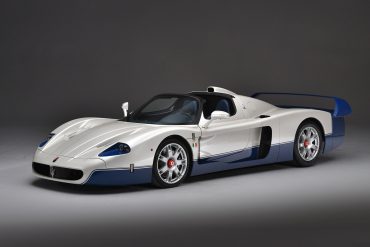
Alfieri put the engine behind the driver for 1961 because everyone had, and the Tipo 63, with the 2.9-litre four and then the 3-litre V12 from the 250F's abandoned successor, kept the lattice frame and lost the balance; it was fast and fragile and finished fourth at Le Mans in 1961 for Cunningham with Augie Pabst and Dick Thompson, which was its best result. Ed McDonough's "Caged Beast" is the archive's study of one. The Tipo 64 of 1962, with a lower frame and the V12, was two or three cars that Cunningham and the Scuderia Serenissima ran without luck; the Tipo 65 of 1965 was one car built in weeks for the Maserati France Le Mans entry and crashed on the first lap. The Birdcage name belongs to the front-engined cars, and so do the prices. Maserati revived it in 2005 for the Pininfarina Birdcage 75th concept on an MC12, which is in the archive's Villa d'Este and Pebble Beach reports.
Every story on the site about the rear-engined Birdcage, newest first.
As Moss says in his archive piece, the Birdcages went into historic racing almost before they had finished the first time, because they were light, quick and easy to keep, and the Goodwood Revival's Sussex Trophy, the Monterey Reunion, the Le Mans Classic and the Sebring Classic have had them ever since; the archive's reports from 2009 to 2026 show them. Twenty-two Tipo 60s and 61s were built and all are accounted for, several re-framed in period, since a crashed lattice was rebuilt rather than repaired; the Camoradi cars, the Cunningham cars and the Nürburgring winners are the ones with the histories. A Tipo 61 is a $3–5 million car now and a Tipo 60 $2.5–4 million, the 1960 Nürburgring winner more; the rear-engined cars run $1.5–3 million. Rex McAfee's 1959 Tipo 61 is the archive's recent single-car piece; Mark Leonard's sports-prototype columns track them from 2004; the Maserati auction and for-sale feeds below carry them as they come up.
Where the Birdcages race at the Goodwood Revival, newest first.
A table of the car and its racing from the works withdrawal of 1957 to the historic grids of 2026, with the archive's story of each year linked, follows this chapter. The model names link to every story on the site; the People, Race and Event links open their threads.
Three racing seasons and sixty years of historic racing: the car, the racing and the archive's story of each. Model names link to every story on the site; the People, Race and Event links open their threads.
| Year | The car | The racing | In the archive |
|---|---|---|---|
| 1956–57 | 300S · 450S · 250F · Maserati | The 300S and 450S; Fangio's title in the 250F; the works team closes and the Orsis' Maserati goes into receivership at the end of 1957 | Maserati 300S: the best sports racer ever? · The Brothers and Others, Part 2 · Maserati page |
| 1958 | 450S · Jim Hall · Carroll Shelby | Alfieri draws the lattice frame for a customer car; Hall's and Harrison's 450S in Texas and Tennessee; the Americans ask for a 3-litre | A Coke and a Smile: the J. Frank Harrison story · The Fort Worth Flyer |
| 1959 | Birdcage · Stirling Moss · Alfieri | The Tipo 60 tested at Modena; Moss wins at Rouen on 12 July, first time out; six Tipo 60s; the 2.9-litre Tipo 61 announced in the autumn; the first cars to America, Drake's for Lubin at Riverside | Maserati Birdcage debuted with victory · 1959 Maserati Tipo 61 Birdcage · Stirling Moss: The Birdcage Maserati |
| 1960 | Birdcage · Camoradi · Dan Gurney · Nürburgring · Le Mans · Sebring | Camoradi's season: Sebring and the Targa lost, the Nürburgring won by Moss and Gurney in the rain, Le Mans led in the streamliner; in America Krause wins the Times GP at Riverside and Hall, Penske and Hansgen take the SCCA; sixteen Tipo 61s | Driving with Dan · 1960 12 Hours of Sebring · The Last Birdcage, by Bill Krause · 1960 Maserati Tipo 61: Gilded Cage |
| 1961 | Birdcage · Tipo 63 · Masten Gregory · Cunningham · Nürburgring | Casner and Gregory win the Nürburgring again, Maserati's last championship win; the rear-engined Tipo 63 for Camoradi and Cunningham, fourth at Le Mans with Pabst and Thompson; Sebring; Camoradi's last Nassau | 1961 12 Hours of Sebring · Maserati Tipo 63: Caged Beast · Interview: Bill Krause |
| 1962–63 | Birdcage · Tipo 63 · USAC Road Racing · Chaparral | The Tipo 64; Krause from last to first at Pomona; the Birdcages in the USAC series; Hall builds the Chaparral; the Cooper Monacos and Lotus 19s take over | USAC Road Racing, Part 1 · USAC Road Racing, Part Two |
| 1965 | Birdcage · Le Mans | The one Tipo 65 for Maserati France, out on the first lap at Le Mans; Casner killed testing the Tipo 151 in April | FIA Sports Prototypes: Market & Values |
| 1970s–2000s | Birdcage · Stirling Moss · Goodwood Revival | The Birdcages into historic racing almost at once, as Moss says; Oosthoek's histories; the Goodwood Revival's Sussex Trophy | Willem Oosthoek, Maserati Club historian · Four Maestros and a Masterpiece |
| 2005–10 | Birdcage · Amelia Island Concours | The Pininfarina Birdcage 75th concept; a Birdcage Best of Show at Amelia Island 2010; the Legends of Riverside | Amelia Island 2010 Best of Show winners |
| 2013–16 | Birdcage · Sussex Trophy · Monterey Reunion | The Sussex Trophy at the Revival; the Monterey Reunion; the Salvadori Cup at the first Members' Meeting; Krause's own account | Goodwood Revival 2015: Sussex Trophy · Monterey Motorsports Reunion 2014 · Members' Meeting 2014: Salvadori Cup |
| 2019–26 | Birdcage · Maserati | The debut's sixtieth; Sugaris's overview; McAfee's 1959 Tipo 61; the Maserati Museum at Modena | Maserati Birdcage: a featherweight revolutionary · The Maserati Museum in Modena |
The Maserati page carries the company and the 250F; the Sebring, Le Mans and Targa Florio races are on their own pages; the Postwar Sports-Racers era page sets the Birdcage among its rivals.
Nine cards follow for the Birdcages and their neighbours: the 200S and 300S before them, the Tipo 60, the Tipo 61, the Camoradi streamliners, the Cunningham cars, the Tipo 63, the Tipo 64 and 65, Krause's last Tipo 61, and the 250F whose suspension they borrowed; each links to its thread here, and below them the Tipo 63 and 250F threads.
Nine cars from the archive, from the 300S to the Tipo 65; each links to every story on the site.
Every story on the site about the Grand Prix car the Birdcage grew from, newest first.
Giulio Alfieri, who designed it, and Guerino Bertocchi, who ran the shop; Adolfo and Omer Orsi; Lloyd "Lucky" Casner and Camoradi; Stirling Moss and Dan Gurney; Masten Gregory, Chuck Daigh, Carroll Shelby, Gino Munaron, Umberto Maglioli and Nino Vaccarella; Briggs Cunningham, Walt Hansgen, Augie Pabst and Dick Thompson; Jim Hall and J. Frank Harrison, Roger Penske, Bill Krause, Bob Drake and Joe Lubin, E.D. Martin, Gaston Andrey, Alan Connell; Willem Oosthoek, who wrote it all down. The Moss, Gurney, Jim Hall and Masten Gregory threads open below.
Every story on the site about the man who drove the Birdcage first and best, newest first.
Every story on the site about Moss's Nürburgring partner, newest first.
Every story on the site about the Birdcage owner who built the Chaparral, newest first.
Every story on the site about the 1961 Nürburgring winner, newest first.
Twenty-two front-engined cars and a known history for each: a Tipo 61 with Camoradi, Cunningham or a Nürburgring record is $4–6 million, a Tipo 61 with American SCCA history $3–5 million, a Tipo 60 $2.5–4 million, a Tipo 63 or 64 $1.5–3 million. The questions are the frame, since several were replaced after crashes in 1960–62 and a car may have both its original and its period frame in existence; the engine, since 2-litre and 2.9-litre fours were swapped; and the body, since the Allegretti aluminium rarely survived a season. The Maserati Club's register and Oosthoek's books are the authority. The feeds below carry the Maseratis as they come up.
Auction previews and results, the Birdcages among them, newest first.
Birdcages and other Maseratis offered by dealers and collectors, newest first.
Tipo 60 1959, 1,990 cc four canted 45 degrees, 200 hp, 6 built; Tipo 61 1959–61, 2,890 cc, 250 hp, 16 built; frame about 200 tubes, 30 kg; car about 600 kg; de Dion rear, Girling discs, five-speed transaxle; Tipo 63 1961 (four and 3-litre V12), Tipo 64 1962, Tipo 65 1965. First race and win: Rouen, 12 July 1959, Moss. Nürburgring 1000 km 1960 (Moss/Gurney) and 1961 (Casner/Gregory), Maserati's last world-championship win. Le Mans 1960: led the first hour. Los Angeles Times Grand Prix 1960, Krause. Le Mans 1961: Tipo 63 fourth (Pabst/Thompson, Cunningham). Market: Tipo 61 $3–6 million; Tipo 60 $2.5–4 million; rear-engined cars $1.5–3 million. 96 stories in the archive.
Short answers, with the long ones above.
For its chassis, a spaceframe of some two hundred small-diameter steel tubes welded into a dense lattice that the press thought looked like an aviary; the factory names were Tipo 60 and Tipo 61.
Giulio Alfieri, Maserati's chief engineer, in 1958–59, after the works team had closed and the company could only afford racing cars it could sell; the frame was cheap to build and stiffer than anything before it.
The engine: the Tipo 60 has a 2-litre four and the Tipo 61 the 2.9-litre four built for the American 3-litre class, with a longer nose for the bigger radiator; six Tipo 60s and sixteen Tipo 61s were built on the same frame.
Its first race at Rouen in 1959 with Moss, the Nürburgring 1000 km in 1960 with Moss and Gurney and in 1961 with Casner and Gregory, and most of the big American SCCA and professional races of 1960–61, including the 1960 Los Angeles Times Grand Prix with Bill Krause. It never finished Le Mans or Sebring.
The Casner Motor Racing Division, Lloyd "Lucky" Casner's American team with Goodyear backing, which ran the works-supported Birdcages in the World Championship in 1960 and 1961 and won the Nürburgring both years.
The lattice frame flexed enough under the 2.9-litre engine's torque to crack its tubes and leak its tank, and the transaxle was the weak point; the cars were fastest for a few hours and rarely lasted twelve or twenty-four.
Six Tipo 60s and sixteen Tipo 61s, twenty-two front-engined cars, plus about six rear-engined Tipo 63s, two or three Tipo 64s and one Tipo 65.
$3–6 million for a Tipo 61, depending on its Camoradi, Cunningham or American history, $2.5–4 million for a Tipo 60 and $1.5–3 million for the rear-engined cars; the frame's originality decides it.
Yes: he tested the prototype, won its first race at Rouen in 1959, won the 1960 Nürburgring 1000 km in one with Dan Gurney and called the Tipo 61 among the best front-engined sports cars he ever drove; two of his own pieces on it are in the archive.
At Maserati the rear-engined Tipo 63 and 64 and then the Tipo 151 coupés; in America the Chaparrals, Cooper Monacos and Lotus 19s that the Birdcage owners bought when the mid-engined era arrived in 1961–62.
The whole archive on one thread, newest first.