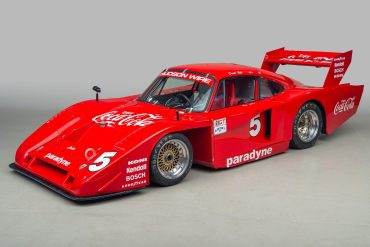
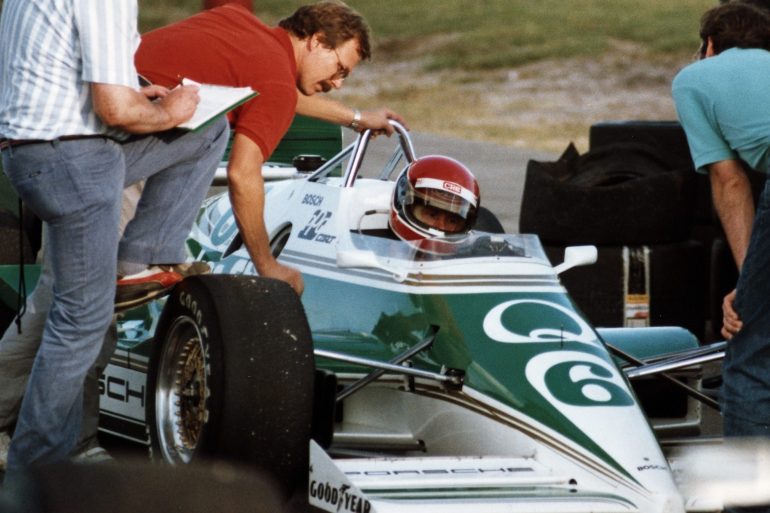
Editor's Note: This feature was reproduced with permission from our companion site SportsCarDigest for our Stuttcars readers. EARLY TRIES (AND A COUPLE OF FAILURES) Porsche's relationship with IndyCar is marked by a strange chain of events, which for…
A design bureau that built a sports car out of Volkswagen parts in a sawmill in Carinthia in 1948, and became the most successful name in sports-car racing: nineteen Le Mans wins, more Daytonas and Sebrings than anyone, eleven Targa Florios, the 917 and the 956, and a rear-engined coupé that has been in production since 1964. The archive has more than a thousand Porsche stories: Karl Ludvigsen on the first Porsche, Ed McDonough driving the 804, the Bergspyder, the RSR and the 956 and 962, Harold Pace on the 917's Le Mans breakthrough, Norbert Singer interviewed, Hurley Haywood, and every Rennsport Reunion. This page puts the marque in order and links the archive through it.
The marque at a glance
- Founded
- Design bureau, Stuttgart, April 1931 (Ferdinand Porsche); the first car, 356 No. 1, Gmünd, 8 June 1948 (Ferry Porsche); Zuffenhausen since 1950, Weissach since 1971; a Volkswagen group company since 2012, listed since 2022
- The founders
- Ferdinand Porsche, 1875–1951: Lohner, Austro-Daimler, the Mercedes SSK, the Auto Union Grand Prix cars and the Beetle. Ferry Porsche, 1909–1998, built the 356 and ran the firm to 1972. Butzi drew the 911; Ferdinand Piëch built the 917
- The racing
- Le Mans 19 wins, the record (1970–2017); Targa Florio 11, the record; more Daytona and Sebring wins than any make; world championships for makes 1969–71, 1976–79, 1981–85; WEC 2015–17; Can-Am 1972–73; one Grand Prix win (Rouen 1962) and McLaren's TAG titles
- The cars
- 356 (76,000, 1948–65); 911 since 1964, over a million; 550, 718, 904, 906, 908, 917, 934, 935, 936, 956, 962, 919, 963; 914, 924, 944, 928; Boxster, Cayenne, Panamera, Macan, Taycan; 959, Carrera GT, 918 Spyder; about 310,000 cars a year now
- The engineers
- Fuhrmann's four-cam, Komenda's bodies, Mezger's flat-twelve and TAG V6, Bott, Falk and Singer's racing department, Piëch's crash programme from the 904 to the 917
- The people
- Herrmann, Bonnier, Gurney, Elford, Siffert, Rodríguez, Redman, Attwood, Donohue, Follmer, Ickx, Haywood, Bell, Stuck, Holbert, Ludwig, Wollek, McNish, Bernhard; Wyer, Penske, Gregg, Joest, Kremer, Polak and Hoffman
- The market
- The McQueen 917K at $14.08 million (2017); 956s, 962s, 550s and 904s in eight figures; the 2.7 RS, 959, Carrera GT and air-cooled 911s as the collectable mainstream; the archive's 200-plus Porsche auction and for-sale stories
- The archive
- Ludvigsen on the first Porsche and the WSC-95; McDonough on the 804, the Bergspyder, the 908/3, the RS and RSR and the 956/962; Pace's 917 breakthrough; Lyons on the Penske turbos; Singer and Haywood interviewed; Porsche at Le Mans in four parts; every Rennsport Reunion
The pieces to start with
Essential Reading
Ludvigsen on the first Porsche, Beckett's 356, McDonough on the 804, the Bergspyder, the RSR and the 956 and 962, Pace on the 917's Le Mans breakthrough, and Norbert Singer interviewed.
- 01
In the Beginning—The Story of the First Porsche
Ferdinand Porsche wanted his own car company from 1923, when he lacked the money and went to Mercedes instead. Karl Ludvigsen on the Stuttgart design office of 1930, the Auto Union and Volkswagen windfalls, and the car that finally followed.
- 02
1953 Porsche 356 – The First Arrival
Three Type 64s built for a Berlin–Rome race that never ran, then the mid-engined tubular “No. 1” of 1948, and the 356 that followed on VW parts with Erwin Komenda’s body. James Beckett on a 1953 example.
- 03
1962 Porsche 804 – An American in Stuttgart
Gurney went to Porsche for 1961 after a short stay at Ferrari and an unhappy year at BRM, and spent two seasons alongside Jo Bonnier. Ed McDonough on the 1962 Porsche 804 and the American who drove it.
- 04
1964 Porsche Bergspyder – Porsche’s Kangaroo
Between summer 1963 and late 1968 Porsche went from the 904 to the 917, with Ferdinand Piëch challenging the firm’s habits at every step. Ed McDonough on the mid-sixties hillclimb Spyders the standard histories skip, starting with this 1964 car.
- 05
1969 Porsche 917K – The Le Mans Breakthrough
The FIA’s 3-liter limit for 1968 was meant to suit Porsche, whose 2-liter 906s had followed the Fords home at Le Mans in 1966. Harold Pace on how the 917 came out of it, and the obstacle inside Porsche.
- 06
1973 Porsche 911 Carrera RSR – Rennmeister
Moby Dick was on tour in China, so Ed McDonough drove Mike Burtt’s 2.8 RSR instead: chassis 9113600885, which Schickentanz and Fitzpatrick ran at the 1973 Spa 1000 Km while McDonough made his sports car debut in a Dulon-FVC.
- 07
1982 Porsche 956 and 1988 Porsche 962 – Alpha and Omega
Chassis 956-001 was Derek Bell’s first works Porsche and 962-010 his last. Ed McDonough drives both at Silverstone with Bell as his assistant, plus Norbert Singer, Jochen Mass and Vern Schuppan on how 13 seasons of domination nearly never happened.
- 08
Interview: Norbert Singer
Norbert Singer wanted the space race, not racing, but Germany’s aeronautical budget was tiny. He joined Porsche in spring 1970 to fix 917 gearbox cooling and stayed through 16 Le Mans wins. Mike Jiggle talks to the finder of loopholes.
Latest Porsche Features
The newest long-form writing on Porsche, as it is published.
What Is Porsche?
Porsche is the Stuttgart maker of sports cars founded as an engineering consultancy by Ferdinand Porsche in 1931 and turned into a car manufacturer by his son Ferry in 1948, when the first 356 was built at Gmünd in Austria. From the 356 came the 911 of 1963, which has been built continuously since and defines the company; from the 550 Spyder of 1953 came a racing lineage, the 718, 904, 906, 908, 917, 935, 936, 956 and 962, 911 GT1, 919 Hybrid and 963, that has won Le Mans nineteen times, more than any other make, and holds the records at Daytona and Sebring too. Porsche nearly failed in the early 1990s, saved itself with the Boxster and the Cayenne, fought and lost a takeover battle with Volkswagen, and now builds some 300,000 cars a year as part of the Volkswagen group, with the 911 still at the centre of them.
The archive's Porsche coverage is second only to its Ferrari coverage: the Vintage Racecar chassis histories by Ed McDonough and Casey Annis, Karl Ludvigsen's engineering histories from the first Porsche to the WSC-95, the 917 stories gathered on the archive's own Porsche 917 page, Pete Lyons on the Penske turbos, the Norbert Singer and Hurley Haywood interviews, the four-part Porsche at Le Mans series, the Rennsport Reunion galleries and twenty-five years of 356 and 911 profiles from the concours lawns. The chapters below follow it from Ferdinand Porsche's electric car of 1900 to the 963 at Daytona.
Ferdinand Porsche: Lohner, Mercedes, Auto Union and the Beetle, 1875 to 1948
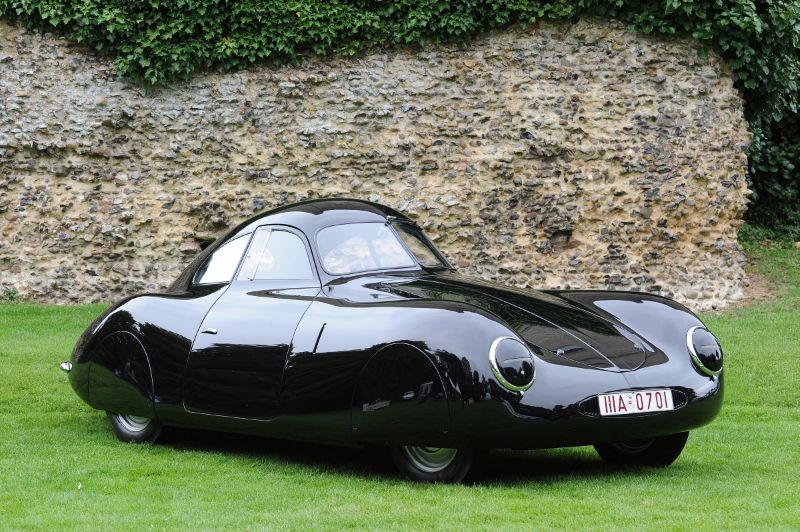
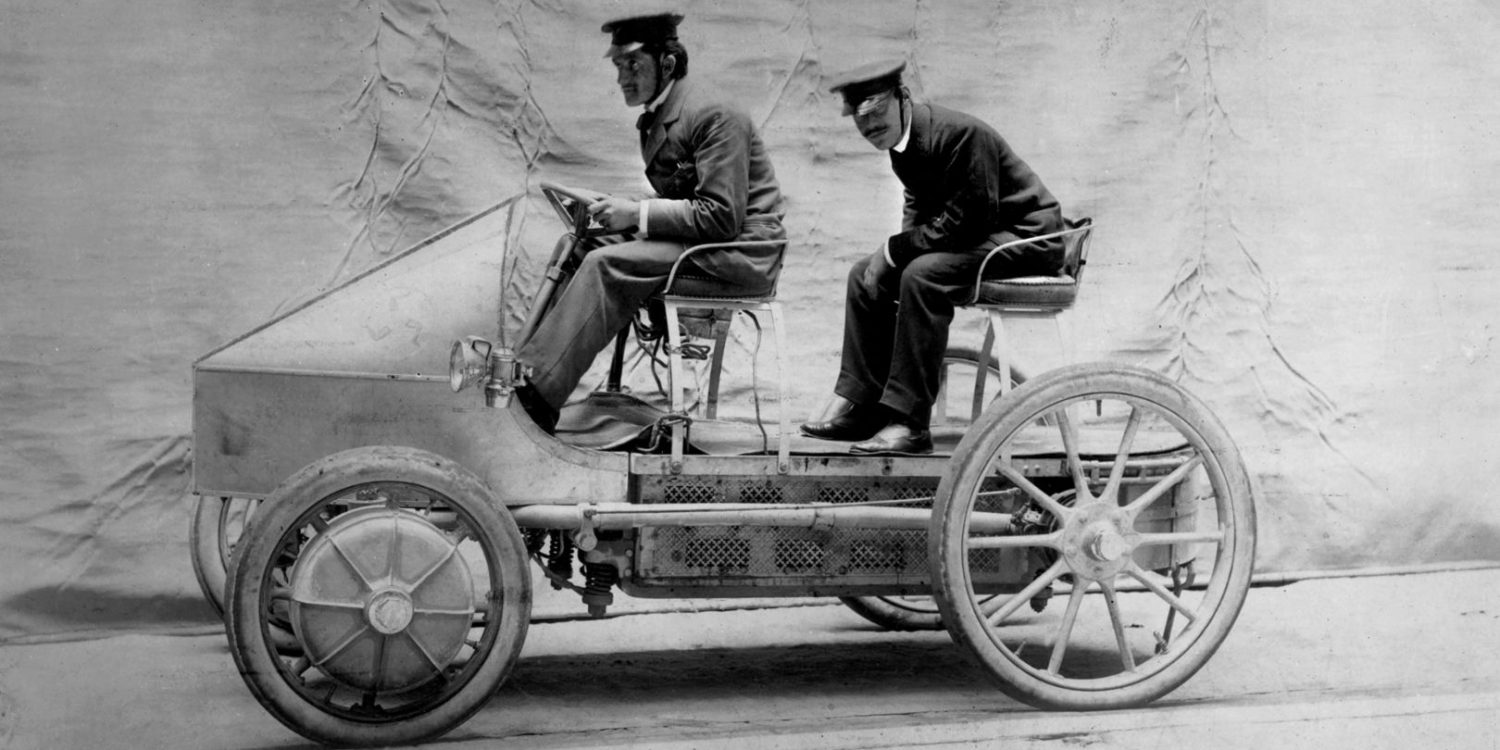
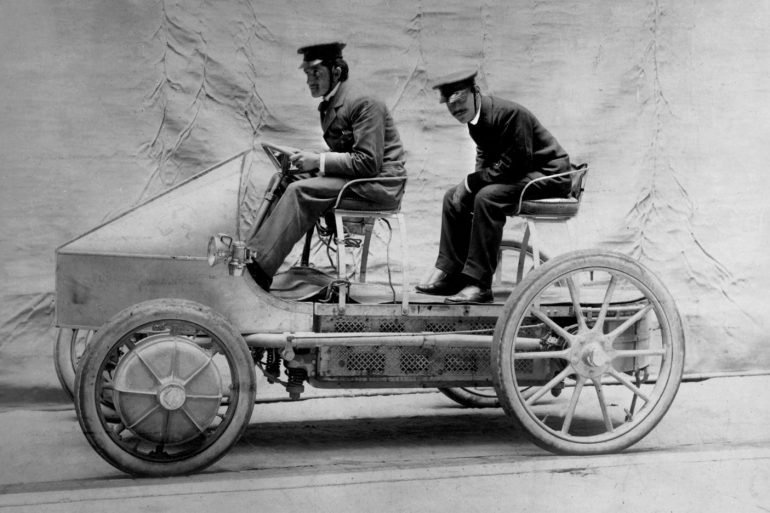
Ferdinand Porsche was born in 1875 in Maffersdorf in Bohemia, then Austrian, and built his reputation before the First World War with the hub-motored Lohner-Porsche electric car of 1900 and its petrol-electric Semper Vivus hybrid, which the archive's piece on the electric car he built before any sports car describes, and then as technical director of Austro-Daimler, whose Prince Henry cars he designed and raced. From 1923 he was at Daimler in Stuttgart, where the supercharged S, SS, SSK and SSKL were his, and in April 1931 he opened his own design bureau in Stuttgart, Dr. Ing. h.c. F. Porsche GmbH, which designed the mid-engined Auto Union Grand Prix cars of 1934–37, the Silver Arrows that fought Mercedes-Benz, and the KdF-Wagen that became the Volkswagen Beetle. Ludvigsen's In the Beginning, in the archive, traces the firm's road from 1923, when Porsche wanted his own company and lacked the money, to the three Type 64 coupés of 1939, Volkswagen-based streamliners built for a Berlin–Rome race that never ran and the first cars to carry the Porsche name. Porsche was imprisoned by the French for twenty months after the war; his son Ferry and daughter Louise Piëch kept the bureau going at Gmünd, designed the Cisitalia Grand Prix car to pay his bail, and in 1948 built a car of their own. He saw it, approved it and died in January 1951.
Gmünd and the 356: Ferry Porsche's Sports Car, 1948 to 1965
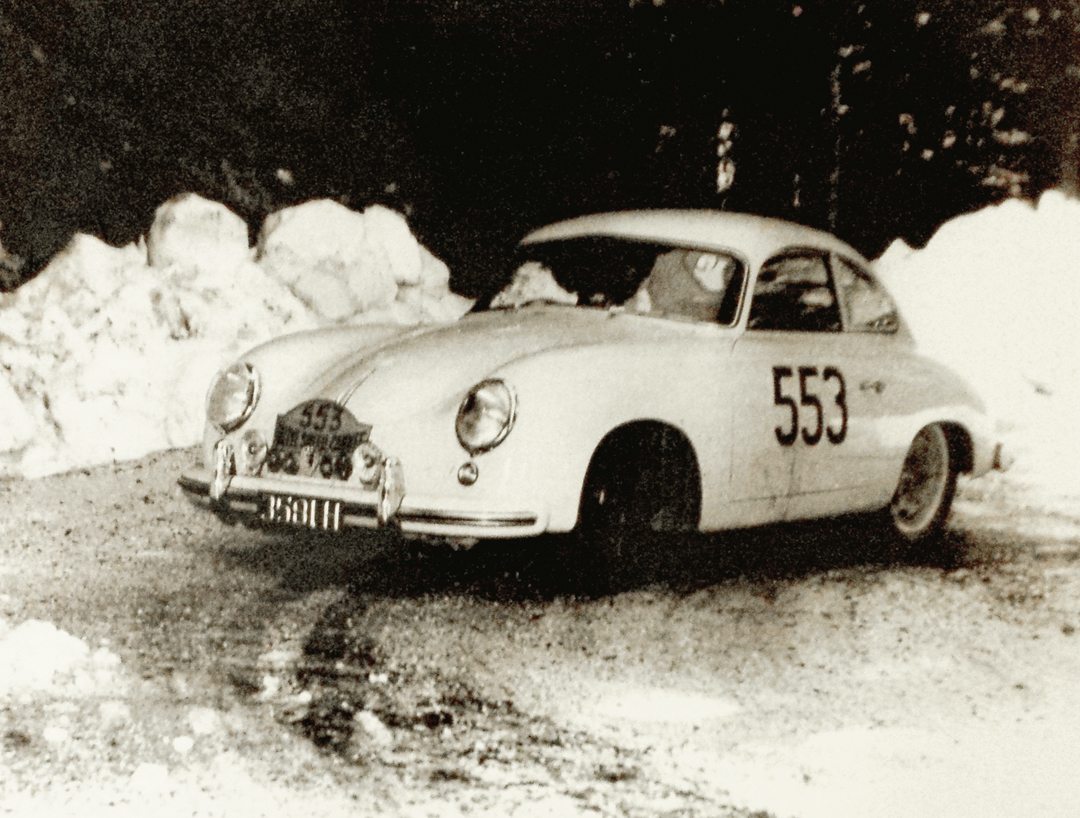
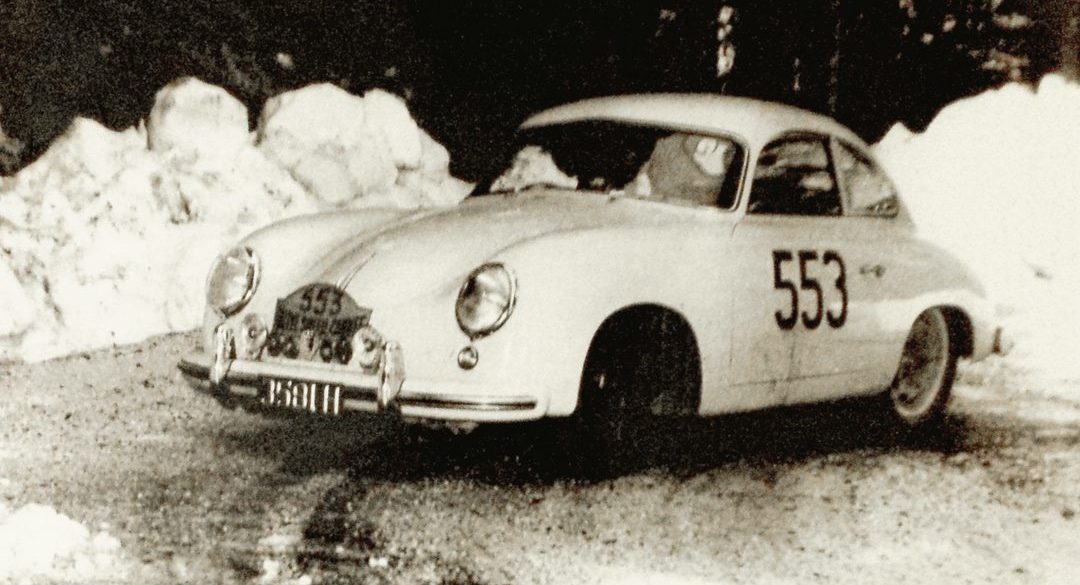
The first Porsche, 356 "No. 1", was a mid-engined aluminium roadster on a tubular frame with a tuned Volkswagen engine, road-registered on 8 June 1948; the production 356 that followed put the engine behind the axle for the sake of two small rear seats and luggage, and about fifty aluminium coupés were hand-built at Gmünd before the firm went home to Stuttgart in 1950 and Reutter began pressing steel bodies at Zuffenhausen. James Beckett's The First Arrival, Rick Shultz's history and the archive's Five Decades of the 356 follow it from there: Porsche expected to sell five hundred and built more than 76,000 by 1965, half of them for America, where Max Hoffman took the franchise in 1950 and asked for the stripped-down Speedster of 1954 that became the most wanted 356 of all. The 356 grew through the A of 1955, the B of 1959 and the C of 1963, from 1,100 cc and 40 horsepower to the two-litre four-cam Carrera 2, and the Carrera name, borrowed from the Carrera Panamericana after the 550's class wins there, entered the catalogue in 1955 on Ernst Fuhrmann's four-cam engine. The archive's 356 stories are the most numerous of any Porsche model after the 911: Gmünd coupés, Speedsters, the Highland Terror of 1957, the outlaws, and the Convertible Ds and Super 90s of the concours lawns.
The 550 Spyder, the RSK and the Giant-Killers, 1953 to 1965
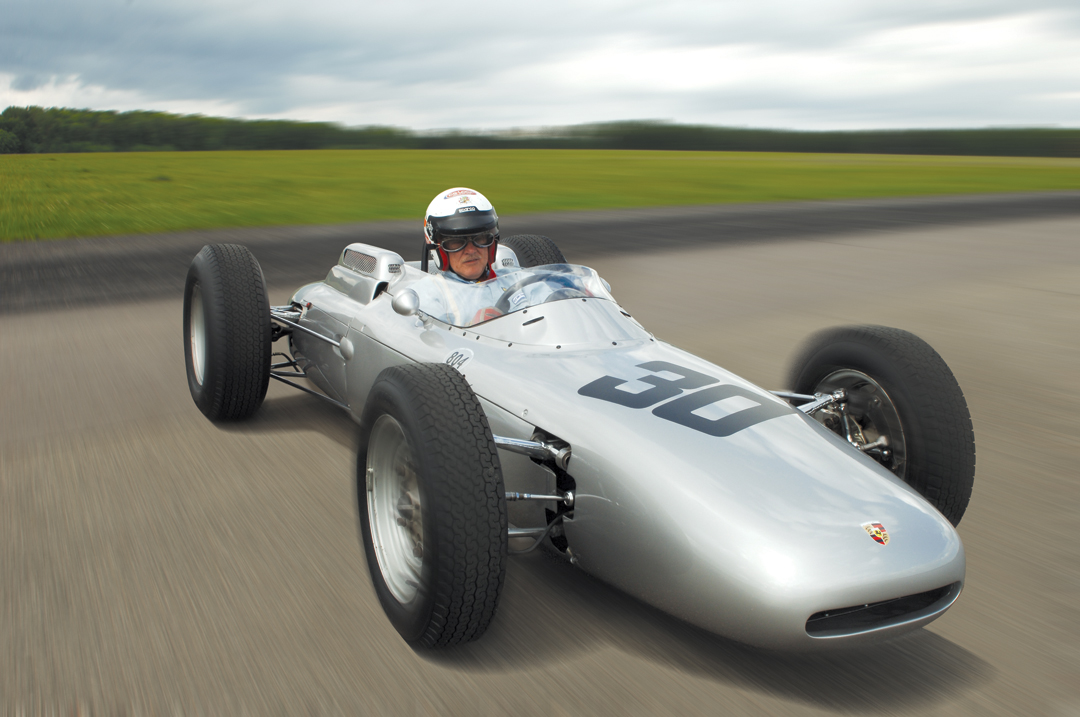
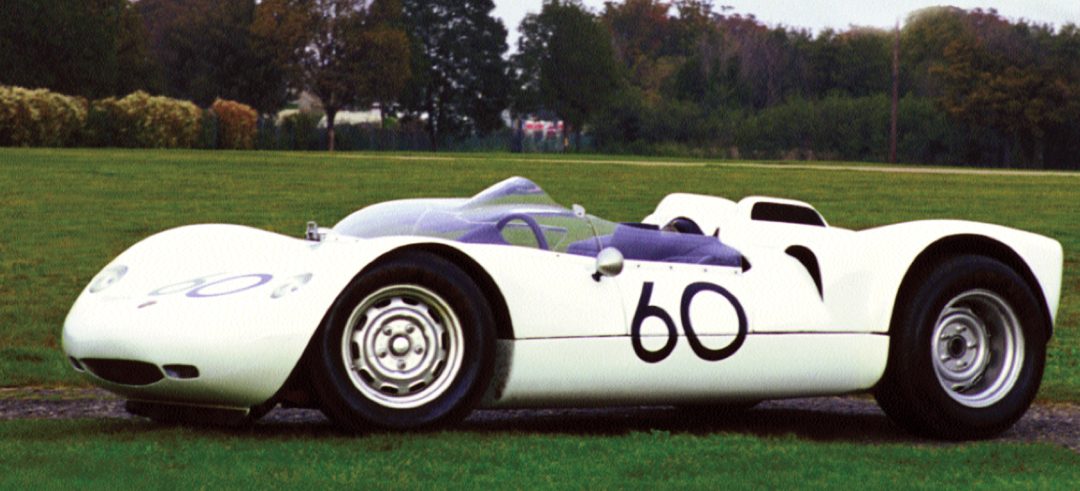
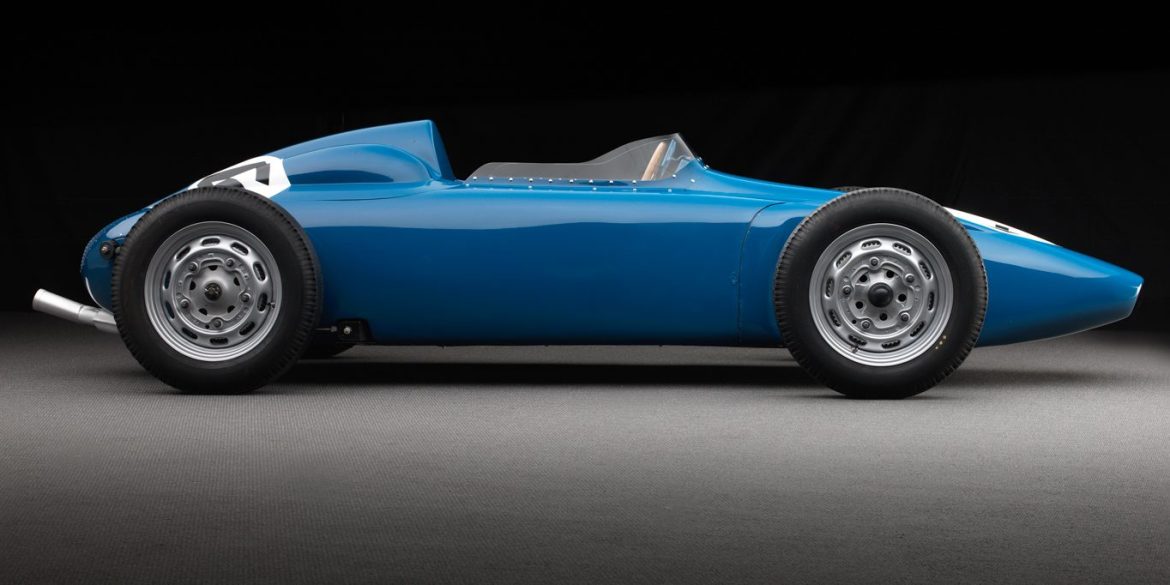
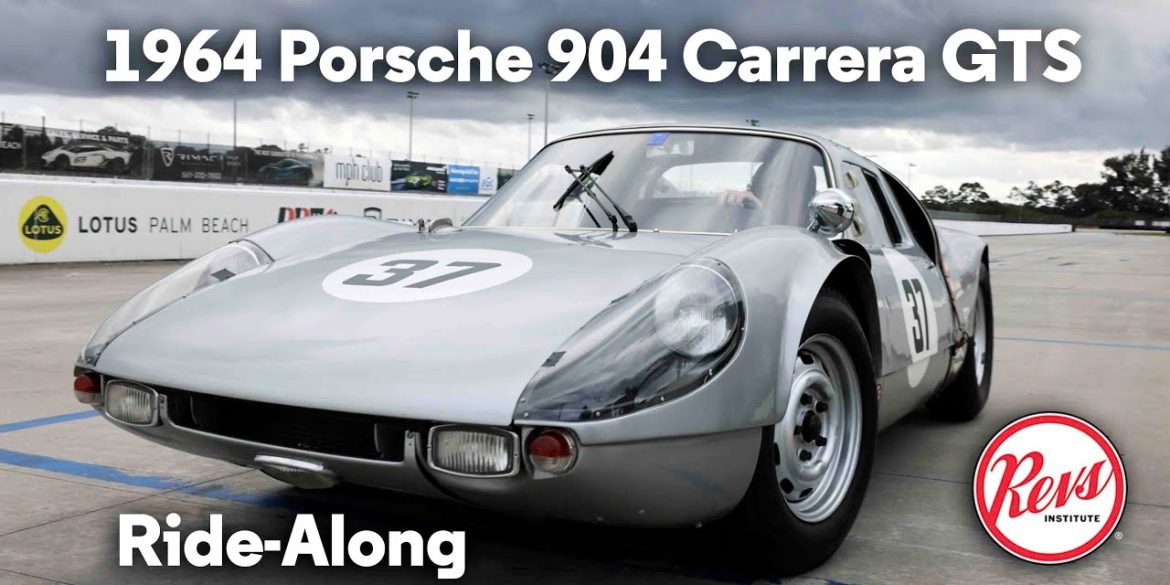
Porsche's first purpose-built racing car was the 550 Spyder of 1953, a 1.5-litre mid-engined roadster that won its class at Le Mans on its debut, finished third overall in the 1954 Carrera Panamericana with Hans Herrmann, and in 1956 gave Porsche its first outright win in a world championship race, Umberto Maglioli alone in the Targa Florio; it is also the car in which James Dean died in September 1955, which made it famous beyond racing. Its successors, the 550A, the 718 RSK of 1957, the RS60 and RS61 and the 718 GTR, were the giant-killers of the late 1950s, winning the Targa Florio in 1959, 1960 and 1963 against Ferrari's three-litre cars and taking Le Mans class wins and the Index of Performance year after year; Ludvigsen's Germany's Quart and a Half Brigade and the archive's 718 RSK and RS60 profiles tell their story. The same engine, enlarged, carried Porsche into Formula One: the flat-eight 804 of 1962 won the French Grand Prix at Rouen in Dan Gurney's hands, Porsche's only championship Grand Prix win, before the firm decided Formula One was not worth the money, and McDonough's An American in Stuttgart drives it. The 904 Carrera GTS of 1964, Butzi Porsche's fibreglass coupé, won the Targa Florio first time out and bridged the gap to the prototypes.
The 911: Butzi's Shape, 1963 to Today
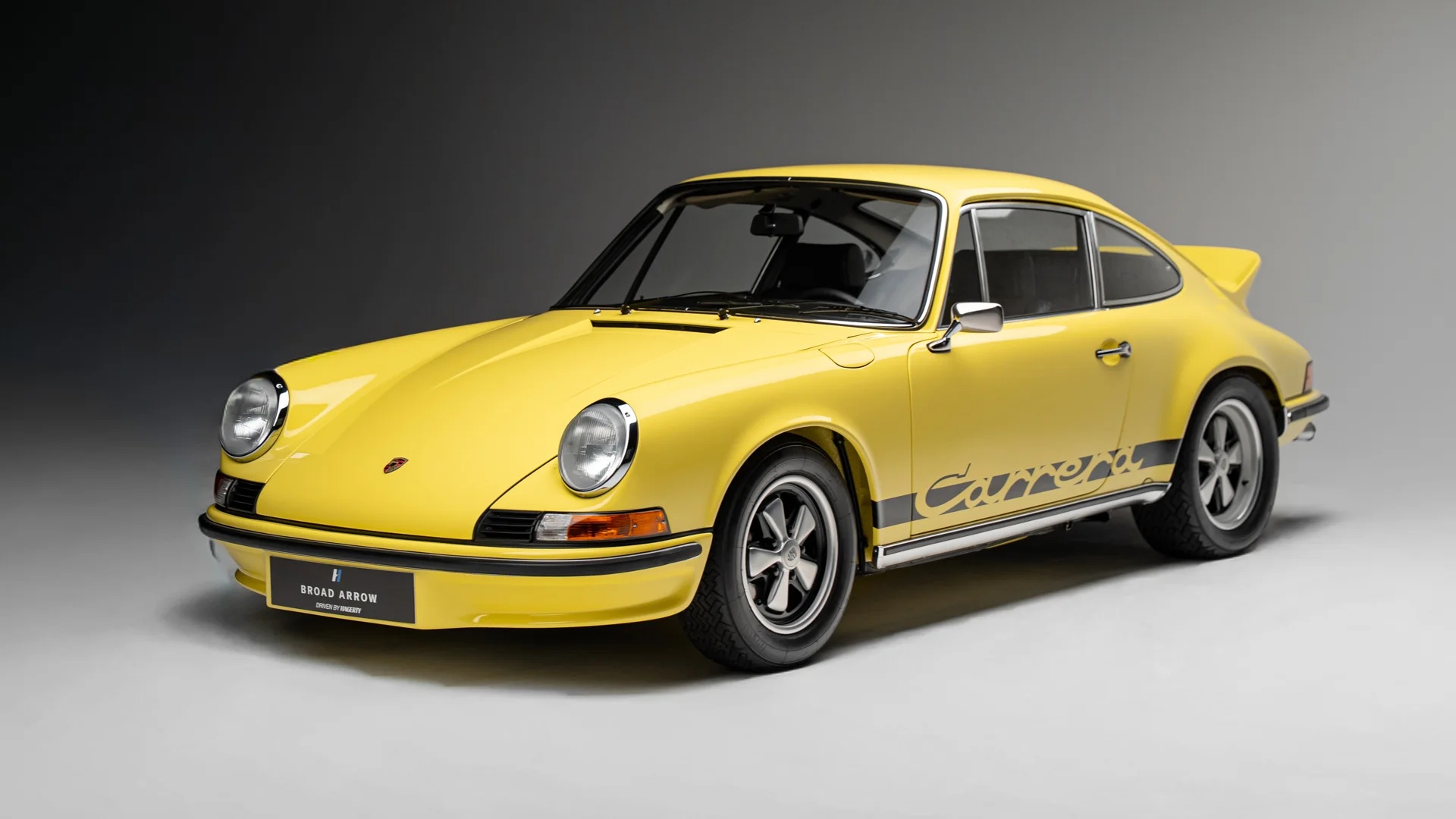
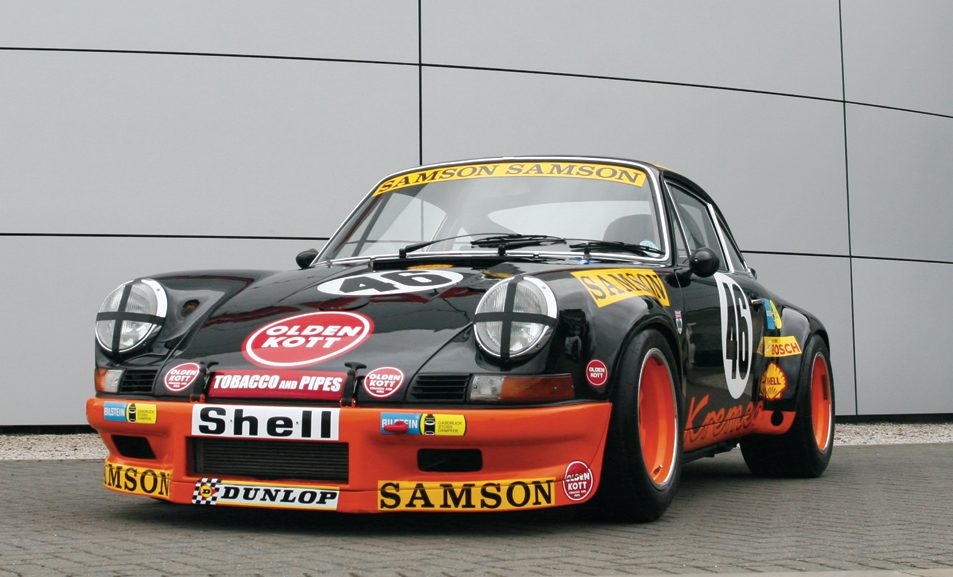
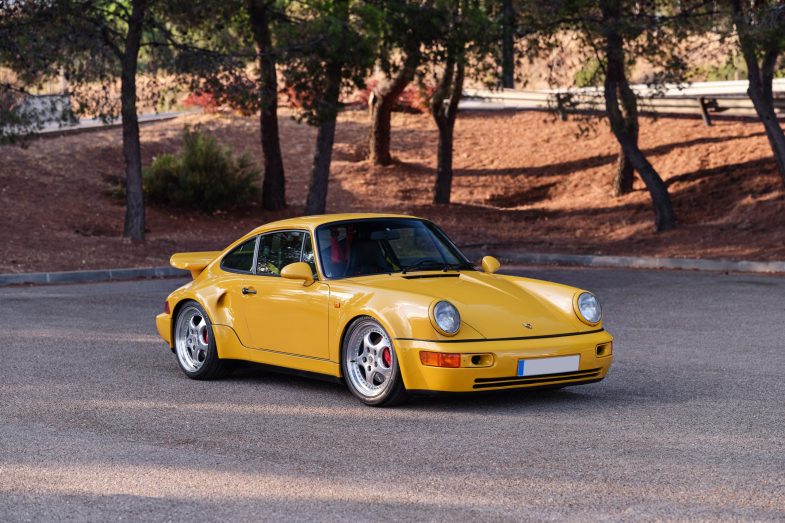
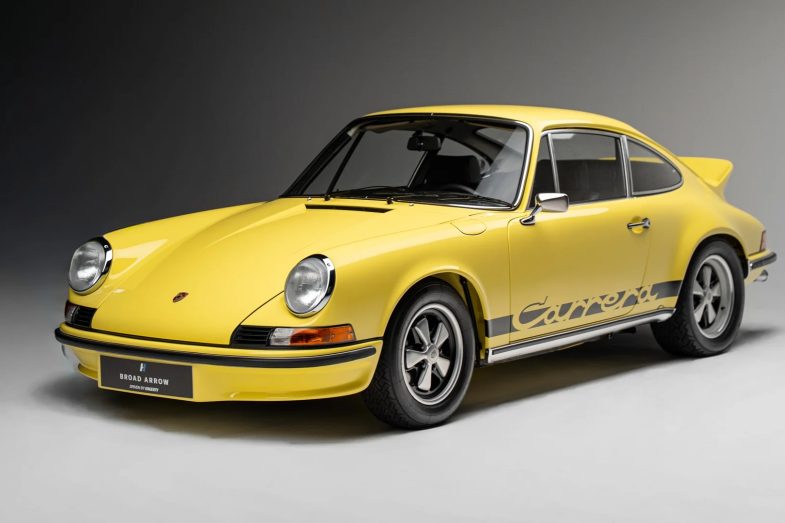
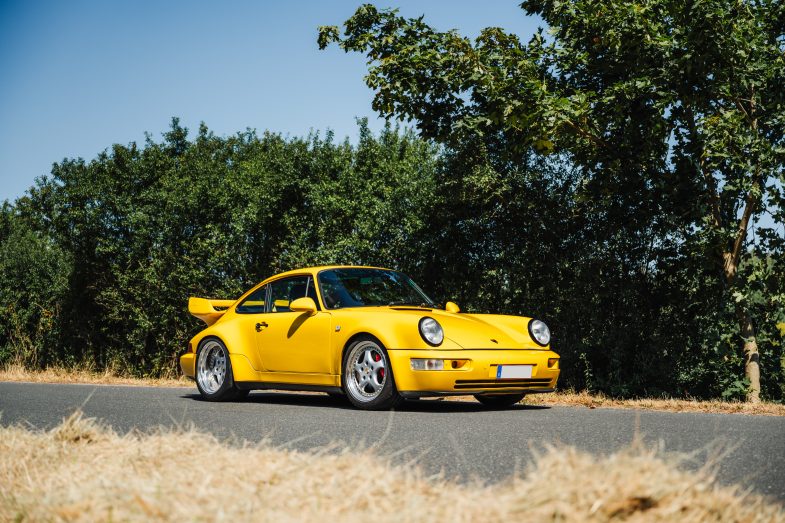
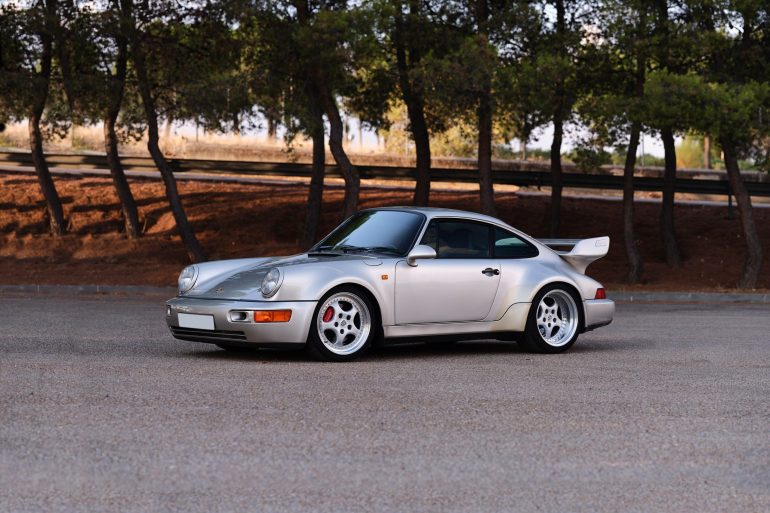
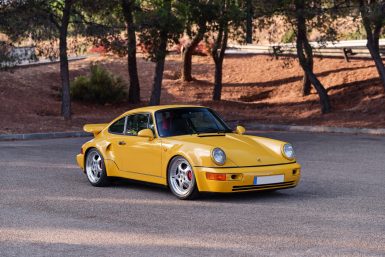
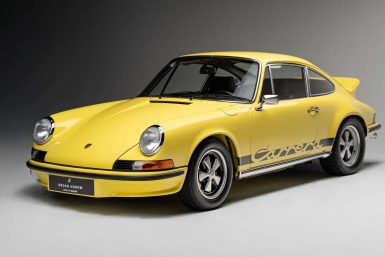
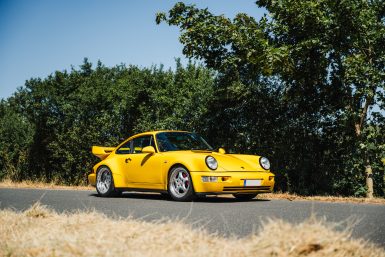
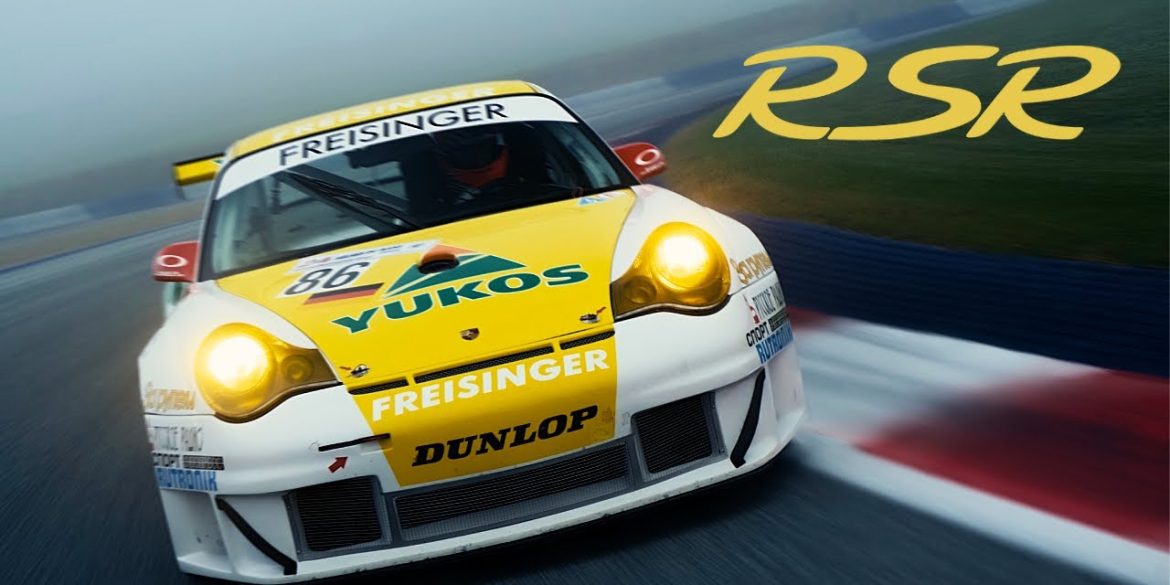
Ferdinand Alexander Porsche, Ferry's eldest son, drew the 901 that was shown at Frankfurt in September 1963 and renamed 911 before sales began in 1964, when Peugeot objected to the zero. It kept the 356's layout, the air-cooled flat engine behind the rear axle, now a two-litre six, in a body that has changed in every generation and never in essence: the long-bonnet cars of 1964–73 and the 2.7 Carrera RS of 1973 with its ducktail, the G-series of 1974–89 and the 930 Turbo of 1975, the 964 of 1989 that modernised the chassis, the 993 of 1994, the last air-cooled 911 and to many the best, the water-cooled 996 of 1998 that saved the company and divided its customers, the 997, the 991 and the 992 of 2019, with the GT3, GT2 and Turbo variants of each. The millionth 911 was built in 2017. The archive's 911 stories are its single largest Porsche thread: McDonough's Targa Tourer and Rennmeister on the 1973 Carrera RS and RSR, Jim Hemsley's Best for Last on the 993 and his Wreck to Racer, the 996 as the pivotal 911, the buying guides, the Singer and outlaw cars, the Dakar, and the Carrera RS and Turbo market stories.
Piëch's Racing Department: 904 to 917, 1963 to 1971
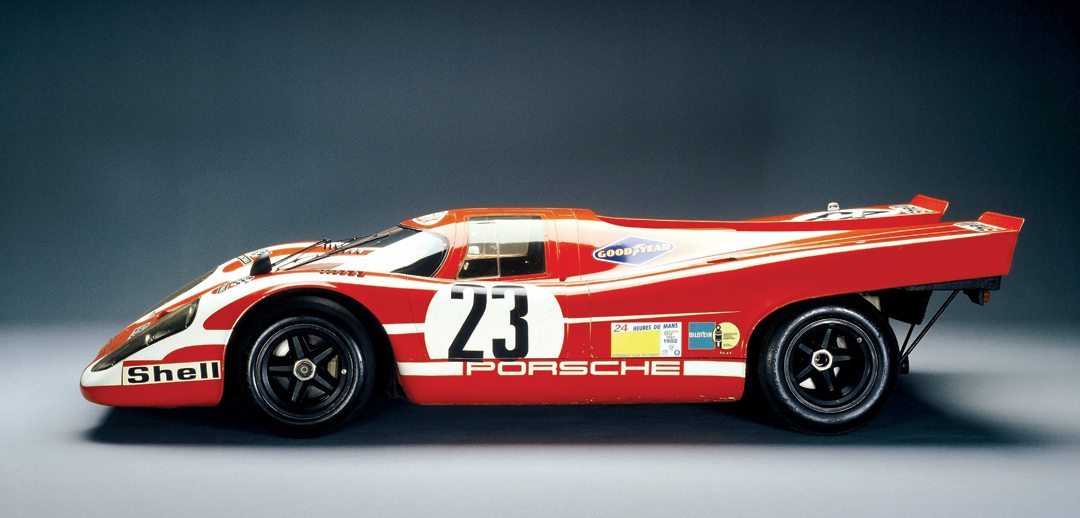
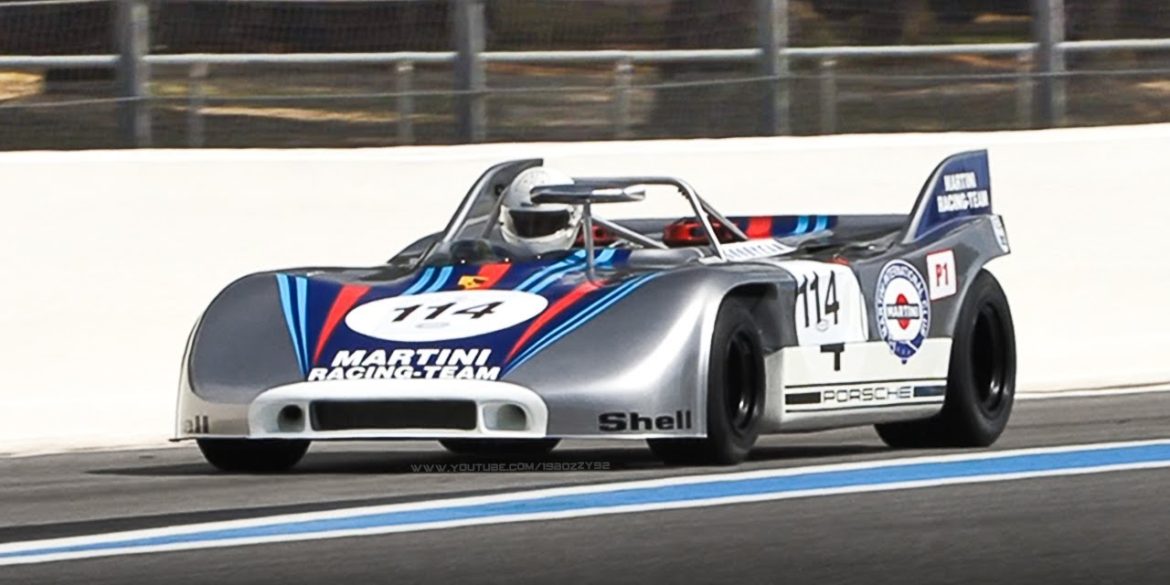
Ferdinand Piëch, Louise's son, took over Porsche's racing and development department in 1965 at twenty-eight and ran it as a crash programme: the 906 of 1966, the 910 and 907 of 1967–68, the 908 of 1968 and the 917 of 1969, each with a new chassis and body and often a new engine, from the two-litre six to the three-litre eight to the 4.5-litre twelve, with the aluminium-framed Bergspyders for the European hillclimb championship on the side; McDonough's Porsche's Kangaroo describes a department that went from the 904 to the 917 in five years and challenged every habit of the firm. The results came in order: Daytona 1-2-3 with the 907 in 1968, the first world championship for makes in 1969 with the 908, six Targa Florio wins between 1964 and 1970, Casey Annis's 910 at Sebring, McDonough's 908/3 at the Nürburgring, and then the 917, which the archive's Porsche 917 page tells in full: Herrmann and Attwood's first Le Mans win for Porsche in 1970, Marko and van Lennep's distance record in 1971, and the Gulf and Salzburg and Martini liveries. The archive's Porsche at Le Mans series takes the 1960s and 1969–73 in two of its four parts. In 1972 the Porsche and Piëch families withdrew from the day-to-day running of the company, Ferry became chairman of the supervisory board and Ernst Fuhrmann the first outside chief executive, and Piëch went to Audi, from where he would one day buy the company.
Porsche Year by Year, 1900–2025
The cars and the racing, year by year, with the archive's story of each linked. Car names link to every story on the site about that model.
| Year | The cars | The racing and the company | In the archive |
|---|---|---|---|
| 1900 | Lohner-Porsche | Ferdinand Porsche's hub-motored electric car and the Semper Vivus hybrid at the Paris Exposition | The electric car before the sports car |
| 1931 | Dr. Ing. h.c. F. Porsche GmbH | The design bureau opens in Stuttgart; the Auto Union Grand Prix cars and the Volkswagen follow | Ferdinand Porsche |
| 1939 | Type 64 | Three Volkswagen-based streamliners for a Berlin–Rome race that never ran: the first cars to carry the name | In the Beginning |
| 1948 | 356 No. 1 | Road-registered at Gmünd on 8 June; about fifty aluminium coupés follow | The First Arrival |
| 1950–51 | 356 | Production moves to Zuffenhausen; Hoffman takes America; first Le Mans class win, 1951; Ferdinand Porsche dies in January 1951 | Porsche 356 |
| 1953–54 | 550 Spyder | Le Mans class win on debut; third overall in the 1954 Carrera Panamericana; the Speedster for Hoffman | Giant Killer |
| 1955–56 | 356 Carrera · 550A | Fuhrmann's four-cam; James Dean; Maglioli wins the Targa Florio alone, Porsche's first outright championship win | Targa Florio hub |
| 1957–60 | 718 RSK · RS60 | Targa Florio 1959 and 1960; Sebring 1960; the Quart and a Half Brigade | Germany's Quart and a Half Brigade |
| 1962 | 804 | Gurney wins the French Grand Prix at Rouen, Porsche's only championship Grand Prix win | An American in Stuttgart |
| 1963–64 | 911 · 904 | The 901 at Frankfurt, renamed 911; Butzi's 904 wins the Targa Florio first time out | Swiss Spyder |
| 1966–68 | 906 · 910 · 907 | Piëch's department: Targa Florio three years running, Daytona 1-2-3 in 1968 | Porsche's Kangaroo · The Sebring Climber |
| 1969 | 908 · 917 | The first world championship for makes; the 917 shown at Geneva and homologated with 25 in a row | Ring Wraith |
| 1970–71 | 917K | Le Mans at last: Herrmann and Attwood, then Marko and van Lennep's 5,335 km; both championships | The 917 page |
| 1972–73 | 917/10 · 917/30 · Carrera RS 2.7 | Penske's Can-Am titles; the RSR wins Daytona and the Targa; the families step back, Fuhrmann in charge | The Penske Panzer · Targa Tourer |
| 1975–76 | 930 Turbo · 934 · 935 · 936 · 924 | The first turbo road car; Group 4, 5 and 6 all at once; Le Mans 1976 with Ickx and van Lennep | Rennmeister |
| 1977–79 | 936 · 935/78 · 928 | Le Mans 1977; Moby Dick; the 928 Car of the Year; the Kremer K3 wins Le Mans in 1979 | Porsche at Le Mans 1974–81 |
| 1981–82 | 956 · 944 | Ickx and Bell win in the 936, then in the first 956; Schutz keeps the 911 | Interview: Norbert Singer |
| 1983–87 | 962 | Seven Le Mans in a row by 1987; nine of the first ten in 1983; Holbert's three IMSA titles; TAG turbos win for McLaren | Alpha & Omega · Porsche at Le Mans 1982–87 |
| 1986 | 959 | The Group B supercar and the Paris–Dakar win | The Pursuit for Perfection |
| 1989–94 | 964 · 993 | The modern 911 and the last air-cooled one; the company nearly fails; Wiedeking from 1993 | Best for Last |
| 1994 | Dauer 962 | A 962 with number plates wins Le Mans | Model (Dauer 962) |
| 1996–98 | Boxster · 996 · 911 GT1 | The Boxster and the water-cooled 911 save the firm; Le Mans 1996 and 1997 with the WSC-95, 1998 with the GT1-98 | Unlikely Le Mans Winner, Twice |
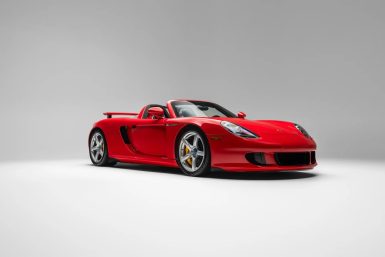
| 2002–03 | Cayenne · Carrera GT | The SUV that paid for everything; the V10 supercar | The Last Analog Hypercar |
| 2005–08 | RS Spyder · 997 | Penske's LMP2 championships; the Volkswagen takeover attempt | Model (Porsche RS Spyder) |
| 2012–13 | 918 Spyder · Cayman | Volkswagen owns Porsche AG; the hybrid supercar; the millionth 911 follows in 2017 | Model (Porsche 918 Spyder) |
| 2015–17 | 919 Hybrid | Le Mans three years running, the seventeenth to nineteenth wins; Formula E follows | Le Mans hub |
| 2019–22 | 992 · Taycan | The eighth 911 and the first electric Porsche; the Frankfurt flotation of 2022 | |
| 2023–25 | 963 · 911 Dakar | The LMDh car wins Daytona for Penske in 2024 and 2025; 75 years of Porsche sports cars | Rennsport Reunion |
Porsche type numbers run in one sequence from the design bureau's projects (the 356 was the 356th); the 911 was the 901 until Peugeot objected. The Great Races pages carry each race in full, and the archive's own Porsche 917 page has the 917 years in detail.
Turbos, Group 5 and the 935: 1972 to 1981
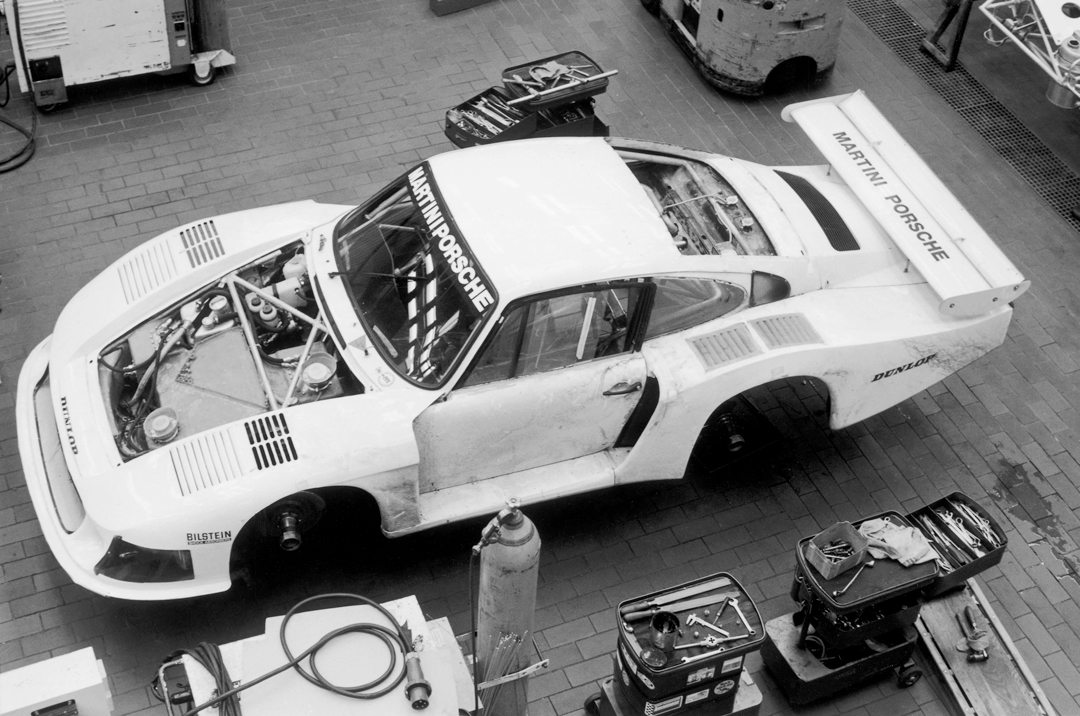
The turbocharger was Porsche's answer to the end of the five-litre formula: the 917/10 and 917/30 won the Can-Am championships of 1972 and 1973 for Penske with Follmer and Donohue, Pete Lyons's Komplizierte Kompressoren and the Penske Panzer in the archive, and when the rules ended that too, the lessons went into the 911. The Carrera RSR won Daytona and the Targa Florio in 1973, the 930 Turbo of 1975 was the first turbocharged Porsche road car, and the 934 and 935 of 1976, built to Group 4 and Group 5, won everything for which they were eligible for six years: the world championship for makes in 1976, 1977, 1978 and 1979, Daytona and Sebring repeatedly in the hands of Brumos, Interscope, Kremer and the privateers, and Le Mans outright in 1979 with the Kremer K3 of Klaus Ludwig and the Whittington brothers, the only production-based car to have won the race since. The 936 prototype, a 917 engine in a 908 chassis, won Le Mans in 1976 with Ickx and van Lennep, 1977 with Ickx, Barth and Haywood and 1981 with Ickx and Bell. Fuhrmann's road cars were the front-engined, water-cooled 924 of 1976, the 928 of 1977, Car of the Year and intended as the 911's replacement, and the 944 of 1982; the 911 survived them all, and Peter Schutz, chief executive from 1981, decided it would stay. The archive's Porsche at Le Mans 1974–81, Norbert Singer's interview, which covers his 935 and 936 years, and the 935 and 930 Turbo profiles carry the decade.
The 956 and 962: Group C and the IMSA Years, 1982 to 1998
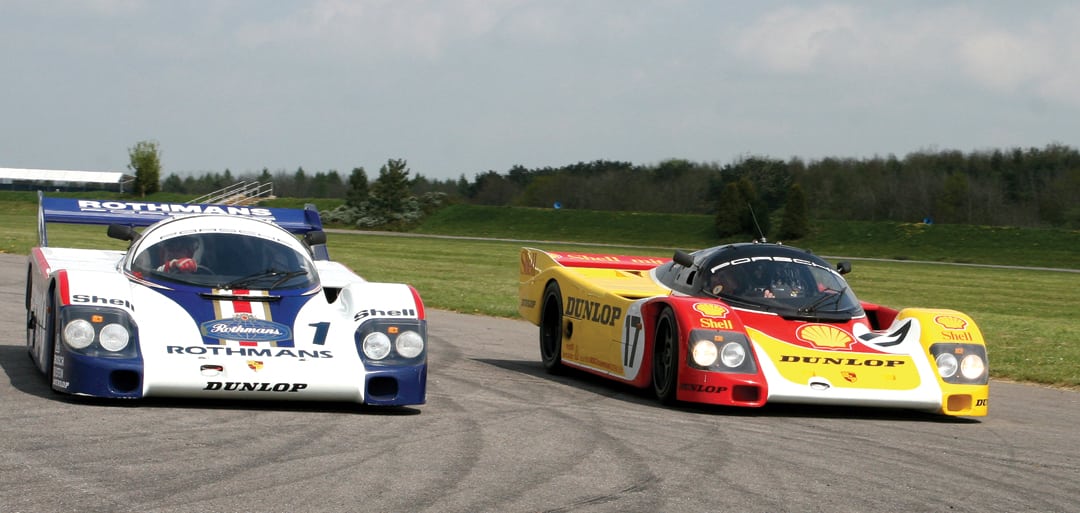
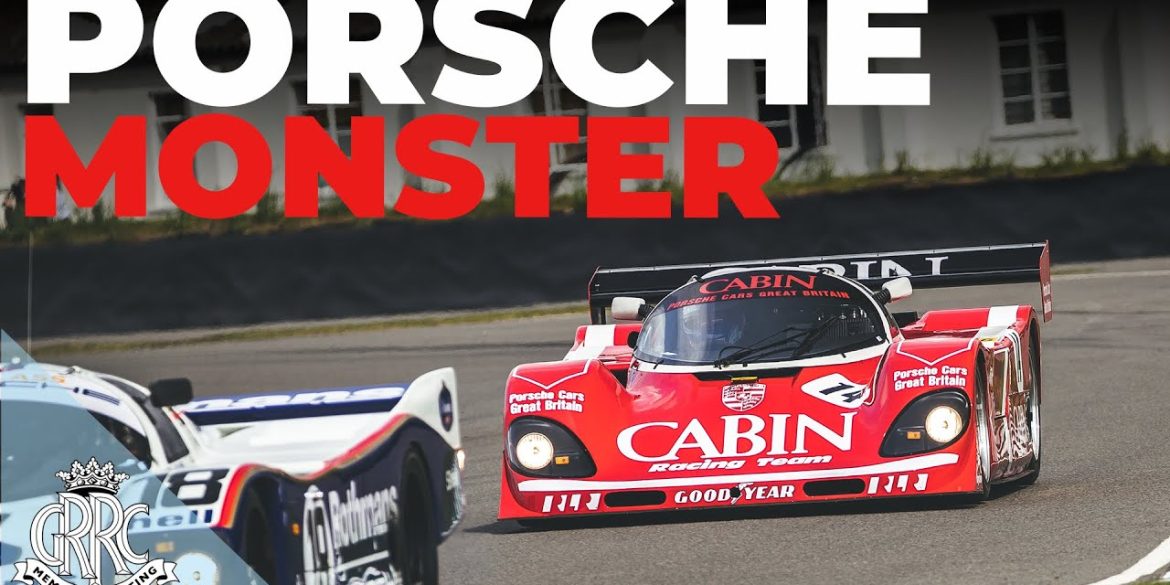
Singer's 956 of 1982 was the first Porsche with an aluminium monocoque and ground-effect underbody, and with the 2.65-litre twin-turbo flat-six from the 936 it won Le Mans in 1982 with Ickx and Bell, 1983 with Holbert, Haywood and Schuppan at the head of nine Porsches in the first ten, 1984 and 1985 for Joest, and as the long-wheelbase 962C in 1986 and 1987 with Bell, Stuck and Holbert, seven in a row from 1981; the 962 won the IMSA championship for Holbert in 1985, 1986 and 1987 and Daytona five times. McDonough's Alpha and Omega drives Derek Bell's first works 956 and his last 962 with Bell beside him, and the archive's Greatest Racecar pieces on the 956/962, Stuck's 1985 car and Keegan's are the drivers' view. The type's long afterlife gave Porsche three more Le Mans wins: the Dauer 962 of 1994, a 962 homologated as a GT road car, won with Dalmas, Haywood and Baldi; the Joest WSC-95, two ex-Jaguar TWR chassis with 962 engines that Ludvigsen calls the unlikely Le Mans winner, won in 1996 and 1997; and the 911 GT1-98, a mid-engined carbon prototype with a 911 nose, won in 1998 for McNish, Aiello and Ortelli, Porsche's sixteenth. The Porsche at Le Mans 1982–87 instalment and the 962 ultimate guide are the archive's long reads.
The 959, the Carrera GT and the Supercars, 1986 to 2015
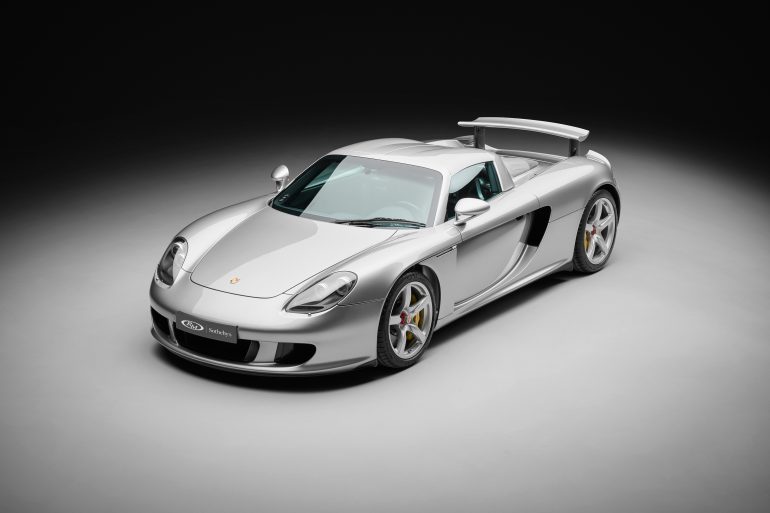
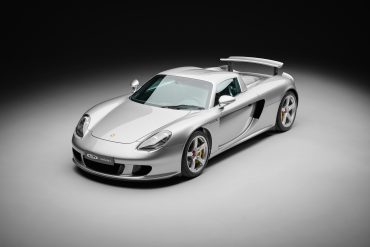
The 959 of 1986, built for a Group B that was cancelled before it raced, was the most advanced road car of its decade: twin sequential turbochargers, four-wheel drive with variable torque split, adjustable ride height, 197 mph, and a Paris–Dakar win in 1986 in rally trim; 292 were sold, and the archive's 959 history and its Dakar story cover it. The 911 GT1 Straßenversion of 1997 was a racing car with number plates, as the 962 had been in Dauer form. The Carrera GT of 2003–06, 1,270 built, put a 5.7-litre V10 from an abandoned Le Mans project into a carbon chassis with a manual gearbox and no electronic nannies, which is why the archive calls it the last analogue hypercar; the 918 Spyder of 2013–15, 918 built, was its hybrid successor, 887 horsepower and the first production car round the Nürburgring in under seven minutes. The Supercar Era and GT1 to Hypercar pages put them against the F40, the McLaren F1 and the LaFerrari.
From Near-Bankruptcy to the Cayenne: The Modern Company, 1992 to 2026
In 1992 Porsche sold 23,000 cars, the 911 was old, the 928 and 944 were dying and the company was close to failing. Wendelin Wiedeking, chief executive from 1993, brought in Japanese production methods, launched the Boxster in 1996 and the water-cooled 996 in 1997 on shared parts, and in 2002 the Cayenne, an SUV that purists hated and that made Porsche the most profitable car company in the world; the Panamera followed in 2009, the Macan in 2014 and the electric Taycan in 2019. The profits funded an attempt to take over Volkswagen that ended, in the financial crisis of 2008–09, with Volkswagen taking over Porsche instead; Porsche AG has been a Volkswagen group company since 2012, with the Porsche and Piëch families controlling the group through Porsche SE, and was floated on the Frankfurt exchange in September 2022. On the track the works returned to the top class at Le Mans with the 919 Hybrid and won in 2015, 2016 and 2017, the seventeenth, eighteenth and nineteenth wins, then left for Formula E; the 963 LMDh of 2023, run by Penske, won Daytona in 2024 and 2025. The 911 GT3 R, the Cup cars and the one-make Carrera Cups and Supercup keep more Porsches racing each weekend than any other make. The archive's Rennsport Reunion galleries, from Lime Rock in 2001 to Laguna Seca and Daytona, are where the whole history turns up at once.
The Porsche Models: 356 to 963
The archive's Porsche stories are organised by Model tag, nearly fifty of them. The road cars: the 356 in all its forms; the 911 by generation, with its own tags for the Carrera RS 2.7, the Carrera RSR, the 930 Turbo, the 964, 993, 996, 997 and 992, the GT1, the Dakar and the Singer re-creations; the 912 and 914; the 924, 944 and 928; the Boxster and Cayman; the 959, Carrera GT and 918 Spyder. The racing cars: the 550 Spyder, 718 RSK, 804, 904, 906, 907, 908, 910, 917 and its 917/10 and 917/30 variants, 934, 935, 936, 956, 962, RS Spyder, 919 Hybrid and 963. Each tag is the thread for that car, and the nine below are the ones the archive has most to say about.
The Porsche Models
Nine the archive has most to say about; each links to every story on the site about that car.
1948–1965356The first Porsche, from the Gmünd coupés to the Speedster and the four-cam Carrera: 76,000 built, half of them for America, and the archive's most-profiled early Porsche.1953–1956550 SpyderThe first purpose-built racing Porsche, the giant-killer of the Carrera Panamericana and the Targa Florio, and James Dean's car.1964–911Butzi's shape, in production for sixty years and a million cars: the long-bonnet cars, the 2.7 RS, the 930 Turbo, the 993, the 996 and the GT3s, each with its own thread.1964904 Carrera GTSThe fibreglass coupé that won the Targa Florio first time out and bridged the 718 and the prototypes; McDonough's Swiss Spyder.1969–1973917Two Le Mans wins, the 5,335-km record and the 1,100-horsepower 917/30; the archive's own page follows it from the Geneva show to Rennsport Reunion.1976–1981935The Group 5 silhouette 911 that won four world championships, Daytona and Sebring repeatedly and Le Mans in 1979; Moby Dick and the Kremer K3.1982–1994956 and 962Singer's ground-effect prototype and its long-wheelbase successor: seven Le Mans in a row, three IMSA titles, and McDonough driving Bell's first and last.1986–1993959The Group B supercar that never raced on tarmac: twin turbos, four-wheel drive, 197 mph and a Paris–Dakar win; 292 sold.2003–2006Carrera GTA Le Mans V10 in a carbon chassis with a manual gearbox, 1,270 built; the last analogue hypercar and a modern blue chip at auction.
Every Porsche Car Story
Single-car and chassis stories: the 356s and 911s, the Spyders and prototypes, the turbos and the cars that surface at auction.
Porsche at Le Mans, the Targa Florio and Daytona
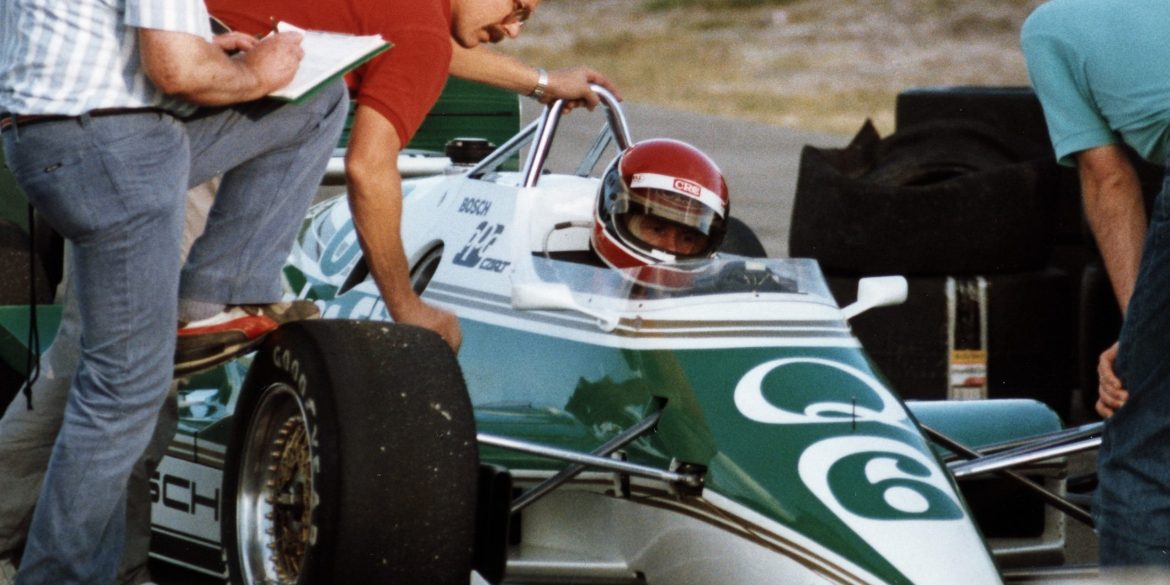
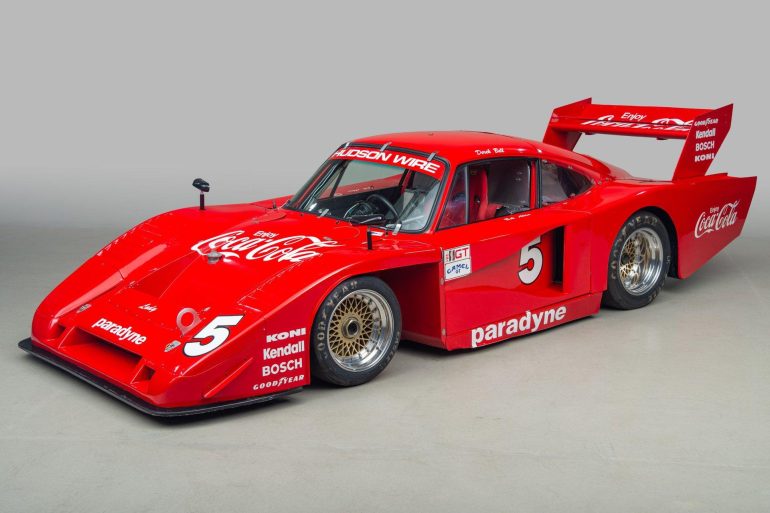
Porsche's racing record is spread across the site's Great Races pages, and the Racing feed below gathers the Porsche race accounts in one place. At Le Mans: class wins from 1951, the 917's wins of 1970 and 1971, the 936 and 935 years, the 956 and 962's seven in a row, the Dauer, WSC-95 and GT1 wins of the 1990s, the 919's three and the 963 now; nineteen wins in all, with the archive's four-part Porsche at Le Mans series and its book review of Porsche at Le Mans: 70 Years as the long reads. On the Targa Florio: eleven wins, from Maglioli in 1956 to van Lennep and Müller's RSR in 1973, the most of any make. At Daytona: the 907's 1-2-3 in 1968, the RSR, 935, 962 and 963 years, the Brumos and Penske wins, and more overall victories than any other manufacturer. At Sebring: the first in 1960 with the RS60, then the 908s, RSRs, 935s, 962s and the 963, again the record. In the Carrera Panamericana: the 550's class wins that named the Carrera. In the Can-Am: the 917/10 and 917/30 championships of 1972 and 1973. In Formula One: Gurney's 1962 French Grand Prix in the 804 and the TAG-Porsche turbo engines that won McLaren the drivers' championships of 1984, 1985 and 1986. The archive's Porsche and Indy series covers the 1980 and 1987–90 Indianapolis programmes.
Porsche Racing, Race by Race
Race profiles and reports with a Porsche in them, newest first.
The People of Porsche
The family first: Ferdinand Porsche, the founder; Ferry, who built the 356 and ran the company until 1972; Louise Piëch, whose Salzburg concern ran the 1970 Le Mans winner; Butzi Porsche, who drew the 911 and the 904; and Ferdinand Piëch, who built the 917 and later bought the company for Volkswagen. The engineers: Karl Rabe, Erwin Komenda and Franz Xaver Reimspiess of the early years, Ernst Fuhrmann of the four-cam engine and the 1970s, Hans Mezger of the 917 and TAG engines, Helmuth Bott, Peter Falk and Norbert Singer of the racing department, whose interview is in the archive, and Hans Tomala. The team owners and entrants: John Wyer and Gulf, Roger Penske, Peter Gregg and Brumos, Reinhold Joest, the Kremer brothers, Vasek Polak, Al Holbert and Andial. The drivers: Hans Herrmann, Edgar Barth, Jo Bonnier, Dan Gurney, Vic Elford, Jo Siffert, Pedro Rodríguez, Brian Redman, Richard Attwood, Gérard Larrousse, Helmut Marko, Gijs van Lennep, Mark Donohue, George Follmer, Jacky Ickx, Jürgen Barth, Hurley Haywood, Derek Bell, Hans Stuck, Al Holbert, Jochen Mass, Bob Wollek, Klaus Ludwig, Walter Röhrl, Allan McNish, Timo Bernhard, Brendon Hartley, Nick Tandy and Earl Bamber. The archive's Haywood interview by Hal Crocker, its Attwood, Redman, Elford and Follmer interviews, Lyons on Pedro and the Can-Am legends, and the Ferdinand Porsche profile are the portraits; the People feed below carries the rest.

The People
Drivers, engineers, entrants, dealers and collectors of the Porsche story, in profiles and interviews.
Porsche in America: Hoffman, Brumos, Penske and Rennsport Reunion
America made Porsche. Max Hoffman sold the first 356s from his Park Avenue showroom in 1950 and asked for the Speedster and the crest; California took forty per cent of the 356s that crossed the Atlantic; the SCCA's production and modified classes were full of Porsches from the 1950s onward, as the archive's Watkins Glen, Pebble Beach road race and Santa Barbara histories show; and the works' first great customers and entrants were American, Briggs Cunningham, Bob Holbert, Vasek Polak, Peter Gregg's Brumos, whose Daytona wins with Haywood began the 911's endurance career, Roger Penske, whose 917/30 was the most powerful racing car ever to run a season and whose 963 runs now, and Al Holbert, who won three IMSA titles in the 962 and ran Porsche Motorsport North America until his death in 1988. The Rennsport Reunion, held since 2001 at Lime Rock, Daytona and Laguna Seca, is where the works brings the museum's cars to meet the American ones, and the archive has photographed every one. Its interviews with Haywood, Follmer, Donohue's contemporaries and the American restorers and collectors of 356s and 911s are the record of that side of the story.
Buying a Porsche: The Market, Auctions and Values
The Porsche market has two ends. At the top are the racing cars, the 917s, 956s and 962s that trade privately or at Pebble Beach for eight figures, led by the McQueen 917K at $14.08 million in 2017, the 550 Spyders and RSKs, the 904s, the Carrera GTS and the 959s; below them the collectable 911s, the 2.7 RS and RSR, the 930 Turbo, the 993 RS and Turbo, the 964 RS and the GT3 RS 4.0, which have multiplied in value since 2010, the 356 Speedsters and Carreras, and the Carrera GT and 918 as modern blue chips. At the other end is the largest and most liquid classic-car market there is: 356s and air-cooled 911s by the thousand, 912s, 914s, 924s, 944s and 928s, Boxsters and early water-cooled cars, where the archive's buying guides on the 964, 996 and 986 are the place to start. The archive has more than two hundred Porsche auction and for-sale stories; the two feeds below are the Porsches at auction and the Porsches for sale now, newest first, and The Market's own pages carry the price histories.
Porsches at Auction
Auction previews and results for Porsches, newest first.
Porsches for Sale
Porsches offered by dealers and collectors, newest first.
Porsche in Pictures
The galleries run from Rennsport Reunion and the Porsche Parade to Goodwood's Porsche races, the Le Mans Classic, the Porsche Museum at Zuffenhausen, the concours lawns and the single-car photo profiles the archive ran through the 2010s. The Galleries feed below is the whole set, newest first.
In Pictures
Porsche galleries from Rennsport Reunion, the circuits, the museum and the concours lawns.
Porsche Records and Numbers
Founded: Dr. Ing. h.c. F. Porsche GmbH, Stuttgart, April 1931; the first Porsche car, 356 No. 1, Gmünd, 8 June 1948; Zuffenhausen since 1950; Weissach development centre since 1971. Ownership: the Porsche and Piëch families until 2009; a Volkswagen group company since 2012; floated September 2022. Production: 356, about 76,000 (1948–65); 911, over one million (1964–2017) and counting; about 310,000 cars of all types in 2024. Le Mans: 19 wins (1970, 1971, 1976, 1977, 1979, 1981–87, 1994, 1996, 1997, 1998, 2015, 2016, 2017), the record, plus more than a hundred class wins. Targa Florio: 11 wins (1956, 1959, 1960, 1963, 1964, 1966–70, 1973), the record. Daytona 24 Hours and Sebring 12 Hours: more overall wins than any other make. World championship for makes: 1969, 1970, 1971, 1976–79, 1981–85; World Endurance Championship 2015, 2016, 2017. Can-Am: 1972 and 1973. Formula One: one Grand Prix win as a constructor (Gurney, Rouen, 1962); three drivers' and two constructors' titles as McLaren's TAG engine supplier (1984–86). The supercars: 959, 292 sold (1986–93); 911 GT1 Straßenversion, about 20 (1997); Carrera GT, 1,270 (2003–06); 918 Spyder, 918 (2013–15). The 917: about 65 built; 240 mph on the Mulsanne, 1971; 1,100 hp in the 917/30, 1973. Record price: $14.08 million for the McQueen Gulf 917K, Pebble Beach, 2017.
Questions People Ask
Short answers, with the long ones above.
Who founded Porsche?
Ferdinand Porsche opened the design bureau in Stuttgart in 1931; his son Ferry Porsche built the first car to carry the name, the 356, at Gmünd in Austria in 1948 and ran the company until 1972.
What was the first Porsche?
The 356 No. 1 roadster of 1948, a mid-engined aluminium car using Volkswagen parts, followed by the rear-engined production 356. The Type 64 of 1939, a Volkswagen-based streamliner, was the first car to carry the Porsche name but was never sold.
How many times has Porsche won Le Mans?
Nineteen, the record: 1970 and 1971 with the 917, 1976, 1977 and 1981 with the 936, 1979 with the 935 K3, 1982 to 1987 with the 956 and 962, 1994 with the Dauer 962, 1996 and 1997 with the WSC-95, 1998 with the 911 GT1 and 2015 to 2017 with the 919 Hybrid.
Why is the 911 engine in the back?
Because the 356 inherited the Volkswagen layout Ferdinand Porsche had designed, and the 911 kept it in 1963 for packaging, traction and continuity. Porsche tried to replace the 911 with the front-engined 928 in the late 1970s and gave up; the layout has been refined rather than changed ever since.
What does Carrera mean?
Race, in Spanish: the name comes from the Carrera Panamericana, the Mexican road race in which the 550 Spyder won its class in 1953 and 1954, and was first used on the four-cam 356 Carrera of 1955.
Who owns Porsche?
Porsche AG has been part of the Volkswagen group since 2012 and has been publicly listed since 2022; the Porsche and Piëch families control Volkswagen through their holding company, Porsche SE.
What is the most valuable Porsche?
The 917, led by Steve McQueen's Le Mans film car, chassis 024, at $14.08 million at auction in 2017; 956s, 962s, 550 Spyders and 904s are the other eight-figure cars, and the 959, Carrera GT and 2.7 RS lead the road cars.
What is the difference between a 356 and a 911?
The 356 (1948–65) is the original Porsche, with a four-cylinder engine derived from the Volkswagen's; the 911 (1964 on) replaced it with a larger body and a six-cylinder engine, both air-cooled and rear-mounted until the water-cooled 996 of 1998.
Where is Porsche made?
The 911, 718 and Taycan at Zuffenhausen in Stuttgart; the Macan, Panamera and Cayenne at Leipzig and, for the Cayenne, Bratislava; development at Weissach since 1971. The Porsche Museum is at Zuffenhausen.
Every Porsche Story
The whole archive on one thread, newest first.