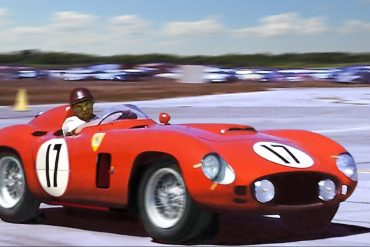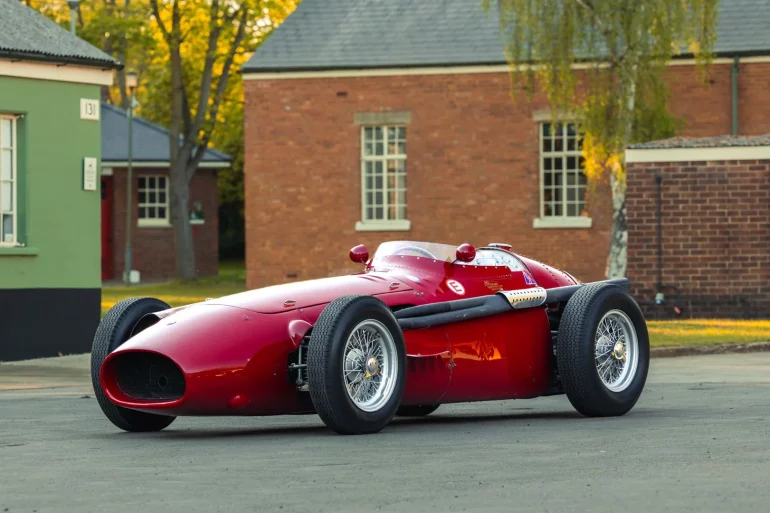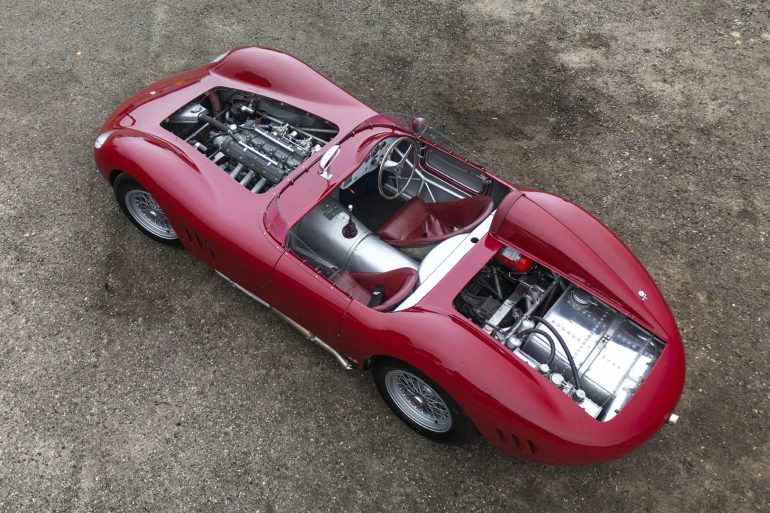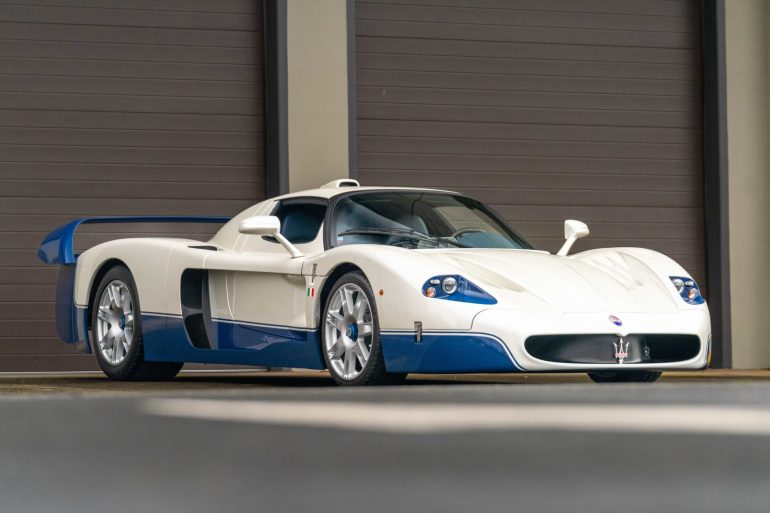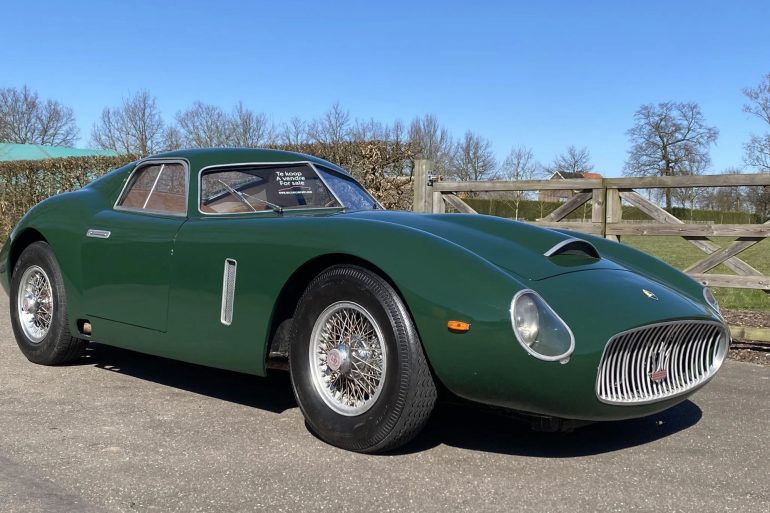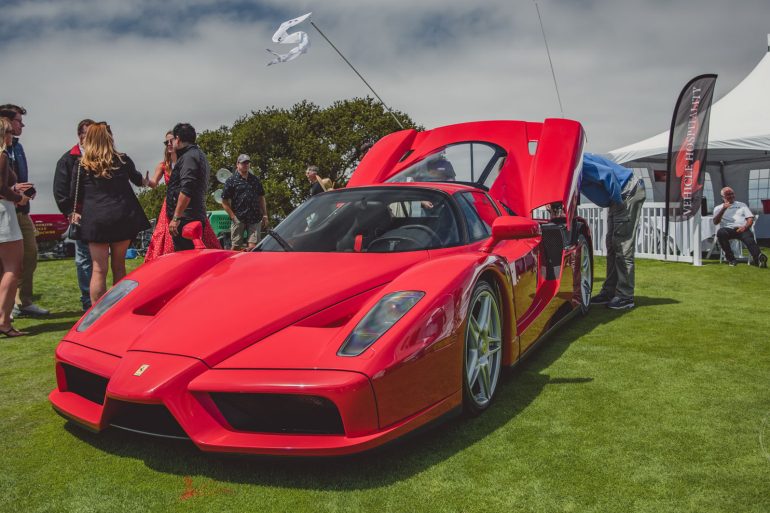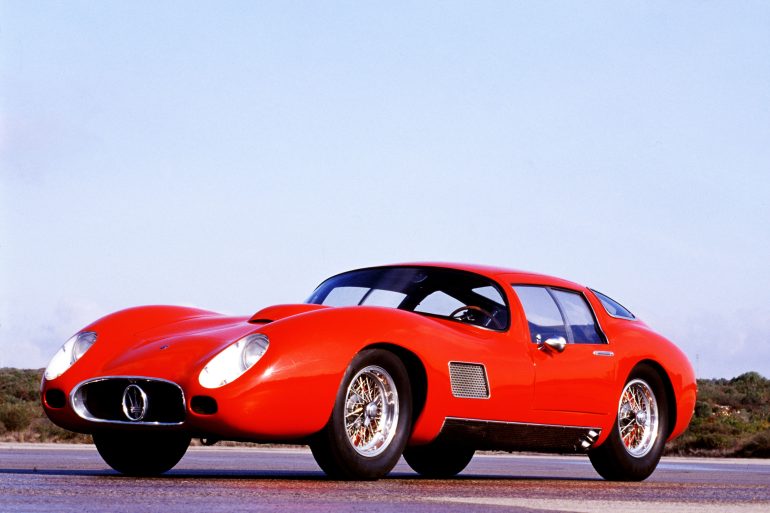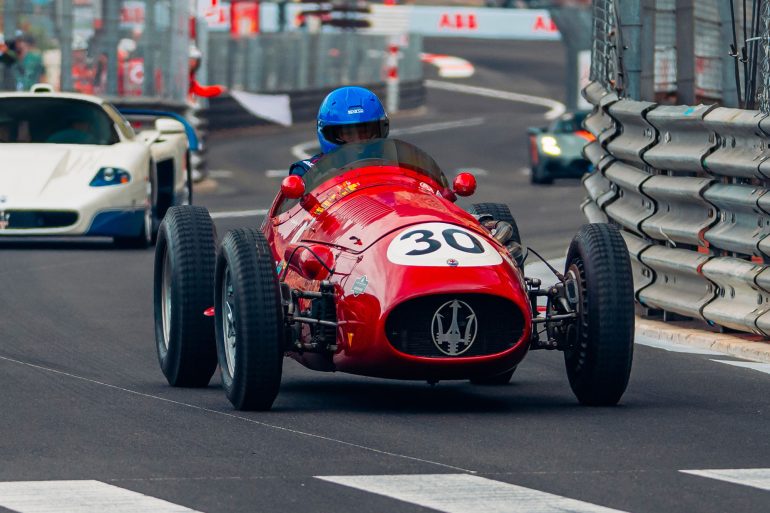
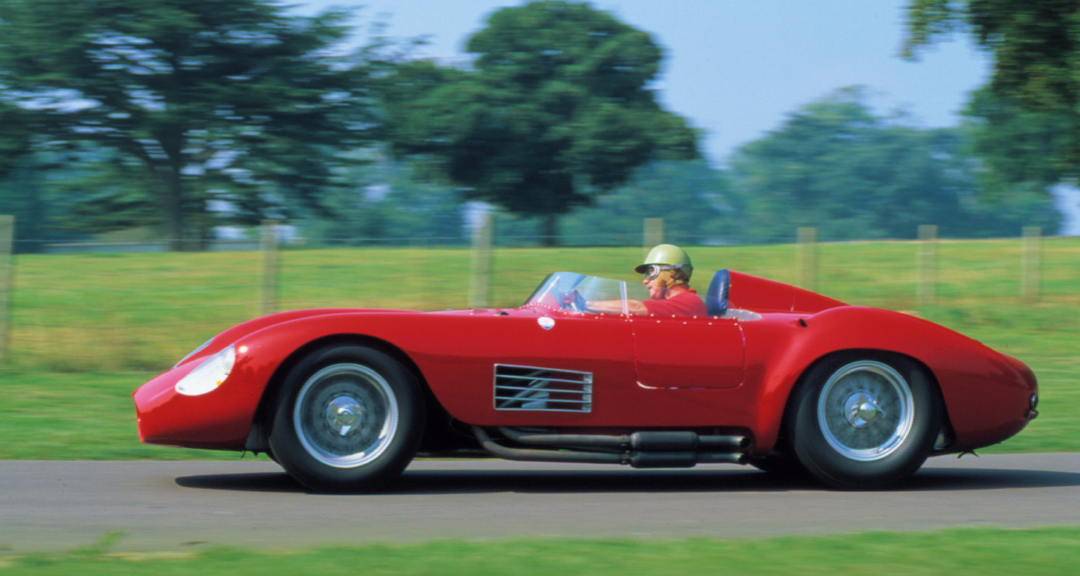
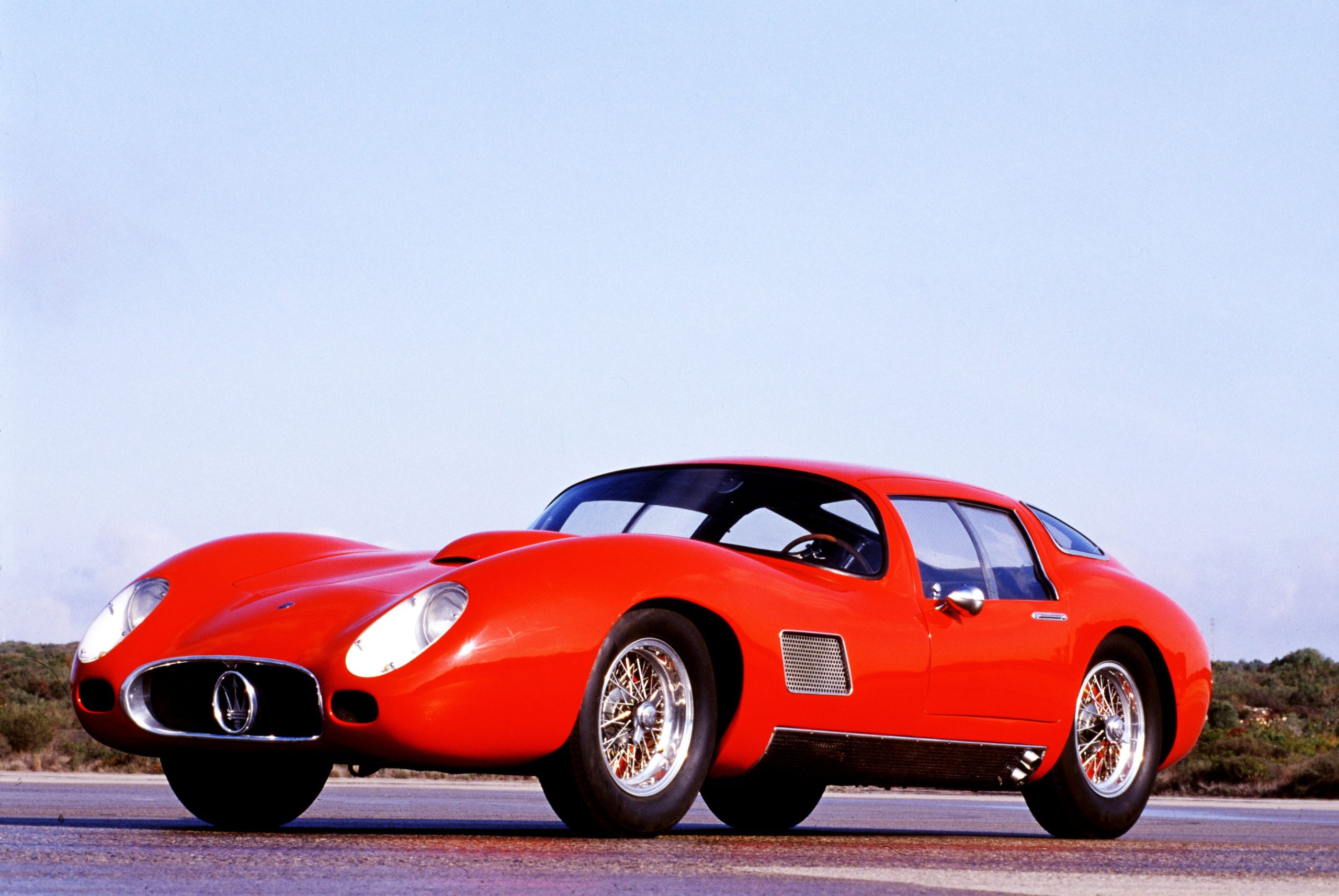
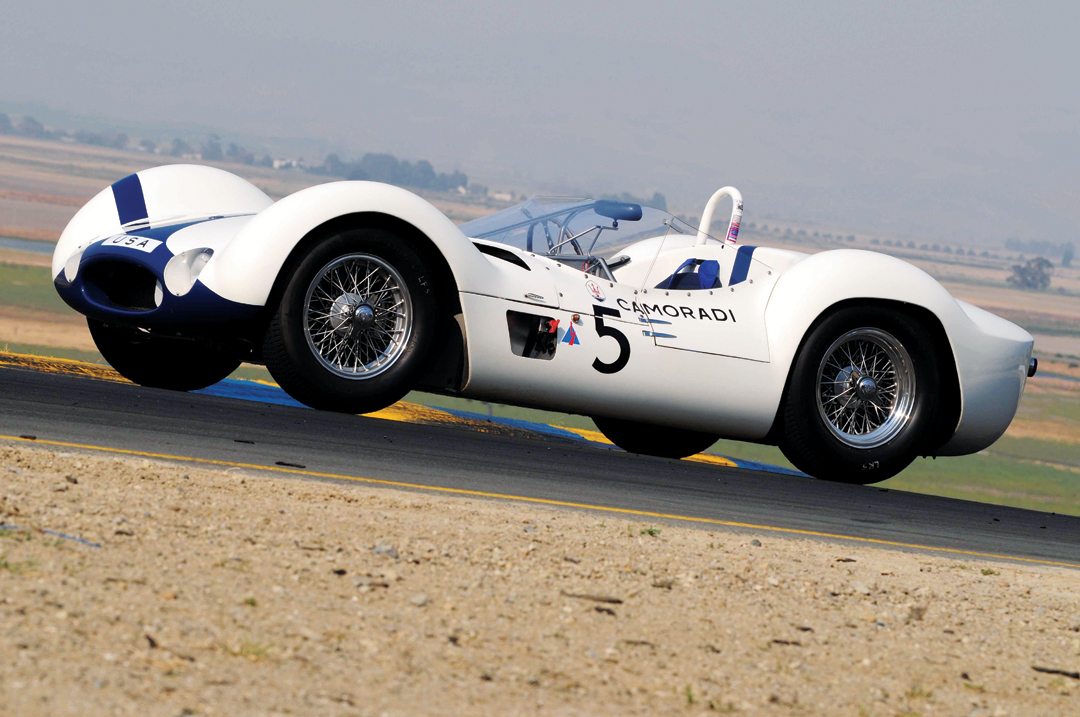
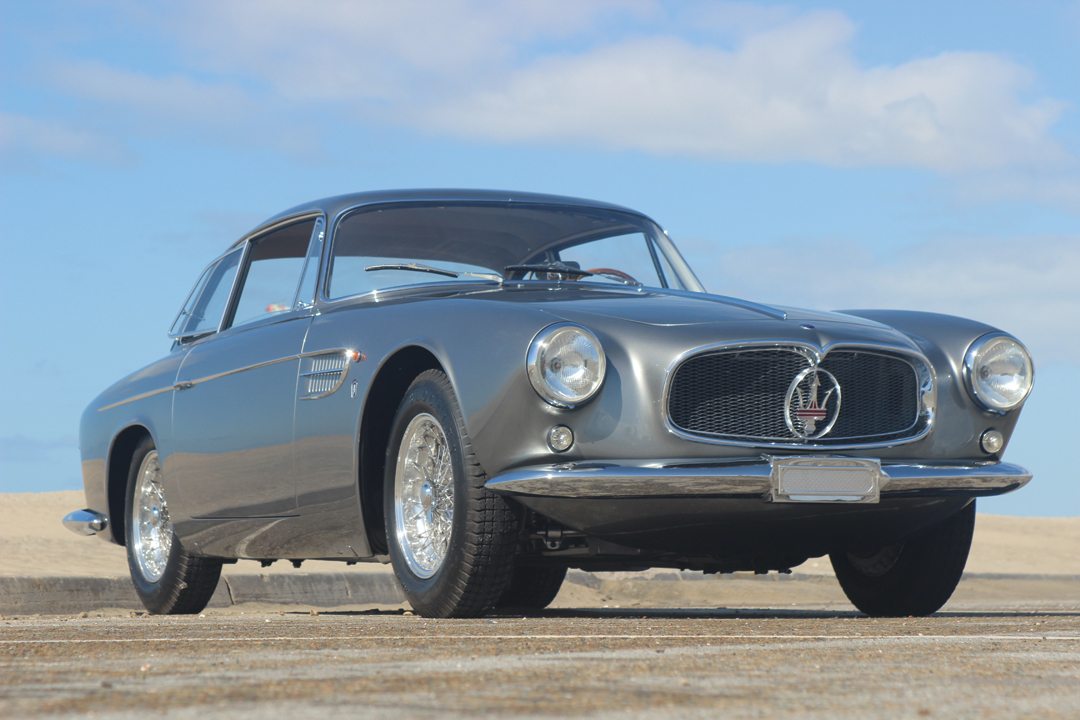
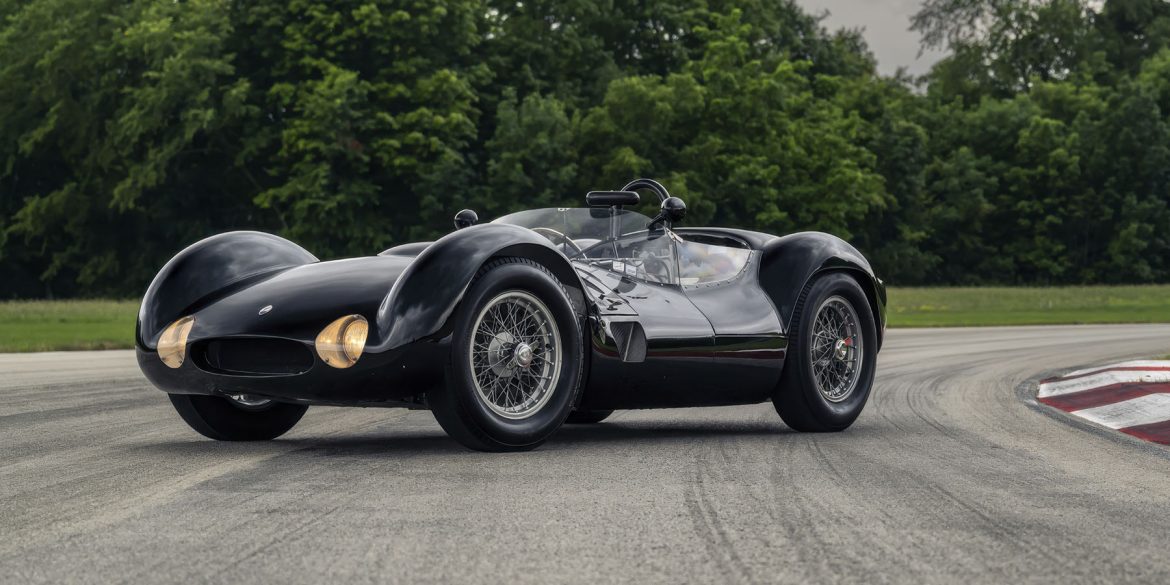
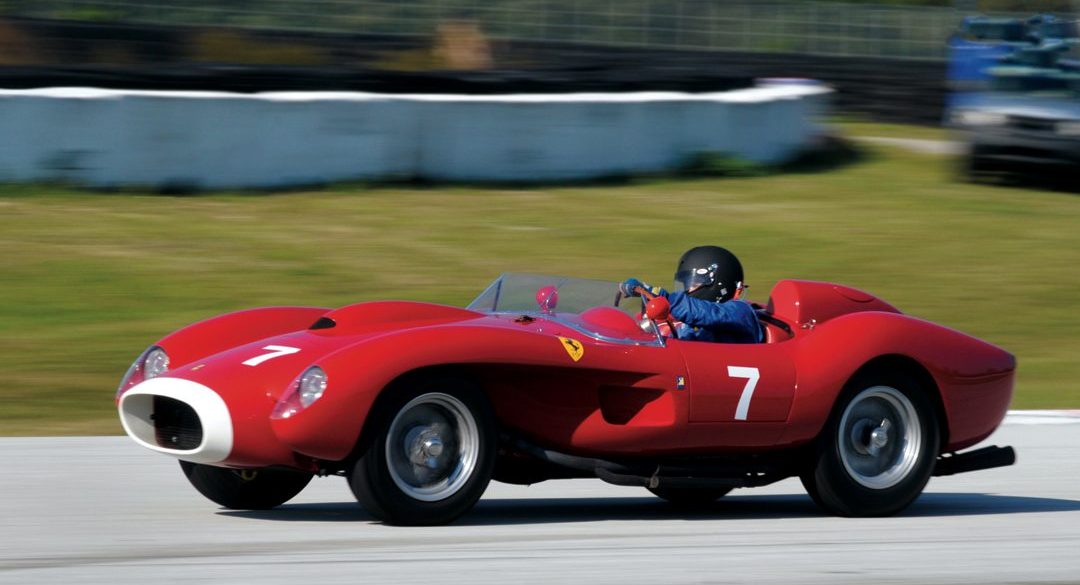
About 200 small-diameter chromoly tubes welded into a frame weighing under 70 lb gave the Tipo 61 its name; the De Dion rear, front suspension and five-speed transaxle came from the 250F. Alfieri's front-engined last stand, built on a shoestring.

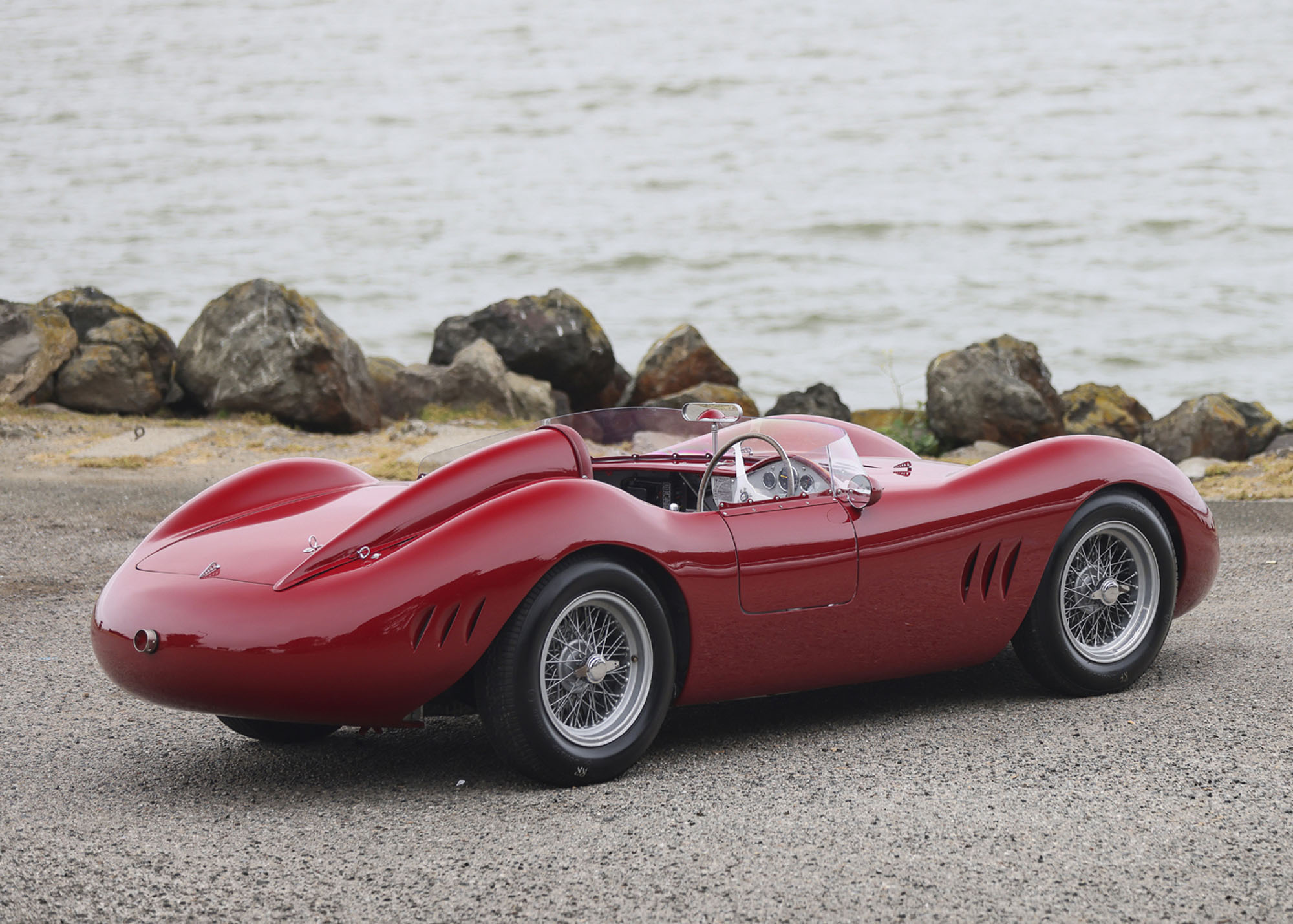
The trident of Bologna, then Modena: the brothers who built racing cars for other people and then for themselves, the 8CTF that won Indianapolis twice, the 250F that gave Fangio his fifth title and the greatest drive of his life, the 300S and the 450S, the Birdcage, the 3500 GT, the Ghibli and the Bora, and the MC12 and MC20 of the Fiat years. The archive has 392 Maserati stories, from Robert Newman's two-part history of the brothers to Karl Ludvigsen's 450S, and this page puts them in order.
The pieces to start with
Eight pieces that explain the marque: Newman's two-part Brothers and Others and his Fangio, McDonough's 300S, Ludvigsen's 450S, Annis's Gilded Cage and Captain of Industry, and Edgar's Shelby years.
Alfieri Maserati resigned from Isotta Fraschini in 1914, having risen from mechanic to Grand Prix driver to technical director, to set up his own company. Robert Newman begins the story of six brothers of instinctive genius and no business sense.
Maserati built 16 cars in 1934, 17 in 1935 and nine in 1936; in 1937 the brothers sold to Adolfo and Omar Orsi, drawn by the spark plug business, and signed a ten-year contract. Robert Newman’s second part.
Robert Newman first met Fangio in a Heathrow lounge, a Pirelli press officer arranging an Autocar interview by Innes Ireland, 17 years after idolizing him from an Australian schoolroom. On the only driver Monterey has honored as a marque.
Ed McDonough has driven a Ferrari 250 Testa Rossa hard. Now two Maserati 300S examples let him weigh the other candidate, a car never as dominant in 1955–1958 as the TR became, but up against Mercedes 300SLRs and D-Types.
Parravano, Los Angeles property developer with 13 Maseratis and as many Ferraris, commissioned a 4.2-litre V8 for Indianapolis in 1954 and never went. Karl Ludvigsen on the 450S that grew from it, the most powerful Maserati since the 8CTF.
Carolina Maserati bore six sons between 1880 and 1898; five built racing cars and the sixth, Mario, drew the trident. Alfieri’s Tipo 26 won its class in the 1926 Targa Florio. Casey Annis traces the line to the Birdcage.
Seven sons of a Piacenza locomotive engineer; Carlo test-drove for Fiat at Lancia’s urging, brought Alfieri, Bindo and Ettore into Isotta Fraschini and died of tuberculosis in 1910. Casey Annis on the brothers and the road-going GT Maserati built grudgingly.
William Edgar first saw Carroll Shelby at Palm Springs in February 1956, six years before the Cobra, in bib overalls and driving the hell out of other people’s cars. Shelby died 10 May 2012, a week before this was due.
The newest long-form writing on Maserati, as it is published.
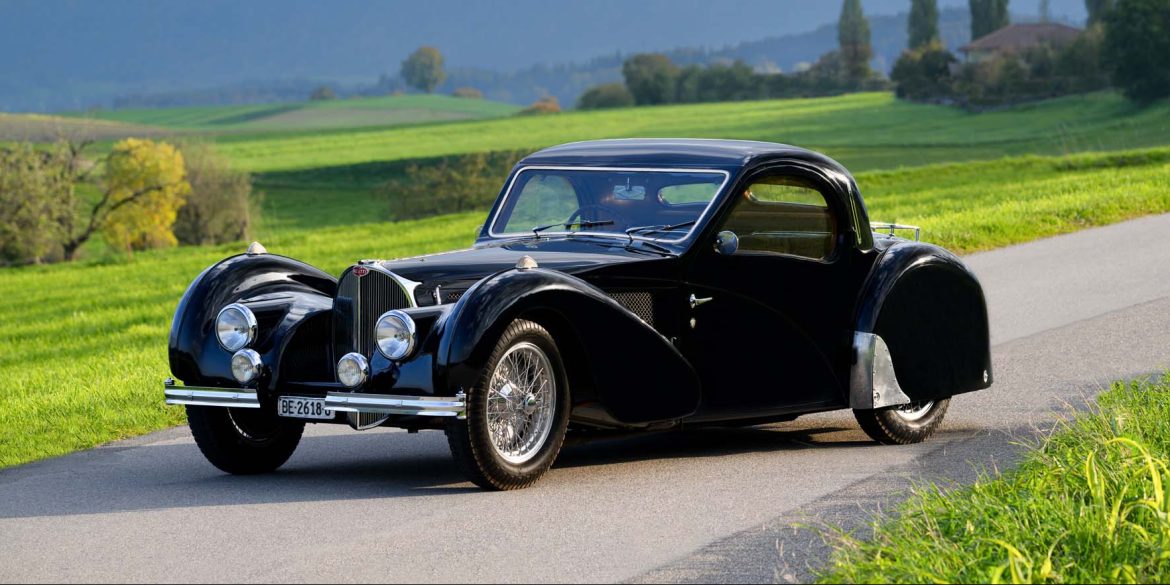

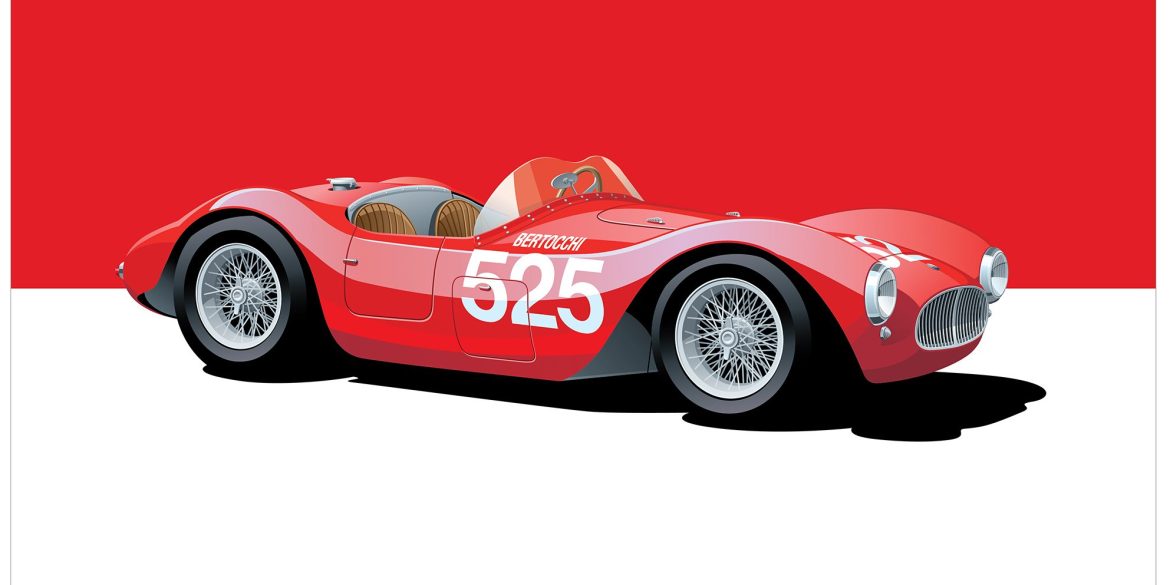
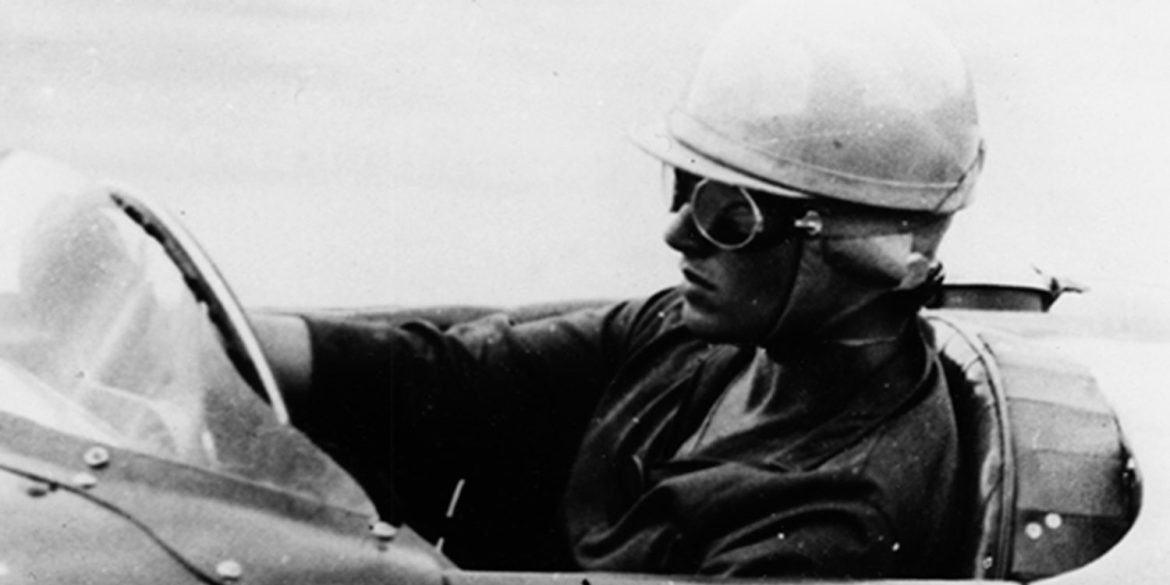
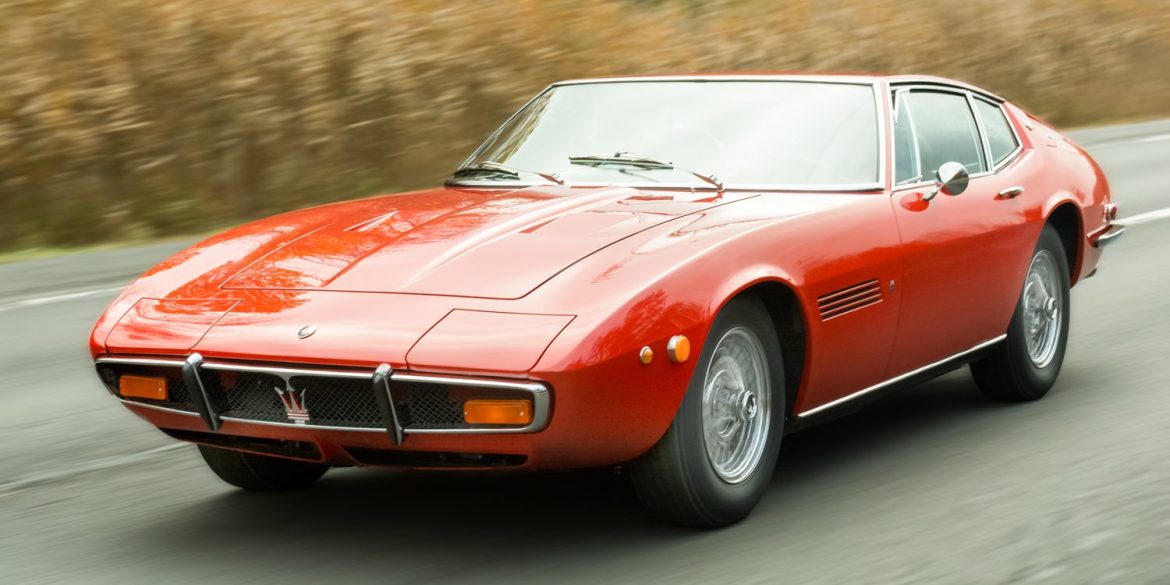
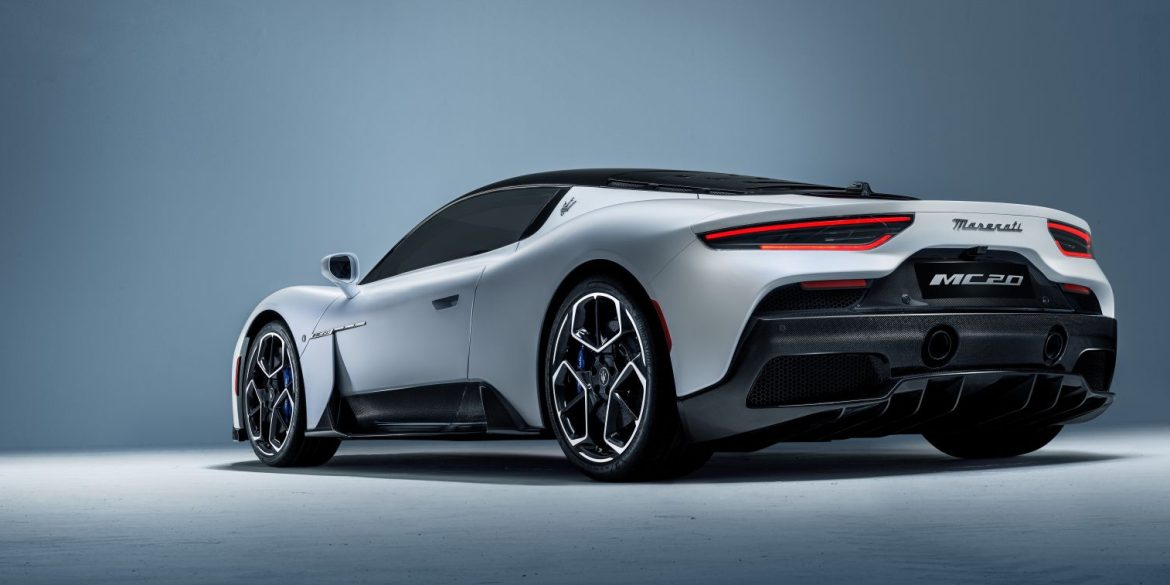
Maserati is the Italian maker of racing, sports and grand touring cars that Alfieri Maserati founded in Bologna on 1 December 1914 with his brothers Ettore and Ernesto, moved to Modena by its second owners, the Orsi family, in 1940, and which has belonged since 1993 to Fiat and its successors, with a decade under Ferrari's management from 1997. For its first forty years it was a racing company before anything else, building Grand Prix voiturettes and sports-racers in small numbers for private customers and a works team when it could afford one, and its road cars, from the A6 1500 of 1947, were a sideline until the 3500 GT of 1957 made them the business. The trident on the badge is Neptune's, from the fountain in Bologna's Piazza Maggiore, drawn by the fifth brother, Mario, the artist of the family.
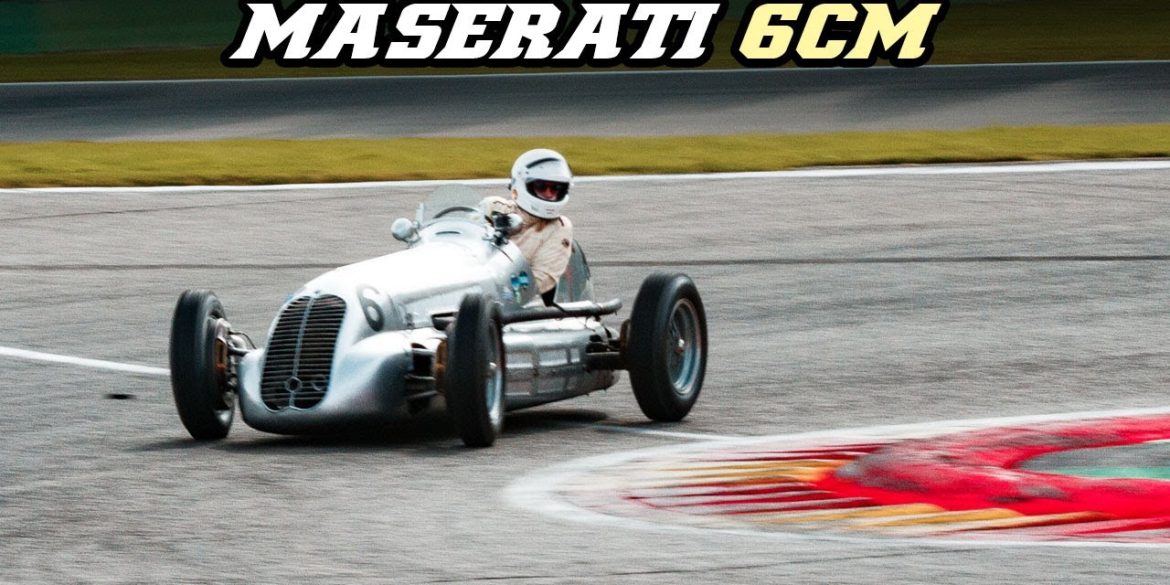
The record is uneven and the high points are very high. A Maserati 8CTF won the Indianapolis 500 in 1939 and 1940 with Wilbur Shaw, the only Italian car to win it; the 250F carried Juan Manuel Fangio to the 1957 world championship and, at the Nürburgring that August, to the drive most people still think the greatest in Grand Prix history; the 450S won Sebring in 1957 with Fangio and Jean Behra; the Tipo 61 Birdcage won the Nürburgring 1000 km twice for Lucky Casner's Camoradi team; the 6CM and 4CL won the Targa Florio four years running before the war; and the MC12 won five FIA GT teams' championships in a row. Maserati never won Le Mans or the Mille Miglia, went bankrupt or nearly so under every owner, and withdrew from works racing at the end of 1957 after the Caracas disaster; the cars it built in the decade before that are among the most beautiful ever raced, and the archive's Maserati coverage, from the brothers to the MC20, follows them.
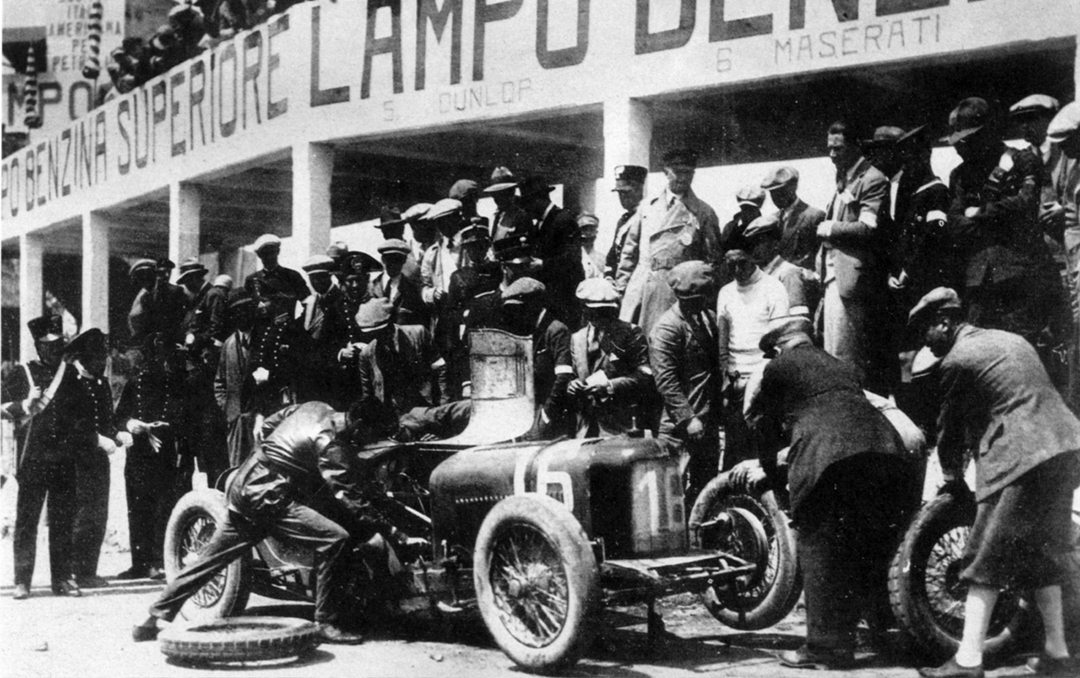
There were seven Maserati brothers, the sons of a railwayman from Voghera, and five of them worked with cars: Carlo, the eldest, who raced motorcycles and died in 1910; Bindo, Alfieri and Ernesto, who went to Isotta Fraschini; Ettore; and Mario, who painted. Alfieri set up the Officine Alfieri Maserati in Bologna in December 1914 to prepare and race Isotta Fraschinis and, after the war, Diattos, and when Diatto gave up racing in 1925 the brothers built their own car from its Grand Prix design: the Tipo 26, a two-litre supercharged straight-eight with Alfieri at the wheel, which won its class on its first outing in the 1926 Targa Florio. Robert Newman's two-part The Brothers and Others in the archive is the fullest telling of the family's story, and Peter Collins's Buried Treasure and McDonough's Singapore Survivor follow two of the 4CS sports cars of the 1930s to the ends of the earth.
Through the late 1920s and 1930s Maserati was the privateer's Grand Prix car. The sixteen-cylinder V4 took the world flying-kilometre record in 1929 and won at Tripoli in 1930; Alfieri Maserati died in March 1932, aged 44, of a kidney injury from a crash at Messina six years before, and the surviving brothers carried on; the 8CM of 1933 won the Belgian Grand Prix with Tazio Nuvolari in his only season with the marque, and the 6CM and 4CM voiturettes won the small-capacity races of the decade against ERA. Against Mercedes-Benz and Auto Union the works could not compete, and in 1937 the brothers sold the company to Adolfo Orsi of Modena, an industrialist who wanted the spark-plug business as much as the cars, and stayed on under a ten-year contract. Robert Young's An African Racing Adventure follows an 8CM to the Grands Prix of South Africa.
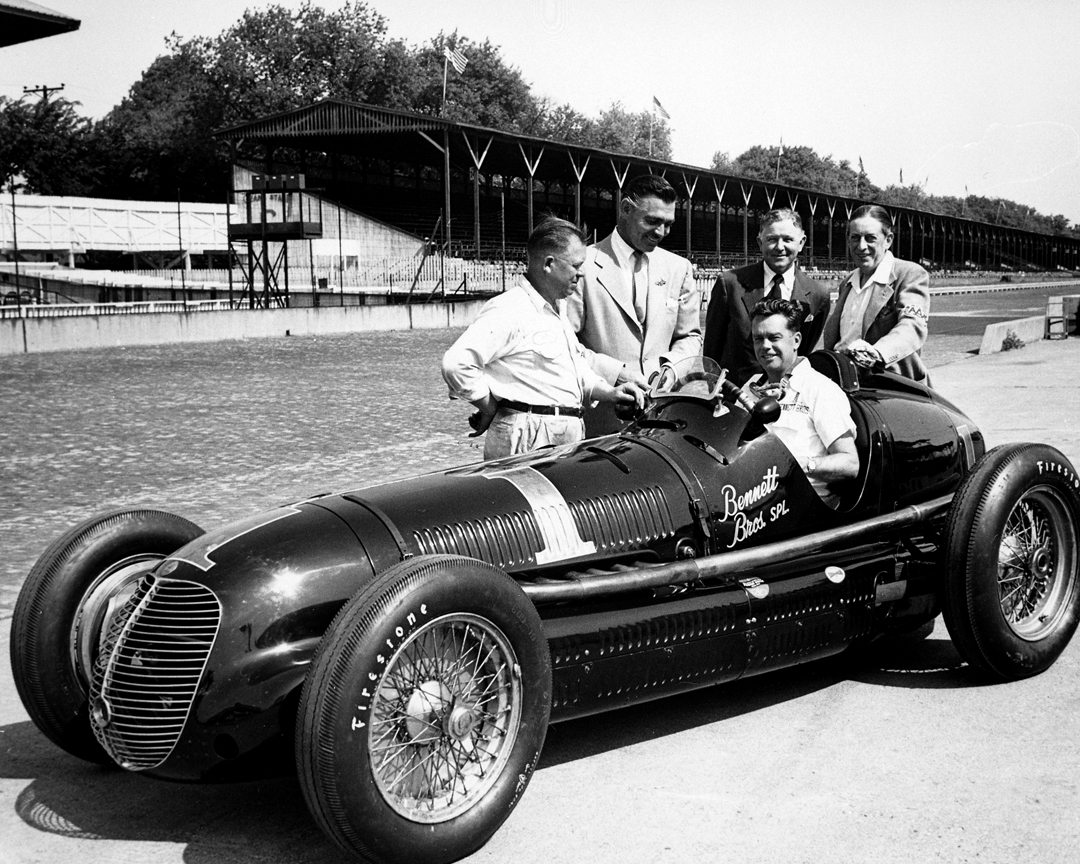
Orsi moved Maserati to Modena in 1940, to the Viale Ciro Menotti works it still occupies, and the brothers' last great car for him was the 8CTF of 1938, a three-litre supercharged straight-eight Grand Prix car that was outclassed in Europe and unbeatable in America: Wilbur Shaw drove Mike Boyle's car to victory at Indianapolis in 1939 and 1940, the Boyle Special, and led in 1941 until a wheel failed, and 8CTFs ran at the Speedway until 1949. The archive's Wilbur Shaw and Indianapolis 500 pages carry the car, and Mike Matune's Extraordinary Men the American Maserati men around it. The 6CM voiturette won the Targa Florio, run for small cars on the Favorita park circuit in Palermo, in 1937, 1938 and 1939, and the 4CL in 1940: four Targas in a row that the Targa Florio hub records. When the brothers' contract expired in 1947 they went back to Bologna and founded OSCA, whose small sports cars the archive covers under their own tag; Maserati kept the name and, under Alberto Massimino and then Gioacchino Colombo, kept building.
Postwar Maserati began with the 4CLT/48 San Remo, the two-stage supercharged voiturette that won its debut race at San Remo in 1948 with Alberto Ascari and was the car of the independents in the first world championship seasons, and with the A6 1500 of 1947, the first Maserati built for the road, a 1.5-litre six in a Pinin Farina coupé body of which sixty-one were made. The A6GCS of 1947 and, more importantly, the two-litre A6GCS/53 of 1953, Colombo's twin-cam sports-racer with the Fantuzzi barchetta body, won their class in the Mille Miglia and the Targa Florio and the Italian sports-car championship and were the cars in which Fangio, Musso and Mantovani learned the marque; the A6GCM single-seater of 1952 and 1953, Fangio's winning car at Monza in 1953, led straight to the 250F. The archive's A6G 2000 and A6GCS threads, Casey Annis's Captain of Industry on an A6G/54 Allemano coupé and his Maserati e Zagato on the Zagato-bodied cars, and Patrick Quinn's Reg Hunt interview on the Australian A6GCM, carry these years, and Willem Oosthoek, the Maserati Club historian the archive profiles, has the American cars one by one.
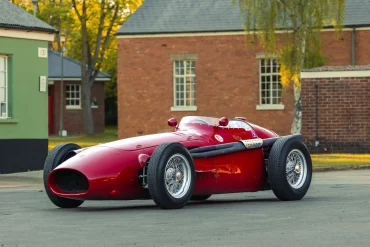
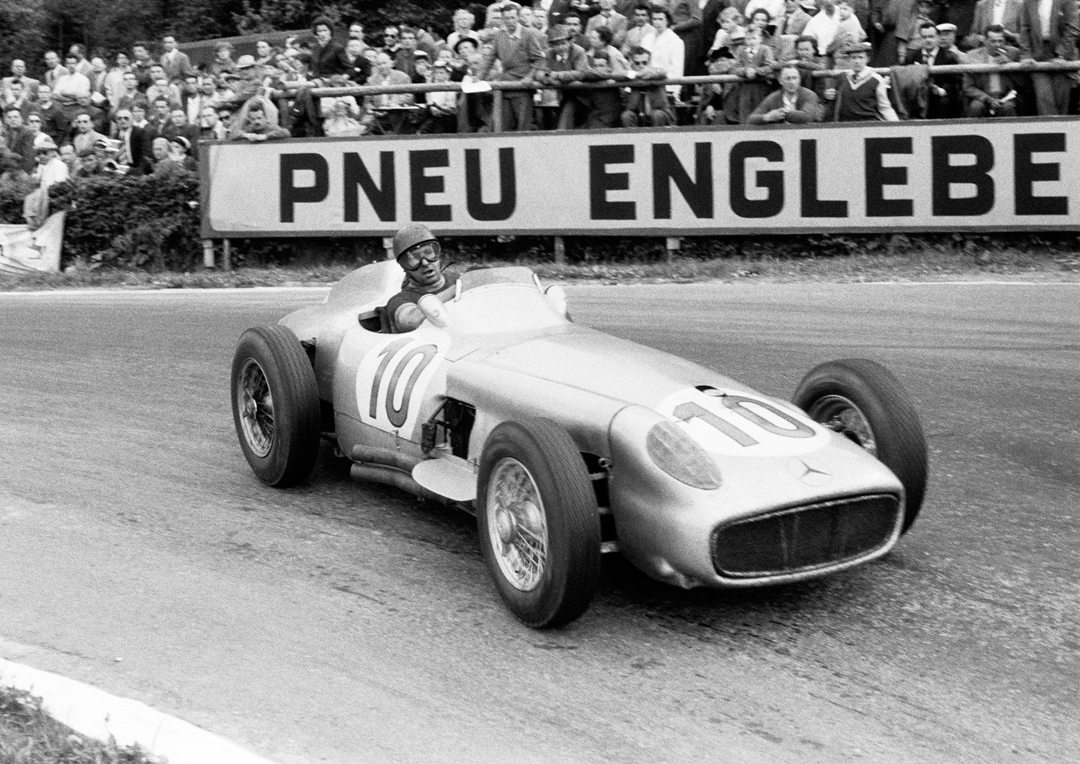
The 250F, designed under Gioacchino Colombo and Valerio Colotti for the new 2.5-litre Formula One of 1954, won its first race, the Argentine Grand Prix of January 1954, in Fangio's hands, and its last championship victory in his hands too, at the Nürburgring in August 1957, and in between became the Grand Prix car that more drivers raced than any other of its era: works cars for Fangio, Moss, Behra and Musso, customer cars for Gould, Salvadori, Schell and the rest, twenty-six of them built or rebuilt between 1954 and 1960. Stirling Moss bought his own 250F for 1954 and was given a works drive for 1956, when he won at Monaco and Monza; Fangio came back to the works for 1957 after his Ferrari year and won in Argentina, Monaco, France and Germany to take his fifth and last championship. The German Grand Prix was the one: a pit stop that went wrong left him 48 seconds behind the Ferraris of Hawthorn and Collins with ten laps left, and he broke the lap record ten times, passed them both on the penultimate lap and won by three seconds. Robert Newman's Fangio: Marque of Greatness in the archive is the portrait, the Formula 1 page has the season and the Model (Maserati 250F) thread, 79 stories, the cars one by one, including the lightweight and the V12 of 1957 that never raced in anger.
The cars and the racing, year by year, with the archive's story of each linked. Car names link to every story on the site about that model.
| Year | The cars | The racing | In the archive |
|---|---|---|---|
| 1914 | Officine Alfieri Maserati, Bologna, 1 December | Preparing Isotta Fraschinis and, after the war, Diattos | The brothers |
| 1926 | Tipo 26 | The first Maserati: Alfieri's class win in the Targa Florio on its debut | The Brothers and Others, Part 1 |
| 1929–30 | V4 sixteen-cylinder | The flying-kilometre record; Tripoli won | |
| 1932 | Alfieri Maserati dies, 3 March | Aged 44, of the Messina injury; the brothers carry on | |
| 1933 | 8CM | Nuvolari wins the Belgian Grand Prix in his Maserati season | Tazio Nuvolari · An African Racing Adventure |
| 1935 | 4CS | The 4CM and 4CS small cars against ERA | Buried Treasure: 1935 4CS · Singapore Survivor |
| 1937 | 6CM | Adolfo Orsi buys the company; the first of four Targa Florio wins | Targa Florio hub |
| 1939–40 | 8CTF · 4CL | Wilbur Shaw wins Indianapolis twice in the Boyle Special; the move to Modena; the Targa Florio again | Wilbur Shaw · Extraordinary Men |
| 1947 | A6 1500 · A6GCS | The brothers leave for OSCA; the first road Maserati, bodied by Pinin Farina | The Brothers and Others, Part 2 |
| 1948 | 4CLT/48 San Remo | Ascari wins at San Remo on the car's debut; the privateers' Grand Prix car | Luigi Villoresi |
| 1953 | A6GCS · A6GCM | Colombo's two-litre sports-racer; Fangio wins the Italian Grand Prix in the A6GCM | Juan Manuel Fangio |
| 1954 | 250F · A6G 2000 | The 250F wins its first race, Argentina, with Fangio; Moss buys his own | Captain of Industry: A6G/54 |
| 1955 | 300S · 150S | The 300S, the nicest sports-racer of its day; the Venezuelan Grand Prix | The Best Sports Racer Ever? |
| 1956 | 250F · 300S | Moss wins Monaco and Monza for the works; the Nürburgring 1000 km with Behra | Stirling Moss |
| 1957 | 250F · 450S · 3500 GT | Fangio's fifth title and the Nürburgring; Sebring won with Behra; Caracas, and the works team closed; the 3500 GT at Geneva | Fangio: Marque of Greatness · The 450S |
| 1958 | 450S | Shelby races John Edgar's 450S in America | The Edgar Ferrari and Maserati Years |
| 1959 | 5000 GT · Tipo 60 | The Shah's 5000 GT; the first Birdcage | |
| 1960 | Tipo 61 Birdcage | Camoradi's Nürburgring 1000 km with Moss and Gurney; the Birdcage's American year | Gilded Cage · The Birdcage Cleaner |
| 1961 | Tipo 61 Birdcage · Tipo 63 | The Nürburgring again, Gregory and Casner; the rear-engined 63 | Masten Gregory |
| 1962–63 | Sebring · Mistral · Quattroporte | Vignale's Sebring, Frua's Mistral and the first Quattroporte | |
| 1966 | Ghibli · Cooper-Maserati T81 | Giugiaro's Ghibli at Turin; Surtees wins the Mexican Grand Prix for Cooper-Maserati | John Surtees |
| 1968 | Ghibli | Citroën buys Maserati; the V6 for the SM | |
| 1971 | Bora | The mid-engined V8 supercar; the Merak follows in 1972 | |
| 1975 | Khamsin | Citroën's collapse; liquidation; De Tomaso takes over with state money | |
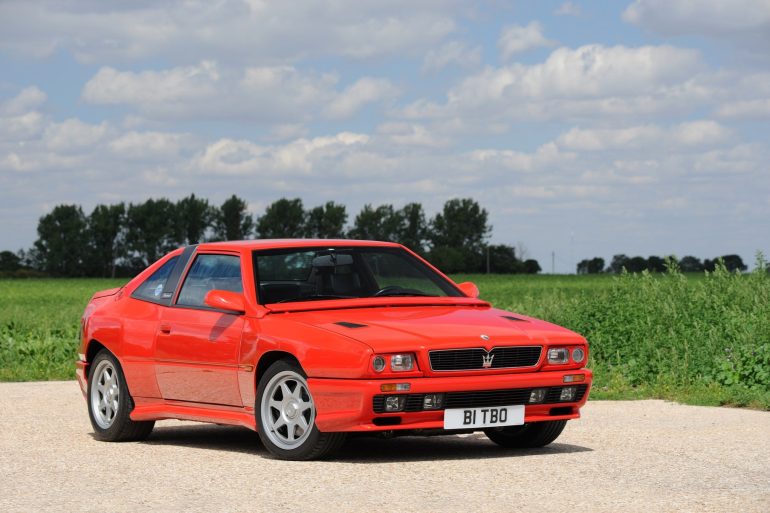
| 1981 | Biturbo | Forty thousand built; the name survives, barely | |
| 1993 | Ghibli II | Fiat buys Maserati; Ferrari takes over the management in 1997 | |
| 1998 | 3200 GT | Giugiaro again; the Ferrari-built V8 cars of 2001 | |
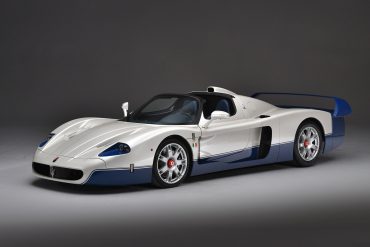
| 2004 | MC12 | The long-tailed Enzo: five FIA GT teams' titles from 2005 and the 2010 GT1 world championship | |
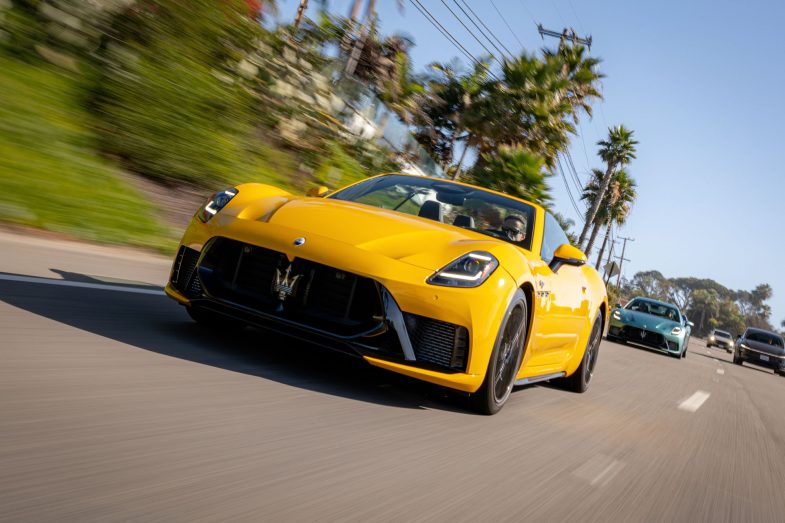
| 2007 | GranTurismo | Pininfarina's last Maserati | |
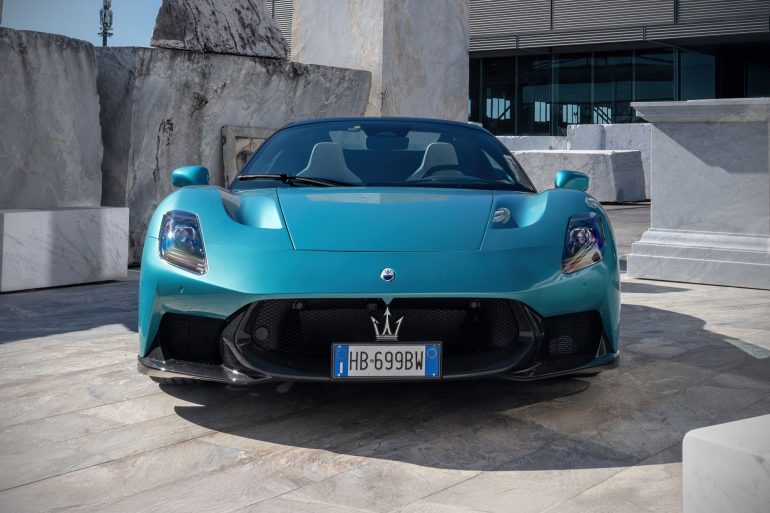
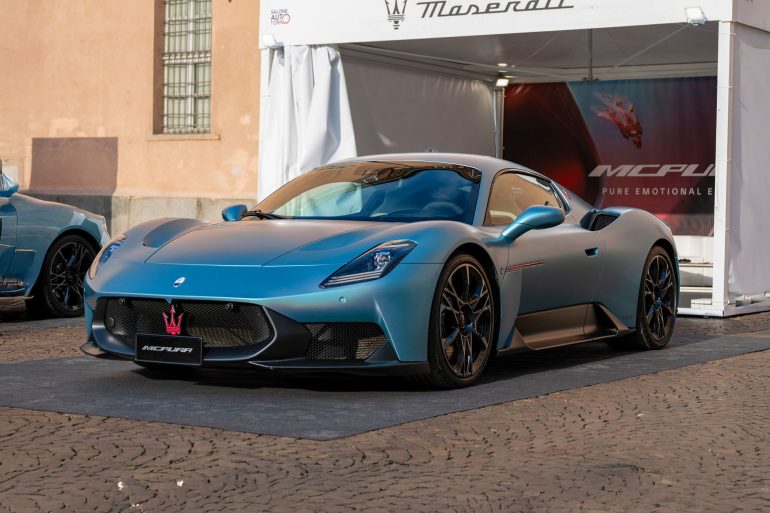
| 2020 | MC20 | The Nettuno V6 and the first proper Maserati sports car since the Bora | |
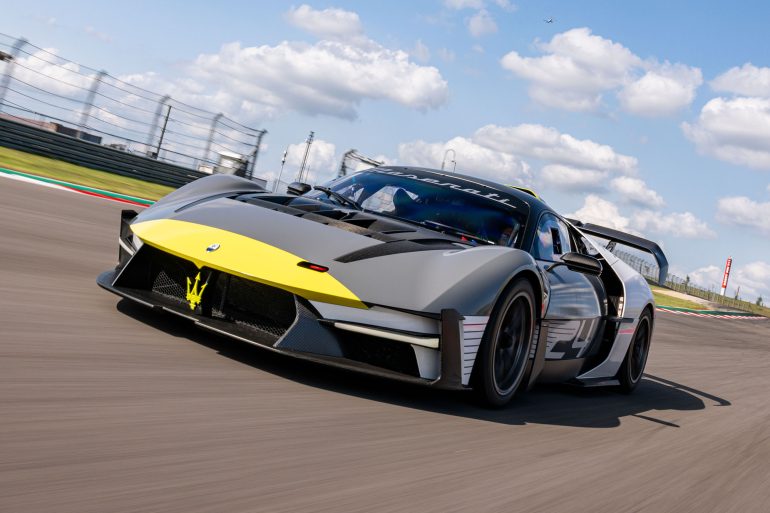
| 2024 | MC20 | The GT2 Stradale; the 110th anniversary | The GT2 Stradale, up close |
| 2025 | Ghibli | The Maserati museum in Modena: the Panini collection | The Maserati Museum |
Pre-war Maseratis are named for cylinders and type (8CM: eight cylinders, monoposto; 4CL: four cylinders, lateral valves) and the 1950s cars for cylinder capacity (250F: 250 cc per cylinder, Formula). The Great Races pages carry each race in full.
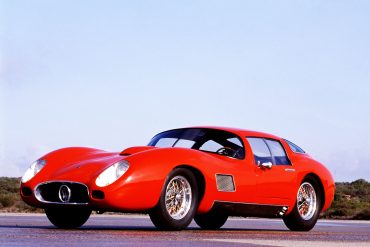
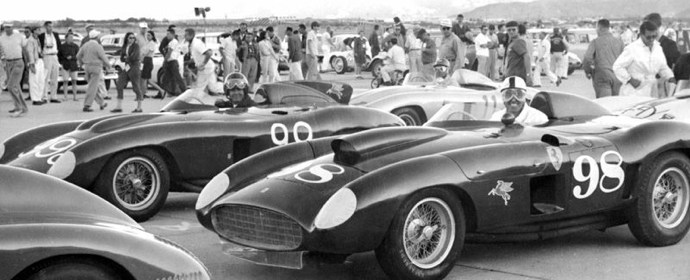
Maserati's sports-racers of the same years were, by common consent, the nicest to drive of their day. The 300S of 1955, a three-litre six in a Fantuzzi body on a tubular frame with the de Dion rear end from the 250F, won the Nürburgring 1000 km in 1956 with Moss and Behra and the Venezuelan Grand Prix twice, and Ed McDonough's The Best Sports Racer Ever? in the archive asks the question in its title and answers it. The 150S and 200S were the smaller sisters, and the 450S of 1957, a 4.5-litre V8 with 400 horsepower, was the fastest sports car in the world: it led the Mille Miglia until its transmission broke, won Sebring with Fangio and Behra and the Swedish Grand Prix with Moss and Behra, and lost the 1957 World Sports Car Championship to Ferrari at the last round in Caracas in November, where both works 450Ss and both 300Ss were destroyed in a single afternoon of crashes and fires. Orsi, who had been losing money on the racing for years and had just lost his Argentine customers to Perón's fall, closed the works team the following week. Ludvigsen's Maserati's Ultimate Sports-Racer, Sean Smith's Pit Bull and the archive's Carroll Shelby stories, William Edgar's The Edgar Ferrari and Maserati Years among them, carry the 450S, which Shelby raced in America for John Edgar; the Zagato-bodied 450S coupé built for Le Mans is the strangest Maserati of all. The World Sportscar Championship page has the seasons.
Giulio Alfieri's Tipo 60 and Tipo 61 of 1959 and 1960, the Birdcages, were built for customers after the works withdrawal: a spaceframe of some two hundred small-diameter tubes, so light that the two-litre and 2.9-litre four-cylinder cars could beat the three-litre Ferraris, in a body that was all glass and bonnet. Lloyd Casner's Camoradi team won the Nürburgring 1000 km with one in 1960, Moss and Gurney, and again in 1961, Masten Gregory and Casner, and in America the Birdcages were the cars to have in 1960 and 1961; Michael Oliver's The Birdcage Cleaner tells how the Lotus 19 ended that, and Casey Annis's Gilded Cage drives a Tipo 61 and tells the brothers' story on the way. The rear-engined Tipo 63, 64 and 65 that followed, with the four-cylinder and then the V12, never worked as well, and Maserati's last single-seater engine was the V12 it sold to Cooper for 1966 and 1967, which won the Mexican Grand Prix with John Surtees and the South African with Pedro Rodríguez; McDonough's Rain Bird is a Cooper-Maserati sports car of the same family. The Racing (Maserati) feed below has the races, Oosthoek's USAC Road Racing two-parter and his Texas stories among them.
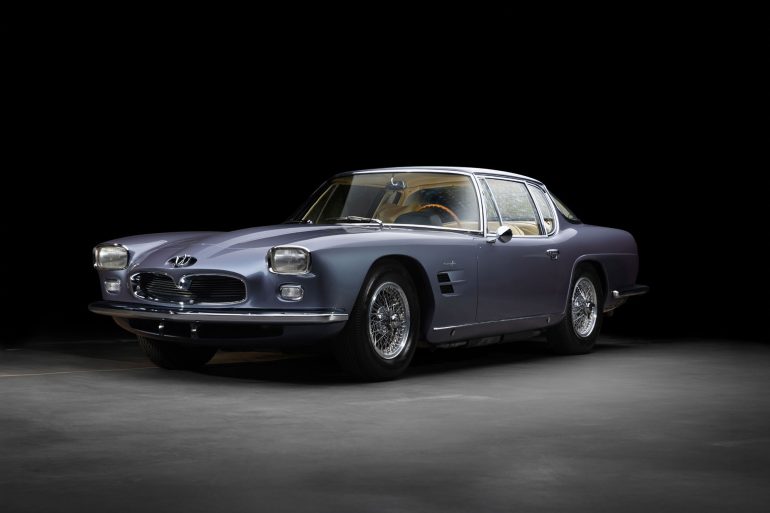
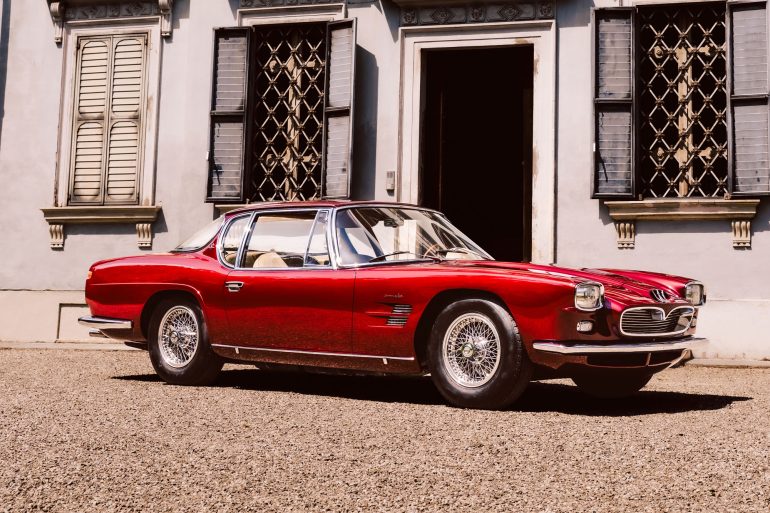
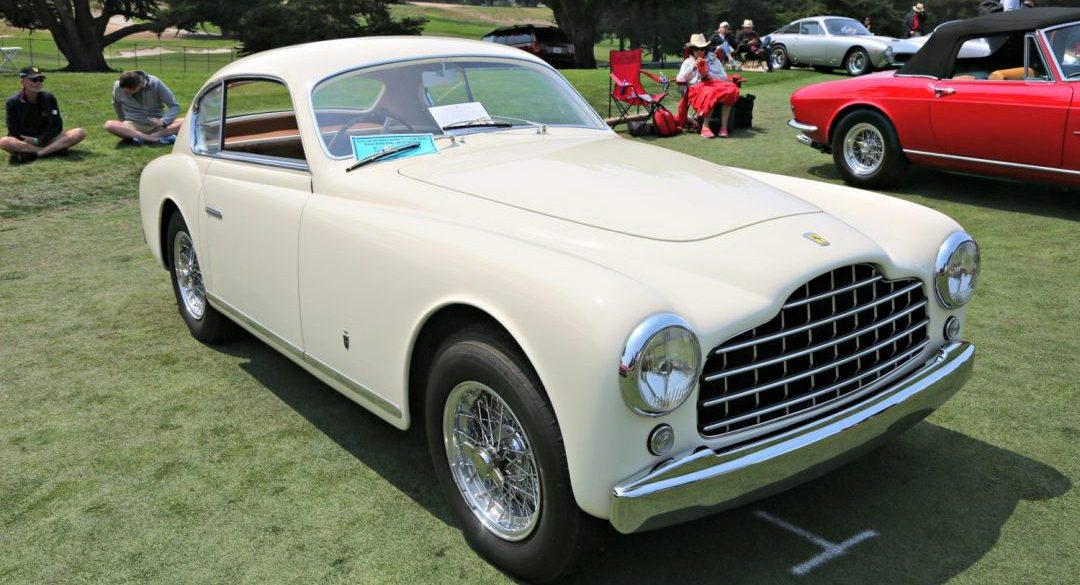
The 3500 GT of 1957 was the car that turned Maserati into a manufacturer: a 3.5-litre twin-cam six derived from the 350S racing engine, in a Touring Superleggera coupé body and a Vignale spider, with Lucas fuel injection from 1961 and about 2,200 built by 1964, the first Maserati made in four figures. The 5000 GT of 1959 put a detuned 450S V8 into a 3500 GT chassis for the Shah of Persia and thirty-three other customers, each bodied to order by Allemano, Touring, Frua, Ghia, Monterosa or Michelotti; the Sebring of 1962 and the Mistral of 1963 were Vignale's and Frua's successors to the 3500; the Quattroporte of 1963, Frua again, was the first of the fast four-doors; and the Ghibli of 1966, the young Giorgetto Giugiaro's first great shape at Ghia, with the 4.7-litre V8, 174 mph and a price above the Daytona's, was the most beautiful of them and the archive's most-covered Maserati road car. Peter Collins's Maserati According to McGrath, on the historian's Maserati road cars, Casey Annis's A Long Tail of Evolution and the Model threads for the 3500 GT, Sebring, Mistral, Quattroporte and Ghibli carry them; Glen's visit to the Maserati museum in Modena, the Panini collection, has the survivors in one room.
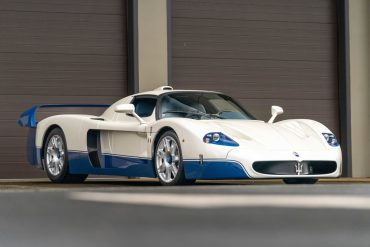
Citroën bought Maserati in 1968 for its engines, which went into the SM, and gave it in return the money for the Bora of 1971, Giugiaro's mid-engined V8 supercar with hydraulic seats and pedals, the Merak of 1972 with the SM's V6, and the Khamsin of 1974, Bertone's front-engined V8; the oil crisis and Citroën's own collapse into Peugeot put Maserati into liquidation in 1975. Alejandro de Tomaso bought it with Italian government money, kept it alive on the Kyalami and the Quattroporte III and then, from 1981, on the Biturbo, the small twin-turbo V6 coupé and saloon that sold forty thousand and nearly destroyed the name, and sold it to Fiat in 1993. Fiat gave Maserati to Ferrari to run in 1997; the 3200 GT of 1998, Giugiaro again, the Spyder and Coupé of 2001 with Ferrari-built V8s, the Quattroporte V of 2003 and the MC12 of 2004, a long-tailed Enzo built so that Maserati could go racing again, were the result. The MC12 won the FIA GT teams' championship five years running from 2005, the drivers' title four times and the 2010 GT1 world title, and the 24 Hours of Spa three times, Maserati's first sustained racing success since 1957, and the archive's MC12 thread and Bora stories carry the era.
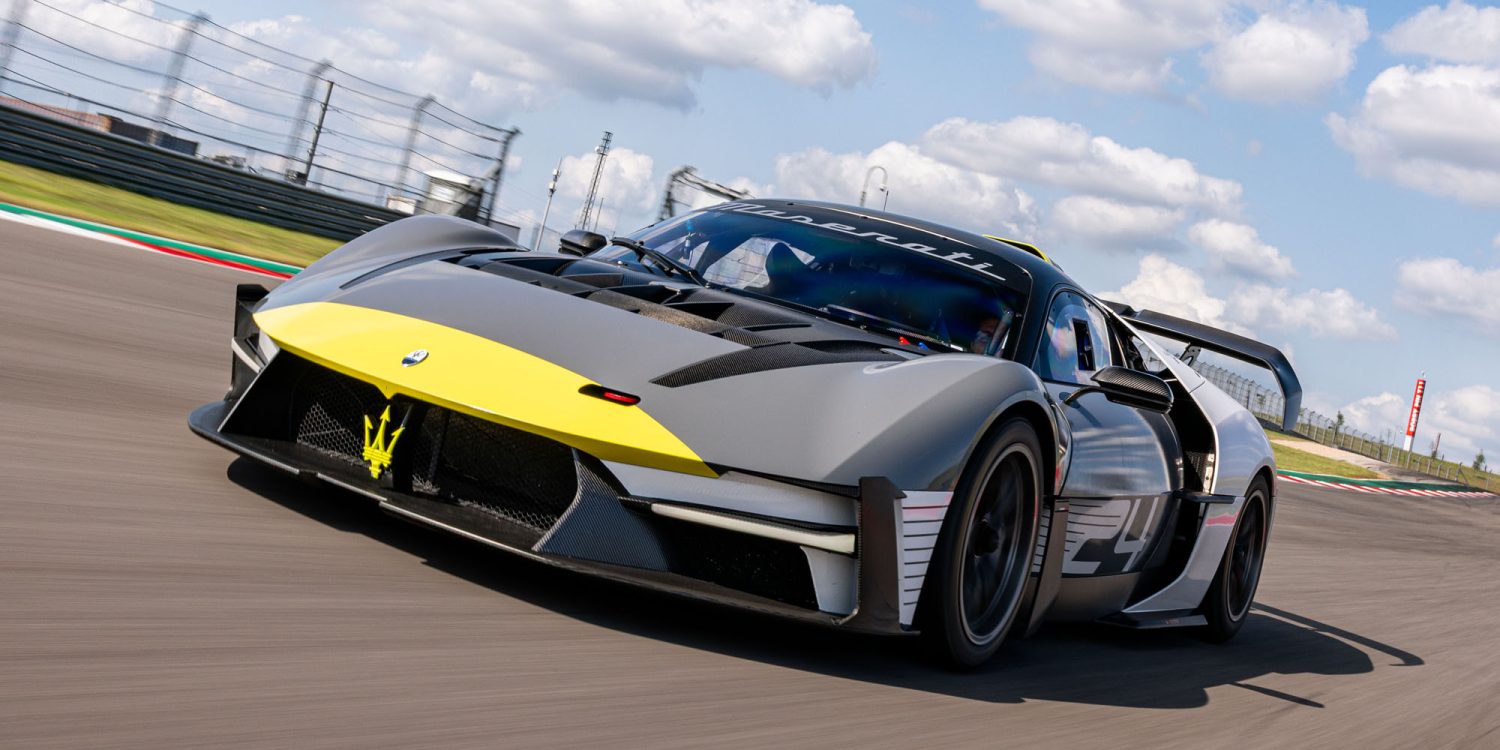
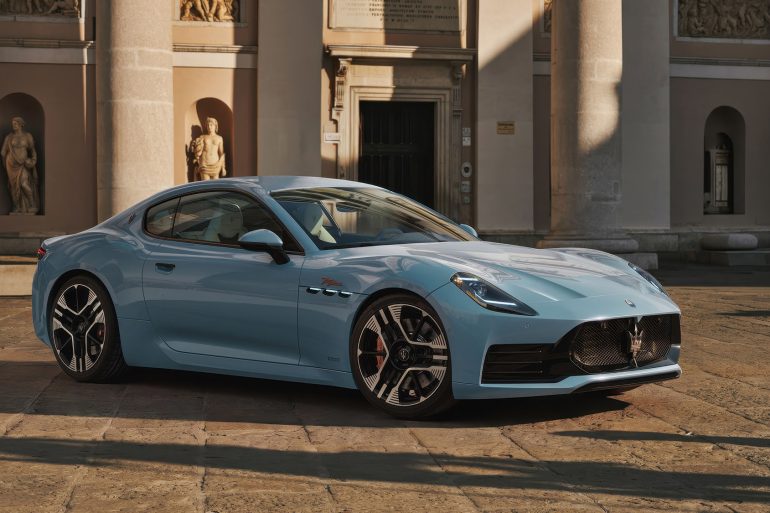
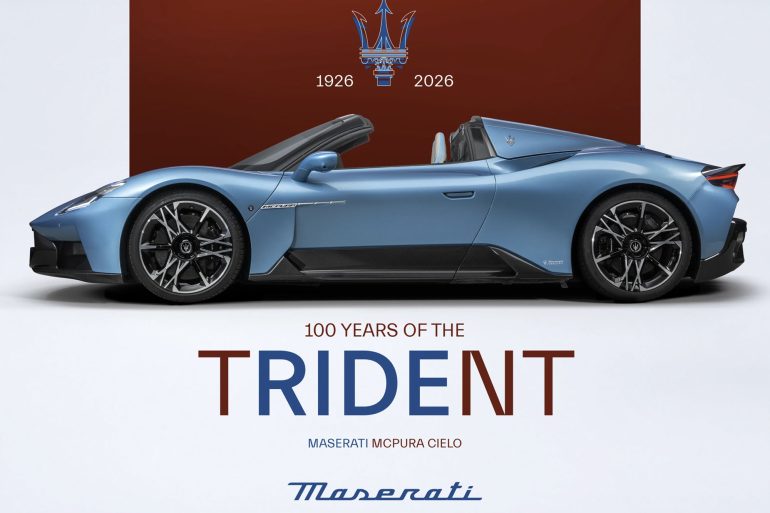
Maserati went back to Fiat's direct control in 2005 and to volume with the GranTurismo of 2007, Pininfarina's last great Maserati shape, and the Ghibli and Levante of the Marchionne years, which sold in numbers the brothers could not have imagined and at a cost to the name that the archive's news pages record. The MC20 of 2020, with the Nettuno V6 and its Formula One-style pre-chamber ignition, a carbon tub and a body by Maserati's own Centro Stile, was the first proper Maserati sports car since the Bora; the MC20 Cielo, the GT2 racer and the GT2 Stradale of 2024, which Rex McAfee's exclusive interview in the archive covers, followed it, and the GranTurismo Folgore of 2023 was the first electric Maserati. The company raced in Formula E from 2023, the first Italian make to do so, and the trident's 110th anniversary in 2024 brought the old cars out at Modena, Goodwood and Pebble Beach; the archive's Maserati news and the Latest Features feed below carry the present.
The Model tags on this site cover the Maseratis the archive has most to say about: the pre-war 4CM, 6CM, 8CM, 4CL and 8CTF; the A6GCS and A6G 2000; the 150S, 300S and 450S; the 250F; the Tipo 61 Birdcage and Tipo 63; the 3500 GT, 5000 GT, Sebring, Mistral, Quattroporte and Ghibli; the Bora; the MC12 and MC20; and the GranTurismo. The nine cards below are the ones with most to read behind them, and the Model tag opens every story on each.
Nine the archive has most to say about; each links to every story on the site about that car.
Single-car and chassis stories: the 250Fs, the 300S and 450S, the Birdcages, the coachbuilt road cars and the cars that surface at auction.
Maserati's racing sits on the archive's hubs as well as here. Indianapolis is on the Indianapolis 500 hub: the 8CTF's wins of 1939 and 1940. The Grands Prix are on the Formula 1 page, with Fangio's 1957 title, and the Grand Prix History hub's pre-war and front-engined chapters. The Targa Florio hub has the four wins of 1937 to 1940 and the 1950s class wins; the Mille Miglia hub the race Maserati led and never won; the Sebring hub the 450S's 1957 victory and the Birdcages; the World Sportscar Championship page the 1956 and 1957 seasons that ended at Caracas; and the Le Mans hub the Maseratis that never finished. The Racing (Maserati) feed below gathers the race reports and profiles with a Maserati in them, from the Tripoli Grands Prix to this year's Monaco Historique, where the 250Fs still run in their own race.
Race profiles and reports with a Maserati in them, newest first.
The brothers first: Alfieri, Bindo, Ernesto and Ettore, and Mario who drew the trident. Then the owners, Adolfo and Omer Orsi, Citroën, Alejandro de Tomaso and Fiat; the engineers, Alberto Massimino, Gioacchino Colombo, Vittorio Bellentani, Valerio Colotti and Giulio Alfieri, and the chief mechanic Guerino Bertocchi, who tested every car; the coachbuilders, Touring, Vignale, Frua, Allemano, Zagato, Fantuzzi, Ghia and Giugiaro; and the drivers: Nuvolari and Varzi, Wilbur Shaw, Villoresi and Ascari, Fangio, Moss, Behra, Musso, Schell, Shelby, Gregory, Gurney and Casner, Surtees and Rodríguez, each with a People thread. Each name links to every story on the site about them, and the People page gathers the portraits.
Every story on the site about the 250F's champion, newest first.
The Maserati market has a thin, very expensive top and a broad, still-reasonable base. The racing cars: a 250F with works history is a $5–8 million car, a 300S $6–8 million, a Tipo 61 Birdcage $3–5 million, the 450S more when one appears, the A6GCS/53 barchettas $3–5 million and the Zagato coupés above. The coachbuilt A6G 2000s and 5000 GTs are $1–3 million. The road cars of the Orsi years are the value: a 3500 GT coupé at $200,000–400,000 and a Vignale spider double that, a Ghibli coupé at $200,000–350,000 and the Spyder at $500,000 and up, Mistrals, Sebrings and Quattroportes below, and the Bora and Khamsin climbing from under $200,000. The MC12 is a $3 million car; the Biturbo is still almost free. The Auctions (Maserati) and For Sale (Maserati) threads below are the live market; the Market page has the auction calendar and the record prices.
Auction previews and results for Maseratis, newest first.
Maseratis offered by dealers and collectors, newest first.
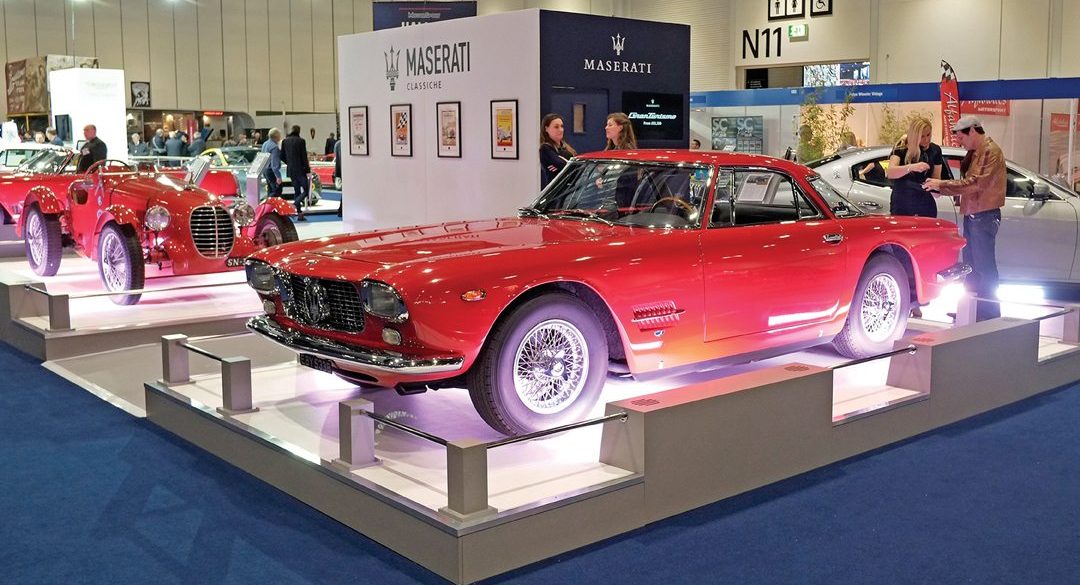
The archive's Maserati galleries come from the Goodwood Revival, where the 250Fs run the Richmond Trophy and the Birdcages the Sussex, the Monaco Historique, the Mille Miglia retrospective and the Targa Florio Classic, the Monterey Reunion, where the American Maseratis gather, and the concours lawns at Pebble Beach and Villa d'Este, where the coachbuilt A6Gs and 5000 GTs are judged. The Galleries (Maserati) feed below gathers them.
Maserati galleries from Goodwood, Monaco, Modena and the concours lawns.


Founded 1 December 1914, Bologna; Modena since 1940; owned by the Maserati brothers to 1937, Orsi 1937–68, Citroën 1968–75, De Tomaso 1975–93, Fiat and its successors since 1993. Indianapolis 500 wins 2 (1939, 1940, Wilbur Shaw, 8CTF). World championship Grand Prix wins 9 (250F, 1954–57), drivers' title 1957 (Fangio). Targa Florio wins 4 (1937–40). Sebring 1957; Nürburgring 1000 km 1956, 1960, 1961. FIA GT teams' championships 5 (MC12, 2005–09), drivers' titles 4 and the 2010 GT1 world title; 24 Hours of Spa 2005, 2006, 2008. Built: 250F 26; 300S 28; 450S 10; Tipo 60/61 22; A6 1500 61; 3500 GT about 2,200; 5000 GT 34; Ghibli 1,274; Bora 564; MC12 50 road cars; Biturbo family about 40,000. Record prices: 250F ex-Fangio chassis 2529 above $4 million; 300S ex-works cars $6–7 million; 450S $5–6 million at auction.
Short answers, with the long ones above.
Alfieri Maserati, with his brothers Ettore and Ernesto, on 1 December 1914 in Bologna, to prepare and race cars for others; the first Maserati of their own, the Tipo 26, raced in 1926. The company moved to Modena in 1940 under the Orsi family.
It is Neptune's trident from the Fontana del Nettuno in Bologna's Piazza Maggiore, drawn as the badge by Mario Maserati, the one brother who was an artist rather than an engineer, in the 1920s.
Twice, in 1939 and 1940, with Wilbur Shaw in Mike Boyle's 8CTF, the Boyle Special, the only Italian car to win the race. Shaw was leading in 1941 when a wheel failed.
Juan Manuel Fangio won the 1957 drivers' championship in a works 250F, his fifth title; there was no constructors' championship until 1958. The 250F won nine championship Grands Prix between 1954 and 1957, including Fangio's Nürburgring drive of 1957.
Money and Caracas: the works team had been losing money for years, the Orsis' Argentine business collapsed with Perón, and at the last race of the 1957 season in Venezuela all four works sports cars were destroyed in crashes. Maserati withdrew the works team in November 1957 and built racing cars for customers only until the 1960s.
The Tipo 60 and Tipo 61 sports-racers of 1959–61, named for the spaceframe of some two hundred small tubes that made them so light; the 2.9-litre Tipo 61 won the Nürburgring 1000 km in 1960 and 1961 for the Camoradi team and dominated American racing in 1960.
Stellantis, the group formed in 2021 from Fiat Chrysler and PSA; Fiat bought Maserati from De Tomaso in 1993 and placed it under Ferrari's management from 1997 to 2005.
With Robert Newman's two-part The Brothers and Others and his Fangio: Marque of Greatness, Ed McDonough's 300S, Karl Ludvigsen's 450S and Casey Annis's Gilded Cage, then the Model tags for the car you care about.
The whole archive on one thread, newest first.