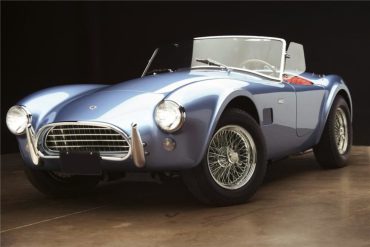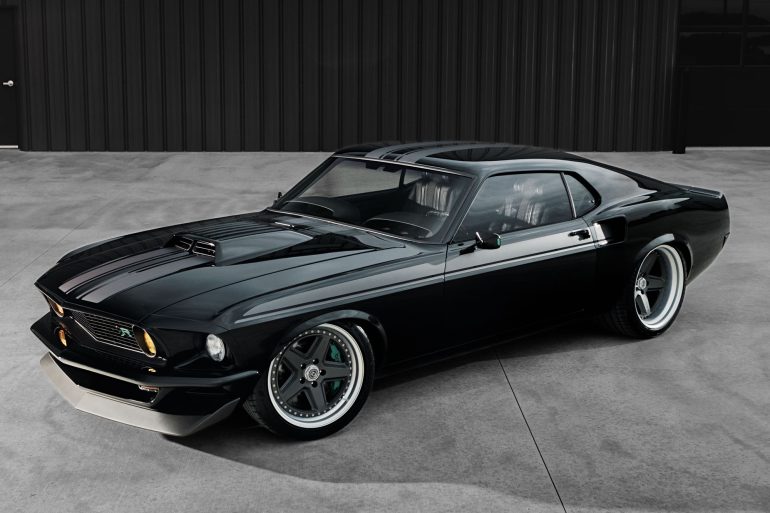
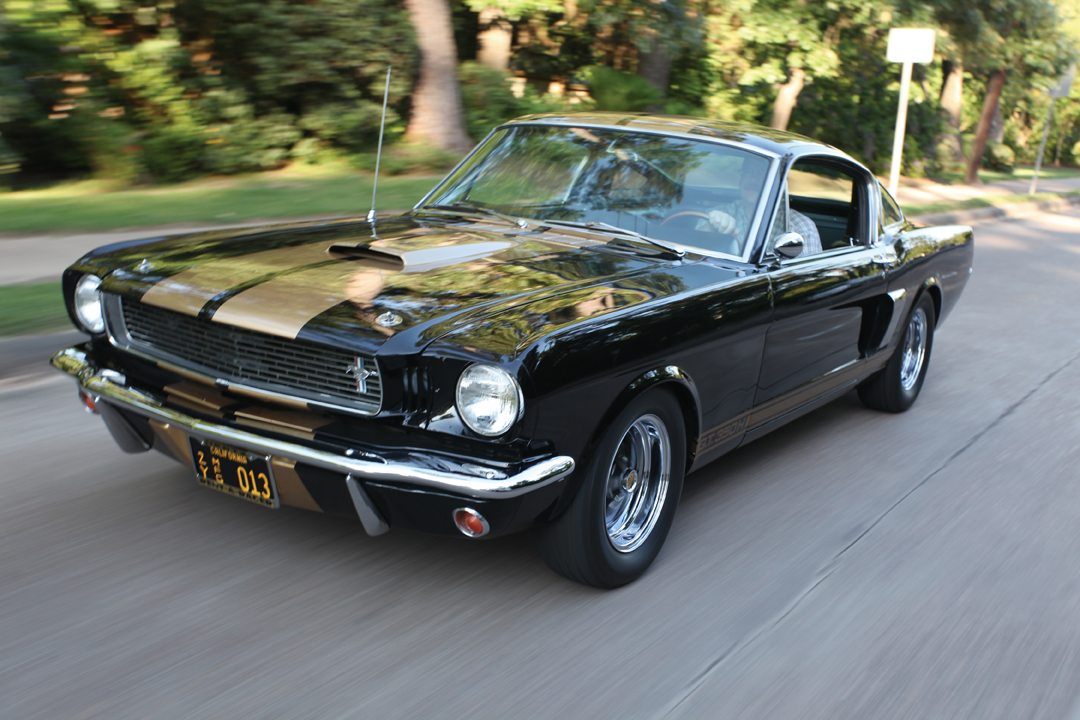

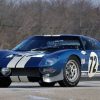
From ten feet it looks like a 1968 Shelby GT convertible, and under the hood it is one; the prototype fiberglass says otherwise. Brian and Samantha Styles own the only 1967 GT 500 convertible, vetted by ex-Shelby and Ford staff.

For ten years, from the Pontiac GTO and the Mustang of 1964 to the oil crisis of 1973, Detroit sold horsepower to the young and raced it on Sunday. The Trans-Am put Mustangs, Camaros, Javelins, 'Cudas and Challengers on road courses with Parnelli Jones, Mark Donohue, George Follmer and Dan Gurney in them; NASCAR grew wings; the drag strips invented the Funny Car; and the showrooms filled with Hemis, Boss 429s, Z/28s and GTO Judges. This is the whole story, and every linked piece is a source.
The pieces to start with
Trans-Am '67, Parnelli Jones and George Follmer interviewed, Annis's Javelin and Hemi 'Cuda, Hemsley's Hertz GT350H, the Charger Daytona and Tony DeLorenzo on the Owens-Corning Corvettes.
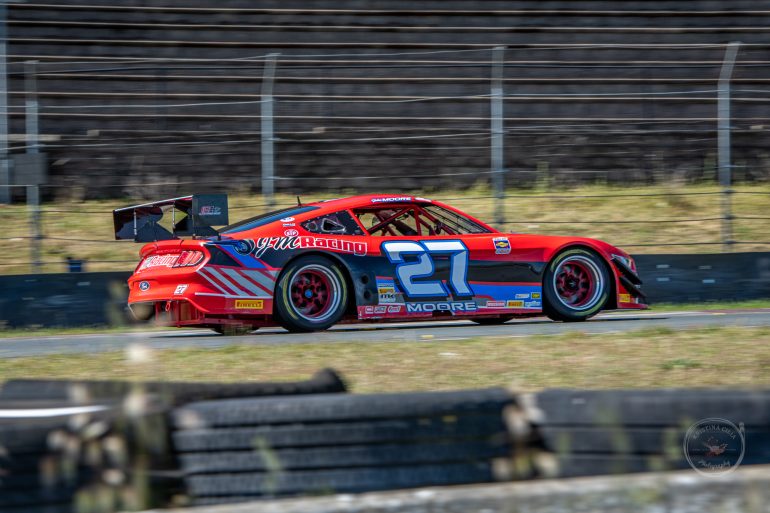
For 1967 Ford hedged, backing Bud Moore's Mercury Cougars with Gurney, Parnelli Jones, Pearson and Revson alongside Shelby American's champion team, while Penske brought a Camaro and Tullius the Dodge Darts. A Shelby backup driver's account of the season.
Parnelli Jones traded his horse for a hot rod and hot-lapped a '32 Ford on a quarter-mile of grass. Fifty years after his 1963 Indianapolis win, and three more that got away, John Zimmermann sits down with him.
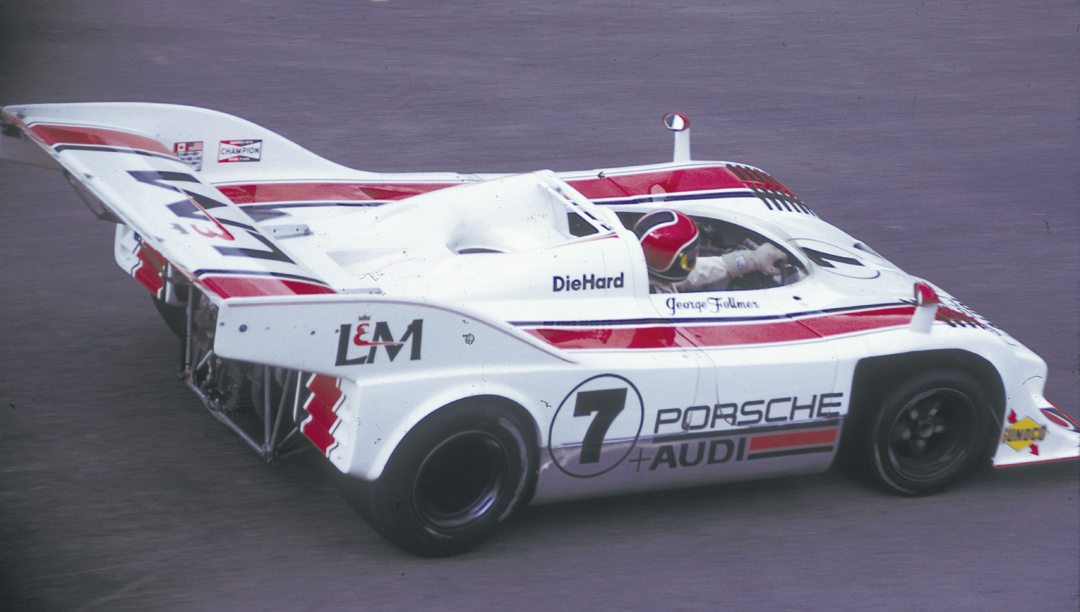
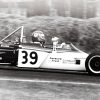
George Follmer beat the Chaparrals to the USRRC title in a 2-liter Lotus-Porsche, then won Can-Am and Trans-Am titles in the same 1972 season, with 16 on the door for his son. John Zimmermann talks to him.
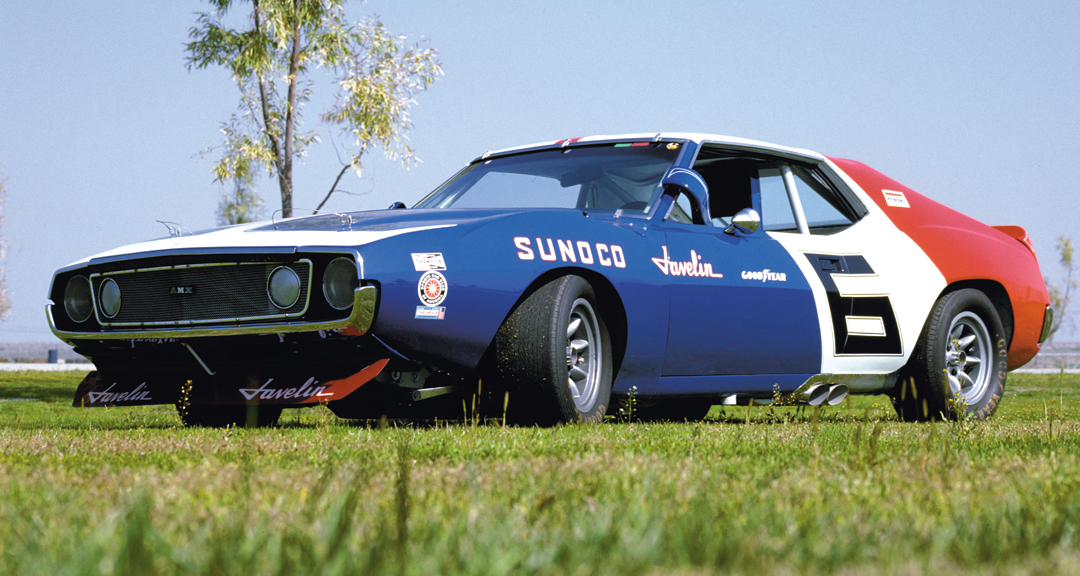
The week after clinching the 1969 Trans-Am for Chevrolet, Penske and Donohue met AMC's Bill McNealy in a dingy Century City motel room. Donohue felt like he was cheating on his wife. Casey Annis on the Javelin program that followed.
The Mustang was called a secretary's car until Ford sent it to a Texan who had linked the company with sports car racing. Carroll Shelby's road from Leesburg, Texas, mail carrier's son, to the 1966 GT350H that Hertz rented out.
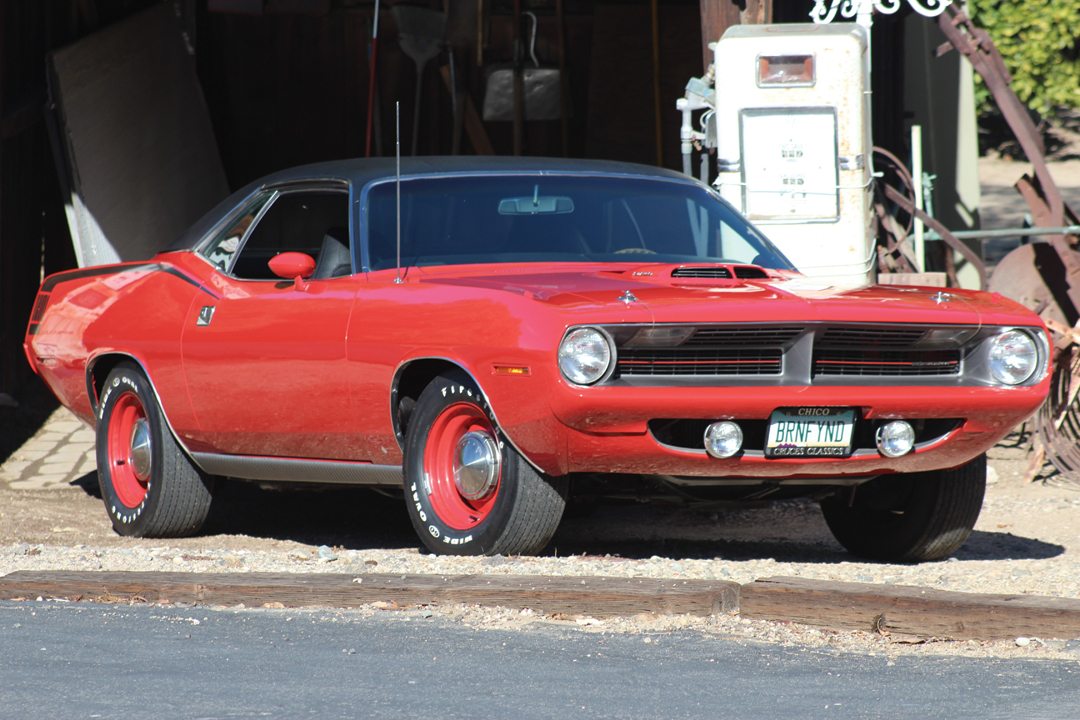
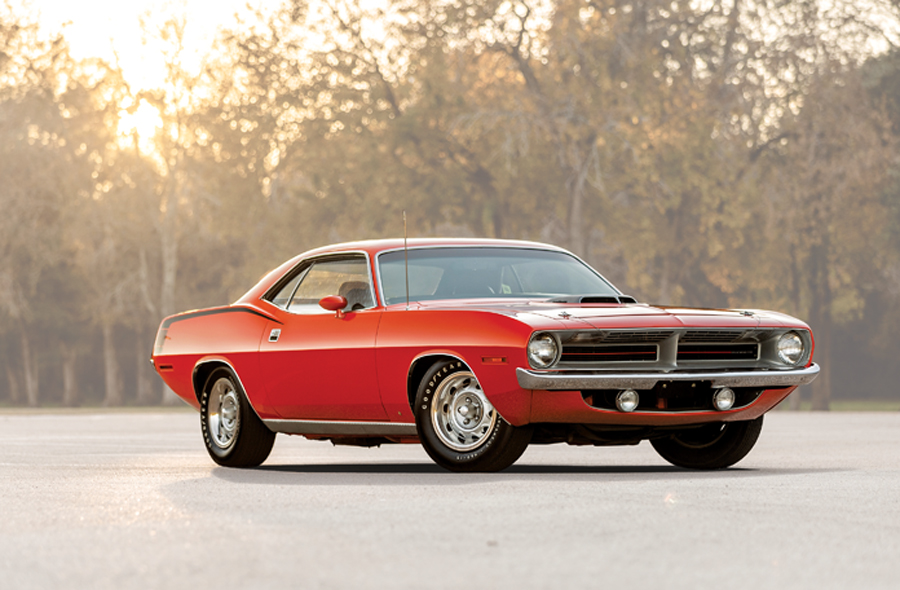
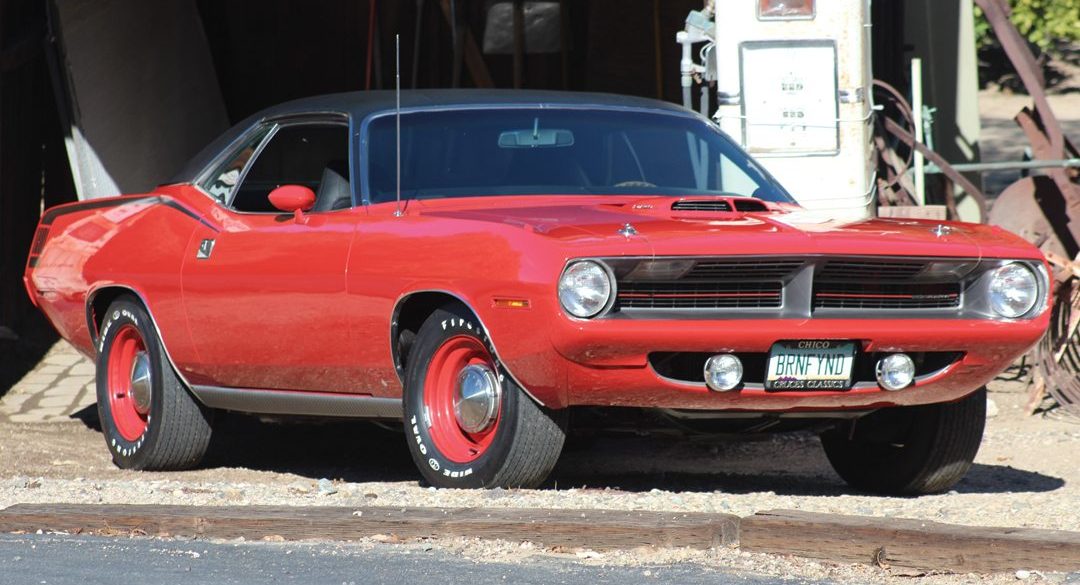
The Barracuda was first into the pony car market and the last to give up muscle, and the breed was born and killed by economy cars. Irv Ritchie's 1962 sketches of a fastback Valiant started it.
By 1969 wings had reached NASCAR. Chrysler's 426 Hemi, up to 650 horsepower through one Holley, went into Charger and Satellite shells prepared by Ray Nichels in Highland, Indiana, at 3,800 lb race weight. Casey Annis on the winged Dodge.
Tony DeLorenzo was 20 feet from a Chaparral Mk 1 at Meadowdale when the crew chief fired its injected 389 Chevy, and that was that. He and Jerry Thompson later won 22 straight in Corvettes. John Zimmermann interviews him.
The newest long-form writing on the era, as it is published.
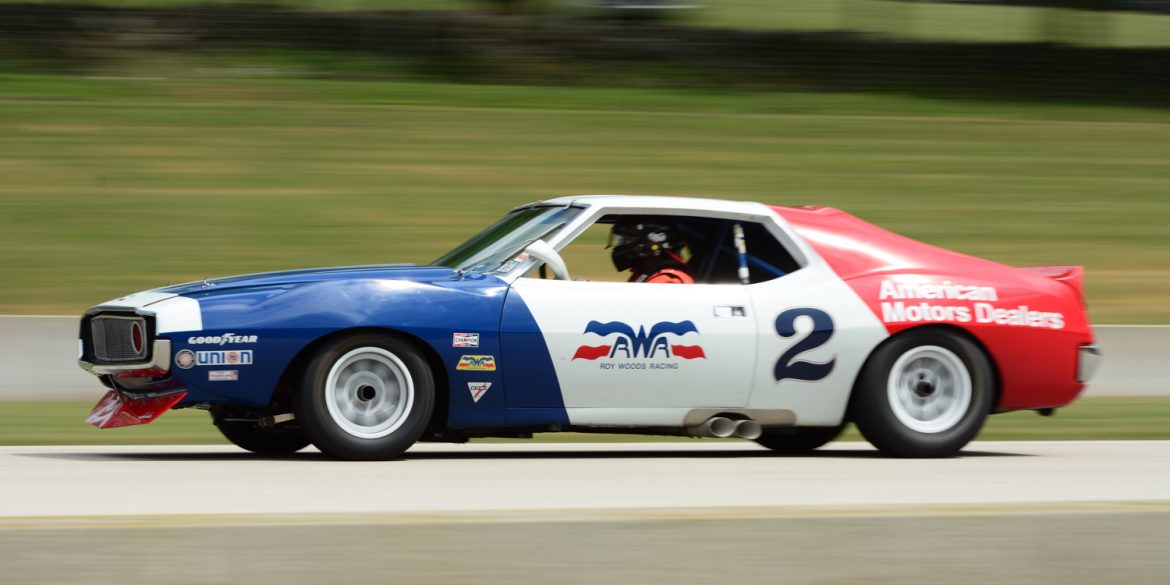
The muscle-car era is usually dated from the Pontiac GTO of October 1963 to the end of the Hemi, the Boss and the big-block Chevelle in 1971–72, and it had two halves that fed each other. In the showroom it was the intermediate or pony car with the biggest engine the division could fit, sold to buyers under thirty on the strength of a quarter-mile time; on the track it was the Sports Car Club of America's Trans-American Sedan Championship, founded in 1966 for the new pony cars and fought from 1967 to 1972 by the factories themselves — Ford with Shelby and Bud Moore, Chevrolet with Roger Penske, American Motors with Penske and Roy Woods, Chrysler with Dan Gurney's All American Racers and Sam Posey's Autodynamics, Pontiac with Jerry Titus. Art Evans's Sensational Sixties is the decade in which the SCCA dropped its amateur rules and created Can-Am, Formula 5000 and the Trans-Am; Pete Lyons's Sixty Years of 'Murrican Muscle runs the Corvette's own version from Daytona Beach in 1956. The racing GTs and Cobras that came just before are on The GT Wars; the unlimited sports cars that ran on the same weekends are on Can-Am and the Unlimiteds; the silhouette and IMSA racing that followed is on Turbos, Group B and Group C.
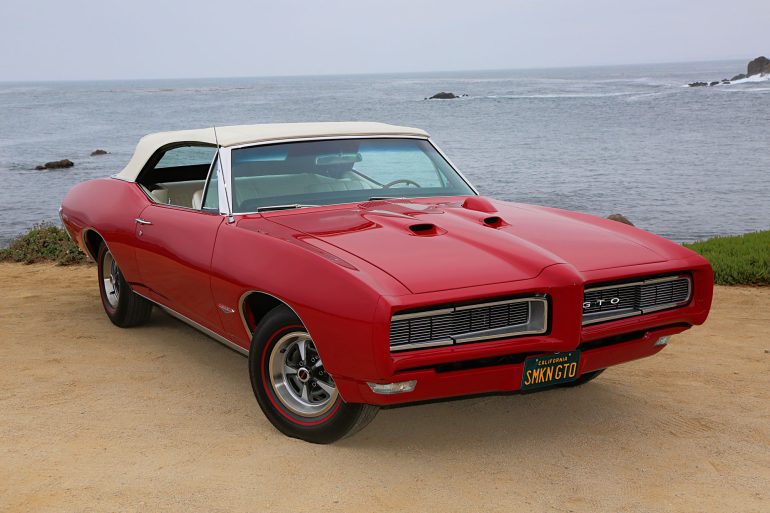
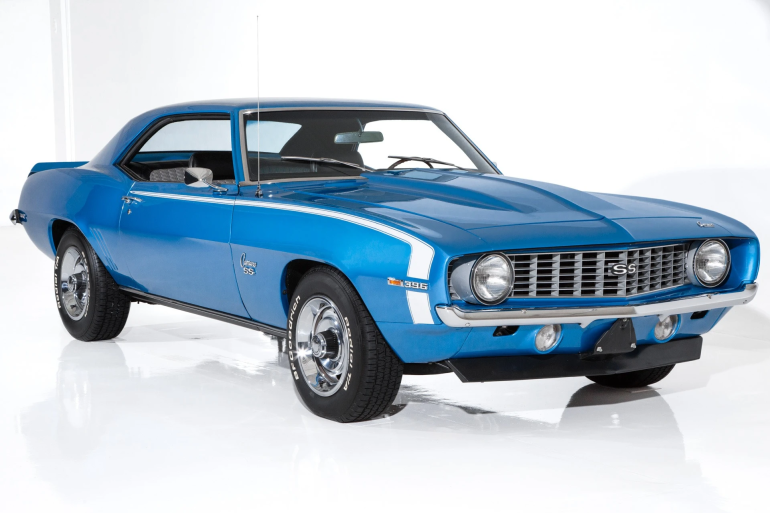
Two cars started it inside six months of each other. John DeLorean's Pontiac engineers broke a General Motors rule that limited intermediates to 330 cubic inches by making the 389 an option package on the Tempest, called it GTO after the Ferrari, and sold 32,450 in 1964 against a forecast of 5,000; Jim Wangers's marketing and the Royal Pontiac dealership's drag-strip cars did the rest, and the first GTO's induction into the Motorsports Hall of Fame is in the archive. Lee Iacocca's Mustang went on sale on 17 April 1964 at the New York World's Fair and sold 418,812 in its first model year; J. Michael Hemsley's Fastback First is the first fastback built, Mike Matune's Mustang — A Born Winner is the car's first season of racing, announced before any sanctioning body had approved it, and Raffi Minasian asks whether it is the greatest modern American car. Chrysler's answer that year was the 426 Hemi, which finished first, second and third at the Daytona 500 for Richard Petty in February 1964 and went to the drag strips in the Ramchargers' altered-wheelbase Dodges, in Mark Brinker's 1964 Ramchargers A/FX Hemi. By 1966 every division had its car: the Chevelle SS 396 and the Camaro, the Oldsmobile 4-4-2, the Buick GS, the Dodge Charger and Coronet R/T, the Plymouth Belvedere GTX with the Street Hemi, the Mercury Cougar; Steve Natale's Pontiac 2+2 is the full-size version, and Jim Richardson's Mother of Muscle argues the idea is older than any of them.
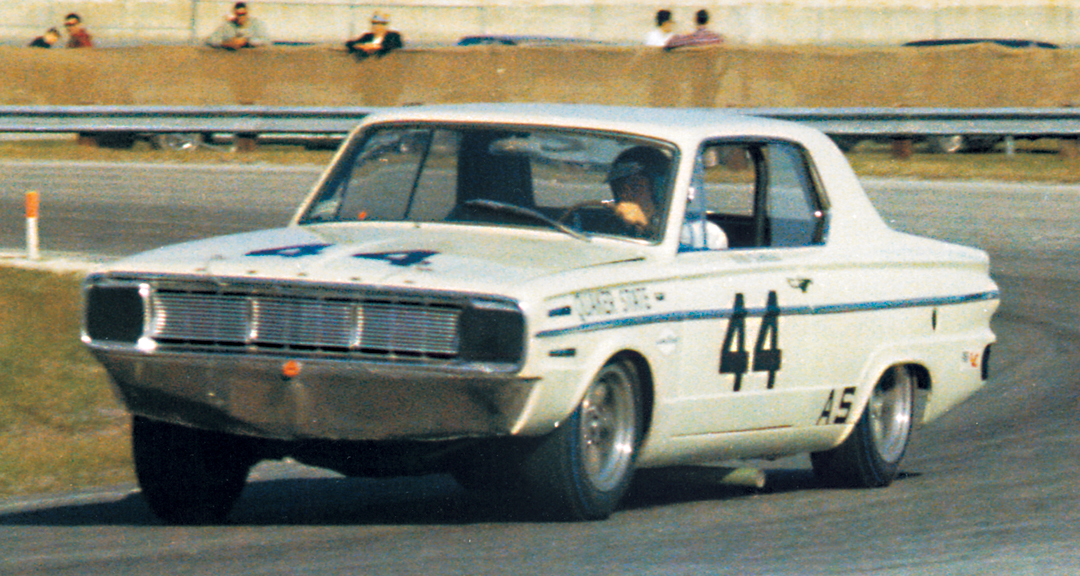
John Bishop's SCCA created the Trans-American Sedan Championship for 1966 as a manufacturers' series for production sedans in two classes, over and under two litres, and the first race was a four-hour at Sebring on 25 March 1966, won outright by Jochen Rindt's Alfa Romeo GTA with Bob Tullius's Dodge Dart first of the big cars. Ford took the first title at the last race, Riverside, with Jerry Titus in a Shelby-prepared Mustang; Art Evans's Shelby's Trans-Am is how the series began and how the SCCA came to class a Porsche 911 as a sedan. In 1967 the factories arrived: Ford backed Bud Moore's Mercury Cougars with Gurney, Parnelli Jones, David Pearson and Peter Revson alongside Shelby's champion Mustangs, Roger Penske brought a Camaro Z/28 for Mark Donohue, and the title went to Ford by two points; the archive's Trans-Am '67 is the season and Clash of the Titans sets Penske against Bud Moore across the years. Then Penske and Donohue won ten of thirteen races in 1968 and six more in 1969 in the Sunoco Camaros, built with Chevrolet's quiet help and Penske's "unfair advantage" in preparation — the acid-dipped bodies, the vinyl roof that hid a welded-in panel, the refuelling rig that emptied a tank in seconds, in Cool Fuel. Ford's reply was the Boss 302 of 1969, developed by Kar-Kraft and raced by Bud Moore with Parnelli Jones and George Follmer; George Follmer's own Boss 302 is the car from the cockpit, and the Warren Tope Boss 302 is an independent example. In the small class the Alfa GTAs gave way to the Porsche 911, which took three titles, Tony Adamowicz winning the 1968 drivers' award in one; Casey Annis's A Legend in Need is Adamowicz, and Identity Crisis a 1970 Porsche 914-6 built for the class.
Every season of the factory Trans-Am: the manufacturers' champion, the drivers who won it, the small class and the year's story.
| Year | Manufacturers' champion | Leading driver and car | Under-2-litre champion | Races | The year |
|---|---|---|---|---|---|
| 1966 | Ford (Mustang) | Jerry Titus, Shelby Mustang — title won at the Riverside finale | Alfa Romeo GTA (Jochen Rindt wins the first race outright) | 7 | First race Sebring, 25 March 1966; Bob Tullius's Dodge Dart first of the big cars |
| 1967 | Ford (Shelby Mustang) | Jerry Titus, Shelby Mustang, four wins; Bud Moore's Mercury Cougars (Gurney, Parnelli Jones, Revson) second by two points | Porsche 911 | 12 | Penske's first Camaro for Mark Donohue; Ford hedges between Shelby's Mustangs and Bud Moore's Cougars |
| 1968 | Chevrolet (Camaro Z/28) | Mark Donohue, Penske Sunoco Camaro, ten wins from thirteen | Porsche 911 (Tony Adamowicz, drivers' award) | 13 | The acid-dipped Camaros, the vinyl roof and the quick-fill rig: Penske's unfair advantage |
| 1969 | Chevrolet (Camaro Z/28) | Mark Donohue, Penske Camaro, six wins; Parnelli Jones and the new Boss 302 two | Porsche 911 | 12 | Ford answers with the Boss 302 and Bud Moore; Pontiac enters with Jerry Titus's Firebird |
| 1970 | Ford (Mustang Boss 302) | Parnelli Jones, Bud Moore Boss 302, five wins; Donohue's Penske Javelin three; Follmer one; Vic Elford's Chaparral Camaro one | Alfa Romeo GTV | 11 | Five factory teams: Gurney and Savage in the AAR 'Cudas, Posey's Challenger, Titus's Firebird. Titus killed at Road America; Gurney's last race at Riverside |
| 1971 | American Motors (Javelin) | Mark Donohue, Penske Javelin AMX, seven wins | Datsun 510 (John Morton, BRE) | 10 | Ford, Chrysler and Chevrolet withdraw; Bud Moore runs on as a privateer with Follmer and Peter Gregg |
| 1972 | American Motors (Javelin) | George Follmer, Roy Woods Racing Javelin — the first official drivers' champion | Datsun 510 (John Morton) | 7 | The last factory season; Follmer wins the Can-Am title the same year |
| 1973 | Porsche (Carrera RSR) | Peter Gregg, Brumos Porsche Carrera RSR | Single class | 6 | The series opens to Group 4 GT cars; the pony-car Trans-Am is over, and the oil embargo arrives in October |
Car names link to every story on the site about that car. The drivers' championship became official in 1972; earlier years name the season's winningest driver.
Nineteen-seventy was the season every muscle-car fan remembers: five factory teams, eleven races, and the best American road racers of the day driving for their lives. Bud Moore's Boss 302 Mustangs had Parnelli Jones and George Follmer; Penske had switched to the AMC Javelin with Donohue and Revson; Jim Hall's Chaparral team ran Camaros for Vic Elford and Ed Leslie; Chrysler split its money between Gurney's AAR Plymouth 'Cudas for Gurney and Swede Savage and Sam Posey's Autodynamics Dodge Challenger; Pontiac's Firebird was Jerry Titus's own. Parnelli won five races and the title for Ford, Donohue three for AMC, Elford one for Hall; Titus crashed in practice at Road America in July and died of his injuries, and Gurney drove his last race, at Riverside in October, in his own 'Cuda. John Zimmermann's long interview with Parnelli Jones and Art Evans's profile and Parnelli's own column are the champion; Zimmermann's interview with George Follmer, Pete Lyons's In Honor of a Warrior and the Petersen tribute are his team-mate; Mark Donohue is profiled, remembered and followed by Lyons into Formula One; Sam Posey's lifetime of achievements, Dan Gurney and Gurney's Riverside close the roll. Casey Annis's Last Giant is the street Hemi 'Cuda of the same year. Ford withdrew from racing at the end of 1970, and Penske's Javelins won the next two championships — Donohue seven races in 1971, Follmer the first official drivers' title in 1972 for Roy Woods Racing — in the car Casey Annis drives in Weapon of Choice, with the Ferber works AMX beside it. The small class went to the Alfa GTV in 1970, in Annis's Transformer, then to Pete Brock's BRE Datsun 510s with John Morton in 1971 and 1972, in The 510 Legacy. In 1973 the SCCA opened the series to Group 4 cars and Peter Gregg's Porsche Carrera RSR won it; the pony-car Trans-Am was over.
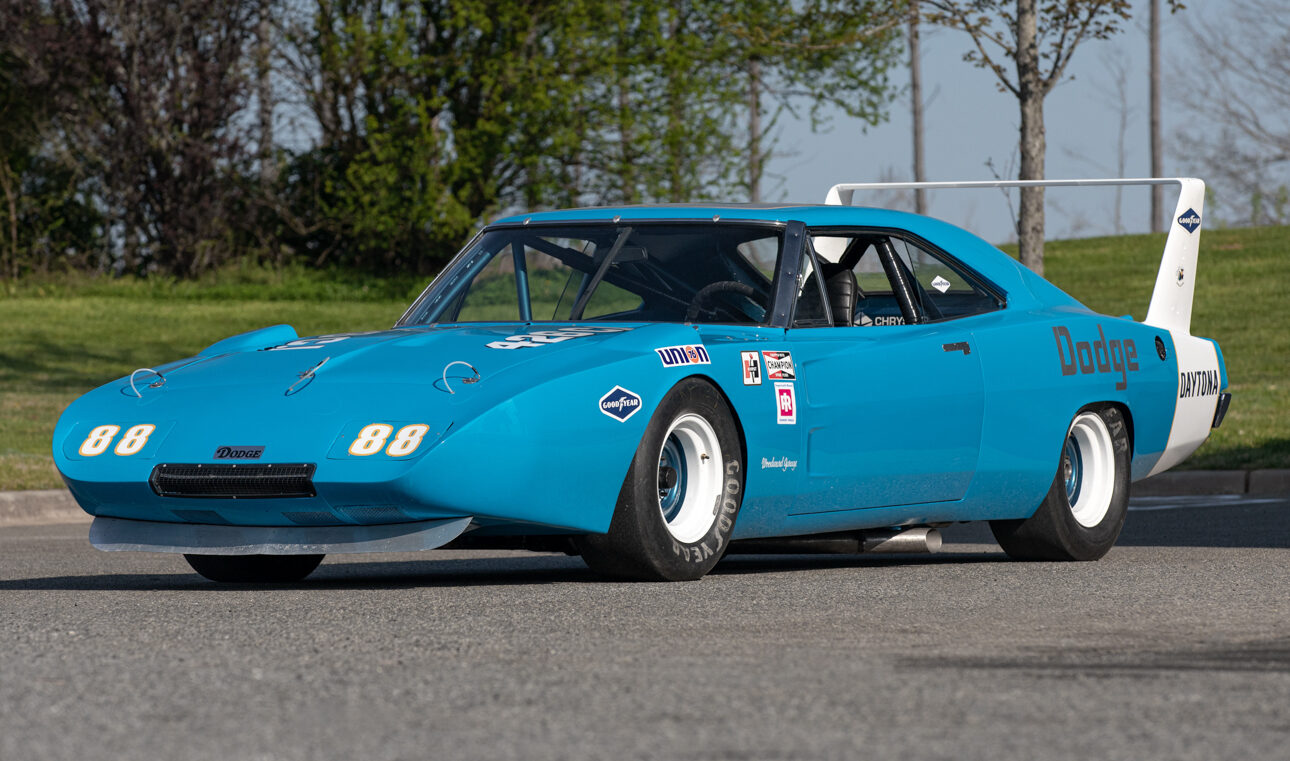
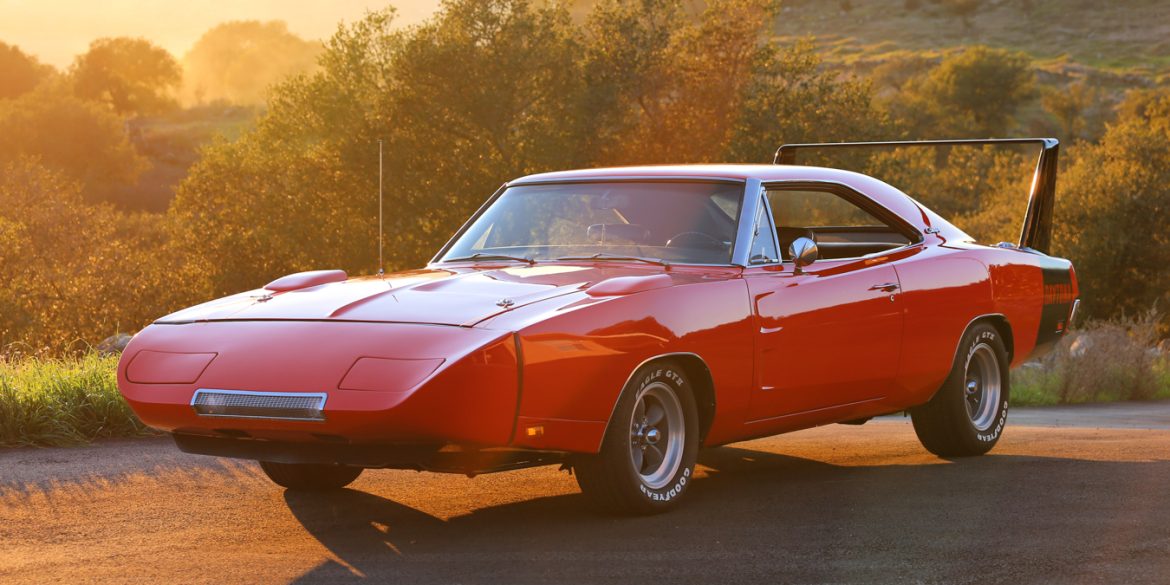
NASCAR was the other factory battleground, and from 1968 it was fought with aerodynamics. Dodge's 1968 Charger was fast and unstable, so Chrysler built the Charger 500 with a flush grille and rear window, Ford answered with the drooped-nose Torino Talladega and Mercury Cyclone Spoiler II and won the 1969 championship with David Pearson, and Chrysler went further than anyone had: the Dodge Charger Daytona of September 1969, with an 18-inch nose cone and a rear wing two feet high, 503 built to qualify it, in Casey Annis's Aero Warrior, Steve Natale's Winged Warrior and J. Michael Hemsley's Ledfut's Daytona. Buddy Baker's Daytona ran the first 200-mph lap in NASCAR history at Talladega in March 1970; the Plymouth Superbird that brought Richard Petty back from Ford for 1970, 1,935 built, won eight races, and the Petty Superbird is in the archive. NASCAR limited the wing cars to 305 cubic inches for 1971 and they were gone. Pete Lyons's Rubbin' NASCAR, the Hudson Hornet that started the factory game in the 1950s and Raffi Minasian's 1968 Charger fill in the rest; the Chrysler Valiant Charger R/T and the IKA Torino are the Australian and Argentine muscle cars that Detroit's divisions built abroad.
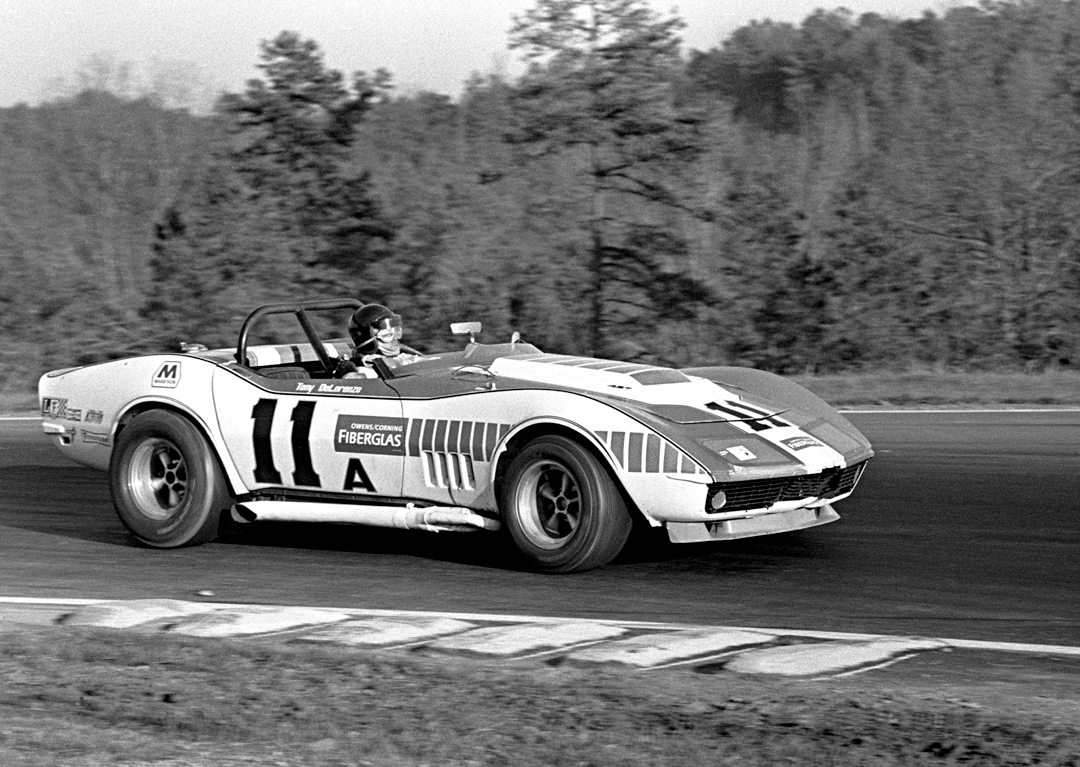
The Corvette was never a muscle car by Detroit's definition and raced against them all the same. The five Grand Sports of 1963 are on The GT Wars page; the L88 of 1967–69 — 216 built, a 427 rated at 430 horsepower that made nearer 550, sold without a radio or a heater to discourage street use — was the SCCA A-Production and endurance weapon, and Tony DeLorenzo's first L88 and John Zimmermann's interview with DeLorenzo are the Owens-Corning team that won the national championship in 1969. John Greenwood's wide-bodied Corvettes took the story into the 1970s and to Le Mans, in Zimmermann's Twisting in the Wind; Pete Lyons's Grand Sport 'Vettes and Dom Miliano's Perfect American Sports Car are the earlier cars. The Camaro ran the same path: the IMSA GT Camaro of the early 1970s and Mike Jiggle's Rugged Equalizer, the IROC Camaro that put Indianapolis, NASCAR and Formula One drivers in identical cars from 1974.
Carroll Shelby's Mustangs were the bridge between the Cobra and the muscle car. The 1965 GT350 — 562 built, 306 horsepower, the back seat removed to make it a sports car in the SCCA's eyes — won B-Production three years running, and the 34 competition GT350Rs were the first racing Mustangs; Ed McDonough's Mexican Flash is the R-model that won in Mexico, the GT350 siblings 5R002 and 5S003 are the prototype racer and the first street car, Raffi Minasian explains the marketing behind the GT350 and the advanced prototype survives. Hertz bought 1,001 GT350Hs for 1966 and rented them to anyone with a licence, in J. Michael Hemsley's Rent-a-Racer; the big-block GT500 of 1967 and the GT500KR of 1968 followed, in Hemsley's The Only One and Three Very Rare GT500s; Ford took the programme in-house in 1968 and ended it in 1970. The man himself is in Casey Annis and John Zimmermann's interview, Zimmermann's second, Art Evans's Shelby American Story, Shelby's great what-ifs and the archive's Remembering Carroll Shelby; Pete Lyons's Shelby's Flamekeeper is Phil Remington. The dealer specials were the other muscle-car workshop: Don Yenko's Stinger before his 427 Camaros, and Bizzarrini's Iso Grifo, American muscle in an Italian suit.
The quarter-mile was where most muscle cars were actually raced, and the factories knew it. Chrysler's Ramchargers and the Ford Thunderbolt teams ran Super Stock in 1963–64; the altered-wheelbase A/FX Dodges and Plymouths of 1965, with the axles moved forward to put weight on the back tyres, looked so odd that a journalist called them funny cars, and the name stuck when they grew fibreglass bodies and superchargers; Pro Stock arrived in 1970 to put the real cars back. Mark Brinker's Ramchargers Hemi, the Dead End Kids fuel dragster and Mickey Thompson's Challenger 2, built for Bonneville in 1968, are the archive's; J. Michael Hemsley's Muscle Car Collector is the man who kept the street versions.
The end came from four directions at once. Insurers put surcharges on anything with a horsepower-to-weight ratio under ten pounds per horsepower in 1969–70, which priced the cars out of the young buyer's reach; the Clean Air Act of 1970 and the switch to unleaded fuel cut compression ratios in 1971 and advertised net horsepower in 1972, so a 1972 engine looked a hundred horsepower weaker than its 1970 twin on paper; Ford, Chrysler and General Motors cut their racing budgets in 1970–71; and the oil embargo of October 1973 finished it. The Hemi and the Boss 429 ended after 1971, the Boss 302 after 1970; the 1974 Mustang II had no V8 at all; the Trans-Am became a Porsche series; and the Javelin, the AAR 'Cuda and the Challenger T/A were sold off as used cars that nobody wanted for a decade. The revival came with the collectors of the 1980s and the historic Trans-Am grids of the Monterey Motorsports Reunion, the SVRA Trans-Am Speedfest and the Historic Trans-Am group, where the Penske Camaros and Bud Moore Mustangs race each other again.
The Trans-Am ran on the American road courses that still host the historic series: Sebring and Daytona for the opening rounds, then Lime Rock, Bryar, Mid-Ohio, Bridgehampton, Donnybrooke, St Jovite and Mosport, Watkins Glen, Road America, Laguna Seca, Kent, and the Riverside finale. The archive's circuit pieces from the Vintage Racecar columns cover Lime Rock's Uphill and Big Bend, Mid-Ohio's Turns 7, 8 and 9, Road America's Turn Eight, Watkins Glen and its Inner Loop, Laguna Seca's Turn 11 and fiftieth birthday, and Art Evans's Father of Riverside. NASCAR's were Daytona, Talladega, Charlotte and Darlington; the drag strips were Pomona, Indianapolis Raceway Park and a hundred quarter-miles between. Bathurst, where the Holden and Ford muscle cars of Australia fought the same war, is in Patrick Quinn's The Mount.
The Trans-Am, NASCAR, the drag strips and the historic grids, newest first.
The cars of the era are the most traded American collector cars of all: the Ford Mustang and its Boss 302 and Boss 429; the Chevrolet Camaro and the Pontiac Firebird Trans Am; the Shelby GT350 and GT500; the AMC Javelin and AMX; the Plymouth Barracuda, Superbird and Road Runner; the Dodge Challenger and Charger; the Pontiac GTO, Chevelle and Oldsmobile 4-4-2; the Corvette C3 and Ford Torino. Each links to every story on the site about that car; the table and cards below set them in order.
Each links to every story on the site about that car; the model pages come next.
Single-car stories: Mustangs, Camaros, Javelins, 'Cudas, Chargers, GTOs and the Shelbys.
The drivers were the great American road racers of their generation, most of whom also ran Indianapolis and the Can-Am on the same calendar: Parnelli Jones, Mark Donohue, George Follmer, Dan Gurney, Sam Posey, Peter Revson, Tony Adamowicz, Tony DeLorenzo, Bob Tullius, Jerry Titus, Swede Savage, Vic Elford and John Morton. The team owners and builders made the era as much as the drivers: Roger Penske, whose Trans-Am years are in Clash of the Titans and whose Amelia Island tribute is here; Bud Moore; Carroll Shelby and Phil Remington; Jim Hall; Pete Brock; and in Detroit John DeLorean, Jim Wangers, Zora Arkus-Duntov, Lee Iacocca and the Ramchargers' engineers. The collectors who saved the cars are in Muscle Car Collector, Brian Styles.
Drivers, team owners, engineers and collectors of the muscle-car years.
Mark Donohue won 29 Trans-Am races, still the record, and three manufacturers' titles for two makes; Parnelli Jones's 1970 season, five wins and the championship, is the one most often called the best. Penske's 1968 Camaro won ten of thirteen races, a strike rate no team has matched. The 1964 GTO sold 32,450 against a plan of 5,000; the Mustang 418,812 in its first model year and a million by March 1966; the 1969 Camaro Z/28 20,302, the 1970 Boss 302 7,013, the Boss 429 1,359 in two years, the Hemi 'Cuda convertible 14 in 1970 and 11 in 1971. Chevrolet built 216 L88 Corvettes; Chrysler 503 Charger Daytonas and 1,935 Superbirds; Shelby 562 GT350s in 1965 and 1,001 GT350Hs for Hertz. Buddy Baker's 200.447 mph at Talladega on 24 March 1970 was the first 200-mph lap on a closed course in NASCAR. The Street Hemi was rated at 425 horsepower from 1966 to 1971 and never changed on paper; the 1972 ratings cut the whole industry by a third overnight.
Short answers, with the long ones above.
The SCCA's Trans-American Sedan Championship, founded in 1966 for production sedans and pony cars in two engine classes. From 1967 to 1972 Ford, Chevrolet, American Motors, Chrysler and Pontiac raced Mustangs, Camaros, Javelins, 'Cudas, Challengers and Firebirds in it with factory teams; after 1972 it became a series for Porsches and later for tube-frame cars.
Ford in 1966, 1967 and 1970, Chevrolet in 1968 and 1969 with Penske's Camaros, American Motors in 1971 and 1972 with the Javelin. Mark Donohue was the leading driver in 1968, 1969 and 1971, Parnelli Jones in 1970, and George Follmer won the first official drivers' title in 1972.
The usual answer is the 1964 Pontiac GTO, the first intermediate sold with a full-size engine as a youth-market package; earlier claimants include the 1949 Oldsmobile Rocket 88, the 1955 Chrysler 300 and the 1962 Dodge and Plymouth Max Wedge cars.
Insurance surcharges on high-performance cars from 1969, lower compression ratios for unleaded fuel from 1971, net horsepower ratings from 1972, the factories' withdrawal from racing in 1970–71 and the oil crisis of 1973.
A muscle car is an intermediate or full-size sedan with the division's largest engine (GTO, Chevelle SS, Road Runner, 4-4-2); a pony car is the compact long-hood, short-deck coupé the Mustang created (Camaro, Firebird, Javelin, Barracuda, Challenger). The pony cars with the big engines — Boss 429, Hemi 'Cuda, Z/28 — are both.
Ford's homologation Mustang for the Trans-Am, built in 1969 and 1970 with a high-revving 302-cubic-inch V8, 8,641 in all. Parnelli Jones and George Follmer won the 1970 championship in Bud Moore's racing versions.
503 Charger Daytonas for 1969 and 1,935 Superbirds for 1970, each to qualify the wing and nose for NASCAR. The Superbird's number was set by a rule requiring one car for every two dealers.
In the Historic Trans-Am group at the Monterey Motorsports Reunion, the SVRA Trans-Am Speedfest, the Lime Rock Historic Festival and the HSR and SVRA weekends at Road America, Watkins Glen and Sebring.
The whole thread, newest first.