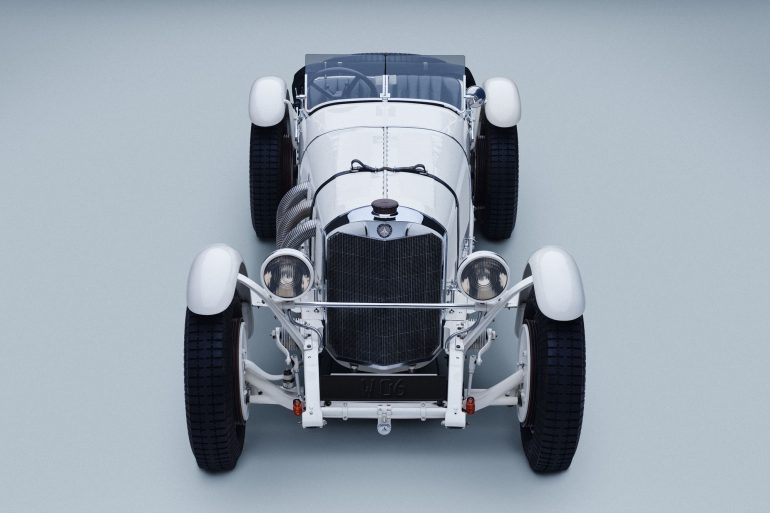
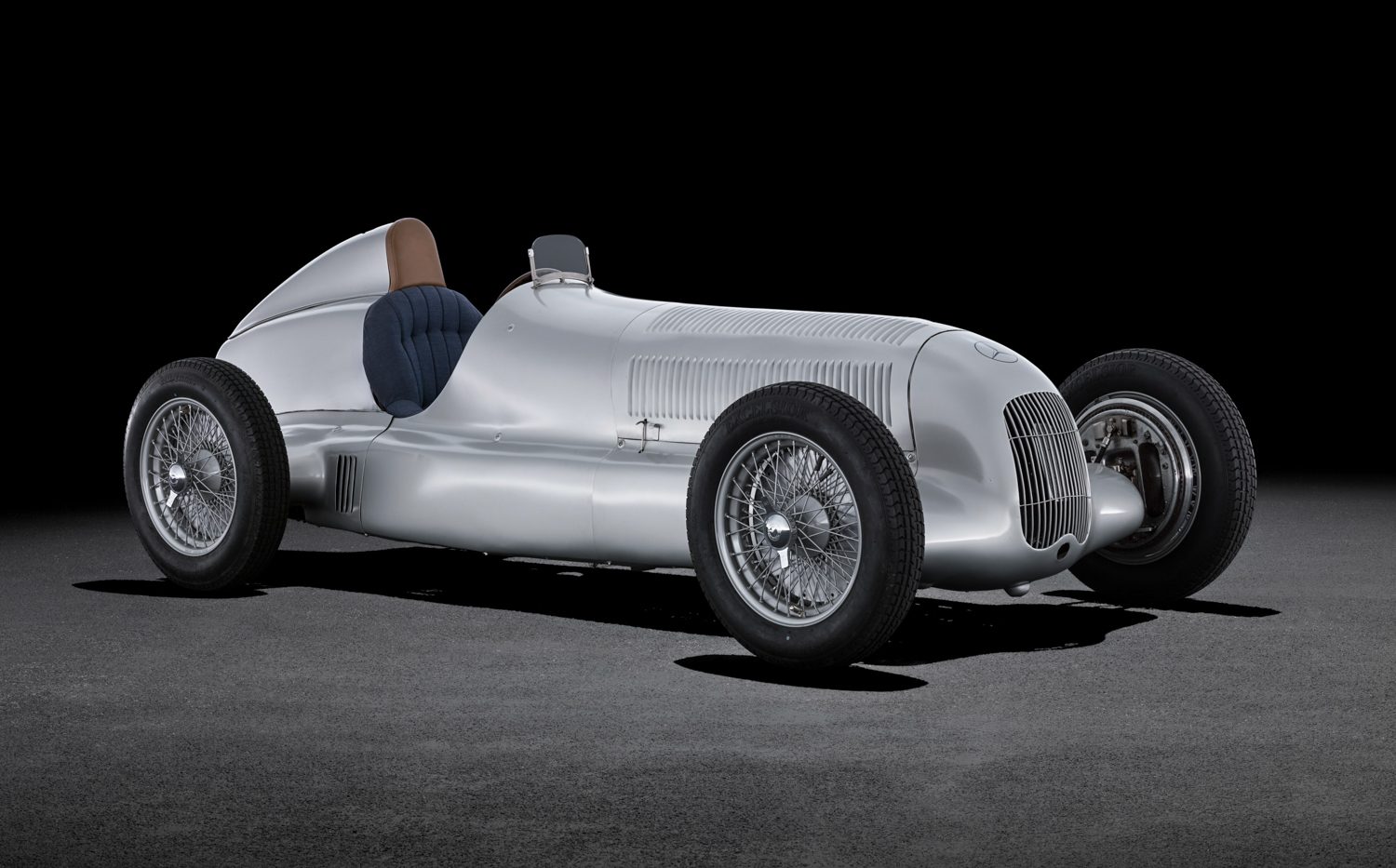
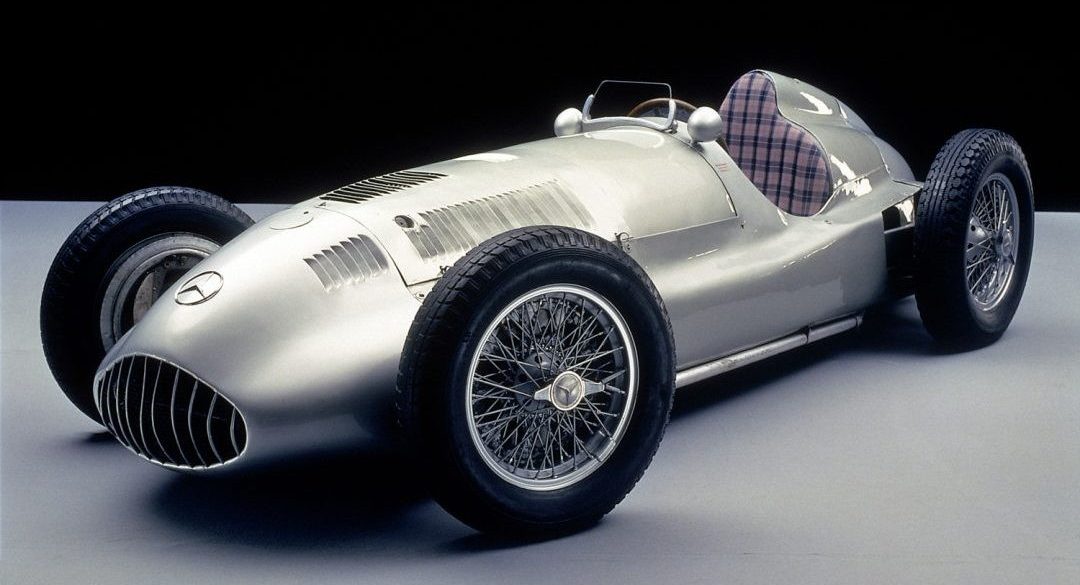
Italy restricted its 1939 races to 1½-liter cars to keep the Germans from winning Tripoli again after four straight silver victories. Karl Ludvigsen on how Daimler-Benz answered with the W165 voiturette for Italo Balbo's eight-mile Mellaha circuit.

The oldest name in the motor car, and the one that invented the works team: Lautenschlager's Grand Prix wins of 1908 and 1914, the supercharged SSK and Caracciola's Mille Miglia, the Silver Arrows of 1934 to 1939, the 300 SL that came back from Le Mans with gullwing doors, Fangio and Moss in the W196 and 300 SLR, the withdrawal of 1955 and the return with Sauber, McLaren and the hybrid-era team that won eight constructors' titles in a row. The archive has Caracciola's rise and fall, Newman on the Silver Arrows and on Uhlenhaut, Annis on the Blitzen Benz and the W194, Ludvigsen on the W25K and W154, Moss on the 300 SLR, and the 300 SL at every concours since 2000. This page puts the marque in order and links the archive through it.
The pieces to start with
Caracciola's rise and fall, Newman on the Silver Arrows and on Uhlenhaut, Ludvigsen's W25K, Annis on the Blitzen Benz and the W194, Zimmerman's SL history, and Moss on the 300 SLR.
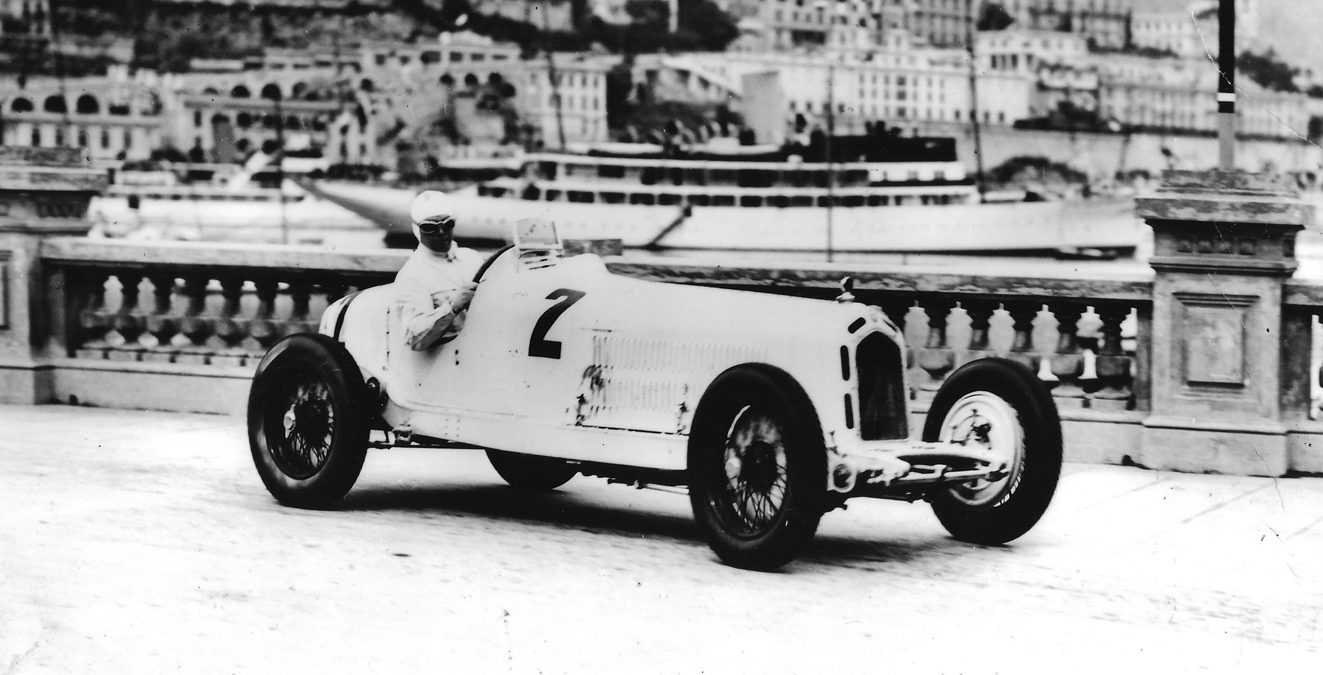
“Why should we always win the prizes for other people?” Chiron asked. Monaco, 1933: he and Rudi Caracciola, dropped by their works teams in the Depression, arrived with two 2.3-liter Alfa Romeo Monzas as Scuderia CC.
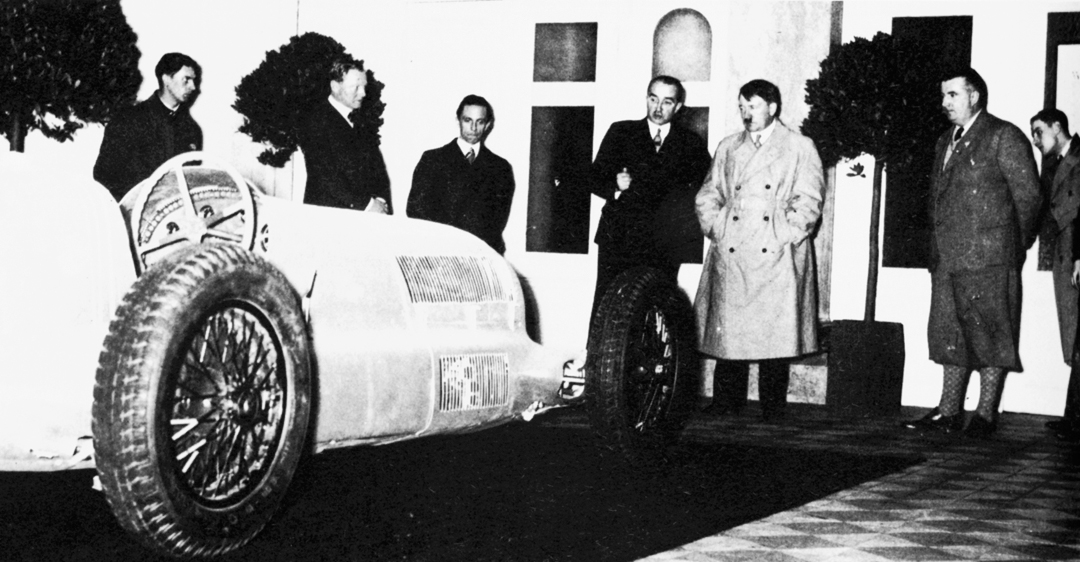
Hitler saw Varzi’s Bugatti win the 1933 Avusrennen with no German car in the top three, and wanted that changed. In January 1934 he stood in the rain inspecting the Mercedes W25. Robert Newman on the Silver Arrows as propaganda.
For 1936 Mercedes planned an “SSK” W25, shorter and lower, with Albert Heess’s new 5,577 cc V12 estimated at 516 bhp on standard fuel and 598 on alcohol. The engine proved too heavy. Karl Ludvigsen on the Arrow that disappointed.
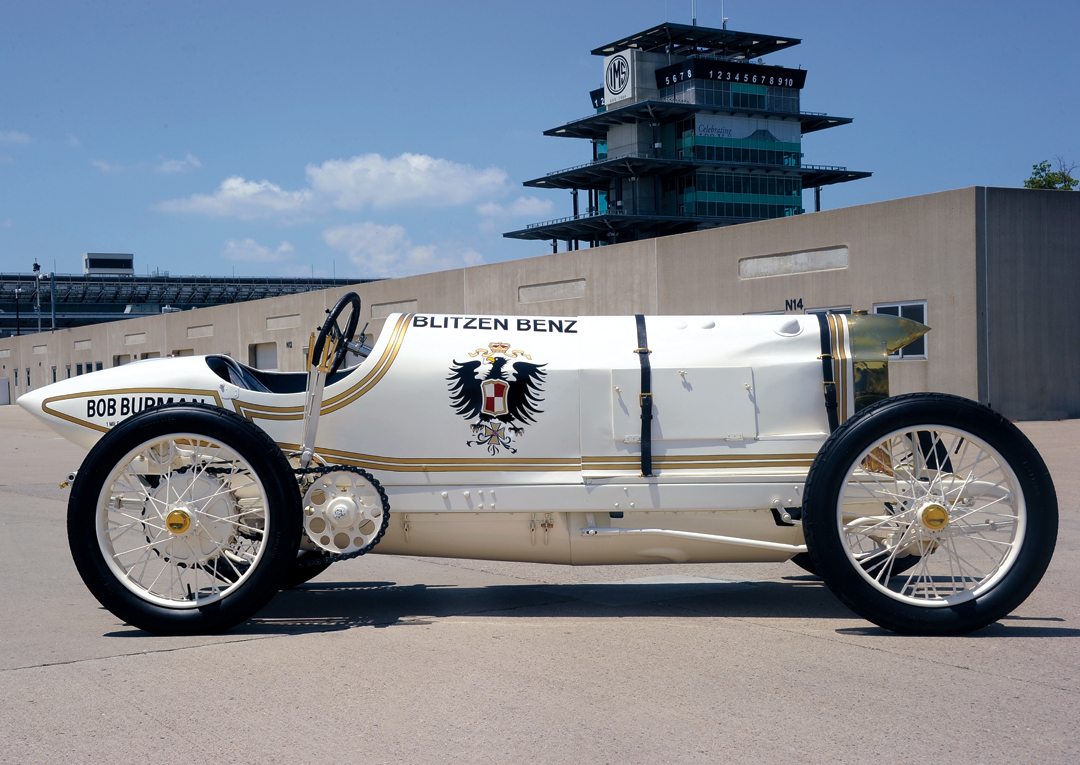
Benz built 603 cars in 1900, more than anyone, then lost ground because Karl Benz refused any idea not developed in-house. The 200 PS record car’s story turns on an incendiary Belgian and two American showmen. Casey Annis drives it.
Fritz Nallinger said Mercedes was “just opening a little window on the motor racing scene”. With Formula One rules in limbo until 1954, Neubauer went to ask the CSI for a change, and the W194 became the way back.
Told in 1951 that money for racing was back, Mercedes waited on Grand Prix rules changing for 1954 and built a Le Mans car. John Zimmermann on Uhlenhaut’s 200-pound spaceframe and a 3-liter six canted at 50 degrees: the W194.
Rudolf Uhlenhaut never owned a car. Made Mercedes-Benz racing’s technical director at 30 in 1936, he climbed into a 354-hp W25 at the Nürburgring and taught himself to match his professionals. Robert Newman on an engineer who could beat Fangio.
Six starts, three wins, two seconds and one withdrawal while leading. Stirling Moss on the 300 SLR: three months of Mille Miglia reconnaissance, Hockenheim tests geared for 170 mph, Jenks carsick, and Castellotti’s Ferrari going past at 175.
The newest long-form writing on Mercedes-Benz, as it is published.
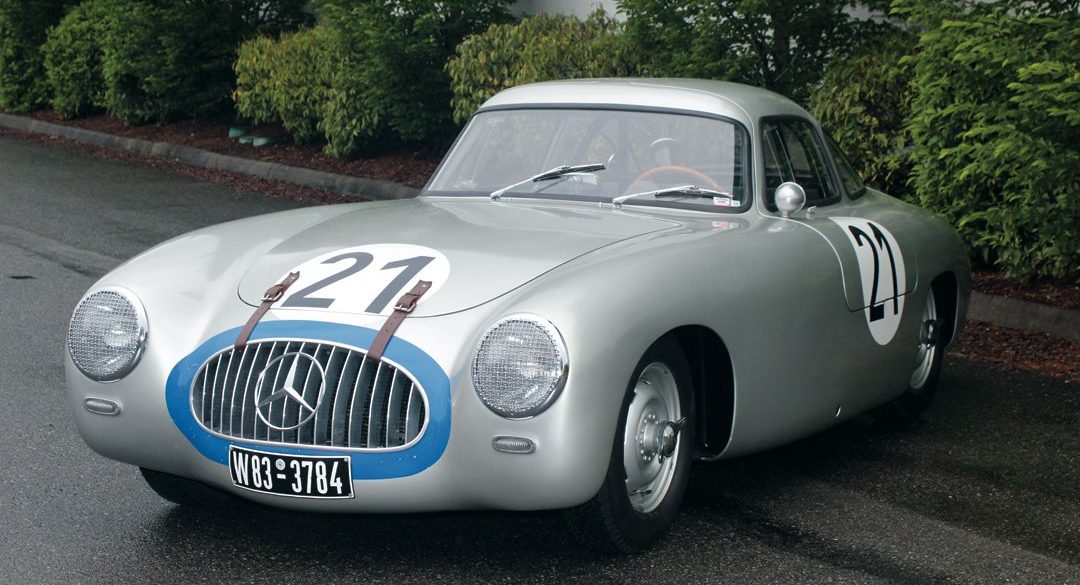
Mercedes-Benz is the Stuttgart marque formed in 1926 when Daimler-Motoren-Gesellschaft, whose cars had been sold as Mercedes since 1901, merged with Benz & Cie, whose founder had patented the motor car in 1886; it is the oldest continuous name in the business and, through most of the twentieth century, the one by which engineering quality was measured. In racing it is the marque of the first great works team: the Mercedes that won the French Grand Prix in 1908 and 1914, the supercharged S, SS, SSK and SSKL of the late 1920s, the Silver Arrows that dominated Grand Prix racing from 1934 to 1939 under Alfred Neubauer, the 300 SL and 300 SLR and W196 of 1952 to 1955 with which Fangio won two world championships and Moss the fastest Mille Miglia ever run, and, after the withdrawal that followed Le Mans 1955, the Sauber-Mercedes Group C cars of 1989–90, the McLaren-Mercedes and Brawn years, and the Mercedes-AMG Formula One team whose eight constructors' championships from 2014 to 2021 are the record. Its road cars run from the Mercedes 35 PS of 1901 and the 540K to the 300 SL Gullwing, the Pagoda, the 300 SEL 6.3, the SLR McLaren and the SLS, and the Uhlenhaut 300 SLR coupé is the most expensive car ever sold.
The archive's Mercedes-Benz coverage leans toward the racing: Robert Newman's Silberpfeile Rennen and the site's six-part Silver Arrows series, Caracciola's rise and fall, Karl Ludvigsen on the W25K, the W154 and the W165, Casey Annis on the Blitzen Benz and the W194 300 SL, John Zimmerman's history of the SL line, Ed McDonough on the streamliners, Newman on Uhlenhaut, Fangio and the 1955 season, Stirling Moss on the 300 SLR in his own words, and a 300 SL Gullwing or Roadster on almost every concours lawn and auction block the site has covered. The chapters below follow it from Cannstatt and Mannheim to Brackley.
Karl Benz's Patent-Motorwagen of 1886, a three-wheeler with a single-cylinder engine built in Mannheim, is the first car; Gottlieb Daimler and Wilhelm Maybach's motorised carriage of the same year, built in Cannstatt, is the first four-wheeler, and the two firms spent forty years as rivals before they merged. Daimler-engined cars won the first motoring competition, Paris–Rouen in 1894, and in 1901 Emil Jellinek, the Austrian consul in Nice who sold Daimlers to the rich of the Riviera, had Maybach build him a low, long, honeycomb-radiatored car that he named for his daughter: the Mercedes 35 PS, which won Nice Week and made every other car obsolete. The name replaced Daimler's on the firm's cars from 1902. Christian Lautenschlager won the French Grand Prix at Dieppe in 1908 for Mercedes and again at Lyon in 1914, at the head of a one-two-three a month before the war, in cars whose overhead-camshaft engines came from Daimler's aircraft work; the 1914 car is the one Ralph DePalma took to Indianapolis and won with in 1915. Benz's answer was speed: the 200-horsepower Blitzen Benz of 1909, which Casey Annis's archive history follows from Hémery's 202 km/h at Brooklands to Bob Burman's 228 km/h at Daytona in 1911, faster than any aeroplane or train, a record that stood for eight years.
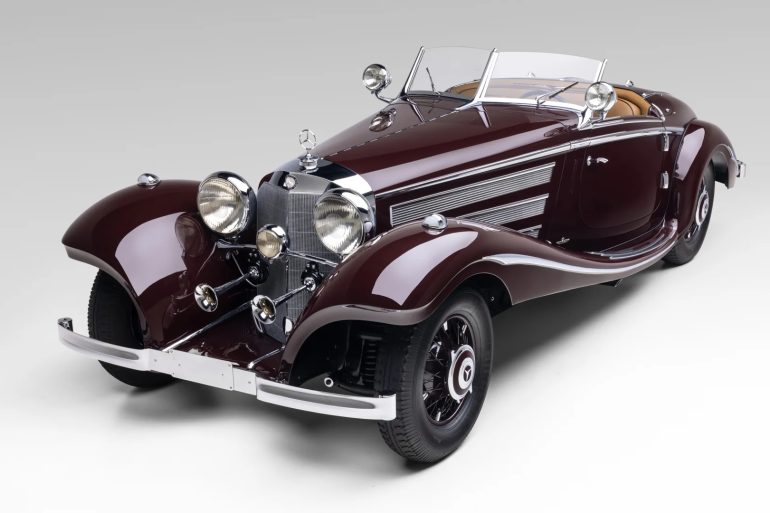
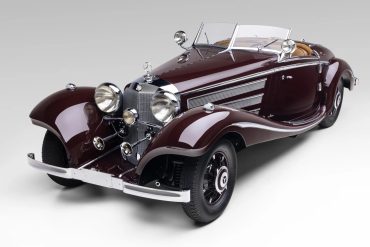
Daimler and Benz merged in June 1926, and the new Daimler-Benz had Ferdinand Porsche as its chief engineer and the supercharged six-cylinder Model K as its sports car. From it Porsche developed the S of 1927, the SS and the short-chassis SSK of 1928, 7.1 litres and up to 300 horsepower with the blower engaged, and, after he had left, Hans Nibel's SSKL of 1931, the drilled-chassis lightweight in which Rudolf Caracciola became the first non-Italian to win the Mille Miglia, driving every mile himself. Caracciola had won the first German Grand Prix at Avus in 1926 in a supercharged two-litre Mercedes in the rain, the 1929 Tourist Trophy at Ards in an SSK in the rain, and the 1931 German Grand Prix in the SSKL; the archive's Caracciola's Rise and Fall is his story, and the SSK is one of its most photographed cars, from Pebble Beach to Goodwood. The merger also produced the great road cars of the 1930s, the 500K of 1934 and the 540K of 1936, the supercharged straight-eight cabriolets and Special Roadsters from the Sindelfingen body shop that are the archive's Classic Era in one marque; Steve Natale's 540K Mayfair Roadster and the Art Deco pieces are the long reads.
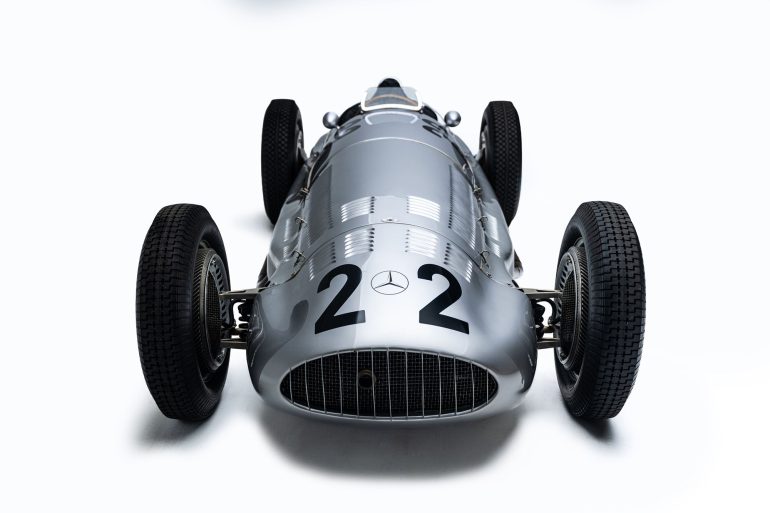
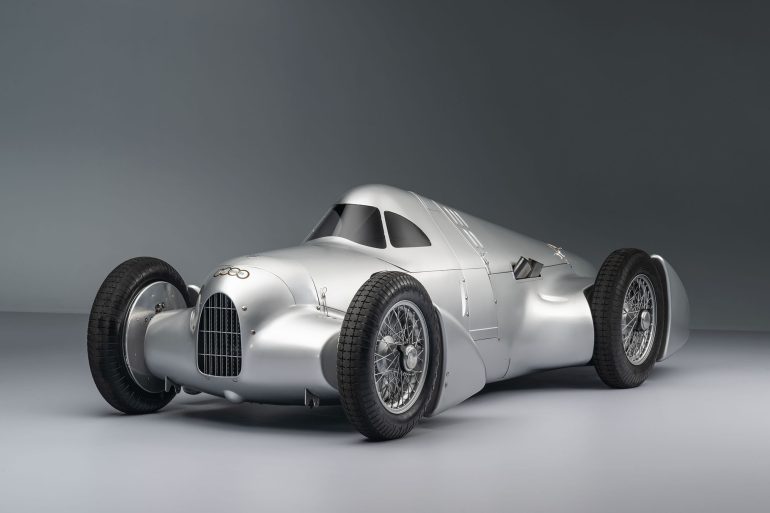
When the 750-kilogram formula began in 1934, Daimler-Benz came back to Grand Prix racing with Nibel's W25, Alfred Neubauer managing and Caracciola, von Brauchitsch and Fagioli driving, and the story that the white paint was scraped off at the Eifelrennen to make the weight is where the Silver Arrows got their name. Against Ferdinand Porsche's mid-engined Auto Unions, the Mercedes won most of what there was to win for six seasons: Caracciola was European champion in 1935 in the W25, in 1937 in the 646-horsepower W125, the most powerful Grand Prix car until the 1980s, and in 1938 in the three-litre W154, and Hermann Lang in 1939 in the W154's final form; the one-off 1.5-litre W165 built in eight months to win the 1939 Tripoli Grand Prix, which Ludvigsen describes in V for Voiturette, is the last of them. Dick Seaman's win in the 1938 German Grand Prix and his death at Spa in 1939 belong to the same cars. The archive's Silver Arrows Years page carries the era in full, and its own six-part Silver Arrows series, Newman's Silberpfeile Rennen, Ludvigsen's W25K and W154 histories, McDonough's streamliners and the record cars, and the Germans at Donington are the reading.
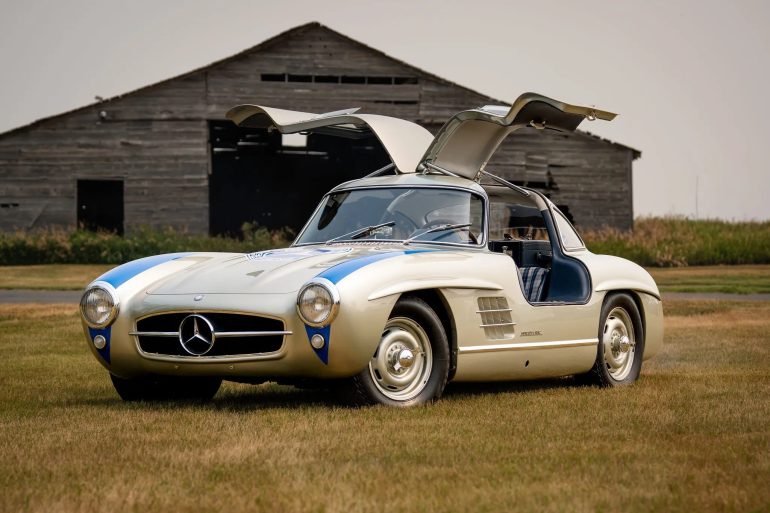
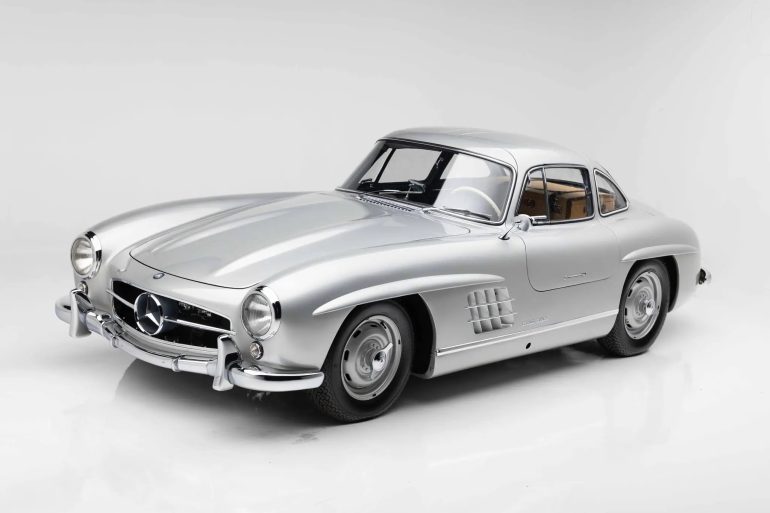
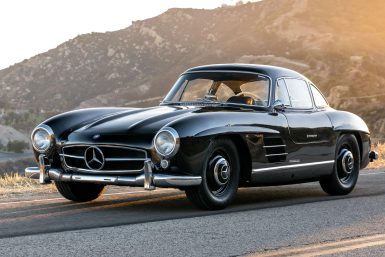
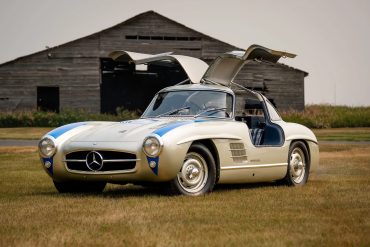
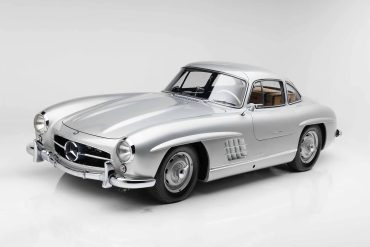
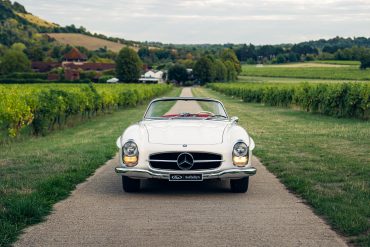
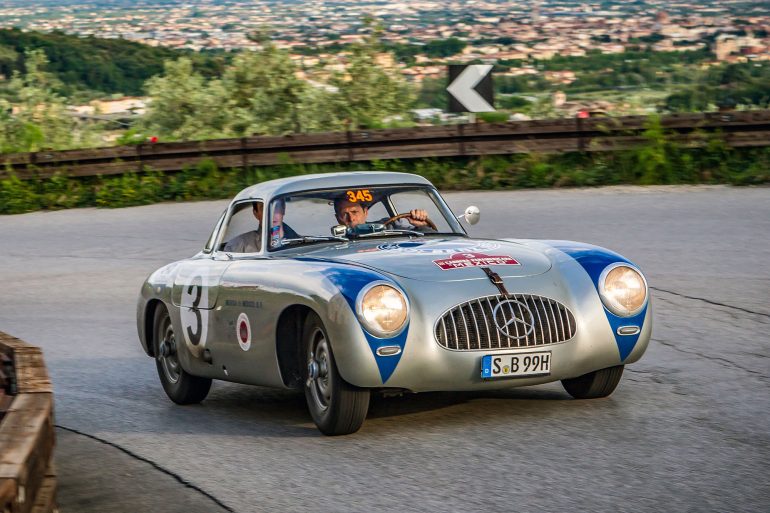
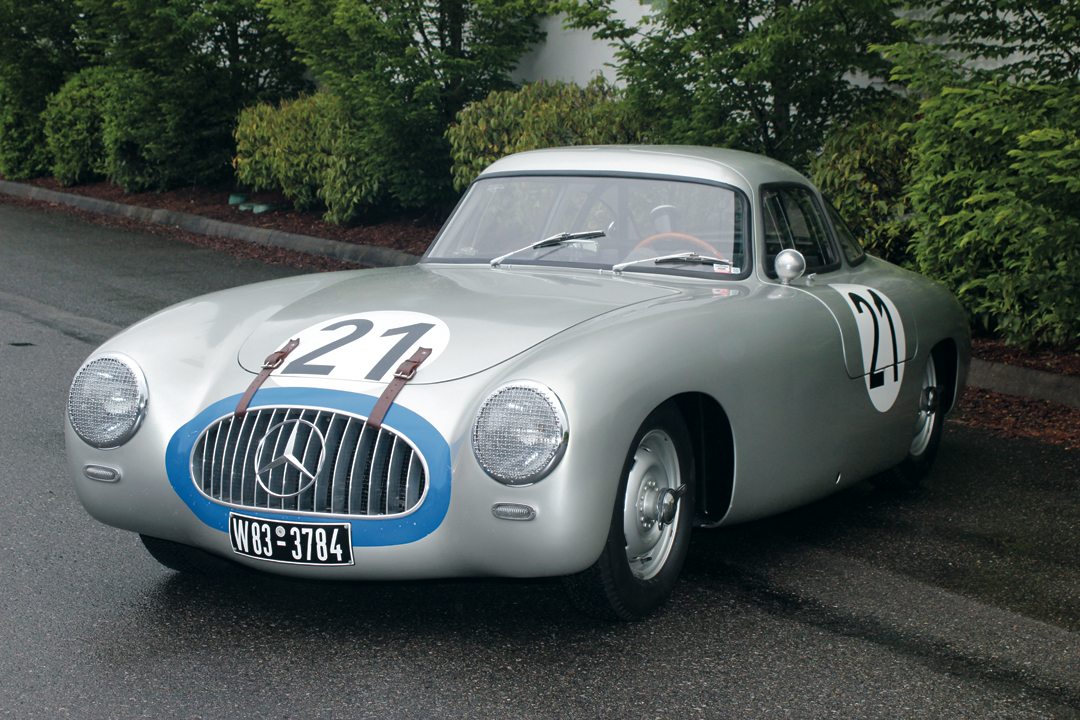
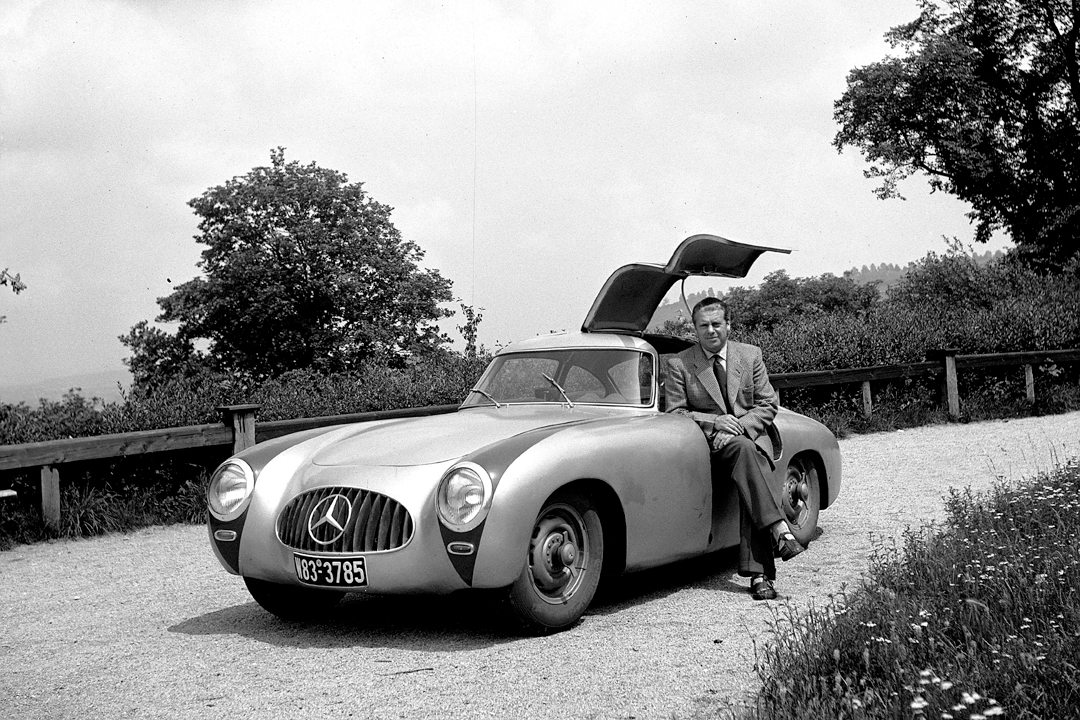
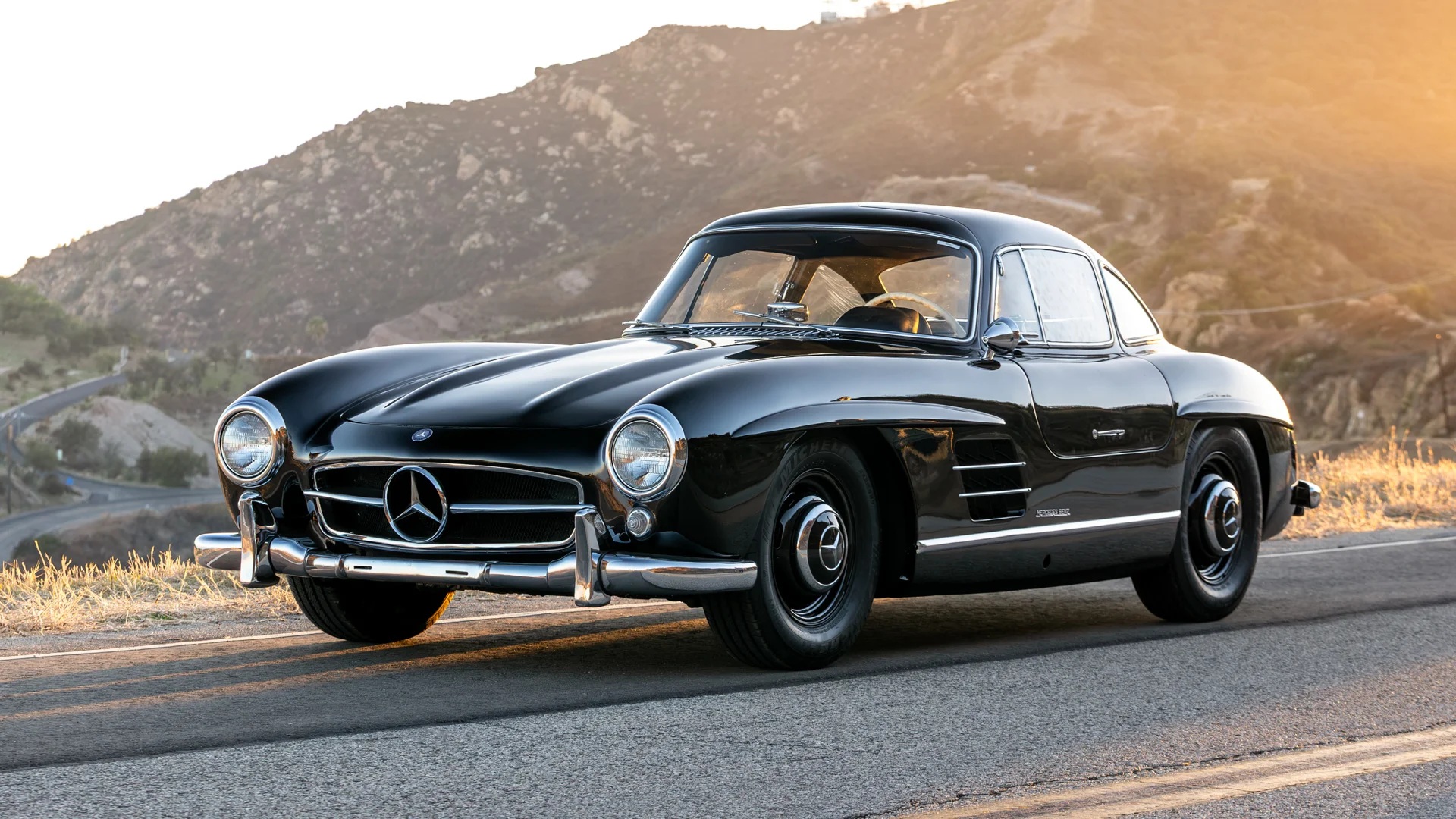
Daimler-Benz came back to racing in 1952 with a car built from what it had, the 300 saloon's three-litre six in a lightweight spaceframe whose high sills forced the doors to open upward: the W194 300 SL, which won Le Mans with Lang and Riess, the Bern sports car Grand Prix, the Nürburgring and the Carrera Panamericana with Kling and Klenk, the race in which a vulture came through the windscreen. Casey Annis's Wings of Change, in the archive, is the car's history. Max Hoffman, the New York importer, persuaded the board that Americans would buy a road version, and the 300 SL Gullwing was shown at the New York show in February 1954 with the first fuel-injected production engine; 1,400 coupés were built to 1957 and 1,858 Roadsters to 1963, and John Zimmerman's Building a Legend and Annis's Wingless Gull follow the line from the Gullwing through the Roadster to the 190 SL that was sold beside it. The 300 SL is the archive's most-covered Mercedes by a distance, nearly four hundred stories, because it has been at every concours, every tour and most of the big auctions since the site began; the 300 SL Roadster and Gullwing market is the chapter below.
The cars and the racing, year by year, with the archive's story of each linked. Car names link to every story on the site about that model.
| Year | The cars | The racing and the company | In the archive |
|---|---|---|---|
| 1886 | Benz Patent-Motorwagen · Daimler motor carriage | The first car, in Mannheim; the first four-wheeler, in Cannstatt | The Pioneers era |
| 1901 | Mercedes 35 PS | Jellinek's car, named for his daughter, wins Nice Week and makes every other car obsolete | The Pioneers era |
| 1908 | Mercedes Grand Prix | Lautenschlager wins the French Grand Prix at Dieppe | Grand Prix History |
| 1909–11 | Blitzen Benz | 200 horsepower: 202 km/h at Brooklands, 228 km/h at Daytona, the land speed record for eight years | Lightning Strike |
| 1914 | Mercedes Grand Prix | One-two-three at Lyon a month before the war; DePalma wins Indianapolis in one in 1915 | 1914 Grand Prix car at Pebble Beach |
| 1926 | Model K | Daimler and Benz merge in June; Caracciola wins the first German Grand Prix at Avus in the rain | The Rise and Fall of Caracciola |
| 1927–28 | S · SS · SSK | Porsche's supercharged sixes, 7.1 litres and up to 300 hp; Caracciola's wet Tourist Trophy at Ards in 1929 | Tourist Trophy hub |
| 1931 | SSKL | Caracciola drives every mile of the Mille Miglia, the first foreign winner, and wins the German Grand Prix | Mille Miglia hub |
| 1934 | W25 · 500K | The 750-kg formula; the W25's Eifelrennen debut and the silver paint; Neubauer's team | Silberpfeile Rennen |
| 1935–36 | W25 · 540K | Caracciola European champion; the W25K's disappointing 1936; the 540K Special Roadster | Disappointing Arrow · Mayfair's Phoenix |
| 1937 | W125 | 646 horsepower, the most of any Grand Prix car until the 1980s; Caracciola champion again; the Germans at Donington | The Silver Arrows Years |
| 1938–39 | W154 · W165 | Caracciola's third title and Lang's; Seaman wins the German Grand Prix; the W165 built in eight months for Tripoli | Heavy Arrow · V for Voiturette |
| 1952 | 300 SL (W194) | Le Mans with Lang and Riess; Bern, the Nürburgring and the Carrera Panamericana with Kling and Klenk | Wings of Change |
| 1954 | 300 SL Gullwing · W196 | The Gullwing at the New York show for Hoffman; the W196 one-two at Reims first time out; Fangio champion | Building a Legend: the SL |
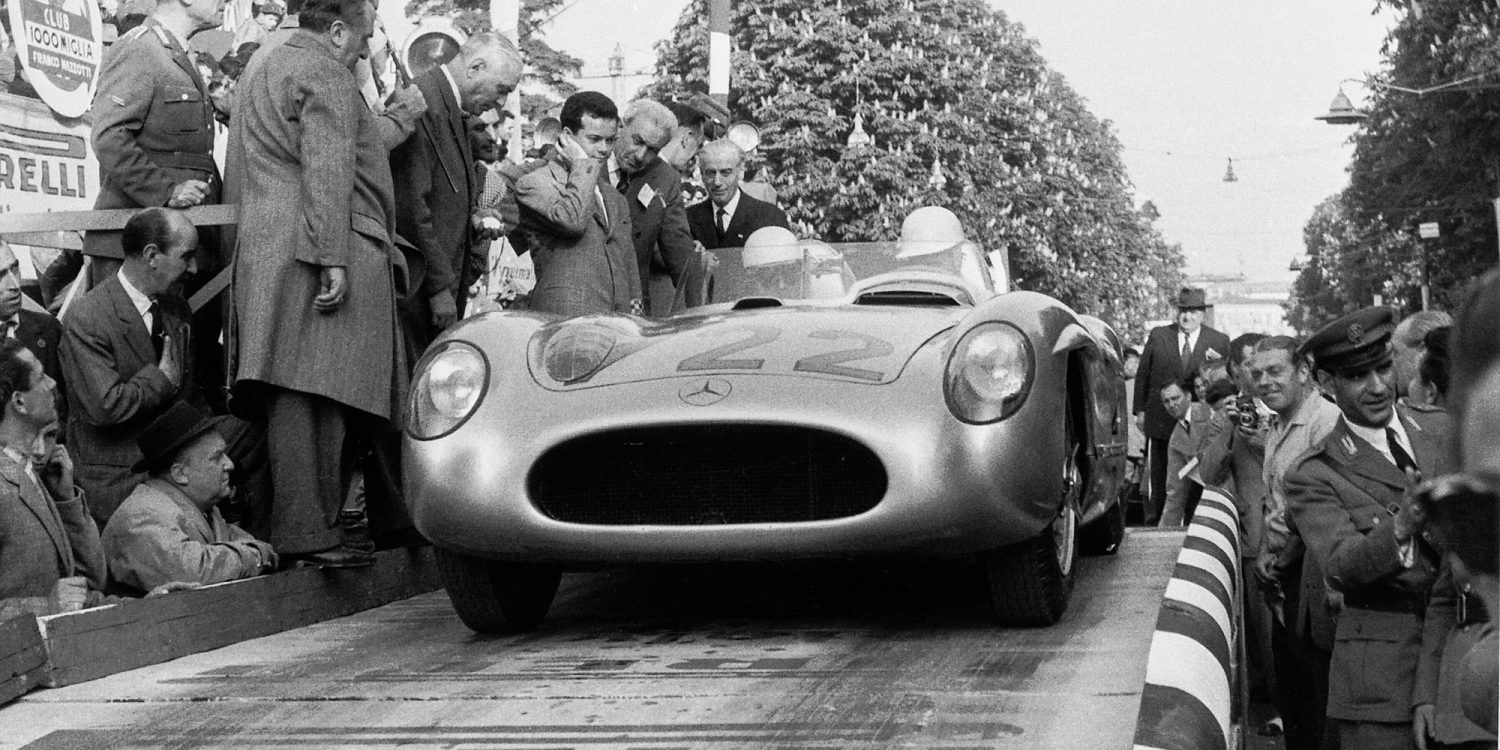
| 1955 | 300 SLR · 190 SL | Fangio champion again; Moss wins the Mille Miglia, the TT and the Targa Florio; Le Mans; the withdrawal | Moss and the 300 SLR · Superman: Uhlenhaut |
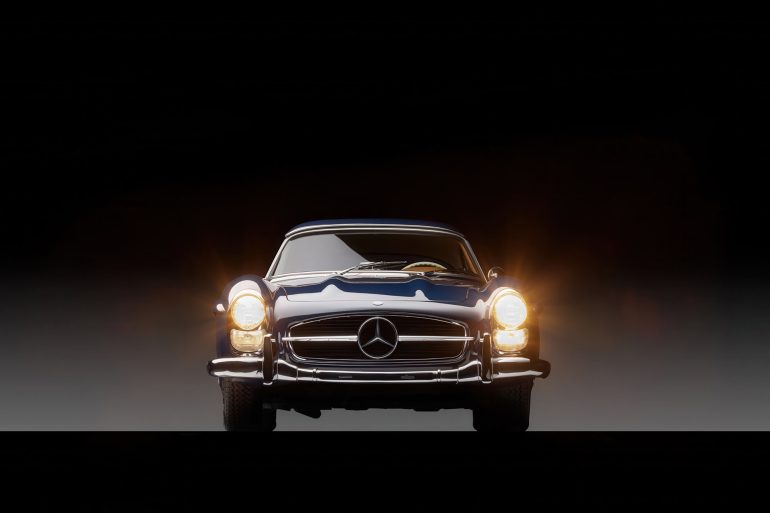
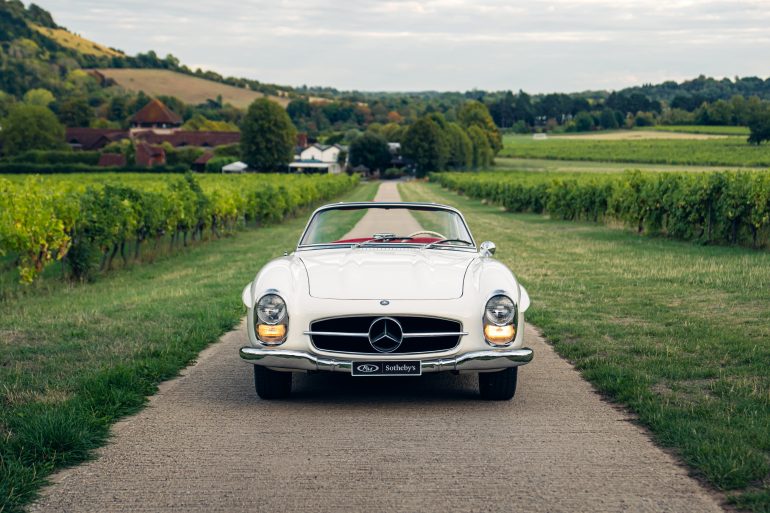
| 1957 | 300 SL Roadster | The Gullwing's successor, 1,858 built to 1963 | Wingless Gull |
| 1963 | 230 SL Pagoda · 600 | Bracq's Pagoda; the 600 for heads of state | Model (230 SL Pagoda) |
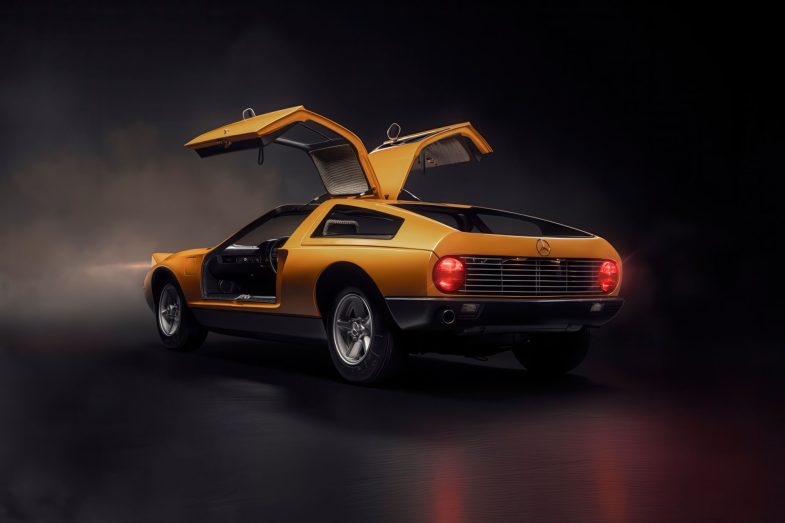
| 1968–69 | 300 SEL 6.3 · C111 | The 600's V8 in a saloon; the first AMG; the rotary record car | Red Giant |
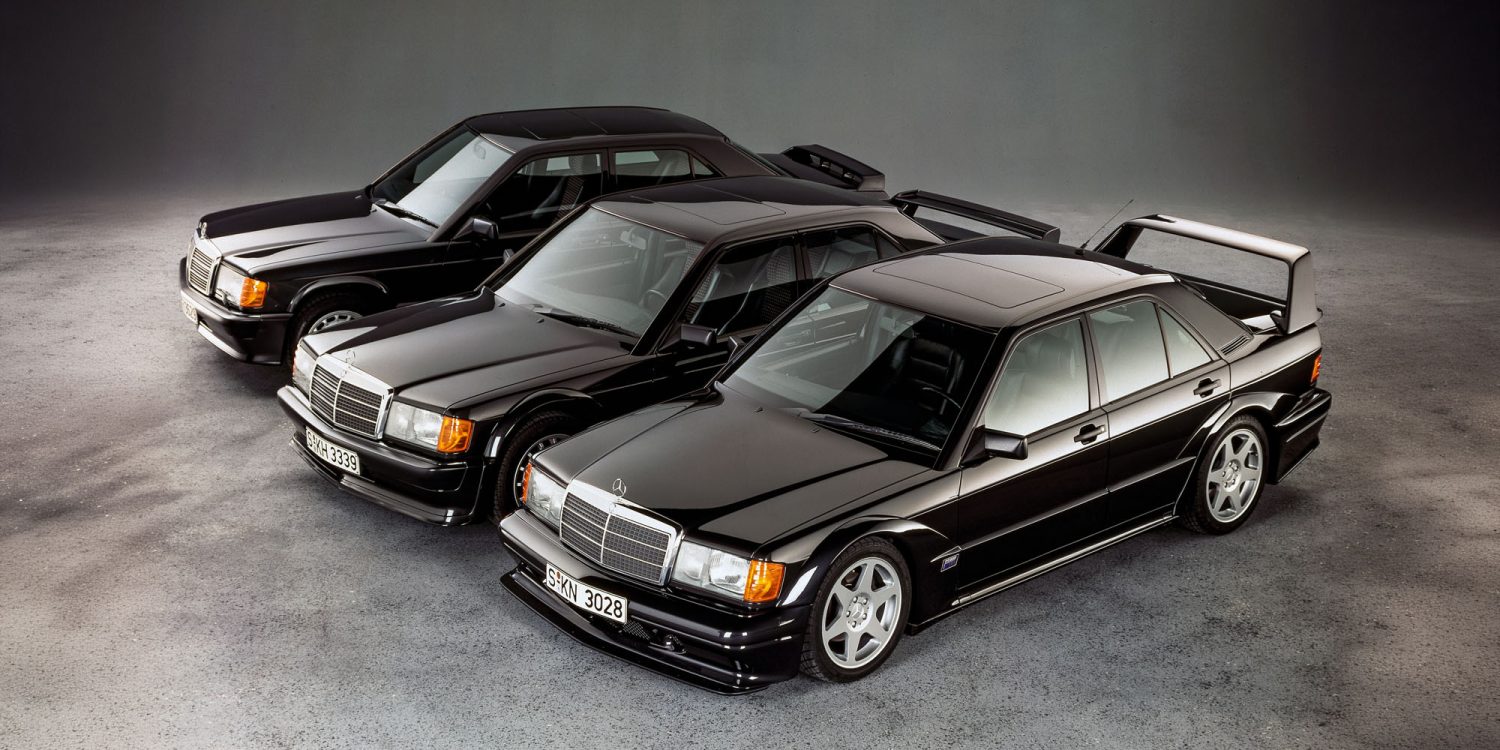
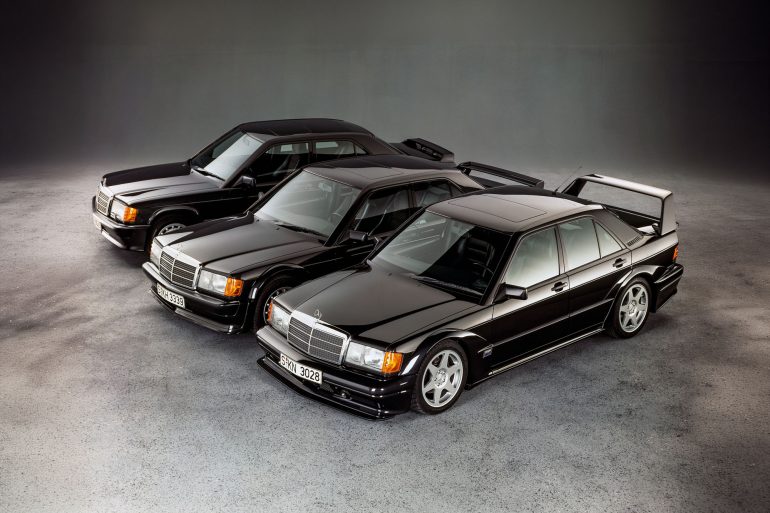
| 1983 | 190 E 2.3-16 | The Cosworth 190 E and the Nardò records; the way back to racing through touring cars | Model (190 E 2.3-16) |
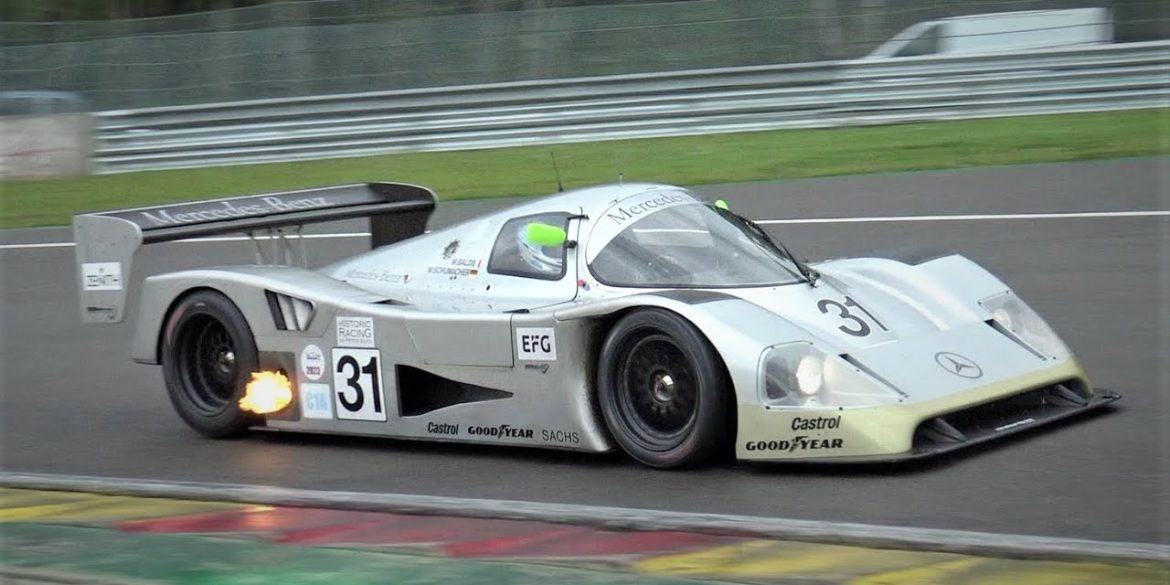
| 1989–90 | Sauber-Mercedes C9 · C11 | Le Mans one-two, the first win since 1952; two world championships; Schumacher in the junior team | Turbos and Group C era |
| 1994–98 | CLK GTR | Penske-Mercedes wins Indianapolis; McLaren-Mercedes from 1995; the CLK GTR's FIA GT titles; Häkkinen champion 1998 | The Glorious Return |
| 2003 | SLR McLaren | The Gullwing's name on a McLaren-built supercar | Model (SLR McLaren) |
| 2009–10 | Brawn BGP 001 · SLS AMG | Mercedes powers and then buys the champion team; the gullwing returns on the SLS | Grand Prix History |
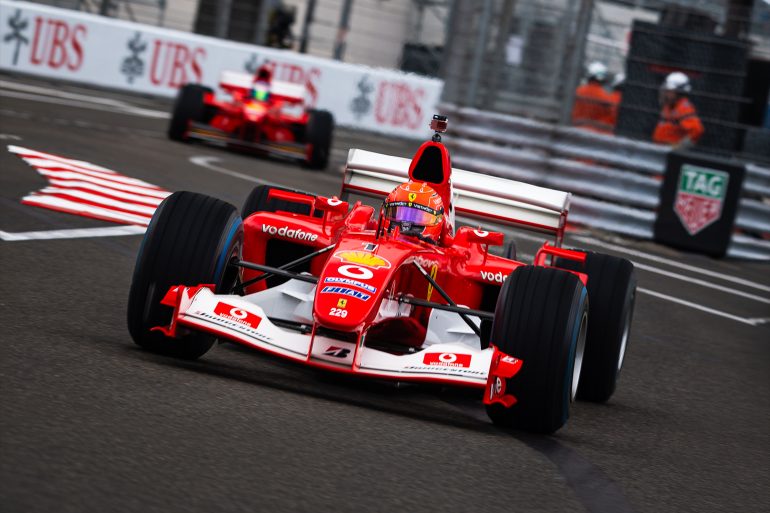
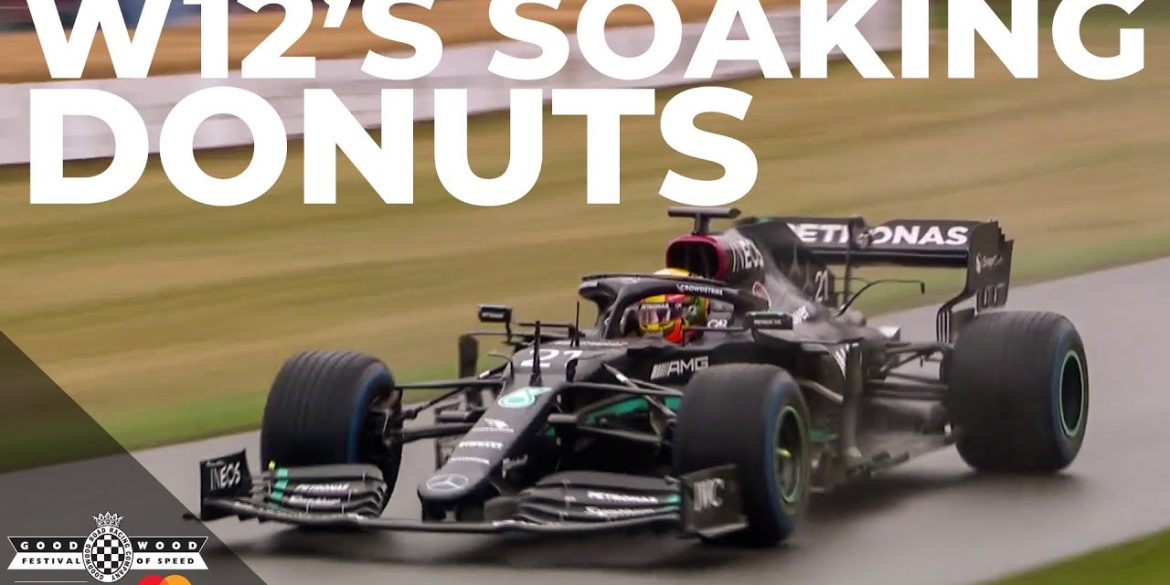
| 2014–21 | Mercedes-AMG F1 W05 to W12 | Eight constructors' championships in a row; Hamilton's six titles and Rosberg's one | Lewis Hamilton |
| 2022–25 | 300 SLR Uhlenhaut coupé · W196 R | 135 million euros for the Uhlenhaut coupé, the most for any car; $53.9 million for the W196 R streamliner in 2025 | The Most Valuable Car in the World · W 196 R sells for $53.9M |
Mercedes model names mixed horsepower, litres and letters until the 1950s (the 540K was a 5.4-litre Kompressor; the 300 SL a three-litre Sport Leicht); the W numbers are the factory's project codes. The Great Races pages and the Grand Prix History hub carry each race in full.
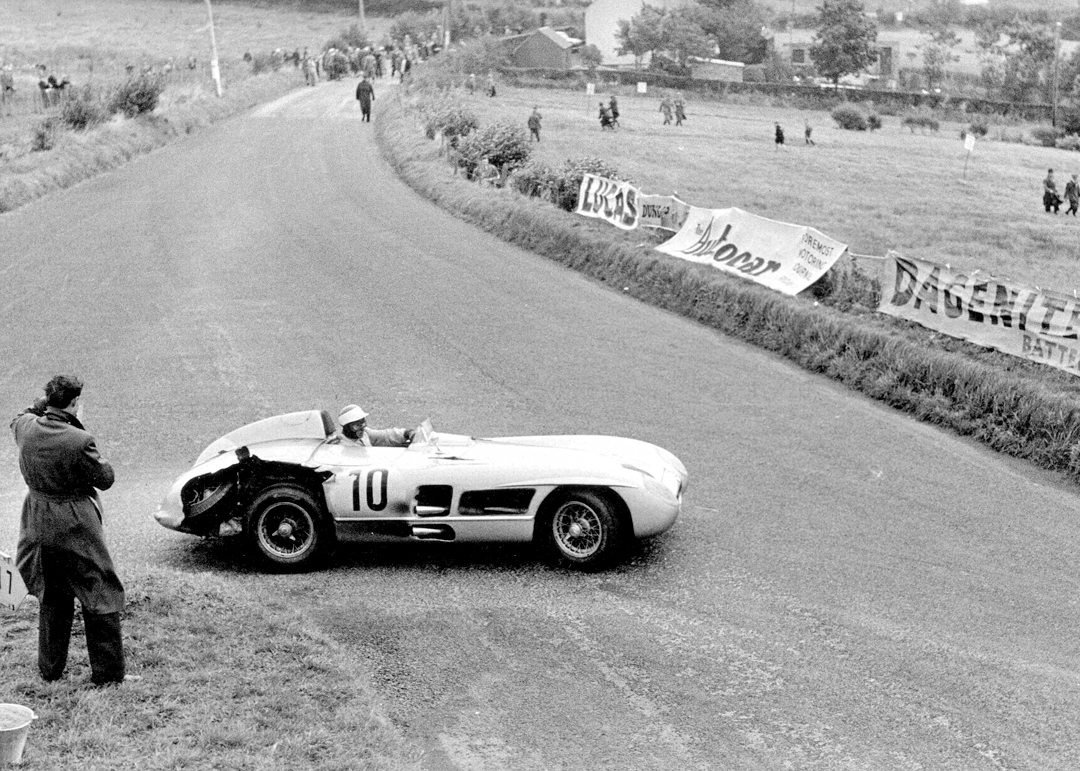
The works returned to Grand Prix racing in July 1954 with the W196, a straight-eight with desmodromic valves and fuel injection in a spaceframe, streamlined for Reims where Fangio and Kling finished one-two first time out; Fangio won the championship that year and again in 1955, when Moss joined him and won the British Grand Prix at Aintree, his first, by a length that Fangio never explained. The sports-car version, the 300 SLR, won every championship race it finished in 1955: Moss and Jenkinson's Mille Miglia at 97.96 mph, the fastest ever run and the subject of Moss's own archive piece and of Pete Lyons's Jenkinson profile; the Tourist Trophy at Dundrod with Moss and Fitch; and the Targa Florio with Moss and Collins, which won the manufacturers' championship. At Le Mans in June Pierre Levegh's 300 SLR went into the crowd and more than eighty people died, Neubauer withdrew the leading Fangio and Moss car in the night, and at the end of the season Daimler-Benz withdrew from racing altogether, for more than thirty years. Rudolf Uhlenhaut, who had engineered every racing Mercedes since the W125 and could lap as fast as the drivers, kept two 300 SLR coupés as company cars; one of them sold in 2022 for 135 million euros, the most ever paid for a car. Newman's Superman is Uhlenhaut's story, and his Fangio, Marque of Greatness and The Final Countdown are the archive's accounts of the man and the season.
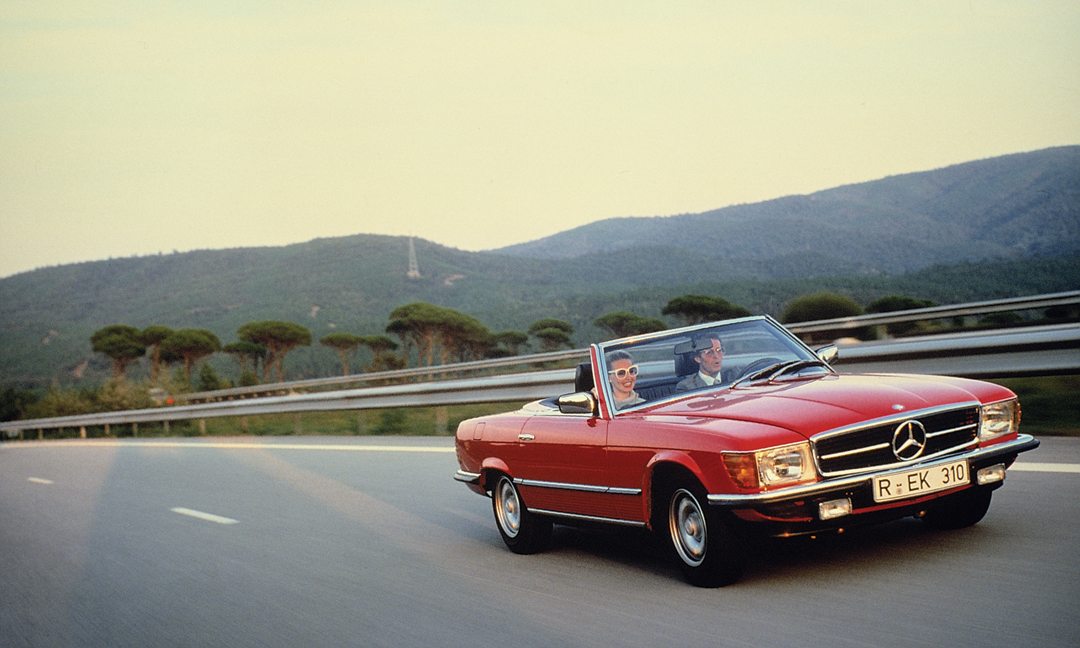
Without a racing team the company built the cars that made its reputation for the next three decades: the 300 SL Roadster, the 300 Adenauer and the 300 S and SC for the rich, the fintail saloons, the 230 SL Pagoda of 1963 with Paul Bracq's concave hardtop and its 250 and 280 successors, the 600 of 1963 for heads of state, the 300 SEL 6.3 of 1968, which put the 600's V8 in a saloon and started the fast-Mercedes line that Annis's Red Giant follows to the first AMG, and the C111 rotary and diesel record cars of 1969–79. The R107 SL of 1971 lasted eighteen years. Racing was confined to rallies, where the 300 SE, the 450 SLC and the 500 SLC won long-distance events in the 1960s and 1980s, until the 190 E 2.3-16 of 1983, developed with Cosworth and run at Nardò for distance records, took the company into touring cars and the DTM.
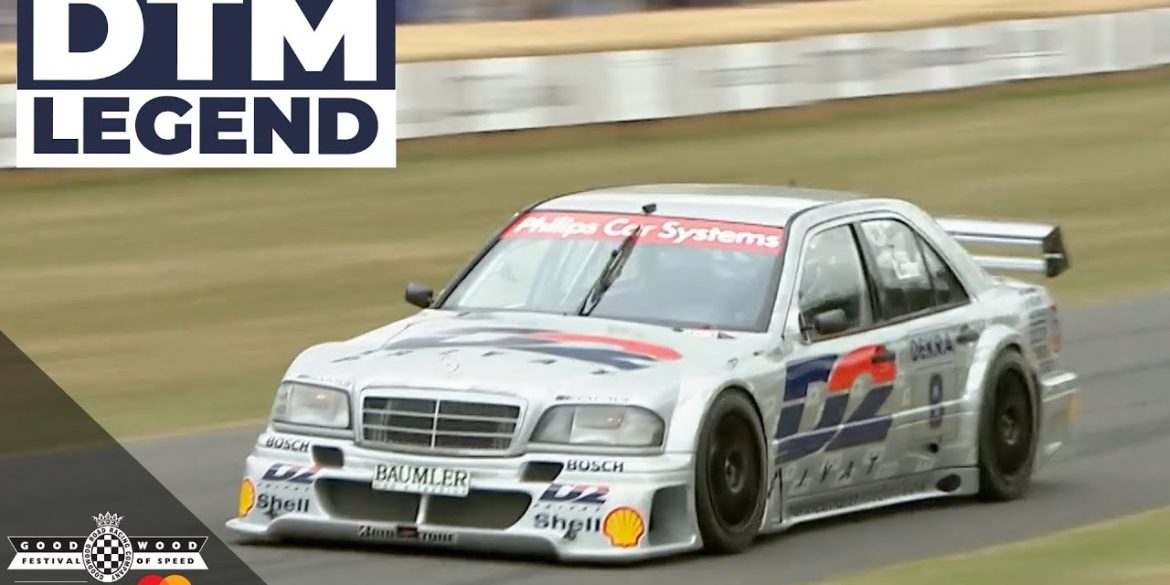
The way back was through Peter Sauber. His Group C cars had used Mercedes V8s since 1985, the works put its name on them in 1988, and the Sauber-Mercedes C9 won Le Mans in 1989 with Mass, Reuter and Dickens at the head of a one-two, the first Mercedes win there since 1952, and the world championships of 1989 and 1990 with the C9 and C11, in a junior team that included Michael Schumacher, Heinz-Harald Frentzen and Karl Wendlinger. The McLaren partnership began in 1995 and gave Mika Häkkinen the drivers' championships of 1998 and 1999 and McLaren the constructors' title of 1998; the CLK GTR of 1997, the road-car-shaped prototype the archive calls a glorious return, won the FIA GT championship in 1997 and, as the CLK-LM, in 1998, before the CLR's take-offs at Le Mans in 1999 ended the sports-car programme; a Penske-Mercedes with a pushrod engine built in secret to a loophole won the Indianapolis 500 of 1994 for Al Unser Jr; and the DTM was Mercedes territory through the 1990s and 2000s. The SLR McLaren of 2003 and the Brawn BGP 001 of 2009, which Mercedes powered and then bought, close the chapter.
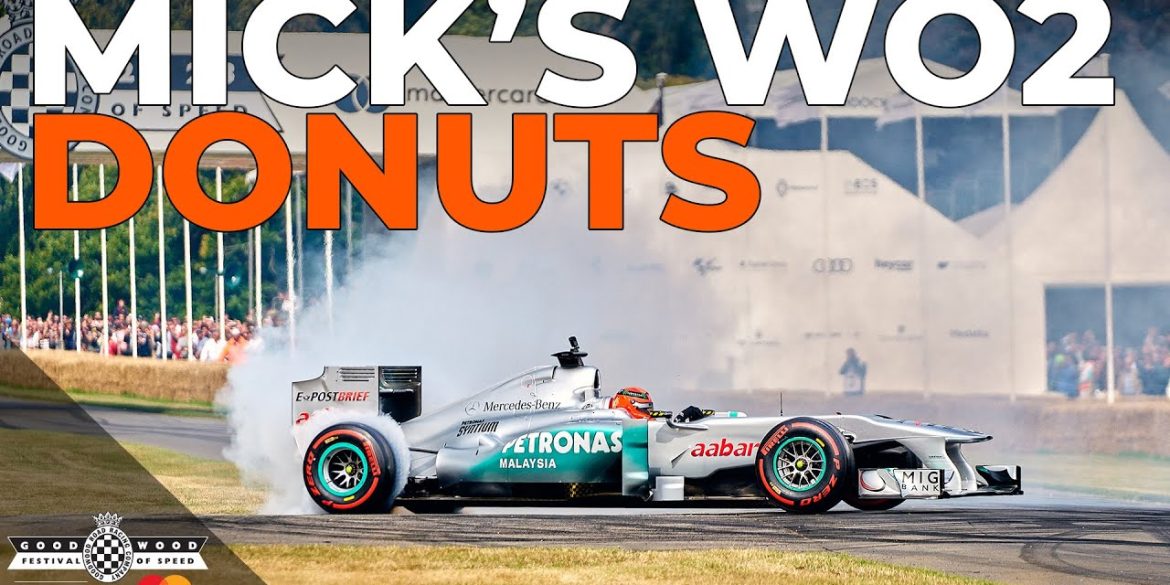
Mercedes-Benz bought the Brawn team at the end of 2009 and entered Formula One as a constructor for the first time since 1955, with Schumacher and Rosberg; the results came when the hybrid rules arrived in 2014, after which the Mercedes-AMG team won the constructors' championship eight years in a row, 2014 to 2021, and the drivers' championship seven times, six with Lewis Hamilton and once with Nico Rosberg in 2016, a run no team had matched. The archive's Grand Prix History hub puts it in context. The road cars of the period are the SLS AMG of 2010, the gullwing's heir, the AMG GT, the AMG One with a Formula One engine, and the G-Class and S-Class that have become the company's identity; the classic department at Fellbach and the Mercedes-Benz Museum at Untertürkheim keep the racing history running at Goodwood and the Mille Miglia, where the W196 and 300 SLR appear every year.
The archive's single-car stories are organised by Model tag. The pre-war cars: the SSK and SSKL, the 500K and 540K, and the W25, W125, W154 and W165 Grand Prix cars. The post-war classics: the 300 SL, far and away the largest thread, the 300 SLR and W196, the 190 SL, the 300 Adenauer and 300 S, the 230 SL Pagoda, the 280 SE 3.5 and 300 SEL 6.3. The moderns: the C111, the 190 E 2.3-16, the CLK GTR, the SLR McLaren and the SLS AMG, with the Sauber-Mercedes C9 and C11 under their own tags. Each is the thread for that car, and the nine below are the ones the archive has most to say about.
Nine the archive has most to say about; each links to every story on the site about that car.
Single-car and chassis stories: the SSKs and 540Ks, the Silver Arrows, the 300 SLs and the cars that surface at auction.
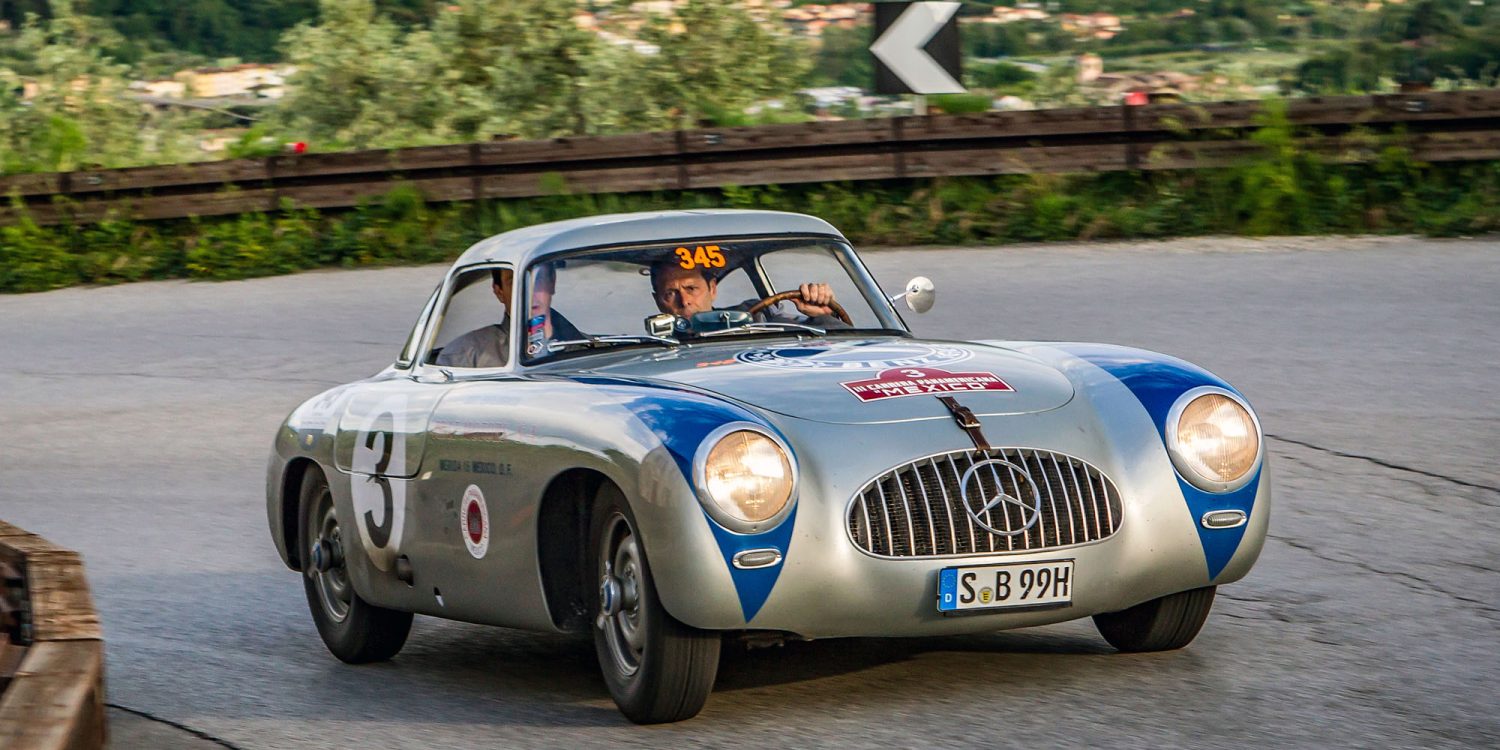
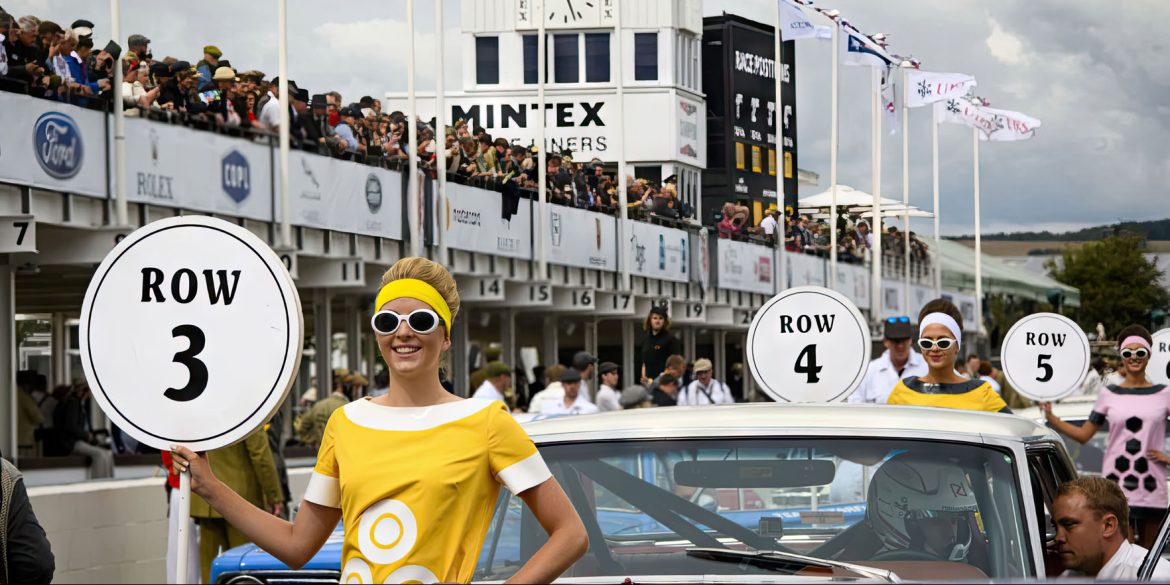
The racing is told race by race across the site's Great Races pages and the Grand Prix History hub, and the Racing feed below gathers the Mercedes race accounts in one place. On the Mille Miglia: Caracciola's solo win of 1931 and Moss and Jenkinson's of 1955, the two fastest and most famous drives in the race's history, both on the Mille Miglia page. At Le Mans: 1952 and 1989, and 1955. In Grand Prix racing: the French Grands Prix of 1908 and 1914, the Silver Arrows seasons of 1934–39, Fangio's 1954 and 1955 and the hybrid-era titles, in the Grand Prix History hub's Early Grands Prix, Silver Arrows, Front-Engine and Hybrid eras. In the Tourist Trophy: Caracciola at Ards in 1929 and Moss and Fitch at Dundrod in 1955. In the Carrera Panamericana: Kling and Klenk in 1952. At Indianapolis: DePalma's 1915 win in the 1914 Grand Prix car and the Penske-Mercedes of 1994. At Goodwood and the Revival, where the museum's cars run every year.
Race profiles and reports with a Mercedes-Benz in them, newest first.
Karl Benz, Gottlieb Daimler and Wilhelm Maybach made the car; Emil Jellinek and his daughter Mercedes gave it the name; Paul Daimler, Ferdinand Porsche, Hans Nibel, Fritz Nallinger and Rudolf Uhlenhaut engineered the racing cars from the 1914 Grand Prix car to the 300 SLR, and Alfred Neubauer, the inventor of the pit signal and the model for every team manager since, ran the team from 1926 to 1955. The drivers are Lautenschlager, Caracciola, von Brauchitsch, Lang, Seaman, Fangio, Kling, Moss, Collins and Fitch in the works years; Mass, Schlesser, Schumacher and Wendlinger with Sauber; Häkkinen and Coulthard with McLaren; Schneider in the DTM and the CLK GTR; and Hamilton, Rosberg, Bottas and Russell in the hybrid era. The archive's portraits are Caracciola's Rise and Fall, Newman on Uhlenhaut and on Fangio, Moss in his own words, Lyons on Jenkinson and the John Fitch tribute; the People pages on the site carry each of them.
The 300 SL is the standard unit of the collector-car market: a Gullwing in the low millions, an alloy-bodied one several times that, a Roadster with disc brakes and an alloy block at the top of its range, and so many of them offered each year that the archive's auction coverage of the model, nearly a hundred stories, is itself a price history. Above it sit the pre-war supercharged cars, the SSK and the 540K Special Roadster, which have made eight-figure prices at Pebble Beach, and the unreachable works cars, the W196 that sold for £19.6 million in 2013 and the streamlined W196 R that made $53.9 million at Stuttgart in 2025, the most for any Grand Prix car, and the 300 SLR Uhlenhaut coupé at 135 million euros in 2022, the record for any car. Below are the 190 SL, the Pagoda, the 280 SE 3.5 cabriolet and the 300 SEL 6.3, each of which has had its decade of rediscovery, and the modern collectables, the 190 E 2.3-16 and Evolution, the SLR McLaren and the SLS. The two feeds below are the Mercedes-Benzes at auction and for sale now, newest first, and The Market's pages carry the rest.
Auction previews and results for Mercedes-Benz, newest first.
Mercedes-Benz offered by dealers and collectors, newest first.
The galleries run from the museum's cars at the Goodwood Festival of Speed, the Mille Miglia and the Monaco Historique to the 300 SL classes at Pebble Beach and Amelia Island, the Silver Arrows at the Revival, and the single-car photo profiles the archive ran through the 2010s. The Galleries feed below is the whole set, newest first.
Mercedes-Benz galleries from Goodwood, the Mille Miglia, the museum and the concours lawns.


Founded: Benz & Cie, Mannheim, 1883, and the Patent-Motorwagen of 1886; Daimler-Motoren-Gesellschaft, Cannstatt, 1890; the first Mercedes, the 35 PS, 1901; Daimler-Benz AG, June 1926; Mercedes-Benz Group AG since 2022. Grand Prix wins before the championship: French Grand Prix 1908 and 1914; European championships 1935, 1937, 1938 (Caracciola) and 1939 (Lang). World championships: drivers' 1954 and 1955 (Fangio), 2014, 2015, 2017–20 (Hamilton), 2016 (Rosberg); constructors' 2014–21, eight in a row, the record. Le Mans: 1952 (Lang / Riess, 300 SL) and 1989 (Mass / Reuter / Dickens, Sauber-Mercedes C9). Mille Miglia: 1931 (Caracciola, SSKL) and 1955 (Moss / Jenkinson, 300 SLR, 97.96 mph, the fastest ever). World sports-car championships: 1955, 1989, 1990. Indianapolis 500: 1915 (DePalma, 1914 GP car) and 1994 (Unser Jr, Penske-Mercedes). The 300 SL: 1,400 Gullwings (1954–57), 1,858 Roadsters (1957–63); the W194 raced 1952 only. The W125: 5.66 litres, about 646 hp, 1937. Record prices: 300 SLR Uhlenhaut coupé, 135 million euros, May 2022, the most for any car; W196 chassis 00006, £19.6 million, 2013, then the auction record; W196 R streamliner, $53.9 million, RM Sotheby's Stuttgart, 2025, the most for a Grand Prix car. The badge: the three-pointed star for land, sea and air, registered by Daimler in 1909, in the Benz laurel from 1926.
Short answers, with the long ones above.
Mercedes was the name Emil Jellinek gave the Daimler cars he commissioned in 1901, after his daughter; Benz was Karl Benz's company. When the two firms merged in 1926 the cars took both names.
Karl Benz is credited with the first practical motor car, the three-wheeled Patent-Motorwagen of 1886, built in Mannheim; Gottlieb Daimler and Wilhelm Maybach built a four-wheeled motor carriage in Cannstatt the same year.
The Mercedes-Benz and Auto Union Grand Prix cars of 1934–39, raced in bare aluminium rather than German racing white; the name was revived for the Sauber-Mercedes Group C cars and the Mercedes Formula One team.
After Pierre Levegh's 300 SLR crashed into the crowd at Le Mans in June 1955, killing more than eighty people, Daimler-Benz finished the season, won both championships, and withdrew from racing at the end of the year; it did not return as a works entrant until the Sauber-Mercedes programme of 1988.
The racing 300 SL of 1952 used a tubular spaceframe whose deep sills ran along the sides of the cockpit, too high for ordinary doors, so the doors were hinged in the roof. The road car of 1954 kept them, and the Roadster of 1957 redesigned the frame to allow conventional doors.
The 1955 300 SLR Uhlenhaut coupé, one of two, sold by Mercedes-Benz in a private auction at the Stuttgart museum in May 2022 for 135 million euros, the most ever paid for a car.
1,400 coupés between 1954 and 1957, 29 of them with aluminium bodies, followed by 1,858 300 SL Roadsters between 1957 and 1963.
Eight constructors' championships in a row from 2014 to 2021, the record, and nine drivers' championships: Fangio in 1954 and 1955, Hamilton in 2014, 2015 and 2017 to 2020, and Rosberg in 2016.
Sport Leicht, sport light, first used on the 300 SL racing car of 1952 and carried by every Mercedes-Benz two-seater since; SLR added Rennsport, racing, for the 300 SLR of 1955.
The whole archive on one thread, newest first.