Note: This article is reproduced with permission from our sister site CorvSport.com Every great initiative has to start somewhere.

Between the Ferrari 288 GTO of 1984 and the Pagani Zonda of 1999 the fast road car became something new: a limited-production, 200-mph, million-dollar object built for its own sake. The F40 and the 959, the Countach and the Diablo, the McLaren F1, the XJ220 and the EB110, the Honda NSX and the Corvette ZR-1, the Yellowbird and the E30 M3 — this is the whole story of the supercar era, its boom and its crash, and every linked piece is a source.
The pieces to start with
The milestone supercars of fifty years, Miliano on the 288 GTO, the F40, the 959, the EB110, the XJ220's troubled birth, 35 years of the Diablo and the Ruf Yellowbird.
Milestone supercars are the ones the segment is dated before and after. Simon Bertram's list begins with the 1967 Lamborghini Miura P400, which Dallara, Stanzani and Bob Wallace designed after hours, engine behind the seats.
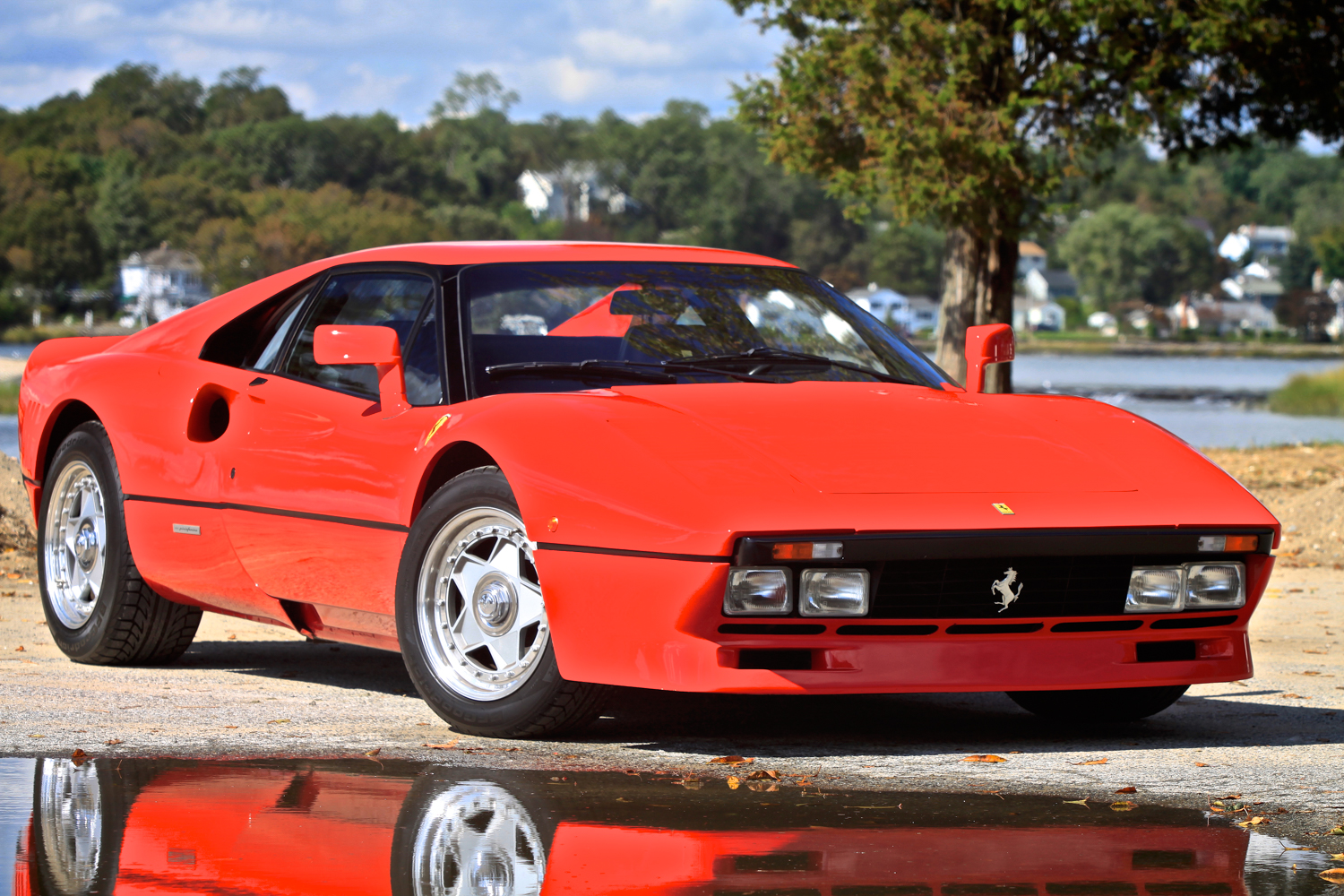
Ferrari homologated the 250 GTO with chassis-number sleight of hand, never building the required 100. In 1984 the name returned for Group B rallying, which only Porsche's 959 and the 288 GTO answered. Dom Miliano on the first supercar, maybe.
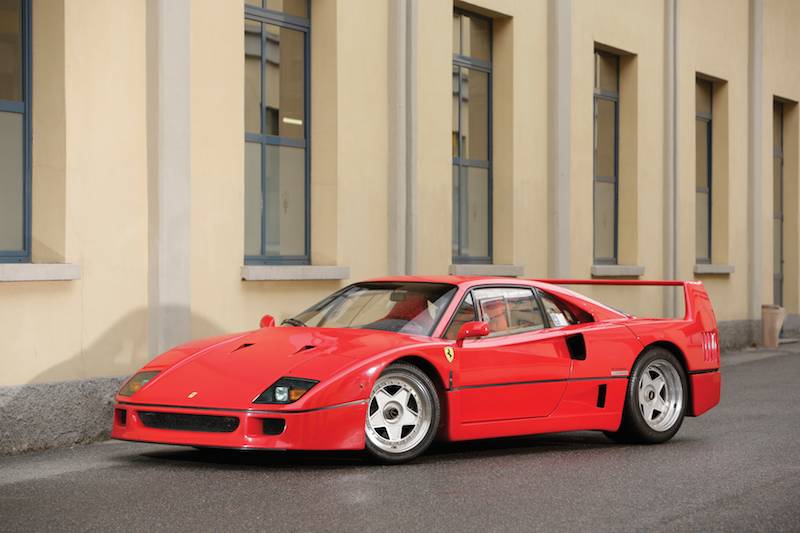
Porsche's 959 at Frankfurt in 1985 had 50 hp more than the 288 GTO and 15 km/h more top speed. Ferrari director Giovanni Razelli answered by approving a faster car for the firm's 40th anniversary: the F40.
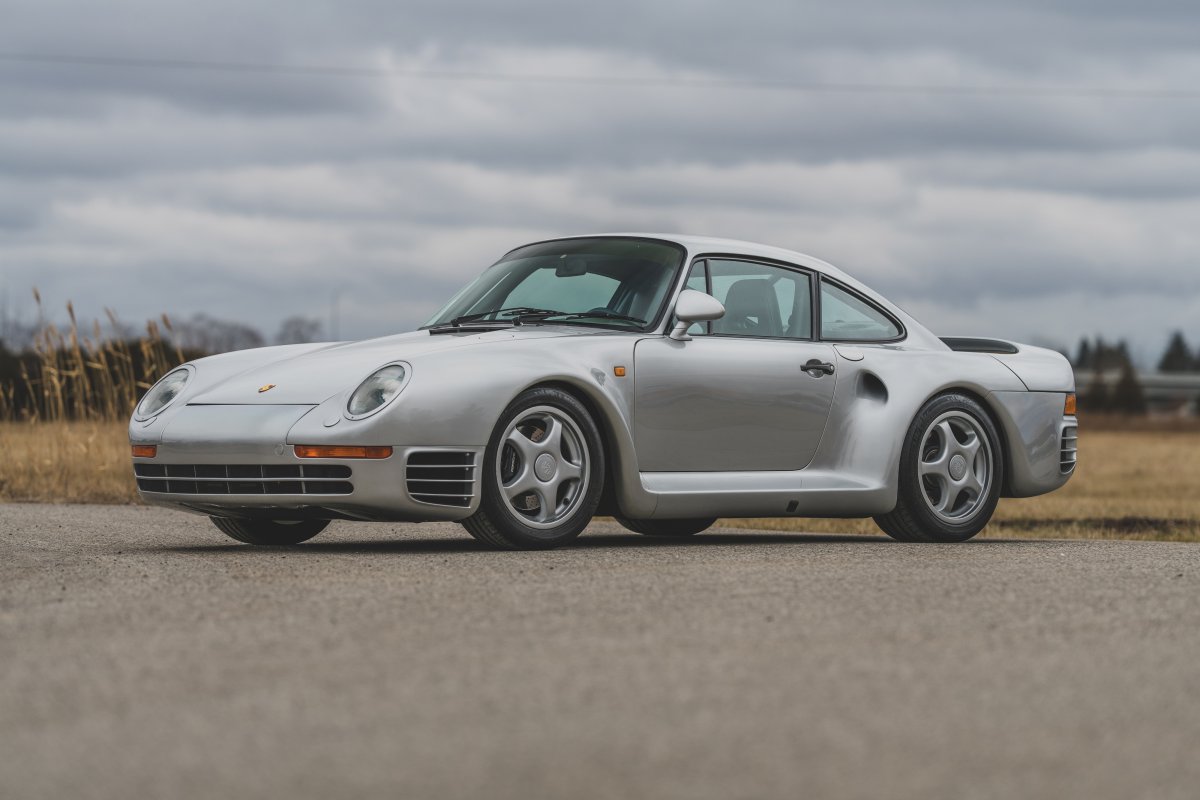
Porsche in the early 1980s had the 924 and 928 diluting the brand and a 911 whose design went back to the 356, while its racing cars won everything. Djordje Sugaris on how the 959 came out of that squeeze.
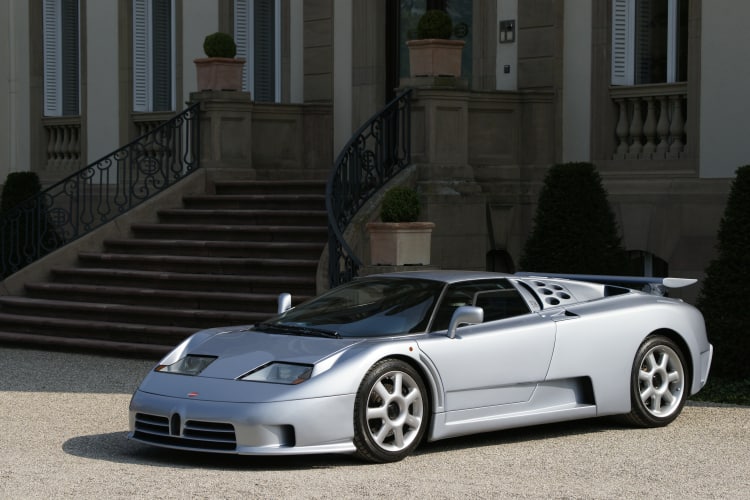
Jean Bugatti died days before the war, the Molsheim works was wrecked and Ettore, an Italian in liberated France, saw his property confiscated. Djordje Sugaris on Romano Artioli's EB110, the third revival and the one that nearly worked.
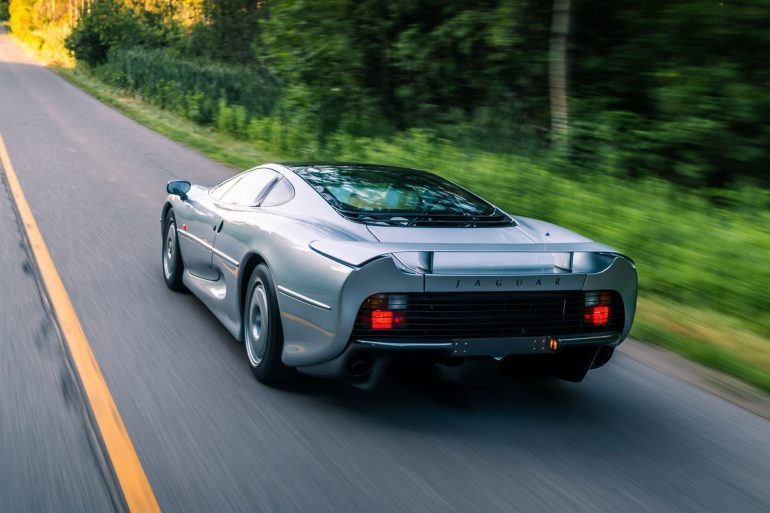
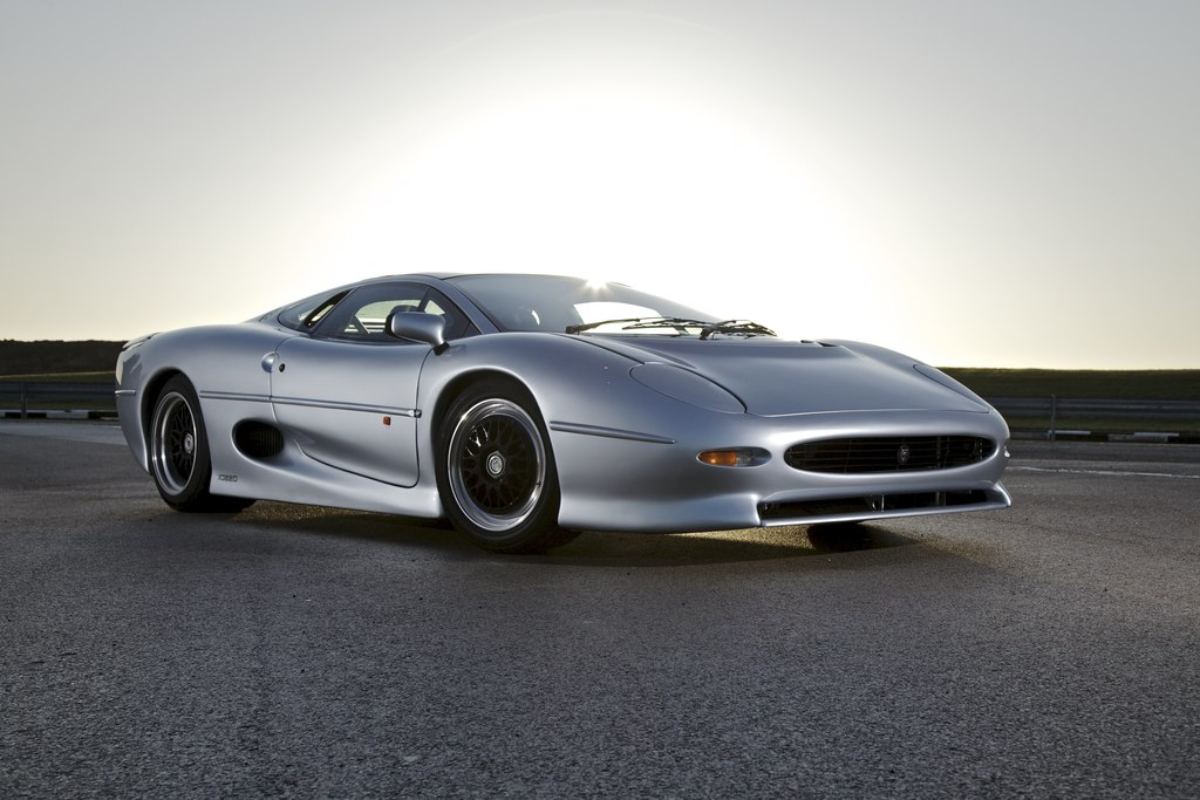
TWR's Silk Cut XJRs won the Group C title in 1987, 1988 and 1991 and both 24-hour races in 1988 and 1990 while Jaguar's road cars sat behind. Djordje Sugaris on the XJ220's birth, the first swing since the XJ13.
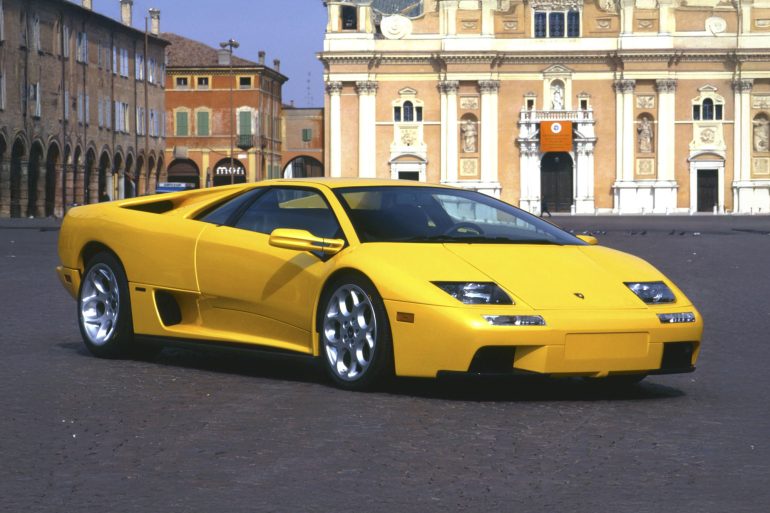
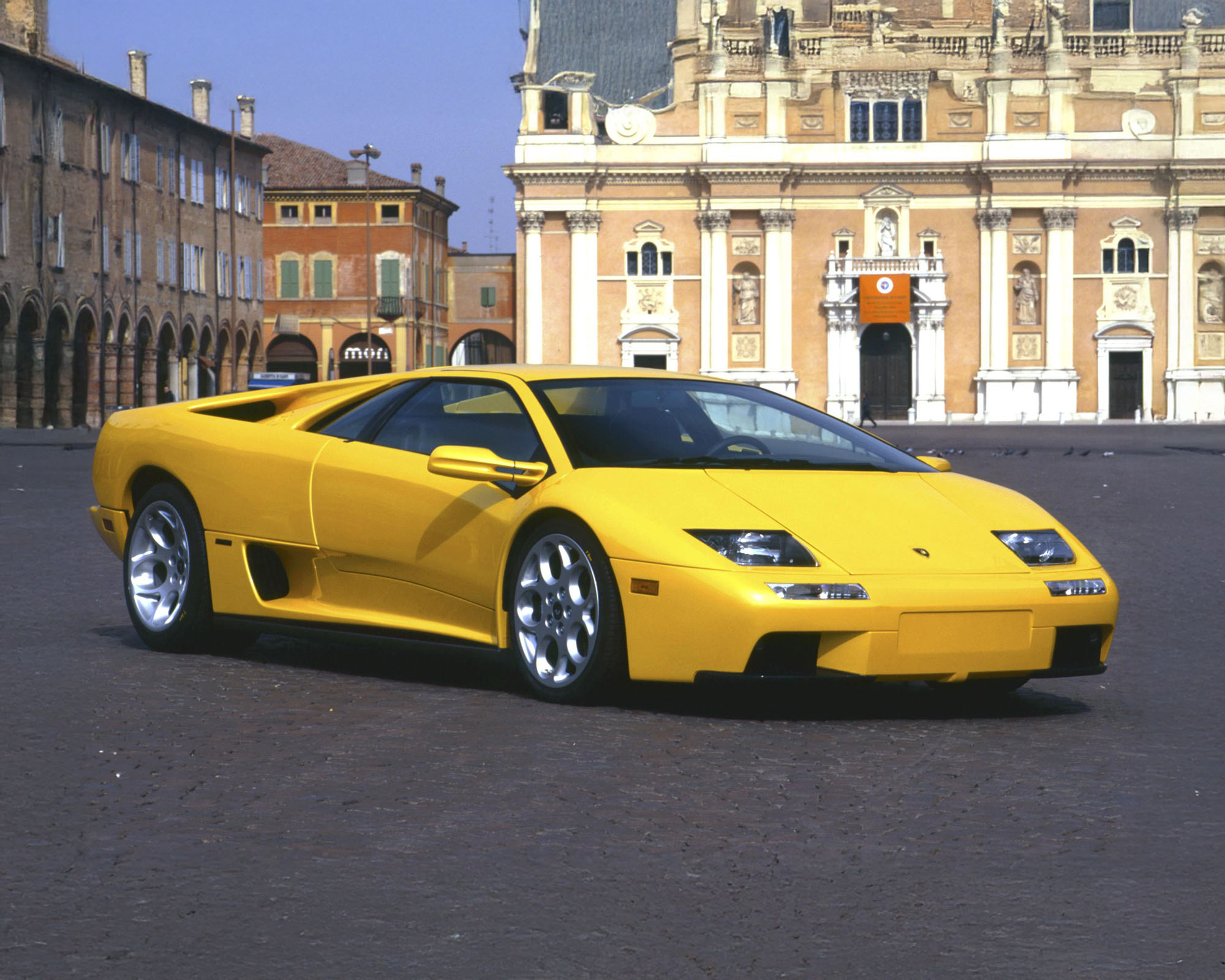
Project 132 began in 1985 to replace the Countach with the world's fastest car; Chrysler's arrival in 1987 smoothed the lines, and the Diablo was shown at Monaco in 1990 at the start of the Monte Carlo Rally.
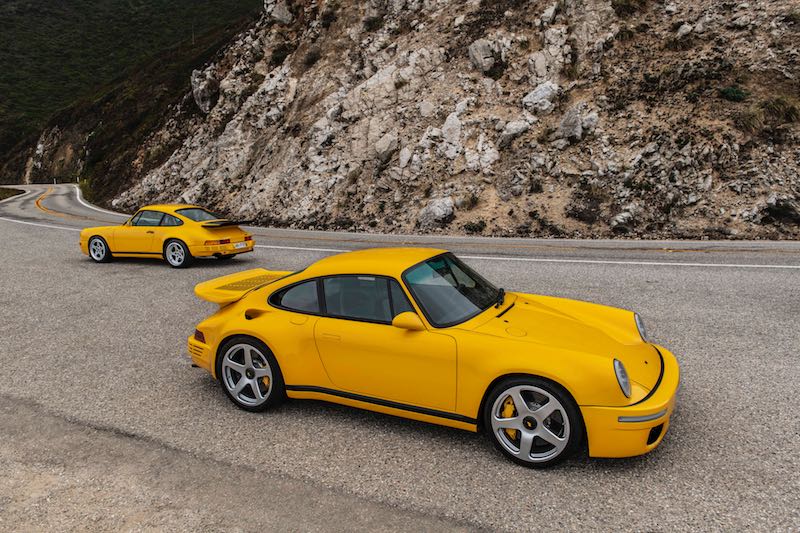
In 1988 a yellow 911 built by RUF beat the 959 to the title of fastest production car by 15 mph. Alois Ruf Jr. took over the family garage and its three employees at 24 when his father died in 1974.
The newest long-form writing on the era, as it is published.
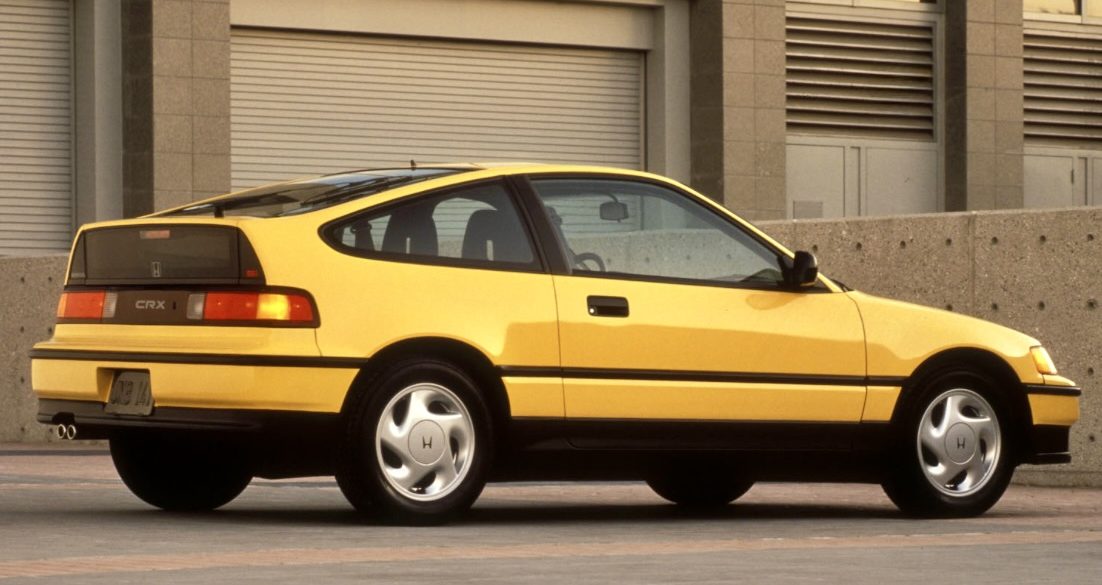
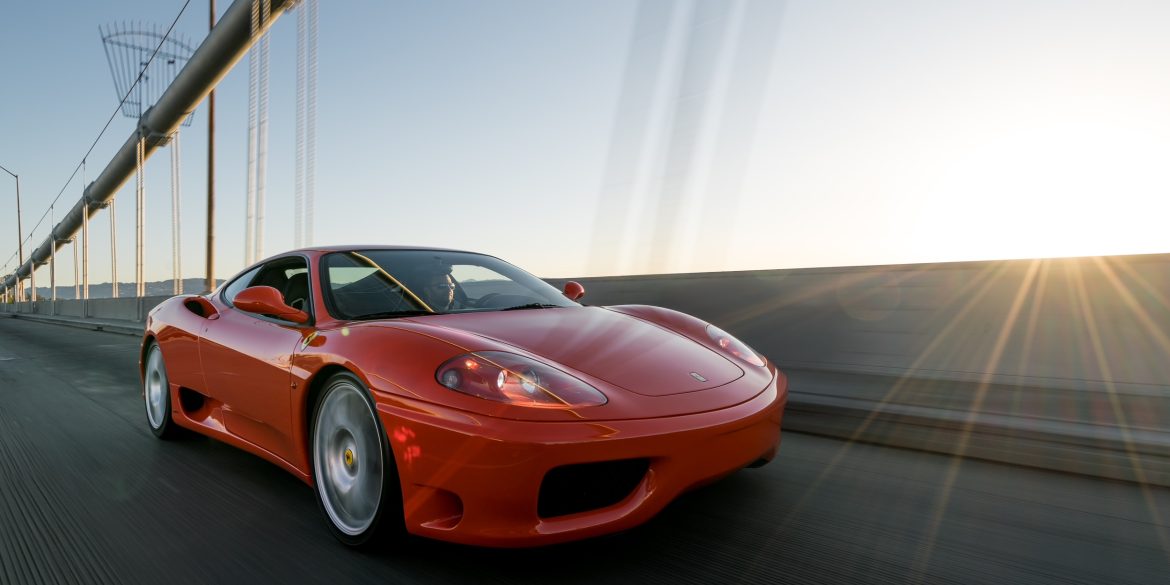
The word "supercar" was first used of the Lamborghini Miura in 1966 and of the Leyland Eight in 1920 before that, in Karl Ludvigsen's Leyland's Eight — The First Supercar, but the thing itself, as it is understood now, was made in the fifteen years after 1984. Three things came together: the Group B rally rules of 1982, which asked for 200 road cars and gave Ferrari and Porsche a reason to build the 288 GTO and the 959; the money of the late 1980s, which turned a Ferrari into an investment and sent F40 prices past a million dollars; and a generation of engineers — Nicola Materazzi, Helmuth Bott, Gordon Murray, Marcello Gandini, Paolo Stanzani — who had come out of racing with turbochargers, composites and ground effect to sell. The archive's Most Important Milestone Supercars of the Past 50 Years dates the segment car by car; Dom Miliano's Ferrari's 288 GTO — The First Supercar? argues for the starting point this page takes; The Most Massive Supercar Flops is the other half of the story. The silhouette and Group C racing of the same years is on Turbos, Group B and Group C; the GT1 homologation specials and the hypercars that followed are on GT1 to Hypercar; the road cars of the generation before are on The Grand Touring Years.
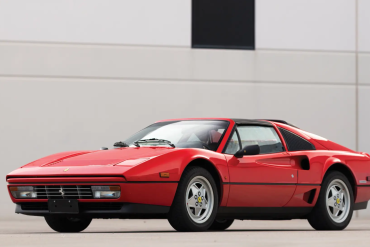
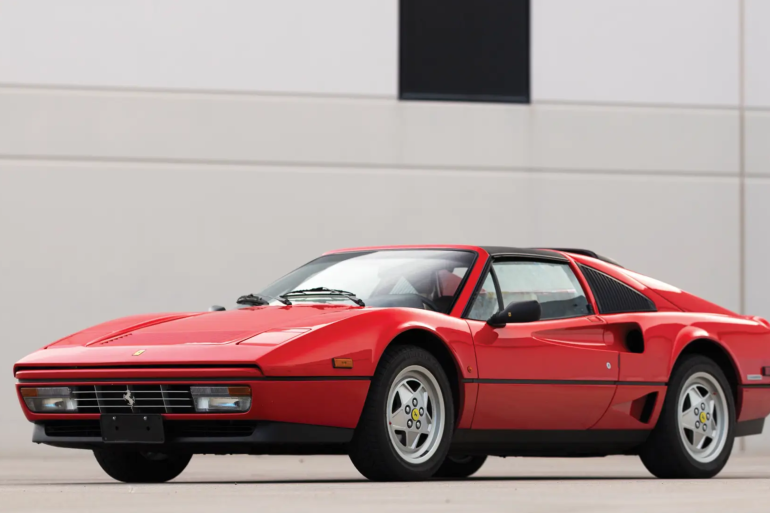
Ferrari showed the 288 GTO at Geneva in March 1984: a 308 stretched around a longitudinal 2.9-litre twin-turbo V8 of 400 horsepower, Kevlar and fibreglass panels, 189 mph, and the first use of the GTO name since 1964. Two hundred were needed for Group B; 272 were built, every one sold before it was made, and none ever raced, because the series the car was built for was cancelled before it got there. Ferrari 288 GTO and Miliano's First Supercar? are the archive's. Porsche's answer had been shown as the Gruppe B concept at Frankfurt in 1983 and arrived as the 959 in 1986–87: twin sequential turbos, 444 horsepower, four-wheel drive with variable torque split, adjustable ride height, hollow-spoke magnesium wheels with tyre-pressure sensors, 197 mph and 292 cars at a price Porsche lost money on; Porsche 959 — The Pursuit for Perfection and the 959 that won the Paris-Dakar follow it. The Testarossa of 1984, in the archive's history and Raffi Minasian's Fad or Icon?, and the Countach Quattrovalvole were the production cars beside them; the Ferrari 208 GTB Turbo is the tax-break Ferrari that taught Maranello turbocharging.
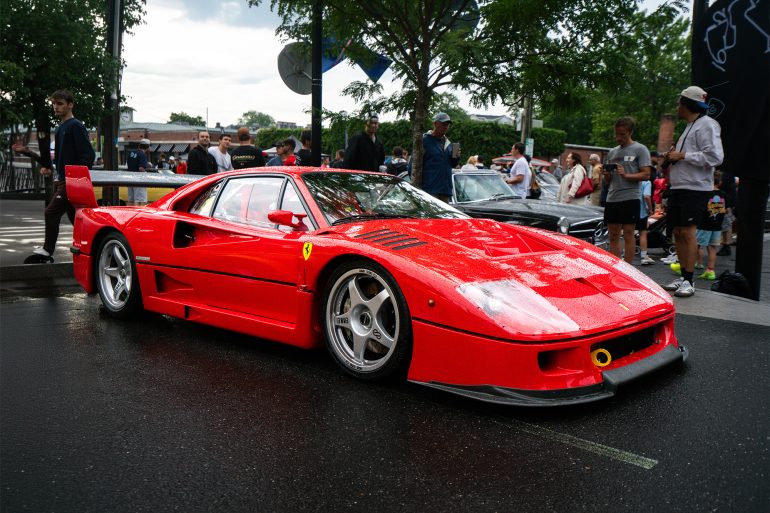
Enzo Ferrari's last car was presented in July 1987 for the company's fortieth anniversary: the F40, Materazzi's 288 GTO Evoluzione with a 478-horsepower 2.9-litre twin-turbo V8, a carbon-Kevlar body, sliding plastic windows, no carpets and no radio, and a claimed 201 mph that made it the first production car past 200. Ferrari planned 400 and built 1,311 by 1992, because the order book never closed; Ferrari F40 — The Ultimate Race-bred Driver's Car and the F40 to F80 heritage piece are the archive's. The same summer Road & Track took the fastest cars in the world to Nardò and a modified Porsche 911 from a small firm in Pfaffenhausen beat them all: Alois Ruf's CTR, the Yellowbird, 469 horsepower and 211 mph, in RUF CTR — The Record-Breaking Yellowbird. Enzo Ferrari died on 14 August 1988; the Countach 25th Anniversary, Horacio Pagani's composite restyle, went on sale that autumn, in 50 Years Since the First Countach, the LP 500 prototype recreation and Bertone's Bravo. Porsche's 911 Turbo, in a history and the 930, was the everyday supercar of the decade, and the 944 Turbo its understudy.
The car of each year from 1984 to 1999, its numbers, how many were built, and what else happened in the supercar world that season.
| Year | The car of the year | Power and top speed | Built | Also that year |
|---|---|---|---|---|
| 1984 | Ferrari 288 GTO | 400 bhp, 189 mph | 272 | Ferrari Testarossa launched at Paris; Group B rallying at its height |
| 1985 | Lamborghini Countach Quattrovalvole | 455 bhp, 183 mph | 610 (QV) | Porsche 959 shown in production form at Frankfurt; BMW M5 E28; Audi Sport Quattro S1 |
| 1986 | BMW M3 E30 | 200 bhp, 146 mph | 17,970 (all E30 M3s) | Group B banned after the deaths of the season; Ford Sierra RS Cosworth; Lamborghini LM002 |
| 1987 | Ferrari F40 | 478 bhp, 201 mph claimed | 1,311 (1987–92) | Porsche 959 deliveries begin (444 bhp, 197 mph, 292 built); Ruf CTR Yellowbird 211 mph at Nardò; Chrysler buys Lamborghini |
| 1988 | Lamborghini Countach 25th Anniversary | 455 bhp, 183 mph | 657 | Enzo Ferrari dies, 14 August; Jaguar XJ220 concept at Birmingham; Cizeta V16T shown; Callaway Sledgehammer 254.76 mph |
| 1989 | Porsche 964 Carrera 4 | 250 bhp, 162 mph | 63,762 (all 964s) | Nissan Skyline GT-R R32; Ferrari 348; Lotus Esprit SE; the market peaks |
| 1990 | Lamborghini Diablo | 492 bhp, 202 mph | 2,884 (all Diablos, 1990–2001) | Honda NSX; Corvette ZR-1 24-hour record, 175.9 mph; Lotus Carlton 177 mph; Vector W8; Mercedes 190E 2.5-16 Evo II; prices turn |
| 1991 | Bugatti EB110 | 553 bhp, 213 mph | about 139 (1991–95) | Jaguar XJR-15; Mitsubishi 3000GT VR-4; recession |
| 1992 | Jaguar XJ220 | 542 bhp, 217 mph timed | 275 | Dodge Viper RT/10; McLaren F1 unveiled at Monaco; Ferrari 512 TR; Mazda RX-7 FD; Lancer Evolution I |
| 1993 | McLaren F1 (first deliveries) | 627 bhp, 240.1 mph (1998) | 106 (1993–98) | Toyota Supra A80; Porsche 993 Carrera; Subaru Impreza WRX; Lamborghini Diablo VT |
| 1994 | Ferrari F355 | 380 bhp, 183 mph | 11,273 | Ferrari F512 M; Bugatti EB110 SS; BPR Global GT Series begins; Lamborghini sold to Megatech |
| 1995 | Ferrari F50 | 520 bhp, 202 mph | 349 | Porsche 993 Turbo (408 bhp) and GT2; McLaren F1 GTR wins Le Mans; Bugatti Automobili fails in September |
| 1996 | Ferrari 550 Maranello | 485 bhp, 199 mph | 3,083 | Dodge Viper GTS; Lotus Esprit V8; Lamborghini Diablo SV; Lotus Elise; TVR Cerbera |
| 1997 | Porsche 911 GT1 Strassenversion | 544 bhp, 191 mph | about 20 | Mercedes CLK GTR wins the first FIA GT Championship; McLaren F1 GT; Corvette C5; Skyline R33 GT-R |
| 1998 | McLaren F1 — 240.1 mph, 31 March | 627 bhp, 240.1 mph | the last of 106 | Volkswagen buys Lamborghini (for Audi) and Bugatti; Porsche 996, the first water-cooled 911; Aston Martin Vantage V600; CLK GTR road car |
| 1999 | Pagani Zonda C12 | 394 bhp, 185 mph | 5 (C12) | Lamborghini Diablo GT (575 bhp); Ferrari 360 Modena; Skyline R34 GT-R; the hypercar era begins with the Enzo, Carrera GT and Veyron of 2002–05 |
Car names link to every story on the site about that car. Power in metric horsepower as quoted by the maker; top speeds as claimed or independently timed where noted.
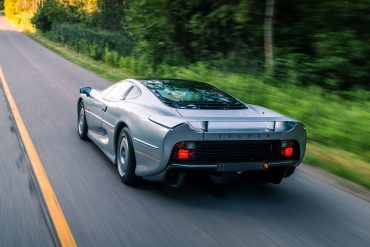
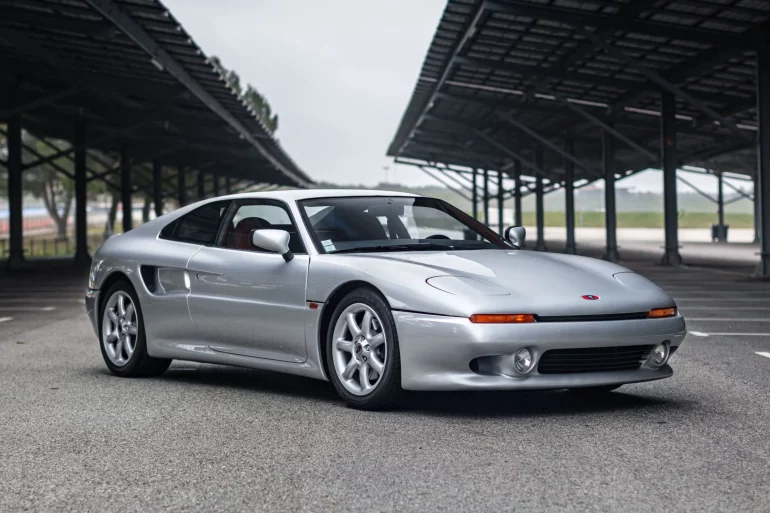
By 1989 an F40 changed hands for $1.6 million, a 288 GTO for three times its list price, and anyone with a deposit on a Testarossa could sell the place in the queue; Japanese and Italian money chased every classic Ferrari, and every maker announced a supercar. Jaguar showed the XJ220 concept at Birmingham in October 1988 with a V12 and four-wheel drive, took 1,500 deposits of £50,000, and delivered in 1992 a 3.5-litre twin-turbo V6 rear-drive car at £470,000 — 217 mph, the fastest production car of its day, and the subject of lawsuits from buyers who wanted out; Jaguar XJ220 — The Tumultuous Birth, The Fastest Broken Promise and the XJR-15, TWR's racing-car-for-the-road, tell it. Romano Artioli's Bugatti Automobili unveiled the EB110 in Paris on 15 September 1991, Ettore's 110th birthday: a carbon chassis, a 3.5-litre quad-turbo V12 of 553 horsepower, four-wheel drive, 213 mph, a factory at Campogalliano designed as a cathedral, and bankruptcy in September 1995 after about 139 cars; Bugatti EB110 — Developed by the Greatest Minds, the EB110 SC racer and the first certified EB110 America are the archive's. Claudio Zampolli and Giorgio Moroder's Cizeta V16T, Jerry Wiegert's Vector W8, Venturi's Atlantique 300 and Aston Martin's twin-supercharged Vantage V600 were the others. The recession of 1991–92 took the air out: F40s fell to a third of their peak, the 512 TR and its Spider sold slowly, and Lamborghini, Bugatti, Lotus and Aston Martin all changed hands within five years. Ferrari's own answer to the hangover was restraint: the F355 of 1994, the F50 of 1995 — a 4.7-litre V12 from the 1990 Formula One car bolted to a carbon tub, 520 horsepower, 349 built, one fewer than Ferrari thought it could sell — and the 550 Maranello of 1996, which put the V12 back in the front for the first time since the Daytona; the Mondial and a Far East example were the entry tickets.
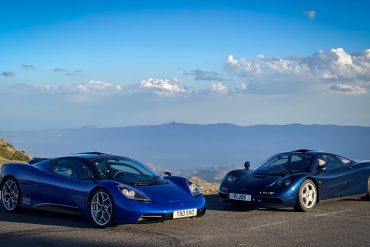
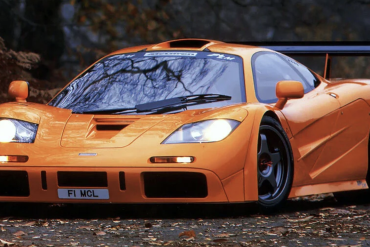
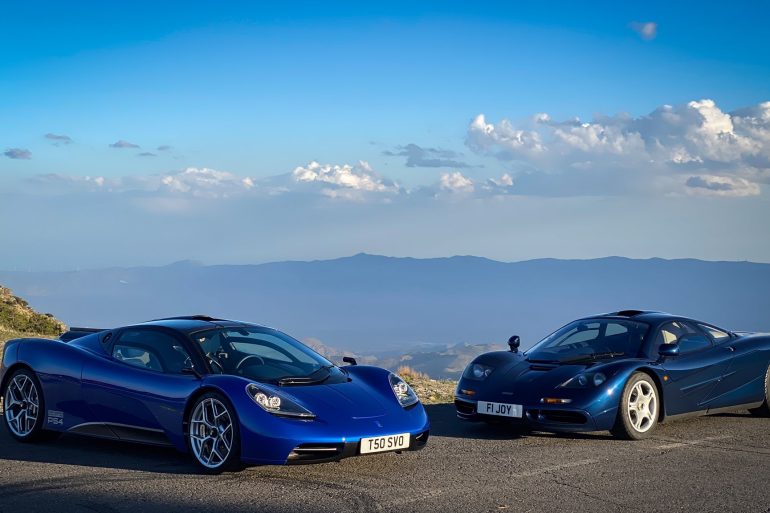
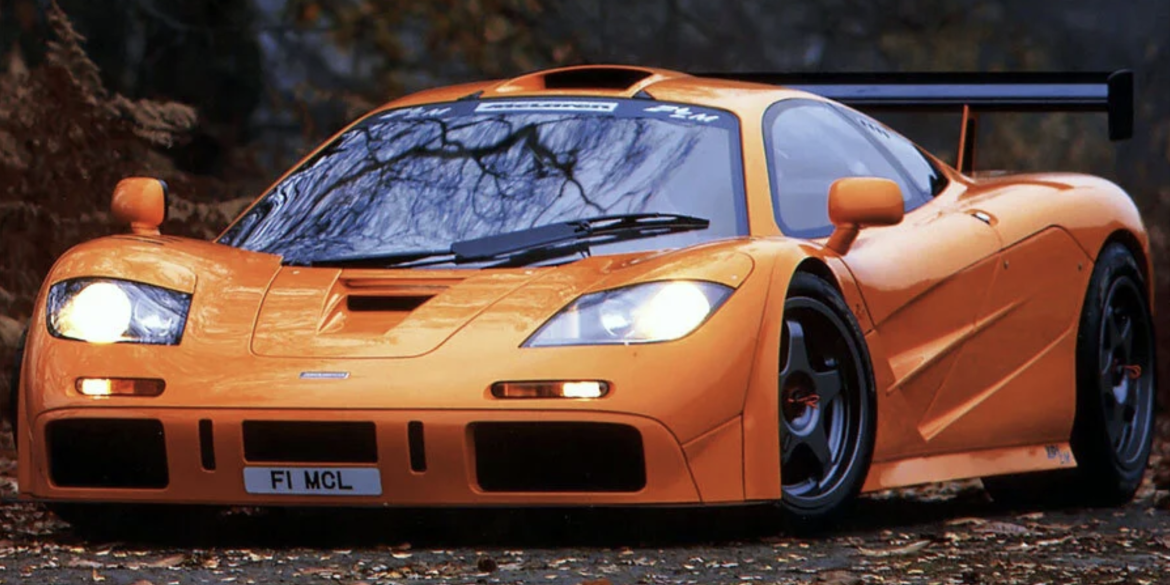
Gordon Murray's F1 was announced at Monaco in May 1992 and made every other supercar look compromised: a carbon-fibre monocoque, the driver in the middle with a passenger each side, a 6.1-litre BMW V12 of 627 horsepower that needed no turbochargers, gold-foil heat shielding, a kerb weight of 1,138 kg and no driver aids at all. It went on sale at £540,000, 106 were built between 1993 and 1998 — 64 road cars, 28 GTRs, five LMs, three GTs and the prototypes — and on 31 March 1998 Andy Wallace drove one to 240.1 mph at Ehra-Lessien, a record for a naturally aspirated production car that still stands. The archive's McLaren F1 — Never Better, the twentieth anniversary and McLaren F1 to GMA T.50 are the car and its successor; Murray's T.33 is where he took the idea. In 1995, against the intentions of its designer, a GTR version won Le Mans outright on its first visit with Yannick Dalmas, JJ Lehto and Masanori Sekiya, and four more finished in the top five; that story, and the BPR and FIA GT championships it provoked, belongs to GT1 to Hypercar.
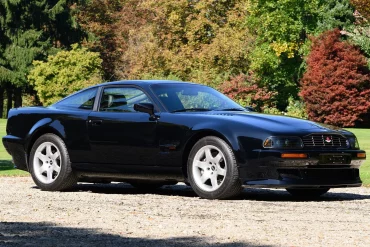
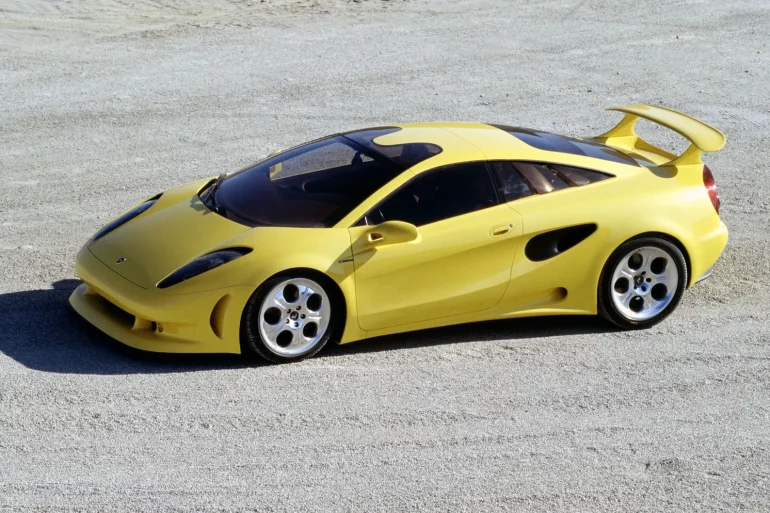
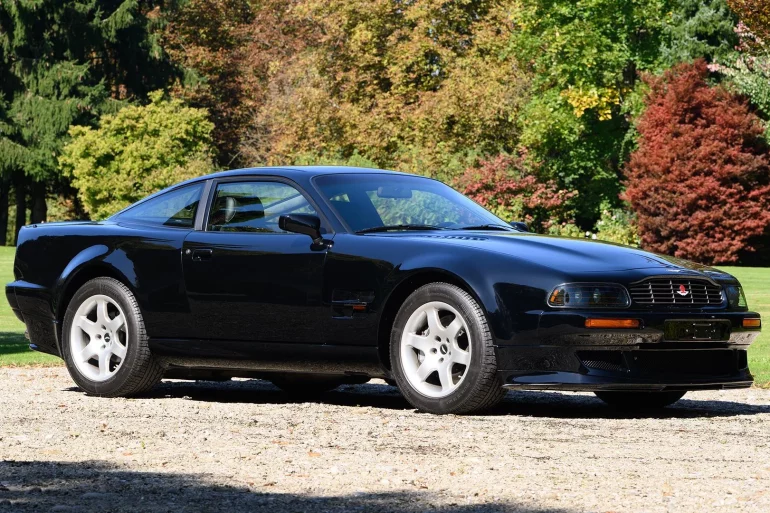
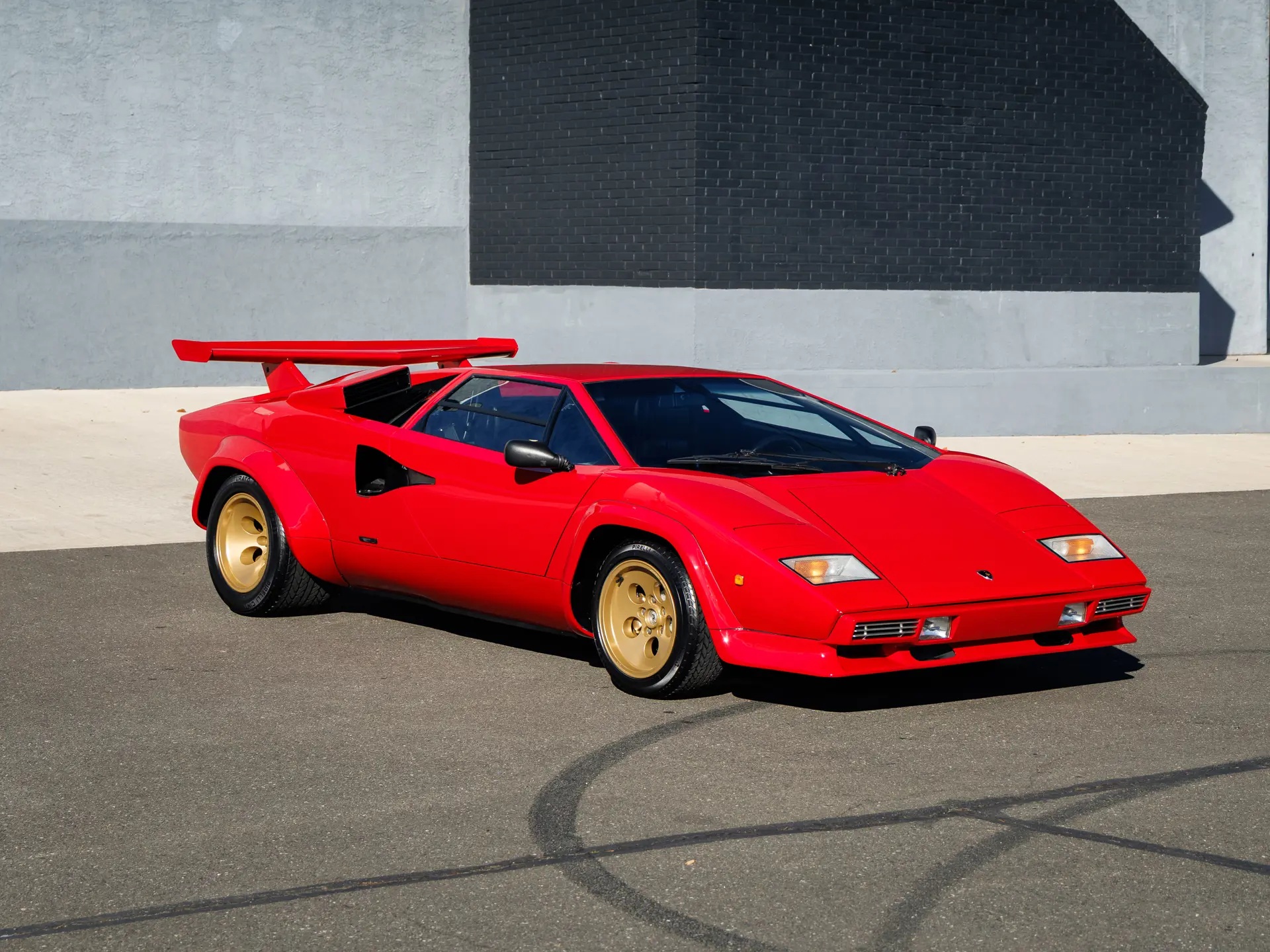
The Countach had been the poster since 1974 and lasted until 1990, through the LP400, the wings and wheel-arches of the LP400S, the 455-horsepower Quattrovalvole and the Anniversary; Chrysler bought Lamborghini in 1987 and paid for its replacement. Gandini's Diablo, softened by Chrysler's studio to his annoyance, arrived in January 1990 with a 5.7-litre V12 of 492 horsepower and 202 mph, the first Lamborghini past 200; the VT added four-wheel drive in 1993, the SV and SE30 followed, the GT of 1999 had 575 horsepower, and 2,884 were built before Audi, which bought the company in 1998, replaced it with the Murciélago. Lamborghini Diablo — The Sant'Agata Devil, Diablo: 35 Years of an Icon, the V12 and the Diablo, the Calà concept of 1995 and Twiggy's Miura, the car that started it, are the archive's; the LM002 was the Countach-engined truck that nobody asked for and everybody remembers.
After the 959 Porsche rebuilt the 911 twice. The 964 of 1989, 85 per cent new under familiar skin, brought four-wheel drive, coil springs, ABS and power steering, then the Carrera RS, the 3.3 and 3.6 Turbos and the Turbo S; the 964 buying guide covers it. The 993 of 1994, with its multi-link rear suspension and Tony Hatter's body, was the last air-cooled 911, and its Turbo of 1995 — 408 horsepower, twin turbos, four-wheel drive, 180 mph — was the first everyday car with supercar numbers; J. Michael Hemsley's Best for Last is a 993 Carrera 4, the 993 Fabcar a mid-engined racer built from one, and the 911 GT1 Strassenversion of 1997 belongs to the next era. Porsche also built Mercedes' 500E in Zuffenhausen between 1990 and 1994, the fastest saloon of its day; the Carrera GT of 2003 is where the 959's ideas ended up.
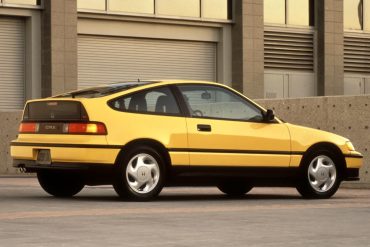
Japan's makers joined in 1989–90 with cars that changed the standard. Honda's NSX of 1990, an all-aluminium mid-engined coupé with a 3.0-litre VTEC V6 of 270 horsepower, developed with Ayrton Senna's input and built in a dedicated factory, was the car that made Ferrari improve its build quality and its ride; Raffi Minasian's Acura NSX is the archive's. Nissan's Skyline GT-R R32 of 1989, twin-turbo straight-six and ATTESA four-wheel drive, won every Japanese touring-car race it entered and was called Godzilla in Australia, in Rare Nissan Skylines; the fourth-generation Toyota Supra of 1993, the 2JZ engine and all, is in Minasian's Go Fourth and Change Everything; the Mazda RX-7 FD of 1992 was the prettiest of them and the Mitsubishi 3000GT VR-4 the most complicated. All of them were held to the 280-PS "gentlemen's agreement" on paper and none of them in practice; the Lancer Evolution and Impreza WRX of 1992–93 brought Group A rallying to the road.
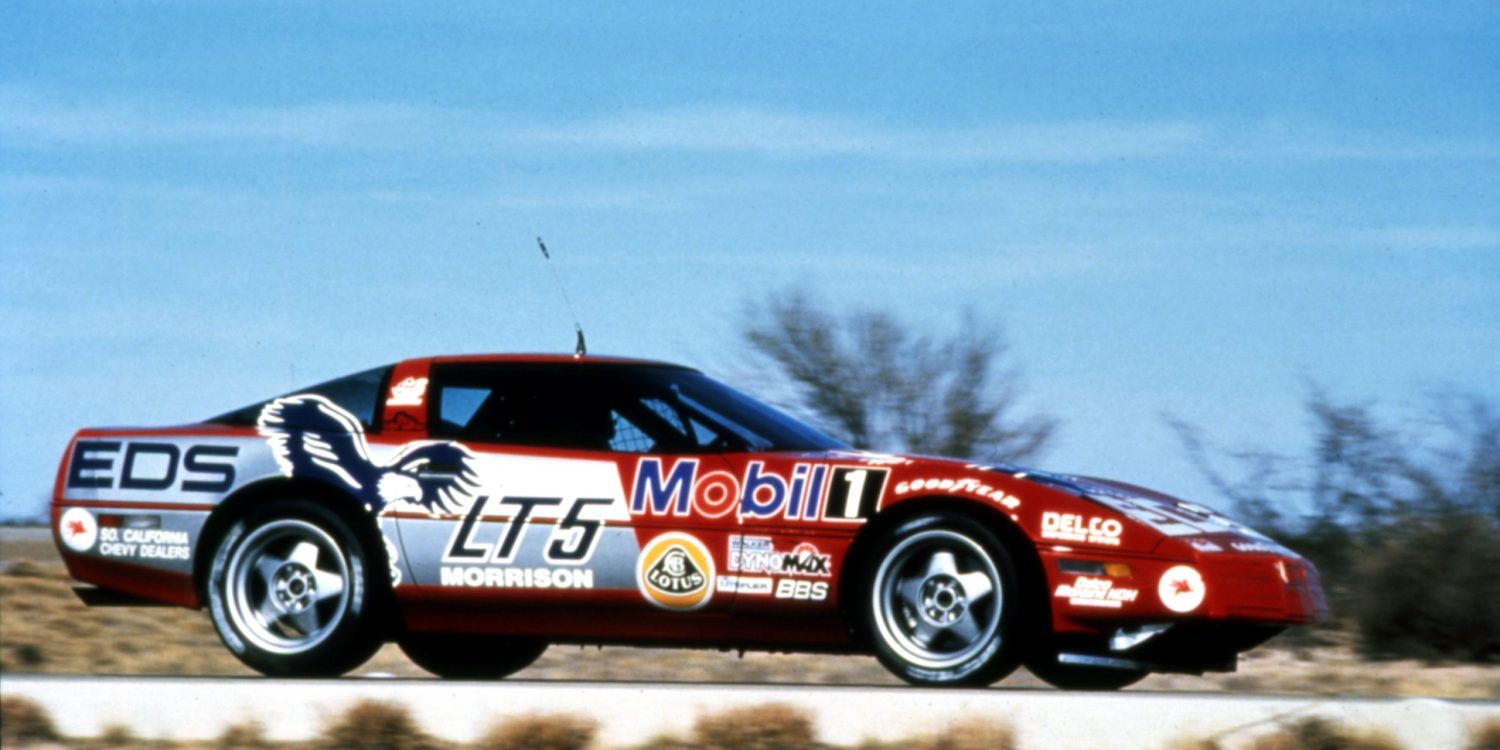
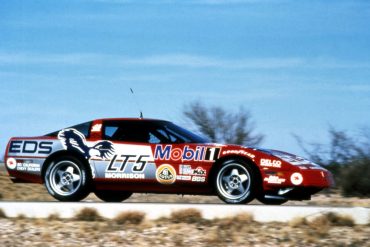
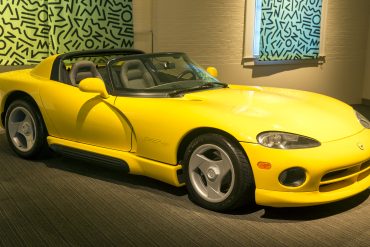
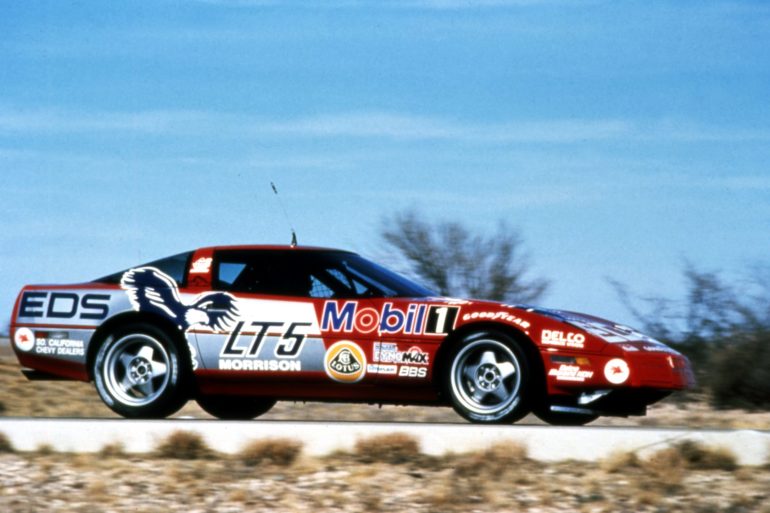
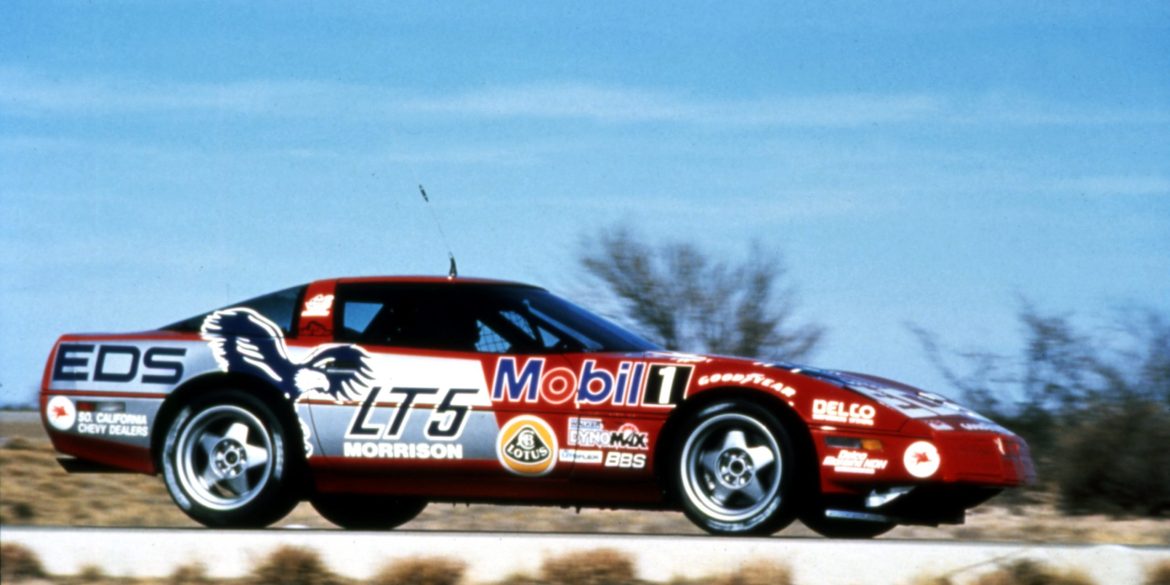
Chevrolet's Corvette ZR-1 of 1990 had a 375-horsepower four-cam LT5 V8 designed by Lotus and built by Mercury Marine, and in March 1990 a stock one ran 24 hours at Fort Stockton, Texas, at 175.885 mph, breaking records that had stood since 1940; From Zero to ZR-1 is the story. Chrysler's Dodge Viper RT/10 of 1992 was Bob Lutz's and Carroll Shelby's idea of a Cobra for the 1990s — an 8-litre V10 developed with Lamborghini's help, 400 horsepower, no roof, no windows and no traction control — and the GTS coupé of 1996 went to Le Mans and won its class three years running; the archive's Viper ACR and the Le Mans-winning Viper follow it. Jerry Wiegert's Vector W8 of 1990, in Minasian's Dream of America's First Supercar, promised 242 mph and delivered 17 cars; the Griffith 600 was another American attempt. Callaway's twin-turbo Corvettes and the Sledgehammer's 254.76 mph of 1988 were the aftermarket's answer.
Top-speed runs, the BPR and GT1 cars, Le Mans 1995 and the supercars on track, newest first.
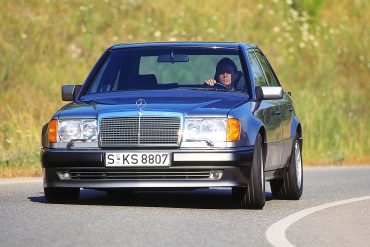
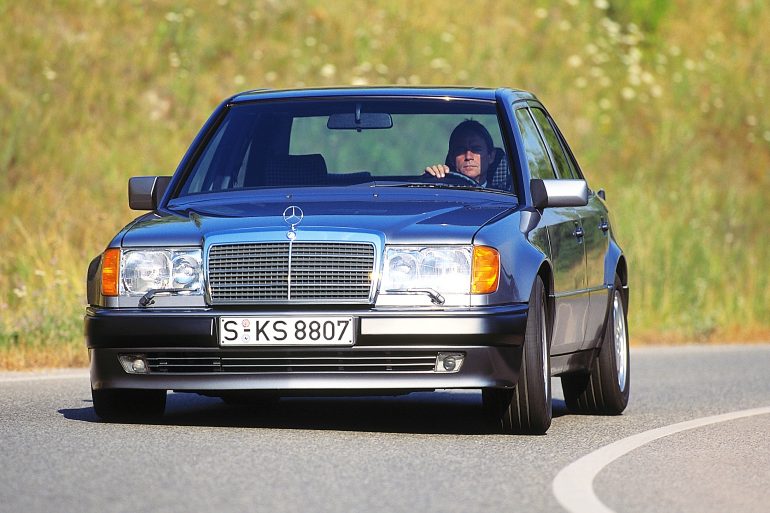
The era's second idea was the saloon that went as fast as a supercar. BMW's E30 M3 of 1986, a Group A homologation car with a 2.3-litre four-cylinder and box-flared arches, won the World, European, German, British and Italian touring-car titles and 17,970 road cars were sold; Mike Jiggle's Simply the Best, Minasian's Box-Flared Punch and the 25 and 30-year anniversaries are the archive's. Mercedes' 190E 2.3-16 of 1983, with its Cosworth head, grew into the 2.5-16 Evolution II of 1990 with the biggest wing ever fitted to a saloon; Ford's Sierra RS Cosworth and RS500 ruled Group A until the Lancia Delta Integrale and the Skyline took over; and the Lotus Carlton of 1990, a twin-turbo Vauxhall that did 177 mph, provoked questions in Parliament. The BMW M5 E34, Alpina B10 Biturbo, Porsche-built Mercedes 500E and the BMW Z1 made up the rest of the German fast lane, and the Lotus Esprit, turbocharged from 1980 and V8 from 1996, outlived them all.
The cars of the era are now the heart of every modern-classic auction and most of the archive's supercar coverage: the Ferrari 288 GTO, Testarossa, F40 and F50; the Porsche 959, 930 Turbo, 964 and 993; the Lamborghini Countach and Diablo; the McLaren F1; the Jaguar XJ220 and XJR-15; the Bugatti EB110; the Ruf CTR Yellowbird; the Honda NSX, Nissan Skyline, Toyota Supra and Mazda RX-7; the Dodge Viper; the BMW M3 E30 and M5, the Lancia Delta Integrale and the Lotus Esprit. Each links to every story on the site about that car; the table and cards below set them in order.
Each links to every story on the site about that car; the model pages come next.
Single-car stories: F40s and 959s, Countachs and Diablos, McLaren F1s, XJ220s, EB110s and the Japanese and American supercars.
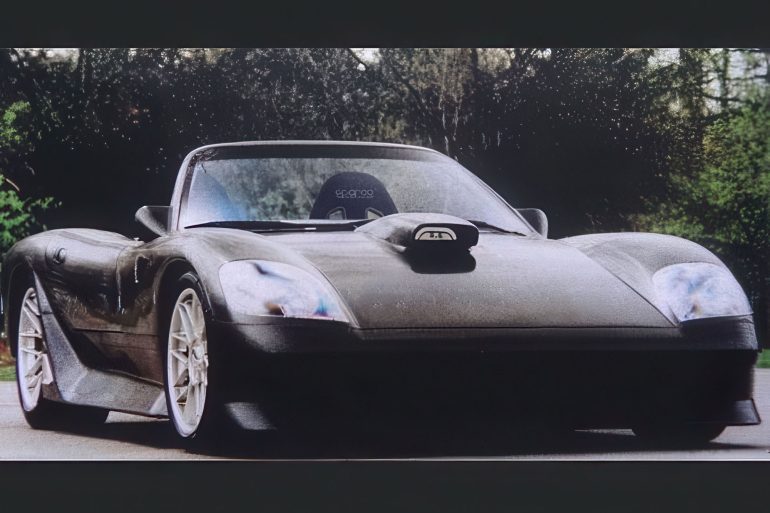
The era's names are engineers and designers rather than drivers. Gordon Murray, from Brabham and McLaren Formula One to the F1 and the T.50; Nicola Materazzi, who engineered the 288 GTO, the F40 and then the EB110's chassis; Helmuth Bott and Manfred Bantle on the 959; Marcello Gandini, who drew the Countach, the Diablo and the Cizeta; Leonardo Fioravanti and Pininfarina for the 288 GTO, Testarossa and F40; Horacio Pagani, who went from the Countach Evoluzione's composites to his own Zonda; Paolo Stanzani and Romano Artioli at Bugatti; Alois Ruf; Jim Randle and Tom Walkinshaw on the XJ220; Shigeru Uehara and Ayrton Senna on the NSX; Bob Lutz, Carroll Shelby and Roy Sjoberg on the Viper; Tony Rudd and Lotus on the ZR-1; Jerry Wiegert; and Enzo Ferrari, who approved the F40 as his last car and did not live to see it sold.
Designers, engineers, founders and the drivers who developed the cars.
The production-car top-speed record went from the 959's 197 mph and the F40's claimed 201 to the Ruf CTR's 211 (1987), the XJ220's 217 (1992) and the McLaren F1's 240.1 (1998), where it stayed until the Bugatti Veyron of 2005; the Callaway Sledgehammer's 254.76 mph of 1988 was a one-off. Horsepower went from the 288 GTO's 400 to the F40's 478, the EB110's 553, the F1's 627 and the Diablo GT's 575, all without hybrid assistance. Production: 272 GTOs, 292 959s, 1,311 F40s, 349 F50s, 106 McLaren F1s, 275 XJ220s, about 139 EB110s, 29 Ruf CTRs, 2,884 Diablos, 17 Vector W8s, 8,000-odd NSXs in the first generation. The 1990 ZR-1 ran 5,000 miles at 173.8 mph and 24 hours at 175.885 mph at Fort Stockton. An F40 listed at $400,000 in 1990 sold for $1.6 million at the top of the bubble and about $300,000 four years later; it passed $1 million again in 2015. The E30 M3 won more than 1,500 races.
Short answers, with the long ones above.
By the modern definition — a limited-production, mid-engined, 180-mph-plus road car built for performance alone — the Lamborghini Miura of 1966; the Ferrari 288 GTO of 1984 is where the era of 200-mph homologation and collector specials begins. Karl Ludvigsen makes the case for the Leyland Eight of 1920 as the first car the word was used for.
The McLaren F1: 240.1 mph at Ehra-Lessien on 31 March 1998 with Andy Wallace driving, a record for a naturally aspirated production car that still stands. The Jaguar XJ220 held the record before it at 217 mph.
As Ferrari's fortieth-anniversary car and Enzo Ferrari's last, developed from the 288 GTO Evoluzione that had been built for a Group B series that never happened. Ferrari planned 400 and built 1,311 between 1987 and 1992.
Four-wheel drive with a variable torque split, twin sequential turbochargers, adjustable ride height and damping, tyre-pressure monitoring and 197 mph, in 1987. It was the technical blueprint for every Porsche since; 292 were built at a loss.
A speculative bubble in collector Ferraris, F40s and new supercars peaked in 1989–90 and collapsed in the 1991–92 recession: F40 values fell by two-thirds, XJ220 buyers sued to cancel their orders, and Bugatti Automobili, Cizeta and Vector failed.
It had the layout, the aluminium construction and the pace, with 270 horsepower and a Senna-honed chassis, and it changed how Ferrari built cars. Most lists include it; the 348 and F355 were its direct answers.
The McLaren F1 GTR, which won Le Mans in 1995; the Porsche 911 GT2 and GT1; the Ferrari F40 LM and GTE; the Jaguar XJ220C, which won its class at Le Mans in 1993 and was disqualified; the Bugatti EB110 SC; the Dodge Viper GTS-R; and the Lotus Esprit GT1, in the BPR and FIA GT series.
It did not end so much as change scale: the Ferrari Enzo, Porsche Carrera GT and Bugatti Veyron of 2002–05 began the hypercar era, with carbon tubs, 1,000 horsepower and seven-figure prices as standard.
The whole thread, newest first.