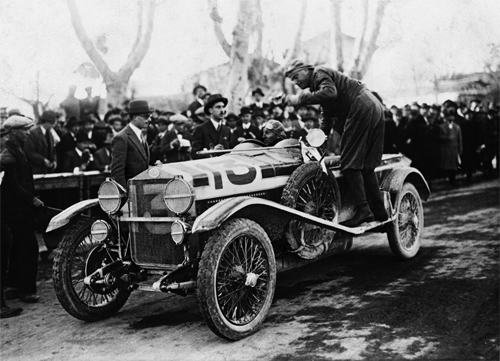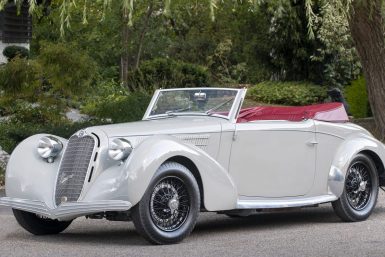
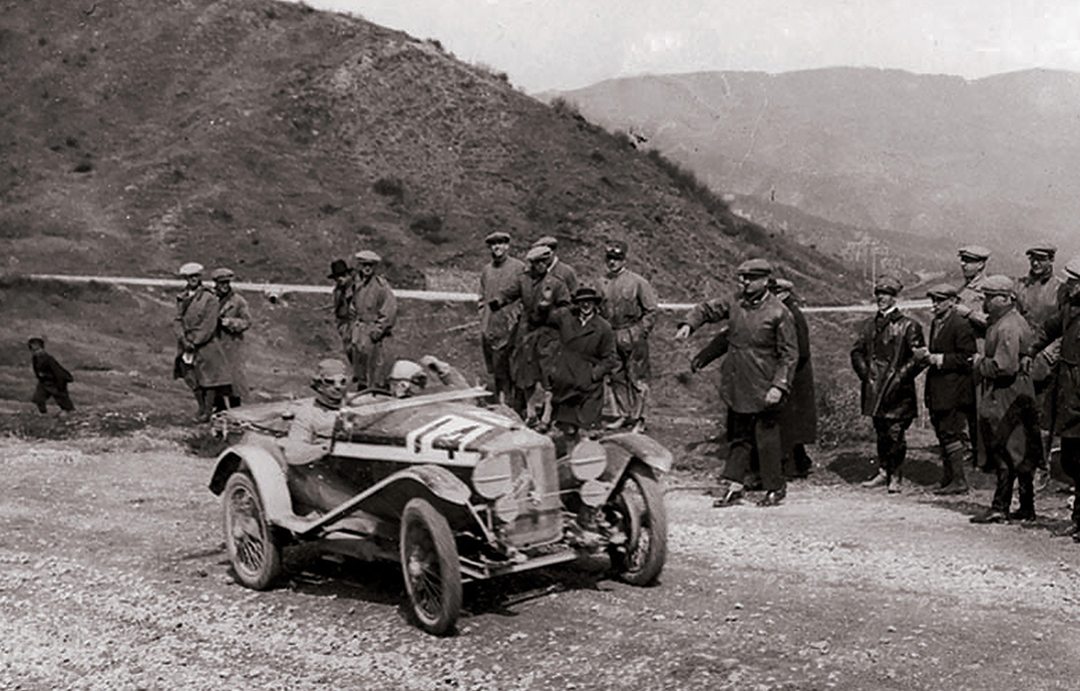

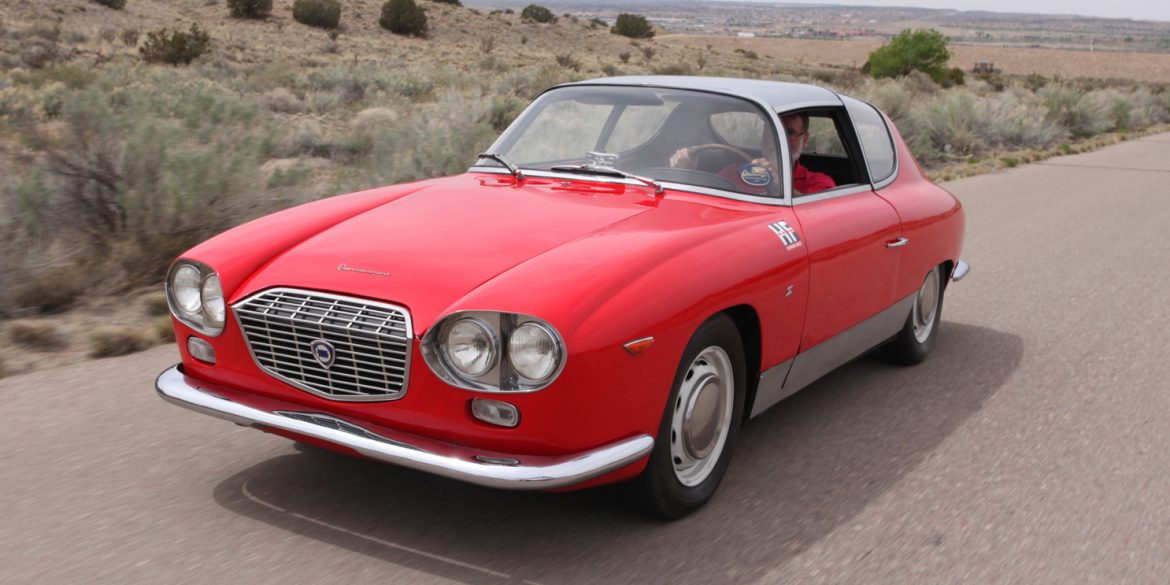
Vincenzo Lancia, a soup canner's son, joined Ceirano in 1898, became FIAT's test driver and racer after the takeover, won the 1904 Coppa Florio at a record 72 mph, and quit in 1906 to build his own cars.

Brescia to Rome and back: a thousand miles of open road, run twenty-four times between 1927 and 1957. It made Alfa Romeo, then Ferrari; it gave Nuvolari his wildest drive and Moss his greatest; it killed fifty-six people and was banned by an act of government. It is still run every June, by the same cars, at a slower pace.
The pieces to start with
The pieces that define the race: Newman's three-part history, Jenkinson, Moss, Nuvolari and the 1955 profile.
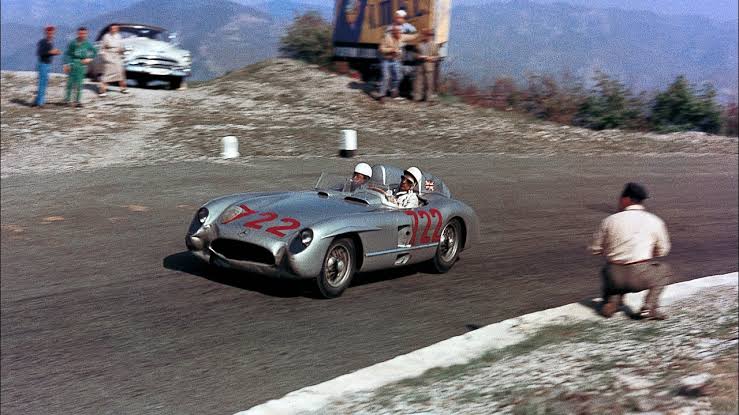
Sixty Mercedes technicians set up at Gardone two months before the 1955 Mille Miglia; Neubauer demanded five reconnaissance laps and Kling drove nearly 30,000 miles. Fangio hired a Fiat 1100 to learn the roads. Moss and Jenkinson won at 98.53 mph.
Only Indianapolis (1911) and Le Mans (1923) are older among surviving races, and the Mille Miglia survives with a twist: only cars built 1927–1957, timed to a thousandth of a second over the Brescia–Rome–Brescia distance. Robert Newman begins its history.
Ten spectators, seven of them children, died in the 1938 Mille Miglia, so the 1940 race ran as nine 103-mile laps of a Brescia–Cremona–Mantua triangle, Count Lurani’s idea, with no towns and no Grand Prix cars. Robert Newman’s history continues.
The 1950 Mille Miglia drew a record 375 entries, 164 of them Fiat 500 Topolinos, with Fagioli and Cortese wading through the traffic. Robert Newman on Alfa Romeo’s return, OSCA’s new engine and five Jaguar XK 120s.
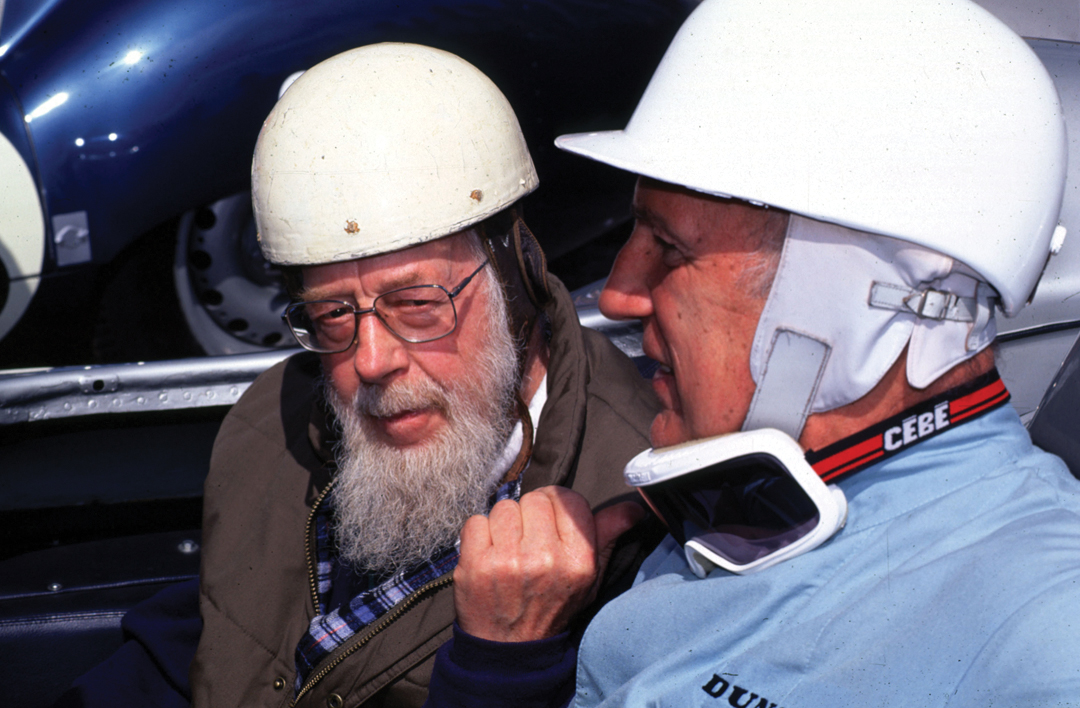
Stirling Moss did not take Denis Jenkinson in 1955 for publicity; he wanted a passenger with proven nerve. Jenks had been 1949 world sidecar co-champion. Pete Lyons on the writer whose account shaped how everyone feels about the Mille Miglia.
Six starts, three wins, two seconds and one withdrawal while leading. Stirling Moss on the 300 SLR: three months of Mille Miglia reconnaissance, Hockenheim tests geared for 170 mph, Jenks carsick, and Castellotti’s Ferrari going past at 175.
Nuvolari started 229 car races and won 57, including 16 Grands Prix, two Mille Miglias and Le Mans, plus 39 of 124 on motorcycles. Robert Newman asks those who knew him, starting with Giovan Battista Guidotti, what he was like.
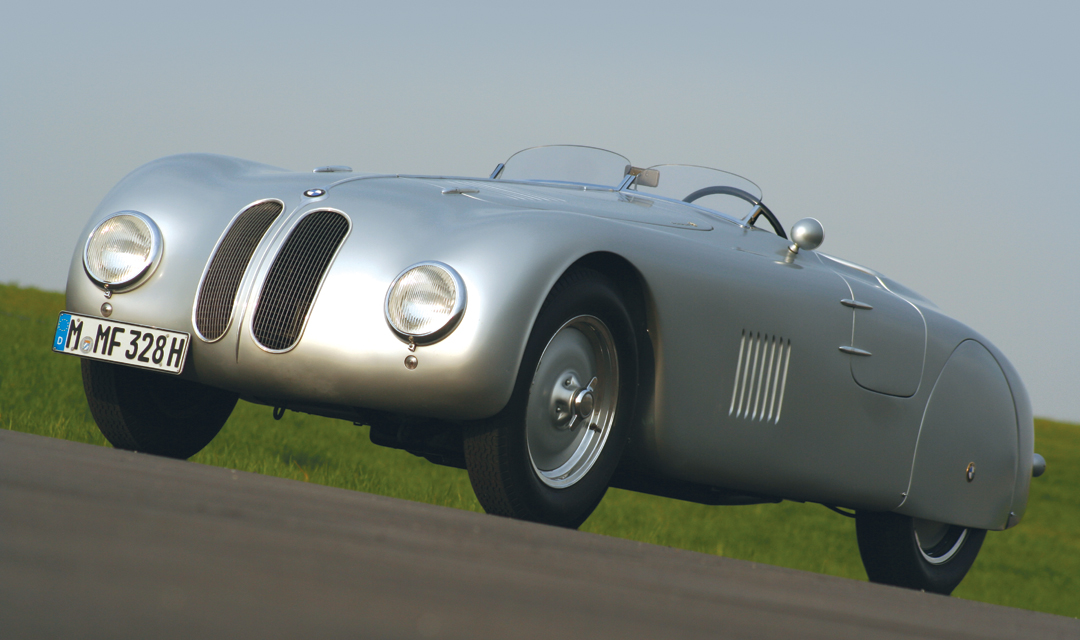
BMW began with aircraft engines and motorcycles, bought a licensed Austin Seven builder in 1928, and in 1929 sent 15 hp Dixi 3/15s to the Alpine Rally and won the team trophy. Casey Annis on the 1940 Brescia roadster.
The newest long-form writing on the Mille Miglia, as it is published.

The Mille Miglia was a single-stage road race of roughly a thousand miles over the ordinary roads of northern and central Italy, from Brescia down to Rome and back by a different way, run twenty-four times between 1927 and 1957. The cars left Brescia one at a time through the night, the slowest first, and raced flat out through villages, over the Apennine passes and along the Adriatic coast against the clock, with the roads closed only in the sense that soldiers and policemen stood along them. It was the greatest of the open-road races, the one that made the reputations of Alfa Romeo's 6C and 8C, of the first Ferraris and of the Mercedes-Benz 300 SLR, and the one that Enzo Ferrari said created the Italian motor industry and the grand touring car.
It was also the most dangerous. Fifty-six people died in twenty-four races, and the last of them, the crash at Guidizzolo in 1957 that killed Alfonso de Portago, his co-driver and nine spectators, ended racing on Italy's open roads by law. Since 1977 the name has belonged to a regularity rally for the cars that ran the original, over the same roads, and the archive covers both: Robert Newman's three-part Life and Times of the Mille Miglia, twenty-four year-by-year race profiles from 1927 to 1957, Moss on the 300 SLR and Pete Lyons on Jenkinson, portraits of Nuvolari, Varzi, Campari, Biondetti, Marzotto and Taruffi, and a quarter of a century of reports and galleries from the modern 1000 Miglia.
The race began as an act of civic revenge. Brescia had staged Italy's first Grand Prix in 1921 and lost it to the new autodrome at Monza a year later. Four men in the city decided to answer with something Monza could never hold: Count Aymo Maggi and Count Franco Mazzotti, both amateur racers; Renzo Castagneto, the secretary of the local automobile club and a born organiser; and Giovanni Canestrini, who wrote for the Gazzetta dello Sport and made sure the whole country read about it. On 4 December 1926 the Gazzetta announced a non-stop race over public roads from Brescia to Rome and back, a figure-eight of 1,600 kilometres. In miles that was a thousand, and the name followed.
Nobody knew what it would take. A third of the route was compacted earth; the asphalt had no camber and no drainage; the Raticosa and Futa passes between Bologna and Florence were the sort of roads horse-carts struggled with. Crews packed pyjamas, expecting two or three days. On 26 March 1927, 77 cars left Brescia at one-minute intervals, and Ferdinando Minoia and Giuseppe Morandi brought a locally built OM 665 back to the city in 21 hours and 4 minutes, averaging 48 mph. OMs were second and third. The Alfa Romeos the country had expected to win had broken, and the three little Peugeot 5 HPs that finished last took the best part of two days. The 1927 race, year by year →
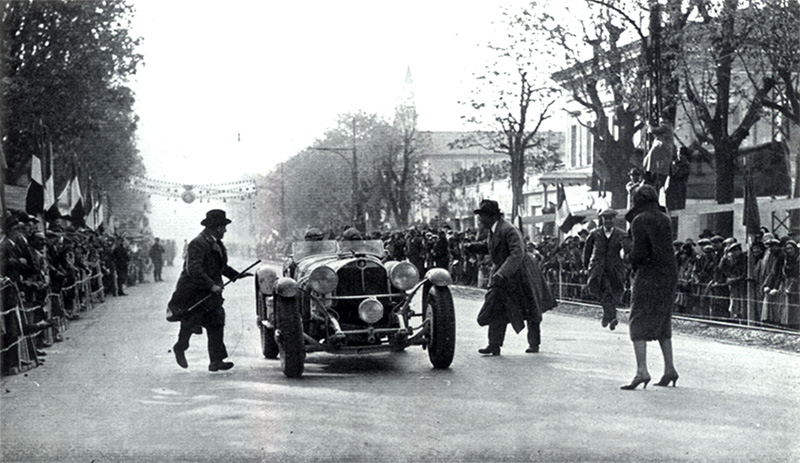
The format held for three decades: a route that changed in detail but always ran Brescia, Rome, Brescia; cars started by number, the slowest first; time checks at the big cities; and a public who lined the whole thousand miles, often standing in the road. Up to 25,000 soldiers and police patrolled it in the busy years. They could not patrol the villages.
The route was never quite the same twice, but its shape was fixed. From the Viale Venezia in Brescia the cars went east across the Lombard plain through Verona, Vicenza and Padua, then south through Ferrara and Ravenna to the Adriatic, and down the coast road through Rimini, Pesaro and Ancona to Pescara: two hundred miles of straights where the fast cars ran at their maximum for minutes at a time, the stretch on which the 300 SLR touched 170 mph in 1955. From Pescara the road turned inland and climbed into the Abruzzi to L'Aquila and over the mountains to Rome, where the halfway control stood and the old saying held that whoever led at Rome never won at Brescia. The way back was the hard part: north through Viterbo and Siena to Florence, then over the two Apennine passes, the Futa at 903 metres and the Raticosa at 968, on a road of hairpins that dropped into Bologna; then the flat run home across the Po plain through Modena, Piacenza, Cremona and Mantua, where from 1954 the Gran Premio Nuvolari timed the last leg in the dead man's memory, and so to Brescia.
The variations mattered. Before the war the loop ran the other way round, out through Parma and Bologna and over the Apennines first, down to Rome and home up the Adriatic, and from 1947 it ran clockwise as described; 1947 went out to Turin and back through Milan for the longest Mille Miglia of all, 1,139 miles; 1940 touched no town at all. The 1955 course was 992 miles. The passes decided the pre-war races and the straights decided the post-war ones, which is why the average speed doubled between 1927 and 1955 while the road itself hardly changed. Most of it is still there: the SS9 Via Emilia, the Adriatic coast road, the Futa and the Raticosa, which the modern 1000 Miglia still climbs, slowly, every June.
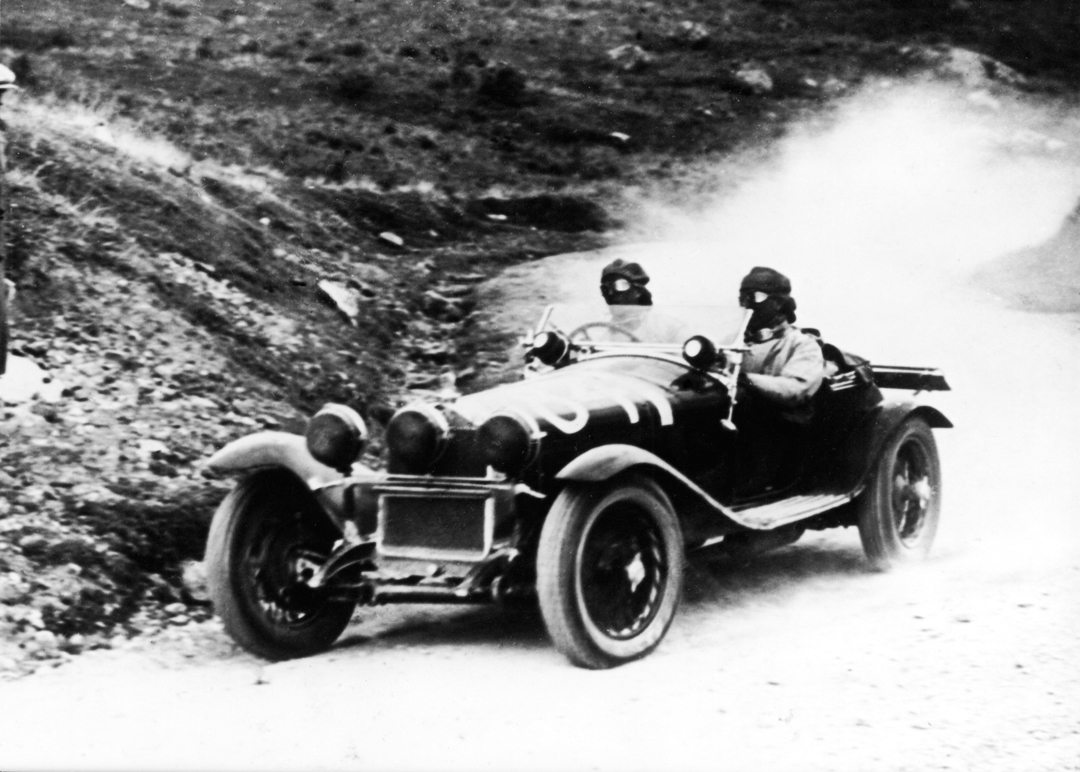
Vittorio Jano's six-cylinder Alfa Romeos arrived in 1928 and the Mille Miglia became theirs for a decade. Giuseppe Campari and his mechanic Giulio Ramponi won that year in a supercharged 6C 1500 and again in 1929 in a 6C 1750, each time with an OM second; the Brescian marque never quite repeated 1927. In 1930 Alfa entered a full works team of 6C 1750 Gran Sports and took seven of the top ten, Tazio Nuvolari winning from Achille Varzi after the race that produced the most repeated Mille Miglia story of all: Nuvolari catching Varzi in the dark, headlights off, and switching them on only as he passed. The 1930 win was the first at over 100 km/h.
The exceptions prove how complete the dominance was. In 1931 Rudolf Caracciola drove every mile himself in a Mercedes-Benz SSKL — seven litres, supercharged, 170 kilograms lighter than the SSK — with Wilhelm Sebastian minding the car, and became the first foreign winner. The rest of the top ten were Alfas. Caracciola → · The SSKL →
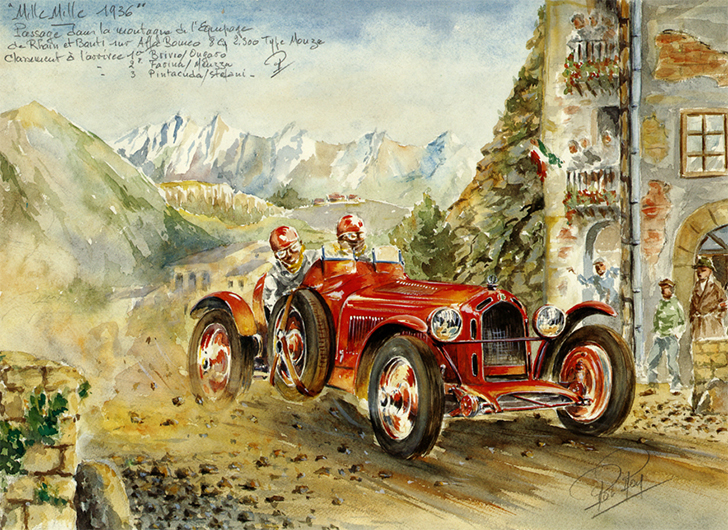
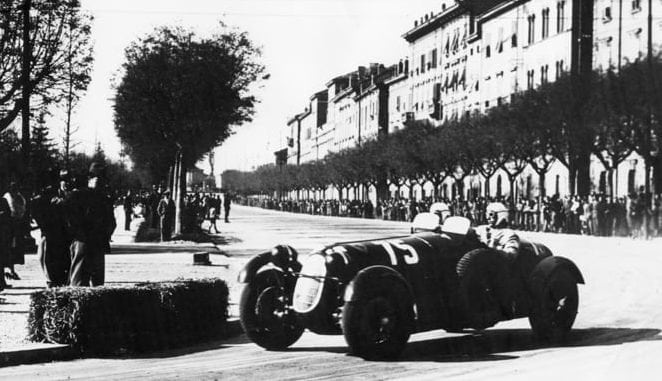
Otherwise the honours stayed at Portello and, increasingly, with the Scuderia Ferrari that ran Alfa's racing on its behalf. Baconin Borzacchini won in 1932 after Campari's co-driver put the leading car into a wall. In 1933 Alfa Romeo took every one of the first ten places, Nuvolari leading them home 27 minutes clear. Varzi won in 1934 in the rain, after a shouting match with Enzo Ferrari at Imola over whether to change to wet tyres (he did, and it rained all the way to Brescia). In 1935 Ferrari put mudguards and lights on a Tipo B Grand Prix car, chose the smallest driver he had, Carlo Pintacuda, and the smallest co-driver, the Marquis della Stufa, who spent fourteen hours hanging out of a single-seat cockpit on the way to victory at 71.7 mph. Count Antonio Brivio won 1936 by 32 seconds from Giuseppe Farina with his lights failing for the tenth time, steering by the glow from roadside bars. Pintacuda won again in 1937; Clemente Biondetti took the first of his four in 1938, in an 8C 2900B, by two minutes from Pintacuda. 1935: a Grand Prix car with mudguards → · 1936, by the light of the bars →
These were not only works battles. The race had always carried a huge field of amateurs in production cars, and the organisers depended on them. When the entry fell to 85 in 1936 they brought back classes and prizes for touring cars, and Fiat Balillas made up half the start. A charcoal-burning Alfa finished the 1933 race twelve hours behind the winner. The first woman to start, Baroness Maria Antonietta Avanzo, had entered in 1928.
The 1938 race ended it, for a time. At a level crossing in Bologna a Lancia Aprilia left the road and went into the crowd; ten people died, seven of them children. The government cancelled the 1939 race and ruled that the Mille Miglia would never again run through towns at racing speed. 1938 →
Every running of the race: the winning crew, the car and the average speed. Years link to the archive's race profile; car names link to every story on the site about that car.
| Year | Winners | Car | Average speed | The race |
|---|---|---|---|---|
| 1927 | Ferdinando Minoia / Giuseppe Morandi | OM 665 S | 77.2 km/h · 48.0 mph | 77 starters; OM 1-2-3; the Alfas broke |
| 1928 | Giuseppe Campari / Giulio Ramponi | Alfa Romeo 6C 1500 SS | 84.1 km/h · 52.3 mph | |
| 1929 | Giuseppe Campari / Giulio Ramponi | Alfa Romeo 6C 1750 SS | 89.7 km/h · 55.7 mph | |
| 1930 | Tazio Nuvolari / Giovanni Battista Guidotti | Alfa Romeo 6C 1750 GS | 100.5 km/h · 62.4 mph | Nuvolari passes Varzi with his lights off; first win over 100 km/h |
| 1931 | Rudolf Caracciola / Wilhelm Sebastian | Mercedes-Benz SSKL | 101.1 km/h · 62.8 mph | Caracciola drives every mile; first foreign winner |
| 1932 | Baconin Borzacchini / Amedeo Bignami | Alfa Romeo 8C 2300 | 109.9 km/h · 68.3 mph | |
| 1933 | Tazio Nuvolari / Decimo Compagnoni | Alfa Romeo 8C 2300 MM | 108.6 km/h · 67.5 mph | Alfa Romeo fills the first ten places |
| 1934 | Achille Varzi / Amedeo Bignami | Alfa Romeo 8C 2300 | 114.3 km/h · 71.0 mph | In the rain, after the tyre argument with Ferrari at Imola |
| 1935 | Carlo Pintacuda / Alessandro della Stufa | Alfa Romeo Tipo B | 114.8 km/h · 71.3 mph | A Grand Prix car with mudguards |
| 1936 | Antonio Brivio / Carlo Ongaro | Alfa Romeo 8C 2900A | 121.6 km/h · 75.6 mph | Won by 32 seconds with the lights failing |
| 1937 | Carlo Pintacuda / Paride Mambelli | Alfa Romeo 8C 2900A | 114.7 km/h · 71.3 mph | |
| 1938 | Clemente Biondetti / Aldo Stefani | Alfa Romeo 8C 2900B | 135.4 km/h · 84.1 mph | Ten killed at a Bologna level crossing; no race in 1939 |
| 1940 | Huschke von Hanstein / Walter Bäumer | BMW 328 Touring Coupé | 166.7 km/h · 103.6 mph | Gran Premio Brescia: nine laps of a 103-mile triangle |
| 1947 | Clemente Biondetti / Emilio Romano | Alfa Romeo 8C 2900B | 112.0 km/h · 69.6 mph | 1,139 miles via Turin; Nuvolari second in a Cisitalia; Alfa's last |
| 1948 | Clemente Biondetti / Giuseppe Navone | Ferrari 166 S | 121.2 km/h · 75.3 mph | Nuvolari leads by 29 minutes until the brakes fail; Ferrari's first |
| 1949 | Clemente Biondetti / Ettore Salani | Ferrari 166 MM | 131.5 km/h · 81.7 mph | Biondetti's fourth |
| 1950 | Giannino Marzotto / Marco Crosara | Ferrari 195 S | 123.2 km/h · 76.6 mph | Marzotto in a double-breasted suit |
| 1951 | Luigi Villoresi / Pasquale Cassani | Ferrari 340 America | 123.0 km/h · 76.4 mph | Top gear only |
| 1952 | Giovanni Bracco / Alfonso Rolfo | Ferrari 250 S | 128.6 km/h · 79.9 mph | 501 starters; Kling's 300 SL second |
| 1953 | Giannino Marzotto / Marco Crosara | Ferrari 340 MM | 142.3 km/h · 88.4 mph | First World Sportscar Championship round; Fangio second with a broken steering arm |
| 1954 | Alberto Ascari | Lancia D24 | 139.6 km/h · 86.7 mph | First solo winner; the Gran Premio Nuvolari begins |
| 1955 | Stirling Moss / Denis Jenkinson | Mercedes-Benz 300 SLR | 157.7 km/h · 98.0 mph | 992 miles, 10 h 7 min 48 s; Jenkinson's roll of paper |
| 1956 | Eugenio Castellotti | Ferrari 290 MM | 137.4 km/h · 85.4 mph | Rain all the way; Ferrari 1-2-3-4-5 |
| 1957 | Piero Taruffi | Ferrari 315 S | 152.6 km/h · 94.8 mph | Taruffi at the fourteenth attempt; de Portago's crash at Guidizzolo ends the race |
| 1958–61 | Run as a regularity trial | — | — | Maggi resigns rather than see it done slowly; the event lapses |
| 1977– | The 1000 Miglia revival, every June | Cars eligible for 1927–57 | — | Regularity over the Brescia–Rome–Brescia roads; 400-plus starters; timed to the hundredth |
Averages are over the year's full route, which varied from 992 miles (1955) to 1,139 (1947). 1940 was the closed-circuit Gran Premio Brescia delle Mille Miglia. From 1954 drivers could run alone.
No driver belongs to the race as Tazio Nuvolari does, and he won it only twice. The first was 1930, the lights-off pass on Varzi in the dawn outside Brescia, which may or may not have happened the way Canestrini told it and has been told that way ever since; the second was 1933, 27 minutes clear of a field made up entirely of Alfa Romeos, with Decimo Compagnoni beside him. The drives people remember came later. In 1947, at 54, in an 1,100-cc Cisitalia against the big pre-war Alfas, he led through the rain until a flooded distributor cost him twenty minutes, and finished second. In 1948, at 55 and dying of the lungs, he accepted a Ferrari 166 a few days before the start, lost a wing, threw away the bonnet, lost the seat and replaced it with a sack of oranges, and was 29 minutes in the lead at Reggio Emilia when the brakes failed; Enzo Ferrari had tried to stop him at Modena. The Gran Premio Nuvolari, the timed sprint through Mantua that closed the race from 1954, was Brescia's memorial to him, and the modern 1000 Miglia still runs it. Legends of the Mille Miglia: the interview → · Nuvolari, through the eyes of his friends →
What ran in April 1940, seven months into a war Italy had not yet joined, was called the Gran Premio Brescia delle Mille Miglia: nine laps of a 103-mile triangle of straight roads between Brescia, Cremona and Mantua, touching no town. It was won by a BMW 328 coupé with a Touring body, driven for eight of the nine laps by Huschke von Hanstein, an SS officer with the lightning flashes on his overalls, at 103 mph. In the 1,500 cc class ran two cars from a new concern called Auto Avio Costruzioni, built by Enzo Ferrari in the four years he was contractually forbidden from using his own name. One was driven by a young Alberto Ascari. Both broke. BMW wins the 1940 Mille Miglia → · The 328 "Berlin-Rome" roadster →
The new republic had other priorities than the deaths of 1938, and in 1947 Maggi, Castagneto and Canestrini — Mazzotti had been shot down over the Mediterranean — put the race back on the roads, through the towns, over the longest route it ever used: 1,139 miles, out to Turin and back through Milan. Petrol and Pirelli tyres were rationed; a number of entrants collected both and were never seen on the course. Biondetti, standing in the Piazza della Vittoria without a drive, was offered the seat in a wealthy Brescian's pre-war Alfa 8C 2900B and won, which was Alfa Romeo's eleventh and last Mille Miglia. Second, in the 1,100 cc Cisitalia, drenched and twenty minutes down, was Nuvolari. 1947 →
Biondetti inherited the 1948 win when Nuvolari's brakes failed, Ferrari's first, and took a fourth in a 166 MM in 1949 — four victories, a record nobody approached. Biondetti →
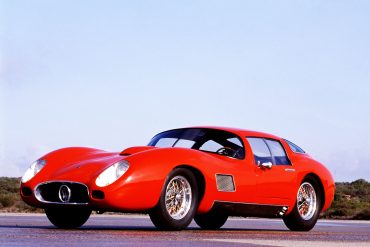
By 1949 the entry was over 300 and by 1952 it was 501, most of them Fiat Topolinos and Lancia Aprilias driven by people out for the day. Behind them a new generation of Italians drove Ferraris. Giannino Marzotto, a textile heir from Valdagno, won in 1950 in his own 195 S coupé wearing a double-breasted suit, passing Fangio's ailing Alfa on the way; Luigi Villoresi won in 1951 with only top gear left in a works 340 America; Giovanni Bracco won 1952 in a 250 S, chain-smoking and drinking brandy, by five minutes over Karl Kling's gullwing Mercedes 300 SL after a final charge from Bologna. In 1953 the race joined the new World Sports Car Championship, Alfa Romeo returned with the Disco Volante, and Fangio brought one home second with a broken steering arm, aiming the car at bridges; Marzotto won again in a 340 MM. Marzotto → · Bracco → · The Uovo, Marzotto's egg-shaped Ferrari →
Foreign makes came to be seen rather than to win: Jaguar C-types and XK120s, Aston Martin DB2s, Nash-Healeys, Allards, a Chrysler. Porsche's first four 356s arrived in 1952 and won two classes; from then on the small Stuttgart cars were the class of the small classes. Stirling Moss, who would matter later, crashed a C-type in 1952 and retired a Jaguar in 1951. Moss →
Lancia's D24 was the car of 1954. Alberto Ascari did not like the race and had it written out of his contract, drove only because Villoresi was hurt in practice, and won by 36 minutes after Piero Taruffi, leading, was put off the road by a backmarker. It was the first year drivers could run solo, and the first year of the Gran Premio Nuvolari. Ascari → · The D24 →
Mercedes withdrew after 1955 and Le Mans. In 1956 it rained for a thousand miles and Eugenio Castellotti, alone in an open 290 MM, led into Rome and was not caught: Ferrari took the first five places, with Peter Collins, Luigi Musso, a subdued Fangio and Olivier Gendebien's 250 GT behind. Moss, now with Maserati, went down a mountainside in a 350 S and climbed back up to the road. Castellotti → · The 290 MM →
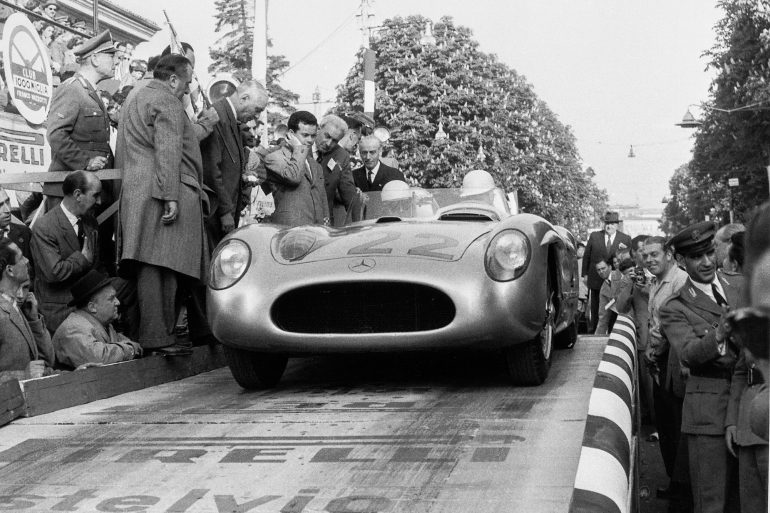
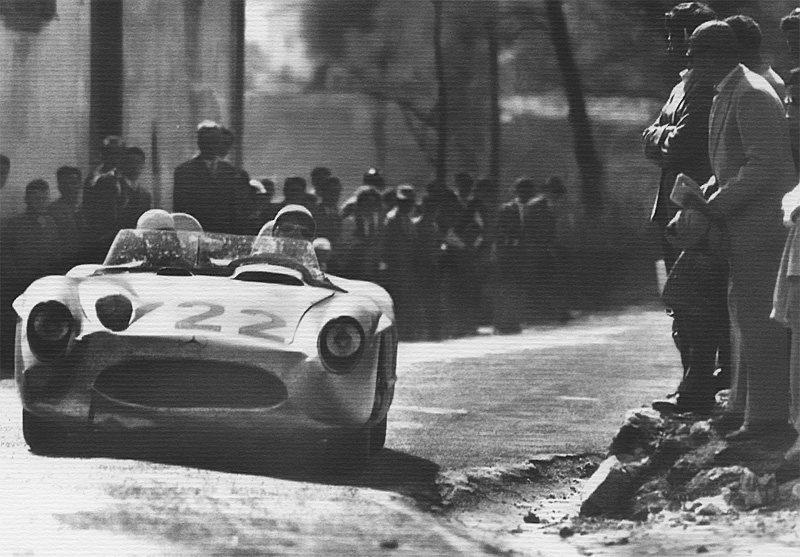
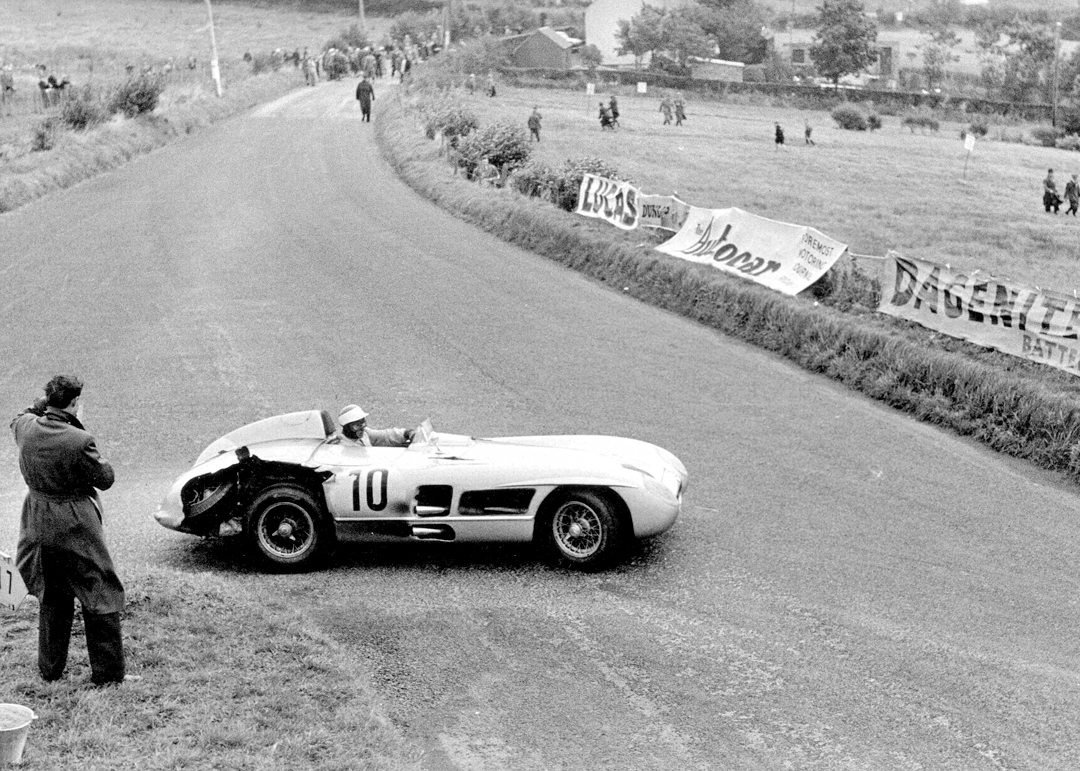
Then 1955, the race by which all the others are measured. Mercedes-Benz came late to the championship with three 300 SLRs and prepared for months: Moss and Denis Jenkinson, a journalist and sidecar world champion, drove the route again and again in practice, and Jenkinson wrote the whole thousand miles onto a roll of paper some five metres long, wound through a perspex box, and read it to Moss with hand signals, because nothing could be heard over the straight-eight. They left Brescia at 7.22 in the morning, number 722, and covered the 992 miles in 10 hours 7 minutes 48 seconds, an average of 97.96 mph, nearly half an hour faster than anyone had gone before or would go again; the SLR took off over a crest on the Adriatic road at 170 mph with both men aboard, and Jenkinson was sick over the side after Pescara and kept reading. Fangio was second in another SLR, 32 minutes back, driving alone; Mercedes took five of the top ten, and Moss, who had never finished the race before, called it the greatest drive of his life. 1955 → · Moss and the 300 SLR → · Jenks and the Mille Miglia →
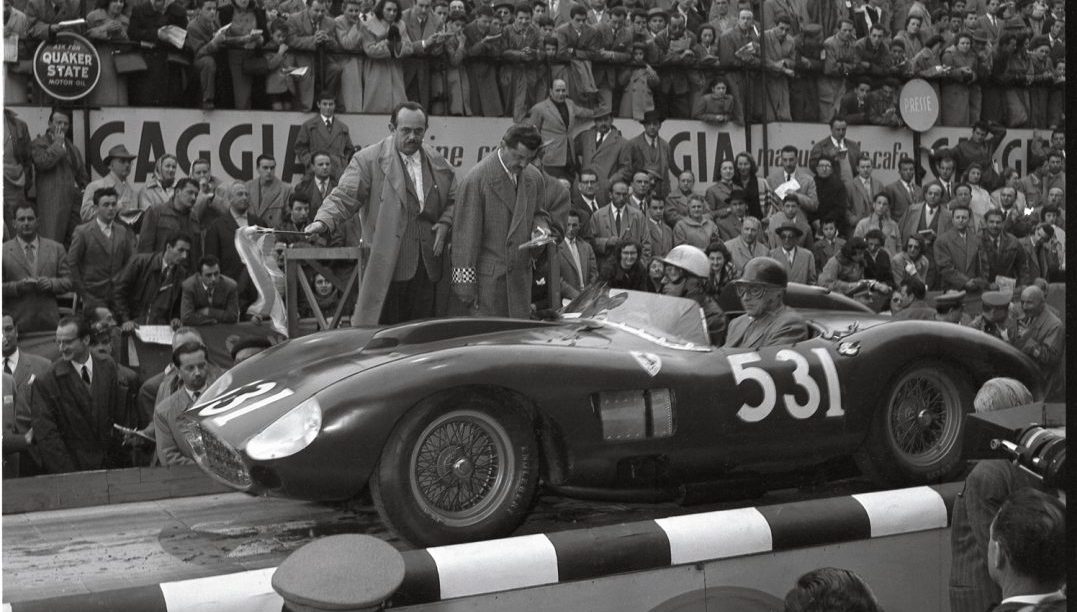
By 1957 the fastest cars were approaching 180 mph on roads that had been built for carts and left the ground over their crests. Moss's 450 S lost its brake pedal seven miles out. Collins led into Rome and broke; Taruffi, on his fourteenth attempt, won at 94.8 mph with Wolfgang von Trips a car's length behind, holding station, some said, so that the older man could have it. Twenty miles from Brescia, at Guidizzolo, a tyre burst on Alfonso de Portago's Ferrari 335 S at well over 150 mph. He, his passenger Ed Nelson and nine spectators, five of them children, were killed. The race had taken 56 lives in 24 editions. The government banned racing on open roads within days, Enzo Ferrari was charged with manslaughter over the tyre and acquitted four years later, and the Mille Miglia as a race was over. 1957 → · Taruffi →
Twenty-four race profiles from the archive, 1927 to 1957, oldest first.
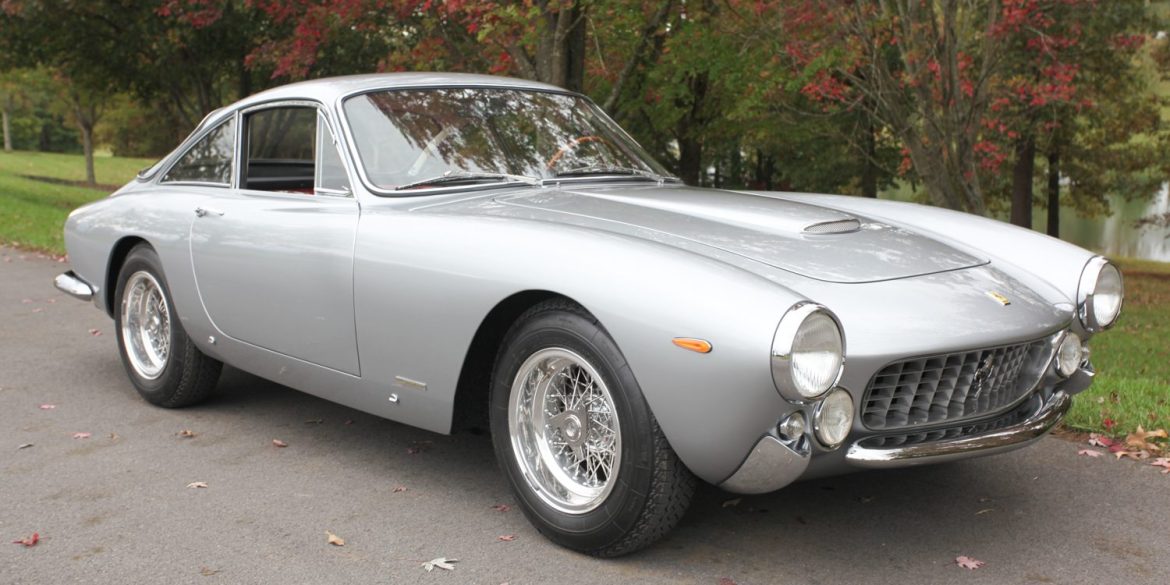
Alfa Romeo won eleven times, Ferrari eight, Mercedes-Benz twice, OM, BMW and Lancia once each, and the list of winning cars is the history of the Italian sports car. The OM 665 of 1927 was a Brescian side-valve six; Jano's 6C 1500 and 1750, supercharged and with Zagato bodies, won the next three and made Alfa Romeo's name; the 8C 2300 won three and the 8C 2900, the fastest road car of the 1930s, three more, with the Tipo B Grand Prix car wearing mudguards in between. The Mercedes SSKL of 1931 and the 300 SLR of 1955 are the two foreign interruptions, both driven by men who had learned the route by heart. After the war the first Ferraris, the 166 S and 166 MM, the 195 S, the 340 America and 340 MM, the 250 S that begat the 250 GT line, the 290 MM and the 315 S, won eight of the eleven post-war races, with the Lancia D24 the exception in 1954. Behind the winners were the cars that filled the road: the Fiat 508 Balillas and Topolinos, the Lancia Aprilias and Aurelias, the Cisitalias, the Porsche 356s that owned the small classes from 1952, the Mercedes 300 SL that was second in 1952, the Jaguar C-type and the D-type, the Alfa Disco Volante, the Maserati 350 S and 450 S and the Ferrari 335 S of 1957. The nine cars below each link to every story on the site about that car; the feed after them gathers the single-car stories that carry the race.
Nine from thirty years; each links to every story on the site about that car.
Single-car stories that carry the race: the 6Cs and 8Cs, the SSKL, the first Ferraris, the 300 SLR, the D24 and the cars that filled the road.
Biondetti won four; Campari, Nuvolari, Pintacuda and Marzotto twice; three winners were not Italian. The race's drivers divide into generations. The founders' own: Minoia and Morandi, Campari and Ramponi, Borzacchini, Varzi, Nuvolari, Pintacuda, Brivio and Biondetti, the men of Alfa Romeo and the Scuderia Ferrari, with Caracciola the outsider who beat them once. The post-war Ferraristi: the Marzotto brothers, Villoresi, Bracco, Ascari, Castellotti, Taruffi, Collins, Musso, von Trips and de Portago, and Fangio, who drove it year after year and never won. The foreigners who came to learn it: Moss, Jenkinson, Fitch, Kling, Hans Herrmann and the Porsche men, Leslie Johnson, Reg Parnell and Tommy Wisdom. And the organisers, Maggi, Mazzotti, Castagneto and Canestrini, without whom there would have been no race, and Enzo Ferrari, who ran Alfa's team in it, built his first car for it and sold his road cars on it. Robert Newman's portraits in the archive carry most of them; the feed below gathers the rest.
Drivers, co-drivers, organisers and the men who built the cars, from Minoia to Moss.
The Mille Miglia created our cars and the Italian automobile industry. The Mille Miglia permitted the birth of GT, or grand touring cars, which are now sold all over the world. The Mille Miglia was an epoch-making event, which told the story of exciting adventures.
Enzo Ferrari
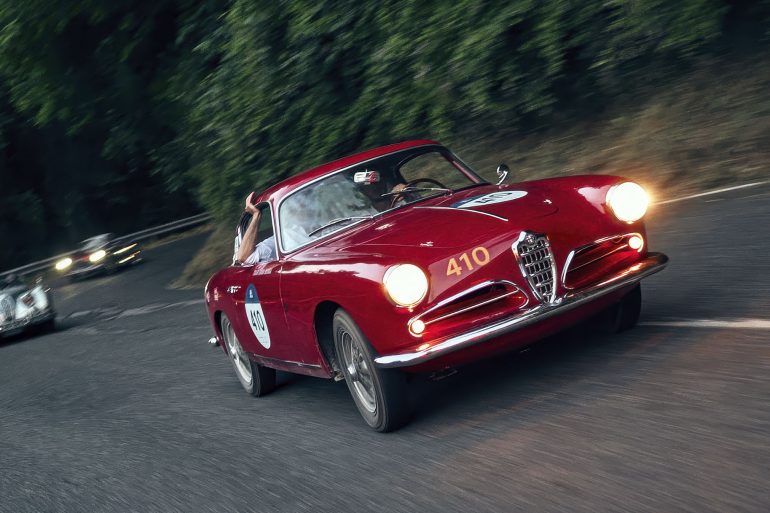
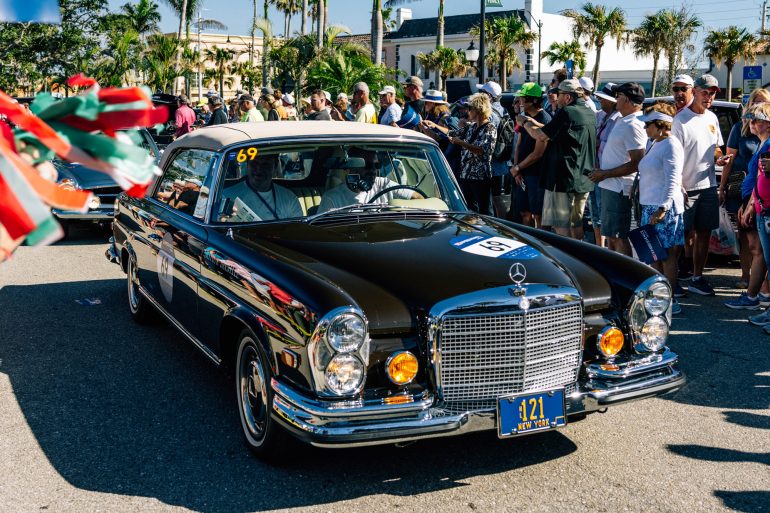
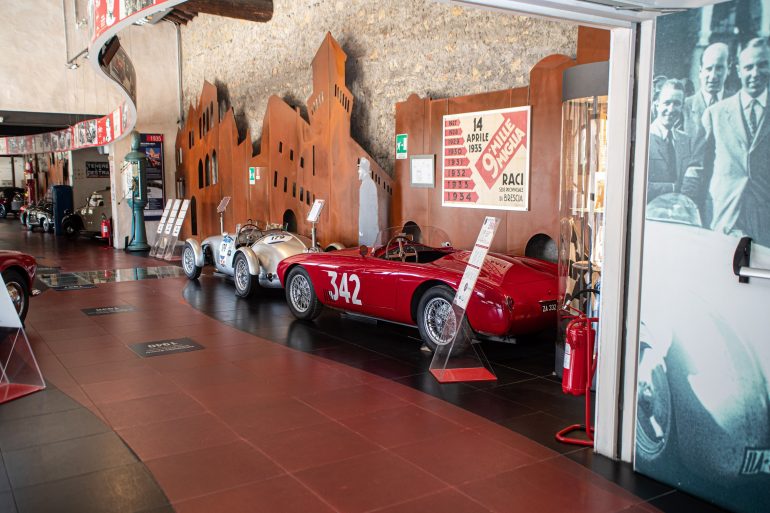
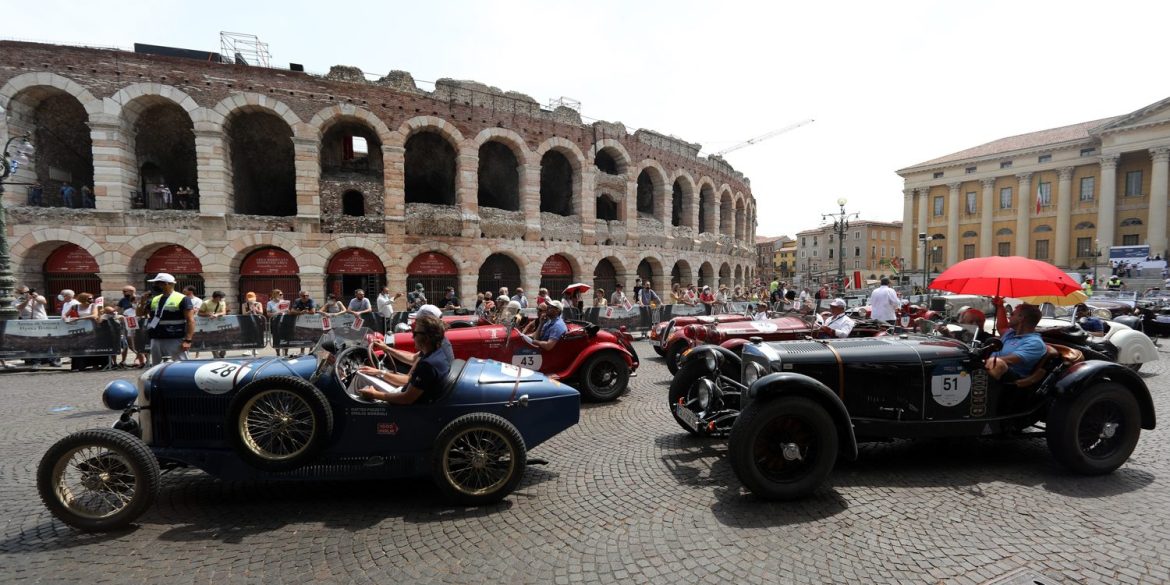
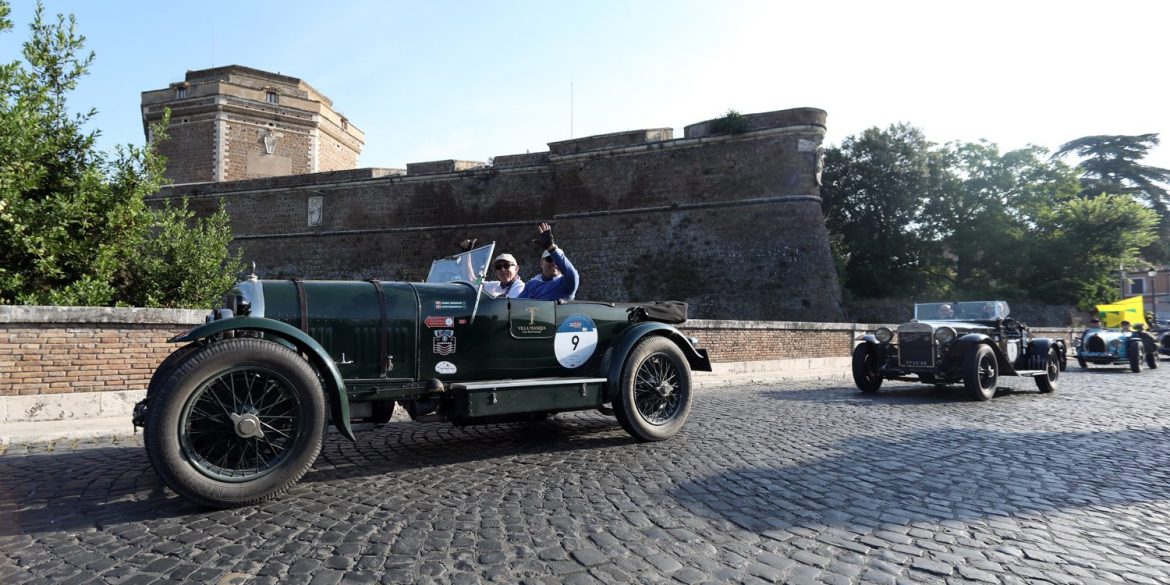
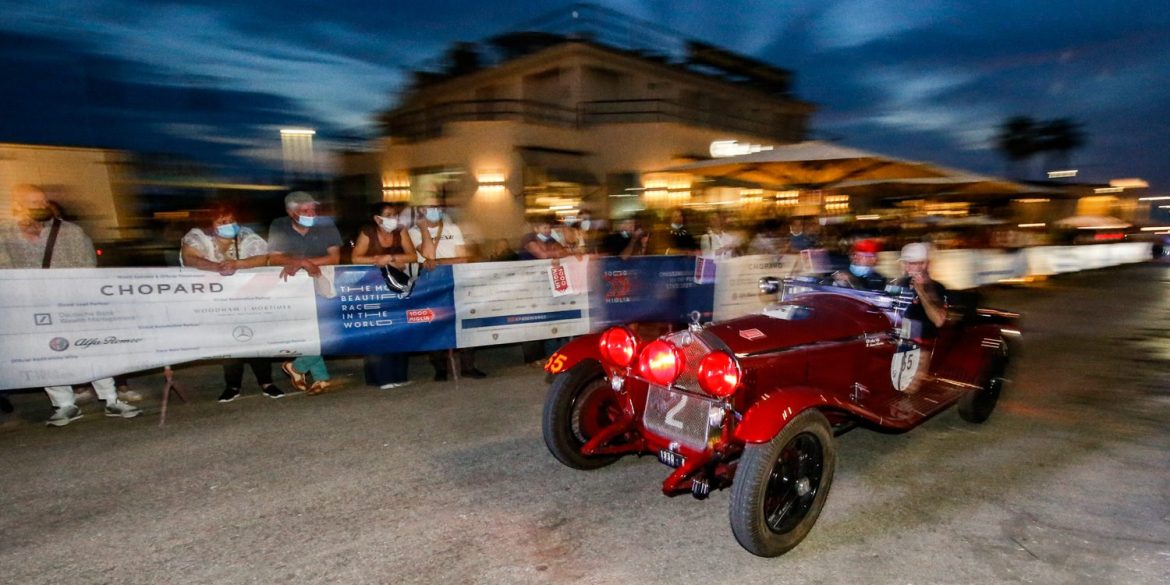
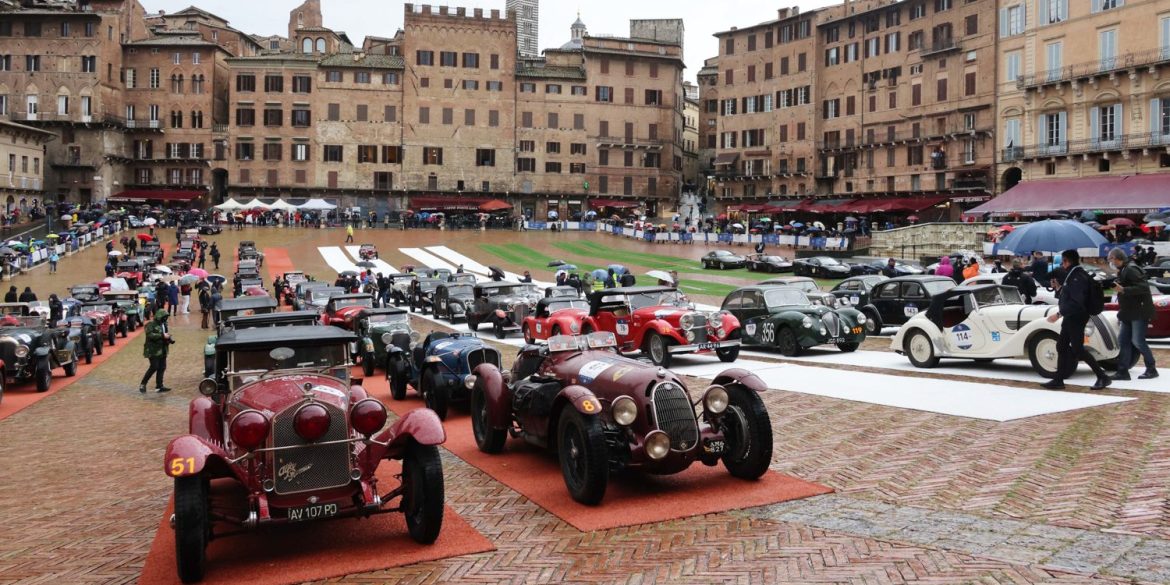
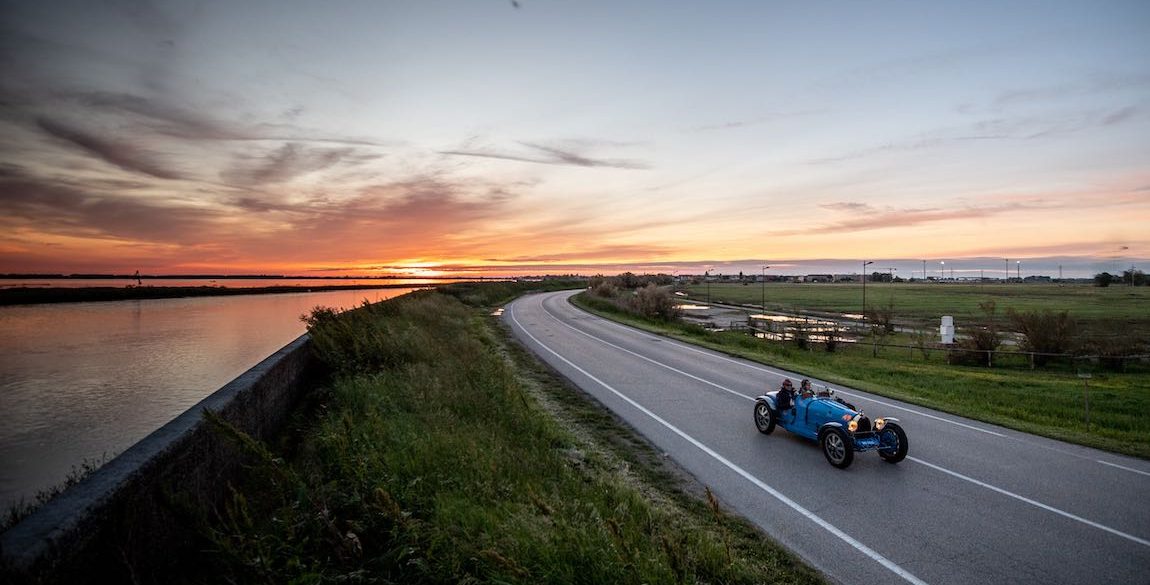
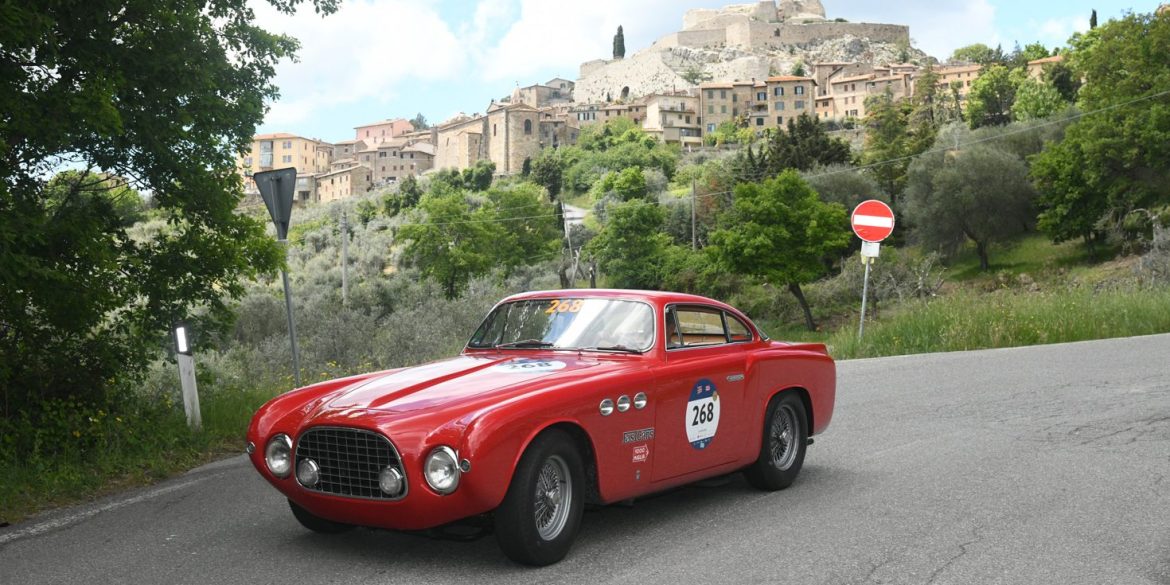
The event ran as a regularity trial from 1958 to 1961 and died, Maggi having resigned rather than see it done slowly. In 1977 the Automobile Club of Brescia revived it as exactly that, a regularity event for cars that competed in or were eligible for the races of 1927 to 1957, and the Mille Miglia Storica — now simply the 1000 Miglia — has run every year since, over the same roads, to Rome and back, in front of crowds as large as the originals. Four hundred and more cars start each June; the timing is to the hundredth of a second; the OM that won in 1927, the 8C 2900s, the 166 MMs and the 300 SLs are all in it. The race has spawned a Coppa delle Alpi in the winter mountains, a 1000 Miglia Experience in Florida and a Warm Up in the United States, and a museum in a thousand-year-old monastery on the edge of Brescia where Castagneto's 130,000 documents are kept. Sports Car Digest has covered the modern event since 1999: the reports and galleries from 2010, 2013, 2015, 2019, 2021 and 2024 are a place to start. Museo Mille Miglia → · The Coppa delle Alpi →
Picture galleries from Brescia, 1999 to now.
Reports, results and news from the modern event, newest first.
Races: 24, 1927 to 1957, plus the closed-circuit Gran Premio Brescia of 1940. Fastest: Moss and Jenkinson, 1955, 992 miles in 10 h 7 min 48 s, 97.96 mph (157.65 km/h). Slowest winner: Minoia and Morandi, 1927, 21 h 4 min, 48 mph. Longest route: 1947, 1,139 miles via Turin and Milan; shortest, 1940, nine laps of 103 miles. First at over 100 km/h: Nuvolari, 1930. Most wins, driver: Clemente Biondetti, four (1938, 1947, 1948, 1949); Campari, Nuvolari, Pintacuda and Marzotto two. Most wins, marque: Alfa Romeo eleven (1928–38 except 1931, and 1947), Ferrari eight (1948–53, 1956, 1957), Mercedes-Benz two (1931, 1955), OM, BMW and Lancia one. Foreign winners: Caracciola 1931, von Hanstein 1940, Moss 1955. Solo winners: Ascari 1954, Castellotti 1956, Taruffi 1957, after the rule changed. Biggest entry: 501 starters in 1952; 77 in the first race, 85 in 1936. Championship: a round of the World Sportscar Championship from 1953 to 1957. Deaths: 56 in 24 races, ten of them at Bologna in 1938 and eleven at Guidizzolo in 1957. The revival: every year since 1977, 400-plus cars each June, over the Brescia–Rome–Brescia roads, as a regularity event timed to the hundredth of a second.
Short answers, with the long ones above.
A thousand-mile road race from Brescia to Rome and back over the public roads of Italy, run twenty-four times between 1927 and 1957. Cars started one at a time, slowest first, and raced against the clock through towns, over the Apennines and along the Adriatic coast.
Clemente Biondetti, four times: 1938 in an Alfa Romeo 8C 2900B, 1947 in the same model, and 1948 and 1949 in Ferraris. Alfa Romeo won eleven races and Ferrari eight.
1955, when Stirling Moss and Denis Jenkinson covered 992 miles in a Mercedes-Benz 300 SLR in 10 hours 7 minutes 48 seconds, an average of 97.96 mph, with Jenkinson reading pace notes from a roll of paper.
After the 1957 race, in which Alfonso de Portago's Ferrari crashed at Guidizzolo and killed him, his co-driver and nine spectators, the Italian government banned motor racing on open public roads. Fifty-six people had died in the race's 24 runnings.
Brescia east to Verona, Vicenza and Padua, south to Ferrara and the Adriatic coast, down through Rimini, Ancona and Pescara, inland over the Abruzzi to Rome, then north through Siena and Florence, over the Futa and Raticosa passes to Bologna, and home across the Po plain through Modena, Cremona and Mantua. The exact course changed most years; 1955's was 992 miles.
Yes, as the 1000 Miglia, a regularity rally run every June since 1977 over the original roads for cars of the types that raced from 1927 to 1957. More than 400 cars take part and it is timed to the hundredth of a second rather than raced.
OM in 1927; Alfa Romeo 6C 1500, 6C 1750, 8C 2300, Tipo B and 8C 2900 from 1928 to 1938 and in 1947; the Mercedes-Benz SSKL in 1931 and 300 SLR in 1955; a BMW 328 in 1940; Ferrari 166, 195 S, 340, 250 S, 290 MM and 315 S from 1948 to 1957; and the Lancia D24 in 1954.
The whole thread, newest first.