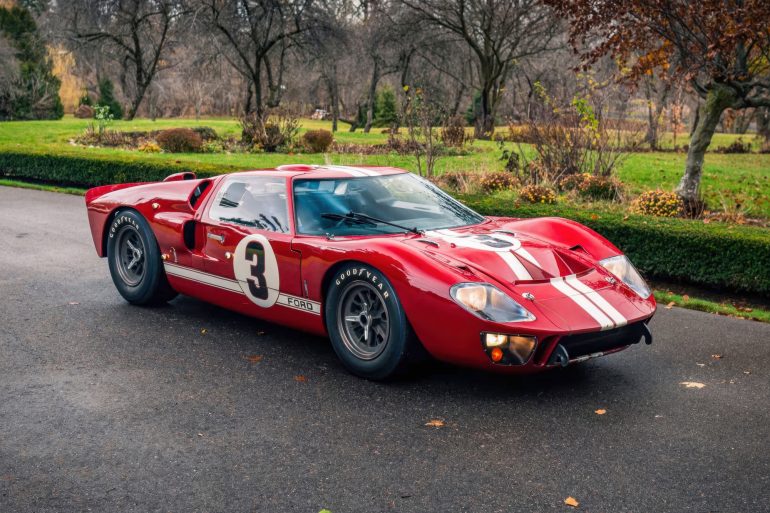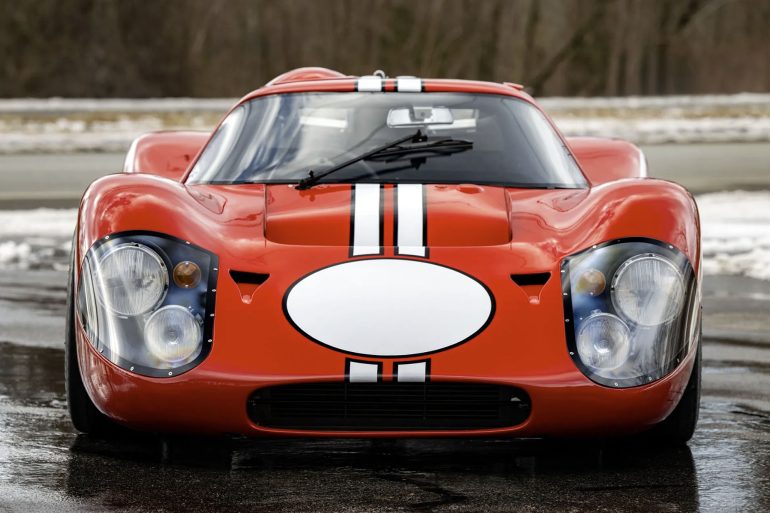
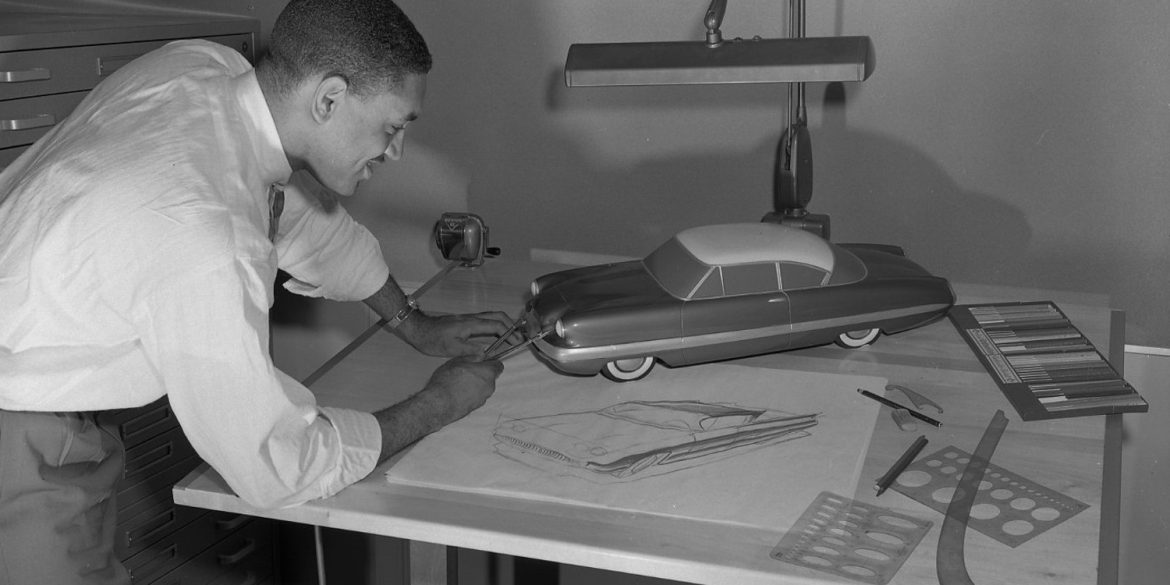
McKinley Thompson Jr. left ArtCenter in 1956 to be the first African American designer Ford hired, worked on Mustang sketches, the GT40 and the two-wheeled Gyron concept of 1961, and helped shape the first Bronco. An appreciation from Ford.

The company that put the world on wheels and then, for one decade, decided to beat Ferrari at Le Mans and did it four years running: the Model T and the flathead V8, the Thunderbird and the Mustang, the GT40, the Cosworth DFV that won 155 Grands Prix, the Lotus Cortina and the Escort, the Boss 302 and the Trans-Am, and the Ford GT that went back to Le Mans in 2016 and won its class fifty years to the weekend. The archive has close to 570 Ford stories and 300 more on Shelby American, from Roger Dixon's Route to '66 to the Mustang with serial number 1, and this page puts them in order.
The pieces to start with
Eight pieces that explain the marque: Dixon's Route to '66 and Le Mans '66, Jansen's Henry Ford, Hemsley's first Mustang fastback and Hertz Rent-a-Racer, Ludvigsen on Ford and the Can-Am, Trans-Am '67 and McDonough's GT40 1010.
Ford won at Le Mans in 2016 fifty years after its first victory, and Raj Nair admitted corporate approval came late. The same layers nearly sank the original program, born when Enzo Ferrari walked away from Ford’s 1963 takeover talks.
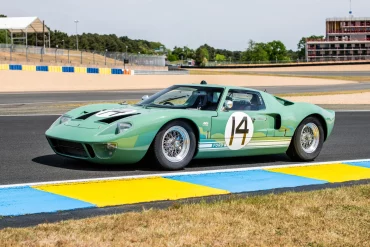
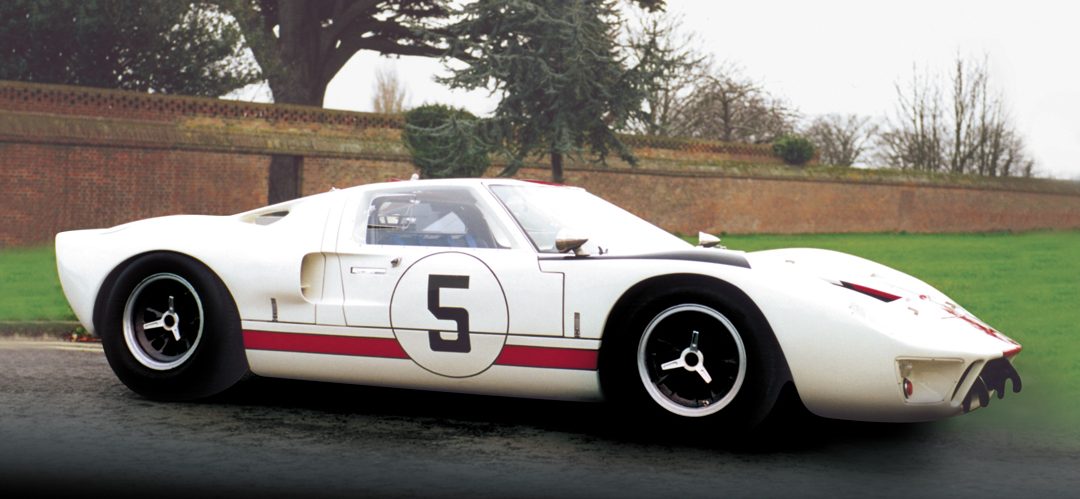
Ford’s failure to buy Ferrari in 1963 produced a 40-inch-high car built in Slough by Eric Broadley and John Wyer, a non-finisher in both its 1964 races. How the GT40 got from there to the 1966 win.
Henry Ford and eleven others founded the company on 16 June 1903; those who stayed 16 years left multimillionaires. In 1919 he bought them all out for $105 million and ran “Mr. Ford Motor Company” alone for another quarter century.
Henry Ford’s first car, built in a Detroit workshop in 1896, needed the doorframe demolished to get out. The road from there to the Mustang, and to the first fastback off the line in 1965.
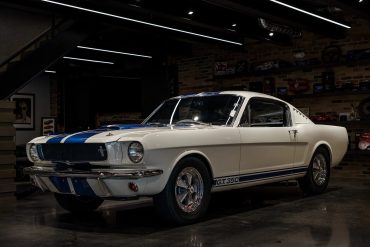
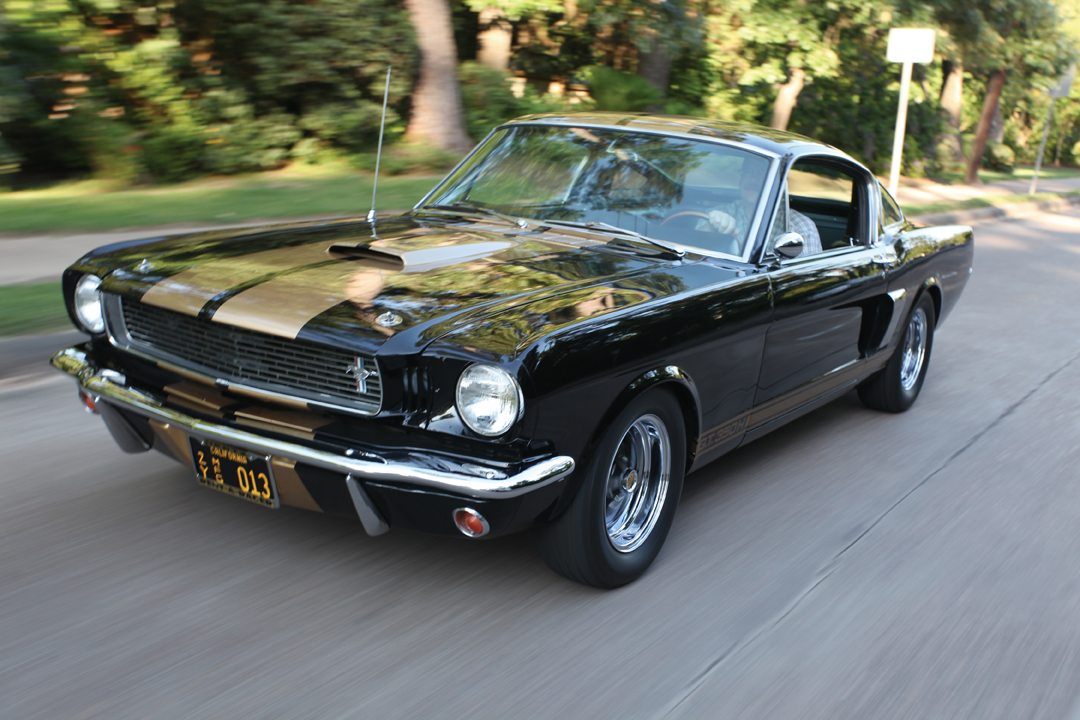
The Mustang was called a secretary’s car until Ford sent it to a Texan who had linked the company with sports car racing. Carroll Shelby’s road from Leesburg, Texas, mail carrier’s son, to the 1966 GT350H that Hertz rented out.
Ford’s Total Performance campaign broke Detroit’s 1957 no-racing pact and reached Indianapolis, Le Mans, rallying and drag strips, yet when the SCCA’s Jim Kaser launched the Can-Am in 1966 Ford never committed. Karl Ludvigsen on why.
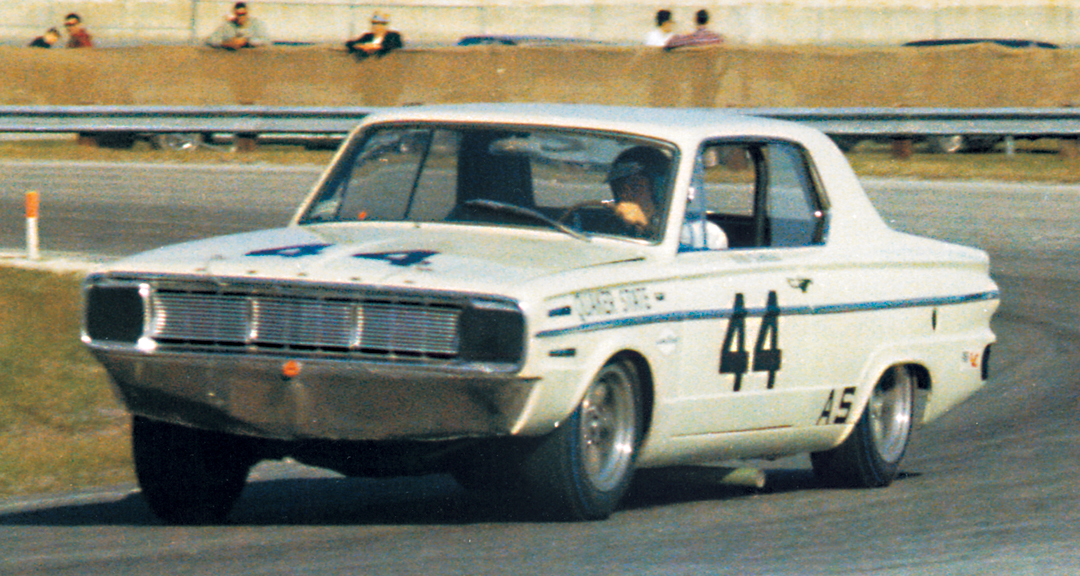
For 1967 Ford hedged, backing Bud Moore’s Mercury Cougars with Gurney, Parnelli Jones, Pearson and Revson alongside Shelby American’s champion team, while Penske brought a Camaro and Tullius the Dodge Darts. A Shelby backup driver’s account of the season.
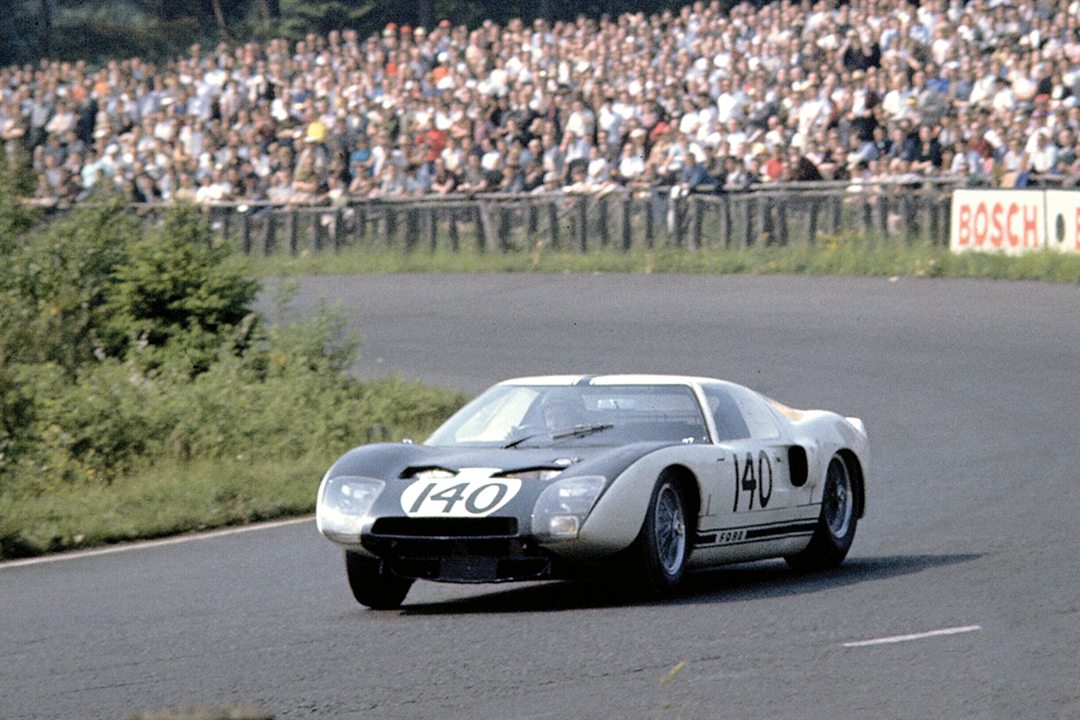
The first GT40 was finished in April 1964 with the 4.2-liter Indy four-cam engine and failed to finish a race all year, though Graham Hill set a lap record at Le Mans. Ed McDonough on the ex-Essex Wire chassis 1010.
The newest long-form writing on Ford, as it is published.

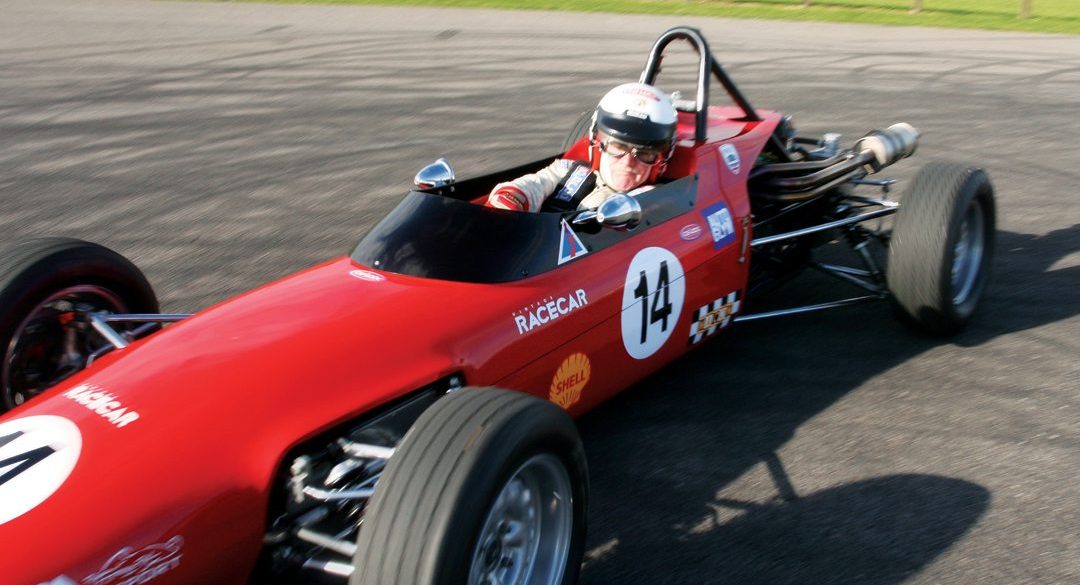
Ford is the American manufacturer Henry Ford incorporated in Detroit on 16 June 1903, the maker of the Model T that put fifteen million families on the road and of the moving assembly line that built them, and still, a hundred and twenty years on, run by a family with his name. For most of its life it has been a maker of ordinary cars and trucks in extraordinary numbers, and for a collector-car archive like this one that would be a short story were it not for three things: the hot-rod V8 of 1932 and the Thunderbird and Mustang that grew out of the same instinct for a cheap fast car; a racing programme from 1962 to 1970, Total Performance, that took in Indianapolis, NASCAR, the Trans-Am, the rallies and above all Le Mans, and left behind the GT40, the Cobra, the Lotus-Ford and the Cosworth engine; and the way Ford's cars became the basis for other people's racing cars, from the Model T specials of the dirt tracks to every Formula Ford ever built.
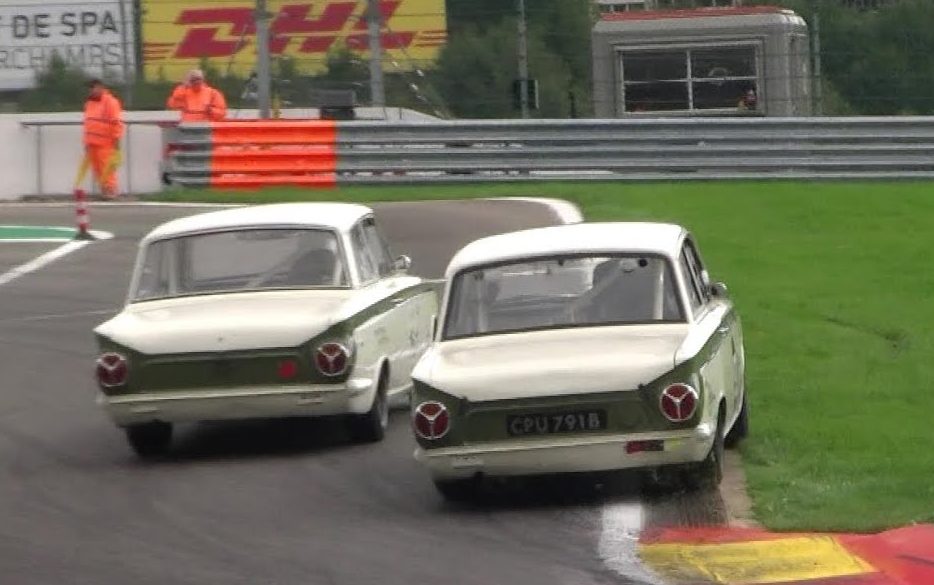
The racing record is the reason the marque matters here. Ford won Le Mans outright four years running, 1966 to 1969, with the GT40 and its 7-litre Mk II and Mk IV descendants, the only American manufacturer to win the race until the Ford GT took the GTE class in 2016; a Lotus-Ford won Indianapolis in 1965 with Jim Clark and Ford engines won it again with Foyt and Andretti; the Ford-badged Cosworth DFV won its first Grand Prix in 1967 and 154 more by 1983, twelve drivers' championships among them; Mustangs won the first two Trans-Am titles and the Boss 302 the 1970 one; the Lotus Cortina, the Escort and the Sierra Cosworth won most of what there was to win in Europe; and Shelby American's Cobras and Daytona Coupes took the world GT championship from Ferrari in 1965. The archive's Ford coverage runs from Henry Ford's golden jubilee to the Mustang's sixtieth, and the chapters below follow it.
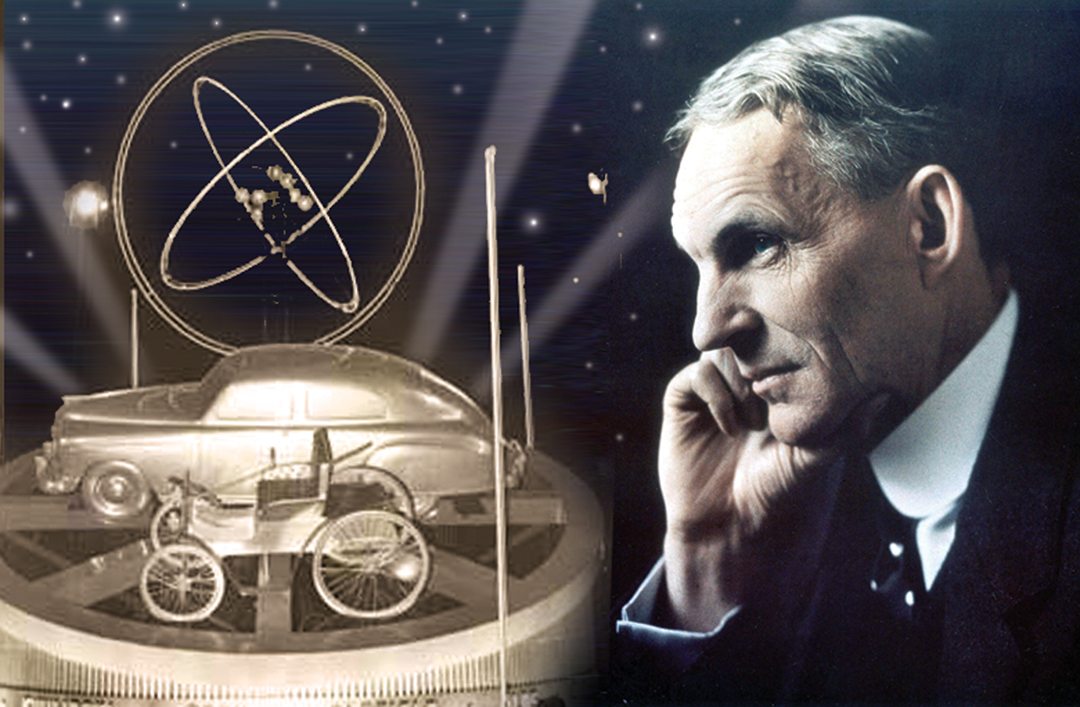
Henry Ford was born on a farm outside Dearborn, Michigan, on 30 July 1863, left it for Detroit's machine shops, built his first car, the Quadricycle, in a shed behind his house in 1896, and failed twice as a manufacturer before the Ford Motor Company was incorporated in June 1903 with twelve investors and $28,000. He raced to make his name, as everyone did: his 999 and Arrow, driven by Barney Oldfield and by Ford himself on the frozen Lake St Clair in 1904, were the fastest cars in America for a season, and the archive's Pioneers era page has the context. The Model A of 1903 sold, the Model N of 1906 sold better, and on 1 October 1908 the Model T went on sale at $825: twenty horsepower, a planetary transmission a farmer could learn in an afternoon, vanadium steel, and a body high enough to clear a rutted road. Brad Jansen's Henry Ford and the Automotive Golden Jubilee is the archive's portrait of the man, egotistical and compassionate, genius and ignorant, and of what he did next.
What he did next was the moving assembly line at Highland Park, running fully from 1913, which cut the time to build a chassis from twelve and a half hours to ninety-three minutes and the price of a Touring car to $360 by 1916 and $260 by 1925; the five-dollar day of January 1914, which doubled wages and made his workers his customers; and the River Rouge plant, where iron ore went in one end and cars came out the other. By the time the last Model T was built on 26 May 1927, 15,007,033 had been made, more than half the cars in the world, and Ford had bought Lincoln from the Lelands in 1922 and turned it over to his son Edsel, whose taste the archive's Classic Era page follows through the Zephyr and the Continental. The T itself is in the archive mostly as a racing car: the Frontenac-headed Fords of the dirt tracks and the 1920s Indianapolis fields, the Model T and Model A specials of the hillclimbs, and the London-to-Brighton and Pebble Beach entries that keep the early cars in view.
The Model A of December 1927 was conventional and sold four million in four years, but the car that matters here is the one that followed it. On 31 March 1932 Ford put a V8 into a car that cost $460: the flathead, 221 cubic inches and 65 horsepower, cast as a single block when the engineers said it could not be, the first cheap eight-cylinder car in the world. It made Ford the fast car of the Depression, the car of the letters attributed to Clyde Barrow and John Dillinger thanking Henry for it, and of the young men in Southern California who stripped the fenders off Model As and Deuces, bolted on Edelbrock heads and Offenhauser manifolds and ran them on the dry lakes at Muroc and El Mirage and, from 1949, at Bonneville. The flathead was the hot rod, and the hot rod was the first American road-racing culture; the archive's J. Michael Hemsley tells the other side of it in Winning on the Beach, the 1939 Ford coupé modified that raced on the sand at Daytona, and the archive's Bonneville histories carry the lakes.
The V8 also went racing in the ordinary way. Fords ran the Monte Carlo Rally and won it in 1936 and 1938, a Lincoln won NASCAR's first strictly-stock race in 1949, and in 1935 ten Ford V8-engined Millers started at Indianapolis and none finished. Henry Ford ran the company into the ground in his last years; Edsel died in 1943, the old man took the presidency back at seventy-nine, and in September 1945 his grandson Henry Ford II took over a firm losing nine million dollars a month, brought in the Whiz Kids and Ernest Breech from General Motors, and rebuilt it. The 1949 Ford, the first new postwar car, saved it; the overhead-valve Y-block V8 of 1954 replaced the flathead; and the company that had been a one-man dictatorship became the second-largest car maker in the world.
The 1955 Thunderbird was Ford's answer to the Corvette and outsold it sixteen to one in its first year: a two-seat personal car rather than a sports car, with a V8 from the start where Chevrolet had a six, a steel body, and the porthole hardtop that became its signature. It lasted three years as a two-seater, 1955 to 1957, before Robert McNamara added a back seat and doubled the sales, and the 1957 F-code supercharged cars ran at Daytona Beach and in NASCAR; Hemsley's two-part Thunderbird history in the archive follows the car from the Fairlane-based roadster to the Square Bird, and the early two-seaters remain the Fords the concours lawns like best. Ford's other 1950s story is the Edsel of 1958, a $250 million mistake that the archive's Market Guide of the 1990s and 2000s valued accordingly, and the compact Falcon of 1960, McNamara's sensible car, which mattered because of what Lee Iacocca did with its platform.
In June 1962 Henry Ford II broke the Automobile Manufacturers Association's ban on factory racing with the words Total Performance, and the company went racing everywhere at once. Galaxies won NASCAR and, surprisingly, the British Saloon Car Championship with Jack Sears in 1963, in the Willment and Alan Mann cars Mike Matune's Galaxies in a Galaxy Far, Far Away follows; Falcons ran the Monte Carlo Rally; Holman and Moody built stock cars and Carroll Shelby, who had asked Ford for engines for a British chassis in 1961, was putting 260 and 289 V8s into the AC Ace and calling it the Cobra. In England Colin Chapman put Lotus's twin-cam into the new Cortina and the Lotus Cortina went on sale in January 1963, to win the British championship for Jim Clark in 1964 and the European Touring Car title for Sir John Whitmore in 1965; and in Dearborn Ford built a double-overhead-cam version of its small-block V8 and gave it to Chapman for Indianapolis. The pieces were all on the table by the end of 1963, and in May of that year the deal to buy Ferrari collapsed.
Ford's offer for Ferrari, eighteen million dollars, foundered on 21 May 1963 when Enzo Ferrari read the clause that gave Dearborn control of his racing and walked out, and Henry Ford II told his people to build a car to beat him. Roger Dixon's two-part Route to '66 in the archive is the fullest account of what followed: the purchase of Eric Broadley's Lola GT design and Broadley himself, John Wyer hired from Aston Martin to run Ford Advanced Vehicles at Slough, Roy Lunn in charge, and the GT40, forty inches high with a 4.7-litre Fairlane V8 behind the driver, unveiled in April 1964 and a failure that year at the Nürburgring and Le Mans, where all three retired. In 1965 the programme went to Shelby American in Los Angeles, Ken Miles and Phil Remington sorted the car, the 7-litre Mk II appeared with the NASCAR 427, and Le Mans was lost again, every Ford out by the small hours while Ferrari won for the sixth year in a row; McDonough's history of GT40 chassis 1010 and the archive's Phil Remington interviews carry the detail.
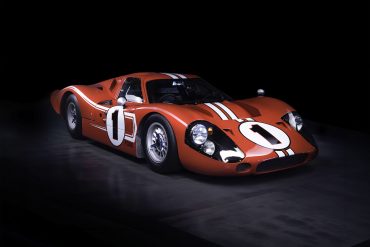
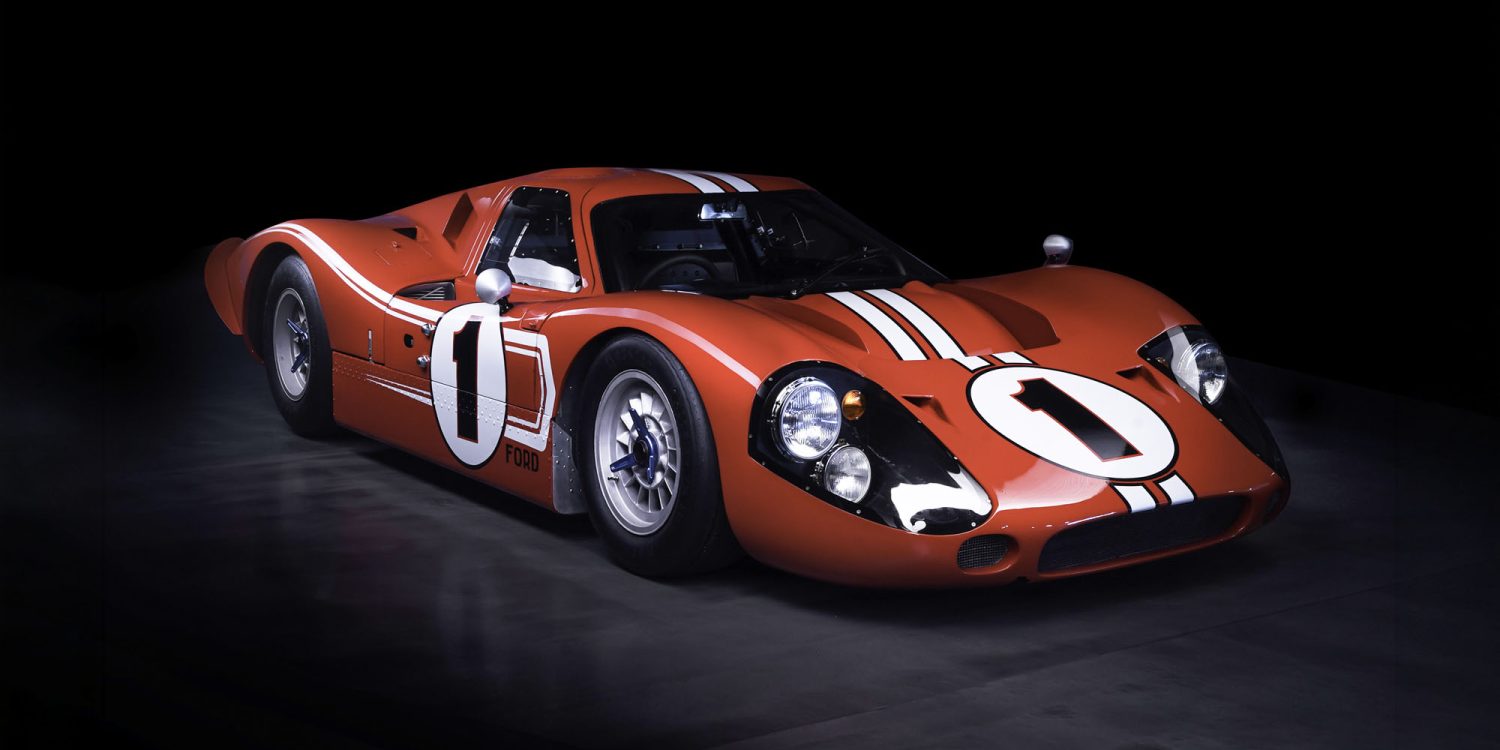
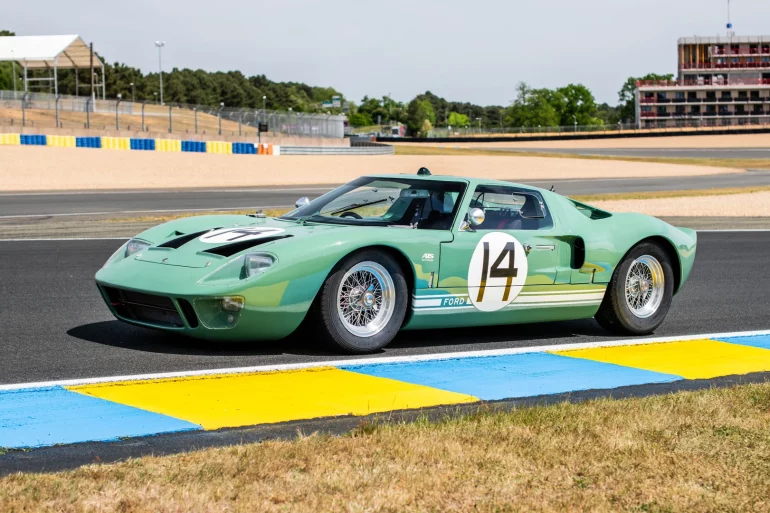
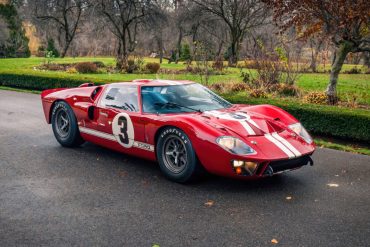
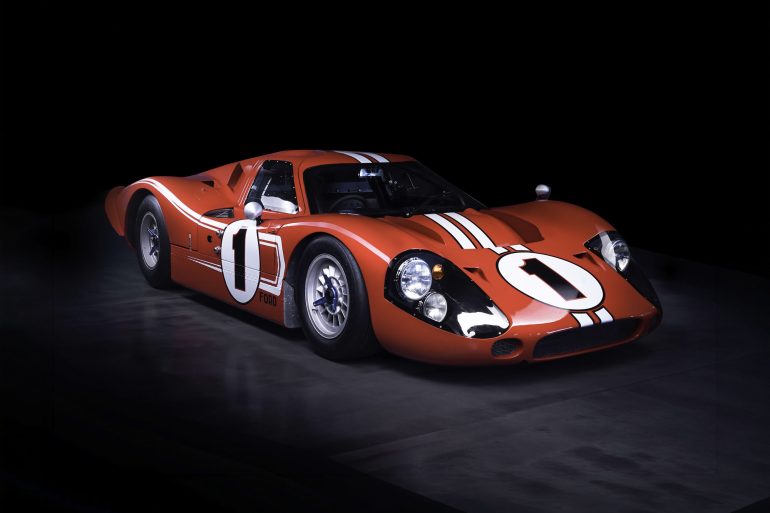
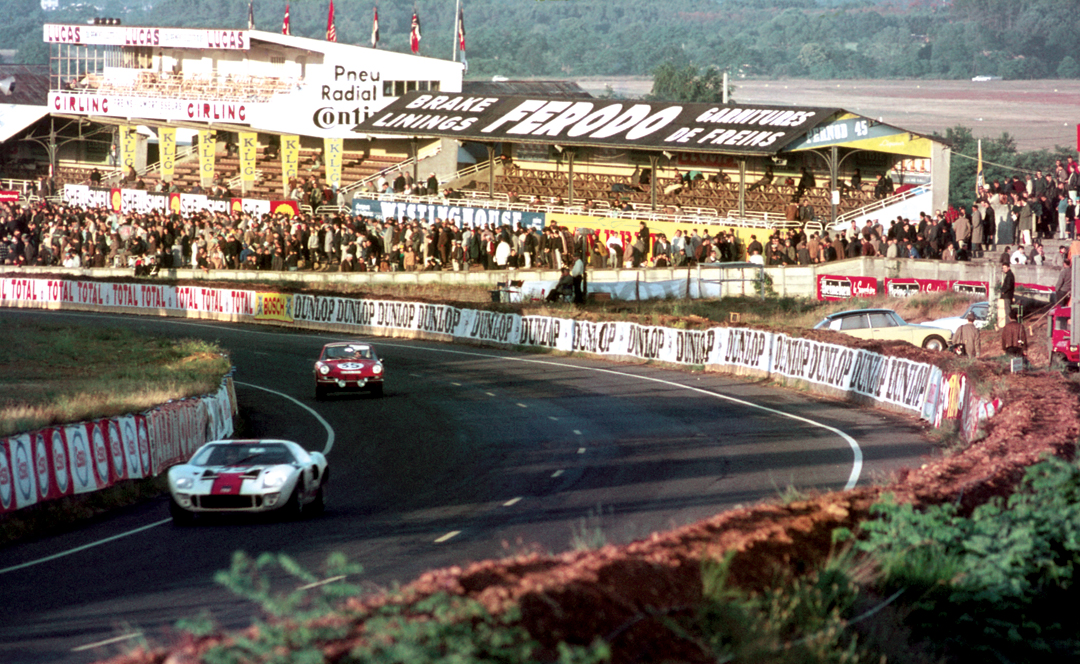
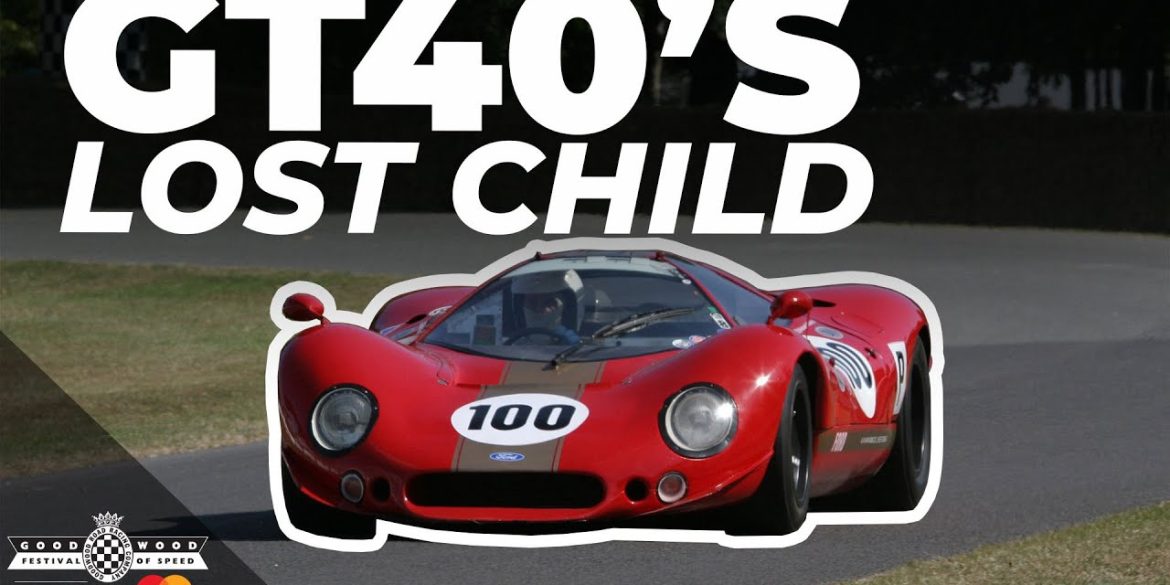
Le Mans 1966 was the race Ford had bought: thirteen Fords entered, eight of them 7-litre Mk IIs from Shelby American and Holman-Moody, against the Ferrari P3s, and after Ferrari's cars broke and Ken Miles and Denny Hulme led through the night, Ford's Leo Beebe ordered a dead-heat finish for the photograph. Bruce McLaren and Chris Amon, who had started further back and so covered more ground, were declared the winners, Miles and Hulme second, Bucknum and Hutcherson third; Miles, who had won Daytona and Sebring that year and would have been the first man to take all three, was killed testing the J-car at Riverside in August. Dixon's Le Mans '66 and the archive's Ken Miles stories tell it from both sides of the pit wall. In 1967 the J-car became the Mk IV, and Dan Gurney and A.J. Foyt won Le Mans in the red number 1 at a record 135 mph average, the only all-American win in the race's history, car, team and drivers, with Gurney spraying the champagne from the podium for the first time anyone had. Ford then withdrew the works effort; the GT40 page under The Cars has every chassis and race, and the Ford, Ferrari and the Prototypes era page the whole war.
The cars and the racing, year by year, with the archive's story of each linked. Car names link to every story on the site about that model; the GT40 and the Cobra to their own pages.
| Year | The cars | The racing | In the archive |
|---|---|---|---|
| 1903 | Ford Motor Company incorporated, 16 June | The original Model A; Ford's 999 and Arrow the fastest cars in America | Henry Ford |
| 1908 | Model T | On sale 1 October at $825; the car that put the world on wheels | Henry Ford and the Golden Jubilee |
| 1913–14 | Model T | The moving assembly line at Highland Park; the five-dollar day | The Pioneers era |
| 1922 | Lincoln | Ford buys Lincoln from the Lelands and gives it to Edsel | The Classic Era |
| 1927 | Model A | The last Model T, 26 May, 15,007,033 built; the Model A in December | |
| 1932 | The flathead V8 | The first cheap V8, 65 horsepower for $460; the hot rod is born on the dry lakes | Winning on the Beach |
| 1936–38 | Ford V8 | The Monte Carlo Rally won twice; the Lincoln-Zephyr | Lincoln Zephyr |
| 1945 | Henry Ford II takes over, September | Edsel dead in 1943, the company losing nine million a month; Breech and the Whiz Kids rebuild it | |
| 1955 | Thunderbird | The two-seat personal car outsells the Corvette sixteen to one | Thunderbird, Part One |
| 1957 | Thunderbird | The supercharged F-code cars at Daytona Beach; the last two-seater | |
| 1960 | Falcon | McNamara's compact, the platform under the Mustang | |
| 1962 | Galaxie · Cobra 289 | Total Performance: Henry Ford II breaks the racing ban in June; Shelby's first Cobra | The Cobra page |
| 1963 | Lotus Cortina · Galaxie | The Ferrari deal collapses in May; Sears wins the British championship in a Galaxie; Clark second at Indianapolis in a Lotus-Ford | Galaxies in a Galaxy Far, Far Away |
| 1964 | Mustang · GT40 | The Mustang at the World's Fair, 17 April; the GT40 unveiled and beaten; Clark's Lotus Cortina title | Route to '66, Part I · Mustang serial number 1 |
| 1965 | GT40 Mk II · Daytona Coupe · GT350 | Clark wins Indianapolis in the Lotus 38; the Daytona Coupes take the world GT title from Ferrari; Le Mans lost again | Route to '66, Part 2 |
| 1966 | GT40 Mk II · GT350H | Le Mans 1-2-3: McLaren and Amon, Miles and Hulme, Bucknum and Hutcherson; Miles killed at Riverside in August; the first Trans-Am title | Le Mans '66 · Hertz Rent-a-Racer |
| 1967 | GT40 Mk IV · GT500 | Gurney and Foyt win Le Mans in the Mk IV; Foyt's Coyote-Ford at Indianapolis; the Cosworth DFV wins first time out at Zandvoort; Trans-Am again | Trans-Am '67 · Keith Duckworth |
| 1968 | Gulf GT40 · Escort | Wyer's Gulf GT40 wins Le Mans with Rodríguez and Bianchi; the Escort launched; Pearson's NASCAR title | Pedro Rodriguez |
| 1969 | Gulf GT40 · Capri · Boss 302 · Torino | Ickx and Oliver win Le Mans by 120 metres; Andretti's Hawk-Ford at Indianapolis; the Talladega and the aero wars | Jacky Ickx |
| 1970 | Boss 302 · Escort | Parnelli Jones and Follmer win the Trans-Am for Bud Moore; Mikkola wins London to Mexico; Ford withdraws from racing in November | Detroit Muscle and Trans-Am |
| 1971–72 | Capri | The RS2600 wins the European Touring Car Championship twice; the Falcon GT-HO Phase III at Bathurst | High Tech Tin-Tops |
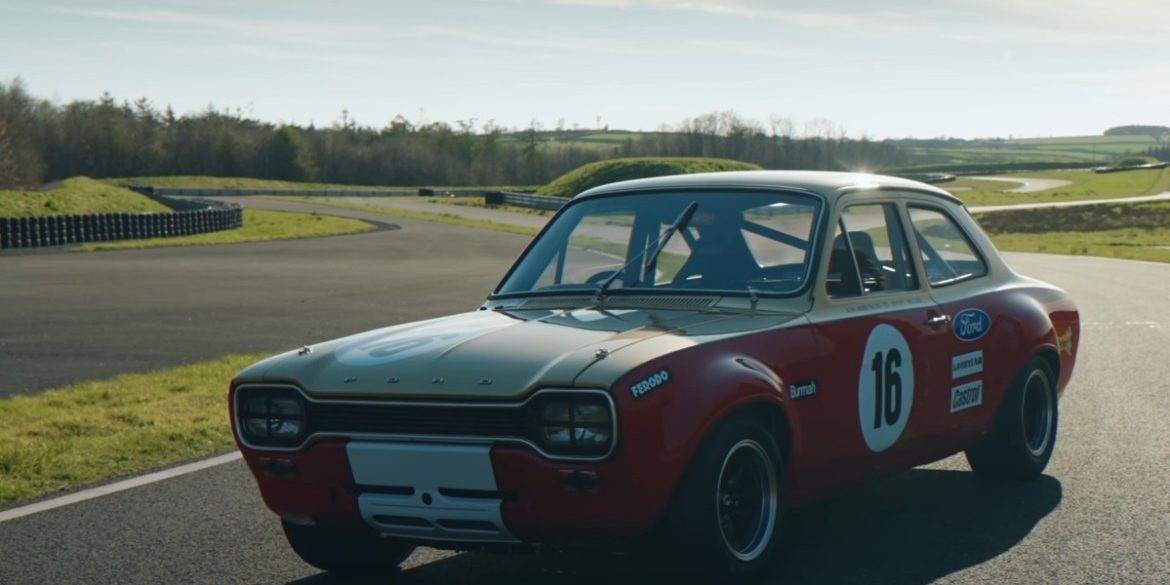
| 1972–79 | Escort | The Escort wins the RAC Rally eight years running; Waldegård and Ford world champions in 1979 | Formula Ford: Fox Hunt |
| 1975 | Mirage GR8-Cosworth | Ickx and Bell win Le Mans with the DFV | Magnificent Mirage |
| 1978–83 | Cosworth DFV and DFX | The DFX begins ten Indianapolis wins in a row; the DFV's 155th and last Grand Prix win, Detroit 1983 | Political Pawn: Tyrrell 012 |
| 1986 | RS200 · Sierra RS Cosworth | Group B cancelled as the RS200 arrives; the whale-tail Sierra | |
| 1987 | Sierra RS500 Cosworth | The World Touring Car Championship and four years of winning | |
| 1994 | Benetton-Ford B194 | Schumacher's first world title on the Zetec-R | Strictly Passive: Benetton B192 |
| 2005 | Ford GT | Camilo Pardo's centenary GT40, 4,038 built | |
| 2006–07 | Focus RS WRC | Two World Rally Championships for makes | |
| 2016 | Ford GT | Le Mans GTE Pro won fifty years after the 1-2-3: Hand, Müller and Bourdais | Le Mans hub |
| 2020 | Mustang | The Bullitt Mustang sells for $3.74 million, the record for a Mustang | |
| 2024 | Mustang | The Mustang's sixtieth; the Mustang GT3 at Le Mans; the GTD | |
| 2026 | Red Bull-Ford | Ford returns to Formula One as Red Bull's engine partner | The Formula 1 page |
Shelby American's cars are Ford-engined and Ford-financed and sit on the Shelby threads; the Cosworth engines carried the Ford name on the cam covers. The Great Races pages carry each race in full.
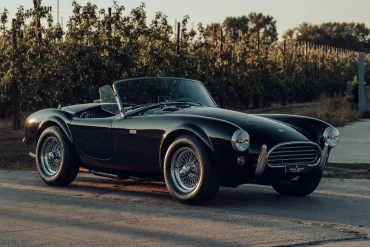
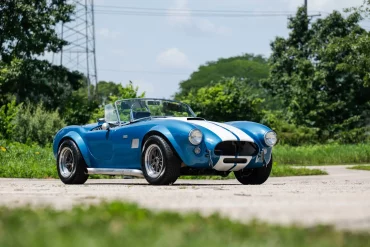
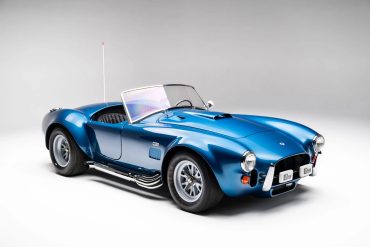
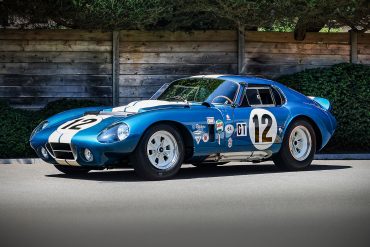
Carroll Shelby's Cobra, the AC Ace with a Ford small-block, went on sale in 1962 and started winning in America in 1963, with Dave MacDonald, Ken Miles and Bob Bondurant, but could not beat the 250 GTO in Europe until Pete Brock drew a coupé body for it. Six Daytona Coupes were built, and in 1965 Bondurant and Allen Grant, Dan Gurney and Jo Schlesser took the World Championship for GT Manufacturers from Ferrari, the first for an American make. The 427 Cobra of 1965, with the side-oiler NASCAR engine in a coil-sprung chassis, was the fastest road car of its day and the archive's most-covered Shelby after the 289; the Cobra page under The Cars has the chassis, the races and the sales, and the archive's Shelby interviews, Casey Annis and John Zimmermann's among them, have the man.
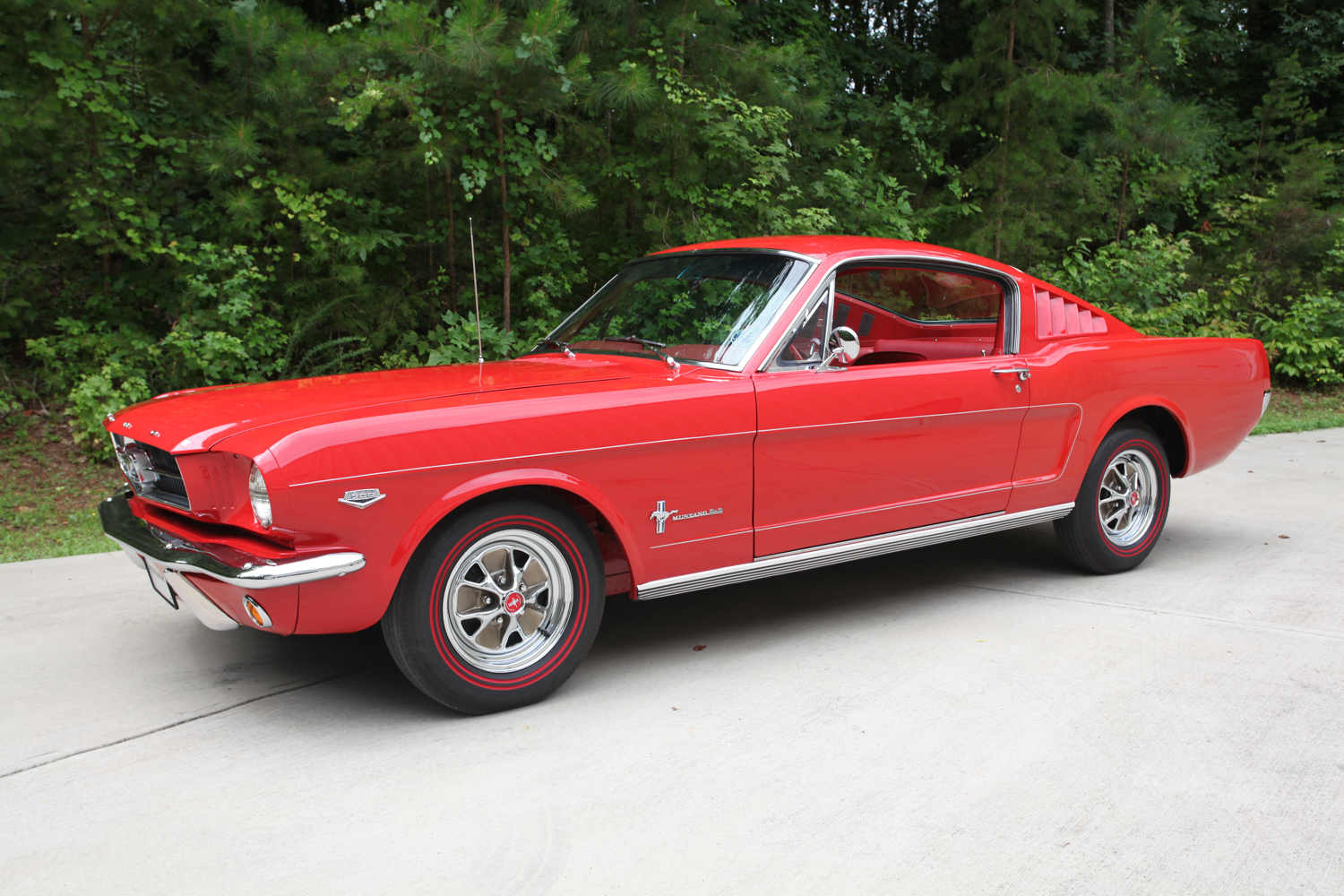
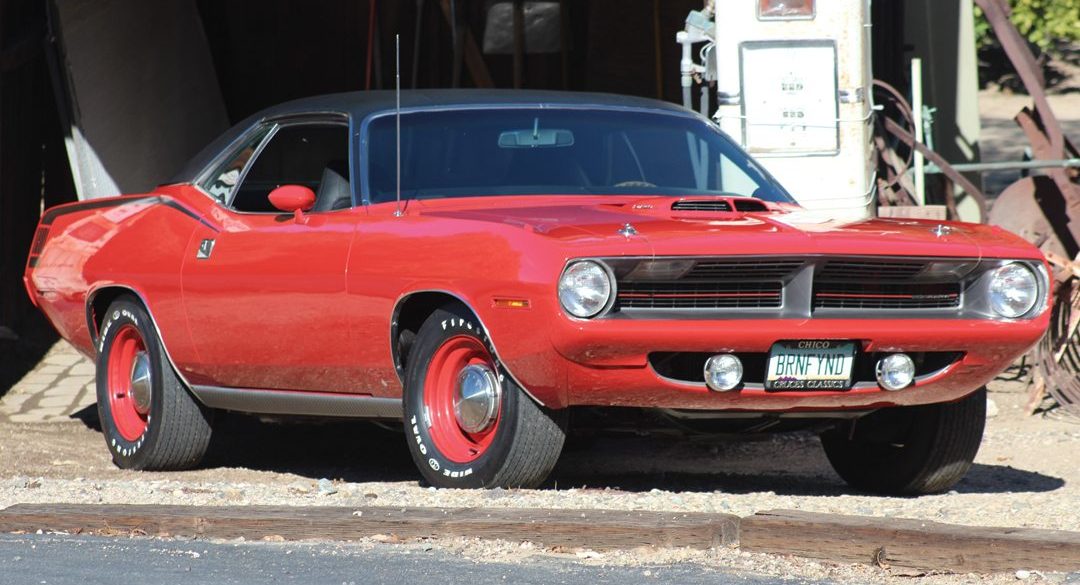
The Mustang went on sale on 17 April 1964 at the New York World's Fair, at $2,368 for a Falcon-based coupé with a long hood and a short deck, and sold a million in under two years, the fastest any car had; Hemsley's piece on the first fastback, serial number 1, is the archive's way in, with Mike Matune's Mustang, A Born Winner on the racing. Shelby built the GT350 from it for 1965, a stripped fastback with a 306-horsepower 289 that won the SCCA B-Production championship three years running, and the GT350H that Hertz rented to anyone with a licence, the Rent-a-Racer of Hemsley's history; the GT500 of 1967 put the 428 in it. In the Trans-Am, the sedan championship the SCCA started in 1966, Mustangs won the manufacturers' title in 1966 and 1967 with Jerry Titus for Shelby, lost to the Penske Camaros in 1968 and 1969, and won it back in 1970 with Parnelli Jones and George Follmer in Bud Moore's Boss 302s, the greatest season the series had; the archive's Trans-Am '67 and the Detroit Muscle and Trans-Am era page carry it. The Boss 429 was the homologation car for the NASCAR engine; the Mach 1, the Boss 351 and the 1971 big-body cars closed the first generation, and Shelby's association with Ford ended in 1970.
Every Shelby story on the site, newest first: the Cobras, the GT350s and the man.
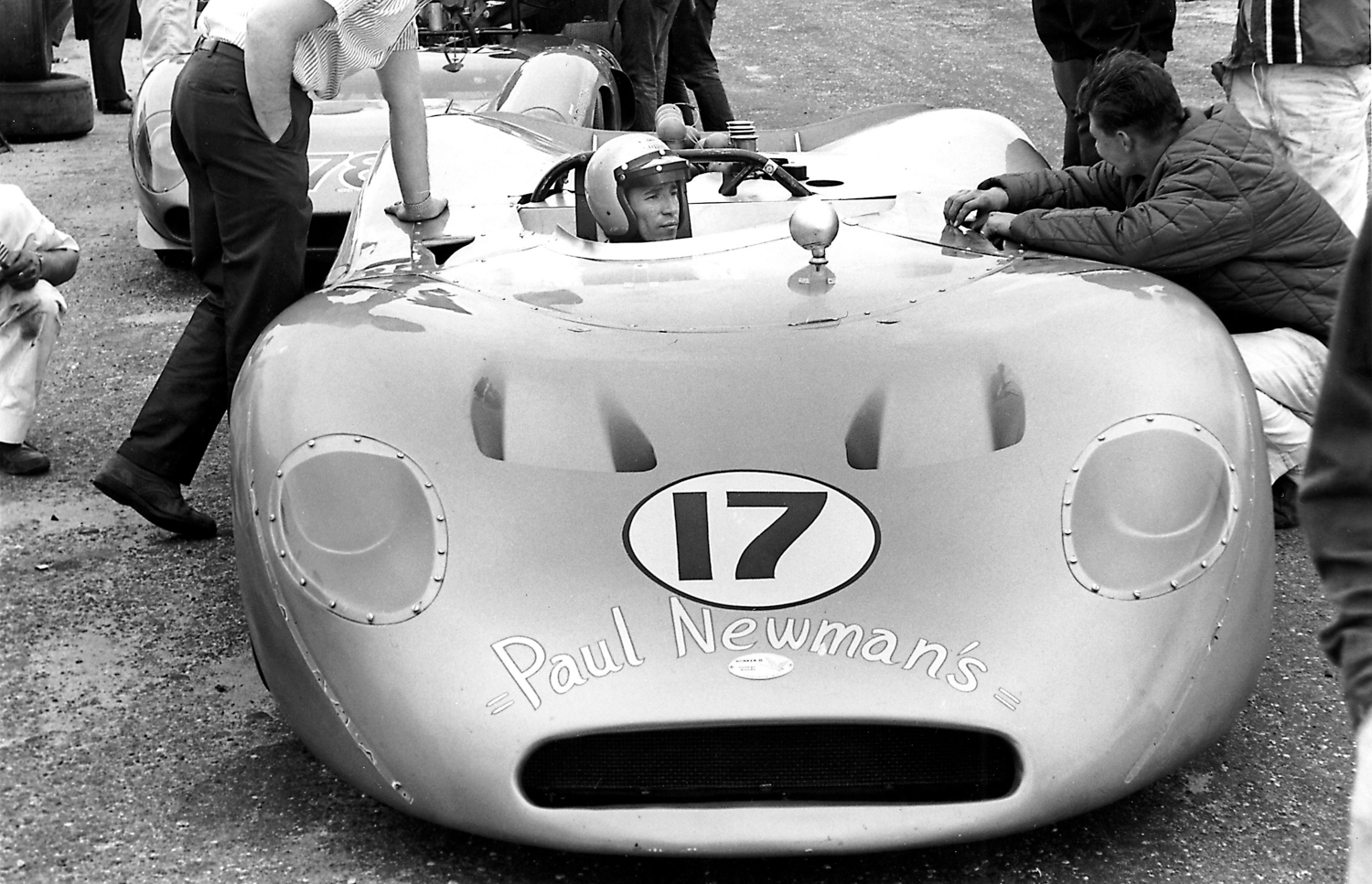
Ford's cheapest racing investment was its best. In 1963 Colin Chapman brought a Lotus 29 with a pushrod Ford V8 to Indianapolis and Jim Clark finished second to Parnelli Jones's roadster; in 1964 the four-cam Ford V8 arrived and Clark led until the tyres failed; and on 31 May 1965 Clark won the 500 in the Lotus 38, the first rear-engined and the first British car to win it, at a record 150.686 mph, with Ford engines in the first four places. A.J. Foyt won in 1967 with a Ford-engined Coyote, Richard Nisley's Wild Coyotes in the archive, and Mario Andretti in 1969 with the Ford-based Hawk; John Zimmermann's The American Jim Clark is the story of Bobby Marshman, who died testing a Lotus-Ford in 1964. The archive's Indianapolis 500 hub carries the 500s.
In Formula One the story is the Cosworth DFV, the 3-litre V8 Keith Duckworth designed and Ford paid £100,000 for at Walter Hayes's urging, which won on its first appearance in the back of Jim Clark's Lotus 49 at Zandvoort on 4 June 1967 and then 154 more Grands Prix through 1983, with Lotus, Matra, Tyrrell, McLaren, Brabham, Williams and the rest: twelve drivers' championships, ten constructors', and the whole kit-car era of Formula One that the Grand Prix History hub calls the Cosworth Years. The DFV's children won Le Mans too, in the Mirage of 1975 and the Rondeau of 1980, and its descendants, the DFX, won Indianapolis ten years in a row from 1978. The archive has the cars one by one, McDonough's Mirage M6, Mike Jiggle's Tyrrell 012, Patrick Quinn's Brabham BT6, Zimmermann's Three for the Show on the American constructors who used it, and the Lotus 49 on the Formula 1 page. Ford has been in and out of Formula One since, with the HB and Zetec-R engines of the 1990s, the Zetec-R carrying Schumacher to the 1994 title, the Jaguar Racing team of 2000 to 2004, and from 2026 as Red Bull's engine partner.
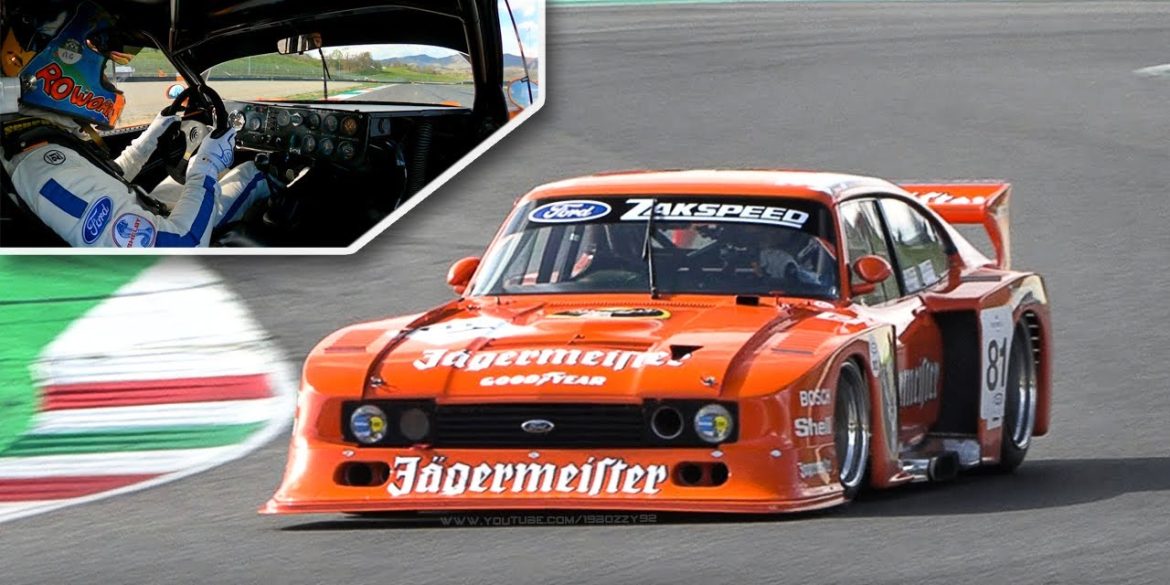
Ford of Europe was formed in 1967 by merging the British and German companies, and its first joint car, the Escort of 1968, became the most successful rally car of its generation: the Twin Cam and then the RS1600 with Cosworth's BDA engine won the London to Mexico World Cup Rally in 1970 with Hannu Mikkola, the RAC Rally eight times running from 1972, and the World Rally Championship for drivers with Björn Waldegård in 1979 and for makes the same year, before the Audi Quattro ended the rear-drive era. The Capri of 1969, Europe's Mustang, won the European Touring Car Championship in 1971 and 1972 as the RS2600 and fought BMW's CSL to a standstill in 1973 and 1974; Peter Collins's High Tech Tin-Tops and the archive's Capri stories cover the Cologne cars, and the Ford Cortina GT500 that Patrick Quinn drives in the archive won Bathurst in 1965 for Ford of Australia, whose Falcon GT-HO Phase III of 1971 was the fastest four-door in the world and the king of Mount Panorama.
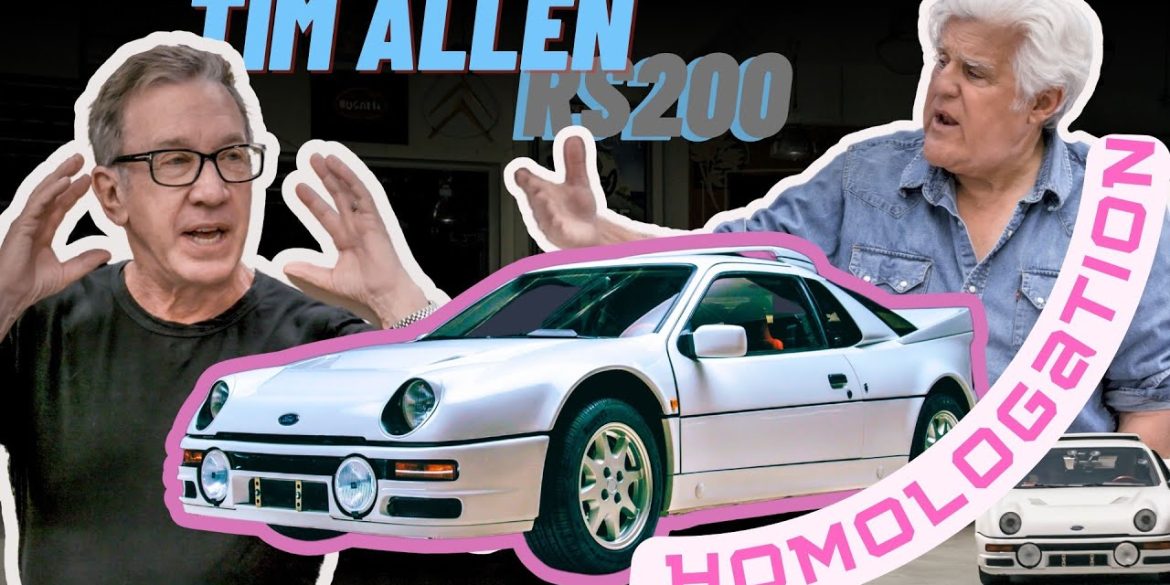
The 1980s brought the RS200, the mid-engined Group B car of 1986 that arrived as the formula was cancelled, and the Sierra RS Cosworth, the whale-tailed saloon of 1986 whose RS500 version won nearly every touring-car race it entered from 1987 to 1990 and the 1987 World Touring Car Championship; the Escort RS Cosworth of 1992 carried the engine into the Group A rally era and Ford's 1990s world championship wins. The archive covers these cars mostly as they come to auction, where the RS500s and RS200s now make the prices the 1960s cars made a decade ago, and in the Goodwood and Silverstone reports where the Cologne Capris and the Sierras race again.
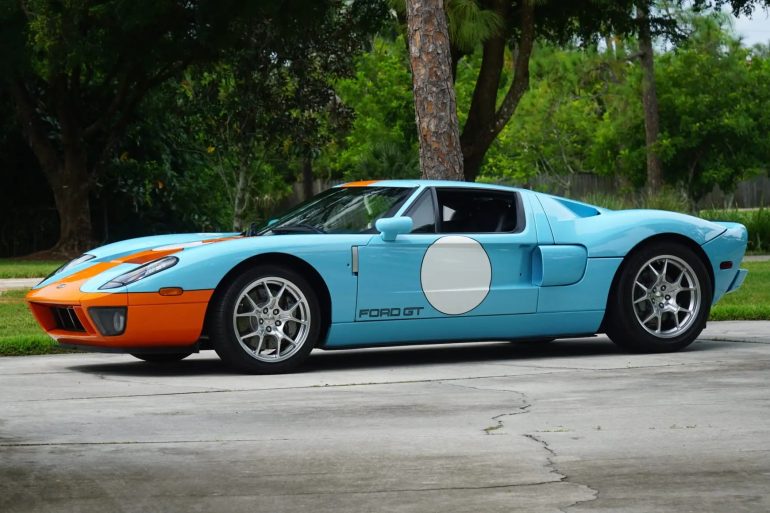
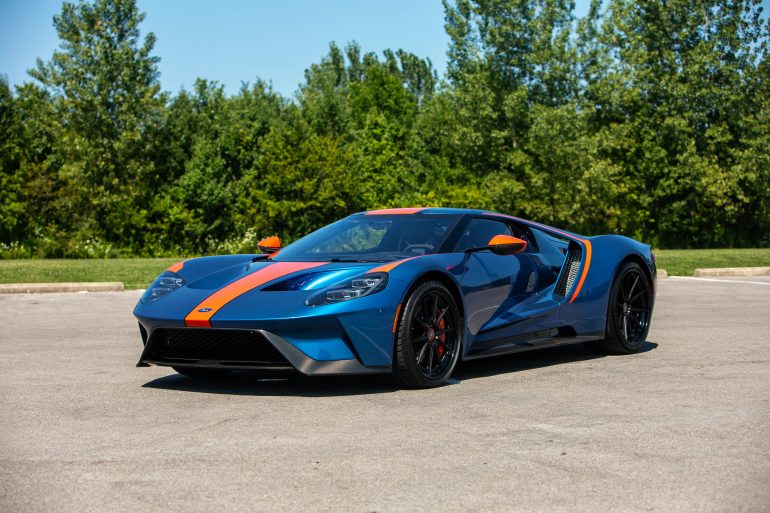
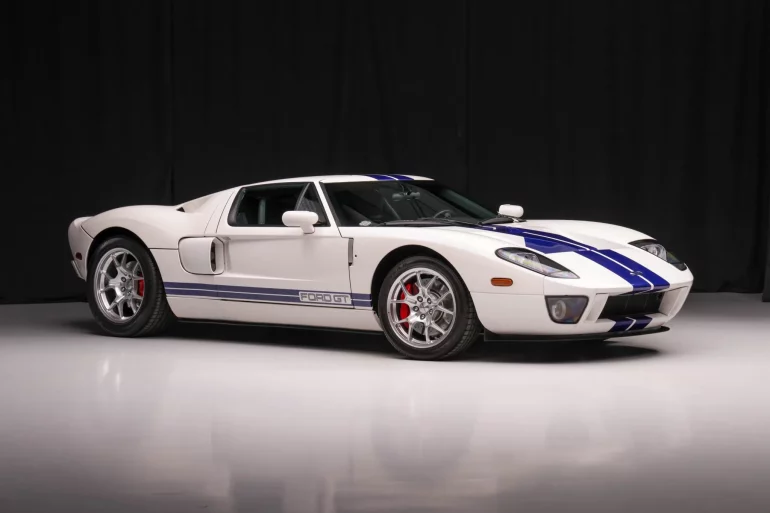
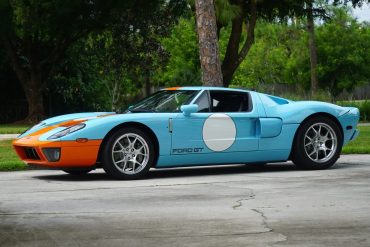
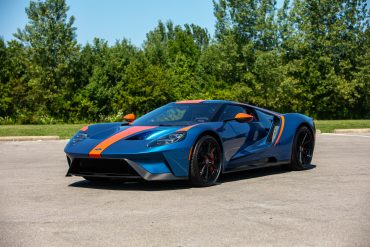
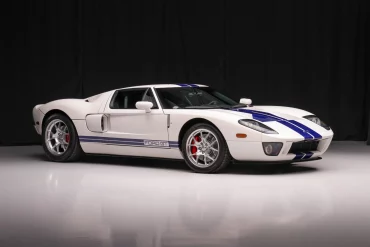
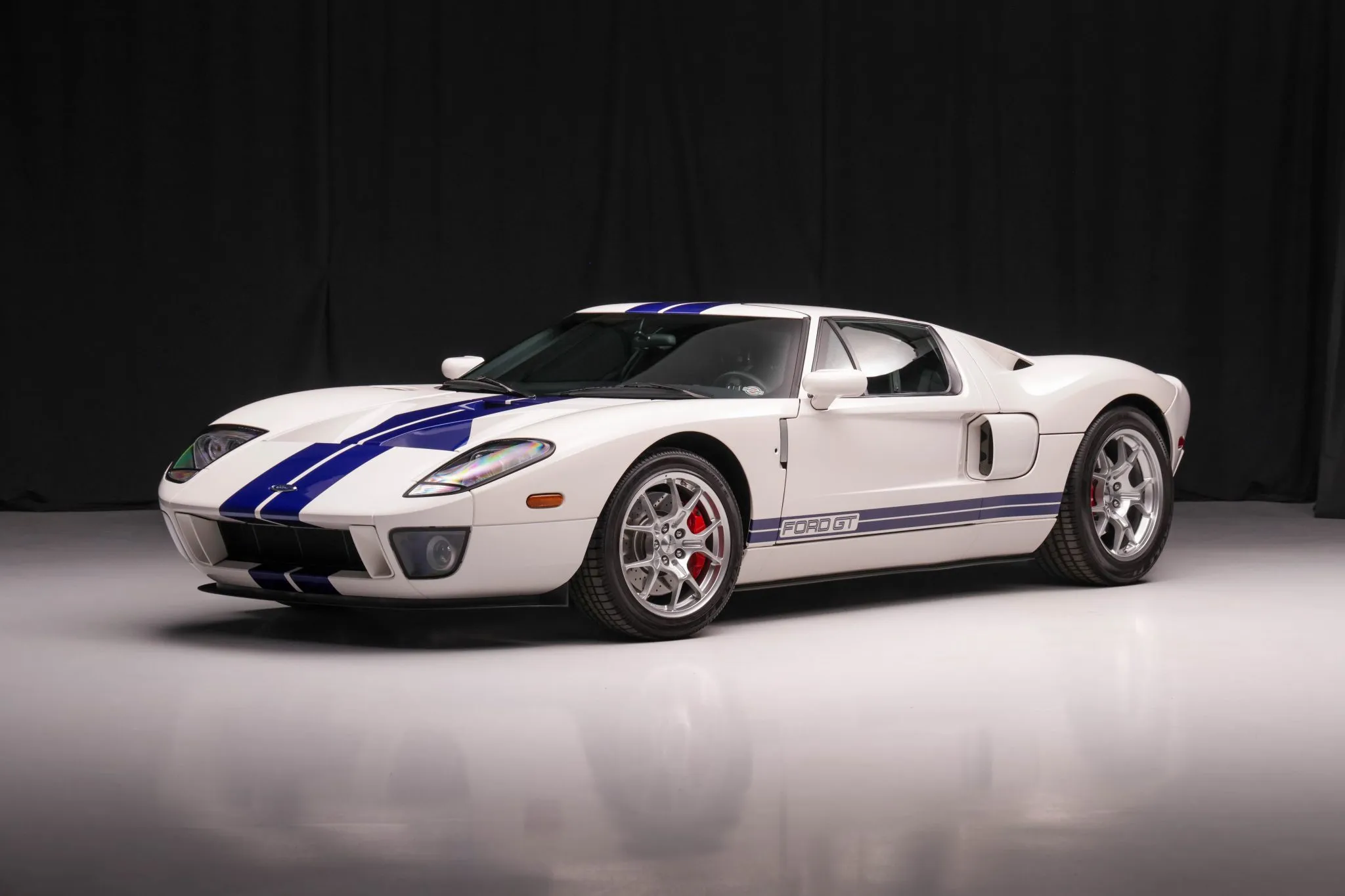
The Ford GT of 2005, Camilo Pardo's homage to the GT40 for the company's centenary, was a 550-horsepower supercharged 5.4-litre supercar with the old car's proportions on a modern aluminium spaceframe, 4,038 built in two years and now a collector car in its own right; the archive follows them from the Pebble Beach launch to the auction block. The second Ford GT, shown at Detroit in January 2015, was built to go racing: a carbon-fibre tub, a 3.5-litre twin-turbo EcoBoost V6 and a body shaped around the aerodynamics, with 1,350 road cars built from 2016 to 2022 and sold to approved buyers only. At Le Mans in June 2016, fifty years to the weekend after the Mk IIs' 1-2-3, the Chip Ganassi Ford GTs finished first and third in GTE Pro, Joey Hand, Dirk Müller and Sébastien Bourdais winning from the Ferrari 488 after a race-long fight; the programme ran through 2019 and won the IMSA GTLM championship. In 2024 the Mustang GT3 took Ford back to Le Mans in the GT3 era, sixty years after the first Mustang, and the Mustang GTD road car put a 800-horsepower supercharged V8 in a racing body for the Nürburgring record attempts. The archive's Ford GT stories, the Ford GT LM tribute of 2022 and the Mustang sixtieth-anniversary coverage carry the modern era, and the Ford GT (2005) and (2017) threads gather every car that has come to market.
Ford built cars in the millions, so the Model tags on this site are the ones the archive has something to say about: the Model T and Model A of the brass and vintage years; the Thunderbird; the Mustang, the archive's largest Ford thread, with the Boss 302 and Boss 429 beside it; the GT40, which has its own page under The Cars, and the two Ford GTs that followed it; the Galaxie, the Falcon, the Torino and the Bronco of the American 1960s; the Lotus Cortina, the Cortina, the Escort, the Capri and the RS200 of Ford of Europe; and the Fairlane. Shelby's cars, the Cobra 289 and 427, the Daytona Coupe, the King Cobra, the GT350, GT350R and GT500, are Ford-powered and Ford-financed and are gathered on the Shelby threads and the Cobra page. The nine cards below are the ones with most to read behind them, and the Model tag opens every story on each.
Nine the archive has most to say about; each links to every story on the site about that car, or to its own page.
Single-car and chassis stories: the Mustangs, the GT40s, the Thunderbirds, the Cortinas and the cars that surface at auction.
Ford's racing record is scattered across the archive's hubs and eras, and this chapter is the index. Le Mans is on the Le Mans hub and the GT40 page: four wins, 1966 to 1969, the last two for John Wyer's Gulf GT40 chassis 1075, which won in 1968 with Pedro Rodríguez and Lucien Bianchi and in 1969 with Jacky Ickx and Jackie Oliver by about 120 metres from Hans Herrmann's Porsche, the closest finish there had been, and the GTE win of 2016. Indianapolis is on the Indianapolis 500 hub: Clark in 1965, Foyt in 1967, Andretti in 1969, and the DFX decade. The Trans-Am and the NASCAR aero cars, the Torino Talladega and the Mercury Cyclone Spoiler II of 1969 and David Pearson's championships, are on the Detroit Muscle and Trans-Am era page. The Can-Am, where Ford's engines never quite worked, is Karl Ludvigsen's An Incompatible Marriage and the Can-Am era page. Formula One is on the Formula 1 page and the Grand Prix History hub's Cosworth Years. The Racing (Ford) feed below gathers the race reports and profiles with a Ford in them, from the 1930s Monte Carlos to this year's Goodwood.
Race profiles and reports with a Ford in them, newest first.
Henry Ford, Edsel Ford and Henry Ford II run through the company's story and the archive's; Lee Iacocca, who sold the Mustang and was fired in 1978; Donald Frey and Hal Sperlich, who built it; Leo Beebe and Jacques Passino, who ran Total Performance. The racing people are better covered: Carroll Shelby, in his own words and remembered, is the archive's most-written-about Ford man; Ken Miles, Phil Remington, Roy Lunn and John Wyer built and ran the GT40s; Dan Gurney, A.J. Foyt, Bruce McLaren, Chris Amon, Denny Hulme, Pedro Rodríguez, Jacky Ickx and Lloyd Ruby drove them; Jim Clark and Colin Chapman took Ford to Indianapolis and Keith Duckworth gave it the DFV; Parnelli Jones, George Follmer, Bud Moore and Jerry Titus won the Trans-Ams; Bob Bondurant and Pete Brock the GT championship; Jack Sears, Sir John Whitmore, Hannu Mikkola and Björn Waldegård the European titles. Each name links to every story on the site about them, and the People page gathers the portraits.
The Fords, the Shelbys, the drivers and the engineers, in profiles and interviews.

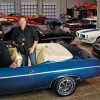
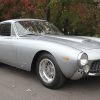
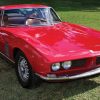
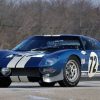
The collector market for Fords has three tiers. At the top are the racing cars and the Shelbys: GT40s at $5–10 million and more for the works cars, Daytona Coupes above $7 million, 427 Cobras at $1–2 million and 289s below that, Mk IV and Mk II cars rarely offered at all; the archive's auction reports have followed every one since 2008. In the middle are the Mustangs and the Ford GTs: Boss 429s and GT350Rs in the hundreds of thousands, the 1965–66 GT350s and the Hertz cars behind them, the 2005 Ford GT at $300,000–500,000 and the 2017 car at $800,000 and up as the no-sale clauses expire, and the rare Mustangs, the serial-number cars and the Bullitt car, which made $3.74 million in 2020, the most for a Mustang. At the base are the Thunderbirds, the early V8s and the Model As and Ts, the cars that a new collector can still start with and that the archive's Best Sports Cars for New Collectors recommends. The Auctions (Ford) and For Sale (Ford) threads below are the live market; the Market page has the auction calendar and the record prices.
Auction previews and results for Fords, newest first.
Fords offered by dealers and collectors, newest first.
The archive's Ford galleries run from the Goodwood Revival, where the Lotus Cortinas and Galaxies race the St Mary's Trophy and the GT40s the Whitsun Trophy, to the Monterey Reunion, the Amelia Island and Pebble Beach lawns where the Thunderbirds and the Lincolns are judged, the Shelby American reunions, and the Le Mans Classic, where more GT40s race now than did in period. The Galleries (Ford) feed below gathers them.
Ford galleries from Goodwood, Monterey, Amelia and the Shelby reunions.

Founded 16 June 1903; the Model T 1908–27, 15,007,033 built; the flathead V8 1932–53; the Mustang's first million by March 1966, ten million by August 2018. Le Mans outright wins 4 (1966–69), class win 2016; Indianapolis 500 wins with Ford engines 1965 (Clark), 1967 (Foyt), 1969 (Andretti) and the DFX years 1978–87; Cosworth DFV Grand Prix wins 155 (1967–83), drivers' titles 12, constructors' 10; Trans-Am manufacturers' titles 1966, 1967, 1970; World GT Championship 1965 (Shelby Cobra Daytona); World Rally Championship for makes 1979 and 2006–07; World Touring Car Championship 1987 (Sierra RS500); British Saloon Car Championship 1963 (Galaxie), 1964 (Lotus Cortina) and the Sierra years. Record prices: the Bullitt Mustang $3.74 million (2020); GT40 P/1074 $11 million (2012, then the record for an American car); Cobra CSX2000, Shelby's first, $13.75 million (2016).
Short answers, with the long ones above.
The Ford Motor Company was incorporated in Detroit on 16 June 1903 by Henry Ford and eleven investors, Henry Ford's third attempt at a car company. The Model T followed in October 1908 and the moving assembly line in 1913.
Four times outright, in 1966, 1967, 1968 and 1969, with the GT40 Mk II, the Mk IV and then the Gulf GT40, plus the GTE Pro class win of 2016 with the Ford GT. The four in a row made Ford the only American manufacturer to win the race until 2016's class victory extended the record.
A mid-engined endurance racer built from 1964 to beat Ferrari at Le Mans after Enzo Ferrari backed out of selling his company to Ford in 1963. It was forty inches high, hence the name, used Ford's 4.7- and 7-litre V8s, and won Le Mans in 1966, 1967, 1968 and 1969. The GT40 page under The Cars has every chassis and race.
The 3-litre V8 Formula One engine that Ford paid Cosworth £100,000 to design in 1966. It won its first race, the 1967 Dutch Grand Prix in Jim Clark's Lotus 49, and 155 Grands Prix in all by 1983, more than any other engine, with twelve drivers' championships.
The racing cars: a works GT40 or a Shelby Daytona Coupe is worth $7–10 million and more, the first Cobra made $13.75 million in 2016, and the Bullitt Mustang $3.74 million in 2020, the record for a Mustang. The Ford GT of 2017 is the most valuable modern Ford.
Henry Ford II's 1962 decision to break the industry's ban on factory racing and compete everywhere: NASCAR with the Galaxie, Indianapolis with the Lotus-Ford, Le Mans with the GT40, the Trans-Am with the Mustang and the rallies with the Falcon and Cortina. It ran until Ford withdrew from racing in November 1970.
Shelby American's cars, the Cobra, the Daytona Coupe, the GT350 and GT500, were Ford-engined and Ford-financed and Shelby ran Ford's GT40 programme in 1965 and 1966. On this site they have their own threads under the Shelby name and the Cobra has its own page.
With Roger Dixon's Route to '66 and Le Mans '66, then Hemsley's Mustang serial number 1 and Hertz Rent-a-Racer, Ludvigsen's Ford and the Can-Am, and the Model tags for the car you care about.
The whole archive on one thread, newest first.