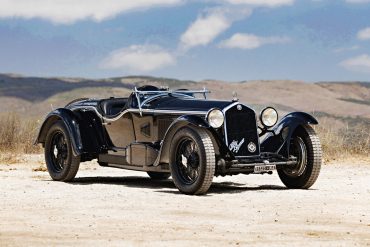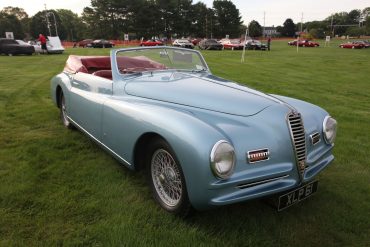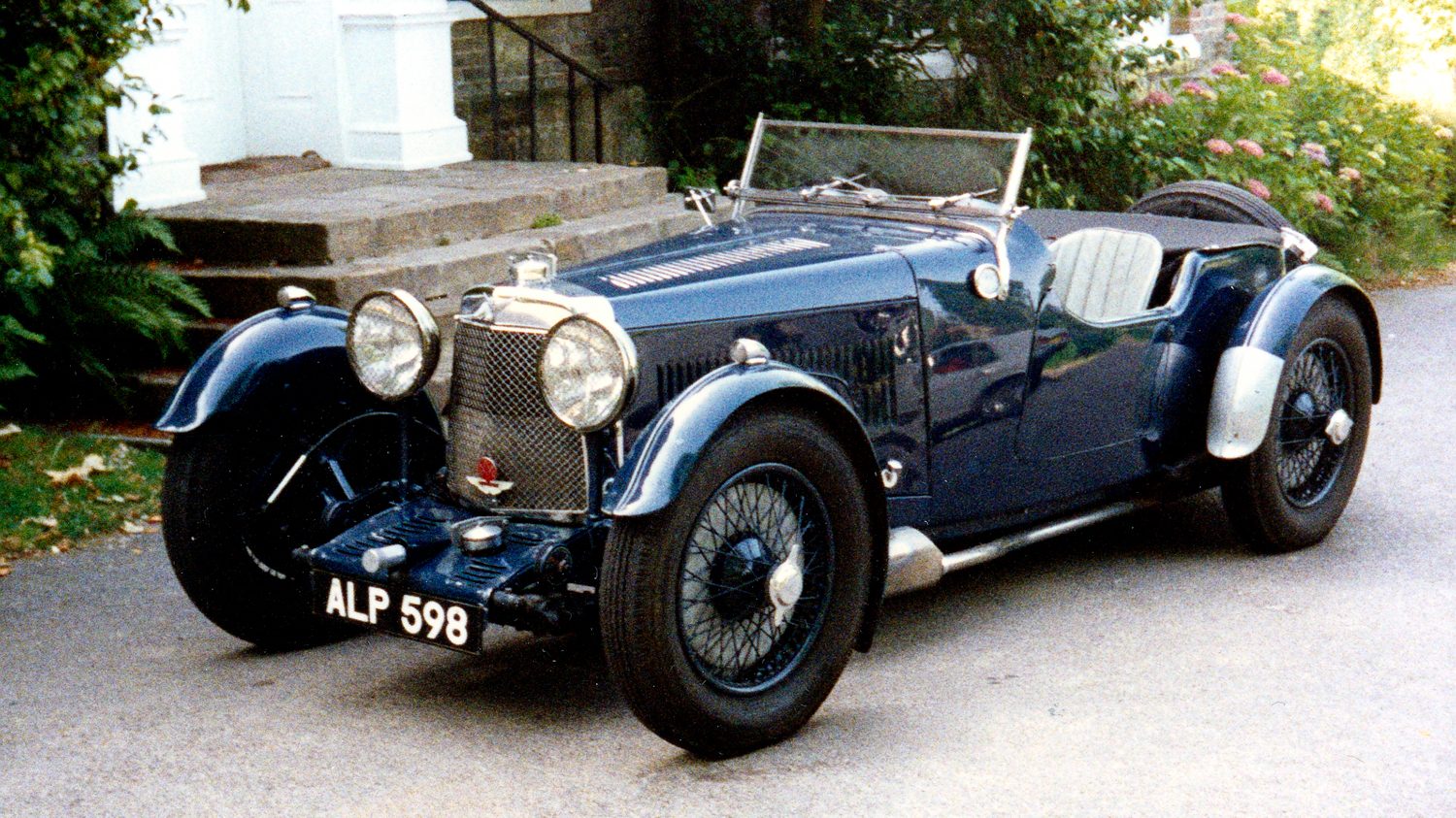
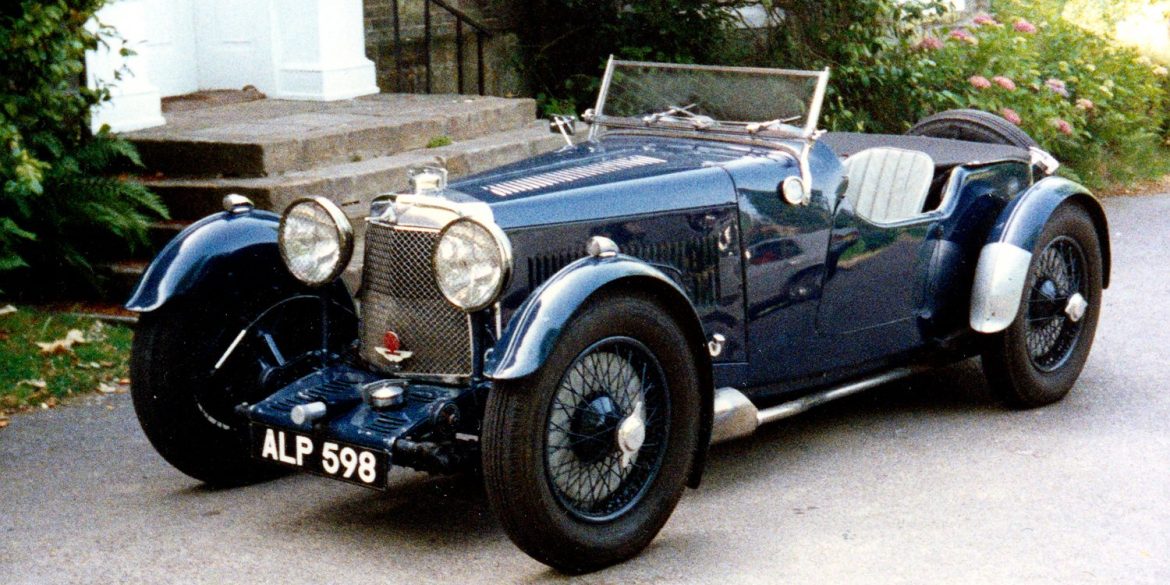
Coys of Kensington called ALP 598 "one of the prettiest of all the famous Le Mans cars." Karl Ludvigsen saw the Prussian Blue 1933 Aston Martin in their window one December Saturday and bought it six weeks later.

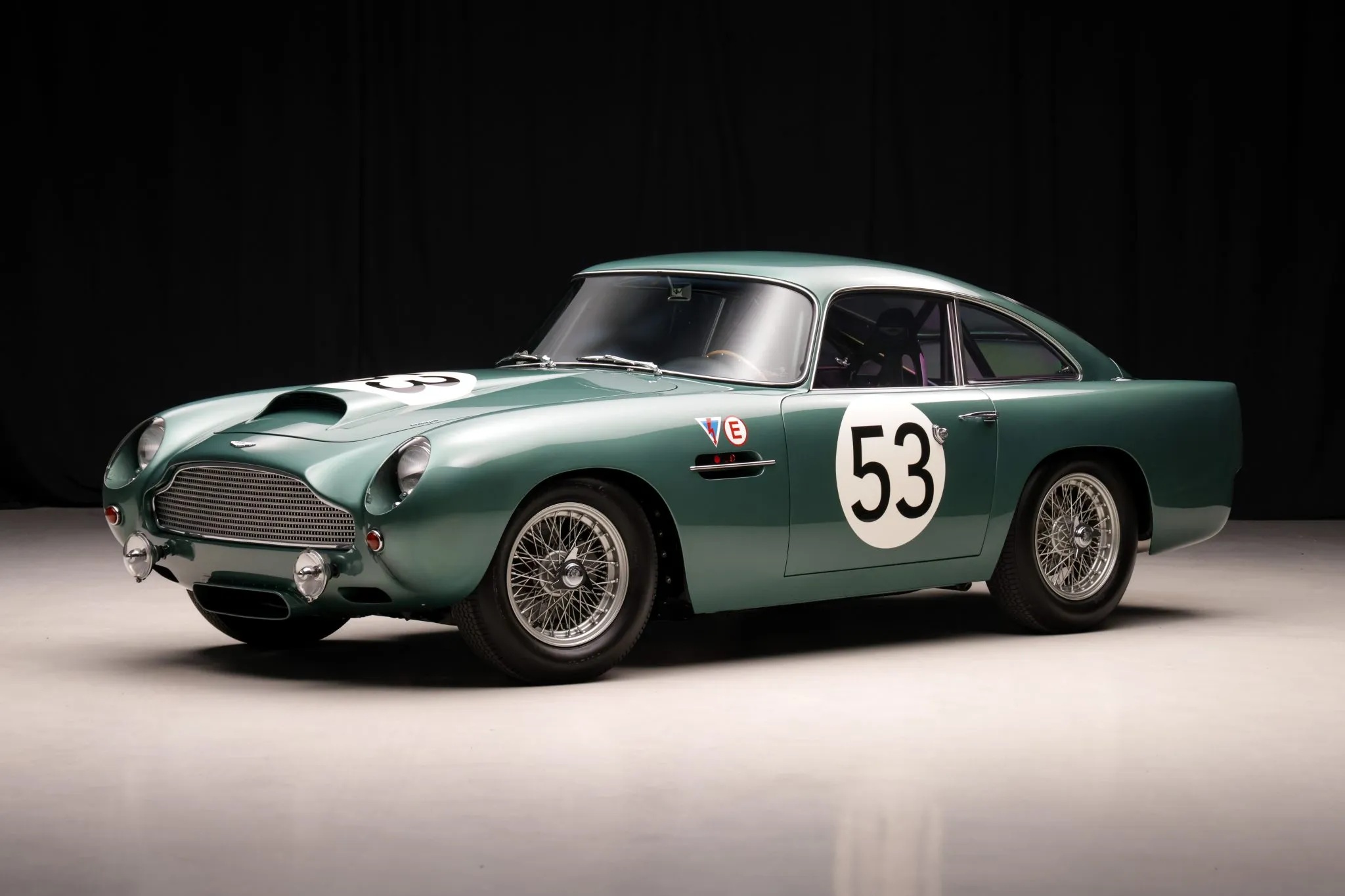
A small English company that has gone bankrupt seven times and never stopped racing: Lionel Martin's hillclimb specials, Bertelli's Le Mans cars of the 1930s, David Brown's DB2s and DB3Ss, the DBR1 that won Le Mans and the world championship in 1959 with Moss, Shelby and Salvadori, the DB4 GT Zagato, James Bond's DB5, the V8 Vantage, the Ford years and the DB7, the DBR9s, the One-77 and the Valkyrie that races at Le Mans now. The archive has 260 Aston Martin stories, from Vintage Racecar's 2009 Le Mans anniversary issue to this year's Valkyrie, and this page puts them in order.
The pieces to start with
Eight pieces that explain the marque: Ludvigsen's 1933 Le Mans and three-litre years, McDonough's DBR1, Moss on Aston Martin, Jiggle's DBR4/2, Annis's coachbuilt Astons, Minasian's DB4 and the V550 supercar killer.
Coys of Kensington called ALP 598 “one of the prettiest of all the famous Le Mans cars.” Karl Ludvigsen saw the Prussian Blue 1933 Aston Martin in their window one December Saturday and bought it six weeks later.
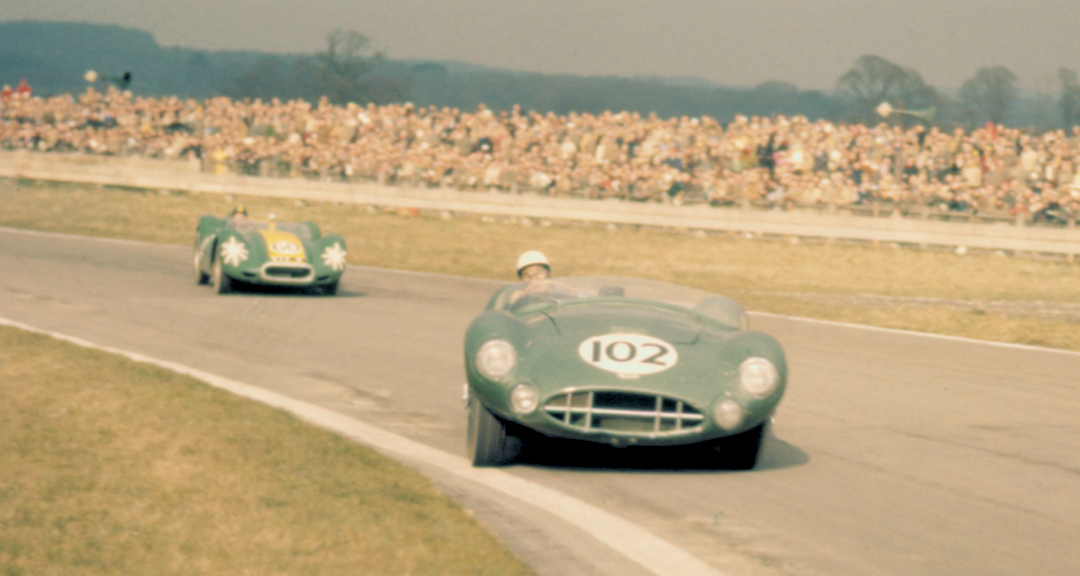
On 26 May 1957 Tony Brooks and Noel Cunningham-Reid beat Italy’s best at the Nürburgring in David Brown’s Aston Martin, the first English car to challenge the Germans and Italians at the road races. Karl Ludvigsen on the 1951–59 campaign.
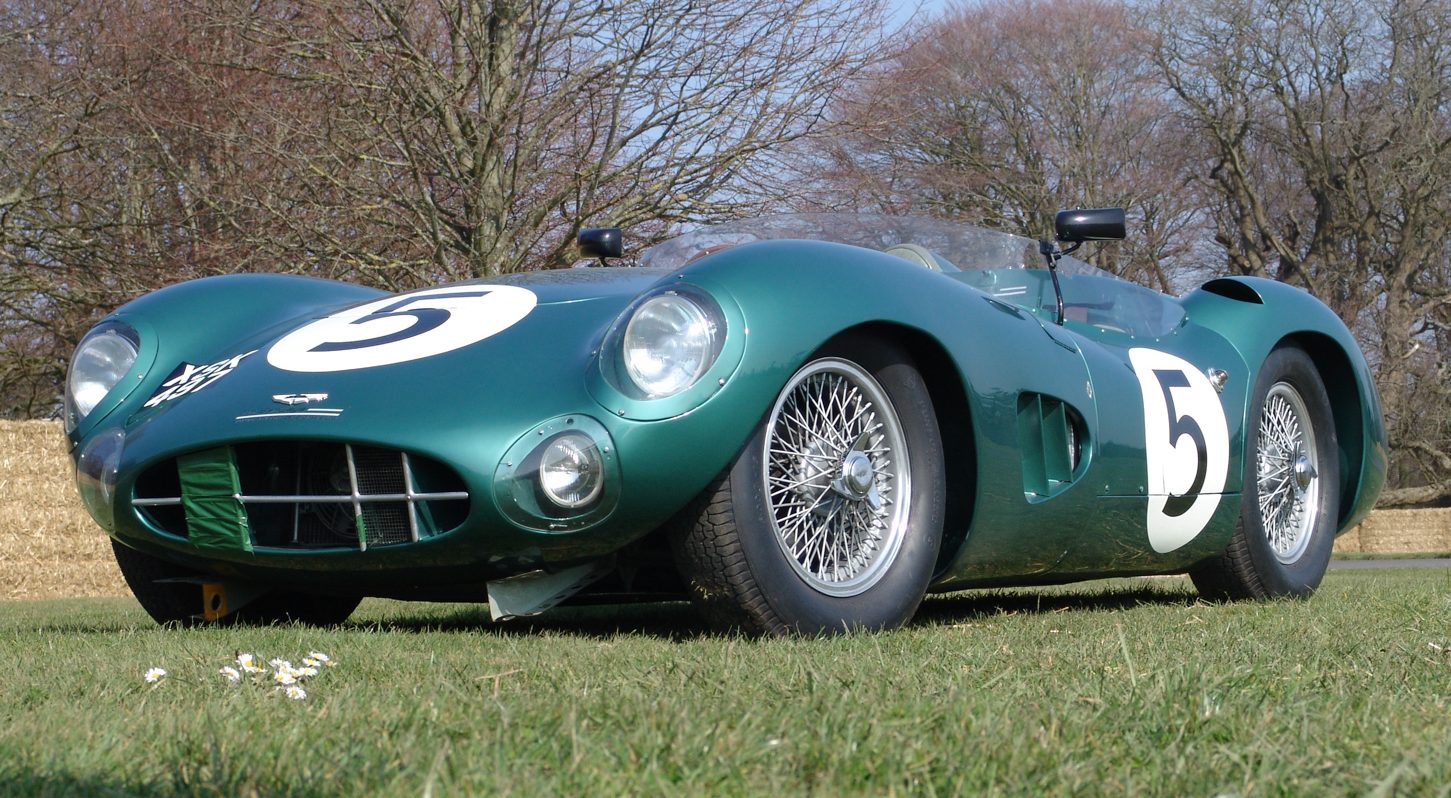
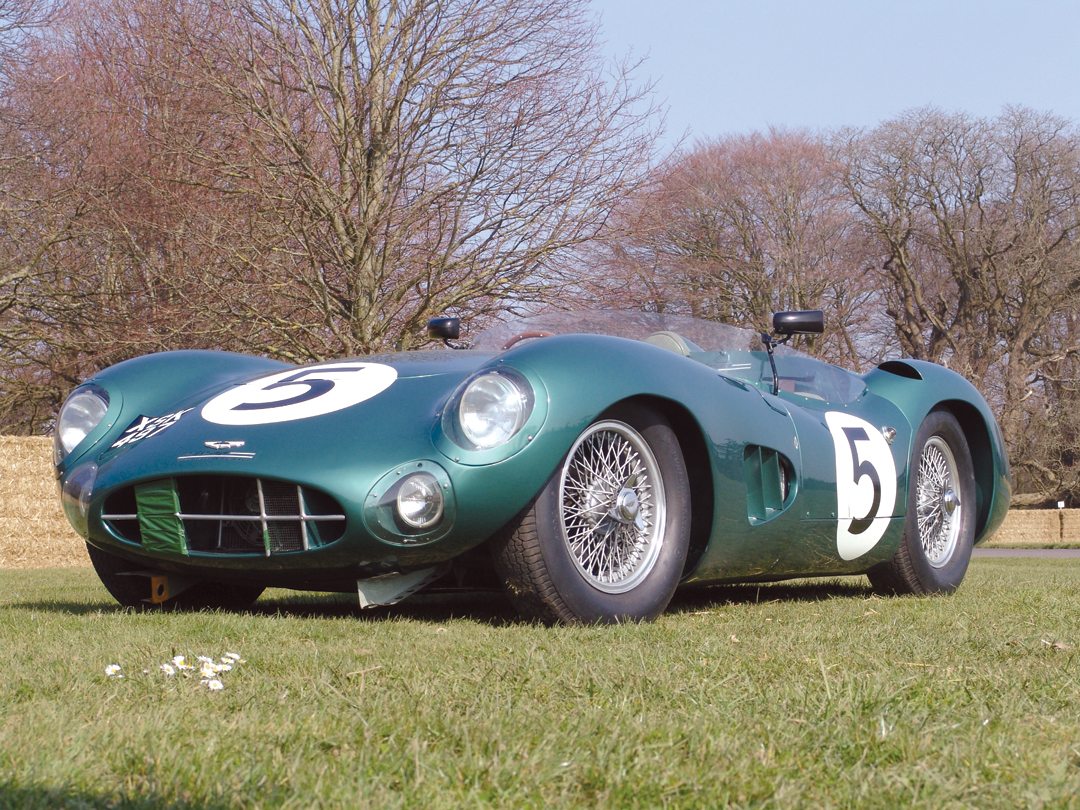
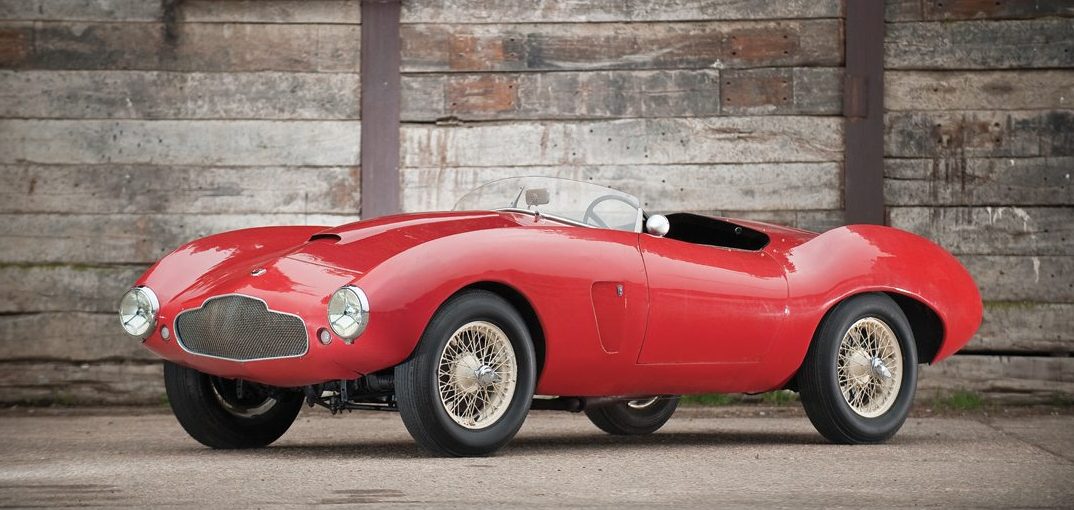
Aston Martin first went to Le Mans in 1928 with LM1 and LM2, 1495cc four-cylinder cars that both retired. Ed McDonough drives DBR1/2, built in 1957, winner of the 24 Hours in 1959 and raced almost without pause ever since.
Stirling Moss shared an Aston DB2 with Lance Macklin on the 1950 Daily Express rally and blew the parking tests. John Wyer signed him for 1956 after a freezing Goodwood test and a lap record; the signing-on fee was £50.
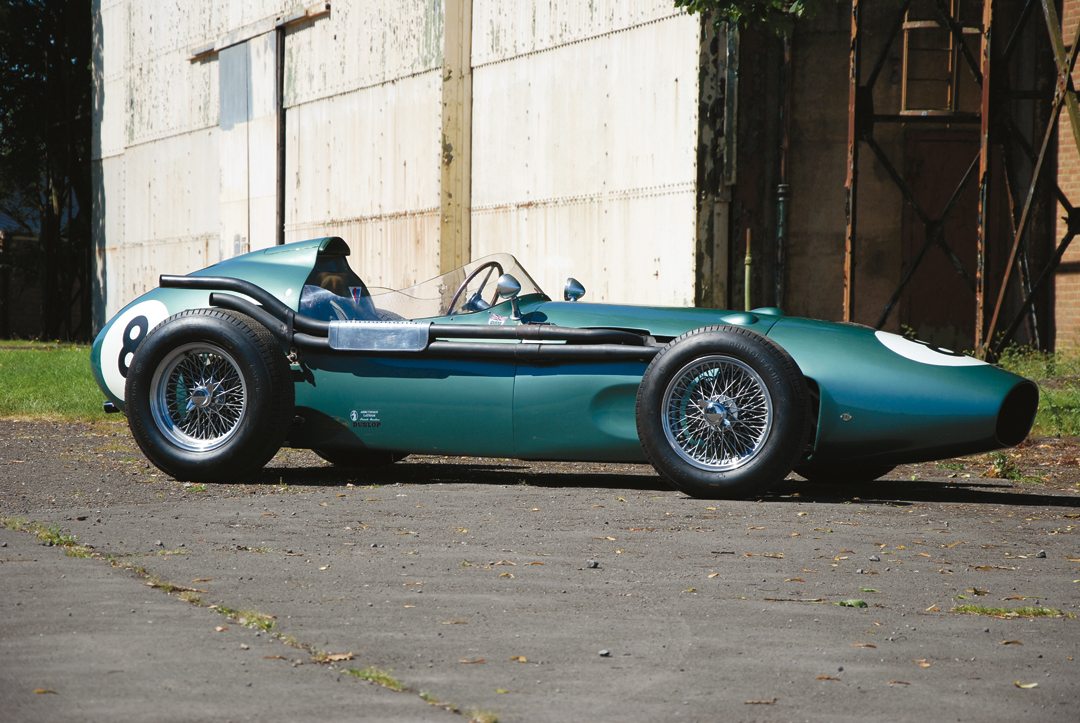
An Aston Martin Grand Prix car was first mooted in the early 1950s; the DBR4 did not race until 1959. Mike Jiggle borrows Mr. Micawber on procrastination to explain how a Le Mans-focused company arrived too late to Formula One.
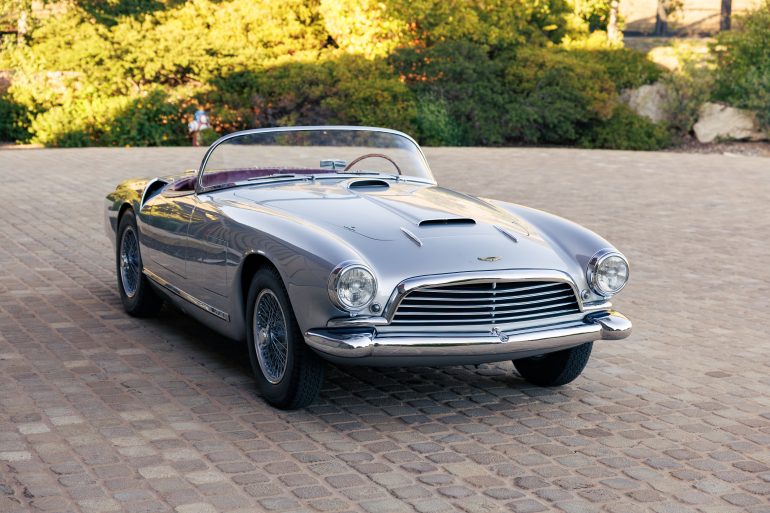
Short of money after the war, small British makers sent rolling chassis to Italian carrozzerie for one-off halo bodies. Casey Annis on how Aston Martin, founded by Bamford and Martin in 1914, used the tailoring in the 1950s and 1960s.
David Brown’s purchase of Lagonda brought W.O. Bentley’s 2.6-liter twin-cam six; the DB4 added Touring’s licensed Superleggera body and Tadek Marek’s 3.7-liter engine. By Design on the two Italian readings of the DB4 shape.
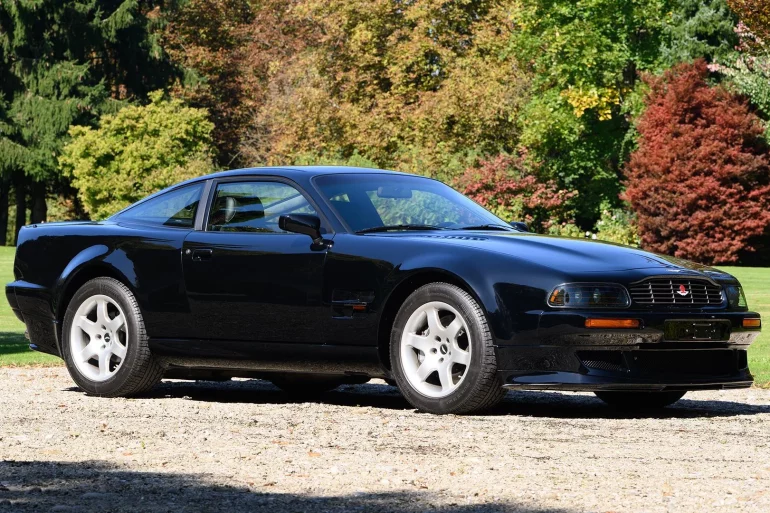
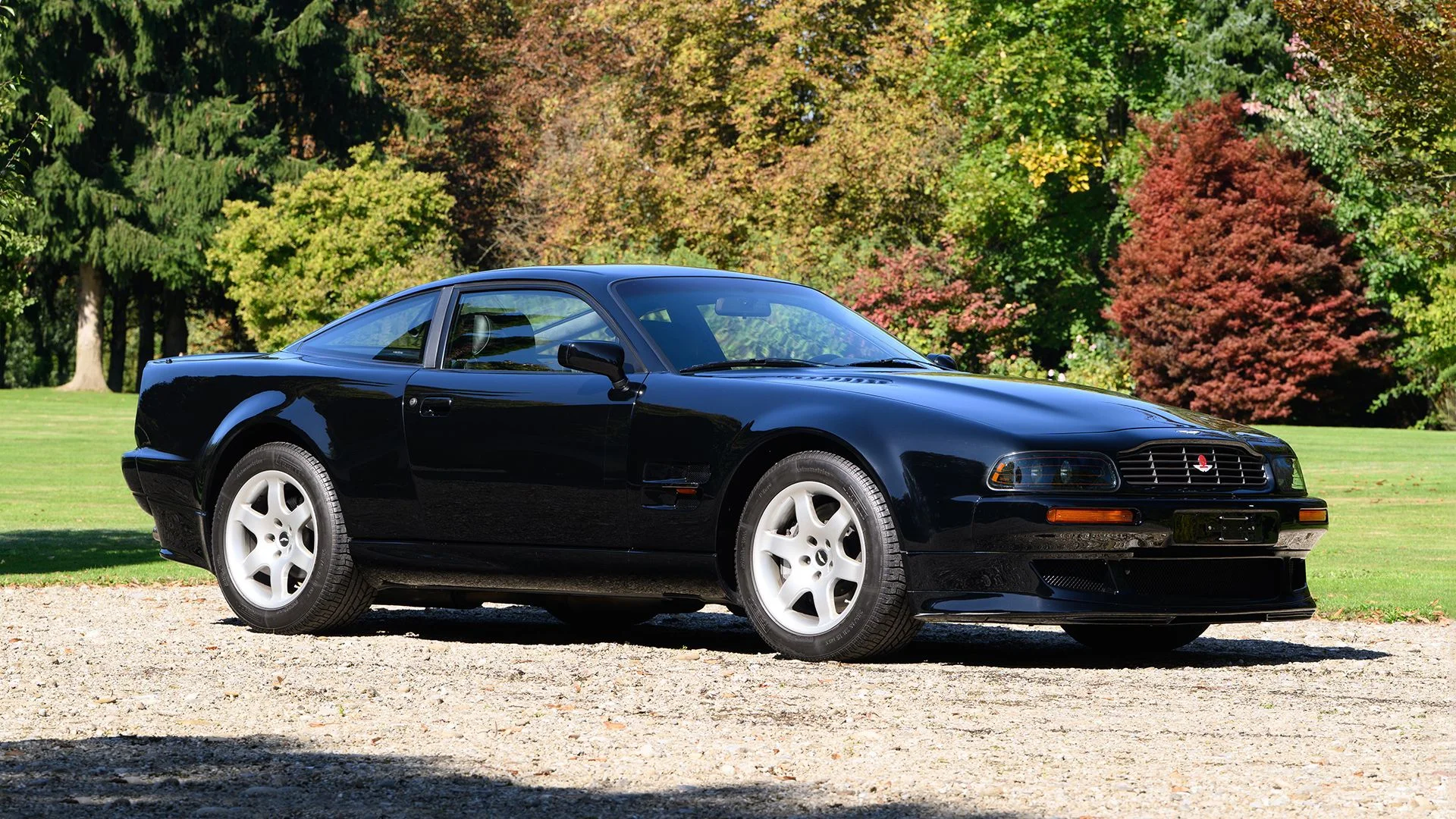
Gauntlett couldn’t afford a clean-sheet car, so the 1989 Virage reworked the 1960s DBS bones with Callaway heads and 330 hp. Birmingham 1992 brought the twin-supercharged Vantage: nearly 150 hp more than a Porsche Turbo, only the McLaren F1 stronger.
The newest long-form writing on Aston Martin, as it is published.


Aston Martin is the British maker of grand touring cars founded in London in 1913 by Lionel Martin and Robert Bamford and named for the Aston Clinton hillclimb Martin won; it has built cars at Feltham, Newport Pagnell, Bloxham, Gaydon and St Athan, changed hands a dozen times, and since 1947 has carried the initials of David Brown, the Yorkshire tractor-maker who owned it for twenty-five years, on its road cars. It is the marque of the DB4, DB5 and DB6 of the 1960s, the car James Bond has driven since Goldfinger, the Vanquish and DB9, the DBX and the Valkyrie, and of a racing history that runs from Le Mans in 1928 to the Hypercar class there now, with one outright win, in 1959, and the World Sportscar Championship the same year.
The record is why the name matters. Aston Martin raced at Le Mans every year from 1931 to 1964, won the Index of Performance in 1950, finished third in 1951 and second in 1955 and 1956, won outright on 21 June 1959 with Roy Salvadori and Carroll Shelby, won the Nürburgring 1,000 km three years running and the Tourist Trophy with Stirling Moss, and has GT class wins at Le Mans from 2007 to 2022 and nineteen podiums there in all, the latest in June 2026. Its DBR1 is the most expensive British car ever sold, at $22.55 million, and its DB4 GT Zagato the second. The archive's Aston Martin coverage runs from the 1929 LM3 to the Valkyrie's fourth place at Spa in May 2026, and the chapters below follow it.
Lionel Martin and Robert Bamford sold Singers from a shop in Kensington and registered Bamford & Martin Ltd on 15 January 1913; the first car, a 1908 Isotta Fraschini chassis with a Coventry-Simplex engine, became "Aston-Martin" after Martin's wins at the Aston Clinton hillclimb, and the first car built as one, nicknamed "Coal Scuttle", ran in 1915. Count Louis Zborowski paid for twin-cam Grand Prix cars in 1922, Martin went bankrupt in 1924 and the company passed in 1926 to Bill Renwick and Augustus Cesare "Bert" Bertelli, who moved it to Feltham and built the 1.5-litre cars on which its reputation rests: the International, the Le Mans and the Ulster. Bertelli raced them himself at Le Mans from 1928, won the Rudge-Whitworth Biennial Cup there in 1932 and 1935, finished third overall in 1935 with the Ulster of Charles Martin and Charles Brackenbury, and took the team prize at the Tourist Trophy; Mike Jiggle's First Lightweight profiles LM3, the 1929 team car, Karl Ludvigsen's The Car That Made Aston Martin is his own 1933 Le Mans, ALP 598, Ed McDonough's Artful Aston is the 1939 two-litre monoposto Speed Model, and J. Michael Hemsley's Red Dragon the 1936 Speed Model. Gordon Sutherland bought control in 1932, the two-litre 15/98 followed in 1936, and the Atom saloon prototype of 1939, with its spaceframe and independent front suspension, was the car that David Brown drove in 1946 and decided to buy the company for.
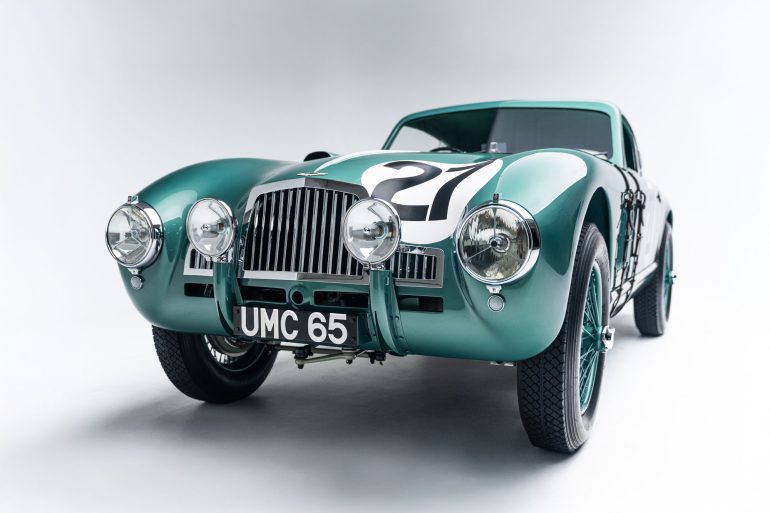
David Brown, who made gears and tractors in Huddersfield, answered a small advertisement in The Times and bought Aston Martin in February 1947 for £20,500, then Lagonda for £52,500 for the sake of W.O. Bentley's 2.6-litre twin-cam six, and put the two together in the DB2 of 1950, after the DB1 had won the 1948 Spa 24 Hours with St John Horsfall and Leslie Johnson. John Wyer ran the racing: DB2s finished fifth and sixth at Le Mans in 1950 and won the Index of Performance, and third in 1951; Eberan von Eberhorst's DB3 of 1951 won the Goodwood Nine Hours in 1952, and Willie Watson's lighter DB3S of 1953 won the Tourist Trophy and the Goodwood Nine Hours, and was second at Le Mans in 1955, Peter Collins and Paul Frère, and 1956, Moss and Collins. The DB2/4 of 1953 added the hatchback and the Mk III the DB3S-style grille, Tickford's works at Newport Pagnell were bought in 1955 and became the home of the marque for fifty years, and the coachbuilt DB2s and DB2/4s by Graber, Bertone, Touring and Vignale are Casey Annis's Savile Row. Art Evans's The DB Era, Karl Ludvigsen's The Aston Martin that Made Good, on the three-litre campaign from 1951 to 1959, Stirling Moss's own account of his Aston Martin years and Casey Annis's memoir of his $15,000 DB2 carry the period; the Model threads on the DB2, DB2/4, DB3 and DB3S have the cars.
The cars and the racing, year by year, with the archive's story of each linked. Car names link to every story on the site about that model.
| Year | The cars | The racing | In the archive |
|---|---|---|---|
| 1913 | Bamford & Martin, 15 January | Lionel Martin's Singer wins at Aston Clinton; the first car in 1915 | The Aston Legend |
| 1922 | Grand Prix cars | Count Zborowski's money; the French Grand Prix at Strasbourg | Mike Lawrence: Aston |
| 1926 | Renwick & Bertelli | Martin bankrupt; Bertelli and Renwick take over and move to Feltham | |
| 1928–29 | International · LM1 to LM3 | Bertelli's first Le Mans; the lightweight team cars | LM3 |
| 1932–33 | Le Mans | The Biennial Cup at Le Mans; Gordon Sutherland buys control; the 1.5 Litre Le Mans model | The Car That Made Aston Martin |
| 1935 | Ulster | Third overall at Le Mans, Martin and Brackenbury, and the Biennial Cup again | Le Mans hub |
| 1936–39 | 15/98 · Speed Model · Atom | The two-litre cars and the monoposto; the Atom prototype David Brown will drive | Red Dragon · Artful Aston |
| 1947 | David Brown buys Aston Martin for £20,500 in February and Lagonda for £52,500 | David Brown | |
| 1948 | DB1 | Spa 24 Hours won by Horsfall and Johnson | |
| 1950–51 | DB2 | Bentley's six in Feeley's coupé; fifth and the Index at Le Mans, third in 1951; Wyer runs the team | Aston Martin's DB2 · John Wyer |
| 1952–53 | DB3 · DB3S · DB2/4 | The Goodwood Nine Hours twice and the 1953 Tourist Trophy; the hatchback DB2/4 | The DB Era · Savile Row |
| 1955–56 | DB3S | Second at Le Mans both years, Collins and Frère, then Moss and Collins; Tickford's Newport Pagnell works bought | The Aston Martin that Made Good · Peter Collins |
| 1957–58 | DBR1 · DBR2 · DB4 | Cutting's DBR1 wins at Spa and the Nürburgring; the Nürburgring again and the Tourist Trophy with Moss; the DB4 at Earls Court | Tony Brooks · Moss on Aston Martin |
| 1959 | DBR1 · DBR4 · DB4 GT | Le Mans won by Salvadori and Shelby, 21 June; the Nürburgring and the Tourist Trophy; the World Sportscar Championship; the DBR4's one good day | A Le Mans Legend · Wasted Opportunity · Aston Milestone |
| 1960–61 | DB4 GT Zagato | Spada's nineteen Zagatos; 1 VEV and 2 VEV against the GTOs; the works withdraw | Ercole Spada · Two Italian designs |
| 1962–63 | DP212 · DP214 · DP215 | The Project cars, the last works Le Mans entries | DP215 to Monterey |
| 1963–64 | DB5 | Four litres; Goldfinger, and the most famous car in the world | 1965 DB5 · The Goldfinger DB5 sells |
| 1965–67 | DB6 | The Kamm tail; the DBS of 1967 | The DB6 |
| 1969–72 | V8 | Marek's V8; David Brown sells in 1972 | |
| 1974–77 | V8 Vantage · Lagonda | Receivership; Sprague and Minden; Towns's Lagonda; Britain's first supercar; the Muncher at Le Mans | Muncher to Valour |
| 1981–87 | Nimrod Group C · V8 Zagato | Gauntlett's years: seventh at Le Mans 1982; Zagato again; Ford buys 75 per cent | |
| 1989–93 | Virage | The Virage; the twin-supercharged V550, 550 horsepower | The Forgotten Supercar Killer |
| 1994 | DB7 | Callum's DB7 at Bloxham; Ford takes full control | DB7 anniversary |
| 2001–05 | Vanquish | The V12 Vanquish and Die Another Day; Gaydon opens; the DB9 and V8 Vantage; the DBR9 wins at Sebring | The DB9 · Vanquish at 25 |
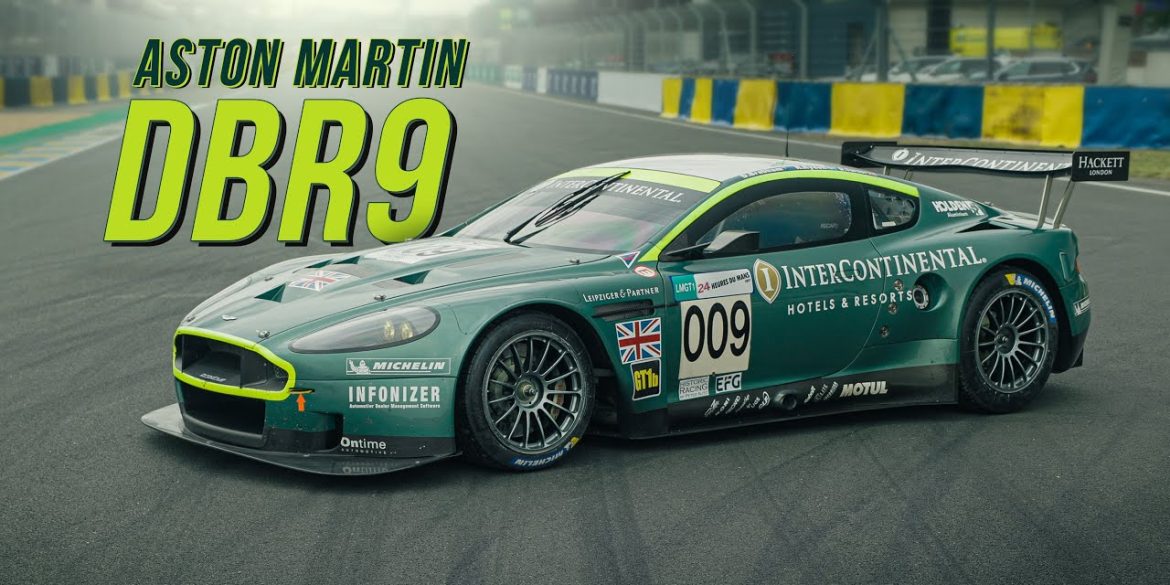
| 2007–08 | DBR9 | Le Mans GT1 won twice; Richards's consortium buys the company; Newport Pagnell closes | Onboard the 2007 DBR9 |
| 2009 | One-77 · Lola-Aston Martin LMP1 | Seventy-seven 750-horsepower cars; fourth at Le Mans | The One-77 |
| 2013 | The centenary: Kensington Gardens and the Heritage Showroom at Newport Pagnell | Centenary · Heritage Showroom | |
| 2016–20 | Vantage GTE | The DB11; the Valkyrie announced; Le Mans GTE Pro 2017 and 2020; the flotation; Stroll takes control | Fighting Spirit |
| 2021–24 | Valkyrie | Valkyrie deliveries; the Formula One team; the DB12, the Valour and the new Vantage | The hypercar gamble · The Valhalla |
| 2025–26 | Valkyrie AMR-LMH | The Valkyrie in the WEC and IMSA; fourth at Spa; third in LMGT3 at Le Mans 2026; Newey and Honda in Formula One | Spa 2026 · Le Mans 2026 |
DB is David Brown; DBR the David Brown racing cars; DP the Design Project cars of 1962–63. The Le Mans, Tourist Trophy and World Sportscar Championship pages carry the results in full.
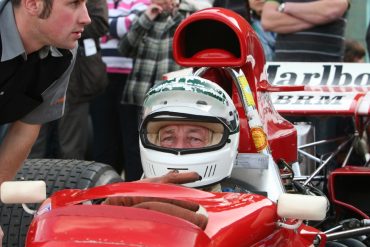
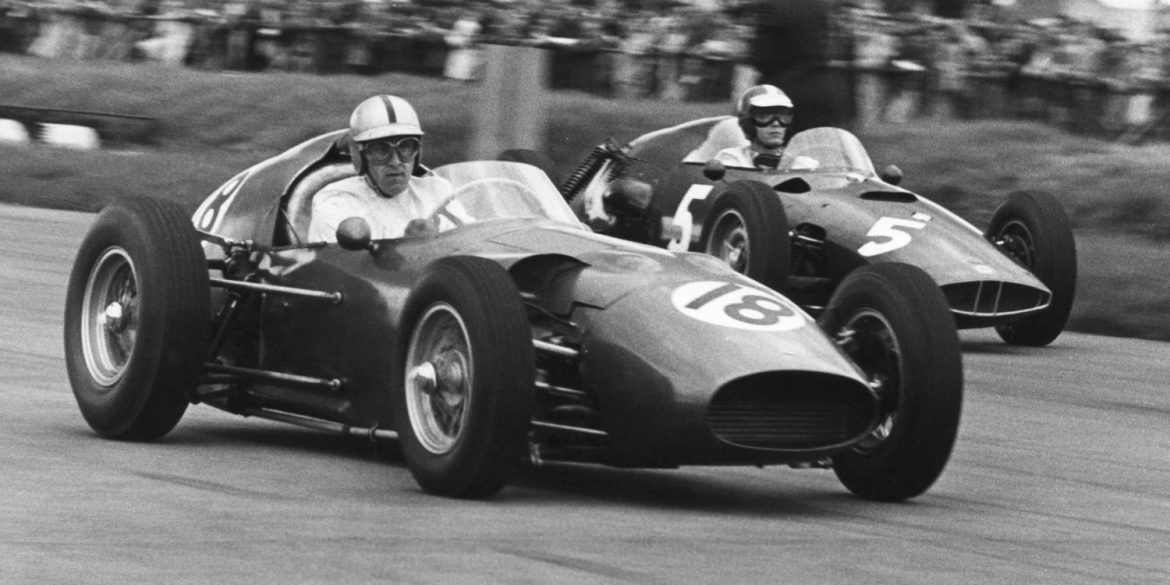
Ted Cutting's DBR1, a three-litre spaceframe sports-racer with the six moved back and a transaxle, appeared at Le Mans in 1956 and won first the Spa sports car race of 1957 with Tony Brooks and then the Nürburgring 1,000 km three years running: Brooks and Noel Cunningham-Reid in 1957, Moss and Jack Brabham in 1958, Moss and Jack Fairman in 1959, Moss's drives there among the greatest of his career. At Le Mans in 1959 Moss's hare ran Ferrari's Testa Rossas into the ground, Salvadori and Shelby won by a lap from Maurice Trintignant and Paul Frère in the second DBR1, and Moss won the Tourist Trophy at Goodwood in September after a refuelling fire destroyed his own car and he took over Shelby and Fairman's, to give Aston Martin the World Sportscar Championship by two points from Ferrari. David Brown withdrew from sports car racing at the end of the year to concentrate on the DBR4 Grand Prix car, a front-engined design two years late in a rear-engined world that Salvadori put second in its first race at Silverstone and never higher in a championship round; Mike Jiggle's Wasted Opportunity, on DBR4/2, and the Fighting Spirit history of Aston Martin in Grand Prix racing tell it. Ed McDonough's A Le Mans Legend, on DBR1/2, the 1959 winner, Pete Lyons's Aston Imprints, Casey Annis's Aston Milestone and the rest of Vintage Racecar's June 2009 fiftieth-anniversary issue, Carroll Shelby's own recollection and Roy Salvadori's obituary are the archive's account; DBR1/1, the 1959 Nürburgring winner, made $22.55 million in 2017.
Every story on the site about the man who won Aston Martin its championship, newest first.
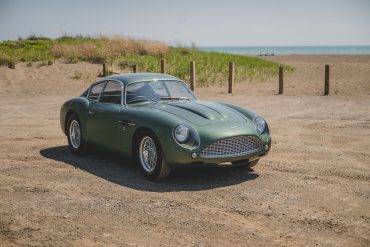
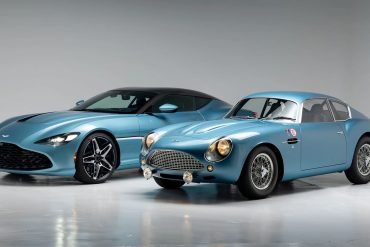
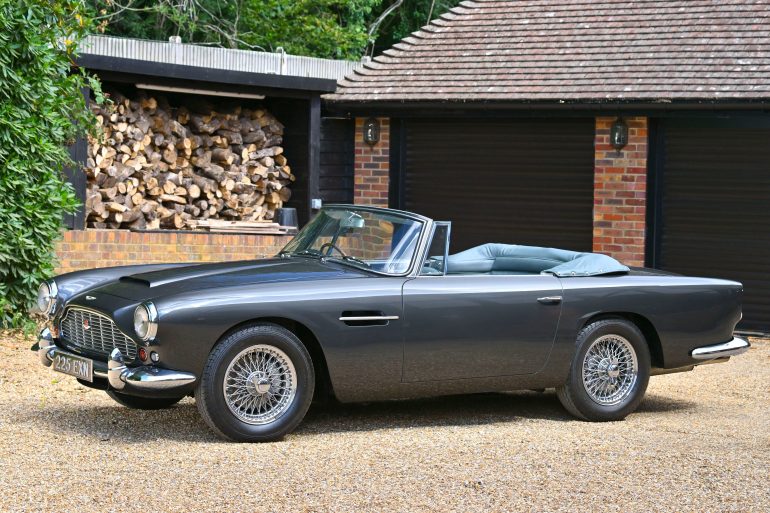
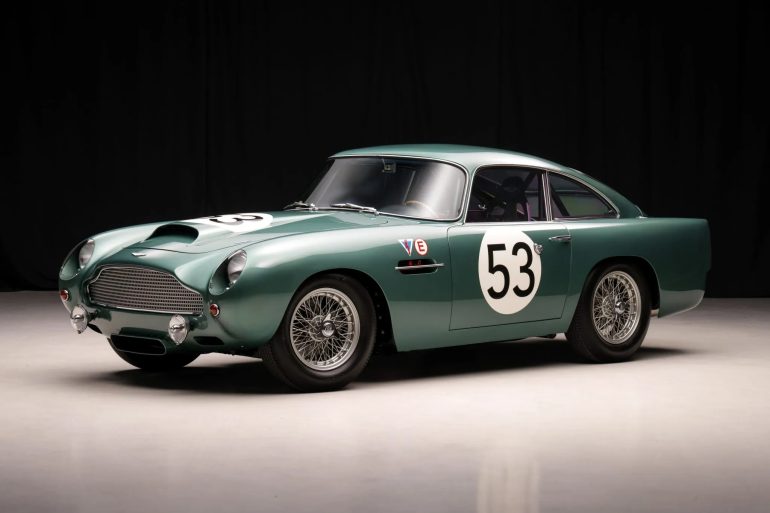
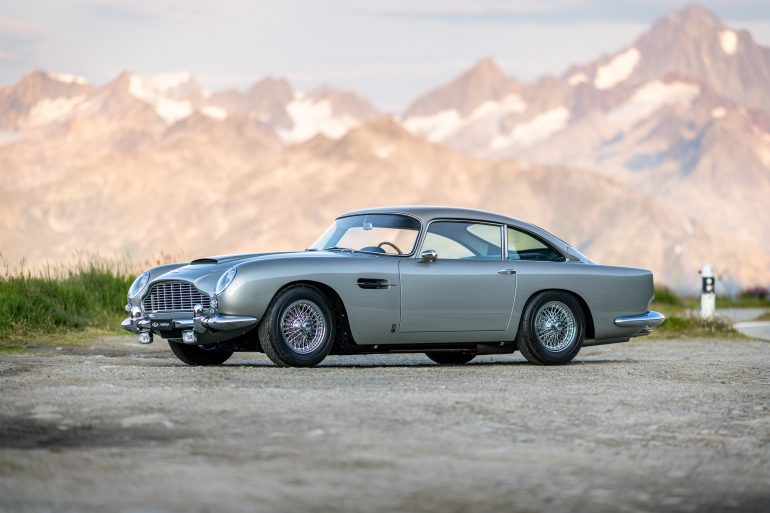
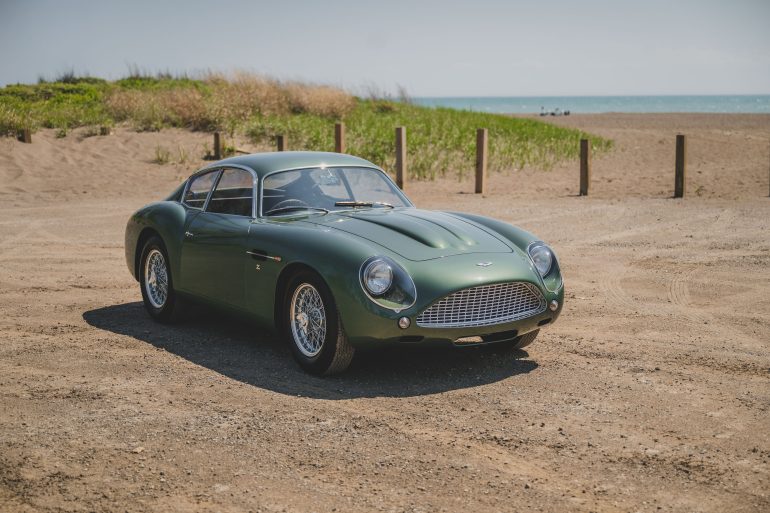
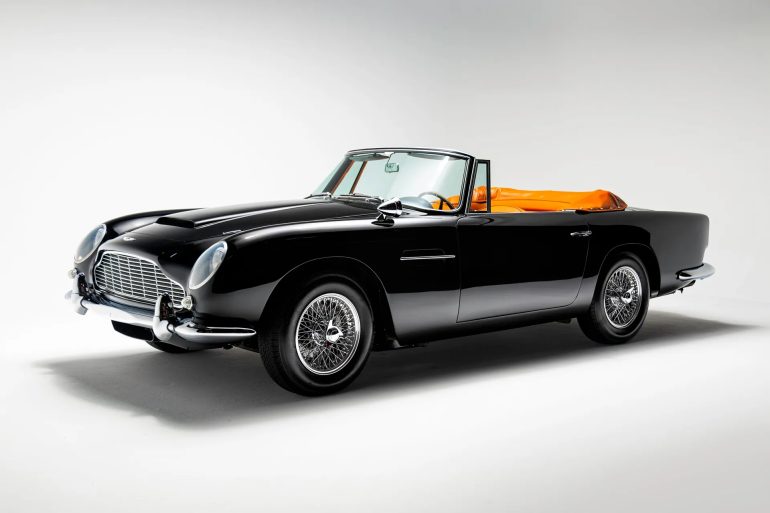
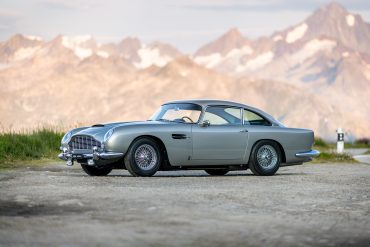
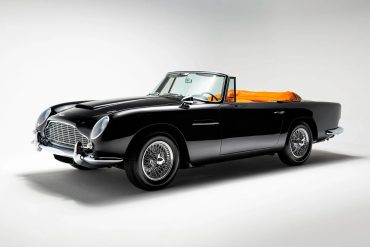
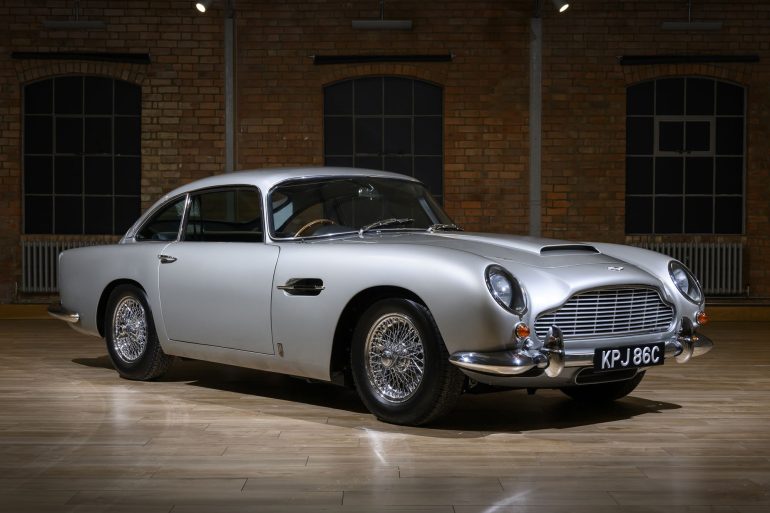
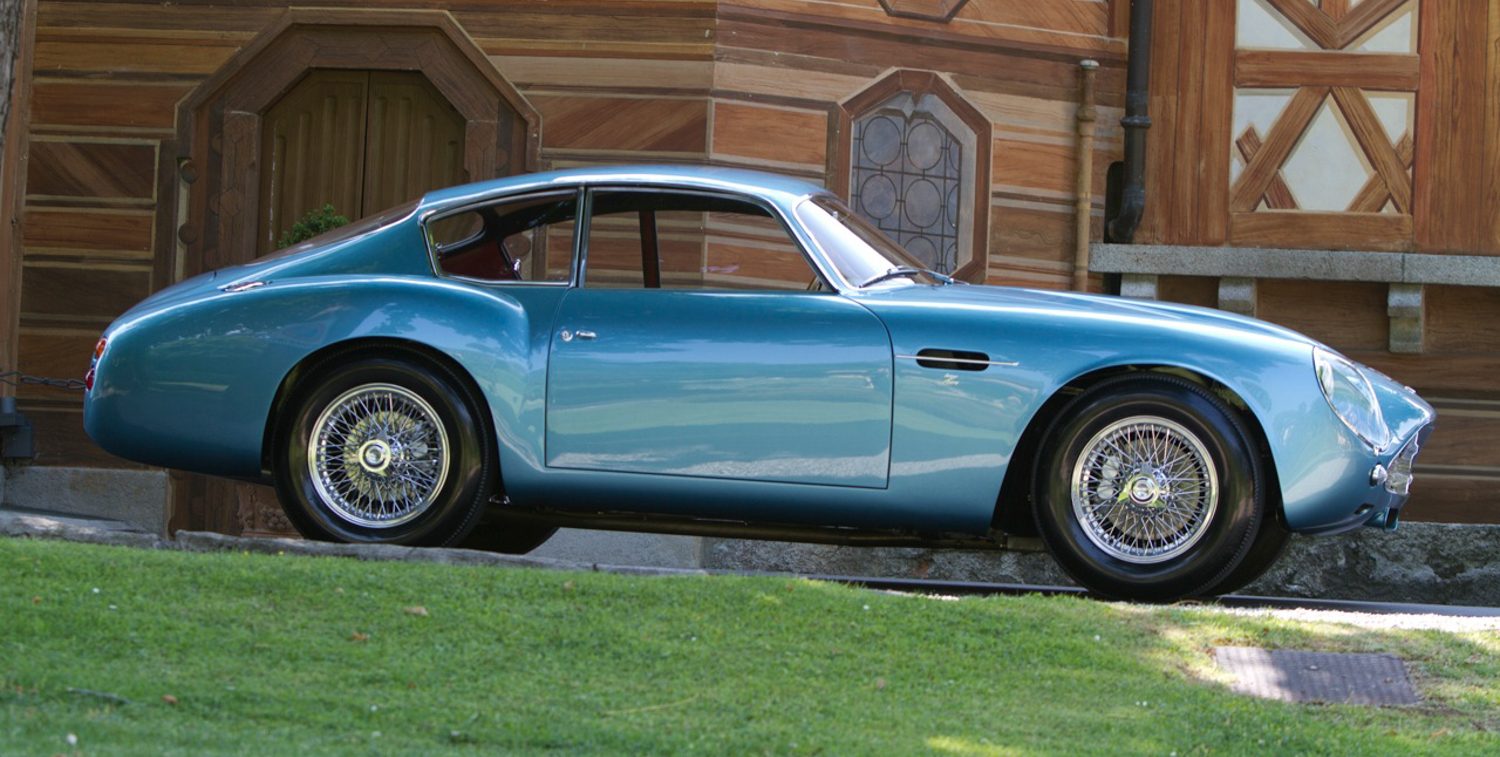
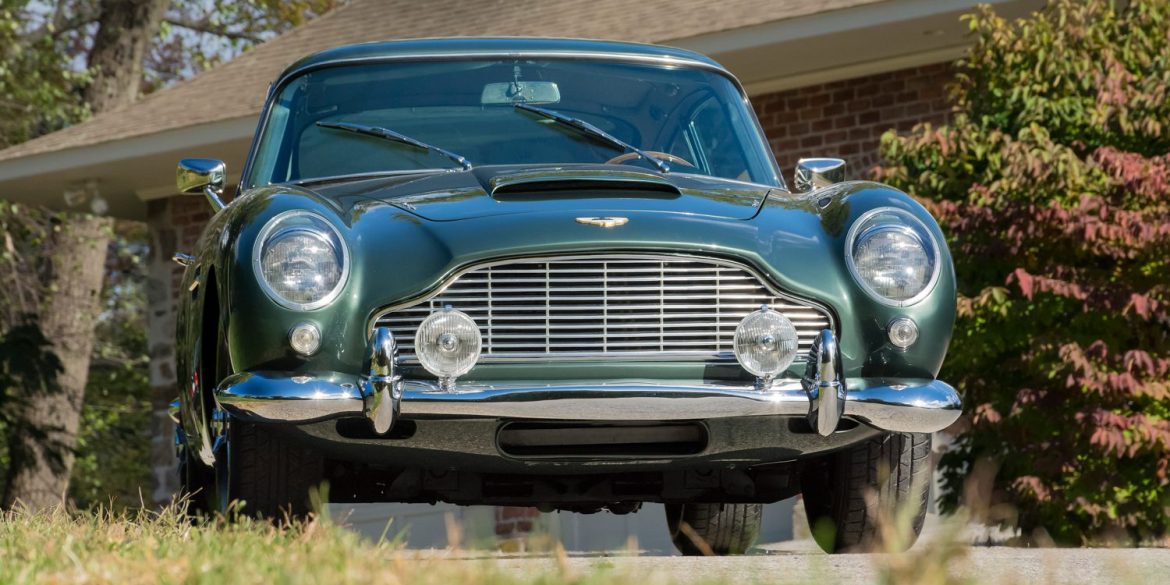
The DB4 of 1958 was the first modern Aston Martin: Tadek Marek's new 3.7-litre twin-cam six, Harold Beach's platform chassis and a Touring of Milan Superleggera body built under licence at Newport Pagnell, the first production car to do 0–100–0 mph in under thirty seconds. The DB4 GT of 1959, shorter, lighter and with twin plugs and 302 horsepower, won on its debut at Silverstone with Moss and was built 75 times; the DB4 GT Zagato of 1960, Ercole Spada's body on the GT chassis, nineteen cars of which 1 VEV and 2 VEV raced for John Ogier's Essex Racing Stable against the GTOs, is the most beautiful Aston Martin and, after the DBR1, the most valuable; the Project cars, DP212, DP214 and DP215, were the works' last Le Mans entries in 1962 and 1963. Raffi Minasian's piece on the DB4's two Italian designs, Sean Smith's DB4 GT and 1962 DB4 and John Zimmermann's Ercole Spada are in the archive, as are the DB4 GT Continuation cars of 2017–18 now for sale. The DB5 of 1963 enlarged the engine to four litres and in 1964 went to work for James Bond in Goldfinger, which made it the most famous car in the world, 1,059 built; the DB6 of 1965 added a Kamm tail and 2+2 room, and the DBS of 1967, William Towns's wide coupé, took the six and then, in 1969, Marek's 5.3-litre V8 for the next twenty years. Sean Smith's 1965 DB5, the DB6 profile, the sale of Sir David Brown's own DB5 convertible and the 1965 DB5 Vantage heading to auction this autumn are the archive's DB5s and DB6s.
The Milanese coachbuilder of the DB4 GT Zagato and its successors, newest first.
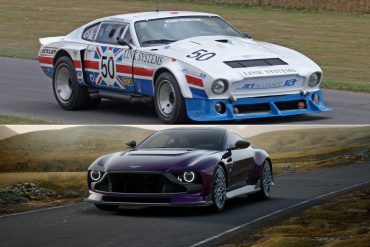
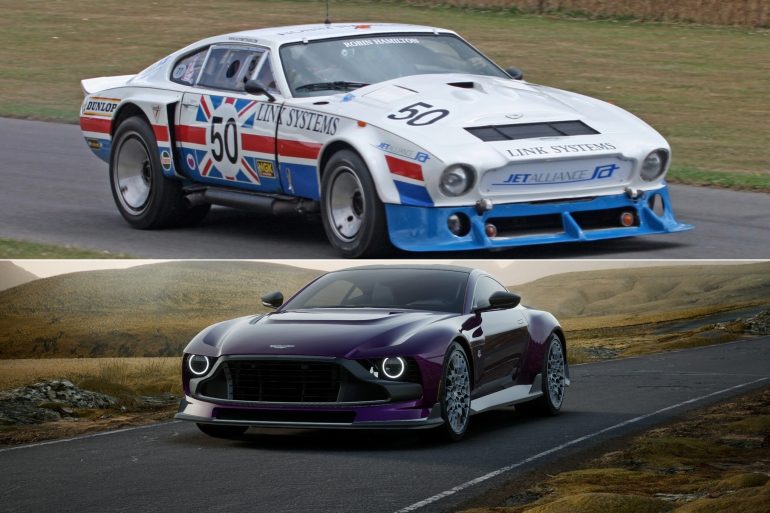
David Brown sold the company in 1972, it went into receivership in December 1974 and was rescued in 1975 by Peter Sprague and George Minden, and Towns's wedge-shaped Lagonda saloon of 1976 and the V8 Vantage of 1977, Britain's first supercar at 170 mph, and the V8 Volante kept it alive through the decade with a few hundred hand-built cars a year. Victor Gauntlett, who took over in 1981, put the marque back at Le Mans with the Nimrod-Aston Martin Group C cars of 1982 to 1984, seventh overall in 1982, revived the Zagato connection with the V8 Vantage Zagato of 1986 and got an Aston Martin back into a Bond film with the V8 Vantage of The Living Daylights; the Valour of 2023 looks back to this era's V8 Vantage and to RHAM/1, the DBS V8 "Muncher" that Robin Hamilton raced at Le Mans in 1977 and 1979, as the archive's Heritage Series piece explains. Ford bought 75 per cent of the company in September 1987.
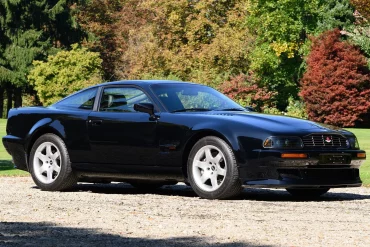
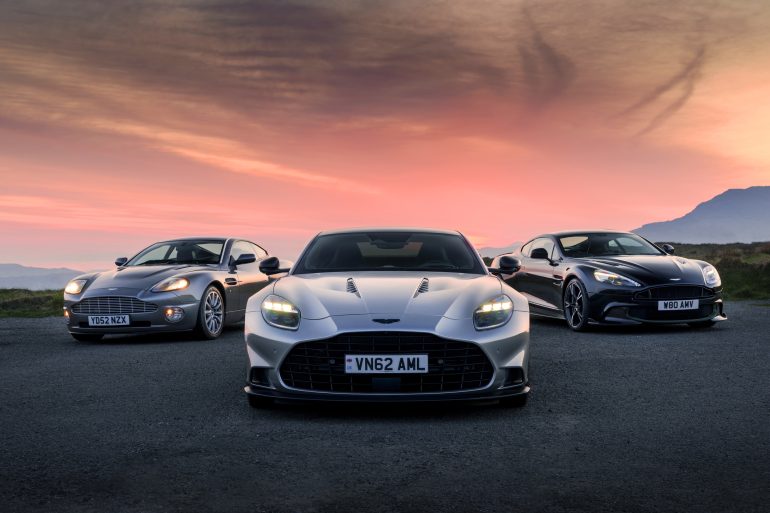
Ford's money produced the Virage of 1989, the last Newport Pagnell V8 line, and from it the twin-supercharged Vantage V550 of 1993 and V600, 550 and 600 horsepower when only the McLaren F1 had more, the archive's Forgotten Supercar Killer; the DB7 of 1994, Ian Callum's six-cylinder coupé built at Bloxham on a Jaguar-derived platform that sold more cars in its decade than Aston Martin had built in its first eighty years; and the V12 Vanquish of 2001, Bond's car again in Die Another Day. Ford took full control in 1994, built the Gaydon factory in 2003, where Ulrich Bez's VH-platform DB9 of 2004 and V8 Vantage of 2005 were made, and bankrolled the return to Le Mans: Prodrive's DBR9 won the GT1 class at Sebring in 2005 and at Le Mans in 2007 and 2008, the first wins there since 1959. The Aston Martin Works heritage showroom at Newport Pagnell, where production ended in 2007, is in the archive, as are the Mike Jiggle profiles of the restorers and specialists, Ant Anstead and Simon Carter among them.
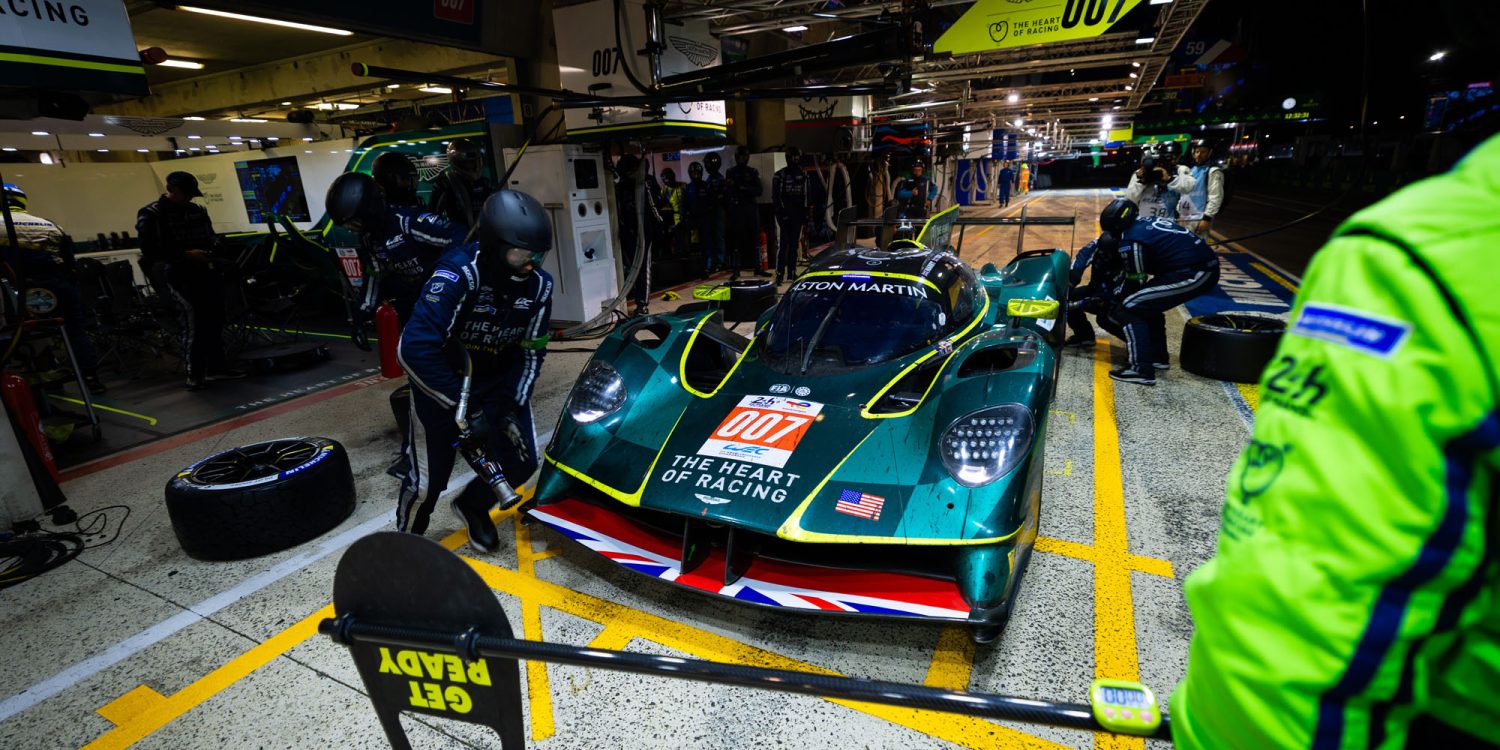
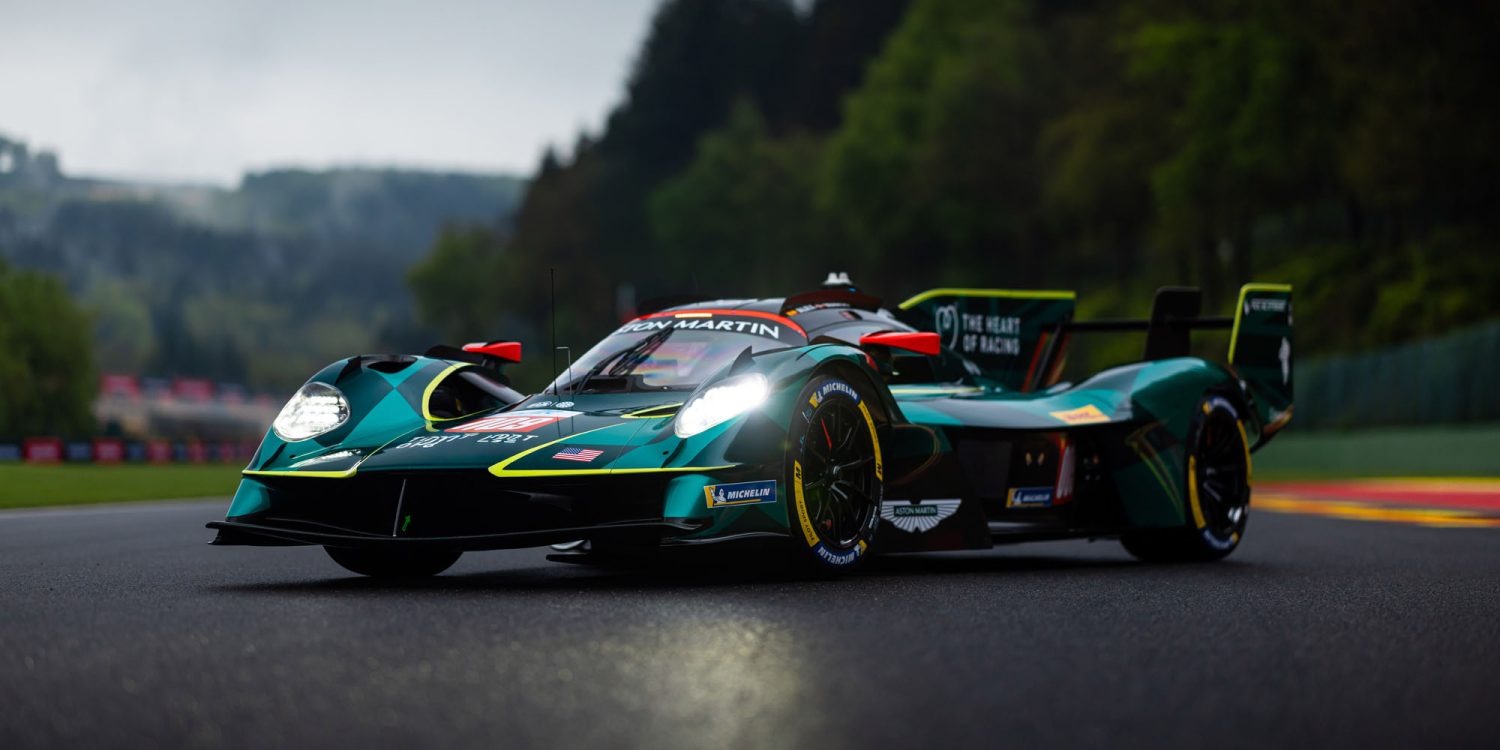
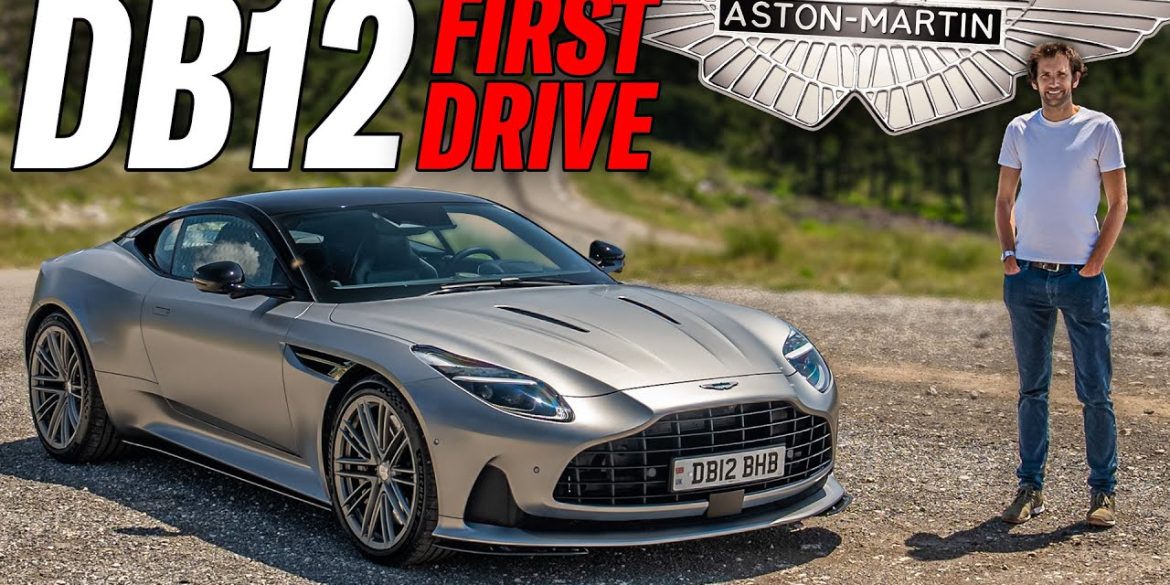
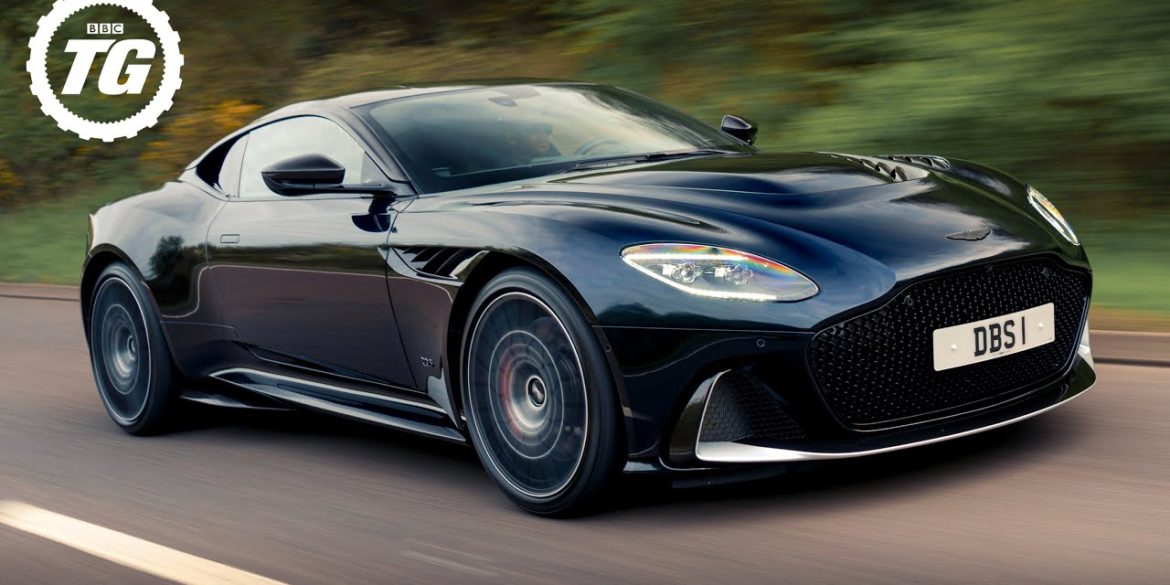
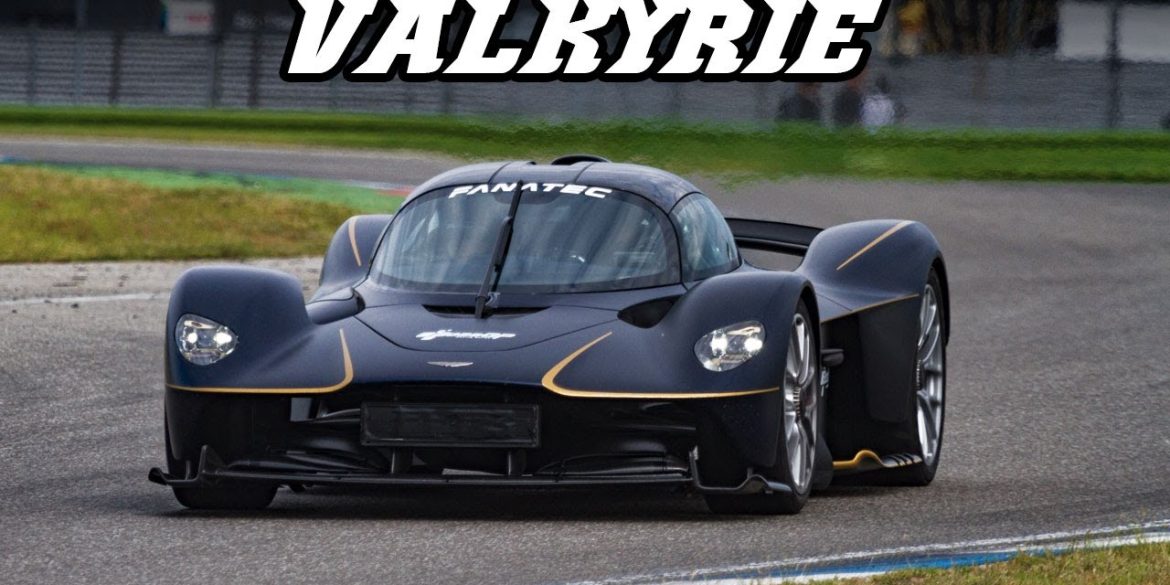
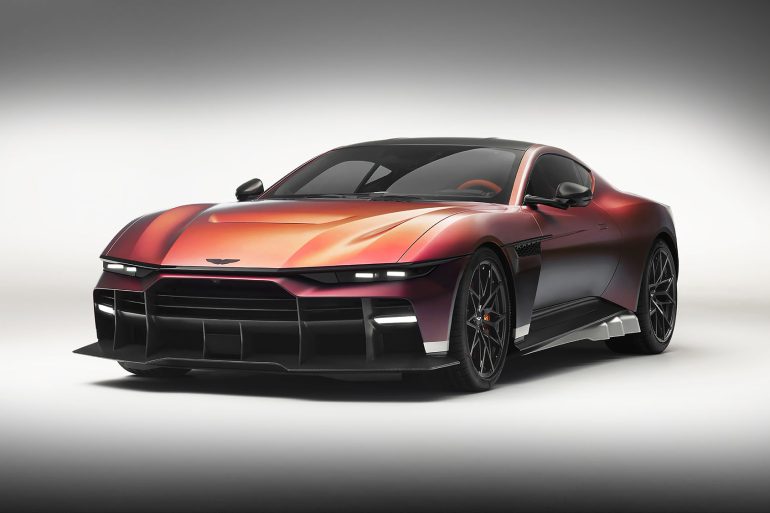
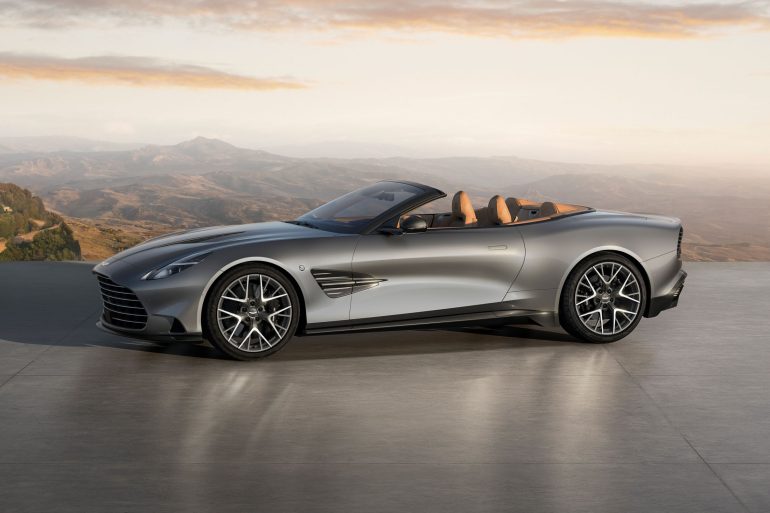
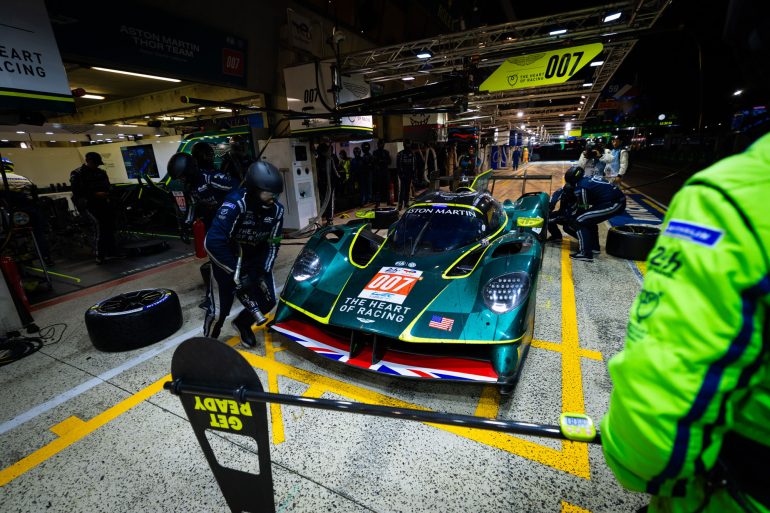
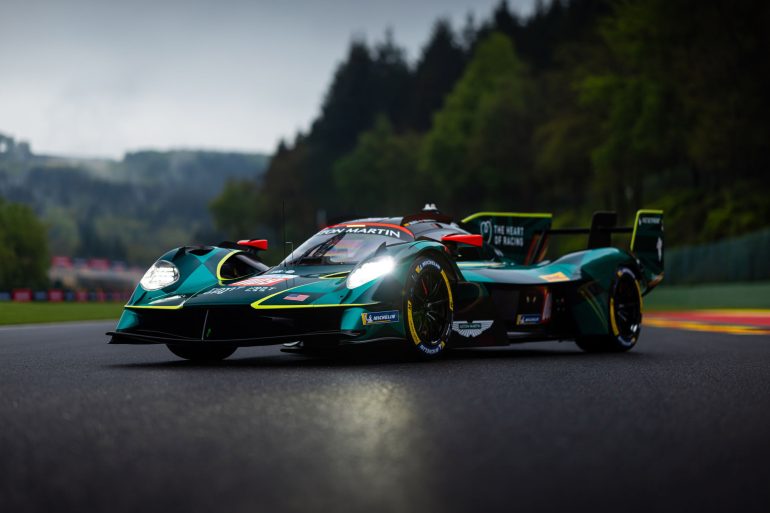
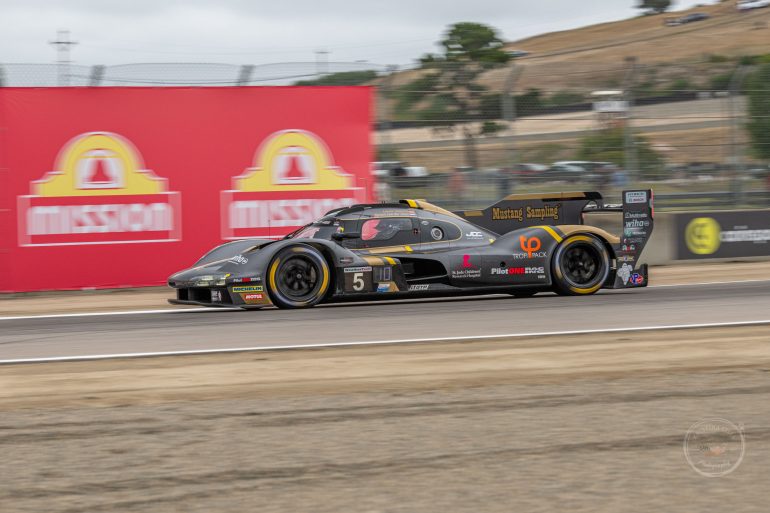
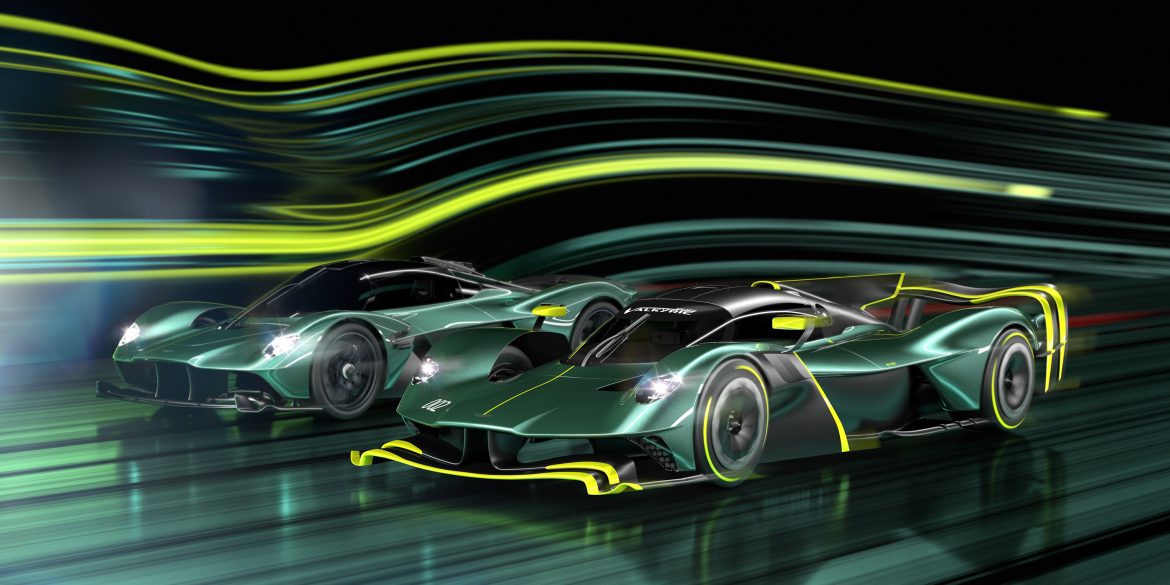
David Richards's consortium bought the company from Ford in 2007 for £479 million, and the next decade brought the One-77 of 2009, a 7.3-litre, 750-horsepower carbon-tub car of which 77 were built, the Lola-Aston Martin LMP1 that finished fourth at Le Mans in 2009, the Vantage GTE that won its class at Le Mans in 2014, 2017 and 2020 and the GT manufacturers' world championship in 2020, the DB11 of 2016 and the Valkyrie, announced with Red Bull and Adrian Newey in 2016 and delivered from 2021 as the most extreme road car ever made. The flotation of 2018 went badly, Lawrence Stroll's consortium took control in January 2020, the DBX of 2020 is built at St Athan, the Formula One team has carried the name since 2021 with Sebastian Vettel, Lance Stroll and Fernando Alonso, with Newey joining in 2025 and Honda power from 2026, and the DB12 of 2023, the new Vantage of 2024 and the Valhalla are the current range. The Valkyrie AMR-LMH took Aston Martin back to the top class of Le Mans in 2025, the only road-derived hypercar in the WEC and IMSA, and finished fourth at Spa in May 2026, its best result; the Heart of Racing Vantage GT3 took third in LMGT3 at Le Mans in June 2026, the marque's nineteenth podium there. Casey Annis's Can Aston Martin's Hypercar Gamble Save the Brand? asked the question in 2023, and Rex McAfee's race reports have carried the answer since.
The Model tags on this site cover the Aston Martins the archive has most to say about: the 1.5 Litre Le Mans and the Ulster; the DB2, DB2/4, DB3 and DB3S; the DBR1, DBR2 and DBR4; the DB4, DB4 GT and DB4 GT Zagato; the DB5, DB6 and DB7; the V8 Vantage, Virage and Vanquish; the DBR9 and Vantage GTE; and the Valkyrie and Vulcan. The nine cards below are the ones with most to read behind them, and the Model tag opens every story on each.
Nine the archive has most to say about; each links to every story on the site about that car.
Single-car and chassis stories: the Le Mans cars, the DB3Ss and DBR1s, the DB4 GTs and Zagatos and the road cars that surface at auction.
Aston Martin's racing sits on the archive's hubs as well as here. The Le Mans hub has every year from 1928, the 1959 win and the class wins since; the Tourist Trophy hub the 1934 team prize, the DB3S wins and Moss's 1959 drive that decided the championship; the World Sportscar Championship page the 1959 title; the Grand Prix History hub the DBR4; the Goodwood festivals page the Revival, where the DBR1s and DB4 GTs race every September and the Stirling Moss Trophy is run for them. The Racing (Aston Martin) feed below gathers the race reports and profiles with an Aston Martin in them, from the 1930s to this year's Valkyrie and Vantage GT3 rounds, and the Simply Aston Martin and AMOC events the club side.
Race profiles and reports with an Aston Martin in them, newest first.
Lionel Martin and Robert Bamford; Bert Bertelli, Bill Renwick and Gordon Sutherland of Feltham; David Brown, who gave the cars his initials, John Wyer, who ran the team and then Ford's GT40s, Reg Parnell, who took over from him, and Ted Cutting, Willie Watson, Frank Feeley, Tadek Marek and Harold Beach, who designed the cars; Touring's Federico Formenti and Zagato's Ercole Spada; William Towns; Victor Gauntlett, Walter Hayes, Ulrich Bez, David Richards and Lawrence Stroll; and the drivers, Bertelli, Charles Brackenbury, St John Horsfall, Lance Macklin, George Abecassis, Reg Parnell, Peter Collins, Paul Frère, Tony Brooks, Stirling Moss, Roy Salvadori, Carroll Shelby, Jack Fairman, Maurice Trintignant, Jim Clark, Innes Ireland, Darren Turner, Jonny Adam and Harry Tincknell. Each name with a People thread links to every story on the site about them, and the People page gathers the portraits.
The 1959 Le Mans winner in the archive, newest first.
The Aston Martin market has the most expensive British car at the top and sixty years of usable grand tourers beneath. DBR1/1 made $22.55 million at Monterey in 2017, a DB4 GT Zagato $14.3 million in 2015 and 2 VEV £10.1 million in 2018; a DB3S is $5–7 million with works history, a DB4 GT $3–4 million, an Ulster $2–3 million and a Project car more. Among the road cars a DB5 is $700,000 to $1 million and a convertible or Vantage over that, with the Goldfinger car at $6.4 million in 2019; a DB4 $400,000–700,000; a DB6 $300,000–500,000; a DB2 or DB2/4 $200,000–400,000; a 1933 Le Mans $300,000–500,000; a V8 Vantage $200,000–400,000 and a V550 or V600 about the same; a One-77 $2–3 million and a Valkyrie above its £2.5 million list. The DB7, DB9 and first V8 Vantage are the cheapest way in at $30,000–70,000, the Vanquish about $100,000. The Auctions (Aston Martin) and For Sale (Aston Martin) threads below are the live market, with this year's DB4 GT Zagato, DB4 GT Continuations and DB5s; the Market page has the auction calendar and the record prices.
Auction previews and results for Aston Martins, newest first.
Aston Martins offered by dealers and collectors, newest first.
The archive's Aston Martin galleries come from the Goodwood Revival, where the DBR1s, DB3Ss and DB4 GTs race and the car park is a concours of its own, the Simply Aston Martin day at Beaulieu, the marque's centenary at Kensington Gardens in 2013, the Aston Martin Festival at Laguna Seca, the HSR Walter Mitty, Pebble Beach and Villa d'Este, and the Zagato centenary pair of 2025. The Galleries (Aston Martin) feed below gathers them.
Aston Martin galleries from Goodwood, Beaulieu, the centenary and Laguna Seca.
Founded 15 January 1913, Bamford & Martin Ltd, London; Feltham 1926–57; Newport Pagnell 1955–2007; Bloxham 1994–2004; Gaydon since 2003; St Athan since 2019. Owners: Lionel Martin; Renwick and Bertelli; Gordon Sutherland; David Brown 1947–72; Company Developments; Sprague and Minden 1975; Victor Gauntlett 1981; Ford 1987–2007; the Richards consortium 2007; Lawrence Stroll's Yew Tree consortium since 2020. Le Mans: outright 1959 (DBR1, Salvadori/Shelby); Index of Performance 1950; Biennial Cup 1932, 1935; GT1 2007, 2008; GTE Am 2014, 2020, 2022; GTE Pro 2017, 2020; 19 podiums. World Sportscar Championship 1959; Nürburgring 1,000 km 1957, 1958, 1959; Tourist Trophy 1934 (team prize), 1953, 1958, 1959; Spa 24 Hours 1948; Goodwood Nine Hours 1952, 1953, 1955; GT manufacturers' world championship 2020. Built: DB2 411; DB2/4 and Mk III about 1,300; DB3S 31; DBR1 5; DB4 about 1,110; DB4 GT 75; DB4 GT Zagato 19; DB5 1,059; DB6 1,788; V8 and Vantage about 4,000 (1969–89); DB7 about 7,000; One-77 77; Valkyrie 150 coupés plus Spiders and AMR Pros. Record prices: DBR1/1 $22.55 million (RM Sotheby's, Monterey, 2017), the British record; DB4 GT Zagato $14.3 million (RM Sotheby's, New York, 2015); Goldfinger DB5 $6.385 million (RM Sotheby's, Monterey, 2019).
Short answers, with the long ones above.
Lionel Martin and Robert Bamford, in London in 1913. "Aston" is the Aston Clinton hillclimb in Buckinghamshire where Martin raced his Singer; "Martin" is Lionel Martin. Bamford left in 1920 and Martin in 1925.
David Brown, the Yorkshire gear and tractor manufacturer who bought Aston Martin in 1947, owned it until 1972 and put his initials on every road car from the DB1 of 1948 to the DBS. The company revived the letters with the DB7 in 1994.
Once outright, on 21 June 1959, when Roy Salvadori and Carroll Shelby won in a DBR1 and the team finished first and second. Aston Martin has also won its class there many times, from the 1930s to the GT1 wins of 2007 and 2008 and the GTE wins of 2014, 2017, 2020 and 2022, and took third in LMGT3 in 2026.
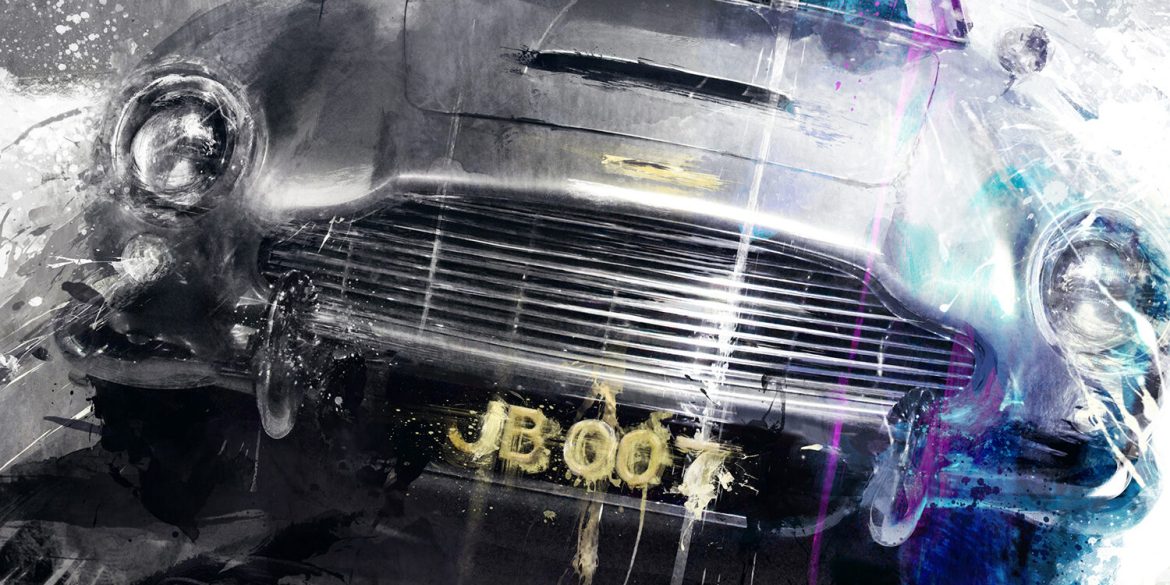
The DB5 first, in Goldfinger in 1964, with the ejector seat, and in Thunderball, GoldenEye, Skyfall, Spectre and No Time to Die since; also the DBS in On Her Majesty's Secret Service, the V8 Vantage in The Living Daylights and No Time to Die, the Vanquish in Die Another Day and the DBS of 2006 in Casino Royale. The Goldfinger DB5 sold for $6.4 million in 2019.
DBR1/1, the 1959 Nürburgring 1,000 km winner, at $22.55 million in 2017, the most expensive British car ever sold at auction. The DB4 GT Zagatos are next, at $10–14 million.
It is a public company listed in London since 2018, controlled since January 2020 by the Yew Tree consortium led by Lawrence Stroll, whose Formula One team carries the name. Ford owned it from 1987 to 2007 and David Richards's consortium from 2007 to the flotation.
The Group C sports-prototype of 1982 to 1984 built by Nimrod Racing with Aston Martin's 5.3-litre V8, backed by Victor Gauntlett, which finished seventh at Le Mans in 1982 and put the marque back at the race for the first time since the Project cars of 1963.
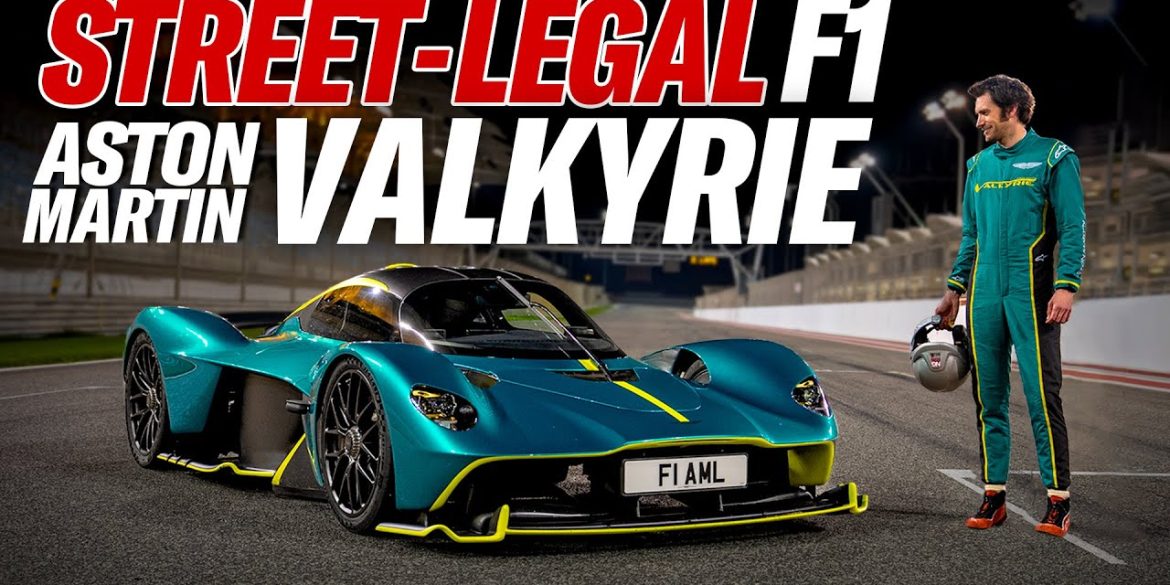
Both. The road car, designed with Adrian Newey and Red Bull, has a 6.5-litre Cosworth V12 and 1,160 horsepower; the Valkyrie AMR-LMH racing version has contested the Hypercar class of the World Endurance Championship and IMSA since 2025, with a fourth place at Spa in 2026 its best result so far.
1,059 in all between 1963 and 1965, including 123 convertibles, 12 shooting brakes by Radford and the Vantage saloons. The 25 DB5 Goldfinger Continuation cars of 2020 are new-built and not road-legal.
A DB7 or an early DB9 for under $50,000 is the usual start, a V8 Vantage of the 1970s or 1980s the first step into the hand-built cars at $200,000 and up, and a DB6 or DB2/4 the way into the David Brown era; the For Sale (Aston Martin) thread below has the current cars.
The whole archive on one thread, newest first.