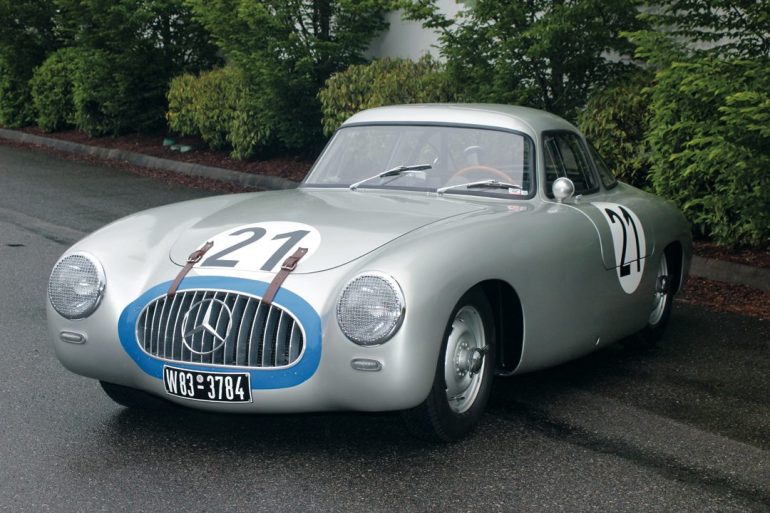
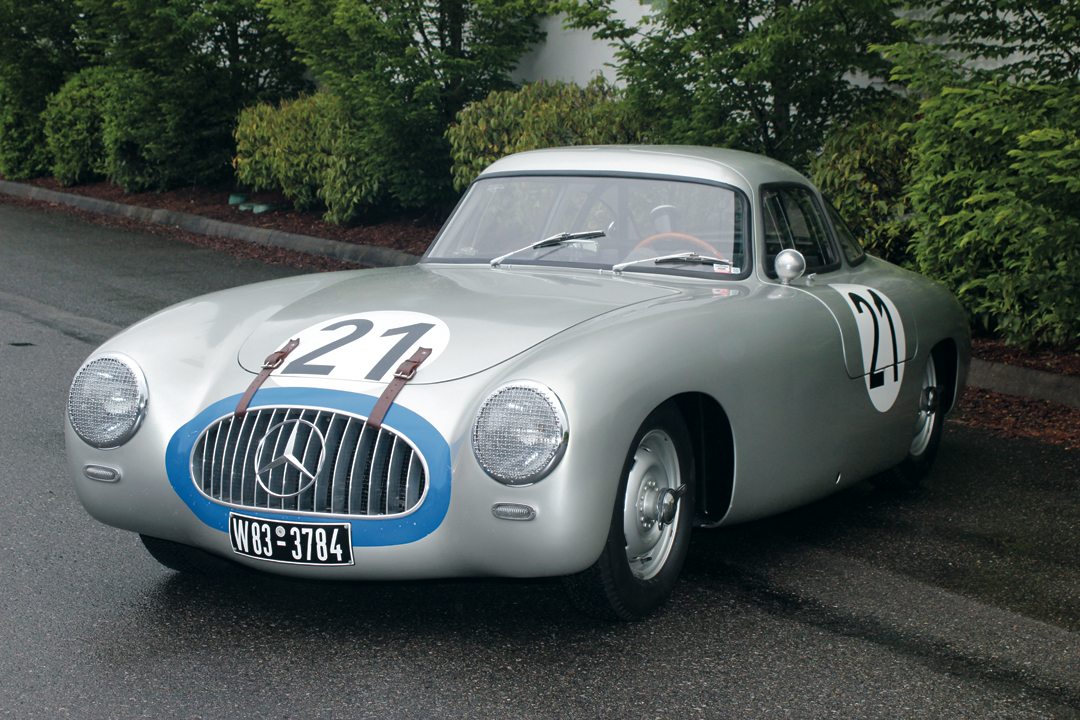
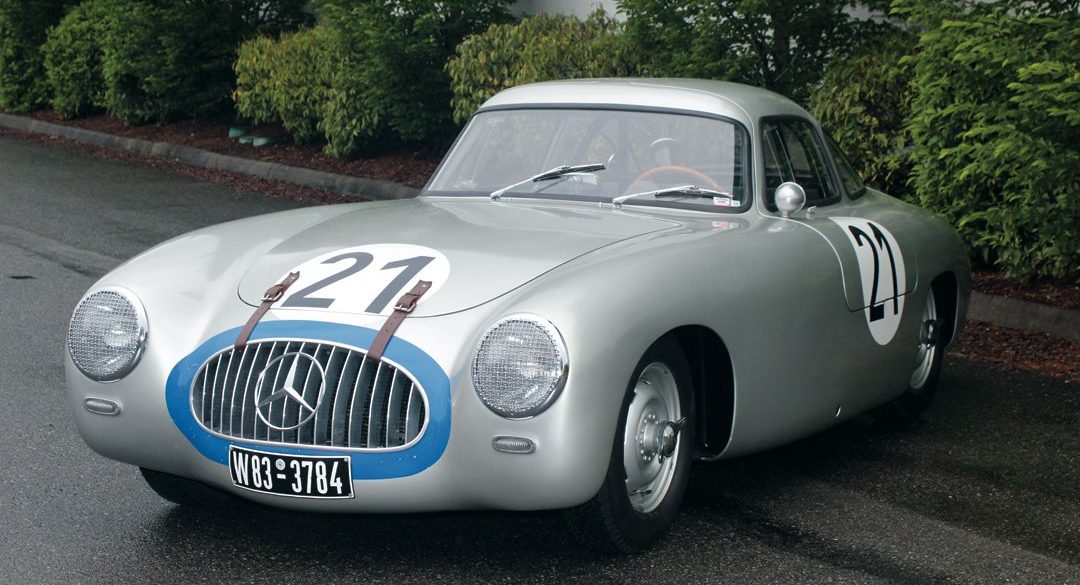
Fritz Nallinger said Mercedes was "just opening a little window on the motor racing scene". With Formula One rules in limbo until 1954, Neubauer went to ask the CSI for a change, and the W194 became the way back.

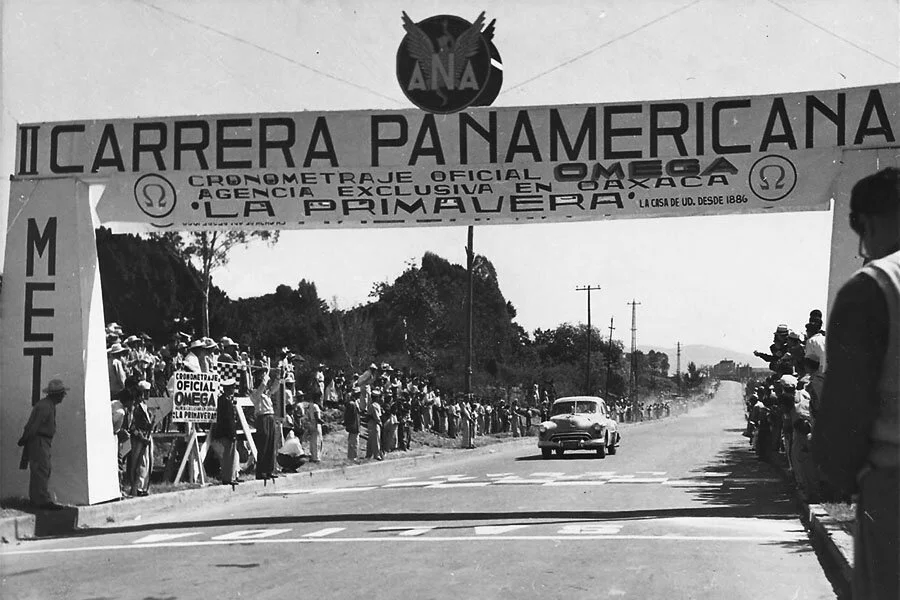
Five races, 1950 to 1954, the length of Mexico on a new highway: close to two thousand miles in a week, from the Guatemalan border to the Rio Grande, with soldiers' rifles keeping the crowd off the road. It gave Porsche the word Carrera, Mercedes-Benz a vulture through the windscreen, Lincoln its racing years and Phil Hill his start, and it killed enough people that the government that invented it put a stop to it. The archive has a photographer who followed the last one in an Oldsmobile, the winner of the first one in his own words, and the tapes of the man whose friend died on the opening leg.
The pieces to start with
Harnell's 1954 diary in two parts, the Petersen reunion, McGriff in his own words, the McAfee tapes, Ginther, the 300 SL and the 550s.
Boyd Harnell followed the 1954 Carrera Panamericana in his own ‘54 Oldsmobile, shooting a Luftwaffe-design Robot camera at three frames a second. Two fans in an XK120 waved at him near Tehuantepec; minutes later they were dead.
Boyd Harnell’s account of the 1954 Carrera Panamericana concludes with the Mexico City–León leg of 21 November: four major crashes at one washboard curve near Rio Hondito, Bechem’s Borgward wrecked, Palacio’s Pegaso burning in the maguey, a soldier killed.
Phil Hill, Carroll Shelby, John Fitch, Smokey Yunick, Rodger Ward and Ak Miller swapped stories over tacos at the Petersen’s Carrera Panamericana reunion. Tim Considine on a race that began as a highway promotion and gave Porsche a model name.
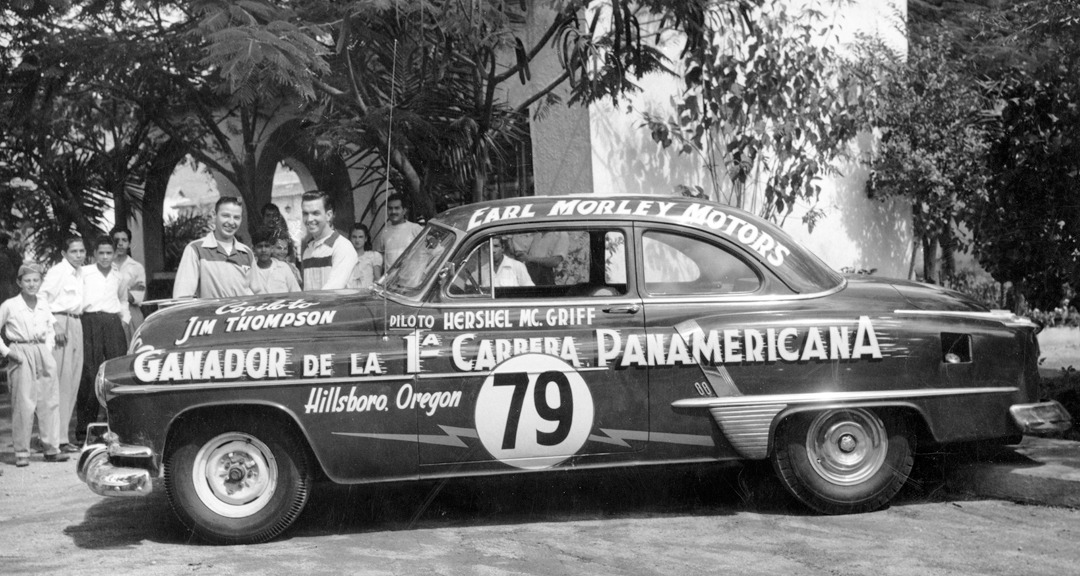
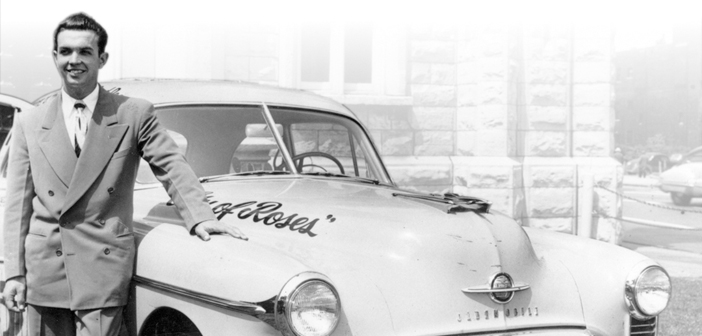
Hershel McGriff’s first race was in his father’s 1940 Hudson on the Portland dirt; the 1950 Oldsmobile that won the first Carrera Panamericana belonged to his neighbor. Casey Annis interviews a man who raced nothing without fenders and a roof.
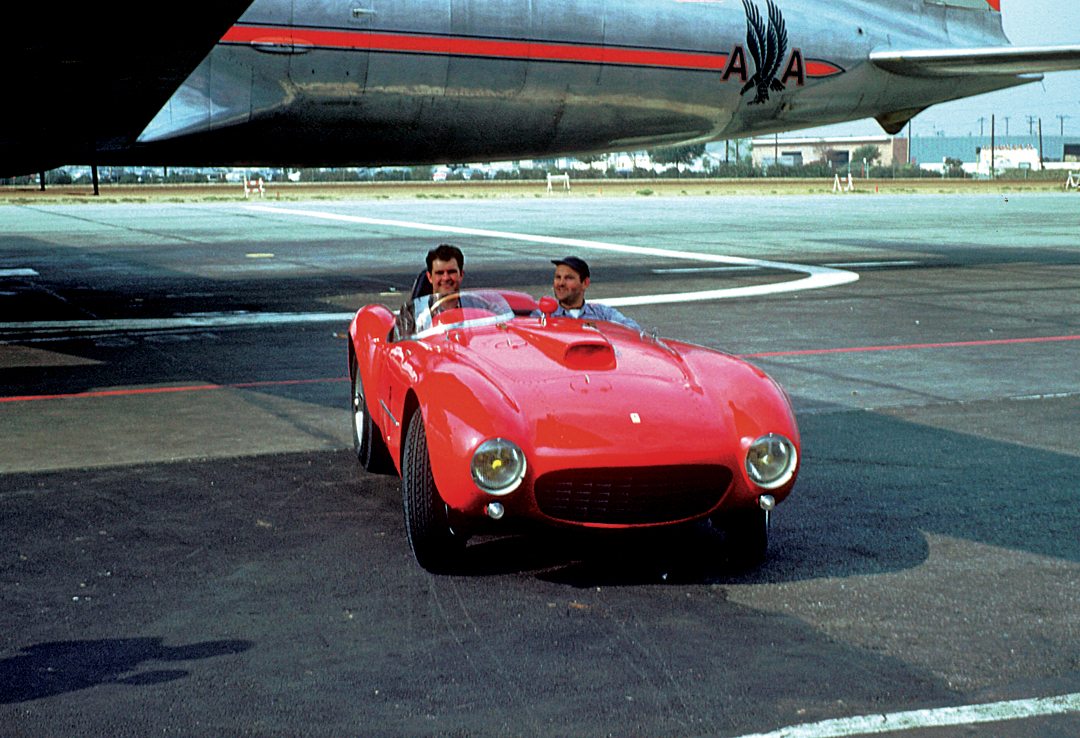
Jack McAfee recorded tapes at the start of the last Carrera Panamericana in 1954; nobody found them until 2000. A former employee of his Sherman Oaks Porsche/VW dealership, reunited with him at Monterey, tells how, and why the mystery lingers.
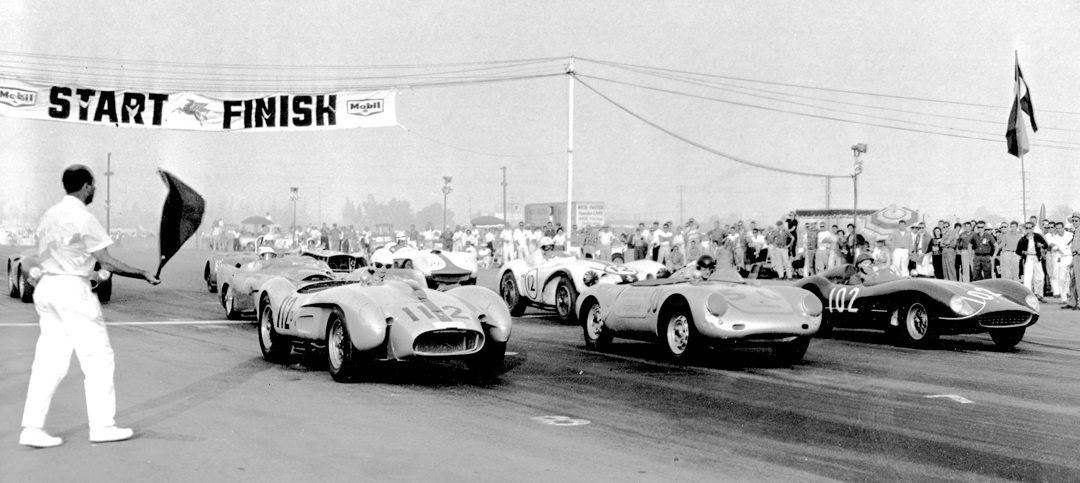
Pebble Beach, 27 May 1951: Richie Ginther in an MG with a Ford V8-60 crossed the line second to Phil Hill’s 1939 Alfa in the Del Monte Handicap and was dropped to third for an illegal pass. Art Evans remembers.
Fritz Nallinger said Mercedes was “just opening a little window on the motor racing scene”. With Formula One rules in limbo until 1954, Neubauer went to ask the CSI for a change, and the W194 became the way back.
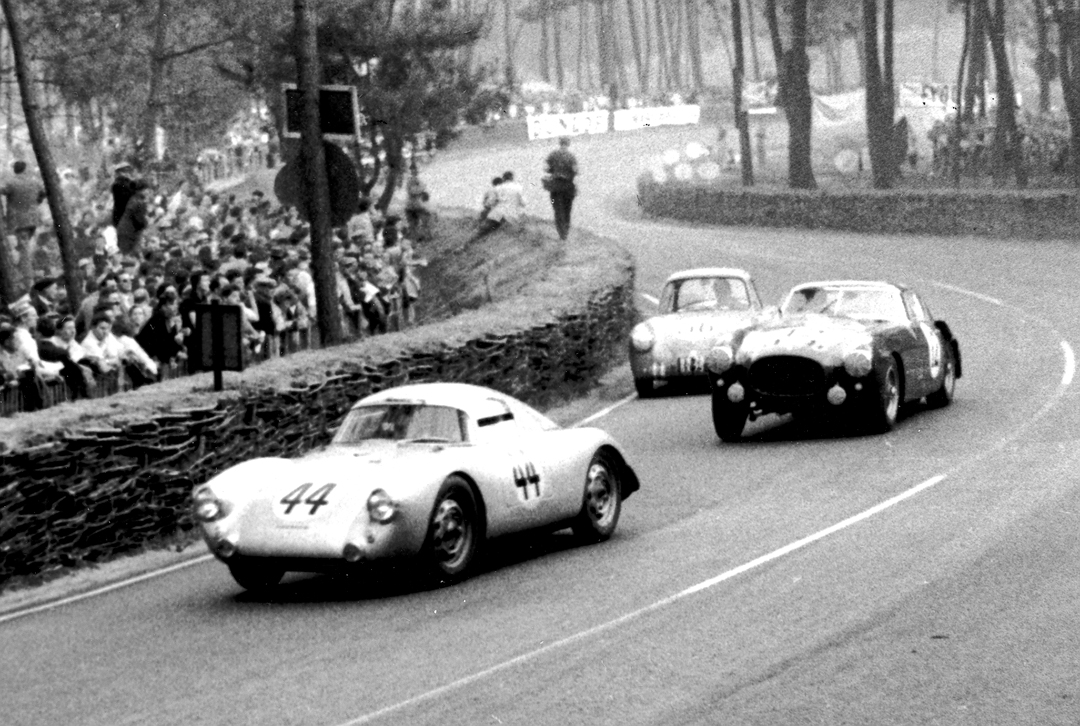
In the 1950s the 1.5-liter class pitted Porsche and Borgward in the West against EMW in the East, from Avus to the Carrera Panamericana. Karl Ludvigsen on the only direct racing contest between the two Germanies.
The newest long-form writing on the Carrera Panamericana, as it is published.
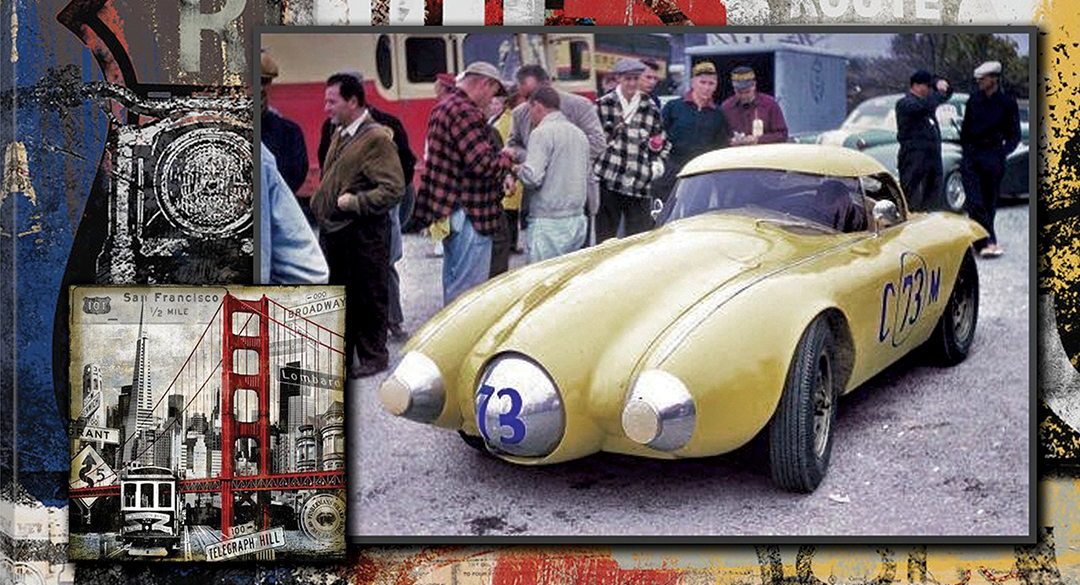
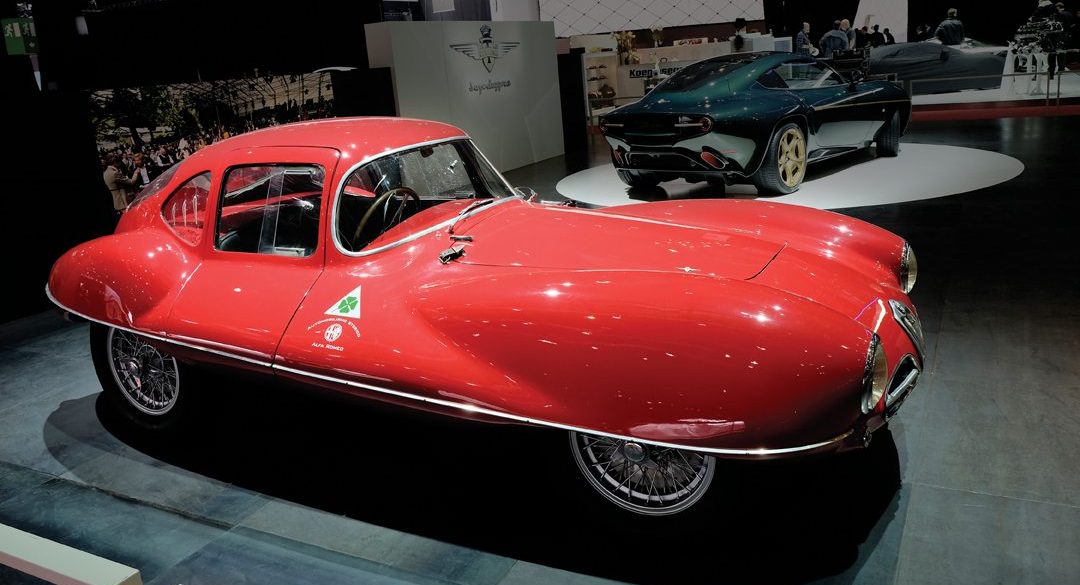
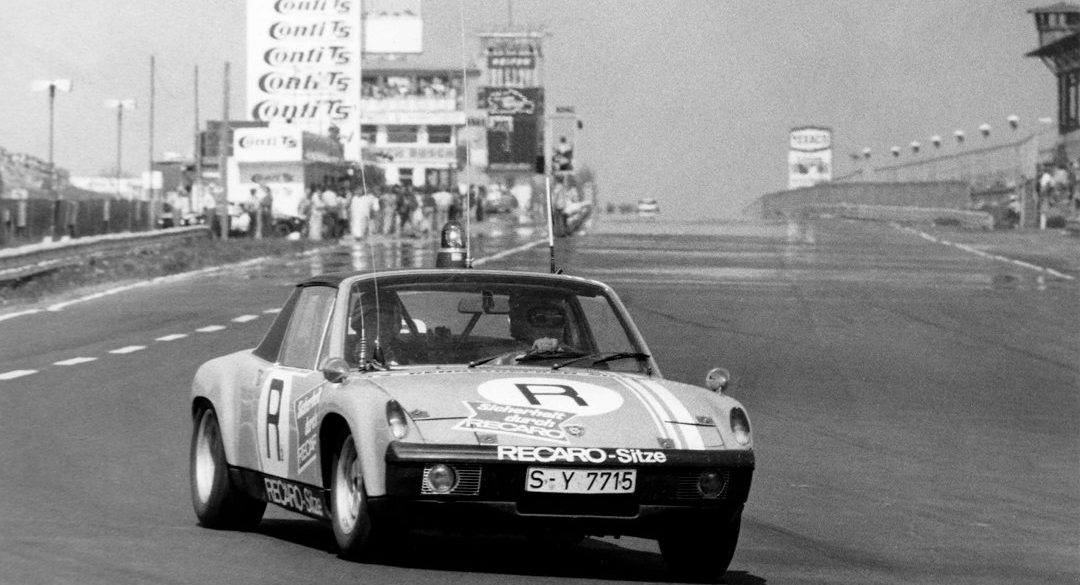
The Carrera Panamericana was a road race run by the Mexican government over its new section of the Pan-American Highway, once a year from 1950 to 1954. It was not a circuit race and not quite a rally: the field left a town at dawn, raced flat out on public roads closed by the army to the next overnight stop, and did it again the next morning, for five or six days, until the fastest aggregate time won. The distance was 1,900 to 2,100 miles, the road climbed from near sea level on the Tehuantepec plain to over 10,000 feet above Mexico City and then ran dead straight across the northern desert, and the cars were, at first, American sedans as sold and, from 1951, the fastest sports cars in the world.
Four things made it matter beyond Mexico. It was the only race of its time that American stock cars and European sports cars contested together, so Lincoln and Oldsmobile raced on the same road as Ferrari and Mercedes-Benz. It was the final round of the first World Sportscar Championship in 1953 and 1954, so the works teams had to come. It was faster than anything else: Umberto Maglioli averaged 107.9 mph for 1,910 miles in 1954, and 138 mph on the last leg into Ciudad Juárez. And it was the most dangerous race anyone had seen, with a death toll over five years that the usual counts put at 27 and some at more than 30. The name survives on every Porsche badged Carrera, on the Mercedes 300 SL's story, and on a revival rally that has run the same roads every autumn since 1988.
The Carrera began as advertising. In 1950 Mexico finished its 2,178-mile stretch of the Pan-American Highway, from Ciudad Juárez on the Texas line to the Guatemalan border, and the government of President Miguel Alemán wanted the world, and American business in particular, to know that the road was open. A race from end to end would do it, and the government worked with the American Automobile Association to make it one that Americans would enter: production sedans with at least five seats, 150,000 pesos, roughly $17,000, to the winner, and advertising allowed on every car. A Los Angeles Lincoln-Mercury dealer called Bob Estes flew down and helped raise the purse that made the stock car men take it seriously.
Fifty-nine Americans entered the first race, among 132 starters: NASCAR founders and stars like Bill France, Curtis Turner and Johnny Mantz; a 22-year-old Portland lumber-truck driver called Hershel McGriff, who drove his $1,900 1950 Oldsmobile 88 down from Oregon with his co-driver Ray Elliott; and Jack McAfee, whose boss had come running out of the office shouting about a road race in Mexico with a hundred thousand pesos. The archive's Mexico Memories, from the night the survivors gathered at the Petersen museum in 2000, tells how McAfee bought a stick-shift Cadillac in San Francisco on a Saturday, put two spare wheels in it, turned on the radio and drove to El Paso to enter. Europe sent a handful: Piero Taruffi and Felice Bonetto in Alfa Romeo 6C 2500 sedans, a few Delahayes, Jaguars, Talbots and a Hotchkiss, all of them outgunned by Detroit's V8s on the straights.
The first race ran north to south, from Ciudad Juárez to El Ocotal on the Guatemalan border, 2,135 miles in nine legs over six days from 5 to 10 May 1950. The big Cadillacs and Lincolns walked away on the flat, and the lighter Oldsmobile caught them in the mountains. McGriff never won a leg and finished outside the top ten only once; on the last section he made up eight minutes on Tommy Deal's Cadillac and won by a minute and a quarter, in 27 hours 34 minutes 25 seconds of driving. "It's a good thing nothing broke," he said fifty years later, "because we probably wouldn't have known how to fix it." Casey Annis's interview with McGriff, recorded for the race's fiftieth anniversary, has the rest: the Oldsmobile was sold afterwards and he went back to the lumber trucks, then to NASCAR, where he was still racing in his eighties. McAfee, who nudged Bonetto's Alfa out of the way in the mountains and was called "Boompah" by him ever after, finished tenth and drove the Cadillac home to Los Angeles. Four people died that first year, three of them competitors.
For 1951 the race was turned round, south to north, so that the mountain legs came first and the finish was on the border where the American crowds could see it; it was shortened to eight stages and 1,934 miles, and it let in four-seat closed cars, which meant the Ferrari 212 Inter coupés that Vignale was building in Turin. Piero Taruffi and Luigi Chinetti won in one, Alberto Ascari and Luigi Villoresi were second in another, 21 hours 57 minutes against 27 the year before, and Bill Sterling's Chrysler Saratoga was the first American car home in third, ahead of Troy Ruttman's Mercury. It was Ferrari's first factory success in the Americas and the start of Chinetti's long trade in the cars there; Taruffi, the engineer-driver who had won on motorcycles before the war, would be back on the podium two years later in a Lancia. Four more people died, among them the mayor of Oaxaca, on the first leg.
In 1952 the race opened to two-seat sports cars, split properly into sports and stock categories, and became a round that the factories could not ignore. Mercedes-Benz, back in racing for the first time since 1939, sent Alfred Neubauer with three 300 SLs, two gullwing coupés and a roadster, the last for John Fitch, the first American on a German works team. Ferrari sent the 340 Mexico, a 4.1-litre coupé Vignale had built for this race alone, and the 250 Sport that Giovanni Bracco had driven to win that year's Mille Miglia. Casey Annis's Wings of Change tells the Mercedes side of the year; 1952 Ferrari 340 Mexico tells the other.
On the opening leg out of Tuxtla Gutiérrez a vulture came through the windscreen of Karl Kling's coupé at 135 mph and knocked his co-driver Hans Klenk cold; the car ran the rest of the race with steel bars across the glass. Ascari crashed his 340 Mexico on the first day. Bracco, with Gino Bronzoni beside him, led the first two legs in the 250 Sport until its transmission failed, and Kling and Klenk won from Hermann Lang and Erwin Grupp in the sister car, 18 hours 51 minutes, 102 mph, with Chinetti third in a 340 Mexico and a young Umberto Maglioli fourth in a Lancia Aurelia. Fitch, lying fourth, was disqualified for working on his car outside the control area after the roadster's steering was repaired. The archive's photographs of the 1952 race and its W194 gallery are the record; Robert Newman's portrait of Karl Kling is the man.
Two other results from 1952 mattered more than they looked. Lincoln's factory team, prepared in California by Bill Stroppe and Clay Smith, took the first four places in the stock category with Chuck Stevenson in front, and would own that class for three years. And Prince Paul Metternich's Porsche 356, eighth overall among the sports cars, won the small-displacement class, Porsche's first success in Mexico and the beginning of a name.
By 1953 the Carrera was the deciding round of the new World Sportscar Championship, crash helmets were compulsory, and the works teams came for it: 182 cars started on 19 November. Lancia sent five D24s and D23s under Gianni Lancia himself; Ferrari sent 375 MMs; Porsche sent the new 550 Spyder, which had run at Le Mans that summer. Juan Manuel Fangio won for Lancia, with Bronzoni, Bracco's co-driver of the year before, beside him, from Taruffi and Eugenio Castellotti, a Lancia one-two-three in 18 hours 11 minutes at 105 mph, after Bonetto, leading the team on the fourth day, missed his own warning marks on the rough pavement of Silao, hit a building and was killed. Guido Mancini's fourth place in a 375 MM gave Ferrari the points it needed to beat Jaguar to the first manufacturers' title. The archive's Lancia D24 profile and Robert Newman's Vincenzo Lancia carry that side of it.
Phil Hill, driving a privately entered Ferrari with his friend Richie Ginther alongside, went off a cliff between Puebla and Mexico City, end over end, and both walked away; Art Evans's Remembering Richie tells that story. The small sports class went to José Herrarte's Porsche 550 coupé, entered from Guatemala; the stock class to Stevenson and Smith's Lincoln again, with Lincolns one-two-three-four behind it; the small stock class to a six-cylinder Chevrolet. Mickey Thompson's Ford went into the crowd on the first day and killed six spectators, two Italians in a 375 MM died on the same leg, and the year's toll came to nine. Only 60 of the 182 starters finished.
The fifth Carrera started at six in the morning on 19 November 1954 from Tuxtla Gutiérrez with 150 cars, and the archive's account of it is one of the best things the magazine ever published: Trail of Tears and its second part, by Boyd Harnell, who fitted seat belts and a tape recorder to his 1954 Oldsmobile Holiday coupé, joined the press cordon and photographed all eight legs with a Luftwaffe-surplus motor-drive camera. On the way to the start a Jaguar XK120 full of waving American fans passed him near Tehuantepec and crashed fatally minutes later. On the first leg, 329 miles of switchbacks from Tuxtla to Oaxaca, McAfee's 4.9-litre Ferrari 375 Plus went fifty feet off the road and his co-driver Ford Robinson, who had filmed the 1950 race from the passenger seat of the Cadillac, was killed. Harnell's tapes of Jack McAfee, recorded at the start and lost for 46 years, carry the voice of the man whose friend died that morning.
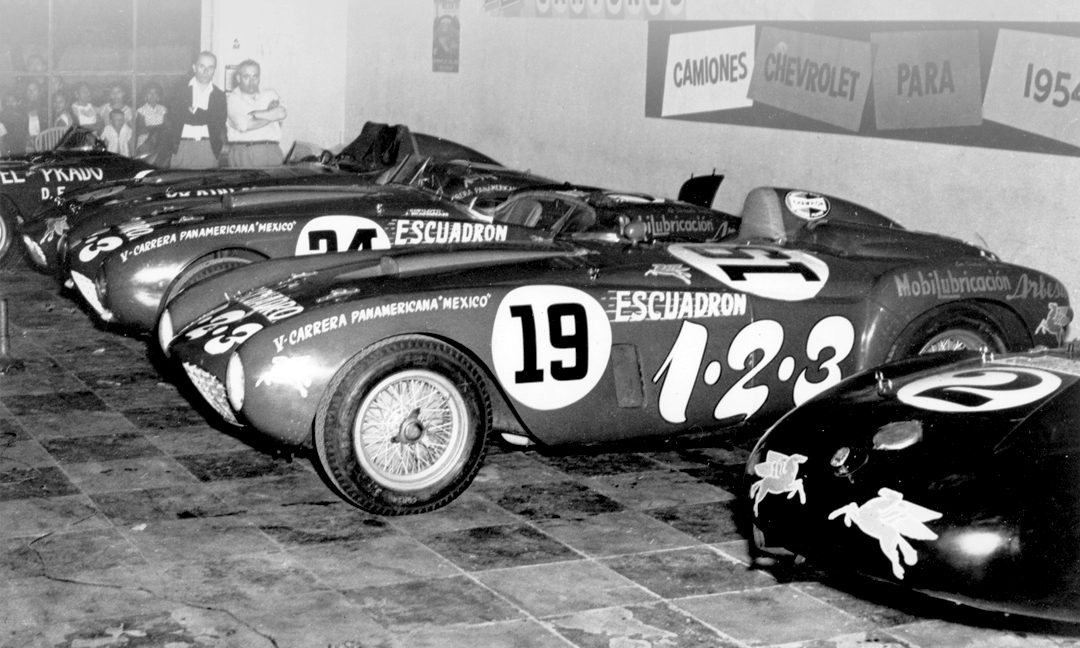
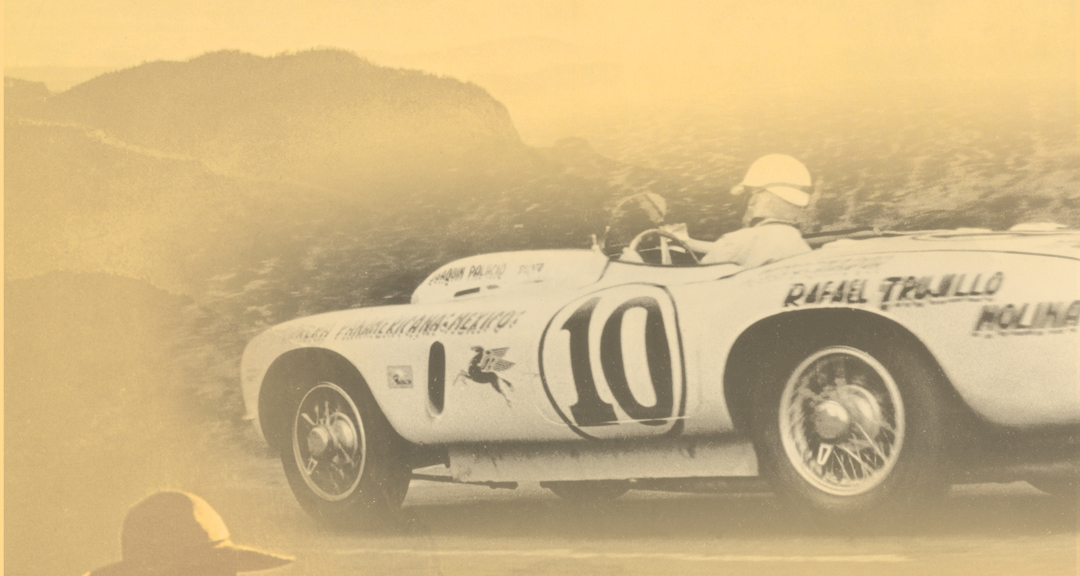
The rest of the week went the way the race always had, and came down to the two Ferraris in Wally Thomason's La Carrera photograph: Umberto Maglioli, driving the other works 375 Plus alone, winning leg after leg across the high desert; Hill and Ginther in Allen Guiberson's year-old 4.5-litre 375 MM chasing him for five days, losing a differential in Chihuahua and still taking the last leg into Ciudad Juárez; Hans Herrmann's 1.5-litre Porsche 550 third overall against cars with three times the engine, with Jaroslav Juhan's 550 fourth; Ray Crawford's Lincoln winning the stock class; Consalvo Sanesi's Alfa Romeo 1900 the European stock class; a Pegaso burning in the maguey, a Perón-sponsored Chevrolet flipping outside Parral, a soldier levelling a loaded rifle at the photographer until he saw the press armband. Maglioli's time was 17 hours 40 minutes 26 seconds, 107.9 mph, and he covered the final 227 miles from Chihuahua at 138. A hundred thousand people and a flight of light aircraft met the finishers at Juárez; 85 cars got there. By Harnell's count the race and its practice had killed four entrants, four civilians and a soldier.
Carroll Shelby was in that race too, in an Austin-Healey 100S, and crashed early, broke his arm and, the story goes, drove on for a while with his co-driver's seat taken out; so was the Hot Rod magazine Oldsmobile-engined 1927 Ford of Ak Miller, El Caballo, seventh overall against the Ferraris; so were seven Volkswagen Beetles, which all finished, in seven of the last eight places; so was the first Corvette to race outside the United States. Lincoln, Mercedes, Ferrari and Porsche all advertised on the strength of Mexico for years afterwards, and Porsche still does.
Every running of the original race: the route, the overall winner, the class winners and the cost. Car names link to every story on the site about that car.
| Year | Dates, route and distance | Overall winner | Car | Class winners | Started / finished / killed |
|---|---|---|---|---|---|
| 1950 | 5–10 May, Ciudad Juárez south to El Ocotal, 2,135 miles in nine legs | Hershel McGriff / Ray Elliott, 27 h 34 min 25 s | Oldsmobile 88 | Stock sedans only; Tommy Deal's Cadillac second by 1 min 16 s; Bonetto's Alfa Romeo 6C 2500 the best European car | 132 / — / 4 |
| 1951 | November, Tuxtla Gutiérrez north to Ciudad Juárez, 1,934 miles in eight legs | Piero Taruffi / Luigi Chinetti, 21 h 57 min 52 s | Ferrari 212 Inter Vignale | Ascari / Villoresi second in a sister car; Bill Sterling's Chrysler Saratoga third, the first American car | — / — / 4 |
| 1952 | 19–23 November, Tuxtla Gutiérrez to Ciudad Juárez, 1,934 miles | Karl Kling / Hans Klenk, 18 h 51 min 19 s, 102 mph | Mercedes-Benz 300 SL (W194) | Stock: Chuck Stevenson / Clay Smith, Lincoln Capri (Lincolns 1-2-3-4). Small sports: Metternich / de Teffé, Porsche 356. Lang / Grupp second; Chinetti third in the 340 Mexico | — / — / 1 |
| 1953 | 19–23 November, Tuxtla Gutiérrez to Ciudad Juárez, 1,912 miles | Juan Manuel Fangio / Gino Bronzoni, 18 h 11 min 00 s, 105 mph | Lancia D24 | Lancia 1-2-3 (Taruffi, Castellotti). Small sports: Herrarte / González, Porsche 550 coupé. Stock: Stevenson / Smith, Lincoln Capri (Lincolns 1-2-3-4). Small stock: Evans / Krause, Chevrolet 210. Mancini's 375 MM fourth gives Ferrari the championship | 182 / 60 / 9 |
| 1954 | 19–23 November, Tuxtla Gutiérrez to Ciudad Juárez, 1,910 miles | Umberto Maglioli, alone, 17 h 40 min 26 s, 107.9 mph | Ferrari 375 Plus | Hill / Ginther second in a 375 MM; Herrmann's Porsche 550 Spyder third and small-sports winner, Juhan's fourth. Stock: Ray Crawford / Enrique Iglesias, Lincoln Capri. Small stock: Drisdale / Krause, Dodge. European stock: Sanesi / Cagna, Alfa Romeo 1900 TI | 150 / 85 / 7 |
| 1955 | Cancelled after the Le Mans disaster of 11 June | — | — | President Ruiz Cortines: the highway had been publicised; the race was never run again | — |
| 1988– | Each October, about 2,000 miles in seven days, usually Oaxaca or Veracruz north to Zacatecas or Durango | La Carrera Panamericana revival | Cars to the mid-1960s, in ten classes | Timed closed-road stages between transit sections; 80–100 entries; top speed limited to 144 mph since 2012 | — |
Times are the winner's aggregate for the whole race. The 1951 race was closed cars only; sports and stock categories were separated from 1952 and split by engine size from 1953. Death counts follow the year-by-year records; the usual five-year total is 27.
Accounts of the five races and the revival, newest first.
From 1951 the race ran south to north over eight legs, and the road did the work that a circuit designer would do. The first leg, 329 miles from Tuxtla Gutiérrez to Oaxaca, began 328 feet above sea level and crossed the Tehuantepec plain on a straight 25 miles long with two mild curves, then climbed through a claimed 978 corners to 6,500 feet and dropped into Oaxaca at 4,600: the leg that killed Ford Robinson in 1954. The second ran 328 miles from Oaxaca to Puebla and on over the shoulder of the volcanoes to Mexico City, the most mountainous of the race, reaching 10,382 feet, thin air that cost a carburetted engine close to a third of its power; it was on this road that Hill and Ginther went over the edge in 1953. From Mexico City the road went north through León, where the 1953 Lancias were at their fastest, past Silao, where Bonetto died, to Durango, 329 miles of straights broken by blowing sand and mirages, then 437 miles from Durango to Chihuahua on what Harnell thought the smoothest surface of the race, 20- and 40-mile straights across rolling ranchland where the big Ferraris and the 300 SLs sat at 150 mph for minutes at a time, and finally 227 miles of virtually dead-straight road from Chihuahua to Ciudad Juárez, across the river from El Paso, where the race ended.
The towns were the danger. Every leg ran through villages whose main street was the highway, lined with people the army could only partly hold back; the pavement changed from new asphalt to cobbles without warning, and the works teams drove the course beforehand and painted their own warning marks on walls and road, as Lancia did and as Bonetto, fatally, overlooked. Service was at the leg ends and at a handful of fuel points, so the cars ran heavy with fuel and spares out of every town, and a tyre thrown at 150 mph on the desert straights was the commonest way to lose it: McAfee's crash in 1954 began with a blown tyre, and Maglioli lost minutes to one on the run into Mexico City the same week.
Five races produced five different kinds of winner, which is why the Carrera matters to so many marques. The 1950 Oldsmobile 88 was a stock sedan with the new overhead-valve Rocket V8, the car that was also winning the first NASCAR seasons. The 1951 Ferrari 212 Inter was a 2.6-litre V12 grand touring coupé with Vignale coachwork, the ancestor of every Ferrari road car since. The 1952 Mercedes-Benz 300 SL, the W194, was the spaceframe gullwing that had won Le Mans that June, and the road-going 300 SL of 1954 was the direct result of the Mexican win and of Max Hoffman's order for a thousand of them. The 1953 Lancia D24 was Vittorio Jano's 3.3-litre V6 spyder, the dominant sports-racer of its year and the last great racing Lancia before the company withdrew. The 1954 Ferrari 375 Plus was the biggest of the Lampredi V12 sports cars, 4.9 litres and over 330 horsepower, the car that had also won Le Mans that year with Gonzalez and Trintignant.
Behind the winners were the cars that made the race's reputation: the works Lincoln Capris that Stroppe and Smith built into the fastest stock cars in the world and that swept the touring class from 1952 to 1954; the Porsche 356 of 1952 and the 550 Spyders of 1953 and 1954, 1.5 litres against five, which Karl Ludvigsen's Germany's Quart and a Half Brigade follows from Mexico onward; the Ferrari 340 Mexico, built for one race; the Alfa Romeo 1900 and 6C 3000 CM, the Disco Volante's racing cousin, whose story is in Disco Volante Legacy; the Pegasos, the Talbots and the Jaguars; the Austin-Healey 100S works cars of 1954; and the hot rods, Ak Miller's El Caballo in 1954 and the Caballo II he built for a 1957 Carrera that never happened and took to the Mille Miglia instead. The nine cars below each link to every story on the site about that car.
Nine cars that made the race; each links to every story on the site about that car or its builder.
Single-car stories that carry the race: the 300 SLs and Ferraris, the Lancias, the 550s and 356s, the Lincolns and the hot rods.


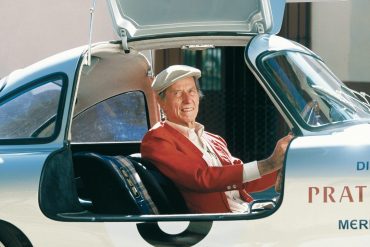


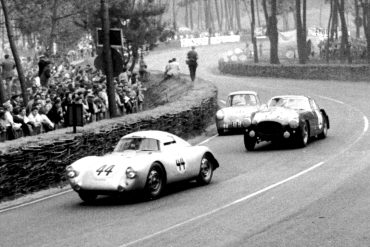

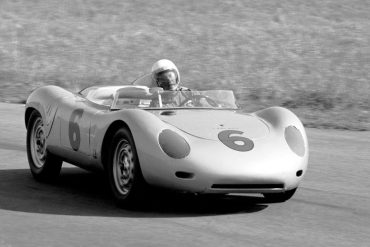


The entry lists read like a roll call of two kinds of racing that otherwise never met. From Europe came the Grand Prix drivers between seasons: Fangio, Ascari, Villoresi, Taruffi, Castellotti, Bonetto, Maglioli, Kling, Lang, Herrmann, Chinetti and Louis Rosier, with Neubauer, Gianni Lancia and Enzo Ferrari's lieutenants running the teams. From America came NASCAR's founders and the West Coast road racers who would make up its first generation of international drivers: Phil Hill and Richie Ginther, both of whom first drove a works-class Ferrari in Mexico; Carroll Shelby; Jack McAfee; John Fitch, the first American in a European works team; Bill Stroppe and Clay Smith, the mechanics who became Lincoln's team; and the stock car men, Hershel McGriff, Chuck Stevenson, Johnny Mantz, Walt Faulkner, Ray Crawford and Troy Ruttman, the 1952 Indianapolis winner. Mexico and Guatemala had their own: José Herrarte, who won Porsche its first class in 1953; Jaroslav Juhan, the Czech-born Guatemalan who was fourth in 1954; and the local Lincoln and Oldsmobile drivers who filled the stock classes. The portraits in the archive, Robert Newman's above all, carry most of them; the feed below gathers the rest.
Drivers, mechanics, team managers and the photographers who followed them.
Deaths were part of the race from the first year, and they rose with the speeds: four in 1950, four in 1951, one in 1952, nine in 1953, seven in 1954, 25 by the year-by-year count and 27 or more by the usual total, roughly a third of them spectators. The reasons were built in. Open roads through towns; a field that mixed 130-mph Ferraris with amateur sedans doing 80; altitude and heat that wore out tyres, brakes and drivers; and no safety equipment beyond, from 1953, a helmet. Bonetto, Stagnoli and Scotuzzi in 1953 and Robinson in 1954 were the racing deaths the world noticed; the dead spectators and the Jaguar full of fans at Tehuantepec were the ones Mexico noticed.
In June 1955 the Le Mans disaster killed more than eighty people and ended motor racing for a year in several countries, and in Mexico it ended the Carrera for good. The government cancelled the race planned for November; President Adolfo Ruiz Cortines said only that its original purpose, publicising the highway, was complete, and the cost to the treasury and the army of closing two thousand miles of road for a week was not mentioned again. There was no 1955 race, no 1957 race for Ak Miller's second hot rod, and the road went back to the trucks.
Porsche won nothing outright in Mexico, and took more from the race than anyone. Metternich's class win in a 356 in 1952, Herrarte's in the first 550 coupé in 1953, and Herrmann's third overall in a 550 Spyder in 1954, against 4.9-litre Ferraris and 300 SLs, were the results that persuaded Ferry Porsche the small company could race against anyone. The four-camshaft 1.5-litre engine Ernst Fuhrmann had designed for the 550 was named the Carrera, and in 1955 the road-going 356 that carried it became the 356 Carrera. The name moved to the 904 Carrera GTS in 1964, to the 911 Carrera RS of 1973, the car Ed McDonough's Targa Tourer follows, and to every 911 Carrera since. Herrmann, a pastry cook from Stuttgart when Porsche first telephoned, told the archive the story in his interview and Robert Newman's portrait; Mercedes-Benz, for its part, put the vulture bars and the Mexican flag on the 300 SL's history for good, and Lincoln sold its 1953 and 1954 Capris on the strength of three years of class wins.
In 1988 Pedro Dávila, Loyal Truesdale and Eduardo de León brought the name back as a seven-day event for cars built up to the mid-1960s, run on the same roads with timed closed-road stages between transit sections, usually from the south, Oaxaca, Veracruz or Huatulco, north to Zacatecas or Durango, about 2,000 miles in all. It is still run every October, with 80 to 100 cars in ten classes, and the Studebakers, Lincolns and Oldsmobiles of the Turismo Mayor class are the fastest things in it; speeds reached nearly 180 mph on the open stages until a 144-mph limit came in for 2012, after two deaths that year. It has become the event the originals never got to be: fast, dangerous enough, and survivable. The archive has reports from the 2009, 2010 and 2022 runnings, the documentary that Sports Car Digest contributor Stephen Mitchell made of the original races, and the video series from the 35th edition. The original cars that still run the revival are the reason the road looks the way it does in Harnell's pictures.
Fastest race: 1954, Umberto Maglioli, Ferrari 375 Plus, 17 h 40 min 26 s for 1,910 miles, 107.9 mph. Fastest leg: Chihuahua to Ciudad Juárez, 1954, 227 miles at 138 mph. Slowest winner: 1950, Hershel McGriff, Oldsmobile 88, 27 h 34 min 25 s for 2,135 miles, the only race run north to south and the only one for stock sedans alone. Longest race: 1950, 2,135 miles in nine legs; the 1951 to 1954 races ran 1,910 to 1,934 miles in eight. Biggest entry: 1953, 182 starters, of whom 60 finished; 1954 started 150 and finished 85. Highest point: 10,382 feet, on the Puebla to Mexico City leg; lowest, 328 feet, at the Tehuantepec start of leg one. Winning marques: Oldsmobile, Ferrari (twice), Mercedes-Benz, Lancia. Winning drivers: McGriff, Taruffi, Kling, Fangio, Maglioli; only Maglioli won driving alone. Stock class: Lincoln, 1952, 1953 and 1954, with Lincolns one-two-three-four in 1952 and 1953. Small sports class: Porsche, 1952 (356), 1953 (550 coupé) and 1954 (550 Spyder, third overall). Championship: the Carrera was the final round of the World Sportscar Championship in 1953 and 1954; Ferrari took both titles. Prize money: 150,000 pesos to the winner in 1950, about $17,000, from a fund of about $35,000. Deaths: 25 by the year-by-year counts, 27 in the usual total, at least 31 by some; Bonetto in 1953 was the best-known driver killed. Revival: since 1988, 2,000 miles in seven days, 80 to 100 cars, top speed limited to 144 mph since 2012.
Short answers, with the long ones above.
A five-day road race the length of Mexico on the Pan-American Highway, run by the Mexican government from 1950 to 1954 to publicise the new road. It was open to stock sedans in 1950 and to sports cars from 1951, and it was a round of the World Sportscar Championship in 1953 and 1954.
Hershel McGriff in an Oldsmobile 88 in 1950, Piero Taruffi and Luigi Chinetti in a Ferrari 212 Inter in 1951, Karl Kling and Hans Klenk in a Mercedes-Benz 300 SL in 1952, Juan Manuel Fangio and Gino Bronzoni in a Lancia D24 in 1953, and Umberto Maglioli, alone, in a Ferrari 375 Plus in 1954.
Because of the deaths. After the 1955 Le Mans disaster the Mexican government cancelled that year's race and did not bring it back, saying the highway had been publicised; 27 or more people had died in five years, about a third of them spectators.
2,135 miles in nine legs in 1950, from Ciudad Juárez south to the Guatemalan border; from 1951 it ran the other way over eight legs of 1,910 to 1,934 miles, from Tuxtla Gutiérrez to Ciudad Juárez, in five days.
Porsche's class wins in Mexico in 1952, 1953 and 1954, and Hans Herrmann's third overall in a 1.5-litre 550 Spyder in 1954, led the company to name its four-cam racing engine, and from 1955 the 356 Carrera that carried it, after the race. The 911 has worn the name since 1973.
On the first leg of the 1952 race a vulture came through the windscreen of Karl Kling's Mercedes 300 SL at about 135 mph and knocked his co-driver Hans Klenk unconscious. The car was fitted with vertical steel bars over the windscreen and went on to win.
Yes. A revival has run every autumn since 1988 as a seven-day event for cars built up to the mid-1960s, with timed closed-road stages on the original roads, usually from Oaxaca or Veracruz north to Zacatecas or Durango.
The most dangerous race of its era: 25 deaths by the year-by-year counts and 27 or more in total across five races, including Felice Bonetto in 1953 and Ford Robinson in 1954, and spectators killed at the roadside in most years.
The whole thread, newest first.