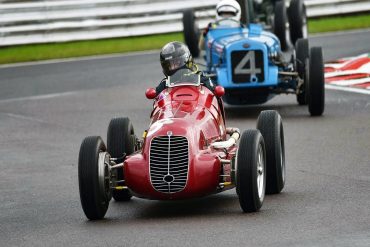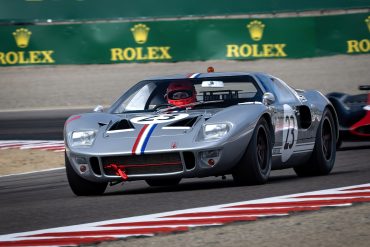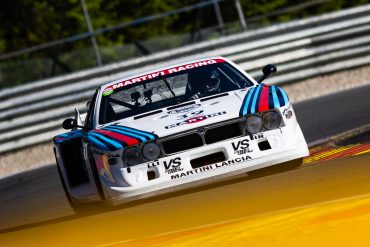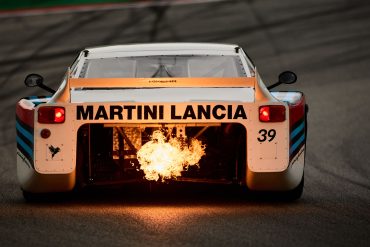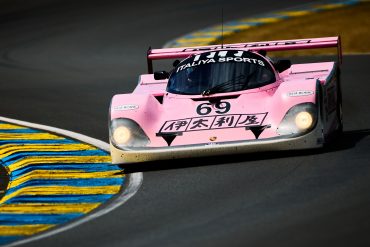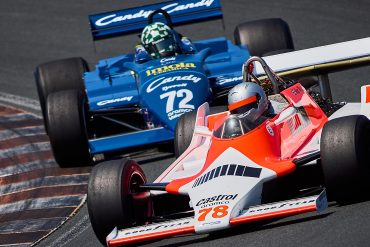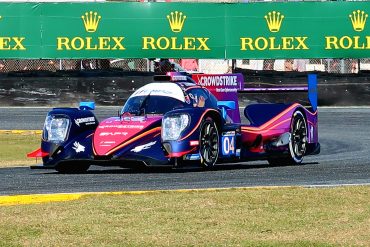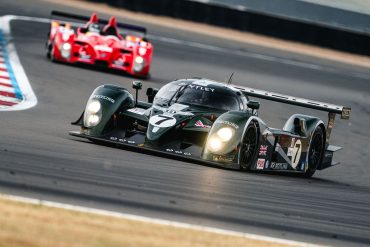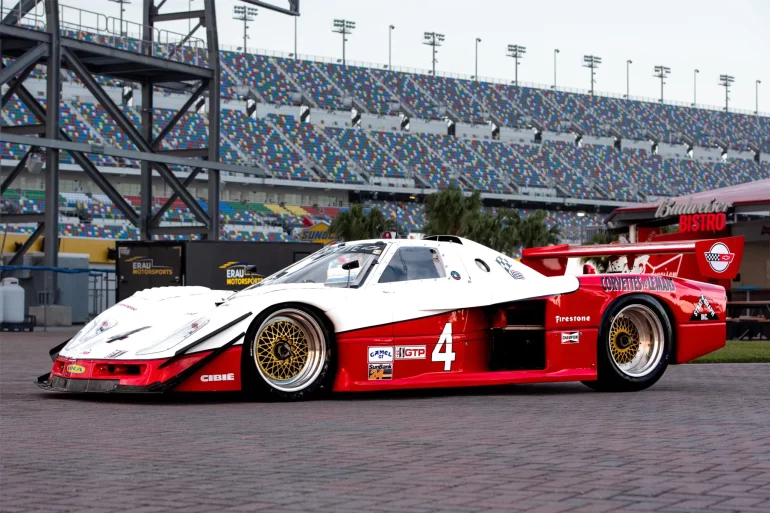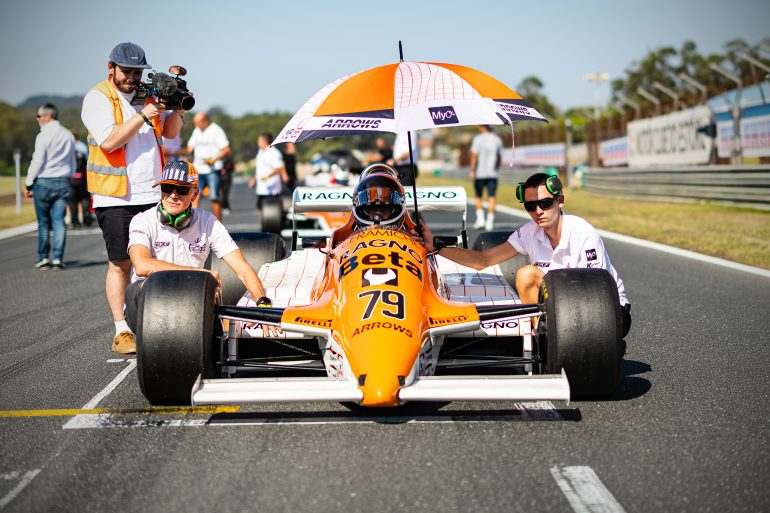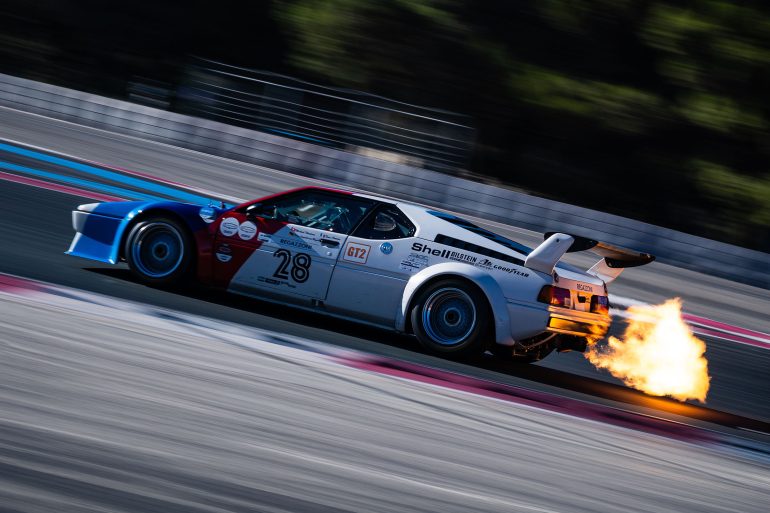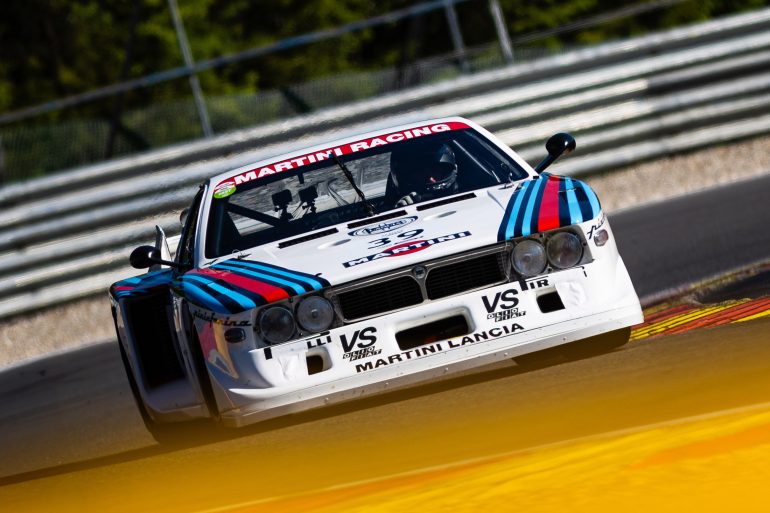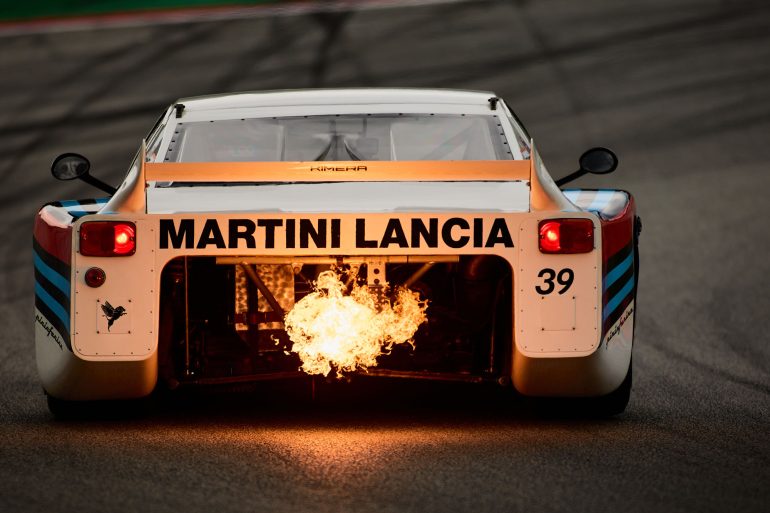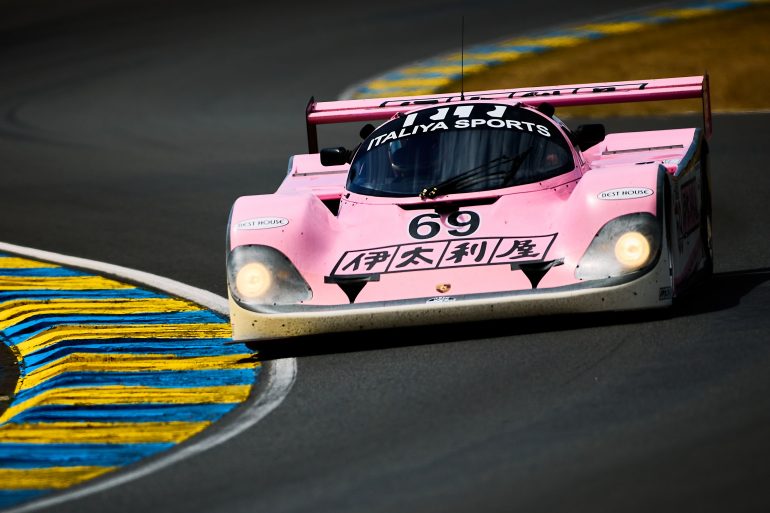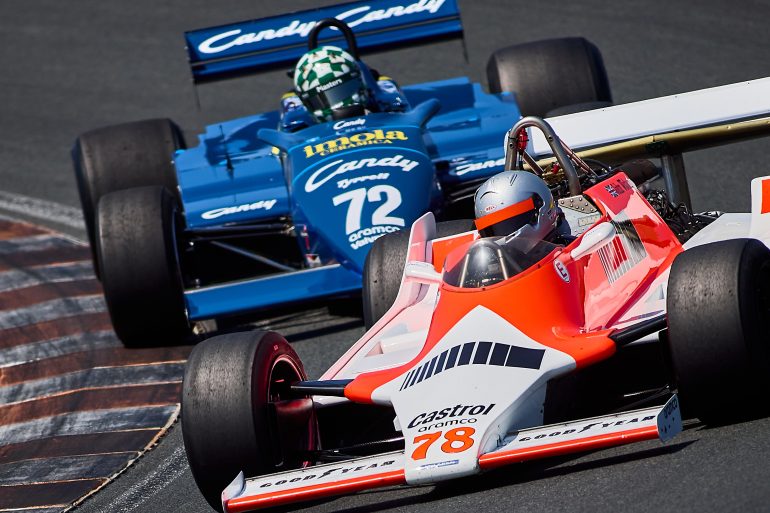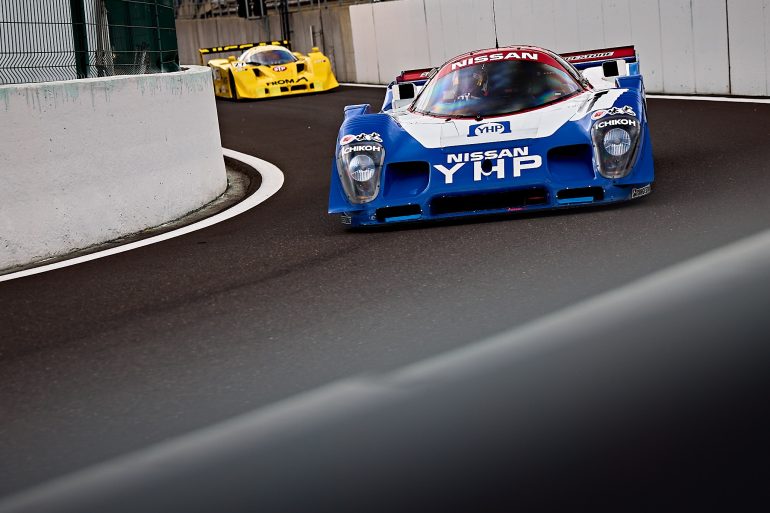
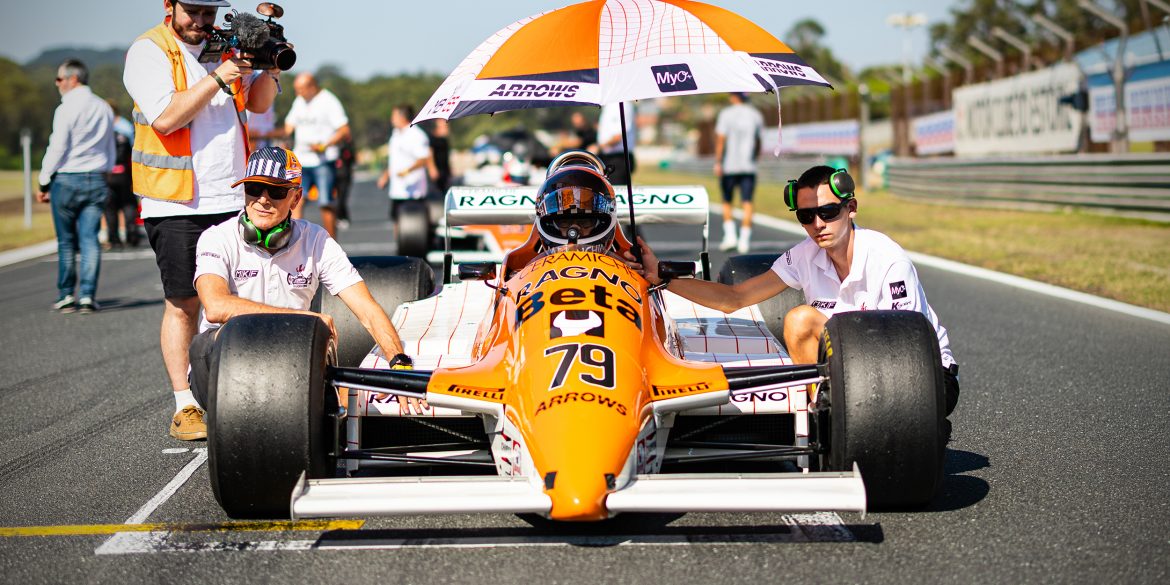
The Le Mans Classic Series' penultimate round at Estoril clashed with the Goodwood Revival, so the fields were thinner than usual on a circuit lately given fresh paint and new grandstands, pampas grass at almost every corner, above Cascais.

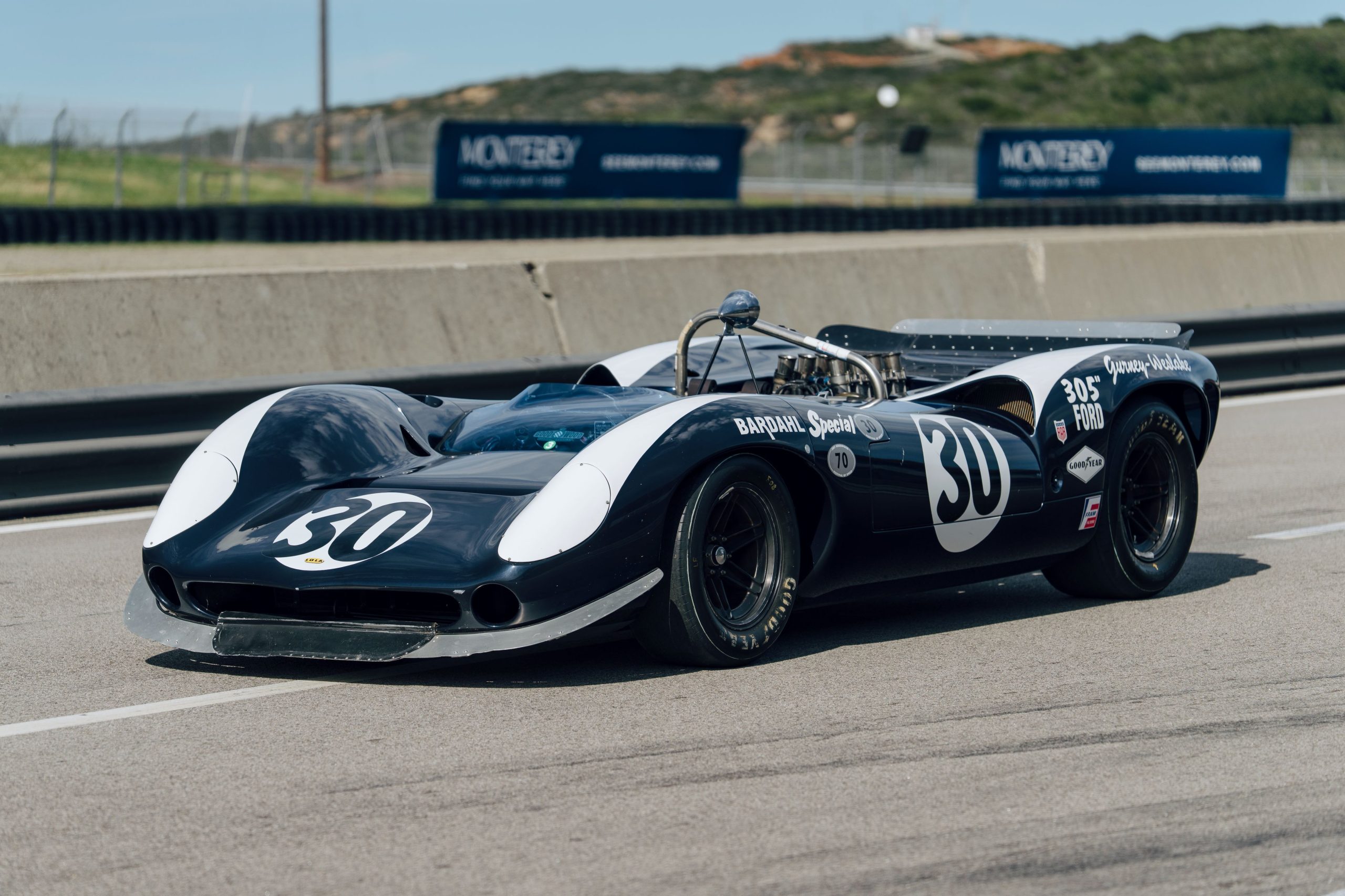
Eric Broadley's big sports-racer of 1965, the car that made Lola a name beyond the paddock: a riveted aluminium monocoque with a Chevrolet V8 behind the driver, the spyder that John Surtees drove to the first Can-Am championship in 1966 and Denny Hulme to the Tourist Trophy, the Mk3 coupé that was the most beautiful racing car of the decade and never quite reliable enough at Le Mans, and the Mk3B that won the Daytona 24 Hours for Roger Penske and Mark Donohue in 1969. About a hundred built in five years, the mainstay of the privateers from Brands Hatch to Kyalami, the Porsche 917s and Ferrari 512s of Steve McQueen's film, and today the car that fills the Masters and Goodwood sports-car grids. 150 Lola T70 stories in the archive, in order.
The pieces to start with
Eight pieces on the car: Casey Annis's Sun Rise, Ed McDonough's Last of the Line, Roger Dixon's BOAC 500, the Greatest Racecar? question, Pete Lyons on Gurney in the Can-Am, Louis Galanos's 1969 Daytona, the Hugh Dibley interview and Pete Lyons on John Surtees.
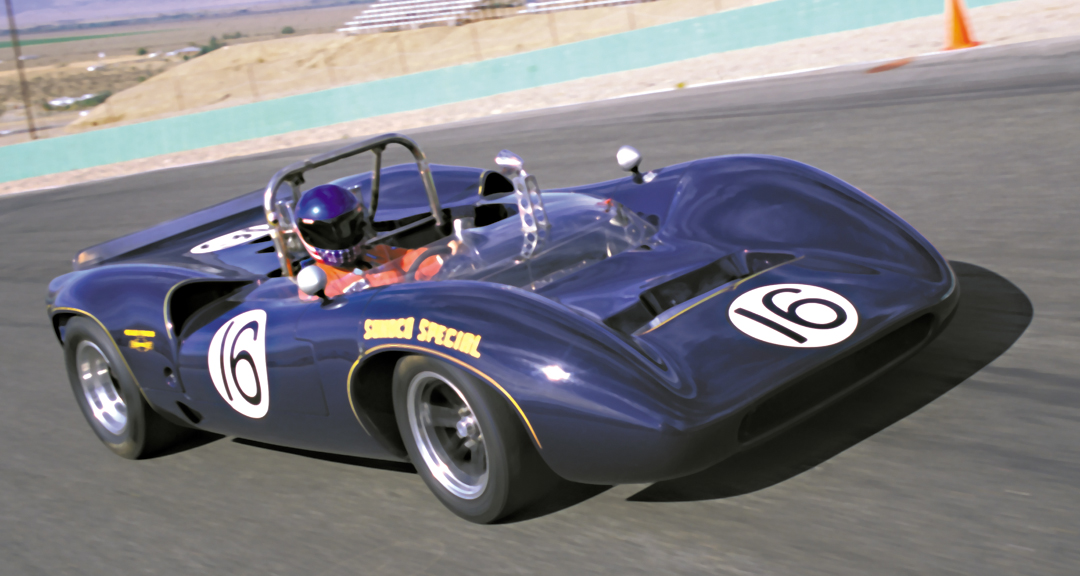
Half a dozen Lola T70s were said to have been Penske cars in 1966–67, and the histories had tangled into rumor. Months of detective work with Sun Oil’s Bill Preston, George Follmer and John Starkey sorted out which was which.
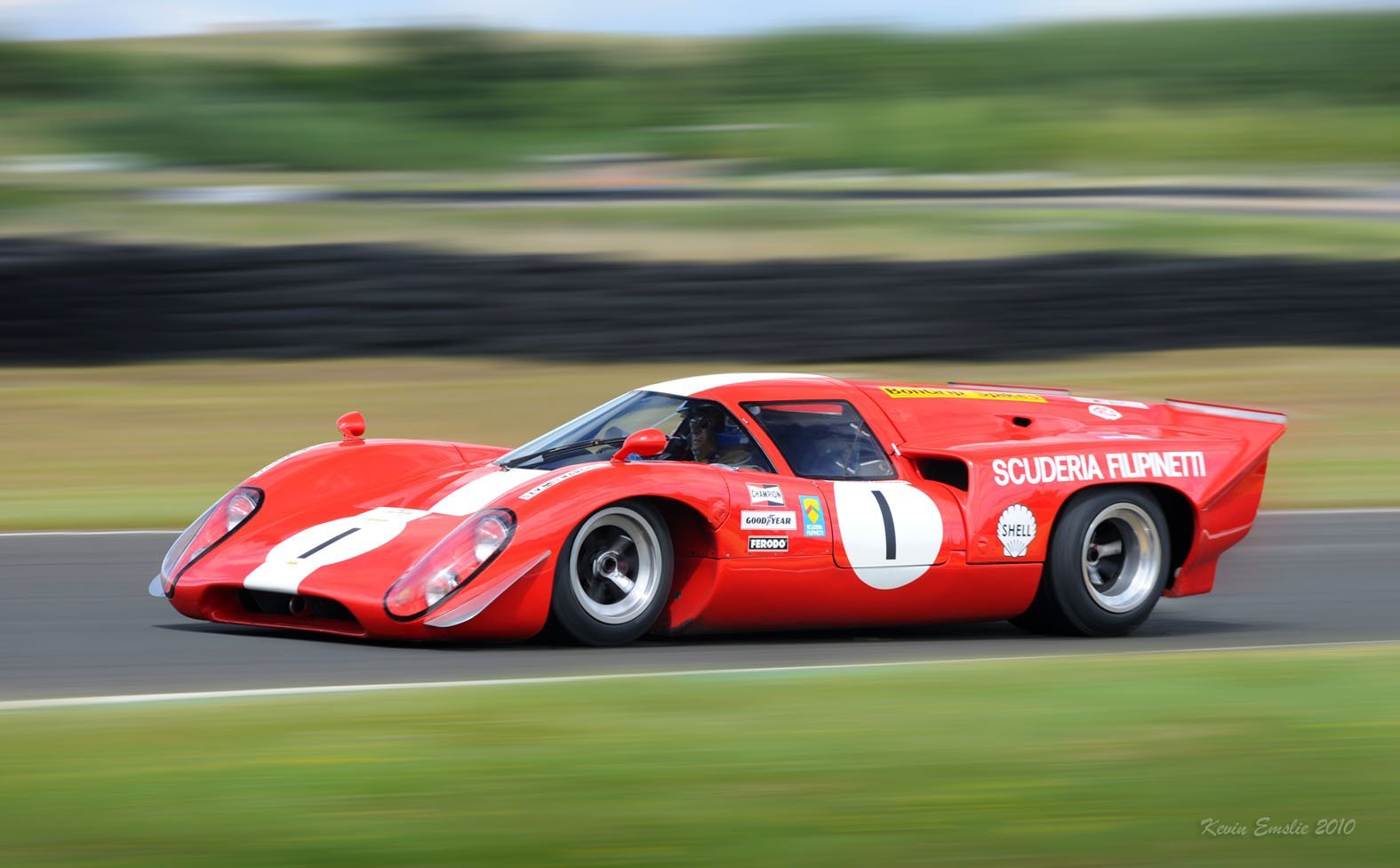
Ed McDonough’s first sight of a Lola T70 was Copse Corner, 27 April 1968: Hulme and Bonnier clearing off from six GT40s, with Hulme winning by three hundredths. He drives a Mk3B, the final version, and untangles the family tree.
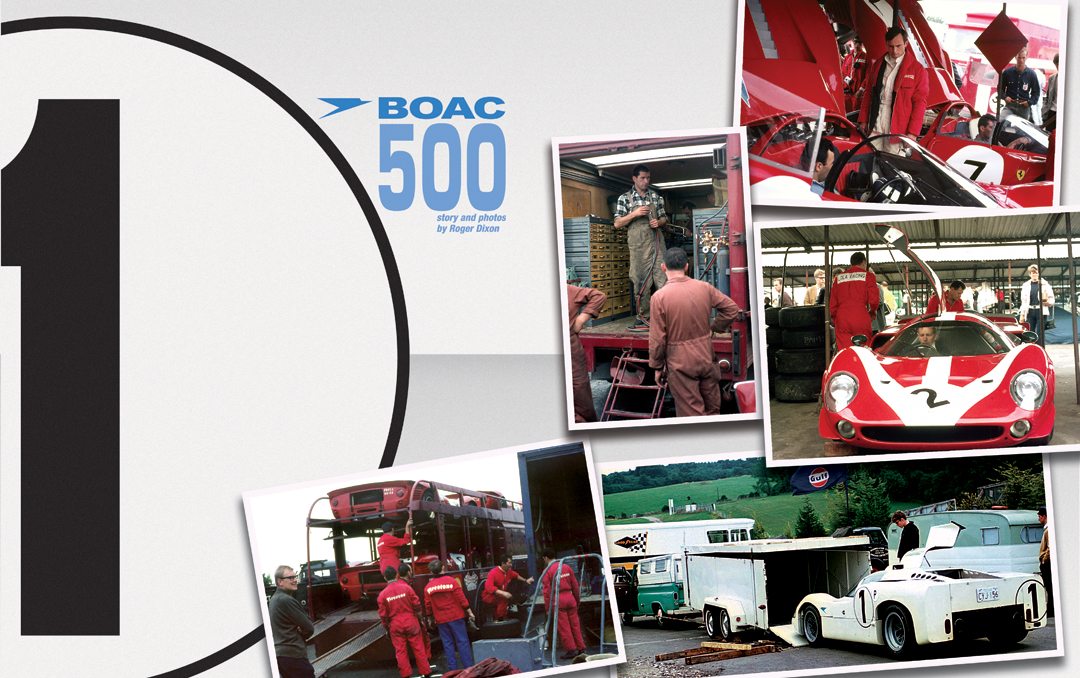
1967: Ford’s 7-liter Mk2s and Mk4s, Ferrari’s P4 some 500 lb lighter, and Jim Hall’s Chaparral 2F with its automatic gearbox and driver-tilted wing. Seven makes contested the world sports prototype title and five of them won races.
Eric Broadley saw the market for a chassis built around American V8s; Cooper did not. Developed by John Surtees, the T70 with a Chevy lapped British circuits faster than F1 cars, while Lotus’s 30 and 40 went down as failures.
Amon, Andretti, Brabham, Siffert and Rodriguez never won a Can-Am race. Dan Gurney won the second one ever held, at Bridgehampton in 1966, in a Lola T70 his own shop had made hotter. Pete Lyons on why that counts.
All five factory Porsche 908s and both Wyer GT40s retired, and Penske’s Lola T70 Mk IIIB won with Donohue and Parsons; James Garner’s AIR team came second. Louis Galanos was there with a camera.
Black-flagged for “wild driving” at a Goodwood Members’ Day in an AC Aceca on Michelins, Hugh Dibley went on to race the Howmet turbine car, fly airliners and build championship-winning Palliser single-seaters. John Wright calls him in Toulouse.
Henry Surtees, 18, died on 19 July when a wheel from another Formula 2 car struck his head; days later a spring fractured Felipe Massa’s skull. Pete Lyons on the father who survived seven motorcycle titles in cork and leather.
The newest writing on the Lola T70, as it is published.
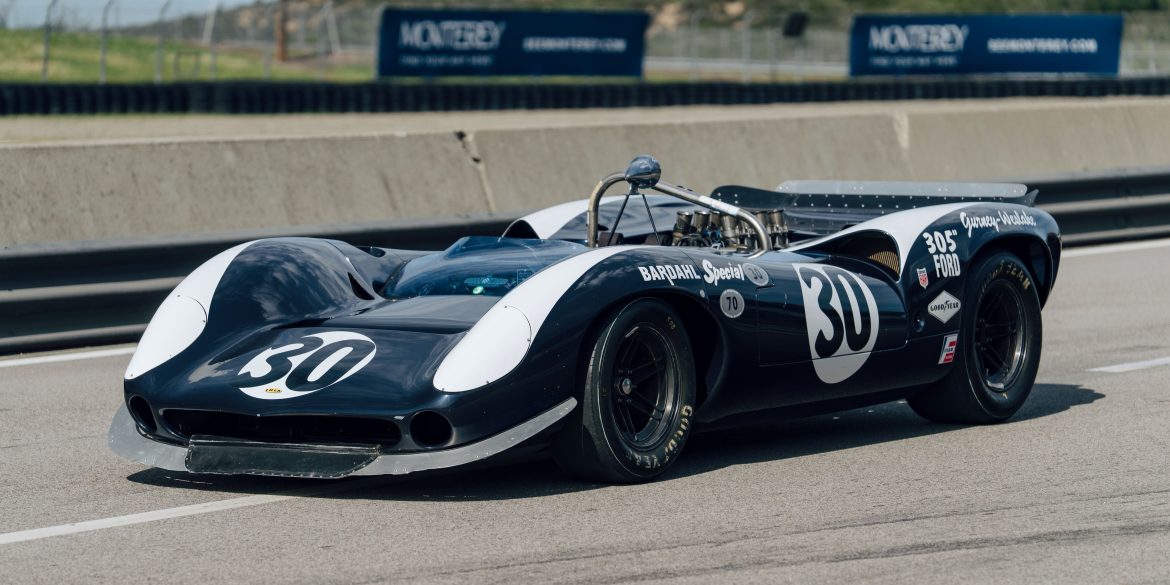
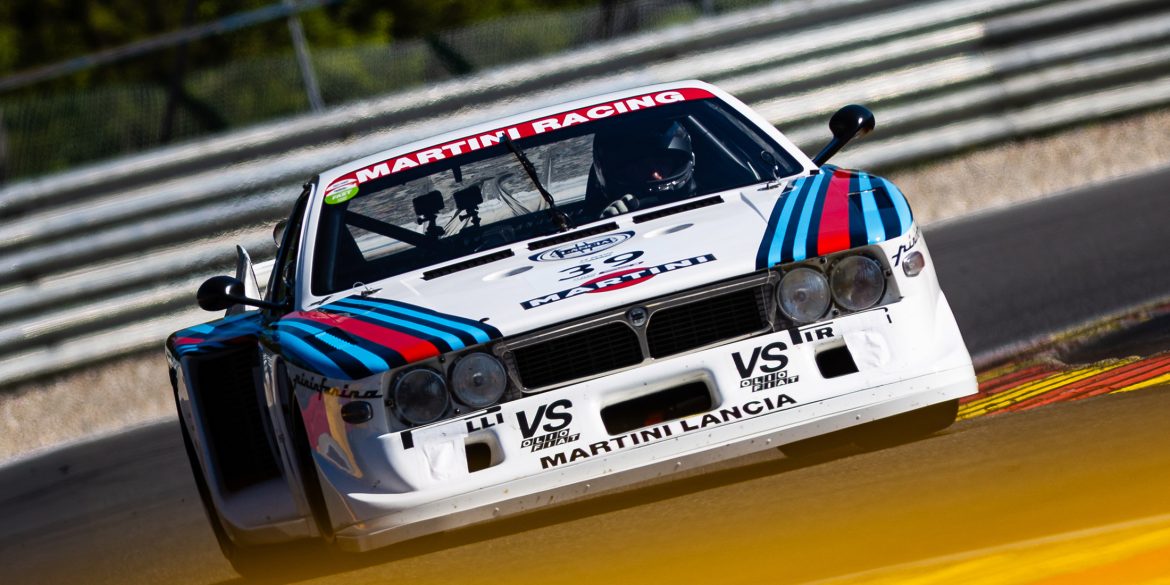
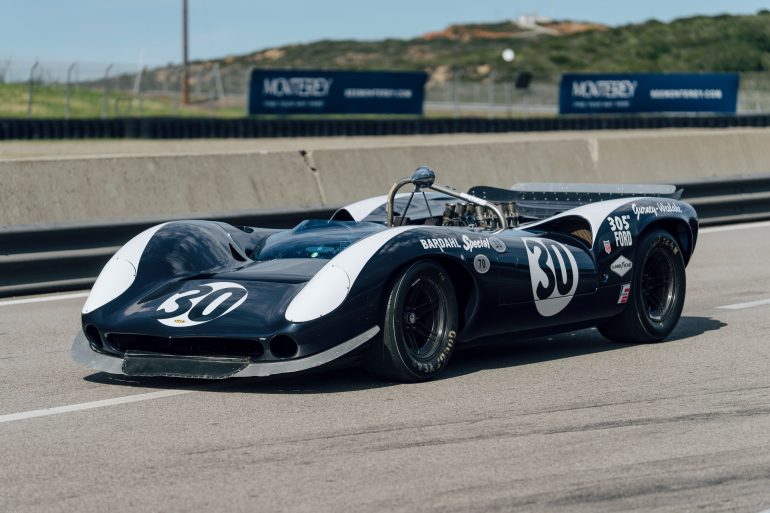
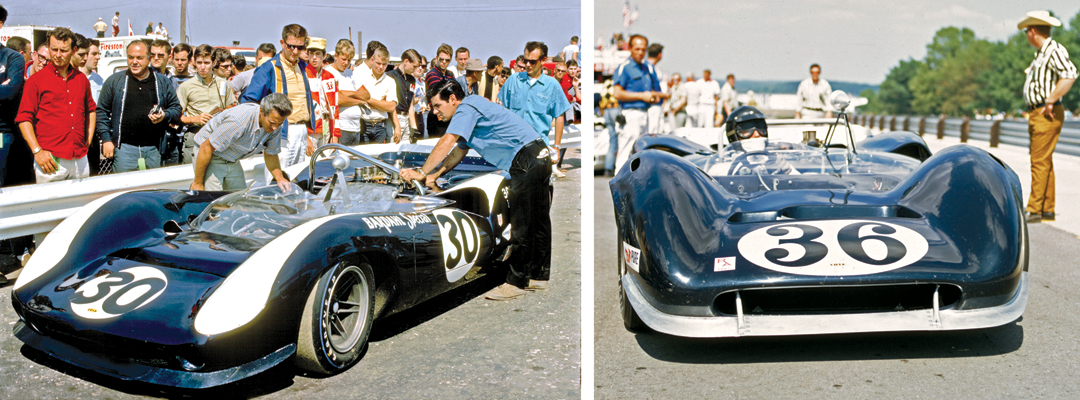
The Lola T70 is the two-seat sports-racing car Eric Broadley's Lola Cars built at Slough from 1965 to 1969, in three marks and two body styles, and the car that for most people is Lola. Broadley had designed the Mk6 GT of 1963 that became the Ford GT40, spent a year at Ford Advanced Vehicles and left; the T70 was what he did with his freedom, a Group 7 sports car for the big-engined, unrestricted racing of the Sports Car Club of America's United States Road Racing Championship and the British Guards Trophy rounds, and from 1966 the Canadian-American Challenge Cup. The chassis was a riveted aluminium monocoque with steel bulkheads and a tubular engine subframe, double wishbones at the front and the big reversed lower wishbones Broadley favoured at the back, 13-inch magnesium wheels, and a body drawn by Broadley and shaped by Specialised Mouldings in glassfibre, open on the Mk1 and Mk2 spyders of 1965–66 and closed on the Mk3 coupé of 1967 and the Mk3B of 1969. The engine was whatever the customer wanted, which in practice meant a 5- or 5.9-litre small-block Chevrolet from Traco or Bartz; Dan Gurney ran Ford, John Surtees tried Aston Martin's V8 at Le Mans in 1967 to the cost of both, and the BRM Chevrolet of 1968 was no better. The T70 was never the fastest car in a Can-Am field once the McLaren M6A arrived in 1967, but in 1965 and 1966 it was, and the spyder won five of the six first-season Can-Am races, three for Surtees's title, one for Gurney and one for Mark Donohue in Penske's car, and the Mk3B coupé won the 1969 Daytona 24 Hours after every Porsche 908 and Ford GT40 had broken.
Lola built roughly a hundred T70s: fifteen Mk1s, thirty-odd Mk2s, the Mk3 spyders and about thirty Mk3 coupés, and sixteen Mk3Bs plus the Mk3s converted to B specification, with chassis numbers from SL70 to SL76; more exist now than were made, which is the usual thing with a car this loved. The archive has 150 Lola T70 stories: Casey Annis's "Sun Rise" on a 1967 spyder, Ed McDonough's "Last of the Line" on a Mk3B and his T160, Mike Jiggle's "Free Spirit" on SL71/48, Roger Dixon's BOAC 500, Louis Galanos's 1969 Daytona, the Greatest Racecar? question put to the T70, Dennis David's data page, the interviews with Hugh Dibley, Tony Southgate, Karl Kainhoffer and Bruce Burness, Pete Lyons on Surtees and on Gurney in the Can-Am, and fifteen years of Masters, Goodwood, Spa and Daytona Classic reports with the T70 at the front of them. The Lola page carries the company, the Can-Am era page the series, and the Lola T70 Mk3B and the other Lola model threads are linked from the table.
Eric Broadley was a quantity surveyor who built a 1,172 cc Ford special in 1957, the Lola Mk1 of 1958 that beat the Lotus Elevens, and a Formula Junior and a Formula One car for Bowmaker and John Surtees in 1962; the Lola Mk6 GT of January 1963, a mid-engined coupé with a Ford V8 in a monocoque, was the car Ford bought the idea of, and Broadley spent 1963–64 at Ford Advanced Vehicles in Slough watching the GT40 grow out of it. He left in the autumn of 1964, kept the Slough workshop next door, and drew the T70 for the 1965 season, a bigger, simpler, open car for the American and British big-banger racing where the money and the privateers were: a monocoque where the GT40 had a steel semi-monocoque, a Chevrolet where the GT40 had a Ford, no roof, no rulebook worth the name. It was announced at the Racing Car Show at Olympia in January 1965 and the first car went to Surtees, who had left Lola's Formula One effort for Ferrari but came back to drive and part-own Team Surtees's T70s.
The Mk1 of 1965, fifteen cars, ran first with Surtees at Silverstone in March and won the Player's 200 at Mosport and the Guards Trophy at Brands Hatch that summer; Hugh Dibley ran his at Mosport and Riverside, the archive's interview with him remembers it, and in September Surtees's suspension broke at Mosport and nearly killed him. The Mk2 of 1966 was lighter and stiffer, with a revised body and better brakes, and it was the car of the first Can-Am season: Surtees won at St. Jovite, Riverside and Las Vegas for the championship, Dan Gurney won at Bridgehampton with a Ford engine, the only Ford Can-Am win there would be, which Karl Ludvigsen's "Ford and the Can-Am" tells, and Mark Donohue won at Mosport in Roger Penske's Sunoco car with Karl Kainhoffer on the spanners, the start of that partnership. Only Phil Hill's Chaparral at Laguna Seca stopped the sweep. In Britain Denny Hulme won the Tourist Trophy at Oulton Park in Sid Taylor's T70 and the Group 7 races belonged to the Lolas; Pete Lyons's "Dan in Can-Am" and his Surtees portrait are the first-hand accounts, and Mike Jiggle's "Free Spirit" follows SL71/48, a 1966 Mk2, from new. Patrick Quinn's "McLaren's Dawn" is the view from the team that was about to end it: the M6A of 1967 put the T70 in the second rank of the Can-Am for good, though Surtees won Las Vegas again in 1967 in the same championship car.
Every Can-Am race story on the site, newest first; the era page has the series in full.
For the endurance races of the new 3-litre prototype and 5-litre sports-car formula of 1968, and for Group 4 homologation, Lola closed the T70 in: the Mk3 coupé of 1967, with a low roof, gullwing-hinged doors, a long tail and the same monocoque, is the car on every poster, and Surtees took it to Le Mans in 1967 with Aston Martin's new 5-litre V8 in two cars, his own with David Hobbs and Chris Irwin's with Peter de Klerk, which lasted three and twenty-five laps. The Chevrolet cars did better: Paul Hawkins, Jo Bonnier, Ulf Norinder, Sid Taylor, Jackie Epstein and the other privateers raced them through 1967 and 1968 in the BOAC 500 at Brands Hatch, the Spa and Nürburgring 1000 km, the Springbok series in South Africa and the Tasman sports-car races, winning where the Porsches and Fords failed and failing, usually in the gearbox or the engine, where they did not. Roger Dixon's "BOAC 500" is the 1967 race, Surtees's red coupé leading from the front row until the Chaparral 2F took it; Casey Annis's "Sun Rise" is a 1967 spyder's life; Tony Southgate, who went on to design the Ford C100 and the Jaguar XJR-9, says in his archive interview that aerodynamics in racing began with the T70's wings and spoilers sprouting at Slough. For 1968 the FIA counted the T70 coupé as a Group 4 sports car, which it had the fifty cars for, and the BRM-badged Chevrolets of that year were a false step; Dennis David's T70 page and Mark Leonard's sports-prototype market columns set the marks out.
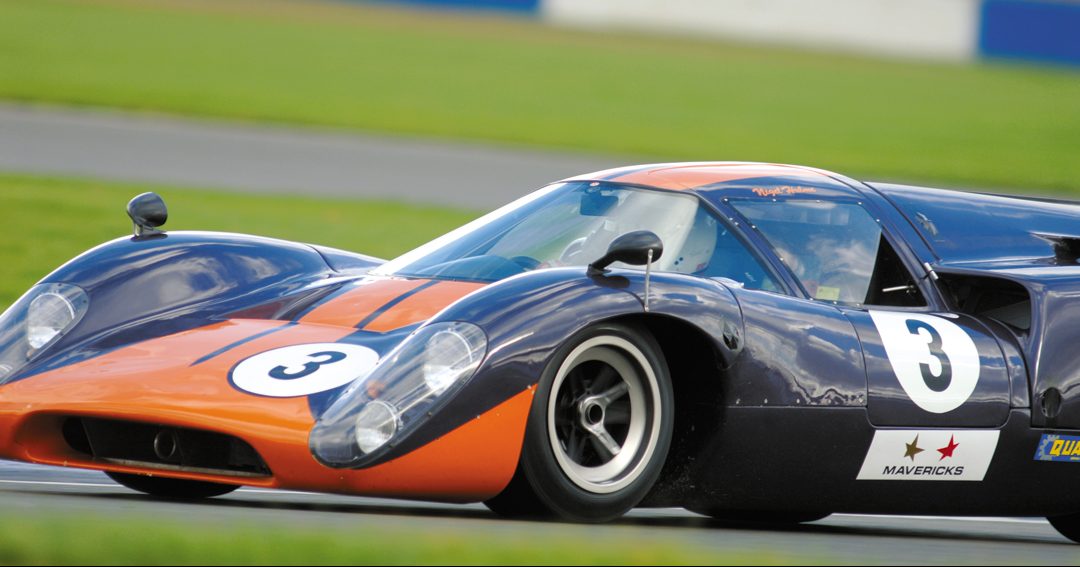
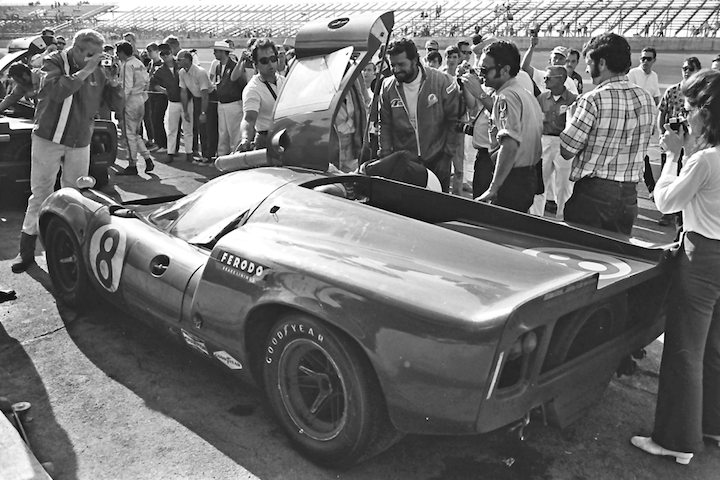
The Mk3B of 1969 was the coupé done properly: a new, stiffer tub with the fuel in the sills, a wider track, a lower and shorter nose with twin headlamps under covers, a Hewland LG600 gearbox and the 5-litre Chevrolet at about 450 horsepower, built new for sixteen customers and as conversions for others, Ed McDonough's "Last of the Line" being the archive's study of one. Roger Penske bought one for Mark Donohue and Chuck Parsons, painted it Sunoco blue, and at Daytona on 1–2 February 1969 it ran at its own pace while the works Porsche 908s broke their intermediate shafts and the Wyer GT40s their everything, and won the 24 Hours by thirty laps from another T70, Ed Leslie and Lothar Motschenbacher's; Louis Galanos's race profile and his piece on James Garner's AIR team are the archive's accounts, and Karl Kainhoffer's interview is the mechanic's. It was Lola's greatest win and the T70's only one in a world-championship round; the rest of the 1969 season belonged to the Porsche 917's teething troubles and the 908, and the Mk3B's wins came in the Springbok series, the Interserie and the national races, with Brian Redman, David Hobbs, Bonnier, Hawkins, who was killed in his at Oulton Park in May 1969, and Frank Gardner driving. Lola replaced it with the T160 and T163 in the Can-Am, which McDonough's "Marathon Man" follows, and with the T210 and T212 in the 2-litre class; the T70 was obsolete by 1970 and in 1971 Steve McQueen's Le Mans used Mk3Bs dressed as a Porsche 917 and a Ferrari 512 for the crashes, which is where several of them went.
Every story on the site about the 1969 coupé, newest first.
Every story on the site about the race the Mk3B won in 1969, newest first.
The T70 came back before most of its contemporaries. By the late 1970s the HSCC and SCCA vintage grids had them, and from the 1990s the T70 has been the backbone of the big sports-car races: the Masters Historic Sports Car and Endurance Legends series, the Goodwood Revival's Whitsun Trophy and the Members' Meeting's Surtees Trophy, the Spa Six Hours and Spa Classic, Le Mans Classic's 1966–71 grid, the Daytona Classic 24, the Monterey Reunion and the Sommet des Légendes; the archive's reports from all of them from 2009 to 2026 are in the feeds below, and the T70 is usually in the photographs. Continuation cars built by Lola in the 1990s and by others since, and the conversions of spyders to coupés and Mk3s to Mk3Bs, mean the provenance of any given T70 takes work; the SL numbers are the thread, and the archive's for-sale and auction pieces, a 1965 Mk1 spyder, a 1967 Mk3B spyder and the Stratas sale, show what the paperwork looks like. Tom Malloy bought his Mk3B at a US Customs auction, which is the kind of story a T70 has.
Where the T70s race now, newest first.
A table of the car and its racing from the Mk6 GT of 1963 to the Masters grids of 2026, with the archive's story of each year linked, follows this chapter. The model names link to every story on the site about that car; the People and Event links open their threads.
Five racing seasons and the fifty since: the car, the racing and the archive's story of each. Model names link to every story on the site; the People and Event links open their threads.
| Year | The car | The racing | In the archive |
|---|---|---|---|
| 1958–63 | Lola Mk1 · Mk6 GT · Eric Broadley | Broadley's Lola Mk1 beats the Lotus Elevens; the Formula Junior and the Bowmaker F1 car for Surtees; the Mk6 GT of January 1963 that becomes the Ford GT40 | Lola page · Ford GT40 page |
| 1964 | Mk6 GT · Eric Broadley | Broadley at Ford Advanced Vehicles, then out; the T70 drawn at Slough for the 1965 Group 7 season | Tribute to a racing legend: John Surtees |
| 1965 | T70 · John Surtees · Group 7 · Brands Hatch | The Mk1 at the Racing Car Show in January, 15 built; Surtees wins the Player's 200 and the Guards Trophy; Dibley's car at Mosport; Surtees's crash at Mosport in September | Interview: Hugh Dibley · Greatest Racecar? Lola T70 · 1965 Lola T70 Mk1 Spyder at auction |
| 1966 | T70 · Can-Am · John Surtees · Dan Gurney · Mark Donohue · Denny Hulme | The Mk2; the first Can-Am: Surtees champion with three wins, Gurney's Ford win at Bridgehampton, Donohue's at Mosport in Penske's car; Hulme wins the Tourist Trophy in Sid Taylor's T70 | 1966 Lola T70 SL71/48: Free Spirit · John Surtees, by Pete Lyons · Dan in Can-Am · Ford and the Can-Am |
| 1967 | T70 · Aston Martin · Le Mans · BOAC 500 · McLaren | The Mk3 coupé; the Aston Martin V8 cars at Le Mans, 3 and 25 laps; Surtees leads the BOAC 500 until the Chaparral; the McLaren M6A takes the Can-Am; Surtees wins Las Vegas again | 1967 Lola T70 Spyder: Sun Rise · BOAC 500 · 1967 BOAC International 500 · McLaren's Dawn |
| 1968 | T70 · Paul Hawkins · Jo Bonnier · George Follmer | Group 4 homologation; the BRM Chevrolets; the privateers' year, Hawkins, Bonnier, Norinder, Epstein; Follmer's Mk2 in the USRRC; the T160 for the Can-Am | Interview: Bruce Burness, Part II · Lola T160: Marathon Man · Interview: Tony Southgate |
| 1969 | T70 Mk3B · Daytona 24 Hours · Mark Donohue · Roger Penske · Brian Redman | The Mk3B, 16 new; Penske's Sunoco car wins the Daytona 24 Hours with Donohue and Parsons, T70s first and second; Hawkins killed at Oulton Park in May; the Springbok and national wins | 1969 Lola T70 Mk3B: Last of the Line · 1969 24 Hours of Daytona · James Garner's AIR team at Daytona · Interview: Karl Kainhoffer |
| 1970–72 | T70 · T210 · T280 · Steve McQueen · Jo Bonnier | The T70 obsolete; Le Mans, the film, with Mk3Bs as the 917 and 512 crash cars; the T210 and T212 win the 2-litre championship; Bonnier killed in a T280 at Le Mans 1972 | Interview: Haskell Wexler · 1972 Lola T290-Tecno |
| 1980s–2009 | T70 · Masters Historic Racing · Monterey Reunion | The T70 in historic racing; the continuation cars; Mark Leonard's market columns track it from $150,000; the Monterey Historics and the first Masters grids | FIA Sports Prototypes: Market & Values · Can-Am market and values, 2009 · Lola T70, Dennis David |
| 2010–14 | T70 · Masters Historic Racing · Members' Meeting · Daytona Classic 24 | Masters at Silverstone; the Surtees Trophy at the first Members' Meeting; the Daytona Classic 24; Le Mans Classic's 1966–71 grid; the Hawk at Road America | Masters Historic Racing at Silverstone 2010 · Surtees Trophy, Members' Meeting 2014 · Le Mans Classic 2014, 1966–71 |
| 2015–16 | T70 · Goodwood Revival · Spa Six Hours · Monterey Reunion | The Whitsun Trophy at the Revival; Spa Classic and the Six Hours; Zandvoort's Masters sports cars; the Monterey Reunion; Tom Malloy's Mk3B | Goodwood Revival 2015: Whitsun Trophy · Zandvoort 2015: Masters sports cars · Tom Malloy |
| 2017–23 | T70 · John Surtees · Masters Historic Racing | Surtees dies in March 2017; Jiggle's SL71/48; Masters at Brands Hatch and Donington; a Mk3B spyder for sale; the Stratas sale | Masters Historic Festival, Brands Hatch 2020 · Vintage racers at Stratas Auctions · 1967 Lola T70 Mk3B Spyder for sale |
| 2025–26 | T70 · Le Mans Classic · Spa Six Hours | Le Mans Classic, Spa Classic, Zandvoort, Montjuïc, Castellet and Estoril: the T70 at the front of every big sports-car grid | 2025 Le Mans Classic · Spa Classic 2026 · Estoril Classics 2026 |
The Lola page carries the company and the Can-Am era page the series; the Mk3B, T160, T210 and T280 have threads of their own; the Daytona and Le Mans races are on their own pages.
Nine cards follow for the T70s and their neighbours: the Mk6 GT before it, the Mk1 and Mk2 spyders, the Mk3 spyder and coupé, the Aston Martin and BRM-engined cars, the Mk3B, the Daytona winner, the film cars and the T160 and T210 that followed; and below them the Mk3B thread and the T160 and T210 threads.
Nine cars from the archive, from the Mk6 GT to the film cars; each links to every story on the site.
The Can-Am cars that followed the T70, newest first.
Eric Broadley, who drew it; John Surtees, who developed it, won in it and sold it; Dan Gurney, Mark Donohue and Roger Penske, Chuck Parsons and Karl Kainhoffer; Denny Hulme and Sid Taylor; David Hobbs, Brian Redman, Paul Hawkins, Jo Bonnier, Frank Gardner, Hugh Dibley, Jackie Epstein, Ulf Norinder, Lothar Motschenbacher, Chris Craft, Mike Spence and George Follmer, whose Mk2 Bruce Burness ran; Tony Southgate and the Specialised Mouldings shop; Steve McQueen and Solar Productions; and the keepers, Tom Malloy among them. The Surtees, Redman and Donohue threads open below.
Every story on the site about the T70's first and greatest driver, newest first.
Every story on the site about the man who raced T70s for Sid Taylor and still writes for us, newest first.
Every story on the site about the Daytona winner, newest first.
The T70 is the most usable big sports-racer there is, because the engine is a Chevrolet and the parts exist, and the market reflects that: a Mk3B coupé with history is $1–1.5 million, more for the Daytona winner's kind of provenance, a Mk3 coupé $600,000–900,000, a Mk2 or Mk3 spyder $400,000–700,000, a Mk1 $350,000–500,000, and the continuation and heavily rebuilt cars below that. The things that decide the price: whether the tub is original or a replacement, since many were crashed and re-tubbed in period; the SL number and its race history; whether a coupé began life as a spyder or a Mk3 as a Mk3B; and the engine, since a correct period Traco or Bartz small-block is worth having and a modern one is what people race. Mark Leonard's FIA Sports Prototypes and Can-Am market columns, 2004 to 2020, track the T70 from $150,000 to seven figures; the Lola auction and for-sale feeds below carry the cars as they come up.
Auction previews and results for Lolas, newest first.
T70s and other Lolas offered by dealers and collectors, newest first.
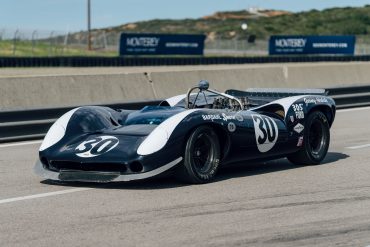

Announced Racing Car Show, London, January 1965; Mk1 1965 (15 built, chassis SL70); Mk2 1966 (about 32, SL71); Mk3 spyder and coupé 1967–68 (about 30 coupés, SL73); Mk3B 1969 (16 new plus conversions, SL76); about 100 in all. Engine Chevrolet small-block 5.0–5.9 litres, 400–500 hp; Ford (Gurney), Aston Martin V8 (Le Mans 1967), BRM Chevrolet (1968). Can-Am 1966: five wins of six, Surtees champion (St. Jovite, Riverside, Las Vegas), Gurney (Bridgehampton), Donohue (Mosport); Surtees Las Vegas 1967. Tourist Trophy 1966 (Hulme). Daytona 24 Hours 1969, Donohue/Parsons, Penske Mk3B, first and second. Le Mans 1967: two Aston Martin-engined Mk3s, 3 and 25 laps. Le Mans the film, 1971: Mk3Bs as the 917 and 512 crash cars. Market: Mk3B $1–1.5 million; Mk3 coupé $600,000–900,000; spyders $350,000–700,000. 150 stories in the archive.
Short answers, with the long ones above.
A mid-engined two-seat sports-racing car designed by Eric Broadley and built by Lola at Slough from 1965 to 1969, usually with a Chevrolet V8, as an open spyder (Mk1, Mk2, Mk3) and a closed coupé (Mk3, Mk3B); about a hundred were made.
The Mk3 coupé of 1967–68 closed in the spyder's monocoque under a low roof with gullwing-hinged doors; the Mk3B of 1969 had a new, stiffer tub, a wider track, a shorter twin-headlamp nose and a Hewland LG600 gearbox. The Mk3B is the faster, rarer and more valuable car and many Mk3s have been converted to its specification.
Yes, the first one: John Surtees won the 1966 championship in a T70 Mk2 with three wins, and T70s won five of the six races. From 1967 the McLarens took over.
No. The 1967 Aston Martin-engined coupés retired early and the Chevrolet cars never finished well there; its big endurance win was the 1969 Daytona 24 Hours, first and second.
Mark Donohue and Chuck Parsons in Roger Penske's Sunoco Lola T70 Mk3B, by thirty laps from the T70 of Ed Leslie and Lothar Motschenbacher, after the works Porsche 908s and the Wyer Ford GT40s broke.
Almost always a small-block Chevrolet of 5 to 5.9 litres, built by Traco or Bartz, giving 400 to 500 horsepower; Dan Gurney ran Ford, Surtees ran Aston Martin's V8 at Le Mans in 1967, and a BRM-prepared Chevrolet was tried in 1968.
Yes: Steve McQueen's production bought T70 Mk3Bs and rebodied them as a Porsche 917 and a Ferrari 512 for the crash sequences in the 1971 film.
About a hundred: fifteen Mk1s, around thirty Mk2s, around thirty Mk3 coupés plus spyders, and sixteen new Mk3Bs with others converted; more exist today because of continuation cars and re-tubbed originals.
From about $350,000 for a Mk1 spyder to $1–1.5 million for a Mk3B coupé with history; originality of the tub and the chassis number's record decide it.
In the Can-Am the T160 and T163 of 1968–69, then the T220 and T260; in endurance racing the 2-litre T210 and T212 and the 3-litre T280 of 1972, the car Jo Bonnier died in at Le Mans.
The whole archive on one thread, newest first.