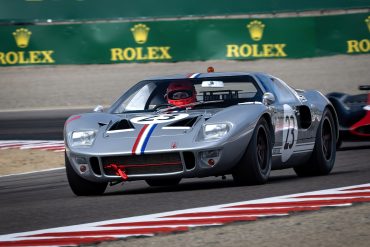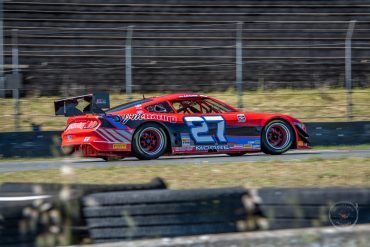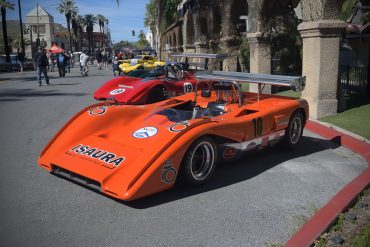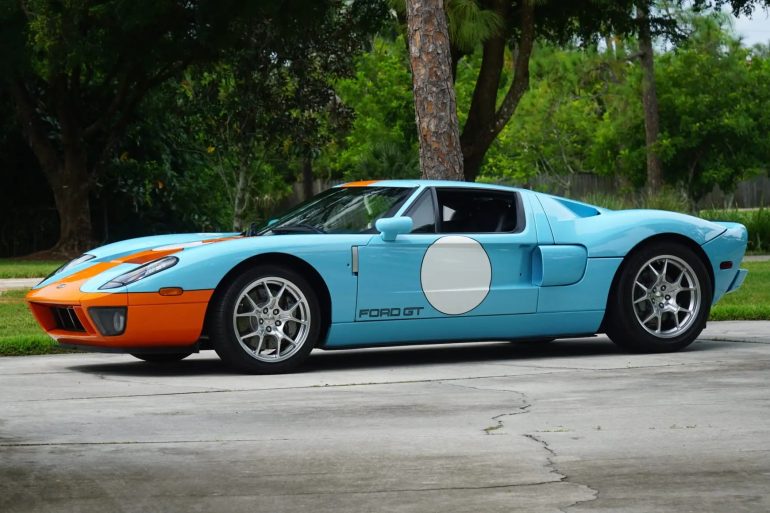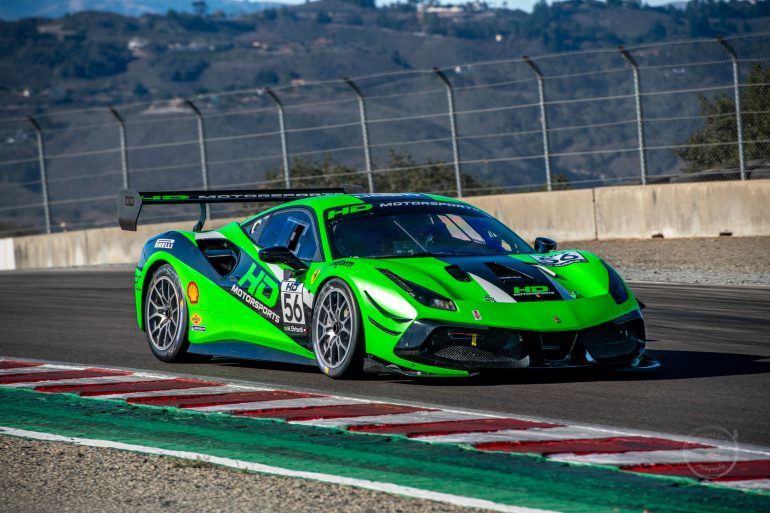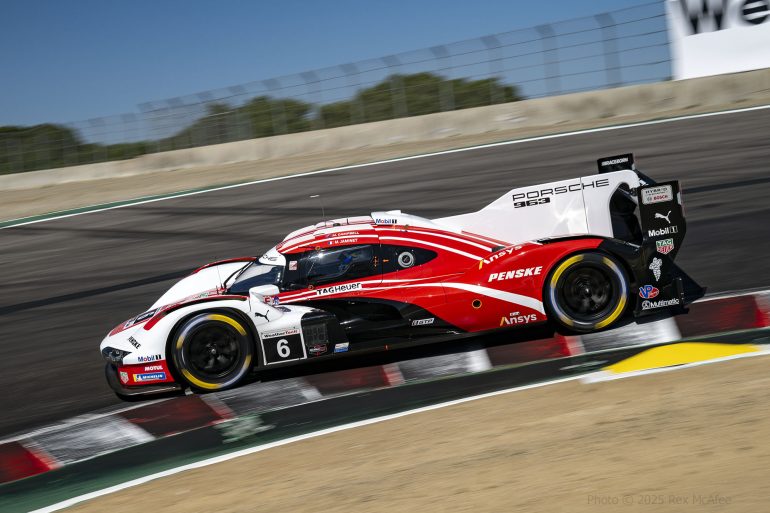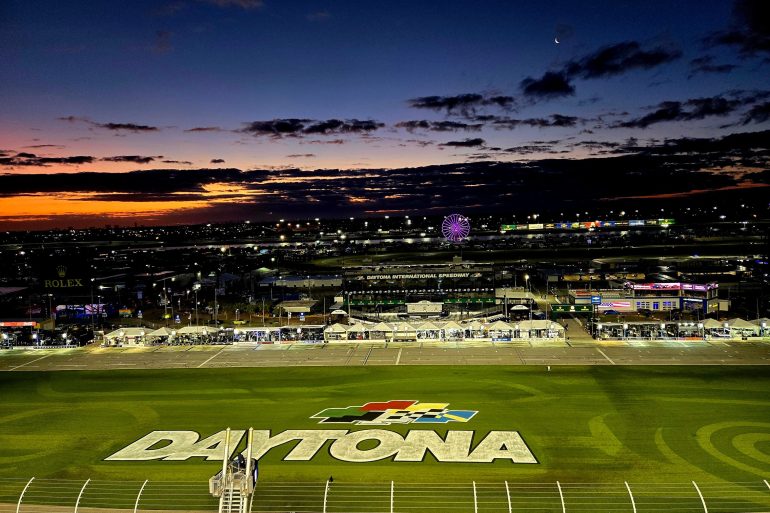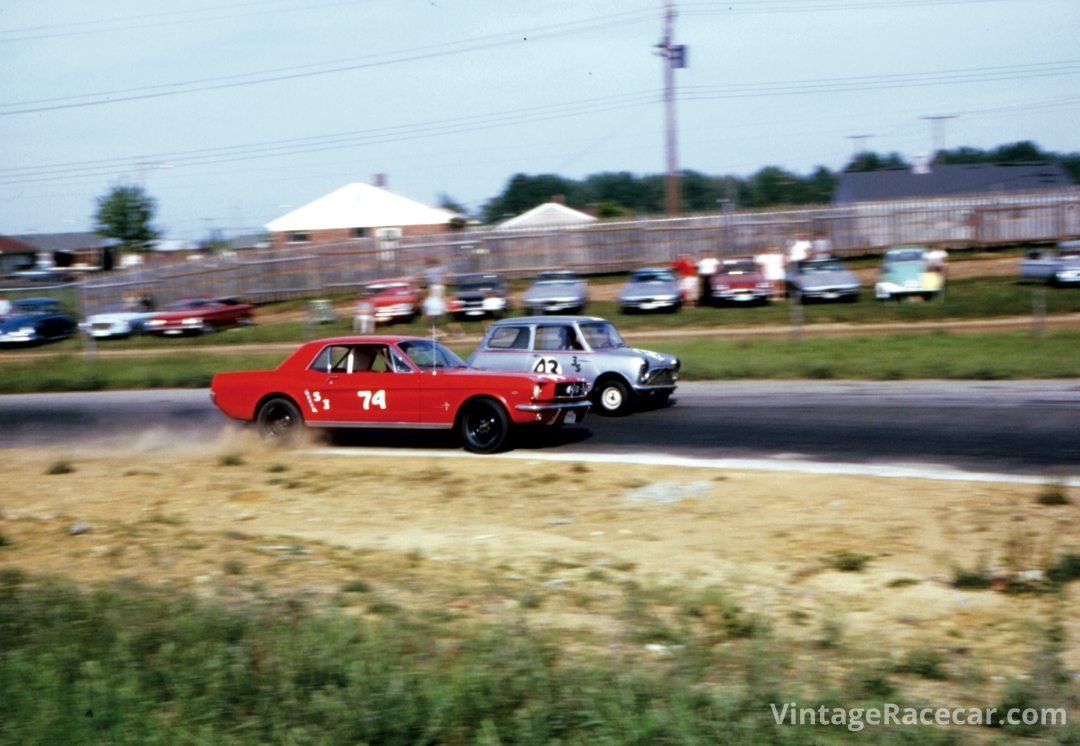
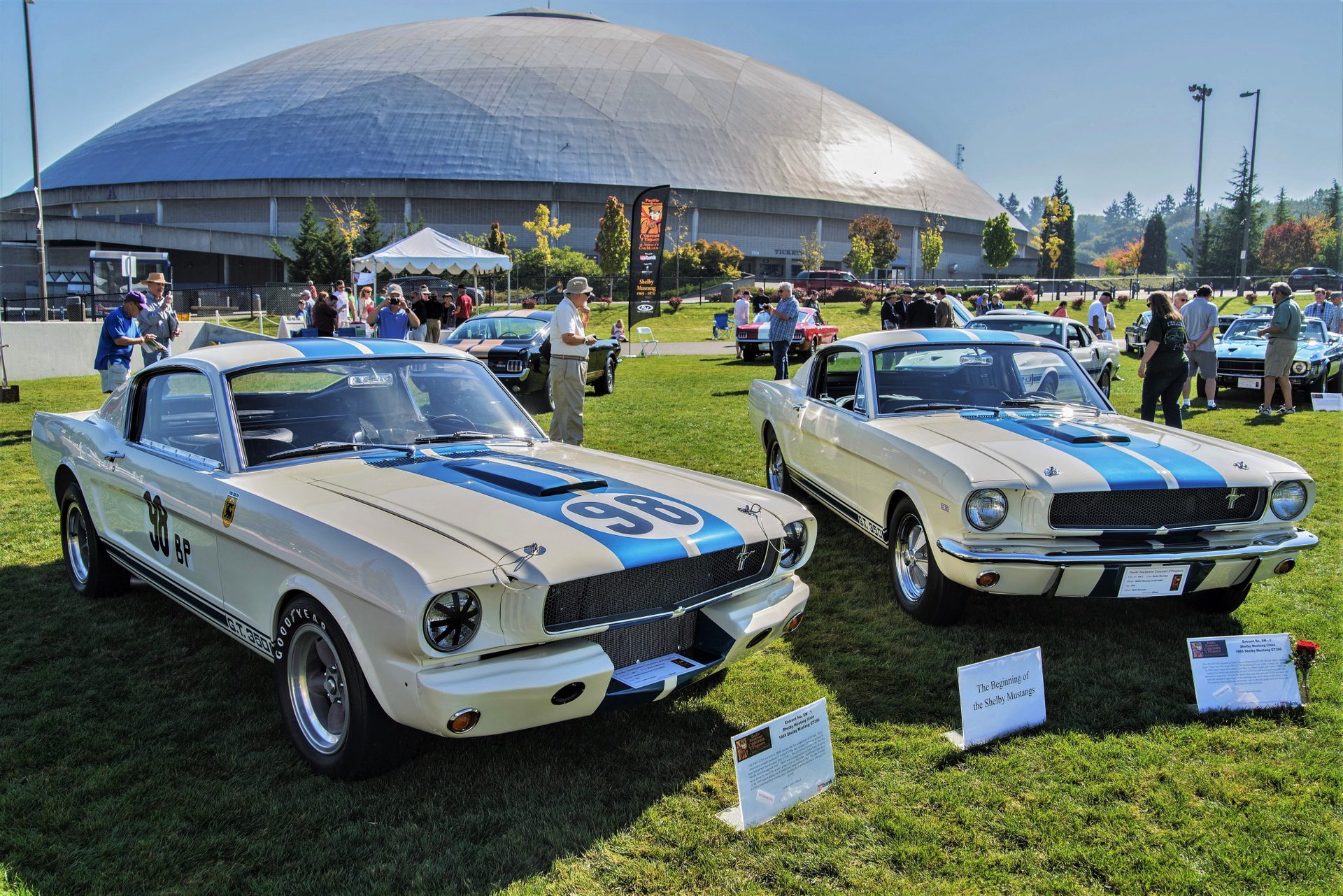
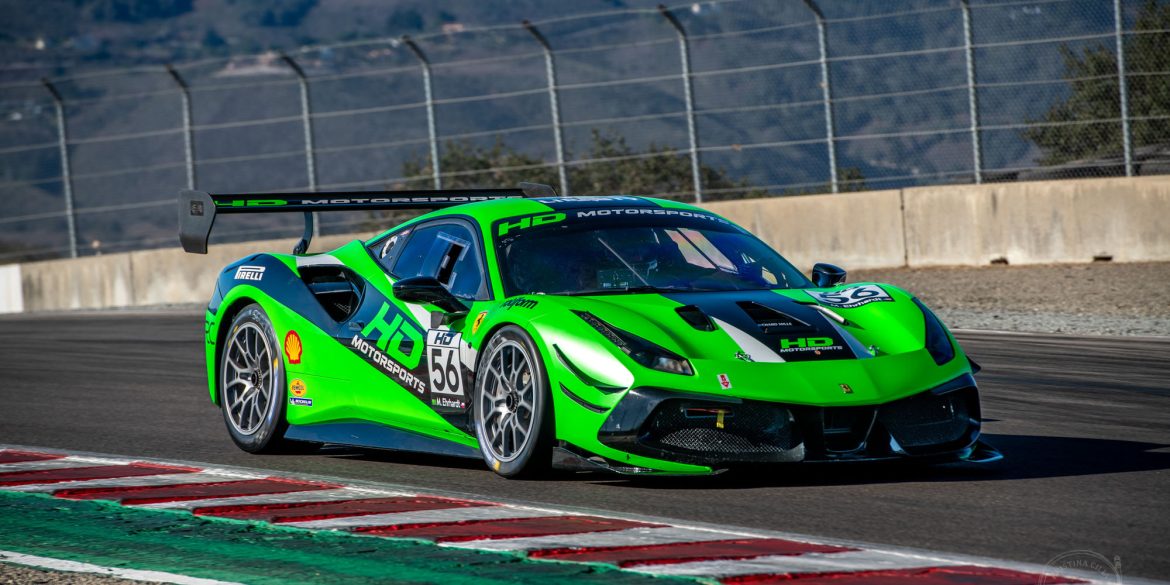
Trans Am first raced at Laguna Seca on August 24, 1969, Mark Donohue winning in a Camaro. The series' 19th season there, October 2–4, shared the weekend with SVRA SpeedTour and International GT, under a Corkscrew renamed for Alex Zanardi.

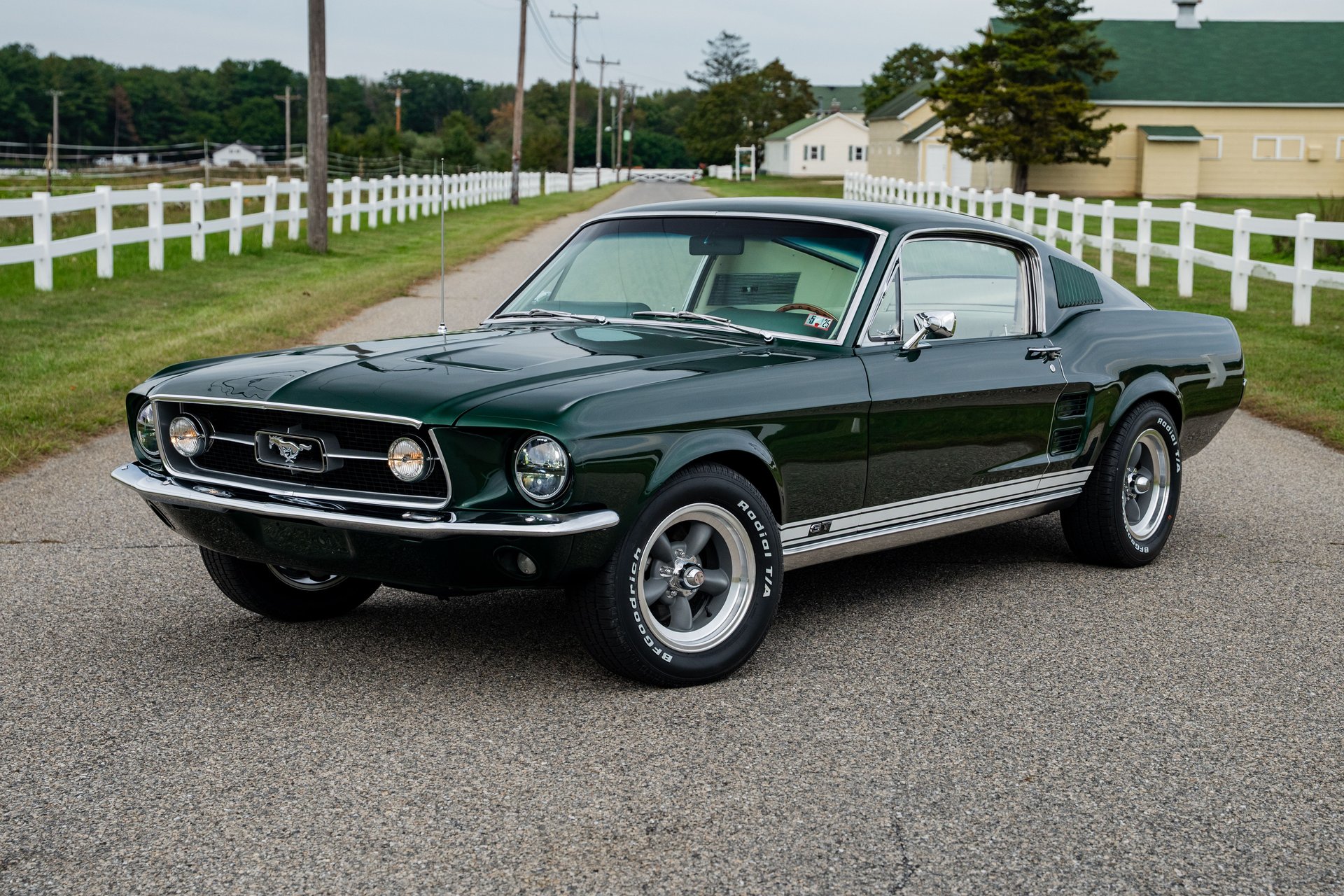
The car Lee Iacocca's Ford launched at the New York World's Fair on 17 April 1964, on Falcon bones and at $2,368, and sold a million of in two years: the pony car that invented its own class, went racing in the Tour de France before it was a year old, became Carroll Shelby's GT350, won the first two Trans-Am championships and the 1970 one with Parnelli Jones's Boss 302, survived the Mustang II and the Fox years, and is now in its seventh generation with a GT3 at Le Mans. Ten million have been built. The archive has 338 Ford Mustang stories, from Alan Mann and Peter Procter on the 1964 Tour de France cars to the Bullitt sale and this year's Trans-Am weekend at Laguna Seca, and this page puts them in order.
The pieces to start with
Eight pieces on the car: Matune's early racing Mustangs, Harvey Sherman on 5R002 and 5S003, George Follmer on the Boss 302, Ted Gildred's 1966 Trans-Am Shelby, Hemsley's three GT500s, the Bullitt Mustang, Warren Tope's Boss 302 and Raffi Minasian on the GT350's design.
Ford announced entries for the Shell 4000 Rally and the Riverside USRRC race soon after the Mustang’s April 1964 launch, before any sanctioning body had approved the car; neither happened. Mike Matune Jr hunts for the first documented Mustang race.
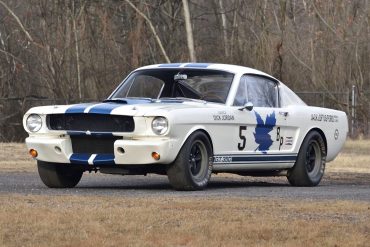
5R002 sold at Mecum in January 2022 for $4 million, a record for any Mustang. Mark Hovander and John Atzbach restored it and sister car 5S003 to Chuck Cantwell’s Princeton Avenue spec and finished 1–2 in class at Pebble Beach.
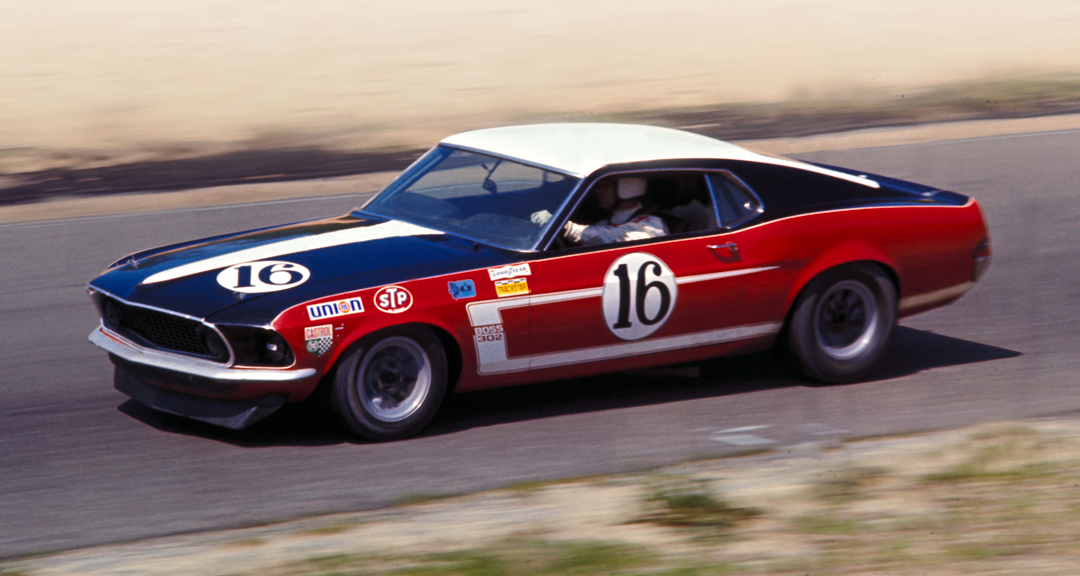
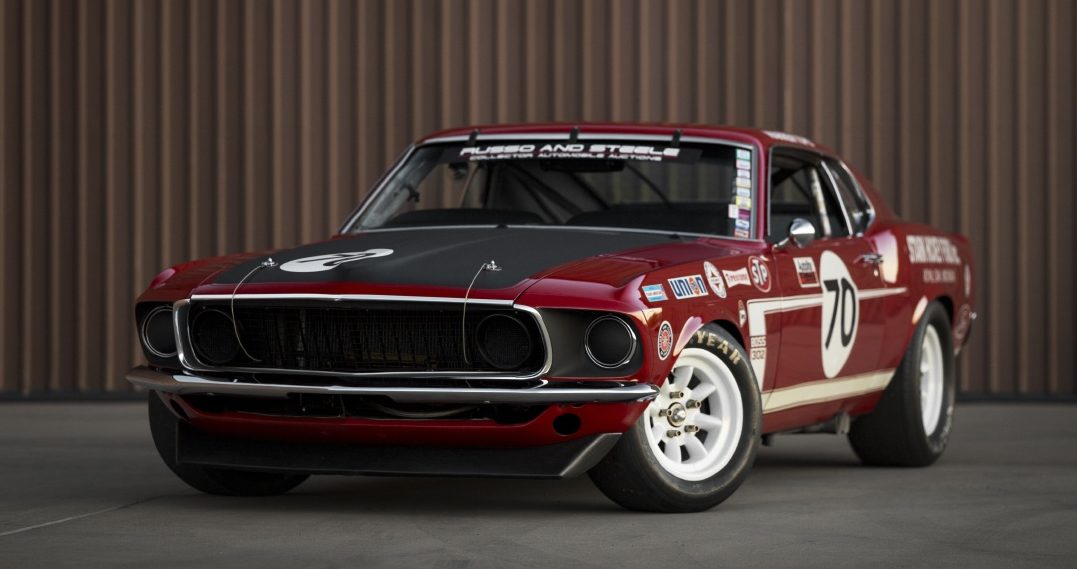
Ford ran four Trans-Am Mustangs in 1969, two Bud Moore Boss 302s for Parnelli Jones and George Follmer and two Shelby cars. The Moore cars were faster but their Firestones would not last a race; the title waited until 1970.
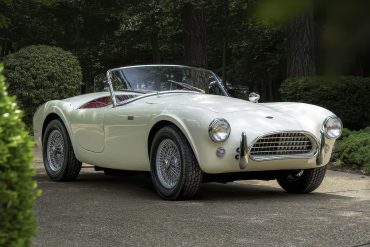
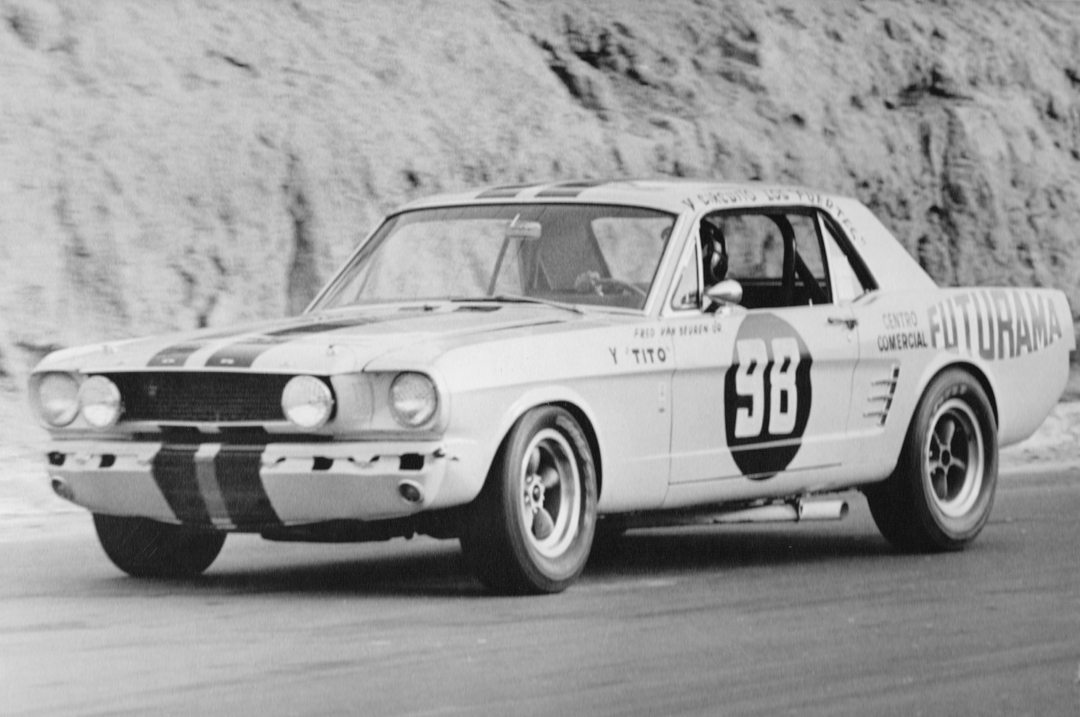
Pete Brock set up the meeting; Lew Spencer did the selling: 289 Cobras at $4,000, 427s at $5,000, Daytona Coupes at $6,000, year-old cars nobody wanted. Ted bought the one-off 1966 Trans-Am Mustang Titus raced, and took it to Mexico.
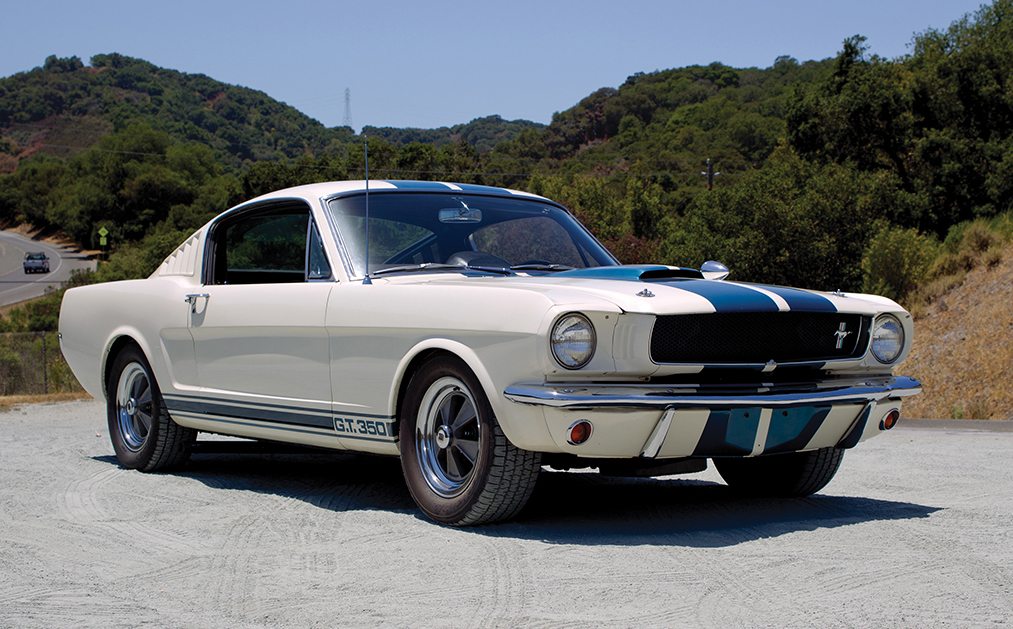
In 1965 and 1966, Carroll Shelby produced only one model based on the Ford Mustang - the G.T. 350, albeit with a few options.
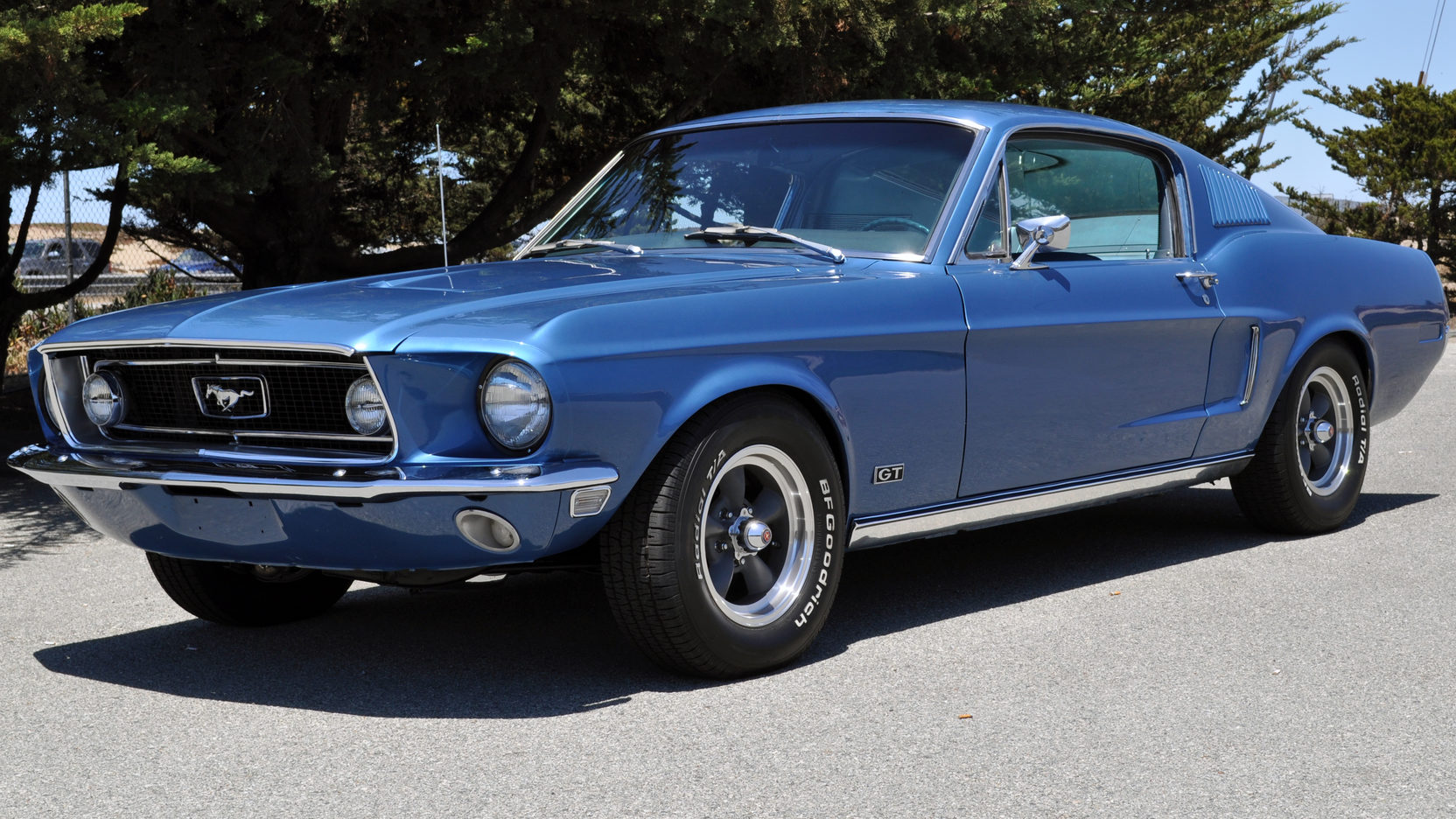
The 1968 model year brought the 428 V8 to the Mustang, loud enough at high revs to make a driver wonder about its legality. Every GT got improved suspension to go with it, and stayed manageable with the throttle floored.
Penske, Bud Moore and Holman-Moody ran Trans-Am from 1967 to 1972, but privateers could still finish well and sometimes win. Warren Tope of Troy was one. His 1969 Boss 302 Mustang, as Historic Trans-Am marks the series’ 50th year.
Depending how you count, about 40 parts separate a 1965 GT350 from a HiPo Mustang fastback, out of some 20,000. Carroll Shelby’s chili advice, delivered over dinner in 1997, explains the rest: “Don’t mix in too many ingredients.”
The newest writing on the Ford Mustang, as it is published.
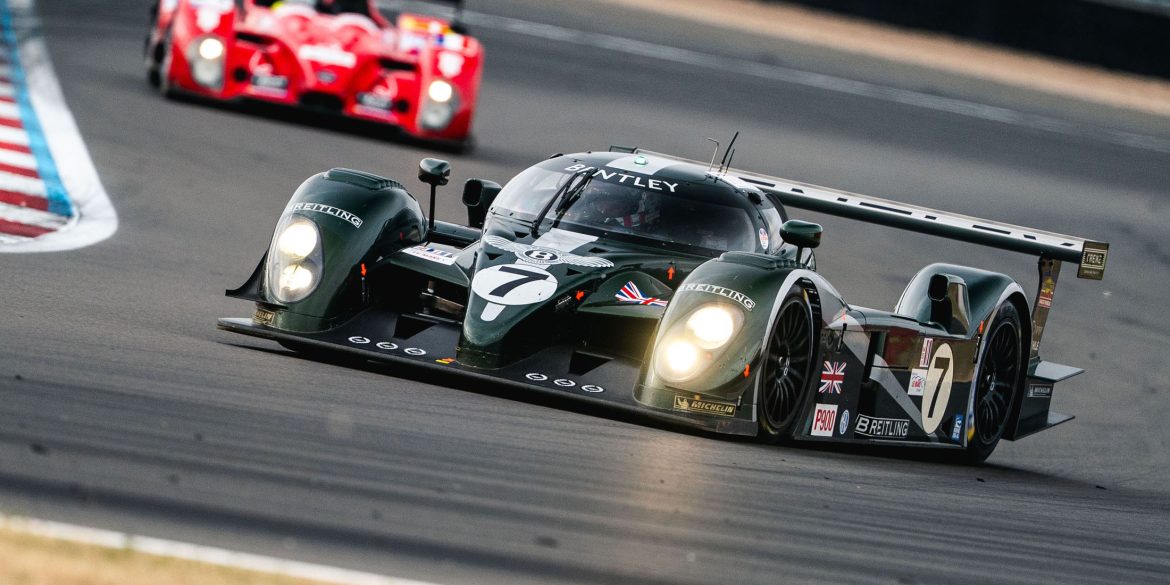
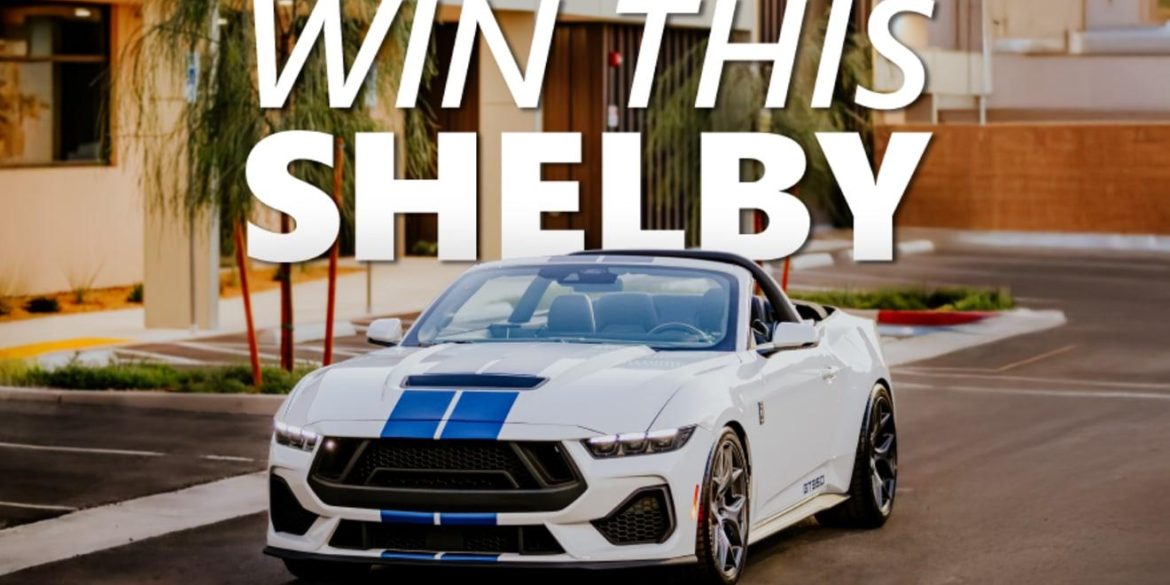
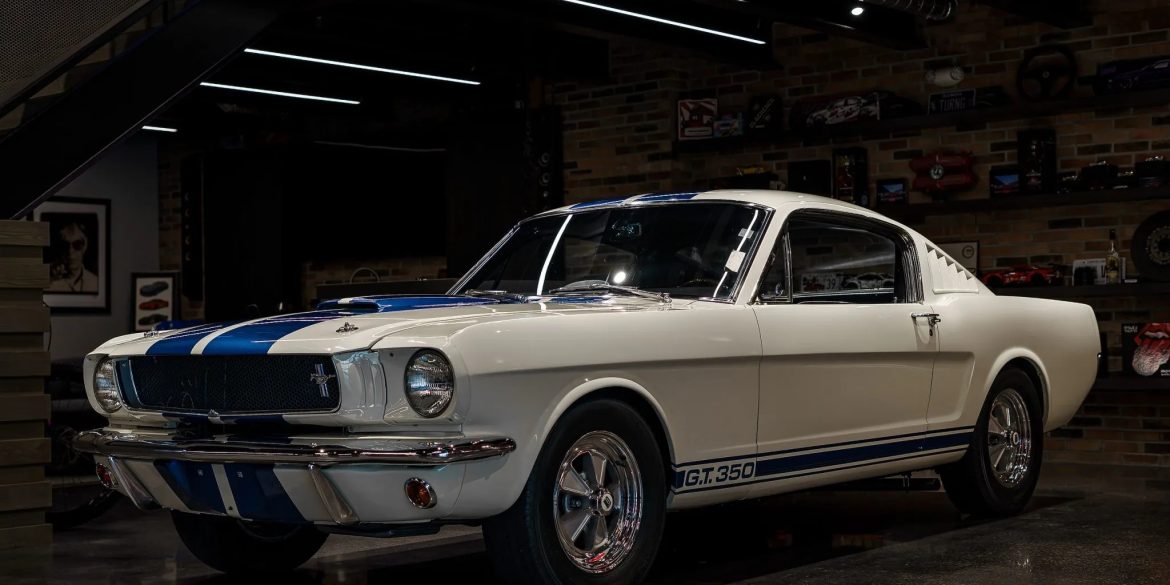
The Mustang is the long-hood, short-deck four-seater Ford built on the compact Falcon's platform and introduced at the World's Fair in Flushing on 17 April 1964, priced from $2,368 and offered as a coupé and convertible with a six or a V8 and a list of options long enough, as Hemsley puts it in Fastback First, to make a secretary's car or a sports car of it. It sold 22,000 on the first day and 418,812 in its first twelve months, passed a million in March 1966, and gave its name to a class, the pony car, that Chevrolet, Pontiac, Plymouth, Dodge, Mercury and AMC all had to answer within three years. It has been built without a break since, through seven generations, the first of 1964–73, the Mustang II of 1974–78, the Fox-body of 1979–93, the SN95 of 1994–2004, the retro S197 of 2005–14, the S550 of 2015–23 and the S650 since 2024, and the ten millionth came off the Flat Rock line in August 2018. It is the best-selling sports coupé in the world, and has been for most of the last decade.
The racing is why it is on this site. Alan Mann's Mustangs won the touring class of the Tour de France in 1964 before the car had been homologated anywhere else; Carroll Shelby's GT350 of 1965 won the SCCA B-Production championship with Jerry Titus and Ken Miles's 5R002 is the most valuable Mustang in the world; the Mustang won the first two Trans-Am manufacturers' titles in 1966 and 1967 and the 1970 one with Bud Moore's Boss 302s and Parnelli Jones, the season George Follmer describes in his own words in the archive; Norm Beechey and Ian Geoghegan won five Australian Touring Car Championships in them; the Roush cars won in IMSA and the Trans-Am for twenty years; and the Mustang GT3 raced at Daytona and Le Mans in 2024, sixty years after the Tour de France. Mike Matune's Mustang, A Born Winner, on the earliest competition cars, is where the archive's racing story starts, and the chapters below follow it from there to the Dark Horse.
Lee Iacocca, Ford Division's general manager from 1960, wanted a cheap, sporty four-seater for the baby boomers coming of age, and his product planners Donald Frey and Hal Sperlich found the way to build it: the running gear of the Falcon under a new body, so that the tooling cost was a fraction of a clean-sheet car. The mid-engined Mustang I two-seater of 1962, shown at Watkins Glen with Dan Gurney driving, gave the name and nothing else; the production car came from a design competition won in 1962 by Joe Oros's Ford studio with Gale Halderman's sketch and David Ash's work on it, and the long hood, short deck, side scallops and three-bar tail lamps were set then. It was announced on 17 April 1964 at the World's Fair, on the cover of Time and Newsweek the same week and in showrooms the same day, and the first production car, a Wimbledon White convertible, was sold by mistake to an airline pilot in Newfoundland before Ford could get it back; the first fastback, built that August and the subject of Hemsley's Fastback First, is the archive's long account of how the car came to be and what Ford was before it.
The 1965 car came with a 170 six or the 260 and 289 V8s, and from June 1964 the 271-horsepower Hi-Po 289 that Shelby would build on; the 2+2 fastback arrived for the 1965 model year proper in September 1964 along with the GT package and disc brakes, and the Pony interior and the front bench, the vinyl roof and the air conditioning let the buyer build anything from a secretary's six to a near-GT. Ford sold 680,989 Mustangs in the extended first model year to August 1965 and 607,568 in 1966; Motor Trend's and the trade's "Mustang Mania", covered in the archive, had Mustang-branded everything, and the Mustang Club of America, whose fortieth anniversary at Indianapolis the archive reports, grew out of it. The racing started at once and in Europe: Ford sent cars to Alan Mann in England before the launch, Iacocca telling Mann he would be killed if the press got a photograph, and Peter Procter and Andrew Cowan won the touring category of the 1964 Tour de France in DPK 7B, eighth overall behind Bianchi's GTO, with Mann's second car ninth; Procter and Mann both name it the greatest racing car they ever drove, in the archive's Greatest Racecar series, and Mann's obituary tells the rest. In Australia Norm Beechey's Neptune Racing Mustang won the 1965 Australian Touring Car Championship, the first of five for the model.
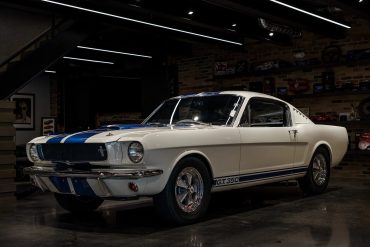
Ford wanted the Mustang to beat the Corvette in SCCA production racing and sent it to Carroll Shelby, who had just won the manufacturers' title with the Cobra; the GT350 of 1965, built in Shelby American's Venice hangars from Wimbledon White Hi-Po fastbacks with the rear seat removed, a 306-horsepower 289, Koni dampers, relocated front suspension pickups and the battery in the trunk, was the result, and Raffi Minasian's piece on its marketing and design explains why it looked and sold the way it did. Chuck Cantwell was its project engineer; 562 were built in 1965, 36 of them the R-model racers with a 350-horsepower engine, plexiglass windows and a fibreglass apron, and Ken Miles won the first race, at Green Valley in Texas in February 1965, in 5R002, the prototype that Harvey Sherman's GT350 Siblings follows through its restoration with 5S003 to a Pebble Beach class win and to the Mecum sales of 2020 and 2022 that made it the most valuable Mustang ever sold. Jerry Titus took the 1965 B-Production national championship and Ed McDonough's Mexican Flash is the story of the R-model that raced south of the border; the 1966 GT350 gained a rear seat, colours and an automatic, and Hertz's thousand GT350H Rent-a-Racers, the subject of Hemsley's long feature, were the best advertising Ford ever had.
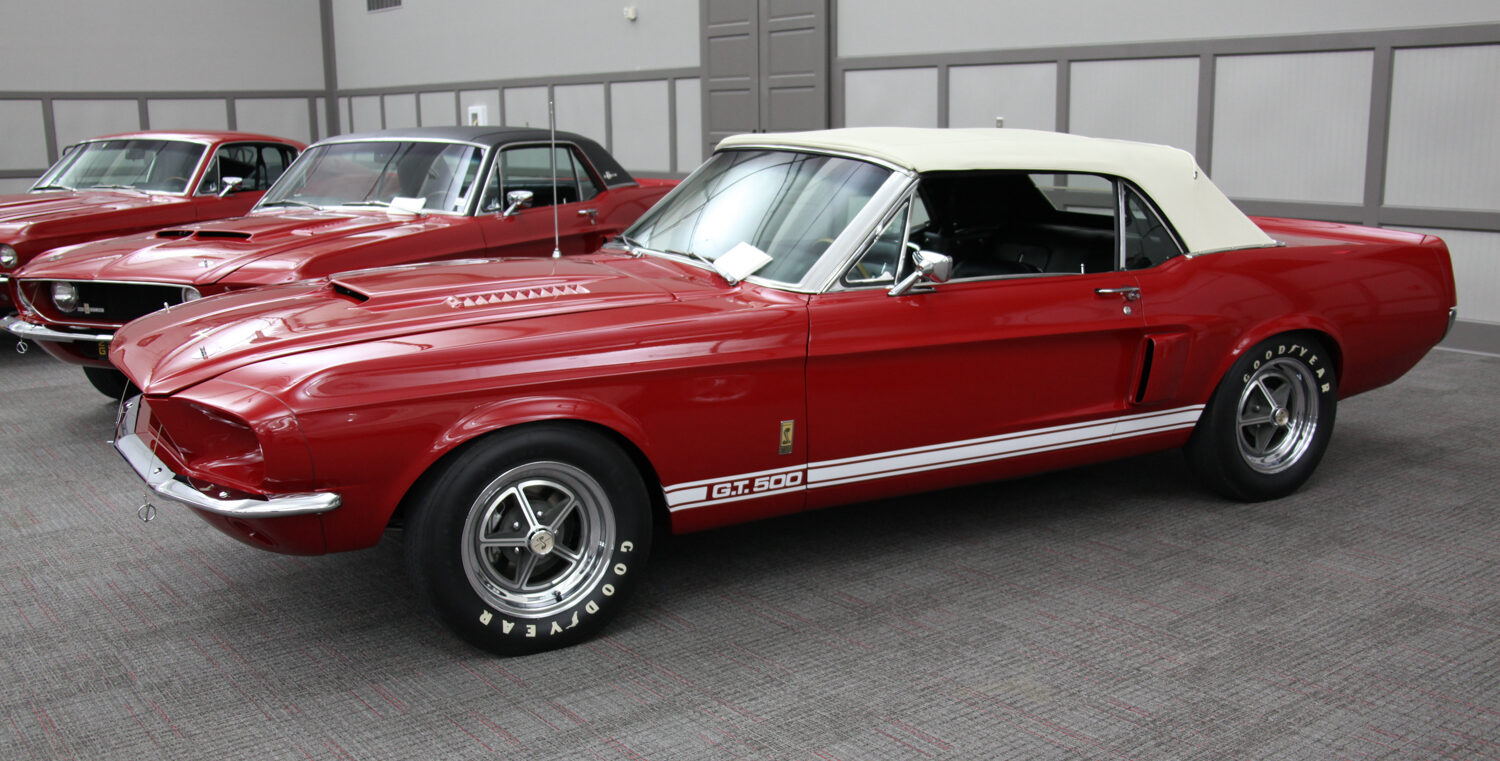
The SCCA's Trans-American Sedan Championship began in 1966, a manufacturers' series for compact sedans, and Shelby American's Mustangs, notchbacks rather than fastbacks under the rules, won it at the last round at Riverside when Jerry Titus beat the Dodge Darts in the one-off car that Ted Gildred later bought from Shelby for $4,000 and describes in A Shelby Goes South of the Border. In 1967 Ford backed both Shelby's Terlingua Racing Team Mustangs and Bud Moore's Mercury Cougars with Gurney and Parnelli Jones, Chevrolet arrived with Penske's Camaro and Mark Donohue, and Titus won four races to take Ford's second title by two points over Mercury; Trans-Am '67, in the archive, is the season in full. The 1967 road cars were bigger, for the 390 big-block, and Shelby's range grew to the GT500 with a 428 and the fibreglass nose and tail; Hemsley's Three Very Rare Shelby GT500s is the story of the three Candy-apple Red 1967 publicity cars and The Only One, on the Shelby page, the single 1967 GT500 convertible. The Shelby GT350 of Claude Dubois and Chris Tuerlinckx raced at Le Mans in 1967, the first Mustang there.
Every story on the site about Shelby's Mustang, newest first.
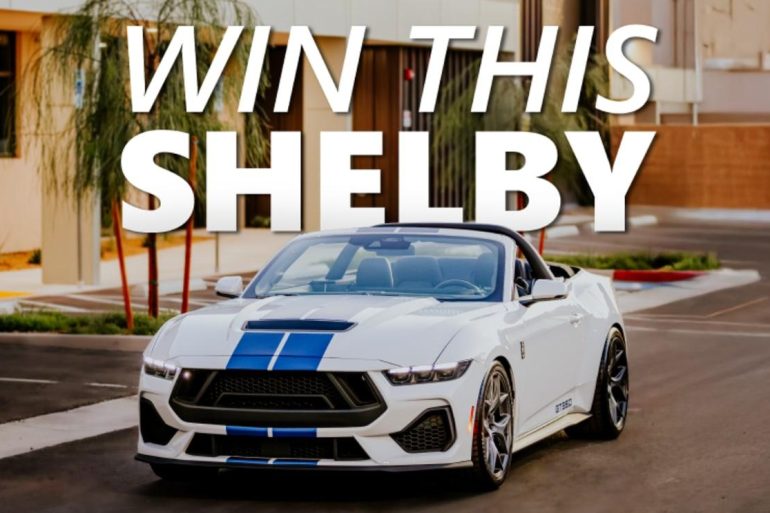
The 1968 car got side marker lights, the 302 and, from April 1968, the 428 Cobra Jet that Bob Tasca's Rhode Island dealership had shamed Ford into building, and it got Steve McQueen: the Highland Green 1968 GT 390 fastback of Bullitt, chased by a black Charger through San Francisco for ten minutes and forty seconds of film, is the most famous Mustang of all, and the archive's 1968 Ford Mustang feature, the news of the hero car's reappearance in 2018 after forty-four years with the Kiernan family and its sale at Mecum Kissimmee in January 2020 for $3.74 million, and the Russo and Steele sale of its surviving steering wheel cover it. Shelby's 1968 cars, now built in Michigan by A. O. Smith, added the GT500KR, King of the Road, with the Cobra Jet, and the archive's story of the chance to win an original KR and the Car of the Day pieces follow them.
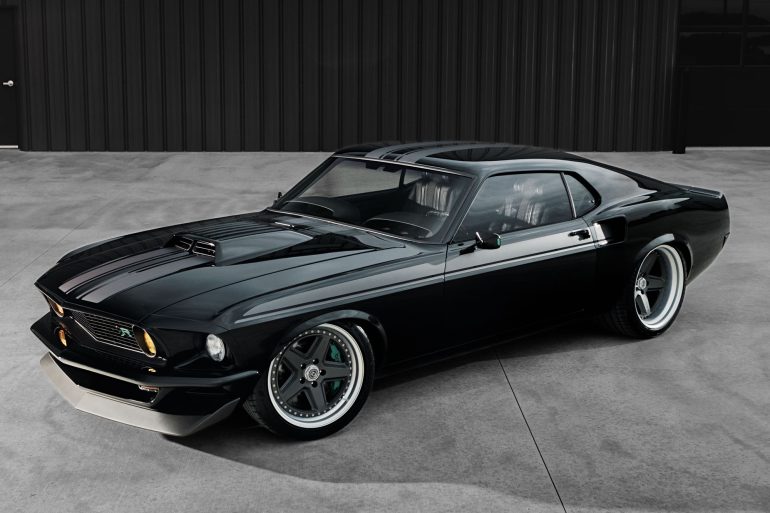
Bunkie Knudsen came from GM to run Ford in 1968 and brought Larry Shinoda, who had drawn the Sting Ray, and the 1969 Mustang had the Mach 1, the Grandé and two cars named for Knudsen: the Boss 302, Shinoda's homologation special for the Trans-Am with the canted-valve 302, the rear-window slats and the spoilers, 1,628 built in 1969 and 7,013 in 1970, and the Boss 429, 859 cars in 1969 and 499 in 1970 built by Kar Kraft in Brighton with the semi-hemi 429 Ford needed to homologate for NASCAR, the widest engine ever put in a Mustang and, at $4,798, the dearest. The 1969 Shelbys were the last proper ones, restyled by Ford and sold into 1970 as leftovers, and Shelby ended the programme; the Boss 351 of 1971, the last of the Bosses, came in the bigger and heavier car that closed the first generation in 1973. The Boss 429 the archive follows to Bonhams at the Simeone Museum, the 1970 Boss 429 competition car and the Boss 302 in Casey Annis's The Boss is Back, on the 2012 revival, are where to read on.
Every story on the site about the big-block Shelby, newest first.
Ford lost the Trans-Am in 1968 to Penske's Camaro and in 1969 fielded two teams, Shelby's with Peter Revson and Horst Kwech and Bud Moore's with Parnelli Jones and George Follmer, in Boss 302s; the Moore cars were faster, as Follmer says in Boss 302, but Firestone's tyres would not last a race and Donohue won the title for Chevrolet again. For 1970 Ford gave Moore the whole budget and Kar Kraft's engineering, the Shelby and Cougar teams were gone, and against Donohue's Javelin, Swede Savage's and Gurney's Plymouth Barracudas, Sam Posey's Dodge Challenger and the Camaros, Parnelli Jones won five races and Follmer one, Jones took the drivers' title and Ford its third and last manufacturers' championship of the original series; the School Bus Yellow Boss 302s are, for most people, the Trans-Am car, and the archive's long interviews with Parnelli Jones and George Follmer, Art Evans's Parnelli Jones, Pete Lyons's Legends of the Trans-Am with Jones on the grass at Riverside, and the last Bud Moore car's coming to auction tell the season from the inside. Ford withdrew at the end of 1970 with the rest of Detroit, Donohue and Follmer won the next two titles for AMC, and Warren Tope's 1969 Boss 302, the privateer car in the archive, shows what the independents raced.
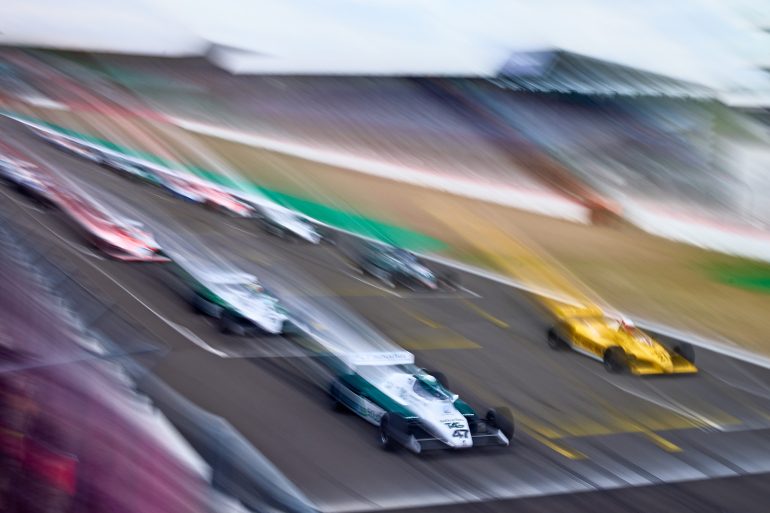
The historic Trans-Am has been the Mustang's second life: the Historic Trans-Am group that the archive follows from Long Beach to Laguna Seca, the SVRA Speedfest, the Velocity Invitational's Mustangs-versus-Minis race and the Monterey Reunion's featured GT350 year of 2015 and the Trans-Am's fiftieth season in 2016 all have their reports here, and the 2026 Trans Am Thunder weekend at Laguna Seca is the latest.
Every story on the site about the Trans-Am Mustang, newest first.
Iacocca's answer to the fuel crisis was the Mustang II of 1974, a Pinto-based car nineteen inches shorter with no V8 at all in its first year, and it was Motor Trend's Car of the Year and sold 385,993, more than any Mustang since 1967; the enthusiasts have never forgiven it and the 302 came back in 1975, the Cobra II and King Cobra in 1976 and 1978. The Fox-body of 1979 was a clean, European-looking car on the platform shared with the Fairmont, paced the Indianapolis 500 in its first year, and nearly died: Ford planned to replace it with the front-drive Mazda-based car that became the Probe until the letters came in. Instead the 5.0 High Output GT of 1982, advertised as "The Boss is Back", the SVO turbo four of 1984 and the 225-horsepower 5.0 of 1987 made the Fox the cheapest serious performance car in America and the basis of a drag-racing culture that is still going; the SVT Cobra and the 107 Cobra Rs of 1993 closed it. In racing the Mustang went to IMSA, where Zakspeed's turbocharged Mustang GTP of 1983 won at Road America with Klaus Ludwig, Jack Roush's Mustangs won their GTO class at Daytona and Sebring through the 1980s and 1990s, and the Trans-Am titles came back with Dorsey Schroeder in 1989 and Tommy Kendall's three straight for Roush in 1995–97, eleven wins in a row in 1997; John Force's Funny Cars wore Mustang bodies through most of his sixteen NHRA titles.
The SN95 of 1994 was a Fox rebodied, with the 4.6 modular V8 from 1996, the New Edge restyle of 1999, the Cobra Rs of 1995 and 2000 and, in 2003 and 2004, the supercharged 390-horsepower Terminator Cobra that is the first modern Mustang collectors chase; the Bullitt edition of 2001 and the Mach 1 of 2003 began the trade in the car's own history. The archive's coverage of these years is thinner, the site's magazines being about older cars, but Raffi Minasian's case for the Mustang as the greatest modern American car and the Collections lists of affordable sports cars make it.
J Mays's S197 of 2005, drawn by Sid Ramnarace, was the 1967 fastback redone on a new platform and it saved the model: the Shelby GT500 came back in 2007 with a supercharged 500 horsepower and Carroll Shelby's name on it, Jamie Doyle drove the last of them, Carroll's Last Stand, for the archive in 2013, the Bullitt returned in 2008, the 5.0 Coyote engine arrived in 2011 and the Boss 302 Laguna Seca of 2012–13 was the best-handling Mustang yet built. The S550 of 2015 was the first with independent rear suspension and the first sold worldwide in right-hand drive, and its Shelbys were the best: the GT350 and GT350R of 2015 with the 5.2-litre flat-plane-crank Voodoo V8 and 526 horsepower, the GT500 of 2020 with 760, the most powerful road Ford ever, and the Mach 1 of 2021. The Mustang became the world's best-selling sports coupé in 2015 and held the title for seven straight years, the archive's report of 2022 notes; the Mach-E of 2021, an electric crossover wearing the name, and the 1,500-horsepower electric Cobra Jet dragster divided the faithful. In racing the Mustang went back to NASCAR's top series in 2019 and won the Cup championships of 2022 and 2024 with Joey Logano and 2023 with Ryan Blaney, and the GT4 raced everywhere.
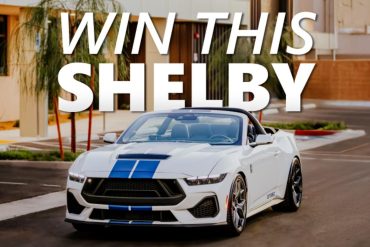
The S650 was unveiled at the Stampede in Detroit in September 2022, the only V8 pony car left once the Camaro and Challenger were gone, with the 500-horsepower Dark Horse at the top; Bill Ford announced at the same event that the Mustang would return to Le Mans, and the Mustang GT3, built with Multimatic on the Dark Horse, raced the Daytona 24 Hours and Le Mans in 2024, sixty years after the World's Fair, with the GT4 and the Dark Horse R one-make car alongside. The Mustang GTD of 2025, an 815-horsepower supercharged 5.2 with a transaxle, pushrod rear suspension and a price above $300,000, lapped the Nürburgring in under seven minutes, the first American car to do so, and Shelby American's 2026 GT350, a supercharged 5.0 with more than 800 horsepower whose convertible prototype the archive covers, brought the name back. The sixtieth anniversary in April 2024, the Ringbrothers' Kingpin Mach 1 at SEMA, Trick Rides' GT350TR, the Charge Cars electric 1967 fastback and the Classic Recreations continuation Bosses and Mach 1s, all in the archive, are the Mustang's present: still made, still raced, and remade in every direction.
The table below gives every year from 1964 to 2026: the car, the racing and the company, and the archive piece for each. Model names link to every story on the site about that car; the People links open the drivers' and designers' own threads. Shelby's own cars have their page under the marques, and the Trans-Am has a series page.
Sixty-two years in seven generations: the car, the racing and the archive's story of each. Model names link to every story on the site; the People links open the drivers' and designers' threads.
| Year | The car | The racing and the company | In the archive |
|---|---|---|---|
| 1962–63 | Mustang | Iacocca's brief; Frey and Sperlich put it on the Falcon; the mid-engined Mustang I at Watkins Glen with Gurney; Oros's studio wins the design competition | Dan Gurney |
| 1964 | Mustang | 17 April, the World's Fair: 22,000 orders the first day; the Hi-Po 289 in June; Alan Mann's cars win the Tour de France touring class with Procter and Cowan, eighth overall | Fastback First · Procter's Alan Mann Mustang · Alan Mann |
| 1965 | Mustang · Shelby GT350 · GT350R | The fastback and the GT; Shelby's GT350, 562 built; Ken Miles wins at Green Valley in 5R002; Titus the B-Production champion; Beechey's and Pierpoint's touring titles | Mustang, A Born Winner · GT350 Siblings · The Mexican Flash |
| 1966 | Shelby GT350 · Trans-Am | One million Mustangs by March; the Hertz GT350H; the first Trans-Am, won for Ford at Riverside by Jerry Titus | Hertz Rent-a-Racer · A Shelby Goes South of the Border · Jerry Titus |
| 1967 | Mustang · Shelby GT500 · Trans-Am | The bigger car and the 390; the GT500; Titus's four wins take the Trans-Am by two points from Bud Moore's Cougars; the Camaro arrives; a GT350 at Le Mans | Trans-Am '67 · Three Very Rare Shelby GT500s · The Only One |
| 1968 | Mustang · Shelby GT500 | Bullitt; the 428 Cobra Jet in April; the GT500KR; Penske's Camaro takes the Trans-Am | 1968 Ford Mustang · Win an original GT500KR · Steve McQueen |
| 1969 | Boss 302 · Boss 429 · Mach 1 | Knudsen and Shinoda: the Boss 302, the Boss 429 built by Kar Kraft, the Mach 1; two Ford Trans-Am teams and a second Camaro title | Follmer: Boss 302 · Warren Tope's Boss 302 · Boss 429 at Bonhams Simeone |
| 1970 | Boss 302 · Trans-Am | Bud Moore's Boss 302s: Parnelli Jones wins five, Follmer one, and Ford takes the Trans-Am; the last Shelbys sold | Interview: Parnelli Jones · Interview: George Follmer · The last Bud Moore 302 |
| 1971–73 | Mustang | The big car and the Boss 351; Ford out of the Trans-Am; the first generation ends with 134,867 cars in 1973 | Legends of the Trans-Am |
| 1974–78 | Mustang | The Mustang II: Pinto-based, no V8 in 1974, Car of the Year, 385,993 sold; the Cobra II and King Cobra | |
| 1979–82 | Mustang | The Fox-body; the Indianapolis 500 pace car; the 5.0 HO GT of 1982, 'The Boss is Back' | Interview: The Boss is Back |
| 1983–86 | Mustang | The SVO turbo; Zakspeed's Mustang GTP wins at Road America with Ludwig; Roush's cars in IMSA GTO | Scott Pruett |
| 1987–93 | Mustang · SVT Cobra | The 225 hp 5.0; Schroeder's 1989 Trans-Am title for Roush; the SVT Cobra and the 107 Cobra Rs close the Fox | Roush's Mustangs |
| 1994–99 | Mustang · SVT Cobra | The SN95; the 4.6 modular V8; Kendall's three Trans-Am titles, eleven straight wins in 1997; the New Edge | |
| 2000–04 | SVT Cobra | The 2000 Cobra R; the Bullitt edition; the Mach 1 returns; the 390 hp Terminator Cobra | Why the Mustang may be the greatest |
| 2005–10 | Mustang · Shelby GT500 | Mays's and Ramnarace's retro S197; the Shelby GT500 returns with 500 hp; the 2008 Bullitt | Carroll's Last Stand |
| 2011–14 | Boss 302 | The 5.0 Coyote; the Boss 302 and Laguna Seca; the 662 hp GT500; the fiftieth anniversary and the Great Race win | Mustang Mania · Mustang claims the Great Race · Silverstone Classic celebrates the Mustang |
| 2015–16 | Shelby GT350 · GT350R | The S550 with independent rear suspension, sold worldwide; the flat-plane GT350 and GT350R; the GT350's fiftieth at Monterey; the Trans-Am's fiftieth | GT350 honoured at Monterey · GT350's 50th at Willow Springs |
| 2017–18 | Shelby GT500 | The Super Snake's $2.2 million; the Bullitt car reappears; the ten millionth Mustang; the continuation Bosses | Super Snake record · Continuation Boss and Mach 1 · Historic Trans-Am at Long Beach |
| 2019–20 | Shelby GT500 · GT350R | The Mustang back in NASCAR; the 760 hp GT500; Bullitt sells for $3.74 million and 5R002 for $3.85 million; Ken Miles's car the most valuable Mustang | Bullitt sells · 5R002 at Mecum Indy · Shelby time machine |
| 2021–22 | Mustang · Mach 1 | The Mach 1 returns; the Mach-E; the seventh year as the world's best-selling sports coupé; the S650 and the Le Mans promise at the Stampede; 5R002 sells again | Best-selling sports coupé · Mustang GT3 for Le Mans · 5R002 at Kissimmee |
| 2023 | Mustang | The S650 on sale as a 2024 model; the Dark Horse; the Camaro and Challenger end; the Car of the Day Mustangs | Car of the Day: 1968 Mustang · Car of the Day: Boss 429 racer |
| 2024 | Mustang · Dark Horse R | The Mustang GT3 at Daytona and Le Mans; the Dark Horse R; the sixtieth anniversary; the GTD's Nürburgring lap; Logano's NASCAR title | 2024 Daytona 24 Hours |
| 2025 | Mustang · Mach 1 | The GTD on sale; the Ringbrothers' Kingpin Mach 1 at SEMA; the GT3's second Daytona | Kingpin · 2025 Daytona 24 Hours |
| 2026 | Shelby GT350 · Trans-Am | Shelby American's 2026 GT350; Trick Rides' GT350TR; Trans Am Thunder at Laguna Seca | The 2026 GT350 prototype · GT350TR · Trans Am Thunder, Laguna Seca |
Shelby's own cars, the Cobra and the Daytona Coupe as well as the GT350 and GT500, are on the Shelby page; the Trans-Am has a series page and the pony-car years an era page.
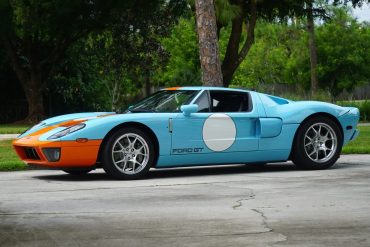
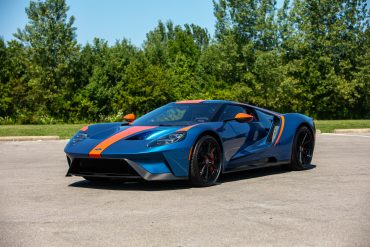
The nine cards below are the Mustangs the archive writes about most: the 1965–66 original, the GT350 and GT350R, the 1967–68 big-block cars and the GT500, the Bullitt, the Boss 302 and the Trans-Am racers, the Boss 429, the Mach 1 and Cobra Jet, the Fox-body 5.0 and the modern Shelbys and the GT3. Each links to every story on the site about that car. The Shelby Cobra, the GT40 and the Corvette the Mustang was built to beat have pages of their own.
Nine cars from the archive, from the 1965 original to the GT3; each links to every story on the site.
The Mustang's racing record runs through six series. The touring class of the 1964 Tour de France, with Alan Mann's cars, and the British saloon championship, where Roy Pierpoint won the 1965 title in a Mustang; the Australian Touring Car Championship, which Norm Beechey won in 1965 and Ian Geoghegan from 1966 to 1969, and Bathurst, where Mustangs ran for the Geoghegans and others; the SCCA B-Production championships of 1965–67 with the GT350; the Trans-Am, won by the Mustang in 1966, 1967 and 1970 and again with Roush in 1989 and 1995–97; IMSA, from the Mustang GTP and Roush's GTO cars to the GT3 and GT4 of now; NASCAR, where the Boss 429 engine ran in Torinos and the Mustang body has run since 2019; the NHRA; and Le Mans, where a GT350 ran in 1967 and the Mustang GT3 since 2024. The Trans-Am series page and the Muscle and Trans-Am era page hold the whole of the pony-car war, and the Shelby page the GT350's SCCA years; the feeds below are the Trans-Am and the Boss 302.
Every story on the site about the series the pony cars were built to win, newest first.
The Mustang's people are Lee Iacocca, who sold it inside Ford and outside, and Donald Frey and Hal Sperlich, who planned it; Joe Oros, Gale Halderman and David Ash, who drew it, and Larry Shinoda, who drew the Bosses; Carroll Shelby, Chuck Cantwell, Phil Remington and Lew Spencer at Shelby American, Ken Miles who won its first race and Jerry Titus who won its championships; Alan Mann, Peter Procter and Roy Pierpoint in England; Bud Moore, Parnelli Jones, George Follmer, Peter Revson, Horst Kwech and Sam Posey of the Trans-Am; Bob Bondurant, who raced Shelby's cars and whose school taught in Mustangs; Steve McQueen; Jack Roush, Tommy Kendall and Dorsey Schroeder; and Bob Tasca, who got the Cobra Jet built. The archive has long interviews with Shelby, Jones, Follmer, Bondurant, Tony DeLorenzo and A. J. Foyt, who drove a Mustang in the first Trans-Am season, profiles of Miles, Mann and Donohue, and Art Evans's Shelby American and Parnelli Jones pieces; the Parnelli Jones feed is below and the People hub has the rest.
Every story on the site about the 1970 Trans-Am champion, newest first.
The Mustang market is three markets. At the top are the Shelbys and the famous cars: Ken Miles's GT350R prototype 5R002 sold for $3.85 million at Mecum Indianapolis in July 2020 and $3.75 million at Kissimmee in January 2022, the Bullitt Mustang for $3.74 million at Kissimmee in January 2020, the 1967 GT500 Super Snake for $2.2 million in 2019, and 1965 GT350s make $300,000–500,000, R-models over $1 million, 1967 GT500s $150,000–300,000 and the KR about the same; Boss 429s bring $250,000–500,000, Boss 302s and 428 Cobra Jet Mach 1s $75,000–200,000, and the genuine Trans-Am racers from $500,000 up. In the middle are the first-generation V8 cars, $40,000–100,000 for a good 1965–68 fastback or GT convertible, half that for a coupé, with the 1969–70 SportsRoofs and Mach 1s between; and below them are the Fox-body 5.0s, the SN95 Cobras and the S197 and S550 Shelbys, where $20,000–80,000 buys a lot of car and the Terminator, the Boss 302 Laguna Seca and the GT350R are already collected. The Mecum, Barrett-Jackson and Russo and Steele reports in the archive carry hundreds of Mustang results a year; the Auctions and For Sale feeds below are the Ford and Shelby threads, newest first, and the Market page has the auction houses and calendar.
Auction previews and results, Mustangs among them, newest first.
GT350s, GT500s and Cobras at the sales, newest first.
Mustangs and other Fords offered by dealers and collectors, newest first.
The archive's Mustang galleries come from the Monterey Reunion's GT350 and Trans-Am years, the Historic Trans-Am at Long Beach, Laguna Seca and Sonoma, the SVRA at Indianapolis and the Speedfest, the Velocity Invitational, Goodwood's Revival and Members' Meeting, where the 1960s cars race with Lotus Cortinas and Galaxies, Silverstone Classic's 2014 Mustang celebration, the Amelia and Pinehurst concours, and the SAAC conventions; the Everything feed at the foot of the page gathers them with the rest.
Launched 17 April 1964; 22,000 orders the first day, 418,812 in twelve months, 680,989 in the extended 1965 model year, one million by March 1966 and ten million by August 2018. Seven generations: 1964–73, 1974–78, 1979–93, 1994–2004, 2005–14, 2015–23 and since 2024. Shelby GT350: 562 in 1965, 36 of them R-models; about 2,380 in 1966, 1,000 of them for Hertz; 1,175 GT350s and 2,048 GT500s in 1967. Boss 302: 1,628 in 1969 and 7,013 in 1970; Boss 429: 859 and 499. Trans-Am manufacturers' titles 1966, 1967 and 1970; Parnelli Jones drivers' champion 1970; Tommy Kendall's eleven straight wins in 1997. World's best-selling sports coupé 2015–21. Most expensive Mustang: $3.85 million, 5R002, Mecum Indianapolis, July 2020. GT500 of 2020: 760 horsepower; GTD of 2025: 815 horsepower and a Nürburgring lap under seven minutes.
Short answers, with the long ones above.
On 17 April 1964, at the New York World's Fair in Flushing, with the car in dealerships the same day. Ford calls the earliest cars 1965 models; everyone else calls them 1964½s.
Lee Iacocca commissioned it, Donald Frey and Hal Sperlich planned it on the Falcon's platform, and the body came from Joe Oros's Ford studio, with Gale Halderman's sketch chosen in the 1962 design competition and David Ash's work on the details. Larry Shinoda drew the 1969–70 Boss cars.
The class the Mustang created: a compact, affordable, long-hood, short-deck four-seater with a long options list and a V8 available. The Camaro, Firebird, Barracuda, Challenger, Cougar and Javelin followed it, and the Trans-Am was built around them.
Both are Shelby Mustangs. The GT350 of 1965–70 began as a small-block 289 road racer and became a grand tourer; the GT500 of 1967–70 was the big-block car, with the 428 and, as the GT500KR of 1968, the Cobra Jet. The names came back on Ford's own Shelbys in 2007 and 2015.
Ford's homologation special for the 1969–70 Trans-Am: Larry Shinoda's styling, a high-revving 302 with canted-valve heads, and the car Parnelli Jones and George Follmer drove to the 1970 championship for Bud Moore. 8,641 were built over the two years; the Boss 429 was its NASCAR-engine sibling, 1,358 built, and the Boss 351 of 1971 the last.
A 1968 GT fastback with the 390 V8 in Highland Green, one of two used in the film; the hero car was hidden by the Kiernan family from 1974 to 2018 and sold at Mecum Kissimmee in January 2020 for $3.74 million.
Yes: the manufacturers' championship in 1966 and 1967 with Shelby's team and Jerry Titus, and in 1970 with Bud Moore's Boss 302s and Parnelli Jones, who also took the drivers' title. Roush Mustangs won again in 1989 and from 1995 to 1997.
Ken Miles's 1965 Shelby GT350R prototype, 5R002, at $3.85 million at Mecum Indianapolis in July 2020; it made $3.75 million when it sold again in 2022. The Bullitt car's $3.74 million is next.
A Shelby GT350 ran in 1967 and the Mustang GT3 has raced there since 2024, after Bill Ford's promise at the seventh generation's launch that the car would go back to the circuit where the GT40 beat Ferrari.
More than ten million; the ten millionth, a Wimbledon White GT convertible like the first, was built at Flat Rock in August 2018. It is the longest-running nameplate in Ford's range after the F-Series.
The whole archive on one thread, newest first.