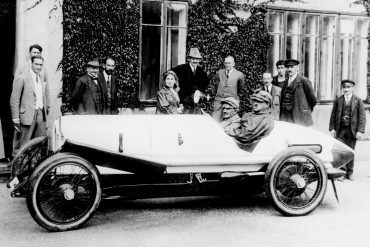
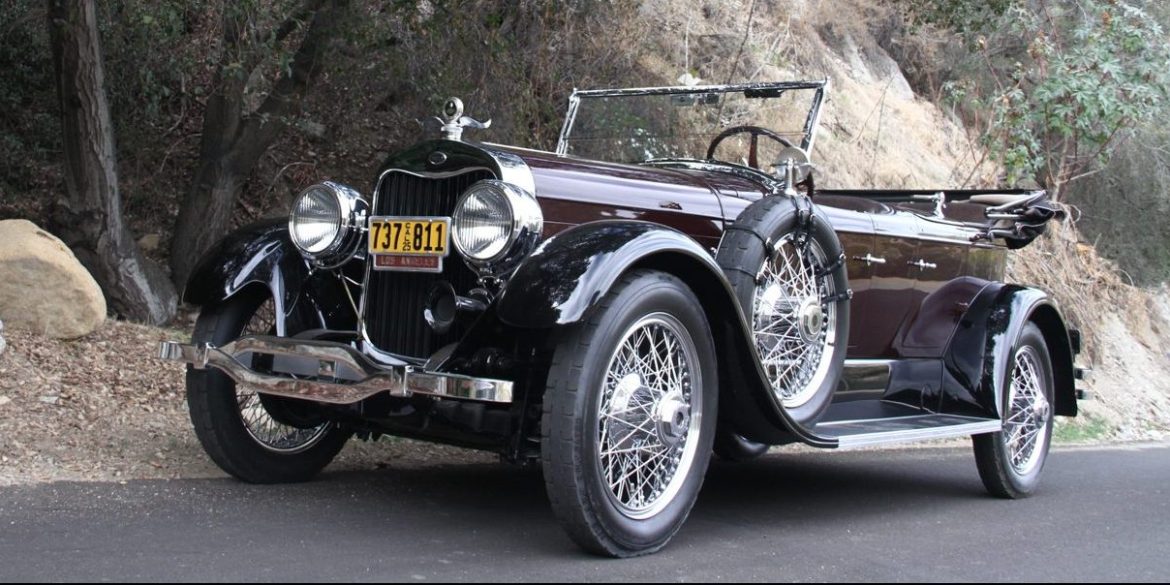
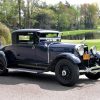
Chris Kidd of Tired Iron pulls the spark lever, eases the choke and steps on the starter; the 357.6 cubic inch flathead V8 of the first car he restored fires. Jim Richardson rides in a Brunn-bodied 1925 Lincoln.

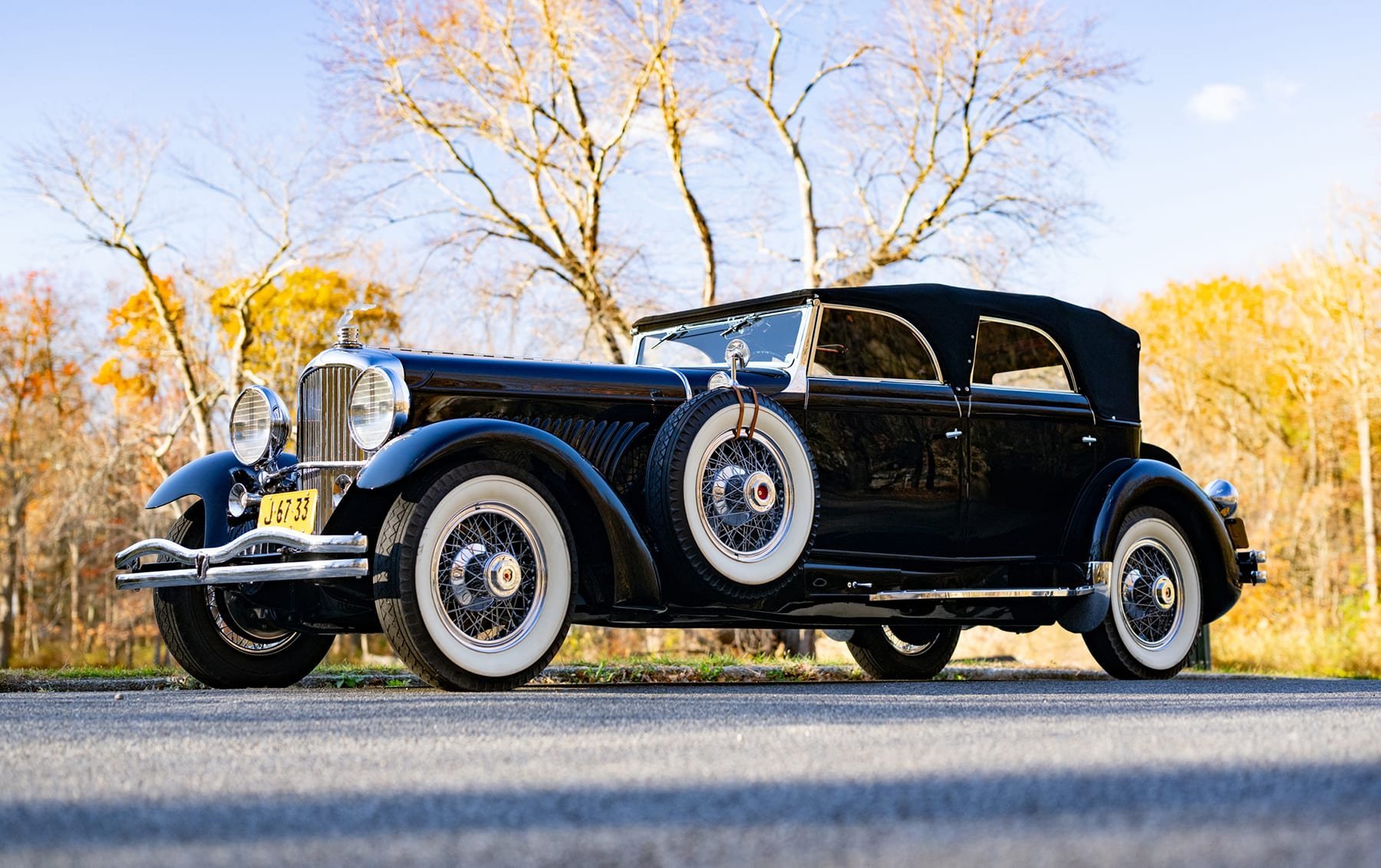
Between the mid-1920s and the Second World War the richest people in the world bought their cars in two parts: a chassis from Bugatti, Duesenberg, Hispano-Suiza, Rolls-Royce, Mercedes-Benz, Isotta Fraschini or Packard, and a body from a coachbuilder — Figoni, Saoutchik, Murphy, Gurney Nutting, Touring, Sindelfingen — who had never built that shape before and never would again. The result was the most beautiful period in the history of the automobile, cut short by the Crash of 1929 and finished by the war. This is the whole story, and every linked piece is a source.
The pieces to start with
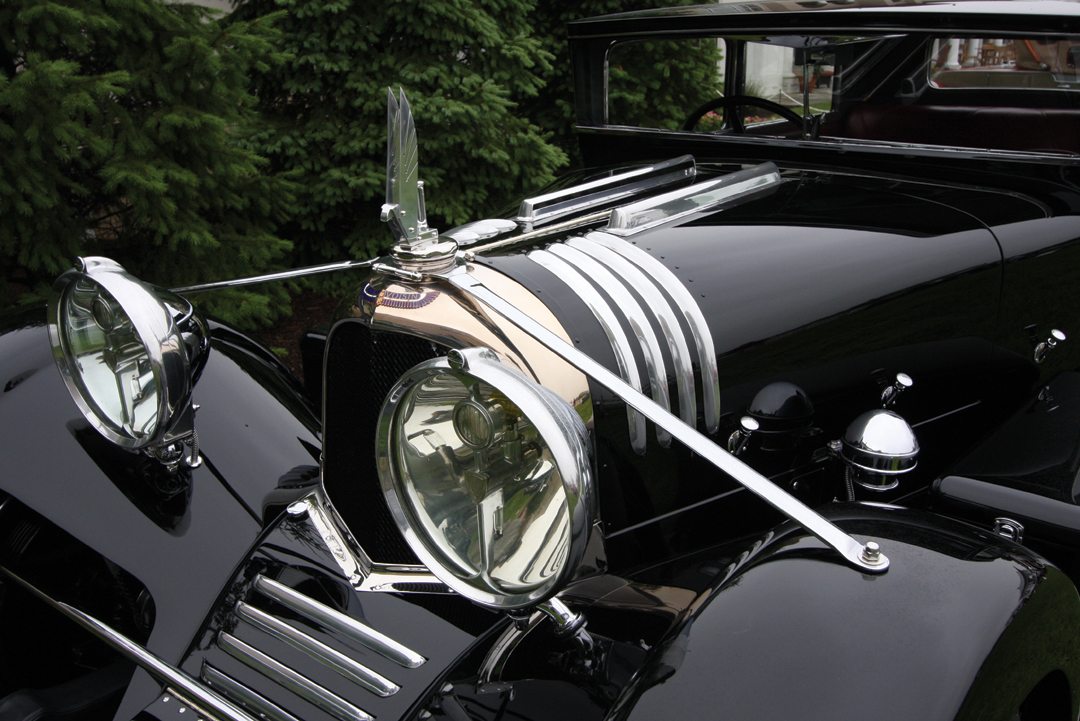
Hemsley on Art Deco and the French, the Duesenberg J, Natale's 540K and 57SC, the Grümmer coachbuilding dynasty, Pierce-Arrow's refusal to compromise and the Cord 810.
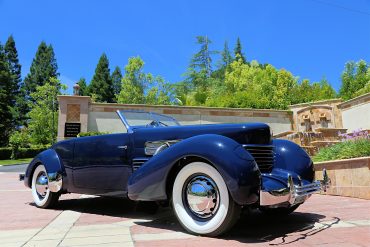
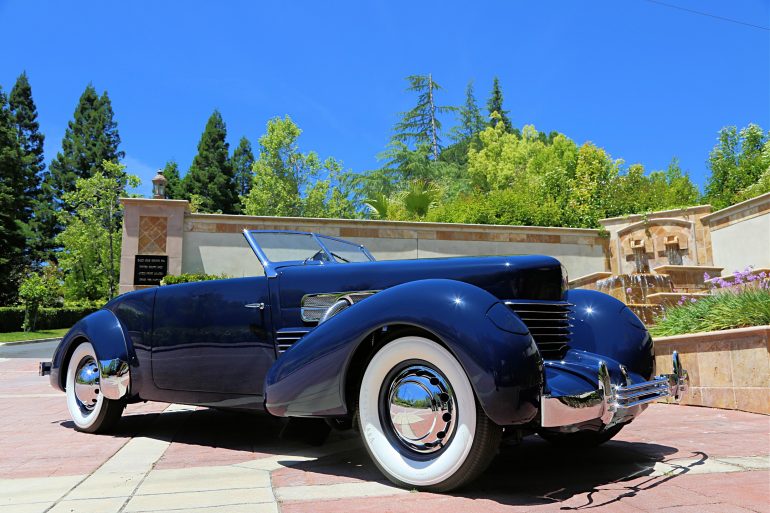
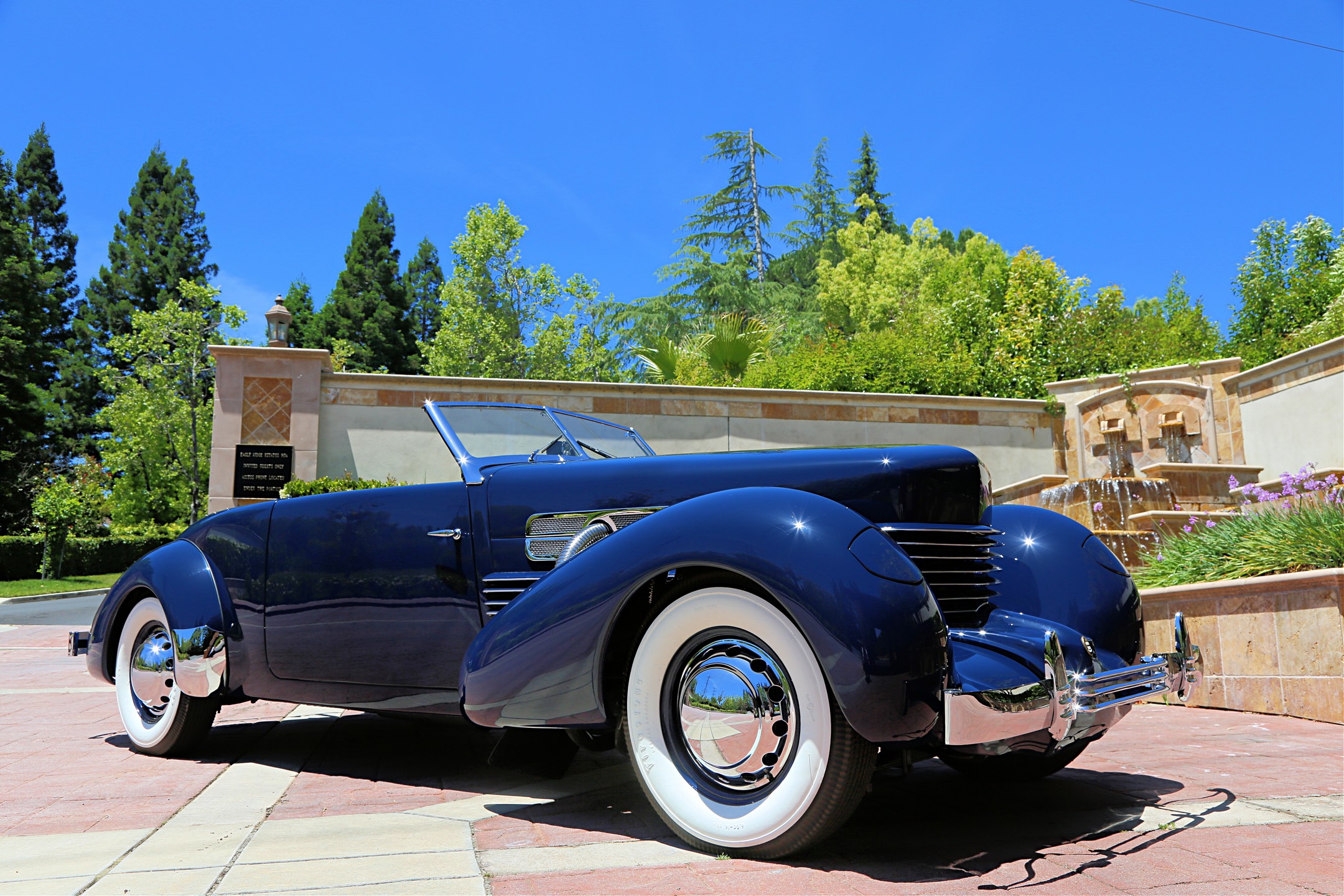
After the 1929 crash even Henry Ford had to let style into his cars. The look that emerged, named for the 1925 Paris Exposition des Arts Décoratifs, gave us Gordon Buehrig's Cord 810 and Figoni et Falaschi's Delahaye 135M.
The French started Art Deco with the 1924 Paris exposition, then Renault, Delaunay-Belleville, Citroën and Panhard mostly kept it restrained; Figoni et Falaschi did not. From the big makers' cautious streamlining to the Panhard Dynamic.
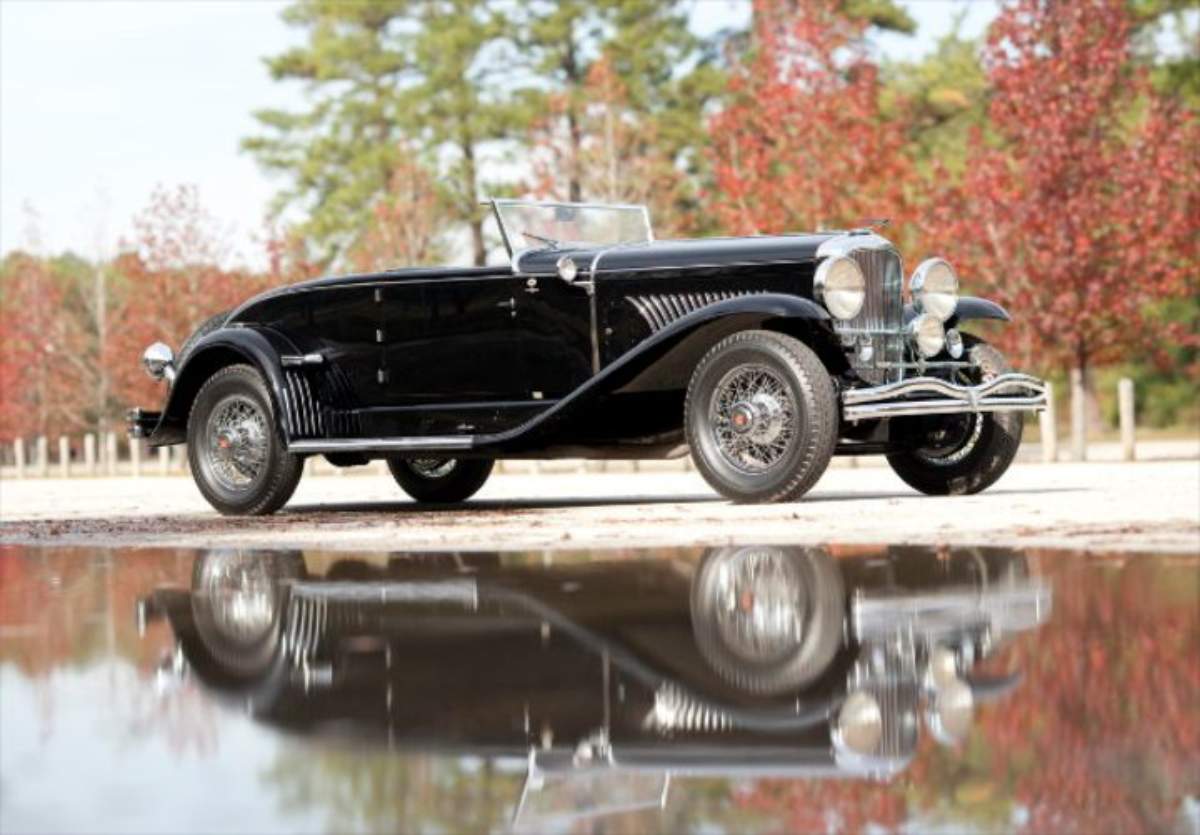
The Model J of December 1928 made 265 hp, a figure the E-Type matched 30 years later. Planned at 500 a year, it sold 481 between 1929 and 1937. Rick Shultz on Fred and Augie, from Lippe to Iowa.
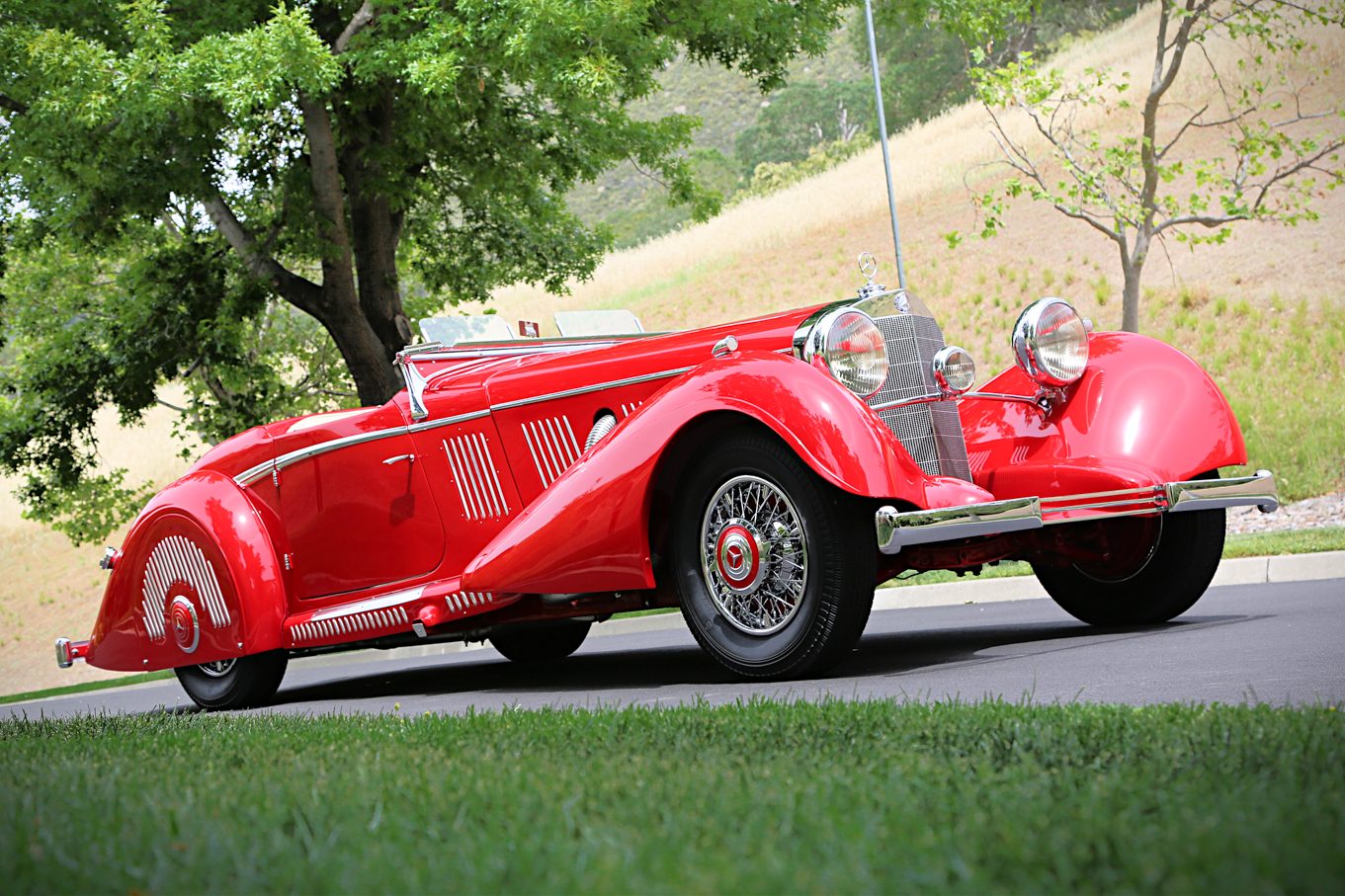
Developed under Max Sailer after Hans Nibel died at 54, the 540K paired a 5.4-liter straight-eight with a Roots blower that engaged only at full throttle. Shown at Paris in 1936, it was the last supercharged production Mercedes for decades.
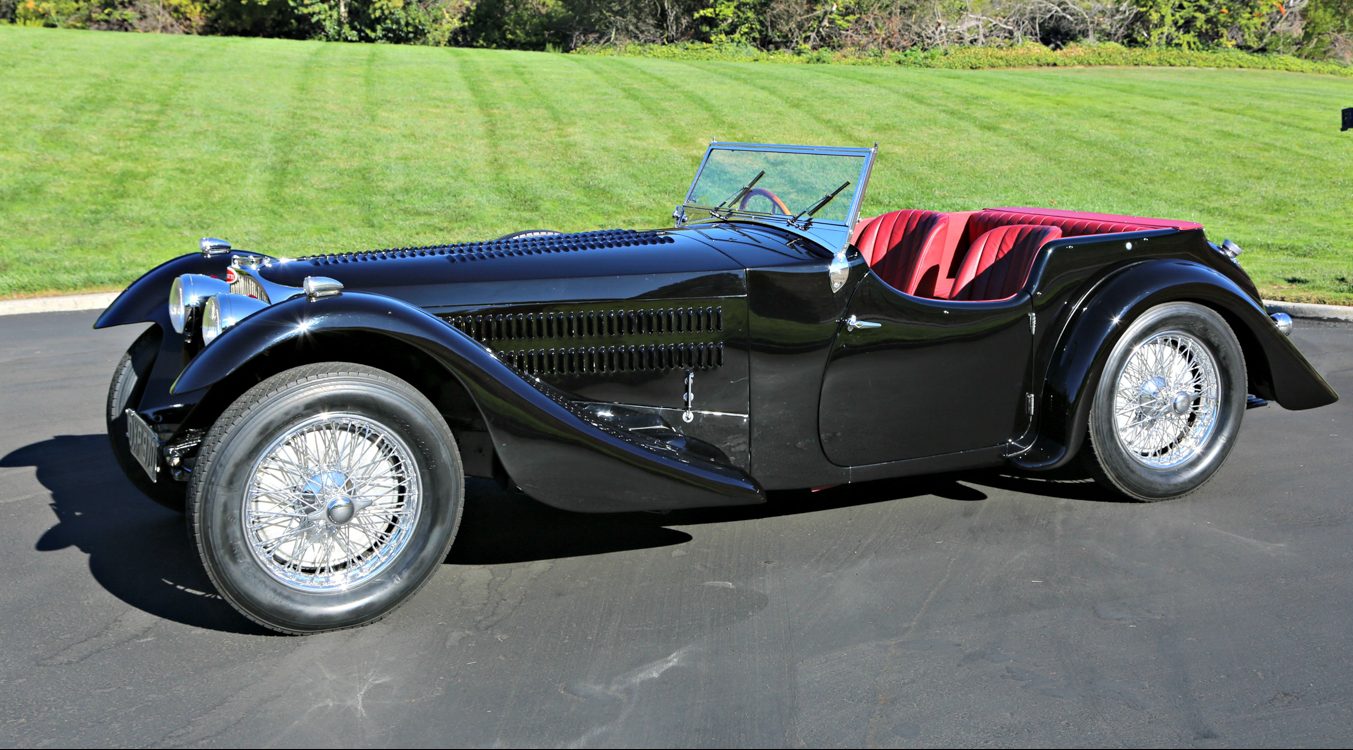
Jean Bugatti's Type 57S sat lower on its own chassis, the front axle split in halves and the rear axle passing through the frame, with a dry sump and 8.5:1 compression. A 1937 57SC with four-seat tourer body by Corsica.
The Grümmers were saddlers to Napoleon I before they were coachbuilders; one son, born 1811, was named Louis-Napoleon. From Aachen via Brussels to Paris and the carrossier V. Morel, the family line behind the Clichy company founded in 1924.
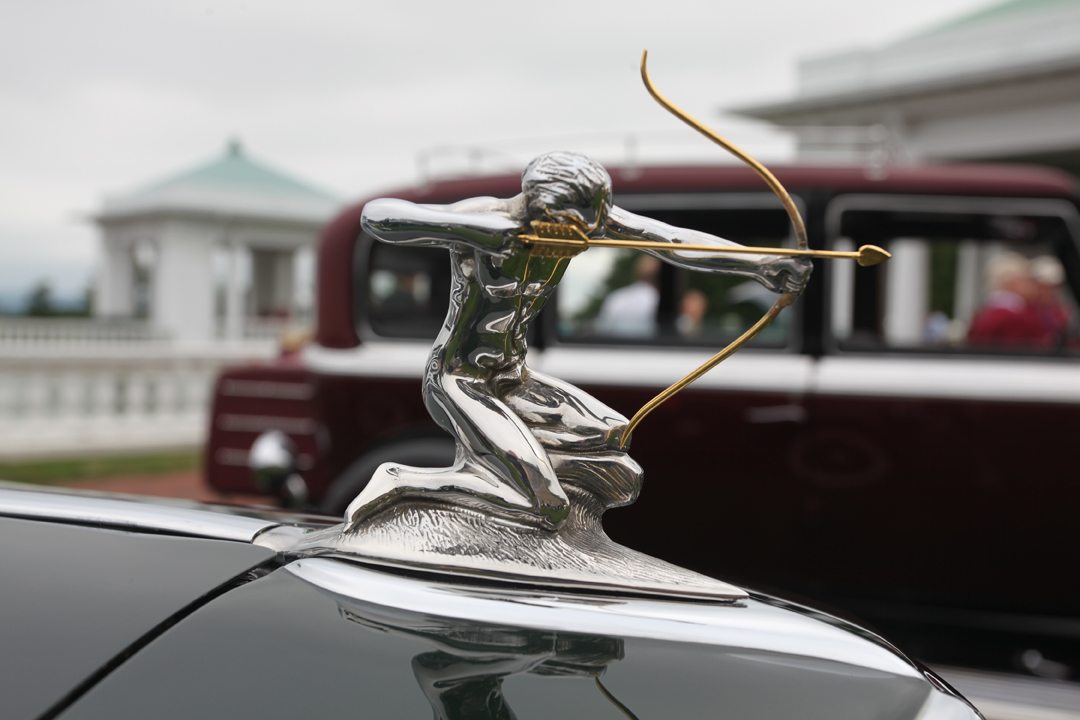
Pierce-Arrow pioneered power brakes, power steering, hydraulic tappets and light-alloy construction, and died of its refusal to compromise on quality. From George N. Pierce's bird cages and bicycles to a failed steam car in 1900, the company's history.
E.L. Cord left school early, sold Moon cars in Chicago and was running Auburn at 30. Steve Natale on the 810 and 812 that caused a sensation in November 1935 and were gone in under two years.
The newest long-form writing on the classic era, as it is published.
The Classic Car Club of America, which coined the term in 1952, defines a Full Classic as a fine or distinctive car built between 1915 and 1948; this page takes the heart of that span, from the Rolls-Royce Phantom and the first Bugatti Royale in 1925–26 to the last Packard Darrins and Lincoln Continentals of 1942, when American car production stopped for the war. It was the age of the separate chassis and the custom body, of twelve- and sixteen-cylinder engines built for silence rather than speed, of the Paris Salon and the concours d'élégance, of streamlining and Art Deco, and of the Depression, which killed Duesenberg, Marmon, Pierce-Arrow, Stutz, Isotta Fraschini and Voisin and left Packard, Cadillac, Lincoln and Rolls-Royce to carry on with smaller cars. The racing of these years is on The Vintage Years and The Silver Arrows Years pages; the grand tourers that came after the war are on The Grand Touring Years. J. Michael Hemsley's six-part Art Deco and the Automobile is the archive's long essay on the design of the period, and John Nikas's Buyer's Remorse on who bought these cars, and what became of them.
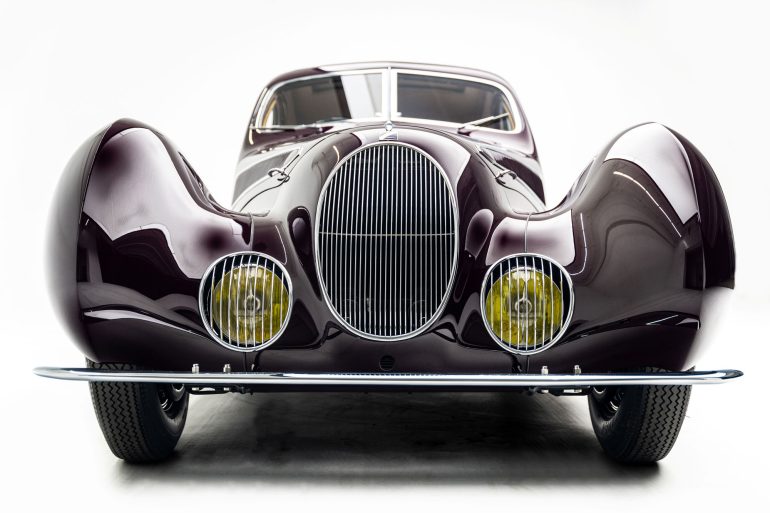
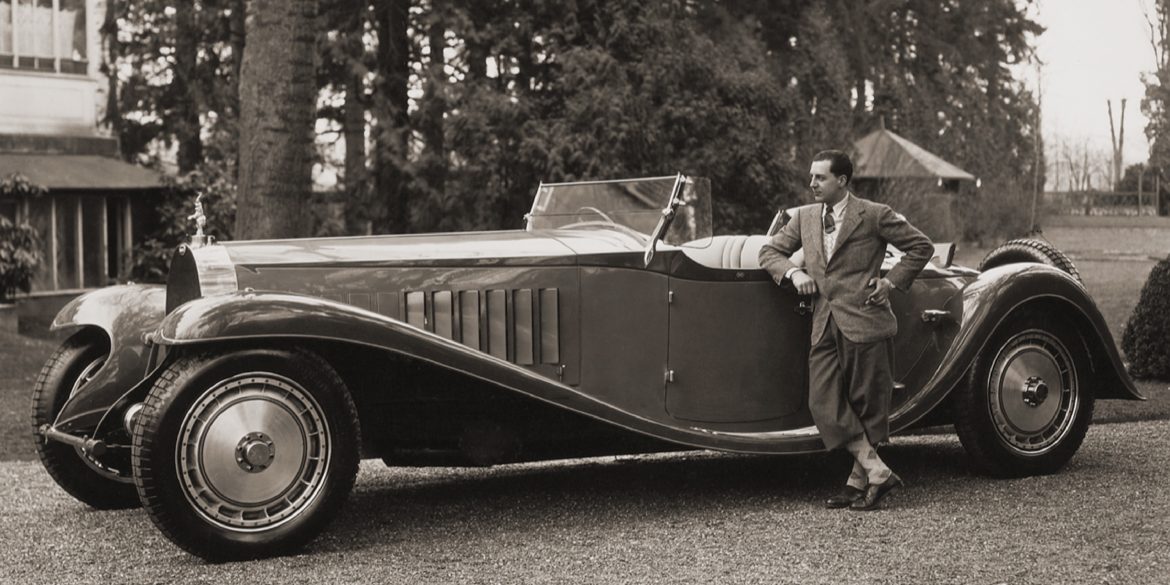
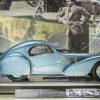
France built the cars the era is remembered by. Ettore Bugatti's Type 41 Royale of 1927–33 — 12.7 litres, a wheelbase of fourteen feet, six built and three sold — was the grandest car ever offered to the public and a commercial disaster that the Depression made inevitable; the archive has The Resplendent Royale and A Royal Vehicle. His son Jean's Type 57 of 1934–40, 710 built, was the opposite: the best all-round car in Europe, raced at Le Mans and bodied by Gangloff and by Jean himself as the Ventoux, Stelvio, Atalante and, in 57S and SC form, the four Atlantics, the most valuable cars in the world; Steve Natale's Corsican Bug and the Atlantic gallery are the archive's, with Newman's Jean Bugatti, killed testing a Type 57 tank in August 1939, and Ettore the inventor. Hispano-Suiza's H6 of 1919, Marc Birkigt's aluminium six with servo brakes that Rolls-Royce licensed, and the 9.4-litre V12 J12 of 1931 were the choice of those who found Bugattis vulgar; the brief history and the Dubonnet Xenia are in the archive. Delage's D8 of 1929, in the archive's D8S profile, bankrupted Louis Delage by 1935; Delahaye's 135 of the same year, the sporting chassis that Figoni dressed, saved Delahaye, and Hemsley's Sophistication is about one; Talbot-Lago's T150C SS of 1937, the Teardrop, is the single most photographed shape of the decade. Gabriel Voisin, the aviator, built the strangest cars of all, in aluminium with sleeve-valve engines and interiors like aircraft cabins: Hemsley's Airplanes to Automobiles and the C14 Berline and C27 Aérosport cover them.
What arrived each year, where it was shown, and what was happening to the people who bought them.
| Year | The cars that arrived | Coachwork and design | What happened |
|---|---|---|---|
| 1925 | Rolls-Royce Phantom I; Lincoln L; Rickenbacker D6 | Barker and Hooper on the Phantom; Brewster and Murphy in America | The Paris Exposition des Arts Décoratifs gives the style its name |
| 1926 | Bugatti Type 41 Royale prototype; Isotta Fraschini 8A; Stutz Vertical Eight | Castagna on the Isotta; Weymann fabric bodies at their peak | Daimler and Benz merge; Ettore Bugatti drives the Royale prototype himself |
| 1927 | Mercedes-Benz S; Voisin C14; Chrysler Imperial 80 | Saoutchik and Kellner on the Mercedes S | Lindbergh flies the Atlantic; Ford stops the Model T |
| 1928 | Duesenberg Model J (New York Salon, December); Alvis FD; Invicta 4½ | Murphy, LeBaron, Derham and Rollston take the Duesenberg chassis | E. L. Cord's empire at its height; Barney Oldfield sells Buicks |
| 1929 | Rolls-Royce Phantom II; Cord L-29; Delage D8; Lincoln Model L Dietrich | Front-wheel drive lets the L-29 sit low; Figoni opens on the rue Lemoine | Wall Street falls in October; the orders stop |
| 1930 | Cadillac V-16 (January); Bentley 8 Litre; Maybach Zeppelin; Bugatti Type 50 | Fleetwood on the V-16; Pinin Farina founded in Turin | The multi-cylinder race begins as the market collapses |
| 1931 | Marmon Sixteen; Packard Twin Six; Hispano-Suiza J12; Lancia Astura; Alfa Romeo 8C 2300; Stutz DV-32; Bugatti Type 55; SS1 | Jean Bugatti's roadster on the Type 55; Kellner's Royale coupé | Rolls-Royce buys Bentley; the Royale finds its first buyer |
| 1932 | Duesenberg SJ; Ford V8; Lincoln KB; Pierce-Arrow Twelve | Brunn and Judkins on the Lincoln; Bohman & Schwartz open in Pasadena | The worst year of the Depression; Marmon's last full year |
| 1933 | Pierce-Arrow Silver Arrow; Dymaxion; Derby Bentley 3½ Litre; Delage D8S | Phil Wright's Silver Arrow at the New York show, five built at $10,000 | Marmon closes; Hitler opens the Berlin show and promises the autobahn |
| 1934 | Chrysler Airflow; Bugatti Type 57; Tatra 77; Voisin C25 Aérodyne; Mercedes-Benz 500K; Citroën Traction Avant; Railton | Streamlining arrives in the showroom; the Aérodyne's sliding roof at the Paris Salon | The Airflow fails and changes everything anyway |
| 1935 | Auburn 851 Speedster; Delahaye 135; Horch 853; Packard One-Twenty; Jaguar SS100 announced; Stout Scarab | Buehrig's boat-tail; Figoni's first Delahaye | Isotta Fraschini and Stutz stop making cars; Delage is absorbed by Delahaye |
| 1936 | Cord 810; Lincoln Zephyr; Mercedes-Benz 540K; Rolls-Royce Phantom III; Bugatti Type 57SC Atlantic; Tatra T87 | Touring's Superleggera patent; Sindelfingen's Special Roadster; the Atlantic's riveted spine | The high point: more great cars in one year than in any other |
| 1937 | Talbot-Lago T150C SS Teardrop; Delage D8-120; Lancia Aprilia; Cord 812; Alfa Romeo 8C 2900B; Lagonda V12 | Figoni's teardrops at the Paris Salon; Pourtout's Embiricos Bentley begins | Cord, Auburn and Duesenberg close; Voisin is sold |
| 1938 | Delahaye 165 V12; Horch 853A; Mercedes-Benz 540K Autobahn-Kurier; Cadillac Sixty Special; Buick Y-Job | Figoni's 165 is built for the New York World's Fair; Harley Earl's first concept car | Pierce-Arrow and Hispano-Suiza stop; Munich |
| 1939 | Lincoln Continental (prototype); Delahaye 135 MS; Alfa Romeo 6C 2500; Bugatti Type 64 (unfinished) | Gregorie's Continental for Edsel Ford; Jean Bugatti's papillon doors | Jean Bugatti killed in August; war in September |
| 1940 | Lincoln Continental; Packard Darrin; LaSalle's last year; Cadillac Series 62 | Dutch Darrin's Packards for Hollywood | France falls; Bugatti's Molsheim works is seized |
| 1941 | Chrysler Thunderbolt and Newport show cars; Packard Clipper; Cadillac Sixty-One | LeBaron's last great commissions | Pearl Harbor in December |
| 1942 | The 1942 models, built for four months | Blackout trim: painted steel where the chrome had been | American car production ends on 9 February 1942; the era is over |
Car names link to every story on the site about that car.
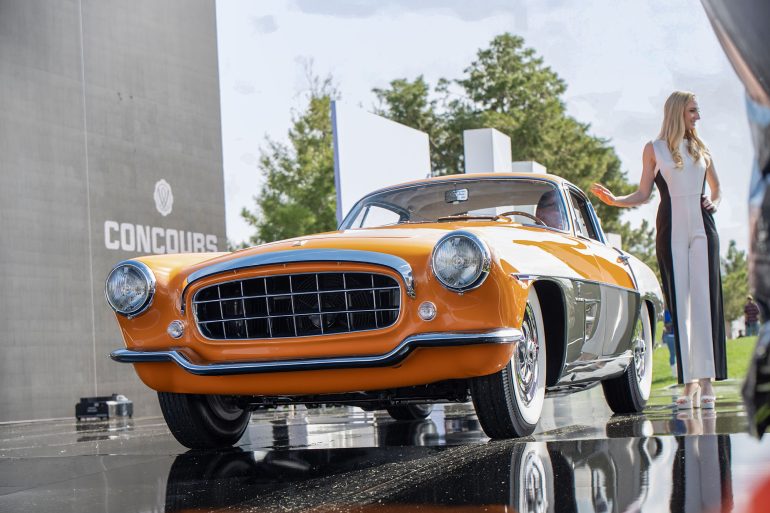
The Paris coachbuilders made the French chassis famous. Joseph Figoni and Ovidio Falaschi's teardrop bodies on Talbot-Lago and Delahaye chassis, with their enclosed wheels and chrome swages, were the sensation of the Paris Salons of 1936 to 1938 and of the New York World's Fair of 1939; Jacques Saoutchik's were heavier and more theatrical; Henri Chapron's, in the archive's conversation with his widow Noëlle, were the most restrained and lasted longest; Letourneur et Marchand, Pourtout, Franay, Vanvooren, Labourdette and Gangloff of Colmar filled the rest of the Salon. The archive's Grümmer: A Coachbuilding Dynasty, five thousand words on one Paris family, is the best account of how the trade worked, from the horse-drawn years to the end; Hemsley's Ooh Là Là, the French: Mild to Wild is the design history; the Mullin Museum's French Coachbuilders exhibition and the Frist Center's Sensuous Steel show the cars together. Jim Richardson's Darl'mat: The French Evolution follows the Peugeot dealer who had Pourtout build him sports cars on 302 and 402 chassis and raced them at Le Mans.
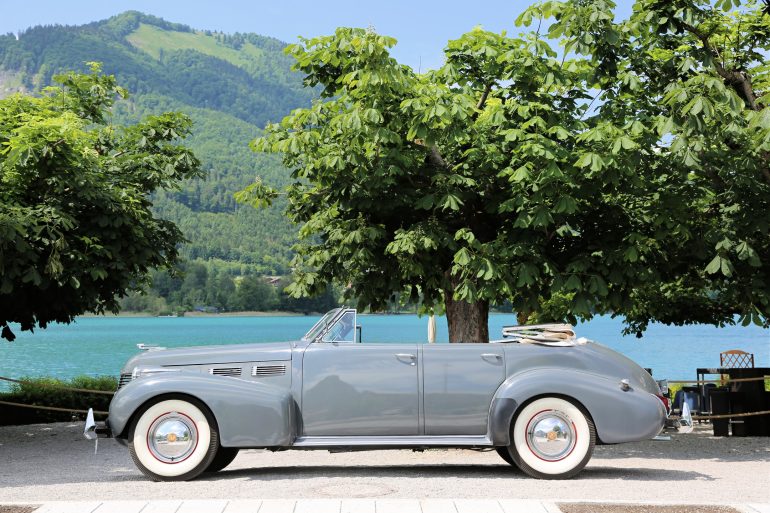
The American classic was born in December 1928 at the New York Salon, when E. L. Cord's Duesenberg Model J appeared with 265 horsepower, twice anything else on the market, a chassis price of $8,500 before the body, and a clientele of film stars, heirs and gangsters; the supercharged SJ of 1932 had 320. Only 481 were built before the company closed in 1937, and the archive's Model J history and its interview with the restorer Randy Ema tell the story. Cadillac answered in January 1930 with the V-16, a 7.4-litre engine so smooth that the car was advertised for its silence, and Gary Horstkorta's Marini's Full Classic is one; Marmon's Sixteen of 1931, in Jim Richardson's Motoring Masterpiece and Hemsley's company history Millstones to Modern Trucks, was lighter and faster and sold 390; Packard's Twin Six, Lincoln's Model K, Pierce-Arrow's Twelve and Stutz's DV-32 completed the multi-cylinder race just as the market for them disappeared. Hemsley's Fatal Determination, on Pierce-Arrow's refusal to build a cheaper car, and his Barney Oldfield's Buick, Rickenbacker and Packard 903 profiles, with Richardson's Packard Super Eight, Packard 120, Stalin's Packard, Lincoln Phaeton, Chrysler 75, Jordan Playboy and the last LaSalle, make up the American half of the archive. The custom-body houses — Murphy of Pasadena, LeBaron, Rollston, Brunn, Derham, Dietrich, Judkins, Willoughby, Bohman & Schwartz — did for Duesenberg and Packard what the carrossiers did in Paris, and Hemsley's American Design: the Big Three and Three Littler Ones covers the factories' own designers, Harley Earl above all.
The timing could not have been worse. The Duesenberg J was ten months old, the Cadillac V-16 a few weeks from announcement and the Royale still unsold when Wall Street fell in October 1929, and the cars that followed — the Marmon Sixteen, the Packard Twin Six, the Pierce and Lincoln Twelves, the Bugatti Type 50, the Hispano J12 — were all conceived in the boom and born in the bust. The American market for cars costing more than $2,000 fell by more than ninety per cent between 1929 and 1933; the coachbuilders went first, because a custom body was the easiest thing in the world not to order, and the independent makers followed them, Marmon in 1933, Stutz in 1935, Duesenberg with the rest of the Cord empire in 1937, Pierce-Arrow in 1938. Those who survived did it by going down-market: Packard's One-Twenty of 1935, in Jim Richardson's Master of the Road and Classical Cars, outsold the senior Packards ten to one and kept the company alive to 1958; Cadillac had LaSalle; Lincoln had the Zephyr; Rolls-Royce had bought Bentley; Mercedes-Benz had the 170 V. Hemsley's Fatal Determination is the story of the company that would not, and died for it; Nikas's Buyer's Remorse follows the cars themselves through the years when nobody wanted them, when a Duesenberg could be had for the price of a used Ford and many were cut down into tow trucks and hot rods. In Europe the end came later and by a different hand: Isotta Fraschini gave up cars for aero engines in 1935, Delage was absorbed by Delahaye the same year, Voisin by Gnome et Rhône in 1937, and Bugatti, Talbot-Lago, Delahaye and Hispano-Suiza carried on, on a few hundred chassis a year, until September 1939.
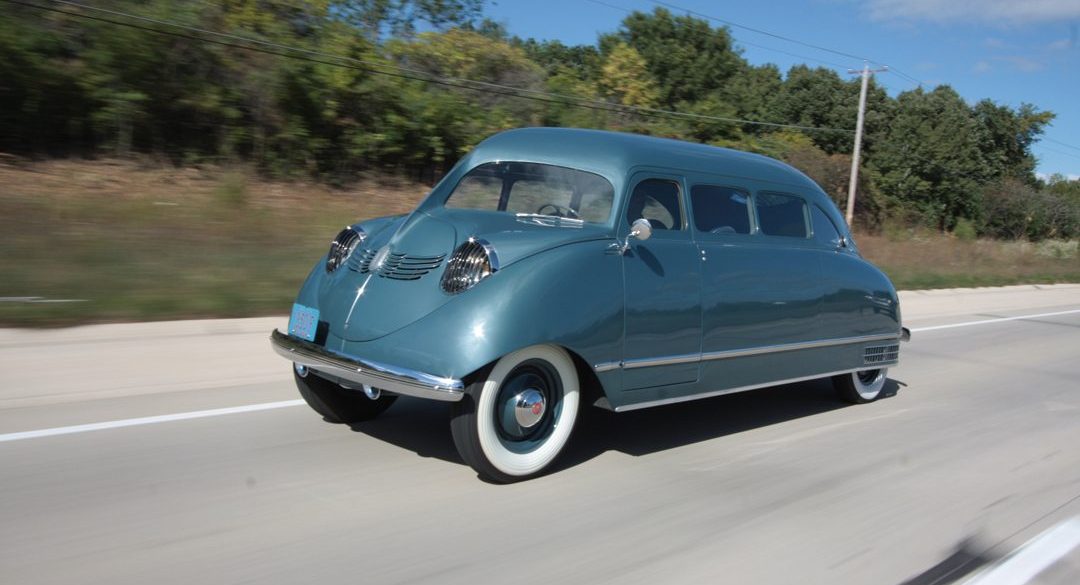
The second half of the era belonged to the aerodynamicists and the industrial designers. Chrysler's Airflow of 1934, the first mass-produced streamlined car, was a commercial failure that changed everything; Hemsley's Future Shock is about the De Soto version. Lincoln's Zephyr of 1936, John Tjaarda and Bob Gregorie's unitary V12, in Richardson's Teardrops in the Wind, was the success the Airflow should have been and the parent of the 1939 Continental. Gordon Buehrig's Cord 810 of 1936, coffin-nosed, front-driven, with hidden headlamps and no running boards, is the archive's history, and his Auburn 851 Speedster of 1935, each one certified to have done 100 mph, is Hemsley's Bridesmaid Revisited. The dreamers built in ones and threes: Buckminster Fuller's Dymaxion, William Stout's Scarab, the McQuay-Norris Streamliners built to sell piston rings, and, in Czechoslovakia, Hans Ledwinka's rear-engined Tatras, the T87 and the T97 that Hitler killed because it looked too much like the Volkswagen. Hemsley's Art Deco and the Automobile on Loewy and MAYA, his Deco in the Rest of the World and Axis Deco finish the series; Richardson's A Matter of Timing on the Graham "sharknose" and Silver Streak on the Pontiac show how far the style reached.
Each links to every story on the site about that car; the model pages come next.
Germany's classics were built for the Autobahn and for the men who commissioned it. Mercedes-Benz's supercharged 500K of 1934 and 540K of 1936, 419 built, with Hermann Ahrens's Sindelfingen bodies — the Special Roadster above all — are the most valuable German cars of the period; the archive has Steve Natale's Mayfair's Phoenix, the 500K Special Roadster, the 540K Autobahn-Kurier and its Pebble Beach win in 2021, with Richardson's 170 V for the other end of the range and a 1940 Rometsch cabriolet. Horch, the senior Auto Union marque, built the straight-eight 853 of 1935 that Erdmann & Rossi and Voll & Ruhrbeck bodied, in the archive's gallery and centenary piece; Maybach's Zeppelin DS8, a twelve-cylinder of eight litres with a seven-speed gearbox, was Germany's Royale; and Ferdinand Porsche's Austro-Daimlers, in Ludvigsen's Porsche's Grand Prix Austro Daimlers, were the Vienna school. Wanderer's W25K streamliner and the Tatra Grand Prix car that never was are the footnotes.
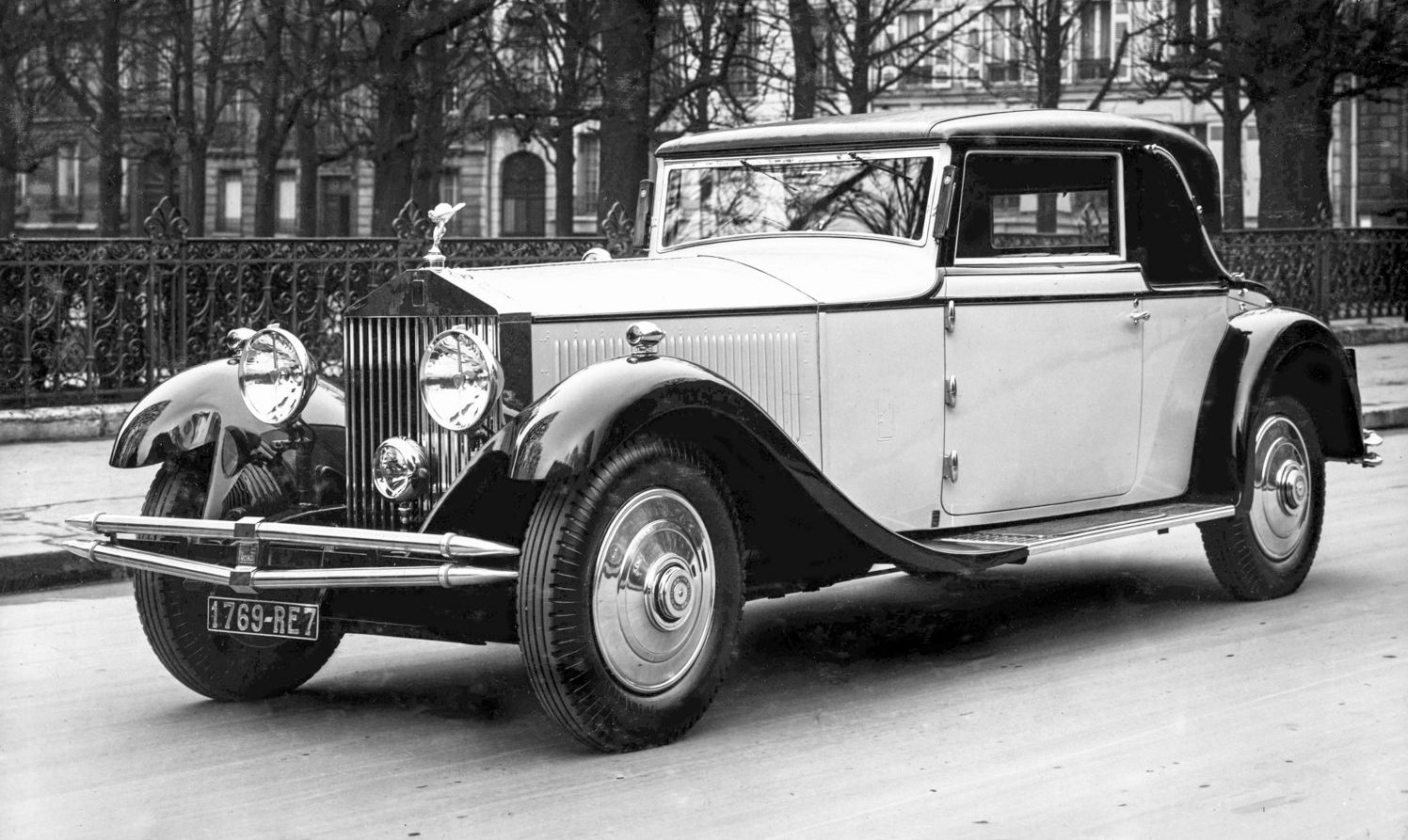
Rolls-Royce built three Phantoms in the period — the I of 1925, the II of 1929, the V12 III of 1936, in Natale's The Copper Kettle — and bodied none of them, leaving that to Barker, Hooper, Park Ward, H. J. Mulliner, Thrupp & Maberly, Gurney Nutting and Freestone & Webb; after it bought Bentley in 1931 the Derby Bentleys, the 3½ and 4¼ Litre "silent sports cars", were the firm's sporting line, and the 8 Litre of 1930, W. O.'s last, in Natale's Dead Silent Speed, won Pebble Beach in 2019. W. O. went to Lagonda, whose V12 of 1938 was his masterpiece; Georges Roesch's Talbots, in Mike Jiggle's Roesch's Vision, Alvis's Speed 20, in Jiggle's profile and Quinn's front-drive FD, Noel Macklin's Invicta, in Family Treasure and the Railton-Terraplane that followed it, and William Lyons's SS, whose SS1 Airline and SS100 made Jaguar, were the sporting saloons and tourers beneath them. Hemsley's Art Deco and the Automobile on the British, Quinn's MG TA Airline and the Jowett history cover the smaller cars.
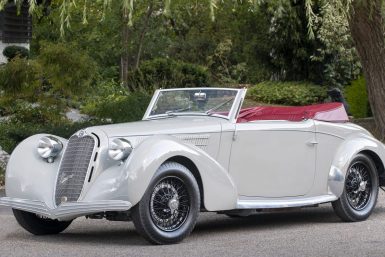
Isotta Fraschini's Tipo 8, the first production straight-eight, became the 8A of 1924 and the 8B of 1931, the Hollywood car of the silent era, bodied by Castagna and by LeBaron and Fleetwood in America; Hemsley's Intrepida Fides and John Nikas's Heavenly Body tell the story, and a Tipo 8A won Pebble Beach in 2015. Alfa Romeo's 8C 2900B of 1937–38, Jano's Grand Prix engine under Touring's Superleggera bodies, was the fastest road car in the world and won Pebble Beach in 2018; the archive has a 2900B, Peter Collins's 6C 2300 B MM and Ludvigsen's 12C Prototipo, the V12 road car the war stopped. Lancia's Astura of 1931 carried the most elegant Pinin Farina bodies of the decade, one of which won Pebble Beach in 2016, and the Aprilia of 1937 was the most advanced small car in Europe; Hemsley's Before the Mouse, Came the Boy on the Fiat Balilla and his Siata history cover the tuners. The carrozzerie — Touring, whose Superleggera patent of 1936 put aluminium panels over a cage of small tubes, Pinin Farina, founded in 1930, Castagna, Zagato, Viotti, Stabilimenti Farina, Bertone — were about to inherit the world, as the Grand Touring Years page tells.
These cars have been winning concours d'élégance since the day they were built, and for the last thirty years the Classic Era has owned Pebble Beach: the Isotta Fraschini 8A in 2015, the Lancia Astura in 2016, a Mercedes-Benz S Barker tourer in 2017, the Alfa Romeo 8C 2900B in 2018, the Bentley 8 Litre in 2019, the 540K Autobahn-Kurier in 2021, a Duesenberg J Figoni in 2022, a 540K Special Roadster in 2023 and, the exception, a Bugatti Type 59 in 2024. The Pebble Beach and Villa d'Este pages have every year; the Classic Car Club of America keeps the register, the Mullin Museum in Oxnard kept the French cars together until it closed in 2024, and the archive's interviews with Peter Mullin, David Schultz, Mark Hyman and Randy Ema are the collectors', dealers' and restorers' side of the story.
Best of Show winners, museum exhibitions and the events where the classics gather, newest first.
The archive's single-car stories from the period, most of them from Vintage Roadcar's long profiles, link from every chapter above; the ones to start with are the Duesenberg Model J, the Bugatti Type 57SC, the Mercedes-Benz 540K, the Cord 810, the Marmon Sixteen, the Rolls-Royce Phantom III, the Lincoln Zephyr, the Talbot-Lago Teardrop, the SS1 Airline and the Tatra T87. Every car named here links to its tag archive in the table and cards below; the model pages come next.
Single-car stories: Bugattis, Duesenbergs, Packards, Rolls-Royces, Mercedes, Delahayes and the coachbuilt one-offs.
The era's makers were engineers who ran their own names: Ettore Bugatti and Jean, Louis Delage, Marc Birkigt of Hispano-Suiza, Gabriel Voisin, W. O. Bentley, Sir Henry Royce, Vincenzo Lancia, Hans Ledwinka, Fred and Augie Duesenberg and their patron E. L. Cord, whose designer Gordon Buehrig drew the 851 and the 810. The stylists were new: Harley Earl at General Motors, Hermann Ahrens at Sindelfingen, Raymond Loewy, John Tjaarda, Carl Breer of the Airflow. The coachbuilders are the chapter above. The people who kept the cars are the archive's own: Peter Mullin, Randy Ema, David Schultz, Mark Hyman, Rich Taylor, Terry Karges of the Petersen, Martin Swig of the California Mille, Noëlle Chapron and Bill Miller, who built his own V12 Packard.
Makers, designers, coachbuilders, collectors and restorers of the classic years.
Six Bugatti Royales, three sold; 710 Type 57s, four Atlantics; 481 Duesenberg Js, of which about 380 survive; 4,076 Cadillac V-16s in eleven years, most of them in the first two; 390 Marmon Sixteens; five Pierce-Arrow Silver Arrows at $10,000 each in the worst year of the Depression; 419 Mercedes-Benz 540Ks; 727 Phantom IIIs; 100 Bentley 8 Litres; about 2,970 Cord 810s and 812s; three Dymaxions and nine Scarabs. The Model J's 265 horsepower was unmatched by an American production car until the 1950s; the Alfa Romeo 8C 2900B was timed at 115 mph; the Autobahn-Kurier 540K was built for 110 on the new roads. Prices at the top: a Royale chassis at $30,000 in 1931, a Duesenberg J complete at $13,000 to $20,000, a Model A Ford at $500. Of the great names, Isotta Fraschini stopped making cars in 1935, Marmon in 1933, Stutz in 1935, Duesenberg, Cord and Auburn in 1937, Pierce-Arrow in 1938, Voisin and Delage as independents by 1939, and Hispano-Suiza in 1938; Packard outlived them all by twenty years. A Type 57SC Atlantic is now reckoned the most valuable car in the world; Duesenberg Js, 540K Special Roadsters, Teardrop Talbots and 8C 2900s have each passed ten million dollars at auction.
Short answers, with the long ones above.
By the Classic Car Club of America's definition, a Full Classic is a fine or distinctive car built between 1915 and 1948, listed by the club by make and model. Most of them, and all of the famous ones, were built between 1925 and 1942.
The Bugatti Type 41 Royale, at about $30,000 for a bare chassis in 1931, roughly sixty times the price of a Ford. Six were built and three were sold; all six survive.
The practice of buying a rolling chassis from the manufacturer and having a separate firm — Figoni et Falaschi, Saoutchik, Murphy, Gurney Nutting, Touring — design and build the body to order. It died out after the war as unitary construction replaced the separate chassis.
The Depression. Sales of cars over $2,000 fell by more than ninety per cent between 1929 and 1933, and Marmon, Stutz, Isotta Fraschini, Duesenberg, Pierce-Arrow and Voisin were gone by 1939. Packard, Cadillac, Lincoln and Rolls-Royce survived by building cheaper cars.
The Bugatti Type 57SC Atlantic, of which four were built and three survive; one is held to be worth more than any other car in the world. Duesenberg SJs, Mercedes-Benz 540K Special Roadsters and Talbot-Lago Teardrops are the next tier.
Most of the recent winners: the Isotta Fraschini 8A (2015), Lancia Astura (2016), Mercedes-Benz S (2017), Alfa Romeo 8C 2900B (2018), Bentley 8 Litre (2019), Mercedes-Benz 540K (2021 and 2023) and Duesenberg J (2022).
The Chrysler Airflow of 1934, developed in a wind tunnel by Carl Breer. It sold badly, but the Lincoln Zephyr of 1936 and the Cord 810 that followed made the style acceptable, and the Tatra T77 of the same year took the idea further in Europe.
At Pebble Beach, Villa d'Este and Amelia Island each year; at the Petersen in Los Angeles, the Nethercutt in Sylmar, the Auburn Cord Duesenberg Museum in Indiana, the Cité de l'Automobile at Mulhouse and the Louwman in The Hague among the museums. The Mullin Museum's French collection was dispersed when it closed in 2024.
The whole thread, newest first.