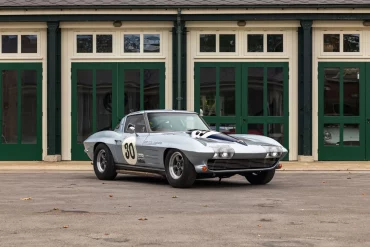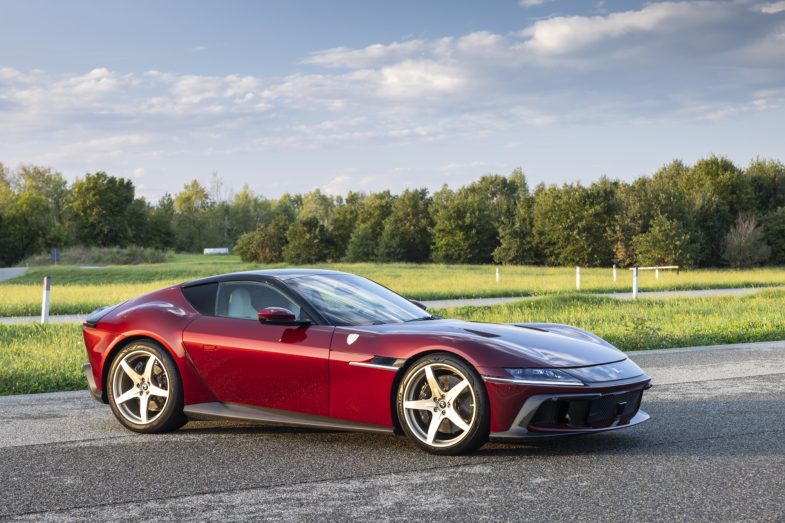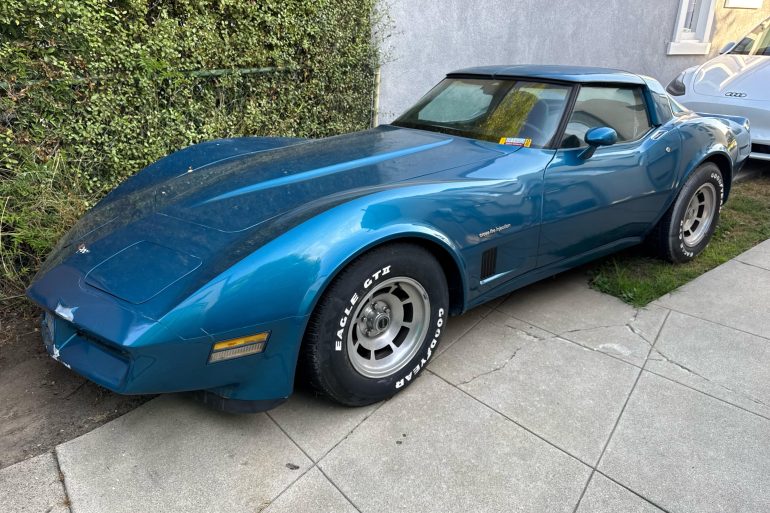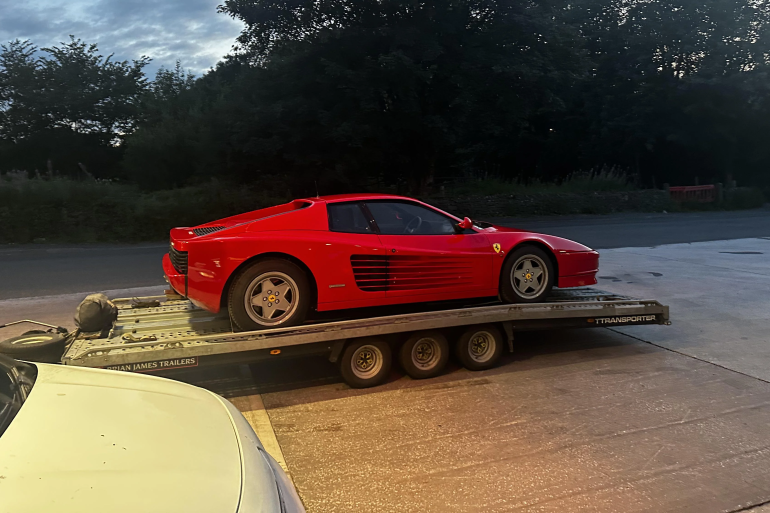
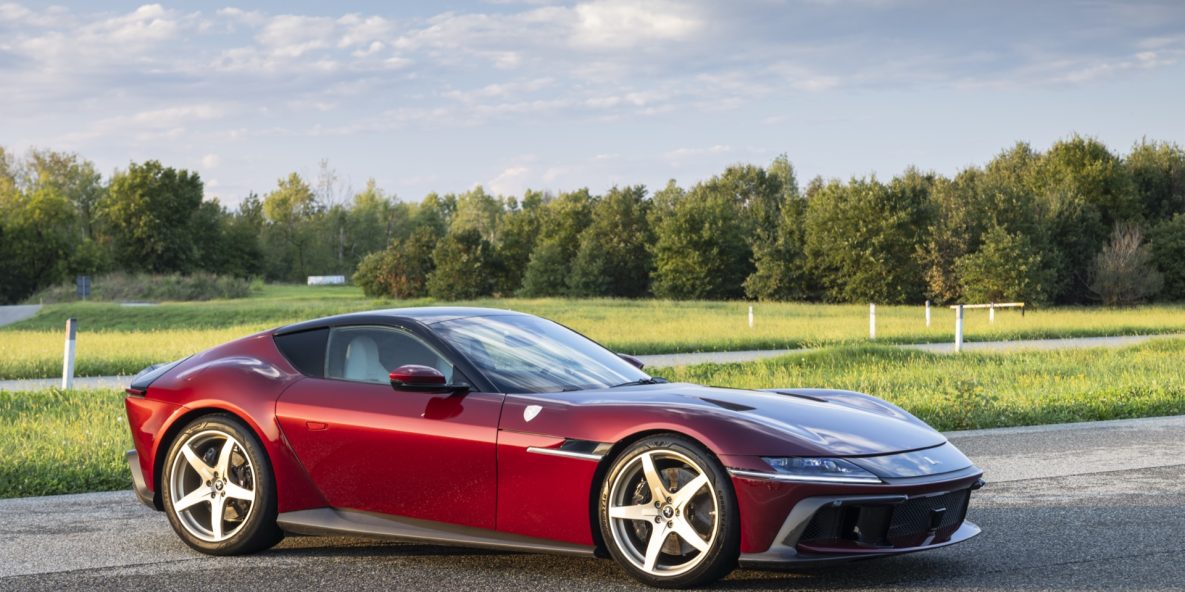
Ferrari brought the clutch pedal back this year, and most of the headlines came with a “sort of” attached. That’s because neither the 12Cilindri Manuale’s gated shifter nor its third...

America's sports car for seventy-three years and eight generations: Harley Earl's 1953 Motorama roadster that almost died in its first two years, the V8 and Zora Arkus-Duntov that saved it, the Sting Ray, the Grand Sports and the L88s, the Greenwoods and the ZR-1, Corvette Racing's Le Mans wins and the mid-engined C8 with 1,064 horsepower. The archive has 619 Corvette stories, from Ludvigsen on Sebring 1956 to this summer's $13 million Grand Sport, and this page puts them in order. Our sister site CorvSport has the specifications, production numbers and options of every year; this is the story.
The pieces to start with
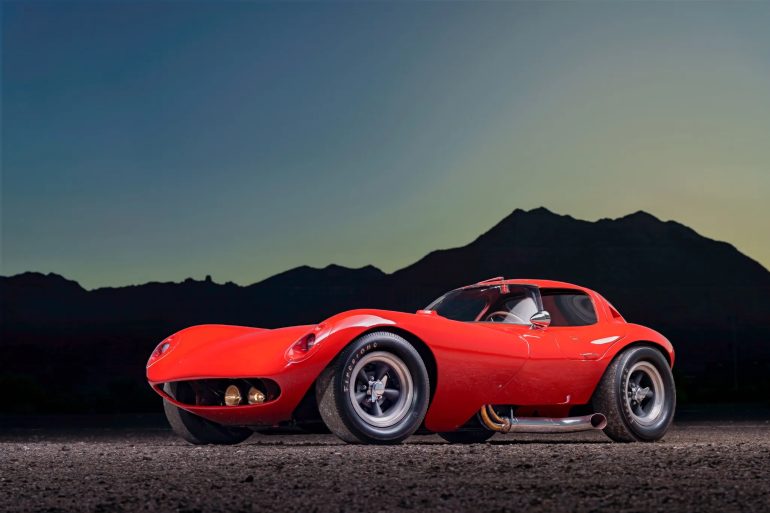
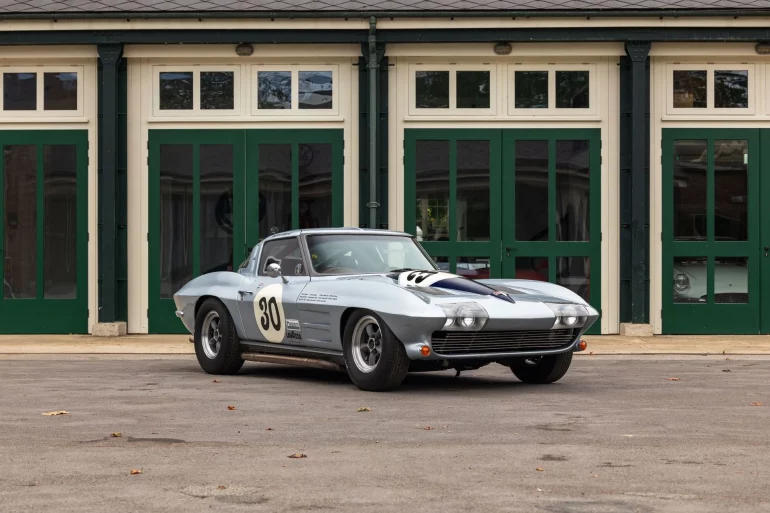
Eight pieces on the car: Ludvigsen on Sebring 1956, Newman's Duntov, Annis's Corvette Italia, Robin Donovan's Le Mans L88, Hemsley's split-window, Richardson's Super Tanker, Zimmermann's DeLorenzo interview and Minasian on the 1963.
Editor’s Note: This feature was reproduced with permission from our sister site Stuttcars.com for our SCD members. Ed Cole, Zora Duntov’s boss, was eager to race.
Born Zachary Arkus in Brussels on Christmas Day 1909, raised in St Petersburg through the revolution, racing a 350cc Diamant on Berlin’s streets, out via Marseilles and Lisbon to New York. Robert Newman on the long road to the Corvette.
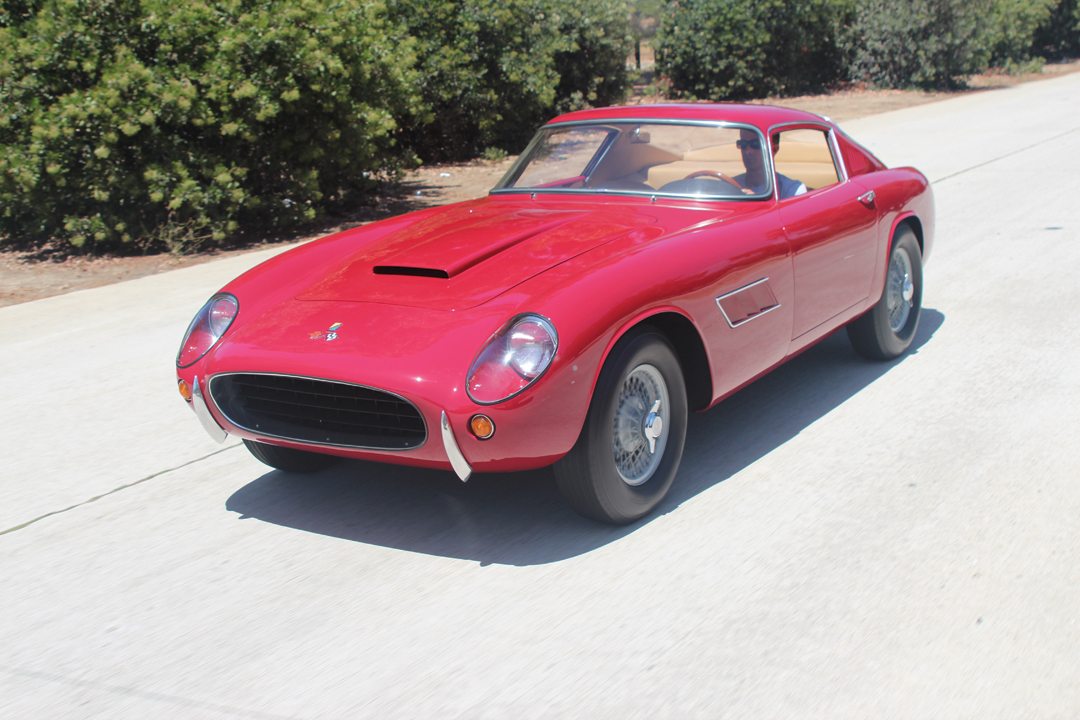
Gary Laughlin, Fort Worth oilman and SCCA racer, broke a Ferrari crankshaft, ordered a $350 replacement and paid $1,200 by the time it landed. He had had enough. Casey Annis on the Corvette Italia and whether it sired the Cobra.
He never slept at Le Mans, and in his first race there ignored the “IN” board twice with three laps to go while the battery dragged along the track. His ninth Le Mans, in 1995, was in a Corvette.
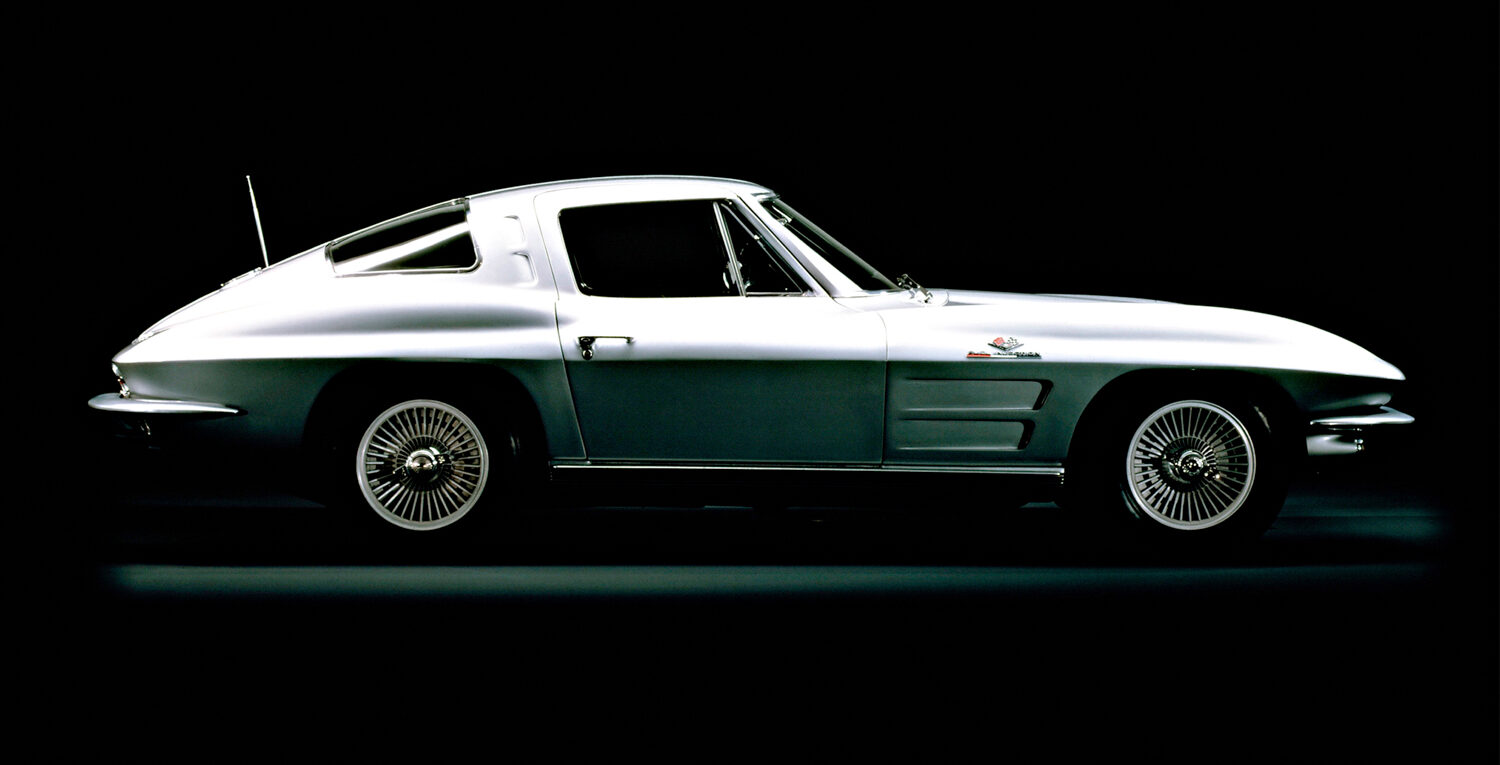
Peter Brock, Bill Mitchell’s youngest hire, sketched the C2 Sting Ray in November 1957. Mitchell wanted a spine through the car, as on the Bugatti Atlantic; owners asked dealers for solid glass, and the 1964 coupe lost the split.
GM gave the first four 1963 Z06 Sting Rays to Dave MacDonald and three other racers; all four ran Riverside on 13 October 1962, MacDonald in VIN 684, the first built, thanks to Duntov. Jim Richardson on a one-year split-window.
Tony DeLorenzo was 20 feet from a Chaparral Mk 1 at Meadowdale when the crew chief fired its injected 389 Chevy, and that was that. He and Jerry Thompson later won 22 straight in Corvettes. John Zimmermann interviews him.
Peter Brock was 19 when Bill Mitchell hired him into GM Styling in 1957; his sketch became the Stingray Racer, which fed into the 1963 Split Window coupe with hints of the Alfa Romeo Disco Volante. A By Design column.
The newest writing on the Corvette, as it is published.
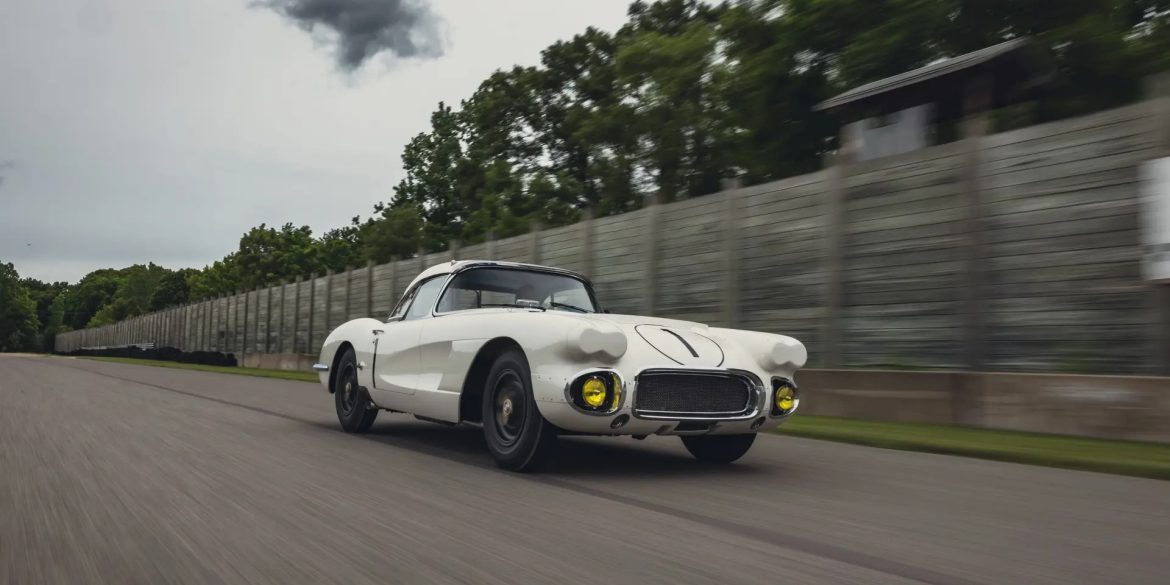
The Corvette is the two-seat sports car Chevrolet has built without a break since 30 June 1953, longer than any other sports car in the world, through eight generations known by their C numbers: the C1 of 1953–62, the Sting Ray C2 of 1963–67, the C3 of 1968–82, the C4 of 1984–96, the C5 of 1997–2004, the C6 of 2005–13, the C7 of 2014–19 and the mid-engined C8 since 2020. It began as a Harley Earl show car with a six-cylinder engine and an automatic gearbox, nearly died in 1954 when the cars did not sell, and was saved by the small-block V8 of 1955 and by Zora Arkus-Duntov, the Belgian-born engineer who took it racing, gave it fuel injection, independent suspension and disc brakes, and spent twenty years arguing for the mid-engined car Chevrolet finally built in 2020. It has been built in Flint, St. Louis and, since 1981, Bowling Green, Kentucky, and more than 1.8 million have been made.
The record is why the name matters. Corvettes won the GT class at Sebring in 1956 in their first serious race, at Le Mans in 1960 with Briggs Cunningham, the SCCA championships of Dick Thompson through the 1950s and 1960s, the Trans-Am and IMSA races of the Owens-Corning and Greenwood years, and, with Corvette Racing from 1999, the Daytona 24 Hours outright in 2001, the Le Mans GT class eight times between 2001 and 2015 and a ninth in 2023, and a shelf of American Le Mans Series and IMSA championships. The Grand Sports of 1963, the L88s of 1967–69 and the ZL1 are the most valuable Corvettes, at $3–4 million at auction and more by private treaty, and the 1963 split-window coupe the most famous shape. The archive's Corvette coverage runs from the 1953 Motorama to this year's ZR1X, and the chapters below follow it.
Our sister site
Sports Car Digest tells the Corvette's story; CorvSport.com, our Corvette-only site, has the rest: every model year's specifications, options, RPO codes, colors, production numbers, prices and buyer's guides, the sales brochures and owner's manuals, and the generation hubs from C1 to C8.
Harley Earl, General Motors' head of design, wanted an American answer to the Jaguars and MGs the GIs had brought home, and his EX-122 roadster, with a fibreglass body on a shortened sedan chassis, Chevrolet's 235-cubic-inch "Blue Flame" six tuned to 150 horsepower and a two-speed Powerglide, was the hit of the Motorama at the Waldorf-Astoria on 17 January 1953. Ed Cole, Chevrolet's chief engineer, had it in production by June: 300 cars, all Polo White with red interiors, hand-built in Flint and sold to celebrities and dealers' friends, and in 1954 3,640 built at St. Louis, of which a third went unsold. The archive's 1953, When American Show Cars Became a Reality, has the Motorama; Mike Lawrence's Corvette column and John R. Wright's High Tech Incubator, written for the sixtieth anniversary, tell how close Chevrolet came to killing the car in 1954, and how two things saved it: the Ford Thunderbird, which made a two-seater a matter of corporate pride, and Cole's new 265-cubic-inch small-block V8, which went into the 1955 Corvette and turned a boulevard cruiser into a car that could run. The 1956 restyle gave it roll-up windows, the scalloped coves and a proper top, Duntov drove one to 150 mph on Daytona Beach in January 1956, and the Corvette's first real race followed.
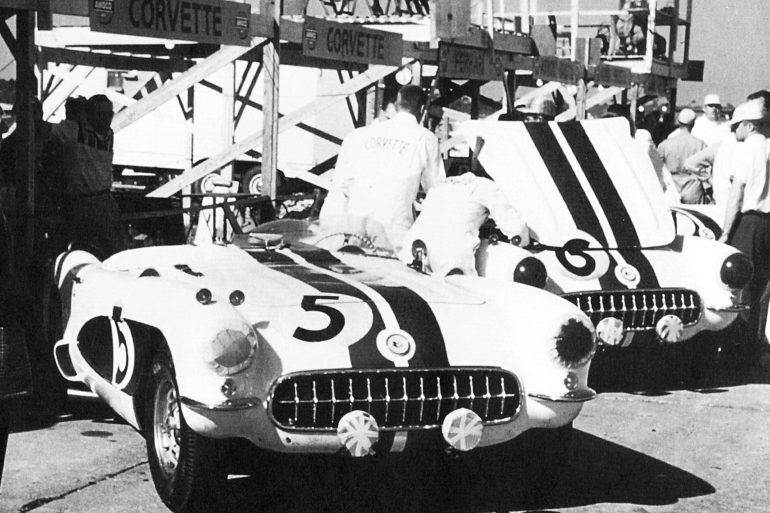
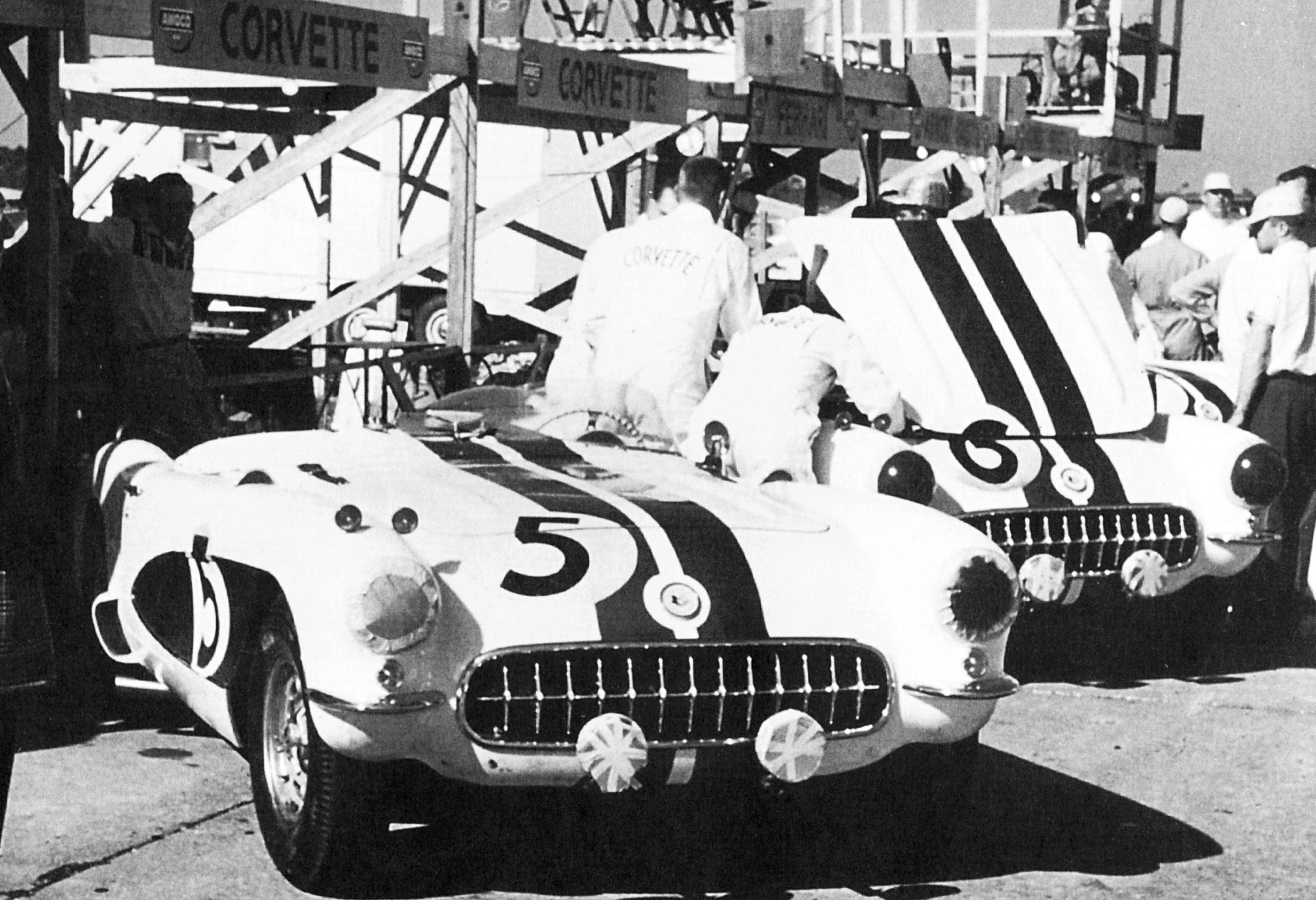
Zora Arkus-Duntov, born in Belgium to Russian parents, a Le Mans class winner for Porsche in 1954 and 1955, had joined Chevrolet in 1953 after seeing the Motorama car and writing to Cole about it; Robert Newman's portrait and Casey Annis's Corvette's Gentleman have the man. Cole, converted to racing by the Daytona runs, sent four Corvettes to the Sebring 12 Hours in March 1956 under John Fitch, and Fitch and Walt Hansgen finished ninth overall and won the class in a car that had been on sale for three months; Karl Ludvigsen's Birth of a Legend, written in 2025, is the whole story of that race, and Art Evans's remembrance of Fitch and the John Fitch tribute carry the driver. The 1957 car brought Rochester fuel injection, 283 horsepower from 283 cubic inches, the first American production engine with one horsepower per cubic inch, a four-speed gearbox and the RPO 684 racing suspension, and Duntov's Corvette SS, a magnesium-bodied spaceframe racer that Fangio and Moss tested at Sebring in March 1957, was meant for Le Mans. The Automobile Manufacturers Association's ban on factory racing in June 1957 ended it after one race, and the SS's test mule became, five years later, the Sting Ray racer; Jerry Earl's SR-2 and the Corvette SS are in the archive from the Philadelphia and Amelia concours that featured them.
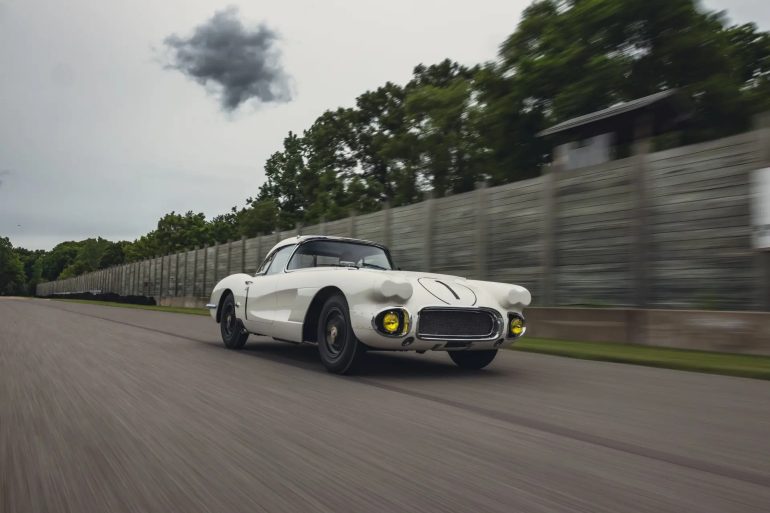
The ban stopped the factory, not the Corvette. Dick Thompson, the Washington dentist, won the SCCA's C-Production championship in 1956 and B-Production in 1957, and with Bob Grossman, Jim Jeffords and the Nickey Chevrolet "Purple People Eater" the Corvette owned American production racing to the end of the decade, with Duntov's "off-the-shelf" racing options arriving through the back door of the parts catalogue. In June 1960 Briggs Cunningham took three Corvettes to Le Mans, and Fitch and Grossman finished eighth overall and won the big GT class, pouring ice on the engine in the last hours; the archive has the car's return to Amelia Island and Dick Thompson's own Corvette story. Casey Annis's 1960 Corvette, The American Dream and his Cobra's Daddy, on the 1960 Corvette Italia that Gary Laughlin, Carroll Shelby and Jim Hall had Scaglietti body in Modena, two years before the Cobra, belong here; Bob Bondurant's Corvette years, before Shelby hired him, are in Dennis Gray's interview. The 1958 car gained quad headlights and chrome, the 1961 the ducktail that previewed the next car, the 1962 the 327 and 360 fuel-injected horsepower, and Bill Mitchell, Earl's successor, had been racing the Stingray, the SS mule under a new body, as a private entry since 1959, Thompson winning the 1960 SCCA C-Modified title in it.
The man who took the Corvette to Le Mans, and his own cars, newest first.
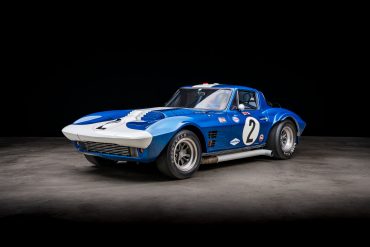
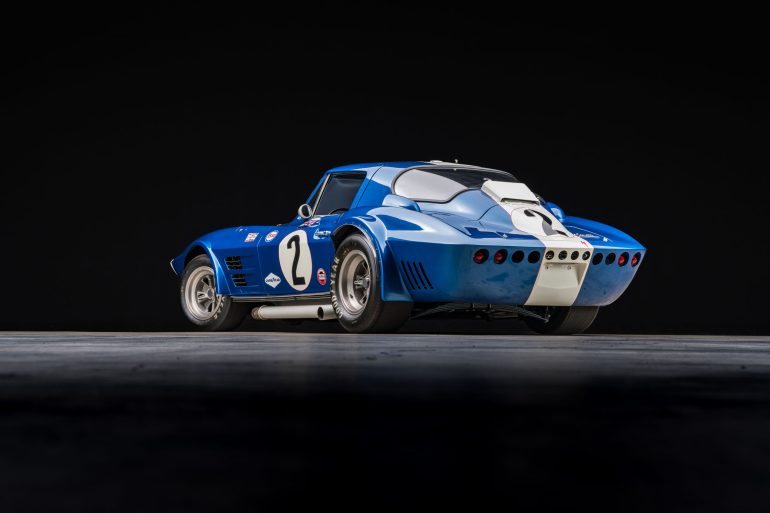
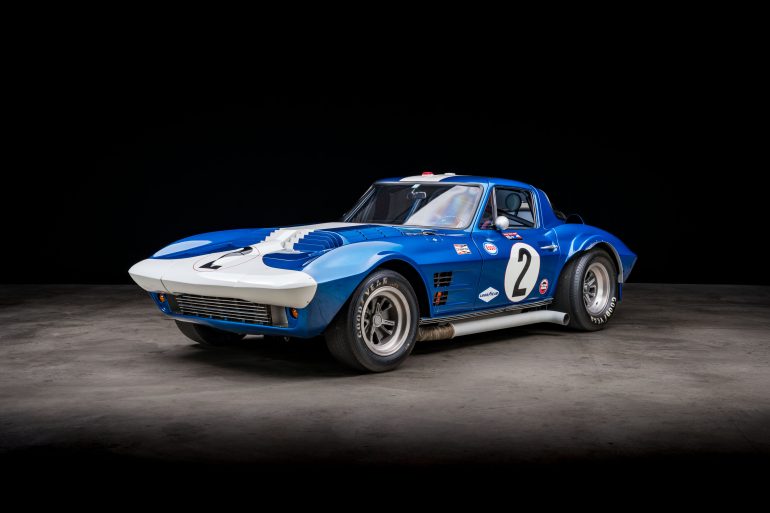
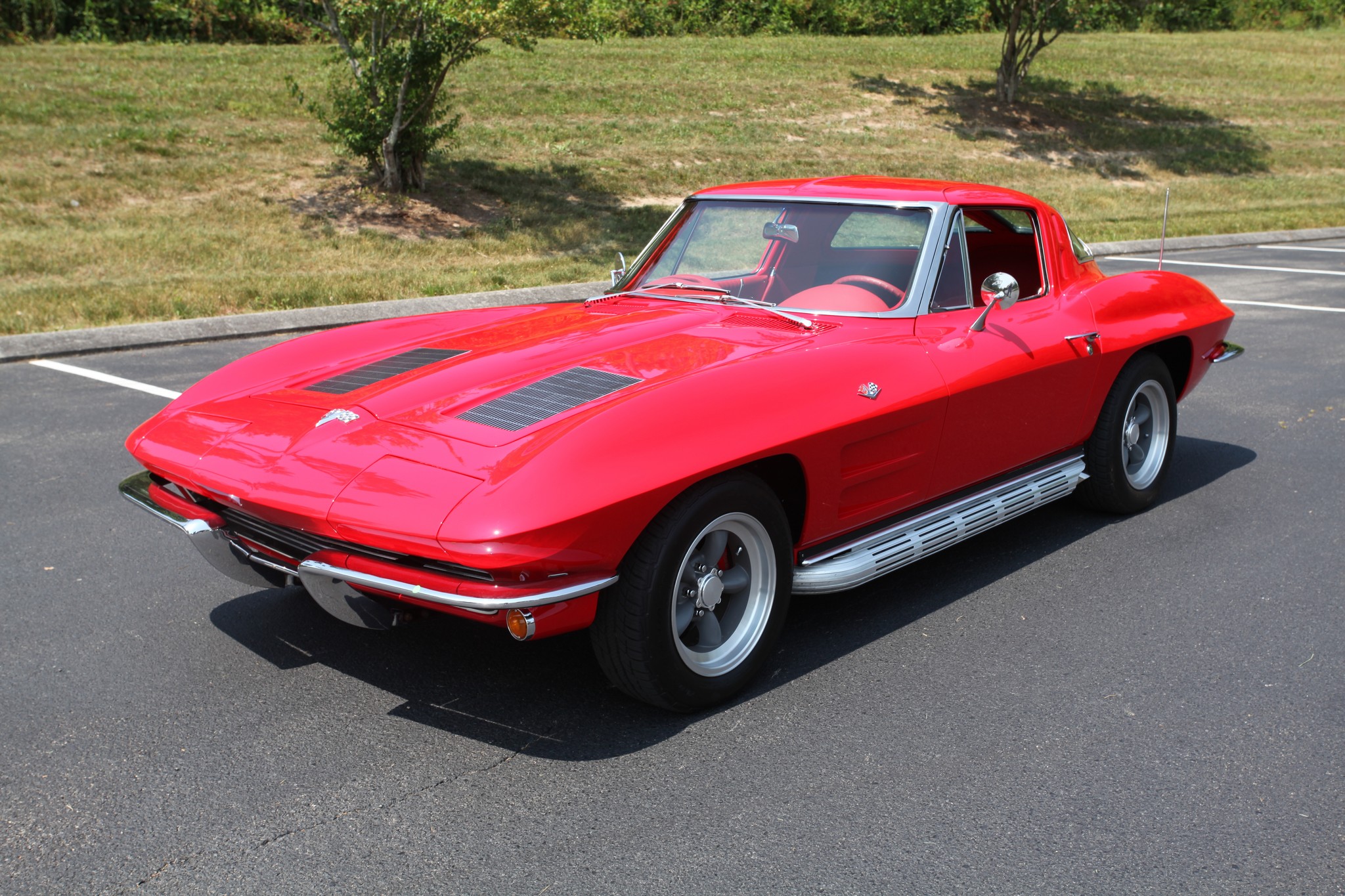
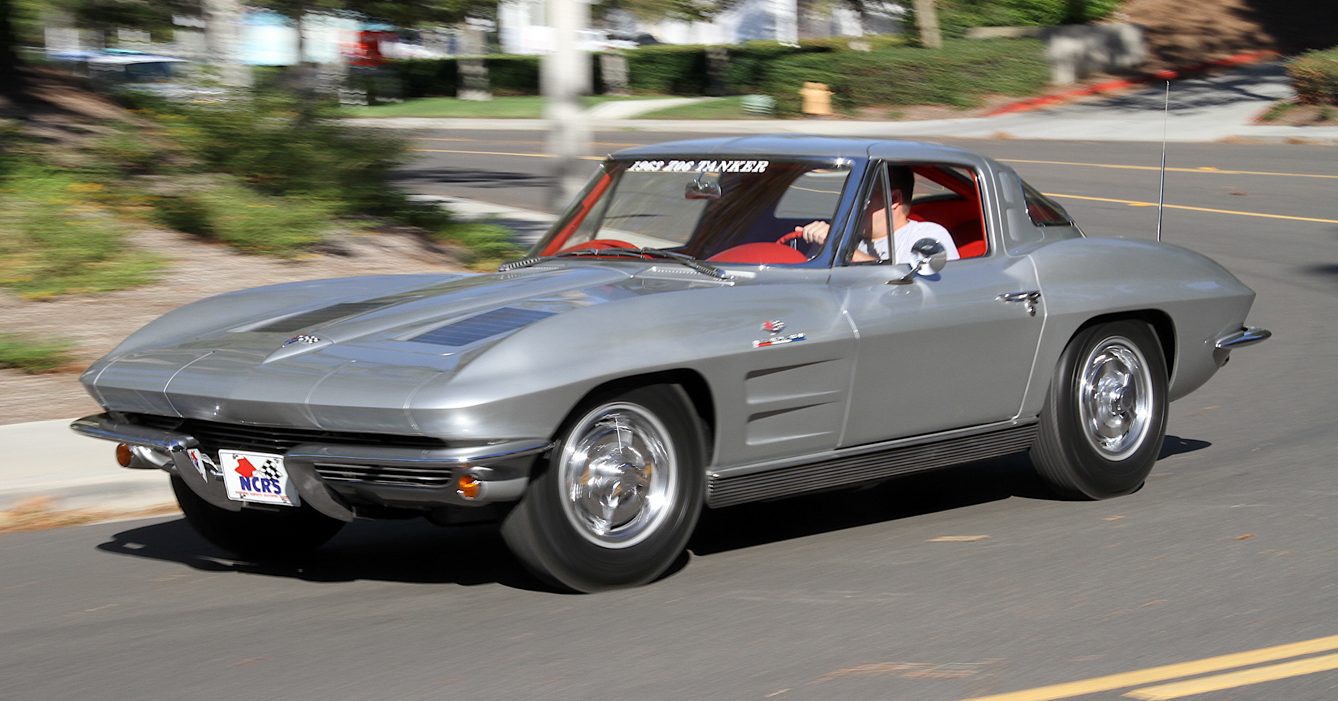
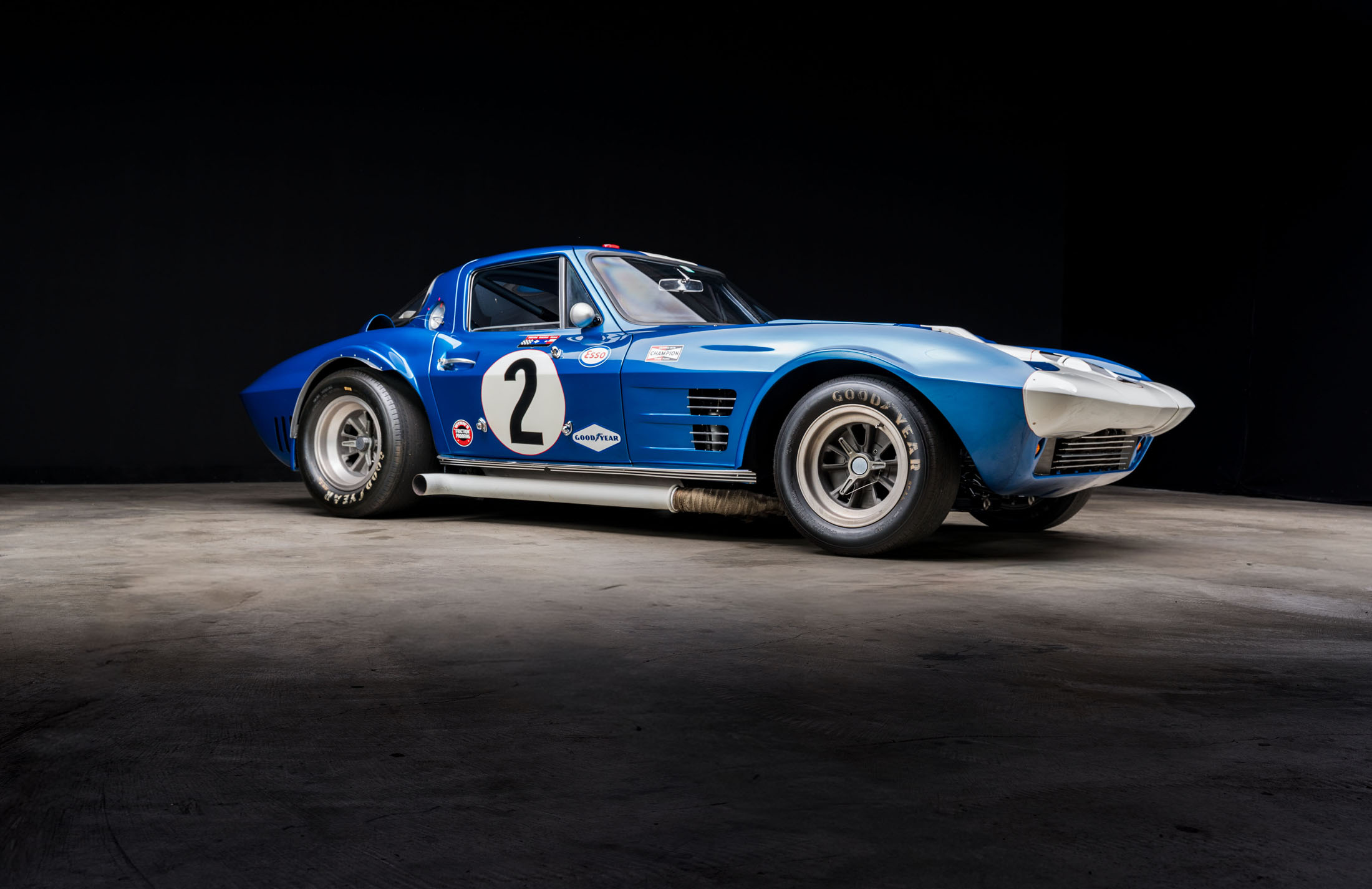
The 1963 Sting Ray was Mitchell's and Duntov's car: Larry Shinoda's body from a sketch by the young Peter Brock, a coupe for the first time with the split rear window Duntov hated and Mitchell kept for one year only, hidden headlights, a new ladder frame, independent rear suspension, and the Z06 package, 199 built, with the 36-gallon tank, big brakes and the 360-horsepower fuel-injected 327 for racing. J. Michael Hemsley's Better Than New on a split-window coupe, Raffi Minasian's case for the 1963 as one of the century's most important sports cars, Brad Jansen's technical analysis of the Sting Ray, Jim Richardson's Super Tanker and Mickey Thompson's personal Z06 tanker cover it. Duntov's answer to the Cobra was the Grand Sport, 125 lightweight cars planned for homologation, five built before GM's management reaffirmed the racing ban in January 1963; the five raced anyway in private hands, most famously at Nassau in December 1963, where Roger Penske, Jim Hall, Dick Thompson and Augie Pabst beat the Cobras, and Dom Miliano's The Perfect American Sports Car, the Road America 1964 Cobra-versus-Grand Sport photograph and this summer's $13 million estimate for chassis 002 carry them. Disc brakes came in 1965 with the 396 big-block, the 427 in 1966 and, in 1967, the L88, a 430-horsepower racing engine in an unmarked car, twenty built, with the L71 435 and the side pipes; Tony DeLorenzo's first L88 and John Zimmermann's interview with him begin the next chapter.
Every story on the site about the 1963–67 cars, newest first.
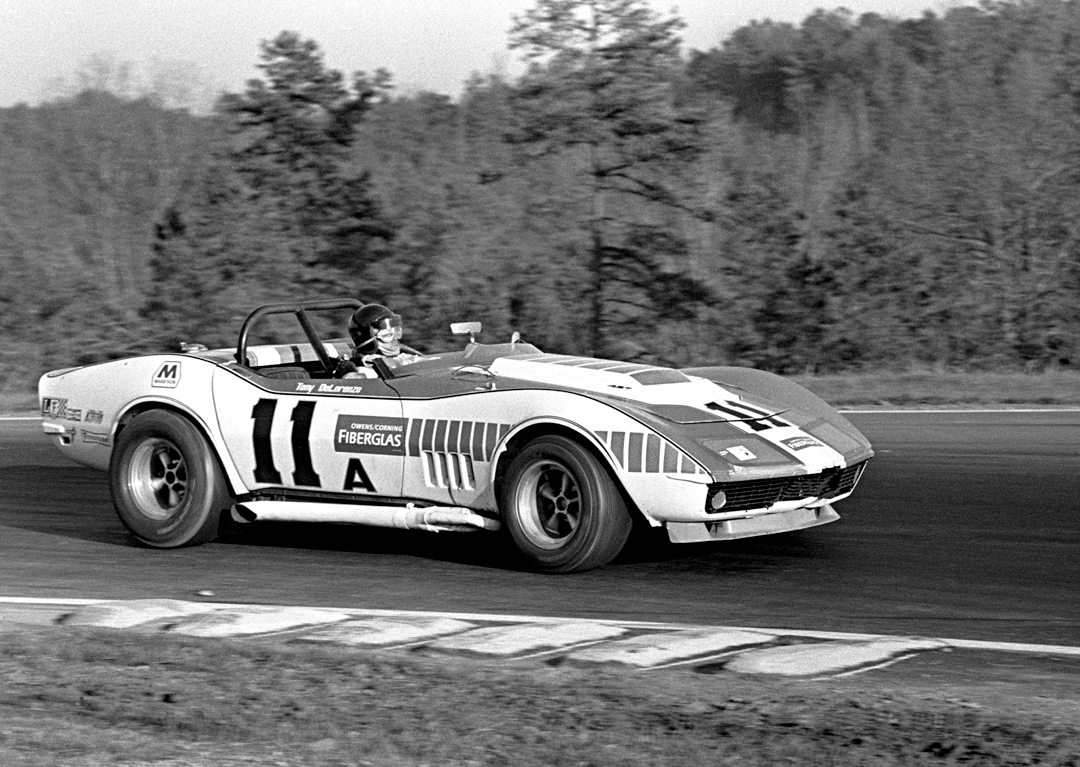
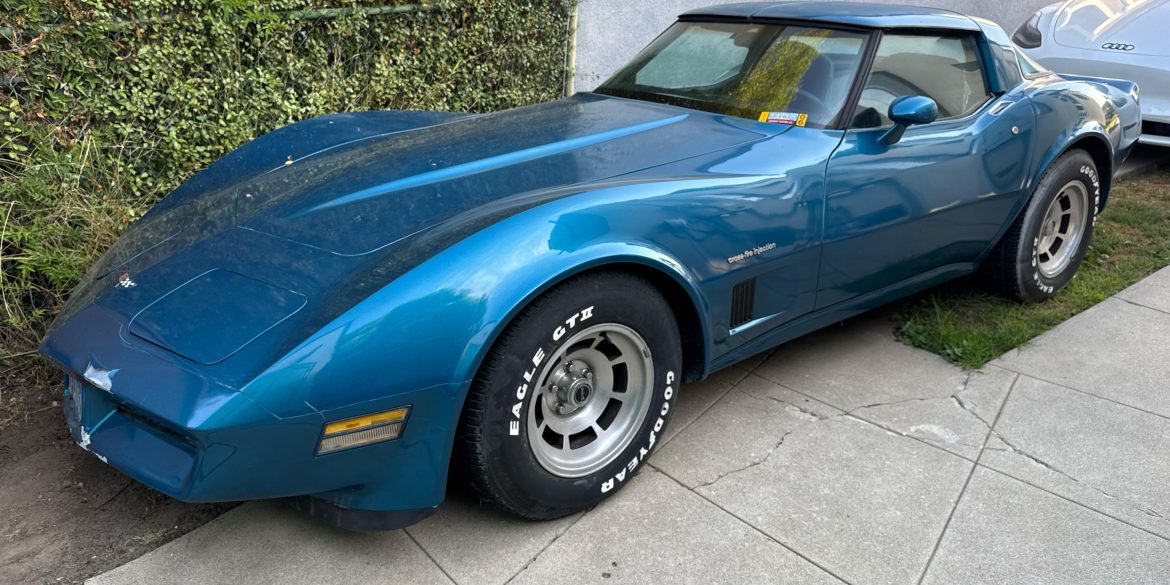
The 1968 Corvette took the Mako Shark II show car's body onto the Sting Ray chassis, and under it the L88 went on to 1969, 80 and 116 built, and the all-aluminium ZL1, two cars, the rarest and now the most expensive production Corvettes. Casey Annis's Mulsanne Monster is the 1968 L88 that ran at Le Mans, Tony DeLorenzo and Jerry Thompson's Owens-Corning Corvettes won the SCCA A-Production and Trans-Am over-two-litre races of 1968–71, and John Greenwood's widebody Corvettes, with their stars-and-stripes paint and 700-horsepower big-blocks, were the fastest cars at Sebring and Daytona in the mid-1970s, John Zimmermann's Twisting in the Wind and the Greenwood threads. The road car lost its chrome bumpers in 1973–74, its convertible in 1975 and most of its power to emissions, but sold better every year: the 1978 silver-anniversary and Indianapolis pace-car editions, the 1979 record of 53,807 cars, the 1982 Collector Edition and the move to the new Bowling Green plant in June 1981 close the C3. Rick Shultz's Thunderbird history is the rival; the Buying a C3 Corvette guide, Jeff Murray's 1966 and the 1972 Stingray are the archive's drives, and Dick Guldstrand, who raced them all, is remembered too.
Every story on the site about the L88 and ZL1, newest first.
Every story on the site about the 1968–82 cars, newest first.
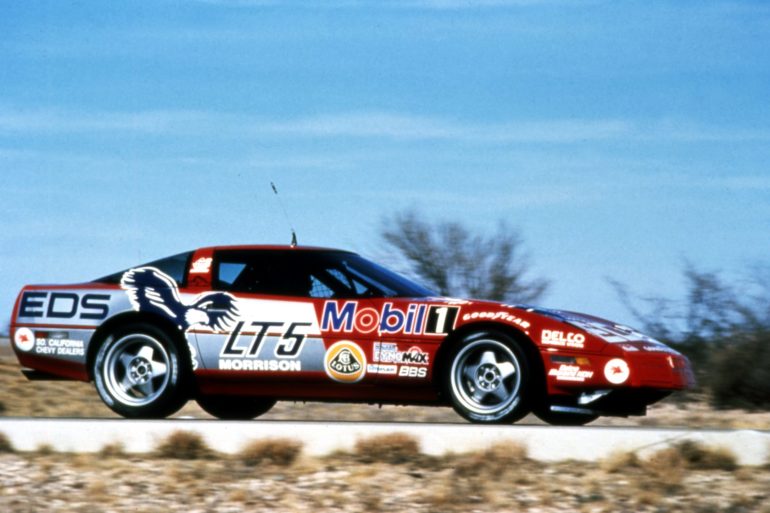
There was no 1983 Corvette; the C4 of 1984 was new from the ground up, with a clamshell bonnet, digital dashboard, a uniframe and the handling that made it the Corvette Challenge race series' car in 1988–89. The convertible returned in 1986 and paced Indianapolis, Reeves Callaway's twin-turbo RPO B2K cars arrived in 1987 and the 880-horsepower Sledgehammer did 254 mph in 1988, and the ZR-1 of 1990, with the LT5, a 375-horsepower four-cam V8 designed with Lotus and built by Mercury Marine, was the King of the Hill: in March 1990 a ZR-1 ran 24 hours at Fort Stockton at 175.885 mph, breaking Ab Jenkins's fifty-year-old record, the story told in From Zero to ZR-1. The 1992 car brought the LT1 and the millionth Corvette, Callaway's SuperNatural Corvettes raced at Le Mans in 1994–96 and are the archive's Greatest Racecar? answer, and the Grand Sport of 1996, a thousand Admiral Blue cars with the 330-horsepower LT4, closed the generation.
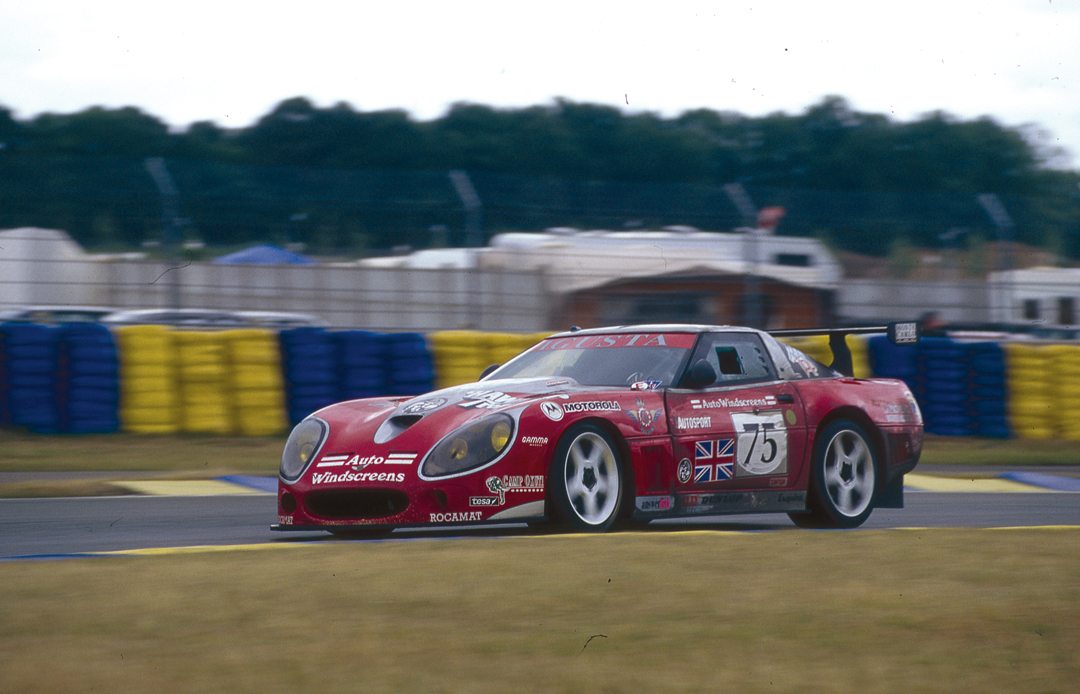
The C5 of 1997, with the all-new LS1 small-block and a rear transaxle, was the first Corvette that was also a good car, and it took Chevrolet back to the track: Corvette Racing, run by Pratt & Miller from 1999, raced the C5-R to the overall win at the Daytona 24 Hours in 2001, with Ron Fellows, Johnny O'Connell, Chris Kneifel and Franck Freon, and to Le Mans GTS class wins in 2001, 2002 and 2004, Neil Cunningham's British GT C5R is the archive's Greatest Racecar? pick, and the Z06 of 2001 put 385 and then 405 horsepower on the road. The C6 of 2005 brought exposed headlights, the 505-horsepower LS7 Z06 of 2006 and the 638-horsepower supercharged ZR1 of 2009, and the C6.R won Le Mans GT1 in 2005, 2006 and 2009 and GTE Pro in 2011. The C7 Stingray of 2014, the first to wear the name since 1976, the 650-horsepower Z06 and the 755-horsepower ZR1 of 2019 closed the front-engined line, and the C7.R won Le Mans GTE Pro in 2015 and Daytona, Sebring and the IMSA championships through the decade. Martin Raffauf's Daytona reports from 2021 to 2026 and the Corvettes in Competition exhibition at the Petersen carry the racing; the Monterey Reunion made the Corvette its featured marque for the seventieth anniversary in 2023.
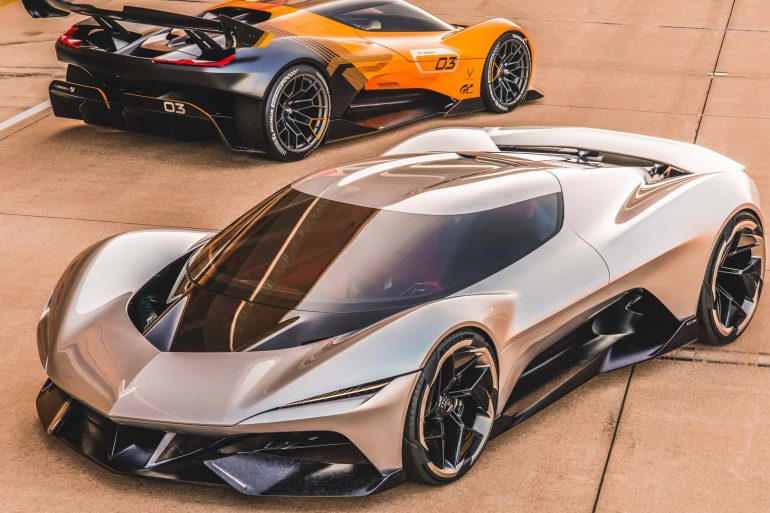
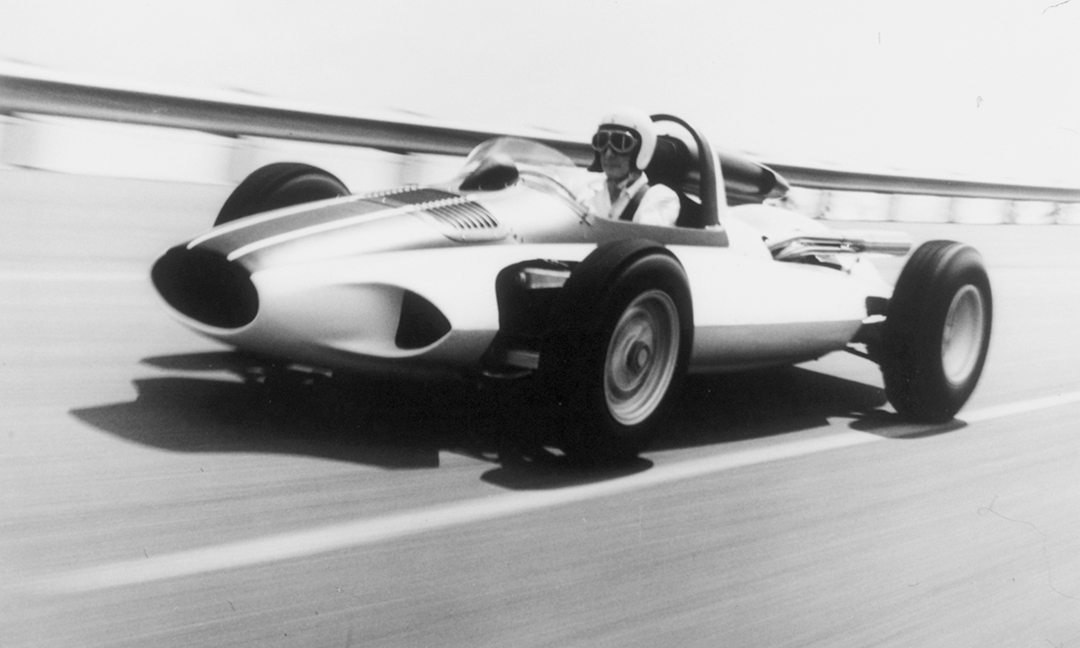
Duntov had wanted the engine behind the driver since the CERV I of 1960, and the XP-819, Astro II and Aerovette concepts in the archive show how close it came; the C8 Stingray of 2020 finally did it, with the 495-horsepower LT2 behind the seats, a dual-clutch gearbox and a $59,995 price that made it the most talked-about car of its year. The Z06 of 2023 brought the 5.5-litre flat-plane LT6, 670 horsepower and 8,600 rpm, the E-Ray of 2024 the first hybrid and all-wheel-drive Corvette, the ZR1 of 2025 the twin-turbo LT7 and 1,064 horsepower, 233 mph, and the ZR1X of 2026 1,250 horsepower with the E-Ray's electric front axle; the CX and CX.R concepts shown at The Quail in 2025 point further on. The C8.R won the IMSA GTLM championships of 2020 and 2021 and the GTE Am class at Le Mans in 2023, the Z06 GT3.R has raced for customers in IMSA, the WEC and GT World Challenge since 2024, and the Corvette's journey to mid-engine, Chevrolet's own account, and the ZR1X's 1,250 horsepower bookend the archive's modern coverage. The Corvette has passed 1.8 million cars.
Seventy-three model years in eight generations, with the engines, the racing and the archive's story for each; the generation names link to CorvSport's hubs, which carry every year's specifications and production numbers, and the People to their threads here.
Seventy-three model years in eight generations: the car, the racing and the archive's story of each. Generation names link to every story on the site; the CorvSport links carry each generation's specifications and production numbers.
| Year | The car | The racing and the company | In the archive |
|---|---|---|---|
| 1953 | C1 · CorvSport C1 | Motorama, 17 January; production from 30 June at Flint: 300 Polo White cars, the Blue Flame six, Powerglide | 1953 show cars · High Tech Incubator |
| 1954 | C1 | St. Louis; 3,640 built, a third unsold; Chevrolet nearly ends the car | Mike Lawrence: Corvette |
| 1955 | C1 | Ed Cole's 265 V8; 700 built; the Thunderbird arrives | Ed Cole |
| 1956 | C1 | The restyle; Duntov's 150 mph at Daytona; Sebring class win, Fitch and Hansgen; the SR-2; Dick Thompson's first SCCA title | Birth of a Legend: Sebring 1956 · The SR-2 · John Fitch |
| 1957 | C1 | Fuel injection, 283/283, the four-speed and RPO 684; the Corvette SS at Sebring; the AMA ban in June | Zora Arkus-Duntov · Newman's Duntov · 1957 Fuelie |
| 1958–59 | C1 | Quad headlights; Jeffords's Purple People Eater wins B-Production twice; Mitchell's Stingray racer | Jim Jeffords · Corvette's Gentleman |
| 1960 | C1 | Le Mans: Cunningham's cars, Fitch and Grossman eighth and class winners; Thompson's C-Modified title in the Stingray; the Corvette Italia | The American Dream · Cobra's Daddy · Briggs Cunningham |
| 1961–62 | C1 | The ducktail; the 327 and 360 horsepower; Bondurant's Corvette years | Bob Bondurant · Dick Thompson |
| 1963 | C2 Sting Ray · Grand Sport · CorvSport C2 | The Sting Ray: split window, hidden lights, independent rear; 199 Z06s; the five Grand Sports and the January edict; Nassau in December | Better Than New · The Super Tanker · The Perfect American Sports Car |
| 1964 | C2 Sting Ray · Grand Sport | The one-piece window; Grand Sports against Cobras at Road America | Cobra v Grand Sport · Raffi on the 1963 |
| 1965–66 | C2 Sting Ray | Disc brakes and the 396; the 427; Penske's Daytona class win | Sting Ray analysis · 1966 Corvette · Roger Penske |
| 1967 | C2 Sting Ray · L88 | The L88, twenty built; the L71 435; DeLorenzo's first L88 | DeLorenzo's First L88 · The $3 million L88 |
| 1968 | C3 · L88 · CorvSport C3 | The Shark; the L88 at Le Mans; Owens-Corning's Trans-Am and A-Production years begin | Mulsanne Monster · Interview: Tony DeLorenzo |
| 1969 | C3 · L88 | 116 L88s and the two ZL1s; Stingray, one word; the record ZL1 convertible | The ZL-1 convertible |
| 1970–72 | C3 | LT-1 and LS6; Greenwood's first Corvettes; Robin Donovan's Le Mans L88 | My Le Mans Corvette · 1972 Stingray |
| 1973–77 | C3 | Chrome bumpers go; the last convertible of 1975; the Greenwood widebodies at Sebring and Daytona | Twisting in the Wind · John Greenwood |
| 1978–82 | C3 | The silver anniversary and pace car; 53,807 in 1979; Bowling Green from June 1981; the Collector Edition | Buying a C3 · Dick Guldstrand |
| 1984–89 | C4 · CorvSport C4 | The C4, no 1983; the convertible and Indy 1986; Callaway's twin-turbos and the Sledgehammer; the Corvette Challenge | Callaway Sledgehammer |
| 1990 | C4 | The ZR-1 and the Lotus LT5; 24 hours at 175.885 mph, Fort Stockton | From Zero to ZR-1 |
| 1992–96 | C4 | The LT1 and the millionth car; Callaway at Le Mans; the 1996 Grand Sport | 1996 Callaway Corvette |
| 1997–2004 | C5-R · CorvSport C5 | The C5 and the LS1; Corvette Racing from 1999; Daytona overall 2001; Le Mans GTS 2001, 2002, 2004; the Z06 | Neil Cunningham's C5R · Car of the Day: 1999 C5-R |
| 2005–13 | C6 · C6.R · CorvSport C6 | The C6; Z06 LS7 and ZR1 LS9; Le Mans GT1 2005, 2006, 2009 and GTE Pro 2011; the 2013 Reunion | Five from Fifty · Corvettes at the Reunion |
| 2014–19 | CorvSport C7 | The C7 Stingray, Z06 and 755-hp ZR1; Le Mans GTE Pro 2015; the last front-engined Corvette | Car of the Day: C7.R · The journey to mid-engine |
| 2020–22 | C8 · CorvSport C8 | The mid-engined C8; the C8.R's IMSA titles of 2020 and 2021 | Daytona 2021 Classic 24 |
| 2023 | C8 | The flat-plane Z06; Le Mans GTE Am won; the Z06 GT3.R; featured marque at the Reunion for the seventieth | Z06 GT3.R · Reunion 2023 · Corvettes in Competition |
| 2024–26 | C8 | The E-Ray; the 1,064-hp ZR1 and 233 mph; the ZR1X; the CX concepts; Grand Sport 002 estimated at $13 million | Daytona 2026 · CX and CX.R · Grand Sport 002 |
C numbers are the enthusiasts' names for the generations, not Chevrolet's; there was no 1983 model year. CorvSport is Sports Car Digest's sister site and the reference for every year's options, colours, RPO codes and production figures.
Go deeper
Each generation above links to its CorvSport hub: C1 to C8, with every year's engines, options, colours, production figures and values, the special editions and the buyer's guides.
The Corvette tags on this site cover the eight generations and the cars within them that have their own stories: the C1 and the 1957 fuelie; the Sting Ray, the Z06 tankers and the Grand Sports; the L88 and ZL1; the C3 and the Greenwoods; the C4 and the ZR-1; the C5-R and C6.R; the C6, C7 and C8. The nine cards below are the ones with most to read behind them, and the tag opens every story on each; CorvSport's generation hubs have the year-by-year detail.
Nine cars from the archive, from the 1953 roadster to the C8; each links to every story on the site.
The Corvette's racing sits on the archive's hubs as well as here. The Sebring hub has 1956, the SS of 1957 and the Corvette Racing years; the Le Mans hub 1960, the L88s of 1967–72 and the nine class wins since 2001; the GT Wars era page the Grand Sports against the Cobras; the Muscle and Trans-Am page the Owens-Corning years; the GT1 to Hypercar page Corvette Racing against Ferrari, Porsche and Aston Martin. Dick Thompson's SCCA titles, Penske's 1966 Daytona class win, the Greenwoods, the 1990 record and the Corvette Challenge are in the feeds below, and the SCCA thread has the club racing where most Corvettes have been raced.
Harley Earl, who drew it, and Ed Cole, who built it and gave it the V8; Zora Arkus-Duntov, its engineer from 1957, its chief engineer from 1967 to 1975 and its conscience for twenty years after; Bill Mitchell and Larry Shinoda of the Sting Ray and Peter Brock of its first sketch; Dave McLellan, Dave Hill, Tom Wallace and Tadge Juechter, the chief engineers since; Jerry Earl, Harley's son; Briggs Cunningham, who took it to Le Mans; Reeves Callaway, John Greenwood and Dick Guldstrand, who made it faster; Doug Fehan and Gary Pratt of Corvette Racing; and the drivers, John Fitch, Walt Hansgen, Dick Thompson, Bob Grossman, Jim Jeffords, Bob Bondurant, Roger Penske, Jim Hall, Augie Pabst, Tony DeLorenzo, Jerry Thompson, Ron Fellows, Johnny O'Connell, Oliver Gavin, Jan Magnussen, Antonio García, Tommy Milner and Jordan Taylor. Each name with a People thread links to every story on the site about them, and the People page gathers the portraits.
Every story on the site about the Corvette's engineer, newest first.
The Corvette market has the Grand Sports, L88s and ZL1s at the top and the most liquid collector market in America beneath. The 1969 ZL1 convertible made $3.14 million at Kissimmee in 2023 and a 1967 L88 coupe $3.85 million at Scottsdale in 2014; the Grand Sports change hands privately at $7–10 million and chassis 002 was estimated at $13 million this summer; a 1968–69 L88 is $500,000 to $1 million, a 1963 Z06 tanker about $1 million, the 1960 Le Mans Cunningham cars seven figures. A 1963 split-window coupe is $150,000–300,000 and a fuel-injected one more, a 1957 fuelie $150,000–250,000, a 1953 $200,000–300,000, a 1967 427/435 $150,000–250,000, a big-block Sting Ray convertible $100,000–200,000; the C3s run from $20,000 for a late car to $60,000–100,000 for a 1968–72 big-block, a 1990–95 ZR-1 $30,000–60,000, a 1996 Grand Sport $40,000–70,000, a C5 Z06 $25,000–40,000, a C6 ZR1 $60,000–90,000 and a C7 ZR1 or C8 Z06 above list. The Auctions and For Sale feeds below are the live market; the Market page has the auction calendar and the record prices, and CorvSport's buyer's guides have the year-by-year detail.
Auction previews and results, most of them Corvettes, newest first.
Corvettes and other Chevrolets offered by dealers and collectors, newest first.
The archive's Corvette galleries come from the Monterey Reunion, where the Corvette was featured marque in 2013 and 2023, Amelia Island, which honoured Harley Earl's cars in 2020 and the Cunningham Le Mans car, the Philadelphia and Chattanooga concours, the Corvettes in Competition exhibition at the Petersen, the National Corvette Museum at Bowling Green, before and after the 2014 sinkhole, and the Rolex 24 and Classic 24 at Daytona, where the Greenwoods still run. The galleries feed below gathers them.
Introduced 17 January 1953 (Motorama); production from 30 June 1953, Flint; St. Louis 1954–81; Bowling Green since June 1981. Generations: C1 1953–62; C2 1963–67; C3 1968–82; C4 1984–96; C5 1997–2004; C6 2005–13; C7 2014–19; C8 2020–. Racing: Sebring class 1956; Le Mans class 1960 (Cunningham, Fitch/Grossman, eighth overall), 2001, 2002, 2004, 2005, 2006, 2009, 2011, 2015 and GTE Am 2023; Daytona 24 Hours overall 2001; SCCA national championships from 1956 (Thompson); IMSA GTLM champions 2020, 2021. Records: 24 hours at 175.885 mph, Fort Stockton, March 1990 (ZR-1). Built: 300 (1953); 199 Z06 (1963); 5 Grand Sports; 20 L88 (1967), 80 (1968), 116 (1969); 2 ZL1 (1969); 1,000 Grand Sport (1996); 53,807 in 1979, the record year; more than 1.8 million in all. Power: 150 hp (1953) to 1,250 hp (2026 ZR1X). Record prices: 1969 ZL1 convertible $3.14 million (Mecum, Kissimmee, 2023); 1967 L88 coupe $3.85 million (Barrett-Jackson, Scottsdale, 2014).
Short answers, with the long ones above.
Shown at the GM Motorama in New York on 17 January 1953 and in production at Flint from 30 June 1953: 300 cars, all Polo White with red interiors, a 150-horsepower six and a Powerglide automatic.
The eight generations: C1 1953–62, C2 Sting Ray 1963–67, C3 1968–82, C4 1984–96, C5 1997–2004, C6 2005–13, C7 2014–19 and the mid-engined C8 from 2020. There was no 1983 model year.
The Belgian-born engineer, a Le Mans class winner for Porsche, who joined Chevrolet in 1953, became the Corvette's chief engineer and gave it the V8's racing parts, fuel injection, independent suspension, the Grand Sport and the L88, and who argued for a mid-engined Corvette from 1960 until his death in 1996. The C8 is his car.
The first Sting Ray coupe had a divided rear window that Bill Mitchell loved and Duntov hated for its blind spot; it lasted one model year, so the 1963 coupe is the most recognisable Corvette of all and the most valuable of the ordinary Sting Rays.
The five 1963 Grand Sports, at $7–13 million; at auction, the 1969 ZL1 convertible at $3.14 million in 2023 and a 1967 L88 at $3.85 million in 2014.
In class, not outright: Cunningham's car in 1960, and Corvette Racing's GTS, GT1 and GTE Pro wins in 2001, 2002, 2004, 2005, 2006, 2009, 2011 and 2015, with a GTE Am win in 2023. Corvettes have won the Daytona 24 Hours outright, in 2001, and Sebring in class many times.
A 1967–69 option that put a 430-horsepower (in truth about 550) racing 427 in a road Corvette with no radio, heater or fan shroud, meant for racers and bought by 216 people. The all-aluminium ZL1 of 1969 was its $4,718 successor, and two were built.
Bowling Green, Kentucky, since June 1981, next to the National Corvette Museum; before that St. Louis from December 1953 and Flint for the first 300.
The 2025 ZR1 has 1,064 horsepower and reached 233 mph at Papenburg; the 2026 ZR1X adds the E-Ray's electric front motor for 1,250 horsepower. The base Stingray has 495.
A 1968–72 C3 or a C4 ZR-1 for under $60,000, a 1996 Grand Sport or C5 Z06 for a modern classic, and a 1965–67 small-block Sting Ray as the way into the C2; the For Sale thread below has the current cars and CorvSport the buyer's guides.
The whole archive on one thread, newest first.