

Few cars embody Ferrari’s competition-bred philosophy as completely as the F40, the final Ferrari developed under Enzo Ferrari’s direction and the spiritual ancestor of the marque’s celebrated anniversary hypercars. Originally envisioned as an FIA Group B racer derived from the 288 GTO, the project survived the cancellation of the category and evolved into a radical road-going 40th-anniversary flagship. Drawing on five 288 GTO Evoluzione development cars, Ferrari created a machine focused relentlessly on performance, lightness, and driver involvement.
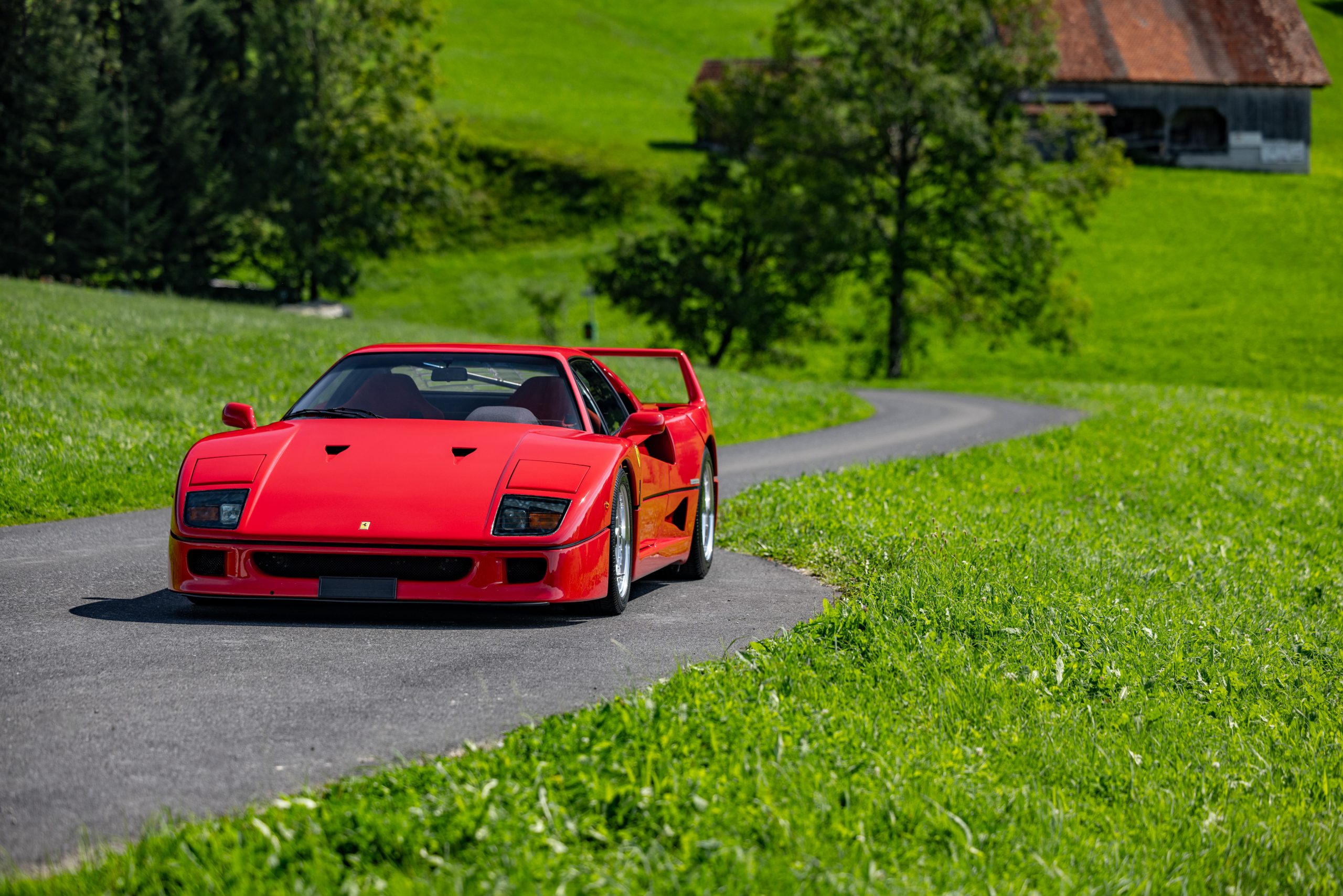
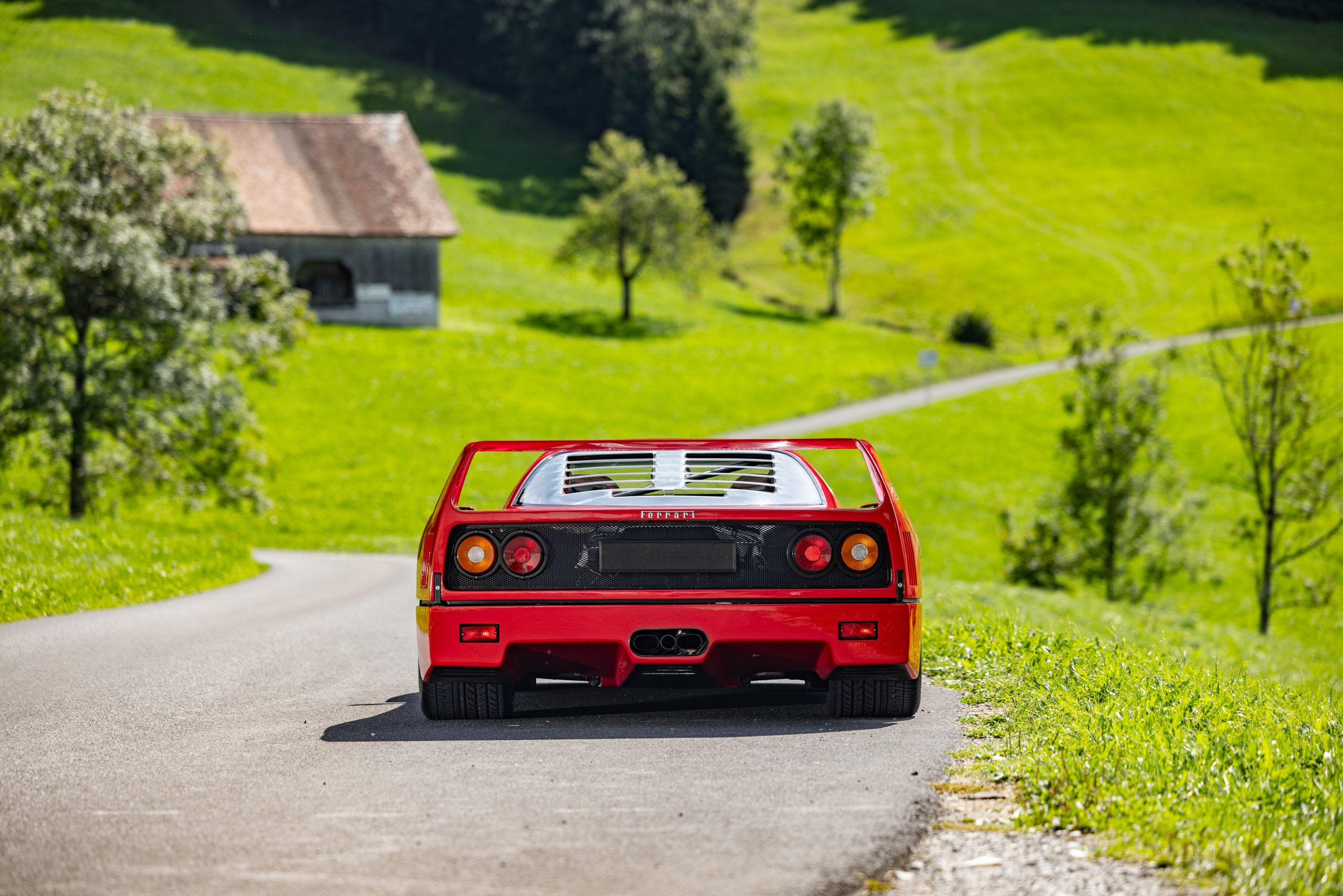
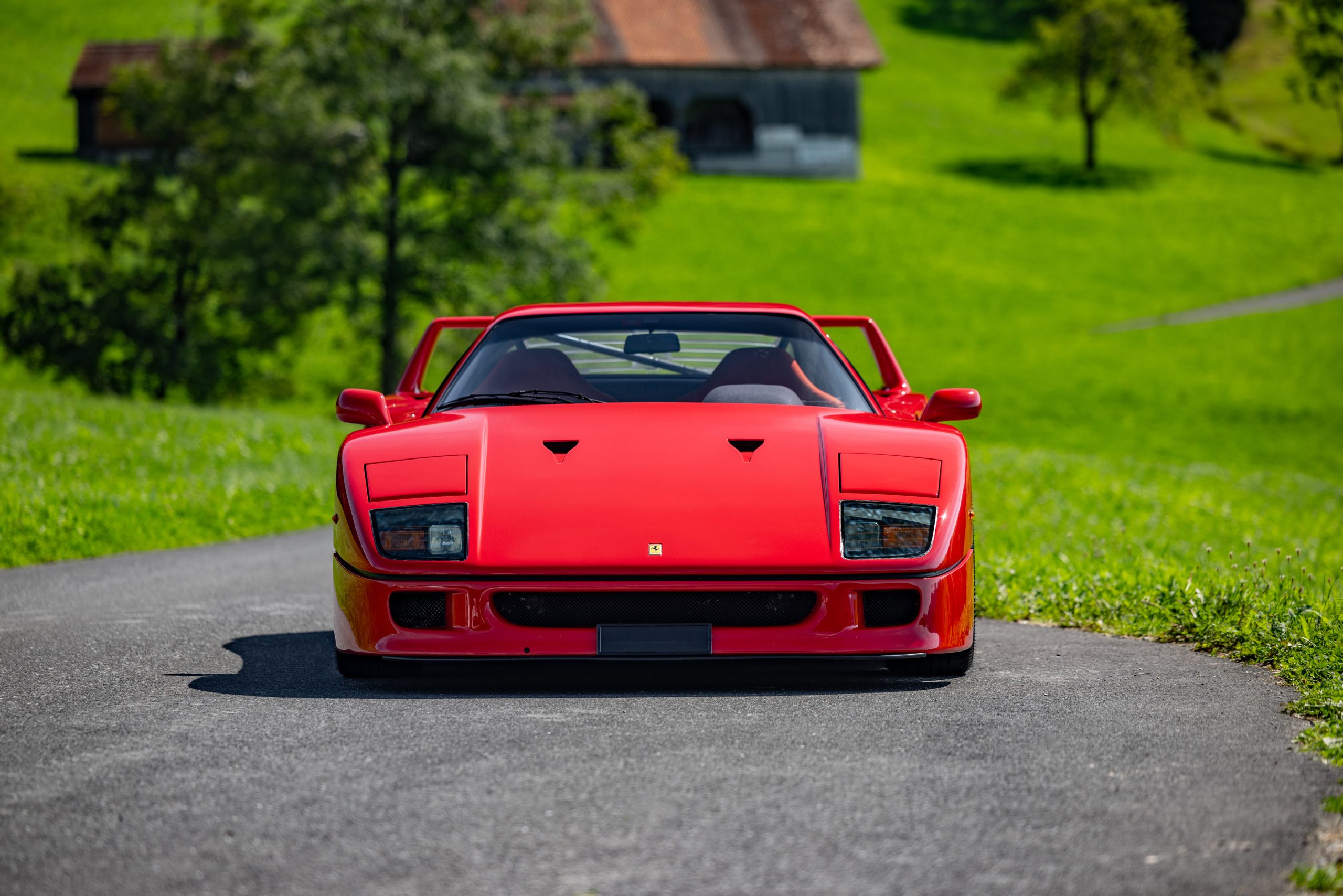
Its steel tube-frame chassis employs independent double-wishbone suspension, coil-over Koni dampers, and ventilated four-wheel disc brakes. Designed by Pietro Camardella under Leonardo Fioravanti’s supervision and refined in Pininfarina’s wind tunnel, the body uses extensive carbon fibre and Kevlar construction. This advanced composite approach substantially reduced weight while dramatically increasing structural rigidity.
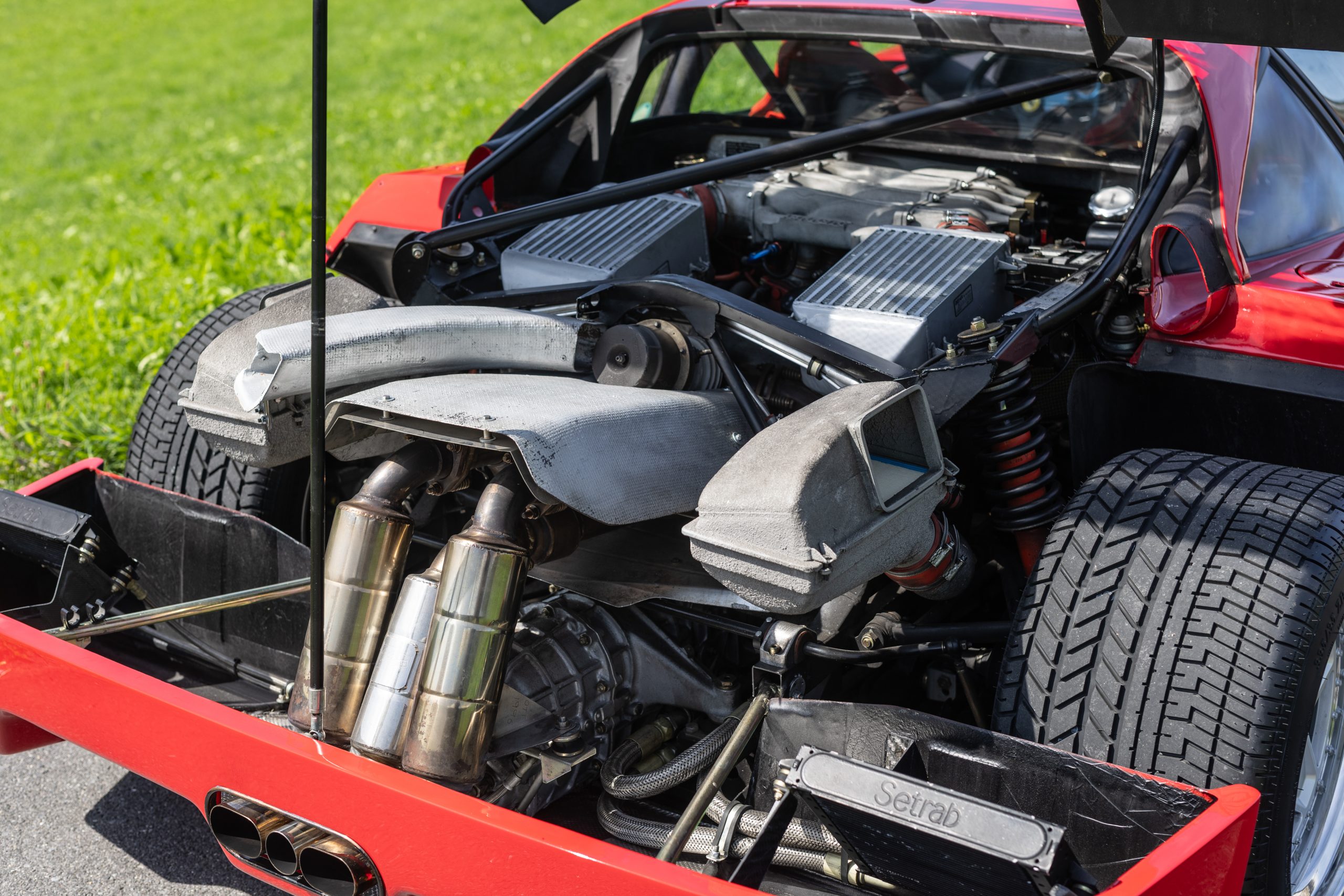
At its heart is a 2.9-litre twin-turbocharged V-8 derived from the 288 GTO, fitted with IHI turbochargers and Behr intercoolers. Producing approximately 471 bhp and 425 lb-ft of torque, the engine drives through a five-speed manual transaxle with Ferrari’s iconic gated shifter. Period performance was extraordinary, with 0–100 km/h taking roughly 4.1 seconds and a claimed top speed of 324 km/h.
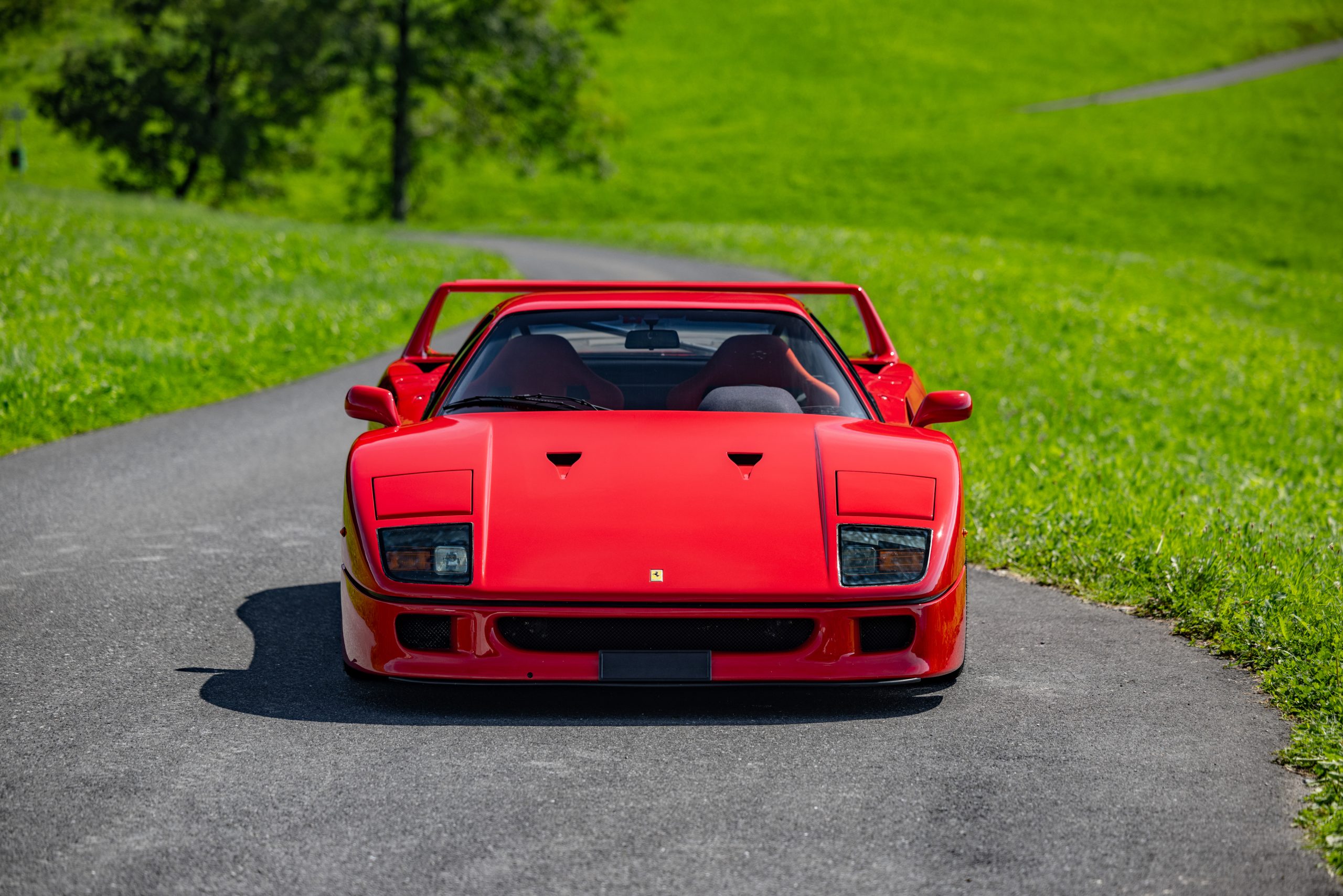
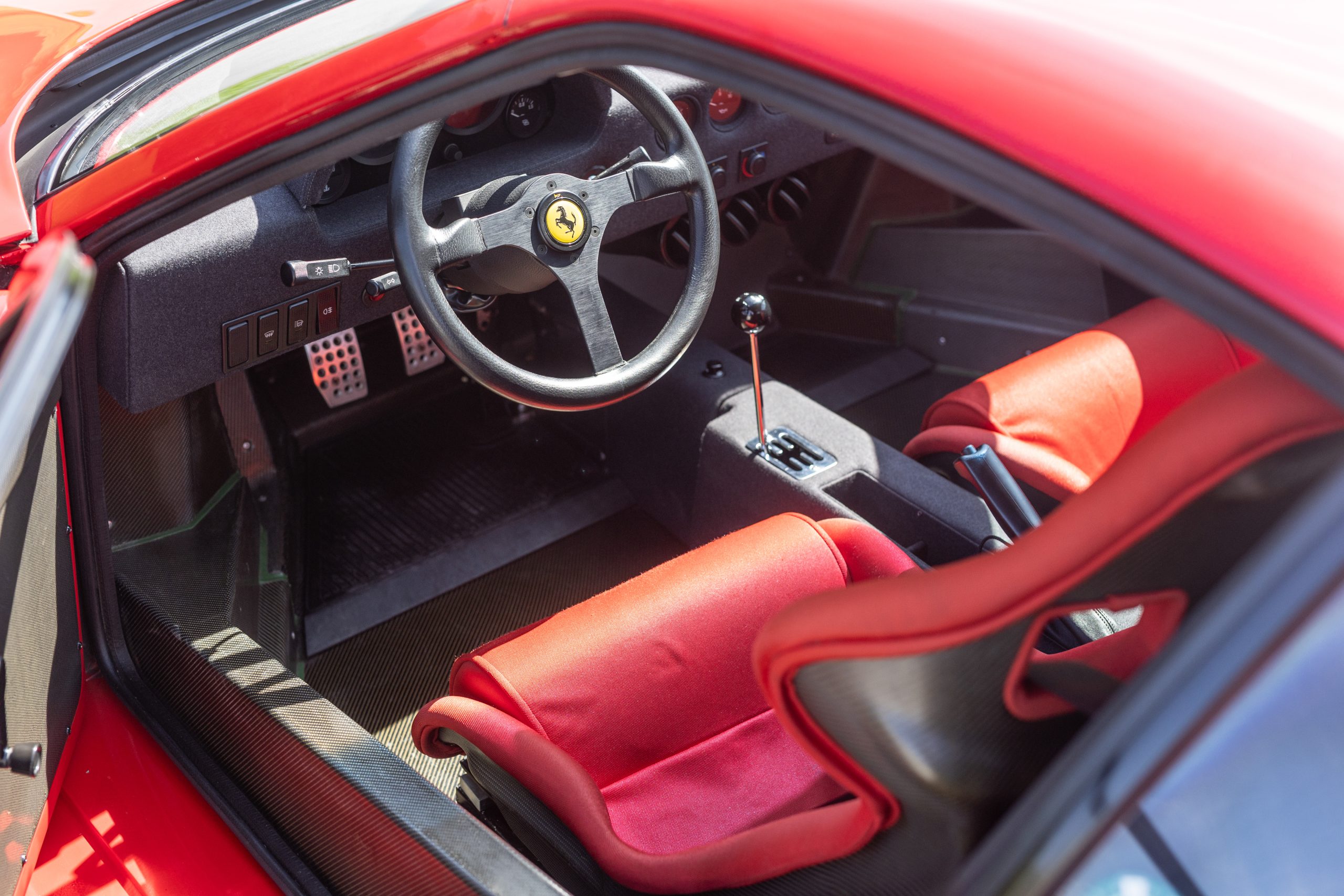
The cabin is equally uncompromising. Cloth-covered racing seats, pull-strap door releases, drilled pedals, and lightweight Perspex windows reflect the F40’s competition origins rather than luxury-car convention.
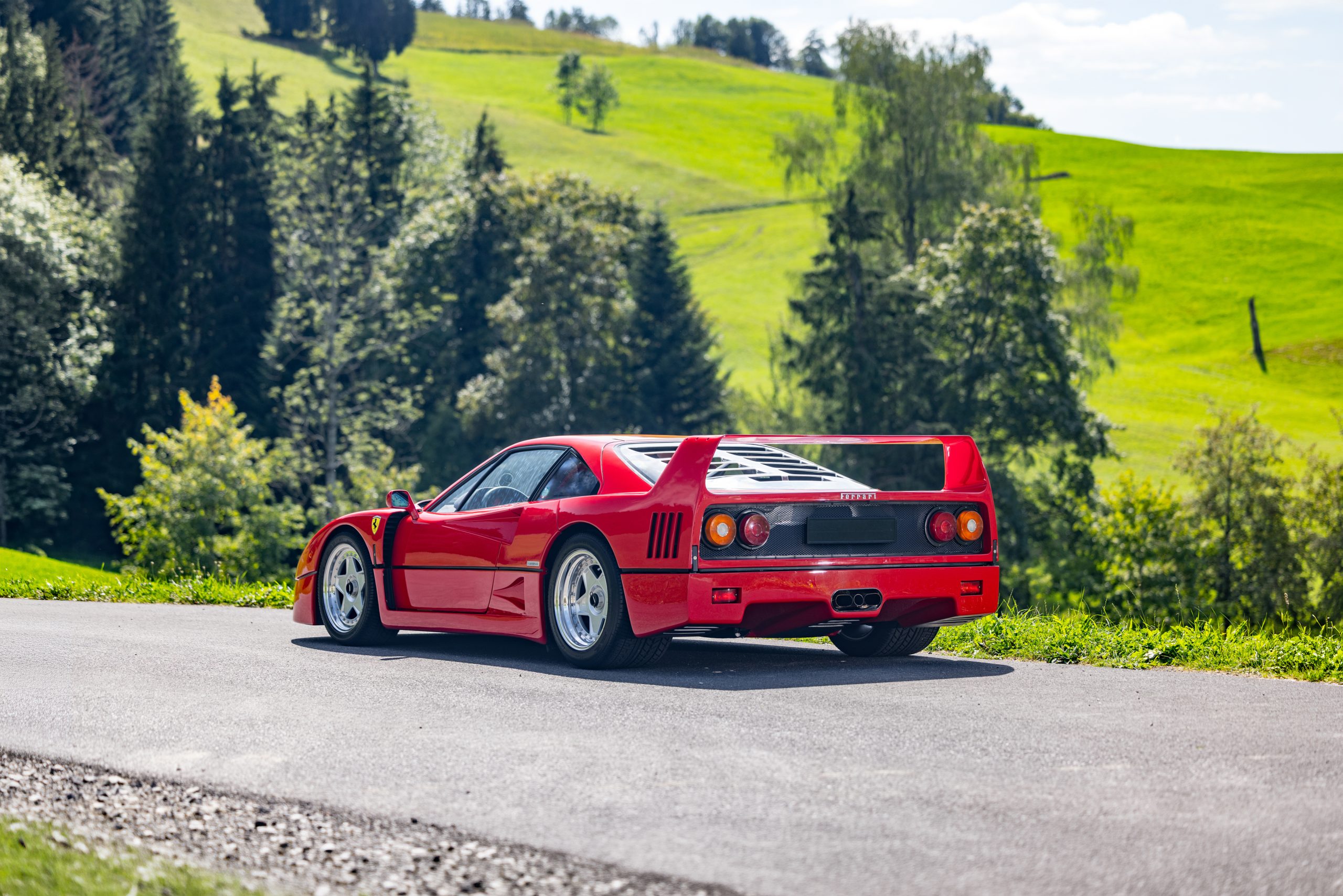
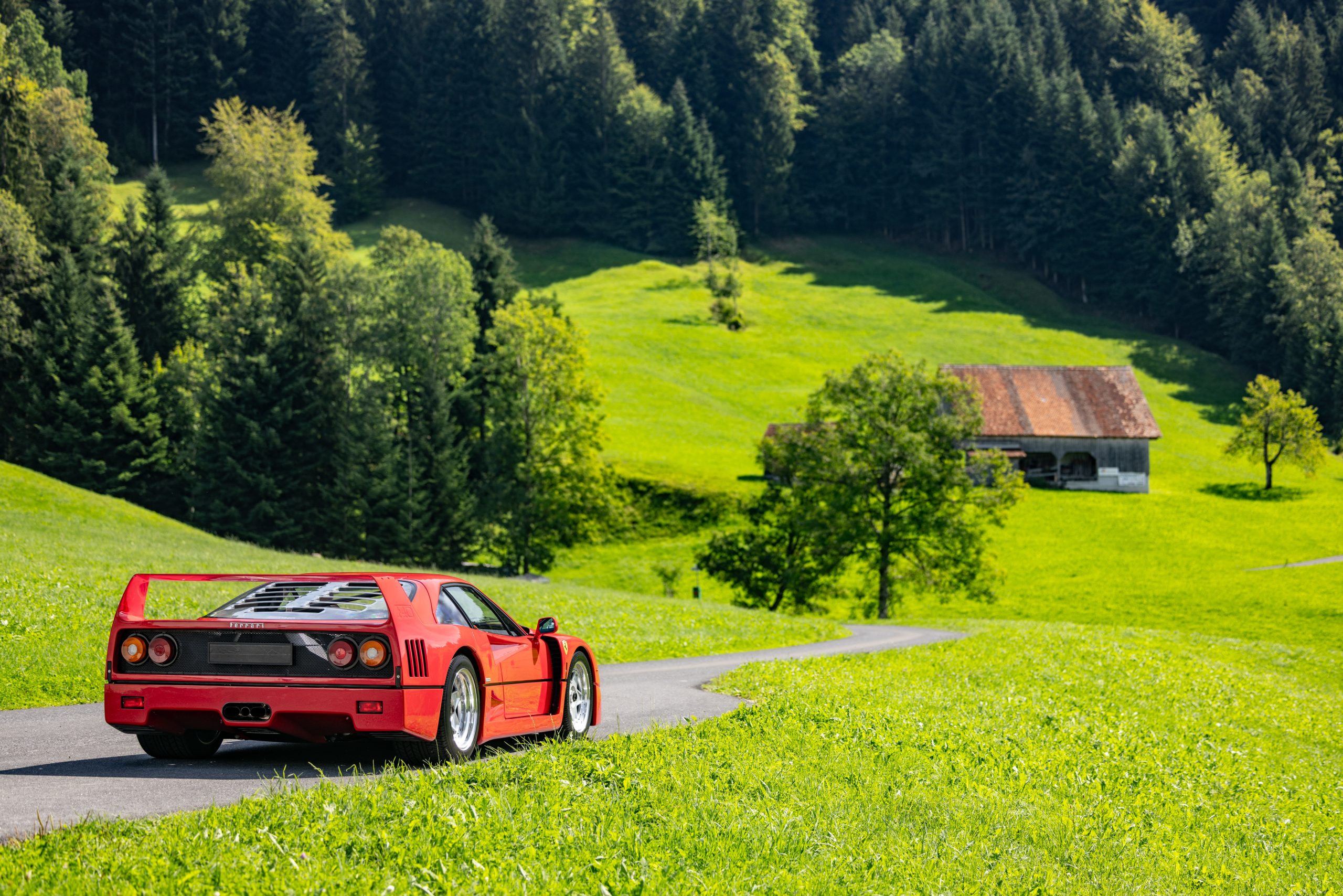
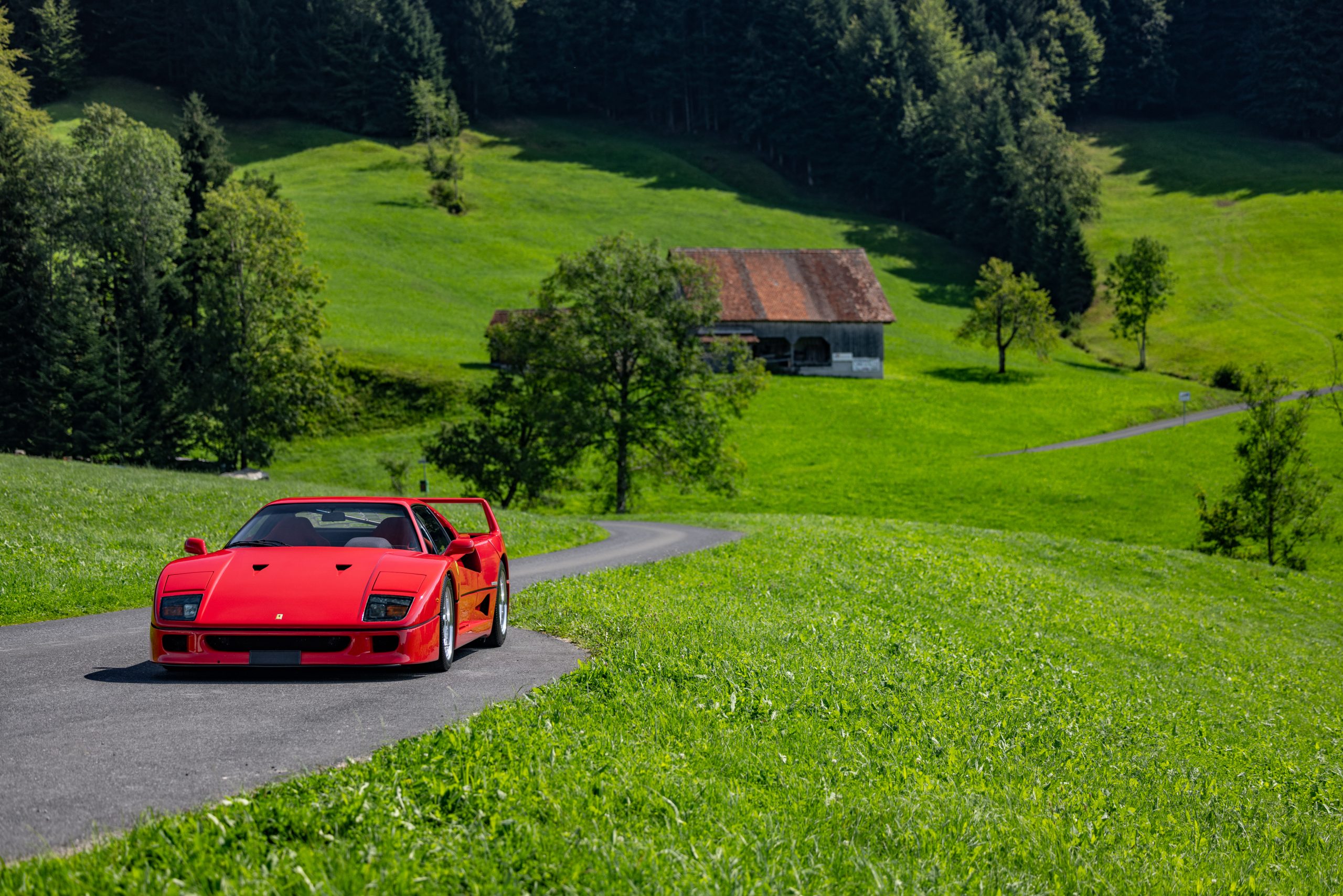
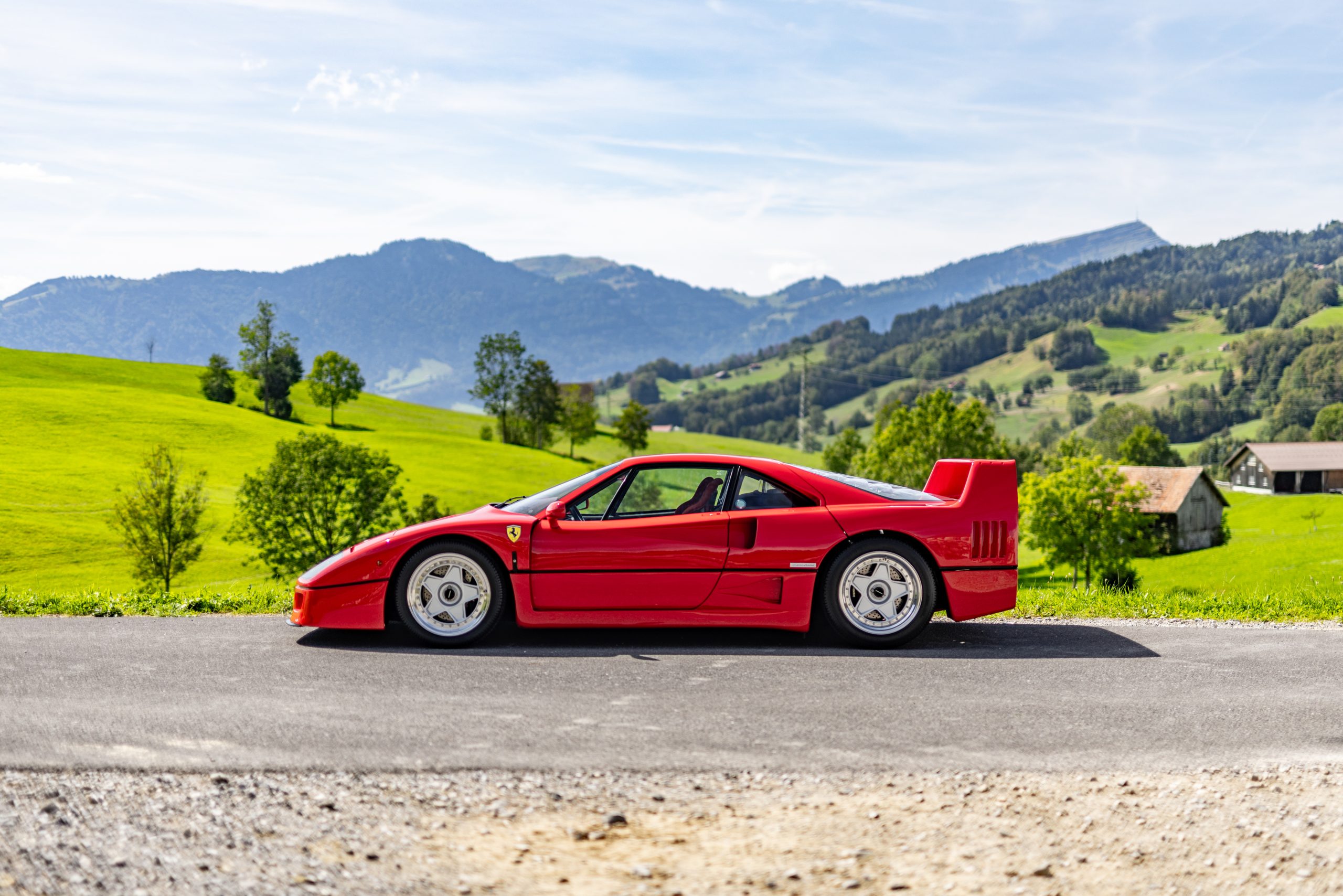
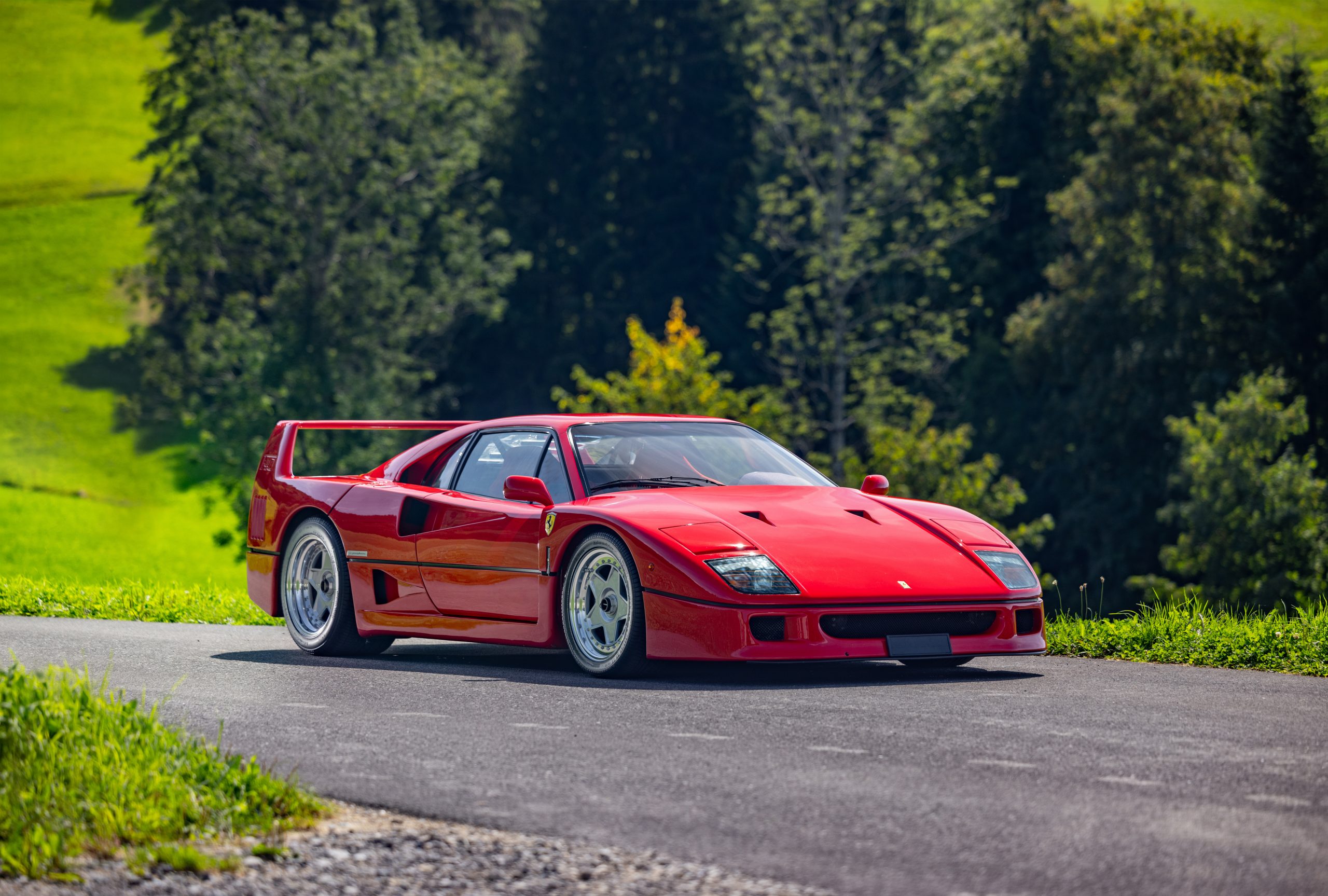
This particular 1991 example is especially desirable as a “cat, non-adjust” F40, retaining the earlier, lighter specification without adjustable suspension while benefiting from catalytic converters required for markets such as Switzerland. Delivered new in Switzerland on 23 July 1991 through Ferrari Suisse Nyon and Walter Hasler AG, it remains finished in the factory-correct combination of Rosso Corsa with Stoffa Vigogna upholstery.
Its provenance is strengthened by matching-numbers engine and gearbox and Ferrari Classiche certification awarded in October 2018, accompanied by the marque’s “Red Book.” The car has also participated in Ferrari’s 50th-anniversary celebrations in 1997 and 70th-anniversary festivities at Fiorano in 2017.
Now part of a prominent Swiss collection, the F40 has been maintained by Ferrari main dealer Niki Hasler AG, including its 40,000-kilometre service in 2024 and replacement tyres in 2025. At cataloguing, it showed 38,725 kilometres. Offered with its Ferrari books and manuals in a Schedoni leather wallet, tool roll, spare fuel tanks, and original exhaust requiring installation, this highly authentic F40 represents one of Maranello’s most significant modern classics.
Approximately 1,315 examples were produced, ensuring that every well-preserved car remains highly collectible. This example is scheduled for RM Sotheby’s The Zurich Auction on September 26, with an estimated value of up to $4.3 million, making it a particularly compelling opportunity ahead of Ferrari’s 80th-anniversary celebrations in 2027.
Source: RM Sotheby’s