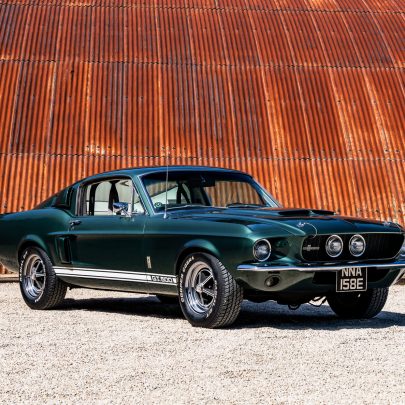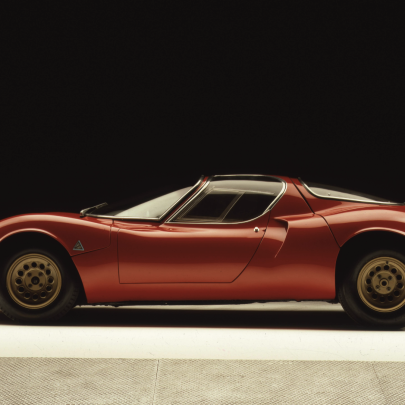

There have been three Bugattis. The first was Ettore Bugatti's company at Molsheim, which from 1910 to the war built some of the fastest and most beautiful cars in the world. The second was an Italian revival that lasted four years in the 1990s. The third, under Volkswagen and now Rimac, has built the fastest road cars there have been. This list ranks the best of all three.
What counts
Every Bugatti, road and racing. On our other marque lists the racing cars are kept separate. Here that would make no sense: Bugatti's reputation was made on the track, its road cars used its racing engines, and the same people bought both.
How we ranked them
On what each car achieved, how it looks, how it was engineered and what it did for the name. A top speed record counts as an achievement. It does not count for more than winning a thousand races or being one of the most beautiful cars ever made, which is why the modern cars are spread through the list and do not sit at the top of it.
Old and new
Twenty-one of the thirty were built by the original company, and nine since 1991. That is roughly the balance of the history. Ettore Bugatti and his son Jean produced more than fifty designs in thirty years. The modern company has produced four basic cars and several variations on them, and we have been strict about the variations.
The calls we expect to be argued with
The Type 35 first, above the Atlantic. The Atlantic is the more valuable and the more beautiful. The Type 35 is the reason anyone cared about Bugatti in the first place.
The Veyron at three. Some will say no modern car belongs among the pre-war ones. We think it did for the name what the Type 35 did, eighty years later.
The EB110 above the Chiron. The Chiron is the better car. The EB110 came first and deserved a better fate.
Four versions of the Type 57. The Atlantic, the Atalante, the standard car and the Le Mans winner are different enough to stand apart.
The Tourbillon at 24. It is new, and we would sooner place it low and move it than guess.
See the full ranking, 1 to 30
| Rank | The 30 Best Bugattis Ever Made | Years |
|---|---|---|
| 1 | Bugatti Type 35 | 1924–31 |
| 2 | Bugatti Type 57SC Atlantic | 1936–38 |
| 3 | Bugatti Veyron | 2005-2015 |
| 4 | Bugatti Type 41 Royale | 1927–33 |
| 5 | Bugatti Type 57SC Atalante | 1936-1938 |
| 6 | Bugatti Type 55 | 1932-1935 |
| 7 | Bugatti Type 51 | 1931-1935 |
| 8 | Bugatti Type 43 Grand Sport | 1927-1931 |
| 9 | Bugatti Type 13 Brescia | 1910-1926 |
| 10 | Bugatti EB110 | 1991-1995 |
| 11 | Bugatti Type 57G Tank | 1936-1937 |
| 12 | Bugatti Chiron | 2016-2024 |
| 13 | Bugatti Type 59 | 1934-1936 |
| 14 | Bugatti Type 50 | 1930-1934 |
| 15 | Bugatti Type 57 | 1934-1940 |
| 16 | Bugatti Type 46 | 1929-1936 |
| 17 | Bugatti Type 37 | 1926-1930 |
| 18 | Bugatti Veyron Super Sport | 2010-2011 |
| 19 | Bugatti Type 44 | 1927-1930 |
| 20 | Bugatti Chiron Super Sport 300+ | 2019-2022 |
| 21 | Bugatti Type 30 | 1922-1926 |
| 22 | Bugatti Type 32 Tank | 1923 |
| 23 | Bugatti Type 18 | 1912-1914 |
| 24 | Bugatti Tourbillon | 2026- |
| 25 | Bugatti Type 101 | 1951-1952 |
| 26 | Bugatti Divo | 2019-2021 |
| 27 | Bugatti Bolide | From 2024 |
| 28 | Bugatti Type 53 | 1932 |
| 29 | Bugatti Type 52 Baby | 1927-1936 |
| 30 | Bugatti Centodieci | 2022 |
30 to 21
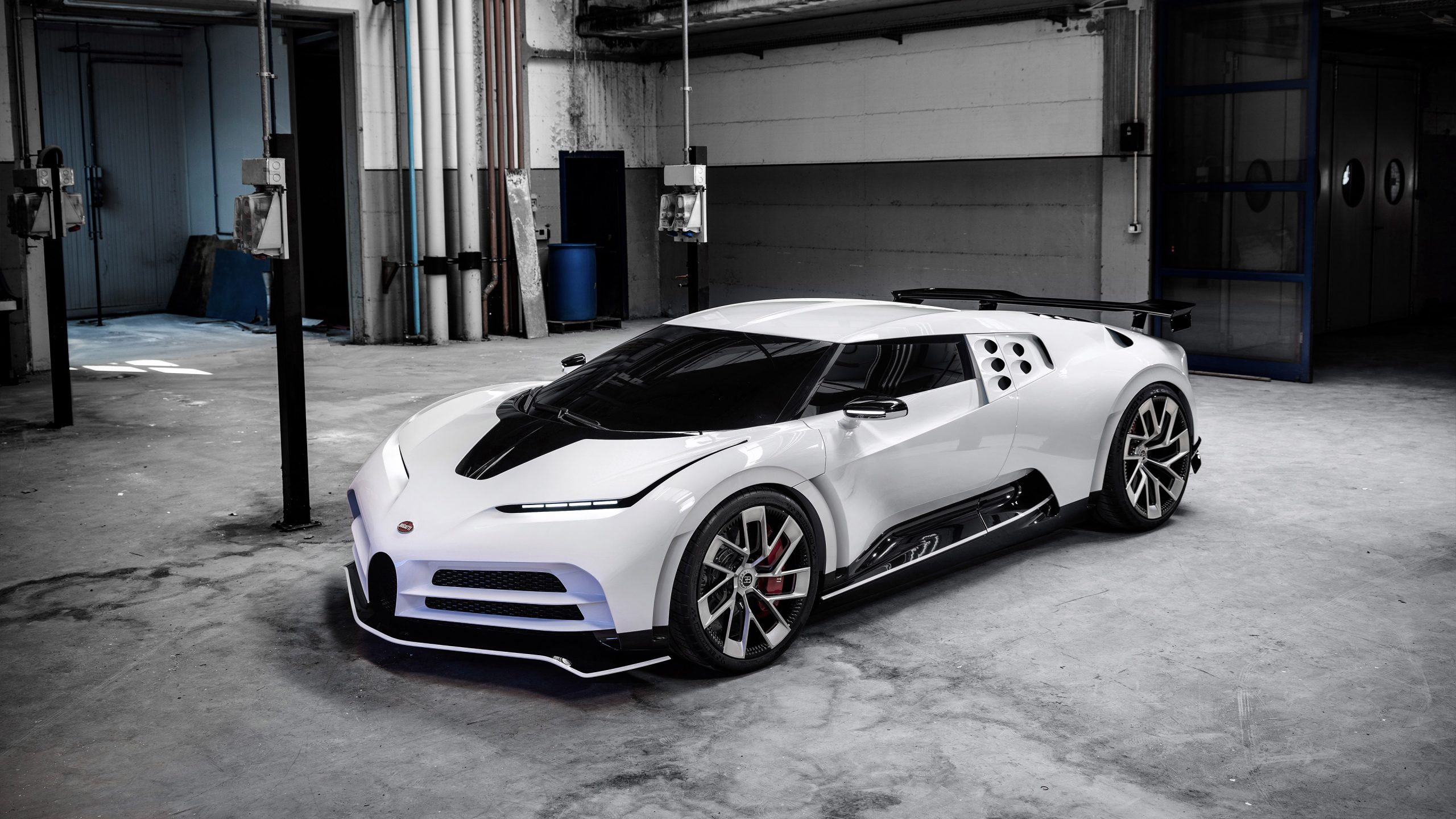
30. Bugatti Centodieci
2022 · 8.0-litre quad-turbo W16 · 1,600 PS · 10
Ten cars built to mark Bugatti's 110th anniversary and to honour the EB110, on Chiron mechanical parts with 1,600 PS. Each cost eight million euros and all were delivered in 2022.
Verdict A tribute to the EB110, for ten customers.
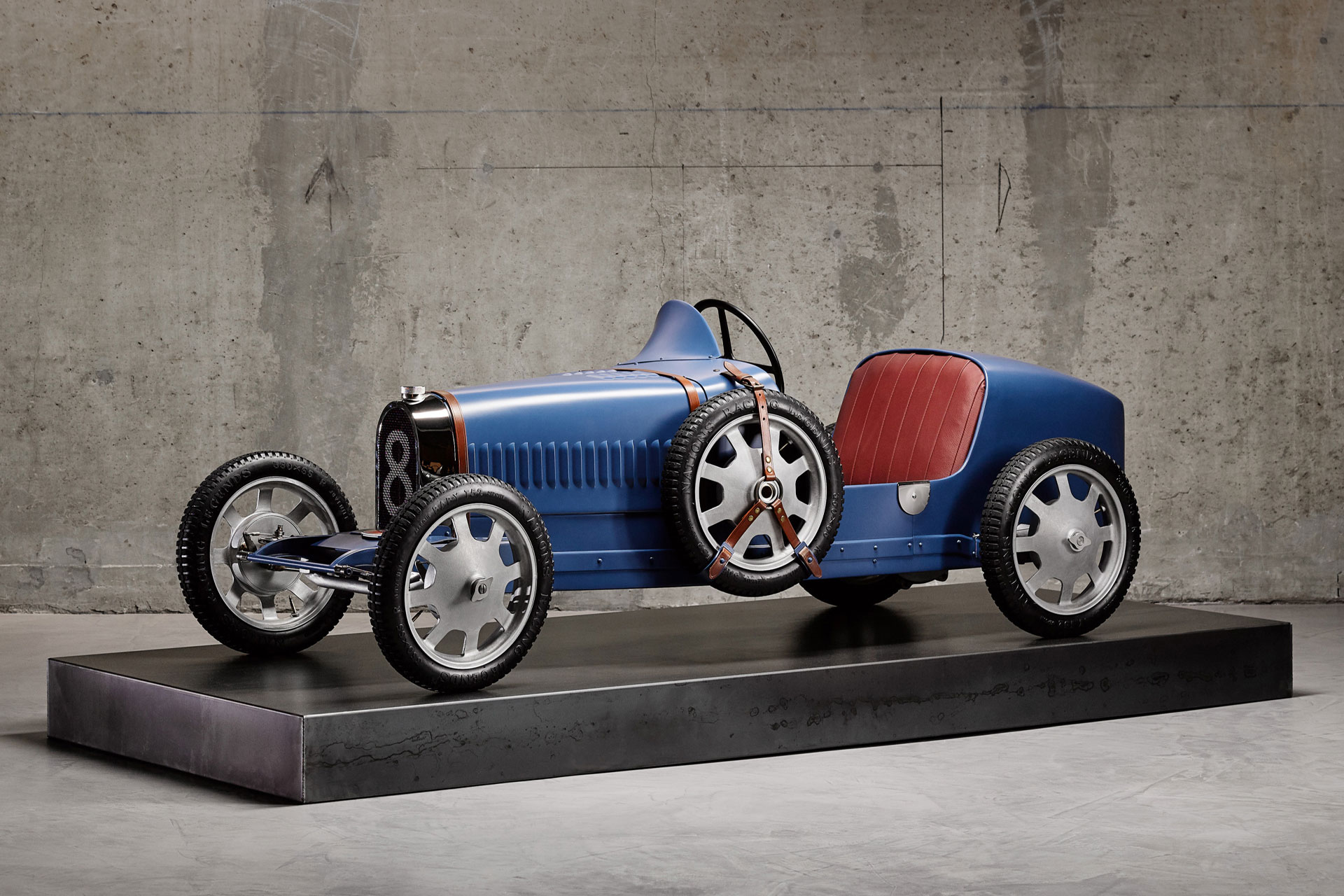
29. Bugatti Type 52 Baby
1927-1936 · 12-volt electric motor · About 500
A half-scale Type 35 for children, with a 12-volt electric motor. The first was made for Ettore Bugatti's son Roland, and about 500 were built at Molsheim between 1927 and 1936.
Verdict The only Bugatti most children could drive.
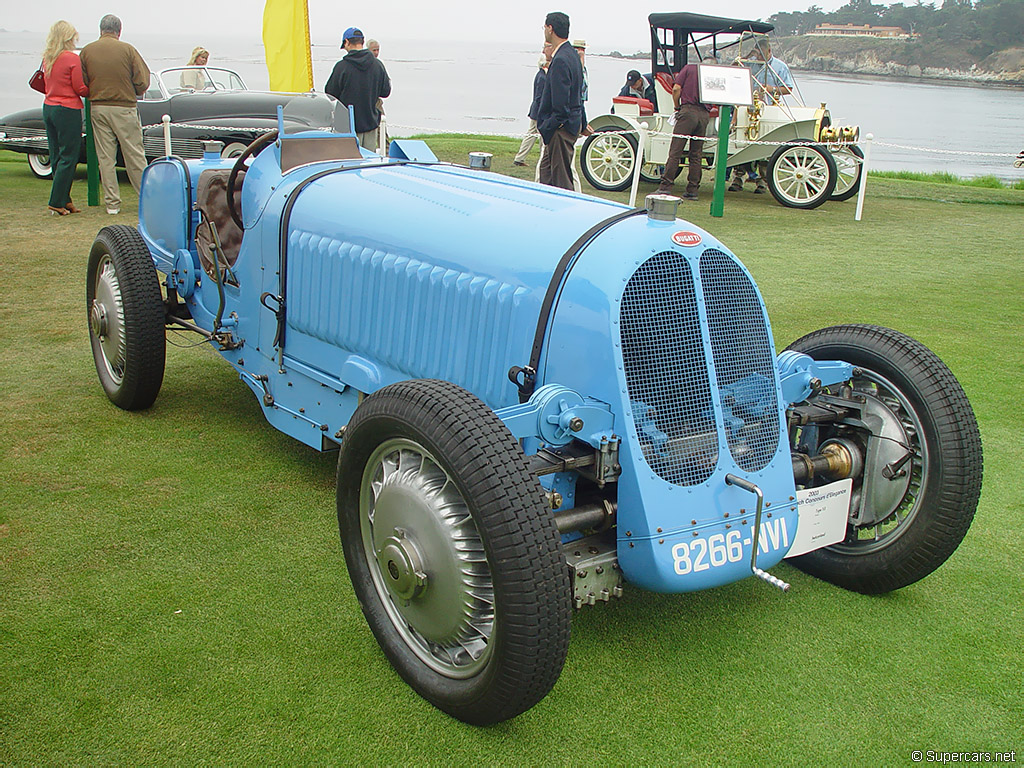
28. Bugatti Type 53
1932 · 4.9-litre supercharged straight eight · About 300 hp · 2 or 3
A four-wheel-drive racing car from 1932, with the 4.9-litre supercharged engine of the Type 50 and about 300 hp. Two or three were built. Jean Bugatti rolled one at Shelsley Walsh, and René Dreyfus won the La Turbie hill climb in one in 1934.
Verdict Four-wheel drive, decades before it caught on.
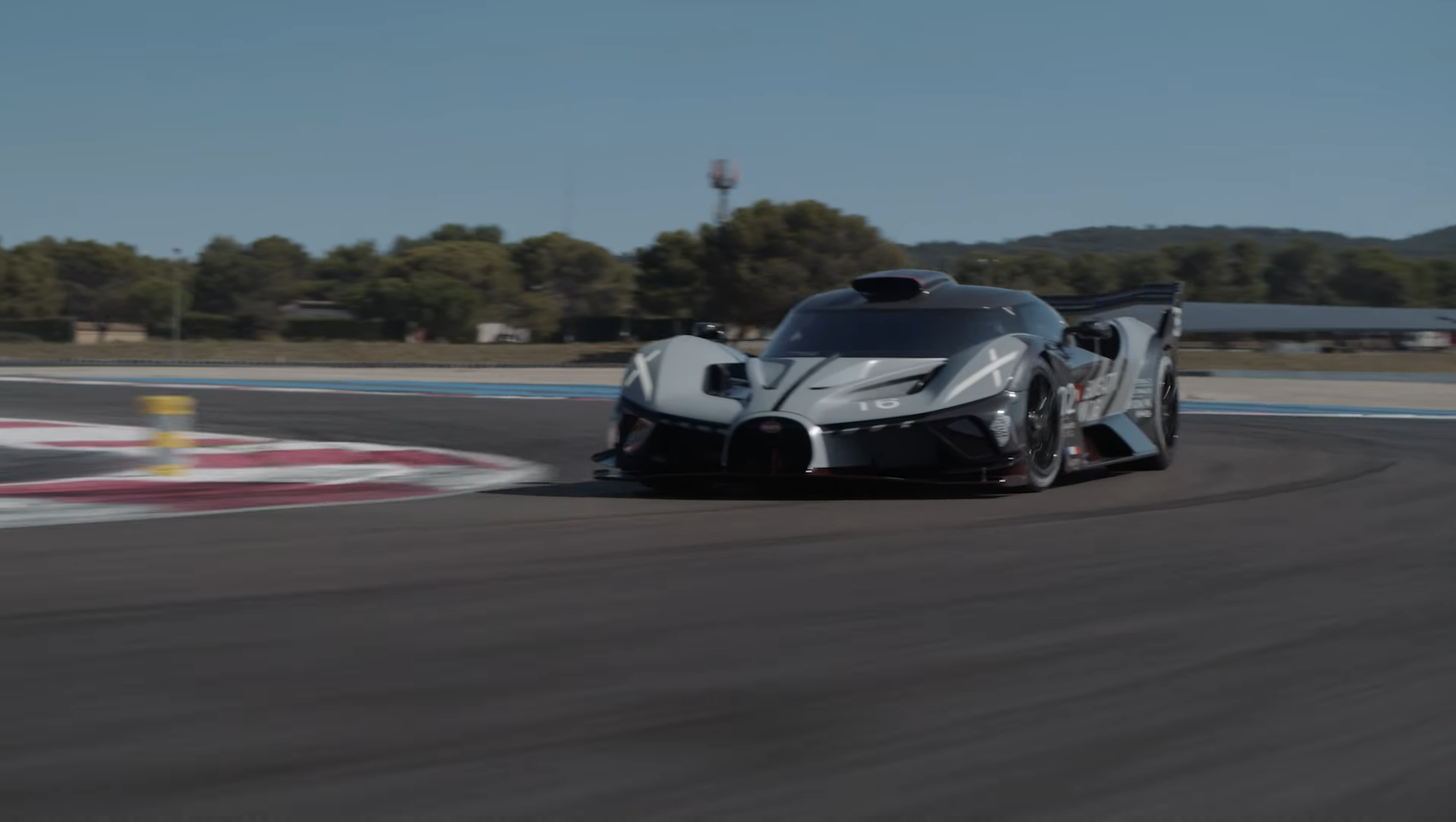
27. Bugatti Bolide
From 2024 · 8.0-litre quad-turbo W16 · 1,600 PS · 40
A track-only car with the sixteen-cylinder engine, 1,600 PS and a weight of 1,450 kg. Forty were made, with deliveries from 2024. Bugatti said it would be the last car to use the W16.
Verdict The W16's farewell, with no numberplates.
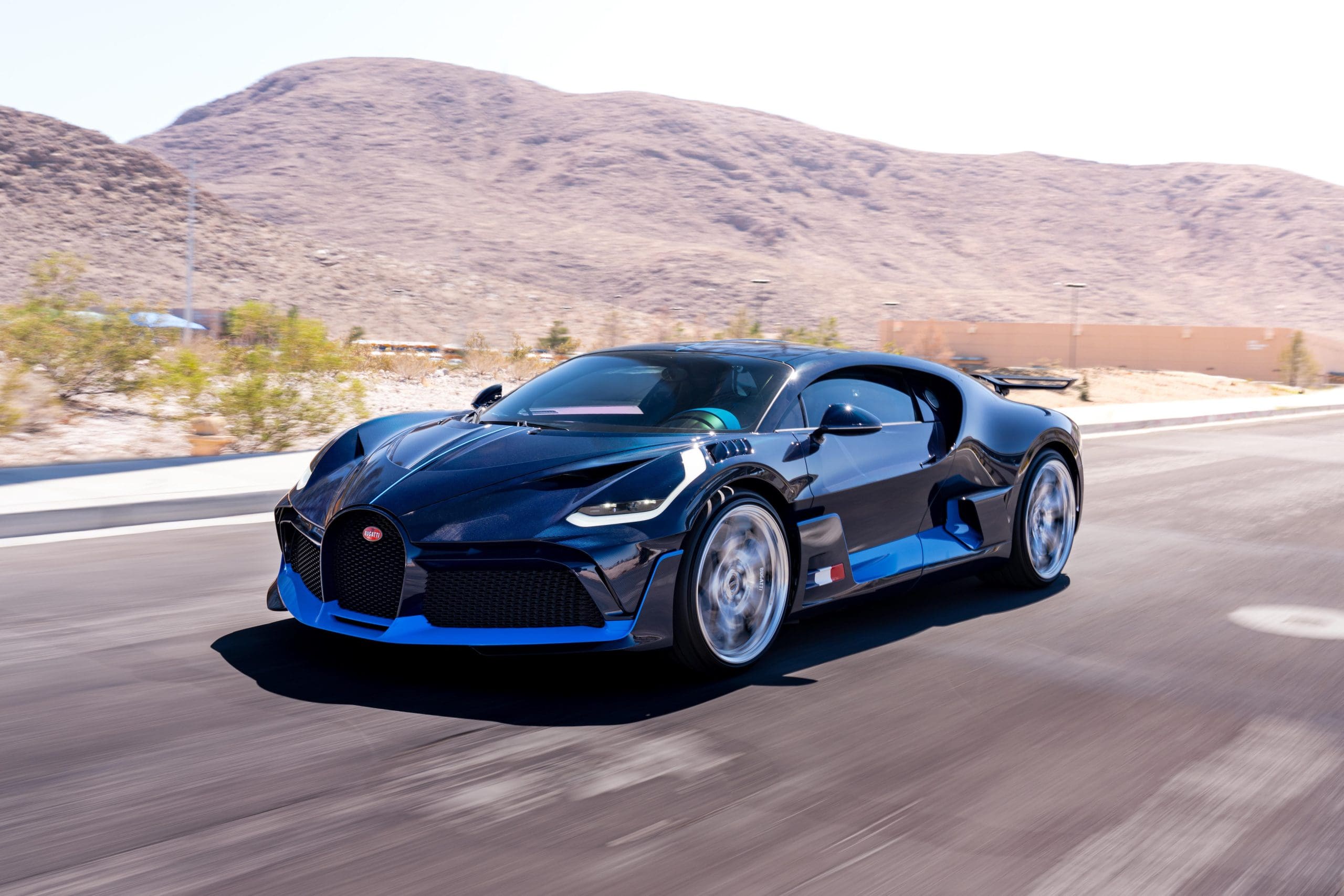
26. Bugatti Divo
2019-2021 · 8.0-litre quad-turbo W16 · 1,500 PS · 40
A Chiron reworked for corners, with 90 kg more downforce and a top speed limited to 380 km/h. Forty were built from 2019 to 2021. It is named after Albert Divo, who won the Targa Florio twice.
Verdict The Chiron that turns.
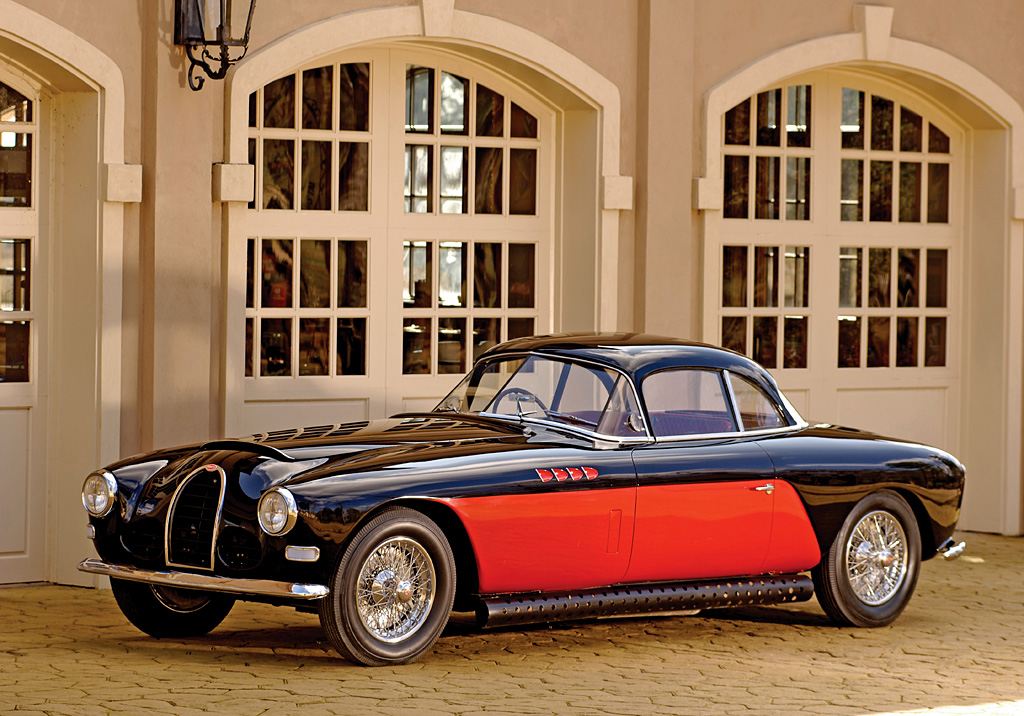
25. Bugatti Type 101
1951-1952 · 3.3-litre straight eight · About 8
After the war Bugatti put new bodies on what was essentially the Type 57 and showed the result at the 1951 Paris Salon. Only a handful were built. It was out of date and expensive, and it was the last road car of the original company.
Verdict The last of the old Bugattis.
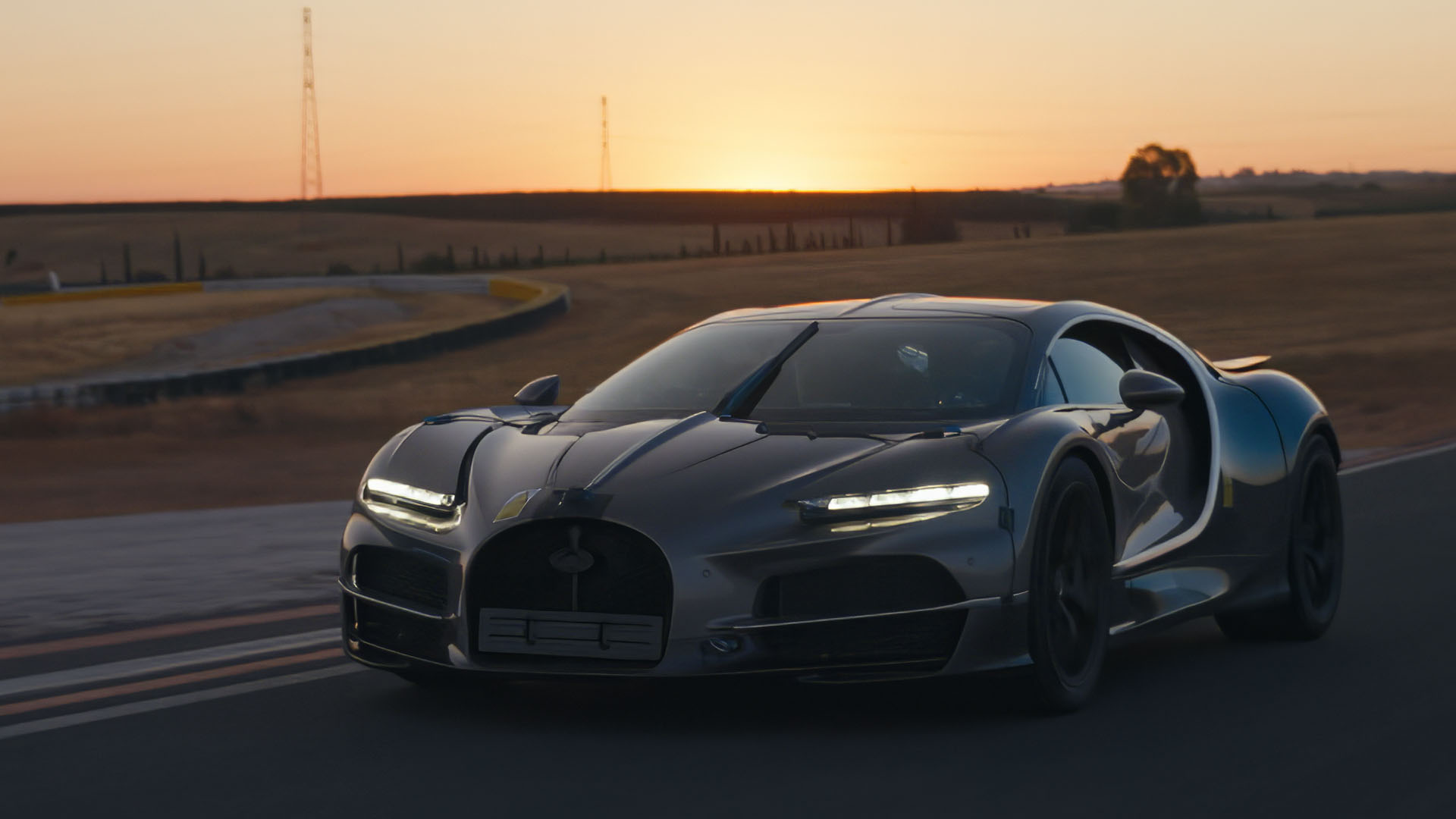
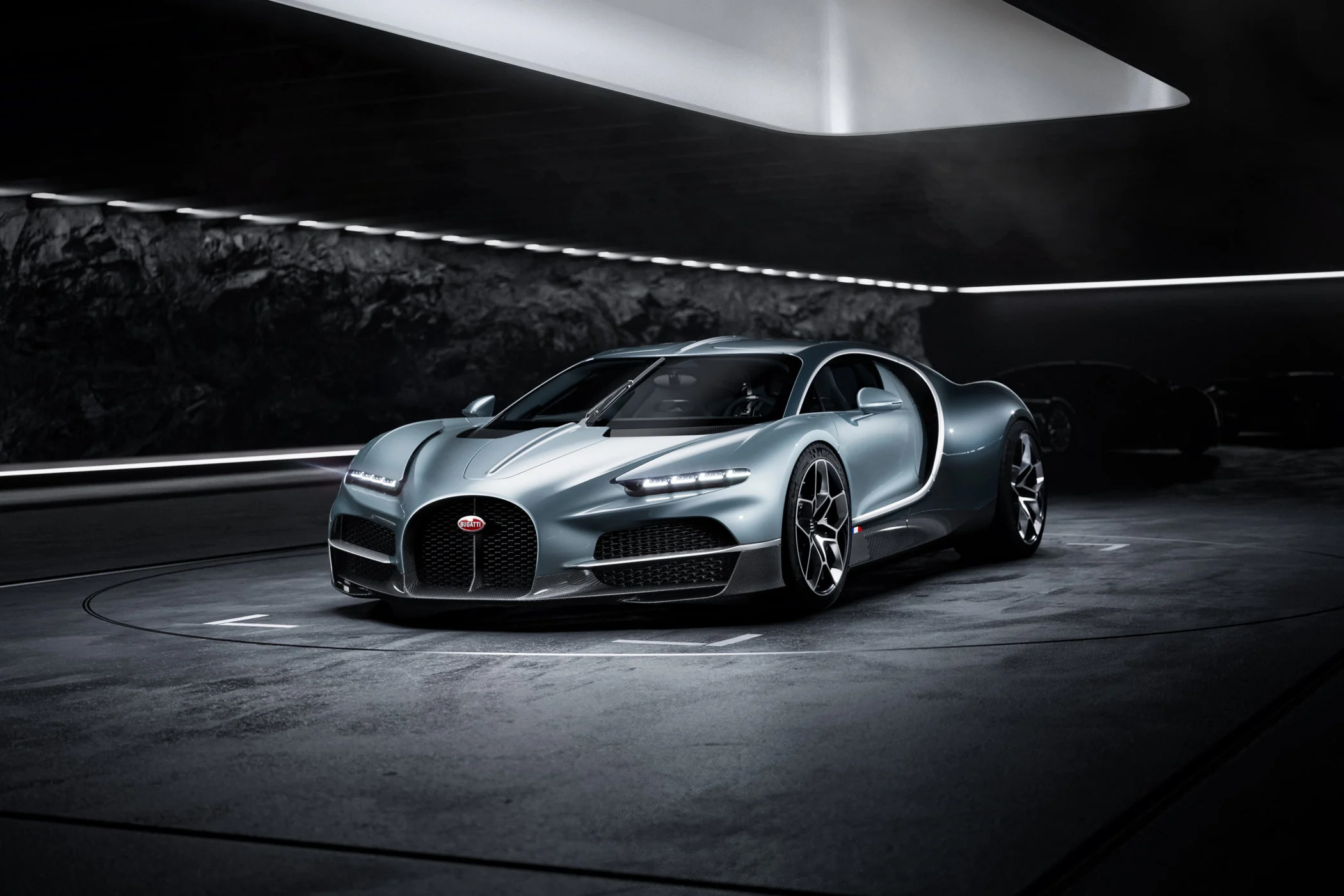
24. Bugatti Tourbillon
2026- · 8.4-litre V16 with three electric motors · 1,800 PS · 250 planned
The Chiron's successor replaces the turbocharged sixteen with an 8.4-litre V16 without turbochargers, developed with Cosworth, and three electric motors, for 1,800 PS. Bugatti plans 250. It is too new to rank with confidence, and we expect it to move up.
Verdict A new engine and a new start. Ask us again in a few years.

23. Bugatti Type 18
1912-1914 · 5.0-litre four, chain drive · 7
A 5.0-litre four-cylinder with chain drive, built from 1912 to 1914. Only seven were made. One belonged to the aviator Roland Garros and was later named Black Bess. Three survive.
Verdict The first big, fast Bugatti.
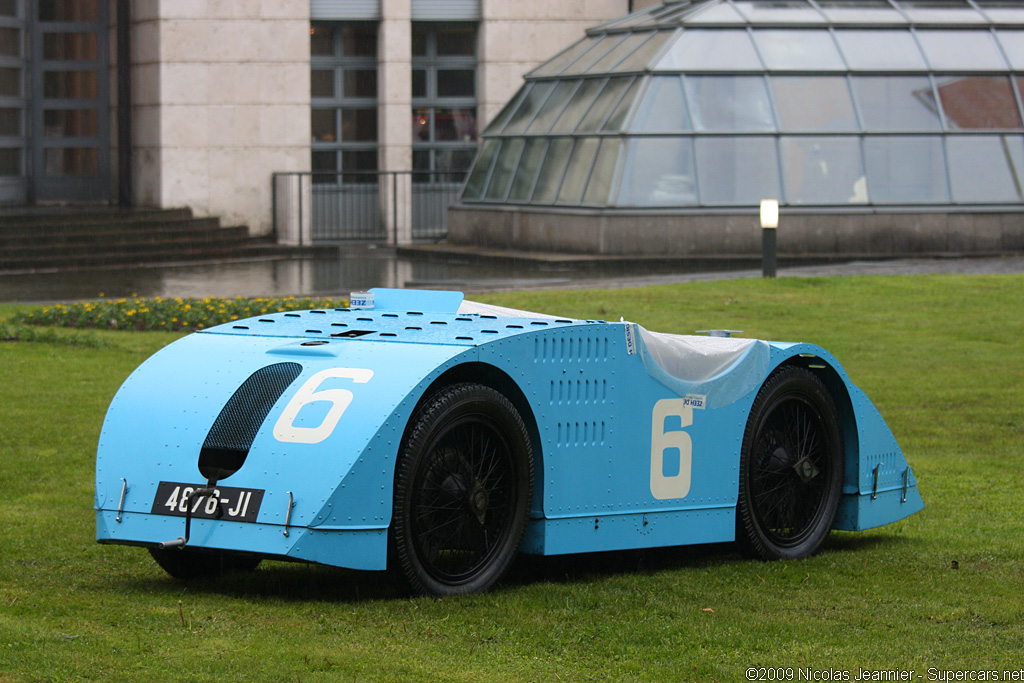
22. Bugatti Type 32 Tank
1923 · 2.0-litre straight eight · 5, including a prototype
Built for the 1923 French Grand Prix at Tours, with a body shaped like a section of wing and a wheelbase under two metres. It looked like a tank and was named for it. It also generated lift and was a handful at speed. Ernest Friderich finished third.
Verdict An early lesson in aerodynamics, learned the hard way.
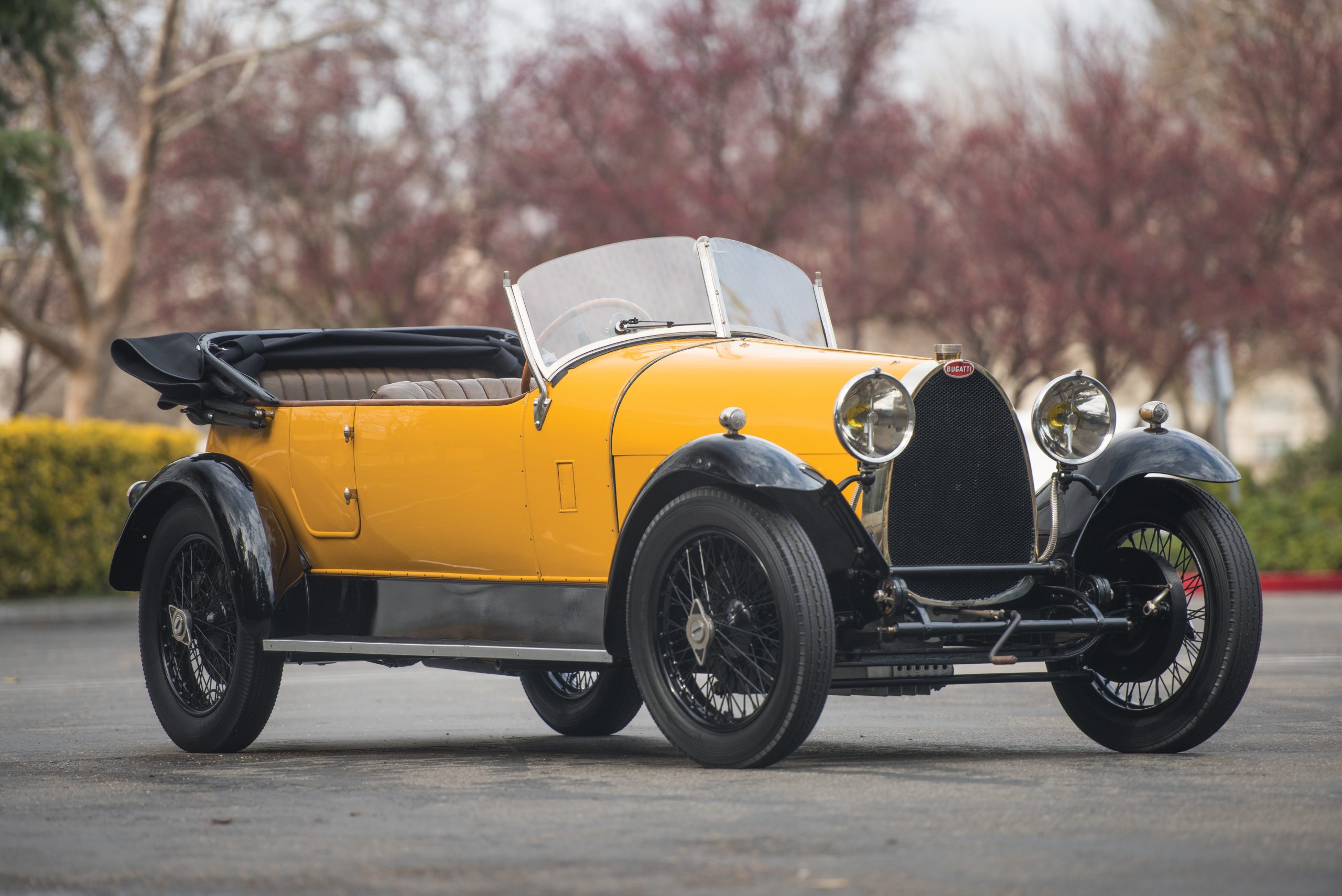
21. Bugatti Type 30
1922-1926 · 2.0-litre straight eight · About 600
Bugatti's first production car with eight cylinders, built from 1922 to 1926. It used the 2.0-litre engine of the Type 29 racing car, and about 600 were made. The straight-eight Bugattis that followed, the Type 35 included, descend from it.
Verdict Where the straight eights began.
20 to 11
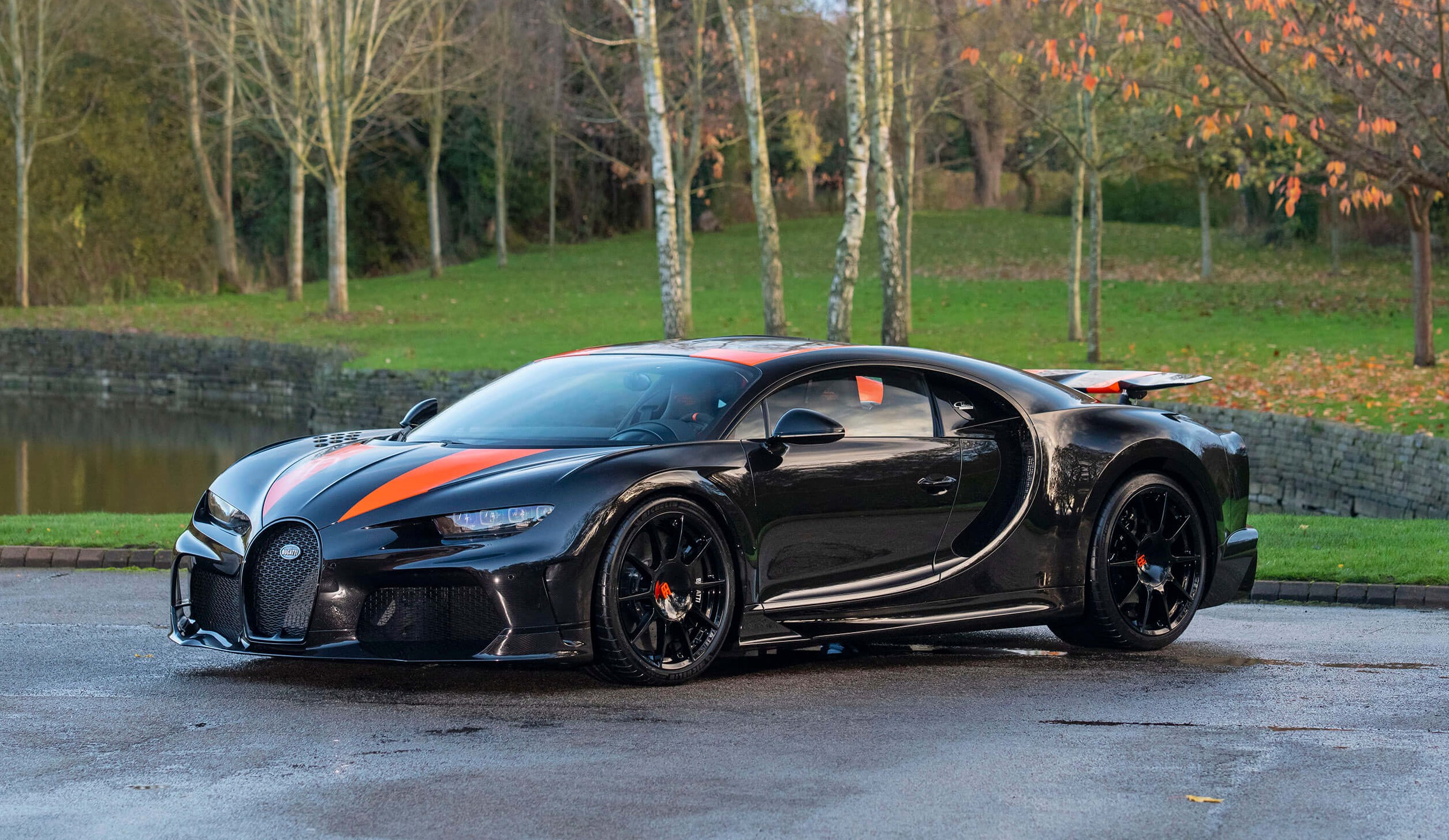
20. Bugatti Chiron Super Sport 300+
2019-2022 · 8.0-litre quad-turbo W16 · 1,600 PS
On 2 August 2019 Andy Wallace took a prototype of this car to 304.773 mph at Ehra-Lessien. The production Super Sport 300+ had 1,600 PS and a lengthened tail. It stands at the end of the line of record-chasing Bugattis that began with the Veyron, and it is here for that number and little else.
Verdict Past 300 mph, and the last of the record cars.
Did you know: A prototype reached 304.773 mph at Ehra-Lessien on 2 August 2019, driven by Andy Wallace.
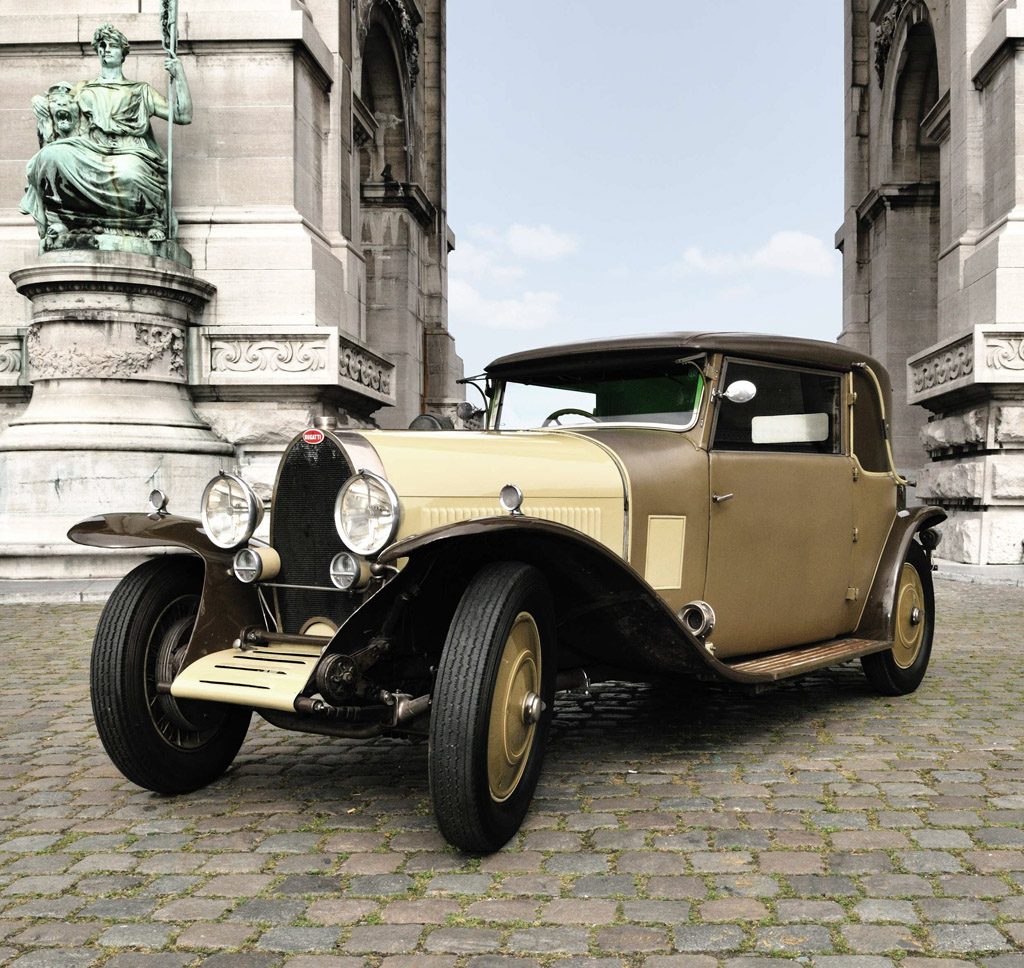
19. Bugatti Type 44
1927-1930 · 3.0-litre straight eight · 1,095
The most numerous of the eight-cylinder Bugattis: 1,095 built between 1927 and 1930. The Type 44 was a 3.0-litre touring car, smooth and flexible. It is less dramatic than anything above it on this list. It was also the car that most Bugatti owners of its time actually drove, and it made the company a maker of refined road cars as well as racers.
Verdict The everyday Bugatti, and a very good one.
Did you know: It is the most numerous of the eight-cylinder Bugattis.
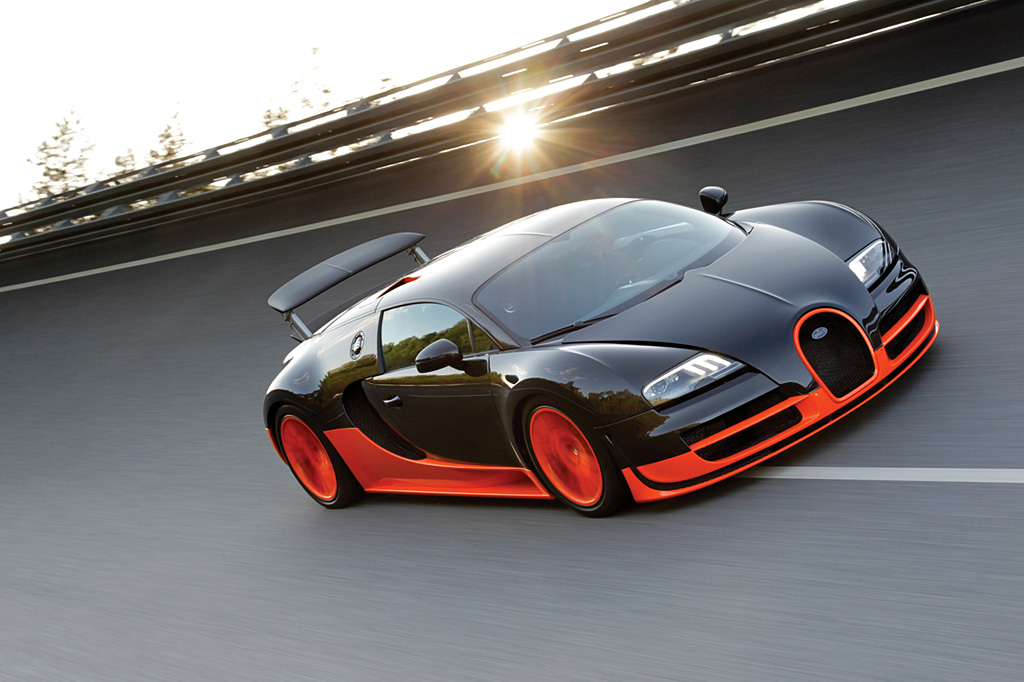
18. Bugatti Veyron Super Sport
2010-2011 · 8.0-litre quad-turbo W16 · 1,200 PS · 48
In July 2010 Pierre-Henri Raphanel drove a Veyron Super Sport at Ehra-Lessien to an average of 267.856 mph over two runs, a record for a production car. The Super Sport had 1,200 PS, and Bugatti built 48. Guinness withdrew the record in 2013, because customer cars were limited to 415 km/h and the record car was not, and then restored it.
Verdict The Veyron, with another 200 horsepower found.
Did you know: Pierre-Henri Raphanel averaged 267.856 mph in one at Ehra-Lessien in July 2010.
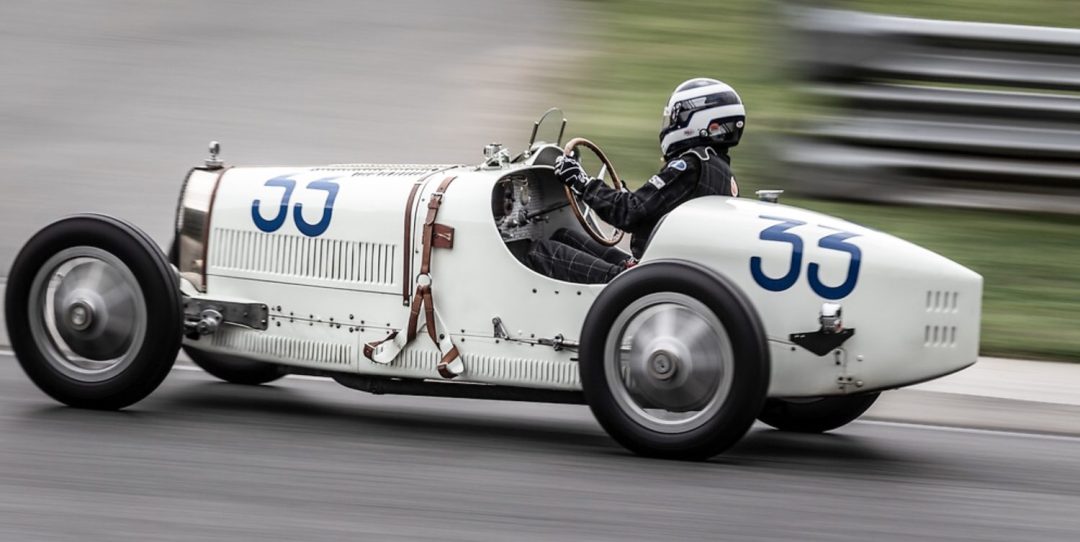
17. Bugatti Type 37
1926-1930 · 1.5-litre four · 60 bhp; 80 to 90 bhp supercharged (37A) · About 290
A Type 35 with half the cylinders. The Type 37 used the Grand Prix car's chassis and body with a 1.5-litre four-cylinder engine of 60 bhp, and the supercharged 37A made up to 90. About 290 were built. It gave amateurs the look and handling of the Type 35 at a price they could manage, and it was a successful racing car in its class.
Verdict The Type 35 for those with less to spend.
Did you know: It shares its chassis and body with the Type 35.
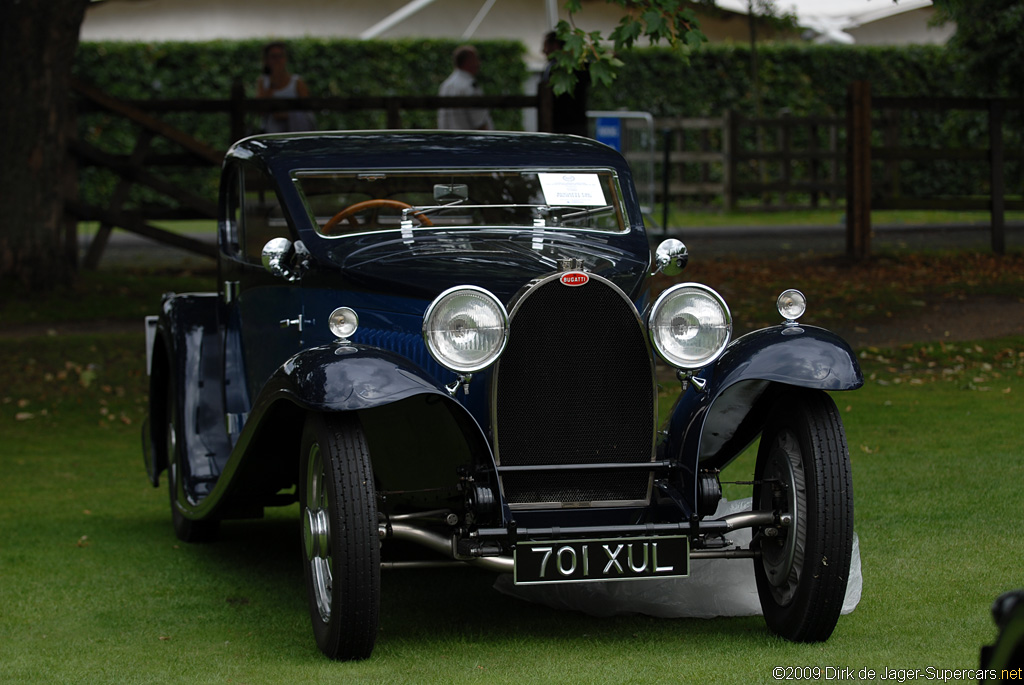
16. Bugatti Type 46
1929-1936 · 5.4-litre straight eight · About 140 hp · About 400
A smaller relation of the Royale. The Type 46 had a 5.4-litre straight eight with about 140 hp and a long chassis that carried some of the most formal coachwork of its day. Bugatti built about 400 from 1929. It was luxurious, smooth and heavy, and it sold far better than the Royale it resembled.
Verdict The big Bugatti that people actually bought.
Did you know: Only 18 of the supercharged Type 46S were made.
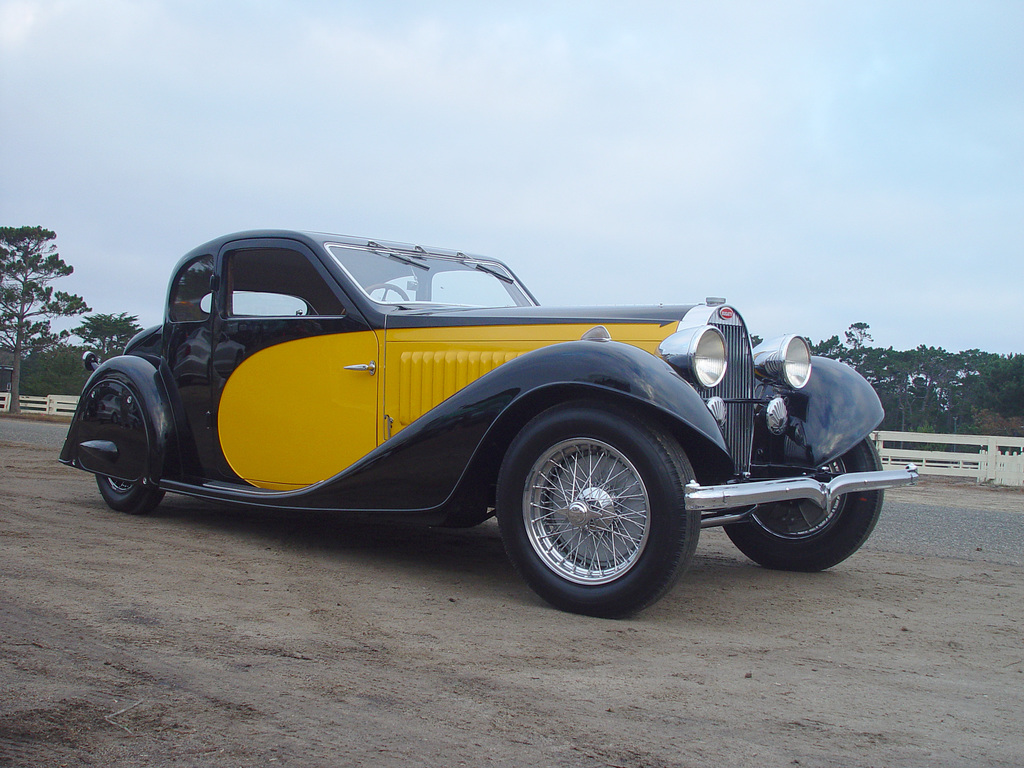
15. Bugatti Type 57
1934-1940 · 3.3-litre twin-cam straight eight · 710 of all kinds
The standard Type 57 was the car that kept Bugatti in business. It had a 3.3-litre twin-cam straight eight and came with a range of factory bodies named after Alpine passes: Ventoux, Galibier, Stelvio. Bugatti built 710 Type 57s of all kinds between 1934 and 1940. It was fast, refined and beautifully made, and it is the foundation on which the Atlantic, the Atalante and the Le Mans winners were built.
Verdict The Bugatti that paid for the others.
Did you know: The factory bodies were named after Alpine passes, among them Ventoux, Galibier and Stelvio.
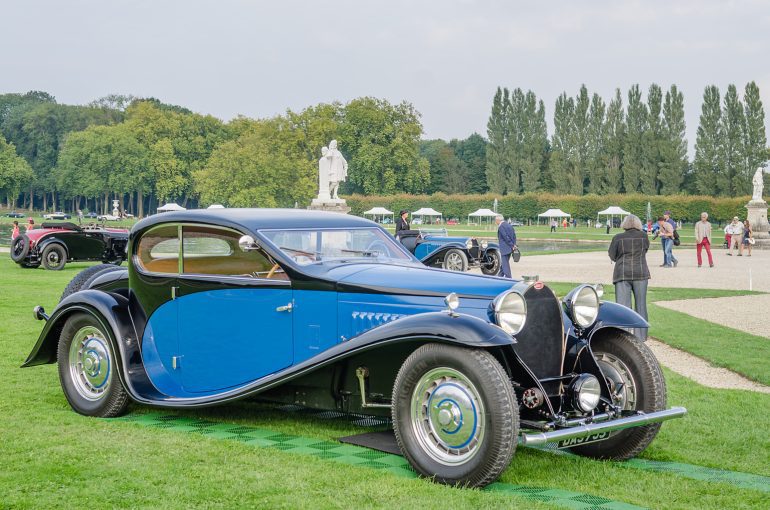
14. Bugatti Type 50
1930-1934 · 5.0-litre supercharged twin-cam straight eight · About 225 hp · About 65
A big, fast touring car with a supercharged 5.0-litre twin-cam straight eight of about 225 hp, built in the early 1930s. It was the first Bugatti road car with twin overhead camshafts. Only about 65 were made. With the steeply raked windscreen of the factory coupé body it is one of the most imposing Bugattis of all.
Verdict The grand tourer with a racing engine.
Did you know: It had Bugatti's twin-cam engine before the Type 51 racing car did.
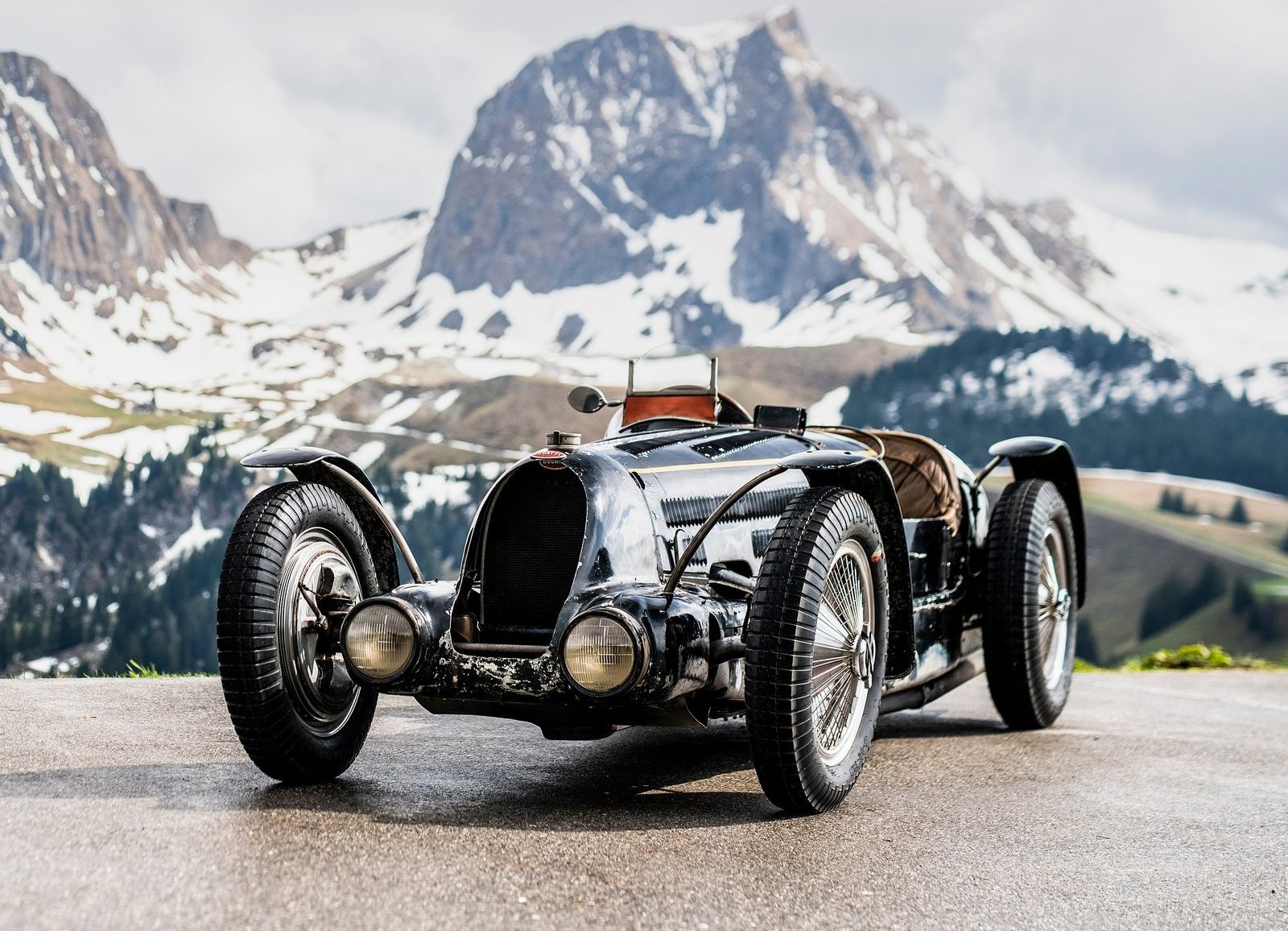
13. Bugatti Type 59
1934-1936 · 3.3-litre straight eight · 250 hp · 8
The last Bugatti Grand Prix car of the 1930s, and to many eyes the best-looking racing car of its era. It had a 3.3-litre straight eight with about 250 hp, and wire wheels of an unusual design in which the radial spokes carry only the cornering loads. Eight were built. René Dreyfus won the 1934 Belgian Grand Prix in one after the German teams withdrew. It could not live with them otherwise. One has won Best of Show at Pebble Beach.
Verdict Outpaced, and beautiful beyond argument.
Did you know: René Dreyfus won the 1934 Belgian Grand Prix in one.
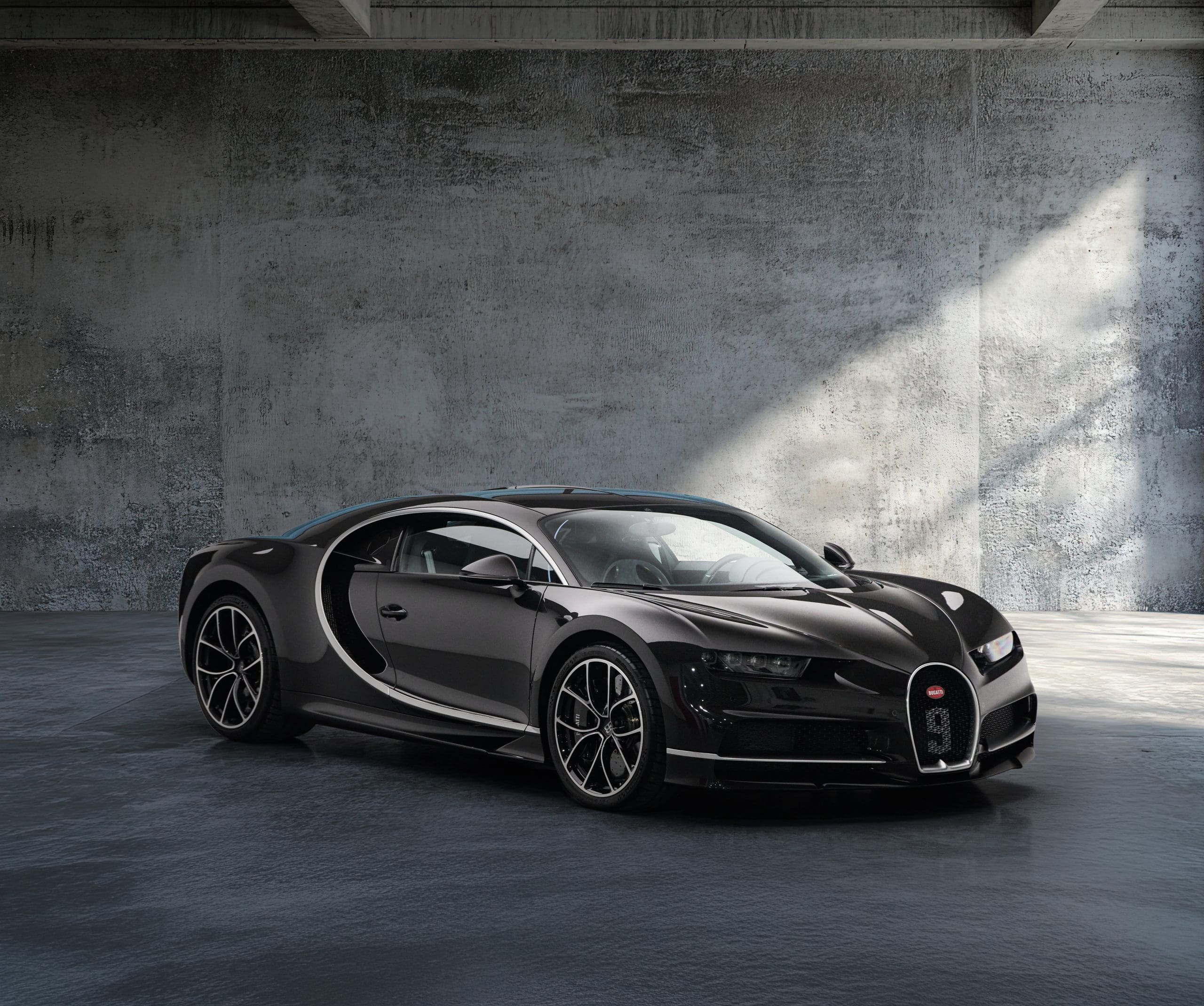
12. Bugatti Chiron
2016-2024 · 8.0-litre quad-turbo W16 · 1,500 PS · 500
The Veyron's successor makes 1,500 PS from the same sixteen-cylinder layout, and Bugatti built 500 between 2016 and 2024. It is quicker, better finished and better to drive than the Veyron in every respect. It ranks below it, and below the EB110, because they broke the ground. As the last and most complete expression of the sixteen-cylinder road car, it will be remembered well.
Verdict The Veyron, perfected.
Did you know: A prototype of the Super Sport 300+ reached 304.773 mph at Ehra-Lessien on 2 August 2019, driven by Andy Wallace.
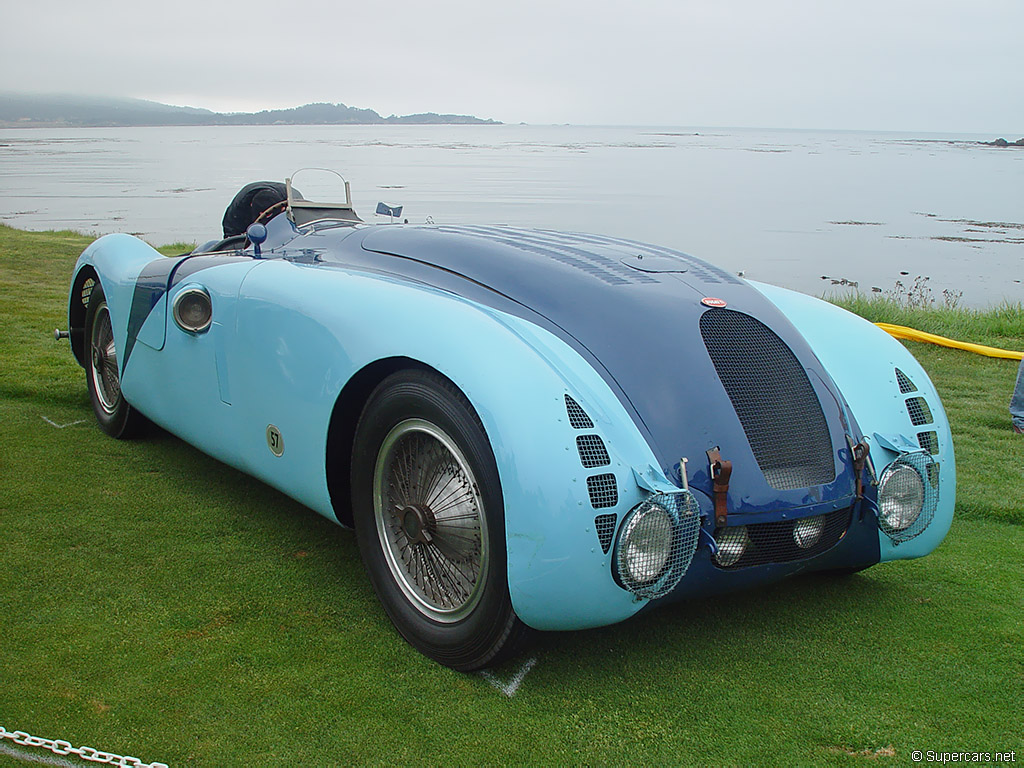
11. Bugatti Type 57G Tank
1936-1937 · 3.3-litre straight eight · 3
Bugatti's Le Mans winner. The Type 57G had an all-enclosing streamlined body that gave it its nickname, and three were built. It won the French Grand Prix, run that year for sports cars, in 1936 and the Le Mans 24 Hours in 1937. A second Tank, based on the supercharged Type 57C, won Le Mans again in 1939. Weeks later Jean Bugatti was killed testing that car on a road near the factory, at the age of 30.
Verdict The Bugatti that won Le Mans.
Did you know: It won the 1936 French Grand Prix and the 1937 Le Mans 24 Hours.
The top 10

- Years
- 1991-1995
- Engine
- 3.5-litre quad-turbo V12, four-wheel drive
- Power
- 560 PS (GT), 612 PS (Super Sport)
- Built
- 139
Road car · Italy
10. Bugatti EB110
Bugatti returned in 1991 under an Italian owner, with a new factory near Modena and a car unveiled on 14 September in front of the Grande Arche de la Défense. The EB110 had a 3.5-litre V12 with four turbochargers and five valves per cylinder, four-wheel drive and a carbon-fibre chassis, and made 560 PS, or 612 as the Super Sport. Only 139 were built before the company went bankrupt in 1995. It is on our list of glorious failures for that reason and on our list of supercars for what it was. The Veyron's formula is all here, a decade early.
Verdict The right car from a company that could not survive.
It was unveiled on 14 September 1991 in front of the Grande Arche de la Défense, outside Paris.
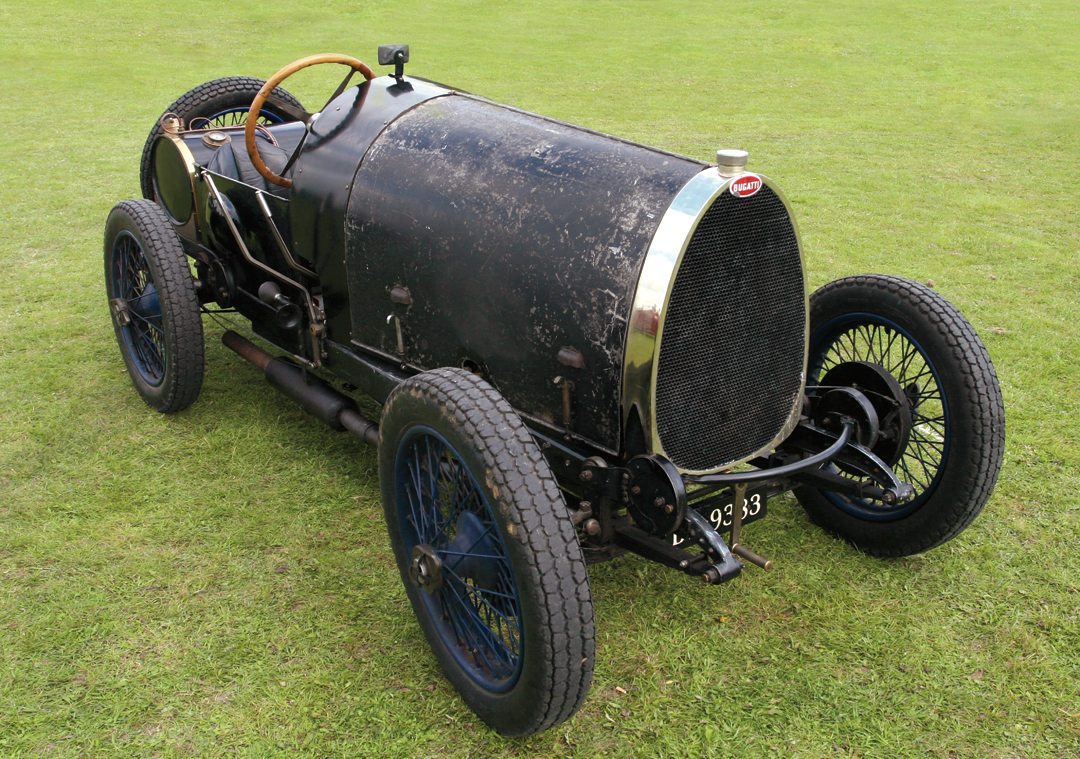
- Years
- 1910-1926
- Engine
- Four-cylinder, about 1.4 litres
- Power
- 30 hp (racing car)
Road car · France
9. Bugatti Type 13 Brescia
The first car sold as a Bugatti, in 1910, was tiny: a four-cylinder of well under 1.5 litres, weighing very little. It finished second in the 1911 French Grand Prix at Le Mans after seven hours of racing against much bigger cars. After the war the multi-valve version took the first four places at Brescia in 1921, and the later cars of the type carried that name. It proved the point Ettore Bugatti spent his life making, that a light car beats a powerful one.
Verdict Small, light and the start of everything.
It is named after the 1921 race at Brescia, where Bugattis took the first four places.
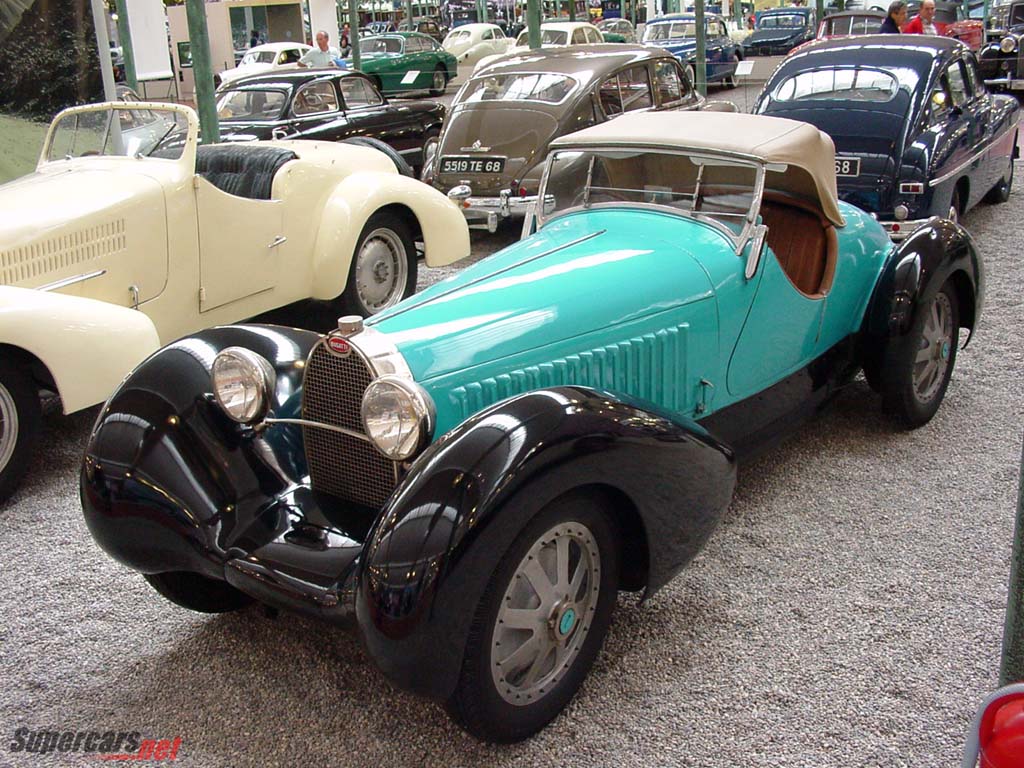
- Years
- 1927-1931
- Engine
- 2.3-litre supercharged straight eight
- Power
- About 120 hp
- Built
- 160
Road car · France
8. Bugatti Type 43 Grand Sport
Bugatti put the supercharged engine of the Type 35B Grand Prix car into a touring chassis and called it the Grand Sport. It made about 120 hp and could approach 112 mph, and when it appeared in 1927 it was called the first production car to do 100. Bugatti built 160. It is the car that established the idea, still Bugatti's idea today, of a road car with the heart of the fastest racing car of its time.
Verdict A Grand Prix engine in a touring car.
It was called the world's first 100 mph production car when new.
- Years
- 1931-1935
- Engine
- 2.3-litre supercharged twin-cam straight eight
- Power
- About 160 hp
- Built
- About 40
Race car · France
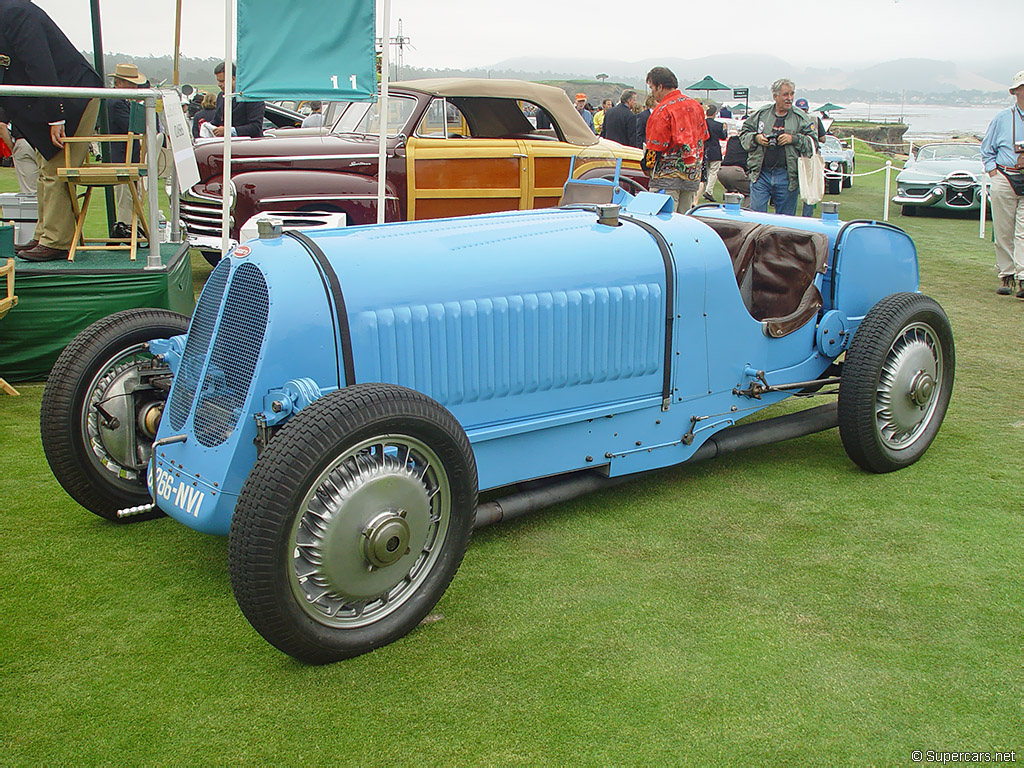
7. Bugatti Type 51
The Type 35's successor looked almost the same and had a new engine. Jean Bugatti had tested two American Miller racing cars and came away convinced by their twin overhead camshafts, and the Type 51 used that layout on the supercharged 2.3-litre straight eight. It gave about 160 hp. Around 40 were built. It won the French Grand Prix in 1931, and in 1933 Achille Varzi beat Tazio Nuvolari at Monaco in one. It was the last Bugatti that could win Grands Prix on merit before the German teams arrived.
Verdict The last Bugatti to win Grands Prix on equal terms.
Its twin-cam engine was inspired by two American Miller racing cars that Jean Bugatti tested.
- Years
- 1932-1935
- Engine
- 2.3-litre supercharged twin-cam straight eight
- Power
- 130 hp
- Built
- 38
Road car · France
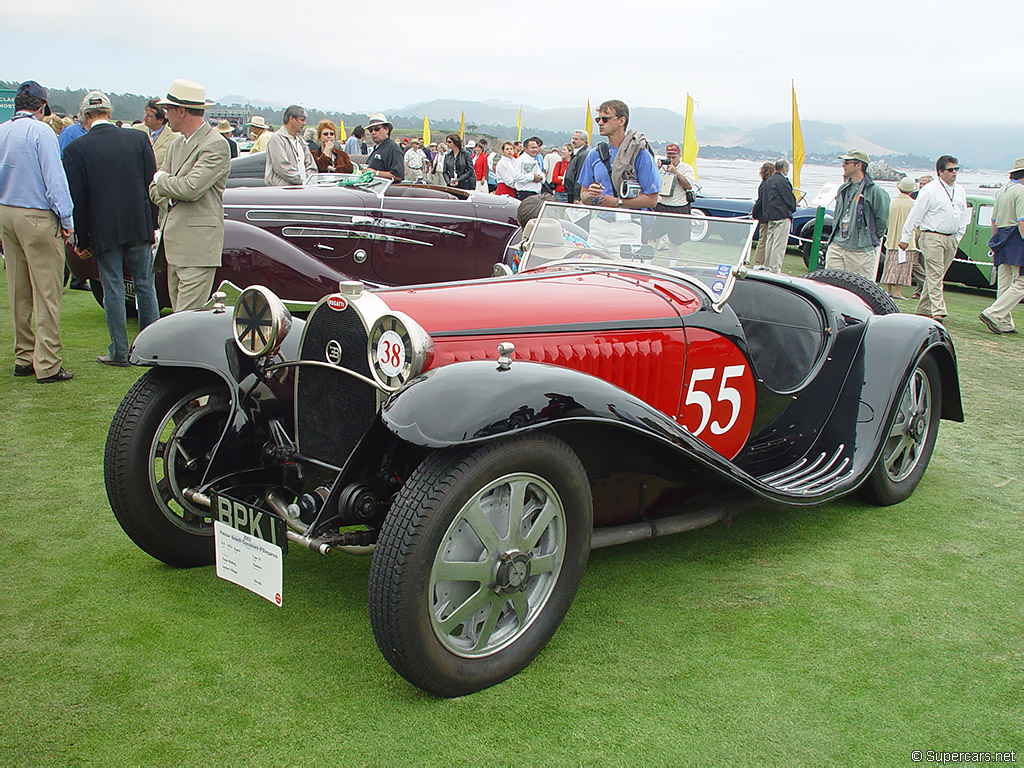
6. Bugatti Type 55
A Grand Prix car for the road. The Type 55 took the supercharged twin-cam engine of the Type 51 racing car, detuned to 130 hp, and put it under a two-seat body. Jean Bugatti designed the roadster that 16 of the 38 cars wore, with cut-away sides and wings that sweep from front to back in one line. It is noisy, hard-riding and thrilling, and to many Bugatti people it is the most desirable of the road cars after the Atlantic. Thirty-eight were built from 1932 to 1935.
Verdict A racing car in evening dress.
Sixteen of the 38 wore the roadster body designed by Jean Bugatti.
- Years
- 1936-1938
- Engine
- 3.3-litre straight eight, supercharged on the SC
- Power
- 170 hp, or about 200 hp supercharged
- Built
- 17 on the 57S chassis
Road car · France
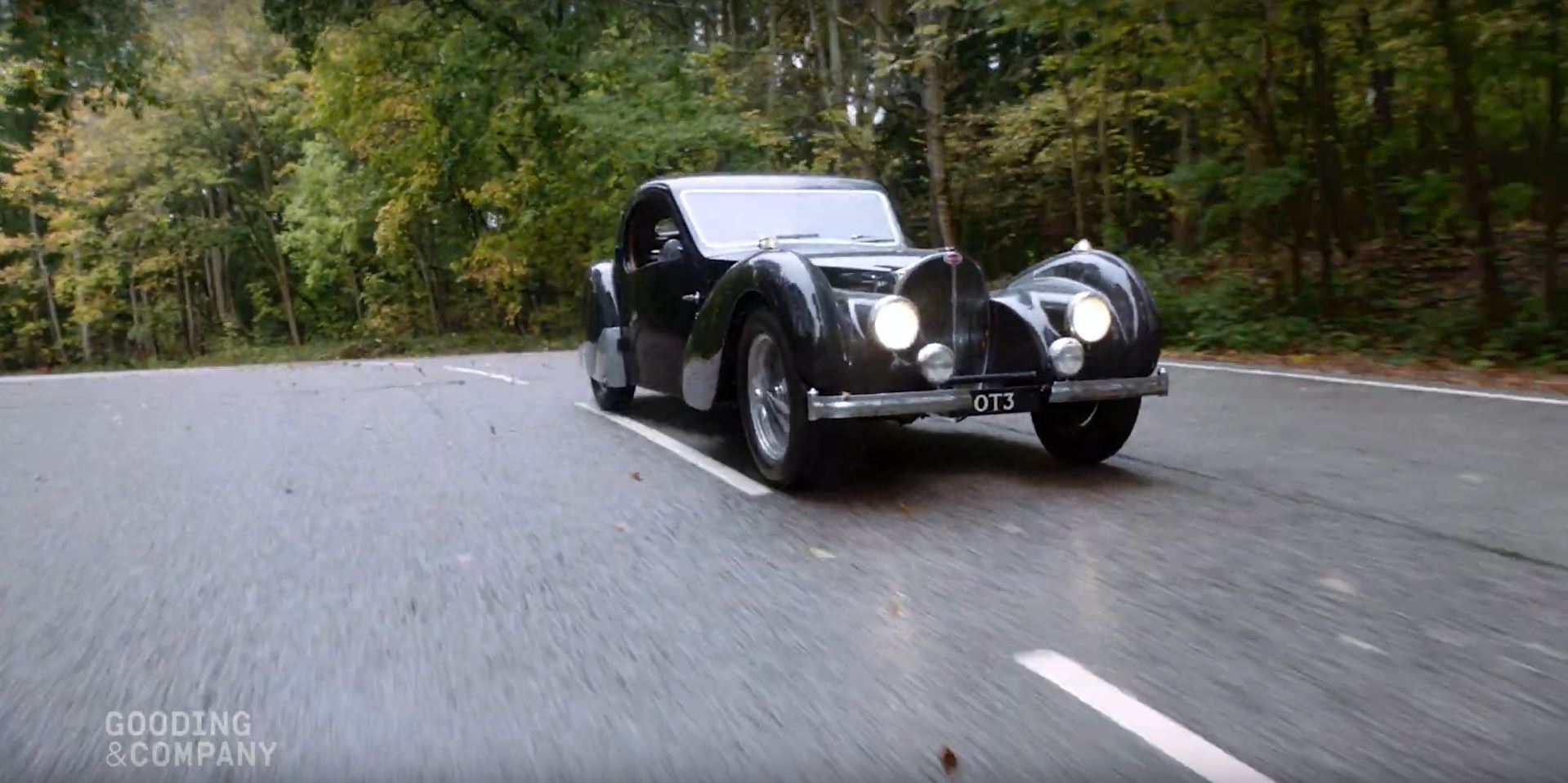
5. Bugatti Type 57SC Atalante
The Type 57S was the sporting version of Bugatti's road car, with a shorter, lowered chassis, and 43 were built. Seventeen of them carried the Atalante body: a two-seat coupé with a one-piece windscreen, a short roof and long, flowing wings, often painted in two colours divided by a sweeping curve. It has most of the Atlantic's drama and none of its strangeness, and many people find it the better-looking car. With the supercharger it made about 200 hp and was among the fastest road cars of the 1930s. One spent decades untouched in an English garage and is on our list of barn finds.
Verdict The Atlantic's more elegant sister.
It has a one-piece windscreen and no dorsal seam, which is how to tell it from the Atlantic.
- Years
- 1927–33
- Engine
- 12.7 straight-eight
- Power
- About 300 hp
- Built
- 6
Road car · France
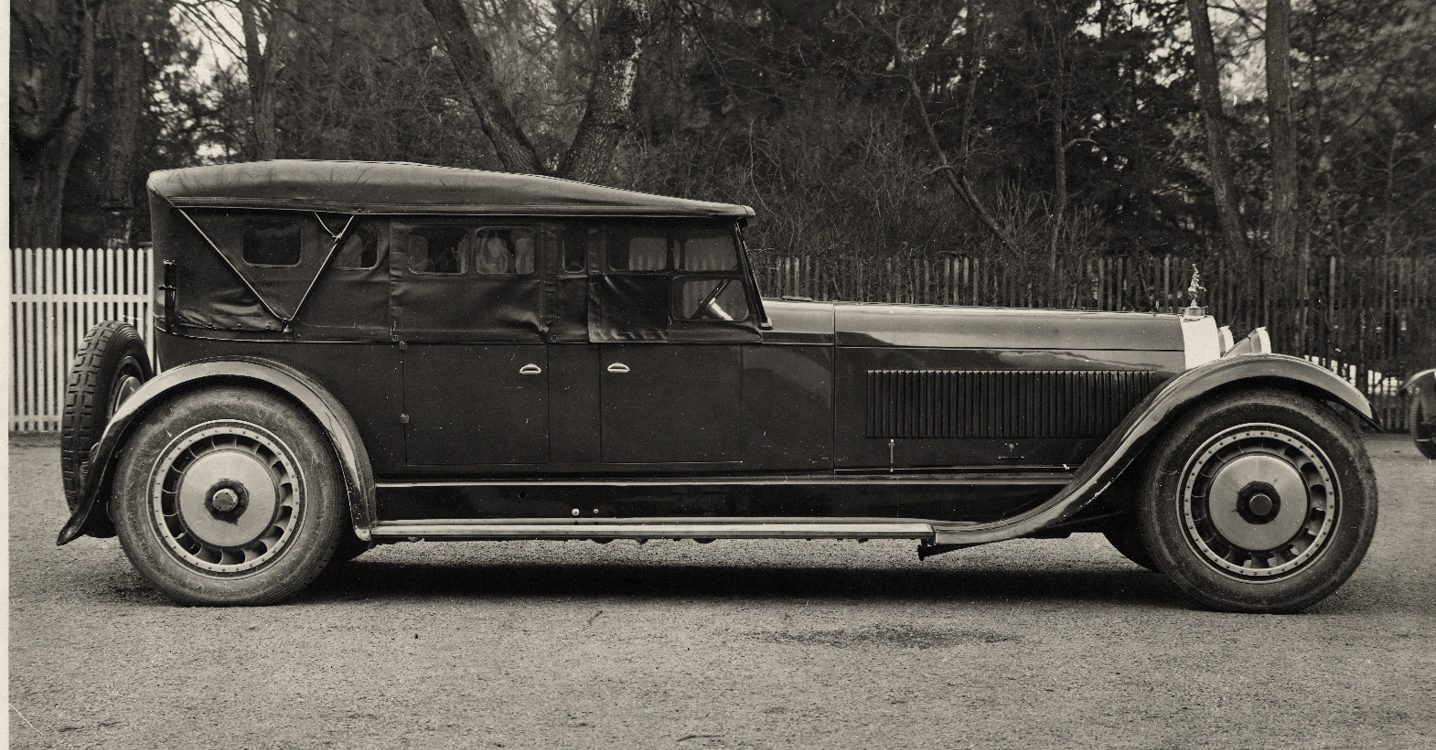
4. Bugatti Type 41 Royale
Ettore Bugatti intended it for kings. The Type 41 has a 12.7-litre straight-eight engine, a wheelbase of more than four metres and a radiator cap in the form of a rearing elephant, after a sculpture by his brother Rembrandt. He planned 25. He built six between 1927 and 1933 and sold three, because the Depression arrived first and no king ever bought one. The leftover engines were used in railcars, which did rather well. Every Royale survives, each with a different body, and they are among the grandest cars ever made. It is on our list of glorious failures as well as this one. As a business it was a disaster. As a statement of what Bugatti thought a car could be, nothing has matched it.
Verdict Built for kings, bought by none, and magnificent.
It was meant for kings, and no king bought one.
- Years
- 2005-2015
- Engine
- 8.0-litre W16, four turbochargers
- Power
- 1,001 PS
- Built
- 450
Road car · France
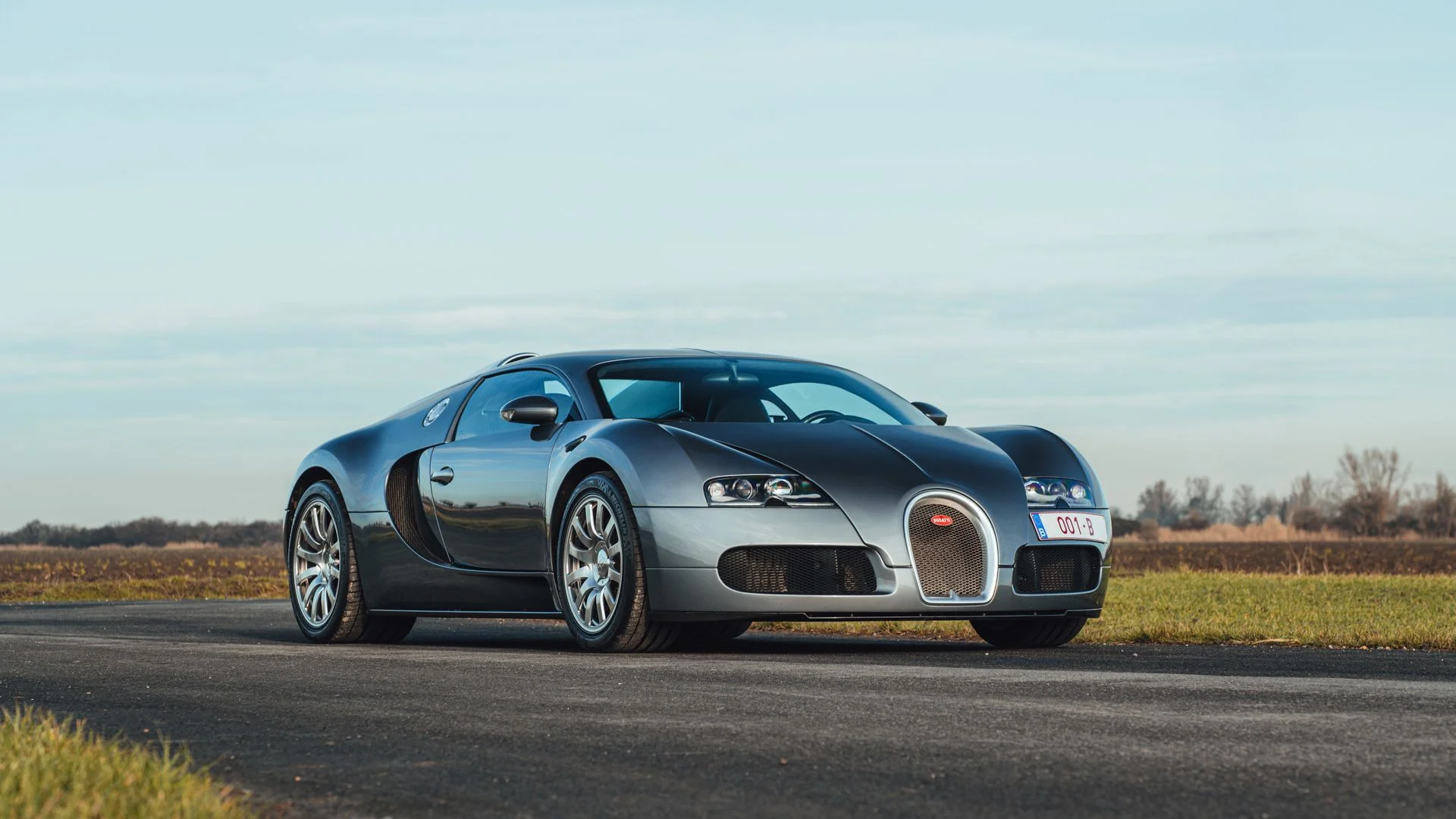
3. Bugatti Veyron
When Volkswagen bought the Bugatti name, the target was set from the top: 1,001 PS, more than 400 km/h, and manners fit for the opera. It took years longer than planned. The car that went on sale in 2005 had an 8.0-litre engine with sixteen cylinders and four turbochargers, four-wheel drive, a dual-clutch gearbox and ten radiators, and on 19 April 2005 it was timed at about 253 mph at Ehra-Lessien. Bugatti built 450 over ten years. It was heavy, and it did not involve its driver in the way a McLaren F1 does. But as a piece of engineering it stood alone, and it did for the revived Bugatti what the Type 35 did for the original. It is ninth on our list of supercars and the highest-placed hypercar there.
Verdict The car that brought Bugatti back, at 253 mph.
It averaged 408.47 km/h in 2005.
- Years
- 1936–38
- Engine
- 3.3 supercharged straight-eight
- Power
- About 200 hp
- Built
- 4
Road car · France
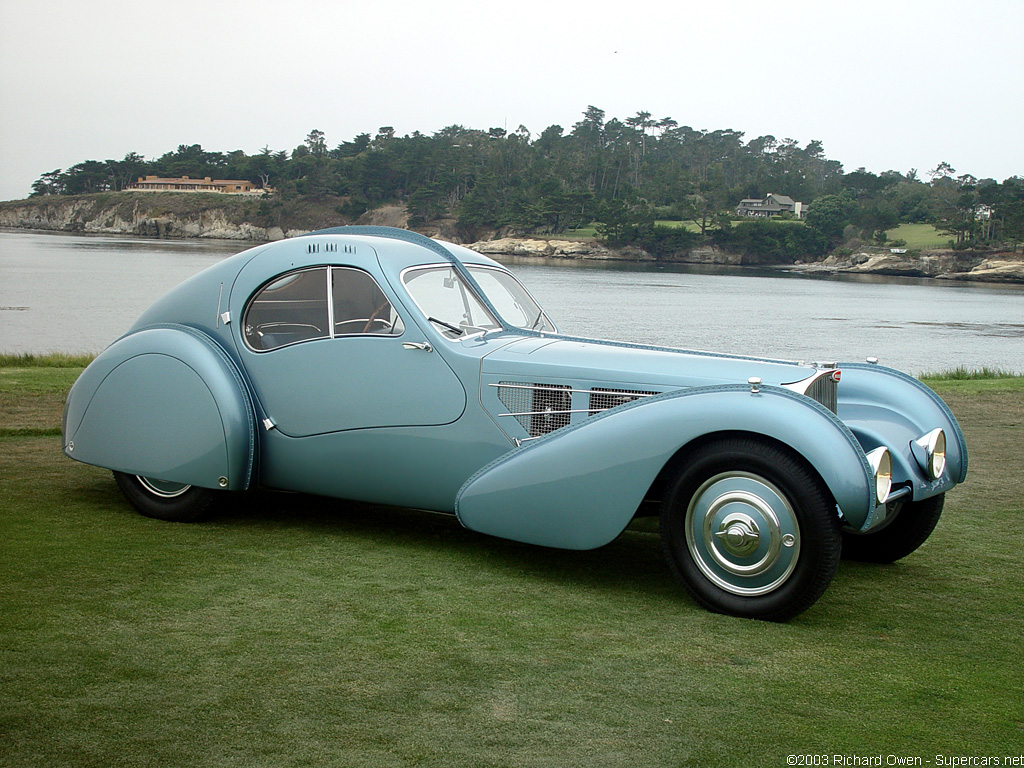
2. Bugatti Type 57SC Atlantic
Jean Bugatti designed it, four were made, and three survive. The Atlantic is the short, low Type 57S chassis with a coupé body unlike anything else: a roof that curves down to a pointed tail, teardrop wings, and a riveted seam running down the spine of the car and along each wing. The seam came from a prototype built in a magnesium alloy that could not be welded. The production cars were aluminium and kept it because it looked right. Each of the four went to a different owner and has its own history, and the one that does not survive is among the most sought-after missing cars in the world. It is fourth on our list of the most beautiful cars, two different examples have won Best of Show at Pebble Beach, and it is the most valuable Bugatti there is.
Verdict The most beautiful Bugatti, and one of them is missing.
One of the four, Jean Bugatti's own car, disappeared in 1940 and has never been found.
The best of the 30 · Race car · France
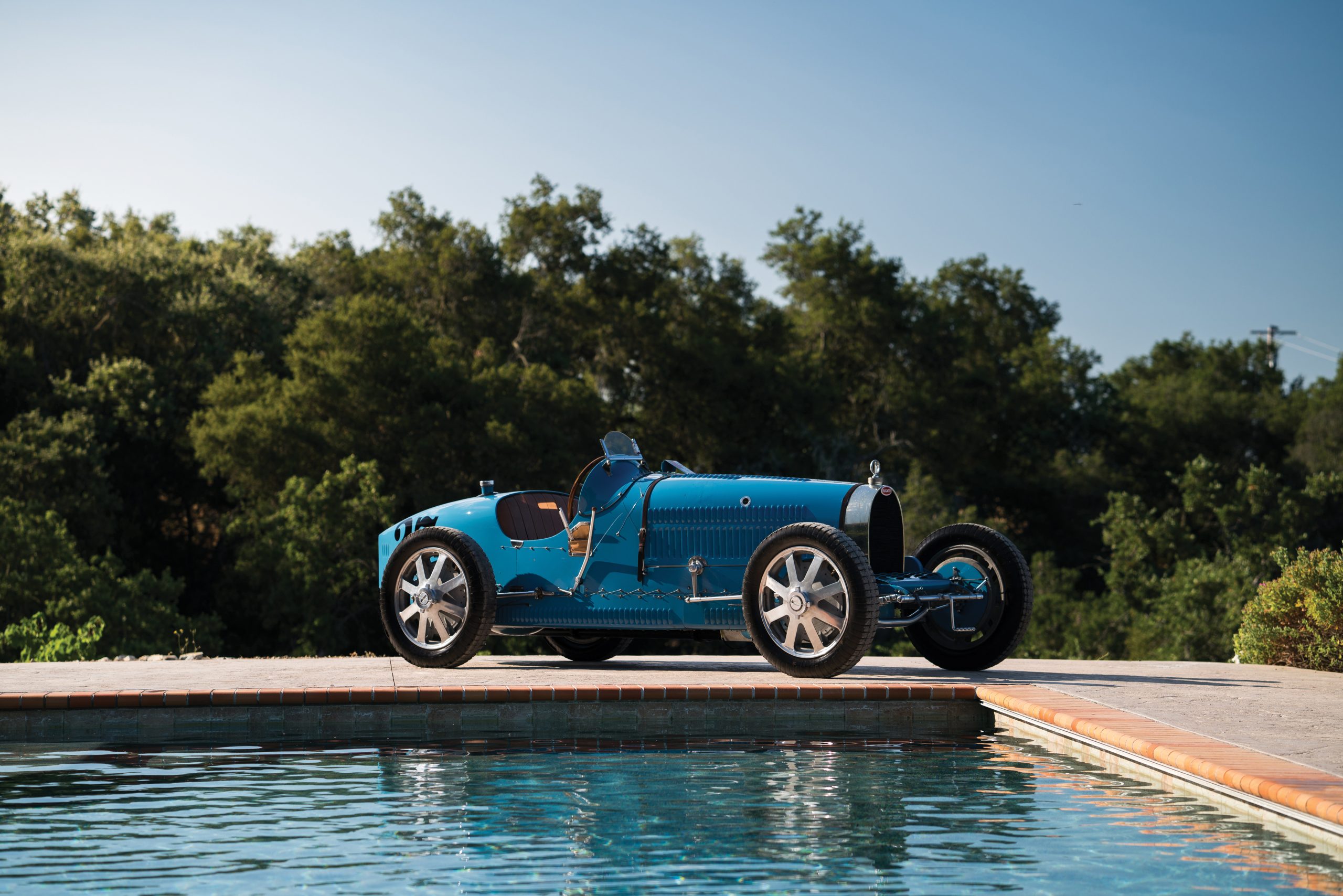
1. Bugatti Type 35
- Years
- 1924–31
- Engine
- 2.0 straight-eight, 2.3 supercharged in the 35B
- Power
- About 90 to 140 hp
- Built
- ~ 340
No racing car has won more. Between its first appearance at the 1924 French Grand Prix at Lyon and the early 1930s, the Type 35 and its derivatives won well over a thousand races, including the Targa Florio five years running from 1925 to 1929. It did not win at Lyon, where its tyres let it down, but the car itself was a revelation. Ettore Bugatti had made a Grand Prix car that was also an object: a slim, tapering body, a horseshoe radiator, a hollow front axle, and cast aluminium wheels, the first of their kind. The straight-eight engine, two litres at first and later supercharged to 2.3, was finished like jewellery. And, unusually for a racing car, anyone with the money could buy one, drive it to a race and win. Wealthy amateurs did exactly that all over Europe, which is where the huge tally of wins comes from. It is first on our list of pre-war cars. Everything the name Bugatti means, the mixture of speed, engineering and beauty, was established by this car.
Verdict The car that made Bugatti, and the most successful racing car of its age.
Its aluminium wheels were cast in one piece with the brake drums, so changing a wheel changed the brakes as well.
What we left off, and why
Lower than you might expect
Chiron, at 12. A better car than the Veyron in every way, and the second to do what the Veyron did first.
Chiron Super Sport 300+, at 20. The first Bugatti past 300 mph. On this list a number is not enough.
Tourbillon, at 24. Too new to judge. We expect it to rise.
Higher than you might expect
Type 43, at 8. Little known outside Bugatti circles, and the origin of the fast road Bugatti.
Type 13 Brescia, at 9. Small and old, and the car that started the company.
EB110, at 10. Above the Chiron, for the reasons in the introduction.
Type 52 Baby, on the list at all. A children's car, built by the factory in the hundreds, and too charming to leave out.
Not on the list
La Voiture Noire of 2019, the Chiron Pur Sport and Sport, the Mistral and the other modern special editions. We kept the Chiron's relations to three.
Type 57S with other bodies, and the Aérolithe prototype. The Type 57 already has four places.
Type 40, Type 49, Type 38 and Type 23. Good touring cars that lost their places to the ones above.
Type 251. The 1956 Grand Prix car failed, and it ended the original company's racing.
EB112 and EB118. Show cars that were never sold.
Tell us what we got wrongQuestions about this list
What is the best Bugatti ever made?
The Type 35. It first raced in 1924, won more than a thousand races and five Targa Florios in a row, and set the pattern of speed, engineering and beauty that the name still stands for.
What is the most valuable Bugatti?
The Type 57SC Atlantic. Only four were made and three survive, and it is among the most valuable cars in the world. It is second on this list and fourth on our list of the most beautiful cars.
What is the fastest Bugatti?
By top speed, the Chiron Super Sport 300+: a prototype reached 304.773 mph in 2019. The Veyron Super Sport averaged 267.856 mph over two runs in 2010, and the original Veyron was timed at about 253 mph in 2005.
How many Bugatti Royales were made?
Six, between 1927 and 1933. Ettore Bugatti planned 25 and sold three. All six survive.
Why are racing cars on this list when your other marque lists are road cars only?
Because Bugatti's name was made in racing, and its road cars and racing cars shared engines, chassis and customers. A list that left out the Type 35 or the Le Mans-winning Type 57G would not be a list of the best Bugattis.
How we ranked them
We judged each car on what it achieved, how it looks, how it was engineered and what it did for the Bugatti name. Top speed counted as one achievement among others.
What was eligible
Every Bugatti, road and racing, from all three periods of the company. Show cars that were never sold are left out. The track-only Bolide is included, as a car customers could buy.
Where our lists overlap
The Type 35, the Atlantic and the Royale are on our list of pre-war cars in the same order. The Veyron, EB110 and Chiron are on our supercar list in the same order. The Atlantic is on our list of the most beautiful cars, and the Royale and EB110 are on our list of glorious failures.