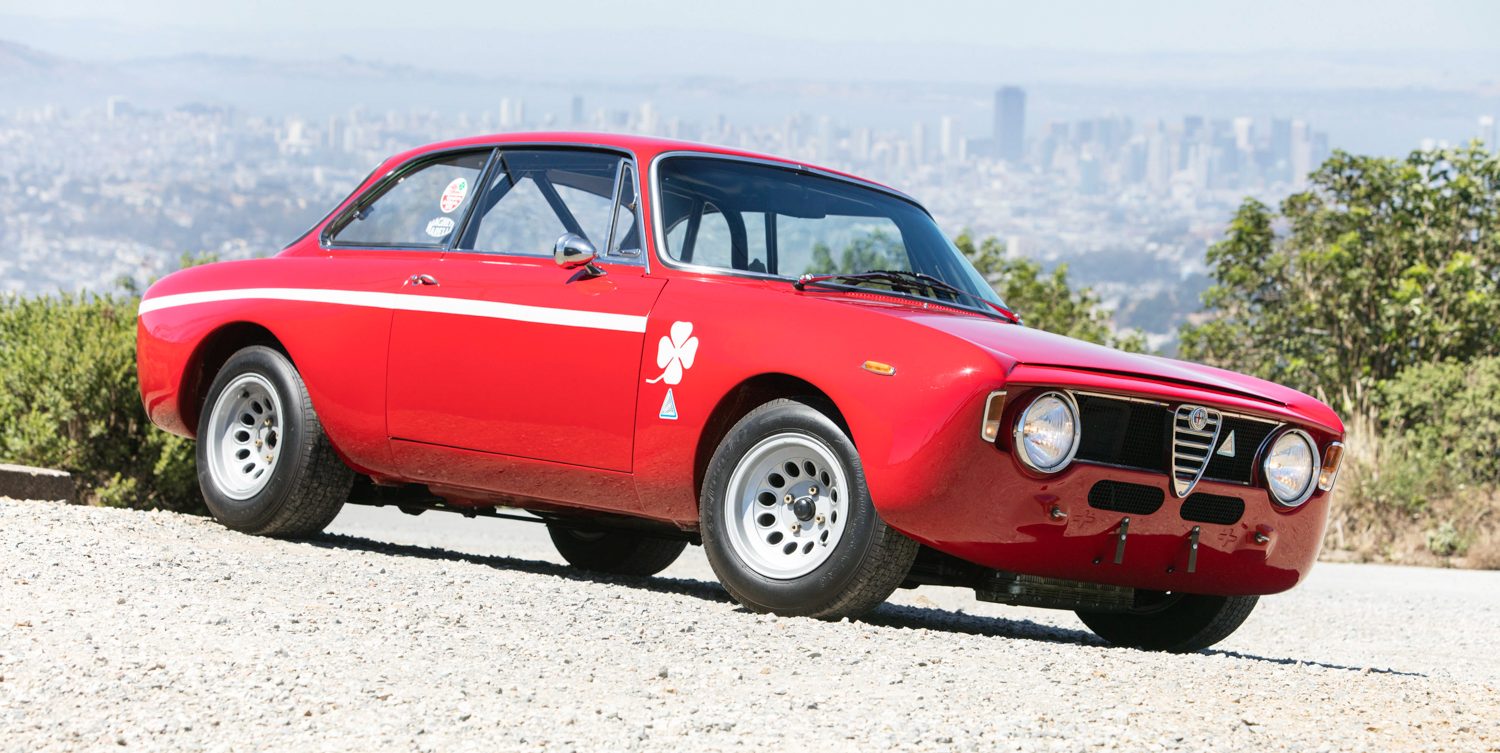

For such a clean and beautiful design, the 1963-1977 Alfa Romeo GT is confusingly burdened with many different names. Officially, the Alfa Romeo 105/115 series coupe, they are often referred to as Giulia Sprint GT, GT Veloce, GTV, GT Junior, GTV 2000 and sometimes generically as GTs. I’ve generally referred to the entire category as GTVs but resolute Alfisti will advise there are many variants then get about the eager business of schooling you on the subtleties of each particular type and the merits of each one. Such is the case for the rabid population of enthusiasts, yours truly included, who continually sing the praises of these historically important and unquestionably beautiful Italian sport coupes. They are among the most exciting, drivable, and enjoyable cars of the 1960s and early ’70s.
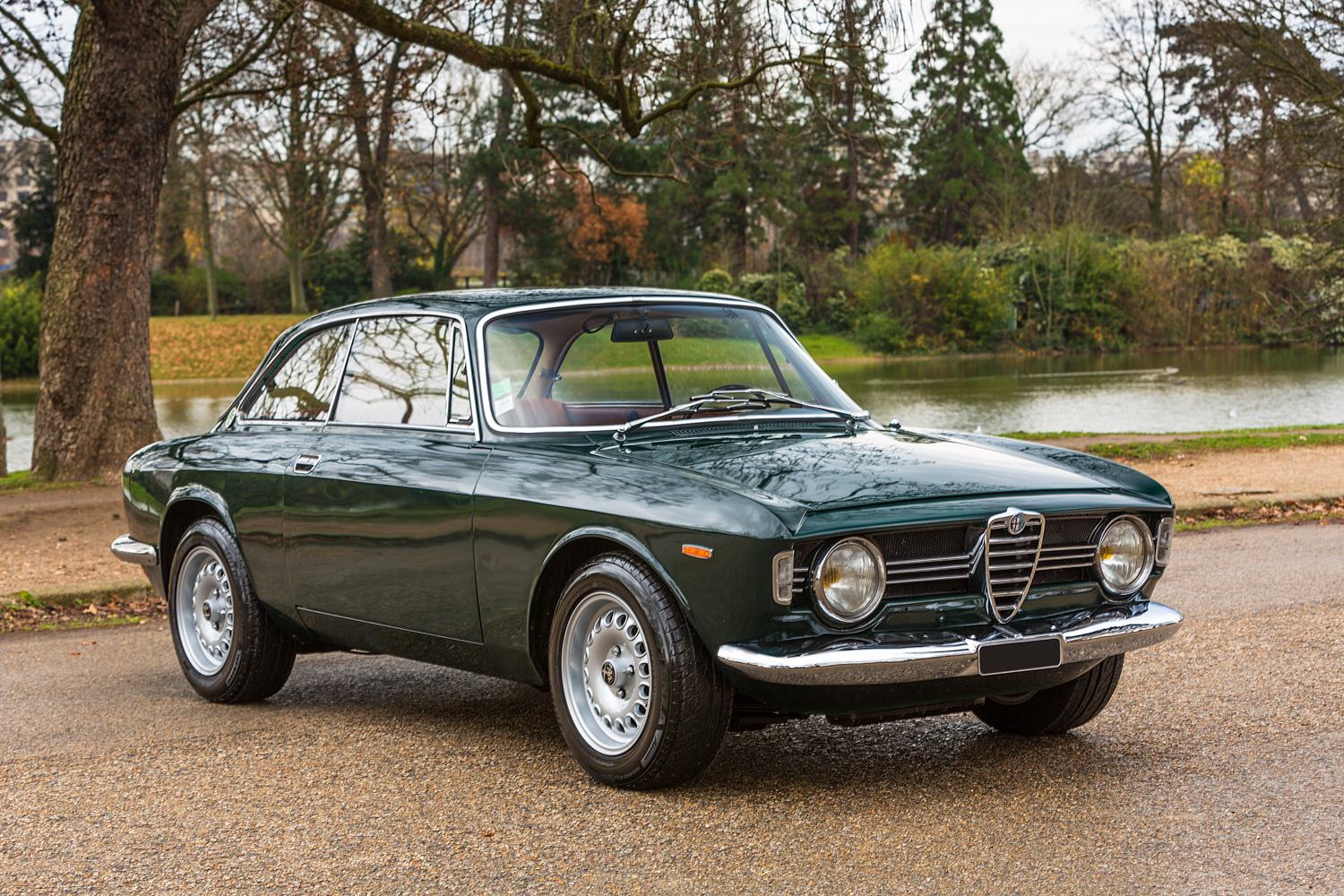
With its stunning Bertone-designed body, tidy greenhouse, and low but roomy profile, the 105 series Alfa Romeo coupe successfully competed against rivals for 14 years before finally conceding to an all-new design. The charming yet hunkered down stance, front-engine/rear drive coupe offered seating for four adults and spirited performance in a package that was entirely modern and precise; the perfect blend of mid-century purity with just the right amount of delicate trim to convey the Alfa Romeo brand. Although the design shared many mechanical components with the former Giulietta, the new unibody or monocoque platform was both innovative and lightweight offering great performance through the live rear axle, disc brakes at all corners, dual overhead cam engine, and 5-speed gearbox. But even without these heralded mechanical features, the most striking aspect of the new Alfa was the remarkable exterior design.
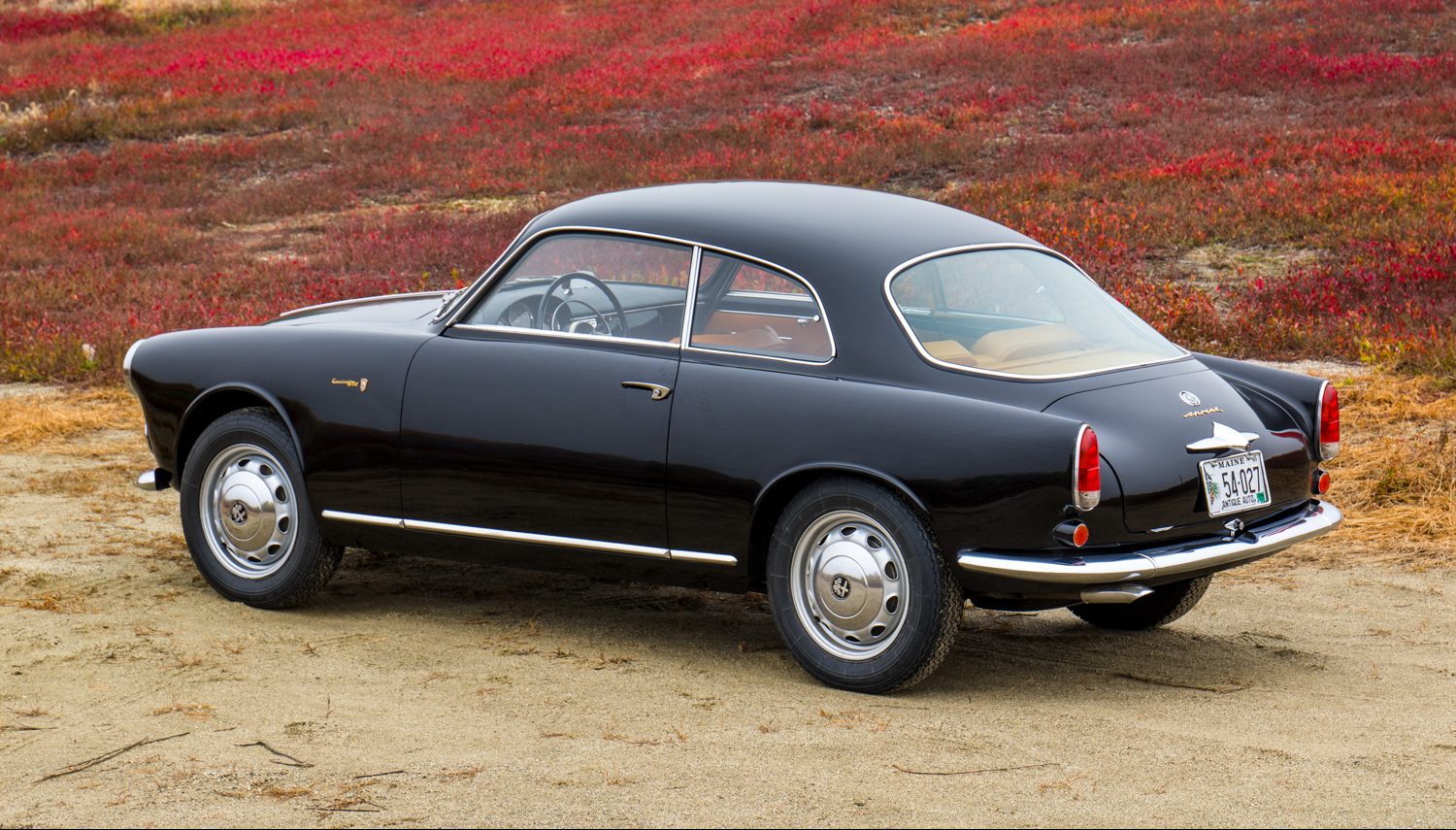
The earlier Alfa Romeo design was very much a refinement of the 1950s aesthetic. Having arrived in 1954, the Bertone designed Giulietta Sprint was a tidy little car featuring an upright Alfa grille, flanking grill vents, and typically protruding headlights finishing off the tall, rounded front fenders. Considering the period, this earlier design was quite well-balanced and highly regarded for its grace and proportions, but by the early 1960s it had become dated. In 1963, Alfa Romeo engaged Bertone again to design the successor. This time, as fate would have it, the project would be managed by a largely unknown 25-year-old design prodigy, none other than Giorgetto Giugiaro. Having already penned two previous Alfa production cars in 1960 and 1962, the young Giugiaro introduced a new level of innovation, compactness, and energy to the platform.
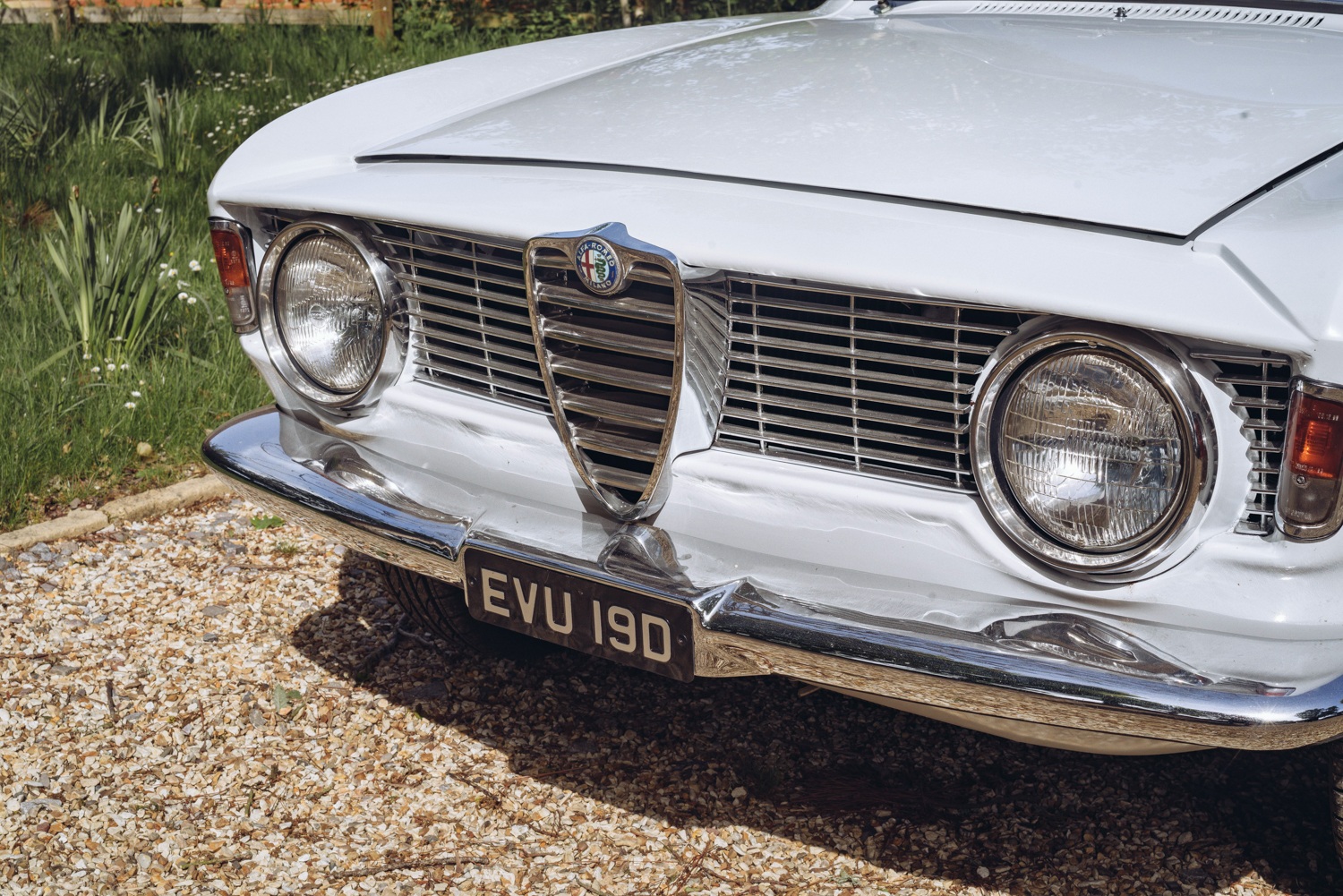
Among the many desirable and novel features contained in the new design, the leading edge of the GT hood received a slight “step” down where the forward edge of the front fenders met the hood line. Although this feature, known as the “step nose”, was removed from the standard offering in 1967, the original design accomplished two important things. The stepdown section at the leading edge of the hood helped to eliminate some of the problems associated with the fitting of a “floating” hood. The other feature was that it drew the eyes linearly across the front of the car, giving it a wider appearance, an important feature given the next radical design change.
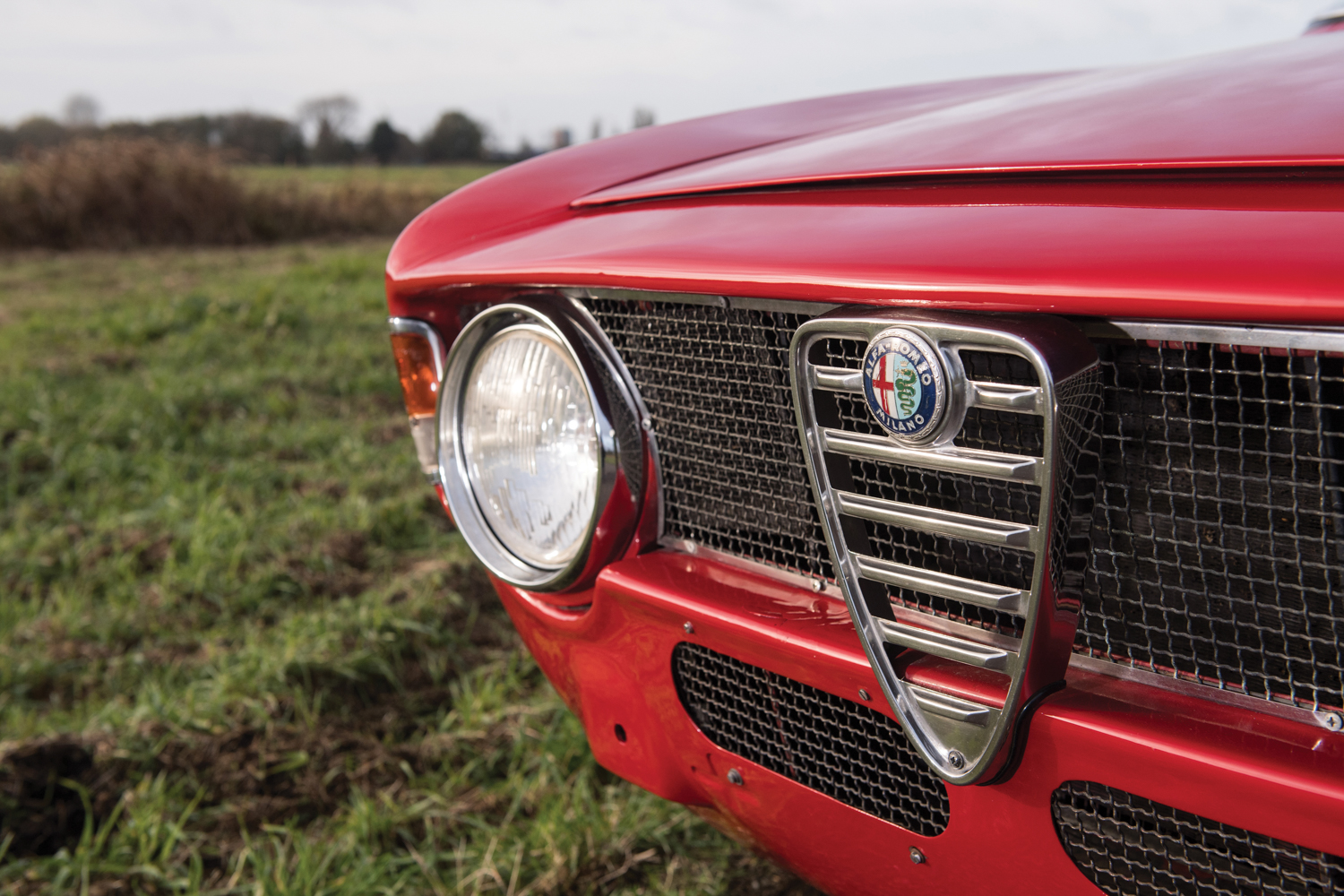
At the front of the car, Giugiaro tucked the headlights into the fascia, giving the car a lower profile but also creating a cleaner look to the overall design. Giugiaro recognized the importance of brand identity, so he even included the upright Alfa grille, but cleverly recessed the grille in a way that still made the form of the overall car the dominant feature, without having to contend with the somewhat jarring elongated triangular design of the traditional grille. How Giugiaro fit such a tall shape of completely different thematic geometry into such a compact form is yet another brilliant example of why he was voted “Car Designer of the Century.”
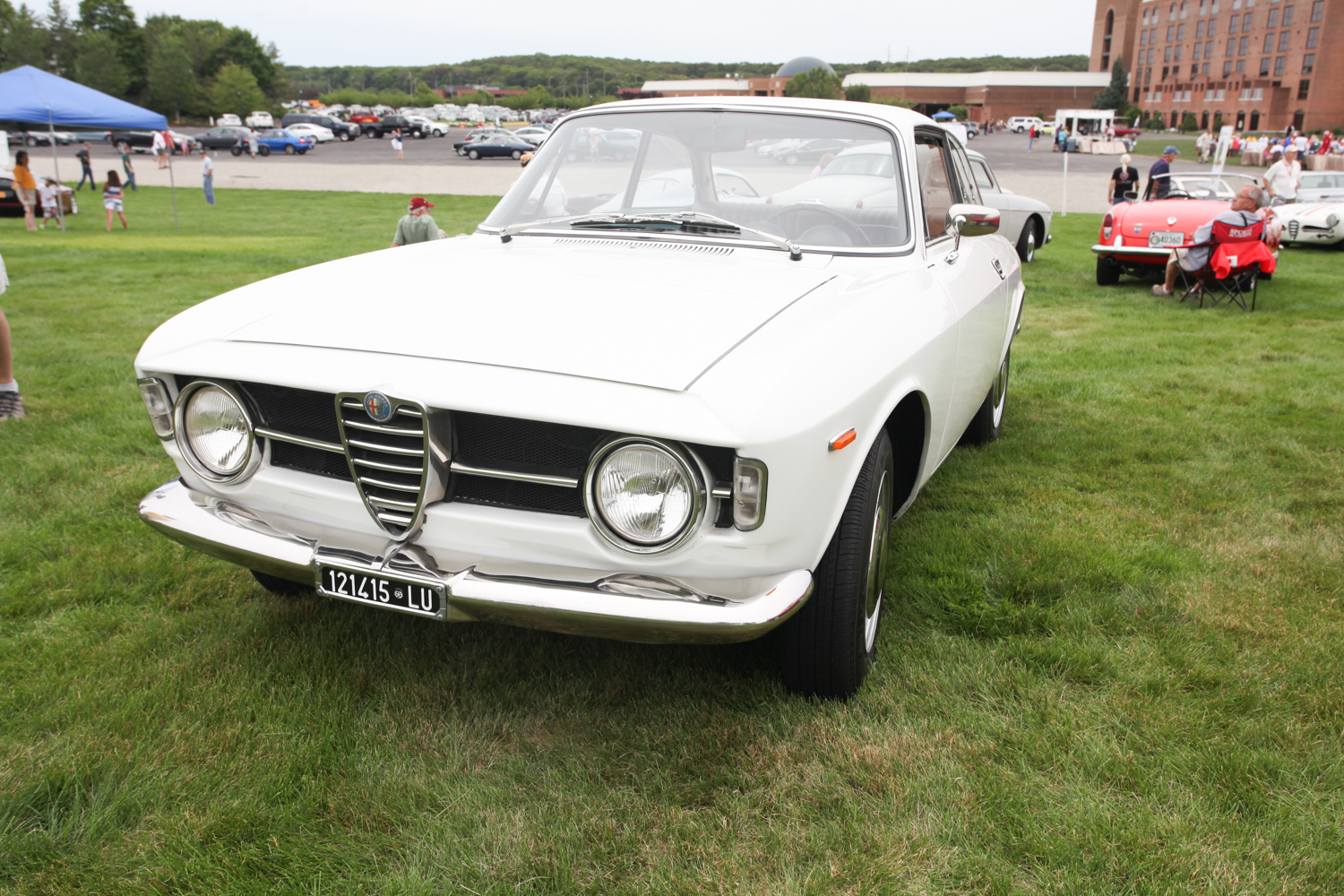
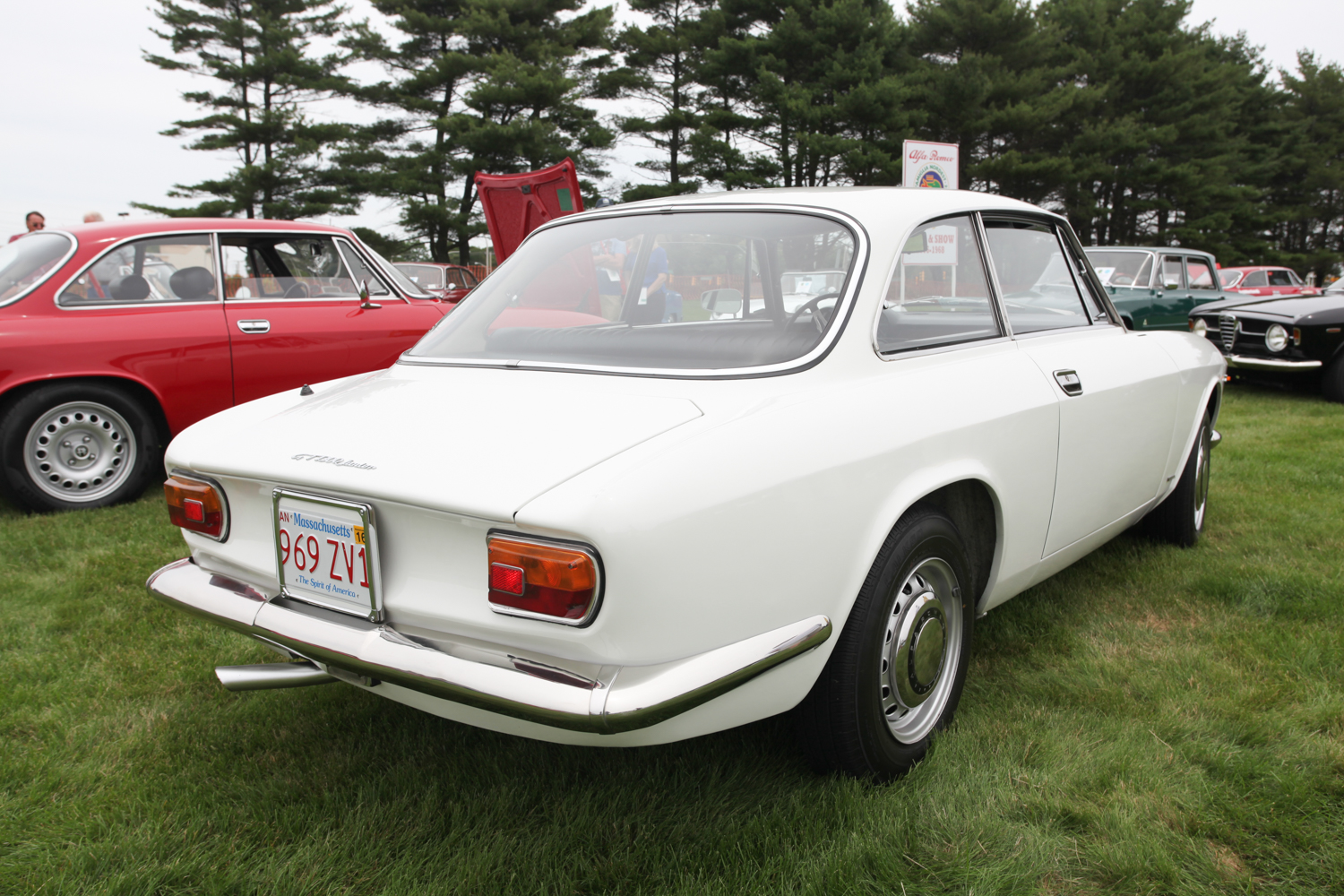
Having been both a product and automobile designer, Giugiaro delighted in the magic of folding paper as a tool for quick visualizations for product design concepts. Using creases and folds as part of his visual thinking, Giugiaro combined crisp lines and tight features to the perimeter of his car designs, ushering in the first examples of the “folded paper” design movement that would lead to decades of vector and wedge designs not only in vehicles but in products as well. The GTV also featured thin A and B-posts, a wrap-around windscreen, large side glass area, and a dramatically sloped rear glass. The effect of this vast upper glass area was visually stunning both for occupants and for those viewing the car when standing beside it. Clean and simple bumper trim, virtually no side trim or bright work, a delicately bobbed tail, and tidy interior made for a truly fine and simple car. One that was not robbed of beauty or refinement by lack or ornamentation, rather it was pure and elegant by virtue of its simplicity.
If Alfa Romeo had produced nothing but road cars, the GTV would certainly remain an important and beautiful car. But in 1965, Alfa Romeo launched the competition and Stradale (street) GTA. Although visually similar to the standard Giulia GT, the GTA was significantly re-engineered, transforming the beautiful and affordable GT into a spectacular giant-beating racecar. The GTA (Gran Tourismo Alleggerita or “lightened”) was built by Autodelta, a specialized race preparation house founded by two former Ferrari employees, and, by 1964, under the ownership of Alfa Romeo. The Alfa Milan facility would build all GTA series cars, the first of their kind in volume production, in order to meet homologation requirements.
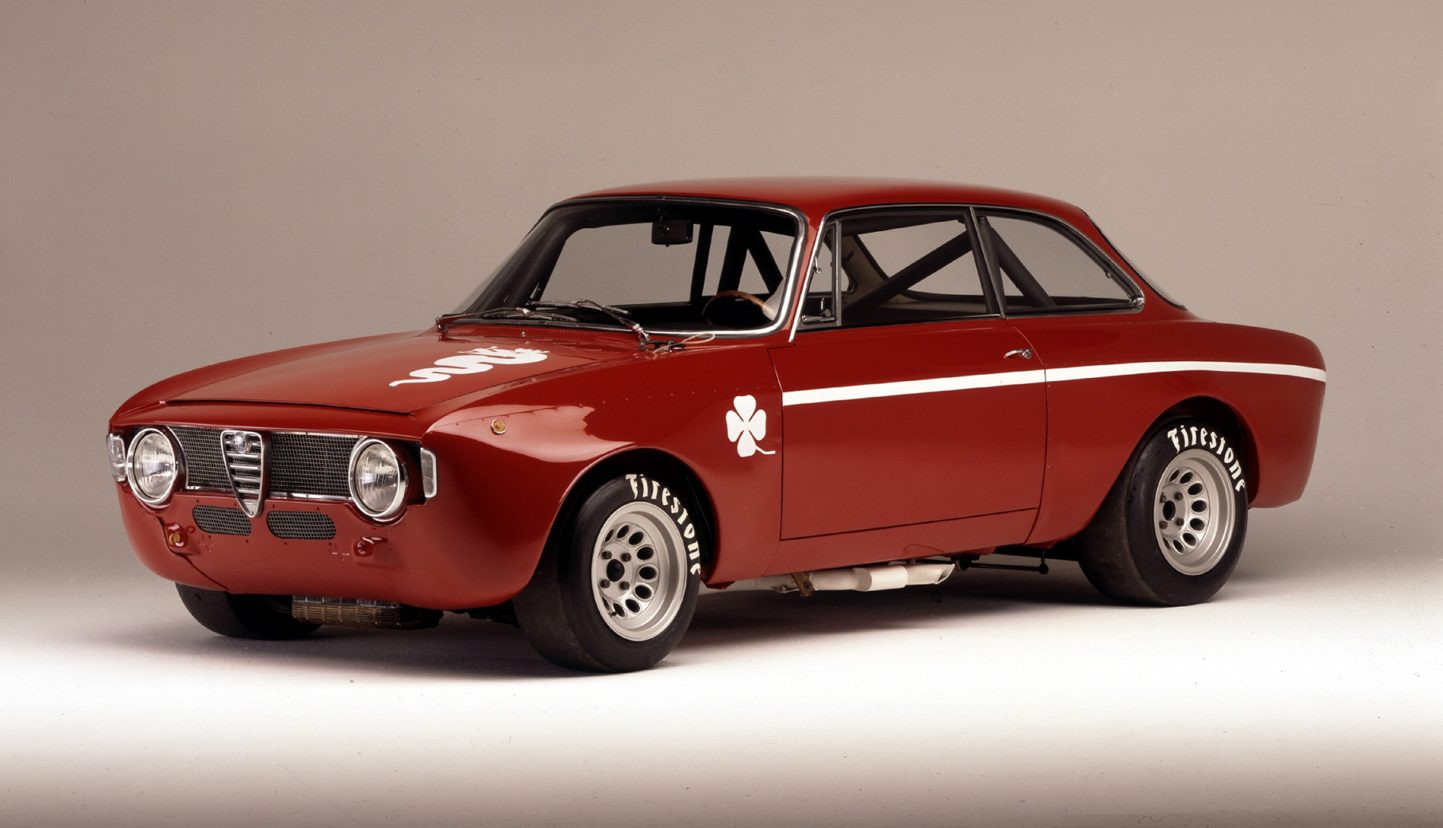
To make the car competitive, the GTA was conceived with an unyielding focus on weight reduction, resulting in a featherweight of 1,640 pounds. Engineering modifications included changing the unibody stampings to thinner gauge steel, while the inner and outer body panels were bonded, and pop riveted together in final assembly. Heavy production steel hood, doors, and trunk lid were replaced with hand-formed aluminum panels, though altering none of the Giugiaro contours. For added structural integrity, the roof section was formed using Peraluman 25, a relatively new, mid-range corrosion resistant alloy. Aluminum was used extensively in the inner structure as well, including the inner rear support, parcel shelf support, dashboard and rear seat support. In addition to the weight savings found in the body, lightweight magnesium wheels were installed on all GTAs. Further weight savings included eliminating all sound deadening material, while the heavy side glass was removed and fitted with Perspex (a specialized clear plastic). Even the window winders and lightened exterior door handles were redesigned and specially constructed for the sole purpose of saving weight. Bucket seats were also fitted and sparsely trimmed rear seats installed in the Stradale or street version. Only 501 GTA models were built from 1965-1969, all of which were constructed at Autodelta specifically to meet homologation requirements.
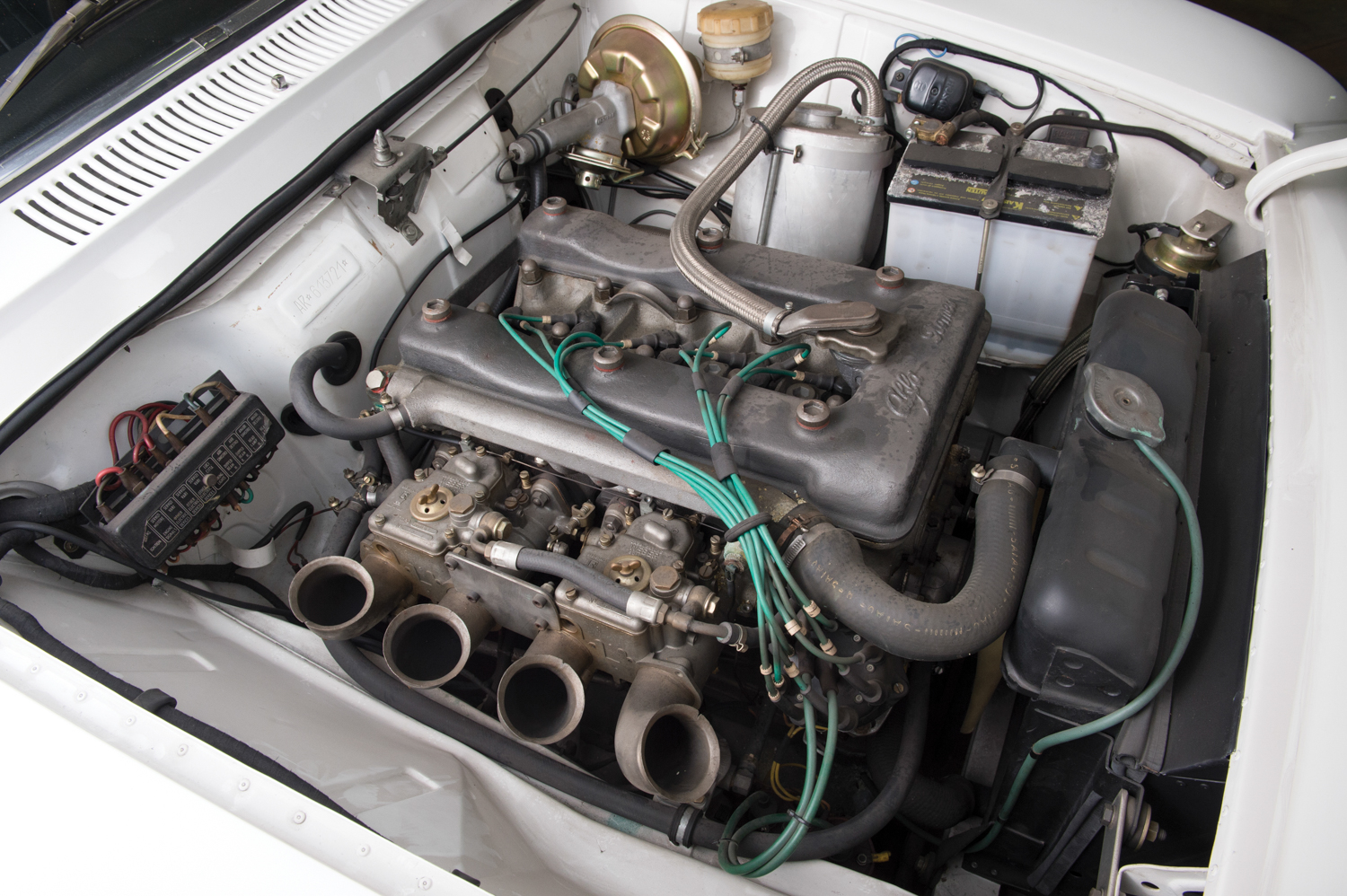
The GTA was mechanically upgraded as well, with specifications varying from car to car depending on the intended competition use. Most GTAs were fitted with a specially developed twin-plug cylinder head. The driveline was also upgraded with close ratio gearboxes, sliding block suspension, lightweight flywheel, a magnesium bell housing, limited slip differential, hollow shafts inside the gearbox, external hollowed drive shafts, and drilled gears. Deceptively similar in looks to a standard GT, the GTA was a powerful package cleverly refined within a beautifully compact Giugiaro design.
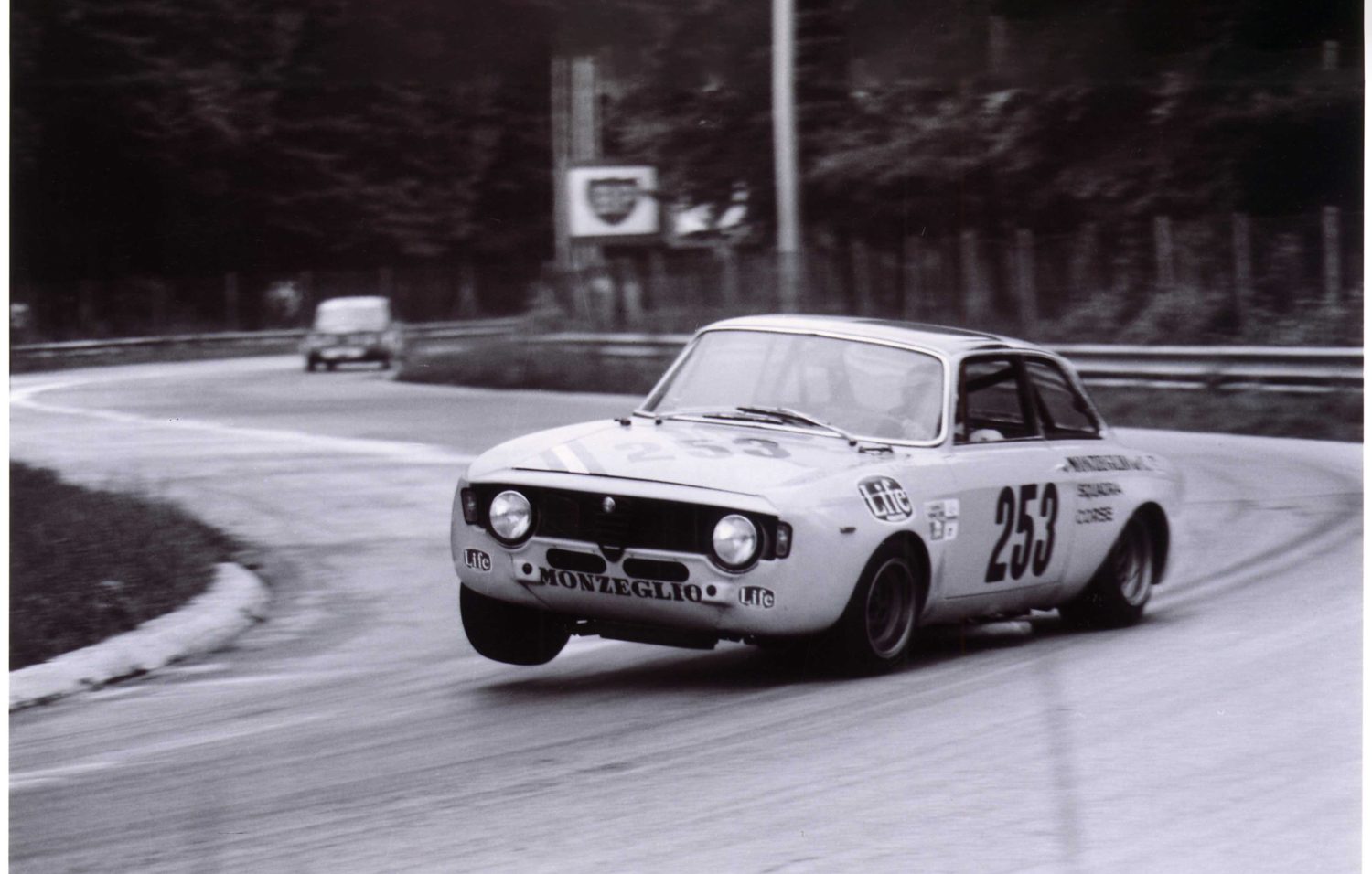
At the start of first race at Monza, GTAs took the first seven places, won in the 6 Hours of Nürburgring, and eventually went on to win the driver and manufacturer championship, SCCA Trans Am championship, and the European Championship an unbelievable seven years in a row. Rarely has a single car achieved such design perfection and motorsports excellence, a feature which continues to be the case for vintage racecar enthusiasts who today campaign some of the finest GTVs in a wide range of historic venues.
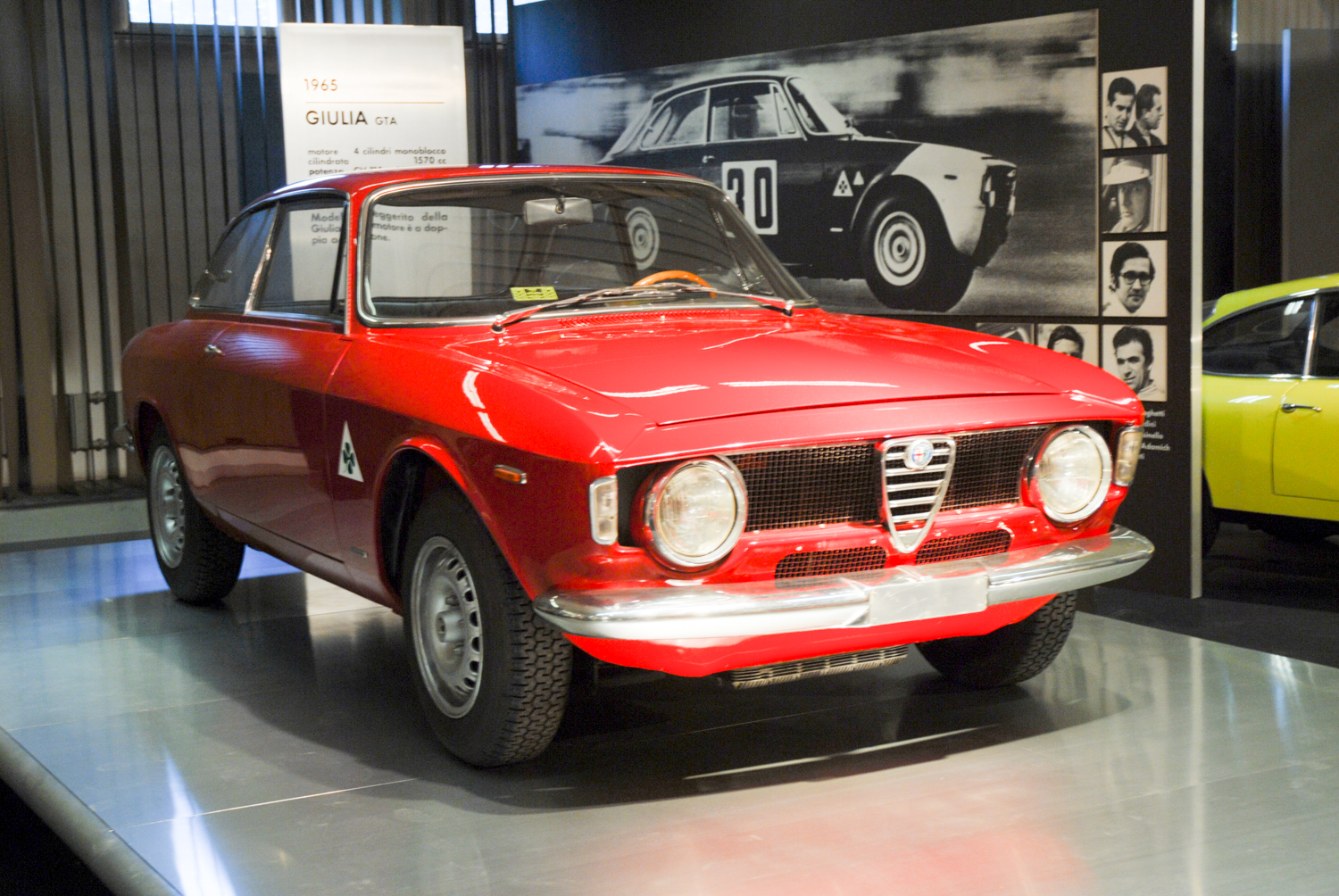
Beautiful when new, stunning and innovative when penned by a youthful Giorgetto Giugiaro, the Alfa Romeo Giulia GT, GTV, GT Junior, Veloce, 2000— whatever you decide to call it or whichever one you determine to be the right one for you—is a car everyone who has the chance, should consider owning at least once in your lifetime.