
A race lasts two hours, or twenty-four. What people keep is usually a few seconds of it: three cars crossing a line together, a man walking when everyone else ran, a champion pushing his own car. This is a list of fifty of those.
What counts
A single moment, or a single drive, from any kind of racing on four wheels, and from record-breaking. A moment can be a finish, a pass, a lap, a decision or, in one case, a kidnapping.
Three kinds of moment are deliberately missing, and the notes after number 50 explain each at length. Nothing is here from a race that already appears on our list of the best Formula One races. No fatal accident is ranked. And there are no motorcycles.
How we ranked them
On two things: what the moment meant when it happened, and how it is remembered now. Those are not always the same. Some of the moments here changed the sport the next morning. Others changed nothing and are simply impossible to forget.
Remembered does not mean admired. Three of the top twenty-five are collisions, one is a fist fight, and the first is a public relations stunt that went wrong.
The calls we expect to be argued with
Ford at Le Mans first. It is a company's victory more than a driver's, and the famous finish was staged and then botched. We think the story behind it and the image it left make it the biggest single moment in racing. Senna and Prost at Suzuka is the alternative, and is second.
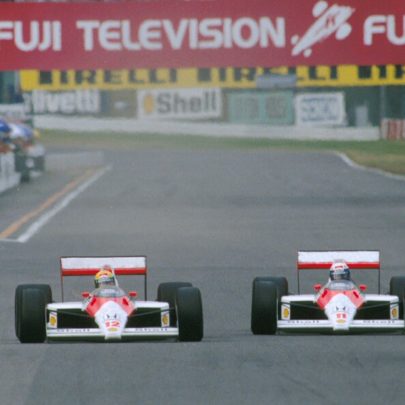
Suzuka 1989 and 1990 as one entry. They are two halves of one quarrel, and splitting them would have given it two places in the top five.
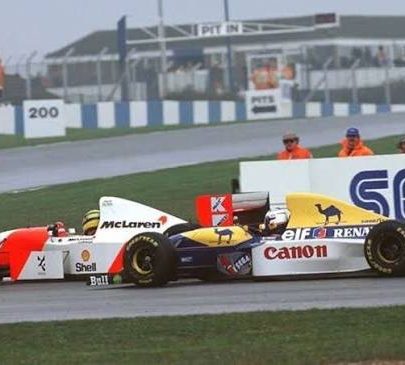
Fangio in 1957, Hamilton in 2008 and Senna's first lap at Donington are not here. They are on the Formula One races list, and we did not want to tell the same stories twice. If you came looking for them, that is where they are, ranked first, fourth and seventh.
Imola 1994 and Le Mans 1955 are not here either. The two most consequential days in the sport's history were its worst, and we were not willing to rank them among its greatest.
The last few. A film star with his foot in plaster and a stock car riding a wall are on a list with Nuvolari and Fangio. A list of great moments ought to have room for a couple that are simply a pleasure to describe.
How to read this list
The top fifteen get the longest entries, the next fifteen a shorter one, and the last twenty a paragraph. Each ends with a one-line verdict. The notes at the end are longer than usual, because what we left out of this list is nearly as good as what we put in.
See the full ranking, 1 to 50
50 to 31
50. NASCAR Cup race, Martinsville Chastain rides the wall
30 October 2022 · Ross Chastain · Chevrolet Camaro
Ross Chastain needed to gain two places on the last lap at Martinsville to stay in the 2022 championship. He changed up to fifth, held the throttle flat, and steered into the outside wall, letting it carry the car round the last two corners at 50 mph more than anyone else. He passed five cars and set the fastest lap ever recorded there. It was banned before the next season.
Verdict He drove along the wall flat out, passed five cars, and the rule-makers banned it over the winter.
49. 12 Hours of Sebring McQueen finishes second at Sebring with a broken foot
21 March 1970 · Steve McQueen and Peter Revson · Porsche 908/02
Steve McQueen broke his left foot in a motorcycle race two weeks before the 1970 Sebring 12 Hours and drove anyway, in a small Porsche, with the cast adapted for the clutch. His co-driver Peter Revson did most of the work. They led near the end, until Mario Andretti took over a Ferrari and caught them, winning by 23 seconds.
Verdict A film star with his foot in plaster nearly won Sebring, and it took Andretti to stop him.
The full story of the 12 Hours of Sebring McQueen finishes second at Sebring with a broken foot →
48. Italian Grand Prix, Monza Vettel wins for Toro Rosso
14 September 2008 · Sebastian Vettel · Toro Rosso STR3
Toro Rosso was the old Minardi team, a small Italian outfit that had spent twenty years at the back. At a wet Monza in 2008 Sebastian Vettel, aged 21, put its car on pole and led almost every lap to win. He was the youngest Grand Prix winner there had been, and the junior team had won a race before its parent, Red Bull, had.
Verdict The team that used to be Minardi won at Monza, with a 21-year-old driving.
47. Lausitzring Zanardi finishes his race
11 May 2003 · Alex Zanardi · Reynard with hand controls
In September 2001 Alex Zanardi lost both legs in a crash at the Lausitzring, thirteen laps from the end of a race he was leading. In May 2003 he went back, in a car with hand controls, and drove the thirteen laps. His best was quick enough for fifth on that weekend's grid. He went on to win touring car races and Paralympic gold medals.
Verdict He came back to the circuit that took his legs and finished the race.
46. Paris–Dakar Rally Jutta Kleinschmidt wins the Dakar
January 2001 · Jutta Kleinschmidt and Andreas Schulz · Mitsubishi Pajero
Jutta Kleinschmidt, a German engineer who had first entered the Dakar on a motorcycle, won it outright in a Mitsubishi in 2001, after 6,000 miles of desert. A rival was penalised near the end for unsporting tactics, which gave her the lead, and she kept it. No other woman has won the event.
Verdict The only woman to win the Dakar, after three weeks and 6,000 miles.
45. Frankfurt to Darmstadt autobahn Caracciola's 268 mph on the autobahn
28 January 1938 · Rudolf Caracciola · Mercedes-Benz W125 Rekordwagen
In January 1938 Rudolf Caracciola drove a streamlined Mercedes at 268.9 mph over a measured kilometre of the autobahn south of Frankfurt, early on a still morning. Later that day Bernd Rosemeyer was killed trying to beat it for Auto Union, when a crosswind caught his car. No one went faster on a public road until 2017.
Verdict The fastest anyone went on a public road for 79 years, set before breakfast.
The full story of the Frankfurt to Darmstadt autobahn Caracciola's 268 mph on the autobahn →
44. Swedish Grand Prix, Anderstorp The Brabham fan car wins its only race
17 June 1978 · Niki Lauda · Brabham BT46B
Gordon Murray's Brabham BT46B had a large fan at the back, officially to cool the engine. It also sucked the car to the road. At the 1978 Swedish Grand Prix Niki Lauda won by more than half a minute. The other teams protested, and Bernie Ecclestone, who owned Brabham and needed their goodwill, withdrew the car. It never raced again and keeps a record of one start, one win.
Verdict One race, one win, and withdrawn before anyone could ban it.
43. 24 Hours of Le Mans Graham Hill completes the Triple Crown
11 June 1972 · Graham Hill and Henri Pescarolo · Matra MS670
Graham Hill won the Monaco Grand Prix five times and the Indianapolis 500 in 1966. In 1972, aged 43, in a Matra he shared with Henri Pescarolo, he won Le Mans. He is the only driver to have won all three. Several have had two and spent years trying for the third.
Verdict Monaco, Indianapolis and Le Mans. One man has won all three.
The full story of the 24 Hours of Le Mans Graham Hill completes the Triple Crown →
42. Firecracker 400, Daytona Richard Petty's 200th win
4 July 1984 · Richard Petty · Pontiac Grand Prix
Richard Petty's 200th win came at Daytona on the Fourth of July in 1984, with President Reagan watching, the first time a sitting president had attended a stock car race. Petty beat Cale Yarborough back to the line by a few feet when a late caution froze the order. Nobody else has reached 106 wins.
Verdict Two hundred wins, on the Fourth of July, in front of the President.
41. 24 Hours of Le Mans The Mercedes CLR takes off
12 June 1999 · Mark Webber and Peter Dumbreck · Mercedes-Benz CLR
At Le Mans in 1999 the Mercedes CLR had a habit of taking off. Mark Webber's car flipped in practice, was rebuilt, and flipped again in the warm-up. The team added small wings and started the race. After four hours Peter Dumbreck's car rose off the road at nearly 200 mph, turned over three times in the air, cleared the barrier and landed in a clearing among the trees. Nobody was hurt in any of the three. Mercedes withdrew and has not been back.
Verdict It flew three times in a week. Everyone walked away, and Mercedes went home.
The full story of the 24 Hours of Le Mans The Mercedes CLR takes off →
40. Indianapolis 500 Unser Jr beats Goodyear by 0.043 seconds
24 May 1992 · Al Unser Jr · Galmer G92
The 1992 Indianapolis 500 was run on a cold day that put a dozen cars into the wall. Michael Andretti led 160 laps and stopped with eleven to go. That left Al Unser Jr leading Scott Goodyear, who had started thirty-third and last. Goodyear tried both sides down the final straight. Unser won by 0.043 seconds, the closest finish the race has had.
Verdict Four hundredths of a second, with the man who started last in second place.
The full story of the Indianapolis 500 Unser Jr beats Goodyear by 0.043 seconds →
39. Spanish Grand Prix, Barcelona Schumacher in the rain
2 June 1996 · Michael Schumacher · Ferrari F310
The 1996 Ferrari was a poor car, and Michael Schumacher, newly arrived as champion, had not won in it. In Spain it rained hard. He made a bad start, fell to sixth, and then lapped three or four seconds faster than anyone else on the track, lap after lap, on a different line from everyone. He won by 45 seconds with the engine misfiring.
Verdict A bad car, a bad start, and three seconds a lap faster than the field in the rain.
38. Rally of Portugal Röhrl in the fog at Arganil
March 1980 · Walter Röhrl and Christian Geistdörfer · Fiat 131 Abarth
The Arganil stage of the 1980 Rally of Portugal was 26 miles of mountain road, run at night in fog so thick that crews were down to walking pace. Walter Röhrl, in a Fiat, was nearly five minutes faster than the next car, driven by his team-mate Markku Alén, one of the quickest men in the sport. Röhrl said he had learned the road well enough beforehand to drive it without seeing it.
Verdict Nearly five minutes faster than anyone on one stage, in fog, at night.
37. Rally of Great Britain Sainz's engine fails in sight of the finish
24 November 1998 · Carlos Sainz and Luis Moya · Toyota Corolla WRC
Carlos Sainz needed fourth place on the last rally of 1998 to be world champion, and he was fourth with one stage left. About 300 metres from the end of it, in sight of the finish, his Toyota's engine failed. His co-driver, Luis Moya, got out and threw his helmet through the back window. Tommi Mäkinen, who had crashed out days earlier and was already at his hotel, was told he was champion.
Verdict Three hundred metres from a world title, the engine stopped.
36. Indianapolis 500 The turbine car fails three laps from home
31 May 1967 · Parnelli Jones · STP-Paxton Turbocar
Andy Granatelli's turbine car had four-wheel drive, a helicopter engine beside the driver, and made a noise like a vacuum cleaner. At Indianapolis in 1967 Parnelli Jones led 171 of the 200 laps in it and was coasting to victory. With three laps to go a small bearing in the gearbox failed and the car rolled to a stop. A. J. Foyt won. The rule-makers restricted turbines the next year and soon banned them.
Verdict It led 171 laps in near silence and stopped three laps from the end.
The full story of the Indianapolis 500 The turbine car fails three laps from home →
35. Spanish Grand Prix, Barcelona Mansell and Senna wheel to wheel
29 September 1991 · Nigel Mansell and Ayrton Senna · Williams FW14 and McLaren MP4/6
In the 1991 Spanish Grand Prix Nigel Mansell drew alongside Ayrton Senna at the start of the main straight and stayed there. For the whole length of it, at 190 mph, the two cars ran with their wheels a few inches apart, sparks pouring from underneath, neither giving way. Mansell had the inside for the corner and took the place. Neither man moved an inch off his line.
Verdict The length of a straight at 190 mph, wheels inches apart, and neither lifted.
34. Hopkirk's Mini wins the Monte Carlo Rally
January 1964 · Paddy Hopkirk and Henry Liddon · Mini Cooper S
In January 1964 a red Mini Cooper S with a white roof, driven by Paddy Hopkirk from Belfast, won the Monte Carlo Rally against Ford Falcons with engines four times the size. Britain went briefly mad about it. The car was flown home and driven on to the stage of a television variety show. Minis won again in 1965 and 1967.
Verdict A ten-foot shopping car beat the V8s over the Alps in winter.
33. 24 Hours of Le Mans Gurney sprays the champagne
11 June 1967 · Dan Gurney and A. J. Foyt · Ford Mk IV
Dan Gurney and A. J. Foyt won Le Mans in 1967 in a Ford, the only all-American victory there: drivers, car and team. On the podium Gurney was handed a magnum of champagne, looked down at Henry Ford II, Carroll Shelby and the photographers, shook it and sprayed them. Nobody had done that on purpose before. Everybody has since.
Verdict The first champagne spray, by the man who had just won Le Mans.
The full story of the 24 Hours of Le Mans Gurney sprays the champagne →
32. Dutch Grand Prix, Zandvoort The Lotus 49 wins first time out
4 June 1967 · Jim Clark · Lotus 49
The Lotus 49 and the Cosworth DFV engine both raced for the first time at the 1967 Dutch Grand Prix. Graham Hill put the car on pole. Jim Clark, who was living abroad for tax reasons and had not sat in it until practice, won. The engine went on to win 154 more Grands Prix, and every Formula 1 car since has been built the way that one was.
Verdict A new car and a new engine won first time out, and set the pattern for fifty years.
The full story of the Dutch Grand Prix, Zandvoort The Lotus 49 wins first time out →
31. Ray Harroun wins the first Indianapolis 500
30 May 1911 · Ray Harroun · Marmon Wasp
The first Indianapolis 500 took six hours and 42 minutes. Ray Harroun won it at an average of 74 mph in a yellow Marmon, the only single-seater in the field. Every other car carried a riding mechanic, whose jobs included watching for traffic behind. Harroun's answer to complaints that he would be a danger was to fix a mirror on struts above the dashboard. He retired from driving as soon as he got out.
Verdict The first 500, won by the only man driving alone, with a mirror to see behind.
The full story of the Ray Harroun wins the first Indianapolis 500 →
30 to 16
30. Cuban Grand Prix Fangio is kidnapped in Havana
23 February 1958 · Juan Manuel Fangio
On the evening before the 1958 Cuban Grand Prix, a young man with a pistol walked up to Juan Manuel Fangio in the lobby of his Havana hotel and asked him to come along. He was a member of Fidel Castro's movement, which wanted to embarrass the government. Fangio was held for a little over a day in a series of houses, fed well, and treated with great courtesy. He missed the race, which was stopped after a serious accident. He was released unharmed and said he bore his captors no ill will.
Verdict The world champion was kidnapped by revolutionaries, who apologised and gave him dinner.
Did you know: He said afterwards that his captors had treated him well, and stayed in touch with some of them.
29. Australian Grand Prix Brawn GP wins on its debut
29 March 2009 · Jenson Button · Brawn BGP 001
Honda pulled out of Formula 1 at the end of 2008 and left its team to close. Ross Brawn, who ran it, bought it for a pound. A Mercedes engine was fitted to a car designed for another in a matter of weeks. It arrived in Australia plain white, with almost no sponsors, having barely tested. Jenson Button put it on pole and won, with Rubens Barrichello second. No new team had finished first and second on its debut since 1954. It won both championships and was sold at the end of the year.
Verdict A team bought for a pound won its first race, and then the championship.
Did you know: The team had been bought for one pound three weeks earlier.
28. CART race, Laguna Seca Zanardi passes Herta at the Corkscrew
8 September 1996 · Alex Zanardi · Reynard 96I
On the last lap at Laguna Seca in 1996, Alex Zanardi was second behind Bryan Herta with no obvious way past. Going into the Corkscrew, where nobody overtakes, he braked impossibly late, went straight on through the dirt on the inside of the left-hander, bounced over the kerb and came out ahead as the track fell away. Herta, who had never won a race, was left to finish second. It is known as The Pass. The series rewrote its rules so that cutting the corner there would be penalised.
Verdict A pass through the dirt at the one corner where passing is impossible.
Did you know: The series changed its rules afterwards so that nobody could do it again.
The full story of the CART race, Laguna Seca Zanardi passes Herta at the Corkscrew →
27. 24 Hours of Daytona Ferrari's formation finish at Daytona
5 February 1967 · Lorenzo Bandini and Chris Amon · Ferrari 330 P3/4
Seven months after Ford's photograph at Le Mans, Ferrari went to Florida for the first race of 1967 with new cars. Ford's entries broke. At the end of 24 hours the three leading Ferraris lined up side by side on the banking and crossed the line together, in formation, in front of Ford's management. Enzo Ferrari is said to have kept a picture of it on his wall. The road car that followed has been known as the Daytona ever since, though the factory never called it that.
Verdict Ford's photo finish, answered in kind, in Ford's own country.
Did you know: The 365 GTB/4 road car that followed was nicknamed the Daytona because of it.
The full story of the 24 Hours of Daytona Ferrari's formation finish at Daytona →
26. Indianapolis 500 Hildebrand hits the wall at the last corner
29 May 2011 · J. R. Hildebrand; Dan Wheldon won
J. R. Hildebrand was a rookie, and on the last lap of the hundredth-anniversary Indianapolis 500 he was leading with one corner to go. He came up behind a slower car, went round the outside of it on to the dusty part of the track, and slid into the wall. The wrecked car scraped along the barrier and across the finish line on three wheels, still moving, in second place. Dan Wheldon, who had no full-time drive that year, passed it a few hundred yards from the flag. It was the only lap he led.
Verdict A rookie led the Indianapolis 500 with one corner to go and hit the wall in it.
Did you know: It was the hundredth anniversary of the first 500.
The full story of the Indianapolis 500 Hildebrand hits the wall at the last corner →
25. Indianapolis 500 Danny Sullivan's spin and win
26 May 1985 · Danny Sullivan · March 85C
On lap 120 of the 1985 Indianapolis 500, Danny Sullivan passed Mario Andretti for the lead going into the first turn, got on to the flat part of the track, and spun. The car went round through a full circle at about 200 mph in a cloud of tyre smoke, with Andretti driving through it. It hit nothing and ended up facing the right way. Sullivan drove to the pits for new tyres, came out, caught Andretti again, passed him in the same place twenty laps later, and won.
Verdict He spun at 200 mph in front of Mario Andretti, missed everything, and beat him anyway.
Did you know: He spun through a full circle at 200 mph, touched nothing, and came out pointing the right way.
The full story of the Indianapolis 500 Danny Sullivan's spin and win →
24. RAC Rally Colin McRae wins the world rally title
22 November 1995 · Colin McRae and Derek Ringer · Subaru Impreza 555
Colin McRae came to the final rally of 1995, on home ground, level on points with his team-mate Carlos Sainz and furious with his team, which had ordered him to give Sainz the previous event. He lost two minutes with a puncture on the first day and drove the rest flat out, sideways and on the edge, through forests lined with people who had come to see exactly that. He won by 36 seconds. At 27 he was the youngest world rally champion, and the first from Britain.
Verdict A puncture, two minutes lost, and the title won the only way he knew how to drive.
Did you know: He was 27, the youngest world rally champion there had been.
23. Daytona 500 Pearson and Petty crash at the line
15 February 1976 · David Pearson and Richard Petty · Mercury and Dodge
David Pearson and Richard Petty were the two best stock car drivers of their time, and in the 1976 Daytona 500 they came off the last corner of the last lap side by side. They touched. Both cars hit the wall and spun down on to the grass, within sight of the flag. Petty's engine stalled, fifty yards short. Pearson had kept his clutch down as he spun and his engine running. He drove his wrecked car across the line at about 20 mph while Petty's crew ran out to push.
Verdict Both leaders wrecked within sight of the flag. The one who kept his engine running won.
Did you know: Pearson crossed the line at about 20 mph.

22. European Grand Prix, Jerez Schumacher and Villeneuve at Jerez
26 October 1997 · Michael Schumacher and Jacques Villeneuve · Ferrari and Williams
Michael Schumacher led Jacques Villeneuve by a point going into the last race of 1997. On lap 48 Villeneuve dived down the inside from a long way back. Schumacher saw him, hesitated, and turned in. His front wheel hit the Williams's sidepod. It was the Ferrari that bounced off into the gravel. Villeneuve nursed his car home third and was champion. The governing body later struck Schumacher from the season's results altogether. Three years earlier a similar collision had won him his first title. This time the whole world had a clear view of it.
Verdict He tried to take his rival off, missed, and was struck from the championship.
Did you know: The three fastest drivers in qualifying set exactly the same time, to a thousandth of a second.
21. 24 Hours of Le Mans Porsche wins Le Mans for the first time
14 June 1970 · Hans Herrmann and Richard Attwood · Porsche 917K
Porsche had been racing at Le Mans since 1951 and winning its class. In 1970 it had the 917, the fastest car there and, the year before, one of the most frightening. It rained for most of the race and only seven cars were classified at the end. Hans Herrmann and Richard Attwood won in a red and white 917 entered from Salzburg. Herrmann, who had lost by 120 metres the previous year and had promised his wife he would stop if he won, retired on the spot. Porsche has won eighteen more times since.
Verdict The first of nineteen, in the rain, and the winning driver retired that afternoon.
Did you know: Herrmann had promised his wife he would retire if he won. He did, that day.
The full story of the 24 Hours of Le Mans Porsche wins Le Mans for the first time →
20. Pikes Peak International Hill Climb Vatanen at Pikes Peak
July 1988 · Ari Vatanen · Peugeot 405 T16
In 1988 the road up Pikes Peak was still gravel: twelve miles, 156 corners, no barriers, and a drop of thousands of feet at the edge. Ari Vatanen drove a 600-horsepower Peugeot up it in ten minutes and 47 seconds, a record. The run was filmed, and the five-minute film, Climb Dance, has been watched by more people than have seen most races. Its best-known shot shows Vatanen in a hairpin near the summit, the car sideways at the edge, steering with one hand and shading his eyes from the sun with the other.
Verdict Ten minutes up a dirt road to 14,000 feet, one hand on the wheel.
Did you know: The short film of the run, Climb Dance, lasts about five minutes and has no commentary.
The full story of the Pikes Peak International Hill Climb Vatanen at Pikes Peak →
19. Earnhardt wins the Daytona 500 at the twentieth attempt
15 February 1998 · Dale Earnhardt · Chevrolet Monte Carlo
Dale Earnhardt had won everything in stock car racing except its biggest race. In nineteen attempts at the Daytona 500 he had lost it in every way available, including a punctured tyre on the last lap while leading. In 1998, at the twentieth try, he won. As he drove down the pit road, the crews of every other team came out and stood in a line, hundreds of them, to shake his hand through the window. He then drove on to the grass and spun the car, and the tyre marks made the shape of his number, 3.
Verdict Twenty attempts, and when he finally won, every rival crew lined up to shake his hand.
Did you know: Crew members from every team lined the pit road to shake his hand.

18. Portuguese Grand Prix, Estoril Senna's first win
21 April 1985 · Ayrton Senna · Lotus 97T
The 1985 Portuguese Grand Prix was held in rain so heavy that cars spun on the straights and most drivers wanted it stopped. Ayrton Senna, in his second race for Lotus, started from his first pole position and drove away. He won by more than a minute and lapped everyone except the second-placed Ferrari. He went off the road once himself, all four wheels on the grass, and came back without losing the lead. It was the first of 41 wins. He always said it was a better drive than Donington in 1993, because at Estoril the car had no electronic help.
Verdict His first win, in a flood, by a minute. He rated it above everything that came after.
Did you know: He lapped every car except the one that finished second.
17. Nürburgring 1000 km, qualifying Bellof laps the Nordschleife in 6:11
28 May 1983 · Stefan Bellof · Porsche 956
In qualifying for the 1000 km race in May 1983, Stefan Bellof, aged 25 and in his first season with the Porsche factory team, lapped the Nürburgring Nordschleife in six minutes eleven seconds. It was the first lap of the circuit at more than 200 km/h, and it was more than five seconds faster than his team-mate Jochen Mass, a Grand Prix winner, in the same car. In the race he set the lap record as well, and then crashed. No racing car lapped the Nordschleife faster for 35 years, and when one did it was a Porsche built for the purpose with no rules to obey.
Verdict Six minutes eleven seconds, and it took 35 years and a car without rules to beat it.
Did you know: The record stood for 35 years.
The full story of the Nürburgring 1000 km, qualifying Bellof laps the Nordschleife in 6:11 →
16. 24 Hours of Le Mans Toyota stops on the last lap
19 June 2016 · Kazuki Nakajima · Toyota TS050 Hybrid
Toyota had been trying to win Le Mans for thirty years and had finished second four times. In 2016 its leading car was more than a minute ahead of the Porsche with one lap left. On the pit straight, in front of the team, it slowed. Kazuki Nakajima said on the radio that he had no power. The car stopped just past the line with three and a half minutes on the clock. The Porsche went by to win. The Toyota restarted and crawled round, but took so long over its final lap that it was not classified at all. Porsche's own team applauded the Toyota crew.
Verdict Twenty-three hours and fifty-seven minutes in front, and not even classified.
Did you know: The car was not even classified, because its final lap took too long.
The full story of the 24 Hours of Le Mans Toyota stops on the last lap →
The top 15
- Years
- October 1981
- Engine
- Michèle Mouton and Fabrizia Pons
- Power
- Audi Quattro
Moment · Italy
15. Rallye Sanremo Michèle Mouton wins the Sanremo Rally
In October 1981 Michèle Mouton and her co-driver Fabrizia Pons won the Sanremo Rally in an Audi Quattro. No woman had won a round of the World Rally Championship before, and none but Mouton has won one since.
She did it on a rally that mixed tarmac and gravel, against Ari Vatanen and the rest of the best drivers of the day, and she did it on pace. Some of her rivals were ungracious about it. One is reported to have said he could accept being beaten by the car but not by her. She won three more rallies the following year and went into the last round but one with a chance of the title, losing it to Walter Röhrl after her father died on the eve of the event and her car broke.
She later won Pikes Peak outright and set the record. Asked about being a woman in the sport, she tended to say she was a driver.
This is fifteenth on what it meant at the time. On what it ought to have changed, and largely has not, it would be higher.
Verdict The first woman to win a world championship rally, on merit, against the best.
The next year she won three more rallies and finished second in the world championship.
- Years
- 12 December 1959
- Engine
- Jack Brabham
- Power
- Cooper T51
Moment · USA
14. United States Grand Prix, Sebring Brabham pushes his car over the line
The 1959 championship was decided at Sebring in December, at the first United States Grand Prix. Jack Brabham led in his Cooper until the last lap, when the engine died a quarter of a mile from the finish. He had run out of fuel.
Brabham climbed out, put his shoulder to the car, and pushed it up the slight rise to the line. It took him about five minutes. Three cars went past, including his young team-mate Bruce McLaren, who won and became the youngest Grand Prix winner there had been. Brabham crossed the line fourth and collapsed beside the car.
He did not need to do it. His only remaining rival, Tony Brooks, had finished third, which was not enough, so Brabham was champion whether he finished or not. He did not know that. As far as he knew, the title depended on getting the car over the line.
It is the best image of the amateur era: the new world champion, in a short-sleeved shirt, pushing his own car in the Florida heat, with a crowd walking alongside.
Verdict The new world champion pushed his own car over the line, not knowing he had already won.
He was already champion and did not need to push it.
The full story of the United States Grand Prix, Sebring Brabham pushes his car over the line →
- Years
- 2 September 1956
- Engine
- Peter Collins and Juan Manuel Fangio
- Power
- Lancia-Ferrari D50
Moment · Italy
13. Italian Grand Prix, Monza Collins hands his car to Fangio
At Monza in 1956, the last race of the season, three drivers could be champion. Juan Manuel Fangio led on points. His Ferrari team-mate Peter Collins, who was 24 and in his first season with the team, could take the title if he won the race and Fangio did not score.
Fangio's steering broke. In those days a driver could take over a team-mate's car and share the points. Ferrari's other driver, Luigi Musso, was called in and refused to give his up. Then Collins came in for tyres, running third and still in with a chance of the championship. He saw Fangio standing in the pits, got out, and handed him the car without being asked.
Fangio finished second, and the shared points made him champion for the fourth time. Collins said afterwards that he was young and would have other chances, and that Fangio deserved it.
He did not have other chances. He was killed at the Nürburgring two years later. Fangio never forgot it, and spoke of Collins for the rest of his life as the finest sportsman he had raced against. Nothing like it has happened since, and the rules no longer allow it.
Verdict He gave away his chance of the championship, unasked, because he thought the other man deserved it.
Collins was 24 and could still have been champion himself.
- Years
- 4 August 1968
- Engine
- Jackie Stewart
- Power
- Matra MS10
Moment · Germany
12. German Grand Prix, Nürburgring Stewart wins in the fog
The 1968 German Grand Prix was run in rain and fog so thick that drivers could not see the car in front, on a fourteen-mile circuit with no barriers and trees at the edge. Jackie Stewart had a broken wrist in a plastic splint. He started sixth.
By the end of the first lap he was nine seconds ahead. After fourteen laps he won by four minutes and three seconds. He said later that it was the only race he was ever truly glad to see the end of, and that on some stretches he had been steering by the tops of the trees.
It was left off our list of the best Formula One races, because it was not a race. Nobody else was in it. As a single performance in a racing car it has perhaps two rivals.
It also matters for what he did next. The man who won by four minutes in those conditions spent the following five years telling the sport that races should not be run in them, and he could not be called a coward for saying so.
Verdict Four minutes clear in fog, with a broken wrist, on the most dangerous circuit in the world.
He drove with a broken wrist in a plastic splint.
- Years
- 23 June 1991
- Engine
- Volker Weidler, Johnny Herbert and Bertrand Gachot
- Power
- Mazda 787B
Moment · France
11. 24 Hours of Le Mans Mazda wins Le Mans
Mazda had been coming to Le Mans for years with rotary-engined cars that made a noise like nothing else and finished well down the order. In 1991 nobody gave it a chance against Mercedes, Jaguar and Peugeot. The team's plan was to run flat out from the start, on the theory that the car would either last or it would not.
It lasted. The Mercedes that had led for most of the race stopped with three hours to go, and the orange and green Mazda inherited the lead. Johnny Herbert drove the last stints without a break and was too dehydrated to reach the podium.
It was the first win at Le Mans for a Japanese manufacturer, and the only one for an engine without pistons. The rules that came in the following year excluded the rotary.
It is this high for the reaction as much as the result. No Le Mans winner is more loved by people who were there, and when the car is run today, crowds gather for the sound.
Verdict The outsider won at the last attempt the rules allowed, and it sounded like nothing else on earth.
Herbert was too dehydrated to climb the podium and missed the ceremony.
The full story of the 24 Hours of Le Mans Mazda wins Le Mans →
- Years
- 31 May 1965
- Engine
- Jim Clark
- Power
- Lotus 38
Moment · USA
10. Indianapolis 500 Jim Clark wins Indianapolis
In 1965 the Indianapolis 500 had been won by a front-engined American roadster every year anyone could remember, driven by an American. Europeans who came were treated politely and not taken seriously.
Jim Clark and Colin Chapman had been twice before with small rear-engined Lotuses. They finished second the first time and started from pole the second. In 1965 they skipped the Monaco Grand Prix, to the irritation of the people who ran Formula 1, and came back with the Lotus 38 and a pit crew borrowed from the Wood Brothers stock car team.
Clark led 190 of the 200 laps. He won by almost two minutes at an average of just over 150 mph, the first time the race had been run that fast. He was the first foreign winner since 1916, and his was the first rear-engined car to win.
The effect was immediate and complete. A front-engined car never won the 500 again. Within four years there was not one in the field. Clark went home and won the world championship as well, the only driver to take both in the same year. American racing had been shown, in an afternoon, that it was a generation behind.
Verdict A Scottish farmer led 190 laps and made every car at Indianapolis obsolete.
He missed the Monaco Grand Prix to be there, and won the world championship anyway.
The full story of the Indianapolis 500 Jim Clark wins Indianapolis →
- Years
- 15 October 1997
- Engine
- Andy Green
- Power
- Thrust SSC
Moment · USA
9. Black Rock Desert, Nevada Thrust SSC breaks the sound barrier
This is the only entry that was not a race, and it is in the top ten because it settled something for good. On 15 October 1997, on the Black Rock Desert in Nevada, a car went faster than sound.
Thrust SSC was ten tons, sixteen metres long, and powered by two jet engines from a Phantom fighter producing about 110,000 horsepower. It was built by a small British team led by Richard Noble, who had held the record himself and raised the money in instalments, some of it from the public. The driver was Andy Green, an RAF fighter pilot. The car steered with its rear wheels and, near the speed of sound, wanted to turn left; Green held it straight with most of a turn of opposite lock.
The record requires two runs in opposite directions within an hour. Green averaged 763 mph, Mach 1.02. The sonic boom was heard in the town of Gerlach, ten miles away, where it shook the covers off the school's sprinklers.
It was fifty years and a day since Chuck Yeager had first done it in the air. Nearly thirty years later the record still stands, and no one has come close. It may be the last absolute record of its kind that anyone sets.
Verdict A car went through the sound barrier, and nobody has gone faster since.
It was done fifty years and one day after the first supersonic flight.
- Years
- 14 May 1988
- Engine
- Ayrton Senna
- Power
- McLaren MP4/4
Moment · Monaco
8. Monaco Grand Prix Senna's qualifying lap at Monaco
It is odd to rank a qualifying lap among the great moments of a sport, since almost nobody saw it properly and nothing was won by it. It is here because of the margin and because of what the driver said about it.
In 1988 Ayrton Senna and Alain Prost had the same car, the McLaren MP4/4, which was far better than anything else. At Monaco, the circuit where a driver makes the most difference, Prost set a time that put him comfortably second on the grid. Senna was 1.4 seconds faster. Between two great drivers in identical cars on a lap of under a minute and a half, that gap should not be possible.
Senna said afterwards that he had kept going faster lap after lap until he realised he was no longer driving the car consciously, that he felt he was in a tunnel and well beyond what he understood. It frightened him, and he came into the pits and did not go out again that day.
In the race he led by nearly a minute, lost concentration when the team told him to slow down, and hit the barrier with eleven laps left. He walked straight to his flat and did not come out for hours. The lap and the crash are one story, and both are remembered.
Verdict A second and a half quicker than Prost in the same car, and it frightened him.
He was 1.4 seconds faster than Alain Prost in the same car.
- Years
- 18 February 1979
- Engine
- Cale Yarborough, Donnie and Bobby Allison; Richard Petty won
Moment · USA
7. The fight at the end of the Daytona 500
The 1979 Daytona 500 was the first 500-mile stock car race shown live on American network television from start to finish. A snowstorm had closed much of the East Coast that Sunday, so the audience was several times what anyone had planned for. Most of them had never watched a stock car race.
On the last lap Donnie Allison led Cale Yarborough down the back straight. Yarborough went low to pass. Allison moved down to block him. They touched, touched again, and slid together up the banking into the wall at the third turn, then down on to the grass, both cars wrecked. Richard Petty, who had been half a lap behind and thought he was racing for third, came by and won.
The cameras cut back to the infield. Yarborough and Donnie Allison were out of their cars and shouting. Bobby Allison, Donnie's brother, pulled up to see if he was all right, and within seconds Yarborough was swinging his helmet and the three of them were fighting in the mud, live, in front of fifteen million people.
NASCAR had been a regional sport of the South-East. On Monday morning it was on the front of newspapers that had never covered it. Everyone involved says the same thing: the fight did more for stock car racing than any race.
Verdict A last-lap wreck, a fist fight in the mud, and a snowed-in country watching. NASCAR went national in an afternoon.
A snowstorm had shut down much of the East Coast, so millions were at home watching.
- Years
- 15 June 1969
- Engine
- Jacky Ickx and Jackie Oliver
- Power
- Ford GT40
Moment · France
6. 24 Hours of Le Mans Ickx walks to his car and wins by 120 metres
For forty years Le Mans began with the drivers lined up on one side of the track and their cars on the other. At the signal they ran across, jumped in and drove off. By the late 1960s the cars reached 200 mph on the first lap, and the quickest way to get going was to leave the seat belts undone until the long straight.
Jacky Ickx was 24 and thought this was absurd. In 1969, when the flag fell, he walked. He strolled across the road with the field roaring away around him, got into his Ford GT40, did up his belts with care, and left last. On that first lap a British driver, John Woolfe, crashed and was killed. He had not fastened his belts.
Twenty-four hours later Ickx was fighting for the lead with Hans Herrmann's Porsche. For the last hour and more the two cars were never apart, passing and repassing several times a lap. Ickx worked out that the car in front at the start of the last straight would be slipstreamed and lose, so he let Herrmann by before it, drafted past, and held on. He won by about 120 metres.
The running start was abolished the following year. He had been right about the start and had still won the race, which made his protest impossible to dismiss.
Verdict He walked while the others ran, started last, and won by 120 metres after 24 hours.
The same car, chassis 1075, had won the year before.
The full story of the 24 Hours of Le Mans Ickx walks to his car and wins by 120 metres →
- Years
- 12 September 1976
- Engine
- Niki Lauda
- Power
- Ferrari 312T2
Moment · Italy
5. Italian Grand Prix Lauda returns at Monza
On 1 August 1976 Niki Lauda's Ferrari crashed and caught fire at the Nürburgring. Other drivers pulled him out. He had burns to his head and hands, and had breathed in flame and toxic smoke. In hospital a priest gave him the last rites, which, he said later, annoyed him enough to make him decide to live.
Forty-two days after the accident he walked into the paddock at Monza. His burns were not healed, and he wore a modified helmet so that it would not press on them. In the first practice session he found that he was too frightened to drive properly, and said so afterwards, plainly, which racing drivers did not do. He went back to his hotel, thought about it, and came back the next day.
He qualified fifth, the fastest of the three Ferraris. In the race he finished fourth. When he took off his balaclava it was soaked in blood and had to be peeled away from the bandages.
He had missed only two Grands Prix and was still leading the championship, which he lost to James Hunt by a single point in the rain in Japan. He won it again the next year. Nothing else on this list asks the same question about what a person will do to get back in a car.
Verdict Six weeks after the last rites, he qualified fifth and finished fourth.
It was 42 days after the accident. He finished fourth.
- Years
- 1 May 1955
- Engine
- Stirling Moss and Denis Jenkinson
- Power
- Mercedes-Benz 300 SLR
Moment · Italy
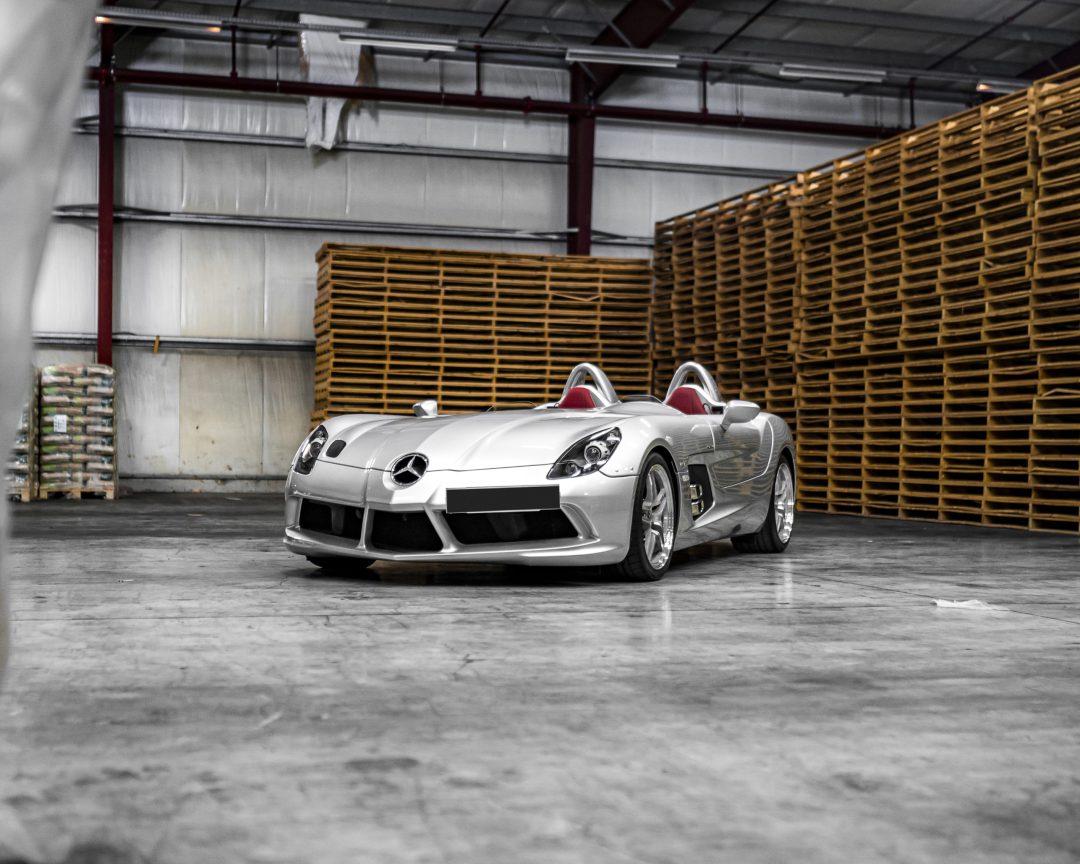
4. Moss and Jenkinson win the Mille Miglia
The Mille Miglia was a thousand miles of ordinary Italian road, from Brescia to Rome and back, closed for the day and lined with several million people. It was held that local knowledge was worth more than speed, and that no foreigner could win it at the first serious attempt.
Stirling Moss could not learn a thousand miles of road. His passenger, the journalist Denis Jenkinson, proposed a solution. Over several practice runs they noted every corner, crest and hazard, and Jenkinson wrote the notes on a roll of paper eighteen feet long, wound into a metal case with a window. During the race he read from it and signalled each instruction by hand, because nothing could be heard over the engine. Moss had to believe him at 170 mph over blind brows.
They left Brescia at 7.22 in the morning in a Mercedes-Benz 300 SLR. They were back ten hours, seven minutes and 48 seconds later, having averaged just under 98 mph, which was never beaten. Fangio, driving alone, was second, more than half an hour behind.
Jenkinson then wrote an account of the day that is the best piece of motor racing journalism there is. Pace notes have been used by every rally crew since.
Verdict A thousand miles of public road at 98 mph, navigated from a roll of paper.
The car's number, 722, was its starting time: 7.22 in the morning.
The full story of the Moss and Jenkinson win the Mille Miglia →
- Years
- 28 July 1935
- Engine
- Tazio Nuvolari
- Power
- Alfa Romeo Tipo B
Moment · Germany
3. German Grand Prix, Nürburgring Nuvolari beats the German teams
The 1935 German Grand Prix was meant to be a demonstration. Mercedes-Benz and Auto Union, paid for in part by the German state, had the fastest racing cars ever built, and several hundred thousand people came to the Nürburgring to watch one of them win. Senior officials of the regime were in the stand.
Tazio Nuvolari was 42 and driving an Alfa Romeo that was a design generation older and gave away something like 100 horsepower. On a wet, then drying track he got into the lead by half distance, which was already more than anyone expected. Then a refuelling pump broke at his pit stop, the mechanics had to pour the fuel in from churns, and he came out sixth, more than a minute behind.
He caught and passed four of the German cars. Starting the last lap of fourteen miles he was 35 seconds behind Manfred von Brauchitsch's Mercedes, which had been driven so hard to stay ahead that its tyres were down to the canvas. One of them burst a few miles from the finish. Nuvolari won.
The story goes that the organisers had only the German anthem to hand, and that Nuvolari produced a record of the Italian one from his luggage. It may not be true. The result is, and it remains the standard example of a driver beating a better car.
Verdict An old Alfa, a broken fuel pump, nine silver cars and 300,000 Germans. Nuvolari won.
The organisers are said to have had no recording of the Italian anthem ready, and Nuvolari to have supplied his own.
The full story of the German Grand Prix, Nürburgring Nuvolari beats the German teams →
- Years
- 22 October 1989 and 21 October 1990
- Engine
- Ayrton Senna and Alain Prost
- Power
- McLaren and Ferrari
Moment · Japan
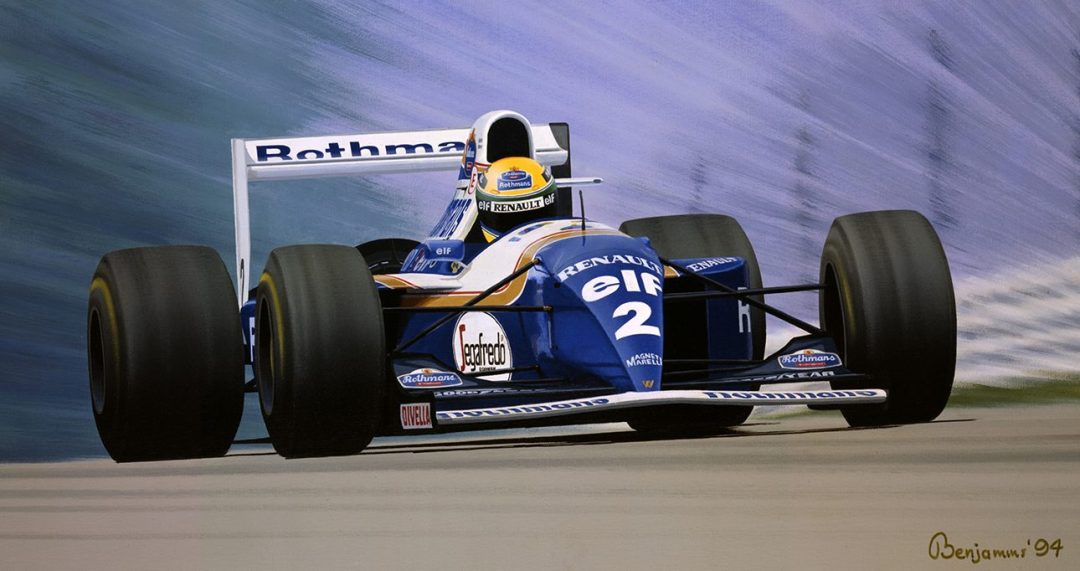
2. Japanese Grand Prix Senna and Prost collide at Suzuka
These are two moments a year apart, and we have ranked them as one because neither makes sense alone. They are also the least admirable entry in the top ten, and the most replayed.
In 1989 Ayrton Senna and Alain Prost were team-mates at McLaren and no longer speaking. Senna had to win at Suzuka to keep the championship alive. With six laps left he dived for the inside at the chicane. Prost turned in. The two cars slid to a halt locked together. Prost climbed out, believing it was over. Senna had the marshals push him back on to the track through the escape road, changed his nose, retook the lead and won. He was then disqualified for missing the chicane, and Prost was champion.
In 1990 the positions were reversed. Prost, now at Ferrari, had to finish ahead of Senna. Senna took pole and was told it would be on the dirty side of the track. He asked for it to be moved, was refused, and said that if Prost reached the first corner in front he would not get round it. Prost got the better start. Senna kept his foot down and drove into him at about 160 mph. Both were out, and Senna was champion.
A year later he admitted it had been deliberate. The sport's most admired driver settled its greatest rivalry by ramming his opponent, and most of his admirers forgave him. Both things are part of how it is remembered.
Verdict The sport's greatest rivalry, settled twice at the same circuit, the second time on purpose.
A year after the second collision, Senna said he had done it on purpose.
The best of the 50 · Moment · France
1. 24 Hours of Le Mans Ford finishes 1-2-3 at Le Mans
- Years
- 19 June 1966
- Engine
- Bruce McLaren and Chris Amon
- Power
- Ford GT40 Mk II
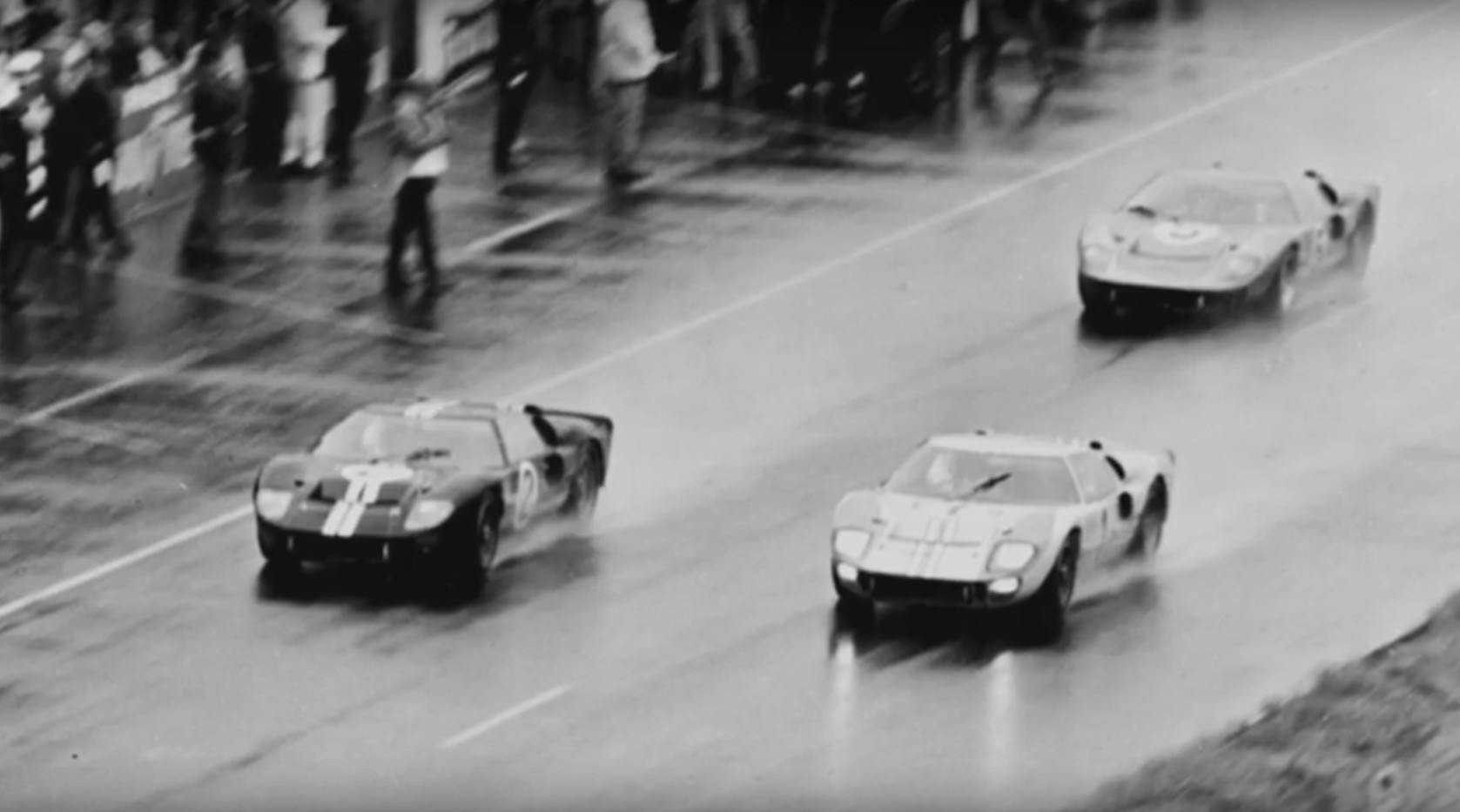
Three Fords crossed the line together at Le Mans at four o'clock on a wet Sunday afternoon, and the photograph is the best-known image in sports car racing. It is first because of everything that led to it and because the moment itself went wrong in a way that is still argued about.
In 1963 Henry Ford II tried to buy Ferrari. Enzo Ferrari walked away from the deal at the last minute, and Ford decided to beat him at the race he cared about most. It took three years, a very large amount of money, Carroll Shelby and a seven-litre engine. Ferrari had won Le Mans six times running. In 1966 its cars were out by Sunday morning and the Fords were first, second and third.
Ford's management then asked for a dead heat. Ken Miles, who was leading and had already won Daytona and Sebring that year, slowed to let Bruce McLaren draw alongside. The organisers ruled that a tie was impossible: McLaren's car had started a few metres further back on the grid, so it had covered the greater distance. McLaren and Chris Amon were declared the winners. Miles lost the race, and a treble nobody has achieved, to a public relations idea. He was killed testing two months later.
So the greatest moment in the sport is a corporate victory, a staged photograph and an injustice, all in one frame. That is why it is first.
Verdict A company beat Ferrari at Le Mans and then spoiled its own finish. Sixty years on, people still take sides.
The winners were decided by where the cars had been parked at the start, a few metres apart.
The full story of the 24 Hours of Le Mans Ford finishes 1-2-3 at Le Mans →
What we left off, and why
This section is longer than on our other lists. We left out some of the best-known moments in racing on purpose, and they deserve more than a line each.
The ones we gave to another list
Five moments would have been in the top twenty here if they were not already ranked on our list of the best Formula One races. We decided a reader should not have to read about Fangio's pit stop twice in one afternoon.
Fangio at the Nürburgring, 1957. Forty-eight seconds behind two Ferraris with ten laps left, nine lap records, both passed on the second-last lap. It is first on the other list and would probably have been first here. Consider this the list's largest hole, dug on purpose.
Hamilton at the last corner, Interlagos 2008. A championship changed hands with about 400 metres of the season remaining, while the other driver's family was already celebrating on live television. No scriptwriter would have been allowed it.
Senna's first lap at Donington, 1993. Fifth to first in one lap in the rain, past Schumacher, Wendlinger, Hill and Prost. Three of those four were or would become world champions, with twelve titles between them. The fourth, Karl Wendlinger, had the bad luck to be in the photograph.
Villeneuve against Arnoux, Dijon 1979. Three laps of wheel-banging for second place. The winner of the race, Jean-Pierre Jabouille, had just taken the first victory for a turbocharged car, and has had to share the day with two men who finished behind him ever since.
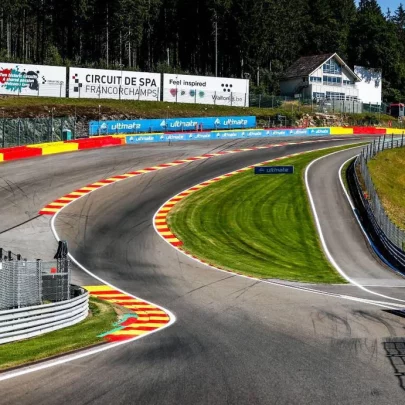
Häkkinen, Schumacher and Zonta, Spa 2000. One lapped car, and a leader going each side of it at 200 mph. Ricardo Zonta is asked about it more than about anything he did on purpose, which is hard on a man who was only driving in a straight line.
The ones we would not rank
Le Mans, 1955. A car went into the crowd and more than eighty people died. It led to racing being banned outright in Switzerland, and to Mercedes-Benz withdrawing from the sport for three decades. Nothing that has happened in racing mattered more.
Imola, 1994. Roland Ratzenberger on the Saturday and Ayrton Senna on the Sunday. Almost everything about how a modern racing car and circuit are built follows from that weekend.
Jim Clark at Hockenheim in 1968, Gilles Villeneuve at Zolder in 1982, Dale Earnhardt at Daytona in 2001. Each stopped its part of the sport for a time, and each changed what was done about safety.
These were the most important days there have been. A list called the greatest moments is the wrong place for them, and putting a number beside them would have been worse than leaving them out. We would sooner be criticised for the omission.
One survival nearly made it in on those grounds. Romain Grosjean walked out of a fire in Bahrain in 2020 after his car had gone through a steel barrier and split in two. It is the best argument anyone has made for the safety work of the previous fifty years. It was the last moment cut from the fifty.
The ones on two wheels
Valentino Rossi passing Casey Stoner through the dirt at the Corkscrew in 2008, twelve years after Zanardi did the same in a car. Mike Hailwood coming back to the Isle of Man in 1978 after eleven years away, and winning. Barry Sheene and Kenny Roberts at Silverstone in 1979. This is a site about cars, and we know when we are out of our depth. Motorcycle racing has at least fifty of its own.
The ones that nearly made it
Ferrari wins Le Mans, 2023. Its first attempt at an outright win in fifty years, at the hundredth-anniversary race, and it worked. It is recent, and we have learned to let recent things settle. Ask us again in ten years.
The McLaren F1 wins Le Mans, 1995. A road car, more or less, beat the prototypes in the rain at its first attempt. It lost its place to the Mazda, which did something similar four years earlier with a stranger engine and a better noise.
Senna wins in Brazil, 1991. He had never won at home. His gearbox failed gear by gear until only sixth was left, and he drove the last laps in it, in the rain, and had to be lifted from the car. It may be his most affecting win. He already appears six times across two lists, and somebody had to be told no.
Mansell pushes his car, Dallas 1984. In heat of over 100 degrees his car stopped within sight of the flag. He got out and tried to push it to the line, and fainted. Brabham did the same thing in 1959 and got there, which is why he is on the list and Mansell is in the notes.
Loeb at Pikes Peak, 2013. He took a minute and a half off the record on a road that was by then fully paved. Vatanen did it on gravel with one hand, and there is a film.
Verstappen in the rain, Interlagos 2016. He caught a spin at 180 mph by what looked like instinct and then passed half the field on lines nobody else could find. He was 19. It will probably be on a later version of this list.
The Audi Quattro arrives, 1981. Four-wheel drive changed rallying completely within two seasons. It was a process, not a moment, and Michèle Mouton's win in one is here to stand for it.
Danica Patrick wins at Motegi, 2008. The first win for a woman in top-level American open-wheel racing, taken on fuel strategy in a race few people saw. It matters, and it is the entry we were least comfortable leaving out.
Mansell and Senna at Monaco, 1992. Four laps nose to tail round a circuit where you cannot pass, with Mansell on new tyres trying everything. Senna made his car very wide. They already share a straight in Barcelona at number 35.
The ones that were unforgettable for the wrong reasons
A list ranked partly on how things are remembered has to say something about these.
Indianapolis, 2005. Six cars started the United States Grand Prix, because the other fourteen could not safely use their tyres on the banking and drove into the pits after the warm-up lap. Michael Schumacher won. The crowd threw things. Formula 1 took years to be forgiven in America.
Singapore, 2008. A team ordered one of its drivers to crash on purpose so that the other could win. It is remembered, certainly. So is food poisoning.
Monaco, 2006. Michael Schumacher, on provisional pole with seconds left in qualifying, came to a halt at the Rascasse hairpin in a way that stopped anyone from beating his time. He said it was a mistake. The stewards, having watched the film, sent him to the back of the grid.
Mosport, 1977. James Hunt, having crashed out of the lead, walked back along the track and punched a marshal who was trying to help him. He apologised and was fined.
Malaysia, 2009. With the race stopped for rain and the other drivers sitting in their cars on the grid in case it restarted, the television cameras found Kimi Räikkönen in the Ferrari garage, changed into shorts, eating an ice cream. It did not restart. He had read the weather better than the race director.
None of these is great. All of them are on somebody's list, and now they are at least on ours, below the line.
Tell us what we got wrongQuestions about this list
What is the greatest moment in motorsport history?
We rank Ford's 1-2-3 finish at Le Mans in 1966 first, for the story behind it and the photograph it left. The collisions between Ayrton Senna and Alain Prost at Suzuka in 1989 and 1990 are second, and Tazio Nuvolari's win over the German teams at the Nürburgring in 1935 is third.
Why is Fangio's 1957 German Grand Prix not on the list?
Because it is ranked first on our list of the best Formula One races, and we did not include anything from a race already on that list. The same applies to Lewis Hamilton's last-corner title in 2008 and Ayrton Senna's first lap at Donington in 1993.
Why are Senna's death and the 1955 Le Mans disaster not included?
They were the most consequential days in the sport's history, and we say so in the notes. We did not think fatal accidents should be ranked on a list of the greatest moments.
Who really won Le Mans in 1966?
Bruce McLaren and Chris Amon were declared the winners. Ford had asked its leading cars to cross the line together, and the organisers ruled that McLaren's car, which had started further back on the grid, had covered the greater distance. Ken Miles and Denny Hulme, who had been leading, were placed second.
Has a car ever broken the sound barrier?
Yes, once. Thrust SSC, driven by Andy Green, averaged 763 mph over two runs on the Black Rock Desert in Nevada on 15 October 1997. The record still stands.
Each moment was judged on what it meant when it happened and on how it is remembered. Moments from any form of car racing and from record-breaking were considered. Three groups were excluded: moments from races ranked on our list of the best Formula One races, fatal accidents, and motorcycle racing. The notes after the list discuss the most significant of these. Where two events form one story they are ranked as one entry.