
Racing is easier to follow when it is one person, or one company, trying to beat another. These are the twenty contests that have done most to make people care who won.
What counts
A sustained contest between two drivers or two makers, where each was the other's main opponent. Team-mates count, and five of the twenty were in the same team. A rivalry needs both sides to have had a chance. One side beating the other every week is a reign.
Twelve of these are the featured rivalries on this site's Rivalries page, which has the stories and photographs behind them. We have added eight and put all twenty in order.
How we ranked them
On three things: how long it ran, what was at stake, and how it ended. A rivalry that lasted years, decided championships and finished memorably is near the top. Several that lasted a single season are high because of what happened in it. One lasted thirteen days.
Driver rivalries and maker rivalries are ranked together. Drivers tend to rank higher, because a company cannot stop speaking to another company at breakfast.
The calls we expect to be argued with
Senna and Prost above Ford and Ferrari. On our list of the greatest moments the order is the other way round. A moment is ranked on one afternoon. A rivalry is ranked on its whole length, and theirs ran for six seasons and ended twice in collisions and once in a reconciliation.
Hamilton and Verstappen at five. One season, and recent. We have Hunt and Lauda third on one season, so length alone does not rule it out, and no title fight since has been so bitter or ended so contentiously.
Petty and Pearson at seven. The only stock car entry, and the longest-running contest on the list.
Villeneuve and Pironi at fifteen. It hardly had time to be a rivalry. It is here for how it ended.
Bentley and Bugatti at eighteen and Mustang and Camaro at nineteen. Both are among the featured rivalries on this site. Both were fought more in the showroom, and in what each maker said about the other, than wheel to wheel.
How to read this list
The top five get the longest entries, the next ten a shorter one, and the last five a paragraph. Each ends with a one-line verdict. Which rivalries are lower or higher than you might expect, and which are missing, is set out at the end.
See the full ranking, 1 to 20
| Rank | The Greatest Rivalries in Motor Racing | Years |
|---|---|---|
| 1 | Formula One Senna v Prost | 1988–1993 |
| 2 | Le Mans and sports car racing Ford v Ferrari | 1963–1967 |
| 3 | Formula One Hunt v Lauda | 1976 |
| 4 | Grand Prix racing Mercedes-Benz v Auto Union | 1934–1939 |
| 5 | Formula One Hamilton v Verstappen | 2021 |
| 6 | Grand Prix and road racing Nuvolari v Varzi | 1930–1936 |
| 7 | NASCAR Petty v Pearson | 1963–1977 |
| 8 | World sports car championship Porsche v Ferrari | 1970–1971 |
| 9 | Formula One Mansell v Piquet | 1986–1987 |
| 10 | Formula One Hamilton v Rosberg | 2014–2016 |
| 11 | Formula One and sports cars Moss v Fangio | 1955–1958 |
| 12 | World Rally Championship Audi v Lancia | 1983 |
| 13 | Formula One Schumacher v Häkkinen | 1998–2000 |
| 14 | American sports car racing Cobra v Corvette | 1963–1965 |
| 15 | Formula One Villeneuve v Pironi | 1982 |
| 16 | Sports car racing Jaguar v Mercedes-Benz | 1955 |
| 17 | Can-Am McLaren v Porsche | 1971–1973 |
| 18 | Sports car and Grand Prix racing Bentley v Bugatti | 1924–1930 |
| 19 | Trans-Am Mustang v Camaro | 1967–1970 |
| 20 | Le Mans Audi v Peugeot | 2007–2011 |
20 to 16
20. Le Mans Audi v Peugeot
2007–2011
From 2007 to 2011 Le Mans was a contest between two diesel prototypes. The Peugeot was usually faster. The Audi was usually still running. Audi won four of the five races, including 2011, when two of its three cars were destroyed in accidents and the survivor beat a Peugeot by less than fourteen seconds after 24 hours. Peugeot withdrew a few months later.
Verdict The faster car lost four times in five, the last time by fourteen seconds.

19. Trans-Am Mustang v Camaro
1967–1970
The Trans-Am series of the late 1960s existed so that Ford and Chevrolet could race what they sold. Carroll Shelby's and then Bud Moore's Mustangs met Roger Penske's Camaros, driven by Mark Donohue, with Parnelli Jones in a Boss 302 as the opposition. Ford won the title in 1967 and 1970, Chevrolet in 1968 and 1969. The showroom fight went on for another half-century.
Verdict Two cars built to outsell each other, raced by the best drivers in America.

18. Sports car and Grand Prix racing Bentley v Bugatti
1924–1930
They seldom met on the track, and that was the point. W. O. Bentley built large, strong cars that won Le Mans five times by lasting. Ettore Bugatti built small, light, beautiful ones that won Grands Prix and the Targa Florio. Each thought the other had misunderstood what a car was for. Bugatti is supposed to have called the Bentleys the fastest lorries in the world.
Verdict A quarrel about what a racing car should be, conducted mostly at a distance.
The full story of the Sports car and Grand Prix racing Bentley v Bugatti →
17. Can-Am McLaren v Porsche
1971–1973
McLaren won the Can-Am championship five years running with big orange cars and Chevrolet engines. Porsche, with a 917 it could no longer race in Europe, added turbochargers and gave it to Roger Penske. The 917/10 won the title in 1972. The 917/30 of 1973, with 1,100 horsepower and Mark Donohue driving, won so easily that the organisers changed the rules, and the series died soon after.
Verdict Porsche ended McLaren's run, and its car was so fast that it ended the series too.
16. Sports car racing Jaguar v Mercedes-Benz
1955
For one season the Jaguar D-type and the Mercedes-Benz 300 SLR were the two best sports cars in the world. At Le Mans, Mike Hawthorn and Juan Manuel Fangio fought wheel to wheel for two hours, until the accident that killed more than eighty people. Mercedes withdrew during the night. Jaguar won. Mercedes took the Mille Miglia, the Tourist Trophy and the championship, and then left racing for thirty years.
Verdict Two hours of the best sports car racing ever seen, ended by its worst day.
The full story of the Sports car racing Jaguar v Mercedes-Benz →
15 to 6
15. Formula One Villeneuve v Pironi
1982
It lasted thirteen days. At Imola in April 1982 the two Ferraris were running first and second with no opposition, and the pit hung out a sign telling them to slow down. Gilles Villeneuve, leading, took it to mean hold position. Didier Pironi passed him on the last lap and won. Villeneuve said he would never speak to him again. At the next race, in Belgium, he went out late in qualifying to beat Pironi's time, came upon a slower car, and was killed. Pironi's own career ended in an accident three months later, and he died in a powerboat race in 1987. His twin sons, born after his death, were named Didier and Gilles.
Verdict A pit signal, a last-lap pass, and thirteen days. The shortest rivalry here, and the saddest.
Did you know: It lasted thirteen days.
14. American sports car racing Cobra v Corvette
1963–1965
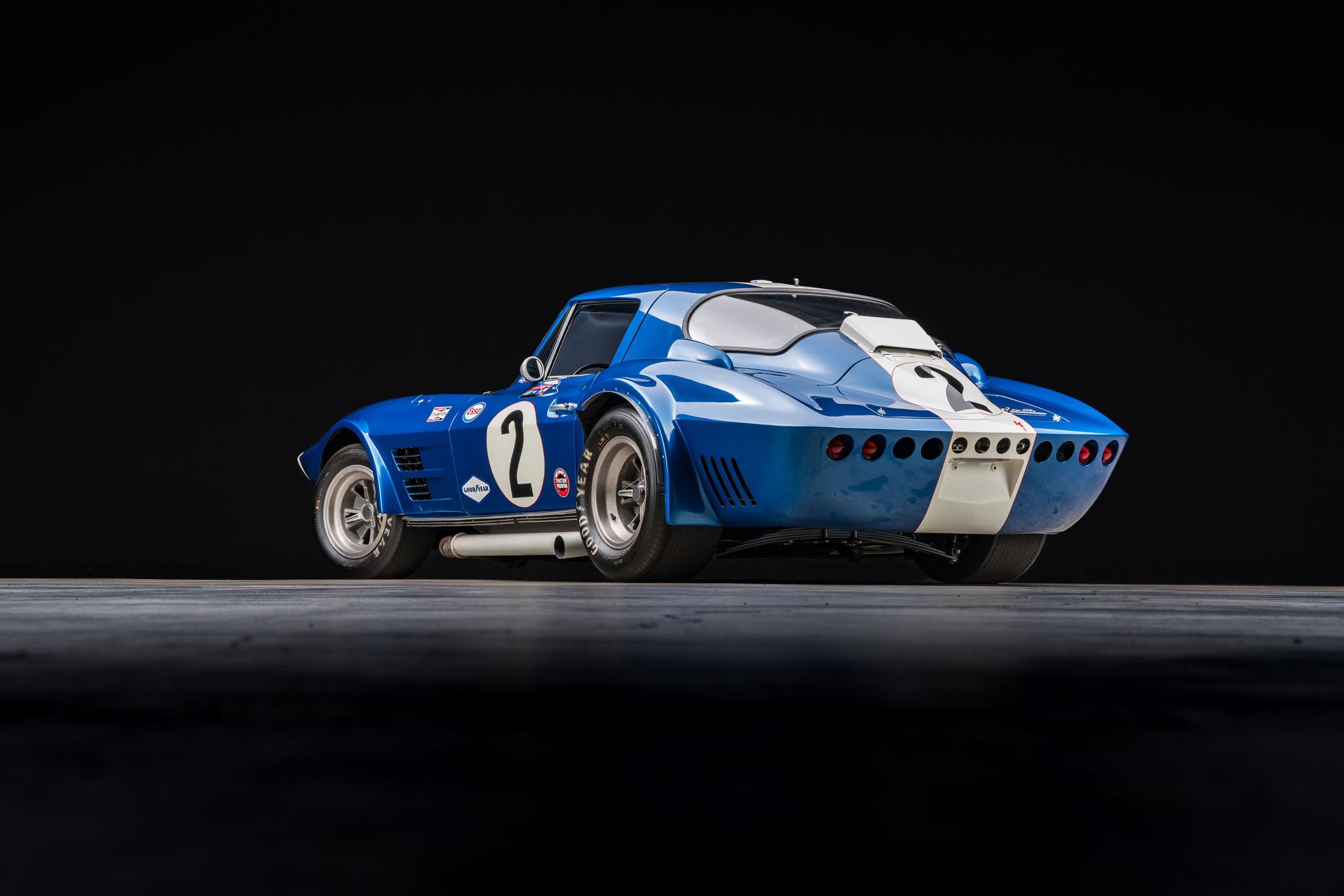
Carroll Shelby had asked General Motors for help building a sports car and been turned down, so he put a Ford V8 in a British AC and went after the Corvette instead. The Cobra first beat the Corvettes at Riverside in 1963 and kept doing it. Zora Arkus-Duntov at Chevrolet answered with the Grand Sport, a lightweight Corvette that could beat the Cobra. He planned 125. General Motors' management, which had a policy against racing, stopped him at five. Those five beat the Cobras at Nassau that winter anyway. Shelby went on to win the world GT championship in 1965.
Verdict Shelby's Cobra against a Corvette that General Motors would not allow to fight back.
Did you know: Chevrolet built five lightweight Corvette Grand Sports to answer the Cobra, and General Motors then forbade it to race them.
The full story of the American sports car racing Cobra v Corvette →
13. Formula One Schumacher v Häkkinen
1998–2000
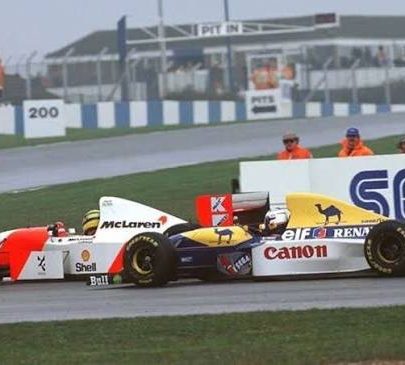
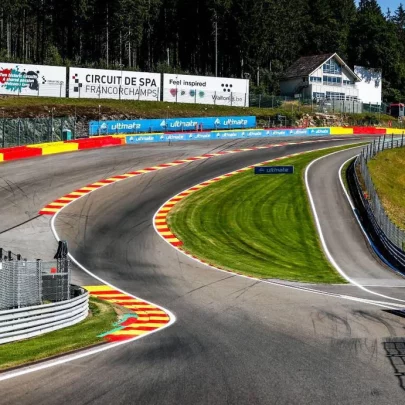
Michael Schumacher and Mika Häkkinen had been racing each other since Formula 3, where they collided on the last lap at Macau in 1990. From 1998 to 2000 they were the two best drivers in the two best cars, Ferrari and McLaren, and the title went to the final rounds each year. Häkkinen won the first two. Schumacher won the third, Ferrari's first drivers' championship in 21 years. It is remembered for one pass at Spa and for the absence of ill feeling. Schumacher said Häkkinen was the rival he respected most, and Häkkinen never said a word against him.
Verdict Three seasons at the limit, and neither man ever had to apologise.
Did you know: Schumacher said Häkkinen was the opponent he respected most.
12. World Rally Championship Audi v Lancia
1983
By 1983 the Audi Quattro had shown that four-wheel drive was the future of rallying. Lancia built the 037 with two-wheel drive anyway, because it would be lighter and simpler, and set out to beat the Audis with a better team. Its manager, Cesare Fiorio, used every trick the rules allowed and a few they had not thought to forbid. The Lancia won on tarmac, the Audi on snow and gravel, and Lancia took the manufacturers' title by a narrow margin. No two-wheel-drive car has won it since. Audi's Hannu Mikkola was champion driver.
Verdict The last time cleverness beat four-wheel drive.
Did you know: Lancia's 037 was the last two-wheel-drive car to win the manufacturers' title.
11. Formula One and sports cars Moss v Fangio
1955–1958
This is the gentlest rivalry on the list. Stirling Moss joined Juan Manuel Fangio at Mercedes in 1955 as the pupil, and followed him so closely, lap after lap, that the pair were called the train. Moss beat him by a few feet in the British Grand Prix that year and never knew whether he had been allowed to. Afterwards they drove for rival teams, and Fangio won the title each year with Moss second. Moss finished runner-up four times running and never won it. He said for the rest of his life that Fangio was the best there had been, and that losing to him was no disgrace.
Verdict Master and pupil. The pupil finished second every year and never complained.
Did you know: Moss never knew whether Fangio let him win the 1955 British Grand Prix, and Fangio never said.
The full story of the Formula One and sports cars Moss v Fangio →
10. Formula One Hamilton v Rosberg
2014–2016
Lewis Hamilton and Nico Rosberg were friends and team-mates as boys in karts, and talked then about being in the same Formula 1 team. From 2014 to 2016 they were, at Mercedes, in a car so much better than the rest that the championship was between the two of them alone. The friendship did not survive it. There was a disputed qualifying lap at Monaco, a collision at Spa, a cap thrown across a room in Texas, and a crash that took both cars out on the first lap in Spain. Hamilton won two of the three titles. Rosberg won the third and retired five days later.
Verdict Boyhood friends given the same unbeatable car. One of them won and walked away.
Did you know: They had been team-mates in karts as teenagers. Rosberg retired five days after beating him to the title.
9. Formula One Mansell v Piquet
1986–1987
Williams hired Nelson Piquet for 1986 as a double world champion on a very large salary, with Nigel Mansell as the supporting driver. Mansell turned out to be at least as fast and had no intention of supporting anyone. Frank Williams was badly injured in a road accident before the season began, and there was nobody to keep order. With the best car, the two took enough points from each other to let Alain Prost win the title at the last race, when Mansell's tyre burst. Piquet was champion the next year. He was publicly rude about Mansell and his family throughout, and Mansell never forgave him.
Verdict The best car, two drivers who would not help each other, and a title given away.
Did you know: They drove for the same team and took enough points off each other to hand the 1986 title to a rival.
8. World sports car championship Porsche v Ferrari
1970–1971
A loophole in the rules for 1969 allowed five-litre sports cars if 25 were built. It was meant for old Lolas and Ford GT40s. Porsche built 25 new 917s. Ferrari, with money from Fiat, built the 512 S in reply. For two seasons the result was the fastest and most frightening sports car racing there has been, at 240 mph on the straight at Le Mans. Porsche, with Pedro Rodríguez and Jo Siffert, won nearly everything. Ferrari won at Sebring in 1970 with Mario Andretti. The rule was withdrawn at the end of 1971, and Steve McQueen had already made a film of it.
Verdict Two companies each built 25 cars nobody had asked for, and raced them at 240 mph.
Did you know: To qualify, Porsche lined up all 25 of its cars in the factory yard for the inspectors to count.
The full story of the World sports car championship Porsche v Ferrari →
7. NASCAR Petty v Pearson
1963–1977
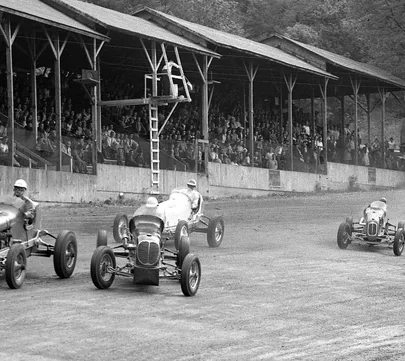
Richard Petty has the records: 200 wins and seven championships. David Pearson is the man Petty says was better. Between 1963 and 1977 they finished first and second in the same race 63 times, and Pearson won 33 of them. Pearson rarely ran a full season, which is why he has three titles and not more, and won 105 races from far fewer starts. They were not enemies. They simply spent fifteen years arriving at the last lap together, most famously at Daytona in 1976, when they wrecked each other within sight of the flag and Pearson crawled across the line first.
Verdict Sixty-three times first and second. The man with fewer trophies won more of them.
Did you know: They finished first and second in the same race 63 times. Pearson won 33 of them.
6. Grand Prix and road racing Nuvolari v Varzi
1930–1936
Tazio Nuvolari and Achille Varzi were the two best Italian drivers of the early 1930s and agreed about nothing. Nuvolari was small, wiry and theatrical, and drove as though the car were on fire. Varzi was cool, immaculately dressed, and never put a wheel wrong. They had been partners in a team, fell out, and spent six years trying to beat each other in whatever they were driving. In the 1930 Mille Miglia Nuvolari is said to have caught Varzi in the dark by turning off his own headlights so as not to be seen. At Monaco in 1933 they swapped the lead for ninety-odd laps until Nuvolari's engine failed on the last.
Verdict Fire against ice, for six years, in every kind of race Italy had.
Did you know: In the 1930 Mille Miglia, Nuvolari is said to have caught Varzi at night by switching off his headlights.
The full story of the Grand Prix and road racing Nuvolari v Varzi →
The top 5
- Years
- 2021
Rivalry
5. Formula One Hamilton v Verstappen
This is the newest rivalry on the list and the one most likely to look misplaced in time, in either direction. It is fifth because for one season it was as intense as any, and because of how it ended.
In 2021 Lewis Hamilton was 36, had won seven world championships, and had the best team behind him. Max Verstappen was 23 and had, for the first time, a car that could beat him. Over 22 races neither gave way. They collided on the first lap at Silverstone at 180 mph, and Verstappen went to hospital. They collided at Monza, where one car ended up on top of the other and its wheel came down on Hamilton's helmet. In Saudi Arabia they collided again in an argument over who should let whom past.
They arrived at the last race level on points. Hamilton led it comfortably until a late safety car, and a decision by the race director about how to restart, put Verstappen directly behind him on new tyres with one lap to go. Verstappen passed him and was champion. The governing body later found that the rules had been applied wrongly, and the result stood. The details are in our list of the best Formula One races, where that race is tenth.
Half the sport's followers think the right man won on the day, and half think a championship was taken from Hamilton by an official's error. The two sets of supporters have not forgiven each other, which is one measure of a rivalry. It was never properly resumed, because the two never again had equal cars.
Verdict One season, three collisions, level on points at the last race, and an ending still disputed.
They went into the last race level on points.

- Years
- 1934–1939
Rivalry
4. Grand Prix racing Mercedes-Benz v Auto Union
For six seasons before the Second World War, Grand Prix racing was a contest between two German teams, and everyone else was racing for third. It is fourth on length, on the scale of what was built, and on what it was for.
The rules of 1934 limited a car's weight and nothing else. Mercedes-Benz and the new Auto Union combine both took state money, offered by a government that wanted German cars to win, and built machines that made the Italian and French opposition obsolete in a season. Mercedes put its engine in front. Auto Union, to Ferdinand Porsche's design, put a V16 behind the driver. By 1937 the Mercedes had more than 600 horsepower and the Auto Union over 500, on narrow tyres, with drum brakes. Nothing as powerful raced in Grands Prix again for forty years.
Mercedes had Rudolf Caracciola and the team manager Alfred Neubauer, and won more. Auto Union had Bernd Rosemeyer, who had come from motorcycles, was fearless, and was the only man who could consistently master a car that frightened everyone else. Between them the teams won every European championship from 1935 to 1939.
The rivalry went beyond the circuits to speed records on the new autobahns. In January 1938 Caracciola set a record one morning and Rosemeyer was killed a few hours later trying to take it back.
It ended in September 1939. The racing was magnificent, and it was paid for as propaganda by a regime that started the war that stopped it. Both of those are true, and the entry would be dishonest without the second.
Verdict The fastest racing cars for forty years, built by two rivals with the same paymaster.
Both teams were subsidised by the German government, which wanted the races won.
The full story of the Grand Prix racing Mercedes-Benz v Auto Union →
- Years
- 1976
Rivalry
3. Formula One Hunt v Lauda
This one lasted a single season and is third anyway, because no season has had more in it. It is also the only great rivalry on the list between friends.
Niki Lauda was the reigning champion with Ferrari: exact, unsentimental, the best test driver of his day. James Hunt had got the McLaren seat at the last minute when Emerson Fittipaldi left. He was quick, untidy, and lived the way the newspapers hoped a racing driver would. The two had known each other since they were penniless in the junior formulas, and liked each other.
Lauda won five of the first nine races and had the title almost settled by midsummer. Hunt's season was fought largely in appeal hearings. He was disqualified from his win in Spain and reinstated, then won his home Grand Prix and had it taken away. Then came the Nürburgring, where Lauda's car caught fire and he was given the last rites. Hunt won that race, and one of the two that Lauda missed.
Lauda was back in the car 42 days after the accident. The championship went to the last race, in Japan, in a downpour. Lauda drove two laps, decided the conditions were not worth his life, and stopped. Hunt needed third place and got it, after a late puncture, without knowing whether he had. He won by one point.
Lauda said afterwards that if he had to lose it to anyone he was glad it was Hunt. He won it back the following year. Hunt never came close again.
Verdict One season, one fire, one point, and the two men stayed friends throughout.
They were friends, and had shared a flat in London when both were starting out.

- Years
- 1963–1967
Rivalry
2. Le Mans and sports car racing Ford v Ferrari
This is the greatest rivalry between two companies, and the only one on the list that began in a boardroom. In 1963 Ford spent months and a great deal of money negotiating to buy Ferrari. At the last meeting Enzo Ferrari discovered that he would not have the final say over the racing team, and walked out. Henry Ford II gave an instruction that amounted to: go to Le Mans and beat him.
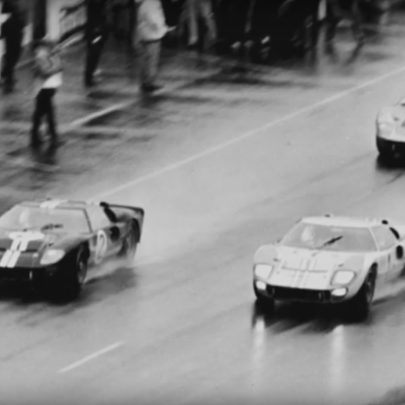
It was not quick. The first GT40s of 1964 were fast and broke. So did the cars of 1965, when Ferrari won Le Mans for the sixth year running with a privately entered car after both works teams had failed. Ford handed the programme to Carroll Shelby, fitted a seven-litre engine, and in 1966 finished first, second and third, in the staged formation that is first on our list of moments.
Ferrari's reply came seven months later at Daytona, on Ford's own ground, with a new car and a formation finish of its own. Ford won Le Mans again in 1967 with an all-American crew. Then the rule-makers limited engine size, which removed both the big Fords and the big Ferraris at a stroke. Ford, having made its point, withdrew.
It is second because it was short and one-sided at the end. One man with a factory in a small Italian town had insulted one of the largest companies in the world, and it took that company three years and several fortunes to answer him.
Verdict One refused signature, three years, and the most expensive grudge in the history of the sport.
It began with a business deal that fell through over who would control the racing team.
The full story of the Le Mans and sports car racing Ford v Ferrari →
The best of the 20 · Rivalry
1. Formula One Senna v Prost
- Years
- 1988–1993
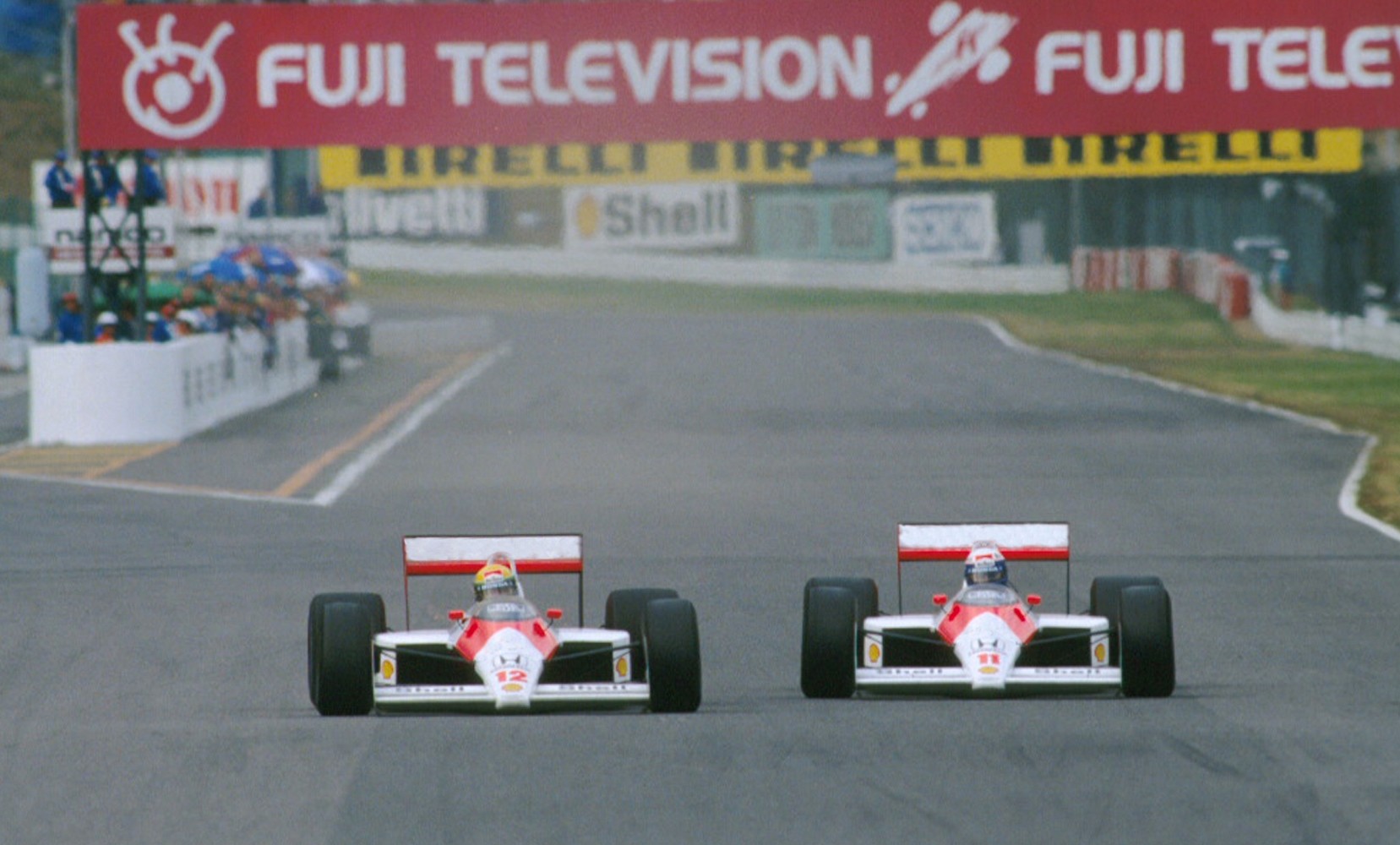
On our list of the greatest moments, Ford's finish at Le Mans is first and the collisions between these two are second. Here the order is reversed, and the reason is the criterion. A rivalry is ranked on how long it ran, what was at stake and how it ended. Ford won and went home. This one lasted six seasons, decided three championships between the two men directly, and ended in a way nobody expected.
Alain Prost was the established champion at McLaren when Ayrton Senna joined him in 1988. They had the best car by a distance and won fifteen of the sixteen races between them. Senna took the title. The two were opposites in method. Prost, whom they called the Professor, won by thinking: he set his car up for the race, looked after it, and took the points on offer. Senna won by commitment, and believed a gap was his if he went for it.
It broke at Imola in 1989, when Senna passed Prost in breach of an agreement Prost thought they had made, and denied there had been one. They stopped speaking. That season ended with the collision at Suzuka that made Prost champion. The next ended with the collision at Suzuka that made Senna champion, which he later admitted was deliberate. Prost, by then at Ferrari, called him a man without value.
Prost took a fourth title with Williams in 1993, having made sure Senna could not join him there, and retired. On the podium at his last race Senna pulled him up on to the top step. The following spring, on the morning he was killed, Senna sent a greeting over the radio to Prost in the television commentary box, saying that everyone missed him. Prost helped carry the coffin.
Verdict Six seasons, two deliberate endings, and a reconciliation that came a few months too late to matter.
On the morning of his last race, Senna sent a message over the radio to Prost, who was commentating: he missed him.
What we left off, and why
Lower than you might expect
Ford v Ferrari, at 2. First among the moments, second here. It was won outright in three years and then abandoned by the winner.
Moss v Fangio, at 11. Two of the greatest drivers there have been, in the same races for four seasons. It was too good-natured and too one-sided in its results to rank higher. Moss would not have disagreed.
Schumacher v Häkkinen, at 13. Three title fights between the two best drivers of their time. It lacked nothing but bad feeling, and a rivalry needs a little.
Bentley v Bugatti, at 18. A famous pairing that seldom shared a starting grid.
Higher than you might expect
Hunt v Lauda, at 3. A single season. It contained a fire, a comeback, four disputed results and a title decided by one point in a monsoon.
Hamilton v Verstappen, at 5. See the introduction. Time may move it either way.
Petty v Pearson, at 7. Little known outside the United States. Nothing else here lasted fifteen years.
Audi v Lancia, at 12. One rally season. It was the last stand of two-wheel drive, and it won.
Not on the list
Hawthorn v Moss, 1958. A title decided by one point, after Moss had spoken up to save Hawthorn from disqualification. A fine story and barely a rivalry: they got on too well.
Clark v Hill, 1962 to 1968. Two champions, two title deciders, and never a cross word. They were team-mates and friends by the end.
Caracciola v Rosemeyer. It is here already, as the human half of Mercedes-Benz against Auto Union.
Prost v Lauda, 1984. Team-mates at McLaren, and the title went to Lauda by half a point, the smallest margin there has been. They liked each other, which keeps it off a list like this.
Alonso v Hamilton, 2007. One season as team-mates, a spying scandal, and both lost the title by a point to a third man. It was closer to a civil war than a rivalry.
Vettel v Webber, 2010 to 2013. Team-mates who collided in Turkey and fell out for good over an ignored team order in Malaysia. Vettel won four titles and Webber none, which is why it is in the notes.
Schumacher v Hill, 1994 to 1996. It had a collision that decided a championship. Most of the feeling was on one side.
Foyt v Andretti. The two greatest American drivers, across twenty years and every kind of car. They were seldom fighting for the same title at the same time.
Earnhardt v Gordon. The old guard against the new in 1990s stock car racing, and the supporters disliked each other more than the drivers did.
Subaru v Mitsubishi. A decade of blue against red in rallying, and two road cars that existed because of it. It was the last one cut.
Porsche v Jaguar in Group C, and Ferrari v Maserati in the 1950s. Both are on the site's Rivalries page and both are good. Twenty was the limit.
Jim Hall v the rulebook, and Ken Miles v everyone. These are also on the Rivalries page, where they belong. We could not work out how to rank a man against a document.
Tell us what we got wrongQuestions about this list
What is the greatest rivalry in motor racing?
We rank Ayrton Senna against Alain Prost first. It ran for six seasons from 1988, decided three world championships between the two of them, and included the collisions at Suzuka in 1989 and 1990. Ford against Ferrari at Le Mans is second.
Why did Ford and Ferrari become rivals?
Ford tried to buy Ferrari in 1963. Enzo Ferrari withdrew from the deal at the last moment over control of the racing team, and Henry Ford II ordered his company to beat Ferrari at Le Mans. It did so in 1966 and 1967.
Were Hunt and Lauda really friends?
Yes. They had known each other since racing in the junior formulas and remained on good terms throughout the 1976 season and afterwards. Lauda said that if he had to lose the title he was glad it was to Hunt.
Why is Hamilton v Verstappen ranked so high after one season?
The list ranks on what was at stake and how a rivalry ended as well as on its length. In 2021 the two collided three times, went into the last race level on points, and the title was decided on the final lap after a disputed restart. Hunt against Lauda, at third, also lasted one season.
Where can I read more about these rivalries?
This site's Rivalries page covers the twelve featured rivalries on this list and about twenty others, with links to the cars, drivers and races involved.
Each rivalry was judged on how long it lasted, what was at stake between the two sides and how it ended. Driver and maker rivalries were ranked together. A rivalry had to be a contest in which each side was the other's principal opponent and both had a realistic chance of winning. The twelve featured on this site's Rivalries page were all included and ranked alongside eight others.