
Enzo Ferrari sold road cars to pay for racing cars, and he said so. The company has been racing since its first car turned a wheel at Piacenza in May 1947, and it has never stopped. It is the only team to have entered every season of the Formula One world championship, and it has won Le Mans in four different decades.
That leaves a great many cars to choose from. This is our pick of the thirty best racing Ferraris, counted down from thirty to one.
What counts
Any Ferrari built to race. Sports racers, prototypes, GT cars and Formula One cars are all here, from 1947 to the present day, and they are ranked against each other. That is not a fair fight, and we know it. A Grand Prix car that raced for one season sits beside a GT car that private owners campaigned for five.
Three cars from our list of the best Ferrari road cars appear again: the 250 GTO, the 250 GT SWB and the 250 GT Tour de France. They had number plates, and they were built to win races. It would be odd to leave them off a list of racing Ferraris because they could also be driven to dinner.
Cars are grouped the way they are remembered. The 312 T stands for the family that followed it, and the 250 Testa Rossa covers four seasons of development.
How we ranked them
We asked three things of each car. What did it win? What did it change, for Ferrari or for racing? And how is it remembered now?
Results came first. This is a list of racing cars, and a beautiful car that lost is still a car that lost. But results alone would give a list of Formula One cars from the early 2000s, so the other two questions decided the close calls. A car that won once and changed everything can outrank a car that won often and changed nothing.
Looks, value and rarity did not count. Several of these cars are among the most expensive ever sold, and that has no bearing on where they sit.
Then, as always, we argued. This is a gut list. The test is whether someone who has followed Ferrari for years looks at the order and thinks it feels right. Similar cars do not sit side by side, so the 250s and the Schumacher cars are spread through the list.
How to read this list
We start at thirty and count down. Each car has its years, engine and power, the case for its place, and a one-line verdict. The top ten get the longest treatment. If you want the order without the suspense, the full ranking is in the table below.
You will disagree with some of it. Tell us where in the comments.
See the full ranking, 1 to 30
| Rank | The 30 Best Racing Ferraris Ever Made | Years |
|---|---|---|
| 1 | Ferrari 250 Testa Rossa | 1957–61 |
| 2 | Ferrari 312 T | 1975 |
| 3 | Ferrari 250 GTO | 1962–64 |
| 4 | Ferrari F2004 | 2004 |
| 5 | Ferrari 330 P4 | 1967 |
| 6 | Ferrari 500 F2 | 1952–53 |
| 7 | Ferrari 250 LM | 1963–65 |
| 8 | Ferrari 499P | From 2023 |
| 9 | Ferrari 166 MM Barchetta | 1948–50 |
| 10 | Ferrari 156 F1 Sharknose | 1961–62 |
| 11 | Ferrari 312 PB | 1971–73 |
| 12 | Ferrari 375 F1 | 1950–51 |
| 13 | Ferrari 250 GT SWB | 1959–62 |
| 14 | Ferrari F2002 | 2002–03 |
| 15 | Ferrari 512 S | 1970 |
| 16 | Ferrari 335 S | 1957–58 |
| 17 | Ferrari Dino 246 F1 | 1958–60 |
| 18 | Ferrari 250 P | 1963 |
| 19 | Ferrari 333 SP | 1994–2001 |
| 20 | Ferrari 126 C2 | 1982 |
| 21 | Ferrari 290 MM | 1956 |
| 22 | Ferrari F1-2000 | 2000 |
| 23 | Ferrari 375 Plus | 1954 |
| 24 | Ferrari 458 Italia GT2 | 2011–15 |
| 25 | Ferrari 250 GT Tour de France | 1956–59 |
| 26 | Ferrari 158 | 1964–65 |
| 27 | Ferrari 750 Monza | 1954–55 |
| 28 | Ferrari 550 GTS Maranello | 2001–04 |
| 29 | Ferrari 365 GTB/4 Competizione | 1971–73 |
| 30 | Ferrari 125 S | 1947 |
30 to 21
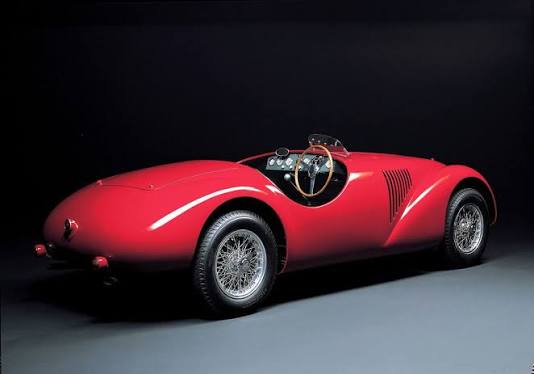
30. Ferrari 125 S
1947 · 1.5 V12 · 118 hp · 2
The first car to carry the Ferrari name. The 125 S had a 1.5-litre V12 of 118 horsepower, designed by Gioacchino Colombo. On 11 May 1947 Franco Cortese led its first race, at Piacenza, until the fuel pump failed. Two weeks later he won the Rome Grand Prix. Two were built and neither survives as it was. It is last on this list and first in every other sense.
Verdict Where all of it starts.
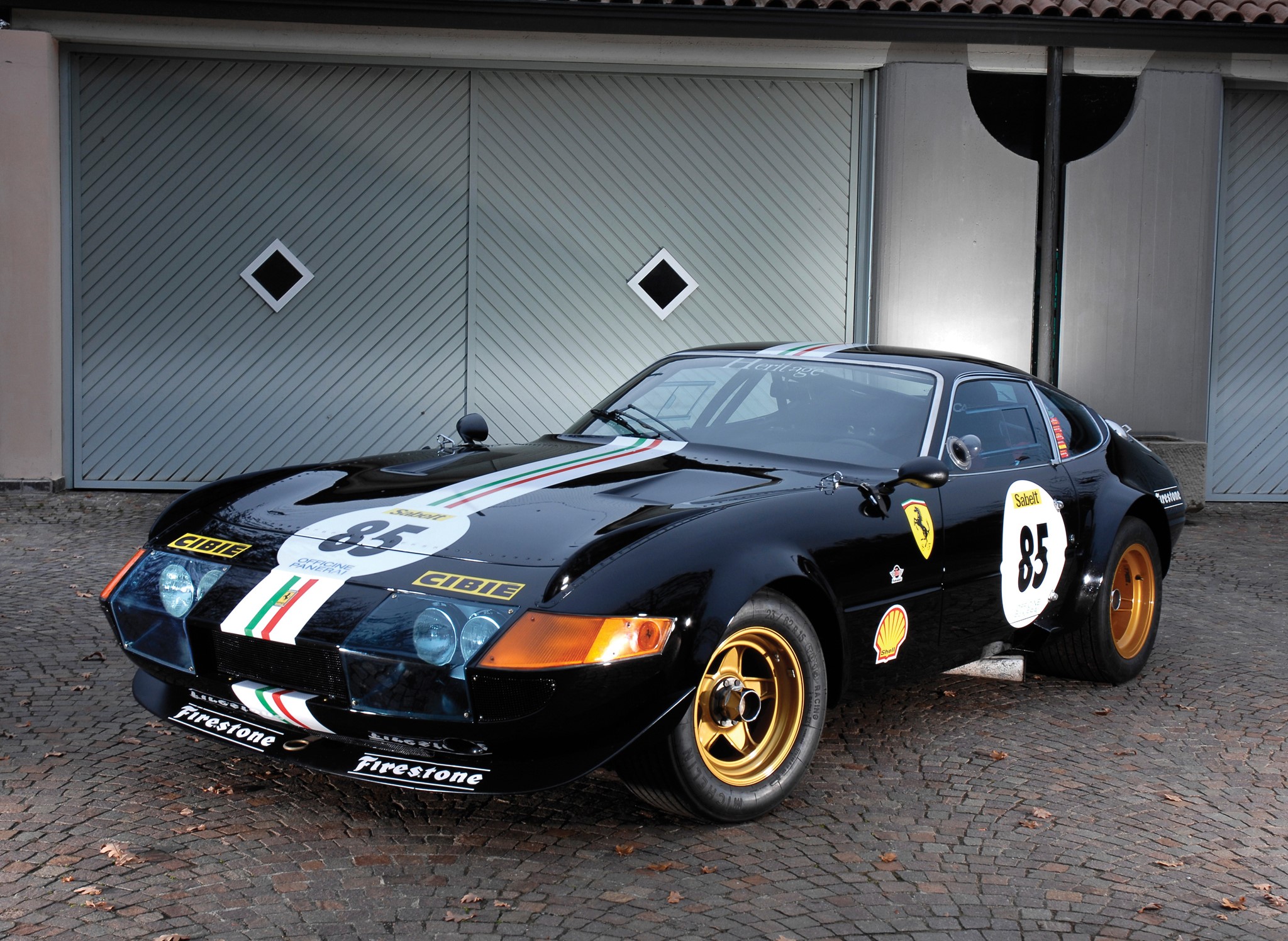
29. Ferrari 365 GTB/4 Competizione
1971–73 · 4.4 V12 · 430 hp · 15
The Daytona was a heavy road car, and Ferrari's customers raced it anyway. The factory built fifteen competition cars in three batches of five, with up to 430 horsepower. They won the GT class at Le Mans three years running from 1972, and one won the Tour de France outright. In 1979, six years out of production, one finished second overall in the Daytona 24 Hours.
Verdict A grand tourer that would not stop winning its class.
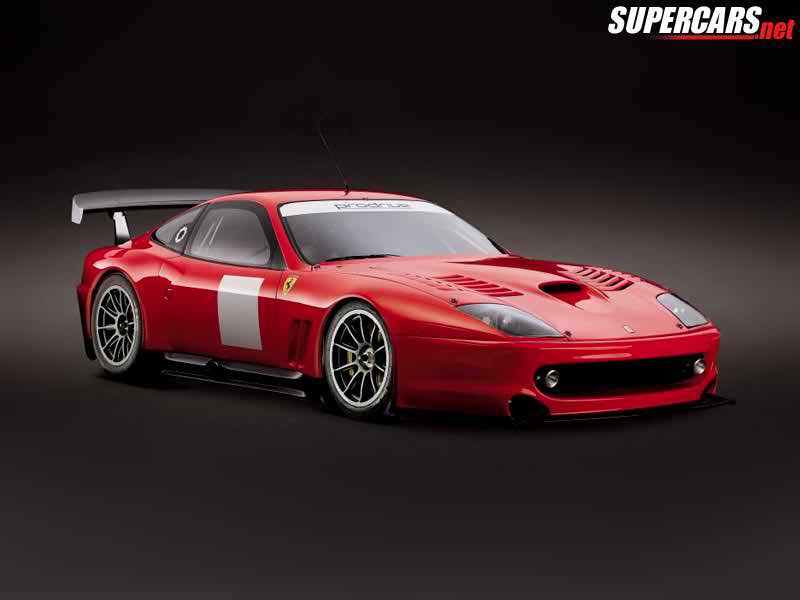
28. Ferrari 550 GTS Maranello
2001–04 · 5.9 V12 · About 600 hp
Ferrari did not build this one. The British firm Prodrive turned the 550 Maranello road car into a GT racer for a private customer, with a 5.9-litre V12 of about 600 horsepower and bodywork in carbon fibre, and no help from Maranello. In 2003 it won its class at Le Mans, beating the works Corvettes. The factory then built a racing 575 of its own, which did less.
Verdict The Ferrari that Ferrari did not build.

27. Ferrari 750 Monza
1954–55 · 3.0 inline-four · 250 hp · ~ 31
The 3.0-litre four-cylinder sports car that Ferrari sold to private owners in the mid-1950s. The 750 Monza won first time out, at the circuit it was named for, and Mike Hawthorn and Maurice Trintignant won the 1954 Tourist Trophy in one. About 31 were made. It was quick and tricky to drive. Alberto Ascari was killed testing one at Monza in 1955.
Verdict Quick, successful and unforgiving.
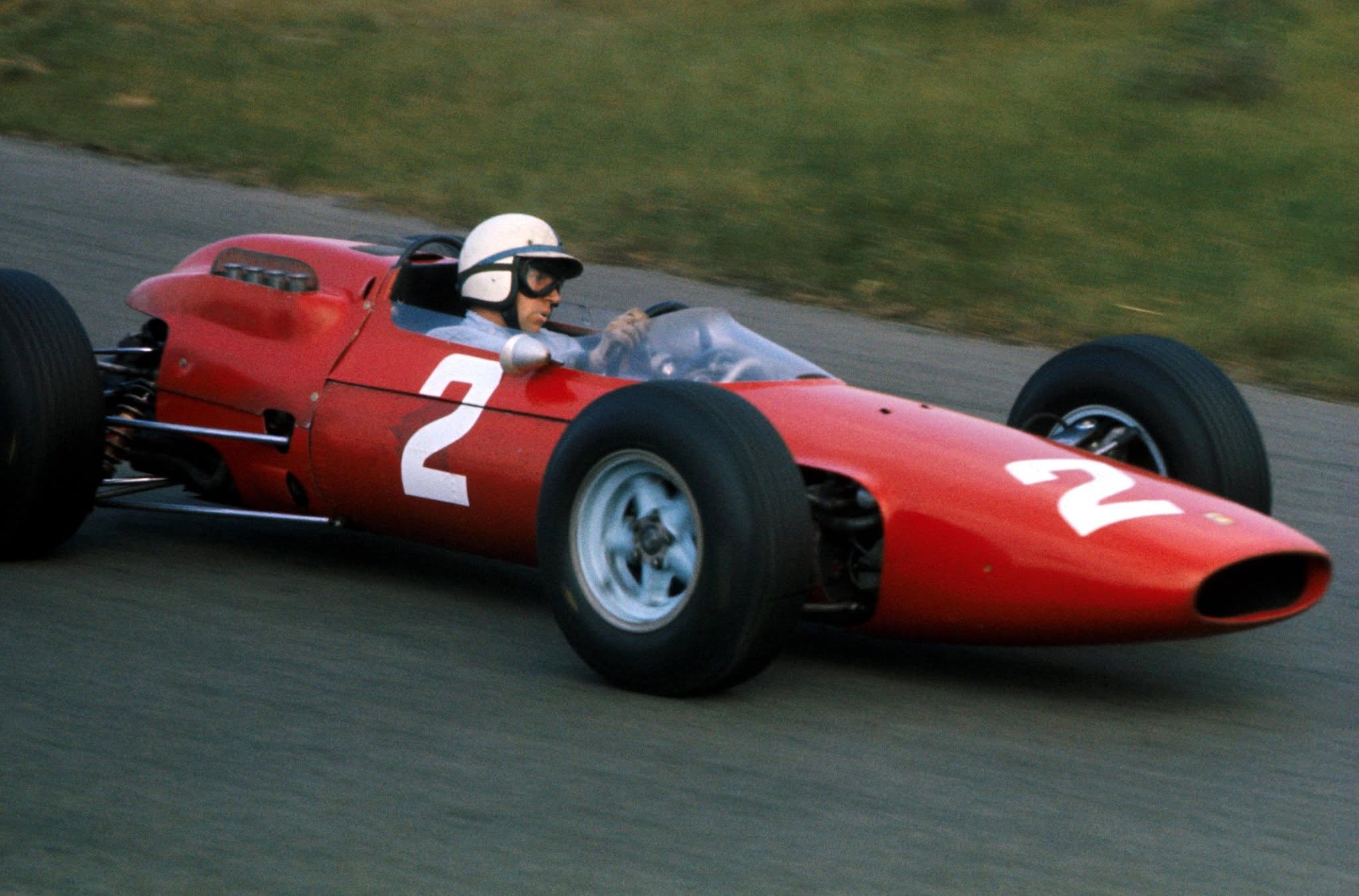
26. Ferrari 158
1964–65 · 1.5 V8 · About 210 hp
John Surtees became the only man to win world championships on two wheels and four in this car. The 158 had a 1.5-litre V8 and one of Ferrari's first semi-monocoque chassis. Surtees won in Germany and Italy and took the 1964 title by one point at the last race, in Mexico, in a car painted blue and white because Enzo Ferrari was in dispute with the Italian authorities.
Verdict World champion, in blue and white.
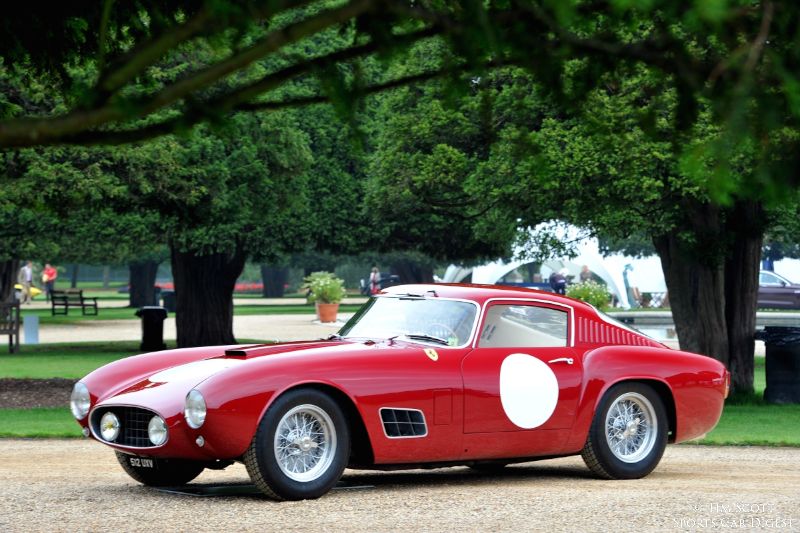
25. Ferrari 250 GT Tour de France
1956–59 · 3.0 V12 · 240 to 260 hp · ~ 77
The long-wheelbase 250 GT Berlinetta won the Tour de France Automobile four years in a row, from 1956 to 1959, and has been known by the race's name ever since. It was the car that set the pattern for the SWB and the GTO: a road-going Ferrari coupé that a private owner could enter and win with. About 77 were built.
Verdict Named after the race it kept winning.
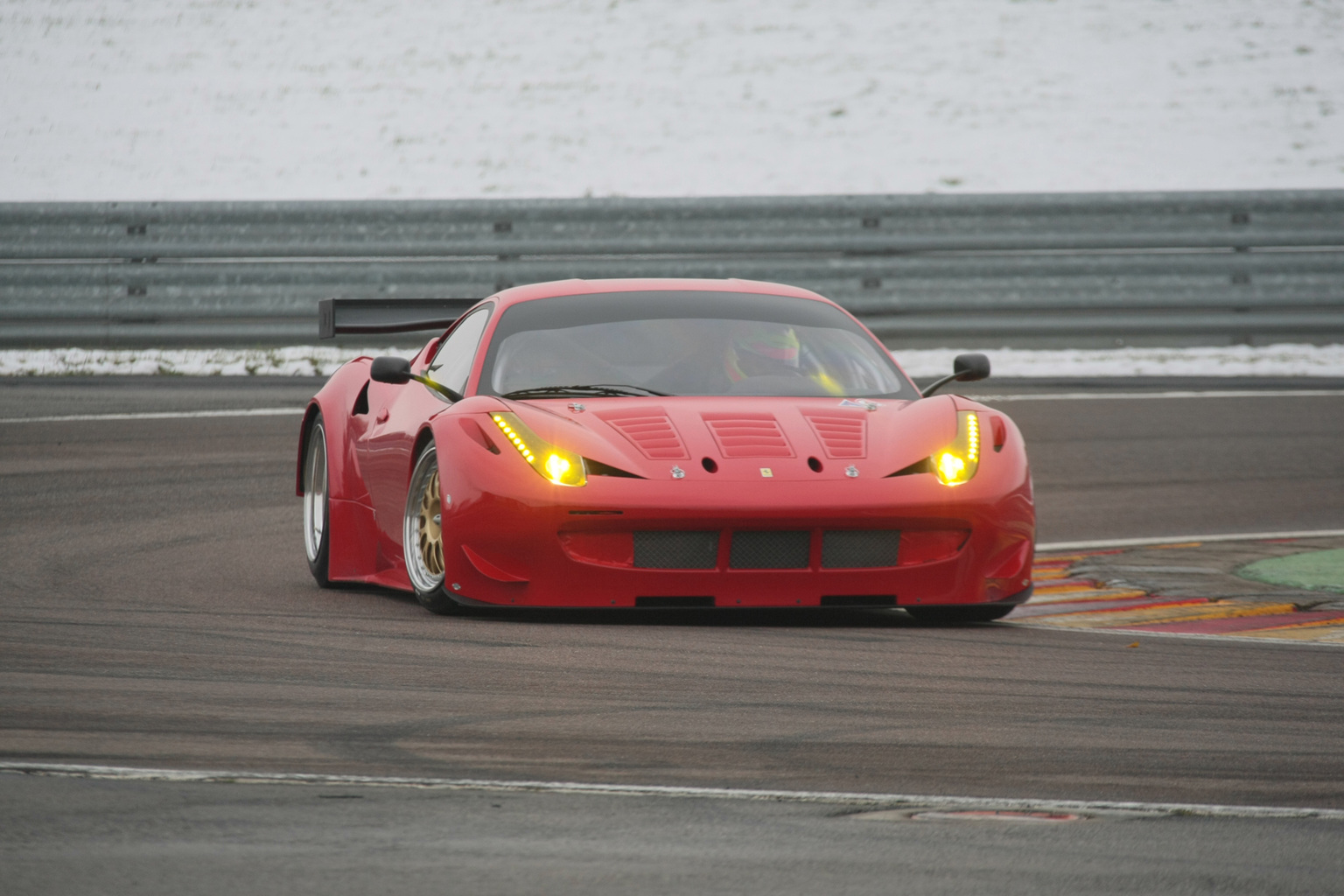
24. Ferrari 458 Italia GT2
2011–15 · 4.5 V8 · About 470 hp
The modern customer Ferrari at its best. The racing version of the 458 Italia kept the 4.5-litre V8, restricted by the rules to about 470 horsepower, and won wherever GT cars raced. It took its class at Le Mans in 2012 and 2014 and brought Ferrari the world endurance GT title three years running. Private teams on three continents ran them.
Verdict The GT car every private team wanted.
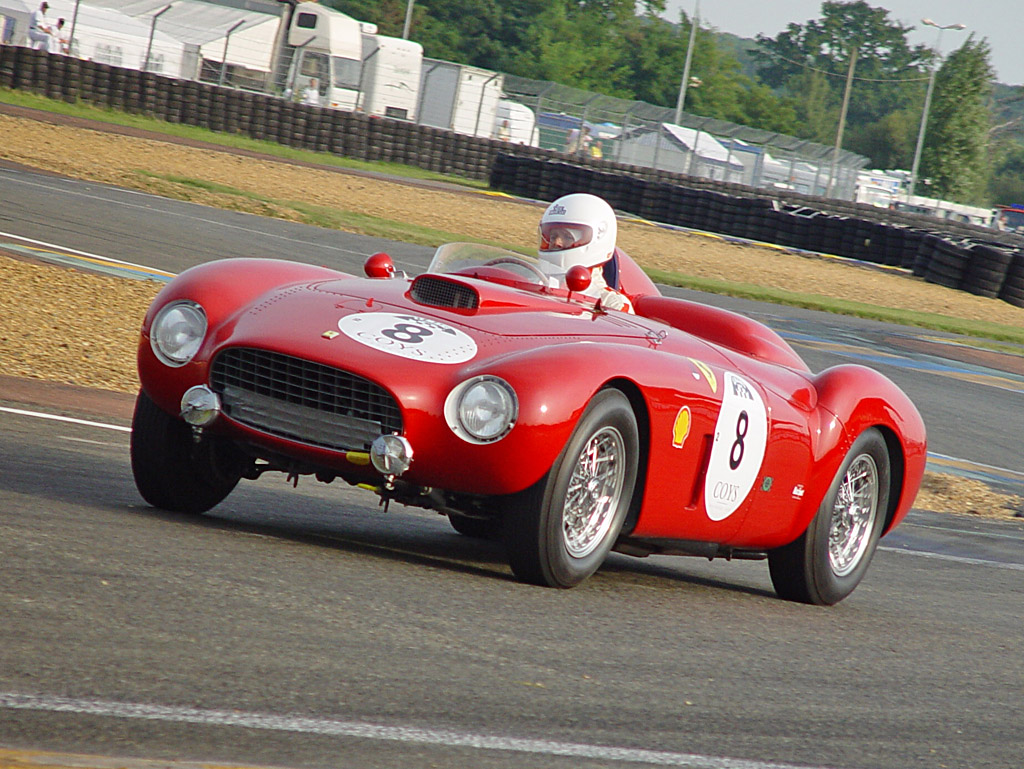
23. Ferrari 375 Plus
1954 · 4.95 V12 · 330 hp
Ferrari's way with a sports car in 1954 was to make the engine bigger. The 375 Plus had a 4.95-litre V12 of 330 horsepower in a chassis that struggled to hold it. José Froilán González and Maurice Trintignant won Le Mans in one, in the rain, a few minutes ahead of the new Jaguar D-type. Umberto Maglioli won the Carrera Panamericana in another.
Verdict Five litres, and just enough car to carry them.
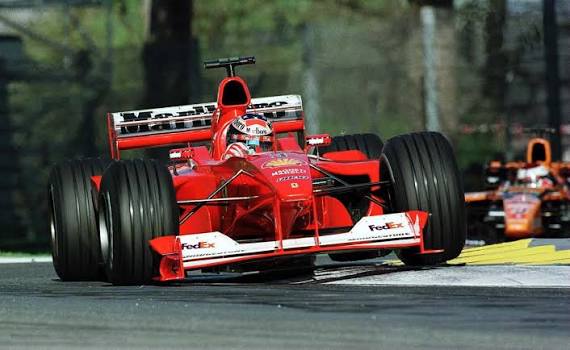
22. Ferrari F1-2000
2000 · 3.0 V10 · About 800 hp
Not the best of the Schumacher Ferraris, but the one that mattered most in Maranello. The F1-2000 won ten of the seventeen races in 2000, nine of them with Schumacher, and he settled the title at Suzuka with a race to spare. It was Ferrari's first drivers' championship since Jody Scheckter's in 1979. Four more followed.
Verdict Twenty-one years of waiting, ended at Suzuka.

21. Ferrari 290 MM
1956 · 3.5 V12 · 320 hp · 4
Built for one race, the 1956 Mille Miglia, and it won it. Eugenio Castellotti drove a 290 MM for more than eleven hours in heavy rain to finish first, with Juan Manuel Fangio fourth in another. The 3.5-litre V12 gave 320 horsepower. Four were made, and they helped win Ferrari the 1956 world sports car title.
Verdict Made for the Mille Miglia. Won it in the rain.
20 to 11
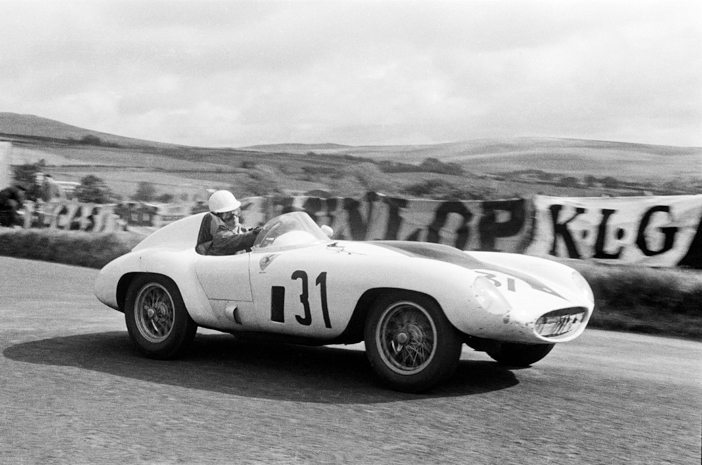
20. Ferrari 126 C2
1982 · 1.5 twin-turbo V6 · About 580 hp
Fast, and remembered with sorrow. The 126 C2 of 1982 had a twin-turbocharged 1.5-litre V6 of about 580 horsepower and, for the first time at Ferrari, a modern chassis, designed by the Englishman Harvey Postlethwaite. It was the best car of the year. Gilles Villeneuve was killed in one in practice at Zolder in May. Didier Pironi was leading the championship in August when a crash at Hockenheim ended his career. Patrick Tambay and Mario Andretti finished the season, and Ferrari still won the constructors' title. The drivers' title went elsewhere by five points.
Verdict The title it won, and the one it should have.
Did you know: Its chassis was designed by Harvey Postlethwaite, an Englishman hired to bring Ferrari's chassis work up to date.
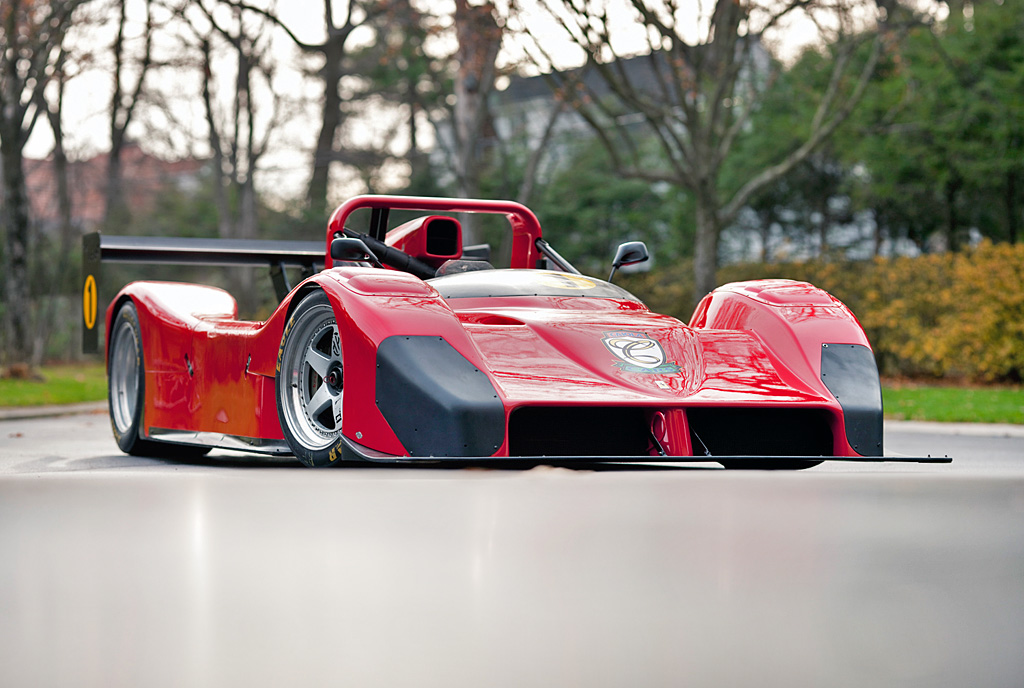
19. Ferrari 333 SP
1994–2001 · 4.0 V12 · 650 hp · ~ 40
By 1993 Ferrari had not built a sports prototype for twenty years. Giampiero Moretti, who owned the Momo steering-wheel company and had raced other people's cars for decades, talked the factory into making one for American racing. The 333 SP used a 4.0-litre V12 related to the F50's, with 650 horsepower and a noise nobody at the circuit forgot. About 40 were built and sold to private teams. They won the Sebring 12 Hours in 1995, 1997 and 1998. In 1998 Moretti, aged 57, at last won the Daytona 24 Hours in his own.
Verdict A customer asked. Ferrari said yes.
Did you know: Dallara built the first 14 cars and Michelotto the rest. Ferrari sold them to customers and never ran one itself.
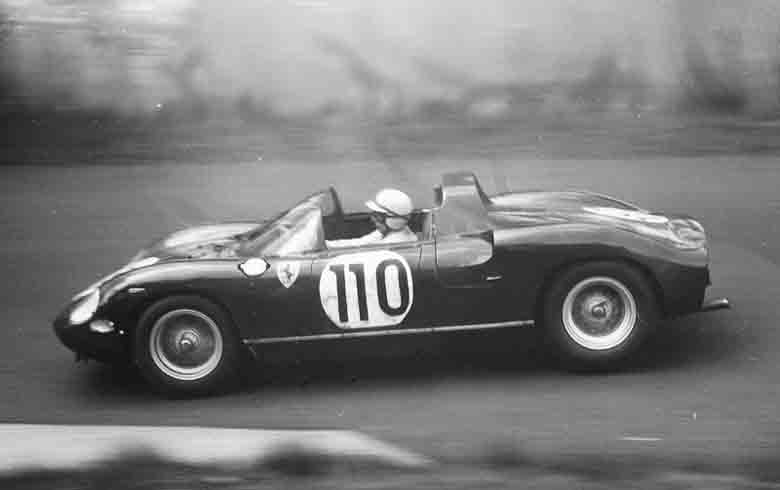
18. Ferrari 250 P
1963 · 3.0 V12 · 310 hp · 4
Ferrari resisted putting the engine behind the driver for longer than most. When it gave in, the result won straight away. The 250 P of 1963 put the Testa Rossa's 3.0-litre V12 in the middle of an open prototype. Four were built. They won at Sebring and the Nürburgring, and at Le Mans Lodovico Scarfiotti and Lorenzo Bandini gave Ferrari the first win there for a mid-engined car, with an all-Italian crew. Every Le Mans winner since has had its engine in the same place. The 250 LM, higher up this list, is this car with a roof.
Verdict The first mid-engined car to win Le Mans.
Did you know: Its Le Mans win in 1963 was the first for a car with the engine behind the driver.
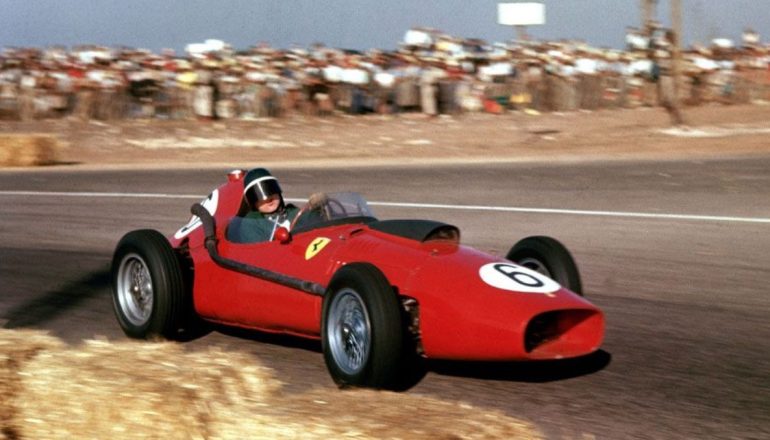
17. Ferrari Dino 246 F1
1958–60 · 2.4 V6 · 275 hp
Named for Enzo Ferrari's son, who had worked on the V6 before his death in 1956. The Dino 246 took Mike Hawthorn to the 1958 title by a single point from Stirling Moss, who had won four races to Hawthorn's one. It was a hard year: Luigi Musso and Peter Collins were both killed in these cars, and Hawthorn retired as champion. The 246 was the first V6 car to win a Grand Prix and, at Monza in 1960 after the British teams stayed away, the last front-engined car to win one.
Verdict The last front-engined champion.
Did you know: The first V6 car to win a Grand Prix, and in 1960 the last front-engined car to win one.
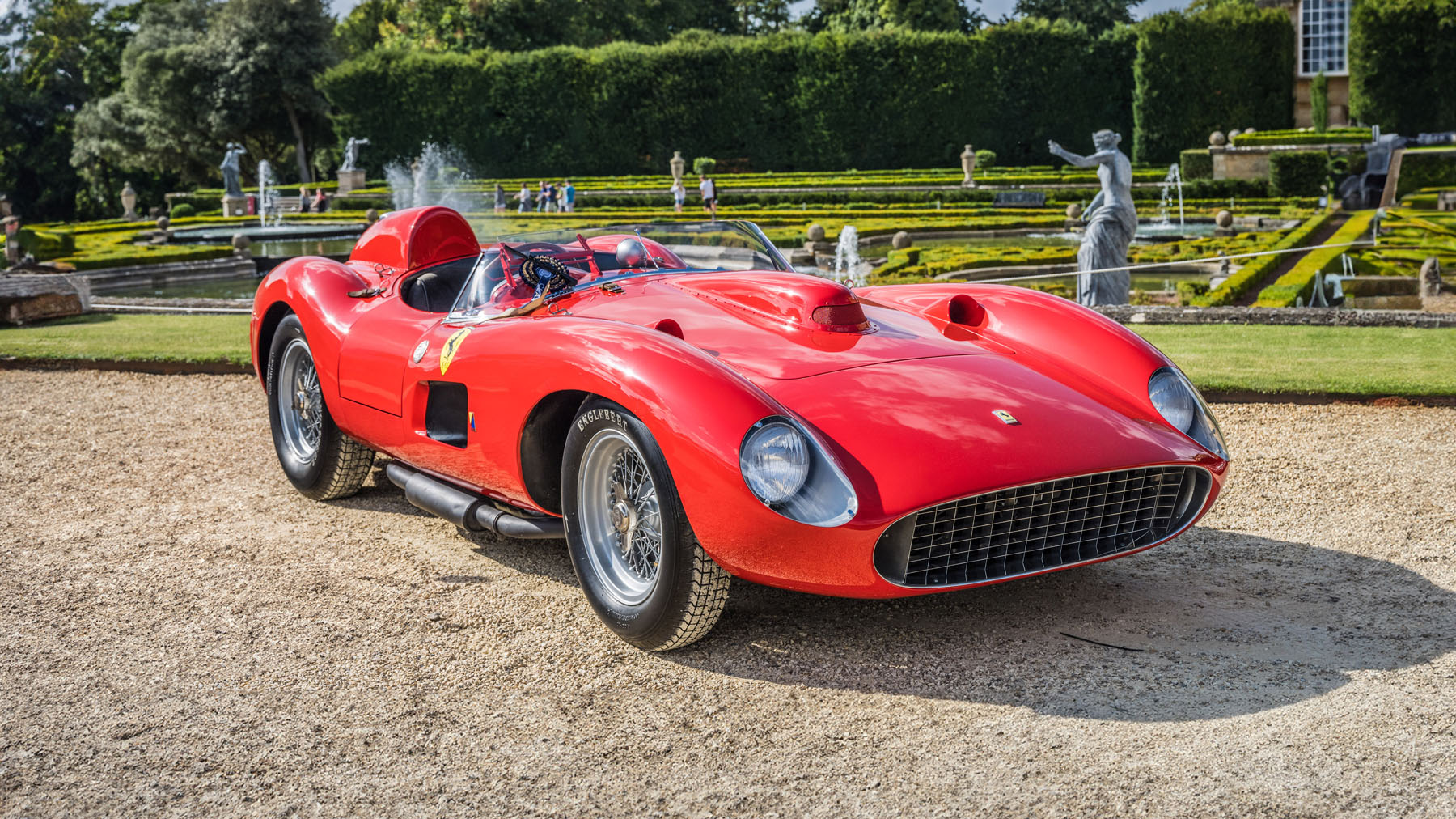
16. Ferrari 335 S
1957–58 · 4.0 V12 · 390 hp · 4
The biggest and fastest of Ferrari's front-engined sports racers. The 335 S had a 4.0-litre four-cam V12 of 390 horsepower and would reach about 300 km/h on the roads of the 1957 Mille Miglia. One of them, driven by Alfonso de Portago, crashed 40 km from the finish, killing its crew and nine spectators, and Italy never ran the race again. The same cars finished first and second in Venezuela at the end of the year to win Ferrari the world championship. Four were built. One sold in 2016 for €32.1 million.
Verdict Too fast for the roads it raced on.
Did you know: One sold in Paris in 2016 for €32.1 million.
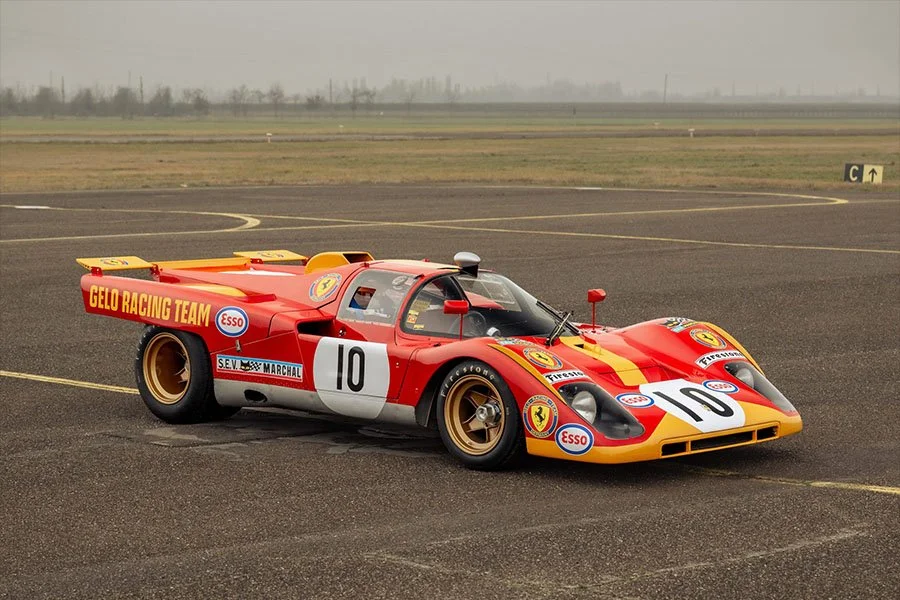
15. Ferrari 512 S
1970 · 5.0 V12 · 550 hp · 25
In 1969 Porsche built 25 of its 917 to satisfy the rules for five-litre sports cars. Enzo Ferrari sold half his company to Fiat and used some of the money to do the same. The 512 S had a 5.0-litre V12 of 550 horsepower and was designed and built in about nine months. It won the Sebring 12 Hours in 1970, with Mario Andretti brought in to chase down a Porsche in the last hour. That was the only championship race it won. It is here because for one season the 917 had an opponent, and it was this.
Verdict The only thing that worried a 917.
Did you know: Ferrari built 25 to take on the Porsche 917. It beat it at Sebring in 1970.
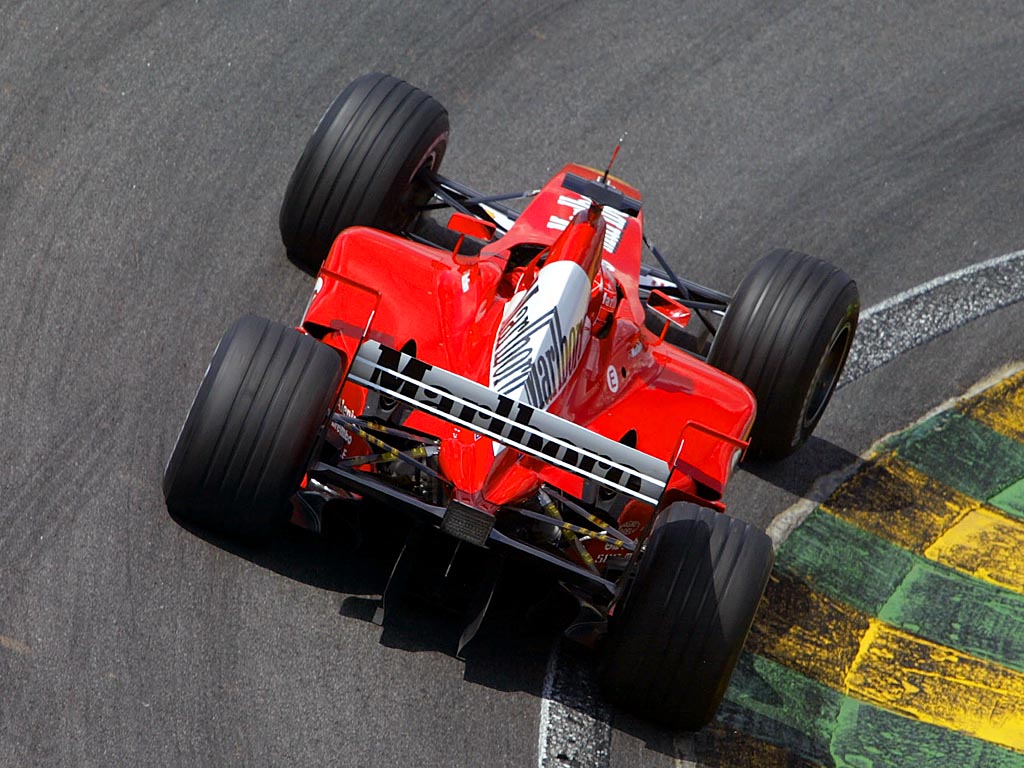
14. Ferrari F2002
2002–03 · 3.0 V10 · 835 hp
The F2002 is the car that made the F2004 possible. It had a smaller, lighter V10 and a new titanium gearbox, and it was so much better than the car before it that Ferrari held it back until the third race of 2002 to be sure of it. It won on its debut. Across 2002 and the first races of 2003 it won 15 Grands Prix from 19. Schumacher finished every race of 2002 on the podium and settled the title in France in July, with six races left. It is below the F2004 on numbers, and not by much.
Verdict Champion by July.
Did you know: Michael Schumacher finished every race of 2002 on the podium.

13. Ferrari 250 GT SWB
1959–62 · 3.0 V12 · 240 to 280 hp · ~ 165
The short-wheelbase 250 GT is on our road list, and it belongs here too. In aluminium-bodied competition form it was the GT car to have in 1960 and 1961. Stirling Moss won the Tourist Trophy at Goodwood in one both years, and said he had the radio on for part of it. The SWB won its class at Le Mans in both years and the Tour de France as well. Owners drove them to the circuit, raced, and drove home. The 250 GTO replaced it and took the fame, which is why the SWB sits well below it here.
Verdict Drive to the race, win it, drive home.
Did you know: Stirling Moss won the Tourist Trophy at Goodwood in one in 1960 and again in 1961.
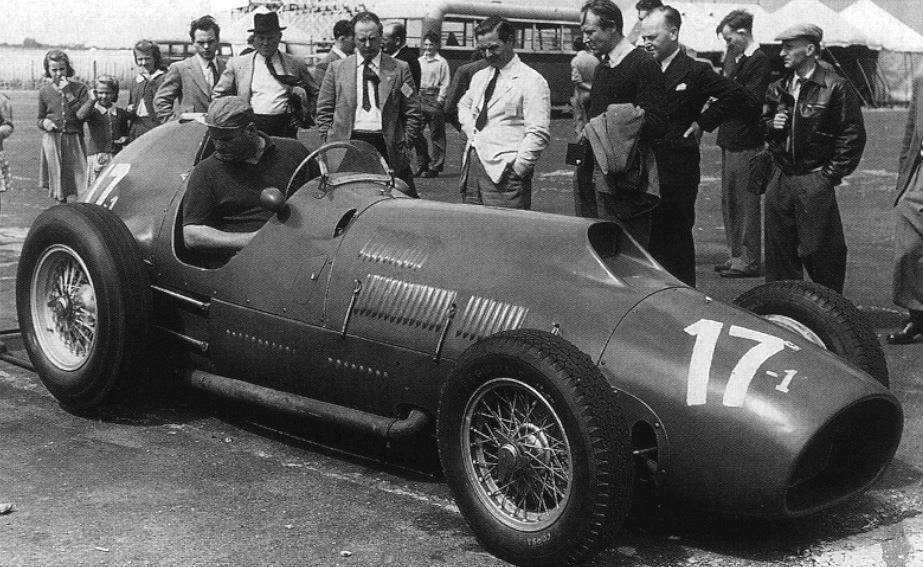
12. Ferrari 375 F1
1950–51 · 4.5 V12 · 350 to 380 hp
The first world championship seasons belonged to Alfa Romeo and its supercharged 1.5-litre cars, which Enzo Ferrari had once run himself. Aurelio Lampredi's answer was a 4.5-litre V12 with no supercharger: less power, but far less fuel and fewer stops. At the British Grand Prix in July 1951 José Froilán González put a 375 on pole and beat Fangio's Alfa by almost a minute. It was Ferrari's first win in a championship Grand Prix. Ascari won the next two. Alfa Romeo took the title and then withdrew from racing.
Verdict The car that beat Alfa Romeo.
Did you know: One was sold to the bearing maker Tony Vandervell and raced in Britain as the Thin Wall Special.
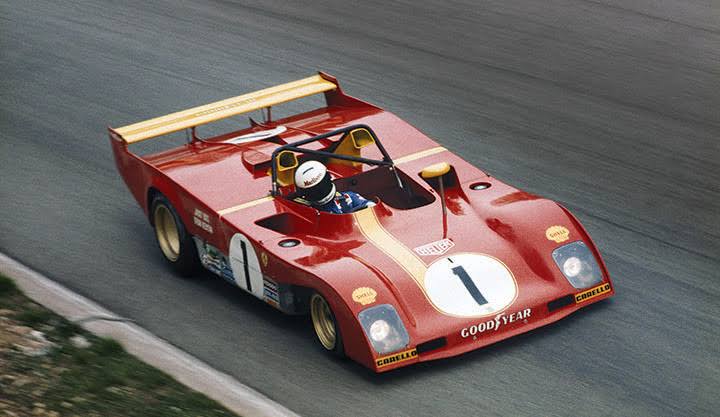
11. Ferrari 312 PB
1971–73 · 3.0 flat-12 · 440 hp
The 312 PB was a Formula One car with a second seat and a body over the wheels. It used the same 3.0-litre flat-12 as the Grand Prix cars, giving about 440 horsepower, in a chassis hardly any bigger. In 1972 Ferrari entered it in ten rounds of the world championship for makes and it won all ten, with Jacky Ickx, Mario Andretti, Ronnie Peterson and Clay Regazzoni among the drivers. The one race Ferrari skipped was Le Mans, because it doubted the engine would last 24 hours. It was the last sports prototype the factory built until the 499P.
Verdict Ten starts, ten wins, and no Le Mans.
Did you know: Won every championship race it entered in 1972. Ferrari skipped Le Mans that year.
The top 10
- Years
- 1961–62
- Engine
- 1.5 V6
- Power
- 190 hp
F1 car · Italy
10. Ferrari 156 F1 Sharknose
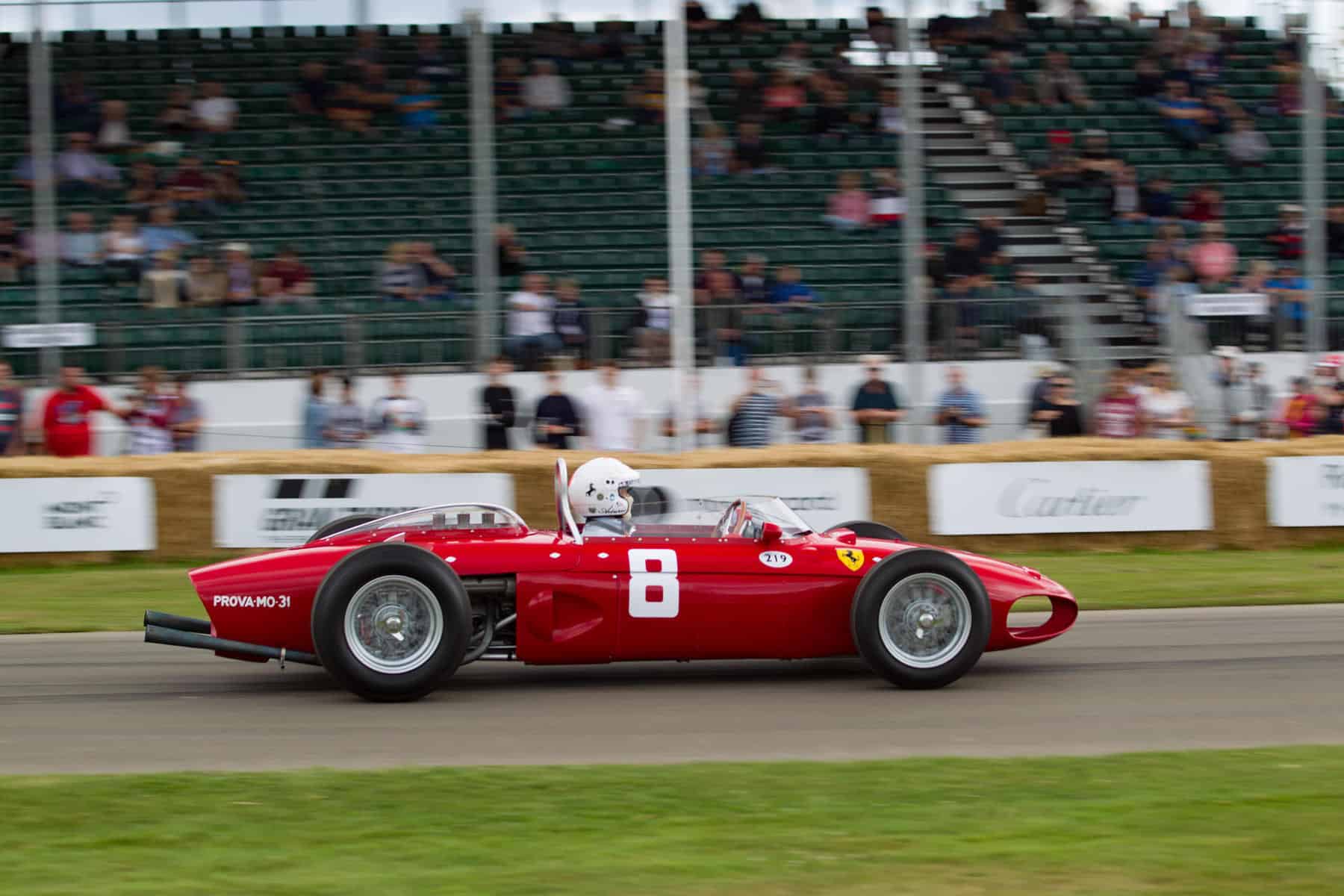
When Formula One went to 1.5-litre engines for 1961, the British teams spent a year objecting and Ferrari spent it building a V6. The 156 arrived with 190 horsepower, a good deal more than anything else on the grid, the engine behind the driver, and a nose split into two nostrils.
It won five of the seven championship races it started. Phil Hill became the first American world champion and Ferrari took its first constructors' title. Giancarlo Baghetti won the French Grand Prix in one, in his first championship race. The title was settled at Monza, on the afternoon that Hill's team-mate and rival Wolfgang von Trips was killed along with fifteen spectators. Ferrari did not keep the cars. When the season was over every one was broken up, and the Sharknoses seen today are replicas.
Verdict A year ahead of everyone, and then scrapped.
Phil Hill won the 1961 title in it. Ferrari scrapped every one.

- Years
- 1948–50
- Engine
- 2.0 V12
- Power
- 140 hp
- Built
- 25
Race car · Italy
9. Ferrari 166 MM Barchetta
In 1949 Ferrari was two years old and barely known outside Italy. The 166 MM changed that in a single season. Clemente Biondetti won the Mille Miglia in one in April. In June Luigi Chinetti drove another for all but about an hour of the 24 at Le Mans and won, in the first Le Mans held since the war. A fortnight later he won the Spa 24 Hours too.
The car was tiny: a 2.0-litre V12 of 140 horsepower in an open body by Touring of Milan, which a journalist called a barchetta, a little boat, and the name stuck. Twenty-five were made. Chinetti used the results to set himself up as Ferrari's importer in America, which paid for a great deal of the racing that followed. Everything Ferrari became abroad starts with this car.
Verdict The little boat that put Ferrari on the map.
Won the Mille Miglia and Le Mans in 1949. Barchetta, little boat, was a journalist's nickname.
- Years
- From 2023
- Engine
- 3.0 twin-turbo V6 hybrid
- Power
- About 670 hp
Race car · Italy
8. Ferrari 499P
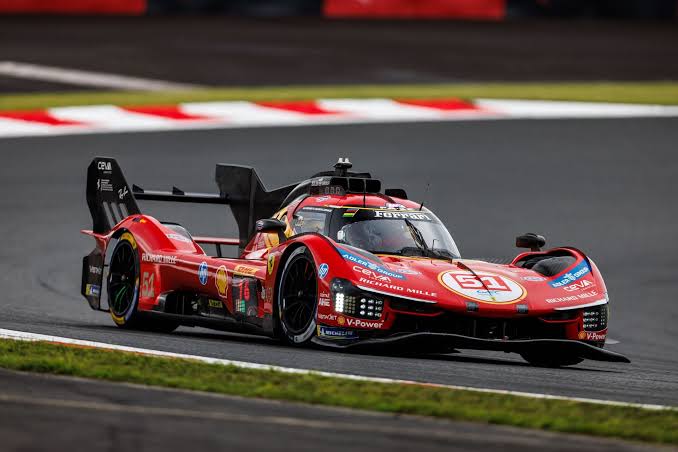
Ferrari stayed away from the top class at Le Mans for fifty years. It came back in 2023 with the 499P, a hybrid prototype with a twin-turbocharged V6 driving the rear wheels and an electric motor on the front axle, and it won at the first attempt, in the centenary race, against Toyota, Porsche, Cadillac and Peugeot.
Then it won again in 2024, and again in 2025, when a privately entered car in yellow beat the two works cars. In 2025 the 499P also brought Ferrari the world endurance championship for manufacturers. It is high on this list for a car still racing, and that is deliberate. Winning Le Mans three years running against that many factory teams is as hard as anything else on this page, and the older cars have had decades for their reputations to settle. This one did it in public, with everyone watching.
Verdict Fifty years away, then three in a row.
Won Le Mans at its first attempt in 2023, 50 years after Ferrari's last works entry in the top class.

- Years
- 1963–65
- Engine
- 3.3 V12
- Power
- 320 hp
- Built
- 32
Race car · Italy
7. Ferrari 250 LM
The 250 LM was meant to be a GT car. Ferrari put the V12 behind the driver in a closed coupé, asked for it to be accepted as a development of the 250 GTO, and was refused, because nothing like the hundred cars the rules required had been made. In the end there were 32. So the LM raced as a prototype against cars built for the job, and nobody gave it a chance.
At Le Mans in 1965 the works Ferraris and the Fords all broke. A year-old 250 LM entered by Luigi Chinetti's North American Racing Team, driven flat out by Jochen Rindt and Masten Gregory because they did not expect it to last, was still running at the end. It won by five laps. It was Ferrari's sixth Le Mans win in a row and, as it turned out, the last for 58 years.
Verdict The car nobody wanted, and the last to win Le Mans for 58 years.
Won Le Mans in 1965 for NART, Ferrari's last overall win there until 2023.
- Years
- 1952–53
- Engine
- 2.0 inline-four
- Power
- 185 hp
F1 car · Italy
6. Ferrari 500 F2
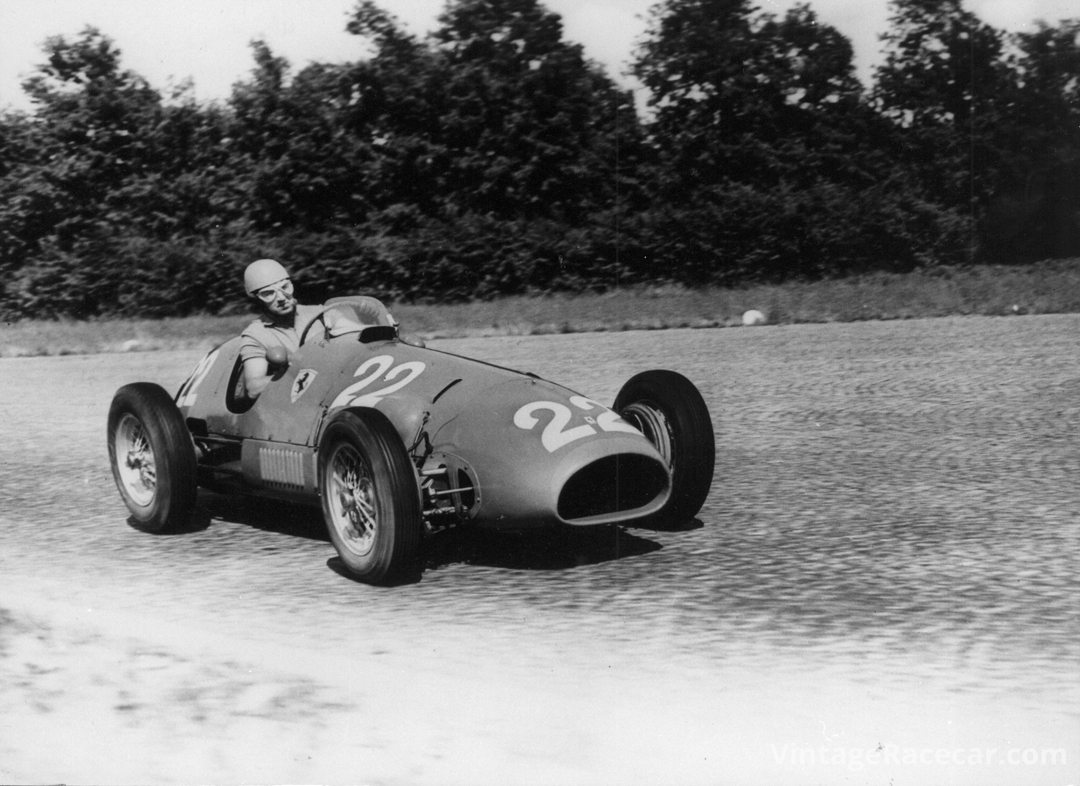
For 1952 and 1953 the world championship was run to Formula Two rules, and Ferrari had the right car ready. The 500 had a 2.0-litre four-cylinder engine designed by Aurelio Lampredi, which gave 185 horsepower and a great deal of pull out of slow corners. It was light, simple and almost unbreakable.
Alberto Ascari won nine championship Grands Prix in a row with it, a record that stood for sixty years. He was champion in 1952 and again in 1953, and those were Ferrari's first world titles. In two seasons the 500 was beaten once in a championship Grand Prix, at Monza in 1953, on the last corner of the last lap. Private owners bought them and raced them for years afterwards. The cars that made Ferrari's name have twelve cylinders. The car that made it world champion had four.
Verdict Four cylinders, two titles, one defeat.
Alberto Ascari won nine championship Grands Prix in a row with it.

- Years
- 1967
- Engine
- 4.0 V12
- Power
- 450 hp
- Built
- 3
Race car · Italy
5. Ferrari 330 P4
In June 1966 Ford finished first, second and third at Le Mans and photographed it. The 330 P4 was Ferrari's reply. Forghieri gave the 4.0-litre V12 three valves per cylinder and fuel injection, for 450 horsepower, and put it in a body that many people consider the best-looking racing car ever made.
Its first race was the Daytona 24 Hours of 1967, in Ford's own country. Ferraris finished first, second and third, and crossed the line side by side for a photograph of their own. A P4 won at Monza as well, and at Le Mans the cars came second and third behind a seven-litre Ford. That was enough to win Ferrari the manufacturers' championship. Only three P4s were built, and the rules were rewritten at the end of the year to ban them. One season, one title and one photograph was all it needed.
Verdict Ferrari's answer to Ford, delivered at Daytona.
Ferrari's staged 1-2-3 at Daytona in 1967 was its reply to Ford's Le Mans finish of 1966.
- Years
- 2004
- Engine
- 3.0 V10
- Power
- About 865 hp
F1 car · Italy
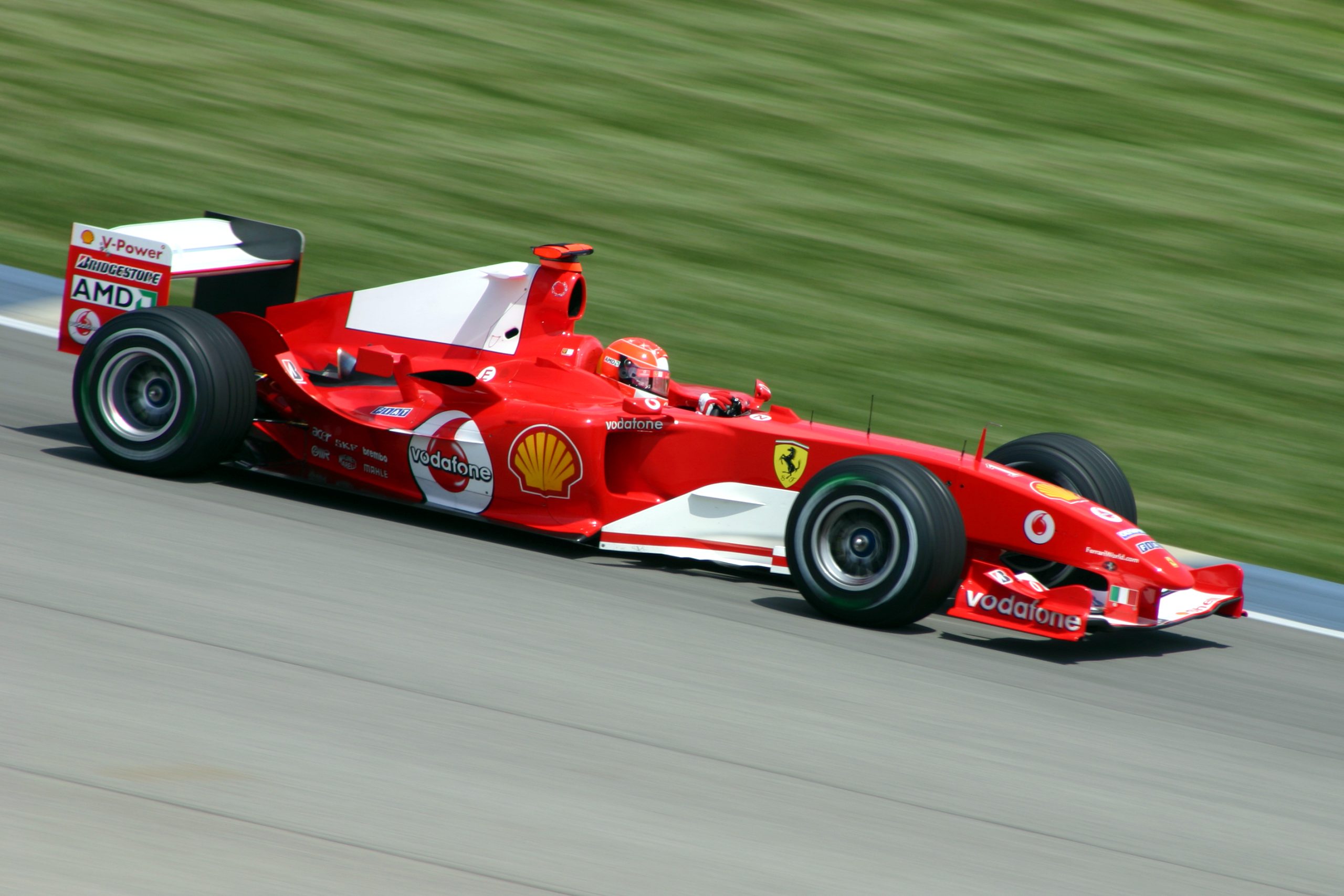
4. Ferrari F2004
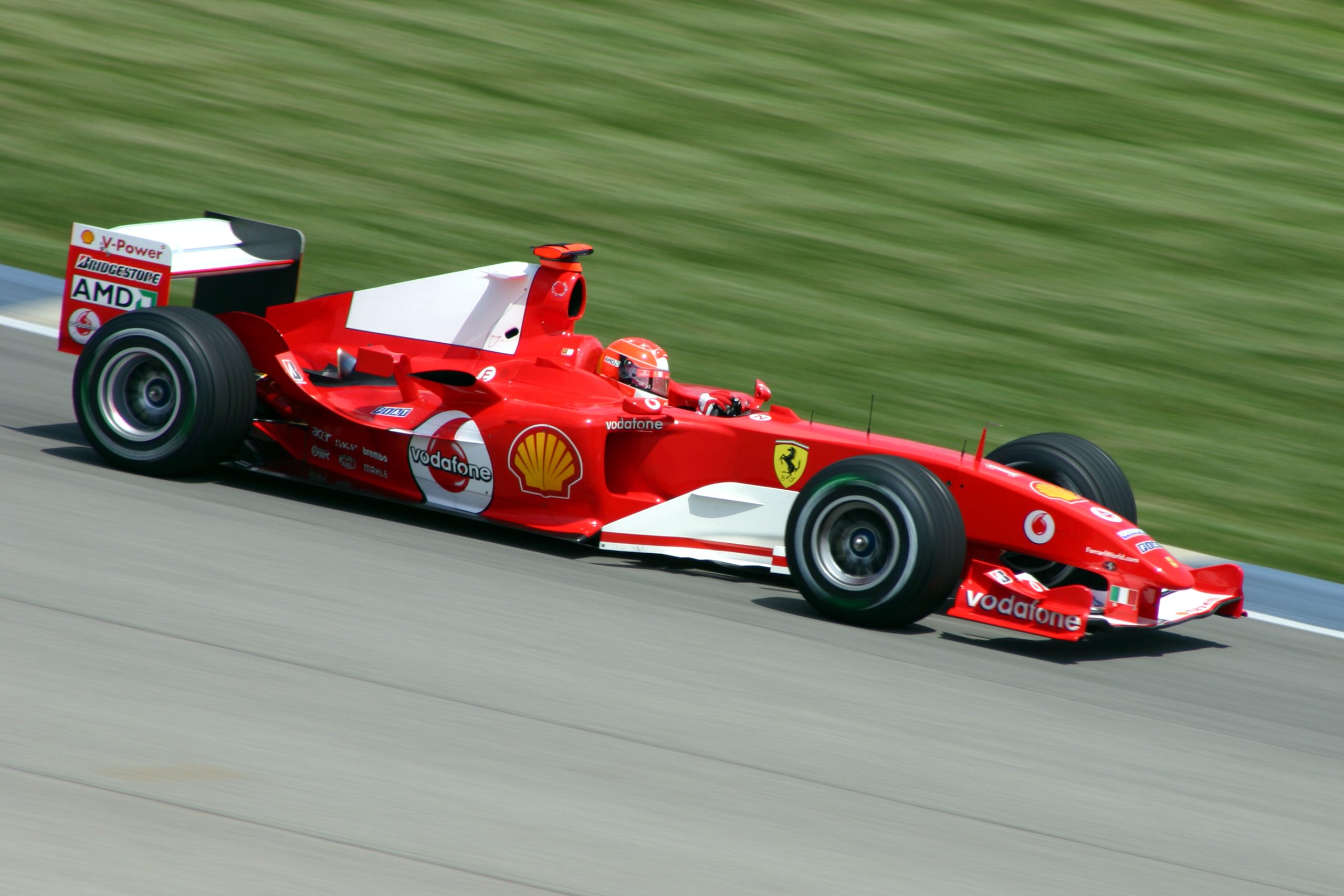
The most dominant Ferrari ever built. The F2004 won 15 of the 18 Grands Prix in 2004, and Michael Schumacher won 12 of the first 13. He took his seventh title, his fifth in a row for Ferrari, with four races still to run. The constructors' title had gone the same way.
There was no trick to it. The F2004 was the last and best of a line that Ross Brawn, Rory Byrne and Paolo Martinelli had been refining since 1999: a 3.0-litre V10 of about 865 horsepower, a gearbox and rear end made as small as possible, and tyres that Bridgestone built for this car alone. It was also reliable to a degree the sport had not seen. Some of its lap records stood for more than a decade. It sits below the 312 T only because the older car changed how Ferrari built a racing car, and this one perfected what was already there.
Verdict Fifteen wins from eighteen. Nothing else came close.
Won 15 of the 18 races in 2004.
- Years
- 1962–64
- Engine
- 3.0 V12
- Power
- 300 hp
- Built
- 36
Road car · Italy
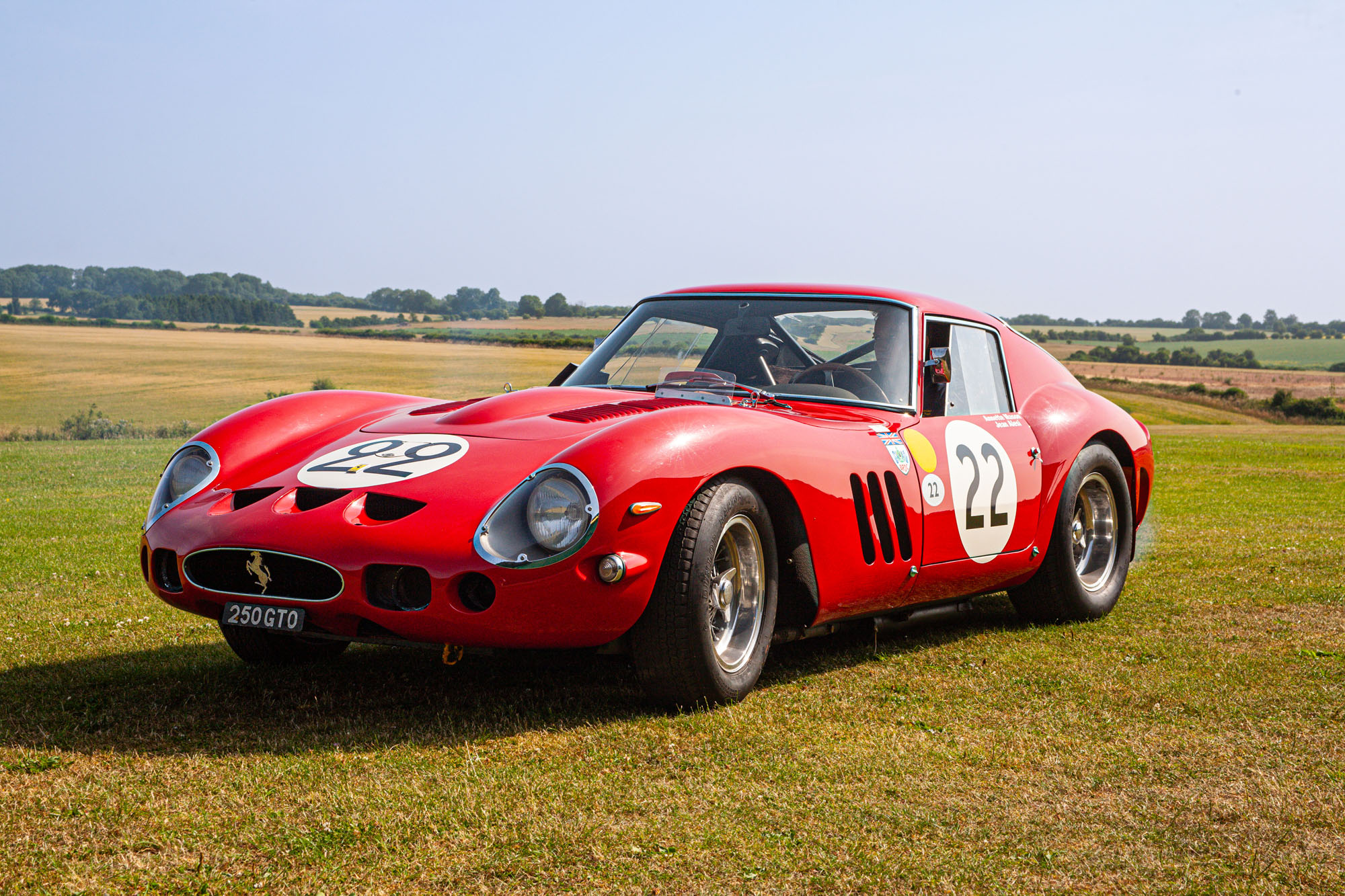
3. Ferrari 250 GTO
The 250 GTO is third on our list of the best Ferrari road cars, and it is third here. It is the only car to make the top five of both, which says what it was: a racing car that could be driven to the circuit.
Ferrari built it to win the GT class of the world championship and it did so three years running, in 1962, 1963 and 1964. A GTO finished second overall at Le Mans in 1962, behind a prototype, and the cars won the Tour de France and the Tourist Trophy along the way. The recipe was the short-wheelbase 250 GT made lower and slipperier, with the Testa Rossa's 300-horsepower V12 and a five-speed gearbox. Thirty-six were made, and the rule makers were persuaded to accept that as a hundred. Its results alone earn the place. Everything else that is said about a GTO comes on top.
Verdict The GT car that won everything a GT car could.
All 36 survive. Buyers needed Enzo Ferrari's personal approval.
The full story of the Ferrari 250 GTO →239 stories in the archive →

- Years
- 1975
- Engine
- 3.0 flat-12
- Power
- About 495 hp
F1 car · Italy
2. Ferrari 312 T
Ferrari went eleven years without a drivers' champion after 1964. The car that ended the wait was the 312 T of 1975, and the T in its name explains it. Mauro Forghieri turned the gearbox sideways and put it ahead of the rear axle, so that the heaviest parts of the car sat between the wheels. With a flat-12 of about 495 horsepower lying low behind the driver, the result was a car that was fast everywhere and easy on its tyres.
Niki Lauda won five Grands Prix in it and the 1975 title with a race to spare. Then the idea kept working. The 312 T2 won the constructors' title in 1976 and took Lauda to a second championship in 1977, and the T4 made Jody Scheckter champion in 1979. One layout, three drivers' titles and four constructors' titles in five seasons. Only the Schumacher years compare, and they needed a new car every winter.
Verdict The sideways gearbox that gave Ferrari the 1970s.
T is for trasversale: the gearbox sits across the car, ahead of the rear axle.
The best of the 30 · Race car · Italy
1. Ferrari 250 Testa Rossa
- Years
- 1957–61
- Engine
- 3.0 V12
- Power
- 300 hp
- Built
- ~ 34
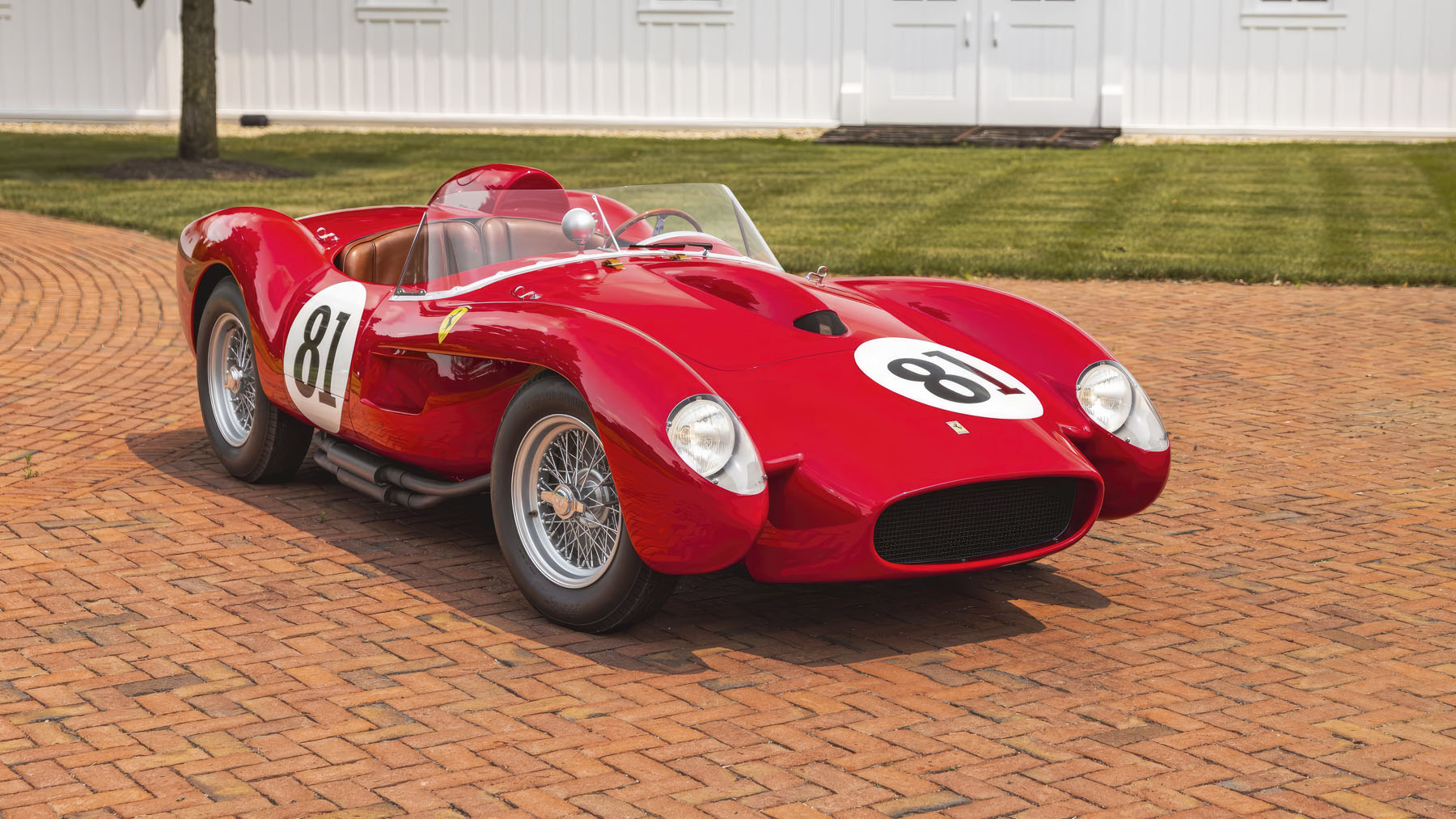
Count the results and the argument is short. Between 1958 and 1961 the 250 Testa Rossa won Le Mans three times, in 1958, 1960 and 1961, and carried Ferrari to the world sports car championship in each of those years. It won at Sebring, at Buenos Aires and on the Targa Florio. No other Ferrari sports racer has a record like it.
It was not a clever car. When the rule makers capped engines at three litres for 1958, Ferrari took the V12 from the 250 GT, fitted six twin-choke carburettors and painted the cam covers red. The chassis was a simple tubular frame, the rear axle was live on the early cars, and the brakes were drums long after Jaguar had gone to discs. What it had was 300 horsepower from an engine that would run flat out for a day and a night, and that was Ferrari's whole method in those years: build the engine, and make sure it is still running at the end.
The customer cars of 1958 wore Scaglietti's pontoon-fender body, with the nose cut away behind the front wheels to cool the brakes. It is one of the great shapes of the decade, and it was abandoned within a year because it was slow on the straights. The works cars grew disc brakes, then independent rear suspension, then a tail shaped in the wind tunnel, and kept winning through all of it.
Other Ferraris on this list are faster, prettier or more advanced. None of them won as much, for as long, against as many rivals. A list of racing cars should be led by the one that did the most racing and the most winning, and this is it.
Verdict Three Le Mans wins, three world titles, one red-topped V12.
Named for its red-painted cam covers. Won Le Mans in 1958, 1960 and 1961.
What we left off, and why
Thirty places for nearly eighty years of racing means some good cars are missing. These are the ones we argued about longest.
The 375 MM and the 500 TRC. Both were fine customer sports racers of the 1950s. The 375 Plus and the 750 Monza did the same jobs and won bigger races.
The F40 LM and the 512 BB LM. Much loved, and loud. Neither won much, and results came first.
The 488 GTE and the 296 GT3. The 488 won its class at Le Mans twice, and the 296 won the Nürburgring 24 Hours in 2023. The 458 Italia GT2 stands for the modern GT cars, and it started the run.
More Formula One cars. The 641 of 1990 came within a collision of the title. The 412 T2 was the last Grand Prix winner with a V12. The 312 B brought Ferrari back to the front in 1970, and the F2007 and F2008 won the most recent titles. Any of them could be here. We stopped at ten Grand Prix cars so that the list would not turn into a history of Formula One.
The Lancia-Ferrari D50. Fangio won the 1956 title in it, but it was designed and built by Lancia and handed to Ferrari when Lancia ran out of money.
The 246 SP and the Dino 206 S. The 246 SP was Ferrari's first mid-engined sports car and won the Targa Florio. The 250 P took the idea further and won Le Mans.
The 195 S and the 212 E Montagna. One won the 1950 Mille Miglia and the other every round it entered of the 1969 European hillclimb championship. Both deserve a longer list.
If your car is missing, make the case.
Tell us what we got wrongQuestions about this list
What is the best racing Ferrari ever made?
We rank the 250 Testa Rossa first. Between 1958 and 1961 it won Le Mans three times and the world sports car championship three times. The 312 T Formula One car is second and the 250 GTO third.
What is the most successful Ferrari Formula One car?
On results in a single season, the F2004, which won 15 of the 18 Grands Prix in 2004. We rank it fourth, behind the 312 T, whose layout won three drivers' titles and four constructors' titles between 1975 and 1979.
Why is the 250 GTO on both the road and racing lists?
Because it was both. The 250 GTO was built to win the GT class of the world championship, which it did three years running, and it was also registered and driven on the road. It is third on each list.
Which Ferraris have won Le Mans?
Six of the cars on this list won the 24 Hours of Le Mans outright: the 166 MM in 1949, the 375 Plus in 1954, the 250 Testa Rossa in 1958, 1960 and 1961, the 250 P in 1963, the 250 LM in 1965 and the 499P in 2023, 2024 and 2025.
How were the cars ranked?
On three questions: what the car won, what it changed, and how it is remembered. Results came first, but they did not decide everything, or the list would be led by the Formula One cars of the early 2000s. Looks, value and rarity did not count.
Ranked by the editors of Sports Car Digest, drawing on the Sports Car Digest archive and the archives of Vintage Racecar and Vintage Roadcar. The order is opinion, argued car by car, on three questions: what the car won, what it changed and how it is remembered. Specifications and results have been checked against our own archives; if you spot an error, tell us in the comments.