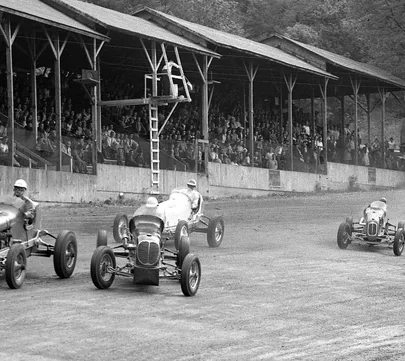

A racing car is seen for a few seconds at a time, at speed, from a distance. What stays in the memory is its colour. Some of the best-known images in the sport are not of a particular car or driver at all, but of a paint scheme: pale blue and orange, black and gold, three stripes on white. This list ranks the thirty that have lasted.
What counts
Paint schemes, not cars. That covers three kinds of thing. Sponsor liveries, which began in 1968 and make up most of the list. The national racing colours that came before them, such as Italian red and British green. And a few one-off designs that became famous in their own right. Each entry is illustrated with one car that wore the livery, though most were used on many.
How we ranked them
On two questions. How good does it look? And how well is it remembered, by people who follow racing and by people who do not? Results count only in so far as winning keeps a livery in front of the cameras. A handsome scheme on a midfield car can rank above a dull one on a champion.
The calls we expect to be argued with
Three decisions shaped this list, and each is explained where it arises.
Gulf is first and Martini second. Martini raced longer, on more cars, and won more. Gulf is the one everybody knows.
The national colours are included, although they are colours and not designs. Ferrari's red is fourth, the Silver Arrows sixth and British racing green tenth.
Seven of the thirty advertised cigarettes, and two more advertised drink. We have ranked them as designs. Tobacco sponsorship is now banned from the sport almost everywhere, and these liveries survive on historic cars and in photographs.
How to read this list
The list counts down from thirty to one. The top ten have the longest entries, the next ten are shorter and the last ten are brief. After the list there are notes on what was left out and why.
See the full ranking, 1 to 30
30 to 21
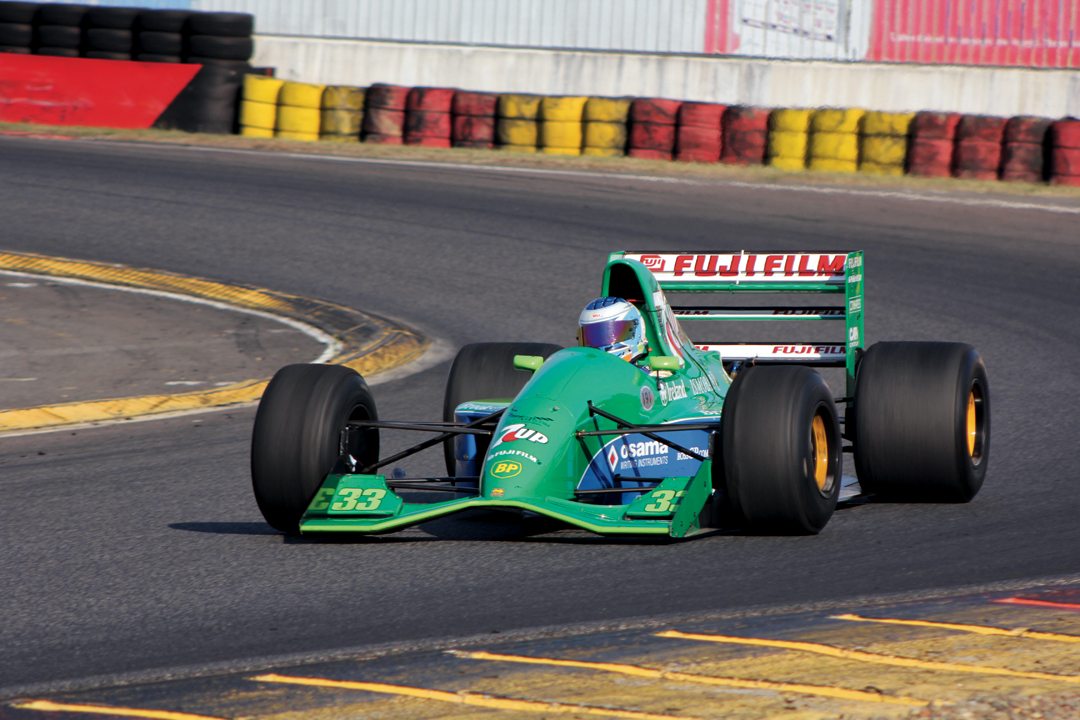
30. 7UP and Jordan Jordan 7UP green
1991
Eddie Jordan's first Formula One car, in 1991, was bright green with blue, for a soft drink and a film maker, and the Irish tourist board had a say. It lasted one season. The car was among the prettiest of its time, and Michael Schumacher's first Grand Prix was in it.
Verdict One season, in Irish green.
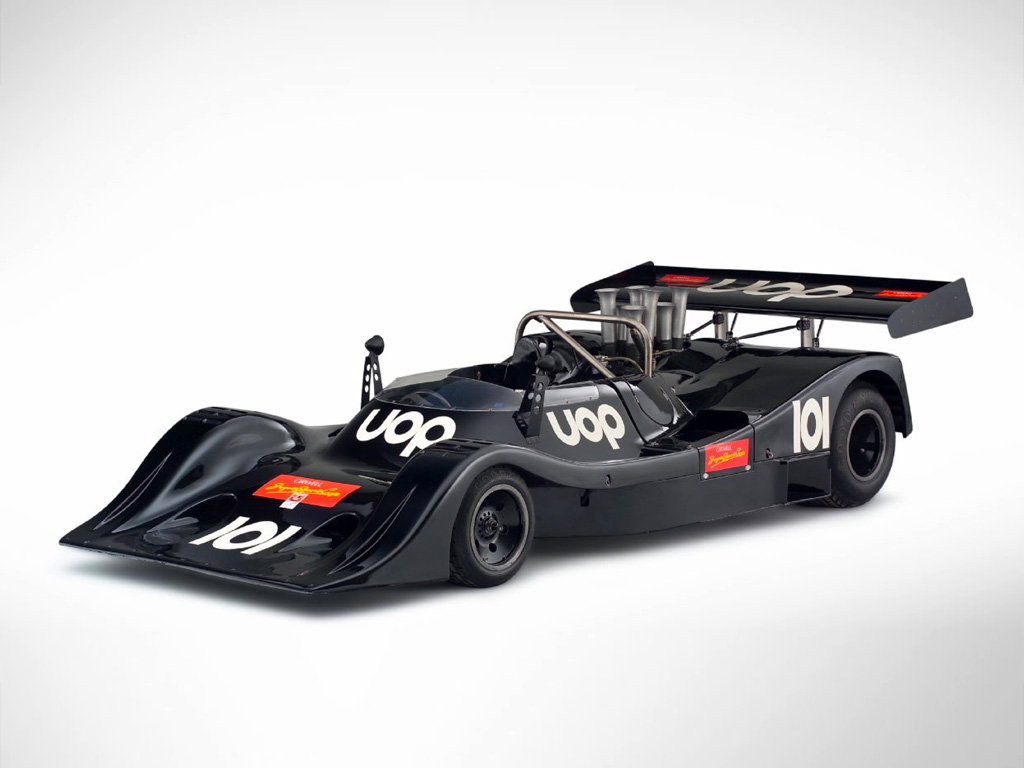
29. Universal Oil Products and Shadow UOP Shadow black
1971–75
Don Nichols's Shadow cars were black all over, with small white lettering. In Can-Am, among orange McLarens and blue Porsches, that made them the villains, which he enjoyed. The sponsor's business was unleaded petrol, and the cars ran on it.
Verdict All black, and happy to be the villain.
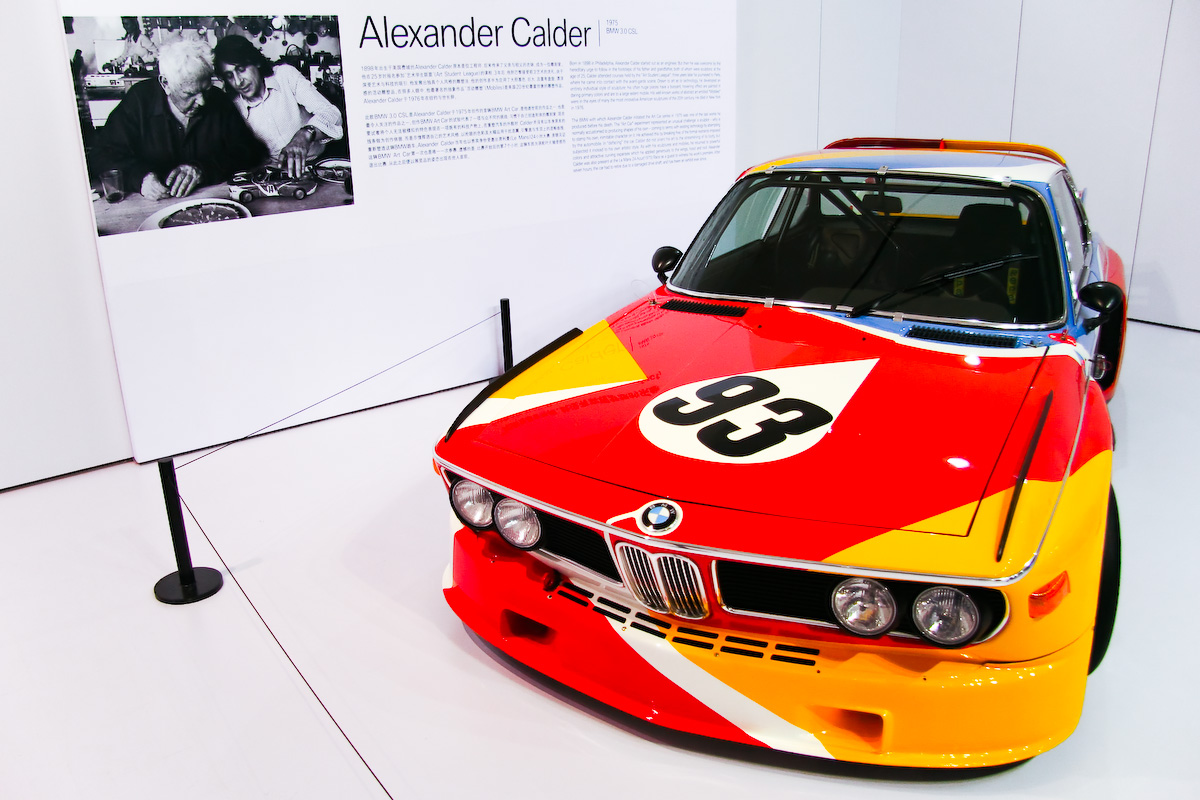
28. BMW Art Cars
1975 to now
In 1975 a French auctioneer and amateur racing driver asked the sculptor Alexander Calder to paint the BMW he was entering at Le Mans. Frank Stella, Roy Lichtenstein and Andy Warhol followed in the next four years, and each car raced. This is a group, not one livery, which is why it is this low. The first four are the ones that count.
Verdict Calder, Stella, Lichtenstein and Warhol, at Le Mans.
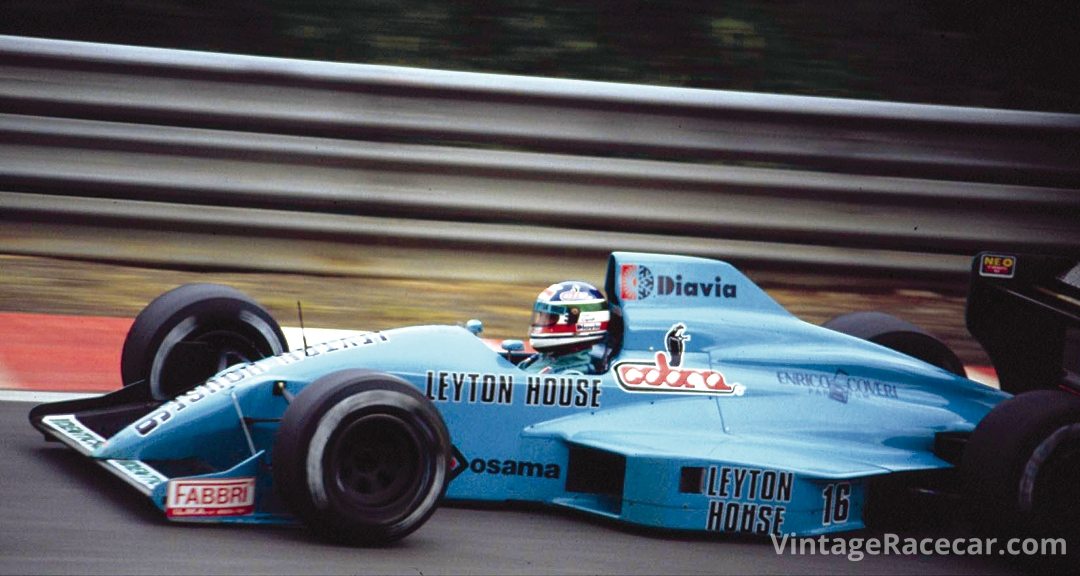
27. Leyton House
1987–91
A pale turquoise unlike any other colour in racing, the house shade of a Japanese property firm that bought the March team in the late 1980s. The cars were quick on smooth circuits and nearly won the 1990 French Grand Prix. The money ran out in 1991.
Verdict The only turquoise Formula One car.
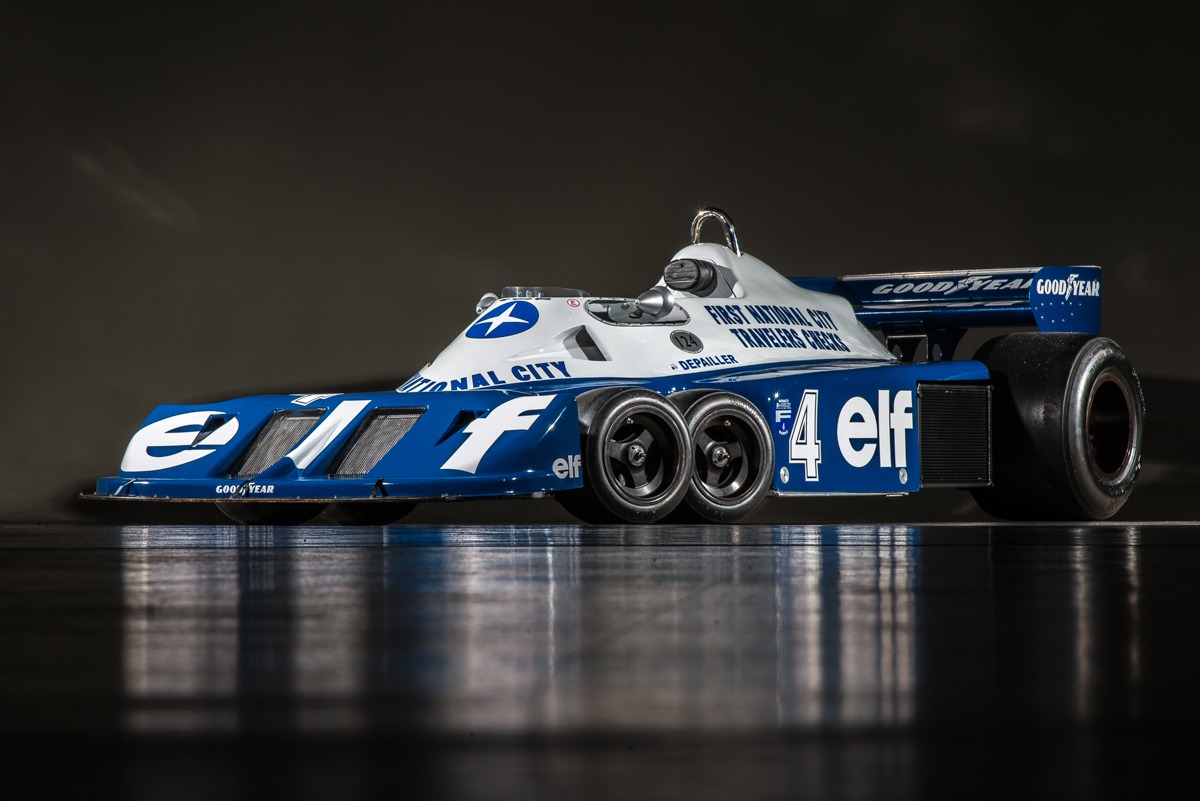
26. Elf and Tyrrell Elf Tyrrell blue
1970–78
Ken Tyrrell's team raced in the blue of France. His first Grand Prix cars were Matras, and his fuel sponsor was the French state oil company. Jackie Stewart won three world titles in it. The six-wheeled P34 wore it too, with yellow added.
Verdict A Scottish champion in French blue.

25. Calsonic and Nissan Calsonic blue
1982 to now
A single shade of bright blue, with the name of a Japanese radiator maker in white. Kazuyoshi Hoshino's team has raced Nissans in it since the early 1980s, including the Skyline GT-Rs that won every race of the Japanese touring car championship from 1990 to 1993. It is still racing.
Verdict Forty years in the same blue.
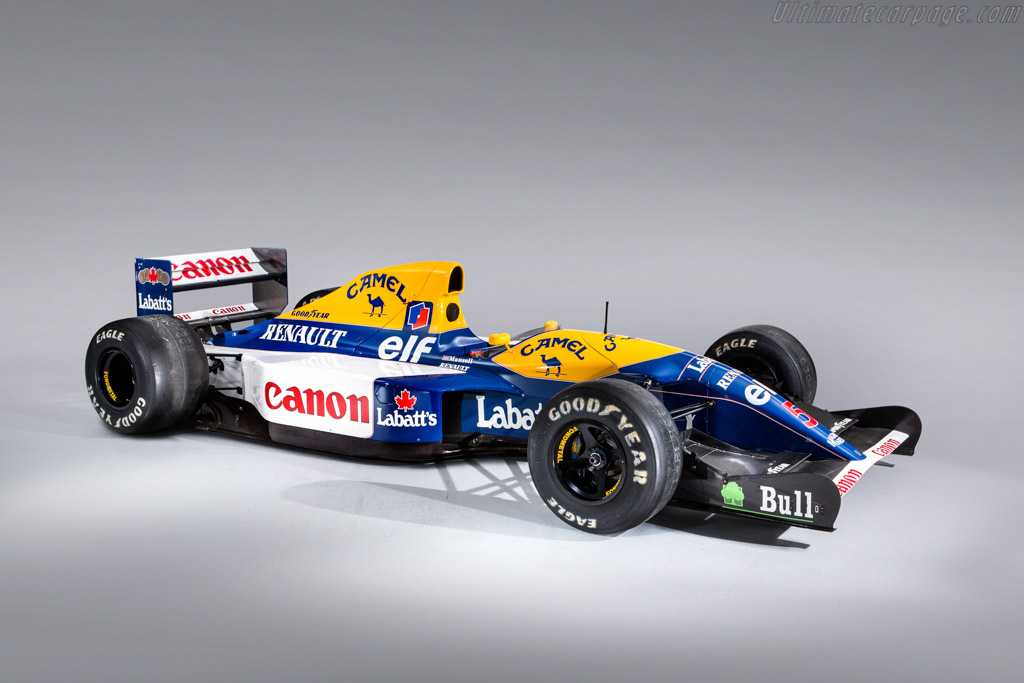
24. Canon and Williams Canon Williams
1985–93
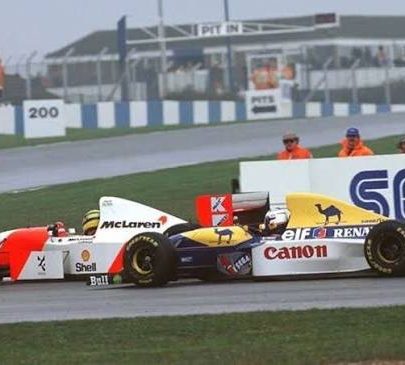
Dark blue, yellow and white, with a red stripe added later. It was on the Williams cars from 1985 to 1993, and so on the FW11 and the FW14B. It was never elegant. It carries the names of half a dozen sponsors at once. But it won more than any other livery of its time, and it is the picture of Formula One for anyone who watched in those years.
Verdict Not pretty, and on the winning car more often than not.
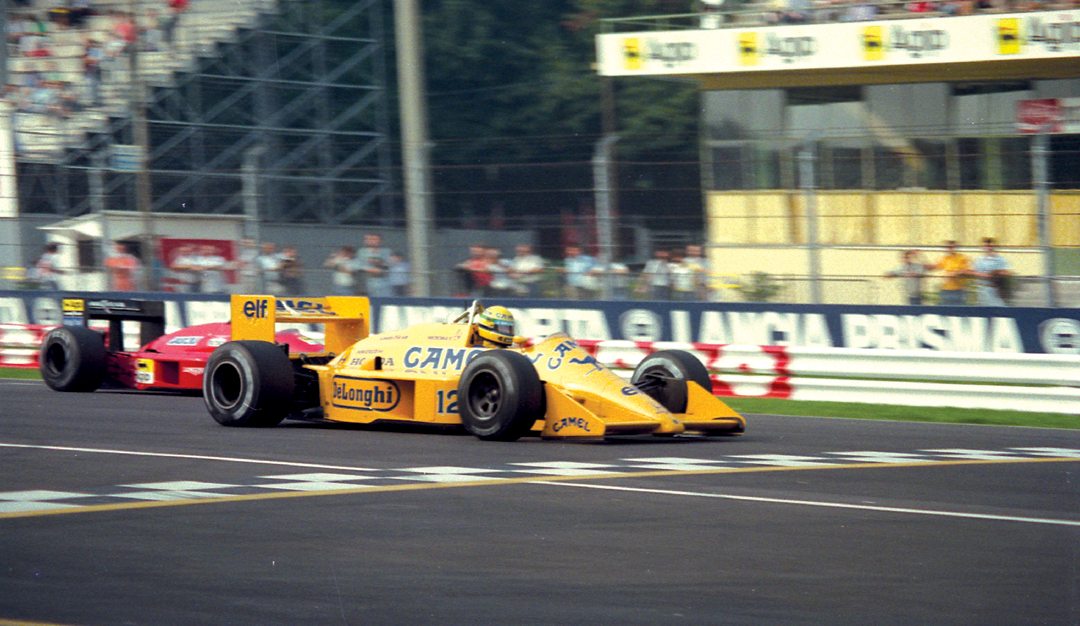
23. R. J. Reynolds Camel Lotus yellow
1987–90
When John Player left in 1987, Lotus went from black to bright yellow, with blue lettering. Ayrton Senna won twice in it that year. Nelson Piquet and Satoru Nakajima drove it afterwards, with less success. It is remembered mostly because of who was in the car.
Verdict Senna's last Lotus.
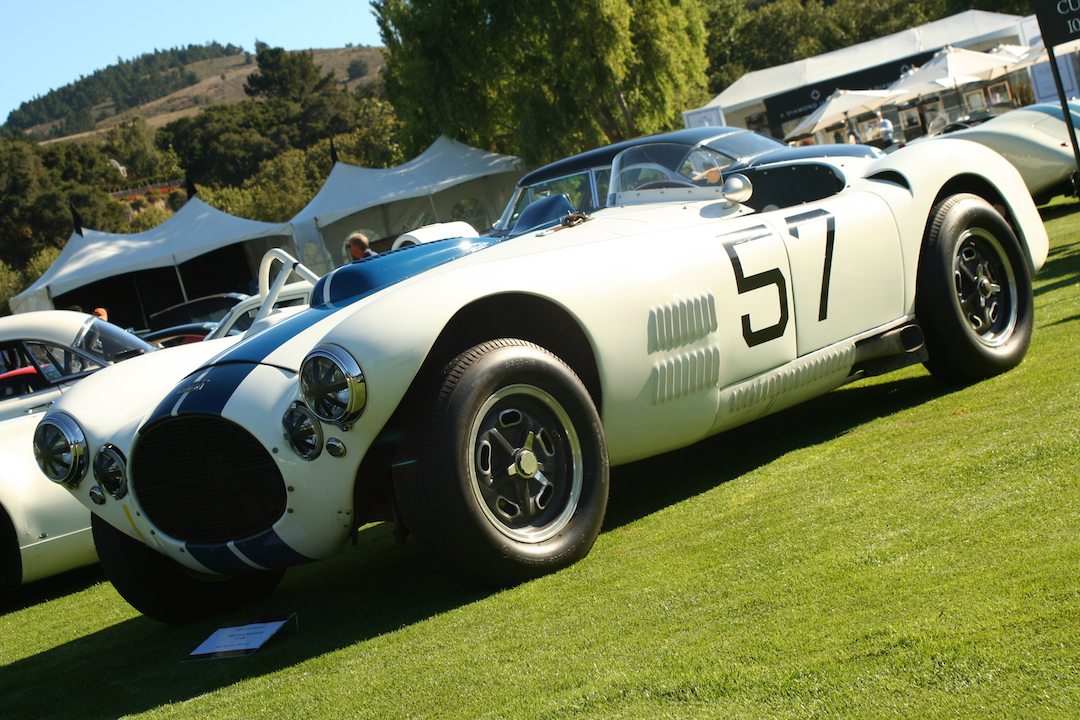
22. United States American white and blue
1950s and 1960s
The United States was given white with blue as its racing colours. Briggs Cunningham took white cars with two blue stripes down the middle to Le Mans in the 1950s. Carroll Shelby reversed it, blue with white stripes, for his Cobras and Ford's GT40s. Every road car with stripes over the roof is copying one or the other.
Verdict Where racing stripes come from.
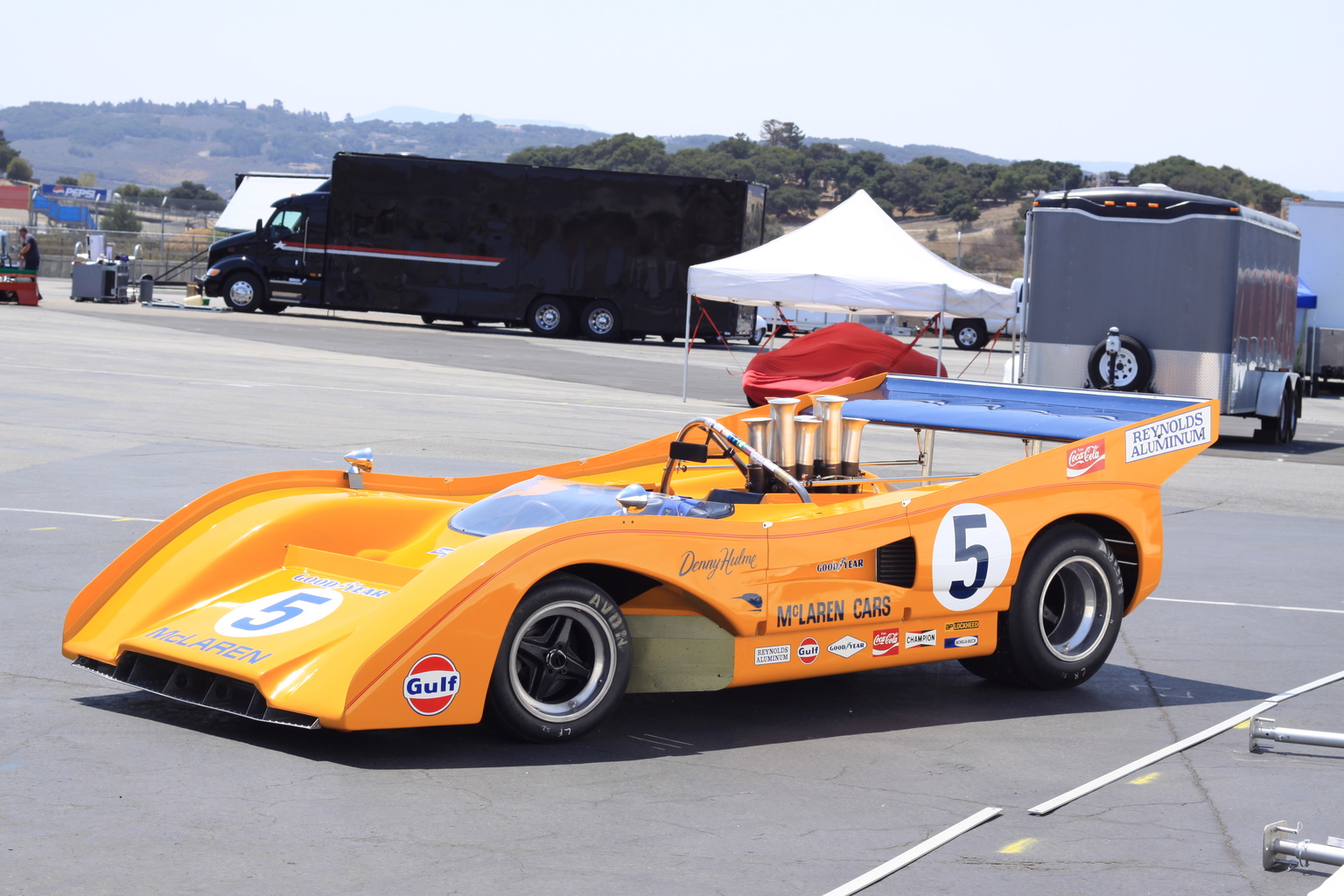
21. McLaren papaya orange
1967–71, and again from 2018
Bruce McLaren's team painted its Can-Am cars orange in 1967 and its Formula One cars the following year. It was not a national colour. It was chosen to show up. The orange cars won five Can-Am titles running. McLaren went back to it in 2018.
Verdict The colour of the Bruce and Denny show.
20 to 11
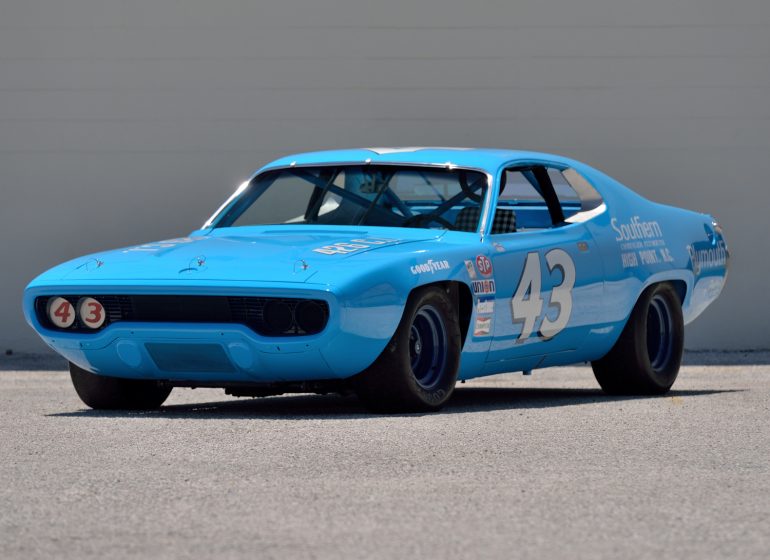
20. Petty Enterprises and STP Petty blue and STP red
1959–92
Richard Petty's stock cars were a pale blue said to have been mixed by accident from two half-empty tins. When the oil-additive company STP became his sponsor in 1972, it wanted the car in its own bright red. Petty refused. The compromise was both colours on the same car, divided along the sides. He won four of his seven championships in it.
Verdict Two colours, because neither side would give way.
Did you know: Petty blue is said to have been made by mixing what was left of a tin of white and a tin of dark blue.

19. Castrol and Toyota Castrol Toyota
1993–99
White, with green and red flashes breaking up along the sides. It was on the Celicas that won the world rally championship in 1993 and 1994 and on the Corollas that followed, and in Japan on the Supra that raced in the national GT series. That second car made it famous to a generation who met it in a video game.
Verdict Rally champion twice, and a video game hero.
Did you know: Juha Kankkunen and Didier Auriol won the world rally championship in it, in 1993 and 1994.
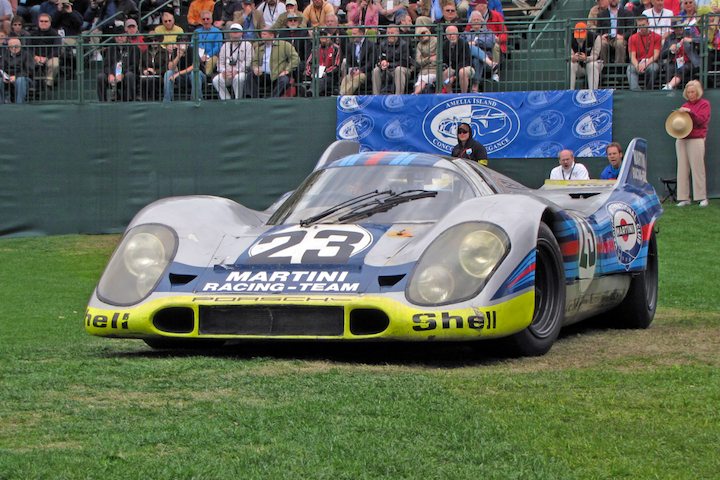
18. Martini Racing The psychedelic 917
1970
In 1970 the Martini team's long-tailed Porsche 917 came to Le Mans painted purple with swirling bands of bright green. It was drawn by Porsche's own styling department. The car finished second. The next year Porsche produced a pink 917 marked out with the names of cuts of pork, which is the better known of the two; we have chosen this one because we could find a photograph of it.
Verdict Purple and green, and second at Le Mans.
Did you know: It was purple with green swirls, finished second at Le Mans in 1970, and was known as the hippie car.
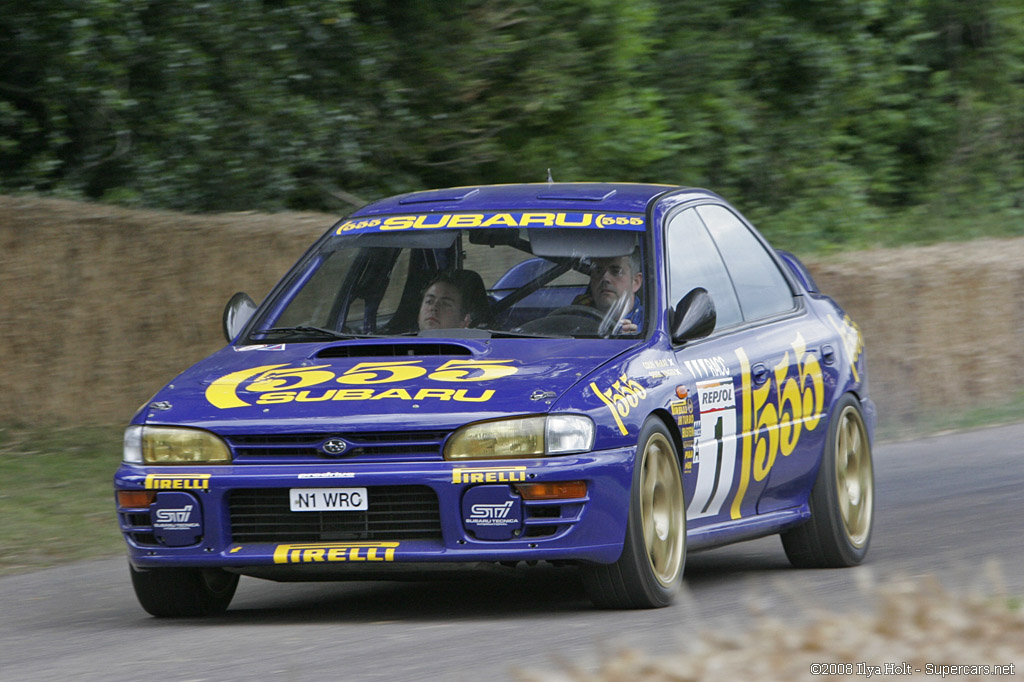
17. British American Tobacco and Subaru 555 Subaru blue and yellow
1993–2003
Dark blue with yellow numerals and yellow wheels. State Express 555 was a cigarette brand sold mainly in Asia, and the Subaru rally cars carried it from 1993. Colin McRae became world champion in it in 1995. Subaru then did something no other maker has: it adopted its sponsor's colour as its own, and sold blue Imprezas with gold wheels for the next twenty years.
Verdict The rally livery that became a road car colour.
Did you know: Subaru kept the blue for its road cars, with gold wheels, long after the cigarette brand had gone.
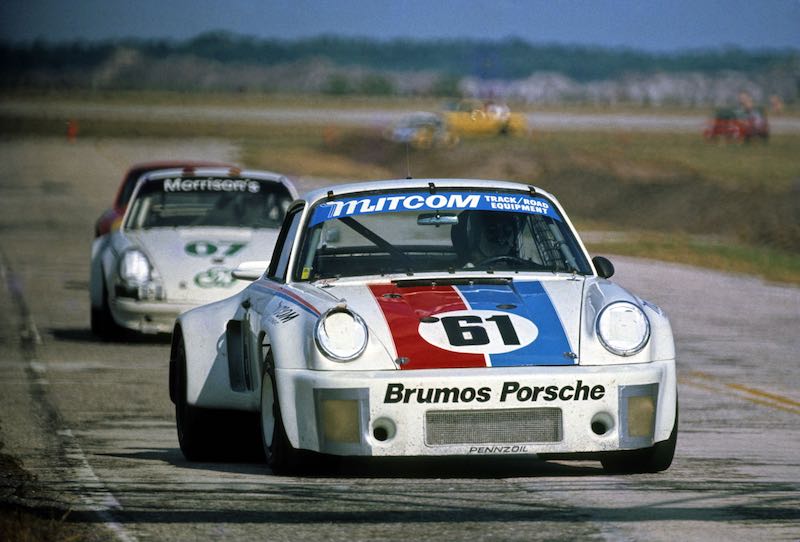
16. Brumos Porsche Brumos
1971–2013
White, with red and blue stripes sweeping back from the nose, and the number 59. Brumos was a Porsche dealership in Jacksonville, Florida. Its owner, Peter Gregg, and Hurley Haywood won the Daytona 24 Hours three times in its Porsches in the 1970s, and the colours stayed on Porsches in American racing for forty years. It is the best-known livery in American sports car racing and hardly known outside it.
Verdict A Florida car dealer's colours, and a habit of winning Daytona.
Did you know: The number 59 on the cars is the year the dealership took its name.
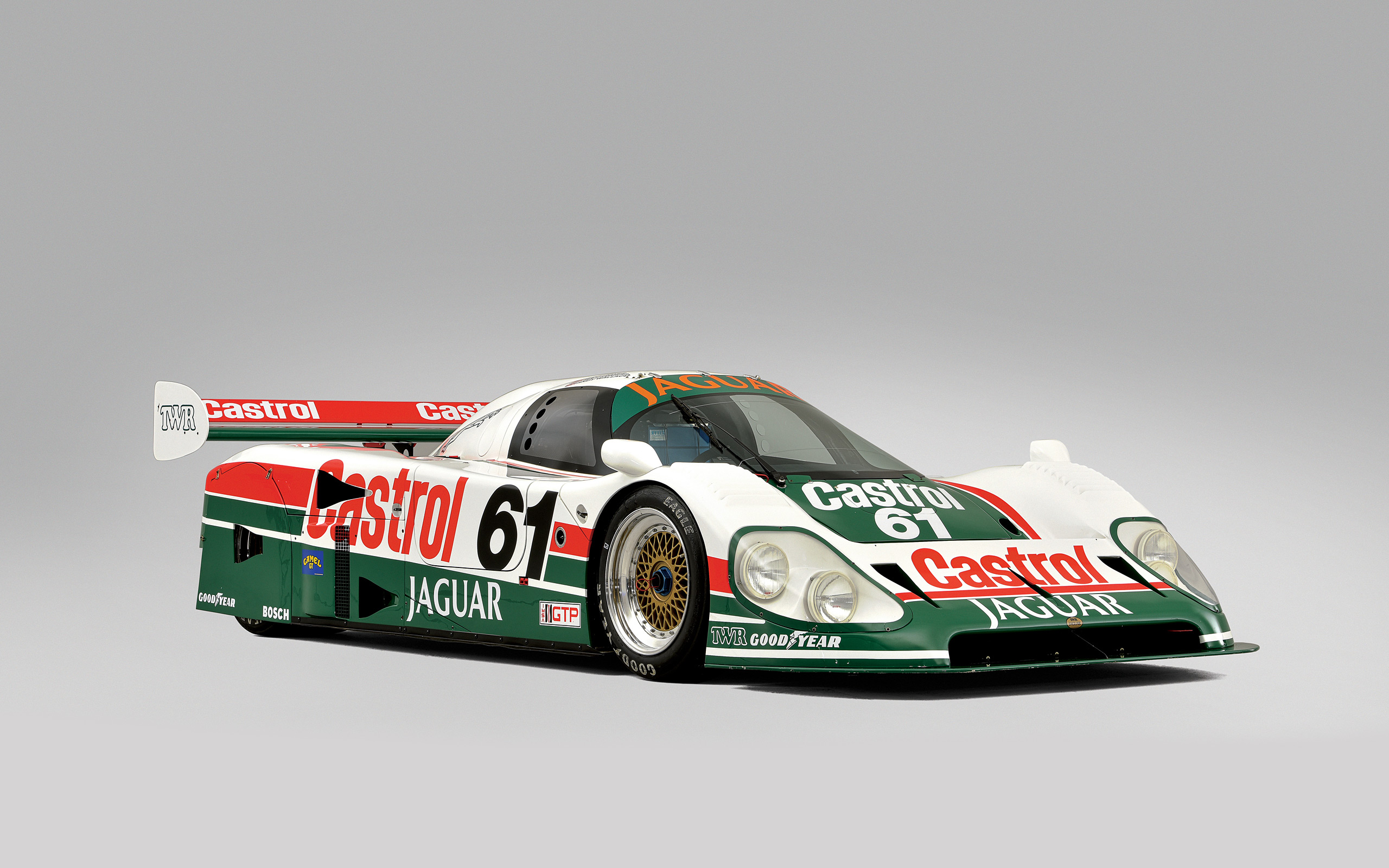
15. Gallaher Silk Cut Jaguar
1986–91
White with purple, and thin gold lines between. Tom Walkinshaw's Jaguars wore it from 1986 to 1991, through two Le Mans wins and three world championships. It suited the cars, which were long and smooth, with covered rear wheels. Where tobacco names were banned, the lettering was replaced with broken purple stripes that looked like the cut silk in the brand's advertisements.
Verdict Purple and white, on the Jaguars that won Le Mans.
Did you know: The purple and white came straight from the cigarette packet.
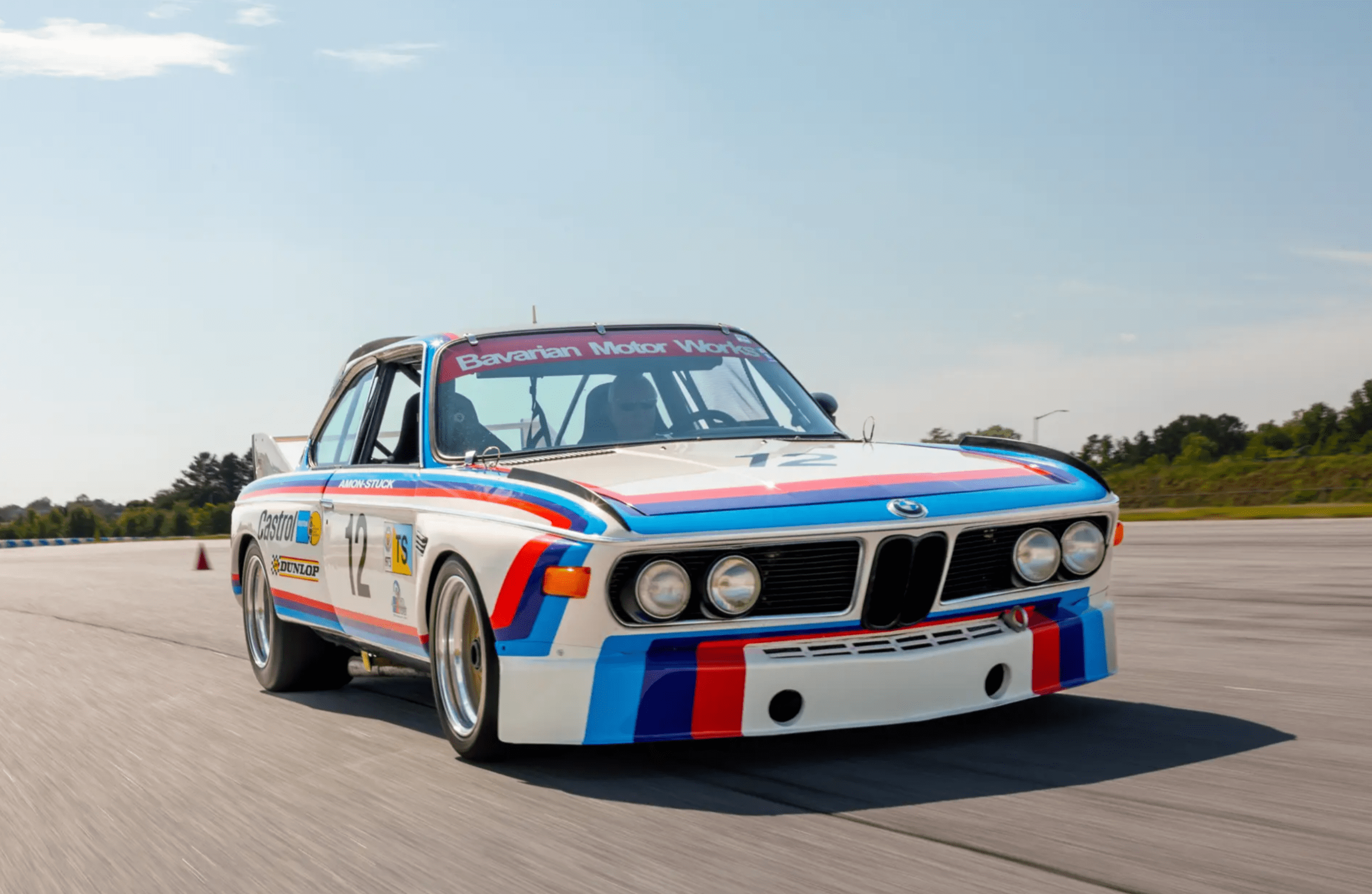
14. BMW Motorsport stripes
1973 to now
Three diagonal stripes, light blue, violet and red, on a white car. BMW's competition department introduced them in 1973 on the 3.0 CSL. They have been on every works BMW since, and in reduced form on the badge of every M car sold. Most liveries advertise something else. This one advertises the racing department itself.
Verdict Three stripes that became a badge.
Did you know: The blue stands for BMW. The red is said to have been for Texaco, in a sponsorship deal that fell through.
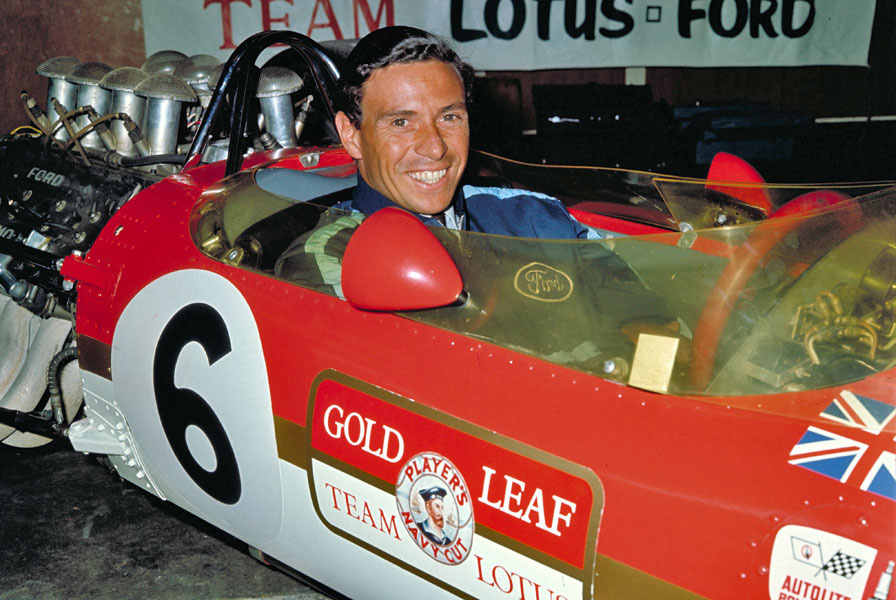
13. John Player & Sons Gold Leaf Team Lotus
1968–71
Red above, white below, with a gold band between. In 1968 Lotus repainted its cars in the colours of a cigarette packet, the first leading Grand Prix team to sell its bodywork to a sponsor from outside the sport. The purists were appalled. Graham Hill won the title in it that year and Jochen Rindt in 1970. It matters more than it pleases: every other sponsor livery on this list follows from it.
Verdict The first sponsor livery in Formula One.
Did you know: Lotus gave up British racing green for it in 1968, the first works Grand Prix team to race in a sponsor's colours.
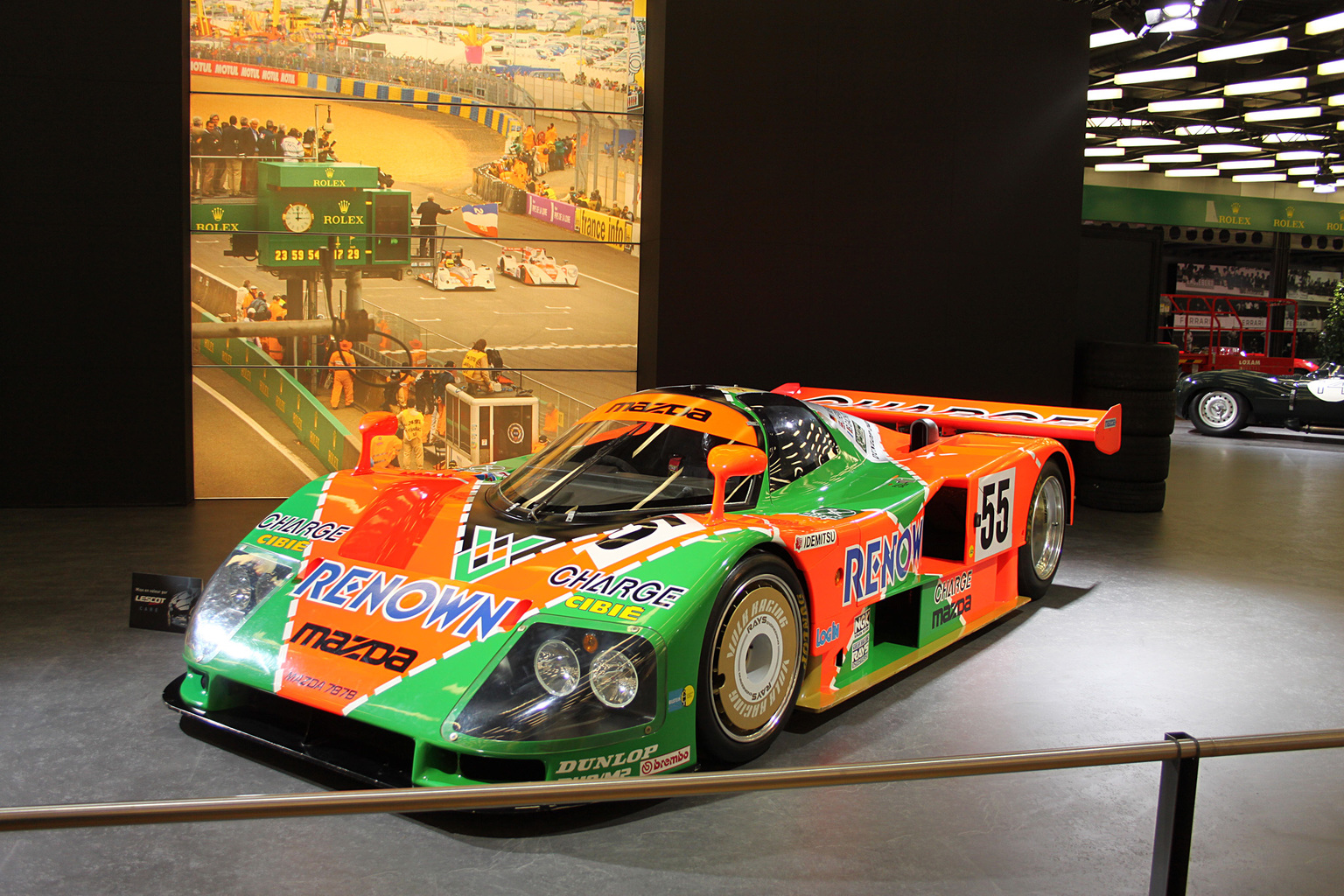
12. Renown and Mazda Renown orange and green
1988–91
Half orange, half green, divided by a zigzag, with a diamond pattern taken from a brand of socks. The Japanese clothing company Renown sponsored Mazda's sports car team, and one Mazda 787B in these colours won Le Mans in 1991. It is the only livery here remembered for a single car on a single weekend. It breaks every rule of good design and is loved for it.
Verdict Loud, clashing, and on the 1991 Le Mans winner.
Did you know: Renown made clothes. The diamond pattern came from one of its brands of socks.
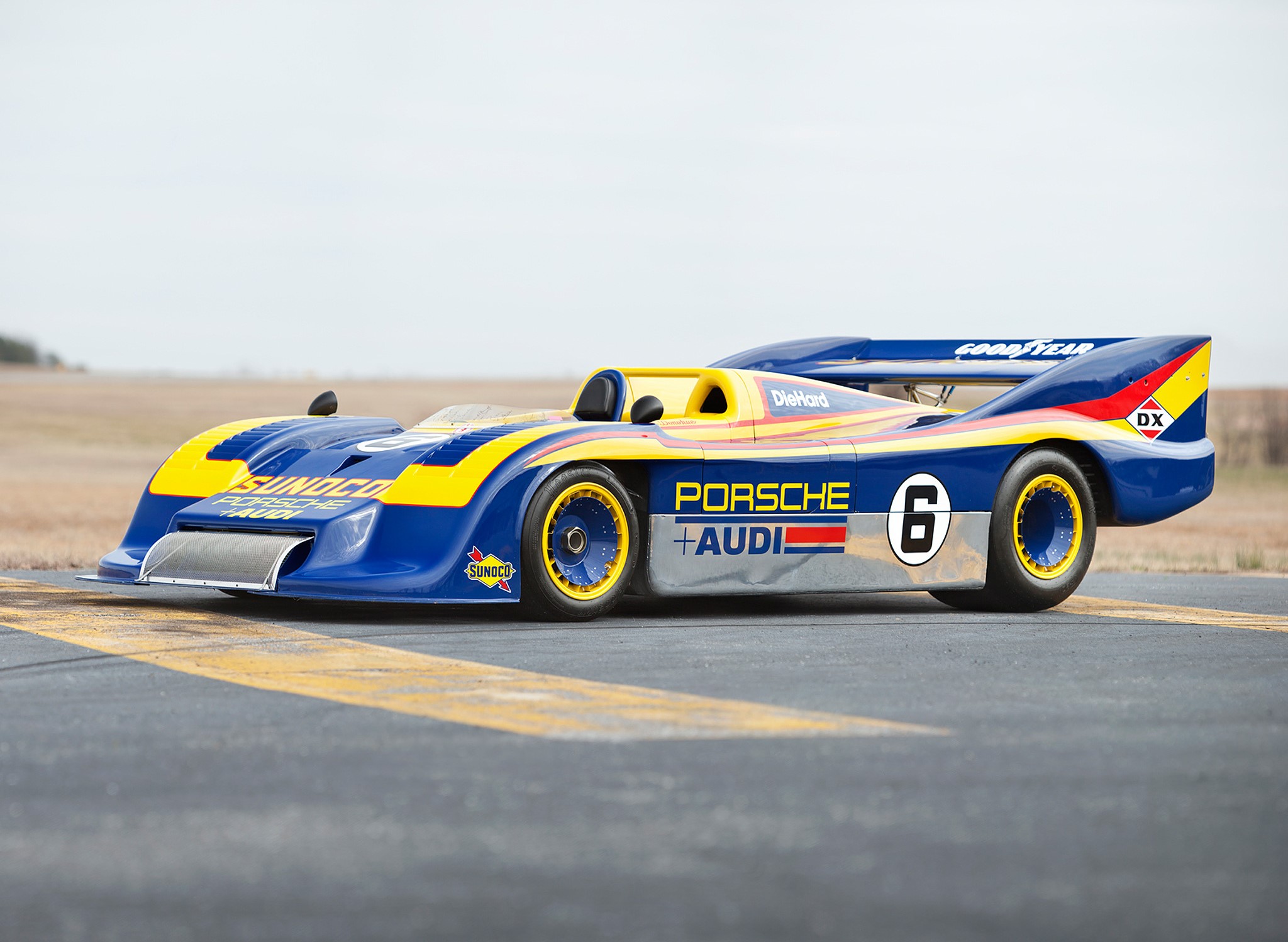
11. Sun Oil and Penske Racing Sunoco blue and yellow
1966–75
Dark blue with yellow lettering and pinstripes. Roger Penske's team wore it from 1966 on everything it raced: Camaros and Javelins in Trans-Am, a Lola and a Ferrari in endurance races, McLarens at Indianapolis, and the Porsche 917/30 in Can-Am. The cars were always spotless, which was part of the effect. Penske had the garage floor painted and the wheels polished when other teams did neither. Mark Donohue drove nearly all of them.
Verdict Dark blue, yellow letters, and not a mark on it.
Did you know: Mark Donohue won the Indianapolis 500, the Can-Am and the Trans-Am championship in these colours.
The top 10
- Years
- 1903 to now
Livery · UK
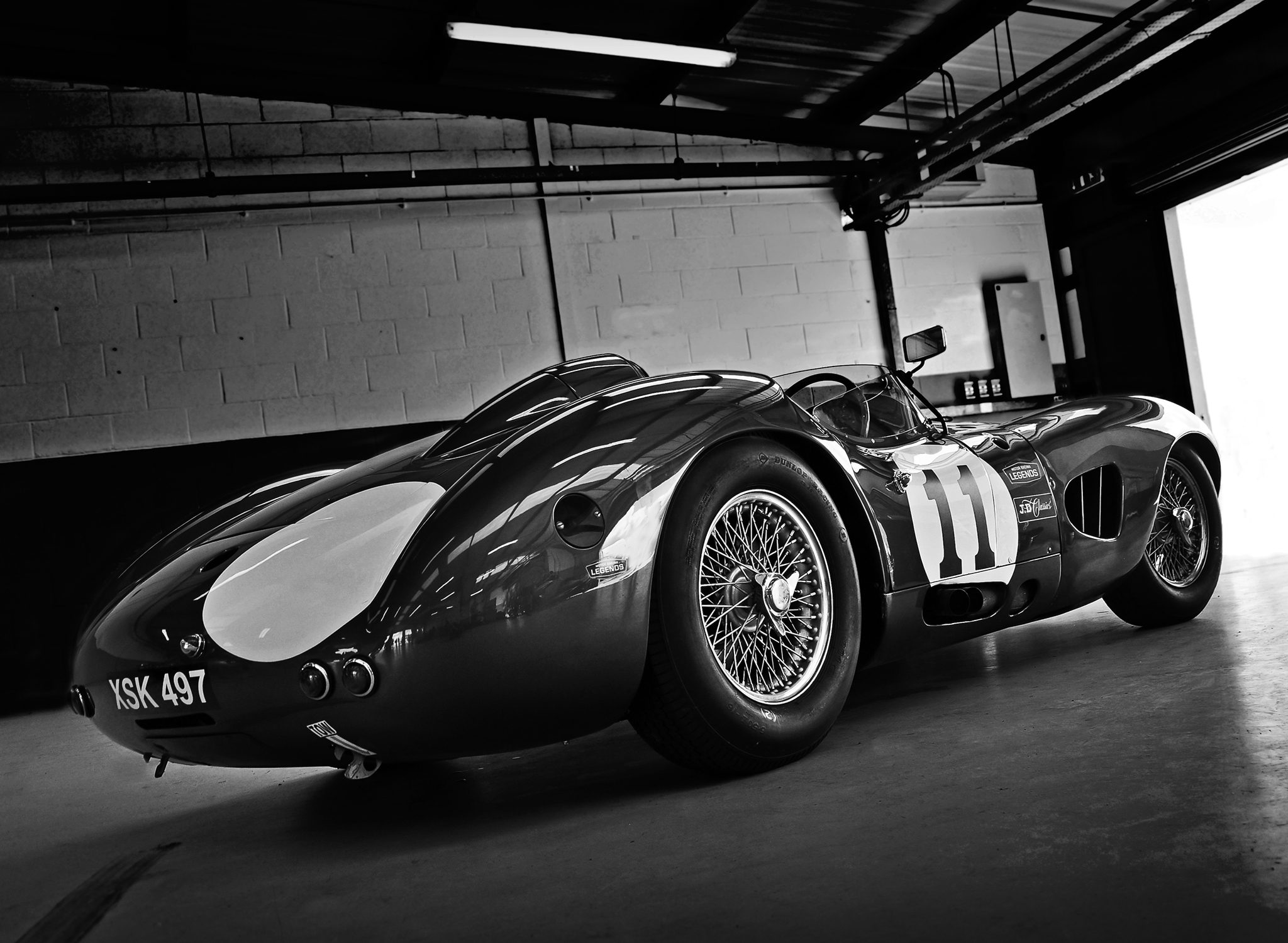
10. Great Britain British racing green
Britain's national colour was chosen in 1903, when the Gordon Bennett Cup was run in Ireland because racing on public roads was illegal in England. The British cars were painted green as a compliment to the hosts.
There is no single shade. The Bentleys that won Le Mans in the 1920s were a very dark green. Jaguar's C-types and D-types were darker still. Vanwall, Cooper, BRM and Lotus used lighter and brighter greens, Lotus with a yellow stripe. Aston Martin's was a pale metallic.
It disappeared from Grand Prix racing in 1968, when Lotus sold its paintwork to a tobacco company, and has come back since on Jaguars, Bentleys and Aston Martins at Le Mans and in Formula One. It is tenth, the lowest of the national colours here, because it has never belonged to one team in the way red belongs to Ferrari.
Verdict The oldest racing colour still in use.
Green was first used in 1903, when the Gordon Bennett Cup was held in Ireland, as a compliment to the hosts.
- Years
- 1975–82
Livery · Italy
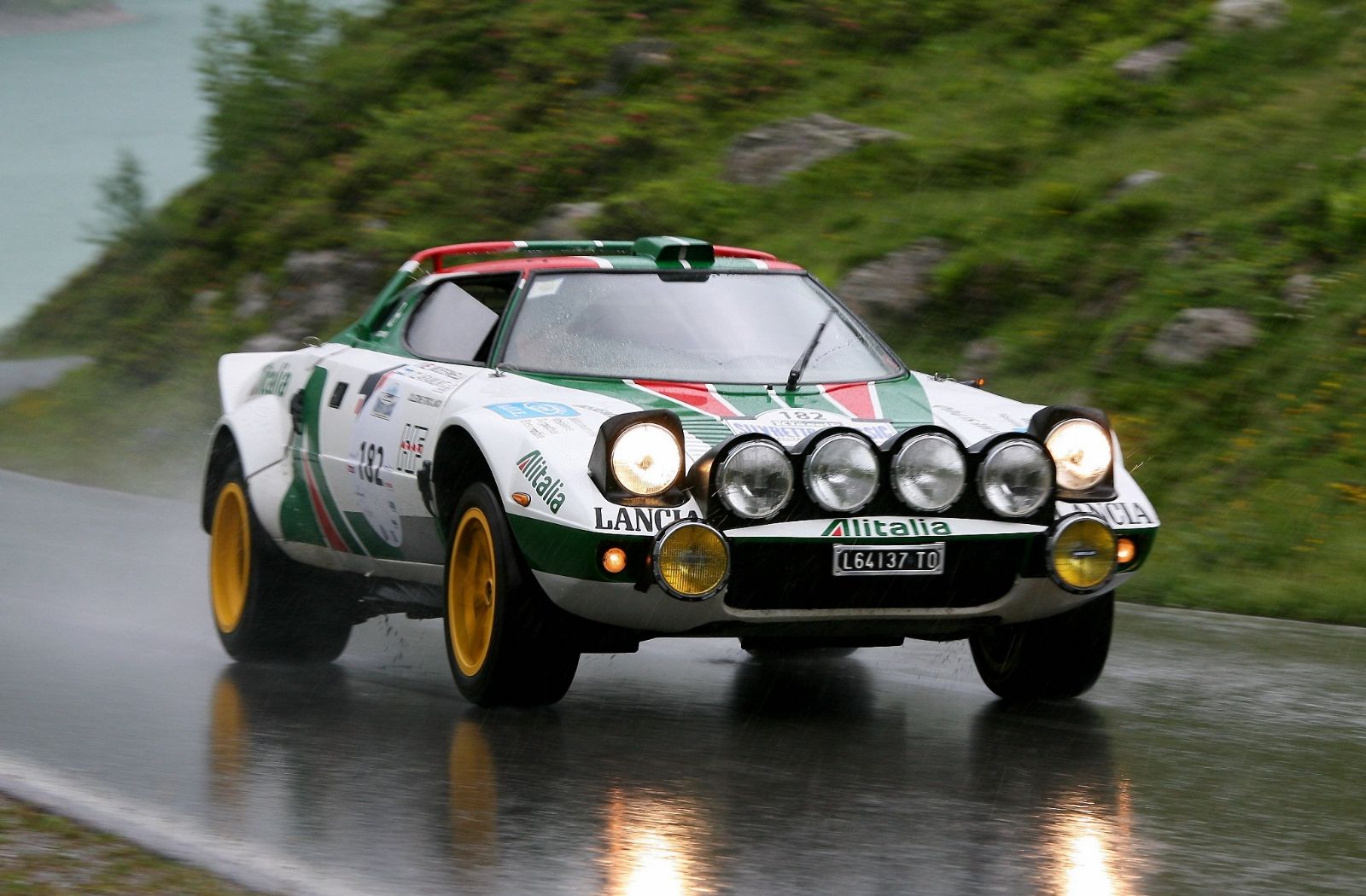
9. Alitalia and Lancia Alitalia
White, with green and red bands that start at the nose and widen towards the tail. They are the emblem from the tail fin of Italy's national airline, pulled out along the body. On the Lancia Stratos, which was itself wedge-shaped, the fit was perfect.
Alitalia sponsored the Lancia and then the Fiat rally teams from 1975. The Stratos won the Monte Carlo Rally and two of its three world titles in these colours, and the Fiat 131 Abarth won another in them after that.
It is here mainly for the Stratos. A list of the best-looking rally cars would start with that car in this paint, sideways on a mountain road at night with four spotlights on the nose.
Verdict The Italian flag at speed, on the Lancia Stratos.
The green and red bands are the airline's tail-fin emblem, stretched along the length of the car.
- Years
- 1972–2000
Livery · Germany
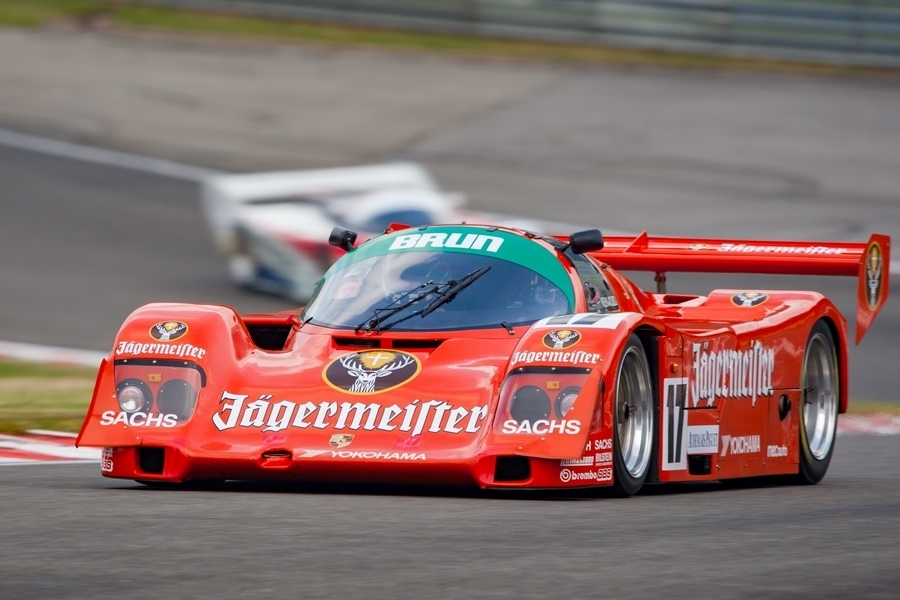
8. Mast-Jägermeister Jägermeister orange
Solid orange, with the name of a German herbal liqueur in black gothic letters and a stag's head carrying a cross. It began in 1972, when a cousin of the company's owner asked for help with the cost of racing his Porsche, and it went on for nearly thirty years.
Unlike the liveries above, this one is not tied to a works team or a championship. It was applied to whatever was racing in Germany at the time: Porsche 934s and 935s, BMW saloons, a March Formula One car, Group C Porsches, and touring cars from Alfa Romeo and Opel. There were well over a hundred of them.
That is why it ranks eighth, ahead of colours with far better results. An orange car with a stag on it stood out in any field, and it made a hero of the mid-grid private entrant. Its place here is for looks alone.
Verdict Orange, and on more than a hundred different racing cars.
The first car was a Porsche 914 raced in 1972 by a cousin of the company's owner.
- Years
- 1974–96
Livery · USA / UK
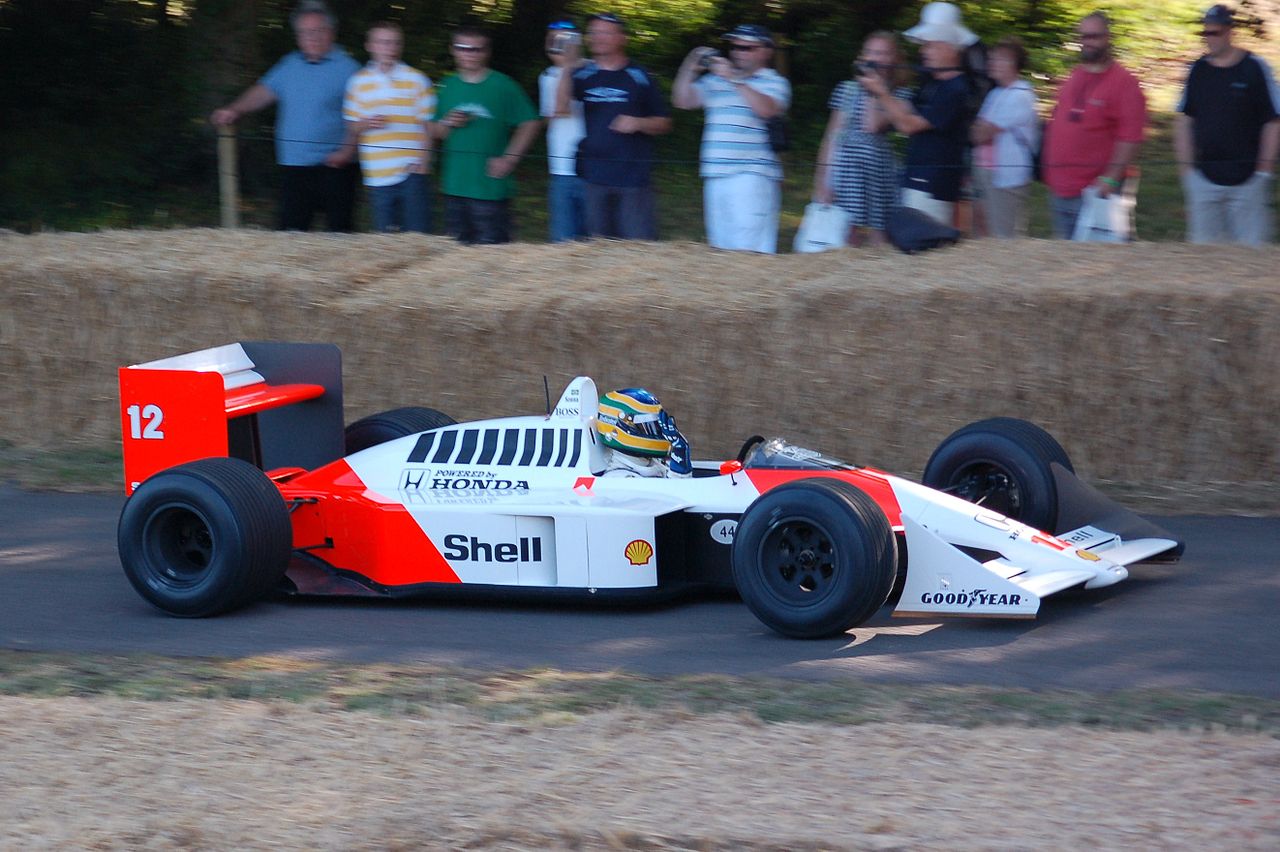
7. Philip Morris Marlboro McLaren red and white
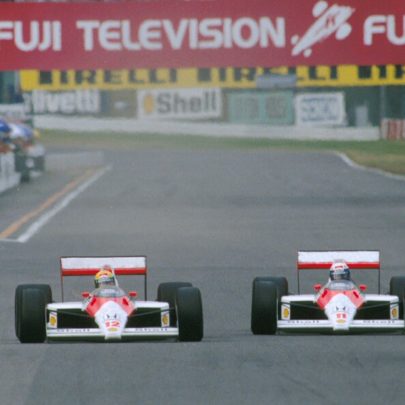
A white car with a red chevron running back from the nose. McLaren raced in Marlboro's colours from 1974 to 1996, the longest partnership between a team and a title sponsor in Formula One at the time, and won nine drivers' championships in them, with Fittipaldi, Hunt, Lauda, Prost and Senna.
The design was worked out for television. The red was not the red of the packet. It was a fluorescent shade that came out as the right red on a screen, and the chevron was shaped so that it read as the pack's design even at speed and from the side. When tobacco lettering was banned at some races, the name was replaced by a pattern of bars and the car was still unmistakable. That was the point.
It is seventh, below Rothmans and JPS, because it is the least beautiful of the great tobacco liveries. It is the most effective piece of advertising on this list, and to many people it is simply what a Formula One car looks like.
Verdict Nine world titles, and a design made for the television camera.
The red was a fluorescent shade chosen to look right on television, not the red on the packet.

- Years
- 1934–55
Livery · Germany
6. Mercedes-Benz and Auto Union Silver Arrows
The German Grand Prix cars of the 1930s raced unpainted, in bare polished aluminium. Germany's national colour was white. The usual story is that at the Nürburgring in June 1934 the new Mercedes was a kilogram over the weight limit, and the team manager had the paint scraped off overnight. He told that story himself, many years later. Photographs and reports from the time suggest the cars had run in silver before, and Auto Union's cars were silver from the start.
However it began, silver became the German colour. The Mercedes and Auto Union cars dominated Grand Prix racing until 1939 and the press named them the Silver Arrows. Mercedes used it again in 1954 and 1955, on its Group C cars from 1989, and in Formula One from 2010.
Like the Ferrari red, it is a colour and not a livery in the modern sense, and it is ranked on the same reasoning: nothing else says so much with so little.
Verdict Bare metal, and the best origin story in racing, true or not.
The story that the white paint was scraped off overnight in 1934 to save a kilogram was told by the team manager years later, and historians doubt it.
- Years
- 1982–97
Livery · UK
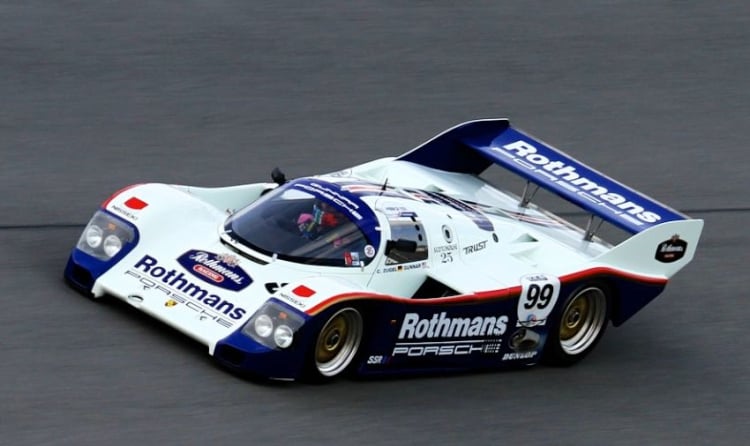
5. Rothmans International Rothmans blue and white
White on top, dark blue below, divided by bands of red and gold. Rothmans, another cigarette maker, backed Porsche's works team from 1982, and its colours are fixed to the 956 and 962 that won Le Mans year after year.
It went wherever Porsche went. The 911 SC RS rally cars wore it, and so did the 959s that won the Paris-Dakar in 1986, which is the best-known picture of a Porsche off the road. From 1994 it was on the Williams Formula One cars, including the one in which Ayrton Senna was killed at Imola, and those in which Damon Hill and Jacques Villeneuve won the 1996 and 1997 championships.
The design is formal, almost like a uniform, and it suited a team that won by organisation. It is fifth and not higher because it is tied to fewer shapes than Martini and fewer memories than Gulf. As a piece of graphic design it may be the best of the three.
Verdict The colours of Porsche's dominant years.
In countries that banned tobacco advertising the name on the cars was replaced with the word Racing, in the same lettering.
- Years
- 1900s to now
Livery · Italy
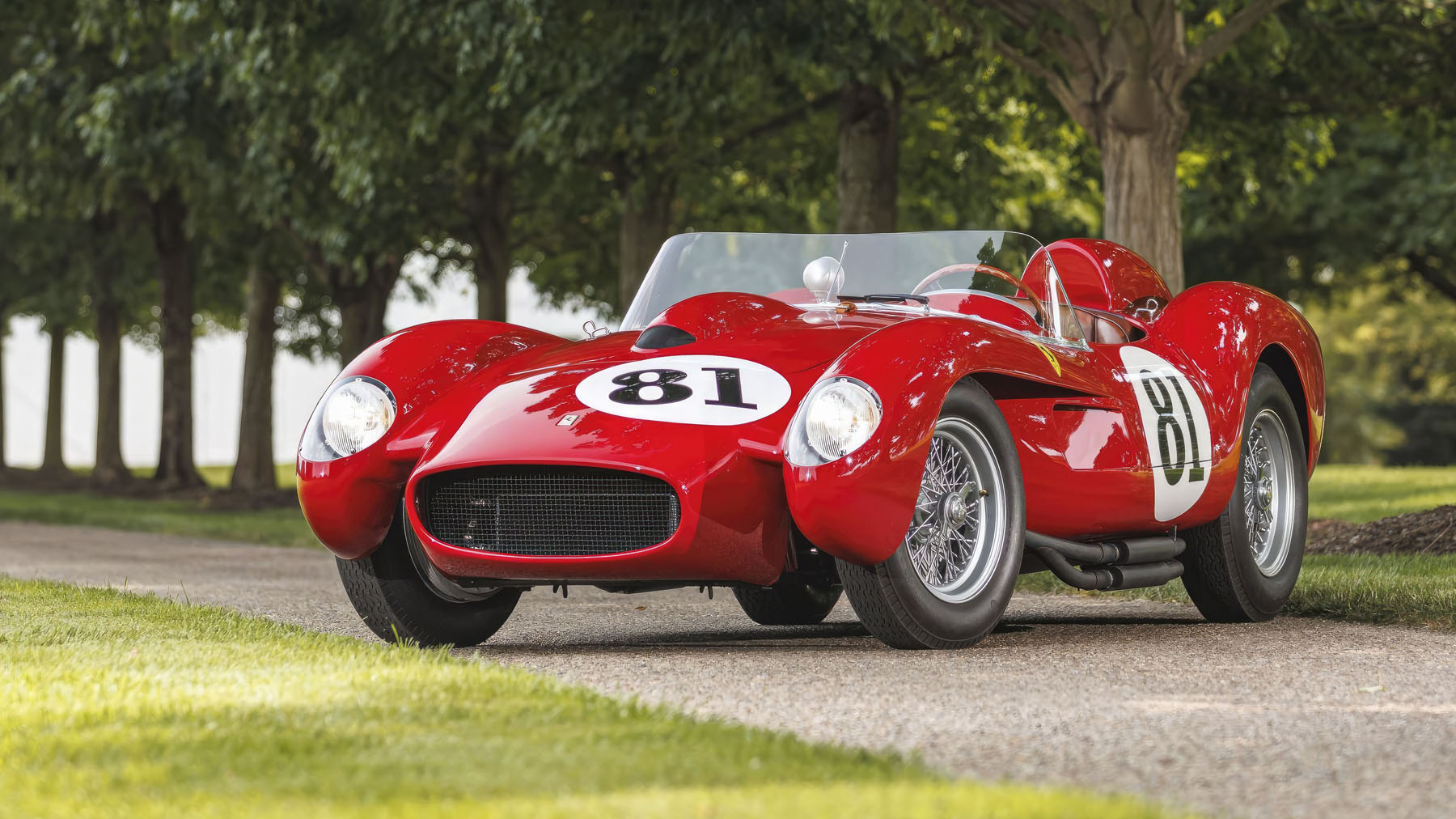
4. Ferrari Rosso corsa
This is not a sponsor's livery, and some would say it does not belong here. We think a list of racing colours without it would be absurd.
In the early years of the sport, cars were painted by country so that spectators could tell them apart. France took blue, Germany white, Britain green, Belgium yellow, and Italy red. Alfa Romeo and Maserati raced in it, and after the war so did Ferrari, which has now used it for longer than anyone. The national colour scheme was dropped in the late 1960s. Ferrari kept the red.
The shade has changed. In the 1950s it was a deep blood red. By the 1990s, to suit television and a cigarette sponsor, it had become a brighter, more orange colour, and it has moved back since. The name means racing red, and the factory offers it on its road cars.
It ranks below three sponsor liveries because it is a colour and not a design. It ranks above everything else because it is the only colour in motor racing that means a single team.
Verdict A national colour that came to mean one team.
Ferrari finished the 1964 season in American white and blue, after Enzo Ferrari fell out with the Italian racing authorities.
- Years
- 1972–86
Livery · UK
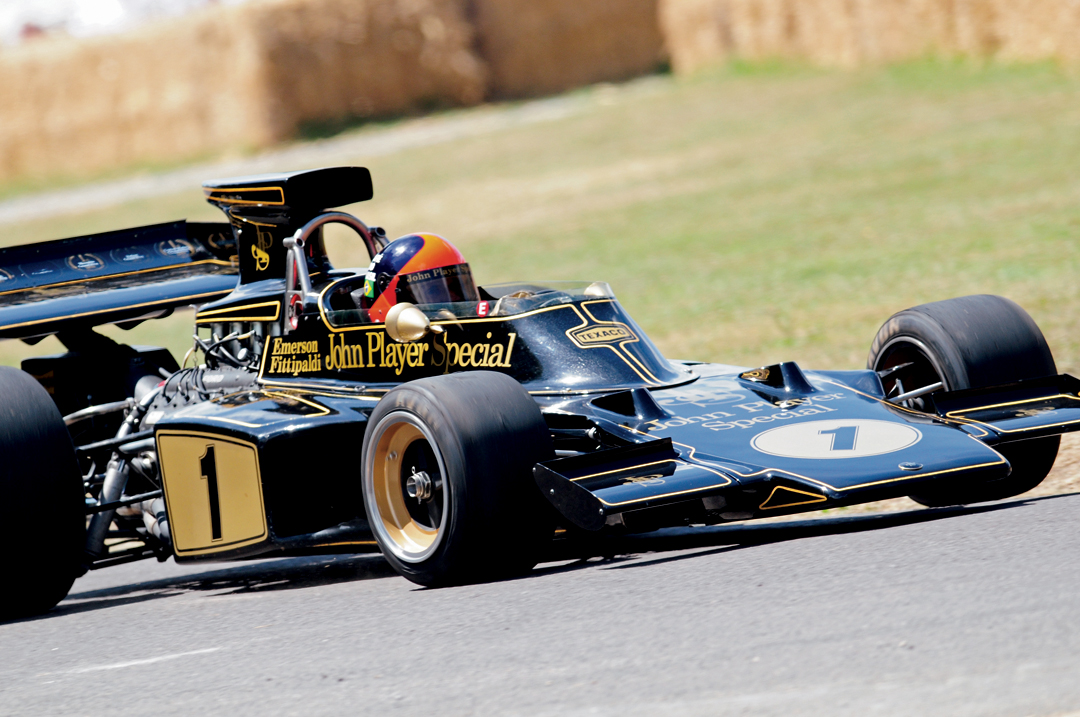
3. John Player & Sons John Player Special black and gold
Black, with thin gold lines following every edge of the car and the sponsor's name in gold. Lotus first raced it in 1972, when the Gold Leaf cigarette brand gave way to a more expensive one from the same company, and Emerson Fittipaldi won the championship in it that year.
A black racing car was a new idea. Black hides shape, which is why few had tried it, and the gold pinstripes were there to draw the outline back in. On the low, wedge-shaped Lotus 72 the effect was of something expensive and slightly sinister, which was the image the brand wanted. It looked best of all on the Lotus 79 of 1978, a car so tidy that the mechanics called it Black Beauty.
Lotus raced in black and gold until 1986, with a short break, and Ayrton Senna took his first Grand Prix wins in it. It has been borrowed many times since, by Lotus's own road cars and by Formula One teams wanting some of the glamour.
It is a cigarette advertisement, as are six others on this list. We have not left them out. For twenty-five years tobacco money paid for the best-looking cars in racing, and a list without them would be a list of something else.
Verdict Black and gold, and the best-looking Formula One cars of the 1970s.
For several seasons the cars were entered as John Player Specials, with no mention of Lotus.
- Years
- 1968–2018
Livery · Italy
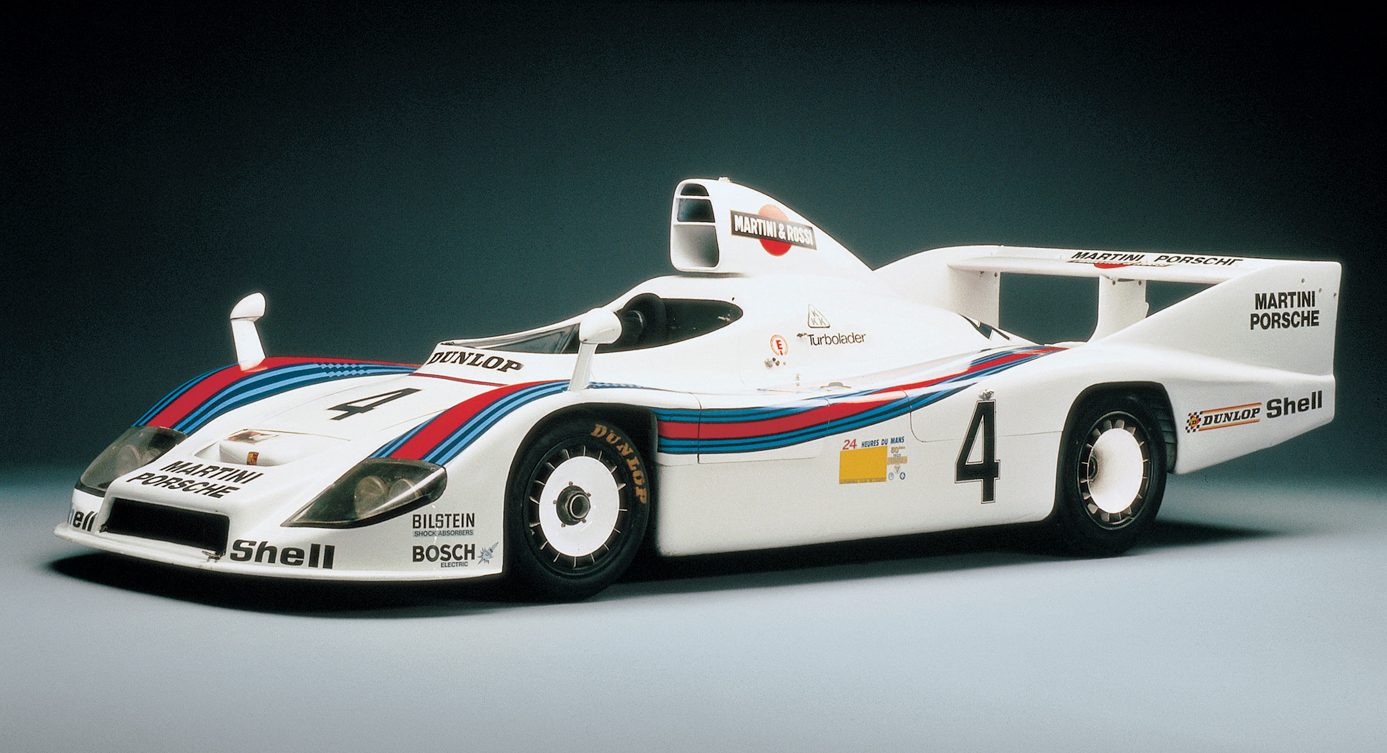
2. Martini & Rossi Martini Racing stripes
Dark blue, light blue and red stripes on white or silver. Martini & Rossi, the vermouth makers of Turin, put them on racing cars for the best part of fifty years, and no sponsor's colours have been seen on more winners.
The list is the argument. Porsche's 917s in 1971, including that year's Le Mans winner. The Carrera RSR Turbo, the 935 and the 936 that won Le Mans in 1976 and 1977. Brabham's Formula One cars in the mid-1970s, in red. Then Lancia: the 037, the Delta S4, and the Delta Integrale through six world rally titles. Later Alfa Romeo and Ford touring and rally cars, and Williams in Formula One from 2014.
The design is the cleverest part. It is only a set of stripes, so it can run along a sill, sweep over a roof, or wrap a nose, and it suits a boxy hatchback as well as a long-tailed prototype. Each team could draw it differently and it was always plainly Martini.
On range and results it should be first, and plenty of people would put it there. We have it second because Gulf, on far fewer cars, became the image of the whole sport. It is the closest call on this list.
Verdict The most successful sponsor's colours in racing, and the most adaptable.
It began in 1968 as a few stickers on a privately entered Porsche in Germany.
The best of the 30 · Livery · USA
1. Gulf Oil Gulf blue and orange
- Years
- 1967–75
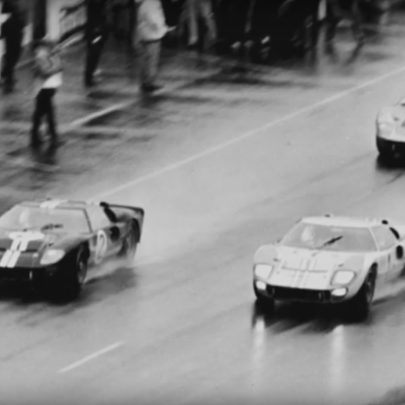
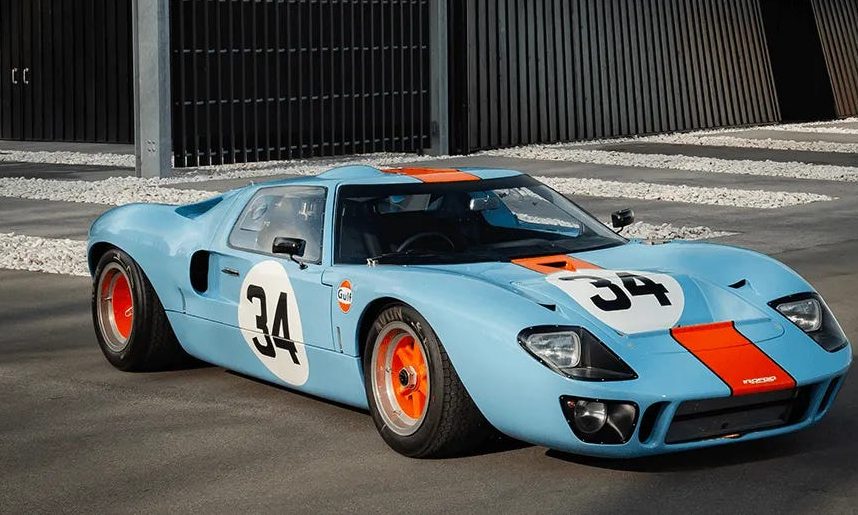
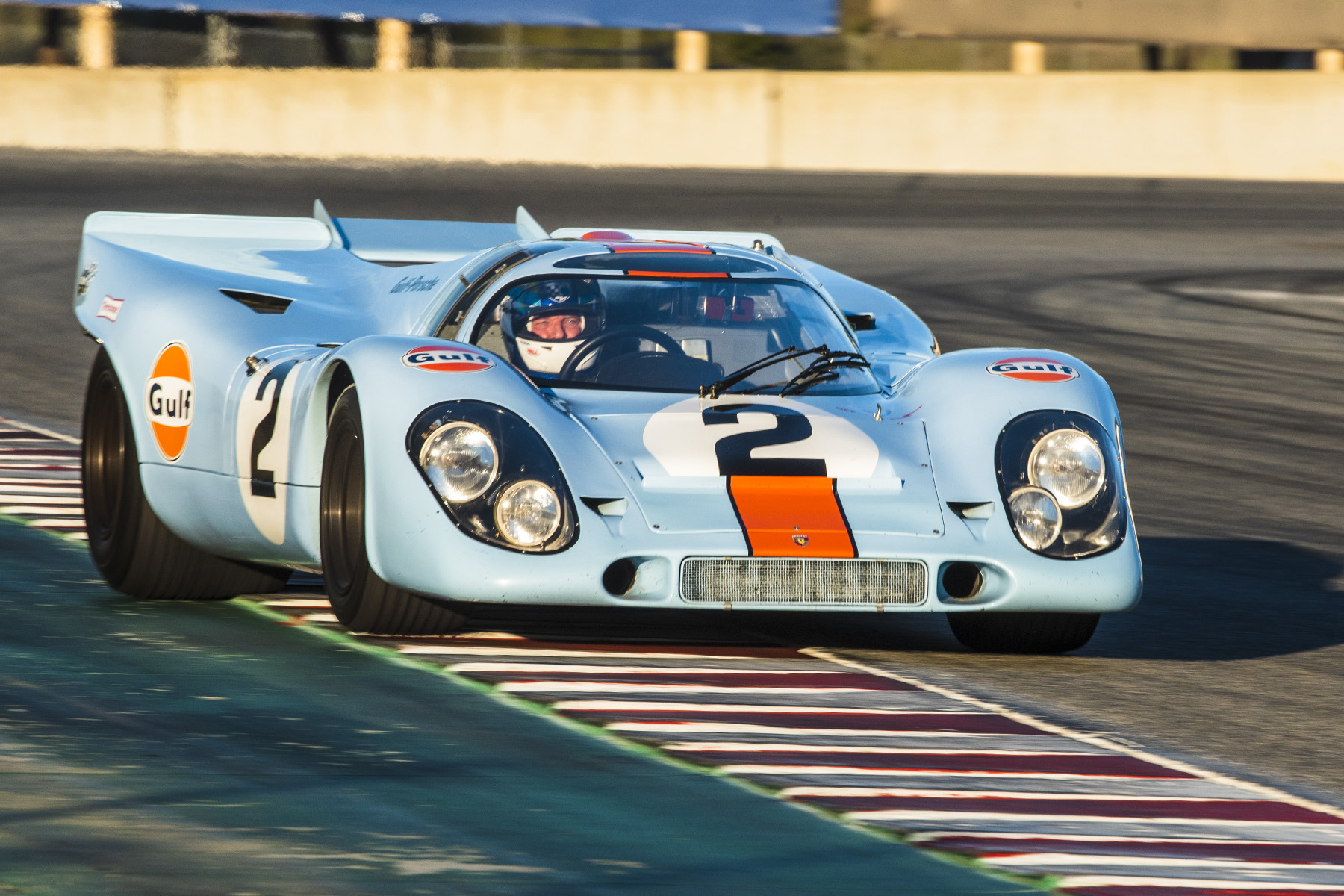
Pale blue, with a broad orange stripe down the centre edged in dark blue. It appeared on John Wyer's Ford GT40s in 1967, won Le Mans on them in 1968 and 1969, and moved to his Porsche 917s for 1970 and 1971. That is a short career: about eight seasons at the front, on perhaps four kinds of car.
So why first, ahead of Martini, which raced for five times as long? Because of what happens when you show the two to somebody who knows nothing about motor racing. They may recognise Martini's stripes. They will recognise this, and many will be able to name it. Steve McQueen drove a Gulf 917 in the film Le Mans, and the poster did the rest.
It also works as design. The blue is soft and the orange is hot, and nothing else on a grid looked like either. There is very little lettering: a small roundel with the company's name, and that is all. The colours were not even Gulf's own. They came from a smaller oil company it had taken over, because the executive who ran the racing programme thought the corporate dark blue would look dull on a car. He was right, and the company has been selling jackets and watches in powder blue and orange ever since.
Verdict The one livery everybody knows, including people who do not follow racing.
The pale blue was not Gulf's own. It belonged to Wilshire Oil, a company Gulf had bought; Gulf's corporate blue was much darker.
What we left off, and why
Left out because we could not show them
Every entry on this list has a photograph of a real car, and three liveries we wanted to include were dropped because we could not find one we could use. They are the Pink Pig, the Porsche 917/20 of 1971 painted pink and marked up like a butcher's diagram; the Benetton of 1986, with its brushstrokes of green, red, blue and yellow; and the Apple Computer Porsche 935 that raced at Le Mans in 1980 in rainbow stripes. All three would be in the top twenty-five. Their places went to Canon Williams, Elf Tyrrell and UOP Shadow.
Lower than you might expect
Marlboro McLaren is seventh. It won more than any livery here and is the most recognised in Formula One. We judged it less handsome than the black and gold of John Player or the blue and white of Rothmans.
British racing green is tenth. It is the oldest colour on the list, but it has been a dozen different greens on a dozen different makes, and no one image of it stands out.
The BMW Art Cars are twenty-eighth. As objects they belong in a museum, and that is where they are. As racing liveries they each appeared once.
Higher than you might expect
Jägermeister is eighth with almost no major wins behind it. It is there on looks.
Renown is twelfth on the strength of one car in one race.
Considered and left out
Essex Lotus, Yardley BRM and McLaren, Gitanes Ligier, Lark McLaren, Advan, Warsteiner and Falken all had support. Red Bull's dark blue has won more races than almost anything here and has changed too little, on too many cars at once, to be remembered as one image yet. Shell's yellow and red has been on Ferraris for decades as a badge and never as a whole livery.
Tell us what we got wrongQuestions about this list
What is the most famous racing livery?
We rank Gulf's pale blue and orange first. It raced for only a few years, on the Ford GT40 and Porsche 917, but it is recognised by people who do not follow motor racing. Martini's stripes, which were on far more cars and winners, are second.
When did sponsor liveries begin?
In Grand Prix racing, in 1968, when Lotus painted its cars in the red, white and gold of the Gold Leaf cigarette brand. Before that, cars raced in national colours: red for Italy, green for Britain, blue for France, white or silver for Germany.
Why are so many of the great liveries for cigarette brands?
From 1968 until the early 2000s tobacco companies were the biggest sponsors in motor racing, because they were barred from most other advertising. They spent heavily on design. Seven of the thirty liveries on this list are for cigarette brands. Tobacco sponsorship is now banned in the sport almost everywhere.
Why is British racing green not higher?
It is the oldest racing colour still in use, dating from 1903, but it has been many different shades on many different makes. No single image of it is as fixed in the memory as Ferrari's red or the Silver Arrows.
Which liveries were left off?
Three were dropped because we could not find a photograph of a real car to show: the Pink Pig Porsche 917, the 1986 Benetton and the Apple Computer Porsche 935. Others that were considered are named in the notes after the list.
We listed every livery that people who follow racing can picture without being shown it, and then asked which of those a wider audience would recognise. The thirty here are the ones that passed both tests, or passed the first so strongly that the second did not matter.
Each was judged on design and on how well it is remembered. Design covers colour, how well the scheme fits the shape of the cars, and whether it can be recognised with the lettering removed. Memory covers how long it raced, on what, and whether it has outlived its sponsor.
We set one rule for ourselves: no entry without a photograph of a real car in the colours. Three liveries were dropped for that reason, and they are named in the notes after the list.