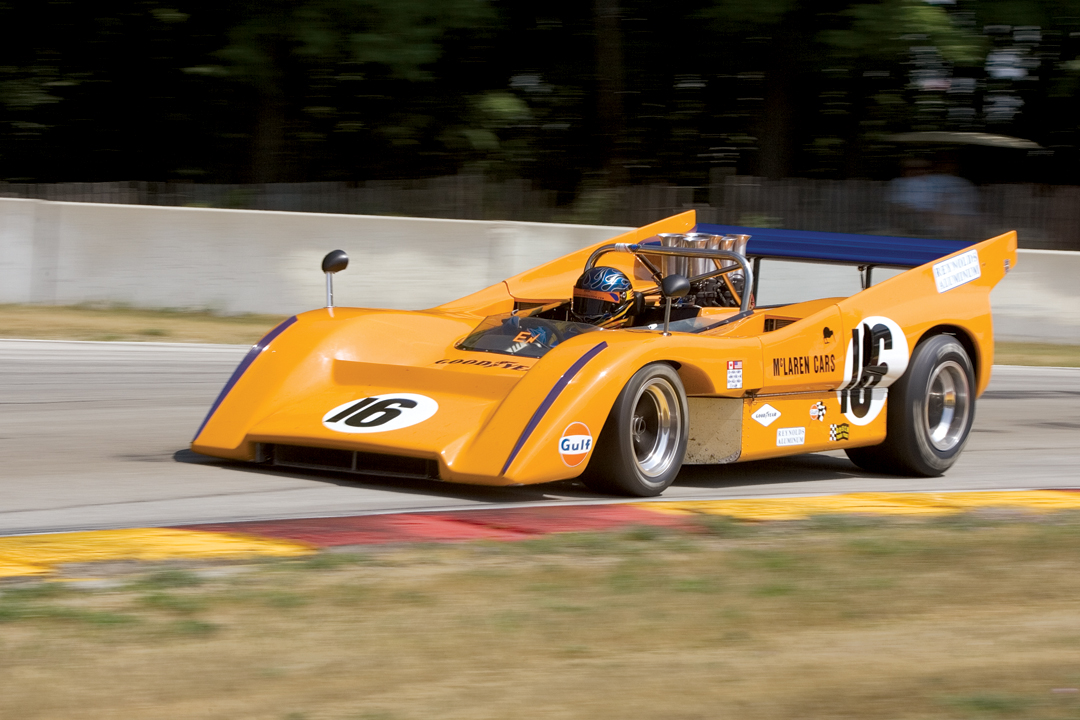

The Canadian-American Challenge Cup ran for nine seasons, from 1966 to 1974, on road circuits in the United States and Canada. Its rule book was the shortest in racing. A car needed two seats, bodywork that covered the wheels, and not much else. There was no limit on engine size, no minimum weight, and for most of its life no restriction on wings, turbochargers or anything an engineer could think of. The prize money was the best in the world. The cars that resulted were faster than Formula One cars, and stranger.
What counts
Cars that raced, or tried to race, in the original Can-Am series between 1966 and 1974. The series revived under the same name in 1977 was a different thing, run for rebodied single-seaters, and is not covered. Developments of one design share an entry, so the McLaren M8A, M8B, M8D and M8F are counted as one.
How we ranked them
On three things. Results: races and titles won. Engineering: what the car introduced. And excess, which in this series was half the point: how far its makers were prepared to go with the freedom they were given. That third measure is why a car that never won is third, and why some winners are lower than their records suggest. Where a ranking is likely to be disputed we have explained it, either in the entry or in the notes at the end.
How to read this list
The list counts down from twenty to one. The top five have the longest entries, the next ten are shorter and the last five are brief. Every one of the nine championships was won by a car on this list. Eleven of the twenty never won a race, which says something about how hard the McLarens and Porsches were to beat. After the list there is a section on the hardest calls: which cars are lower than you might expect, which are higher, and which were left out.
See the full ranking, 1 to 20
| Rank | The Greatest Can-Am Cars | Years |
|---|---|---|
| 1 | McLaren M8 | 1968–71 |
| 2 | Porsche 917/30 | 1973 |
| 3 | Chaparral 2J | 1970 |
| 4 | Chaparral 2E | 1966 |
| 5 | McLaren M6A | 1967 |
| 6 | Porsche 917/10 | 1972 |
| 7 | Lola T70 | 1965–69 |
| 8 | Shadow DN4 | 1974 |
| 9 | McLaren M20 | 1972 |
| 10 | Lola T260 | 1971 |
| 11 | Ferrari 712 Can-Am | 1971 |
| 12 | Chaparral 2G | 1967–68 |
| 13 | Autocoast Ti22 | 1969–70 |
| 14 | AVS Shadow Mk I | 1970 |
| 15 | Chaparral 2H | 1969 |
| 16 | Ferrari 612P | 1968–69 |
| 17 | Lola T160 and T163 | 1968–69 |
| 18 | March 707 | 1970 |
| 19 | BRM P154 | 1970 |
| 20 | Mac's It Special | 1970 |
20 to 16
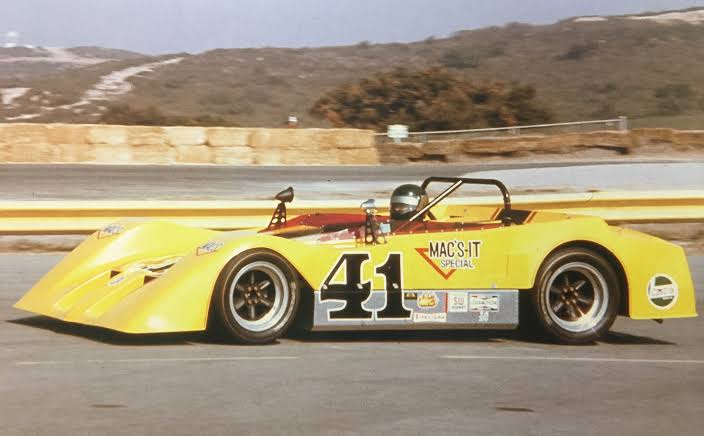
20. Mac's It Special
1970 · Four 775 cc two-stroke twins, one at each wheel · About 440 hp in total · 1
Four snowmobile engines, each of 775 cc and about 110 horsepower, one beside each wheel, each with its own gearbox and chain. That gave four-wheel drive without a transmission. The car appeared at Laguna Seca in 1970 and was far too slow to qualify. It was never seen again. Only Can-Am would have let it in the gate.
Verdict Four engines, four-wheel drive, no start.
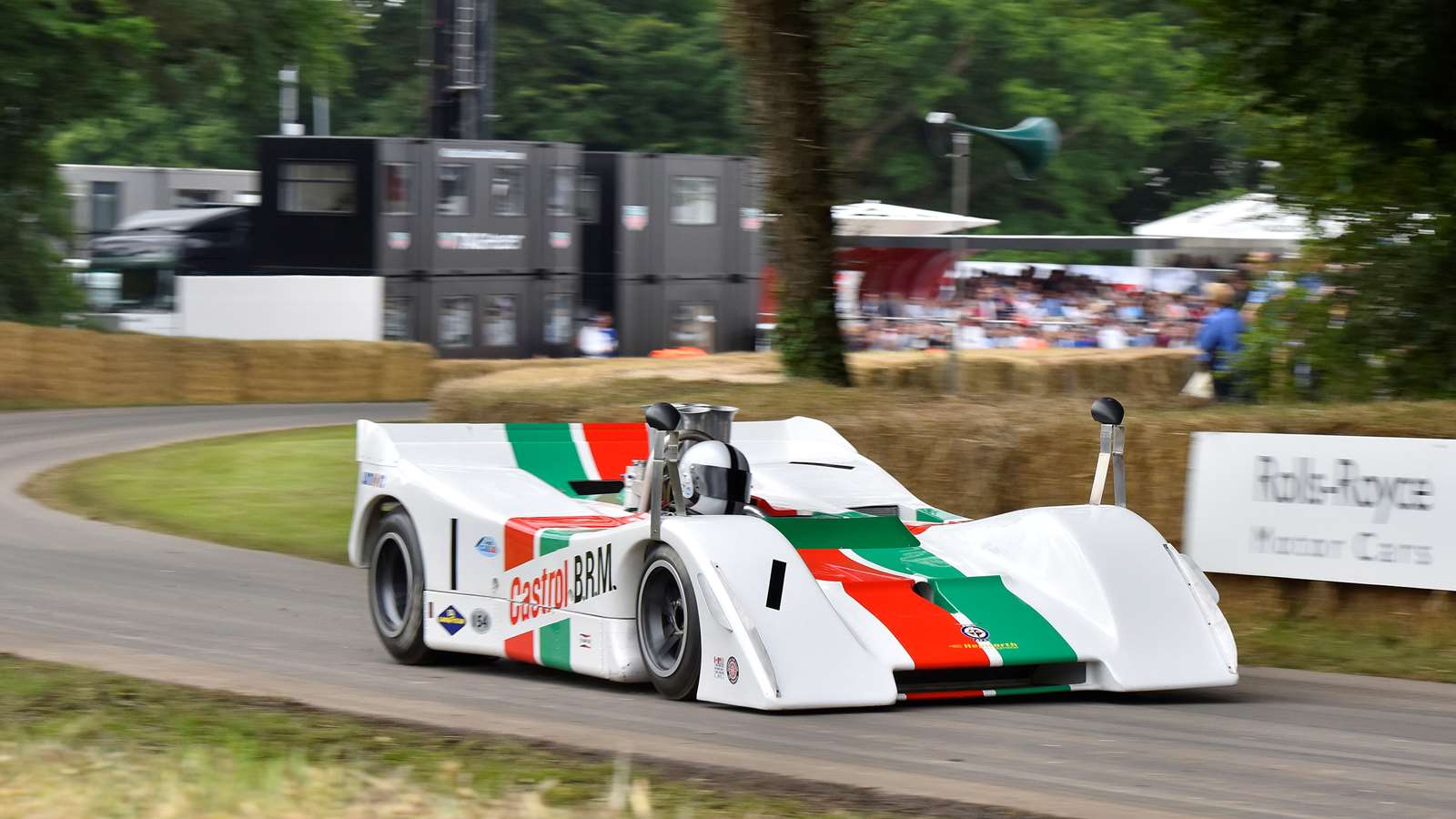
19. BRM P154
1970 · 7.6 Chevrolet V8 · About 650 hp
The British Formula One team entered Can-Am in 1970 with a Chevrolet-engined car for the Canadian driver George Eaton. It was difficult to drive and rarely lasted. A revised version did better in Europe the following year. It is here mainly as a sign of how many serious teams the series drew at its height.
Verdict A Grand Prix team's unhappy season in America.
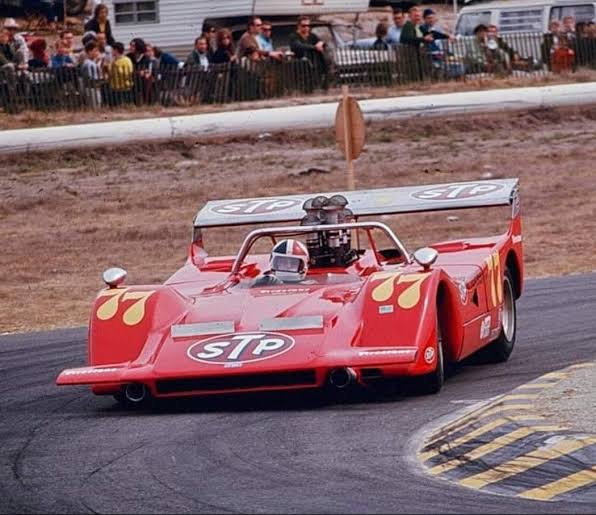
18. March 707
1970 · 8.1 Chevrolet V8 · About 700 hp · 2
March Engineering, in its first full year, built a Can-Am car as well as everything else. The 707 was large and heavy, with a wide chisel nose. Chris Amon drove it in the last three races of 1970 and finished in the first five each time. March did not come back.
Verdict Big, late, and respectable.
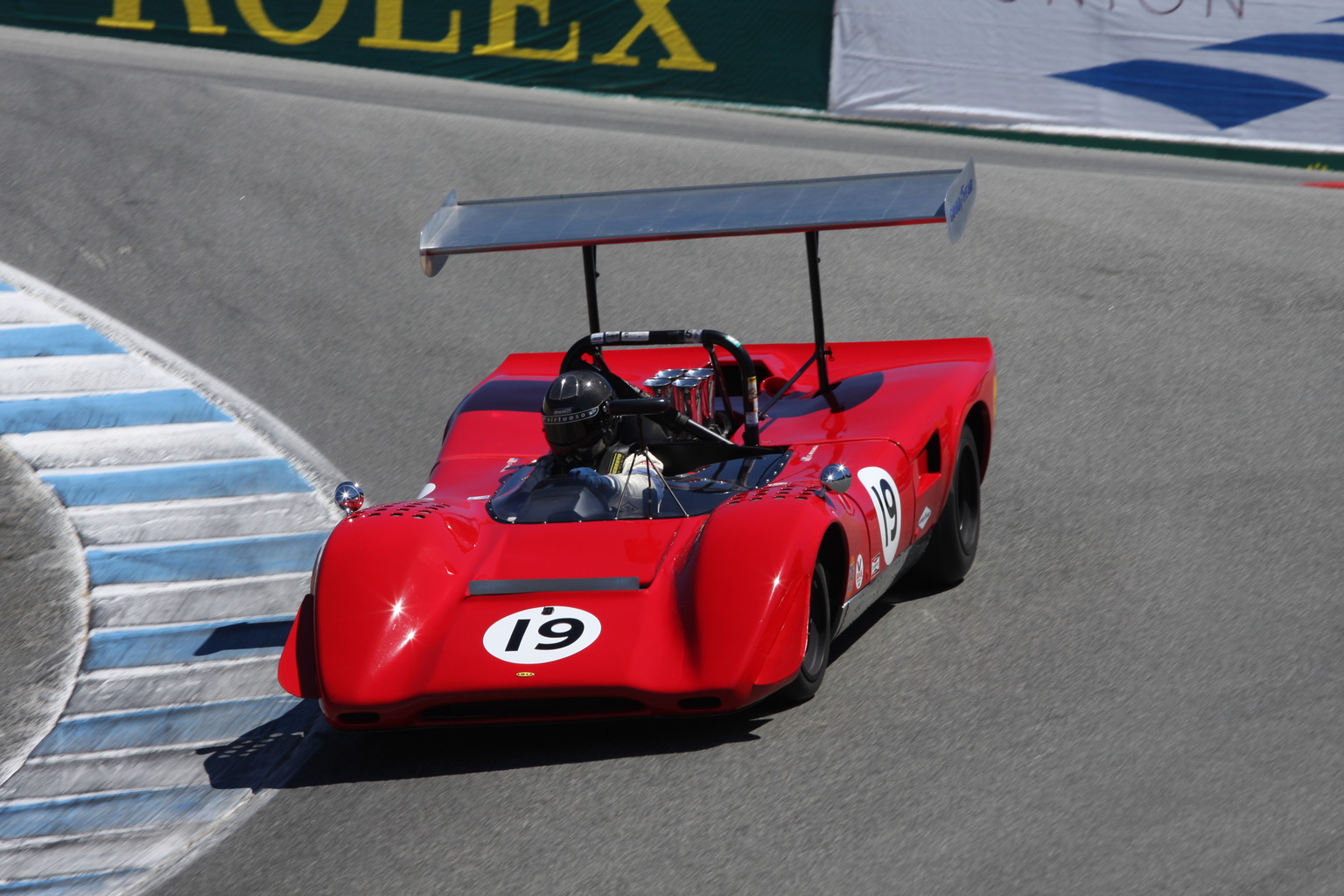
17. Lola T160 and T163
1968–69 · 7.0 Chevrolet V8 · About 600 to 650 hp
Lola's customer cars of 1968 and 1969 were what most private teams drove. They were sound and never quite fast enough. The best season was 1969, when Chuck Parsons finished third in the championship in a T163 without winning a race. They filled the grids and the minor placings, which every series needs.
Verdict The private entrant's car in the McLaren years.
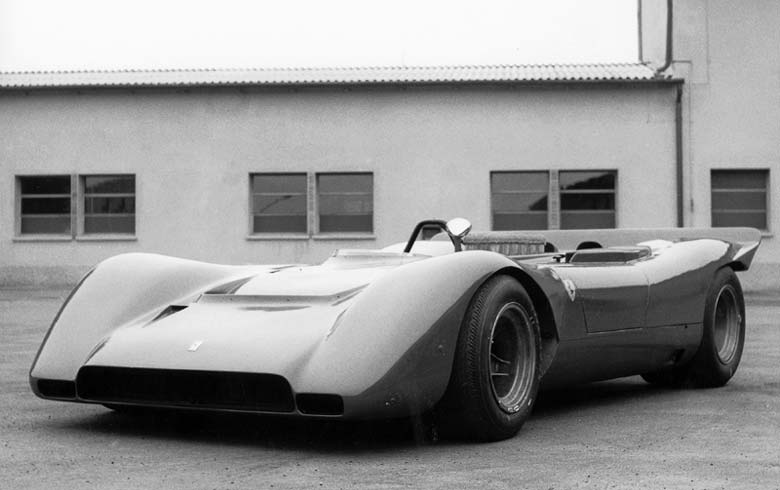
16. Ferrari 612P
1968–69 · 6.2 V12 · About 620 hp · 1
Ferrari's earlier attempt was a single car with a 6.2-litre V12, run by a tiny crew for Chris Amon. It arrived for the last race of 1968 and retired on the first lap. In 1969 Amon was on the podium three times against the works McLarens. Then the engine was enlarged, it began to break, and Ferrari lost interest.
Verdict One car, and three podiums against the best.
15 to 6
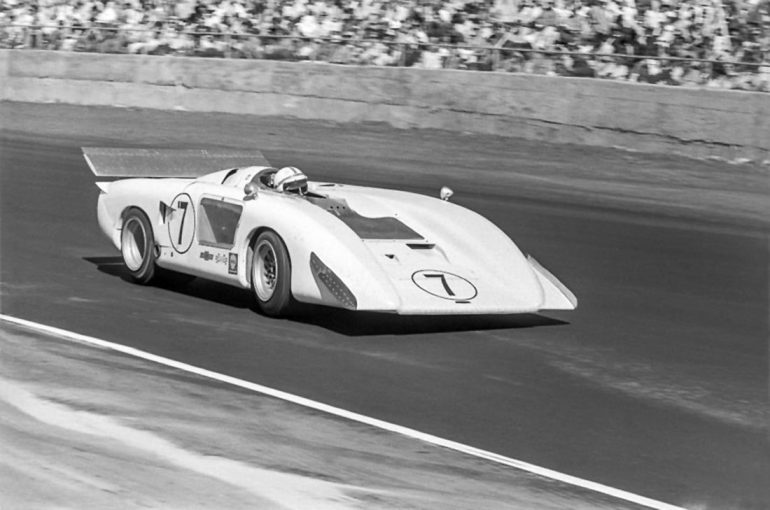
15. Chaparral 2H
1969 · 7.0 aluminium Chevrolet V8 · About 680 hp · 1
Jim Hall's 1969 car was meant to have the least drag of anything in the field. It was very narrow, with a body that formed the structure, and the driver was to lie almost flat behind a slot. John Surtees, hired to drive it, refused, and it was rebuilt with a normal seat and a hole in the roof. It never handled. A huge wing was added in the middle of the season. Its best result was fourth.
Verdict The one Chaparral idea that did not work.
Did you know: As first designed, the driver lay almost flat and looked out through a slot in the bodywork.
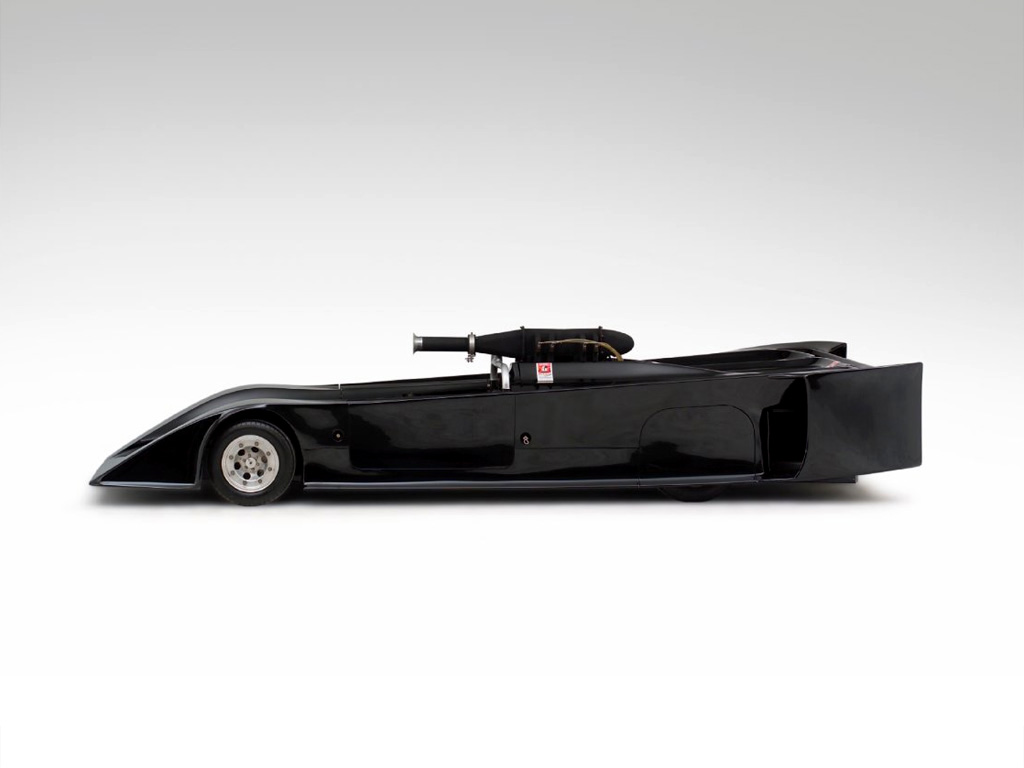
14. AVS Shadow Mk I
1970 · 8.1 Chevrolet V8 · About 700 hp
The first Shadow was built round an idea: reduce the frontal area and the car will be faster on the straights. To that end its wheels were tiny, ten inches at the front and twelve at the back, and the driver lay with his feet between the front wheels and the pedals at an angle. It was the lowest car in the series by some way. The small tyres overheated and the small brakes inside them faded within a few laps. It rarely finished.
Verdict The lowest car in Can-Am, on wheels from a go-kart.
Did you know: Its front wheels were ten inches across, about the size of a go-kart's.
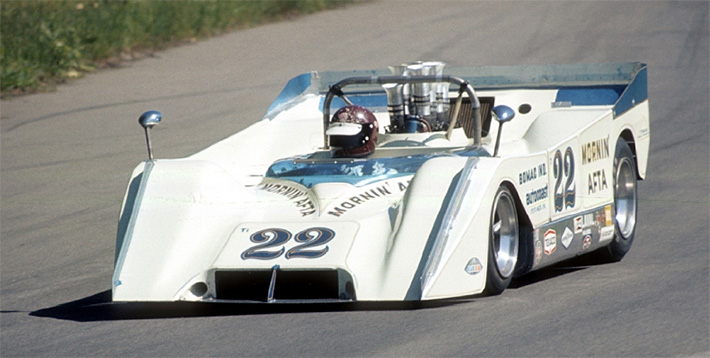
13. Autocoast Ti22
1969–70 · 8.1 Chevrolet V8 · About 700 hp · 2
Peter Bryant, an English mechanic working in California, designed a Can-Am car using titanium for the chassis panels, suspension and fittings, to save weight. It was built on very little money. Jackie Oliver drove it, and in 1970 he finished second to the works McLarens more than once. It was the best showing by a private American car in those years. The team ran out of funds soon after.
Verdict A titanium car built on a shoestring that ran with the McLarens.
Did you know: The name is titanium's chemical symbol and atomic number. Much of the car was made of it.
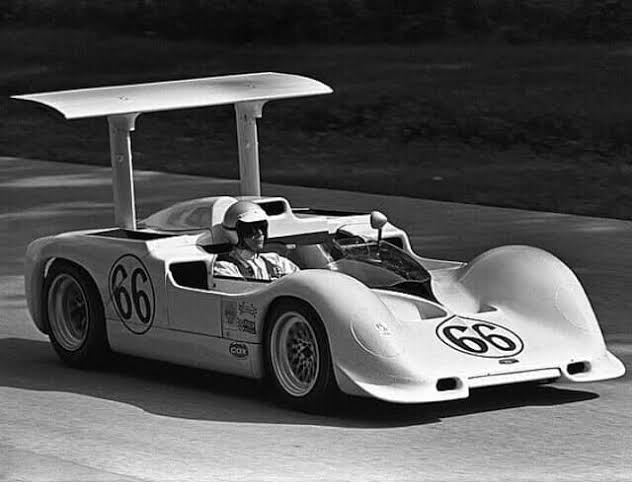
12. Chaparral 2G
1967–68 · 7.0 aluminium Chevrolet V8 · About 580 hp
The 2G was the 2E with a 7.0-litre aluminium engine and the widest tyres yet seen, on a chassis that was by then three years old. Jim Hall was often on the front row with it in 1967 and 1968 and finished on the podium more than once. It did not win. At the last race of 1968, in Las Vegas, he ran into the back of a slower car at speed and was badly hurt. He did not race again in Can-Am as a driver.
Verdict Fast, fragile, and the end of Jim Hall's driving career.
Did you know: Jim Hall's driving career ended when he crashed it at Las Vegas in 1968.
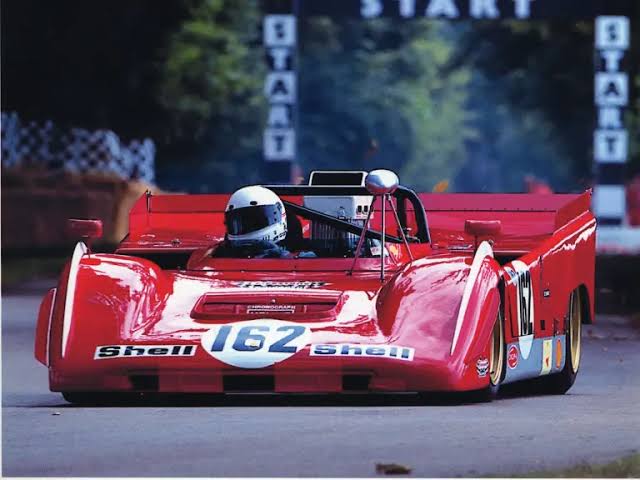
11. Ferrari 712 Can-Am
1971 · 6.9 V12 · About 680 hp · 1
Ferrari never gave Can-Am its full attention, but it did build the largest engine in its history for it. The 712 was a 512 M sports car fitted with a V12 enlarged to 6.9 litres, giving about 680 horsepower. Mario Andretti drove it once, at Watkins Glen in 1971, and finished fourth. It then passed to Ferrari's American importer, who ran it now and again until 1974. With development it might have matched the McLarens. It did not get any.
Verdict The biggest engine Ferrari ever raced.
Did you know: Its 6.9-litre V12 is the largest engine Ferrari has raced.
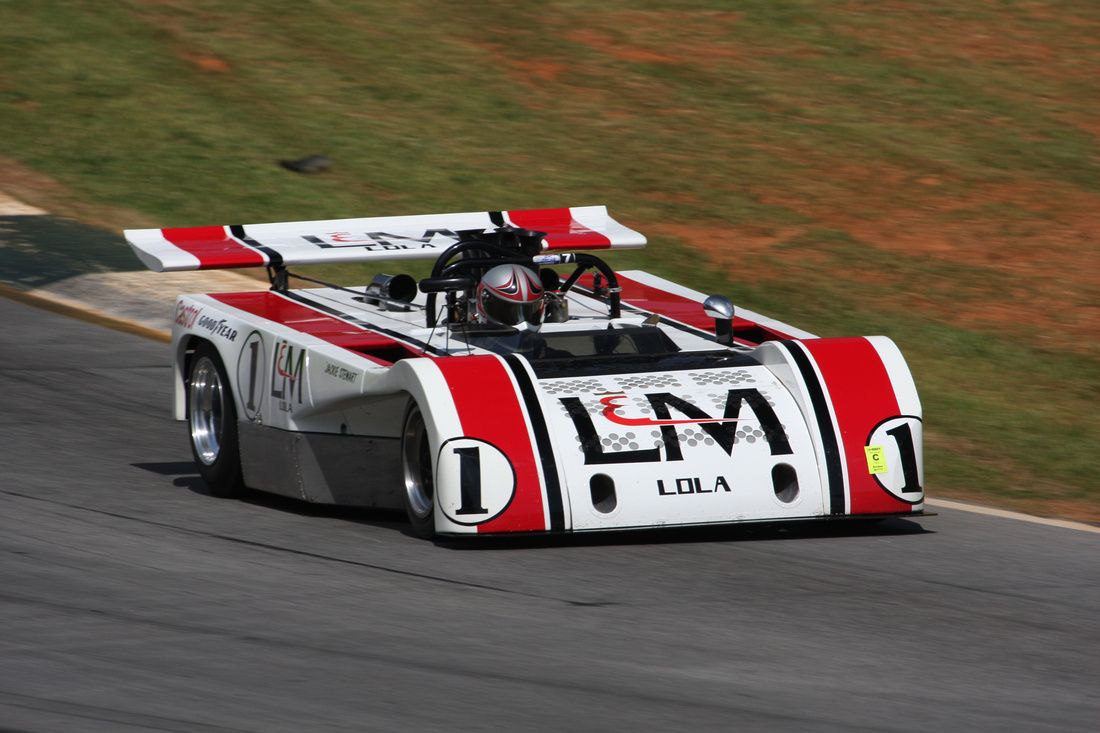
10. Lola T260
1971 · 8.1 Chevrolet V8 · About 740 hp
In 1971 Lola built one car for Jackie Stewart, then the Formula One champion-elect, to take on the McLarens alone. The T260 was short and blunt-nosed and handled badly: Stewart said it was the most difficult car he ever raced. He won twice all the same, in Canada and at Mid-Ohio, led several other races, and finished third in the championship. It was the nearest anyone came to beating the works McLarens in their last winning year, and it was mostly the driver.
Verdict One car, one driver, two wins against the McLarens.
Did you know: Jackie Stewart won two races in it in 1971 and called it the hardest car he ever drove.
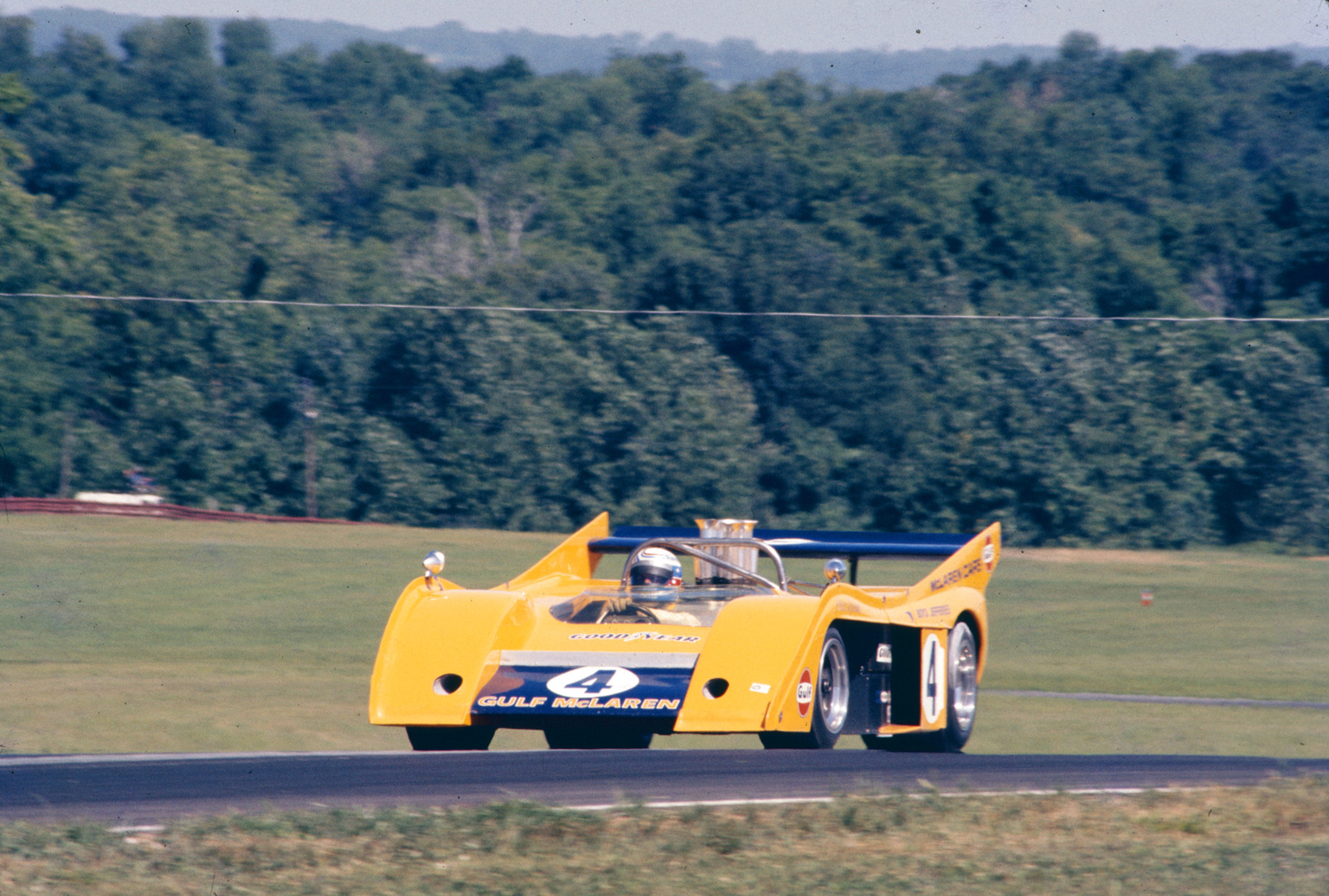
9. McLaren M20
1972 · 8.1 Chevrolet V8 · Over 750 hp · 3
Gordon Coppuck designed the M20 from a clean sheet to meet the turbocharged Porsche. The radiators went to the sides, which left room for a wing in the nose, and the fuel was moved to the middle of the car. With an 8.1-litre Chevrolet giving over 750 horsepower, it was the best McLaren the series saw. It was also 150 horsepower short. Denny Hulme won twice with it in 1972, and the works team withdrew at the end of the year to concentrate on Formula One and Indianapolis.
Verdict The best McLaren of all, beaten by turbochargers.
Did you know: Its radiators were moved to the sides, and the space in the nose was used for a wing.
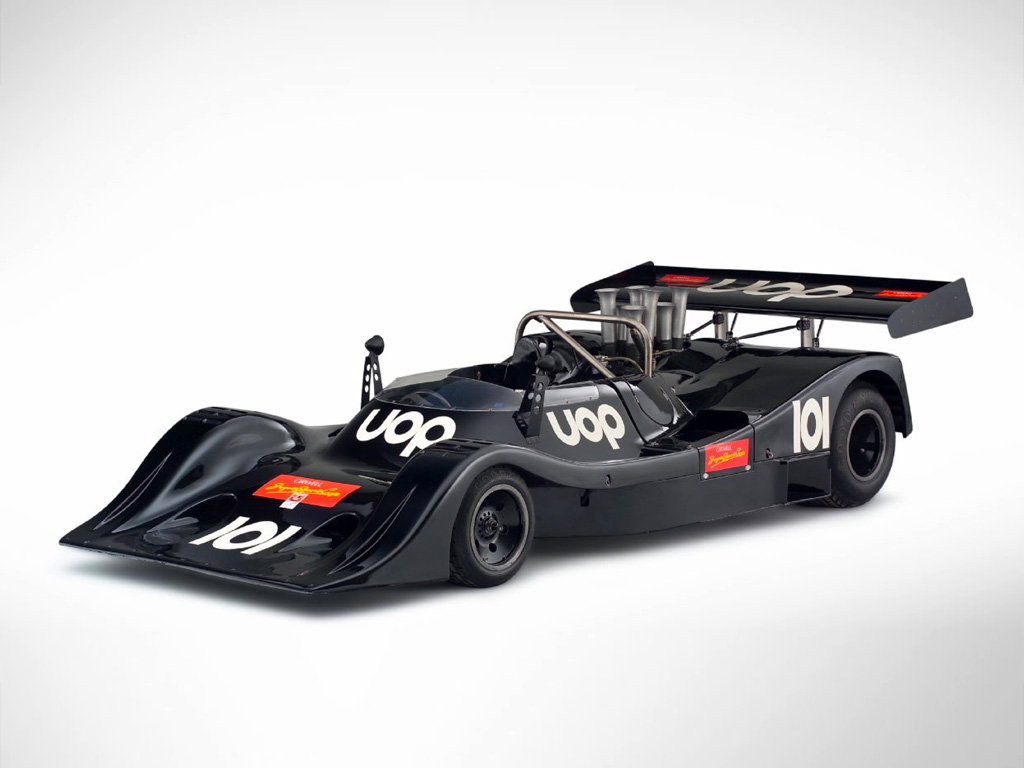
8. Shadow DN4
1974 · 8.1 Chevrolet V8 · About 800 hp
Don Nichols's Shadow team had spent four years as Can-Am's eccentric outsider. By 1974 it was the best-funded team left. The DN4 was a conventional car, low and black, with an 8.1-litre Chevrolet. Jackie Oliver won four of the five races and the championship, with his team-mate George Follmer usually right behind him and sometimes into him. The season was cut short when the last races were cancelled. It is a deserving car that won the weakest title in the series' history.
Verdict The last champion, in a season of five races.
Did you know: It won the last championship of the original Can-Am, in a season of five races.
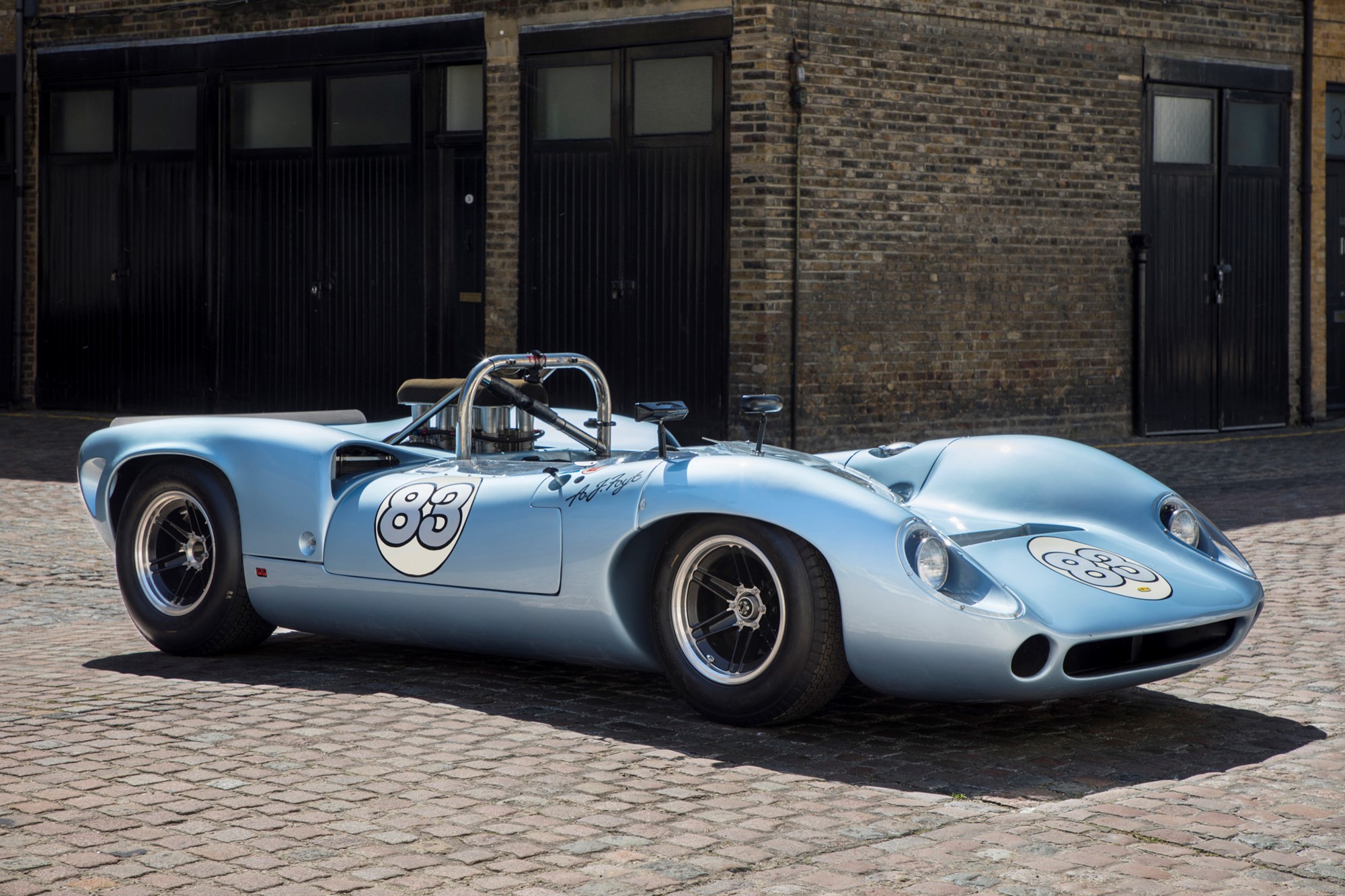
7. Lola T70
1965–69 · 5.0 to 5.9 Chevrolet V8 · 450 to 550 hp · ~ 100
The first Can-Am champion was a Lola. In 1966 John Surtees won three of the six races in his T70 and the title, and other T70s won two more, with Dan Gurney and Mark Donohue. It was a strong, good-looking car that a private team could buy, fit with a Chevrolet or Ford V8, and win with. After that first season it was overtaken. McLaren tested more and developed faster, and Lola's later Can-Am cars never caught up. Surtees's championship remained the only one for the marque.
Verdict The first champion, and the last for Lola.
Did you know: John Surtees won the first Can-Am championship in one, in 1966.
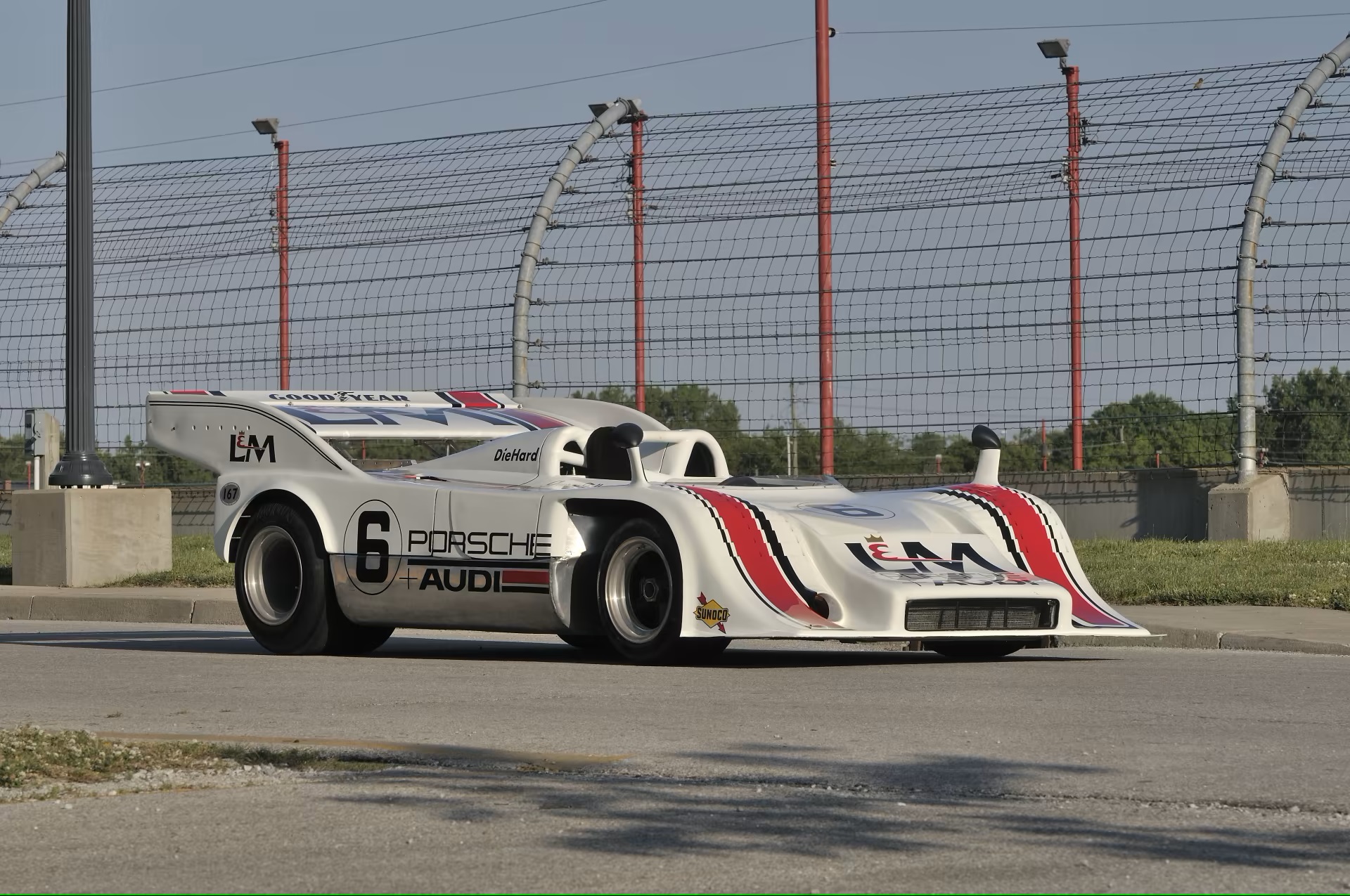
6. Porsche 917/10
1972 · 5.0 twin-turbo flat-twelve · About 900 hp
Porsche's first serious Can-Am car was the 917 with the roof removed and two turbochargers added, which roughly doubled its power to about 900 horsepower. Roger Penske's team ran it, and Mark Donohue spent months teaching the engineers how to make a turbocharged engine respond to the throttle. Then he crashed in testing and broke his leg. George Follmer, called in as a substitute, won five races and the 1972 championship. McLaren's run was over. It ranks below the M6A because the car that replaced it a year later did the same job far more completely.
Verdict The turbocharged Porsche that ended McLaren's run.
Did you know: George Follmer won the 1972 title in it as a stand-in, after Mark Donohue was injured in testing.
The top 5
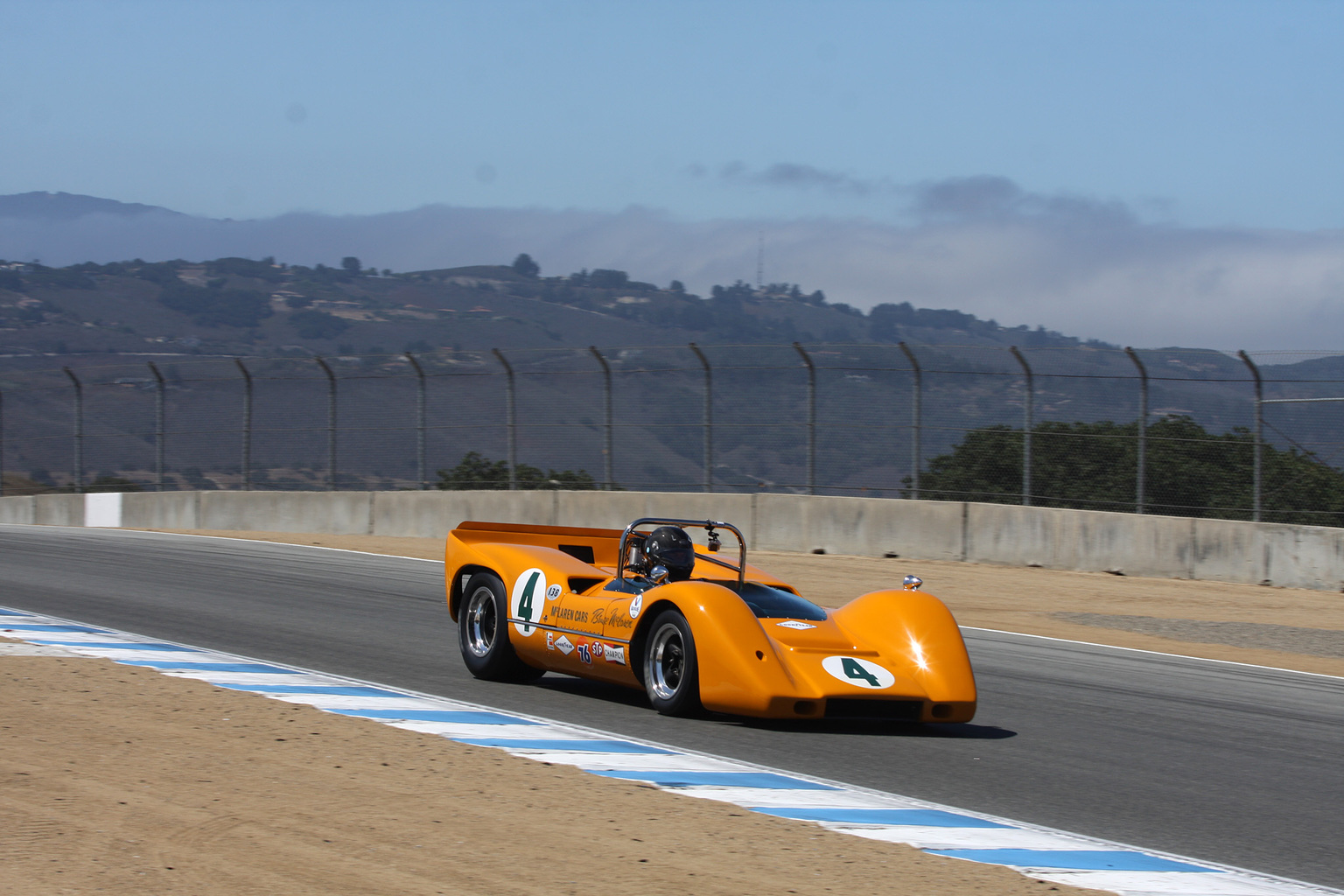
- Years
- 1967
- Engine
- 5.9 Chevrolet V8
- Power
- 525 hp
- Built
- 3
Race car · UK
5. McLaren M6A
McLaren had run cars in the first Can-Am season without winning a race. For 1967 the team started again. The M6A was its first sports car with a full monocoque, credited to Robin Herd, and it was simple, light and finished early enough to be tested for weeks before the opening round. No rival did anything like that mileage.
It had a small-block Chevrolet with fuel injection giving 525 horsepower, less than the big-block Chaparral. It did not matter. The works cars won five of the six races. Denny Hulme took the first three, and Bruce McLaren won two and the championship. The only race they lost was the last, when both cars broke.
This was also the first McLaren painted orange, a colour said to have been chosen because it showed up well on television. Copies of the car, sold as the M6B, filled the grid the following year.
The M6A began the five-year run that makes McLaren the name most tied to Can-Am, and it set the method: build early, test thoroughly, change little. It ranks fifth and not higher because the M8 that followed did the same things with more power and for longer.
Verdict The car that began McLaren's five-year reign.
It was the first McLaren painted orange.
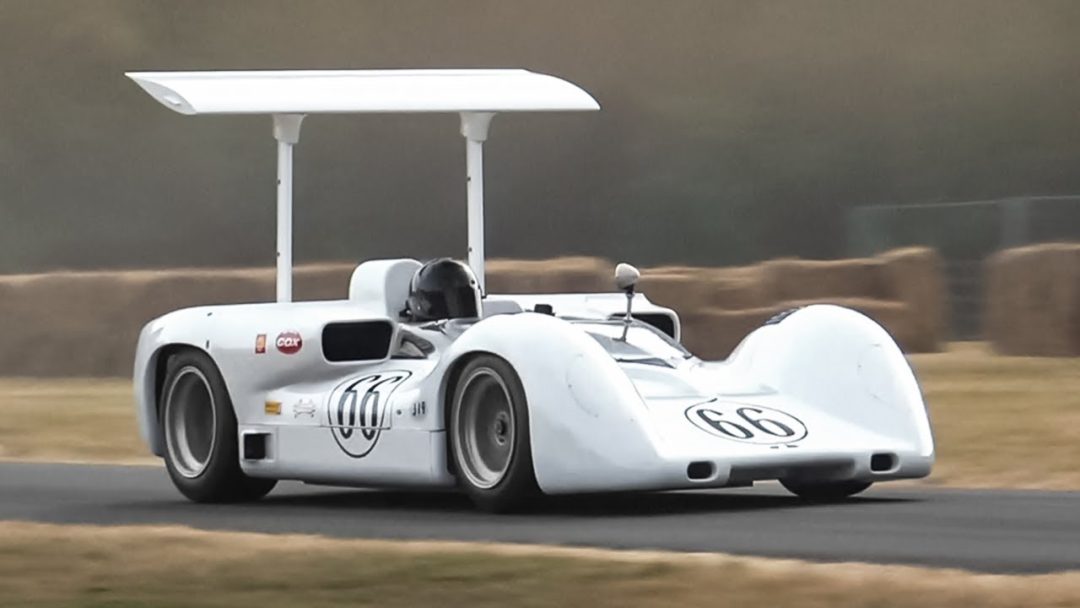
- Years
- 1966
- Engine
- 5.3 Chevrolet V8
- Power
- About 450 hp
- Built
- 2
Race car · USA
4. Chaparral 2E
Every racing car with a wing descends from this one. For the first Can-Am season in 1966, Jim Hall mounted an aerofoil on two tall struts above the rear of the car. The struts were fixed to the wheel hubs and not to the body, so the downforce pressed the tyres into the road without compressing the springs. The wing pivoted. A pedal in the cockpit, where the clutch would have been, let the driver flatten it on the straights for speed and tip it up for the corners and under braking. The pedal was free because the Chaparral had an automatic gearbox.
The 2E also moved its radiators from the nose to the sides, ahead of the rear wheels, which is where racing cars have carried them ever since.
It was fast at once and it broke often. Its one victory came at Laguna Seca, where Phil Hill and Hall finished first and second. John Surtees won the title in a Lola. Within two years every car in the series had a high wing on struts, and so did every Formula One car, until a series of failures in 1969 got them banned.
Much of the work was done with Chevrolet's research department, quietly, which is where the automatic gearbox and the aluminium engine came from. We rank it just behind the 2J because the later car went further.
Verdict The first racing car with a proper wing.
The driver flattened its wing on the straights with a pedal where the clutch would have been.
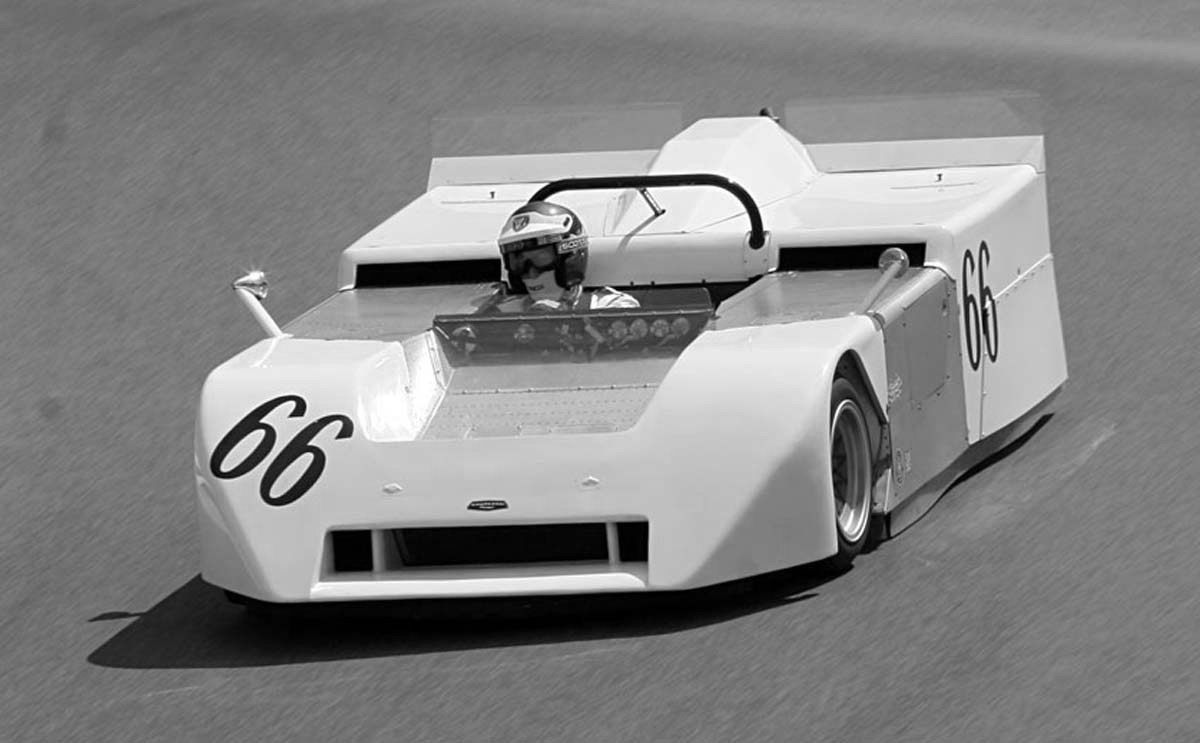
- Years
- 1970
- Engine
- 7.6 Chevrolet V8
- Power
- About 680 hp
- Built
- 1
Race car · USA
3. Chaparral 2J
The 2J never won a race and is third on this list, which needs explaining. Can-Am's rules were written to allow anything, and the reason the series is remembered is that a few people took the offer seriously. Jim Hall took it further than anyone, and the 2J is as far as he went.
It was a white box with two seventeen-inch fans in the tail, driven by a separate two-stroke engine from a snowmobile. The fans drew air from beneath the car, and skirts of plastic sheet, held to the road by a system of cables linked to the suspension, sealed the edges. The suction pressed the car down with a force of many hundreds of kilograms, and it was the same at walking pace as at full speed. No wing could do that.
Jackie Stewart drove it on its debut at Watkins Glen in 1970 and set the fastest lap. Vic Elford then put it on pole at the races that followed, once by about two seconds. In the races the auxiliary engine or the brakes failed every time. The other teams, led by McLaren, argued that the fans were movable aerodynamic devices, and the car was banned at the end of the year.
Hall gave up racing his own cars after that. Eight years later Brabham built a fan car for Formula One, and it was banned too.
Verdict Never won, never forgotten, and banned for being right.
A snowmobile engine drove two fans that sucked the car on to the road, at any speed.
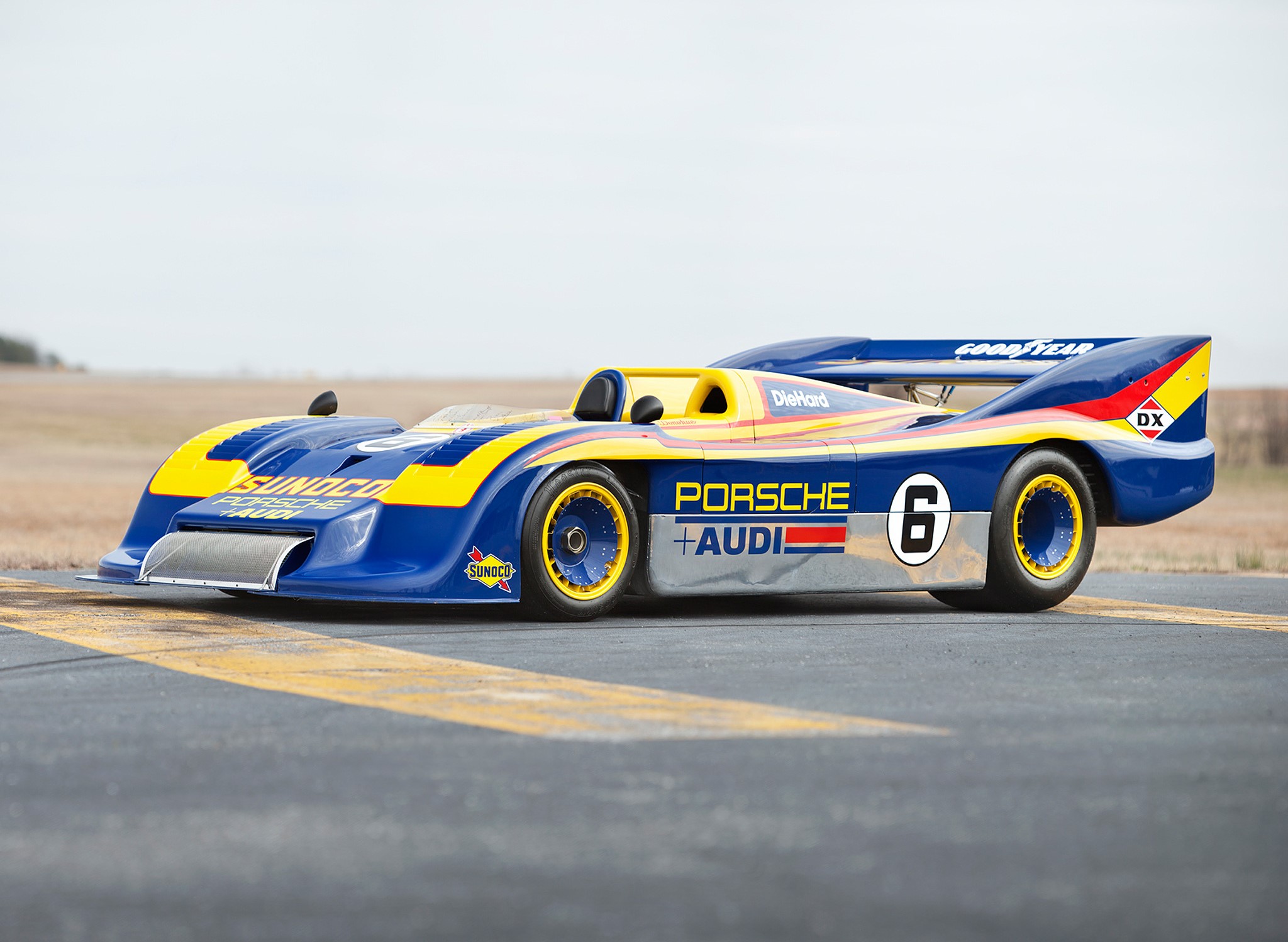
- Years
- 1973
- Engine
- 5.4 twin-turbo flat-twelve
- Power
- About 1,100 hp
- Built
- ~ 6
Race car · Germany
2. Porsche 917/30
This is the most powerful road-racing car there has been, and the one that finished Can-Am off. Porsche came to the series in earnest in 1972, with a turbocharged version of its Le Mans winner, and took the title from McLaren at the first attempt. For 1973 it built something stronger. The 917/30 had a longer wheelbase, a 5.4-litre flat-twelve with two turbochargers, and about 1,100 horsepower for the races. On the test bed, with the boost wound up, the engine gave over 1,500.
Mark Donohue, who was an engineer as well as a driver, developed it with Porsche over a winter and drove the only works car for Roger Penske. After two early setbacks he won the last six races of the eight, usually from pole and usually by a wide margin. It could reach 200 mph in about thirteen seconds.
For 1974 the organisers set a fuel-consumption limit that ruled it out. With no Porsche and no McLaren, the series ran five races that year and then stopped. In 1975 Donohue took the car to Talladega and lapped at 221 mph, a closed-circuit record.
It is second because its supremacy lasted one season, and because McLaren's works team had already gone when it arrived. As a machine, nothing here comes near it.
Verdict Eleven hundred horsepower, and the end of the series.
In 1975 Mark Donohue lapped Talladega in one at 221 mph, a closed-course record that stood for years.
The best of the 20 · Race car · UK
1. McLaren M8
- Years
- 1968–71
- Engine
- 7.0 to 8.1 Chevrolet V8
- Power
- 620 to 740 hp
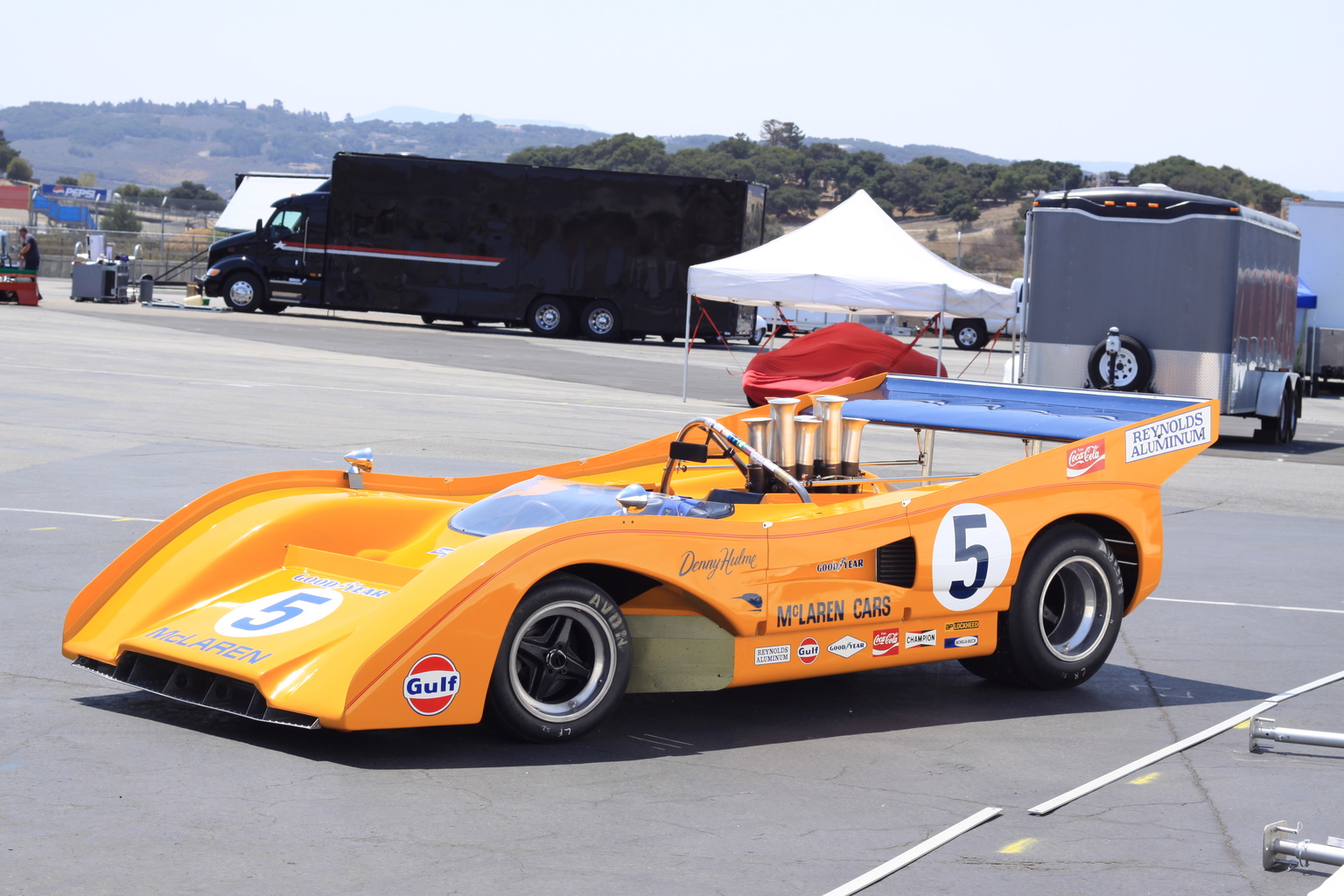
Can-Am had 71 races in its nine seasons. McLaren cars won 43 of them. For five years, from 1967 to 1971, the works team took the title every time, and between 1968 and 1970 it won 23 races in a row. People called the series the Bruce and Denny show, after Bruce McLaren and Denny Hulme, and for most of that time the show was performed in an M8.
The M8A of 1968 was the first. It used an aluminium Chevrolet V8 of 620 horsepower as part of its structure, bolted to the back of a short monocoque, as the Lotus 49 had done in Formula One the year before. Hulme won the title. The M8B of 1969 added a high wing mounted on the rear suspension, and won all eleven races, six for McLaren and five for Hulme. The M8D had a lower wing between two fins, after high wings were banned. Bruce McLaren was killed testing one at Goodwood in June 1970, when the rear bodywork came off at speed. The team raced a fortnight later, and Hulme won the championship. Peter Revson won it in the M8F in 1971.
The cars were never the most adventurous in the field. They were the best prepared, the most thoroughly tested and the easiest to drive fast. We put the M8 first because four titles and one unbeaten season, against all comers, outweigh one overwhelming year by anybody else.
Verdict Four titles in four years, and a season without a defeat.
In 1969 the M8B won all eleven Can-Am races.
What we left off, and why
Why McLaren is first and Porsche second
The Porsche 917/30 was the faster car by a wide margin, and many lists put it first. We chose the McLaren M8 because it won four championships to the Porsche's one, won every race of a season, and did it while Ferrari, Lola, Chaparral and Porsche itself were all trying to stop it. The 917/30 arrived after the McLaren works team had left and raced for one year. If the question were which car was the most formidable, the answer would be the Porsche.
Higher than you might expect
The Chaparral 2J is third without a win, and the 2E fourth with one. Both are there for what they introduced: suction, and the wing. Can-Am is remembered for its freedom, and these are the two cars that used it best. A list ranked on results alone would put both outside the top ten.
Lower than you might expect
The Lola T70 won the first championship and is seventh. It won five of the six races in 1966 between its various drivers and almost nothing afterwards, as McLaren moved ahead.
The Shadow DN4 was champion and is eighth. The 1974 season had five races, no Porsche and no McLaren works team.
The Porsche 917/10 was champion and is sixth. It ended McLaren's run, which matters, but it was the first draft of the 917/30, and we did not want both in the top three.
The Ferrari 712 and 612P had the most famous name in the series and are eleventh and sixteenth. Ferrari sent one car at a time, with little support, and never won.
Not on the list
The McLaren M1B was the team's car in 1966 and did not win a race. The M12 was the customer version of the M8 and is covered by it.
The Porsche 908 and the open 917 PA, which Jo Siffert drove in 1969, were underpowered scouts for what came later. The Shadow DN2 was to have a turbocharged Chevrolet of 1,200 horsepower, which never ran reliably.
Ford's two attempts, the G7A and the Honker II that Mario Andretti drove, were half-hearted and slow. The Chaparral 2A, 2C and 2D were earlier cars or built for endurance racing. Alfa Romeo's T33/4 was a three-litre sports car against eight-litre engines.
Tell us what we got wrongQuestions about this list
What was Can-Am?
The Canadian-American Challenge Cup, a series for two-seat sports racing cars held on circuits in the United States and Canada from 1966 to 1974. It had almost no technical rules, which produced the most powerful road-racing cars of the time.
Who won the most in Can-Am?
McLaren. Its cars won 43 of the 71 races and five championships in a row from 1967 to 1971, for Bruce McLaren, Denny Hulme and Peter Revson.
Why is the McLaren M8 ranked above the Porsche 917/30?
The Porsche was the faster car, but it raced for one season, after McLaren's works team had left. The M8 won four titles running, including every race of 1969, against Ferrari, Lola, Chaparral and Porsche. We explain this and the other close calls in a section after the list.
Why is a car that never won ranked third?
The Chaparral 2J used two fans to suck itself to the road and was faster in qualifying than anything else in 1970. It was banned before it could be made reliable. This list gives weight to engineering and to how far a car went with the freedom the rules allowed, and nothing went further.
Why did Can-Am end?
Costs rose, the turbocharged Porsches made the other teams' cars obsolete, and the 1973 oil crisis cut sponsorship and brought a fuel limit for 1974. Only five races were run that year, and the series was cancelled.
We started from every car that won a Can-Am race between 1966 and 1974, added the cars that brought something new to the series, and cut the list to twenty.
Each was judged on results, engineering and excess, in roughly equal parts. That is a different balance from our other racing lists, where results count for most, and it is deliberate: the series is remembered as much for what was attempted as for who won.
The order of the McLaren M8, the Chaparral 2J and the Lola T70 matches our list of the best race cars ever. Power figures in Can-Am were rarely measured in public and were often exaggerated, so those given here are approximate.