
A circuit is remembered by its corners. Most people who follow racing could not draw the lap at Laguna Seca, but they know what happens at the top of the hill. These are the thirty that matter most.
What counts
A single corner, or a linked sequence that no driver would think of as separate bends. Maggotts, Becketts and Chapel is one entry, and so are the Porsche Curves.
Corners that no longer exist are included and ranked as they were. There are five: the Masta Kink, Tamburello, the Peraltada, the descent at Rouen and Turn 9 at Riverside.
No circuit layout has more than two. Without that rule the Nürburgring Nordschleife and Spa would fill a third of the list between them.
How we ranked them
On three things: how hard the corner is to take well, how fast it is, and what the drivers who have taken it say about it. The third counts for most. A corner's reputation among drivers is built over decades and takes in things a lap time cannot, such as what happens when it goes wrong.
That is why two slow corners are in the top four, and why some very fast ones are near the bottom.
The calls we expect to be argued with
Eau Rouge first. In a modern Formula 1 car it is no longer difficult, and some will say that rules it out. We think its history, its place in every other kind of racing and its hold on drivers outweigh that. Its entry argues the case.
The Karussell second. It is taken at 60 mph. It is also the best-known corner on the most demanding circuit in the world, and nothing else is like it.
The Corkscrew fourth. American readers may want it first. It is the most dramatic corner on the list and one of the slower and easier ones.
Maggotts, Becketts and Chapel fifth. On difficulty at speed it is the hardest thing in current Formula 1, and many drivers would put it at the top. It is the youngest corner in the top ten and has less history than those above it.
The Masta Kink, from the old Spa, at six. We left the old circuit off our list of forgotten race tracks, and this is where it is recognised. It gives Spa three entries, one of them from a layout that no longer exists.
Tamburello at 15. As a corner it was easy. It is here for the wall.
Monaco's hairpin at 29. The most photographed corner in racing, and the least demanding on the list.
How to read this list
The top ten get the longest entries, the next ten a shorter one, and the last ten a paragraph. Each ends with a one-line verdict. Which corners are lower or higher than you might expect, and which are missing, is set out at the end.
See the full ranking, 1 to 30
30 to 21
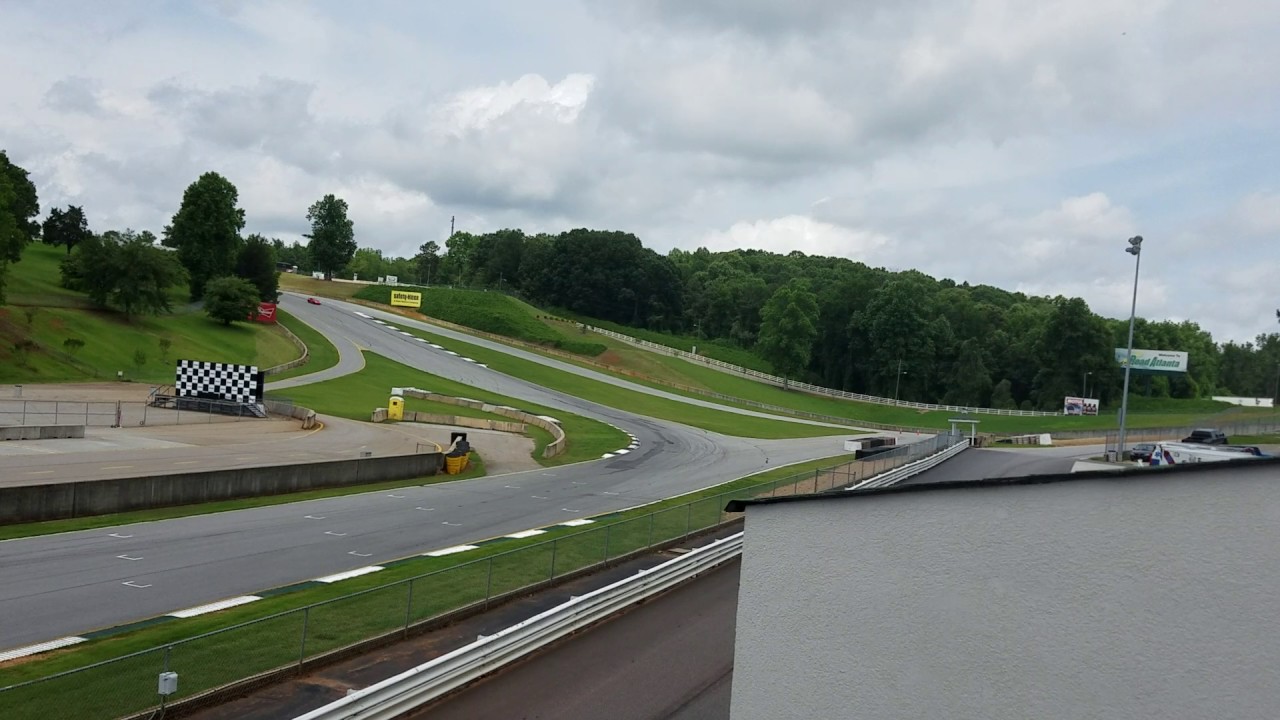
30. Road Atlanta Turn 12
About 120 mph · Right, downhill
The last corner at Road Atlanta comes after a blind crest under a bridge. The road drops steeply and turns right on to the pit straight, with a wall on the outside. A prototype takes it at about 120 mph, still falling. At the end of ten hours at Petit Le Mans, in the dark, it is where the race is thrown away.
Verdict Under the bridge, over the edge and down to the line.
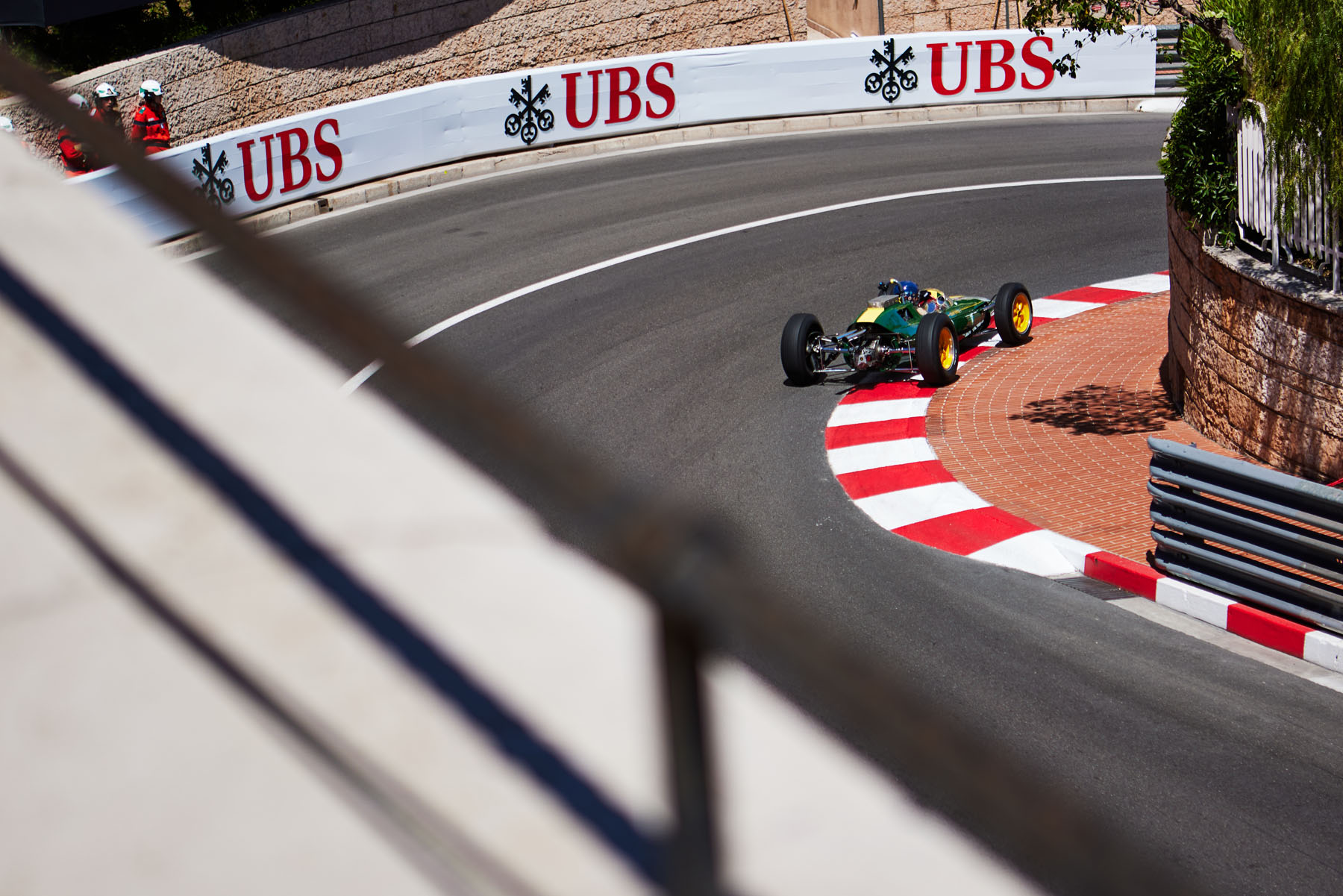
29. Circuit de Monaco The Grand Hotel Hairpin
About 30 mph · Left, 180 degrees
The hairpin at Monaco is the slowest corner in Formula 1, taken at about 30 mph with the steering at full lock, and the easiest on this list. It is here because it is the most photographed corner in racing and has been part of the Grand Prix since 1929. Teams fit special steering racks just to get round it.
Verdict The slowest and most photographed corner in the sport. Reputation, not difficulty.
The full story of the Circuit de Monaco The Grand Hotel Hairpin →
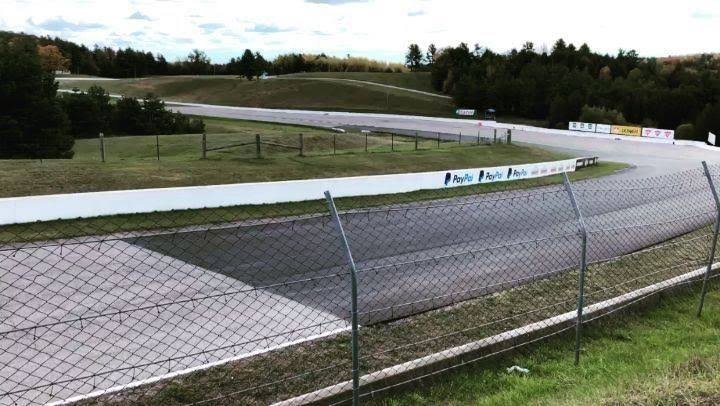
28. Mosport Turn 2
About 110 mph · Left, blind and downhill
Turn 2 at Mosport is a fast left-hander that goes downhill and out of sight as the driver turns in. It has two apexes and the road falls away through both. Committing to it is an act of faith, and the run-off is short. It has been unchanged since 1961.
Verdict Blind, downhill and fast. You turn in before you can see it.
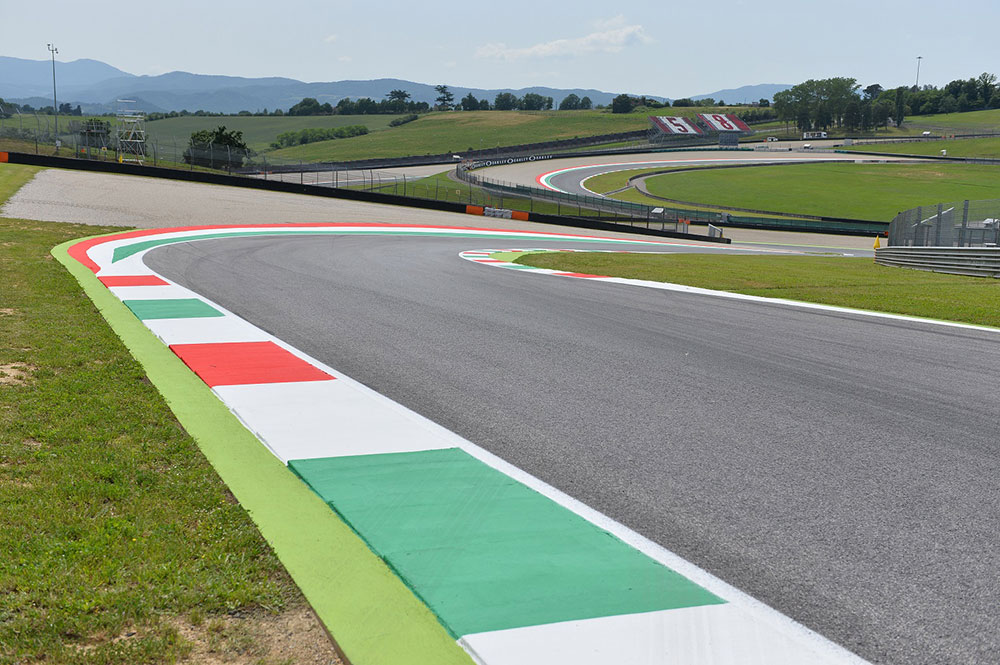
27. Mugello Arrabbiata 1 and 2
About 160 mph · Two right-handers, uphill
The two Arrabbiata corners at Mugello are fast right-handers taken uphill at about 160 mph, the second over a blind crest. The name means angry. Motorcycle racers have known them for decades. Formula 1 drivers met them once, in 2020, and said they were among the hardest corners they had driven.
Verdict Two angry right-handers that Formula 1 has taken only once.
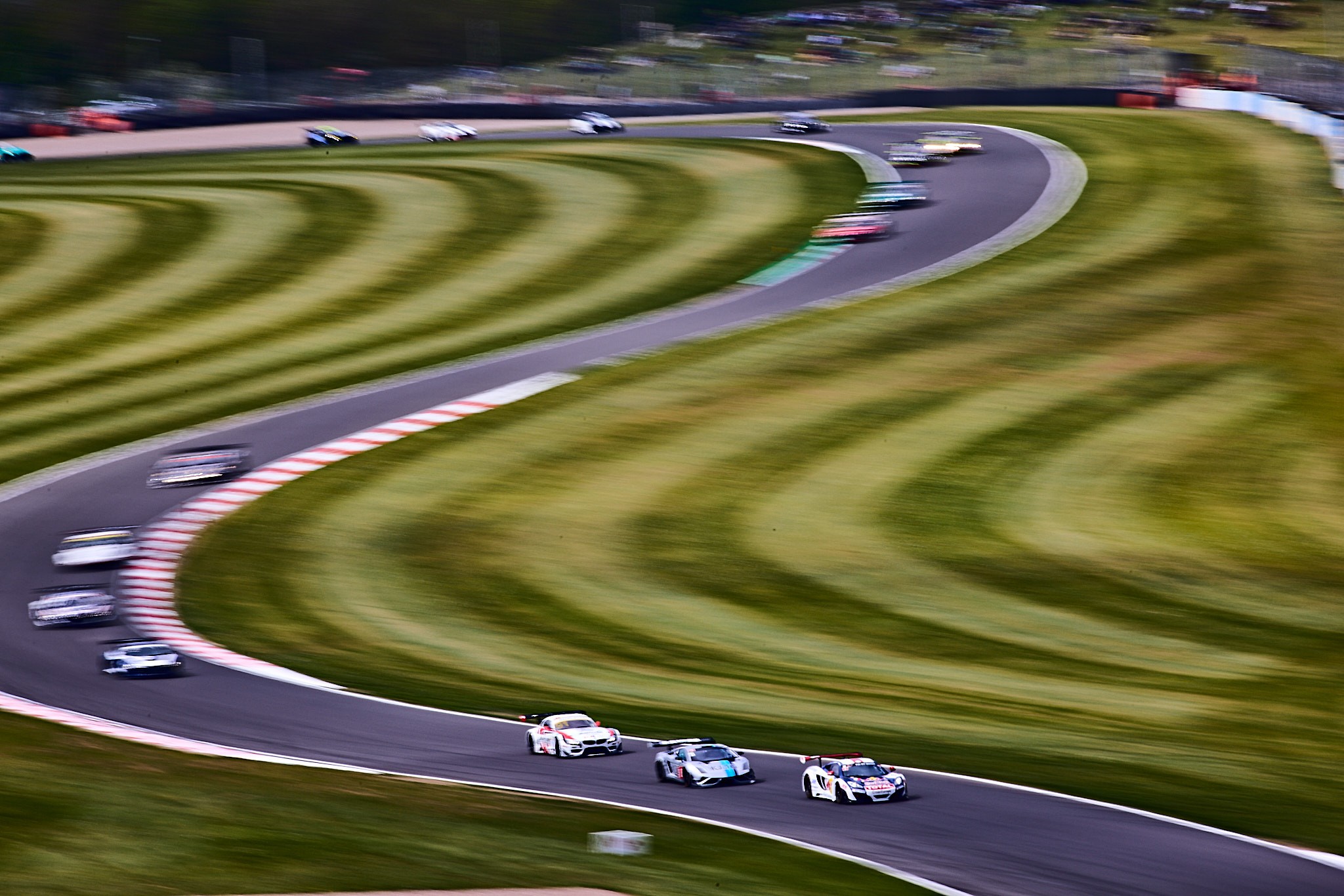
26. Donington Park The Craner Curves
About 130 mph · Downhill, left then right
The Craner Curves at Donington are a fast downhill sweep, left then right, to the Old Hairpin. They need commitment and reward a car that is settled. On the first lap of the European Grand Prix in 1993, in the rain, Ayrton Senna went from fifth to first, and two of the passes were made here.
Verdict A downhill sweep, and the setting for the best opening lap anyone has driven.
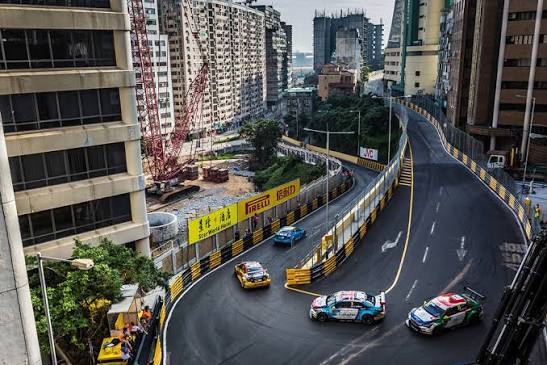
25. Guia Circuit, Macau Mandarin Bend
About 160 mph · Right, flat out, between walls
Mandarin Bend is the first corner of any consequence at Macau, a right-hand kink taken flat out at about 160 mph between walls, a few seconds after the start. Formula 3 cars reach it side by side. It is the reason first-lap accidents there involve half the field.
Verdict Flat out between walls on the first lap, with thirty cars arriving together.

24. Watkins Glen The Esses
About 150 mph · Right, left, right, uphill
The lap at Watkins Glen opens with a climb through three fast bends, right, left and right, between pale blue barriers. In a quick car they are taken nearly flat, and they lead on to the long back straight, so any lift costs speed for the next half mile. François Cevert was killed here in practice in 1973.
Verdict A flat-out climb between blue barriers, with a long straight as the reward.
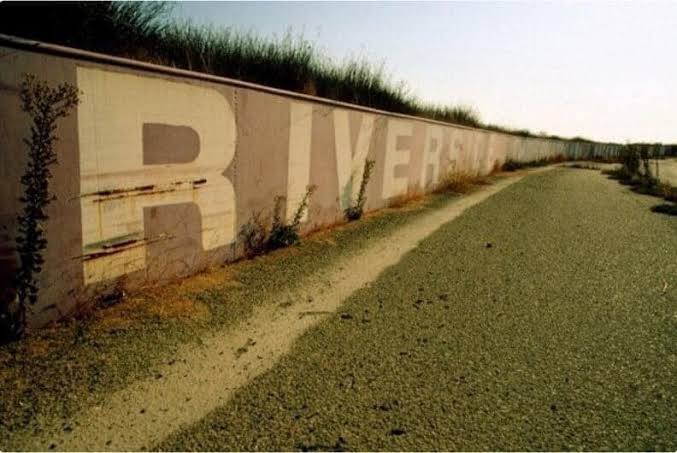
23. Riverside International Raceway Turn 9
About 120 mph, as it was · Banked right, 180 degrees
Turn 9 at Riverside was a long, banked right-hander at the end of a straight a mile long, with a steel wall on the outside. Sports cars, stock cars and Indycars all had to brake from top speed and hold a line round it on to the pit straight. The circuit closed in 1989 and a shopping mall stands on the site.
Verdict A banked half-circle at the end of a mile-long straight, now under a car park.
The full story of the Riverside International Raceway Turn 9 →
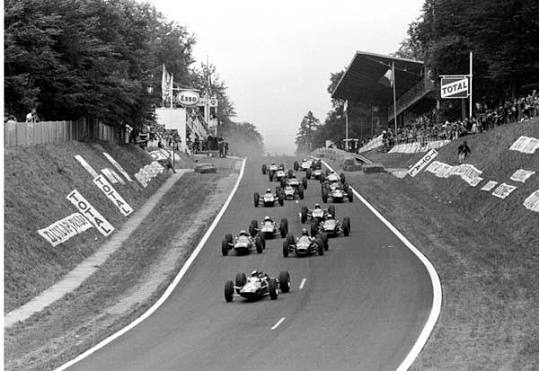
22. The descent at Rouen-les-Essarts
More than 130 mph, as it was · Downhill curves to a hairpin
The start of the lap at Rouen-les-Essarts was a downhill run through four or five fast curves in a forest, ending at a cobbled hairpin. Fangio drifted a Maserati through it in 1957 in the pictures everyone knows. Jo Schlesser was killed on it in 1968. The circuit was demolished in 1999. The road is still open.
Verdict A lost downhill sweep, remembered for Fangio at full slide.

21. Silverstone Copse
About 180 mph · Right
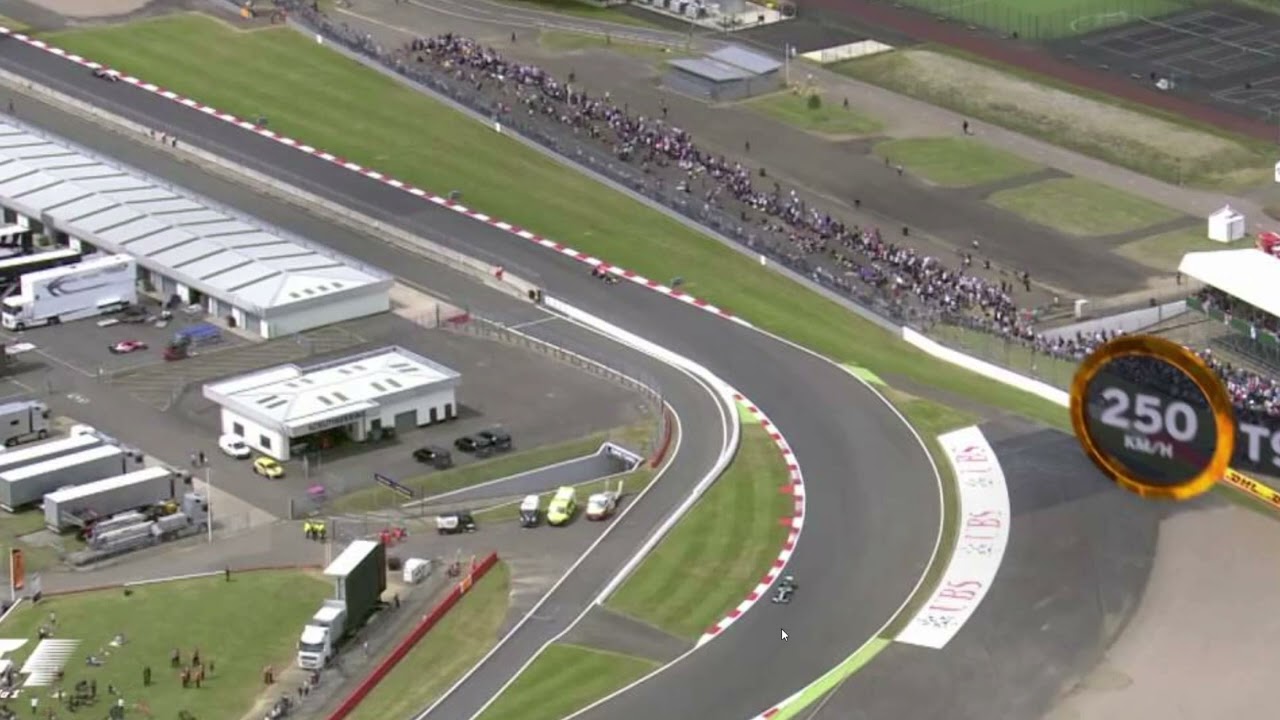
Copse is a right-hander at Silverstone taken in a modern Formula 1 car at about 180 mph, with barely a lift. For nearly sixty years it was the first corner of the British Grand Prix, with the pit wall hiding the apex. Two cars cannot go through it side by side at that speed, as Lewis Hamilton and Max Verstappen showed in 2021.
Verdict One of the fastest corners in Formula 1, and no place for two cars at once.
20 to 11
20. Monza The Lesmos
About 110 mph · Two right-handers
The two Lesmo corners are right-handers set among the trees on the far side of the park at Monza. They used to be very fast, the second especially, and were slowed in the 1990s. They still matter more than they look, because the exit from the second leads on to the long run under the old banking, and a car that is slow out of it is slow for half a mile. In the shade of the trees the track stays damp after rain long after the rest has dried.
Verdict Two right-handers under the trees that decide the back half of the lap.
Did you know: They are named after the village of Lesmo, just outside the park wall.
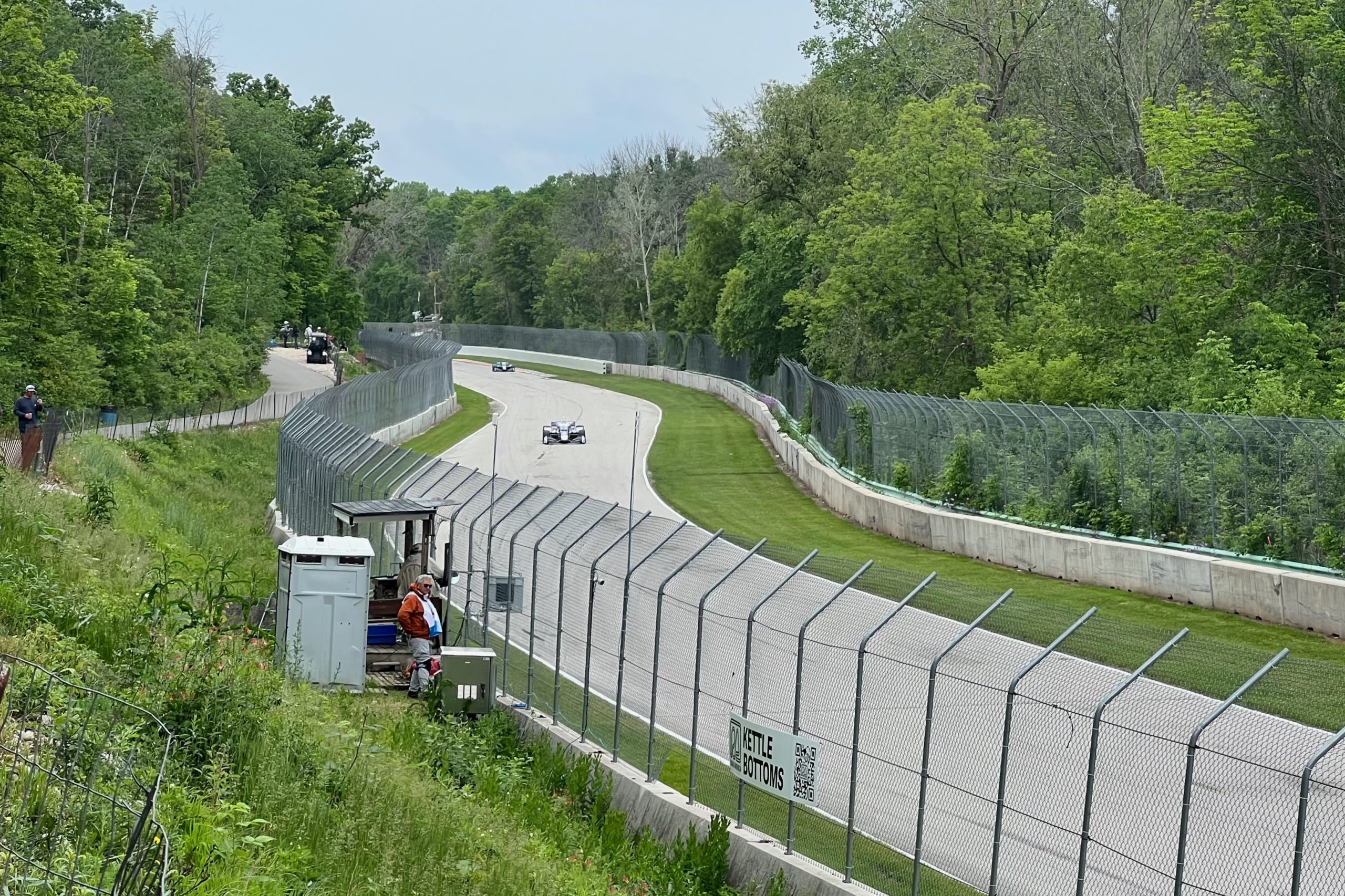
19. Road America The Kink
About 150 mph · Right, between walls
The Kink is Turn 11 at Road America, a right-hand bend in what would otherwise be a straight, with concrete walls close on both sides. In a fast car the question is whether it can be taken without lifting, at 150 mph or more. The driver has to decide before he gets there. It has ended many races and some careers. American drivers speak of it the way Europeans used to speak of the fast corners on the old road circuits, and for the same reason.
Verdict A bend in a straight, between walls, and the question is whether to lift.
Did you know: It is Turn 11, and the only corner on the circuit most drivers will admit to fearing.
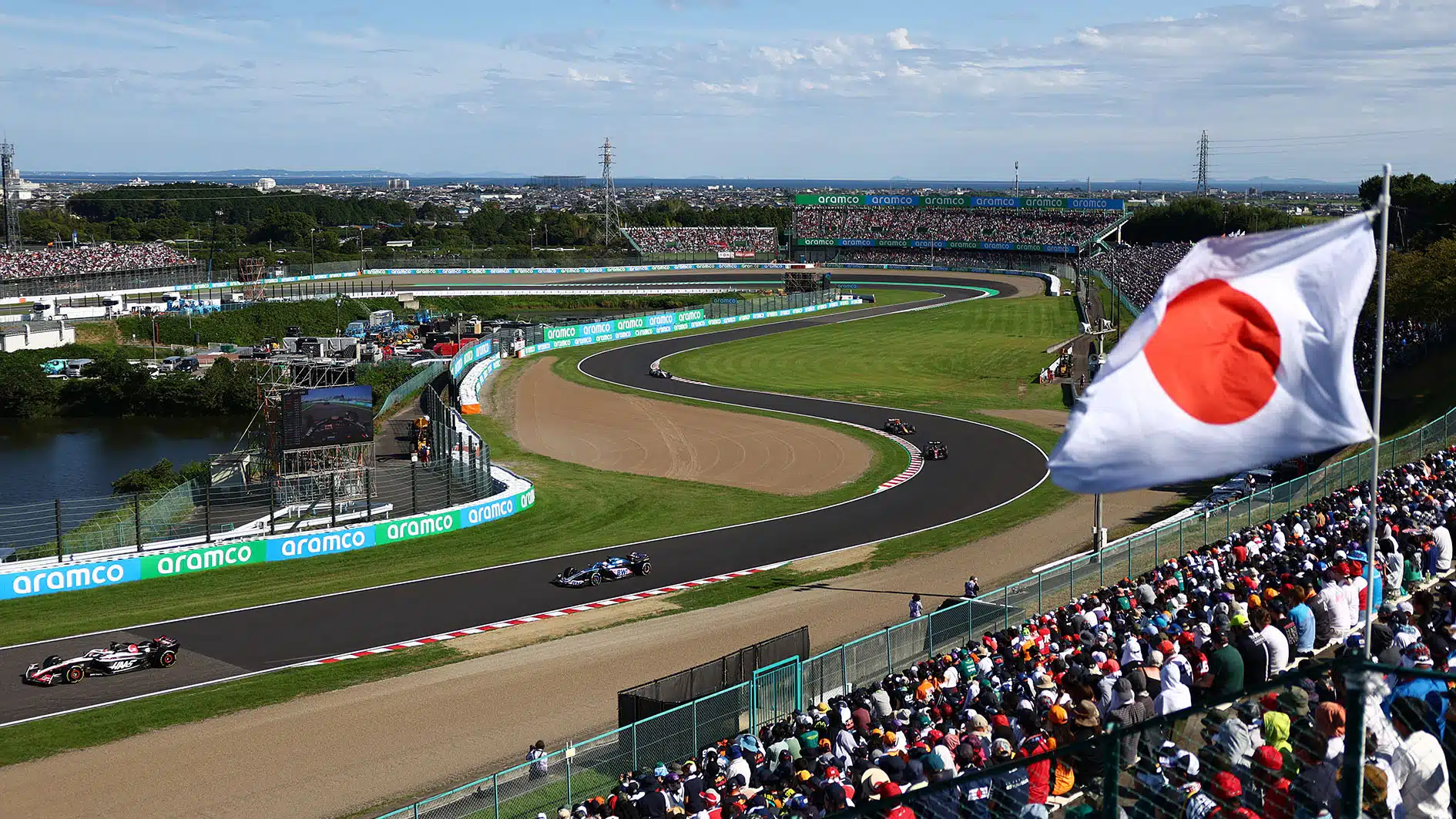
18. Suzuka The Esses
About 150 mph · Left, right, left, right, uphill
The first sector at Suzuka is a run of four linked bends, left, right, left, right, climbing a hill. No single one of them is difficult. Together they are a test of rhythm that drivers rate with anything in the world, because the line through each is set by the exit from the one before. A car that is slightly wide at the first is further off at the second and off the track by the fourth. It is the closest thing on a modern circuit to the sequence at Silverstone, and it is thirty years older.
Verdict Four bends that have to be driven as one. Miss the first and the rest are gone.
Did you know: A mistake in the first bend costs time in all the rest.
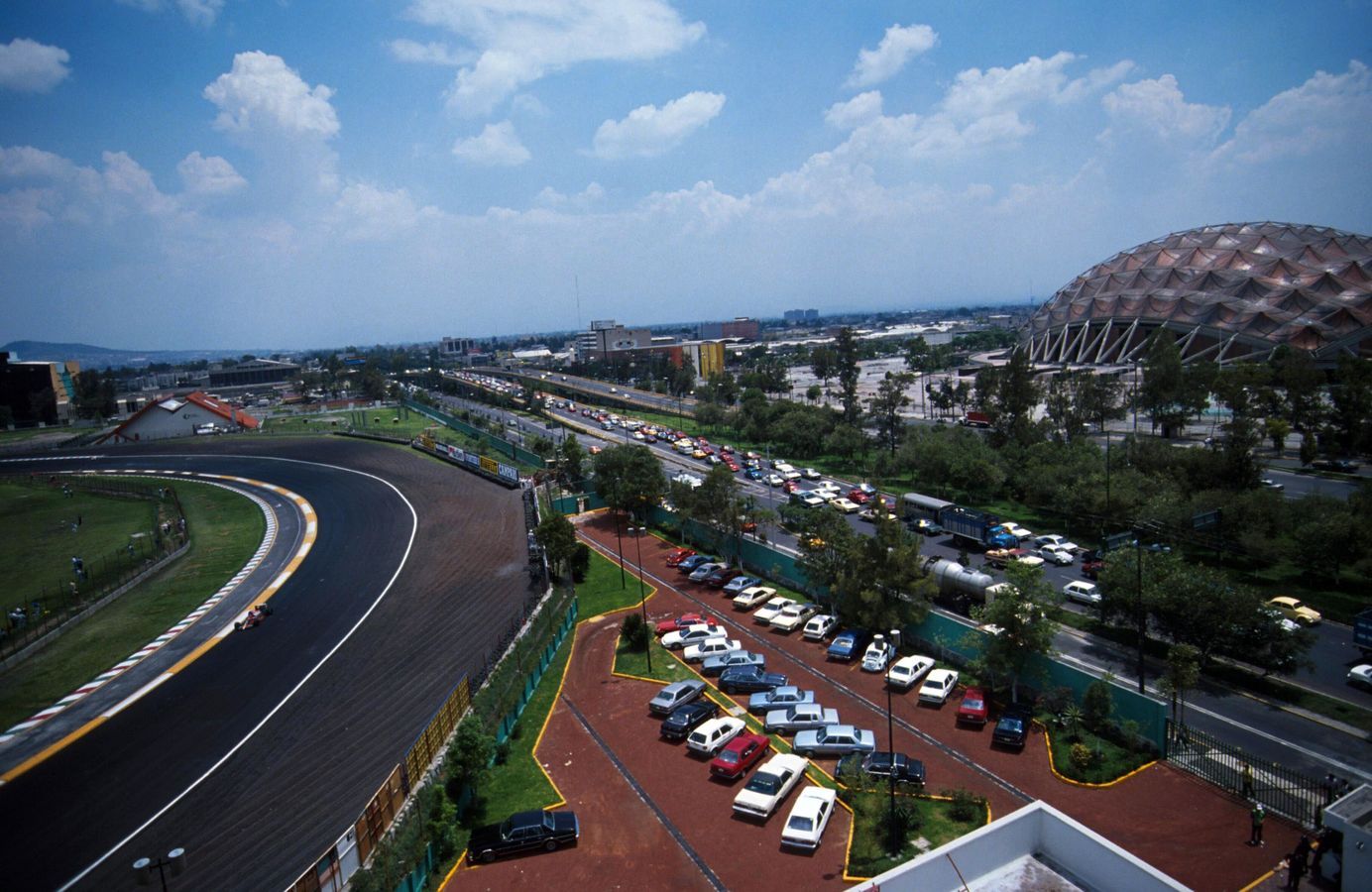
17. Autódromo Hermanos Rodríguez, Mexico City The Peraltada
About 150 mph, as it was · Banked right, 180 degrees
The Peraltada was the last corner at Mexico City: a banked right-hander through 180 degrees, bumpy, entered at around 150 mph and leading on to a very long straight. It rewarded courage directly, because any speed kept through it was carried for the next mile. Nigel Mansell passed Gerhard Berger round the outside of it in 1990. Ayrton Senna turned his car over there in practice the next year. When Formula 1 returned in 2015 the circuit had been routed through a baseball stadium built inside the curve, and only the second half is used.
Verdict A banked, bumpy half-circle that Formula 1 no longer dares to use whole.
Did you know: Since 2015 the circuit has cut through a baseball stadium built inside the corner, and only the second half is used.
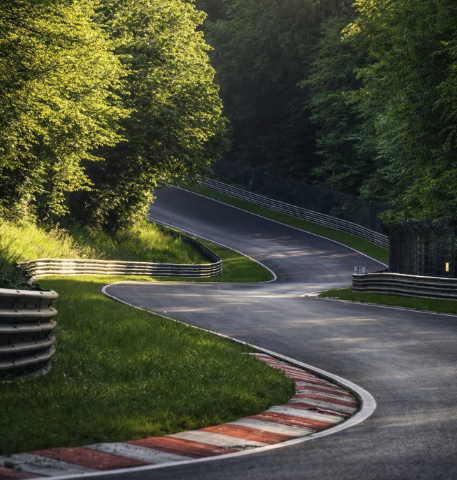
16. Nürburgring Nordschleife The Fuchsröhre
About 160 mph · Downhill kinks into a compression
The Fuchsröhre, the fox's pipe, is a steep downhill run on the Nordschleife through a series of slight bends, taken flat out, that ends in a hard compression at the bottom and an immediate climb to the left. A GT car arrives in the dip at about 160 mph and is squashed on to its suspension. If it touches the ground, it does so here. Then the road rises so sharply that the driver cannot see the next corner. It lasts a few seconds and is the fastest those seconds go anywhere on the lap.
Verdict Flat out downhill into a dip that tries to swallow the car.
Did you know: The name means fox's pipe. A fox is said to have hidden in a drain there while the circuit was being built.
The full story of the Nürburgring Nordschleife The Fuchsröhre →
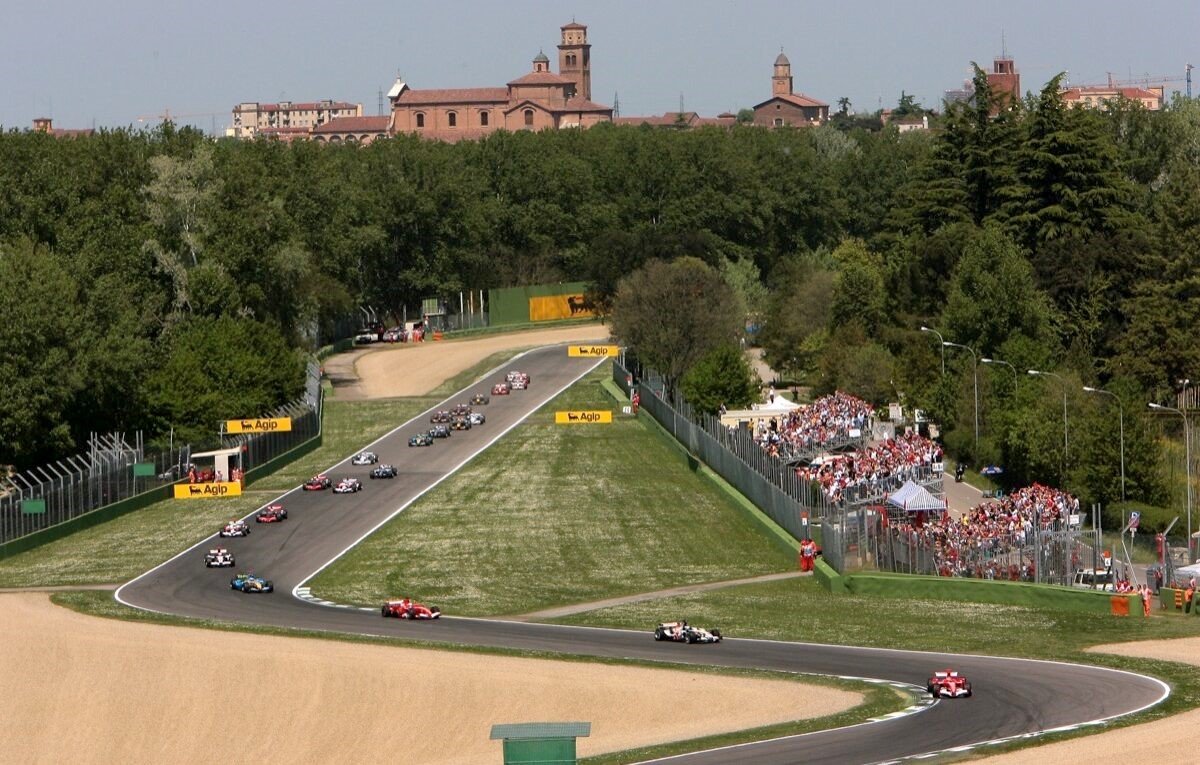
15. Imola Tamburello
About 190 mph, as it was · Left, flat out
Tamburello, as it was until 1994, was a long left-hander at Imola taken flat out at about 190 mph. As a piece of driving it was easy. It is on this list for what happened when something broke. A river runs behind the wall on the outside, so there was no room for run-off, and a car that left the road hit concrete almost head-on. Nelson Piquet was concussed there in 1987 and Gerhard Berger was pulled from a fire in 1989. On 1 May 1994 Ayrton Senna was killed. A chicane replaced it the following year.
Verdict An easy corner with a wall where the run-off should have been.
Did you know: There was no room for run-off because a river runs directly behind the wall.

14. Indianapolis Motor Speedway Turn 1
More than 220 mph · Left, banked nine degrees
All four corners at Indianapolis are the same on paper: a quarter of a mile long and banked at nine degrees. Turn 1 is the one that matters. The front straight runs between grandstands like a corridor, and the cars turn into it at more than 220 mph with the wall on the outside and no sight of the exit. On the first lap of the 500 they arrive three abreast in eleven rows. The wind off the stands changes the corner from one lap to the next, and when the first lap of the race goes wrong, it goes wrong here.
Verdict Thirty-three cars, three abreast, into a corridor at 220 mph.
Did you know: On the first lap of the 500, thirty-three cars arrive at it three abreast.
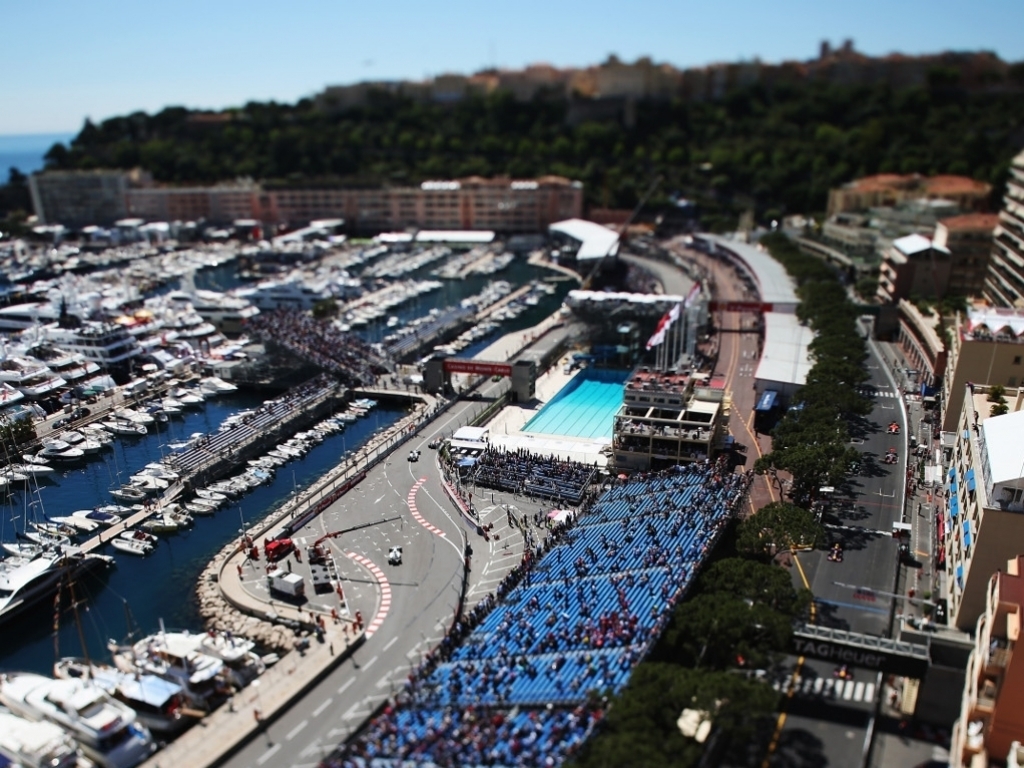
13. Circuit de Monaco The Swimming Pool
About 130 mph on entry · Left-right, then right-left
Most of Monaco is slow. The first part of the Swimming Pool is not: a left and right flick between steel barriers, taken at about 130 mph, where a Formula 1 car passes within inches of the rail on both sides. The second part, a tighter right and left, has caught some of the best drivers of recent years in qualifying. It dates from 1973, when the pool was built on the quay. It is the place on the circuit where the precision the drivers talk about can actually be seen.
Verdict The fast bit of Monaco, where the barriers are close enough to touch.
Did you know: The section dates from 1973, when a public swimming pool was built on the harbour front.
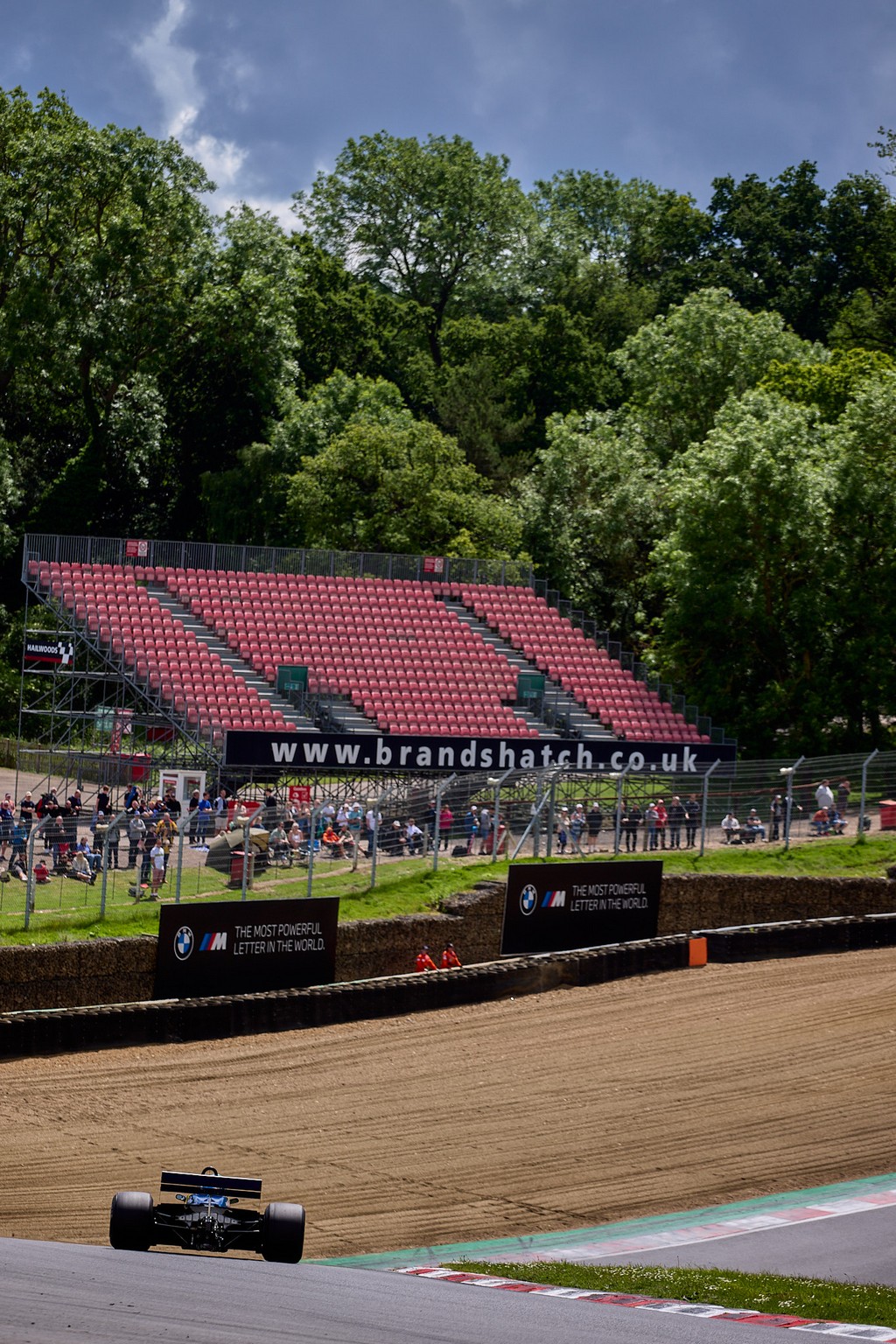
12. Brands Hatch Paddock Hill Bend
About 100 mph · Right, downhill
The first corner at Brands Hatch is a right-hander approached over a crest. As the car turns in, the track falls away steeply and the camber goes with it, so the car is at its lightest exactly when it is being asked to grip. It then lands in a dip at the bottom and is pressed into the road for the climb to Druids. It is taken at about 100 mph in a fast car. The whole of it can be seen from the bank opposite, which is why so many people have watched so many accidents there.
Verdict A blind, falling right-hander, and the best first corner in Britain.
Did you know: The track falls away as the car turns in, so it goes light just when it needs grip.
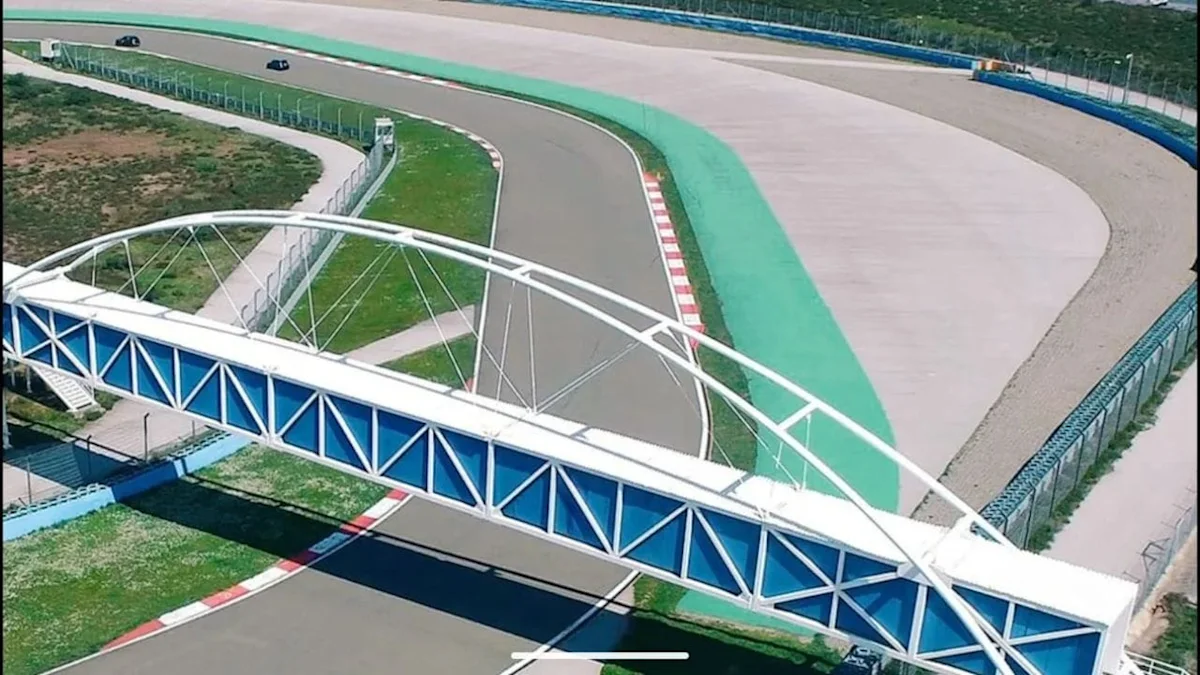
11. Istanbul Park Turn 8
About 165 mph · Left, four apexes
Turn 8 at Istanbul Park is the only corner built this century that drivers speak of in the same breath as the old ones. It is a left-hander with four apexes that lasts about eight seconds, taken at roughly 165 mph with a load of four to five times gravity on the driver's neck the whole way. The surface is bumpy, and a car that is unsettled at the first apex is off line for the other three. The circuit opened in 2005 and has been on and off the calendar since. The corner alone is the argument for bringing it back.
Verdict The one great corner of the modern era, and it lasts eight seconds.
Did you know: A Formula 1 car spends about eight seconds in it.
The top 10
- Engine
- About 100 mph
- Power
- Blind, downhill, left and right
Corner · Australia
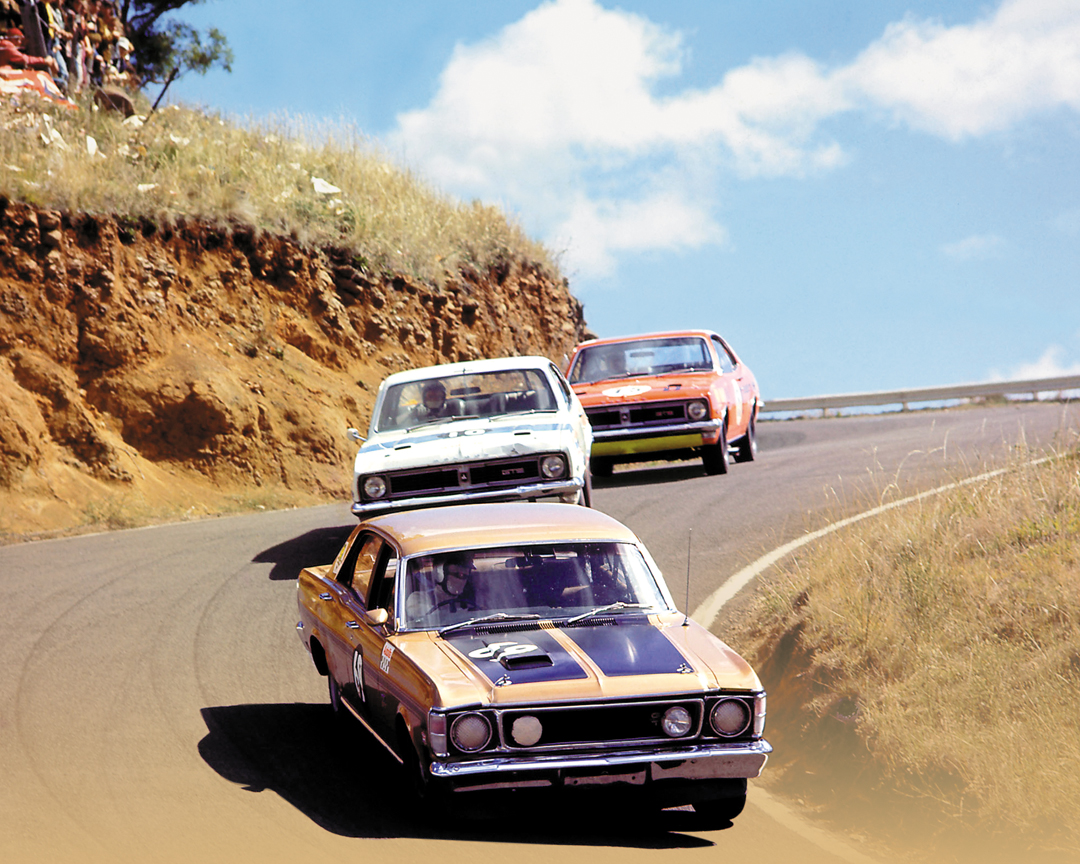
10. Mount Panorama, Bathurst Skyline and the Esses
At the top of Mount Panorama the road runs along a ridge, narrow and walled, and then seems to end. That is Skyline. The driver turns in with the car going light over the crest and nothing ahead but air, and the road drops away beneath him into the Esses.
What follows is the steepest descent in circuit racing: left, right, and then the Dipper, a left-hander where the surface falls so sharply that touring cars lift their inside front wheels clear of the ground. There are concrete walls on both sides, close enough to touch. Nobody passes here. A touring car with 600 horsepower goes down it at about 100 mph, on the brakes and turning at once, for six or seven seconds.
It is tenth, and the highest-placed corner that most readers will never have seen a Grand Prix car take. None ever has. The Bathurst 1000 is won on the straights and lost here, usually late in the day, by a driver who has done it a hundred and fifty times already and gets one wrong.
Verdict The road disappears, then falls down a mountain between two walls.
At Skyline the road drops away so sharply that drivers see only sky.
The full story of the Mount Panorama, Bathurst Skyline and the Esses →
- Engine
- About 150 mph
- Power
- Right, left, right, left
Corner · France
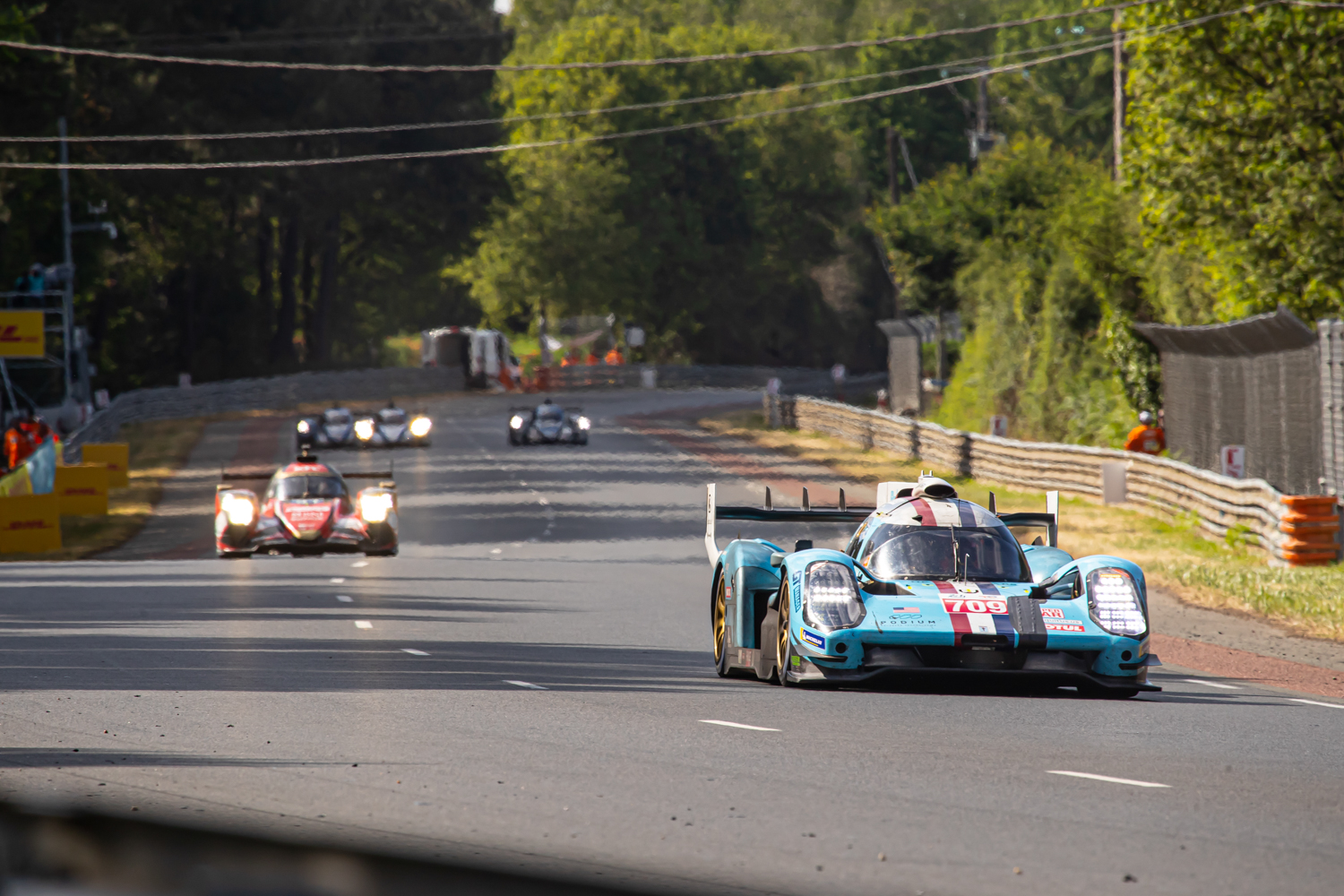
9. Circuit de la Sarthe, Le Mans The Porsche Curves
The Porsche Curves were built in 1972 to take Le Mans away from the White House, a fast bend past a farmhouse where too many cars had been lost. What replaced it was a run of five fast corners, right, left, right, left and left again, between concrete walls.
A prototype goes through at about 150 mph without touching the brakes after the first turn-in, changing direction on the throttle. There is almost no run-off, so a mistake in the first corner is paid for in the third. Drivers consistently name it the best part of the lap.
What makes it harder than any corner on a Grand Prix circuit is the race it belongs to. It has to be taken in the dark, in the rain, at four in the morning, and above all in traffic, with a prototype closing on a GT car at a difference of 40 mph and nowhere to go but through. Much of the lap time between a good Le Mans driver and a great one is found here, and so is much of the risk.
Verdict Five fast bends between walls, taken in traffic, in the dark, for 24 hours.
They were built in 1972 to bypass the old White House corner, and Porsche helped pay for them.
The full story of the Circuit de la Sarthe, Le Mans The Porsche Curves →
- Engine
- About 180 mph
- Power
- Double left, downhill
Corner · Belgium
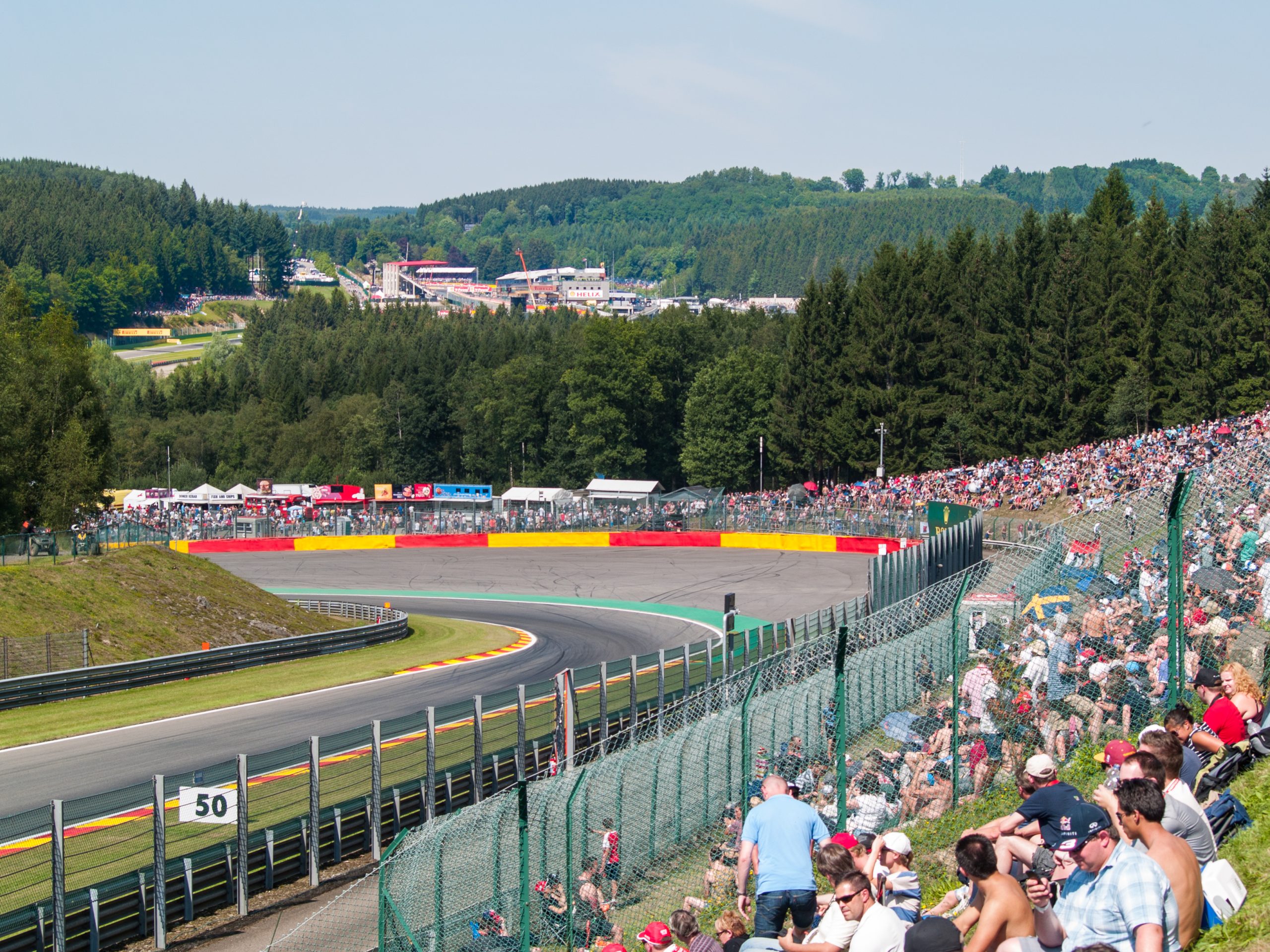
8. Spa-Francorchamps Pouhon
Ask a current Formula 1 driver which corner at Spa is the hardest and the answer is usually this one, not Eau Rouge. Pouhon is a long double left, approached downhill at about 190 mph and taken with a small lift, or by the brave with none.
The difficulty is that it goes on. The car turns in while still going downhill, which takes weight off the tyres, holds a high sideways load through the first apex, drifts out, and then has to be brought back for a second apex before the road straightens. It lasts four or five seconds, and it is blind at the entry. The run-off is tarmac now, but for most of the corner's life it was gravel and then a barrier.
It has no great race-winning move attached to it and no disaster. Its reputation is entirely among the people who drive it, which is the measure this list uses.
We have limited each circuit to two corners. Spa could have had four: Blanchimont and the old Stavelot both have a claim.
Verdict The corner at Spa that drivers actually find difficult.
A pouhon is a local word for one of the mineral springs the town of Spa is named for.
- Engine
- Entered at about 130 mph, left at 180
- Power
- Long right, opening out
Corner · Italy
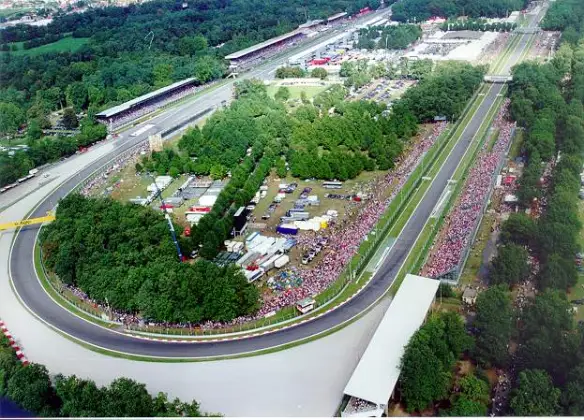
7. Monza Parabolica
Monza is a circuit of straights, and the Parabolica is the corner that decides how fast a car goes down the longest of them. It is a right-hander that turns through nearly 180 degrees, tight at the entry and opening out all the way, which is where the name comes from.
The cars brake from more than 200 mph, turn in at about 130, and then the driver feeds in the power as the curve unwinds, running out to the edge of the road at the exit at close to 180. Go in too fast and the car runs wide and loses the straight. Go in too carefully and the car behind has a slipstream all the way to the first chicane. In the years when Monza was won by inches, it was won here.
It has a dark history. Wolfgang von Trips was killed on the approach in 1961, and Jochen Rindt under braking for it in 1970.
In 2014 the gravel on the outside was replaced with tarmac, which took away the price of a mistake, and purists have not forgiven it. It has been called the Curva Alboreto since 2021. Nobody uses the new name.
Verdict A long, opening right-hander that settles every slipstreaming race at Monza.
Since 2021 its official name has been the Curva Alboreto.
- Engine
- About 190 mph
- Power
- Left then right, between houses
Corner · Belgium
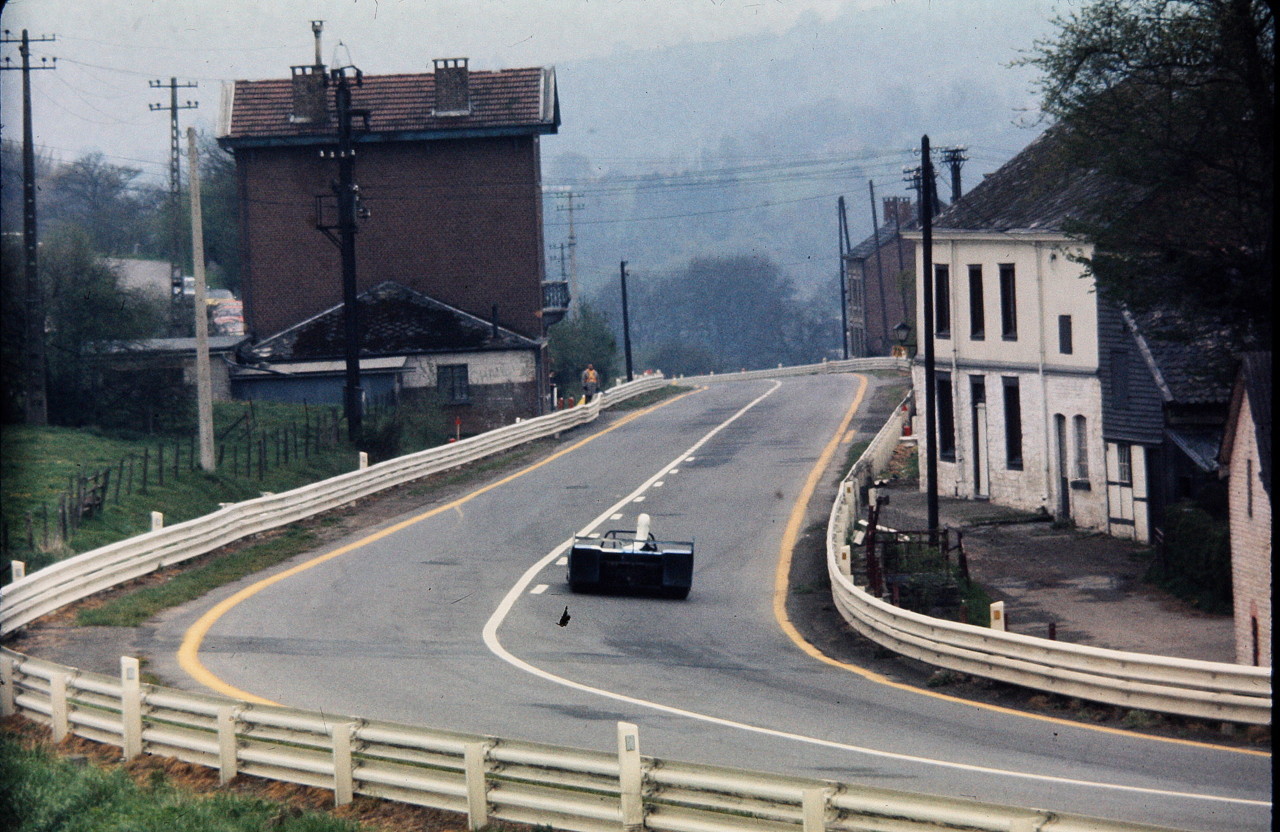
6. Spa-Francorchamps, the old circuit The Masta Kink
The old Spa circuit, fourteen kilometres of public road, was left off our list of forgotten race tracks because Spa itself is still in use. This is where it gets its due.
The Masta Kink was a left and a right in the middle of the longest straight on the circuit, where the road passed between the houses of a hamlet. In the late 1960s the fastest cars arrived at something like 190 mph. The corner could be taken flat out, just, by a driver who used all the road and trusted that nothing was wrong with the car. There were farm buildings on one side and a house on the other, and no barrier in front of either.
Drivers of the time rated it the most frightening corner in Europe, and the bravest of them, Pedro Rodríguez and Jo Siffert in Porsche 917s, took it side by side. Jackie Stewart crashed near it in the rain in 1966 and lay trapped in his car, soaked in fuel. His campaign for safety began that day.
The last Grand Prix on the old circuit was in 1970. The road is still there, with a speed limit, and so are the houses.
Verdict A flat-out flick between two houses at 190 mph. The corner that started the safety movement.
The road is still there, and the houses.
The full story of the Spa-Francorchamps, the old circuit The Masta Kink →
- Engine
- Entered at about 190 mph
- Power
- Left, right, left, right, left
Corner · UK
5. Silverstone Maggotts, Becketts and Chapel
This is the corner that shows what a Grand Prix car can do. It is five bends in a row, left, right, left, right, left, and the list counts it as one because no driver thinks of it any other way.
A Formula 1 car arrives at Maggotts at about 190 mph and changes direction four times in roughly five seconds, losing speed through each bend but never by much, before it is fired out through Chapel on to the Hangar Straight. The sideways load passes five times the force of gravity and reverses each time. There is one line. A car that is a foot wide in the second part is a car's width wide by the fourth.
It took this form in 1991, when Silverstone was rebuilt. Before that Becketts was an ordinary corner.
On pure difficulty at speed it is the hardest thing on the current calendar, and many drivers would put it first. It is fifth because it is new by the standards of this list and has no great story attached to it. It has only the driving, which is enough for fifth and nearly enough for more.
Verdict Five changes of direction at 150 mph and more. The best demonstration of a Formula 1 car there is.
The names come from Maggot Moor and from a medieval chapel of St Thomas Becket that stood nearby.
The full story of the Silverstone Maggotts, Becketts and Chapel →
- Engine
- About 50 mph
- Power
- Left then right, downhill
Corner · USA
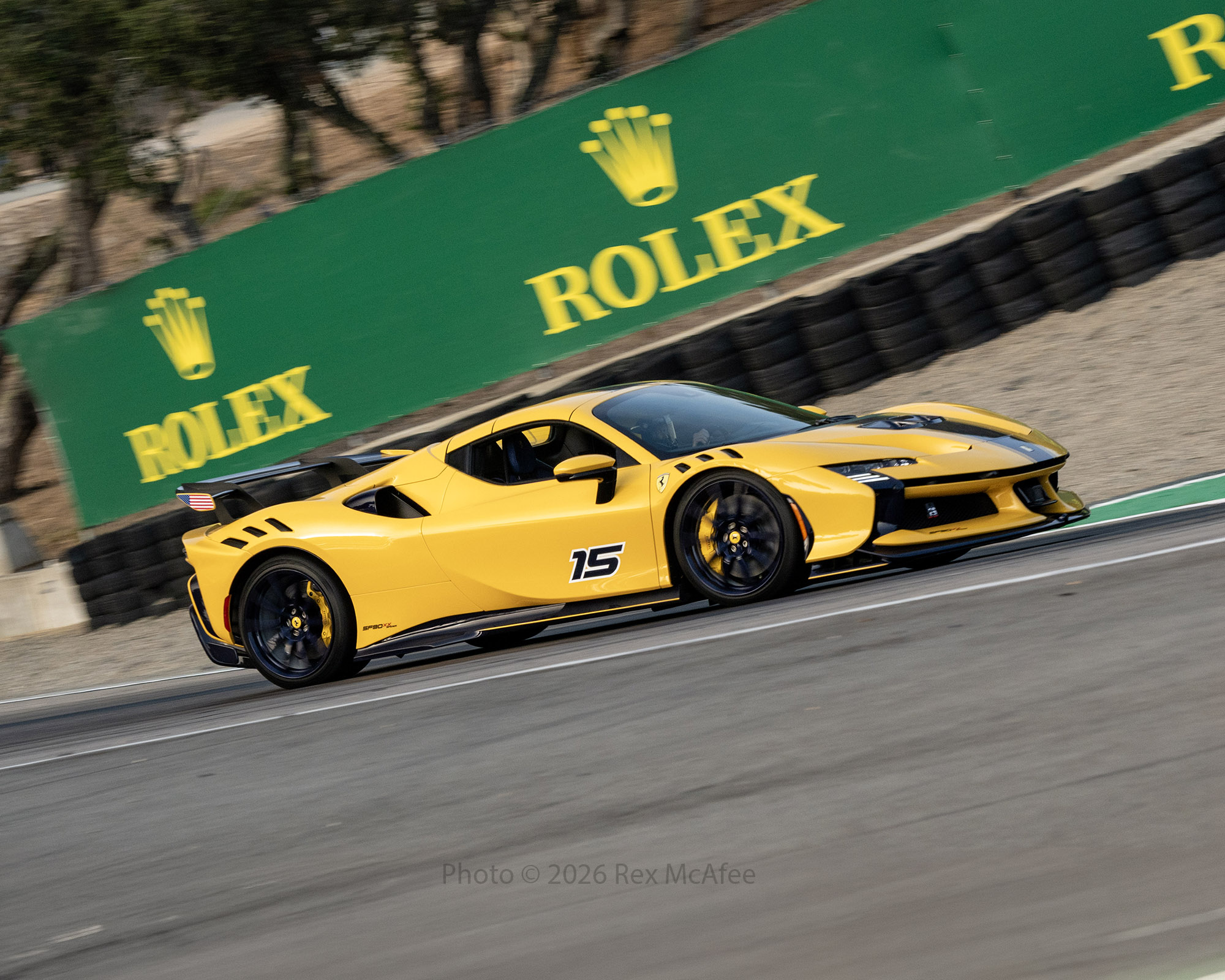
4. Laguna Seca The Corkscrew
The Corkscrew is slow, and once a driver knows it, it is not especially hard. It is fourth because no corner in the world looks like it, and none is better known in America.
It sits at the highest point of Laguna Seca. The cars come up the hill, brake over a crest with nothing in front of them but sky, and turn left. The road then drops away to the right, falling 59 feet in about 450 feet of track. From the cockpit the track vanishes, and drivers aim at a tree on the far side. The car goes light, lands, and has to be pointed right at once for the fast curve that follows.
Two of the best overtaking moves in racing were made here. In 1996 Alex Zanardi passed Bryan Herta for the win on the last lap by cutting through the dirt on the inside. In 2008 Valentino Rossi did much the same to Casey Stoner on a motorcycle.
Some readers will want it higher, and for spectacle it has a case for first. On speed and difficulty, the three above it ask more.
Verdict Five and a half storeys down in two turns of the wheel. The best-known corner in America.
Drivers aim at a tree, because the track is out of sight below the crest.
- Engine
- About 190 mph
- Power
- Left
Corner · Japan
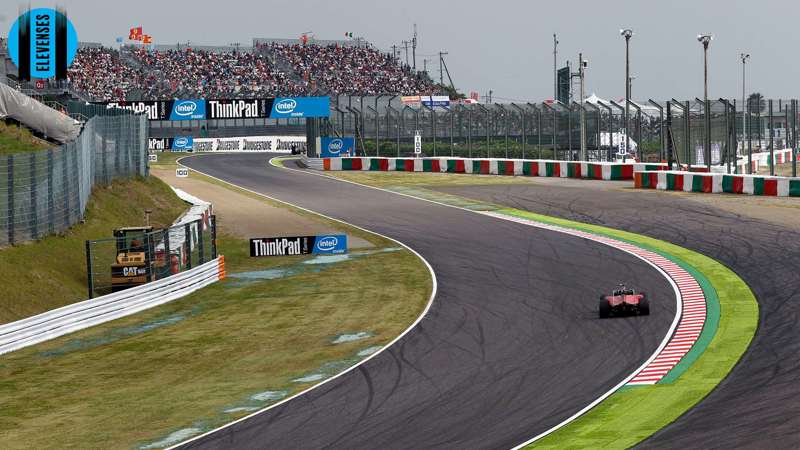
3. Suzuka 130R
130R is named for its radius in metres, which tells you how plain it is: one left-hand curve at the end of Suzuka's back straight. Cars arrive at about 190 mph. For most of its life the question was whether to lift, and by how much.
Until 2002 it was a single constant curve with little run-off, and it was the corner the drivers named as the hardest on the calendar. That year Allan McNish went backwards through the barrier there in qualifying and walked away, and it was reprofiled into two radii with more space outside. In a modern Formula 1 car it is now flat in the dry. Fernando Alonso went round the outside of Michael Schumacher there in 2005, which both of them still talk about.
It stays third because of what it is in everything else, and in the wet, and because of where it comes: after a long straight, near the end of a lap that has already asked a great deal, with a tight chicane straight after it. A small lift costs a tenth. A late one costs the car.
Verdict One fast left with a number for a name, and for decades the hardest corner in Formula 1.
It is named after its radius, 130 metres.
- Engine
- About 60 mph
- Power
- Banked left, more than 180 degrees
Corner · Germany
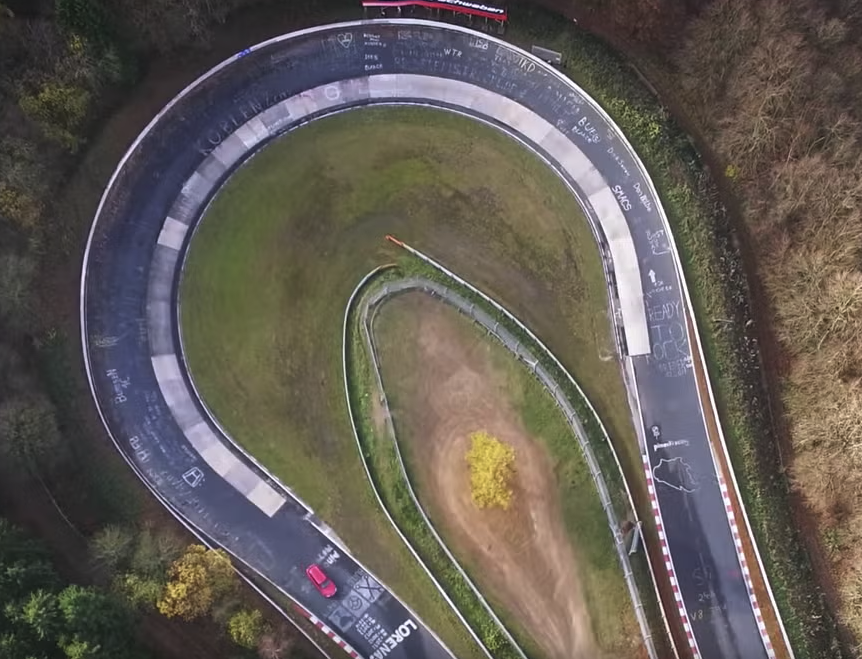
2. Nürburgring Nordschleife The Karussell
Second place goes to a corner taken at about 60 mph, and that needs defending on a list that otherwise rewards speed. The Karussell is here on reputation and on being unlike anything else in racing.
It comes about two thirds of the way round the Nordschleife, at the top of a long climb. The road turns left through more than 180 degrees, and on the inside of it is a steeply banked trough of concrete slabs, originally a drainage ditch. The story is that Rudolf Caracciola found in the early 1930s that he could hook his inside wheels into the ditch and be carried round faster than on the road. The ditch was later widened and paved, and now every car drops into it.
The entry is blind. The traditional advice, credited to Fangio, is to aim for the tallest tree. The car falls into the banking, is shaken hard by the joints in the concrete for five or six seconds, and is thrown out at the far end. Get the exit wrong and it climbs out early and runs wide on to the flat.
It is not the hardest corner on the Nürburgring. It is the one everyone who has driven there remembers, and the best-known corner in the world that almost no modern racing circuit could copy.
Verdict A banked concrete ditch, taken at 60 mph, and nothing else in racing is like it.
Its full name is the Caracciola-Karussell, after the driver said to have first used the ditch.
The full story of the Nürburgring Nordschleife The Karussell →
The best of the 30 · Corner · Belgium
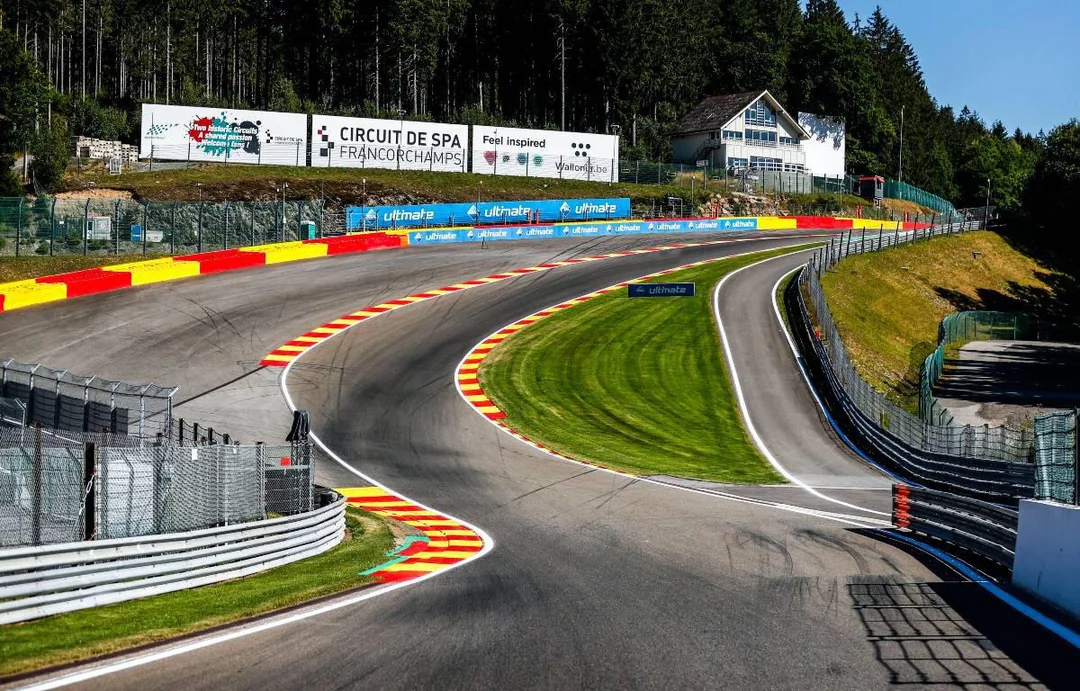
1. Spa-Francorchamps Eau Rouge and Raidillon

- Engine
- About 190 mph, flat out in Formula 1
- Power
- Left, right, left, uphill
The objection to putting this first is easy to state: a modern Formula 1 car takes it flat out, without a lift, and has done for years. A corner that asks nothing of the best cars, the argument goes, cannot be the greatest. We have put it first anyway, and here is why.
Start with what it is. The track drops steeply from the old pits to a bridge over a stream, the Eau Rouge. At the bottom it flicks left, then right, and climbs a hill with a gradient of nearly one in five, cresting blind to the left with the sky filling the windscreen. That climb is Raidillon. The car is squashed into the road at the bottom and goes light over the top, at about 190 mph, and the driver commits before he can see where the road goes. Television flattens it. Everyone who has stood there says the same thing: it is much steeper than they thought.
For most of its history it was a test of nerve even in the best cars. In the 1990s taking it flat was a dare, and two drivers in the same team destroyed their cars trying on the same afternoon in 1999. In every category below Formula 1, and in any car in the rain, it is still exactly that.
It has also taken lives, including Stefan Bellof's in 1985 and Anthoine Hubert's in 2019, and the run-off was rebuilt in 2022. No corner has a bigger place in the minds of the people who race. Ask a hundred drivers to name one, and most will name this.
Verdict The corner every driver wants to take flat, and the one television cannot show properly.
Eau Rouge is the stream at the bottom. The climb and the crest are properly called Raidillon.
The full story of the Spa-Francorchamps Eau Rouge and Raidillon →
What we left off, and why
Lower than you might expect
The Corkscrew, at 4. See above. On fame alone it would be first or second.
Tamburello, at 15. The best-known corner of the 1990s for the worst reason. It ranks on what it was to drive, with some allowance for what it meant.
Copse, at 21. One of the fastest corners in the sport. It is a single, simple curve, and speed alone is not enough here.
The Grand Hotel Hairpin, at 29. Everyone knows it. Nobody finds it hard.
Higher than you might expect
The Karussell, at 2. A slow corner in second place, on reputation and oddity.
Pouhon, at 8. Little known outside the sport. Among drivers it is the corner at Spa that still tests them.
Skyline and the Esses, at 10. No Grand Prix car has ever been through it. Touring car drivers will say tenth is too low.
Turn 8 at Istanbul, at 11. The only corner from a twenty-first century circuit anywhere near the top.
Not on the list
Blanchimont and Stavelot at Spa, and the Flugplatz, Pflanzgarten and Bergwerk on the Nordschleife. All would be here but for the limit of two per circuit.
Spoon and the Degners at Suzuka. The same rule. Suzuka could have had four.
Tarzan and Scheivlak at Zandvoort. Tarzan is one of the best overtaking corners in Europe and Scheivlak one of the most daunting. They were the last two left out.
The Senna S at Interlagos. It produces more overtaking than almost any corner in Formula 1, and it is not especially hard to drive.
The Bosch Kurve at the Österreichring and the old Woodcote at Silverstone. Two great lost corners. The Österreichring is on our list of forgotten race tracks.
Signes at Paul Ricard and Stowe at Silverstone. Very fast, and with more room for error than the corners that made the list.
The Dipper at Mount Panorama. Counted here as part of the run down from Skyline.
Turn 1 at Circuit of the Americas. The best corner on a modern circuit for the first lap of a race, and not a hard one once the field has spread out.
The Wall of Champions in Montreal. A famous wall. The chicane in front of it is ordinary.
Tell us what we got wrongQuestions about this list
What is the greatest corner in motor racing?
We rank Eau Rouge and Raidillon at Spa-Francorchamps first: a downhill approach, a left and right at the bottom and a blind, steep climb taken at about 190 mph. The Karussell on the Nürburgring Nordschleife is second and 130R at Suzuka third.
Is Eau Rouge still difficult?
In a modern Formula 1 car in the dry it is taken flat out and is no longer a great test. In GT cars, junior single-seaters and anything in the rain it still is. It is first on our list for its history and its reputation among drivers as well as for the driving.
What is the difference between Eau Rouge and Raidillon?
Eau Rouge is the name of the stream at the bottom of the hill and, strictly, of the left-hand bend where the track crosses it. Raidillon is the steep climb to the right and the blind crest that follow. Most people use Eau Rouge for the whole sequence.
What is the hardest corner in Formula 1 today?
Many drivers name the Maggotts, Becketts and Chapel sequence at Silverstone, where the car changes direction four times at 150 mph or more. Pouhon at Spa and the Esses at Suzuka are the others most often mentioned.
Why is the Monaco hairpin on the list if it is so slow?
The list gives the most weight to a corner's reputation, and the hairpin is the most photographed corner in the sport and has been part of the Monaco Grand Prix since 1929. It is ranked 29th because, as a piece of driving, it is the easiest corner here.
Each corner was judged on how hard it is to take well, how fast it is, and its reputation among the drivers who have taken it, with reputation given the most weight. Linked bends that are driven as one were treated as one corner. Lost corners were ranked as they were when in use. No more than two corners were taken from any one circuit layout. Speeds are approximate, are for the fastest cars to use the corner, and vary with the year.