
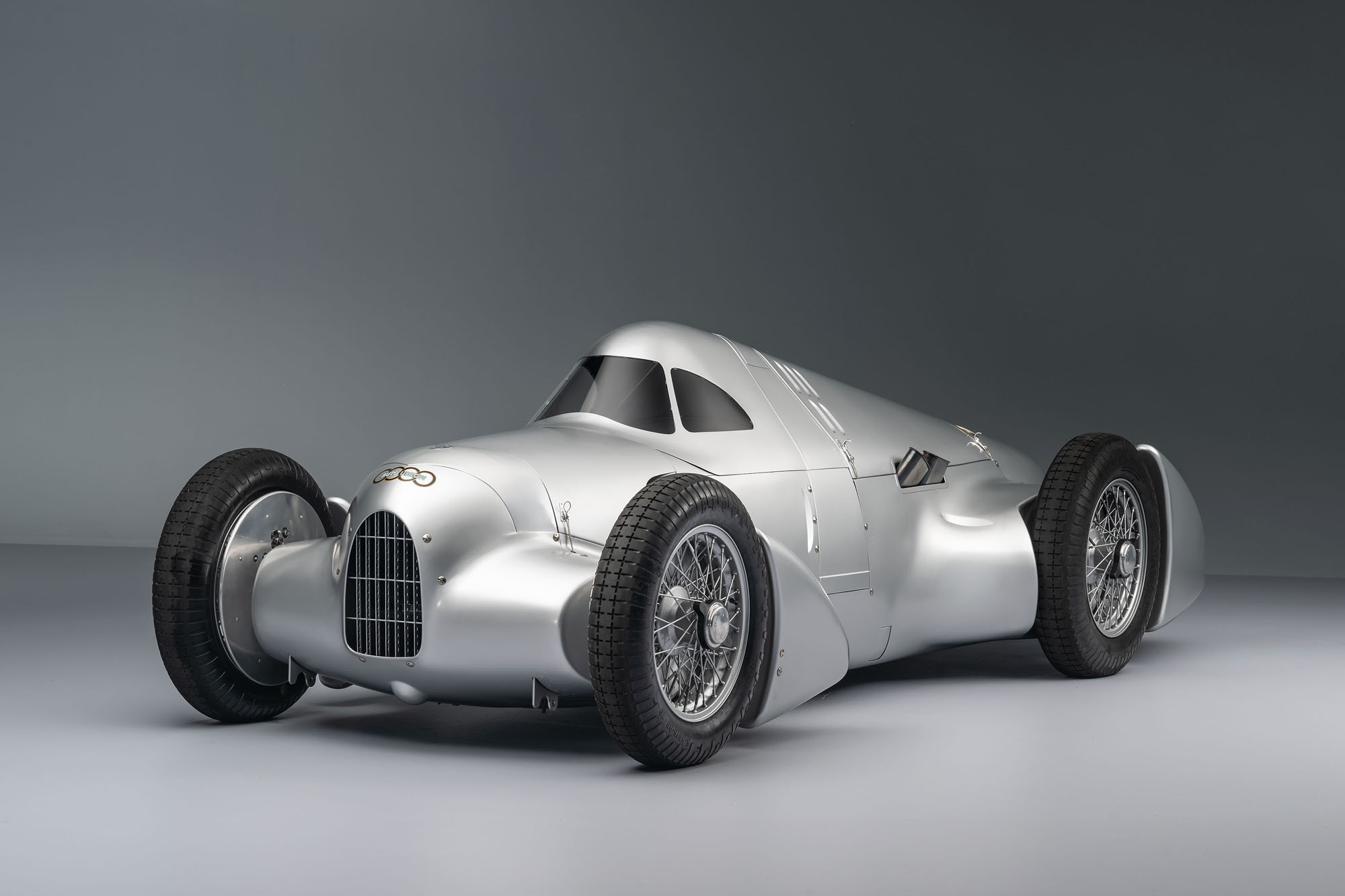

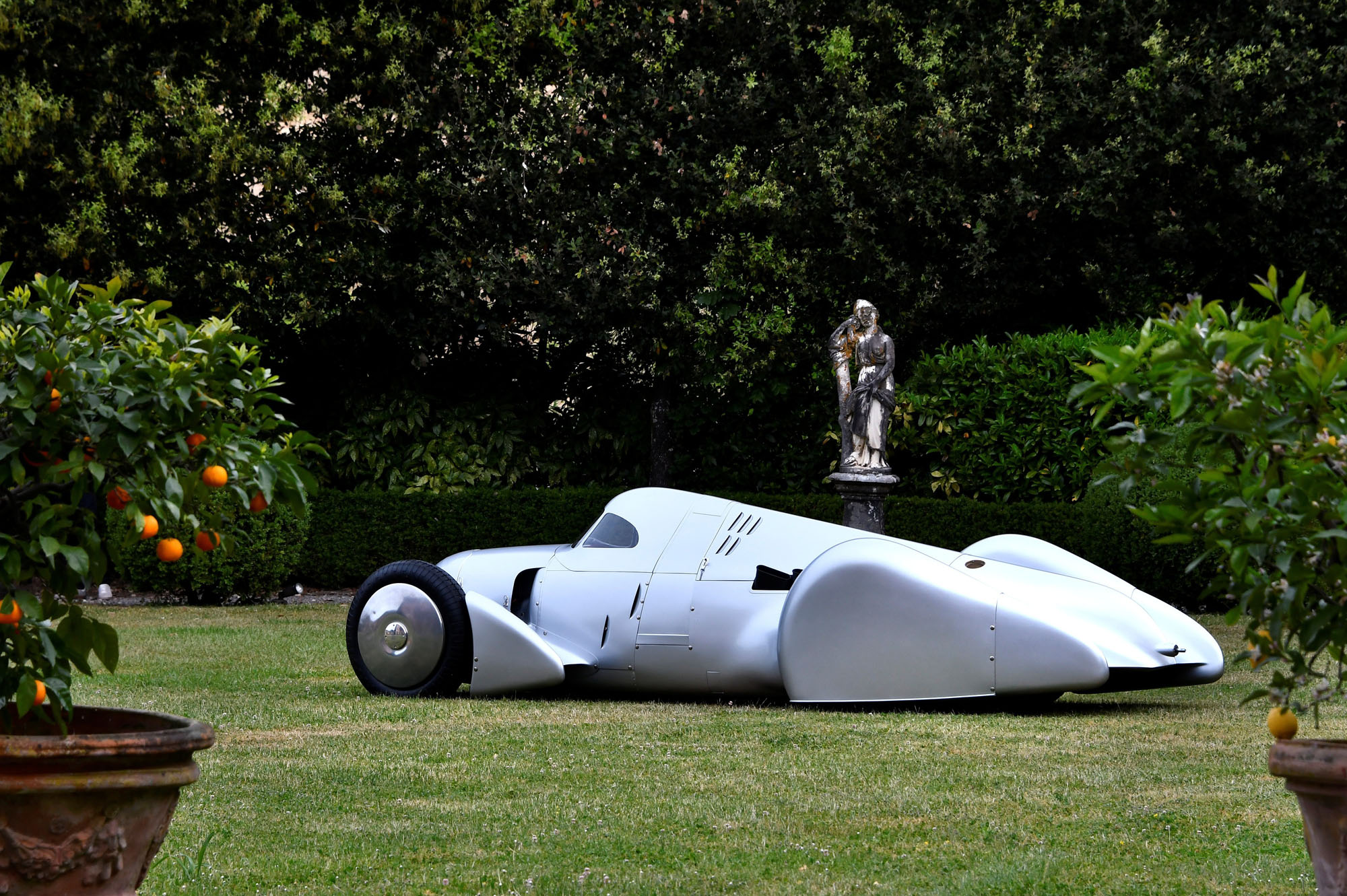
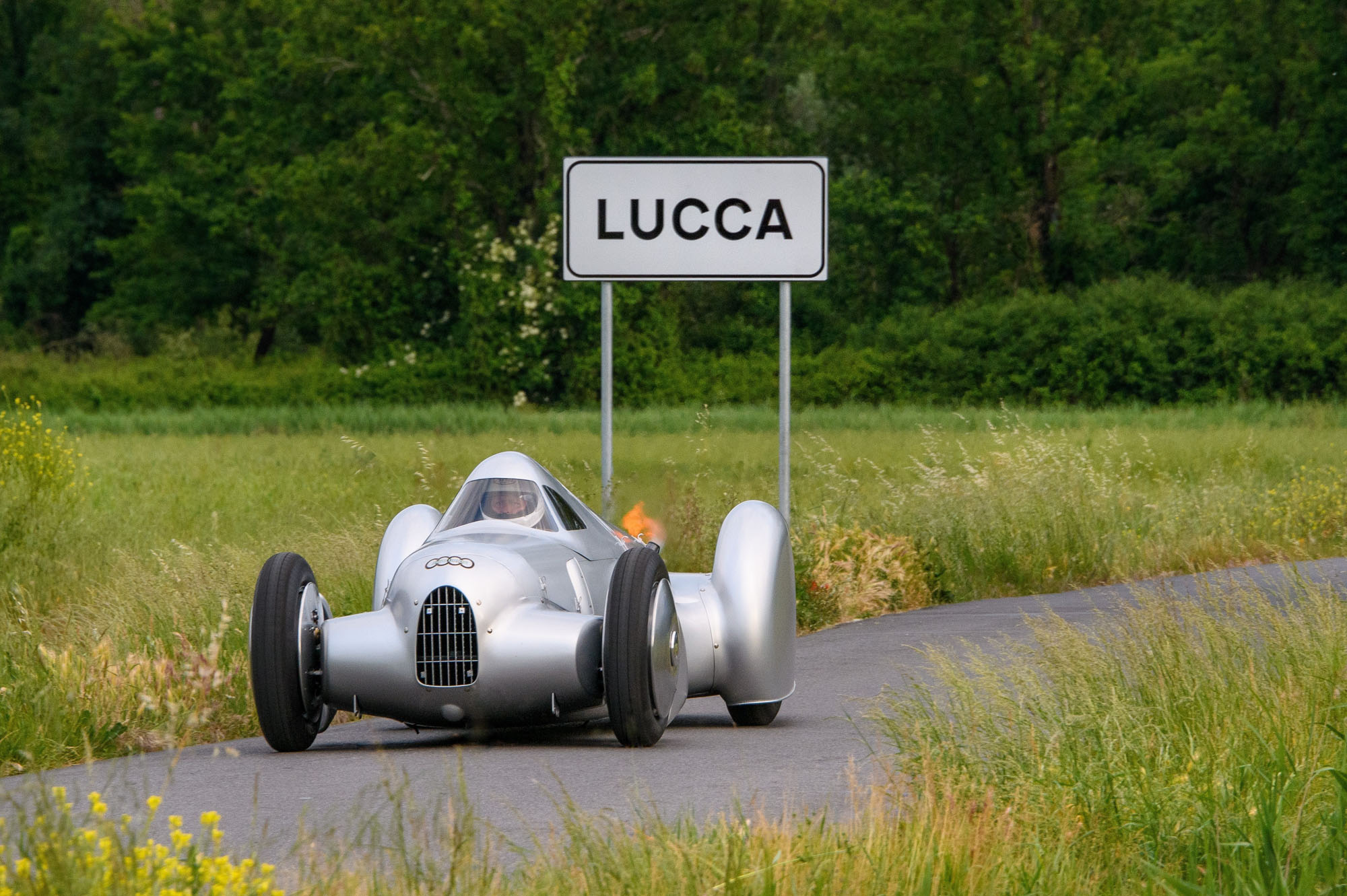
The Auto Union Lucca represents one of the most ambitious engineering achievements of the 1930s and a defining symbol of Auto Union’s pursuit of speed and innovation. Recreated by Audi Tradition and set to debut in Lucca, Italy, in May 2026, the streamlined Rennlimousine pays tribute to the original record-breaking machine that stunned the motorsport world in February 1935.
Highlights
- First dynamic appearance of the recreated Rennlimousine at the Goodwood Festival of Speed in July
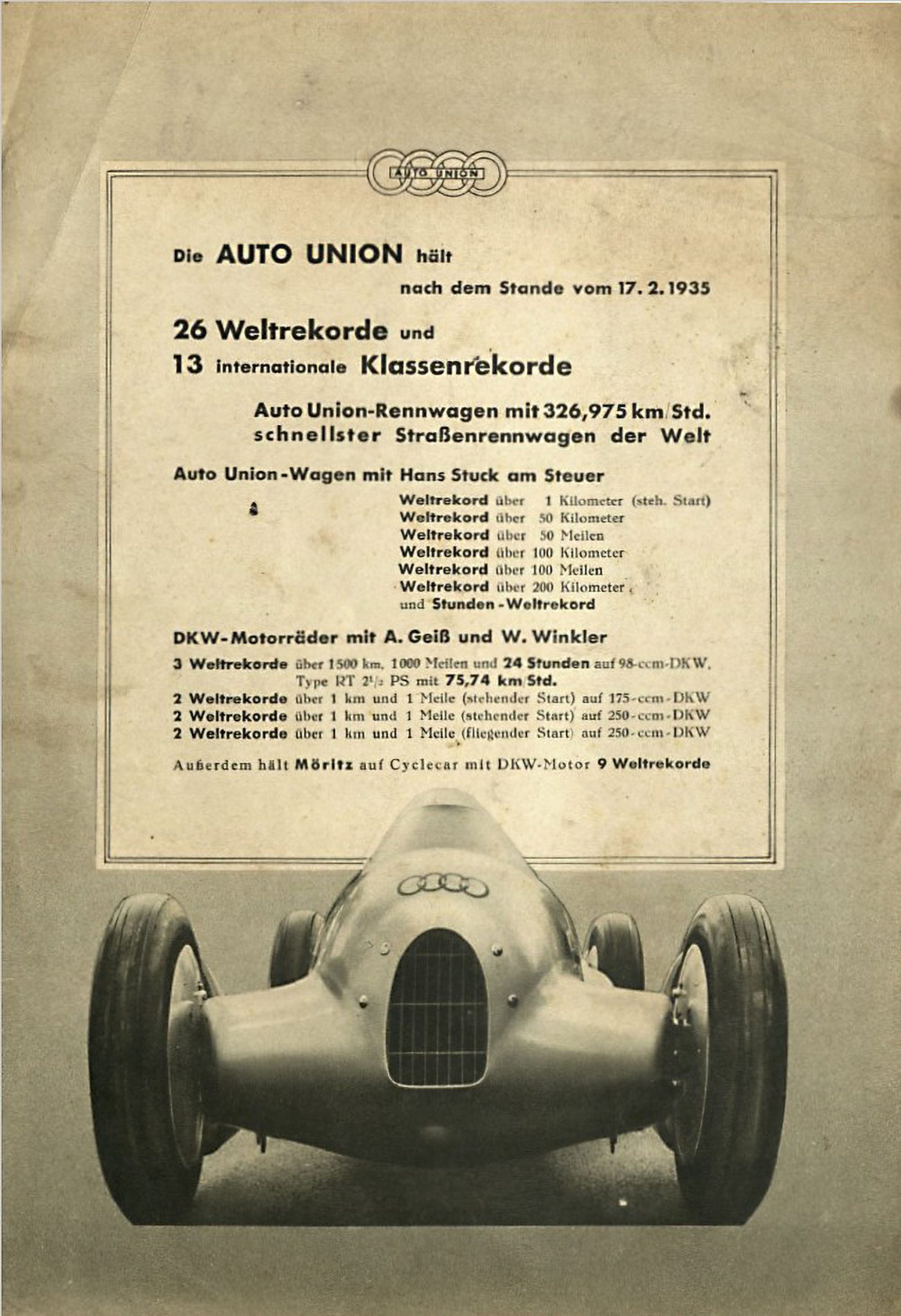
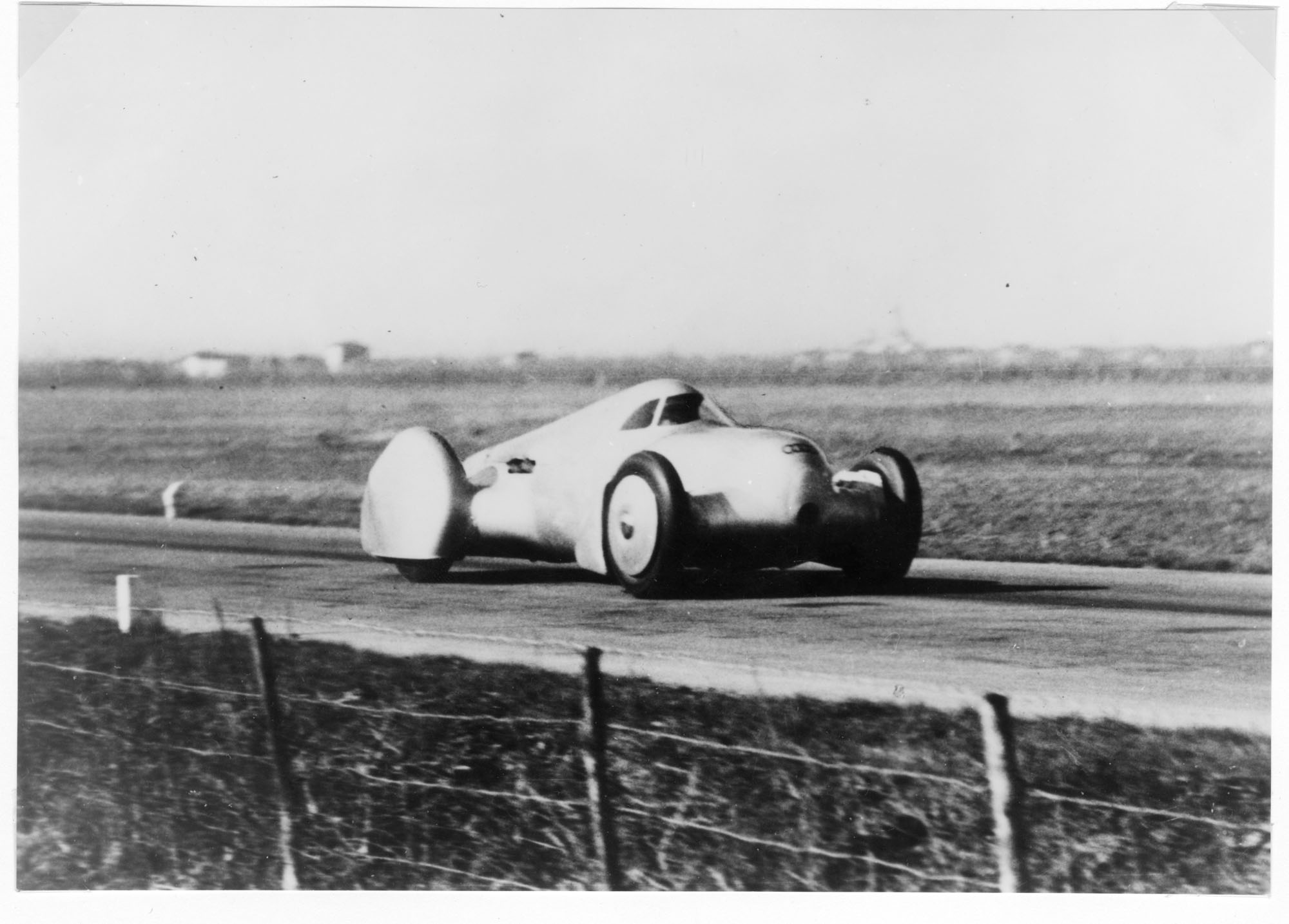
- “The fastest road racing car in the world”: Hans Stuck accelerates the Auto Union Lucca to a top speed of 326.975 km/h on February 15, 1935
- Aerodynamics, lightweight construction, high-performance engines – a testament to Auto Union’s innovation and engineering expertise
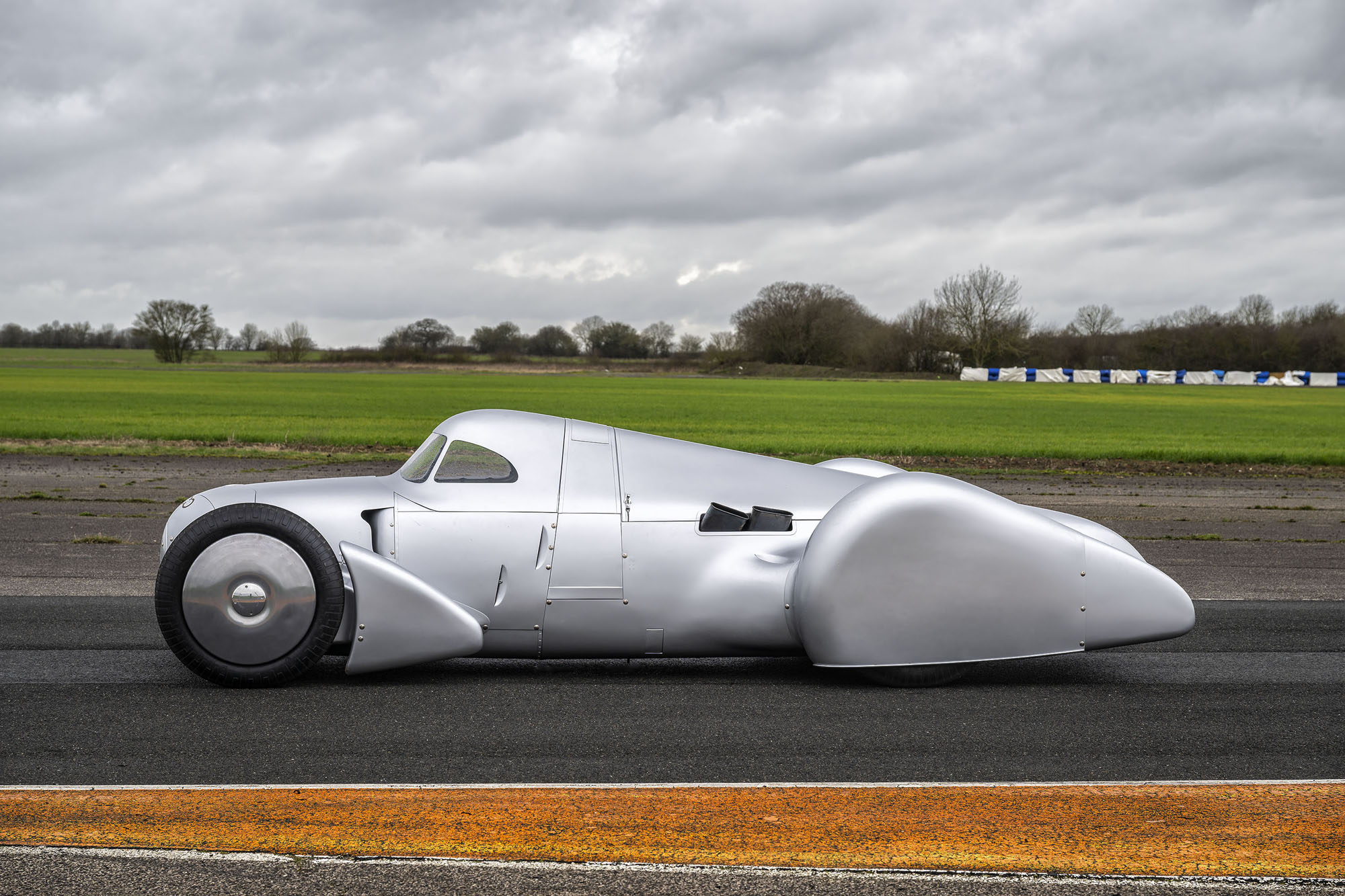
Driving shot at the first roll-out. Side view.
At a time when Germany’s leading manufacturers were locked in a fierce battle for dominance, Auto Union and Mercedes-Benz pushed the limits of technology in pursuit of speed records and Grand Prix victories. Following a series of world records set by Auto Union driver Hans Stuck in 1934, Mercedes driver Rudolf Caracciola answered with a flying-mile average of 316.592 km/h on a Hungarian highway. Auto Union immediately began work on a faster, more aerodynamic challenger.
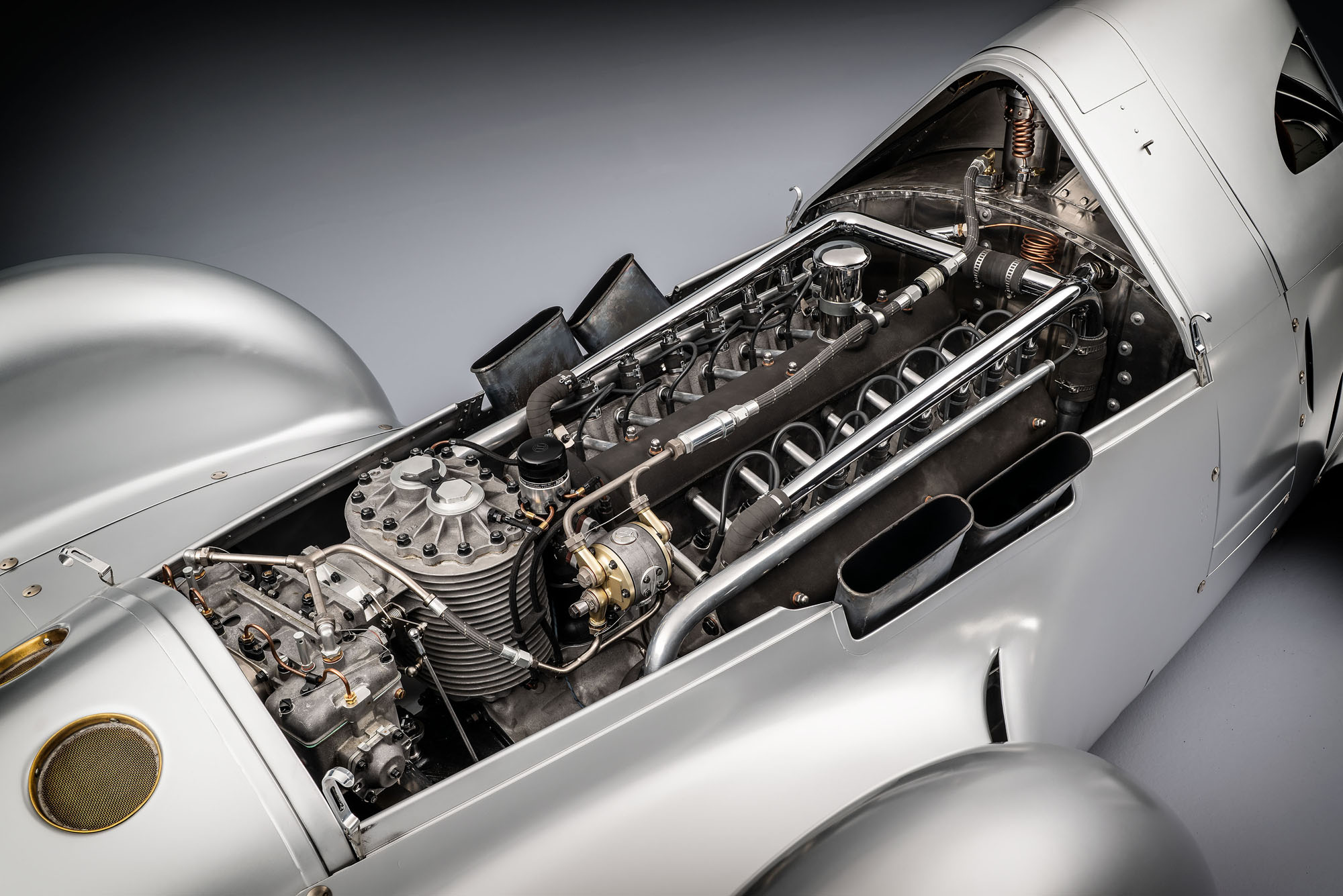
Detail: 16-cylinder-engine with supercharger.
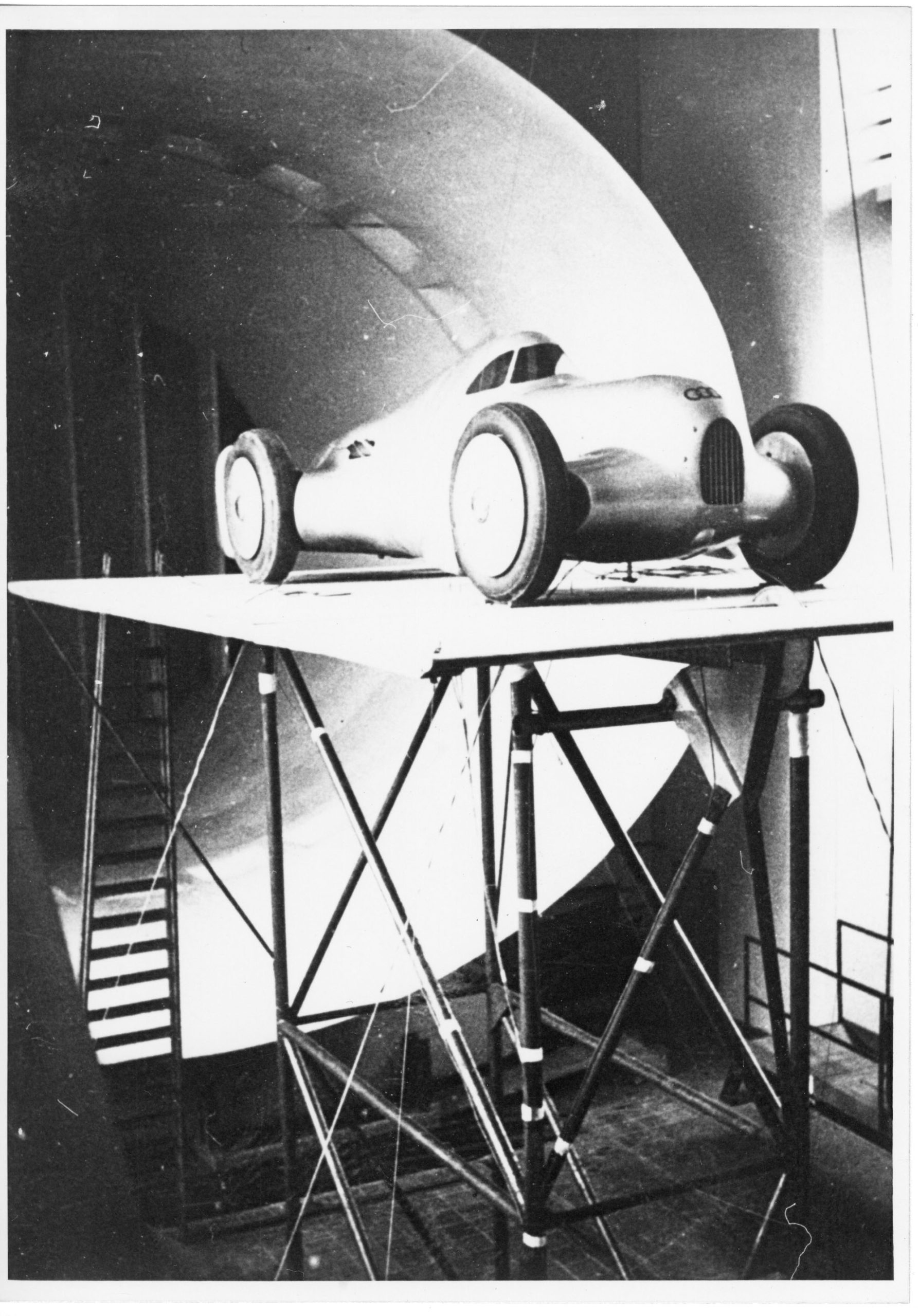
Using wind tunnel testing at Berlin-Adlershof, engineers developed one of Europe’s earliest streamlined racing cars. The resulting Rennlimousine featured enclosed bodywork, teardrop-shaped wheel arches, covered wheels, and a tapered rear section designed to reduce drag. Powered by a supercharged 16-cylinder engine producing 343 PS, the car embodied both technical innovation and dramatic visual elegance.
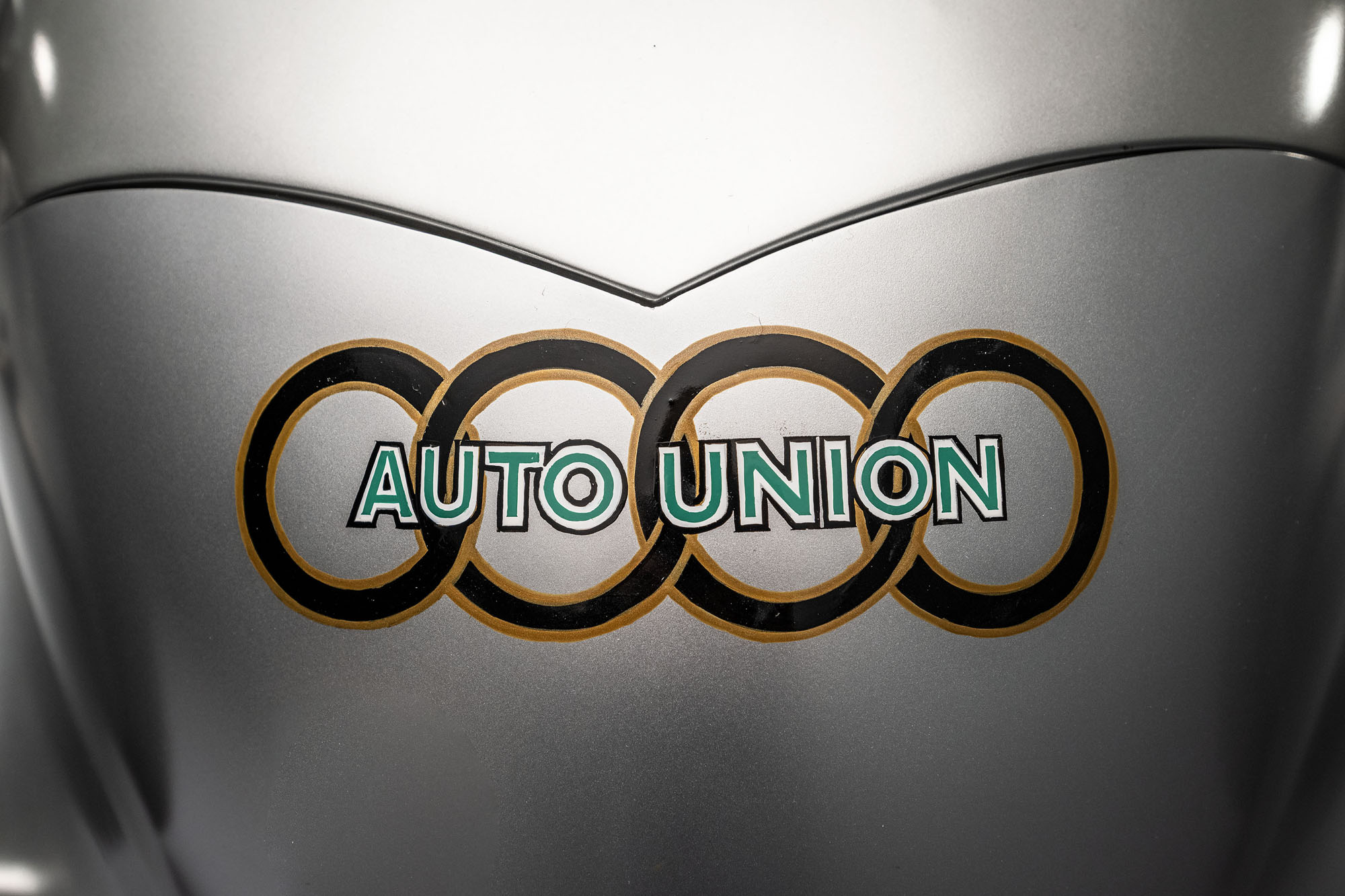
Detail: the Auto Union logo as used on the Auto Union racing cars of the 1930s.
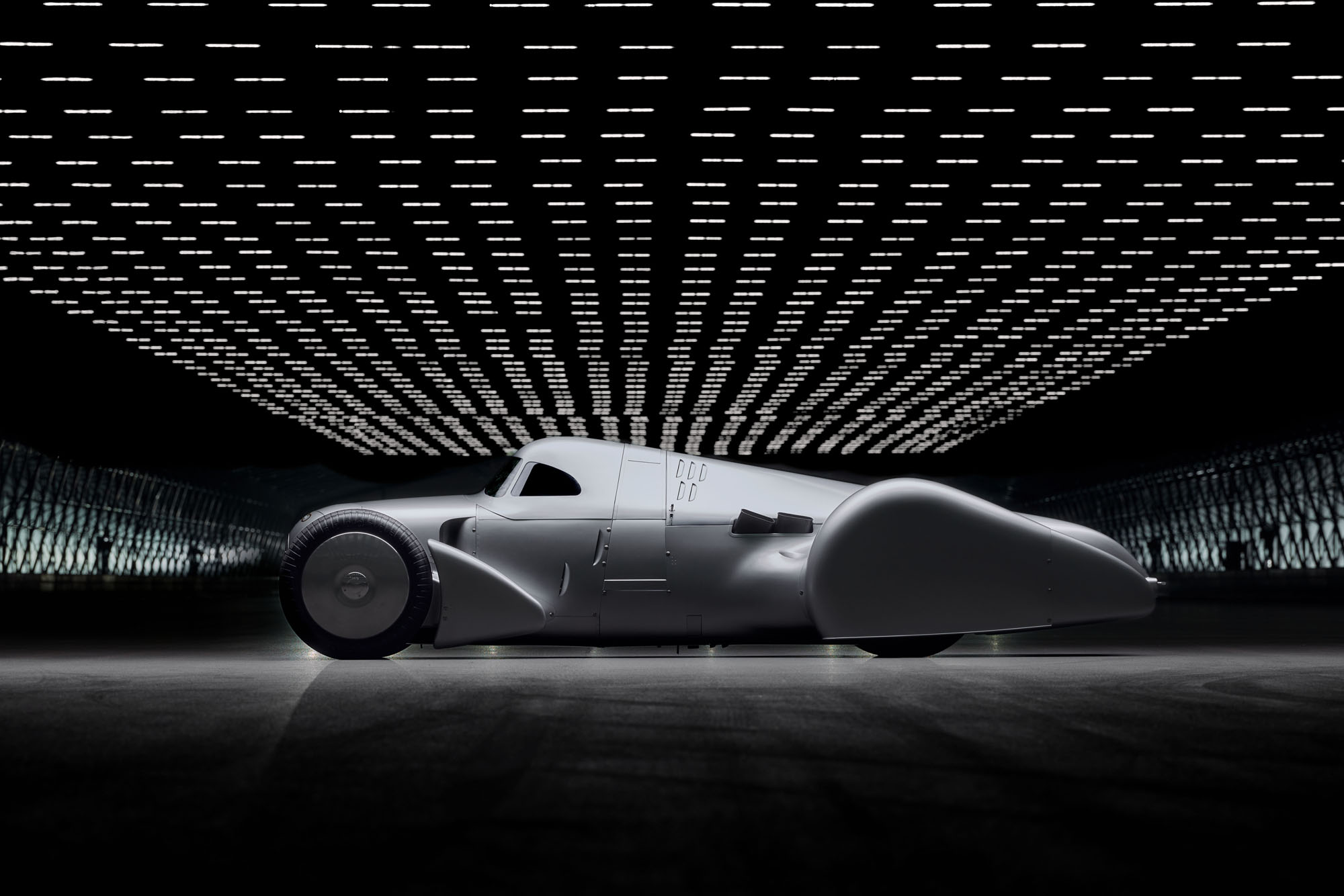
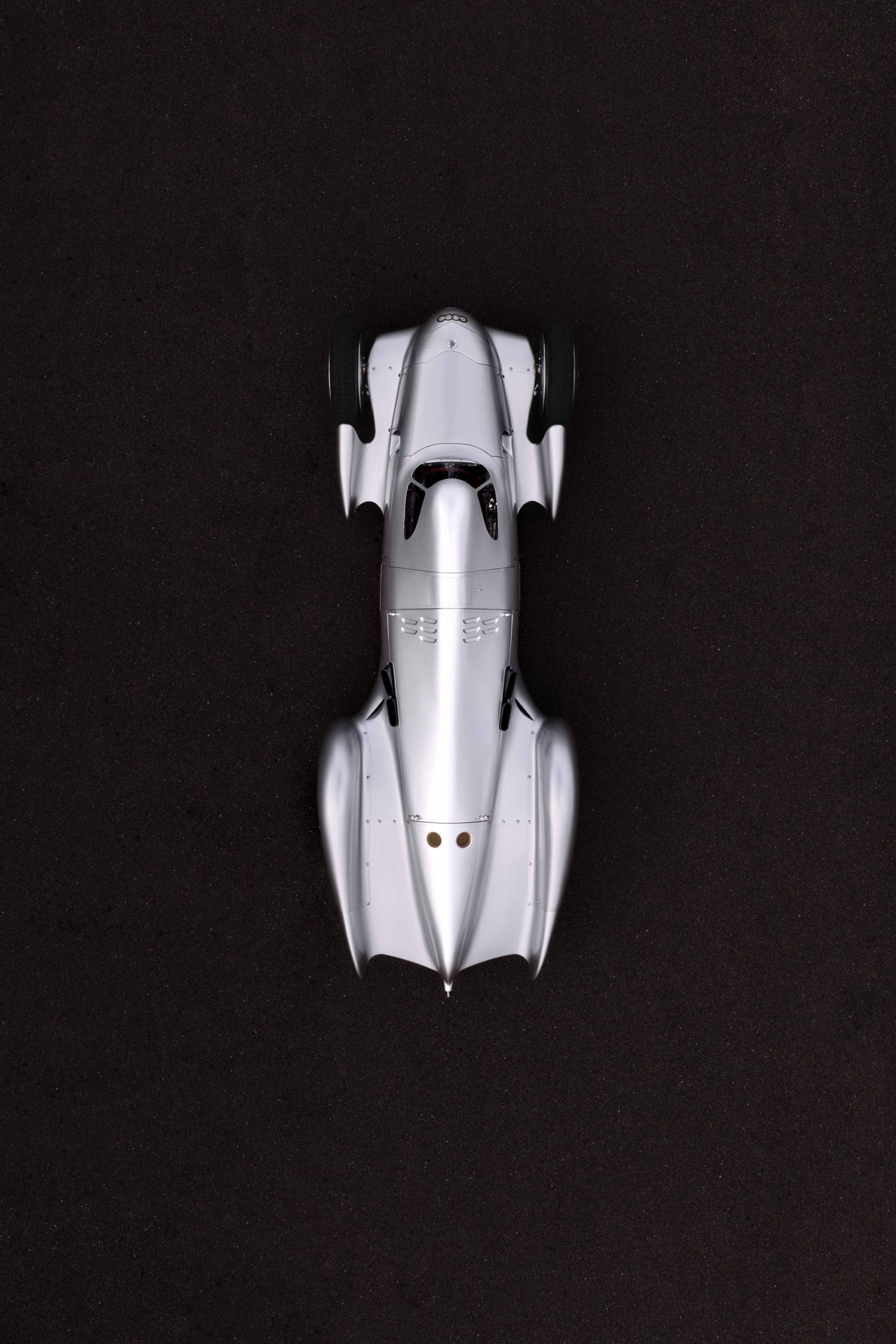
After weather disrupted initial plans in Hungary and northern Italy, Auto Union relocated the record attempt to a straight section of autostrada near Lucca. On February 15, 1935, Hans Stuck completed the flying-mile runs in front of thousands of spectators and official timekeepers. The car achieved an average speed of 320.267 km/h, while timing equipment recorded a top speed of 326.975 km/h, making it the fastest road racing car in the world at the time.
The record-setting machine quickly became a centerpiece of Auto Union’s rivalry with Mercedes-Benz. A nearly identical version was displayed simultaneously at the 1935 Berlin Motor Show, promoted as the “fastest road racing car in the world.” Later that year, modified Rennlimousinen competed at Berlin’s Avus circuit, although both entries retired with mechanical issues.
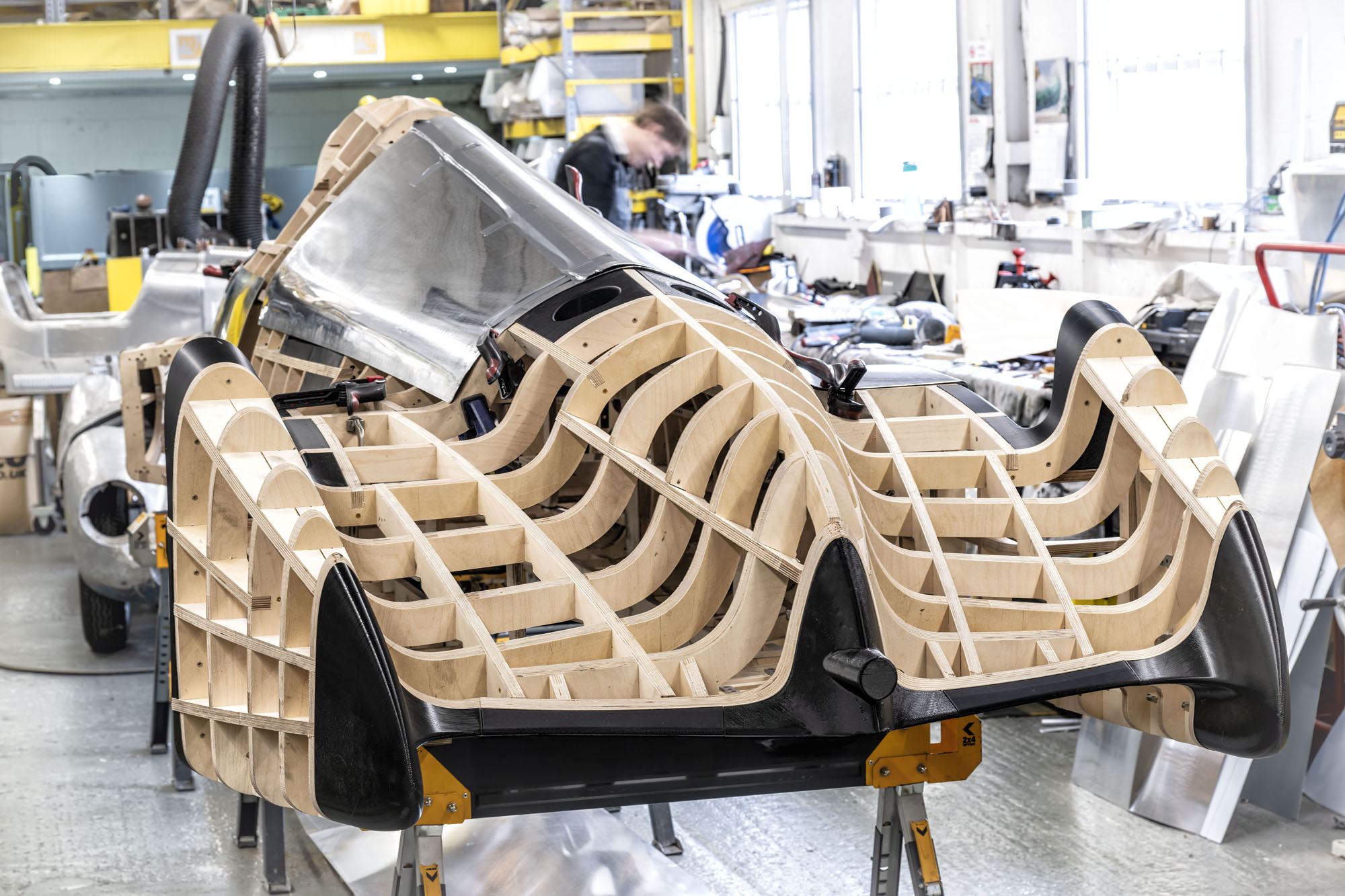
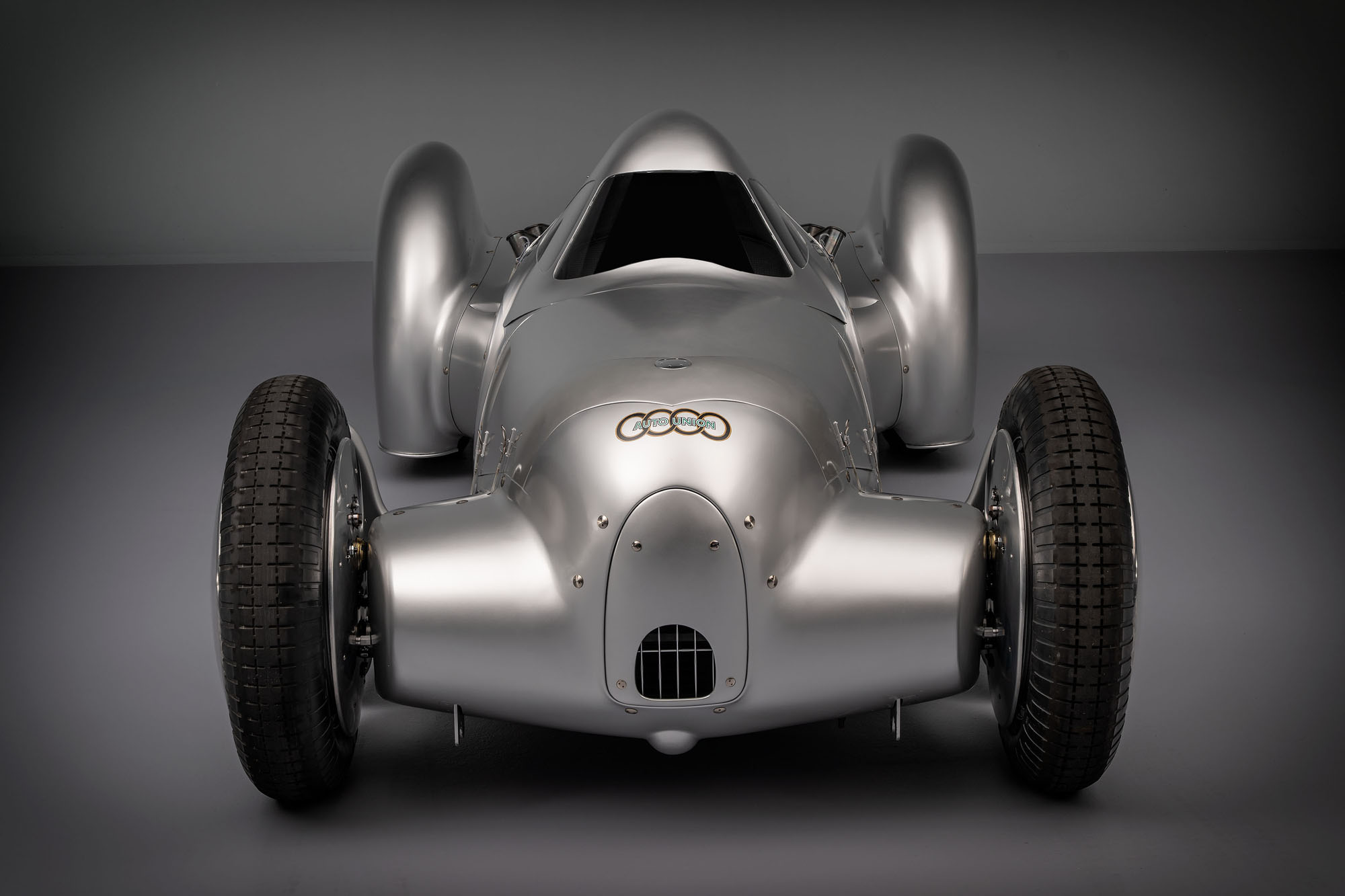
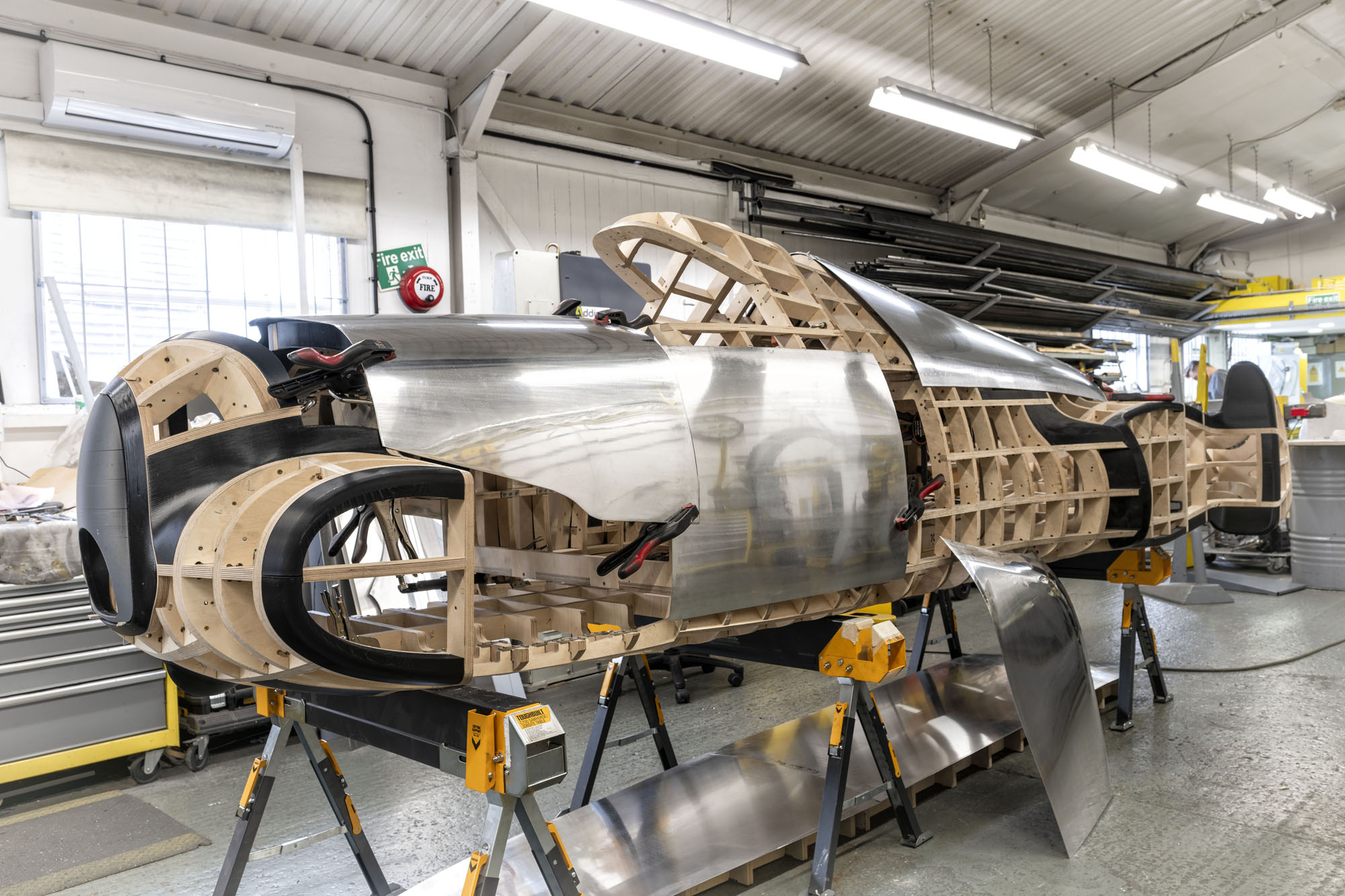
Audi Tradition commissioned British restoration specialist Crosthwaite & Gardiner to recreate the Lucca car using historical photographs and archival material. Completed in early 2026 after more than three years of craftsmanship, the recreation features hand-built bodywork and aerodynamic refinements. Wind tunnel testing at Audi confirmed a drag coefficient of 0.43.
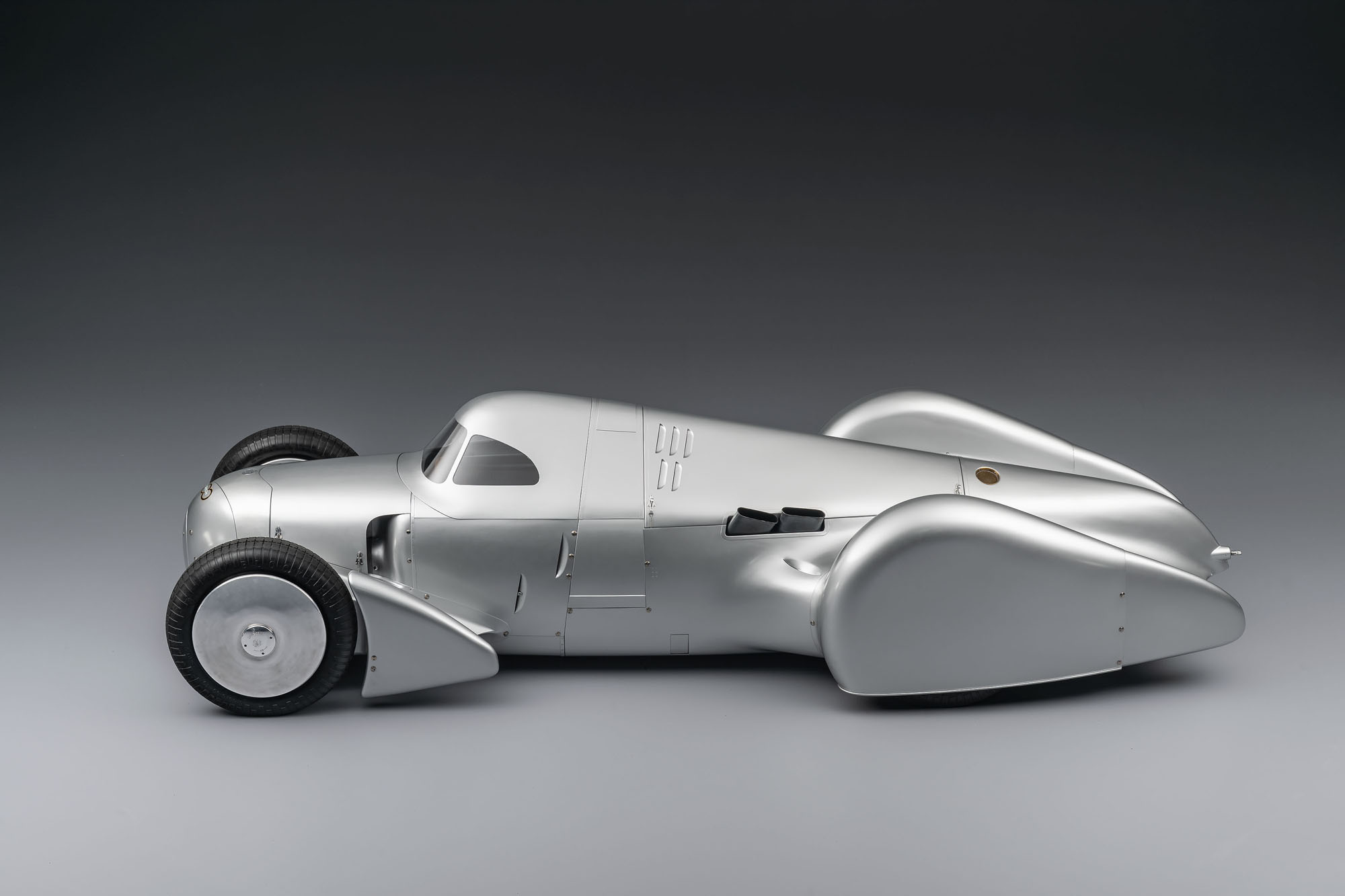
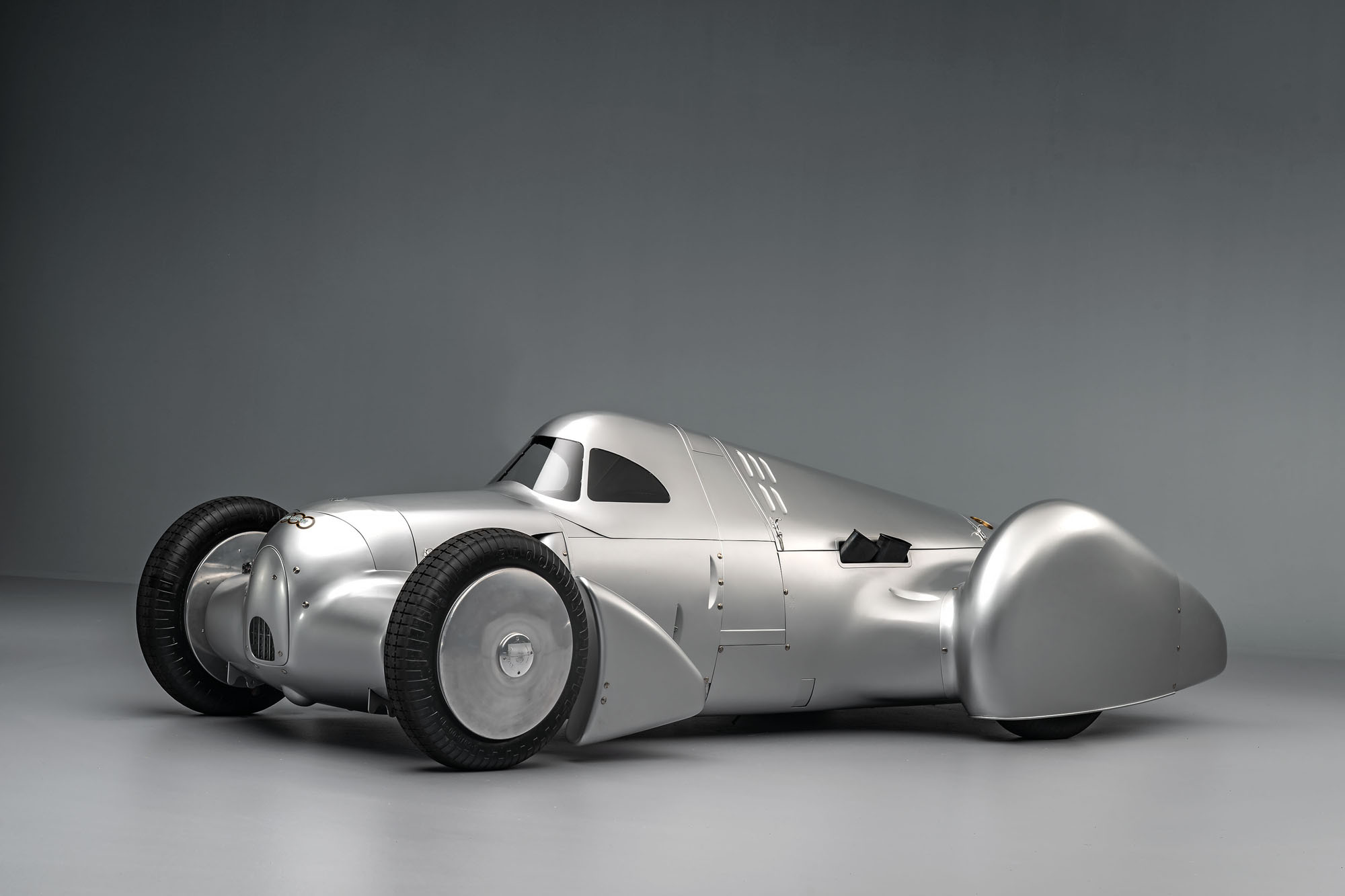
According to Audi Tradition, the Auto Union Lucca represents the origins of “Vorsprung durch Technik” — combining engineering innovation, maximum performance, and elegant design. Following its unveiling in Italy, the Rennlimousine will make its public dynamic debut at the 2026 Goodwood Festival of Speed.
| Engine | 16-cylinder engine |
| with compressor | |
| Displacement | 6,005 cc |
| (as in the Auto Union Type C from 1936) | |
| Power output | 520 PS (382 kW) |
| at 4,500 rpm | |
| Maximum speed | Not specified |
| Fuel | 50% methanol |
| 40% premium unleaded | |
| 10% toluene | |
| Dimensions (L/H/W) | 4,570 / 1,200 / 1,700 mm |
| Wheelbase | 2,800 mm |
| Curb weight | 960 kg |
| Exterior color | Cellulose silver |
| Total production run | One-off |