SPORTS CAR DIGEST

The Cars

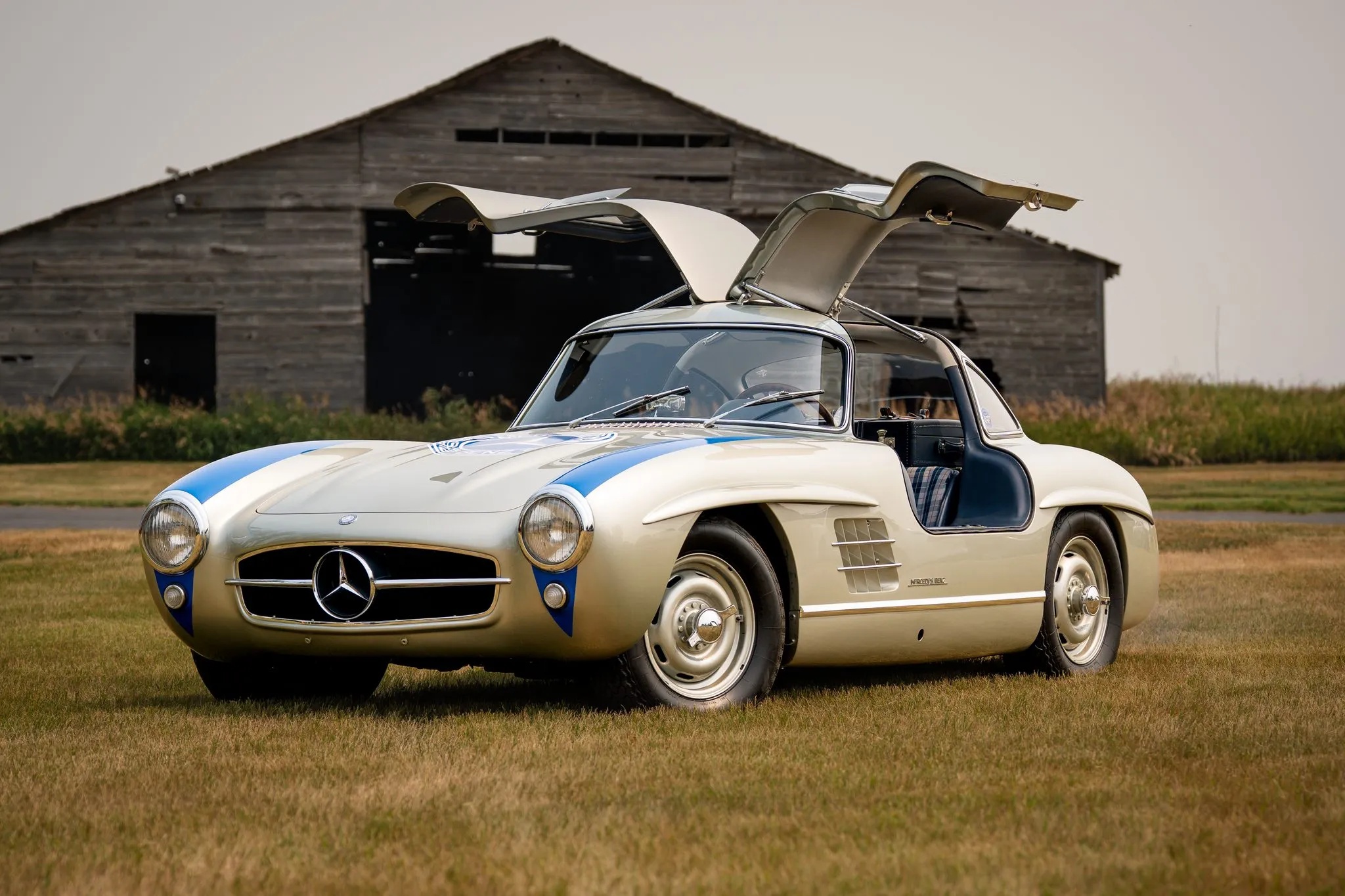
One page per great car: the Porsche 917, the Ferrari 250 GTO, the Jaguar D-Type, the Ford GT40, the Shelby Cobra and the Mercedes-Benz 300 SL so far, each with its history, its race record, its famous chassis and every story in the archive.

The Model Pages

Six so far, built to one shape: the story, the record, the chassis, the people, the market.

Next: The Cars in Line

The ten largest model threads without a page yet; the links go to the thread until the page exists.

Every Model in the Archive

Ninety-nine models with forty or more stories, A to Z; red links go to the model page, the rest to the tag archive.

Latest Car Stories

Single-car stories from the archive, newest first.
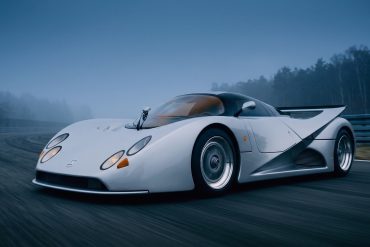
Heo Ja-Hong "Keyser" Hur, great-grandson of the founder of Korea's GS Group, chose to start a car company rather than buy another limited-run supercar. Lorenzo Baer on de Macross and its only product, the Epique GT1.
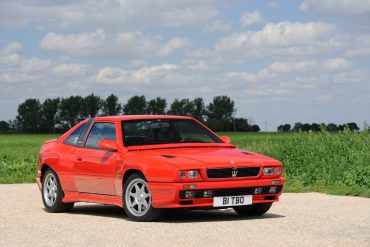
December 14, 1989: Alejandro de Tomaso unveiled the Shamal in Modena nine days after Fiat had quietly signed for 49 percent of Maserati. The last coupe of his era, and one of the least discussed grand tourers of the decade.
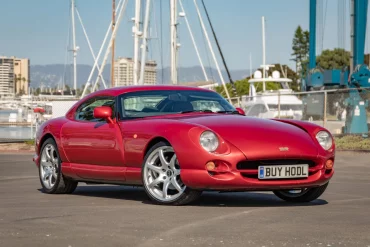
There's a start button under the steering wheel, an immobilizer sequence, switches on the wheel instead of stalks and a hidden door button under the mirror. Thirty years on, the Cerbera and Al Melling's from-scratch V8 have not mellowed.
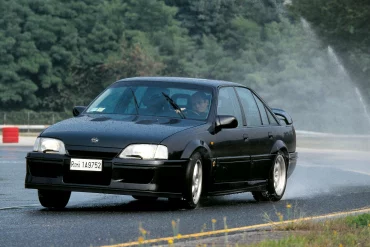
GM Europe's president was tired of being called boring, so he sent Vauxhall's executive saloon, a fleet car with a 0.28 drag coefficient, to Lotus with one brief: the fastest-accelerating saloon in the world. The Carlton was the result.
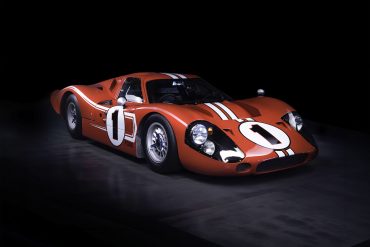
Riley Technologies and Kar-Kraft built a new Ford GT40 Mk IV from the original 1967 Le Mans winner's drawings in nine months from late 2022. Martin Raffauf on why that is possible, beginning with Enzo Ferrari's 1963 cash problem.
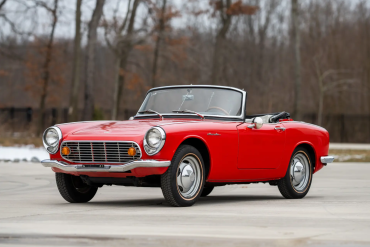
In 1964 Honda became the world's biggest motorcycle maker, entered Formula 1 and put the S600 on sale: 606cc, twin cams, 55 horsepower and a 9,500 rpm redline, built after customers told Soichiro Honda the S500 wasn't enough.
3/4 front view of a red Ferrari 208 GTB Turbo
Italy's VAT jumped sharply on engines over two liters, so Ferrari kept the 208 GTB's 1,991cc V8, added a single KKK turbo and Bosch injection and took output from about 155 hp to 220. Its first turbocharged road car.
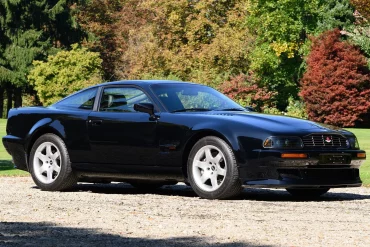
Three-quarter side view of a 1995 black Aston Martin Vantage V550
Gauntlett couldn't afford a clean-sheet car, so the 1989 Virage reworked the 1960s DBS bones with Callaway heads and 330 hp. Birmingham 1992 brought the twin-supercharged Vantage: nearly 150 hp more than a Porsche Turbo, only the McLaren F1 stronger.
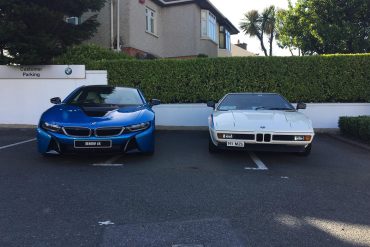
The M1 began as a homologation special with Lamborghini building it, until Italian money ran out and BMW took over a production scattered across countries. The i8 shares none of its hardware, only the experience of being misunderstood, then admired.
The F40 was the last Ferrari Enzo signed off, built from the bones of the canceled 288 GTO Evoluzione program at 1,110 kg with a 2.9-liter twin-turbo V8. The F80 of 2025 answers with hybrid power and extreme aerodynamics.
Ferrari took 37 orders for the Testarossa during the October 1984 Paris show alone. Leonardo Fioravanti led the Pininfarina team, Emmanuele Nicosia's concept the starting point. Lorenzo Baer on the car and its rare Spider variant.
The sleek lines of the Tornado Ventury are well illustrated in this photo, ca. 1967. ©Wally Vorlaufer Wally Vorlaufer
Wally Vorlaufer emigrated from Austria to South Africa at 14 and designed his first car at 17 on Opel parts. Glen Smale on his third, the Tornado Ventury, begun in 1963 on a ten-year-old Riley RMF 2½ litre.
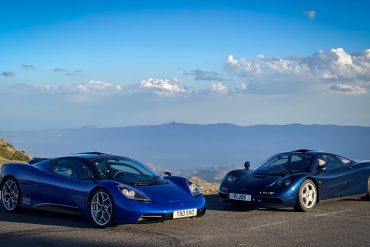
Blue GMA T.50 next to a blue McLaren F1
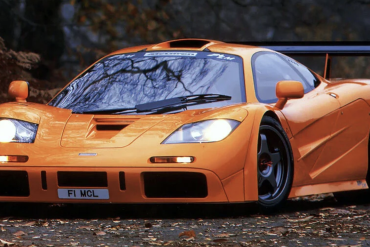
The McLaren F1 of 1992 put Gordon Murray's ideas into carbon: a central seat, a 6.1-liter BMW V12 with 627 horsepower, and balance over brute force. Thirty years on, the GMA T.50 restates them against touchscreens and electrified hypercars.
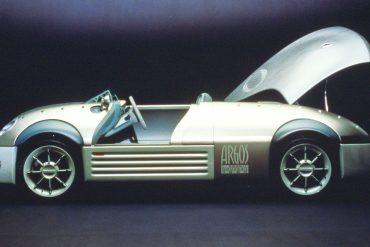
Patrick le Quèment found a 15-centimeter doodle on Jean-Pierre Ploué's board at Renault's new Boulogne-Billancourt studio in 1990; Ploué thought it looked like a cockroach. It became the Argos concept. Karl Ludvigsen tells the story with le Quèment himself.
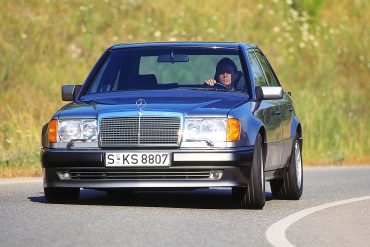
The benefit of wider tires of this M-B 500E are visible as it’s pressed hard through a bend. The Porsche touch ensured a near-50/50 front/rear weight distribution.
In 1989 Porsche had an empty Reutter building in Zuffenhausen, the 959 line finished, and a falling dollar. A contract signed on 19 March 1990 put Daimler-Benz's 500E on that floor. Karl Ludvigsen on Michael Hölscher's first big project.
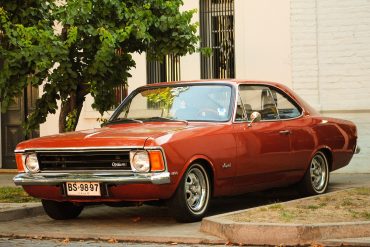
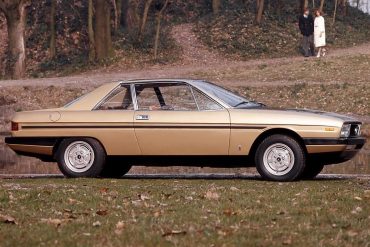
General Motors of Brazil built only trucks for decades after 1925, then imported Impalas and Opel Kadetts, Olympias and Rekords to learn what Brazilians wanted. Project 676 was the answer: Impala space, Opel maneuverability. Lorenzo Baer on the Opala.
Plenty has been written about the F1's carbon monocoque and its borrowings from Formula 1, much less about why it looks the way it does. Raffi Minasian on the exterior design of the 1992 three-seater, 30 years on.
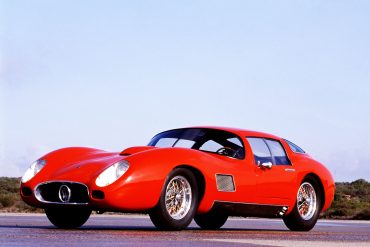
When Minnesotan Byron Staver saw the derelict Costin Maserati coupe at the Modena works, he implored the company to restore it to running condition.
Parravano, Los Angeles property developer with 13 Maseratis and as many Ferraris, commissioned a 4.2-litre V8 for Indianapolis in 1954 and never went. Karl Ludvigsen on the 450S that grew from it, the most powerful Maserati since the 8CTF.
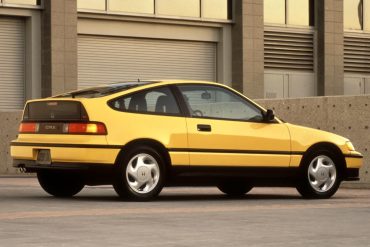
Honda went from motorcycles to a major foothold in North America by the 1980s, and the second-generation CRX leaned on Doug Halpert's California design team. Raffi Minasian on a small car shaped by a Japanese taste for simplicity.
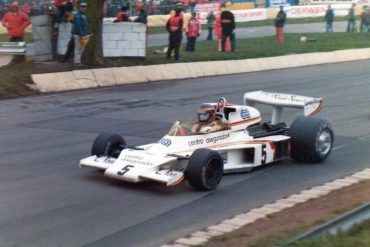
McLaren's deal with Trojan let Colnbrook concentrate on Formula 1 while Trojan built customer cars, and the M10 ruled Formula 5000 in 1969–70. Nothing after it sold as well, and the partnership frayed. Lorenzo Baer on the M25.
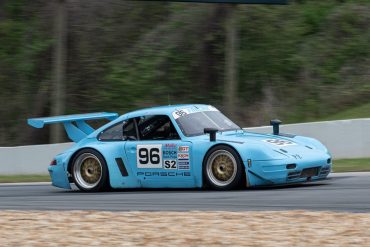
The unique 993 ME demonstrated all of Fabcar's boldness and determination in its pursuit of innovation in motorsport. Credits: Porsche Car Club of America
Dave Klym left his job with All-American Racing and Charlie Hayes in 1977 to found Fabcar Engineering in Carmel, Indiana; his first big job was rebuilding three Lightning chassis for Lindsay Hopkins. The road to a mid-engined 993.
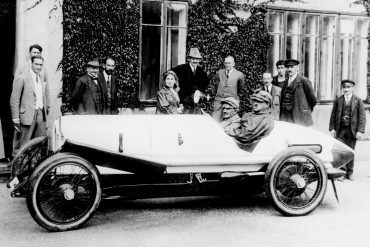
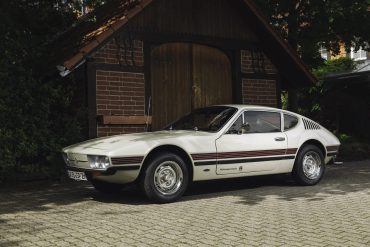
Volkswagen's Brazilian subsidiary decided at the end of the 1960s to build a sports car, the first designed and built entirely outside Germany by a maker known for simple family cars. Lorenzo Baer on the SP and SP2.