

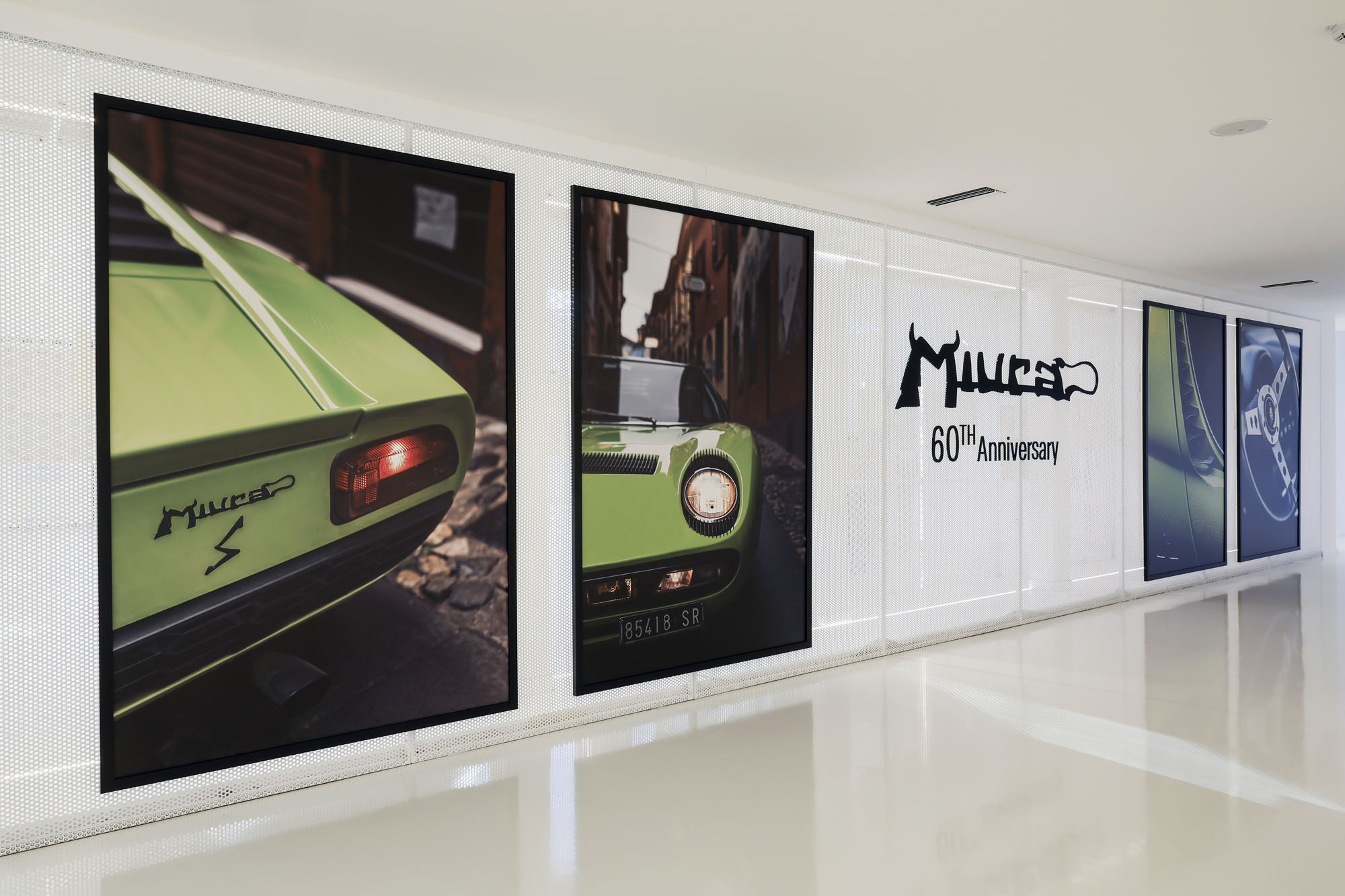
In 2026, the Automobili Lamborghini Museum marks the 60th anniversary of the Lamborghini Miura with a special exhibition titled “Born Incomparable,” running from March 18, 2026 through January 2027. The exhibition traces the birth, development, and enduring legacy of one of Lamborghini’s most influential models—and a car that reshaped the global sports car landscape.
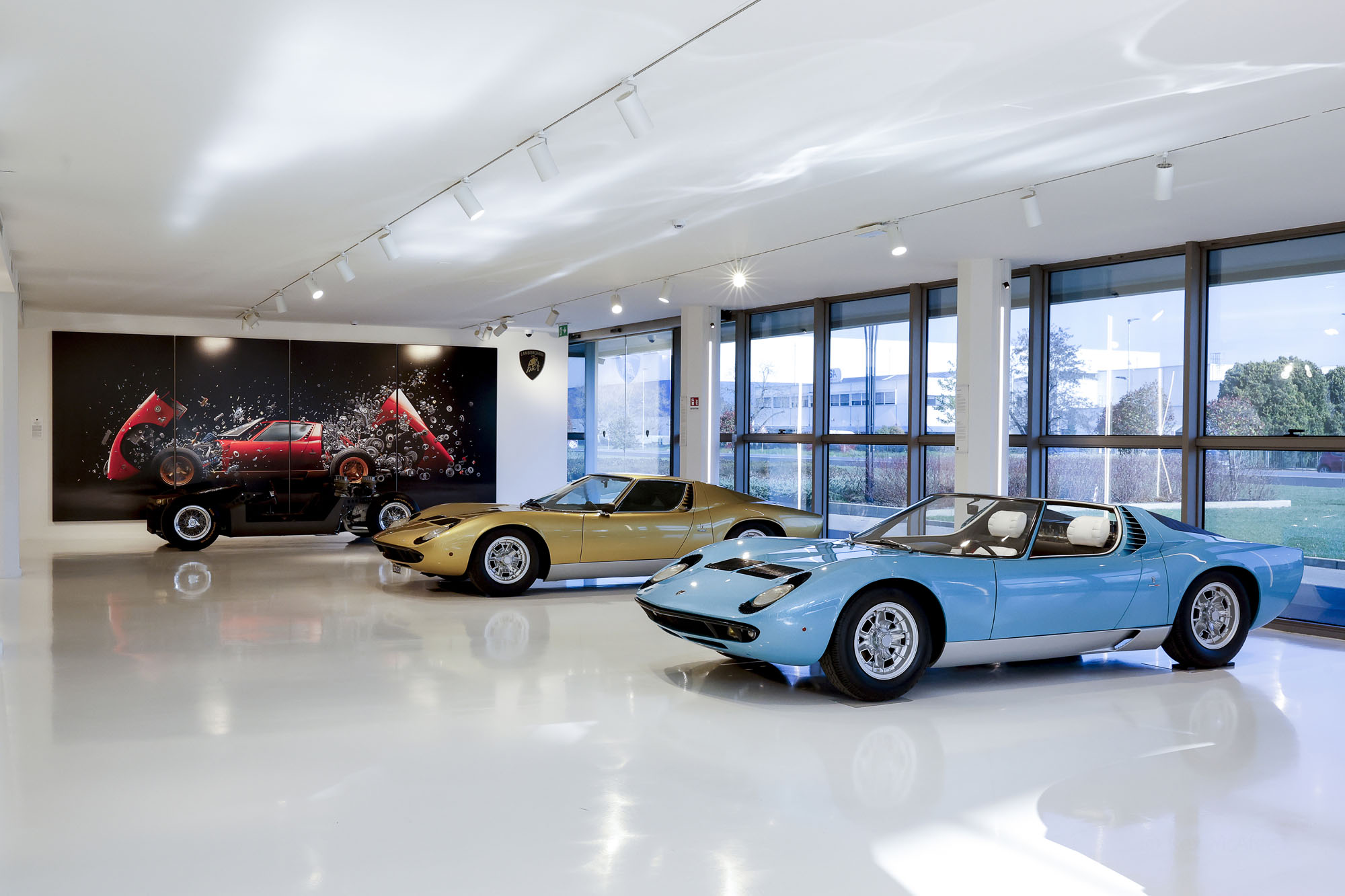
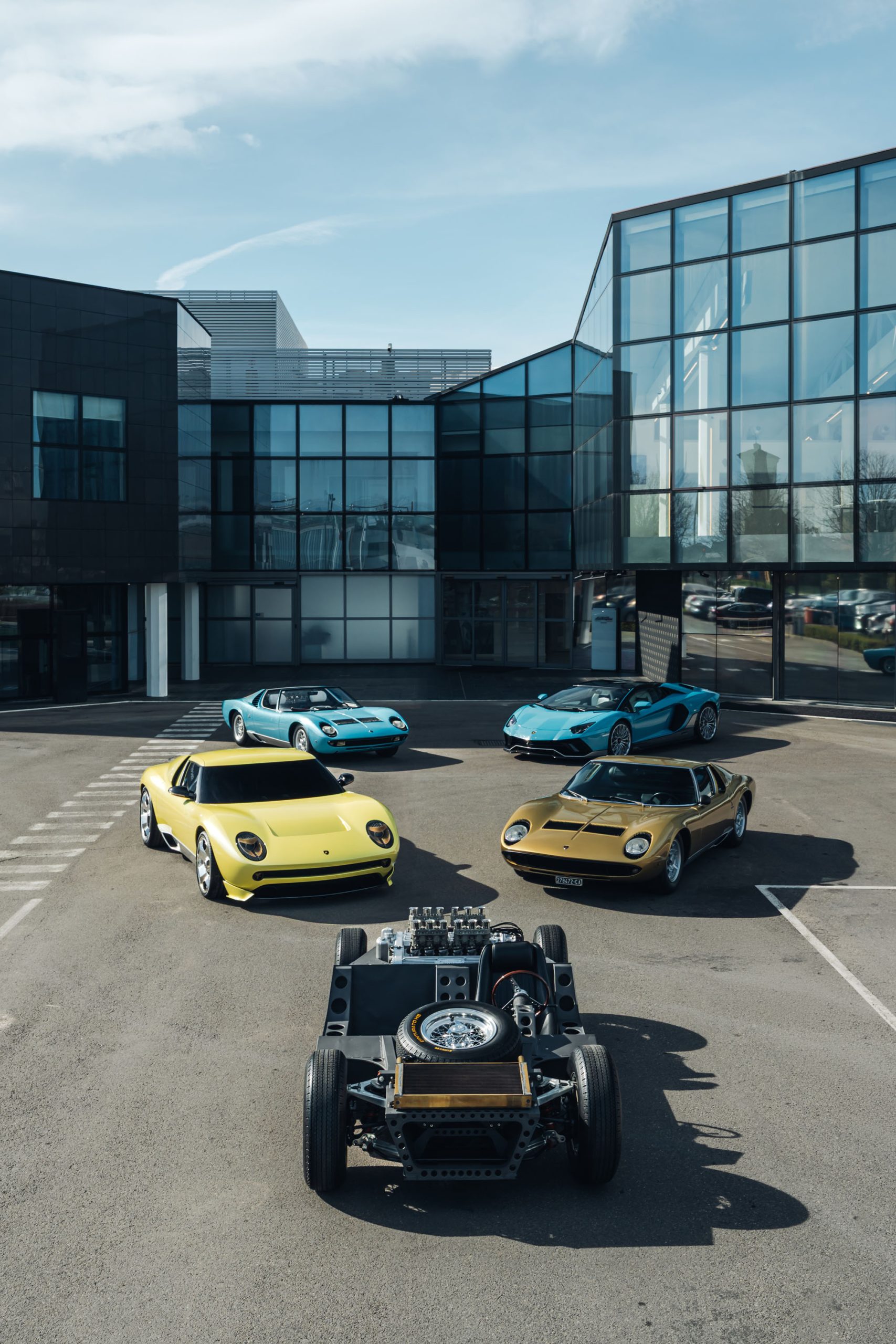
A curated selection of Miura-related vehicles and artifacts anchors the display. Highlights include the original chassis unveiled in 1965 and a Miura P400 S. Two especially rare models will also rotate through the exhibit during the year: the one-off Miura Roadster created by Bertone in 1968 and the Miura SVJ derived from the experimental prototype developed in 1970 by Lamborghini test driver Bob Wallace. Completing the installation is a life-size reproduction of Fabian Oefner’s artwork “Disintegrating X – Miura.” The museum will continue to showcase other Lamborghini icons alongside the exhibition, including the Countach, LM002, and several recent Few-Off creations.
The anniversary celebration extends beyond the museum. Throughout 2026, Lamborghini will stage global events dedicated to the Miura, including the Lamborghini Polo Storico Tour organized by the brand’s Heritage department. Scheduled for May 6–10 in Northern Italy, the tour begins in Piemonte and concludes at Lamborghini Arena during the brand’s festival at the Imola circuit on May 9 and 10.
“For Lamborghini, the Miura represented a moment of extraordinary revolution and a decisive push toward the company’s future. Telling this story through an exhibition dedicated to this iconic model is a fundamental step in celebrating its 60th anniversary,” commented Federico Foschini, Chief Marketing and Sales Officer of Automobili Lamborghini. “With this exhibition, we want to offer visitors and enthusiasts the opportunity to see some particularly special examples up close and rediscover the history of the Miura and its fundamental role in shaping Lamborghini’s DNA.”
The Origins of the Miura
The “Born Incomparable” exhibition dedicates an entire section of the museum’s ground floor to the Miura, tracing its technical and stylistic milestones through several representative examples.
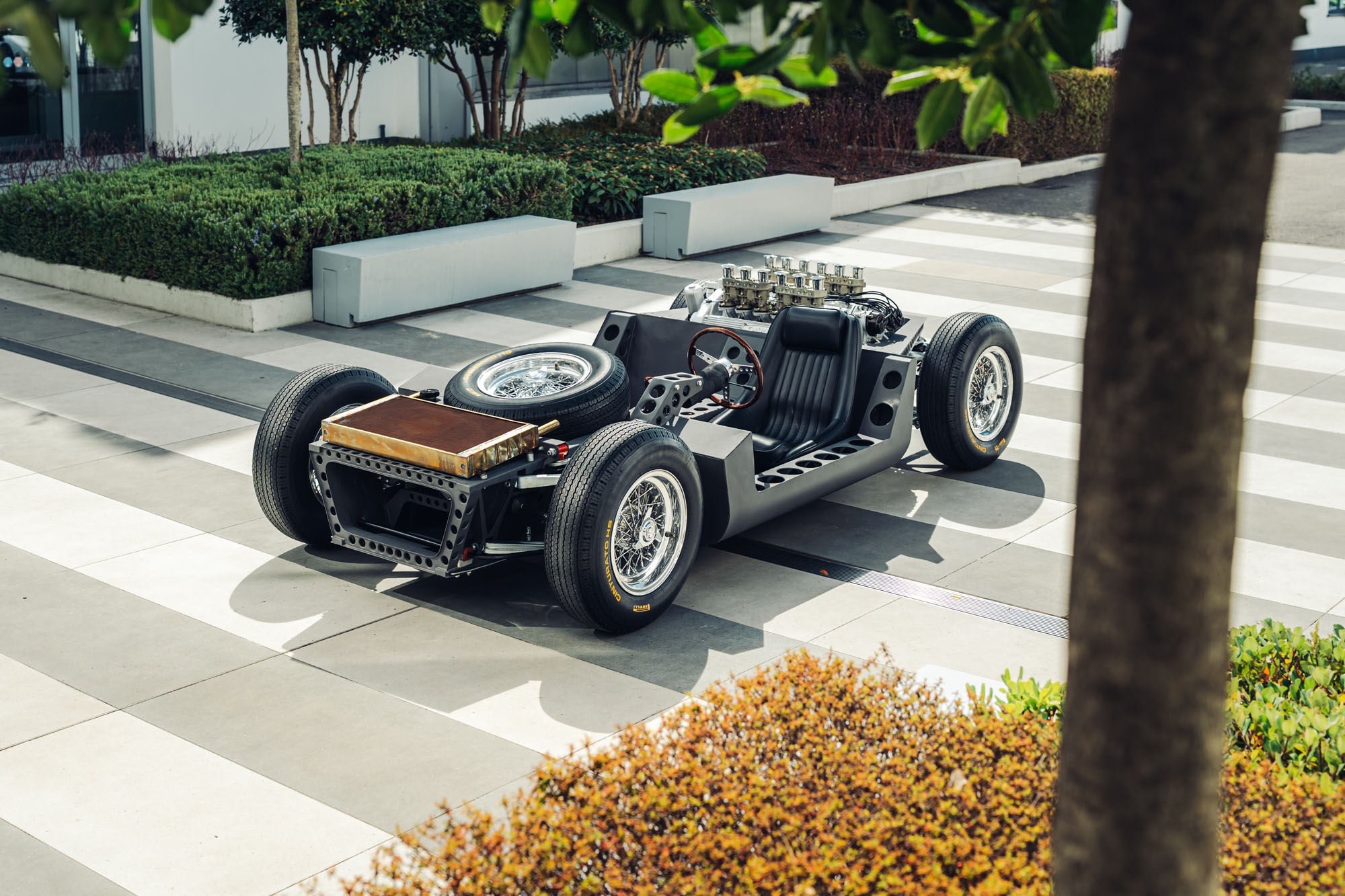
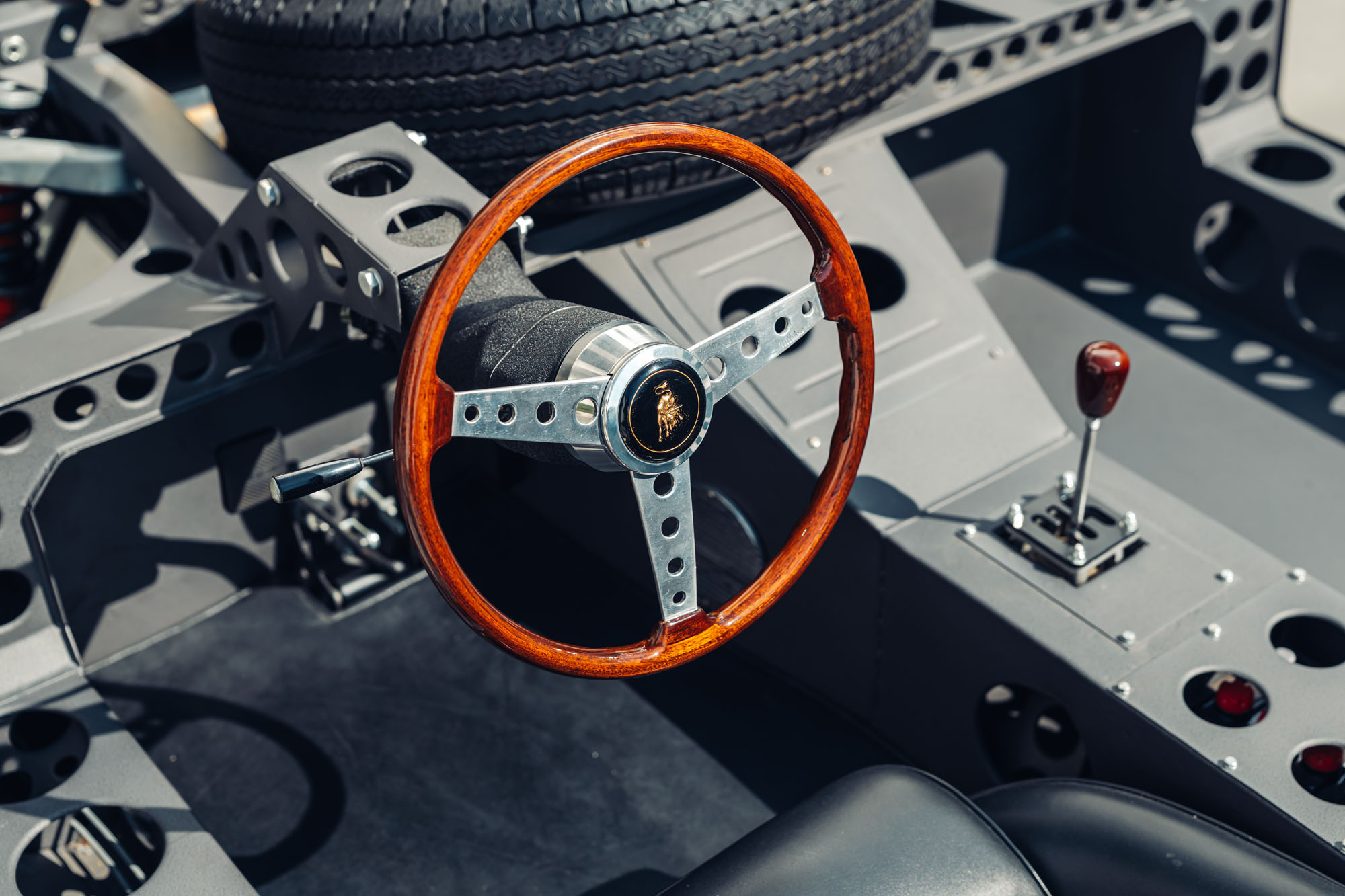
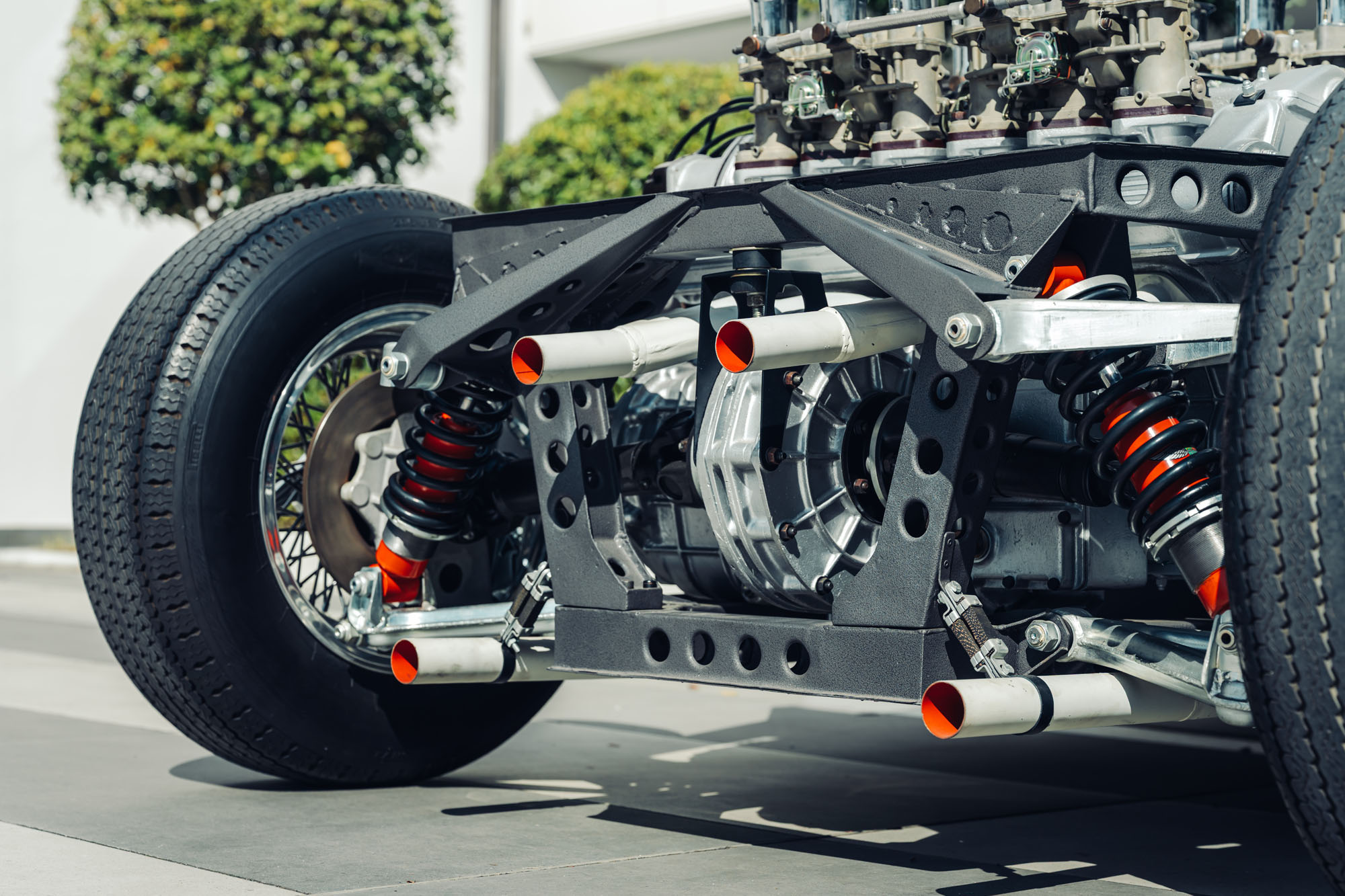
The display opens with the original Miura chassis, first shown at the Turin Motor Show in 1965. Presented before the completed car itself, the matte-black tubular structure—featuring the V12 mounted transversely behind the cockpit—immediately captured attention from both the public and industry insiders. Weighing just 120 kilograms, the lightweight steel chassis incorporated thin walls and numerous lightening holes, introducing a radical layout that would redefine the architecture of high-performance road cars.
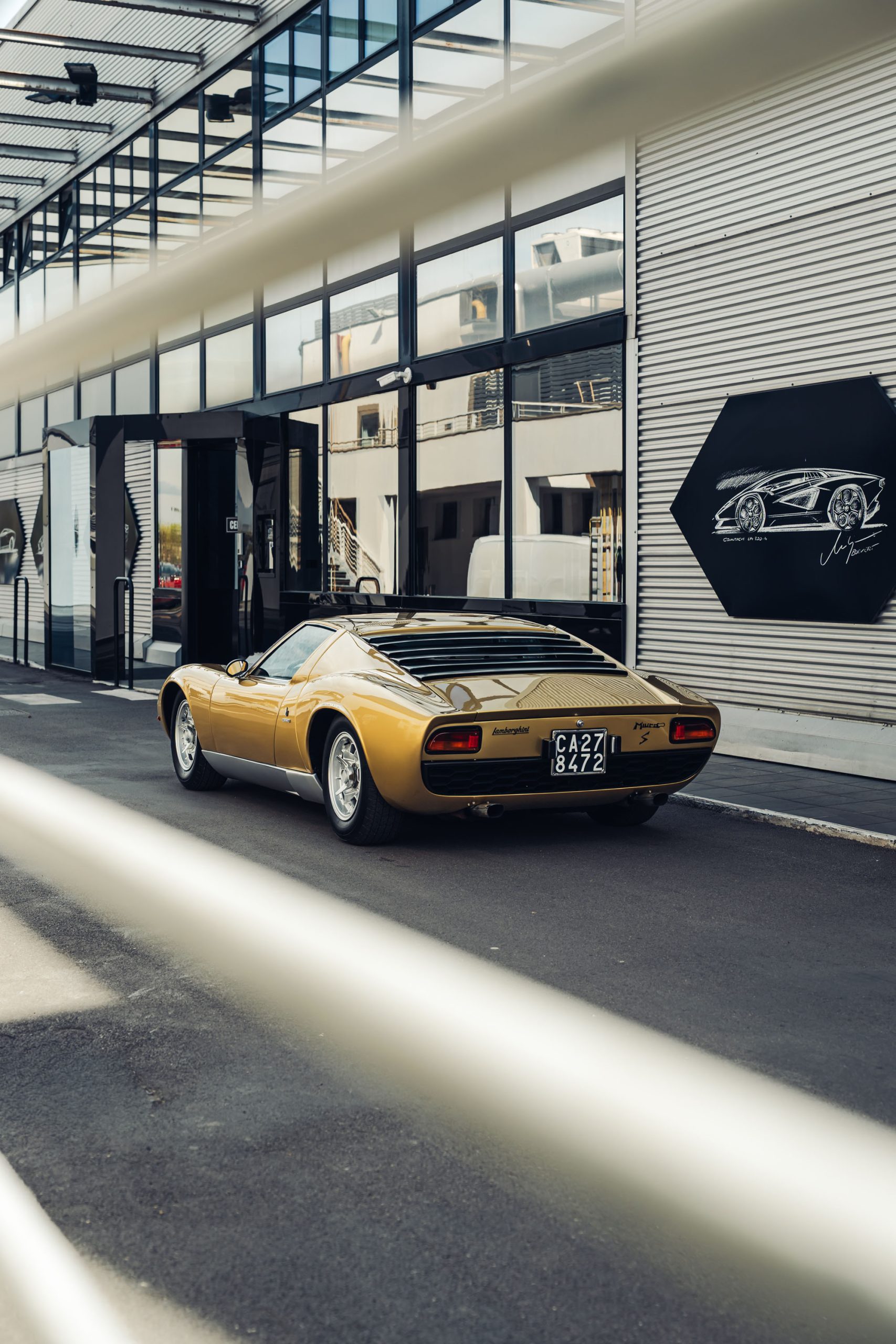
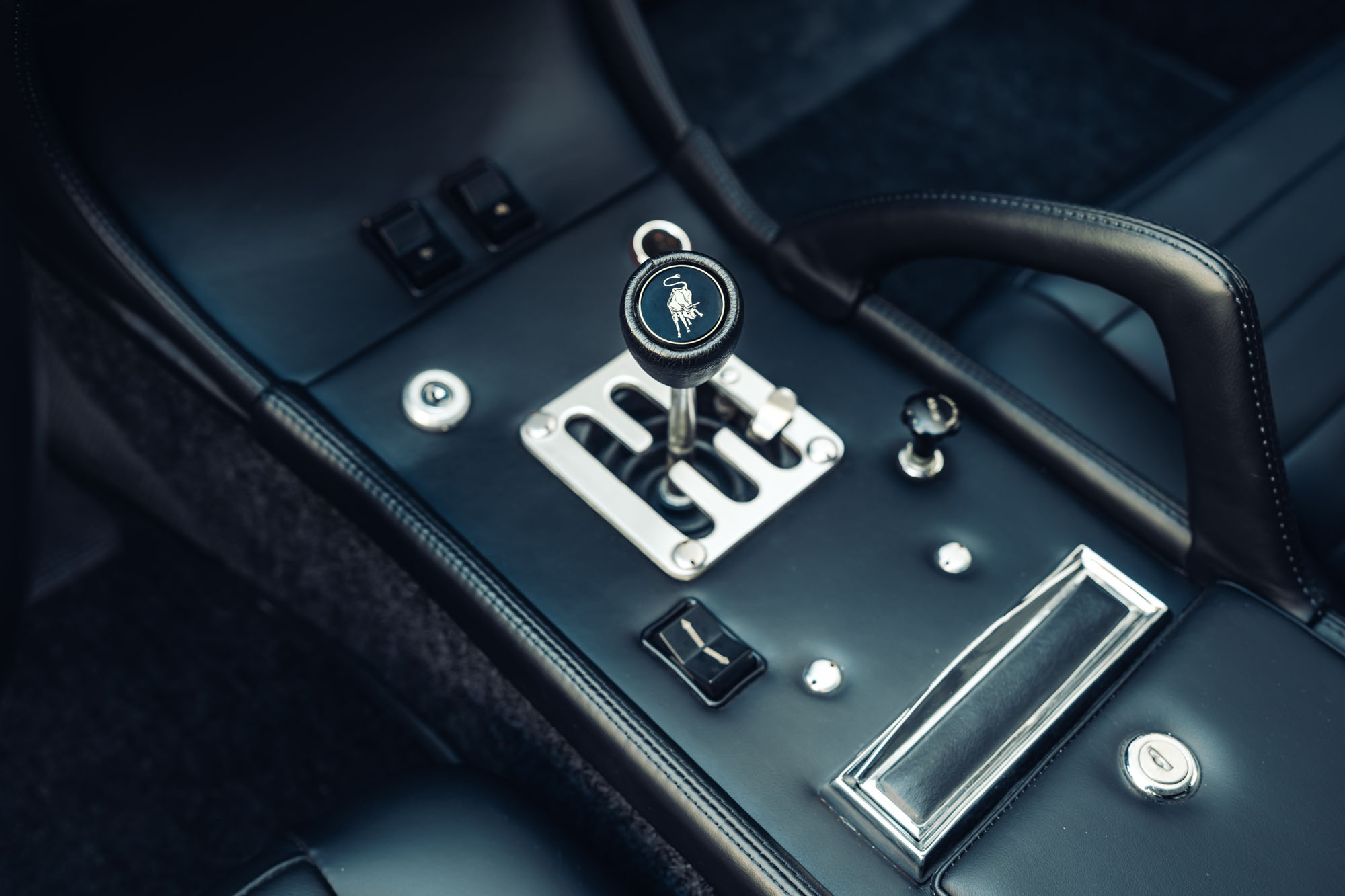
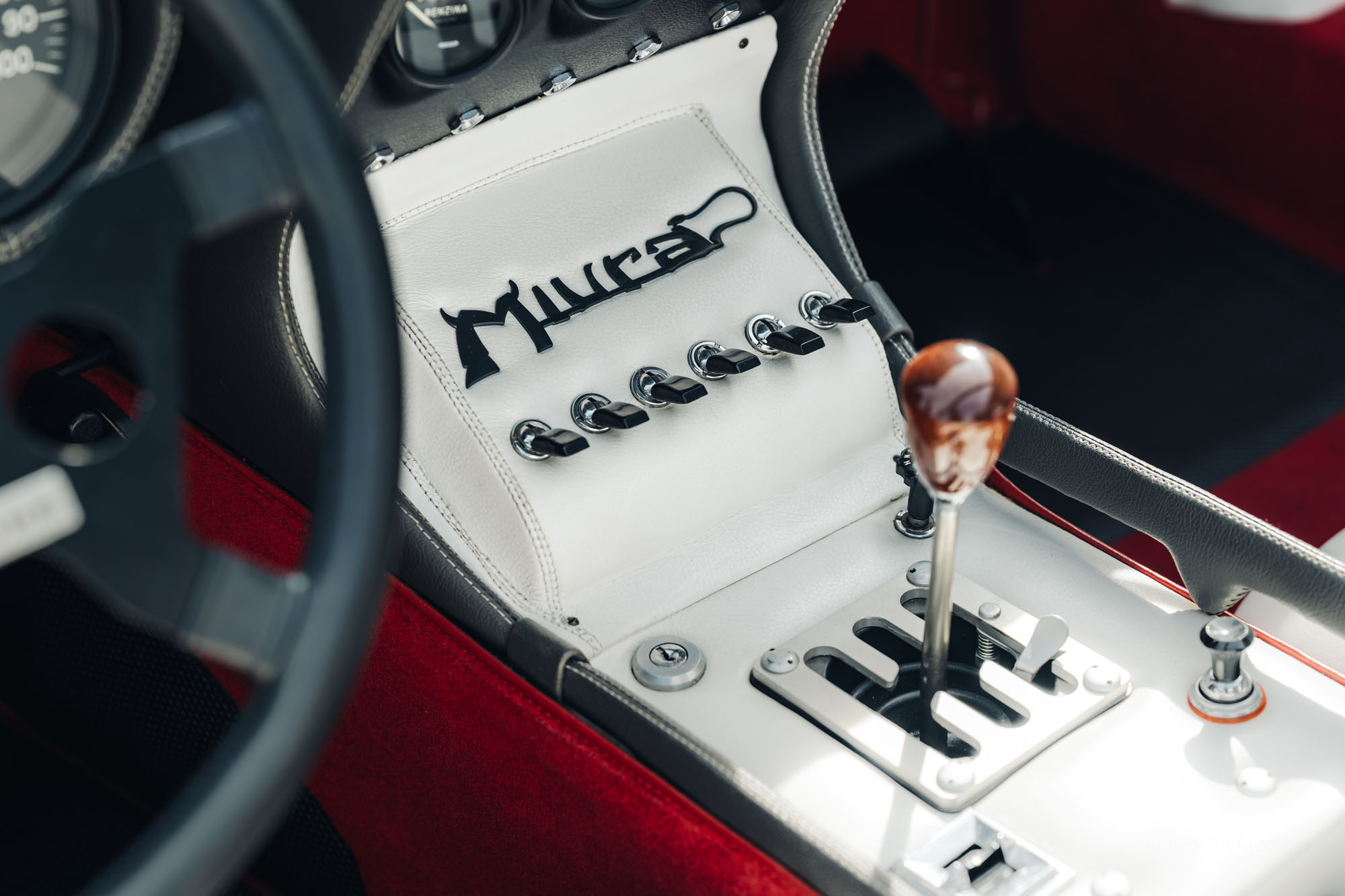
Alongside it sits a Miura P400 S, the evolution of the original Miura introduced in 1966. The updated model brought wider track dimensions, revised suspension with Koni shock absorbers and a more refined interior. Its 3.9-liter V12 produced 370 CV, reinforcing the Miura’s status as one of the fastest cars of its era and cementing its reputation as the pioneer of the mid-engine super sports car.
Miura Beyond Limits
Two of the exhibition’s most remarkable vehicles are the one-off Miura Roadster and the ultra-rare Miura SVJ.
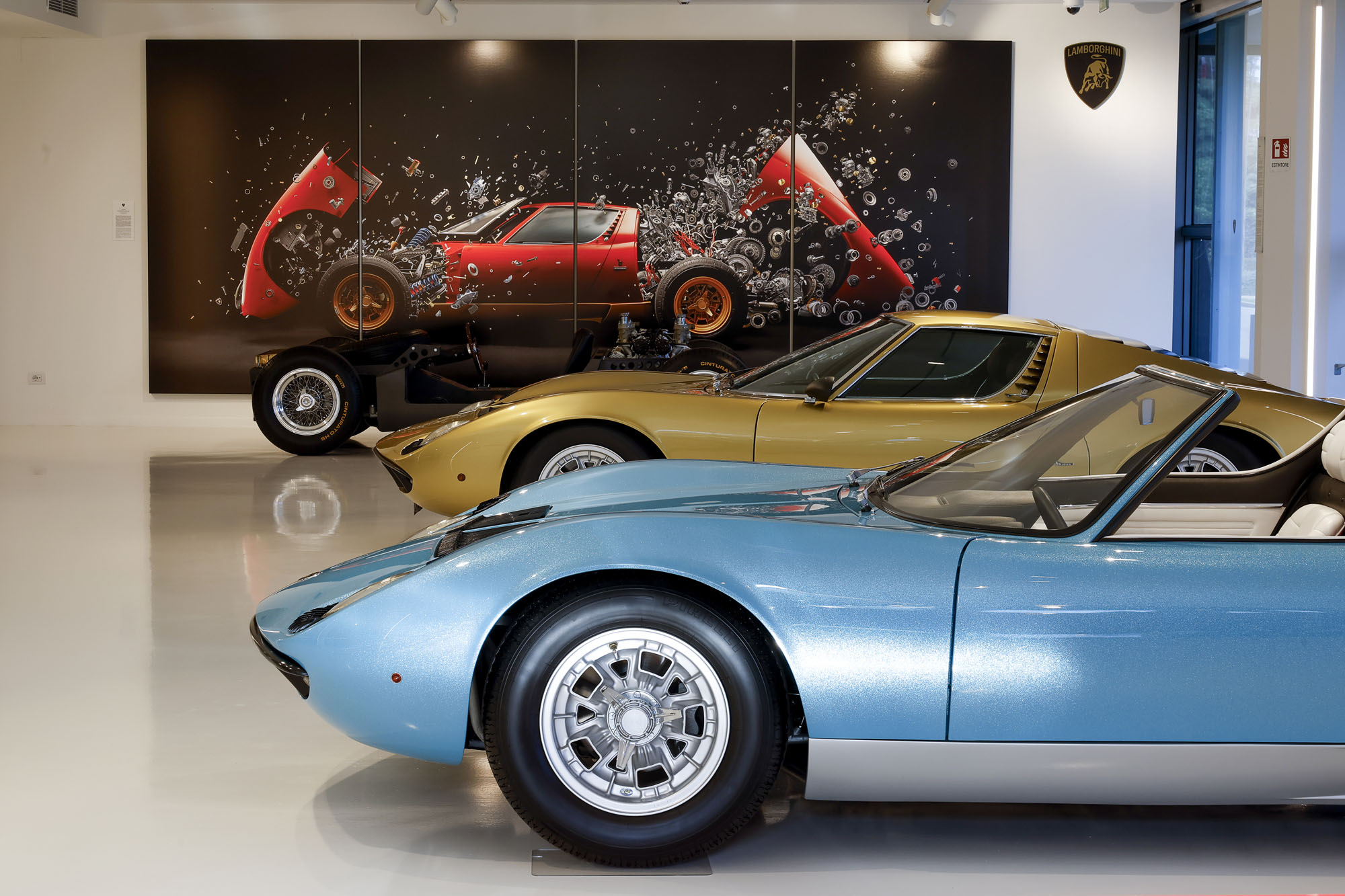
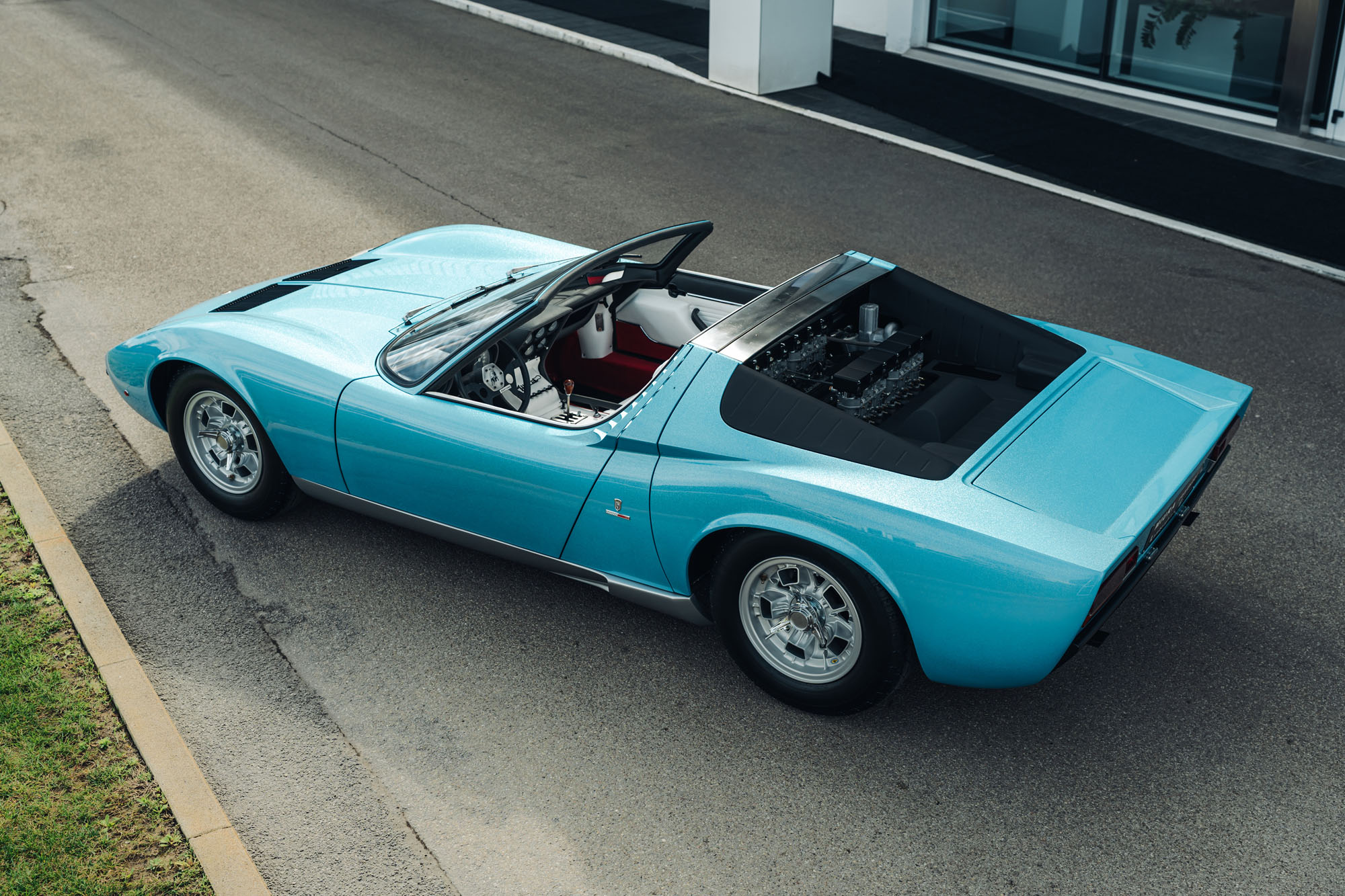
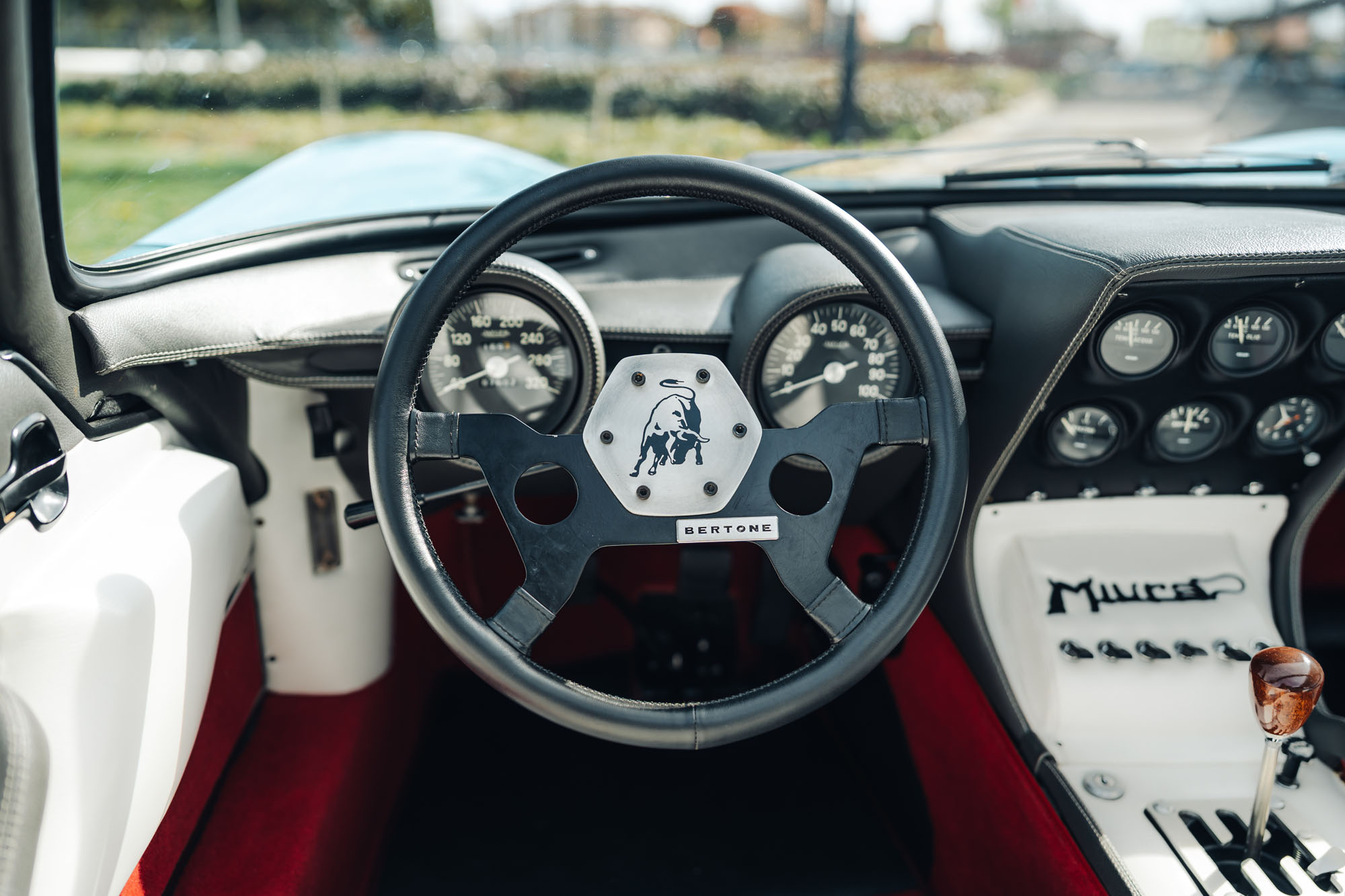
The Miura Roadster debuted at the Brussels Motor Show in January 1968 as a show car created by Bertone. Built as a single example, it represents one of the most radical interpretations of the Miura’s design. With no roof, side windows or conventional closing systems, the Roadster transformed the Miura Berlinetta into an open-air sculpture. Its design emphasized purity of form, featuring a lower, more steeply raked windshield and a redesigned rear deck that leaves the V12 fully visible. The car appeared in a striking Lamè Sky Blue finish with a white leather interior and red carpeting—an eye-catching combination it still wears today following a later restoration.
Later in the exhibition, the Miura SVJ will join the display. One of the rarest versions of Lamborghini’s first super sports car, the SVJ traces its origins to the Miura Jota, an experimental prototype developed in 1970 by Lamborghini test driver Bob Wallace to explore the car’s ultimate performance potential using race-inspired engineering principles. After the original Jota was destroyed, several customers requested road-going cars with similar characteristics. Lamborghini responded by converting a small number of Miura SV models into SVJ specification, incorporating technical and aerodynamic features derived from the racing prototype. The result remains one of the most extreme and coveted Miura variants ever built.
Contemporary Tributes to the Miura
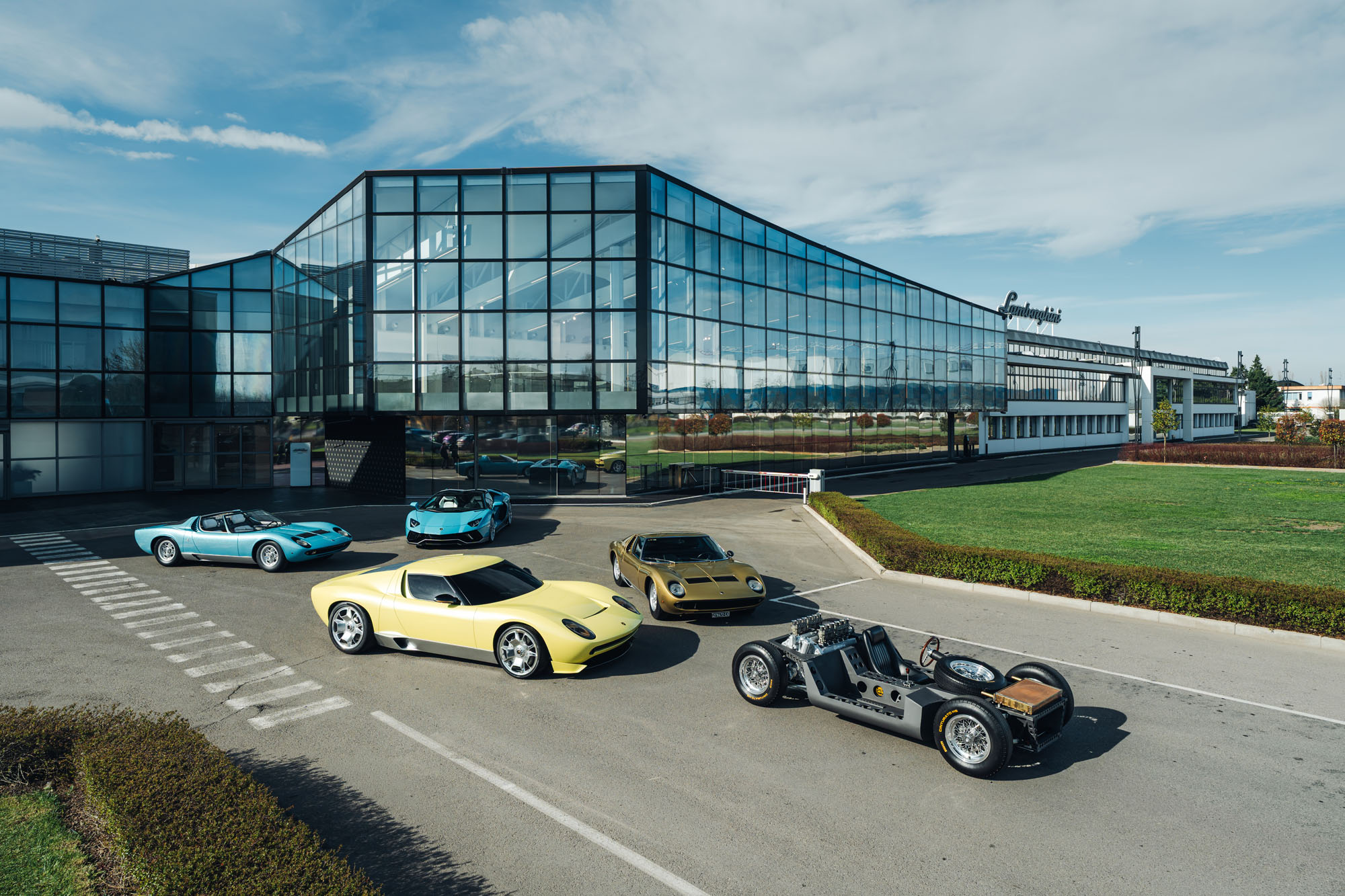
Alongside historic examples, the exhibition also presents modern tributes celebrating the Miura’s design legacy. Among them is the Aventador LP 780-4 Ultimae Roadster Miura Omaggio—a special one-off and the final Aventador Roadster ever produced. Commissioned through Lamborghini’s Ad Personam personalization program, the car pays homage to the Miura Roadster owned by the same client.

The Aventador adopts several design cues inspired by the 1968 prototype, including an Azzurro Flake exterior echoing the original Roadster’s color and gloss black carbon-fiber elements reflecting its radical open character. As the final V12 Aventador before Lamborghini’s electrified era, the car serves as a symbolic link between the brand’s past and future.
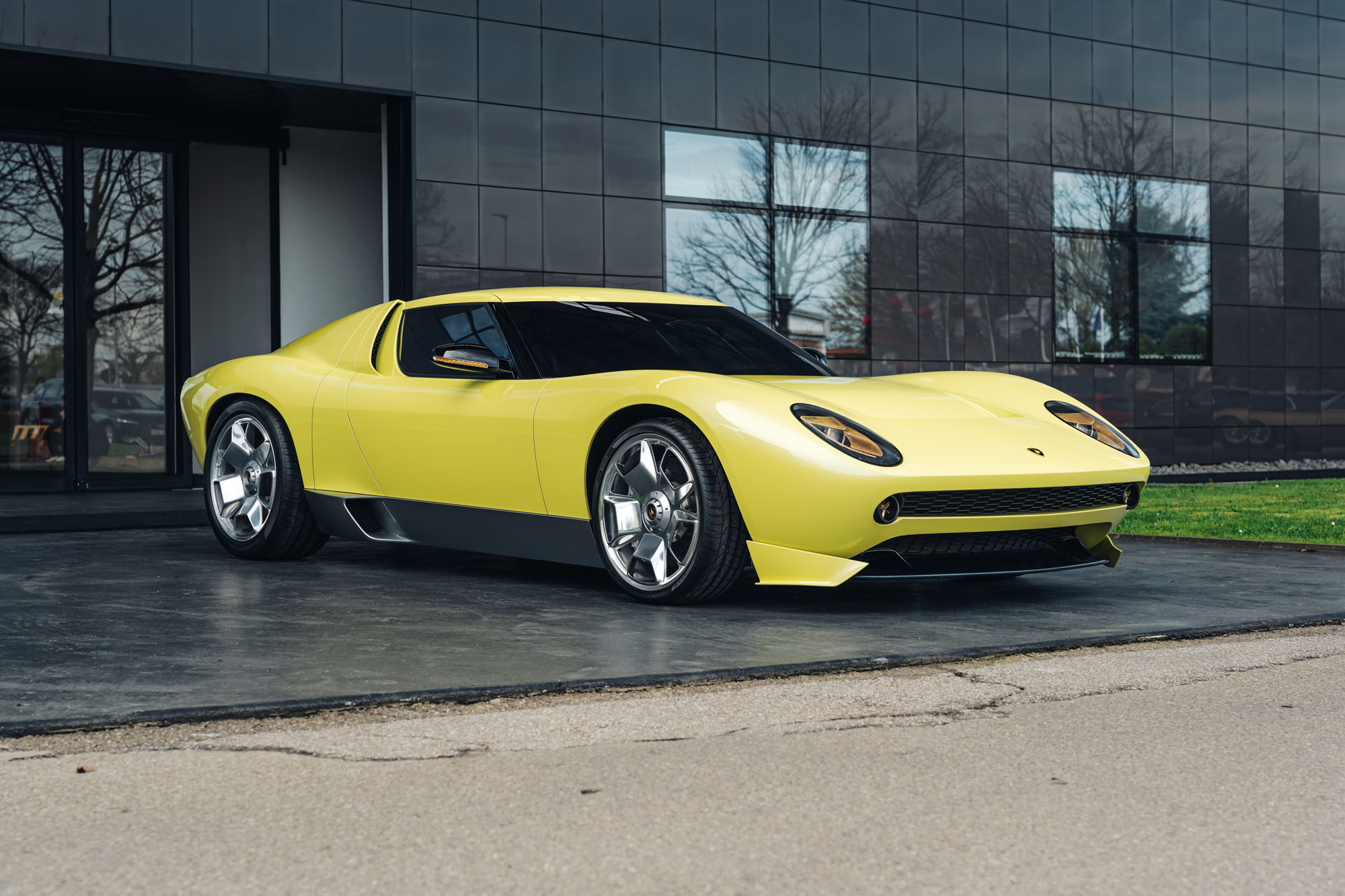
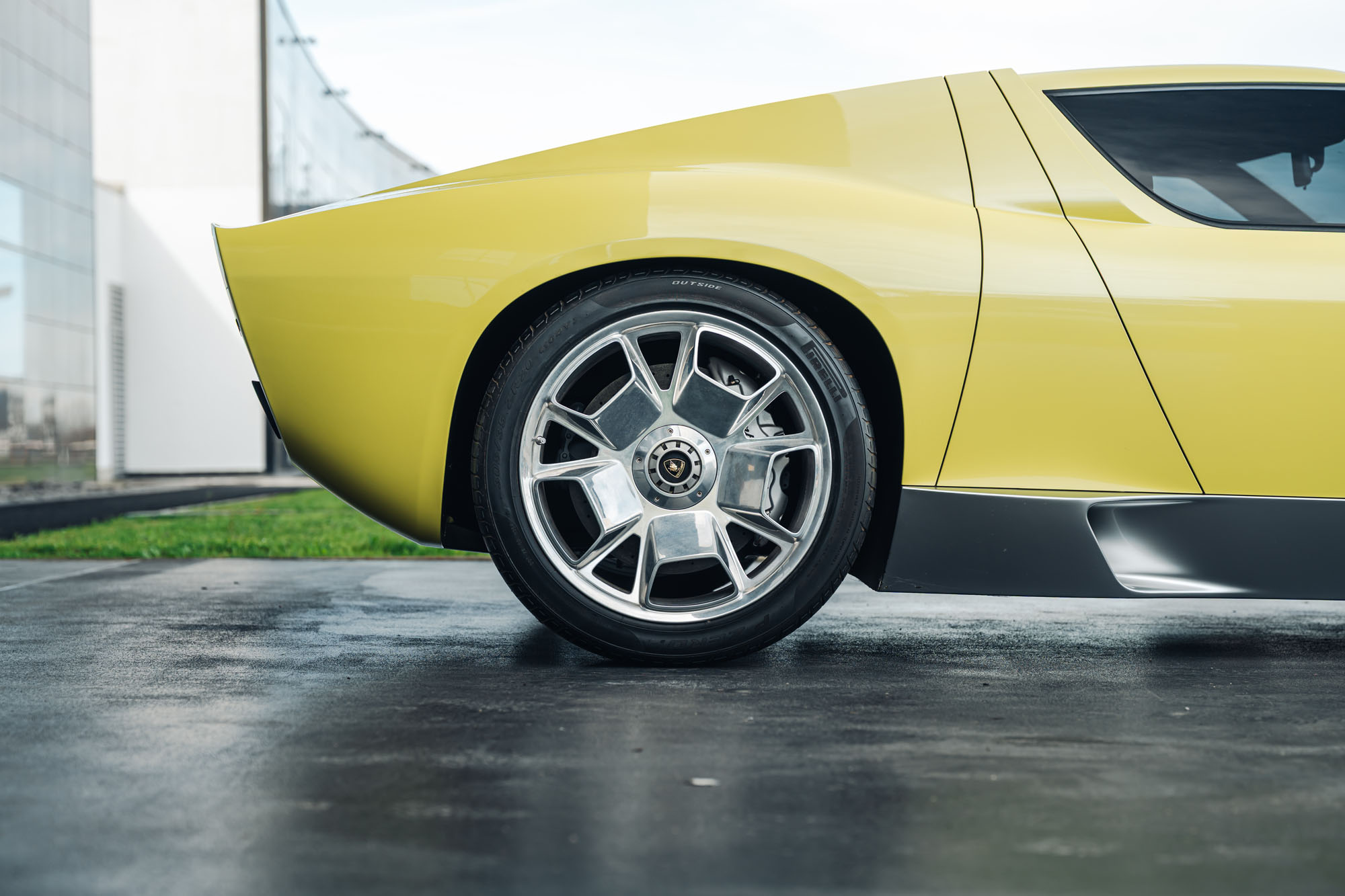
The exhibition also features the Miura Concept, first revealed in 2006 as a modern reinterpretation of the legendary supercar. Designed under Walter de’ Silva, then head of Lamborghini design, the concept revisited the Miura’s iconic proportions and flowing lines while adapting them to the Gallardo platform and contemporary engineering. Though never intended for production, the Miura Concept remains one of the most celebrated tributes among enthusiasts, blending classic inspiration with modern design language.
The Miura Through Art
The exhibition concludes with a striking artistic interpretation of the Miura by Fabian Oefner. His piece, “Disintegrating X – Miura,” examines the car’s structure through a visual language that blends art and engineering.
To create the work, Oefner spent nearly two years documenting the restoration of a 1972 Miura SV. Each component—from the smallest mechanical element to the largest structural part—was photographed individually and digitally reconstructed. The resulting image depicts the car suspended in a moment of controlled disintegration, its components floating in space according to the forces of gravity and tension. The composition merges technical precision with artistic imagination, presenting the Miura as a hyperreal vision that exists only within the frame.
Through the exhibition, the Automobili Lamborghini Museum honors a car that fundamentally redefined the super sports car. Six decades after its debut, the Miura remains a symbol of innovation, design and bold engineering—an icon that continues to influence generations of automobiles and enthusiasts around the world.
Above contents © 2026 Lamborghini Automobili SpA, reviewed and edited by Rex McAfee , @rexmcafee