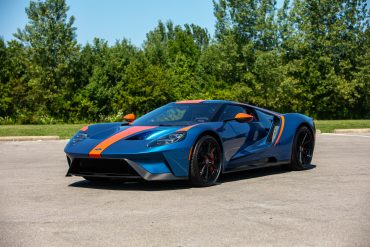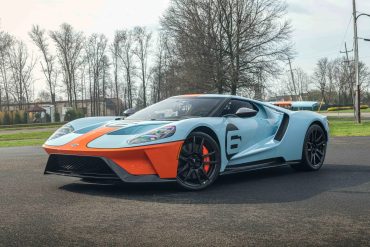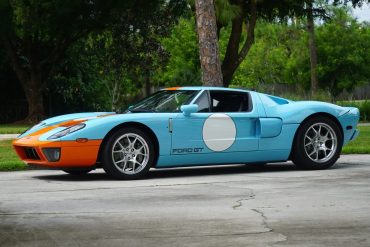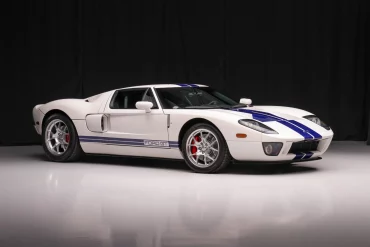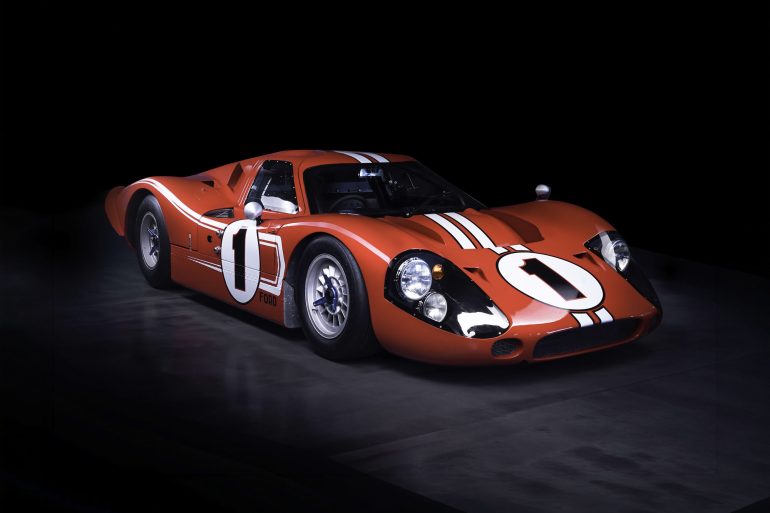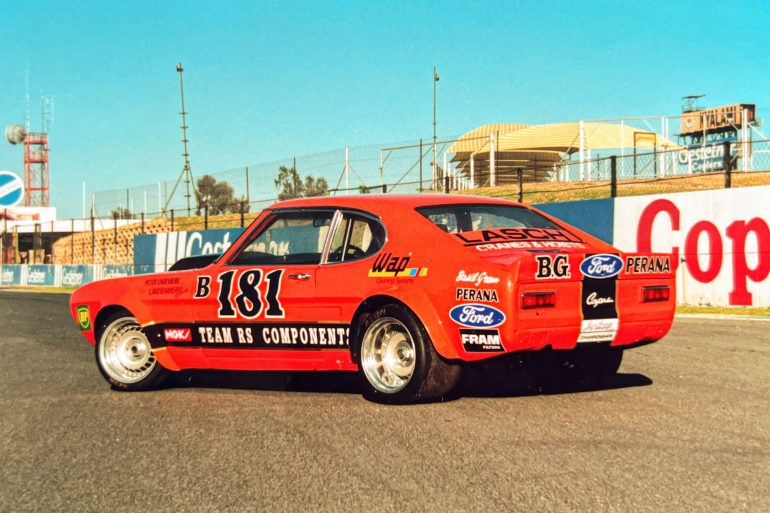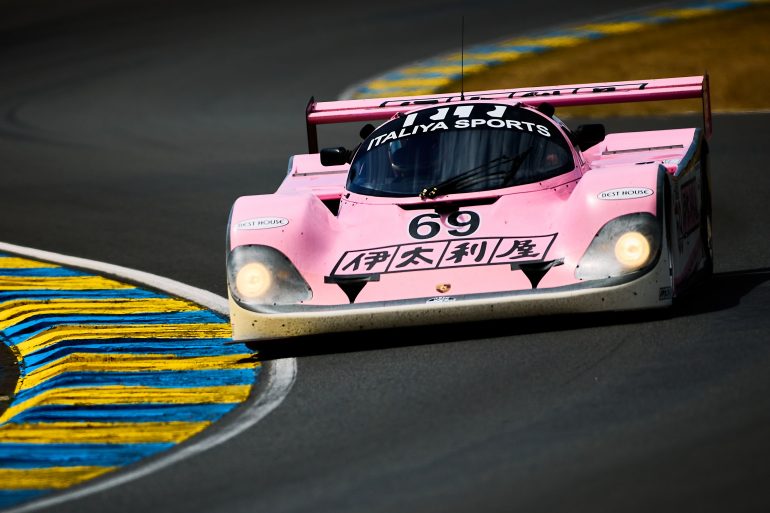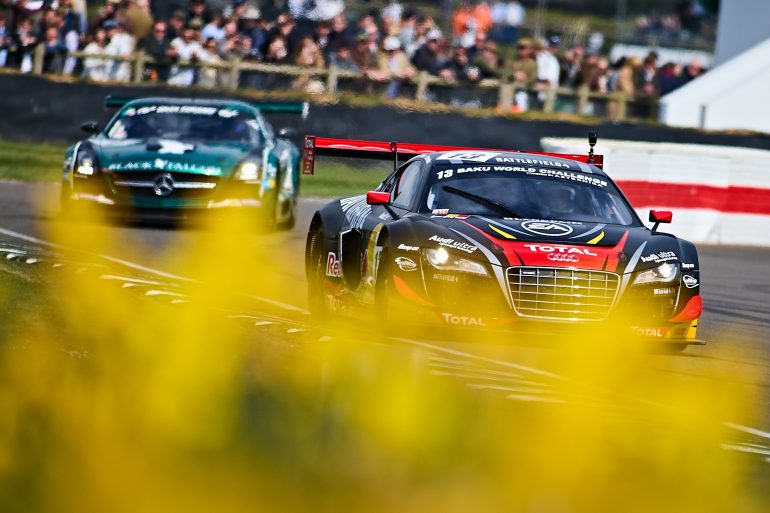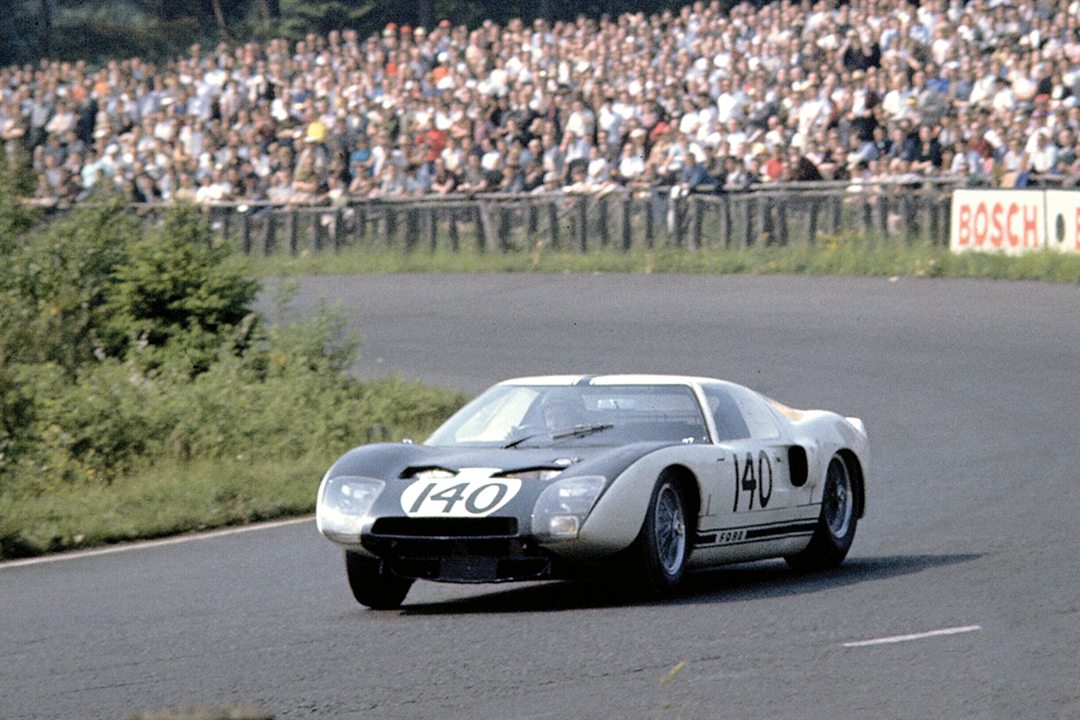
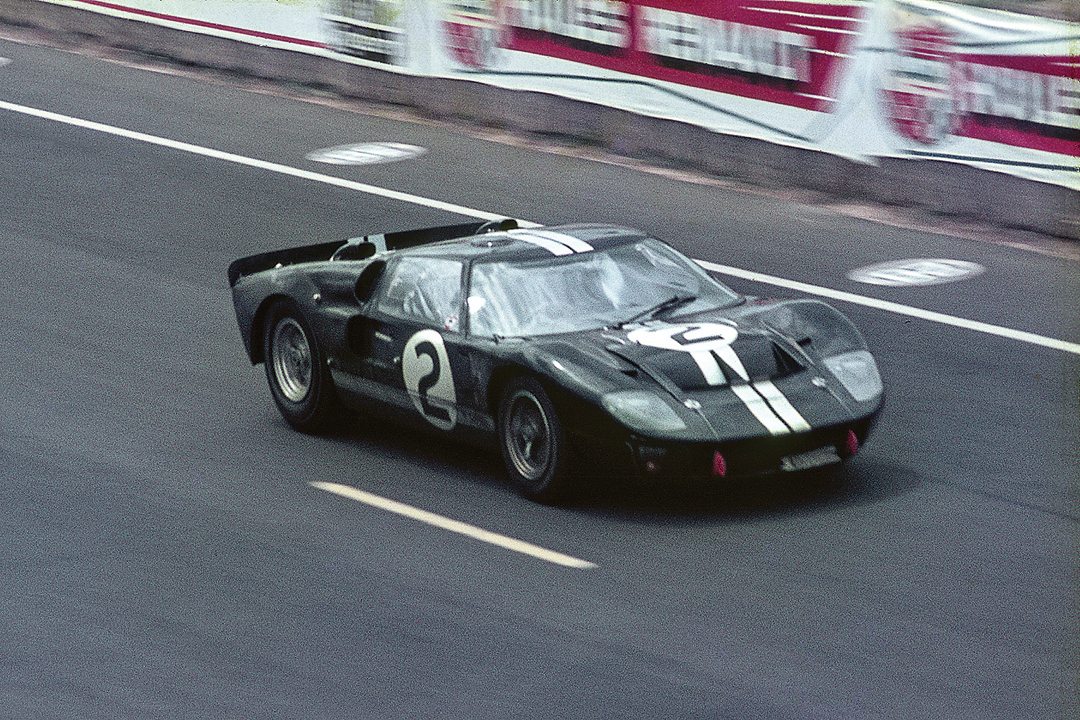
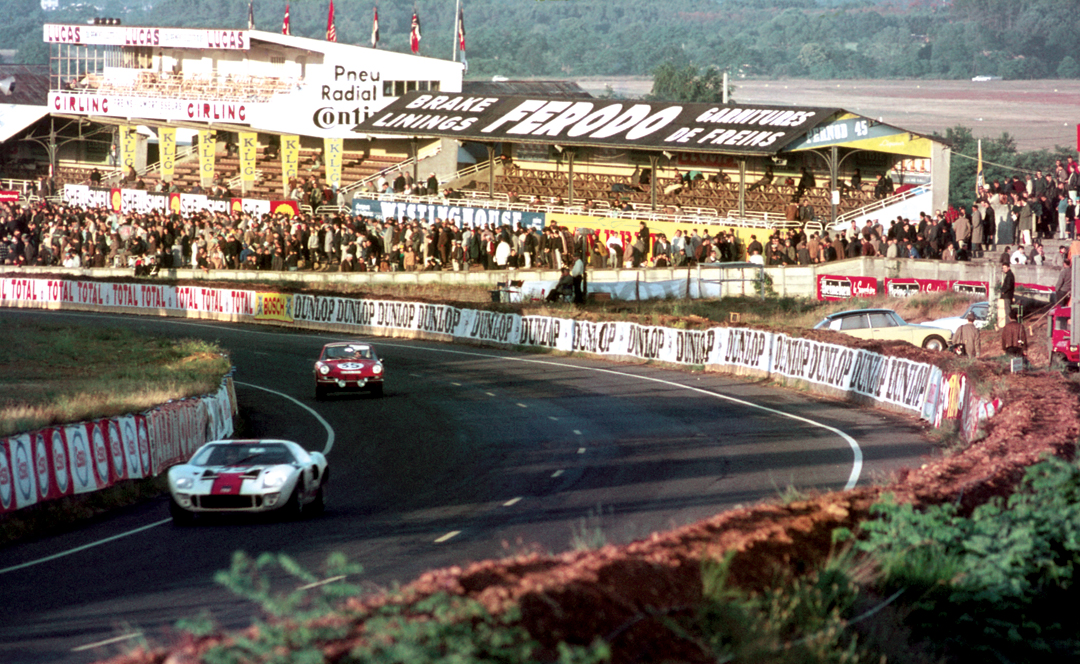
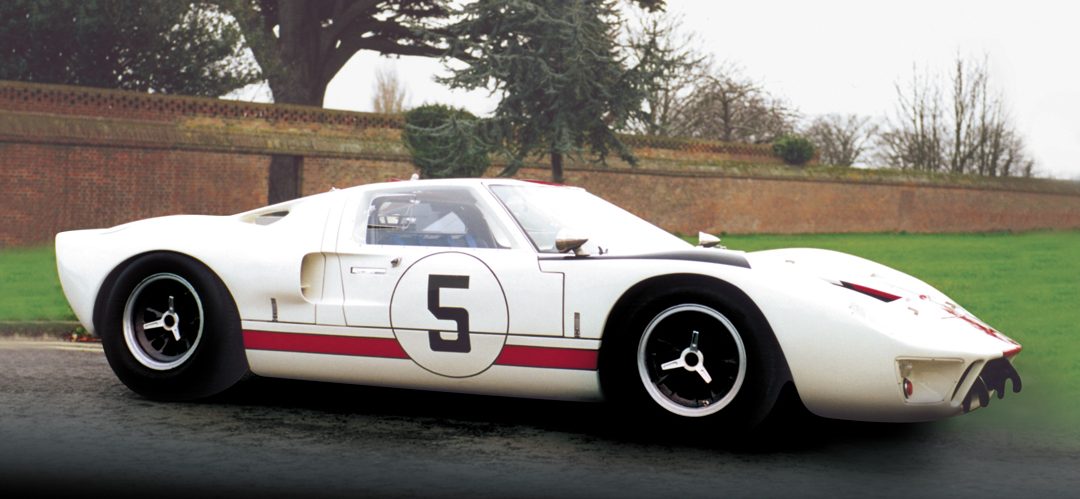
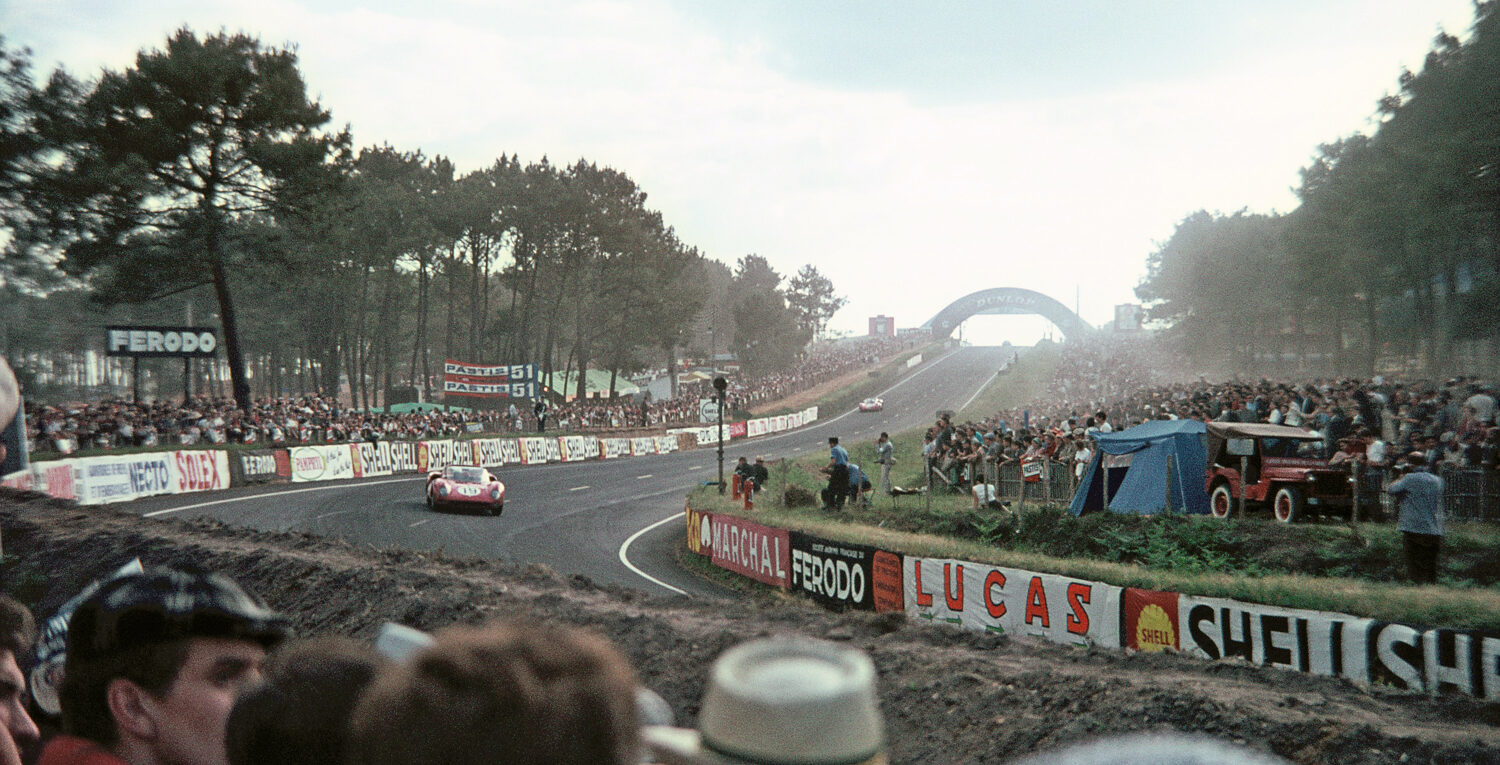
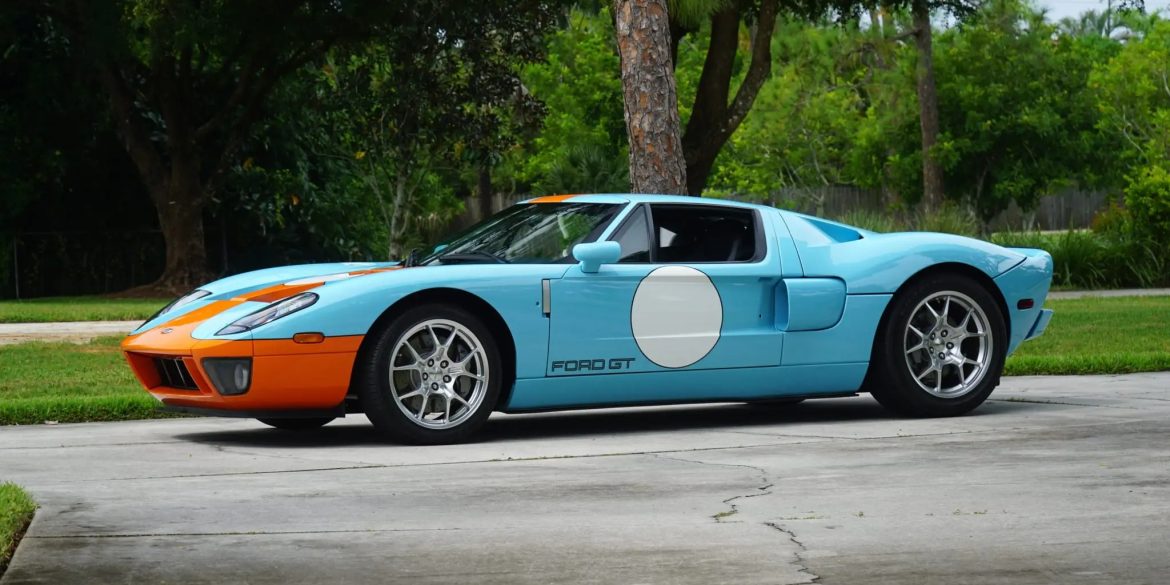
This 2006 Ford GT Heritage Edition combines the engineering of Ford’s modern mid-engine supercar with a distinctive appearance inspired by the company’s historic endurance-racing achievements.


Forty inches high and built to humiliate Ferrari, the Ford GT40 failed for two seasons, then won Le Mans four years in a row: the 1966 one-two-three that Henry Ford II staged, Gurney and Foyt's Mk IV in 1967, and the same pale-blue Gulf car twice, in 1968 and 1969, the second time by a hundred and twenty yards. Around a hundred and five were built between 1964 and 1969, in Slough, Dearborn and Los Angeles, and no racing car has a better story: a failed takeover, Carroll Shelby, Ken Miles, a seven-litre engine and a company that would not take no. This page is the car: where it came from, the four Le Mans wins race by race, the Mk I to Mk IV and the Mirage, the drivers, the famous chassis and what they fetch, with the archive's GT40 writing, Roger Dixon's Route to '66 and Ed McDonough's drive in the Essex Wire car among it, threaded through. The era around it is Ford, Ferrari and the Prototypes; the race is Le Mans.
The pieces to start with
Eight pieces on the car: Roger Dixon's Route to '66 in two parts and his Le Mans '66, McDonough's Essex Wire GT40, the 2023 Mk IV, the Remington and Ruby interviews and the 1965 Le Mans that Ferrari won.
Ford won at Le Mans in 2016 fifty years after its first victory, and Raj Nair admitted corporate approval came late. The same layers nearly sank the original program, born when Enzo Ferrari walked away from Ford’s 1963 takeover talks.
At the rain-soaked 1966 Le Mans test, Walt Hansgen ignored two slow signs in his Shelby Mark IIA, flipped at the Dunlop curve and died five days later. Ford’s honeycomb-monocoque J-car was quickest on the dry Sunday.
Ford’s failure to buy Ferrari in 1963 produced a 40-inch-high car built in Slough by Eric Broadley and John Wyer, a non-finisher in both its 1964 races. How the GT40 got from there to the 1966 win.
The first GT40 was finished in April 1964 with the 4.2-liter Indy four-cam engine and failed to finish a race all year, though Graham Hill set a lap record at Le Mans. Ed McDonough on the ex-Essex Wire chassis 1010.
Riley Technologies and Kar-Kraft built a new Ford GT40 Mk IV from the original 1967 Le Mans winner’s drawings in nine months from late 2022. Martin Raffauf on why that is possible, beginning with Enzo Ferrari’s 1963 cash problem.
Phil Remington taught himself to weld, ran a fenderless ‘34 Ford at the dry lakes and learned his trade from Lesovsky and Diedt, before the Scarabs, Cobras and GT40s. John Wright’s interview, republished after his death in February.
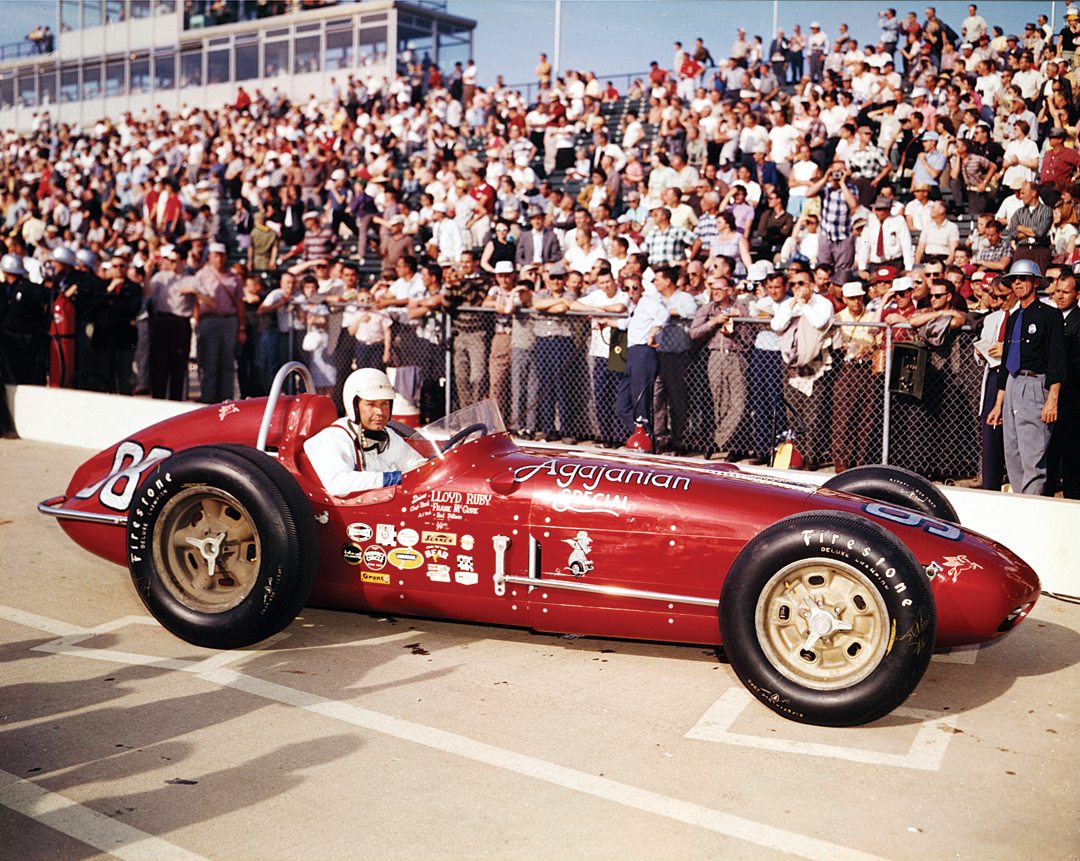
Lloyd Ruby started on dirt-track motorcycles, drove a Maserati at Sebring in 1957, ran 18 straight Indianapolis 500s and led 126 laps without winning; third in 1964 was his best. John Wright talks to a man who drove anything anywhere.
Eleven GT40s and Daytona Cobras against 12 Ferraris at Le Mans, June 1965. Ken Miles drove, whatever the film shows. A first-hand account from a spectator who arrived by the cheapest tour going, rickety plane and bus.
The newest writing on the GT40, as it is published.
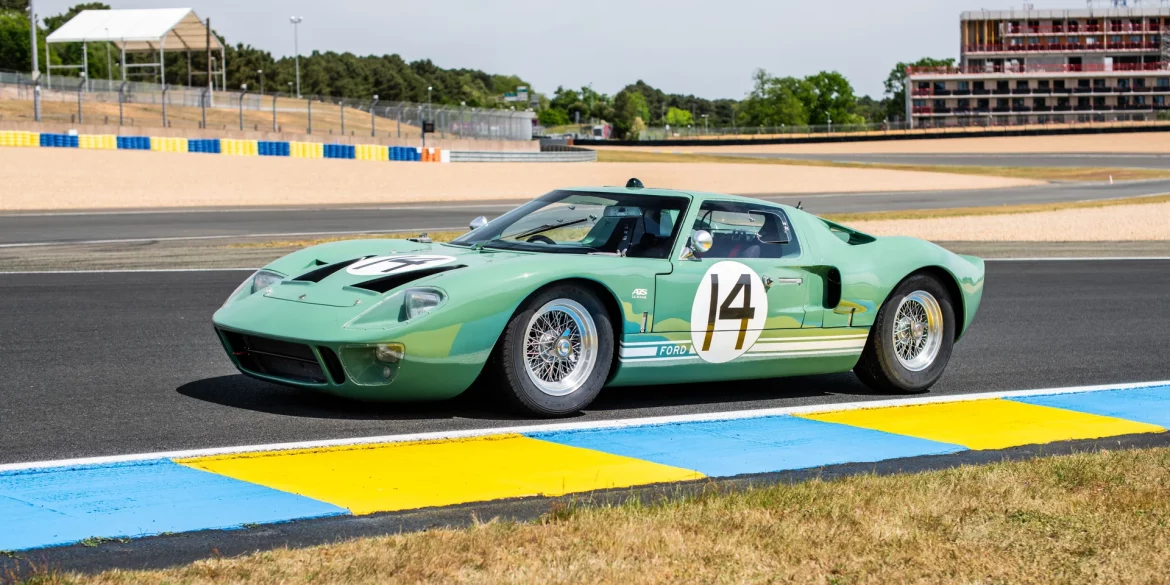
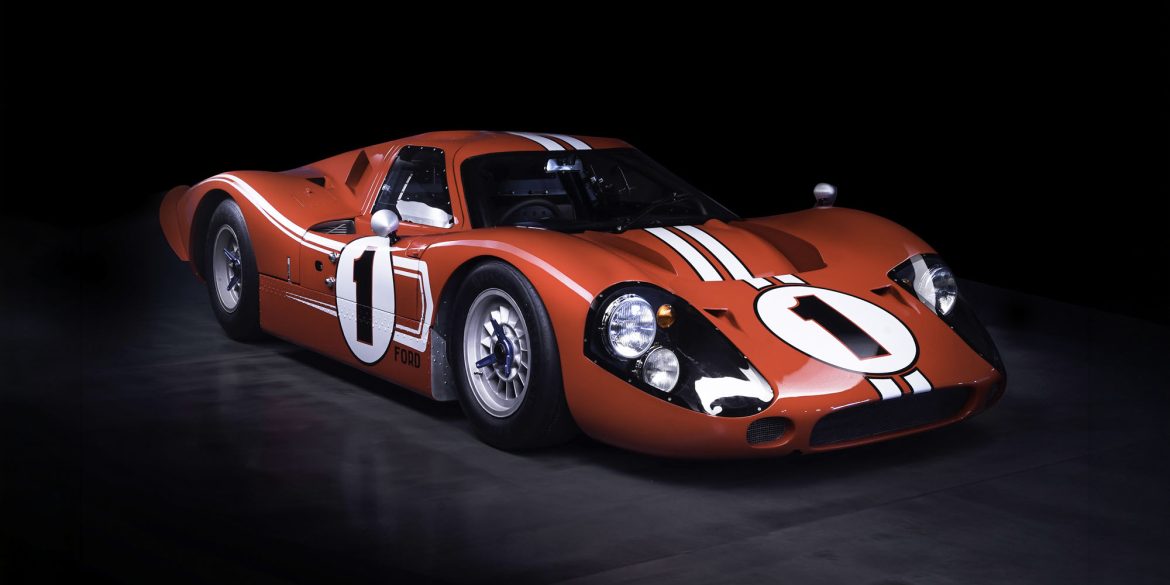
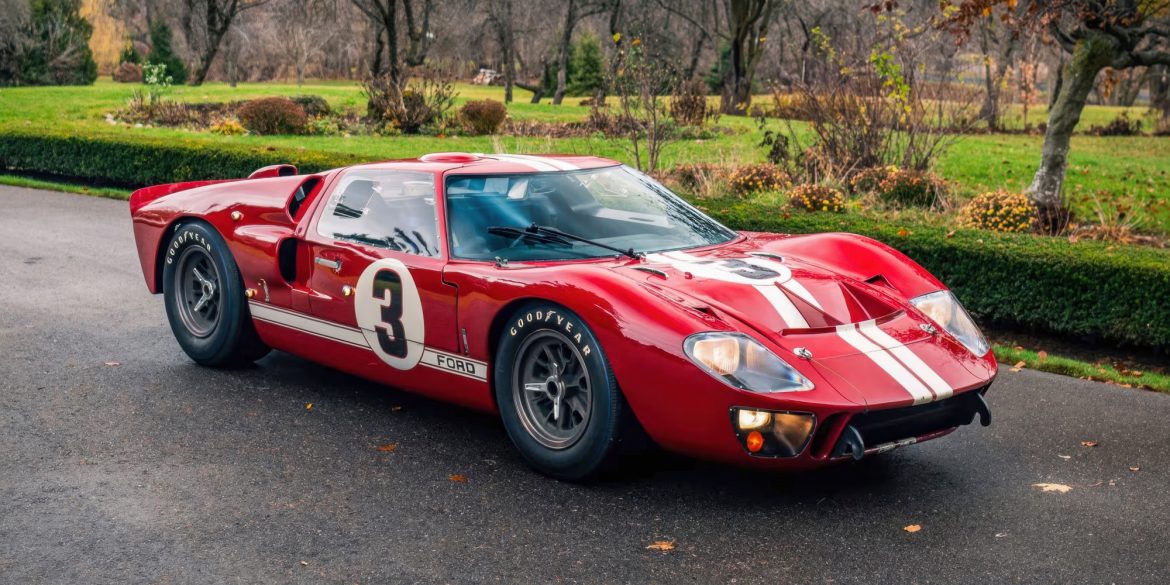
The Ford GT40 is the mid-engined endurance racing car the Ford Motor Company built from 1964 to win the 24 Hours of Le Mans, which it did in 1966, 1967, 1968 and 1969, the first two with the works teams run by Shelby American and Holman-Moody and the last two with John Wyer's Gulf-sponsored JW Automotive. The name is a description, forty inches from the ground to the roof, and the car exists because Enzo Ferrari walked out of the sale of his company to Ford in May 1963 and Henry Ford II told his racing department to beat him. Ford Advanced Vehicles was set up at Slough, west of London, around Eric Broadley's Lola Mk6 GT, with John Wyer, who had run Aston Martin's Le Mans win of 1959, as manager and Roy Lunn as chief engineer; the first car was shown in New York in April 1964 with a 4.2-litre Indianapolis V8 and failed at every race it entered that year. It took Shelby's team, the 4.7-litre and then the seven-litre engines, the Mk II of 1966 and the honeycomb Mk IV of 1967 to win, and then, when the rules changed, the small-block Mk I that Wyer had kept faith with won twice more. About a hundred and five chassis were built in all: the Mk I prototypes and production cars, the seven-litre Mk IIs, seven Mk III road cars, the J-cars and Mk IVs, and the three Mirage M1s. The archive's GT40 thread is thirty years of the magazine's writing: Dixon's three-part history of Ford's Le Mans campaign, the race profiles of Sebring, Daytona and Le Mans, the Remington, Ruby, Thompson and Miles pieces, McDonough's chassis story and the sales from P/1074's $11 million record on.
In the spring of 1963 Ford's accountants were in Maranello valuing Ferrari for a purchase at about $18 million, Henry Ford II wanting a European racing pedigree to go with the Total Performance programme that was putting Fords on every track in America, and on 21 May Enzo Ferrari ended the negotiation when he read the clause that gave Dearborn control of his racing budget. Ford's response was to build its own Ferrari-beater, and quickly. Lunn's Advanced Vehicles group looked at the mid-engined GT cars that existed and chose Broadley's Lola Mk6, the Ford-V8-powered coupé that had run at Le Mans in 1963, as the starting point; Broadley signed a one-year agreement, Wyer came from Aston Martin, Ford Advanced Vehicles opened in Slough in the autumn of 1963, and the first GT40, GT/101, was finished in April 1964 with a steel semi-monocoque, the 4,195 cc Fairlane-based Indy engine giving about 350 horsepower, a Colotti gearbox that would be the car's early undoing and a body whose aerodynamics lifted the rear at speed. At the Le Mans trials that month Jo Schlesser and Roy Salvadori both crashed; at the Nürburgring 1000 km in May Phil Hill and Bruce McLaren ran second before the suspension broke; at Le Mans in June Hill set the lap record and all three cars retired with gearbox failures; at Reims and Nassau the same. Broadley left to go back to Lola, and at the end of 1964 Ford took the cars away from Slough and gave them to Carroll Shelby in Los Angeles. Dixon's "Route to '66" in the archive tells it, and McDonough's "Enduring Legend" on the Essex Wire car, GT/1010, is the Mk I from the inside.
Shelby's team, with Phil Remington, Carroll Smith and Ken Miles doing the development, fitted the 4.7-litre (289 cubic inch) Cobra engine, Halibrand wheels and wider tyres, sorted the cooling and the aerodynamics, and won first time out: the Daytona 2000 Kilometres in February 1965, Miles and Lloyd Ruby, the GT40's first victory, followed by second at Sebring behind Jim Hall's Chaparral. Le Mans was another retirement, every Ford out by the ninth hour, but two of the six were new: the Mk II, with the seven-litre (427) NASCAR engine, a Kar-Kraft gearbox and a longer tail, which Hill and Chris Amon put on pole and McLaren and Miles led with before both broke. Ferrari's 250 LM won the race in which Ford had meant to; Casey Annis's "Ford vs Ferrari, the Sequel" in the archive is the 1965 race, and the Sebring race profiles of 1965 have the Chaparral afternoon. The production Mk Is went to the customers that year, Essex Wire, Alan Mann, Comstock, Ford France and Scuderia Filipinetti among them, and Ford Advanced Vehicles built fifty of them to homologate the car as a sports car for 1966.
The Mk II came good in 1966. Miles and Ruby won the first Daytona 24 Hours in February at the head of a Ford one-two-three, and Sebring in March, Miles in the X-1 roadster, the first time anyone had won both; then Ford sent eight Mk IIs to Le Mans, run by Shelby American, Holman-Moody and Alan Mann, against Ferrari's 330 P3s, with a budget nobody has ever put a number on. By Sunday morning the Ferraris were gone and three Fords were running one-two-three, and Leo Beebe, Ford's racing director, asked for them to cross the line together for the photograph; Miles, who had led most of the race and had Daytona and Sebring already, slowed to let McLaren's car alongside, and the organisers ruled that McLaren and Amon, who had started further back and therefore covered more distance, had won, Miles and Denny Hulme second, Ronnie Bucknum and Dick Hutcherson third. Miles was killed two months later, on 17 August, testing the J-car at Riverside. Dixon's "Le Mans '66" in the archive is the race; the Sebring and Daytona profiles have the spring; the Miles tributes are his.
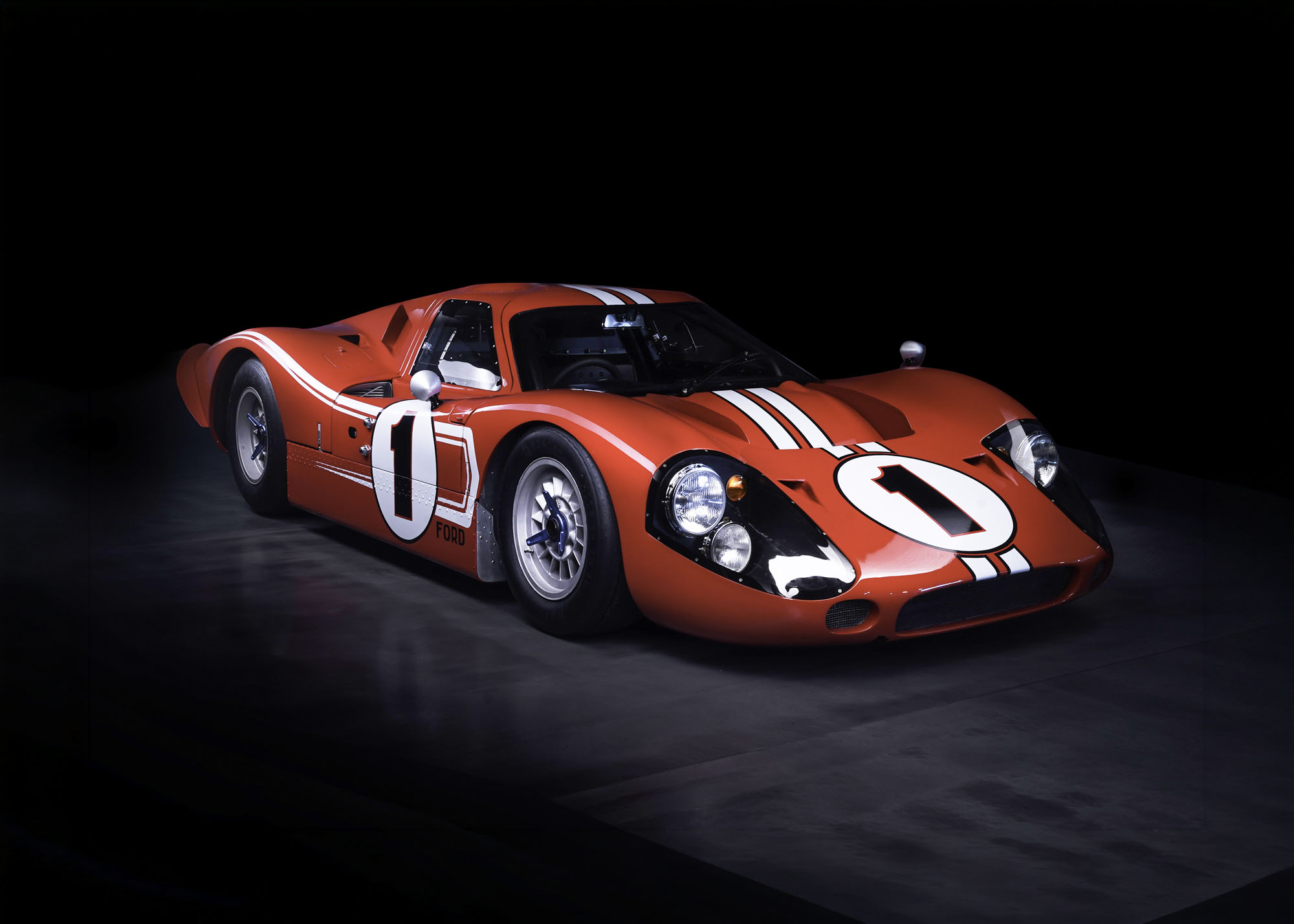
For 1967 Ford built the Mk IV in Dearborn: the J-car's bonded aluminium-honeycomb tub, a new body shaped after the Riverside crash and the seven-litre engine, the first all-American Le Mans winner. McLaren and Mario Andretti won its first race, Sebring, in March, and at Le Mans in June Dan Gurney and A.J. Foyt, the Indianapolis winner of a fortnight earlier, drove J-5 from the front for twenty-four hours at a record 135.48 mph, four laps clear of Ludovico Scarfiotti and Mike Parkes's Ferrari P4, with Hulme and Lloyd Ruby's Mk IV fourth after the Andretti crash in the night that took out two of the other Fords. On the podium Gurney shook the magnum and sprayed the crowd, which is where that tradition began. Ford announced its withdrawal a few weeks later; the CSI's three-litre prototype limit for 1968 outlawed the Mk IV and the P4 together; and the Mk IV that won is in the Henry Ford Museum, preserved as it finished, which the archive reported when the decision was taken. Martin Raffauf's "Recreating History" is the 2023 continuation Mk IV built by Riley and Kar-Kraft to the original drawings; the 1967 Daytona profile and the P4 story are the Ferrari side.
The 1968 rules admitted five-litre sports cars if fifty had been built, which the GT40 Mk I had been, and John Wyer, who had never stopped believing in the small-block car, ran two of them for Gulf Oil in the pale blue and orange that became the most famous colours in racing. JW Automotive's Mirage M1 of 1967, a lightened GT40 with a 5.7-litre engine, had won the Spa 1000 km with Jacky Ickx; for 1968 the cars went back to GT40 specification with 4.9-litre Gurney-Weslake-headed engines, won Brands Hatch, Monza, Spa and Watkins Glen, took the International Championship for Makes for Ford, and at Le Mans, run in September that year because of the French general strike, Pedro Rodríguez and Lucien Bianchi won in chassis P/1075 by five laps. In 1969 the same car did it again: Ickx and Jackie Oliver, Ickx walking to his car at the start in protest at the Le Mans sprint while the others ran, and then, at the end of twenty-four hours, Ickx and Hans Herrmann's Porsche 908 swapping the lead down the Mulsanne straight on the last lap until the GT40 crossed the line a hundred and twenty yards ahead, the closest finish in the race's history. Ickx and Oliver had won Sebring in the same car in March. P/1075 is one of the very few chassis to have won Le Mans twice; the Porsche 917 that Wyer took on for 1970 ended the GT40's career. Zimmermann's "Decade of Change and Glory" and the Mirage stories in the archive have the Wyer years.
The table below has the GT40's principal results, from the first retirements at the Nürburgring and Le Mans in 1964 through the four Le Mans wins, with the drivers linked to every story on the site about them. Read down the chassis column: GT/101 to 112 are the prototypes, GT40 P/1000 upwards the production Mk Is, the Mk IIs and the J-cars their own series, and P/1075 the car that appears twice.
The principal results with the chassis that scored them. Drivers link to every story on the site about them.
| Year | Race | Drivers | Car / entrant | The story |
|---|---|---|---|---|
| 1964 | Nürburgring 1000 km, May | Phil Hill / McLaren | Ford Advanced Vehicles | The first race: 2nd until the rear suspension broke |
| 1964 | Le Mans, June | Phil Hill / McLaren; Attwood / Schlesser; Ginther / Gregory | GT/101–103, Ford Advanced Vehicles | Hill's lap record; all three out with gearbox and fire |
| 1964 | Nassau, December | Phil Hill; Bruce McLaren | FAV | Retired; the cars handed to Shelby American |
| 1965 | Daytona 2000 km, 28 February | Miles / Ruby | Shelby American | The first win, with the 4.7-litre engine |
| 1965 | Sebring 12 Hours, March | Miles / McLaren | Shelby American | 2nd to Hall's Chaparral 2A |
| 1965 | Le Mans, June | Phil Hill / Amon; McLaren / Miles | Mk II, Shelby American | The 7-litre debut: pole and the lead, then every Ford out by the ninth hour |
| 1965 | Le Mans, June | Trintignant / Ligier | GT/109 roadster, Ford France | The only open GT40 to race at Le Mans |
| 1966 | Daytona 24 Hours, February | Miles / Ruby | Mk II, Shelby American | 1st, Ford 1-2-3 in the first 24-hour Daytona |
| 1966 | Sebring 12 Hours, March | Miles / Ruby | X-1 roadster, Shelby American | 1st; Daytona and Sebring in one spring |
| 1966 | Le Mans, June | McLaren / Amon | Mk II P/1046, Shelby American | 1st: the staged 1-2-3, McLaren and Amon credited on distance |
| 1966 | Le Mans, June | Miles / Hulme | Mk II P/1015, Shelby American | 2nd after leading most of the race; Miles killed at Riverside in August |
| 1966 | Le Mans, June | Bucknum / Hutcherson | Mk II P/1016, Holman-Moody | 3rd; sold for $9.8 million in 2018 |
| 1967 | Daytona 24 Hours, February | Ford Mk IIs | Shelby, Holman-Moody | Ferrari's 1-2-3 answer; the Fords' gearboxes fail |
| 1967 | Sebring 12 Hours, April | McLaren / Andretti | Mk IV J-4, Shelby American | 1st, the Mk IV's first race |
| 1967 | Le Mans, June | Gurney / Foyt | Mk IV J-5, Shelby American | 1st at 135.48 mph, the record until 1971; the first champagne spray |
| 1967 | Le Mans, June | Hulme / Ruby | Mk IV J-6, Holman-Moody | 4th behind two Ferrari P4s |
| 1967 | Spa 1000 km, May | Ickx / Thompson | Mirage M1, JW Automotive | Wyer's lightweight wins in the rain |
| 1968 | Brands Hatch 500, April | Ickx / Redman | GT40 P/1075, JW Automotive (Gulf) | The Gulf car's first win |
| 1968 | Monza 1000 km, April | Hawkins / Hobbs | GT40 P/1074, JW Automotive | 1st |
| 1968 | Spa 1000 km, May | Ickx / Redman | GT40 P/1075 | 1st, Ickx's home race |
| 1968 | Watkins Glen 6 Hours, July | Ickx / Bianchi | GT40 P/1075 | 1st; the championship for Ford |
| 1968 | Le Mans, September | Rodríguez / Bianchi | GT40 P/1075, JW Automotive | 1st by five laps in the race delayed by the strikes |
| 1969 | Sebring 12 Hours, March | Ickx / Oliver | GT40 P/1075 | 1st |
| 1969 | Le Mans, June | Ickx / Oliver | GT40 P/1075, JW Automotive | 1st by 120 yards from Herrmann's Porsche 908 after Ickx's walking start; the same car's second win |
| 1969 | Le Mans, June | Hobbs / Hawkins | GT40 P/1076 | 3rd; the GT40's last Le Mans |
GT/101–112 are the Slough prototypes, P/1000 upwards the production Mk Is; the Mk IIs and the J-cars / Mk IVs have their own series. Ford won the International Championship for Makes in 1966 (prototypes) and 1968 (sports cars).
The Mk I is the original car, steel tub, 4.2- then 4.7-litre V8, built as prototypes at Slough and then as the fifty production cars that homologated it; it won Daytona in 1965, Le Mans in 1968 and 1969 and most of the privateers' races in between. The Mk II is the seven-litre car of 1966, developed by Shelby American and Kar-Kraft, with the NASCAR 427, the Kar-Kraft T44 gearbox, the longer tail and the brakes that could be changed in minutes; the Mk IIB of 1967 had revised bodywork. The J-car was Ford's own honeycomb-chassis experiment of 1966, the car that killed Miles, and the Mk IV its race form, with twelve built including the J-cars, all run in 1967 and all American. The Mk III was the road car, seven built in 1967 with a detuned 289, a longer nose, four headlights and a luggage boot, the gentlest of GT40s and now among the rarest. The Mirage M1 was Wyer's 1967 lightweight with a narrower roof, three built, which won Spa and were converted back to GT40s for 1968. Beyond them are the modern Ford GTs, the 2005 car that reused the shape and the 2016–2022 car that won the GTE Pro class at Le Mans in 2016, fifty years to the day after the one-two-three; both have their own threads in the archive. The cards below link nine of the family to their stories.
Nine cars from the archive, the Lola it began as and the Ford GTs that followed; each links to every story on the site.
Ken Miles is the GT40's driver, the Englishman in Los Angeles who developed the car, won Daytona and Sebring and was denied Le Mans, and died in it; the archive's three Miles pieces are his memorial. Around him Bruce McLaren and Chris Amon, who won the race he lost; Dan Gurney and A.J. Foyt, who won it as Americans in an American car; Phil Hill, who set the lap records in 1964 and 1965 and never finished; Lloyd Ruby, Denny Hulme, Mario Andretti, Ronnie Bucknum, Dick Hutcherson, Dick Thompson, Bob Bondurant, Sir John Whitmore, Frank Gardner, Paul Hawkins, Innes Ireland, Richard Attwood, Peter Revson, David Hobbs; and for Wyer, Pedro Rodríguez, Lucien Bianchi, Jacky Ickx, Jackie Oliver, Brian Redman and Paul Hawkins. Behind them Henry Ford II and Lee Iacocca, who paid; Leo Beebe, who staged the finish; Roy Lunn, who designed it; Eric Broadley, whose Lola it began as; Carroll Shelby, Phil Remington and Carroll Smith, who made it work; John Wyer and John Horsman, who kept it winning; and Alan Mann, whose lightweights were the fastest Mk Is. The archive's interviews with Remington, Ruby, Thompson and Hobbs, and the Shelby, Gurney, Hill and McLaren profiles, are the people of the car.
P/1075, the two-time Le Mans winner, is privately held and has never been sold at auction; P/1046, the 1966 winner, was restored to its Le Mans form in 2016; J-5, the 1967 winner, is in the Henry Ford Museum; P/1016, the Holman-Moody car that was third in 1966, sold at RM Sotheby's Monterey in 2018 for $9.8 million; P/1074, the other Gulf car of 1968–69, made $11 million at Monterey in 2012, then the record for an American car at auction, and went to the Larry H. Miller museum in Utah, which also bought GT/104, the second-oldest survivor, for $7 million in 2014; GT/109, the only open GT40 to race at Le Mans, Trintignant and Ligier's 1965 roadster, was sold at Kissimmee in 2019; GT/1010, the Essex Wire car, is McDonough's "Enduring Legend". Mk Is with period history sell for $4–8 million, Mk IIs for more when they appear, the Mk III road cars for $3–5 million; the archive's Monterey auction reports and the marketplace listings track them, and the continuation and replica industry around the GT40 is a chapter of its own.
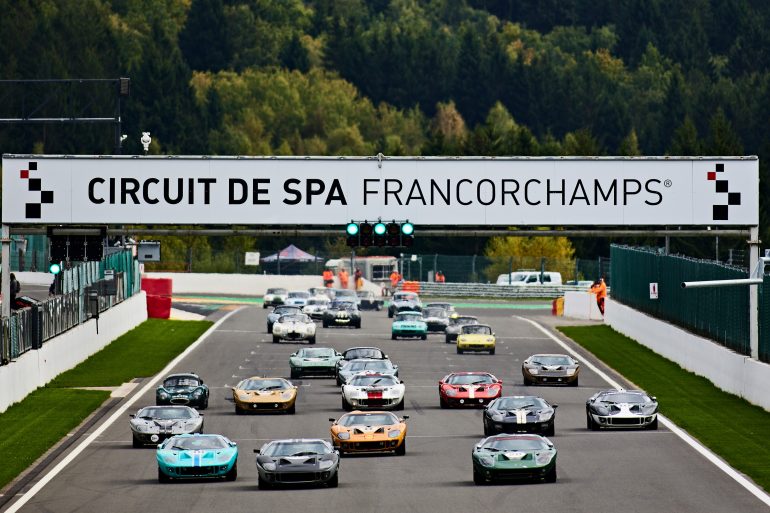
GT40s are the backbone of 1960s historic racing: the Whitsun Trophy at the Goodwood Revival and the Members' Meeting's GT40 races, the 1966–71 grid at Le Mans Classic, the Monterey Reunion and the Daytona Classic 24 all field a dozen or more, and the archive's galleries from Goodwood's all-GT40 races of 2013 and 2016 show them. Ford's own anniversaries, the 2016 GTE Pro win, the 2022 GT LM and the 2023 Mk IV built from the Kar-Kraft drawings, keep the name current; the Shelby American and Superformance continuations, built under licence, are how most people will ever drive one. The feeds below carry the modern Ford GT threads beside the GT40's own.
The Le Mans winner of 2016 and the road car, newest first.
The first revival, newest first.
Built: about 105 chassis, 1964–69: 12 prototypes (GT/101–112), 87 production Mk I (P/1000–1086, including the Mk III road cars and the Mirage conversions), 8 Mk II, 7 Mk III, 12 J-car/Mk IV, 3 Mirage M1. Height: 40 inches (1,016 mm). Engines: 4,195 cc Indy V8, about 350 bhp (1964); 4,727 cc (289) Cobra V8, about 385 bhp (1965–66 Mk I); 6,997 cc (427) NASCAR V8, about 485 bhp (Mk II and Mk IV, 1966–67); 4,942 cc Gurney-Weslake V8, about 425 bhp (Gulf GT40, 1968–69). Le Mans: 1966 McLaren / Amon (Mk II, P/1046), 1967 Gurney / Foyt (Mk IV, J-5, 135.48 mph, the record until 1971), 1968 Rodríguez / Bianchi (P/1075), 1969 Ickx / Oliver (P/1075, by 120 yards). Other wins: Daytona 1965 (2000 km) and 1966 (24 Hours), Sebring 1966, 1967 and 1969, Spa 1967 and 1968, Brands Hatch, Monza and Watkins Glen 1968; International Championship for Makes 1966 and 1968. First win: Daytona, 28 February 1965, Miles / Ruby. Record prices: P/1074, $11,000,000 (RM Monterey 2012); P/1016, $9,795,000 (RM Sotheby's Monterey 2018); GT/104, $7,000,000 (Mecum Houston 2014). The archive: 257 GT40 stories; Dixon's Route to '66 and Le Mans '66; McDonough's GT/1010; the Sebring 1965–66 and Daytona 1967 race profiles; the Remington, Ruby, Thompson and Miles pieces; Recreating History.
Short answers, with the long ones above.
Because it is forty inches high, the roof 1,016 mm from the ground; the name was a description of the first car in 1964 and stuck. Ford's own paperwork called the later cars Ford GT Mk II and Mk IV; GT40 is a trademark now owned by Safir, which is why the 2005 road car was called Ford GT.
About 105 between 1964 and 1969: twelve prototypes, eighty-seven production Mk I chassis (including seven Mk III road cars and the three Mirage conversions), eight Mk IIs and twelve J-cars and Mk IVs. Many have been rebuilt or re-identified, and continuation cars from Shelby American and Superformance outnumber the originals.
Four times: 1966 (first, second and third), 1967, 1968 and 1969; Ferrari was second in 1967, boycotted the 1968 race and retired its 312 Ps in 1969. Ferrari beat the GT40 at Le Mans in 1964 and 1965 and at Daytona in 1967.
Ford asked its three leading cars to cross the line together; Ken Miles, who had led most of the race, slowed to let Bruce McLaren alongside, and the organisers awarded the win to McLaren and Chris Amon because their car had started further back and covered more distance. Miles was killed testing two months later.
Mk I racing cars with period history sell for $4–8 million; the 1966 Le Mans third-placed Mk II made $9.8 million in 2018 and the Gulf car P/1074 $11 million in 2012; the Mk III road cars $3–5 million. Continuation cars cost from about $150,000.
The Mk I is the original Slough-built car with the 4.2- then 4.7-litre small-block V8; the Mk II is the 1966 seven-litre car with a strengthened chassis and new gearbox; the Mk IV is the 1967 Dearborn car with an aluminium-honeycomb tub and new body around the seven-litre engine. The Mk III is a road car and the Mirage a lightened Mk I.
In outline, yes: the failed purchase, Shelby, Miles, the Mk II, the staged finish; the details are compressed and some characters invented or combined. The archive's Route to '66, Le Mans '66 and the Remington and Miles pieces are the record.
The 1967 Le Mans winner is at the Henry Ford Museum in Dearborn; the Larry H. Miller museum in Utah, the Shelby American Collection in Boulder and the Simeone Museum in Philadelphia hold several; and the Goodwood Revival, Le Mans Classic and the Monterey Reunion race them every year.
The whole archive on one thread, newest first.