
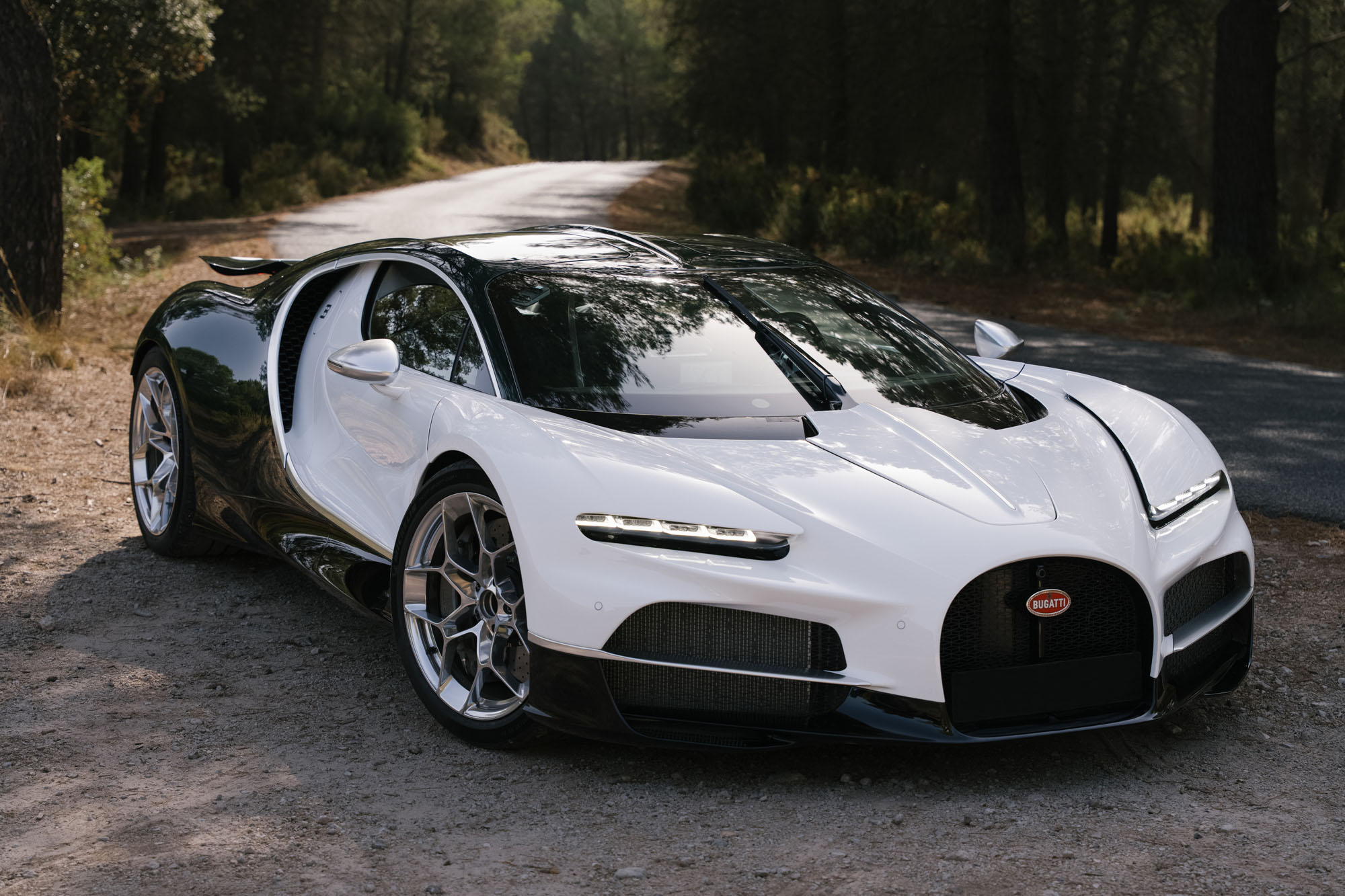

For Bugatti, figuring out what the Tourbillon should sound like didn’t begin with a blank sheet of paper. It began with more than a century of history—and the question of how to carry that history into a car unlike any Bugatti before it.
The answer starts with the engine. Gone is the quad-turbo W16 that defined the Veyron and Chiron eras. In its place sits a naturally aspirated V16 capable of spinning to 9,000 rpm, working alongside an electric powertrain. It’s a fundamentally different mechanical recipe, and that meant the Tourbillon needed a voice of its own.
Finding that voice took serious work.
Bugatti engineers ran thousands of simulations of the intake and exhaust systems, searching for the right combination of performance, refinement, and mechanical drama. The objective wasn’t simply to make the Tourbillon loud. Plenty of cars can do that. The challenge was making it sound alive without turning every trip to dinner into a qualifying lap.
That distinction matters because the Tourbillon is still intended to function as a road car. With the windows up and the car running electrically, the cabin needed to deliver the sort of calm expected of a Bugatti. Wake the V16, however, and the experience changes dramatically. Lower the windows and another layer emerges as induction noise and exhaust sound pour into the cockpit.
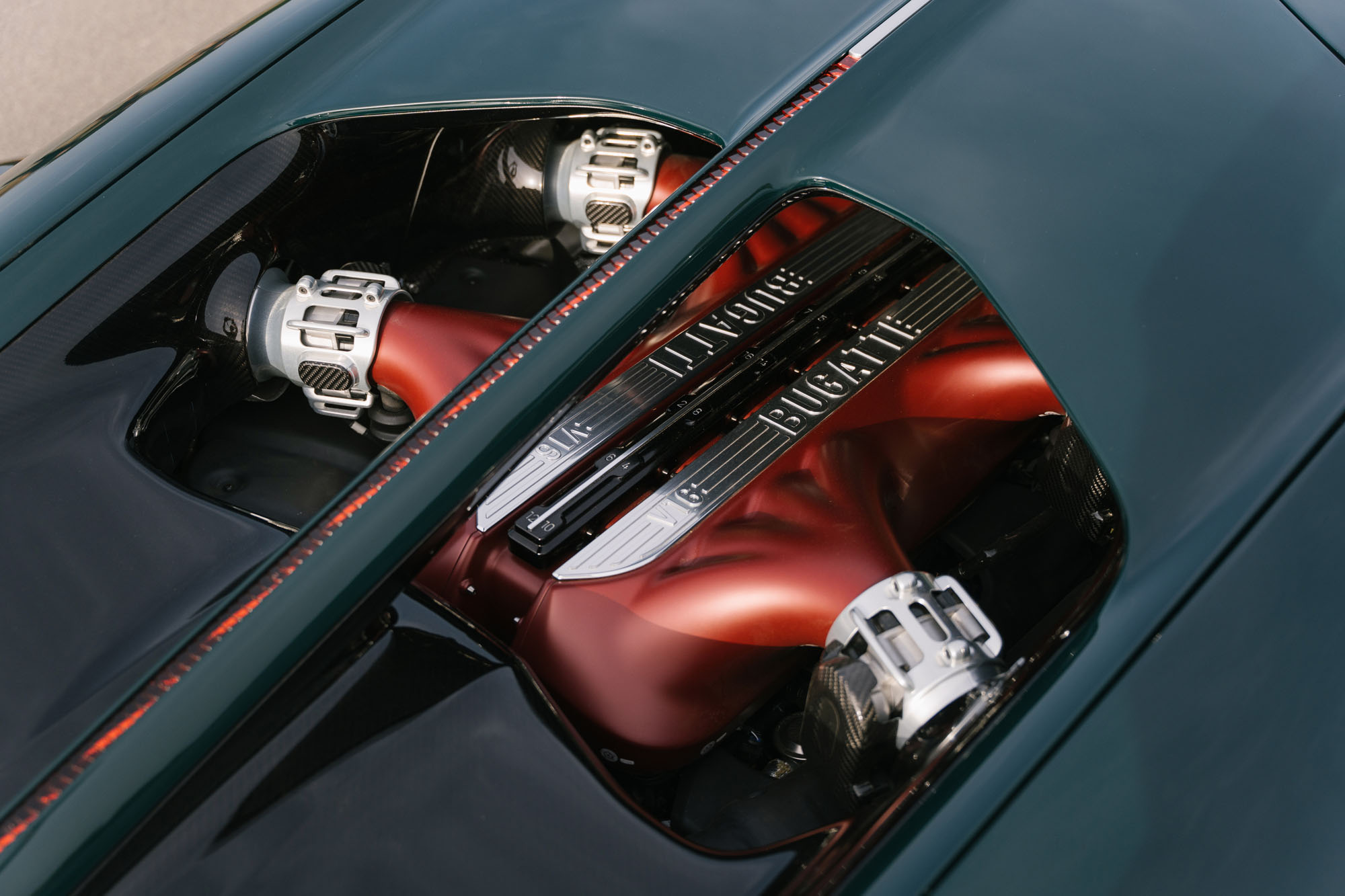
There’s no digital sleight of hand involved, either.
What you hear is what the machinery actually makes. Bugatti deliberately avoided piping synthetic engine noise through the audio system, instead developing the car’s acoustic insulation and structure to let the right mechanical frequencies reach the occupants naturally.
That sounds simple. It isn’t.
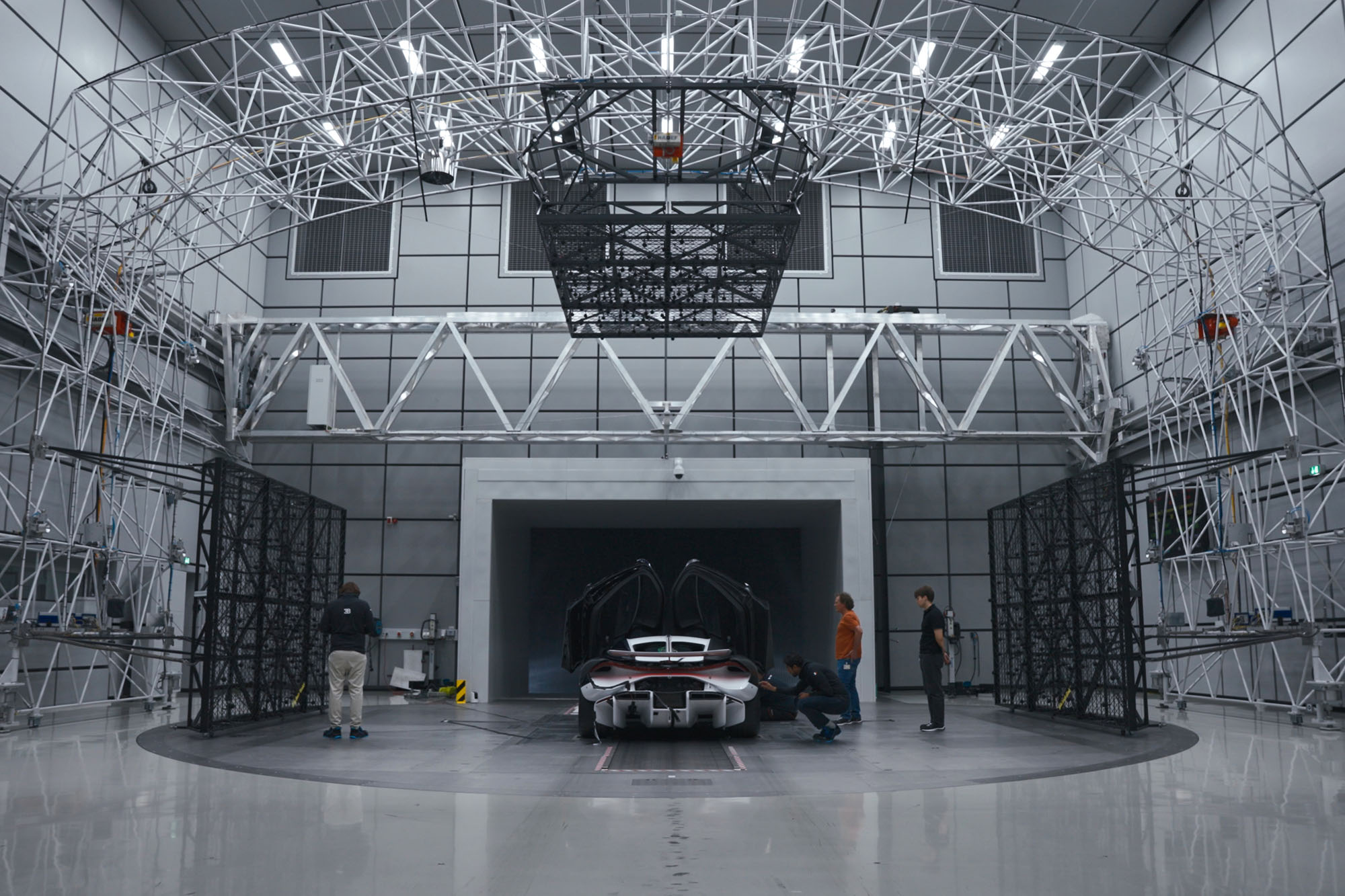
Modern performance cars live in a world of increasingly strict noise regulations, meaning Bugatti’s engineers had to reconcile two seemingly opposing objectives: preserve the character of a 9,000-rpm naturally aspirated V16 while keeping the Tourbillon legal.
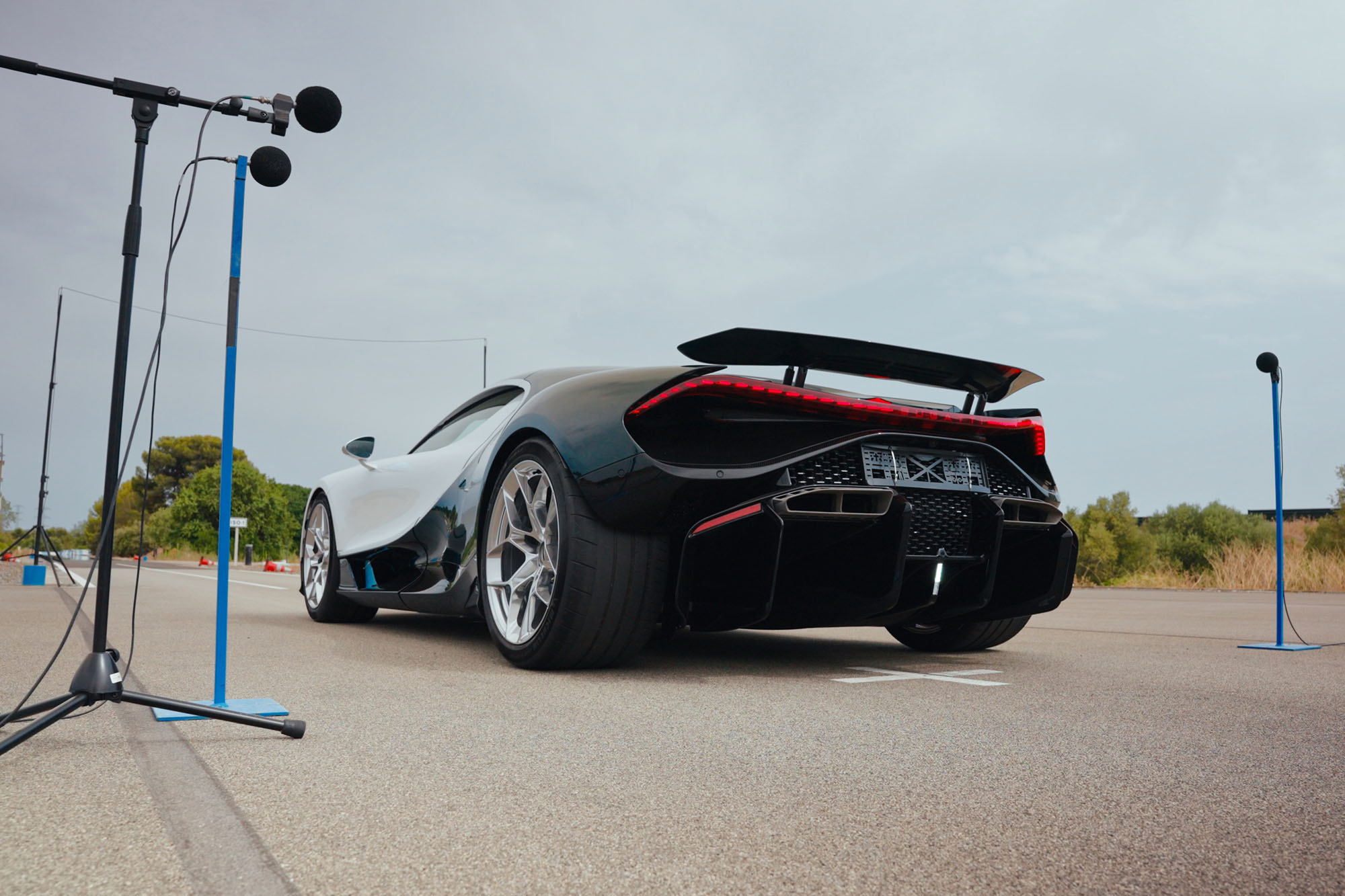
After years of development, that meant homologation testing.
For the relevant test, the maximum permitted noise level is 72 decibels. But you don’t get that number by simply parking the car beside a microphone and revving the engine. The final figure is calculated from multiple measurements, including constant-speed passes and acceleration runs.
And the microphones hear far more than combustion.
Tire noise counts. So does air moving around the body. Even the aerodynamic hardware contributes to the result. That is especially relevant on the Tourbillon, whose active rear wing produces serious downforce while inevitably adding its own acoustic footprint.
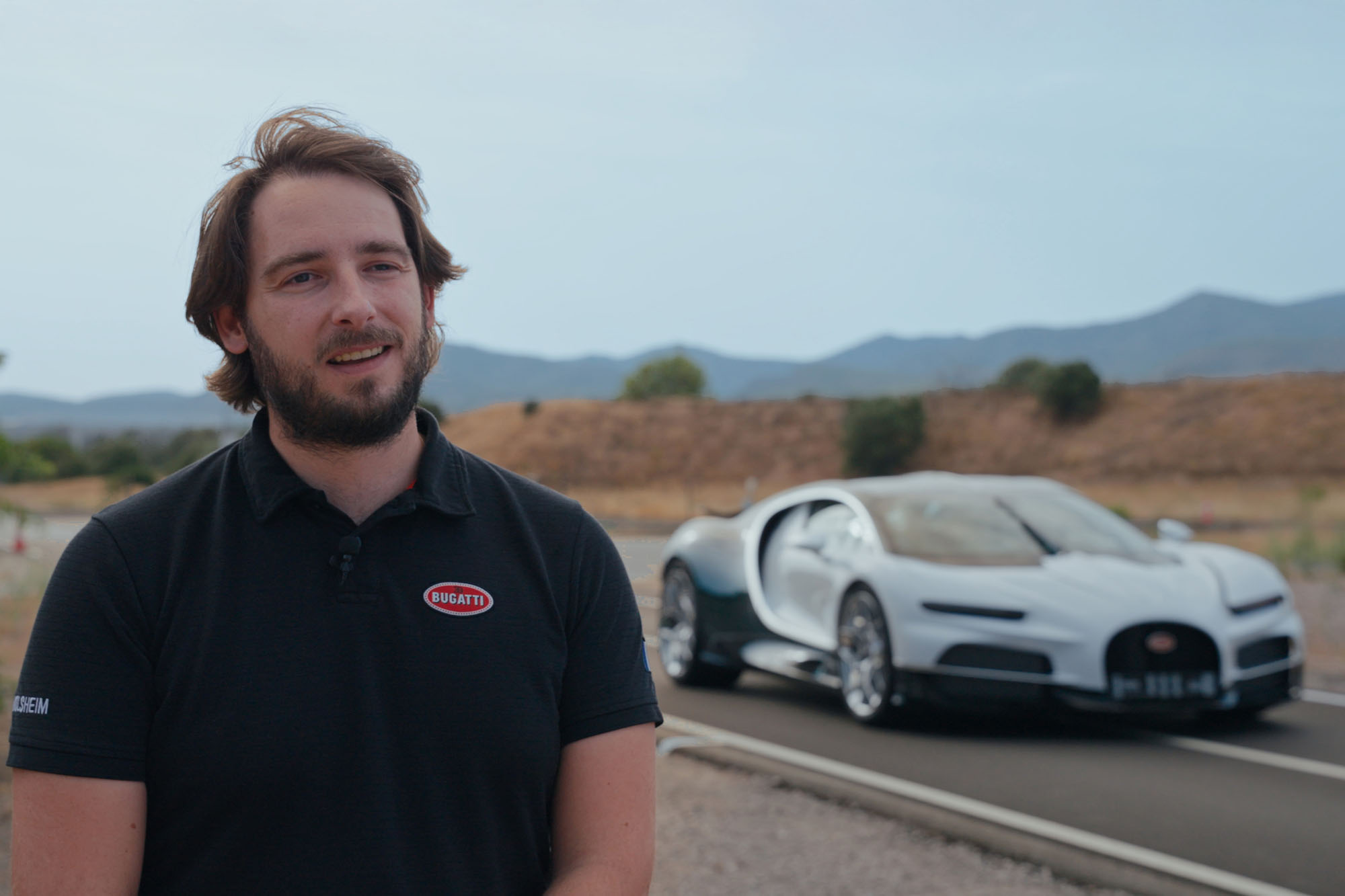
Then there’s the weather.
Temperature and wind speed must fall within prescribed limits, and an untimely gust can invalidate an otherwise perfect run. Bugatti conducted numerous preliminary tests before attempting the official homologation procedure, eliminating variables and making sure the production configuration could deliver the required result consistently.
With homologation successfully completed, one of the final major chapters in the Tourbillon’s acoustic development came to a close. Three years of engineering had distilled the car’s sound into its production form.
More importantly, Bugatti appears to have resisted one of the great temptations of the electrified supercar era: using electronics to manufacture drama that the hardware itself cannot provide.
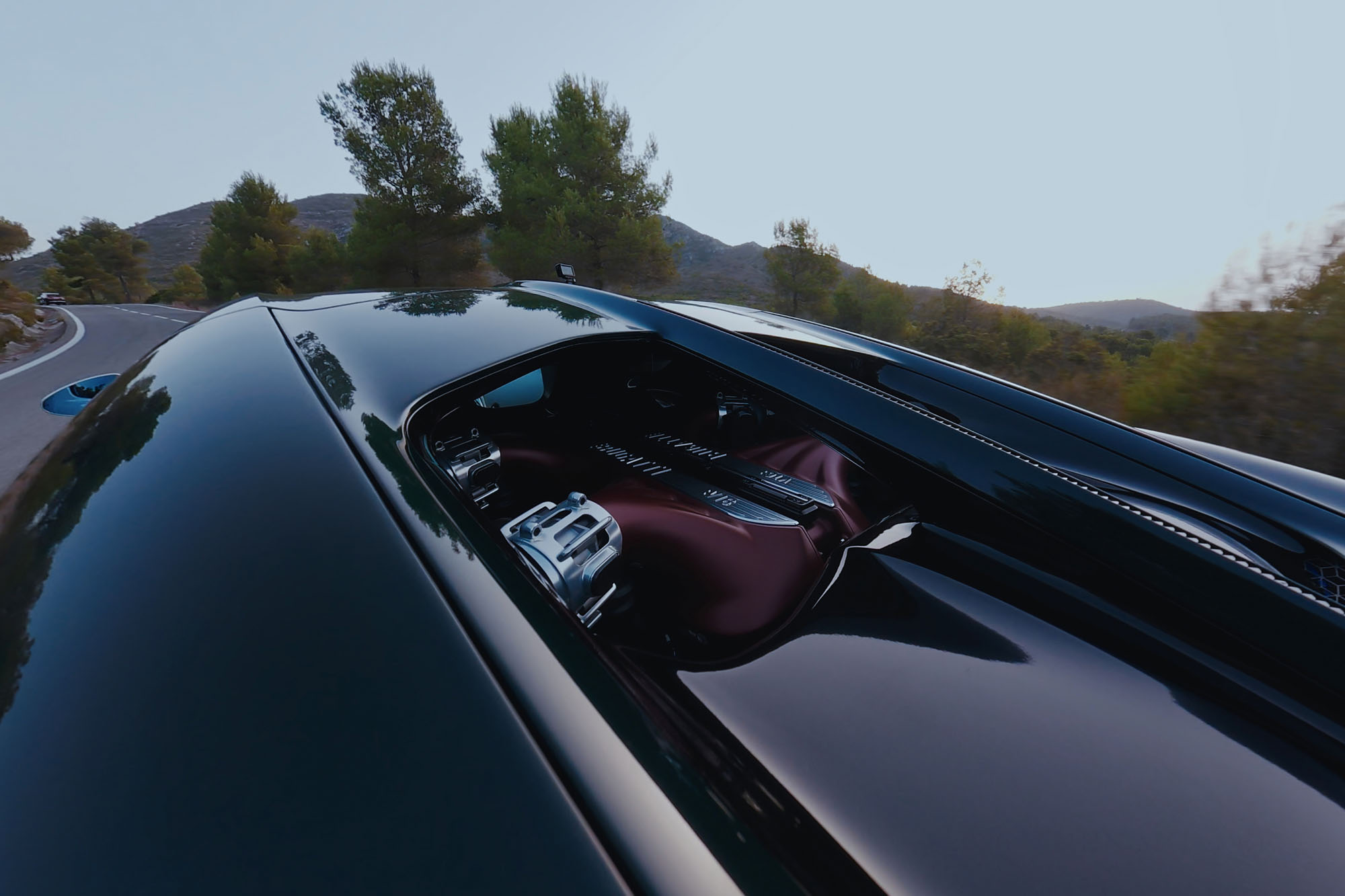

The Tourbillon doesn’t need it.
A naturally aspirated V16 turning 9,000 rpm already possesses the essential ingredients. The job was not to invent a soundtrack, but to make sure the driver could hear—and feel—the machinery doing its work.
That may ultimately be the most important thing about the Tourbillon’s voice. Electrification has changed the way extreme-performance cars deliver speed, but it doesn’t have to sever the mechanical connection that made them compelling in the first place.
The Tourbillon pairs electric motors with one of the most extravagant combustion engines ever fitted to a road car. Its sound is therefore more than theater. It is a reminder of what sits behind the driver: sixteen cylinders, no turbochargers, 9,000 rpm, and nothing pretending to be something it isn’t.
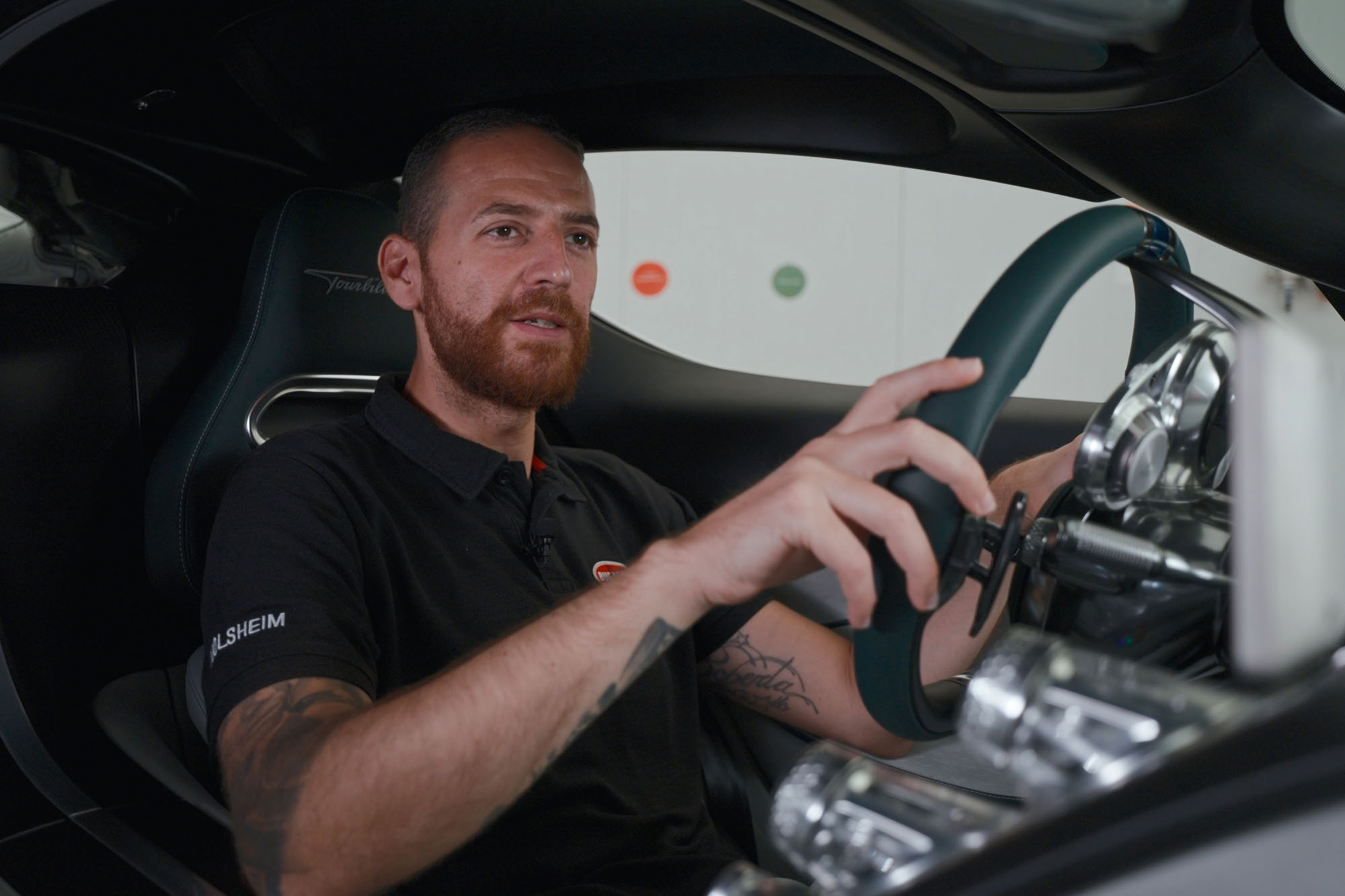
A new era for Bugatti, perhaps.
But thankfully, one you can still hear coming.
Above contents © 2026 Bugatti reviewed and edited by Rex McAfee , @rexmcafee 🏁
#Bugatti #BugattiTourbillon #Tourbillon #V16 #Hypercar #Supercar #AutomotiveEngineering #PerformanceCars #CarNews #ExoticCars