

When Lamborghini unveiled the Temerario, it wasn’t just introducing another hybrid supercar—it was laying the groundwork for a racing machine. That intent became clear in March, when the Temerario GT3 made its competition debut at Sebring, marking the first public step in the model’s evolution from road to track.
Mitja Borkert, Lamborghini’s design chief, describes the process as deliberate from the outset. The road car, he says, was conceived to embody “visual adrenaline”—low, sharp, and unmistakably Lamborghini—while leaving room for a future in motorsport. That dual purpose shaped both its proportions and its surface language, ensuring the design could stretch naturally into a race-ready form.
The Temerario itself represents a turning point for the brand. It pairs a twin-turbocharged V8 with three electric motors, delivering a combined 920 PS through an eight-speed dual-clutch transmission. The result is a car capable of exceeding 340 km/h, yet still engineered for usability beyond the track. For Lamborghini, it’s a balancing act: electrification without sacrificing the raw, emotional character that defines its lineup.
That same philosophy carries into the GT3 variant, though the execution diverges sharply. Built to comply with FIA GT3 regulations, the race car abandons hybrid assistance entirely. What remains is the 4.0-litre twin-turbo V8, reworked for durability and consistency under racing conditions and tuned within the constraints of Balance of Performance rules.
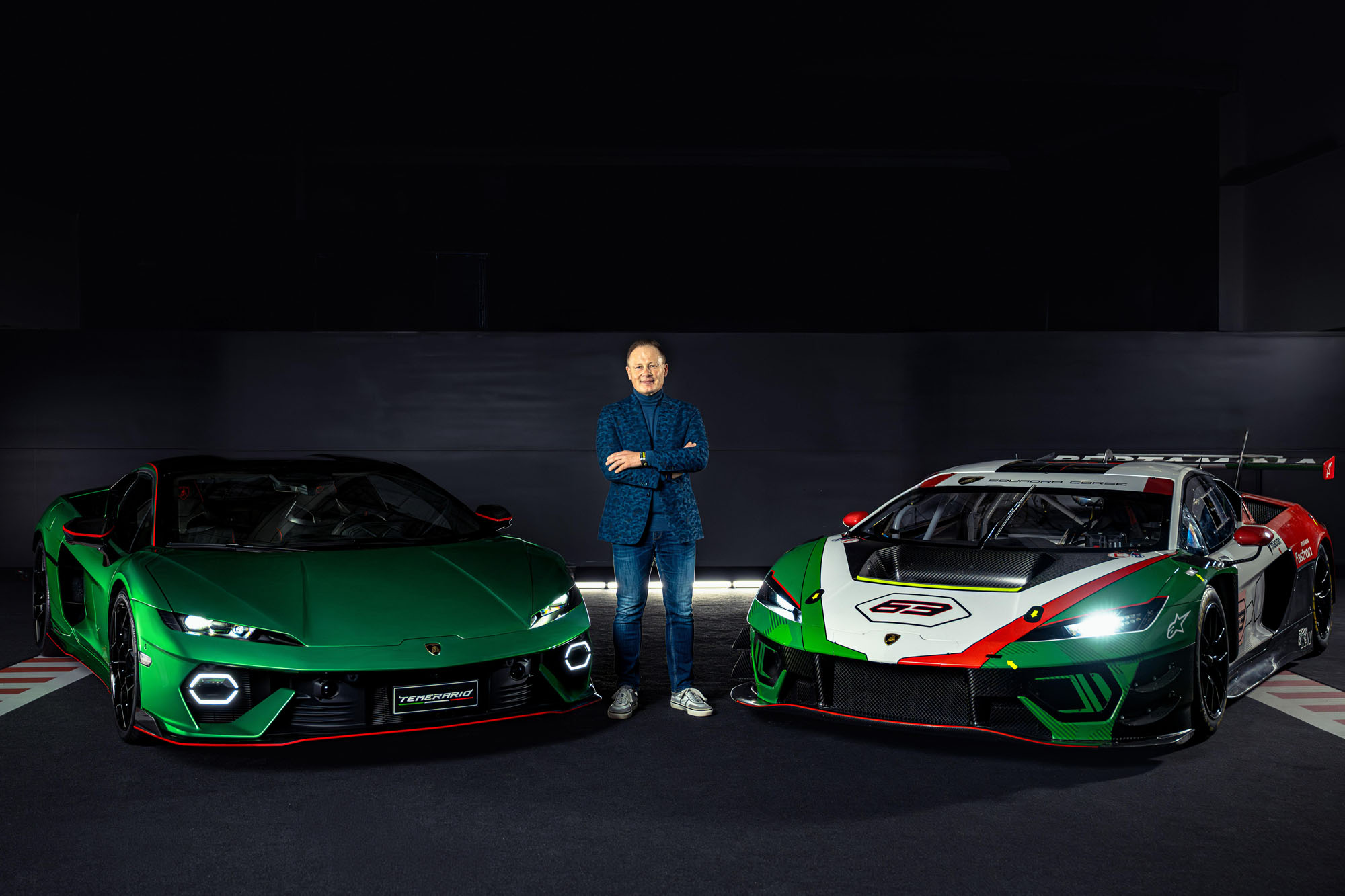
Visually, the connection between the two cars is clear. The GT3 retains the Temerario’s core silhouette, but nearly every surface has been reengineered. Lightweight composite panels, quick-release bodywork, and modular underfloor sections are all designed with endurance racing in mind—prioritizing speed not just on track, but in the pit lane.
Inside, the contrast is even more pronounced. The road car blends performance with comfort, featuring a cockpit designed for both daily driving and high-speed runs. The GT3, by comparison, strips everything back. Safety systems, race-specific controls, and a focus on driver ergonomics dominate—a workspace built for hours of sustained competition rather than convenience.

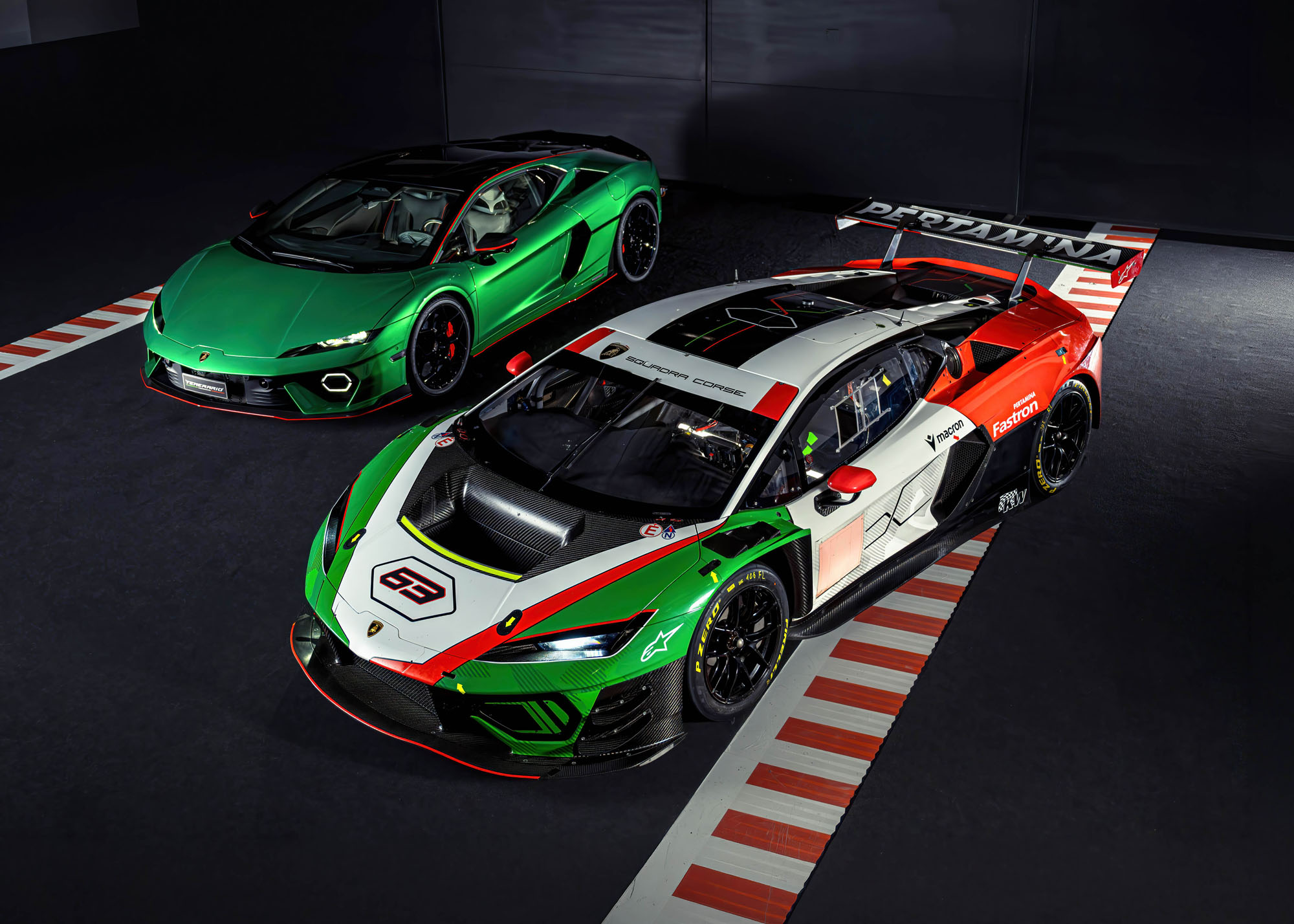
Still, Borkert insists the two cars are cut from the same cloth. The challenge, he says, wasn’t simply adapting a road car into a race car, but translating its identity into a machine capable of competing at the highest level.
Whether on the street or the circuit, the Temerario’s underlying brief remains consistent: to turn performance into something you can see, hear, and feel.
Above contents © 2026 Automobili Lamborghini S.p.A., reviewed and edited by Rex McAfee , @rexmcafee