
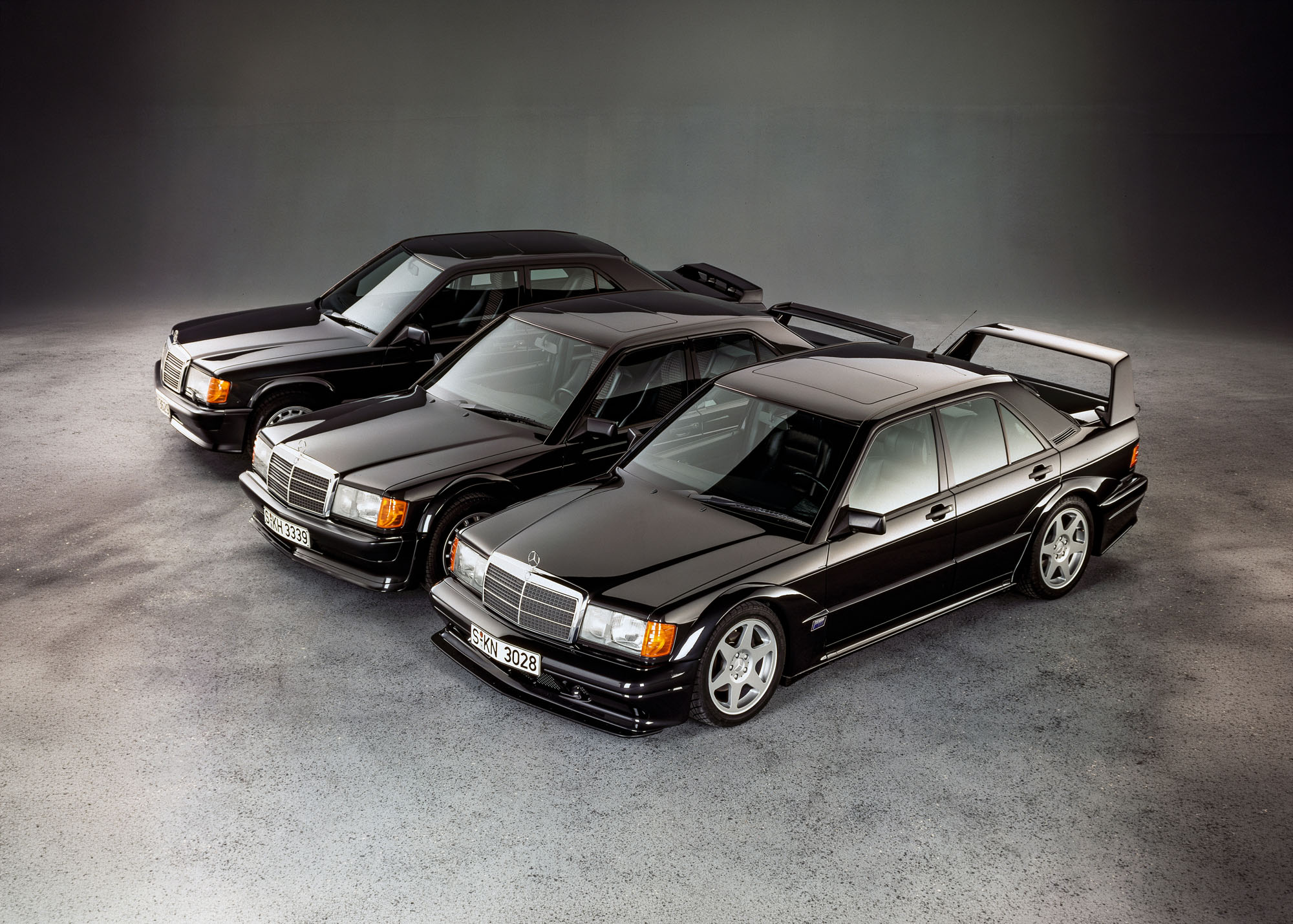

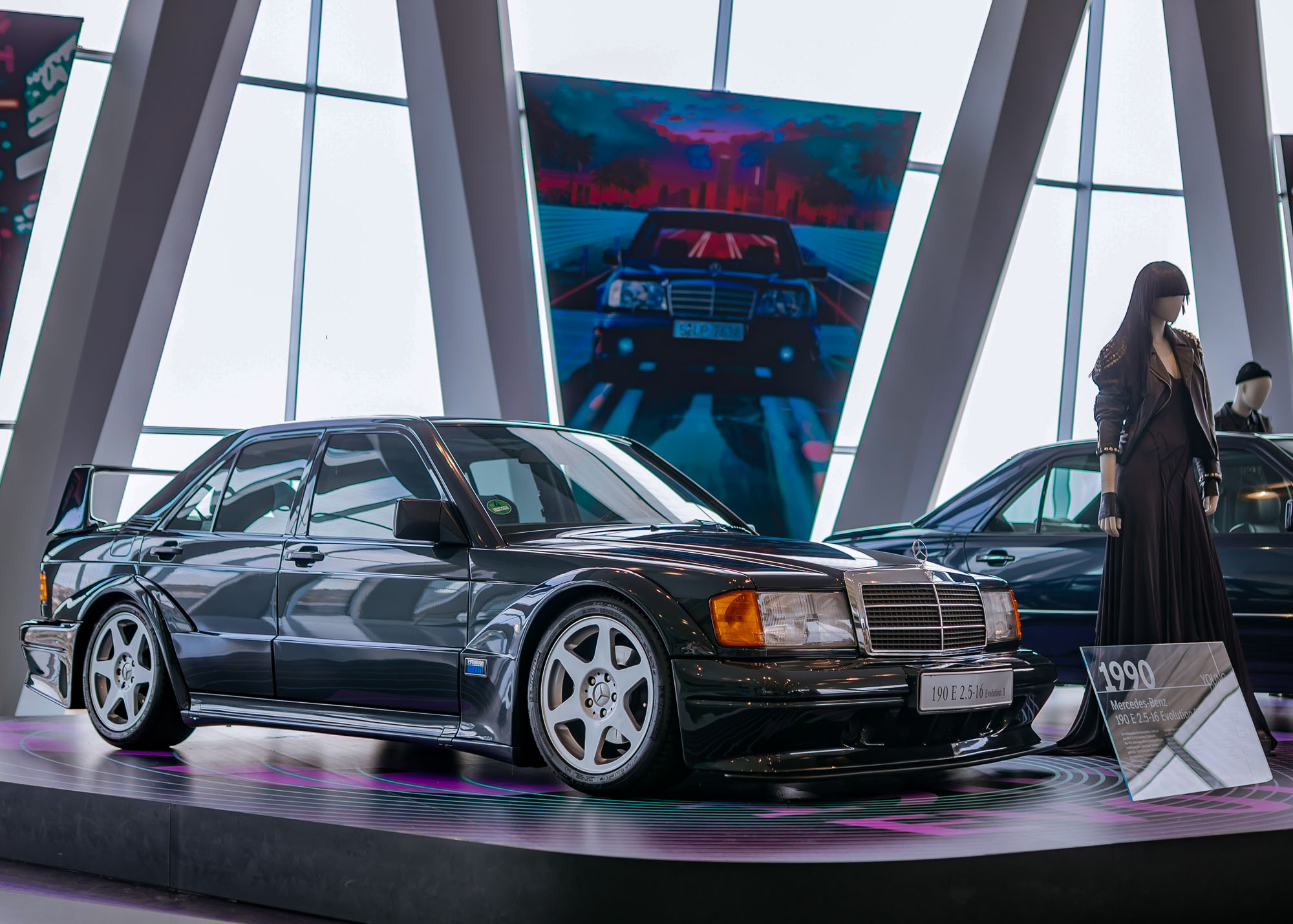
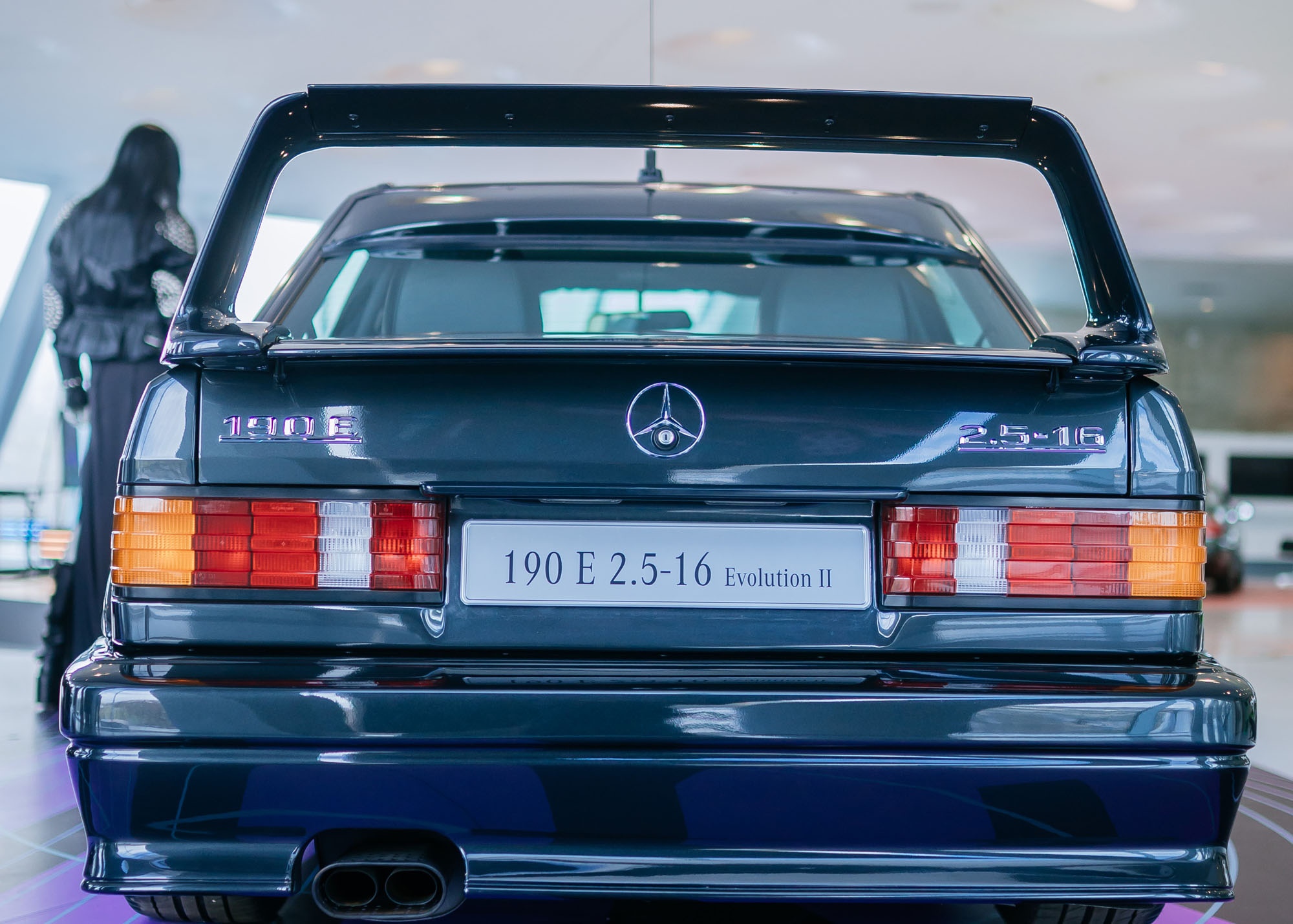
With its towering rear wing, aggressive aero add-ons, and wide-set stance, the Mercedes-Benz 190 E 2.5-16 Evolution II makes an immediate statement—even at rest. Known simply as the “EVO II,” the homologation special pushed Mercedes’ compact 190 series firmly into the world of top-tier touring car racing. When it arrived in 1990, the EVO II quickly earned cult status. Today, it stands as one of the most sought-after modern classics from the era.
A Shape Defined by Function
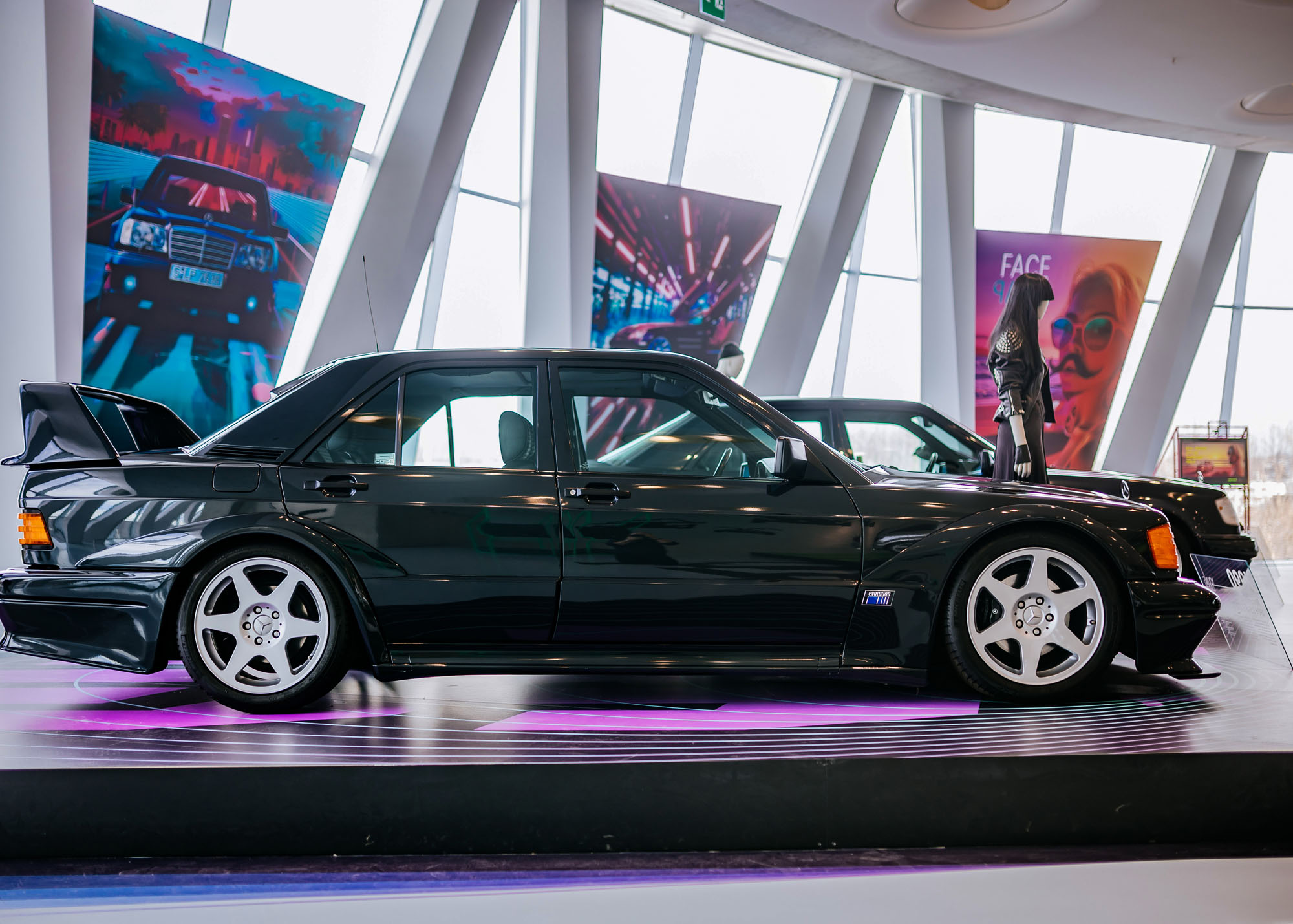
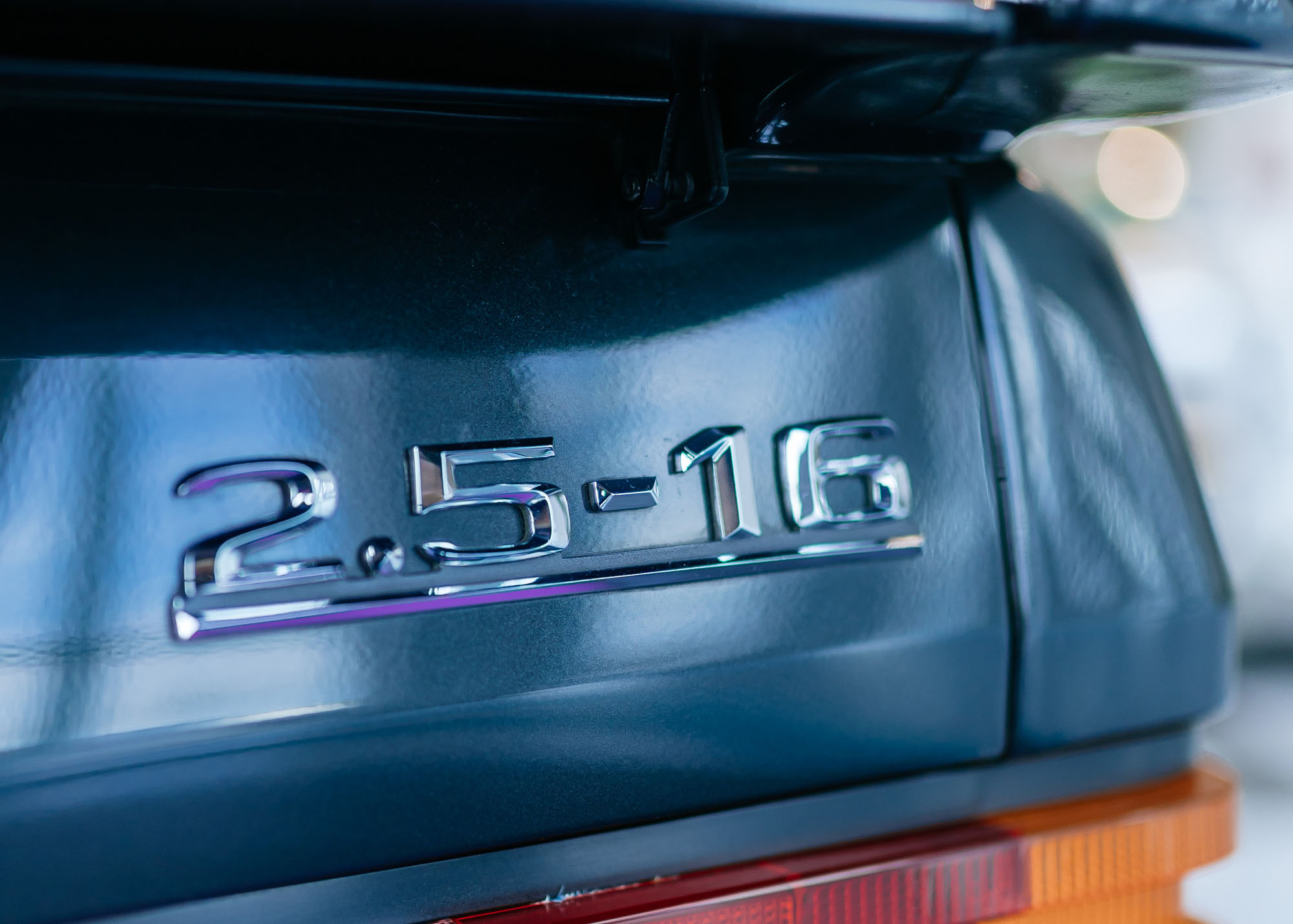
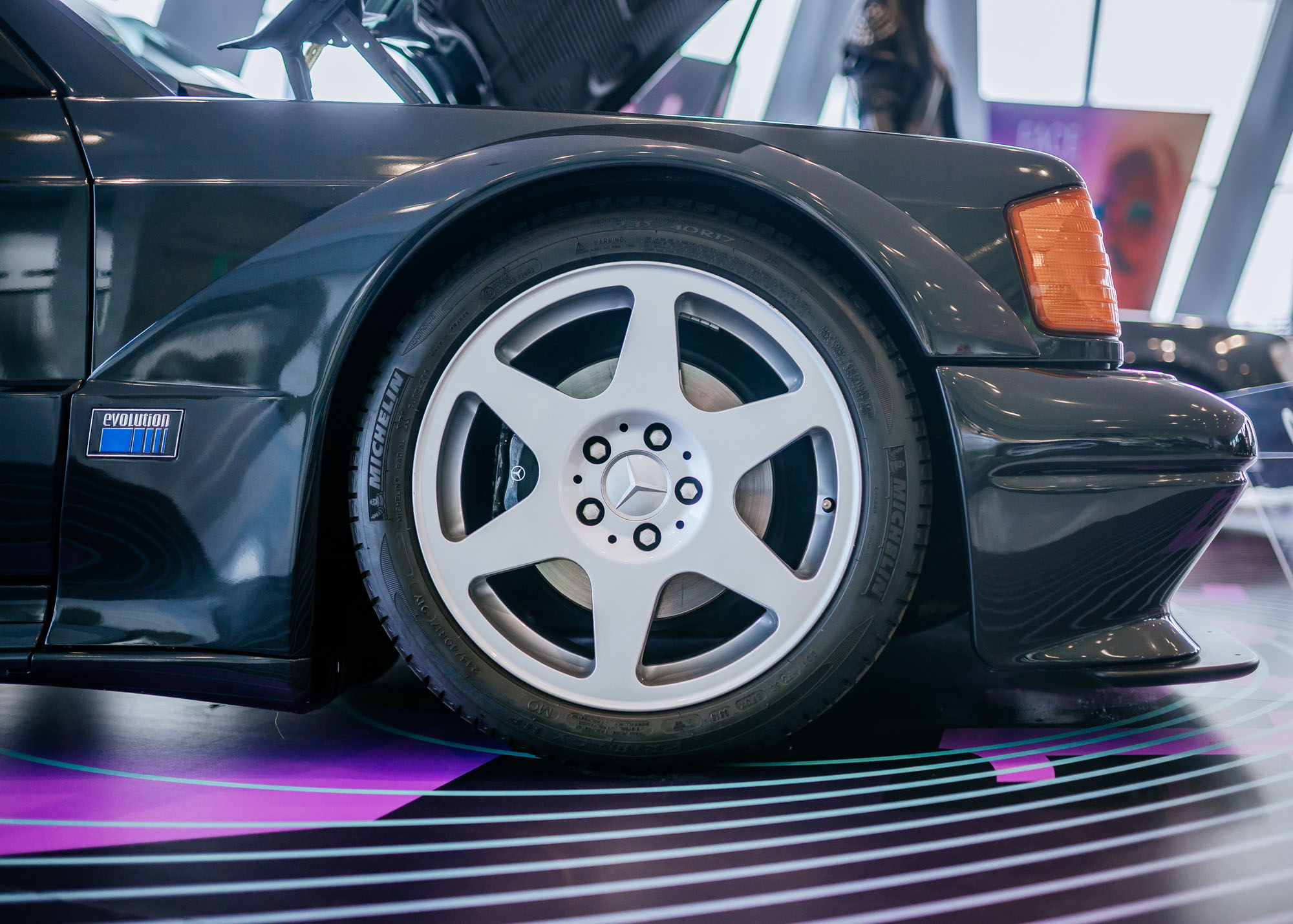
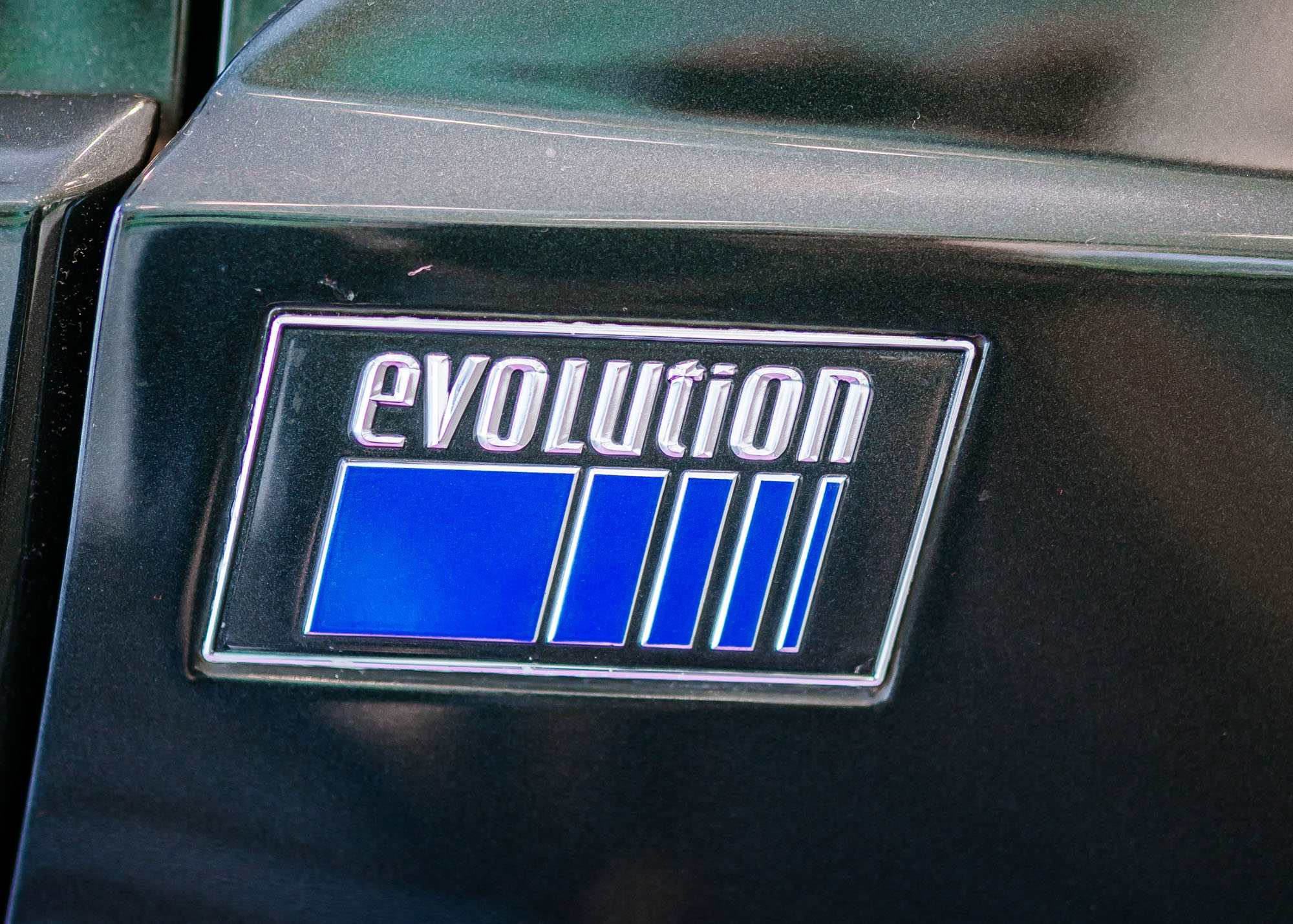
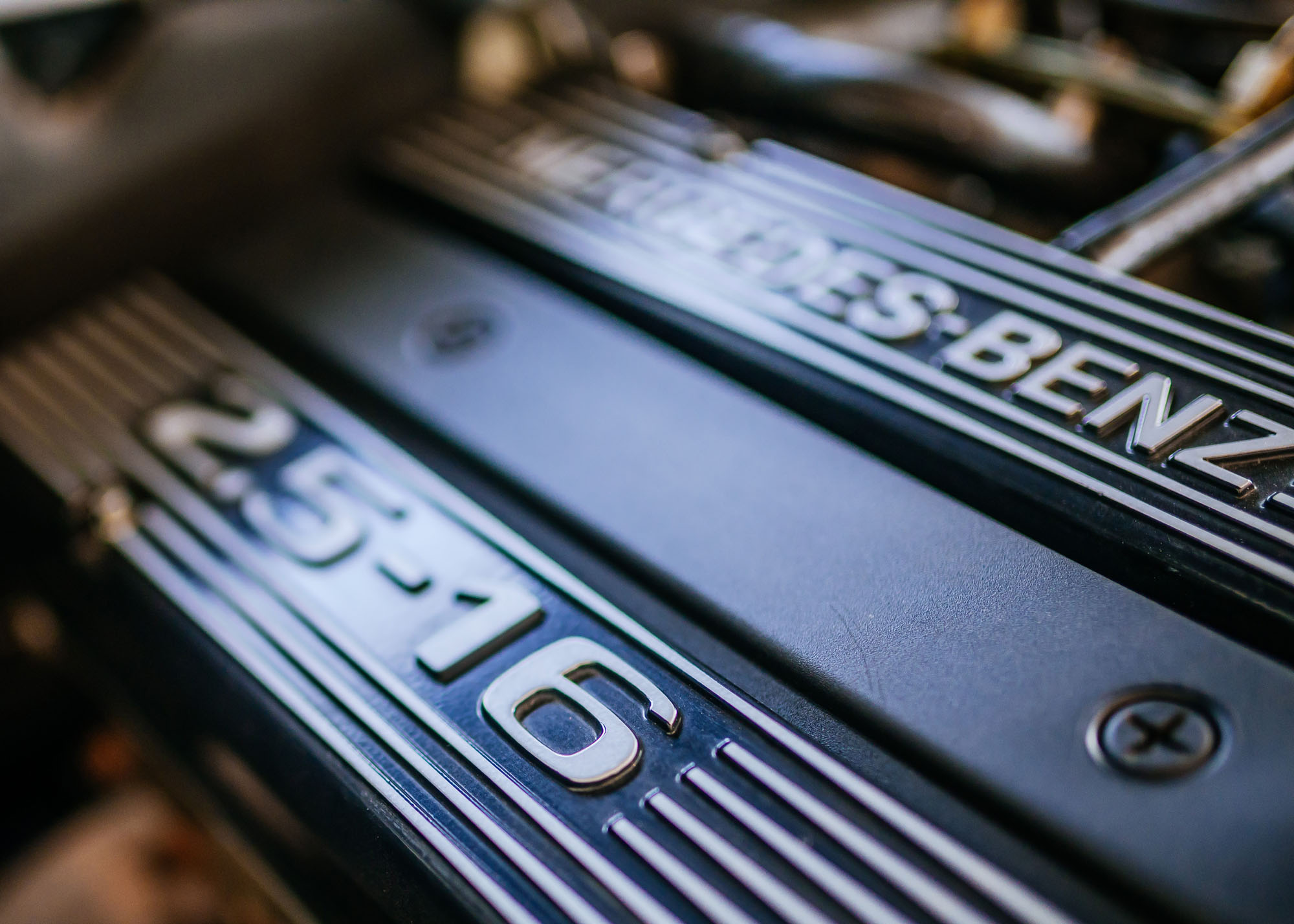
The EVO II’s design is unmistakable. Flared wheel arches, deep aprons, and that towering adjustable rear wing weren’t aesthetic indulgences—they were engineered for downforce and stability. Subtle details distinguish it further. “Evolution” badges on the front wings and the “2.5-16” script on the boot lid identify the car’s 2.5-liter, 16-valve engine. Only the EVO II carried this exact combination of cues.
Built to Race
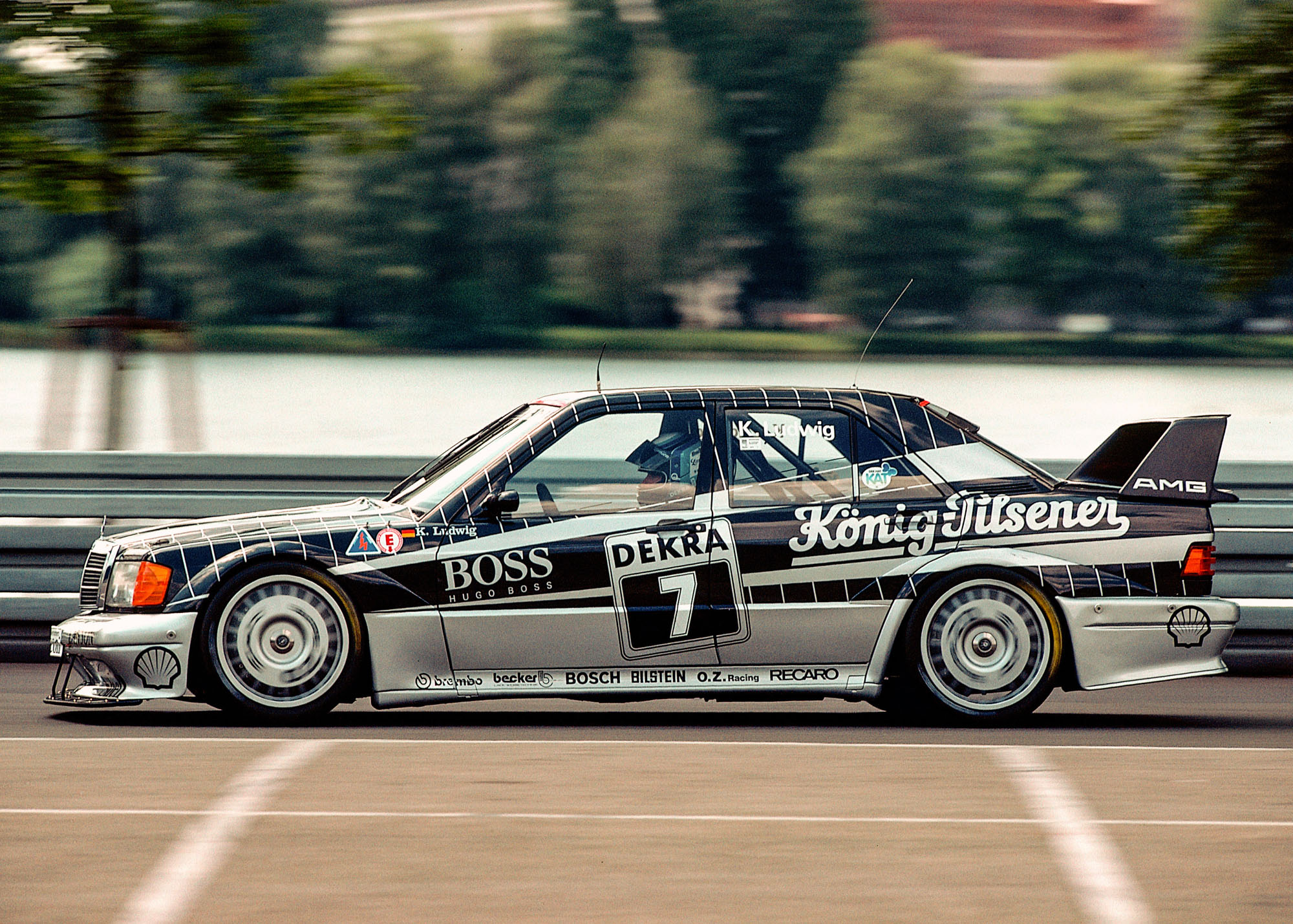
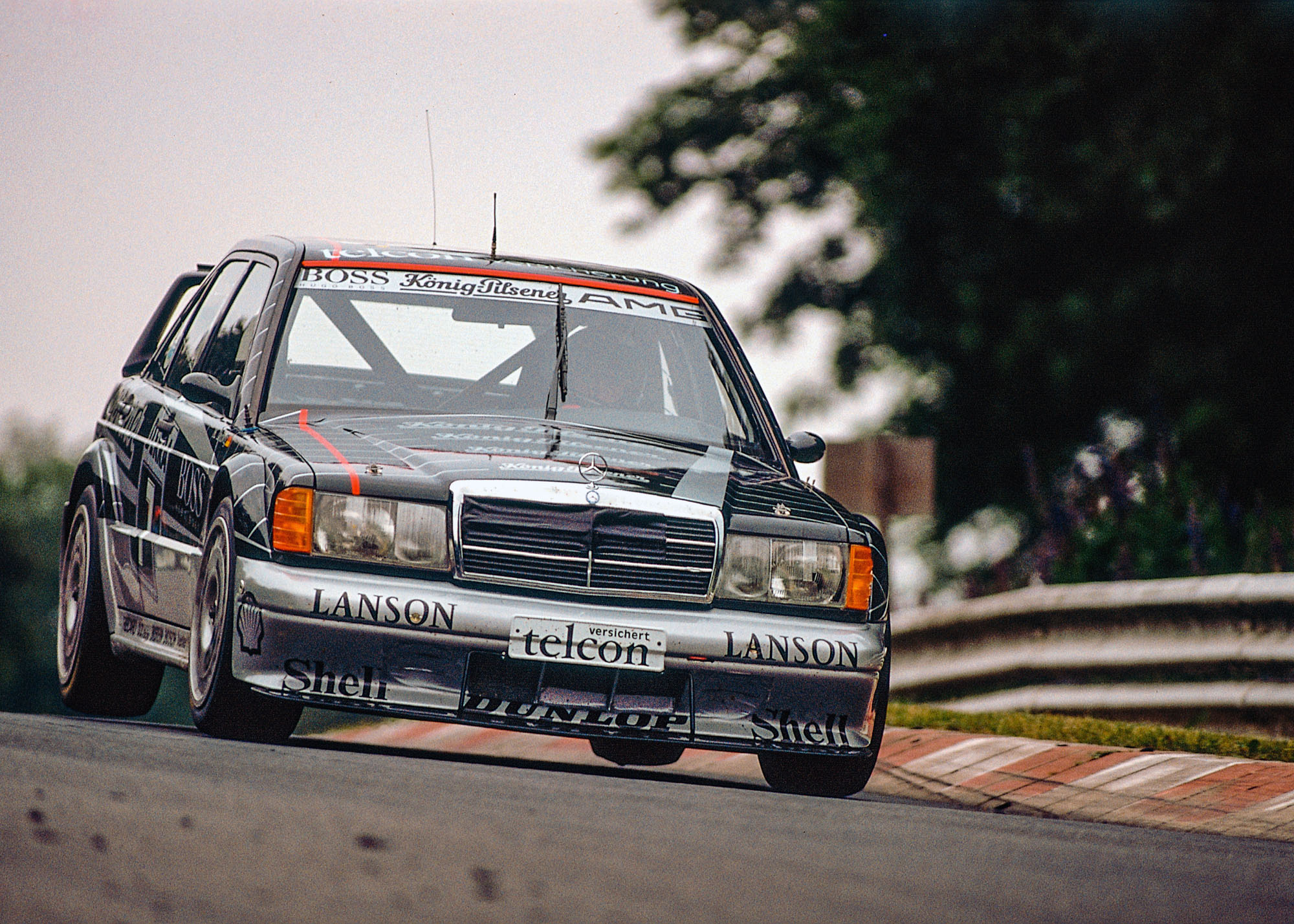
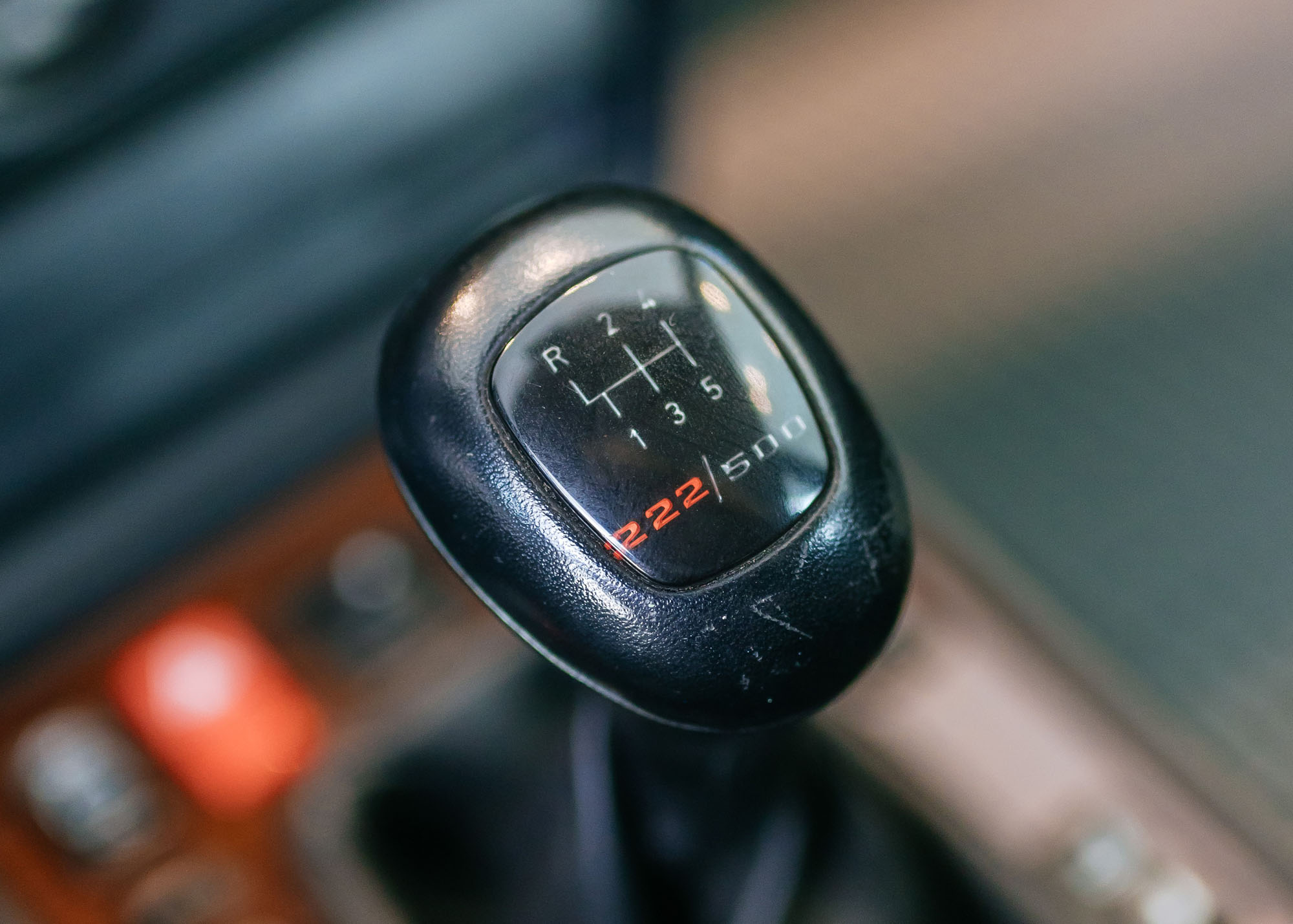
Mercedes produced just 502 units in 1990 to meet homologation requirements for the Deutsche Tourenwagen Meisterschaft (DTM). The effort paid off. The EVO II became a dominant force in touring car racing, culminating in Klaus Ludwig’s 1992 DTM championship. Every car left the factory in blue-black metallic, underscoring its exclusivity. Even the numbering tells a story—cars were individually marked, with examples like “222/500” indicating their place in the limited production run.
Engineering with Intent
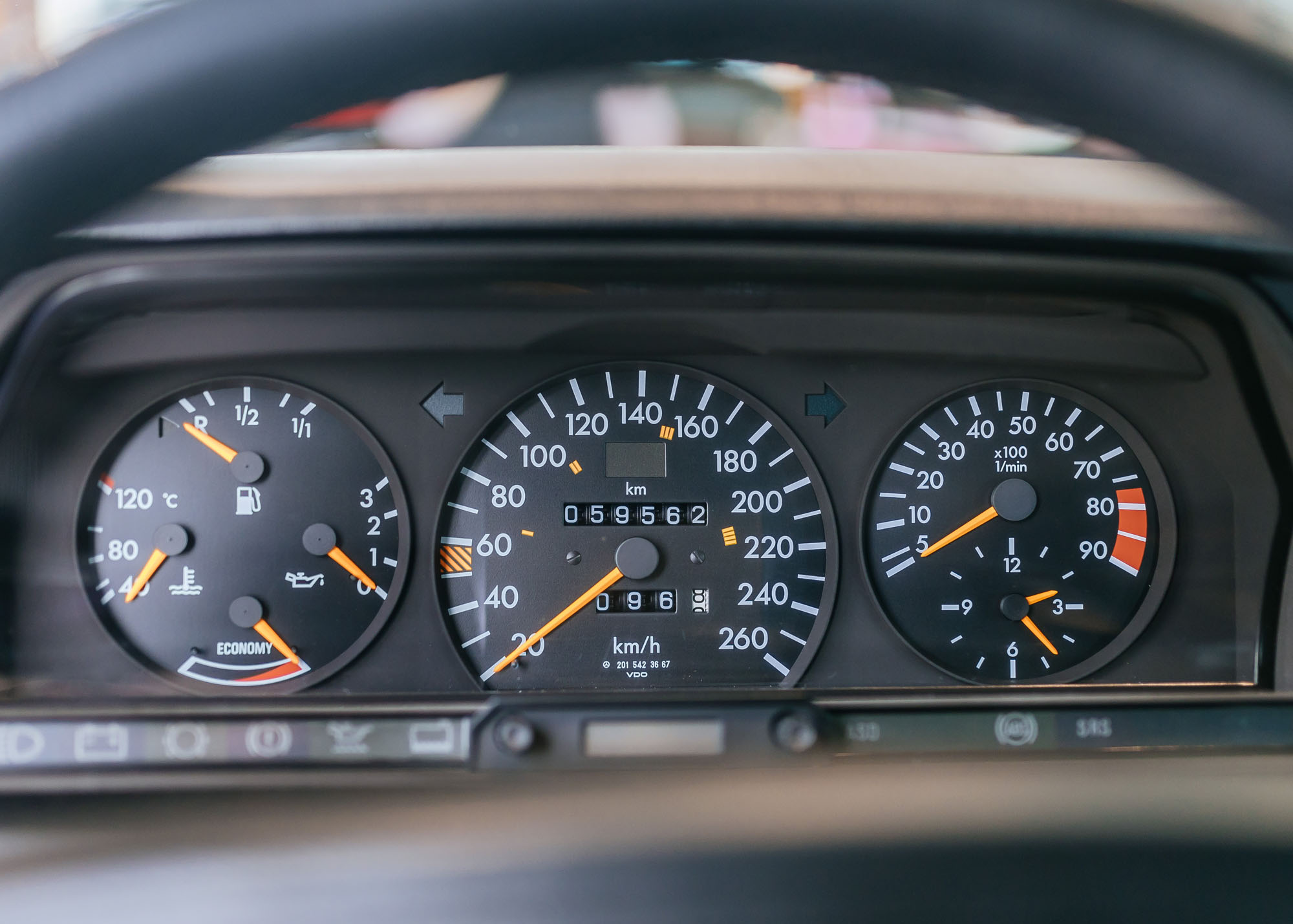
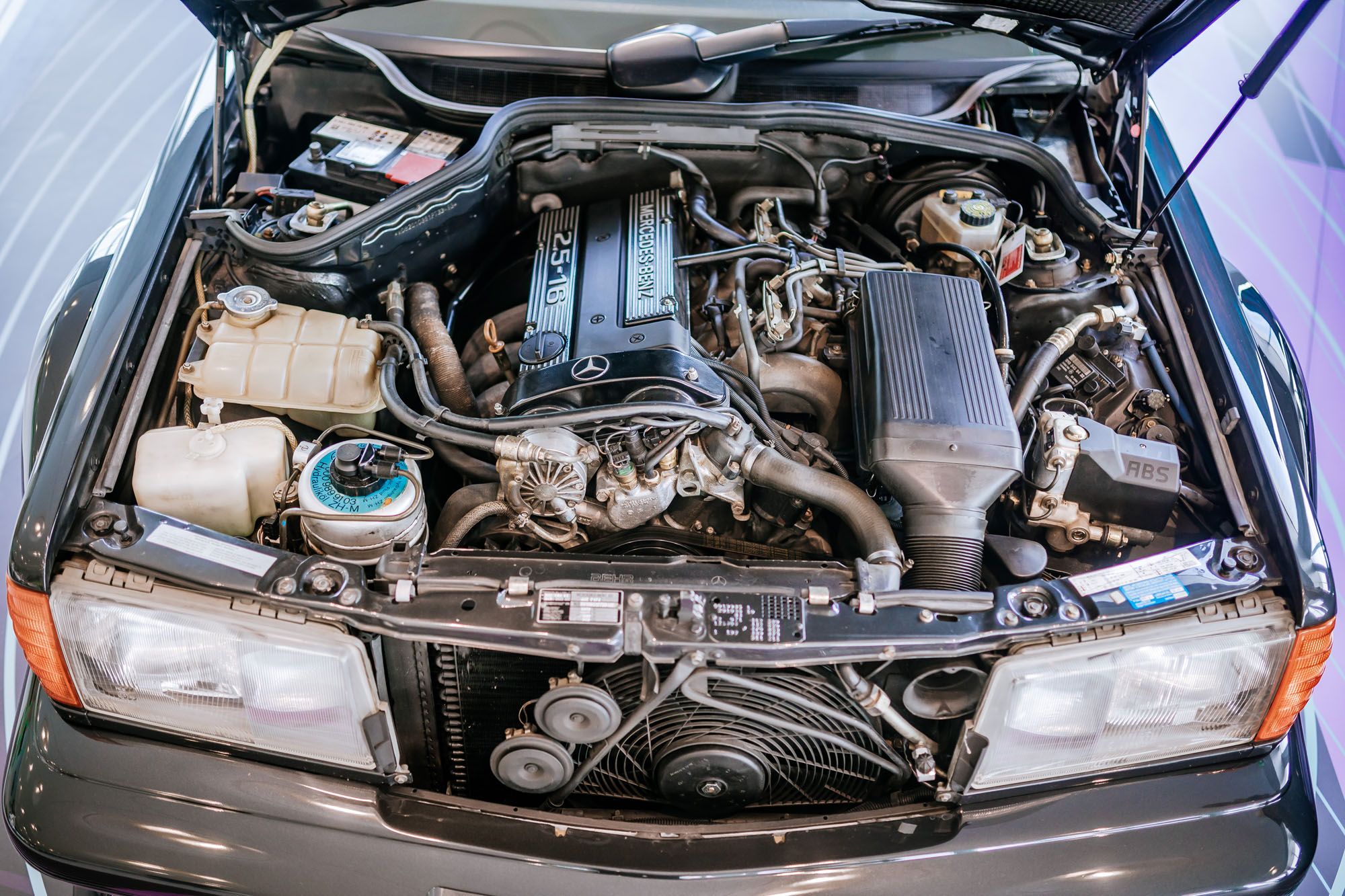
At its core, the EVO II featured a high-revving 2.5-liter four-cylinder producing 235 hp at 7,200 rpm, with a top speed capped at 250 km/h. The engine was closely related to its racing counterpart, though slightly detuned for road use. In DTM specification, output climbed well beyond 300 hp, eventually reaching as much as 373 hp in championship-winning form. The car’s development leaned heavily on motorsport technology, from its shortened engine stroke to its finely tuned aerodynamics.
Aerodynamics Take Center Stage
When the EVO II debuted at the Geneva International Motor Show, its exaggerated rear wing drew immediate attention. At a time when such features were rare on road cars, it stood out dramatically. The wing itself was adjustable, allowing drivers to fine-tune airflow. Even the rear window was partially covered to improve aerodynamic efficiency—details that reflected the car’s racing priorities.
Details That Set It Apart
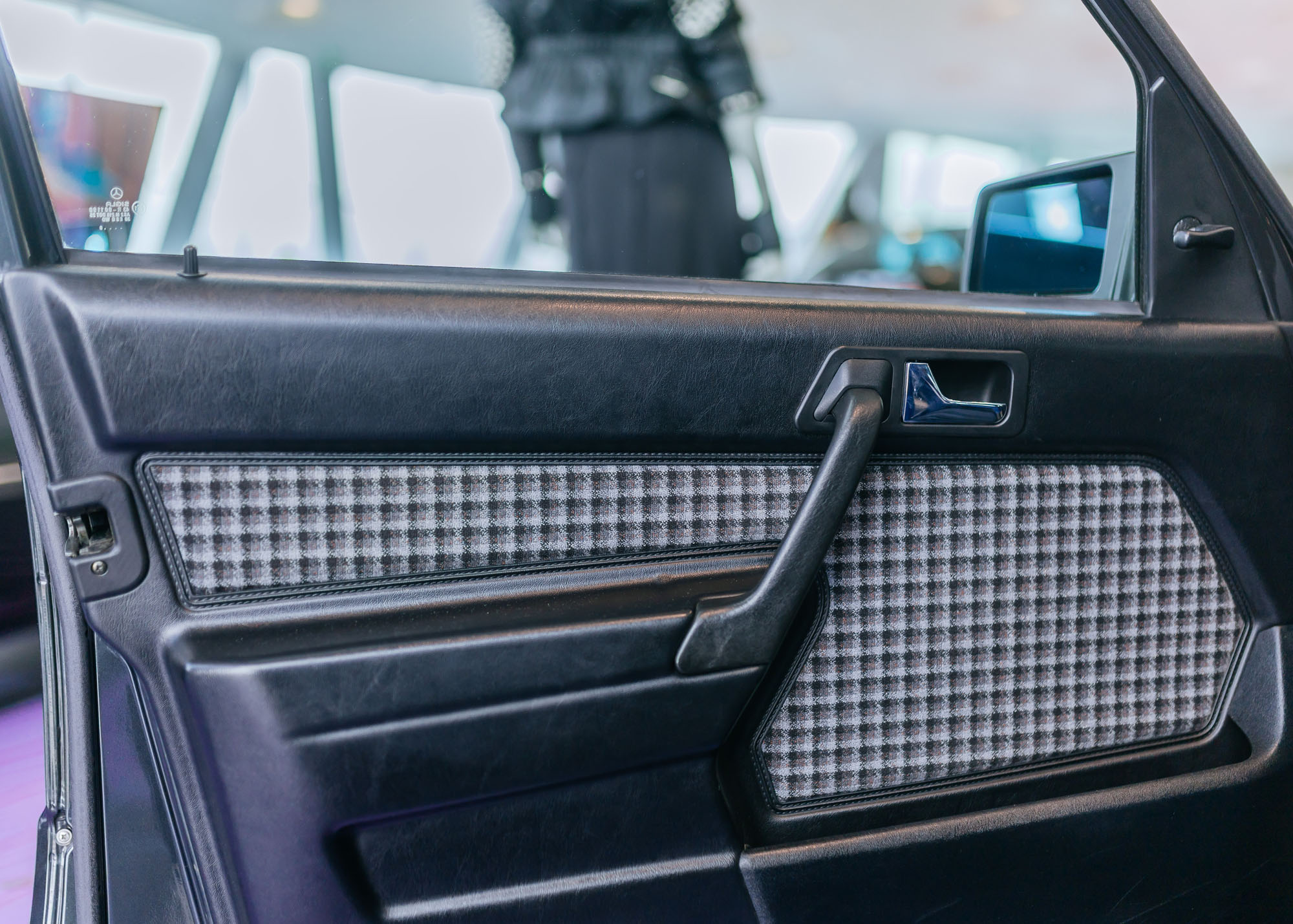
Beyond the headline features, the EVO II was full of thoughtful touches. The Mercedes star on the boot lid doubled as the trunk lock—a necessity due to the oversized rear wing. The 17-inch alloy wheels, often nicknamed “Roman chariot” wheels, filled the arches when the hydraulic suspension was lowered. Inside, sport seats, checkered fabric trim, and premium features like air conditioning and a Becker Grand Prix radio balanced performance with comfort.
Exclusive Then—Coveted Now
At launch, the EVO II cost around DM 120,000—more than three times the price of a standard 190 E. That made it a rare sight even in period. Today, its combination of motorsport pedigree, limited production, and unmistakable design has elevated it to true collector status—one of the defining homologation specials of the 1990s.
More information HERE
Above contents © 2026 Mercedes-Benz AG, reviewed and edited by Rex McAfee , @rexmcafee