
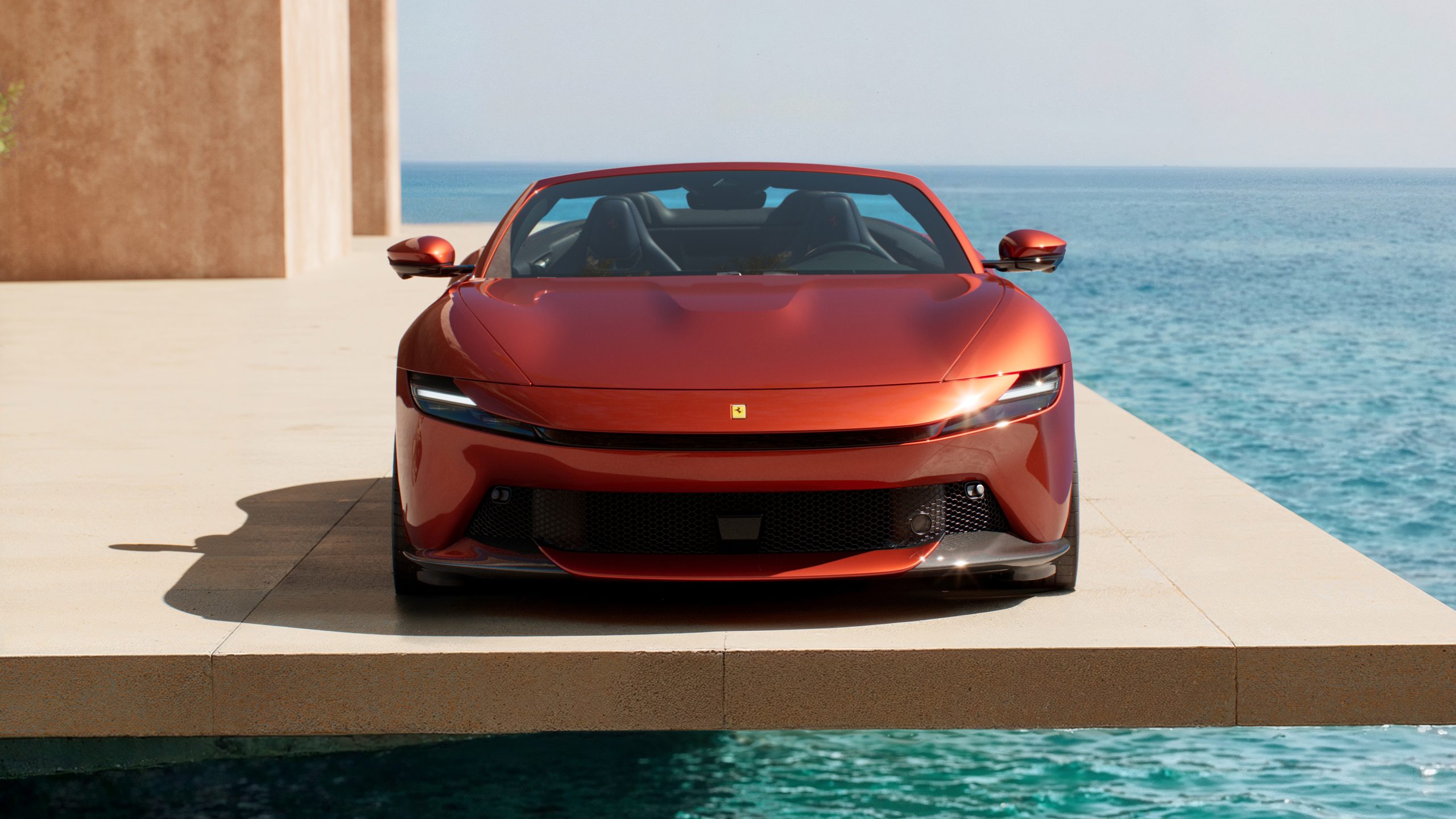

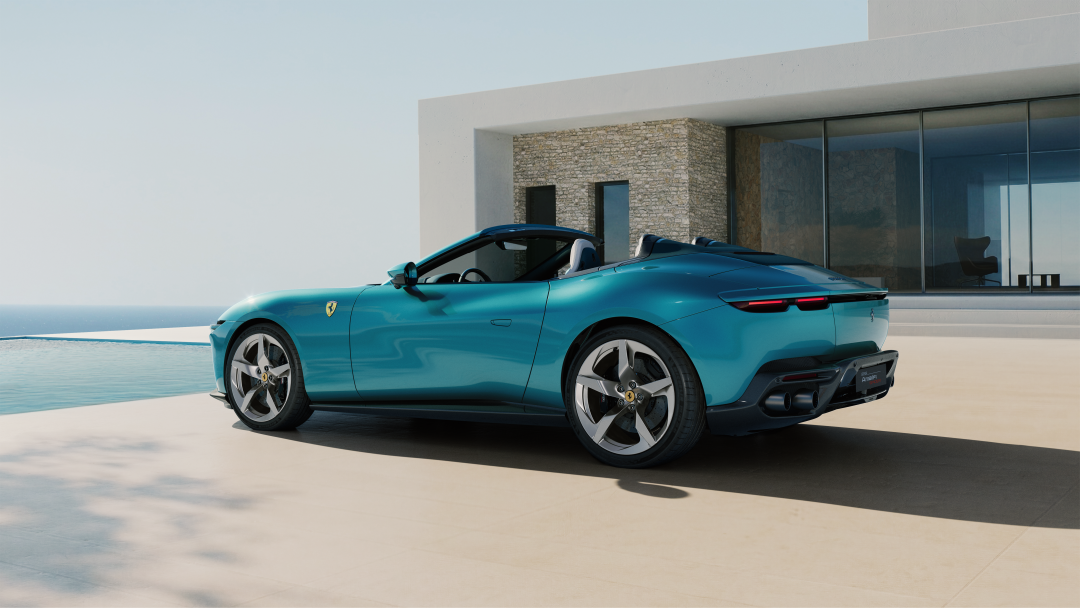
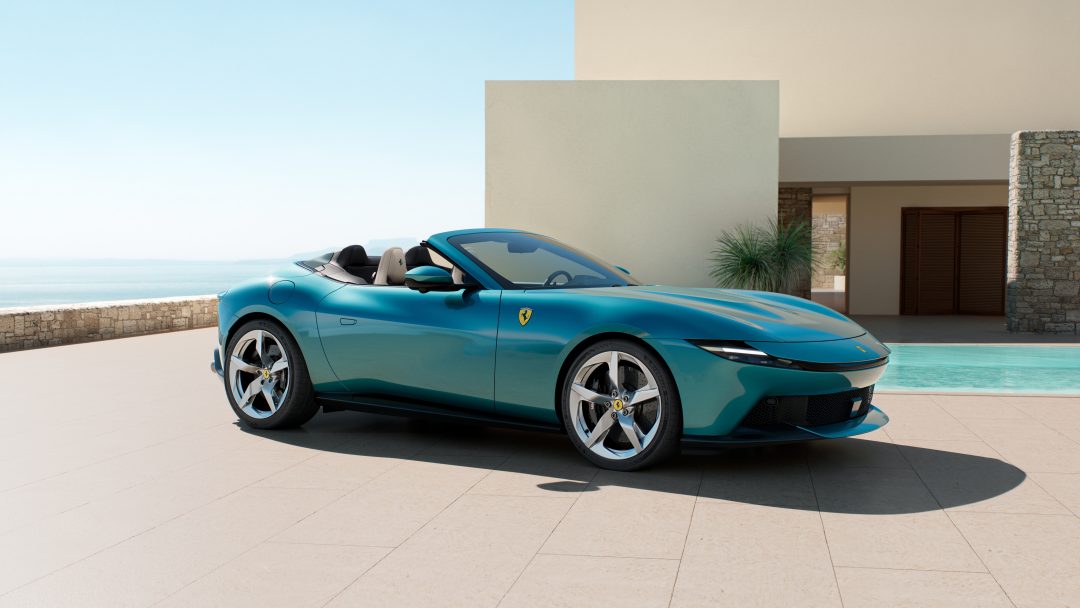
- Ferrari today unveiled the Ferrari Amalfi Spider, a new 2+ spider from Maranello featuring a front-mid-mounted twin-turbo V8 engine.
- A perfect balance of performance, elegance, driving pleasure, ease of use and versatility makes the Ferrari Amalfi Spider the benchmark for Ferrari’s performance-driven lifestyle, including in an open-air configuration.
- The tailor-made or technical-fabric soft top opens in just 13.5 seconds, even at speeds of up to 60 km/h and, together with the car’s compact dimensions and generous luggage capacity, places the Ferrari Amalfi Spider among the leaders in its class.
- The award-winning 640 hp twin-turbo V8 delivers outstanding performance and immediate response in all driving conditions.
- The brake-by-wire system ensures more precise vehicle control, while ABS Evo, effective across all grip conditions, enhances braking performance and stability.
- Active aerodynamics, with a three-position rear wing and an integrated wind deflector operated at the touch of a button, improve the open-air driving experience.
Maranello, 12 March 2026 – The new Ferrari Amalfi Spider was unveiled today: a V8 2+ spider with a front-mid-mounted engine that embodies the perfect balance between contemporary sportiness and versatility within the Ferrari range. Designed for those who want a more dynamic driving experience without compromising comfort or style, the Ferrari Amalfi Spider combines outstanding performance and everyday versatility with the unique pleasure of open-top motoring, making every journey more engaging.
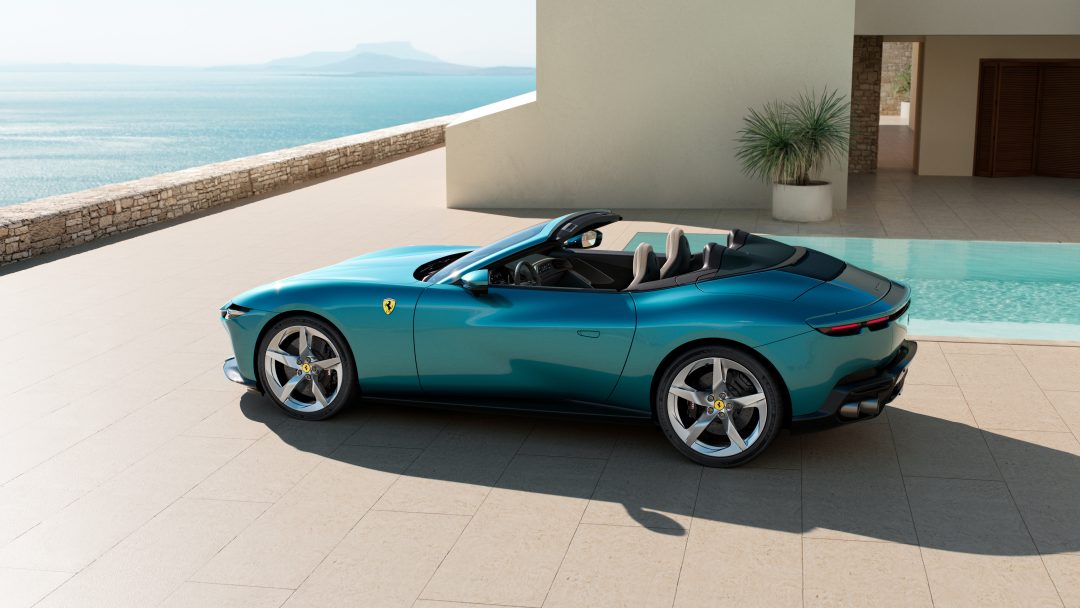
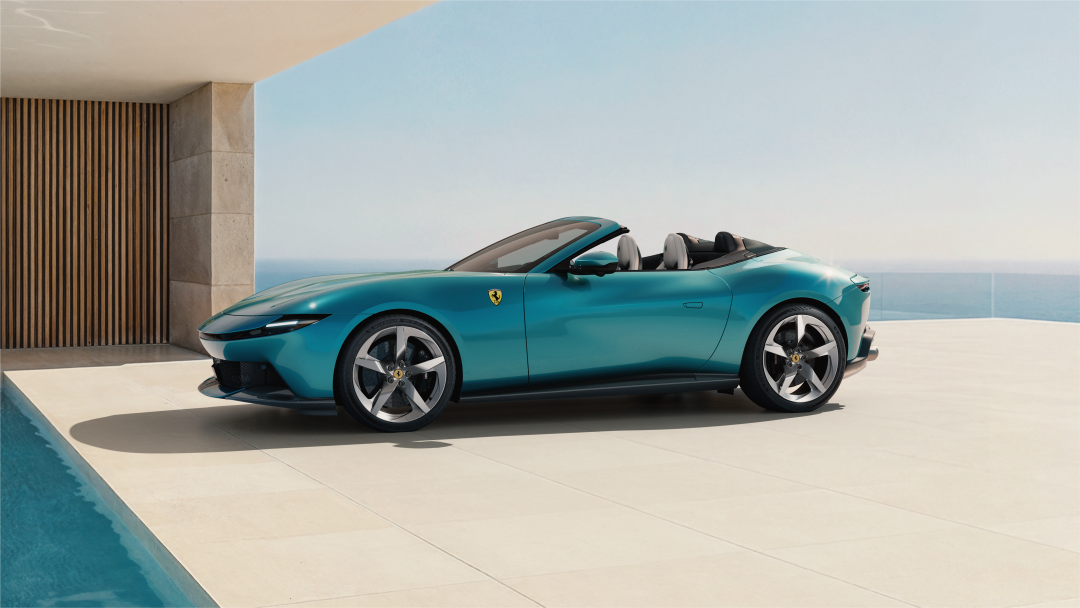
The car exemplifies the Ferrari sporting lifestyle in an open-top configuration: a seamless blend of performance, elegance, driving pleasure, ease of use and versatility. With the roof down, direct contact with the road and the sensations of open-air driving become integral to the experience, without compromising everyday usability or comfort.
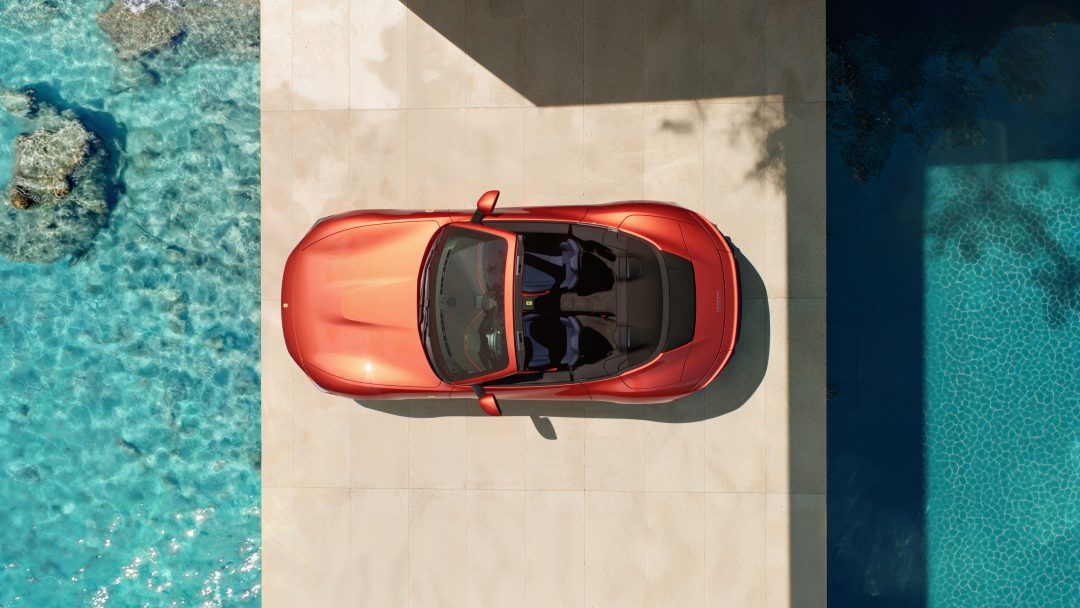
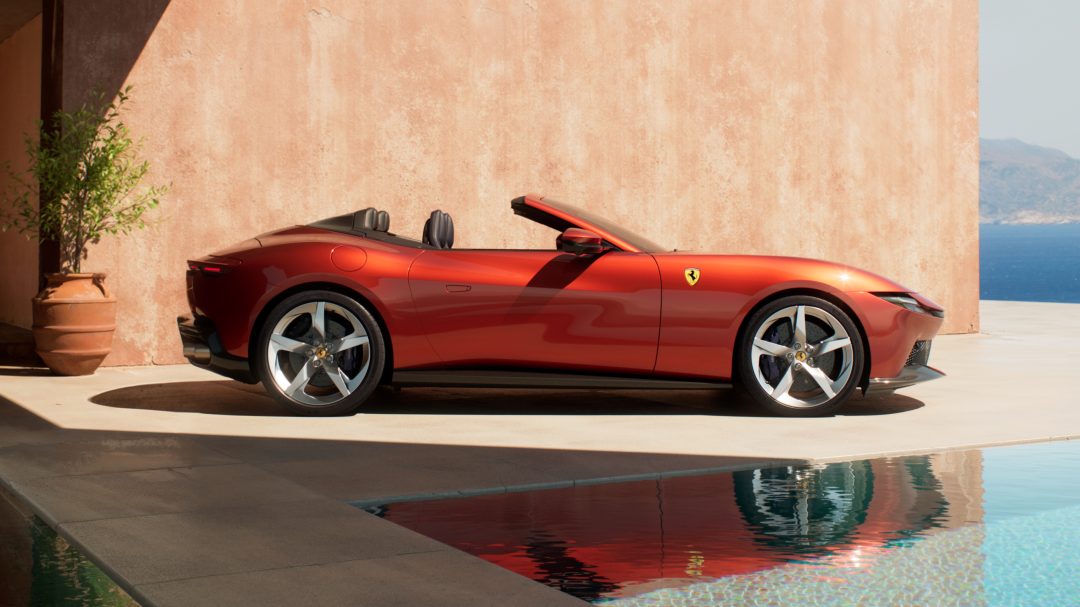
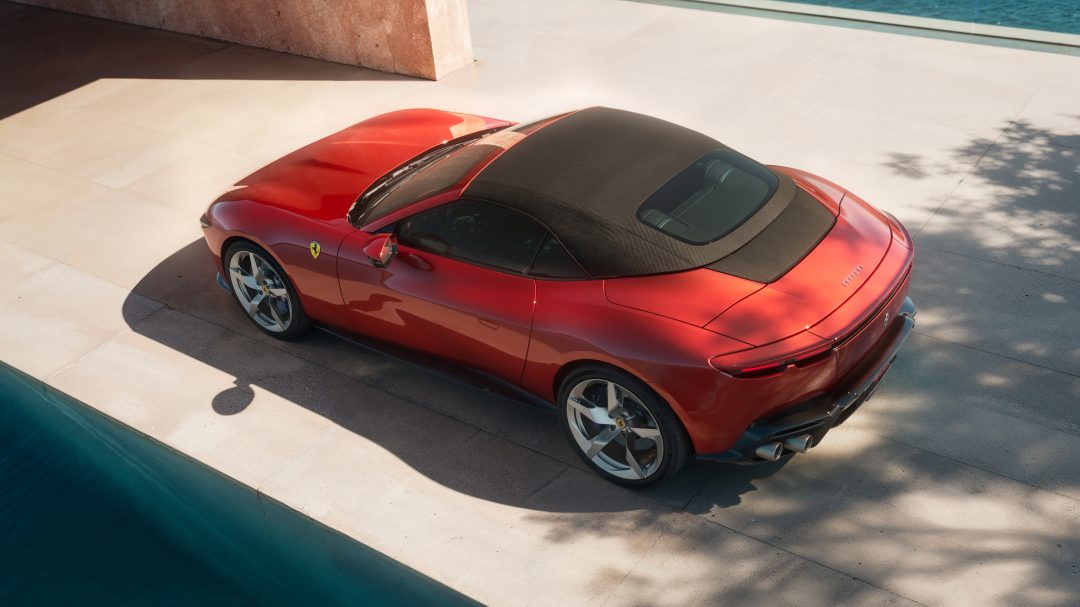
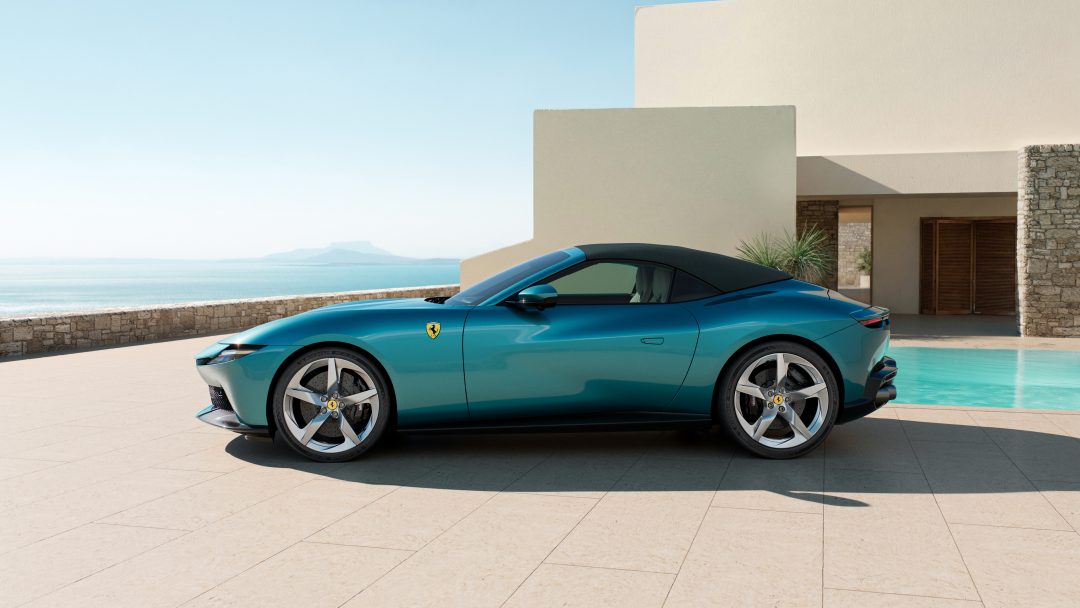
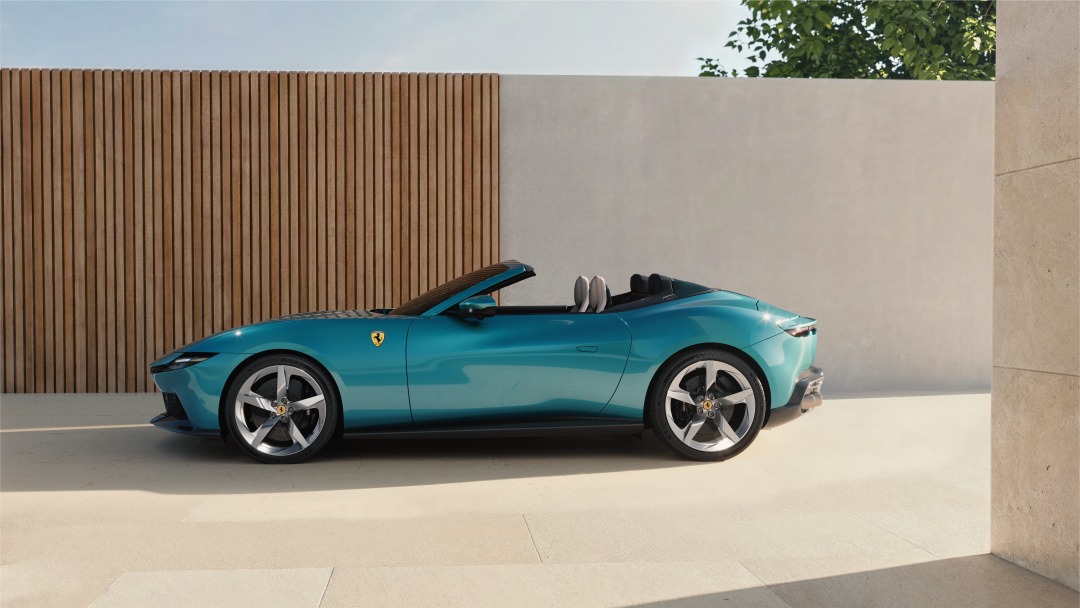
The design of the Ferrari Amalfi Spider was driven by the desire to preserve the proportions and volumes of the Ferrari Amalfi, retaining its elegant, flowing silhouette even with the roof open. The soft top, , a choice that enhances the car’s versatile character by giving it a clear and distinctive position within the Prancing Horse range, adds a more expressive character through a wide range of personalisation options, with four colours in tailor-made fabric and two in technical fabric, including the new Tecnico Ottanio. Optional contrast stitching further underscores both the car’s sporting character and its refined elegance. The distinctive weave of the technical fabric also creates a shimmering effect that enhances the material’s three-dimensionality.
The soft top opens in 13.5 seconds and can be operated on the move at speeds of up to 60 km/h. When folded, its compact packaging – just 220 mm thick – maximises luggage capacity, offering 255 litres with the roof closed and 172 litres with the roof open, in a layout suited to both everyday use and weekend getaways. Acoustic and thermal insulation is provided by a five-layer fabric delivering soundproofing and heat insulation comparable to that of a Ferrari retractable hard top (RHT), allowing occupants to appreciate the quality of the soft-top material even when driving with the roof down.
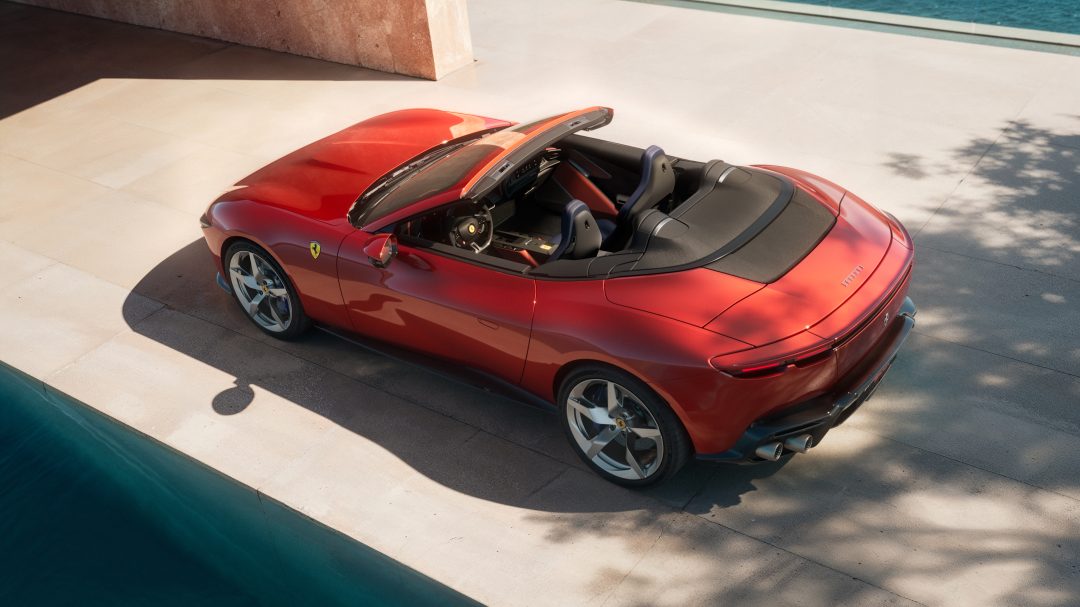
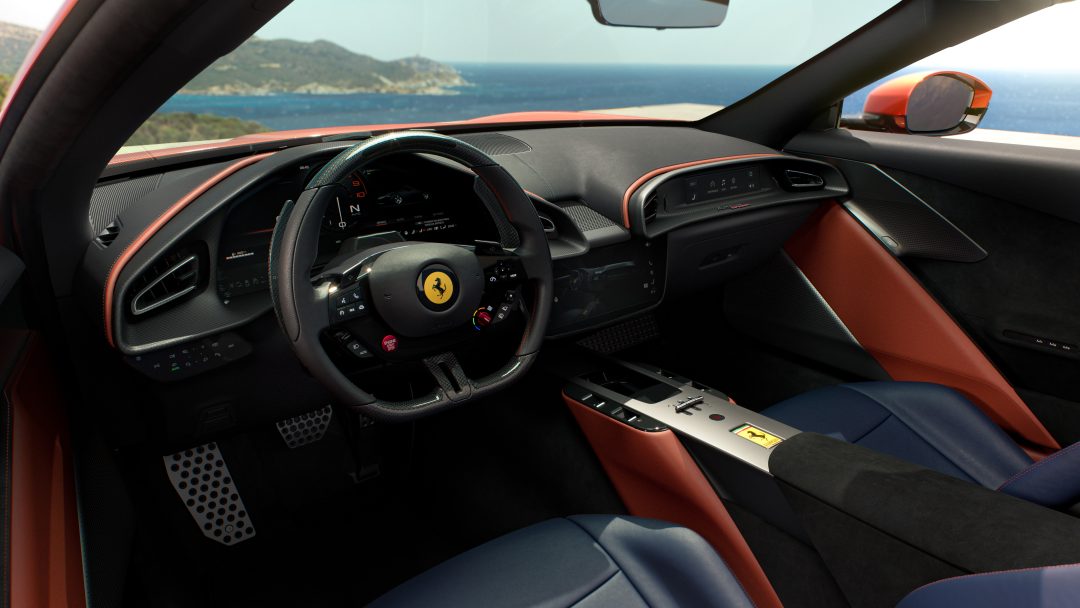
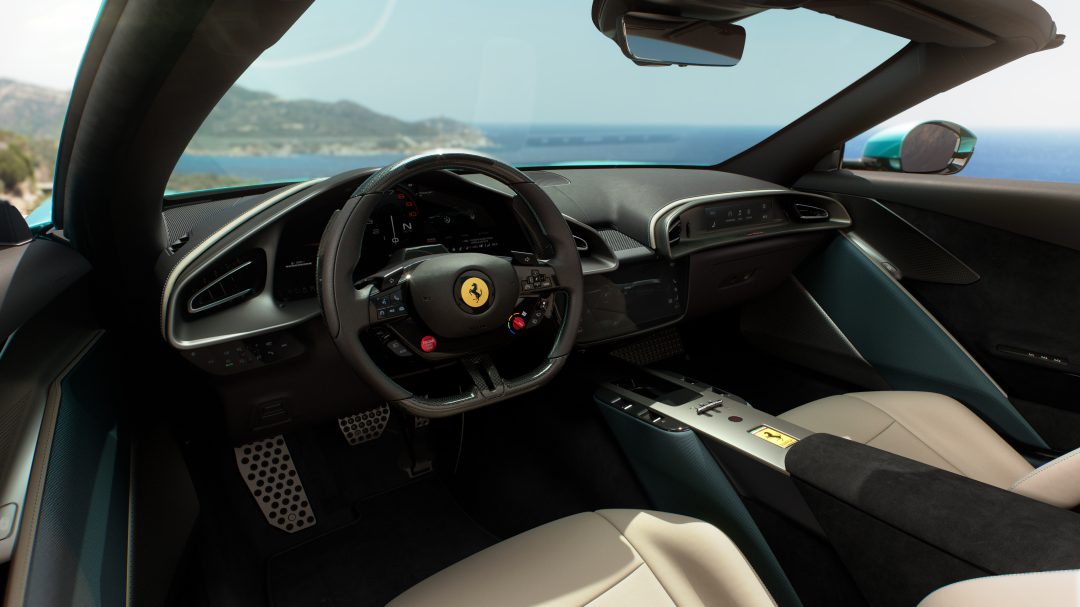
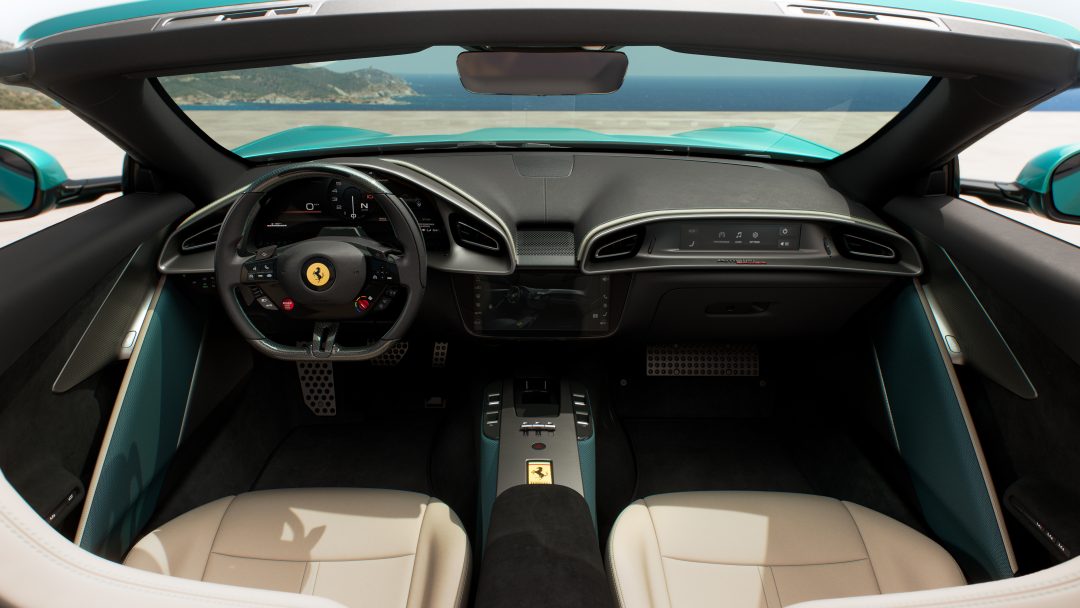
Like the Ferrari Amalfi, the cabin features a dual-cockpit layout and an evolved driver–car interface. Key elements include the steering wheel with physical buttons, the return of the iconic start button, the integrated central display, and controls designed for natural interaction even during the most dynamic driving. The 2+ configuration enhances practicality, with rear seats suitable for travelling with children or increasing load capacity. Completing the experience, an integrated wind deflector built into the rear bench backrest, and operated at the touch of a button, improves comfort by reducing turbulence during open-top driving.
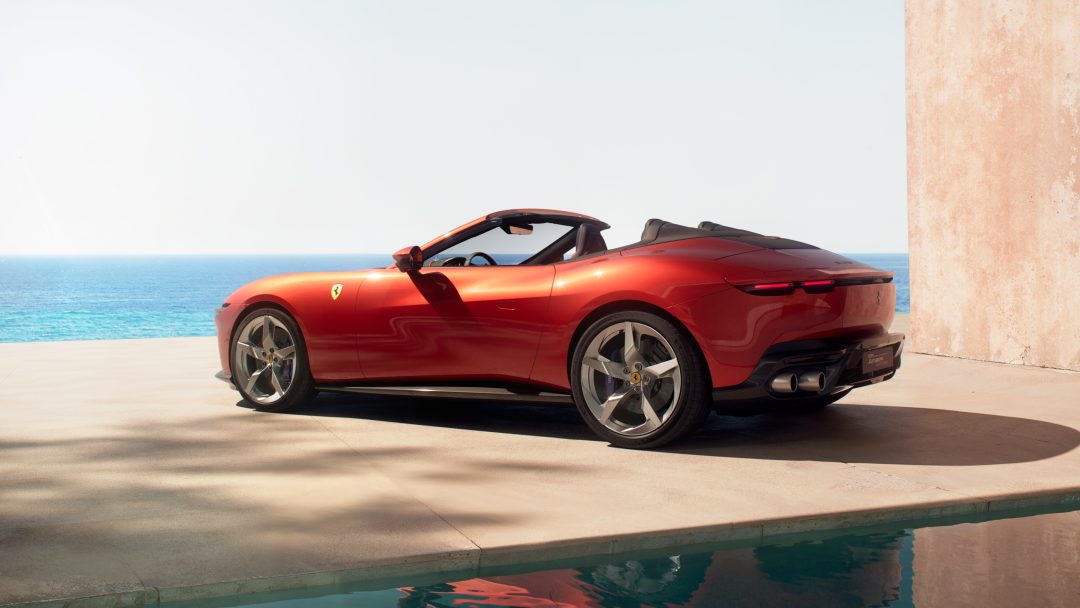
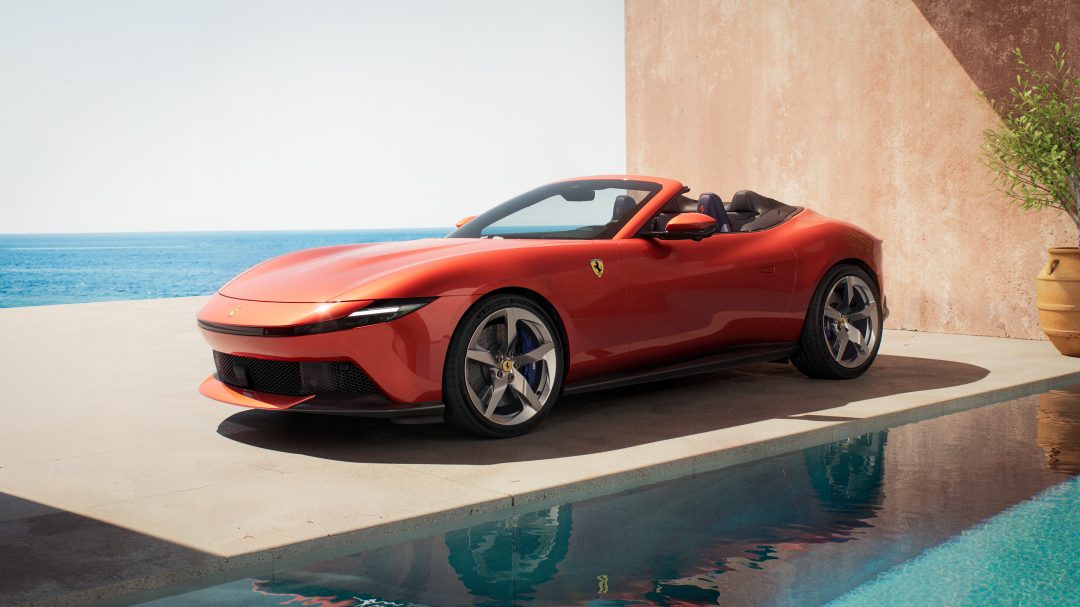
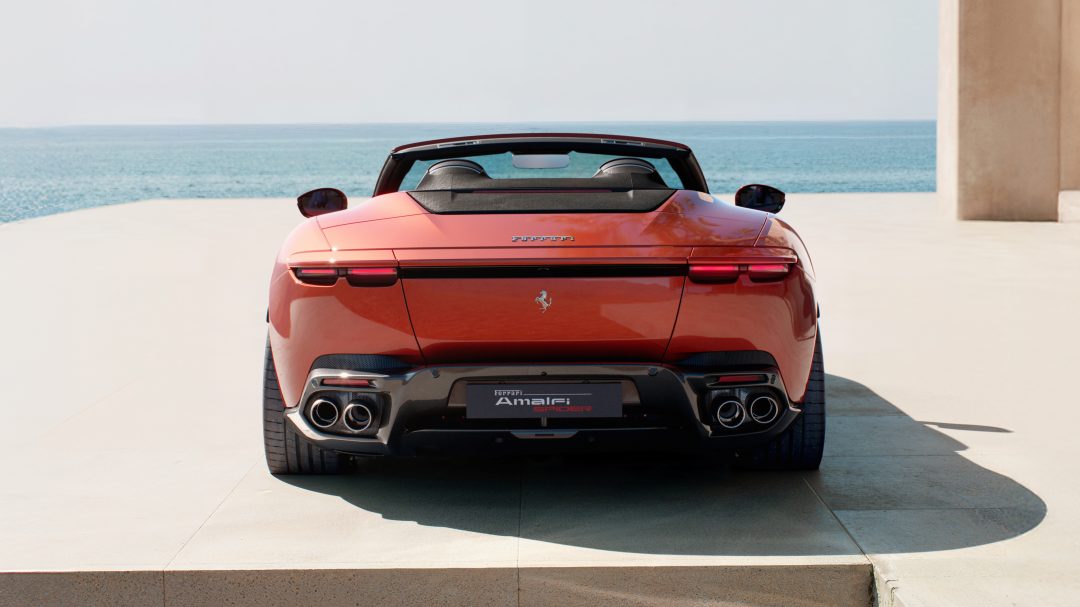
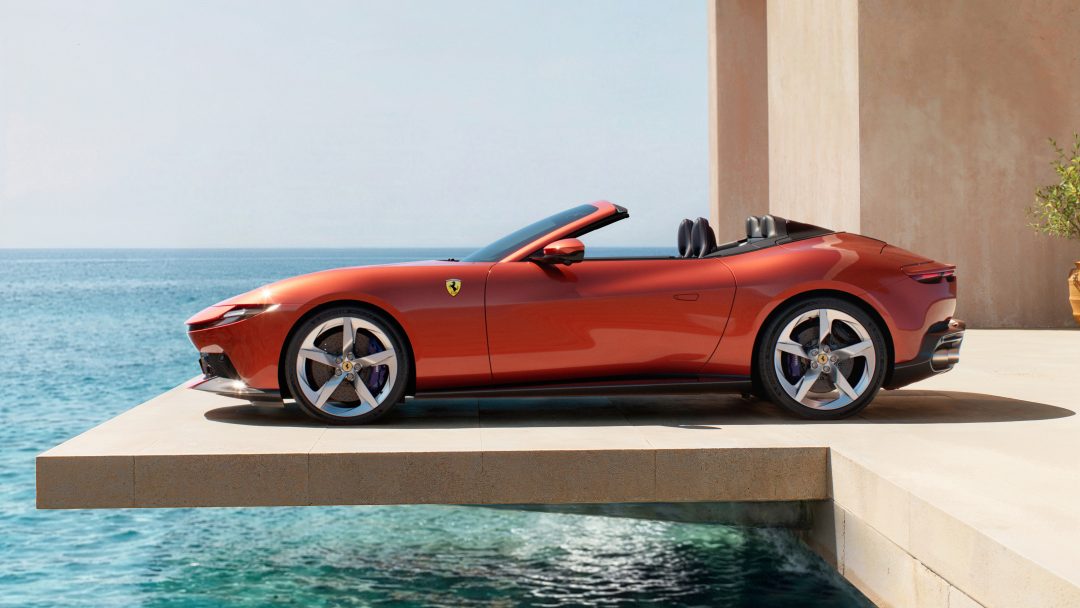
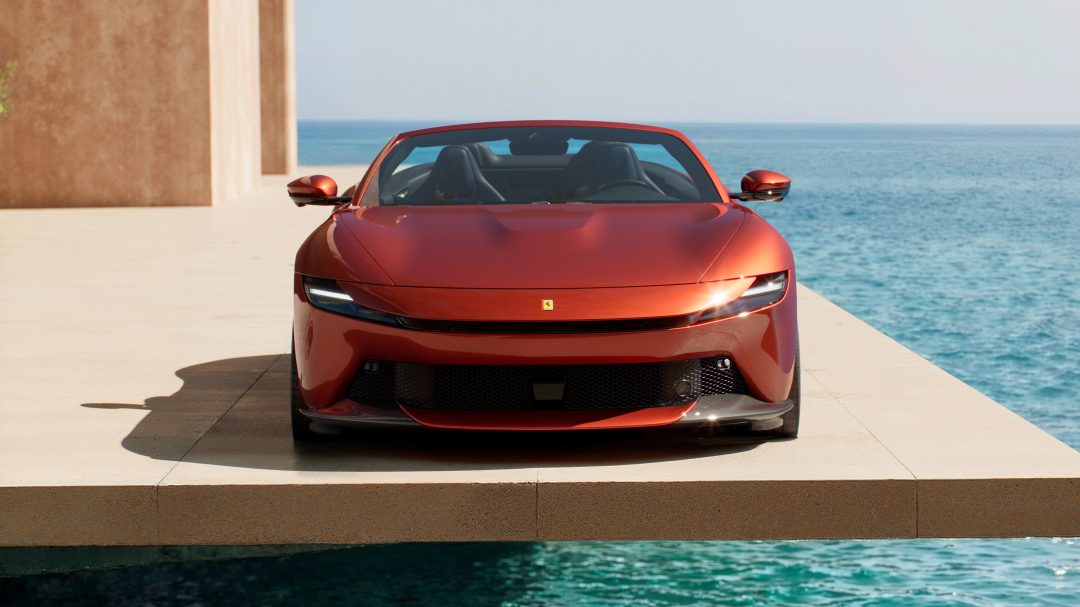
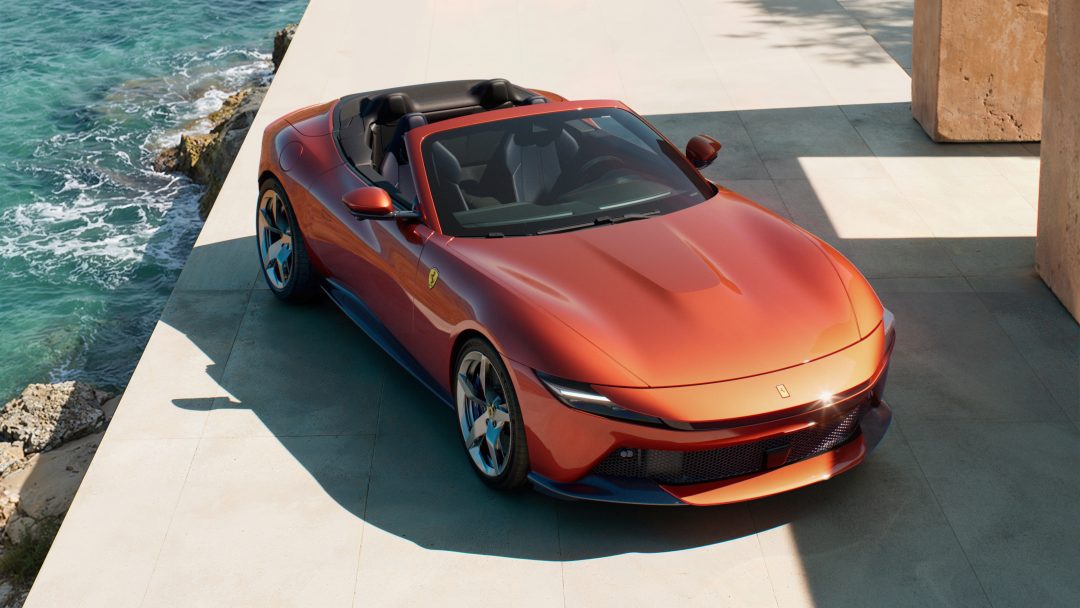
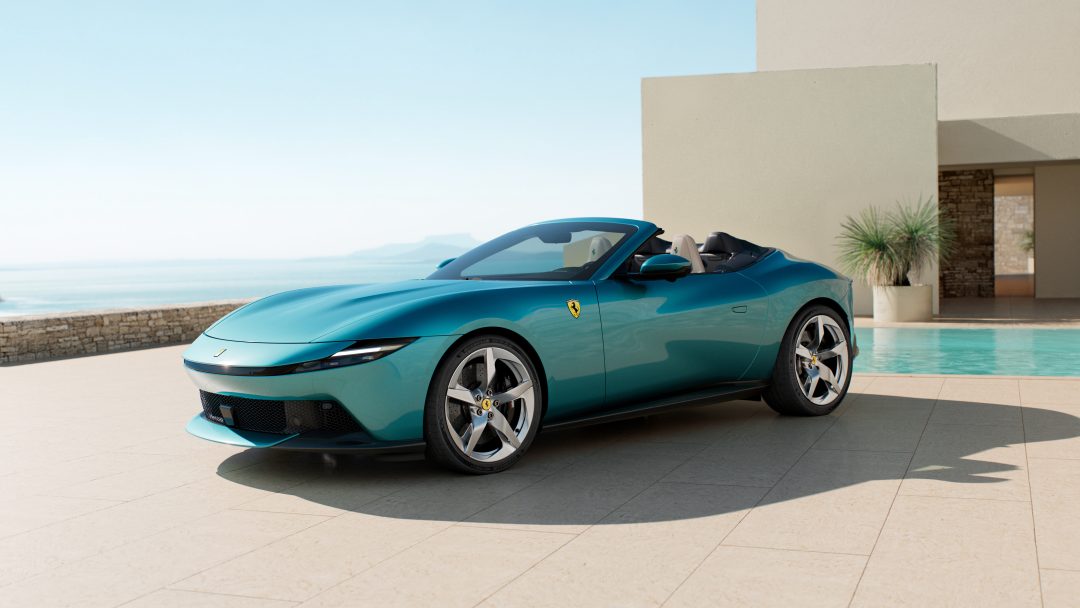
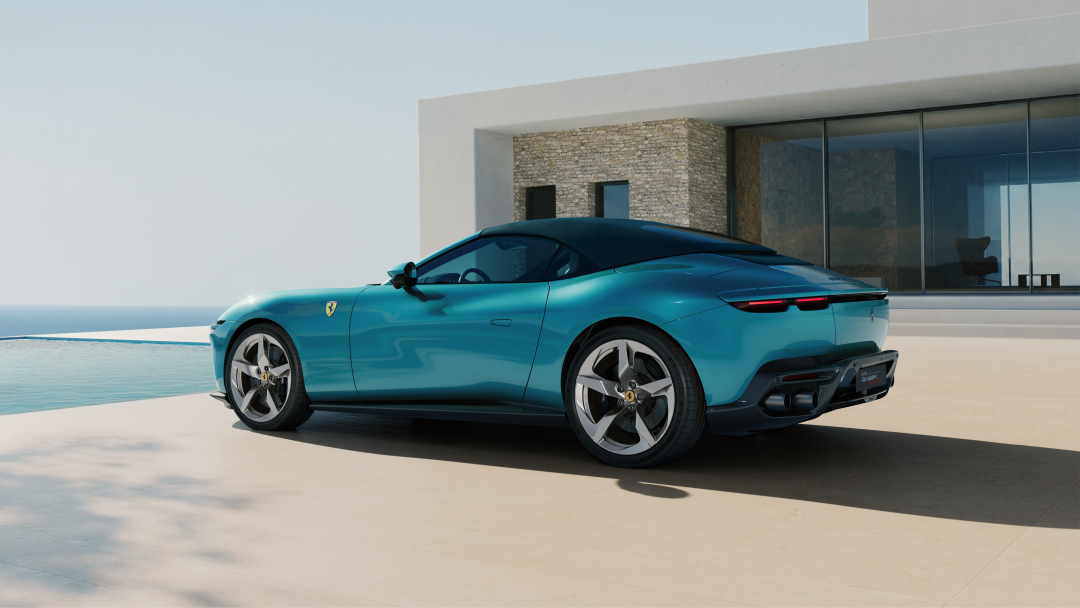
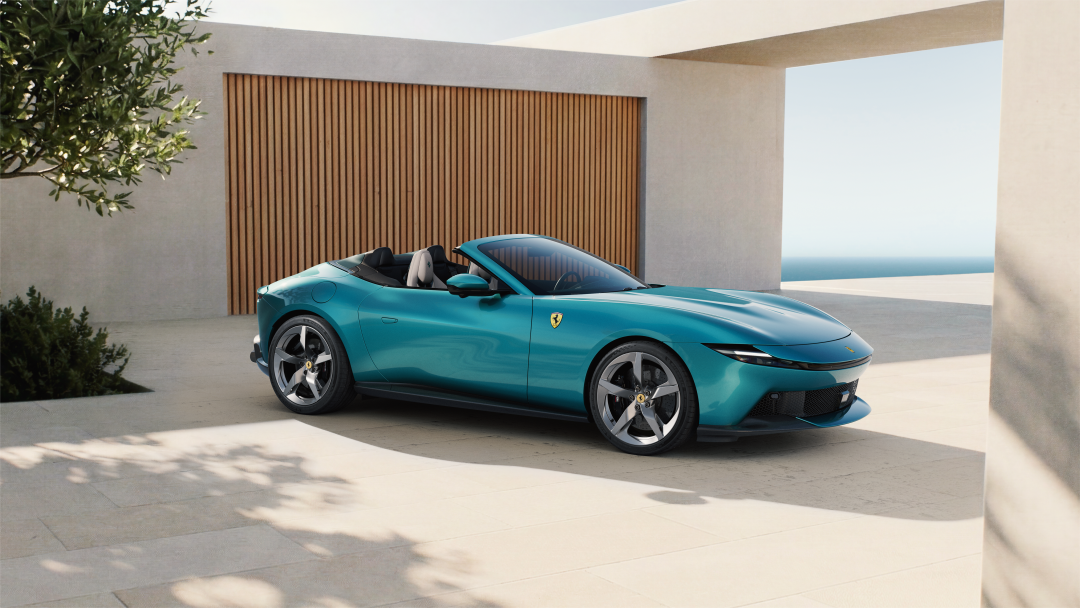
The car’s design is based on a fluid, minimalist approach, with sculpted volumes and clean surfaces that convey modernity and dynamism. The front end is defined by a large air intake and a long, sculpted bonnet that houses the 640 hp turbocharged V8. At the rear, the integrated active spoiler contributes to high-speed stability, while forged wheels and carbon fibre details complete a sporty and sophisticated aesthetic.
PRESS KIT
STYLE
EXTERIOR
Designed by the Ferrari Design Studio under the direction of Flavio Manzoni, the Ferrari Amalfi Spider embodies Ferrari’s sporting lifestyle in an open-air configuration, thanks to its 2+ spider architecture with a fabric soft top engineered to fully preserve the proportions and formal purity of the Ferrari Amalfi. The silhouette is elegant, fluid and instantly recognisable, whether the roof is open or closed. The design language blends refinement and energy, taking shape as a monolithic, sleek and sculptural speedform that gives the car a modern, fresh character while retaining unrivalled elegance. The approach is minimalist and functional, built around a precise interplay of volumes and clean surfaces sculpted by light. The soft top is available in four tailor-made fabric colours and two technical fabric options, including the new Tecnico Ottanio, inspired by the car’s overall colour mood. The distinctive weave of the fabric creates a three-dimensional shimmering effect that highlights the roof in all lighting conditions. With the roof open, the technical fabric can also extend over the tonneau and adjacent rear surfaces, creating unprecedented material continuity across the exterior and lending visual momentum to the rear, perceived as a natural extension of the roof.
With the Ferrari Amalfi Spider, Ferrari introduces the new Rosso Tramonto colour, an exclusive shade that enriches the chromatic journey begun with Verde Costiera, inspired by the hues of the Amalfi Coast. The signature colour of the Ferrari Amalfi Spider takes shape at the evocative boundary between sea and sky at dusk, embodying the character and distinctive elegance of the landscape that inspired it. This new shade, intense yet refined, is distinguished by subtle orange undertones that evoke the warm light of the setting sun, igniting the coast’s most iconic vistas. Rosso Tramonto enhances the sculpted surfaces of the Ferrari Amalfi Spider, enriching Ferrari’s red palette and capturing the energy of the day’s last ray of light, transforming it into emotion, identity and visual performance.
INTERIOR
The interior of the Ferrari Amalfi Spider carries forward the same concept of elegant, usable sporting character within a cockpit designed for open-top driving. The dual-cockpit architecture creates a pronounced cocooning effect, enveloping driver and passenger in two distinct yet visually connected spaces. The layout extends from the front seats across the dashboard and door panels, flowing seamlessly into the central tunnel, while the rear seats play a secondary role, to the benefit of versatility without compromising the overall clarity of the design. The central display serves as the point of interaction between driver and passenger, with a shared interface that underscores the car’s dual nature – sporting and versatile.
The interior design is deliberately clean, minimalist and contemporary, shaped by a process of subtraction that highlights materials, surfaces and geometries. For the first time, the instrument cluster and air vents are brought together within a single monolithic cockpit, evenly divided between driver and passenger. The central tunnel adopts a pure, essential form: a suspended bridge machined from solid aluminium houses the primary controls, while secondary functions are positioned further back to improve ergonomics and clean visuals. The door panels introduce a sail motif – sculptural elements that integrate the handles and armrests. Personalisation also extends to the interior, with selected components trimmed in the same fabric as the soft top, including the tonneau cover, door panels and seatbacks, creating an unprecedented stylistic continuity between exterior and cockpit even with the roof stowed.
DRIVER–VEHICLE INTERFACE
The onboard experience of the Ferrari Amalfi Spider, like that of the Ferrari Amalfi, has been designed to deliver intuitive, engaging and technologically advanced interaction, thanks to a completely renewed interface system and a range of solutions aimed at enhancing comfort and quality of life on board.
The new steering wheel, featuring physical buttons, marks a return to tactile controls, with a layout engineered to ensure maximum ergonomics and immediate recognisability in all driving conditions. On the left, the return of the iconic anodised aluminium start button establishes an immediate bond between driver and car from the very first moment of start-up. The controls are functionally distributed: on the left spoke are the ADAS controls, adaptive cruise control, phone, and voice commands, while on the right are the selectors for visualisation and interaction with the instrument panel. At the rear, two rotary dials manage volume and station selection, while a dedicated button is used to switch audio sources.
The system is structured around three main displays. The 15.6″ digital instrument cluster provides all driving and vehicle dynamics information. At the centre of the dashboard, a 10.25″ capacitive display allows the driver and passenger to access the main functions: multimedia, radio, phone, screen mirroring, climate control, seat adjustments, and vehicle settings. Finally, the 8.8″ passenger display offers a true co-driver experience, showing parameters such as G-forces and engine revs.
Connectivity is ensured through compatibility with Apple CarPlay® and Android Auto®, while wireless smartphone charging is integrated into the central tunnel. The car is also equipped with the MyFerrari Connect system, which allows remote monitoring of the vehicle’s status via a dedicated app.
CHASSIS AND ARCHITECTURE
The Ferrari Amalfi Spider adopts an architecture designed to deliver an uncompromising open-air driving experience in terms of comfort and functionality. The soft-top mechanism has been engineered to be both lightweight and robust, featuring a Z-fold kinematic system that allows the roof to open in just 13.5 seconds, even while driving at speeds of up to 60 km/h. When fully stowed, the roof measures only 220 mm thick, ensuring outstanding packaging efficiency. The fully automatic fabric soft top incorporates a large rear window and is constructed from a five-layer, sandwich-assembled acoustic fabric designed to effectively attenuate road and external noise. The result is acoustic insulation comparable to that of a vehicle equipped with a retractable hardtop (RHT), thanks in part to insulating layers of varying thicknesses that strike an ideal balance between performance and weight. A strong focus on usability is also reflected in space management: the Ferrari Amalfi Spider offers class-leading luggage capacity, with 255 litres with the roof closed and 172 litres with the roof open, ensuring it remains suitable for both everyday urban use and weekend journeys.
AERODYNAMICS
The aerodynamic development of the Ferrari Amalfi Spider started with a clear goal: to create a convertible car with a fabric roof which could offer aerodynamic performance comparable to that of the Ferrari Amalfi, whilst also delivering top-of-class comfort even with the roof down. The adoption of the soft top and the influence of this component on the geometry of the bodywork led to a process of analysis and optimisation designed to preserve the efficiency and downforce of the car.
A series of functional devices are incorporated into the car, which contribute to flow management and help to balance load and resistance. At the front, a bypass above the headlight connects the front end of the car to the engine compartment, reducing overpressure and contributing to thermal control; vertical load generation is enhanced by the vortex generators and diffusers integrated into the front underbody of the car, while in front of both the front and rear wheels, the vehicle is equipped with aerodynamic and resistance-reducing fairings for the exposed part of the wheels.
At the rear, the Ferrari Amalfi Spider is equipped with a mobile wing that is perfectly integrated into the tail of the car, which permits three active configurations (Low Drag or LD, Medium Downforce or MD, and High Downforce or HD). which adjust automatically in accordance with the speed and the longitudinal and transverse acceleration of the car. In the HD configuration, the wing generates up to 110 kg more load at 250 km/h, with a drag increase of less than 4%; the MD configuration, meanwhile, helps to develop the downforce, with a quicker transition to maximum opening. A 20 mm high integrated nolder completes the rear axle, helping to recompress the flow in minimum resistance conditions.
The rear diffuser has been optimised with a view to achieving the best possible balance between load and resistance, with controlled expansion of the flow in the central channel, maximising the energy of the slipstream and boosting the overall efficiency of the vehicle. The layout of the cooling system is also an integral part of the aerodynamic design as a whole: the central area between the longitudinal elements of the chassis houses the engine water radiator and the air conditioning condenser, while the side vents feed the turbocharging system’s intercoolers.
Particular attention has been paid to passenger comfort when the roof is open. The Ferrari Amalfi Spider is equipped with a wind deflector integrated into the backs of the rear seats, which can be activated by the driver at the touch of a button without needing to stop. When the configuration is active, the airflow that would enter the cockpit of the car from the rear is deflected, creating a more stable bubble of comfort around the passengers and reducing turbulence and noise, particularly in the head area. The system has been calibrated with an opening angle of 101°, and the design of the backrest (including the frame and moving parts integrated into a recessed sub-frame) provides solidity and a dynamic response, in all driving conditions. It can be opened at speeds of up to 170 km/h, above which it is electronically limited. When the device is already open, it can be used right up to the maximum speed.
POWERTRAIN
The engine of the Ferrari Amalfi Spider, like that of the Ferrari Amalfi, represents the latest evolution of the 3855-cc V8 twin-turbo from the F154 family – the model that has won the most international awards in recent automotive history. In this configuration, the engine has been optimised to deliver a maximum output of 640 hp at 7,500 rpm, with a specific power output of 166 hp/l and a redline raised to 7,600 rpm, allowing it to get the most out of its continuously increasing power curve.
The performance increase compared to the Ferrari Roma Spider was achieved through an advanced turbocharging management system, enabling independent control of the rotational speed of the two turbochargers with dedicated calibration and an increase in the maximum turbo speed up to 171,000 rpm. This approach improves throttle response and boosts pressure control precision, also thanks to the introduction of dedicated pressure sensors for each cylinder bank. The new engine control unit, already used in models such as the 296 GTB, Ferrari Purosangue, and Ferrari 12Cilindri, has allowed the engine’s full potential to be harnessed.
In parallel, efforts were made to reduce mass: new lightweight camshafts (-1.3 kg) and a redesigned engine block with precision machining eliminated non-structural material, saving about one kilogram. For the first time in a Ferrari engine, a low-viscosity oil has been introduced, reducing cold resistance by 30% compared to the previous version, improving warm-up efficiency.
Throttle response is now even quicker thanks to a series of advanced technical solutions: a flat-plane crankshaft, compact low-inertia turbines, twin-scroll technology for separate exhaust gas management, and a single-scroll manifold with equal-length runners. These elements contribute to a sensation of continuous and progressive power delivery, with a torque curve shaped to provide stronger pull at mid and high revs in all gears.
The eight-speed dual-clutch oil-bath transmission, first introduced on the SF90 Stradale to widespread acclaim, has been further optimised with a more powerful control unit and enhanced integration with the engine software, improving the smoothness and speed of gear changes.
The overall powertrain efficiency benefits from solutions such as the dry-sump gearbox configuration, low-friction bevel gear, and clutch torque management strategies that ensure much smoother urban driving, especially during Start & Stop phases.
Sound design also received special attention: a new silencer layout was developed to meet the strictest noise emission regulations, without compromising Ferrari’s signature tone. The flat-plane crankshaft and equal-length exhaust headers contribute to a distinctive firing sequence. The exhaust system features a ceramic matrix catalyst with a trimetallic coating (rhodium, platinum, palladium), with reduced activation times thanks to lower thermal inertia. Sound control is managed by a new proportionally controlled bypass valve with dedicated maps to adapt the exhaust note to different driving conditions.
VEHICLE DYNAMICS
The vehicle dynamics of the Ferrari Amalfi Spider, like those of the Ferrari Amalfi, represent a significant evolution in the landscape of front-engined Spider 2+ coupés, thanks to the integration of the most advanced technologies developed by Ferrari in recent years. At the heart of this system is the introduction of brake-by-wire, a solution that significantly improves braking efficiency, reduces pedal travel, and enhances modulation — even in situations where ABS is engaged.
The ABS Evo system, first introduced on the 296 GTB and further developed for the Ferrari Purosangue and the Ferrari 12Cilindri, has been adapted to ensure optimal performance on all surfaces and in all Manettino modes. This controller uses data from the 6D sensor to precisely estimate the vehicle’s speed and determine the optimal slip for each wheel, thereby optimizing brake force distribution. The result is greater effectiveness in straight-line braking and in combined conditions, where lateral stability and longitudinal deceleration must be balanced.
The precision of these estimates also allows for greater repeatability of manoeuvres, reducing variations caused by mechanical tolerances or environmental conditions, such as tarmac temperature. This approach is part of the Side Slip Control (SSC) 6.1 system, the common language among all dynamic controllers on the vehicle (from steering to torque management and vertical body motion control), to maximise performance in every situation.
A further advancement is the grip estimation system based on EPS (Electric Power Steering), an evolution of the version introduced on the 296 GTB. In this new iteration, grip estimation is 10% faster and more accurate, even on surfaces with very low traction. The recognition logic uses the dynamics exchanged by the electric steering box and the hub carrier, and the yaw angle estimated by SSC 6.1, to assess tyre-to-tarmac grip levels, especially when not driving on the limit, improving the responsiveness and effectiveness of the controllers.
The Manettino offers five positions (‘Wet’, ‘Comfort’, ‘Sport’, ‘Race’, ‘ESC-Off’) that enable the driver to select the level of intervention of various systems such as the F1-Trac, suspension damping and the e-diff. As with the Ferrari Amalfi, the dynamic range of the Ferrari Amalfi Spider has been refined and expanded, thanks to the more dynamic character of the “Sport” and “Race” calibrations compared to those on the Ferrari Roma. The transition between settings is now more gradual, helping to make driving easier.
To support the vehicle dynamics, the Ferrari Amalfi Spider also employs a rear active spoiler, which is activated depending on longitudinal and lateral acceleration. In dynamic driving conditions, such as during hard braking or high-speed cornering, the spoiler automatically shifts to the High Downforce configuration, generating additional rear aerodynamic downforce and contributing to the car’s overall stability.
In terms of safety and driver assistance, the Ferrari Amalfi Spider is equipped with a comprehensive suite of next-generation ADAS systems. Among the functions included as standard are Adaptive Cruise Control, Automatic Emergency Braking, Blind Spot Detection, Lane Departure Warning, Lane Keeping Assist, automatic high beam, traffic sign recognition and assistance and driver drowsiness and distraction detection. Optional Surround View and Rear Cross Traffic Alert are some of the options available on request. All systems are configurable via the instrument cluster menus and integrate seamlessly with the car’s electronic architecture, which includes front and rear radar, cameras, and dedicated control units.
Together, these technologies enable the Ferrari Amalfi Spider to deliver a precise, responsive and engaging driving experience, where every system works in harmony to ensure maximum control and driving pleasure – regardless of road conditions or driving style.
TYRES
The choice of tyres for the Ferrari Amalfi Spider was guided by a careful balance between aesthetics, performance and comfort. The 20” wheels were selected to maintain the harmonious proportions consistent with the car’s design language, without compromising ride quality. To ensure maximum comfort, the sidewall aspect ratio chosen for the Ferrari Amalfi has been retained, ensuring a progressive response and good absorption of road surface imperfections.
The tyre dimensions are 245/35 R20 at the front and 285/35 R20 at the rear, a configuration that balances agility and traction, contributing to the car’s precise and responsive dynamics. The Ferrari Amalfi Spider comes equipped as standard with tyres co-developed specifically for this application in collaboration with three partners: Pirelli P ZERO, Goodyear Eagle F1 SuperSport and Bridgestone Potenza Sport.
GENUINE MAINTENANCE
Ferrari’s unparalleled quality standards and increasing focus on client service underpin the extended seven-year maintenance programme offered with the Ferrari Amalfi Spider. Available across the entire Ferrari range, the programme covers all regular maintenance for the first seven years of the car’s life. This scheduled maintenance programme for Ferraris is an exclusive service that allows clients the certainty that their car is being kept at peak performance and safety over the years. This very special service is also available to owners of pre-owned Ferraris.
Regular maintenance (at intervals of either 20,000 km or once a year with no mileage restrictions), original spares and meticulous checks by staff trained directly at the Ferrari Training Centre in Maranello using the most modern diagnostic tools are just some of the main advantages of the Genuine Maintenance programme. The service is available on all markets worldwide and from all Dealerships on the Official Dealership Network.
The Genuine Maintenance programme further strengthens the wide range of after-sales services offered by Ferrari to meet the needs of clients wishing to preserve the performance and excellence that are the signatures of all cars built in Maranello.
FERRARI AMALFI SPIDER – TECHNICAL SPECIFICATIONS
| POWERTRAIN | |
| Type | V8 Turbo – 90° |
| Total displacement | 3855 cm³ |
| Bore & stroke | 86.5 x 82 mm |
| Maximum power | 640 hp at 7,500 rpm* |
| Maximum torque | 760 Nm at 3,000–5,750 rpm |
| Maximum revs | 7600 rpm |
| Compression ratio | 9.4:1 |
| Specific power output | 166 cv/l |
| WEIGHTS AND DIMENSIONS | |
| Length | 4660 mm |
| Width | 1974 mm |
| Height | 1305 mm |
| Wheelbase | 2670 mm |
| Front track | 1652 mm |
| Rear track | 1679 mm |
| Dry weight* | 1556 kg |
| Weight distribution | 48% front / 52% rear |
| Fuel tank capacity | 80 litres |
| Boot size | 255 litres (roof closed) / 172 litres (roof open) |
| TYRES AND WHEELS | |
| Front | 245/35 R20 J8.0 |
| Rear | 285/35 R20 J10.0 |
| BRAKES | |
| Front | 390 x 223 x 34 mm |
| Rear | 360 x 233 x 32 mm |
| TRANSMISSION AND GEARBOX | |
| 8-speed dual clutch F1 DCT |
| ELECTRONIC CONTROLS | |
| EPS, VDC, ABS with EBD, F1-TCS, E-Diff3, SSC 6.1, FDE 2.0, SCM-E Frs, ABS Evo in all Manettino positions |
| PERFORMANCE | |
| Top speed | 320 km/h |
| 0-100 km/h | 3.3 s |
| 0-200 km/h | 9.4 s |
| Dry weight-power ratio* | 2.42 kg/hp |
| 100-0 km/h | 30.8 m |
| 200-0 km/h | 119.5 m |
| CONSUMPTION AND EMISSIONS | |
| Consumption | Under homologation |
| CO₂ emissions | Under homologation |
* Set-up with optional content
12 March 2026
Read the full official press release from Ferrari.
Above contents © 2026 Ferrari, reviewed and edited by Eduardo Zepeda