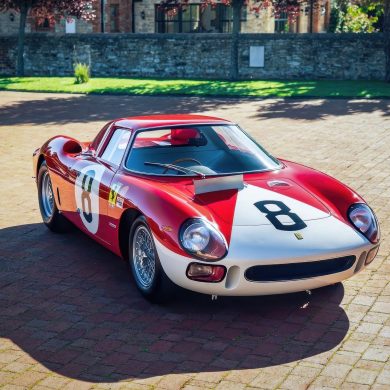
 If one accepts that Ferraris are among the most consistently desirable collector cars on the planet, then it is perhaps informative to look at how the GTO fits into the pantheon of Ferrari GTs. As outlined in this month’s Profile on the 250 GT Pininfarina Cabriolet, the 1960s 250 GTs all share a lot of core features and “DNA”—3-liter V-12 engines; ladder frame, tubular steel chassis; Pinin Farina designed bodywork, etc. Yes, obviously, there are significant differences, but when you look at it from the standpoint of the hard machinery—the differences in core structure, drivetrain, etc.— it is interesting to note that a Series II Cabriolet sells for $700,000–$800,000, while the California Spyder sells for $4 million and the GTO for now $35 million. Just looking at specs and performance numbers is the Spyder really $3 million more of a Ferrari? Is the GTO really $34 million more a car?
Members only$29 / year
Keep going. This is where it gets good.
Sports Car Digest Membership is for people who'd rather spend an hour with one chassis number than skim ten headlines. The rest of this story — and every other one like it — is a few seconds away.
-
5,000+ members-only stories
Concours, auctions, race history, driven classics and the full archive.
-
No ads. None.
The whole site reads like a magazine, on every device.
-
The market, every week
Auction results and classic-car values from the people who were there.
-
30% off the shop
Every Sports Car Digest shirt and piece of merch, all year.
Join Sports Car Digest — Keep Reading
$29 a year. Cancel anytime, no hoops.
Already a member? Sign in
BY CAR PEOPLE, NOT A NAMELESS MEDIA COMPANY. Your membership keeps a small independent team of historians, photojournalists and racing drivers doing this.