

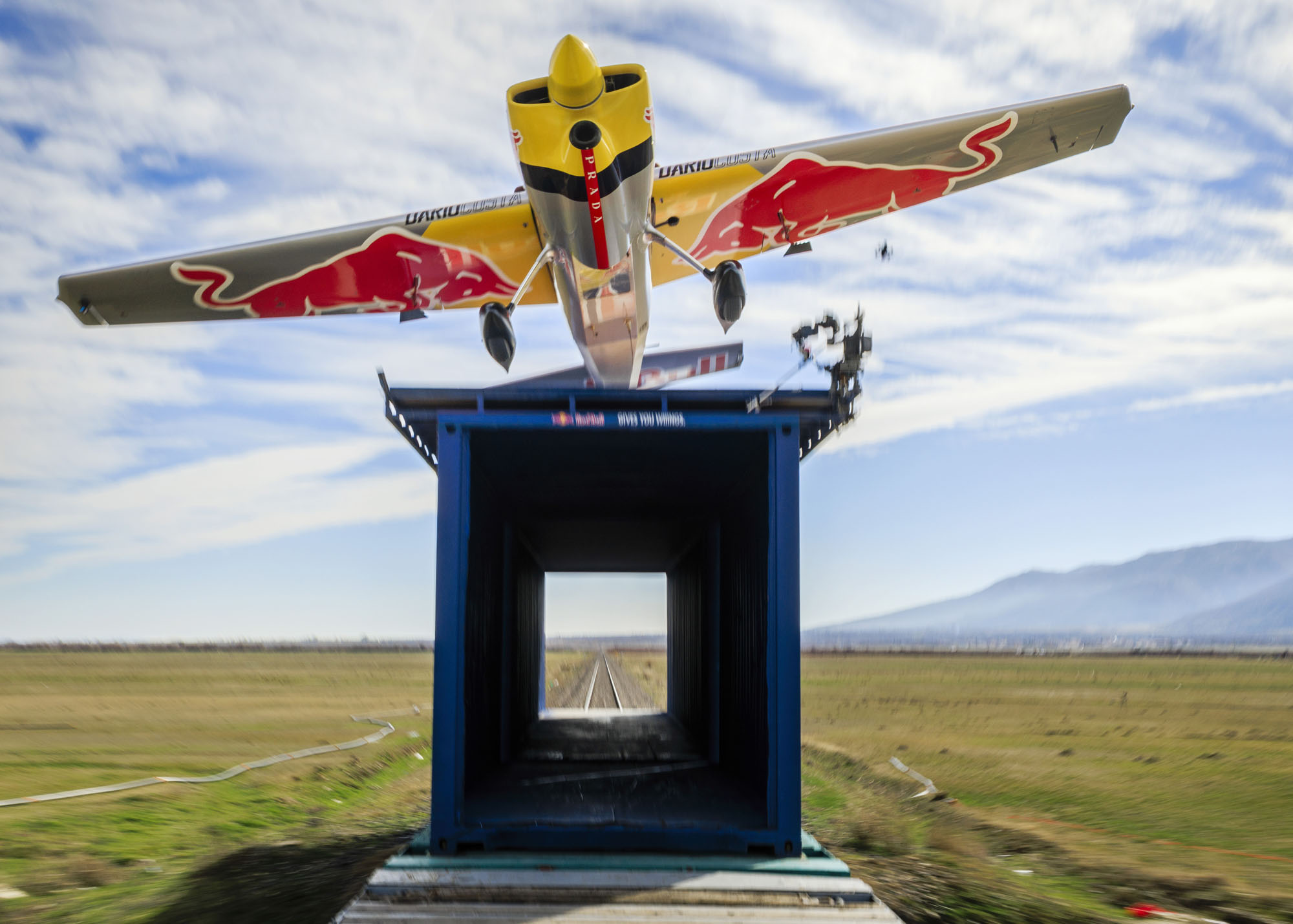
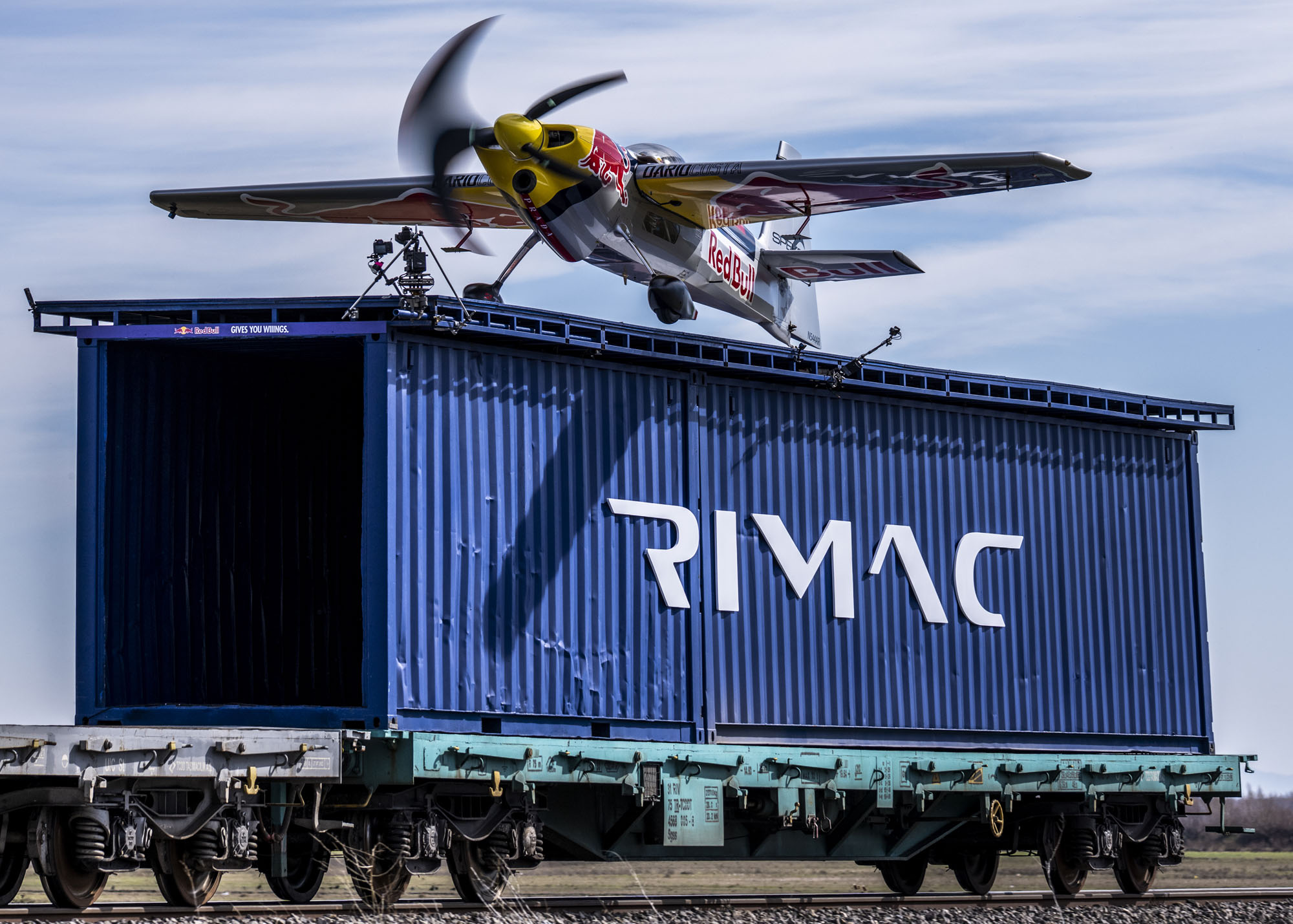
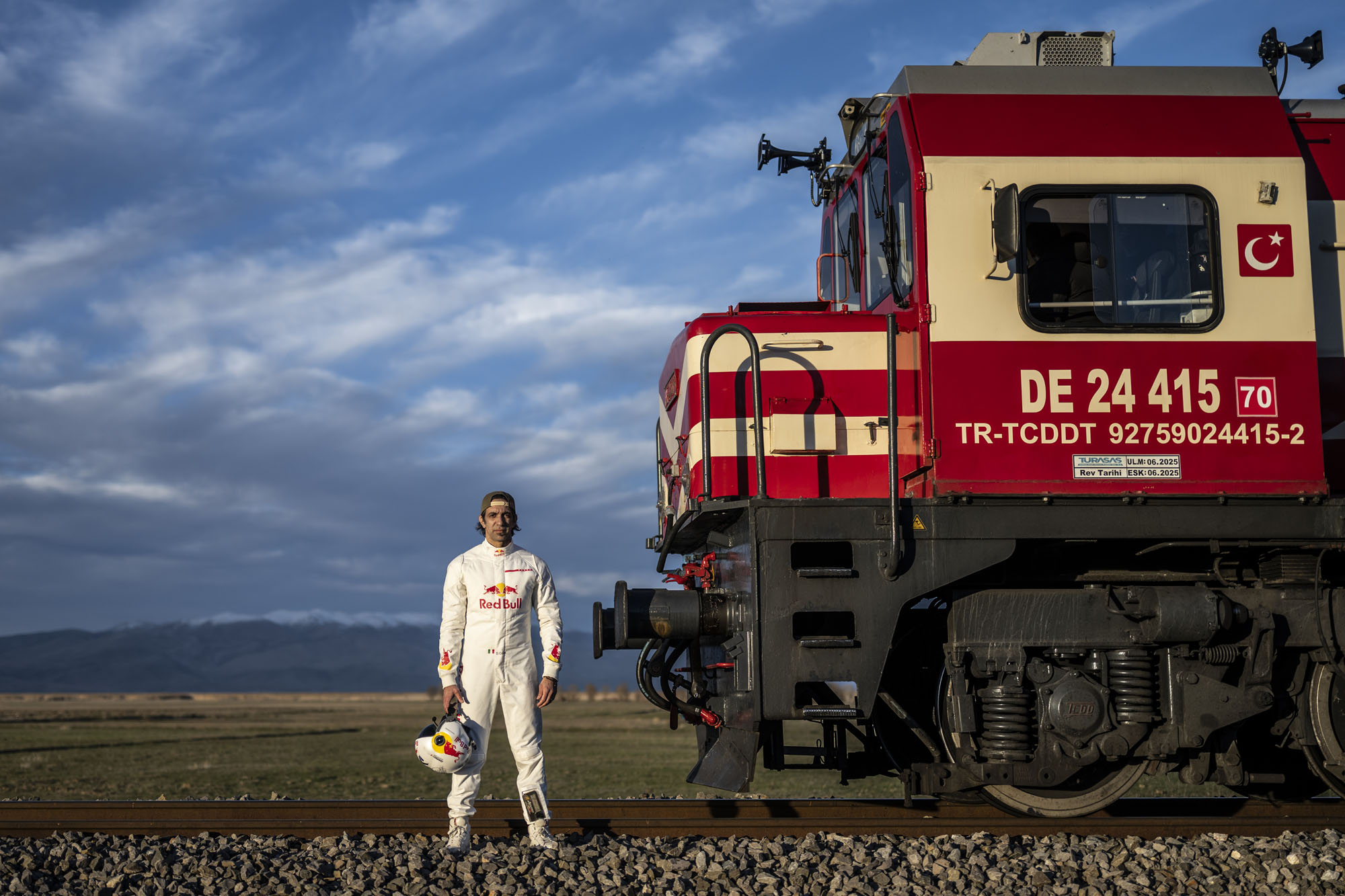
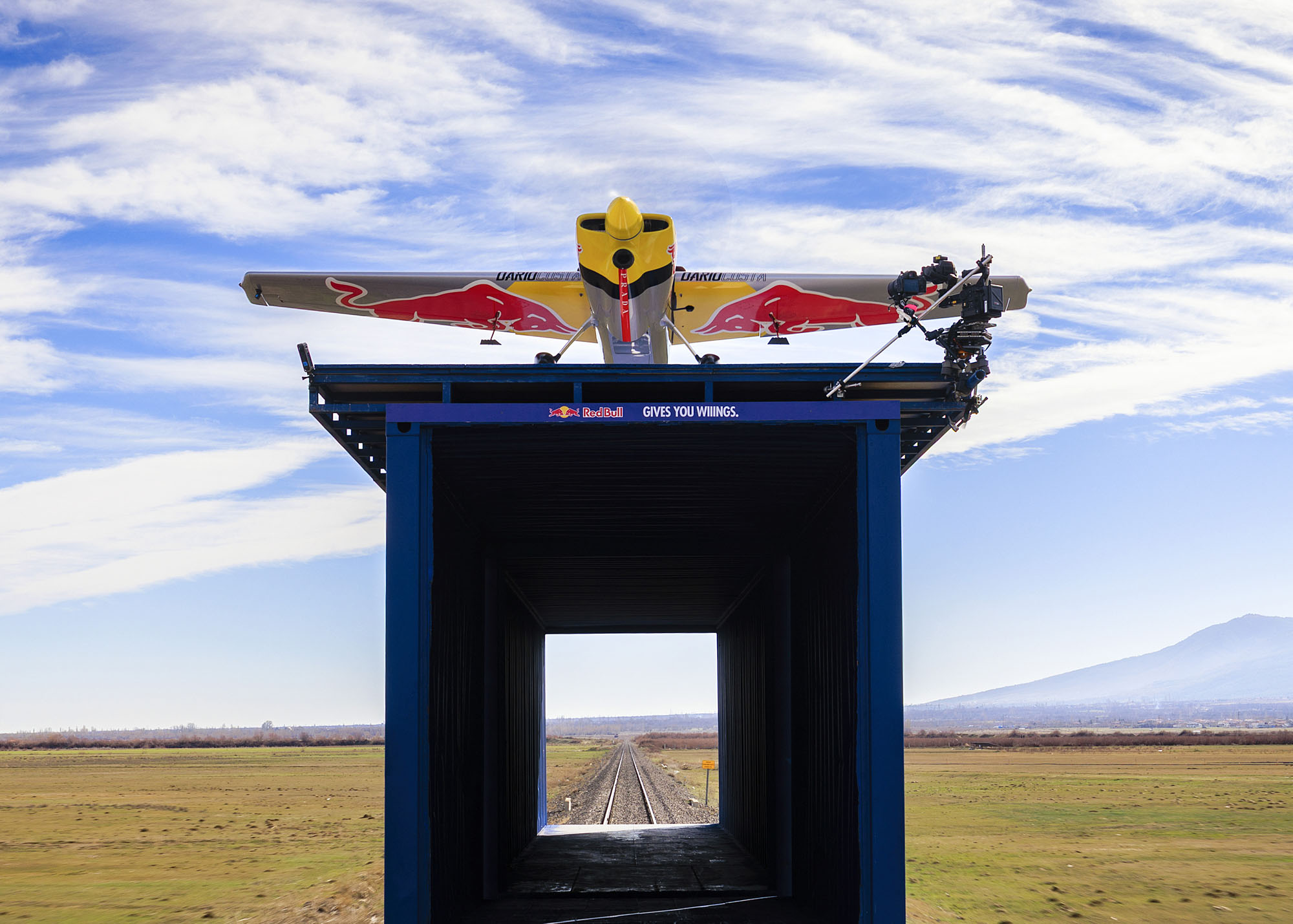
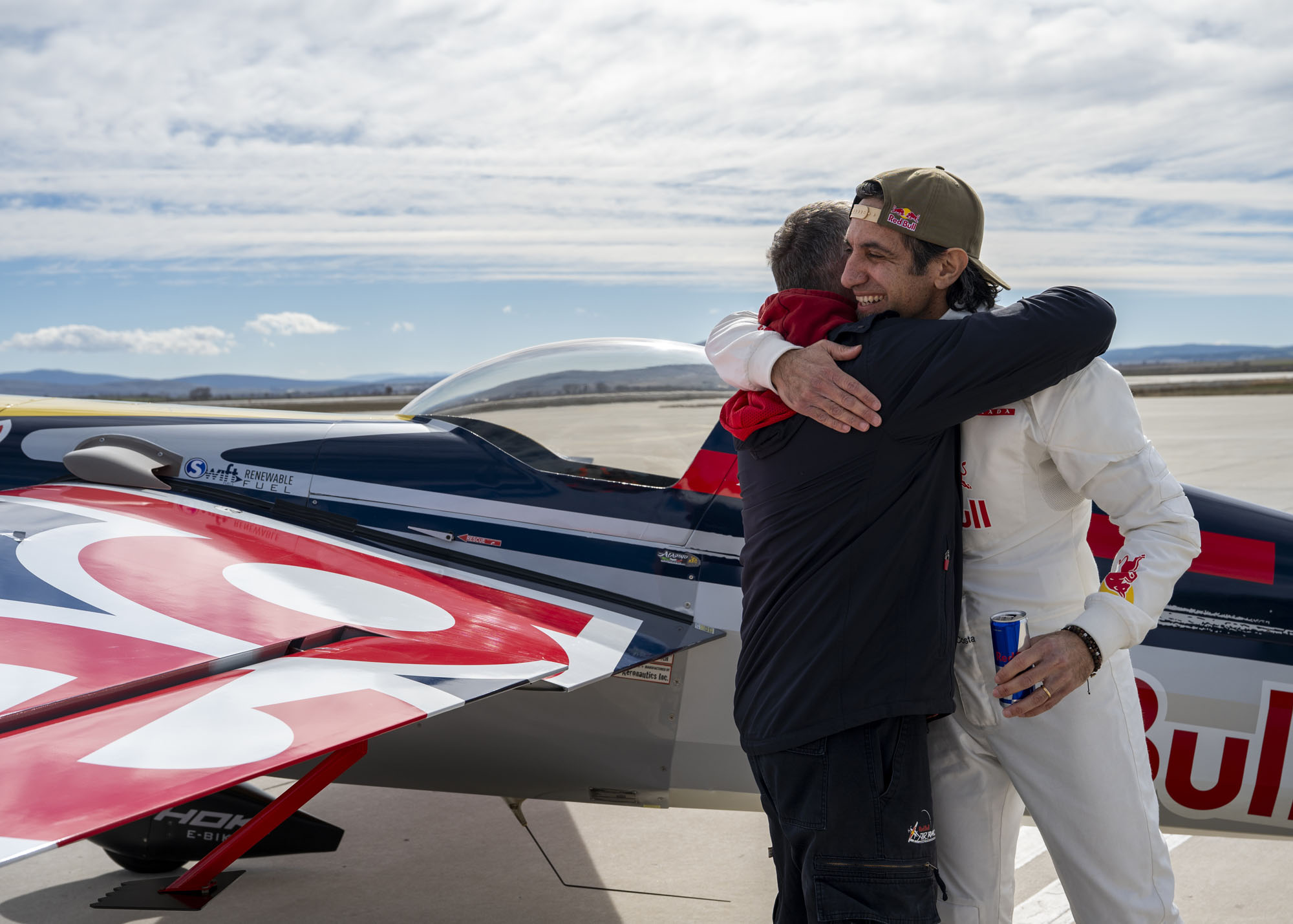
When Red Bull athlete Dario Costa touched down on top of a moving cargo train travelling at 120 km/h, he became the first pilot in aviation history to land a plane and take off from a moving train. Behind that world-first feat were months of meticulous preparation, and at the heart of it were Rimac’s Nevera R and Nevera hypercars as a training tool.
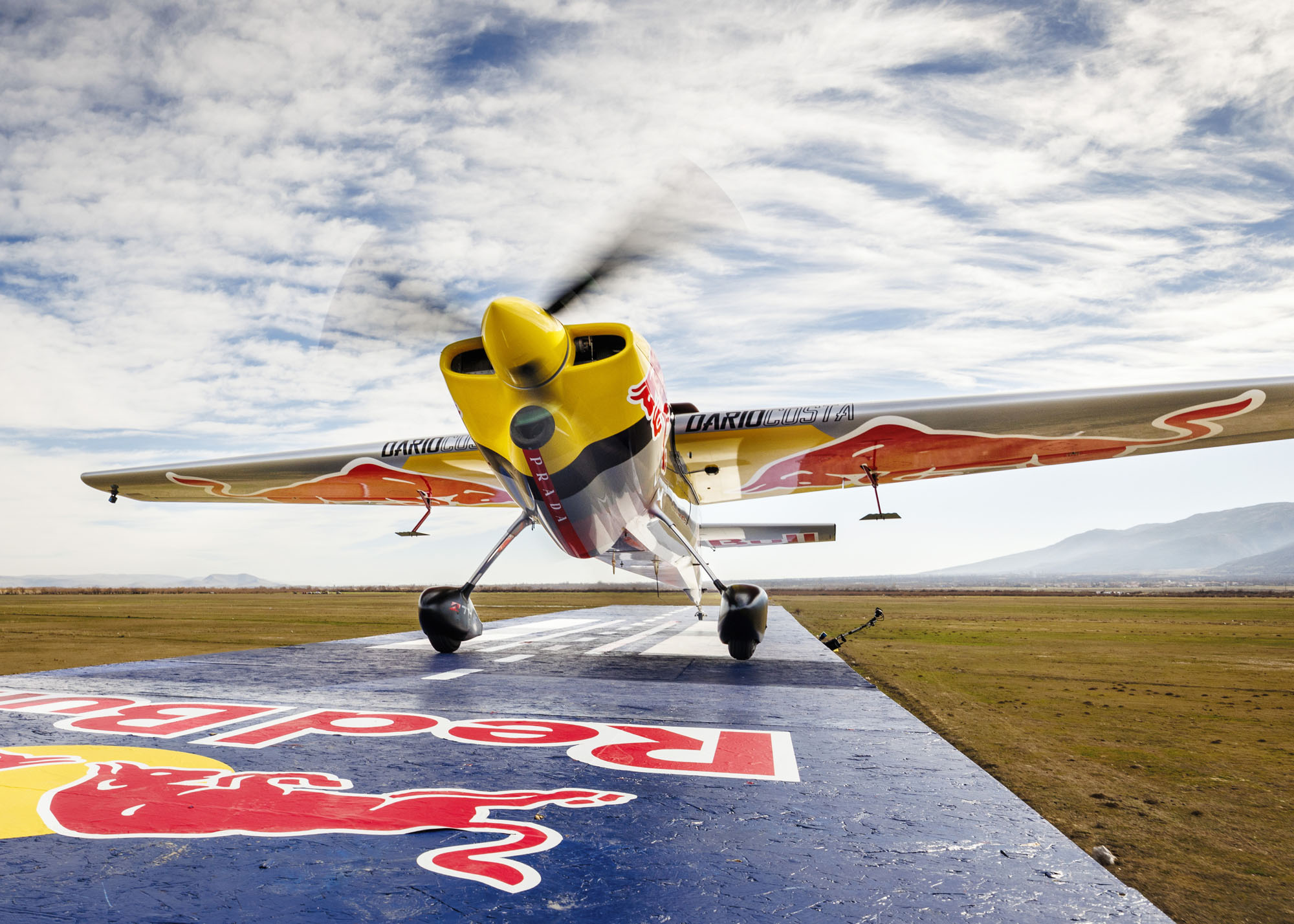
Executed on 15 February 2026 on a 2.5 km railway track in Afyonkarahisar, Türkiye, the project required Costa to approach a moving train container at near-stall speed – just 87 km/h – while simultaneously managing severe wake turbulence, a disappearing target on approach, and a 50-second operational window in which to land and take off again. There was no margin for error. There was also no precedent.
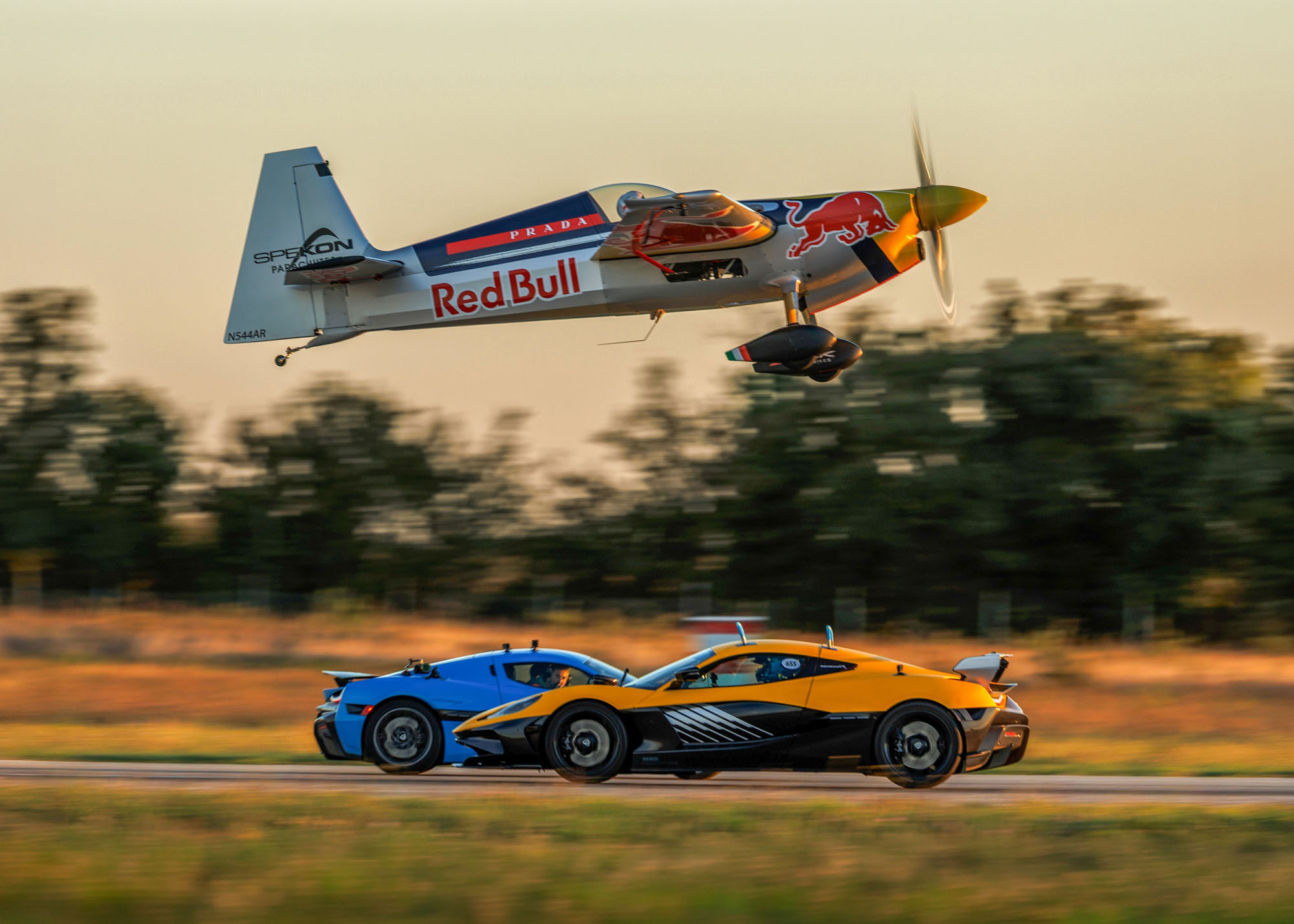
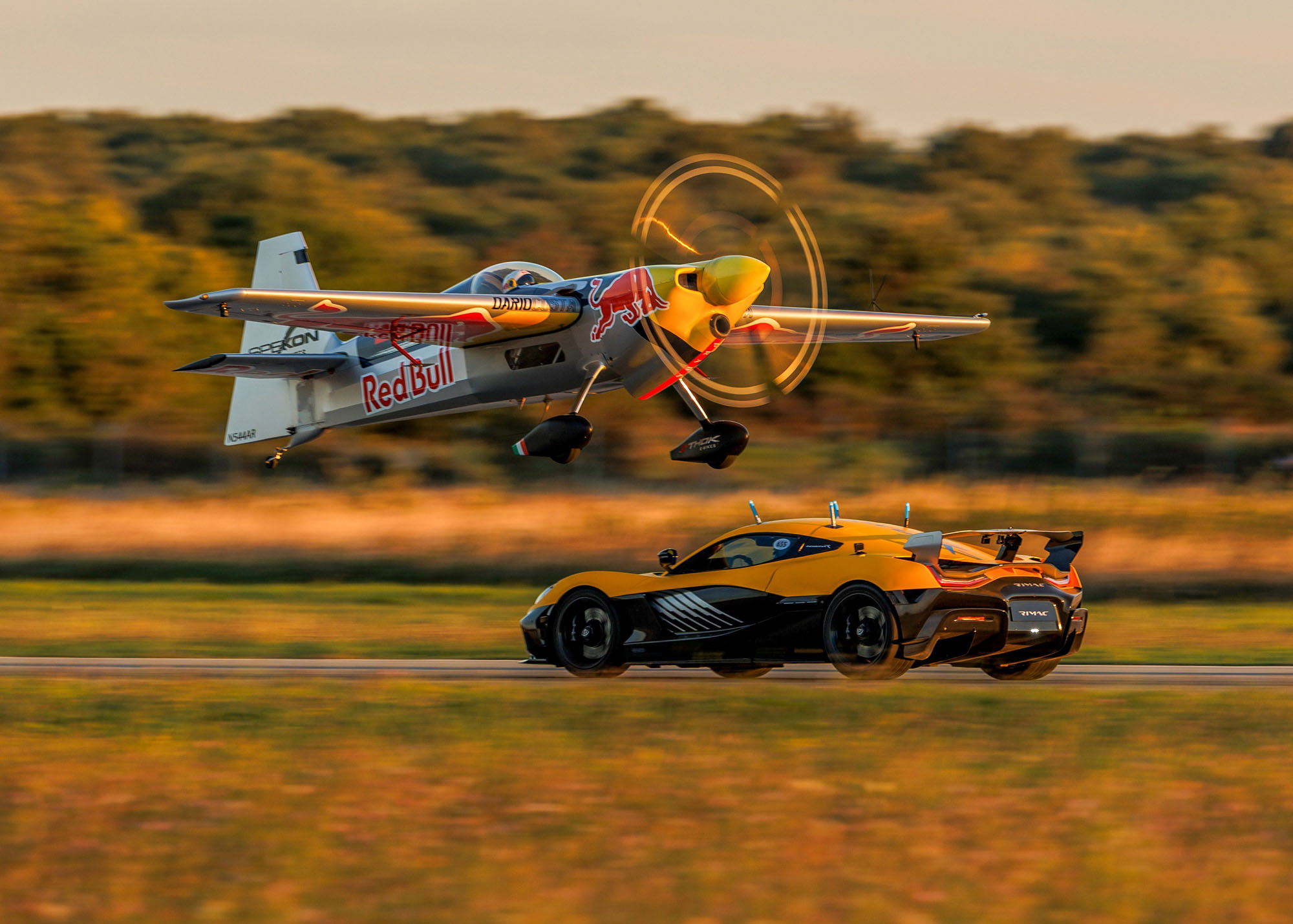
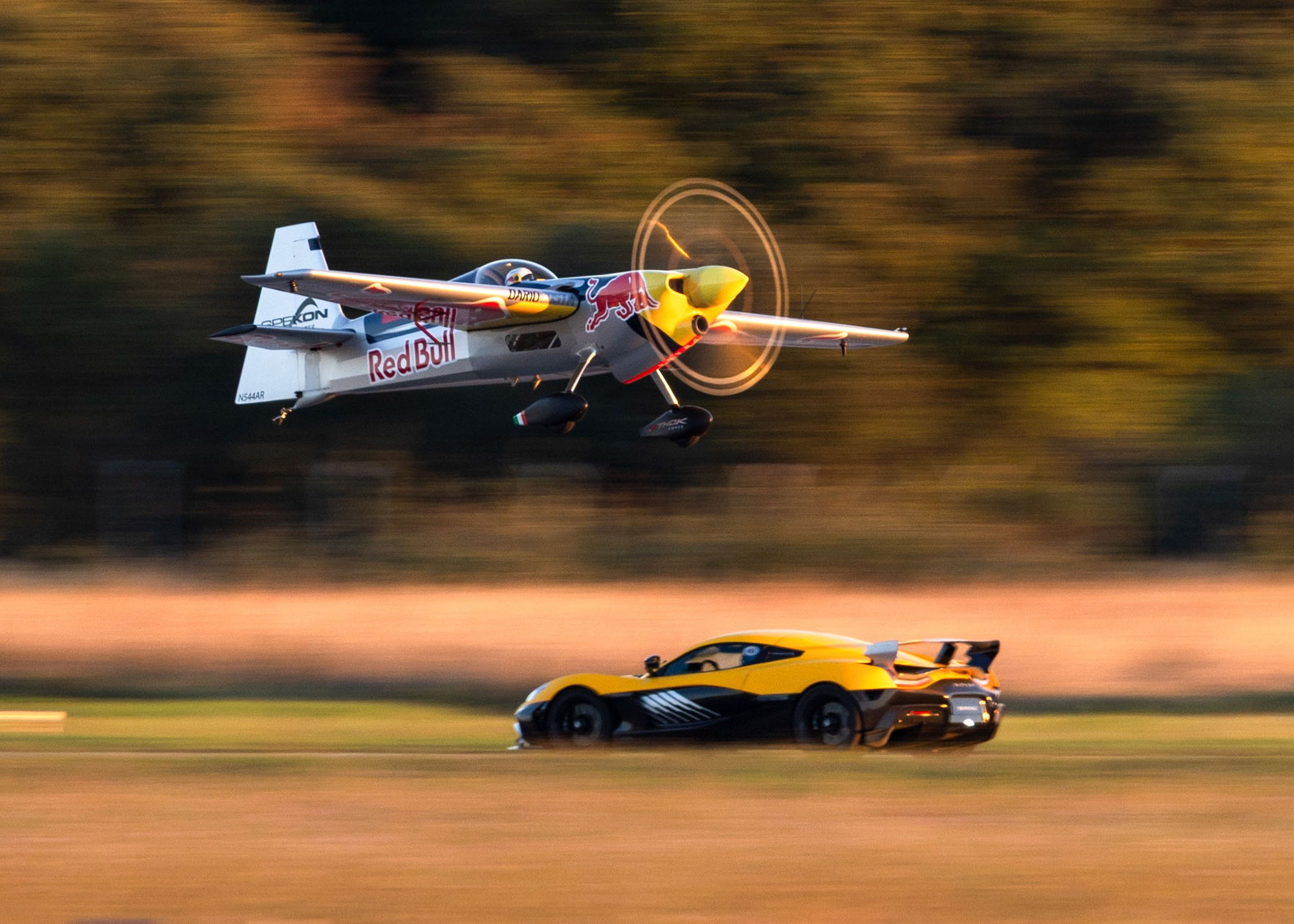
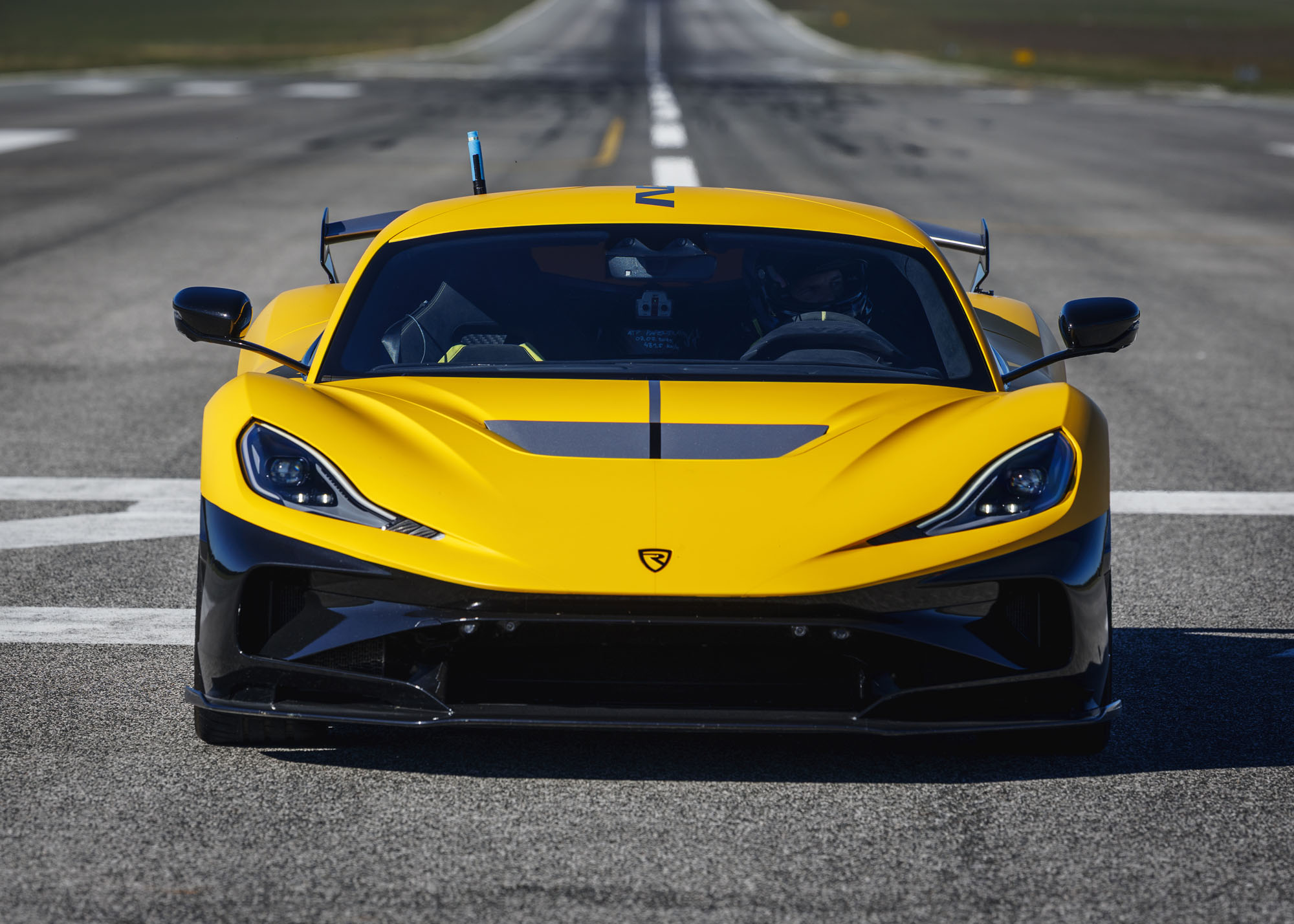
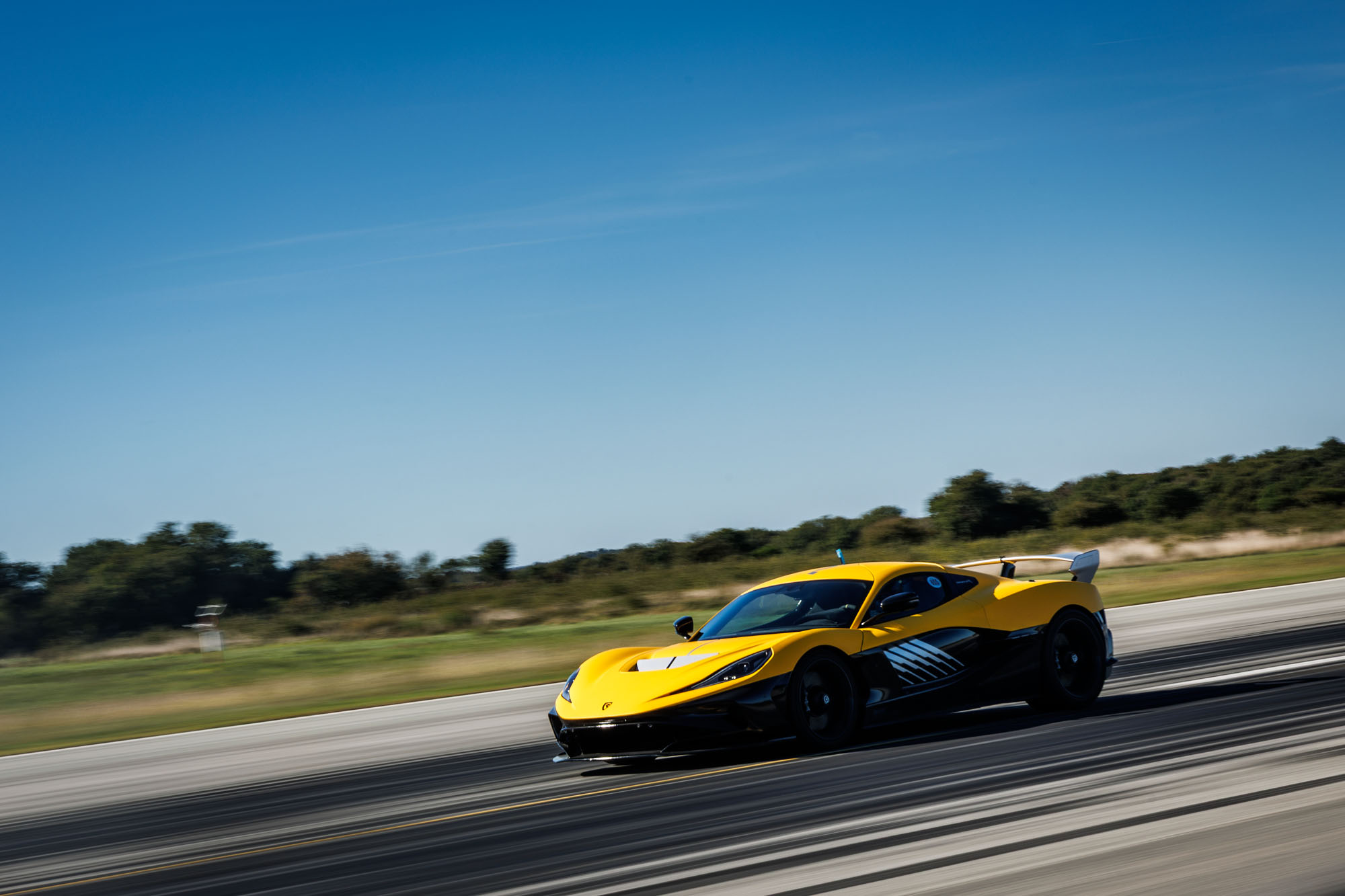
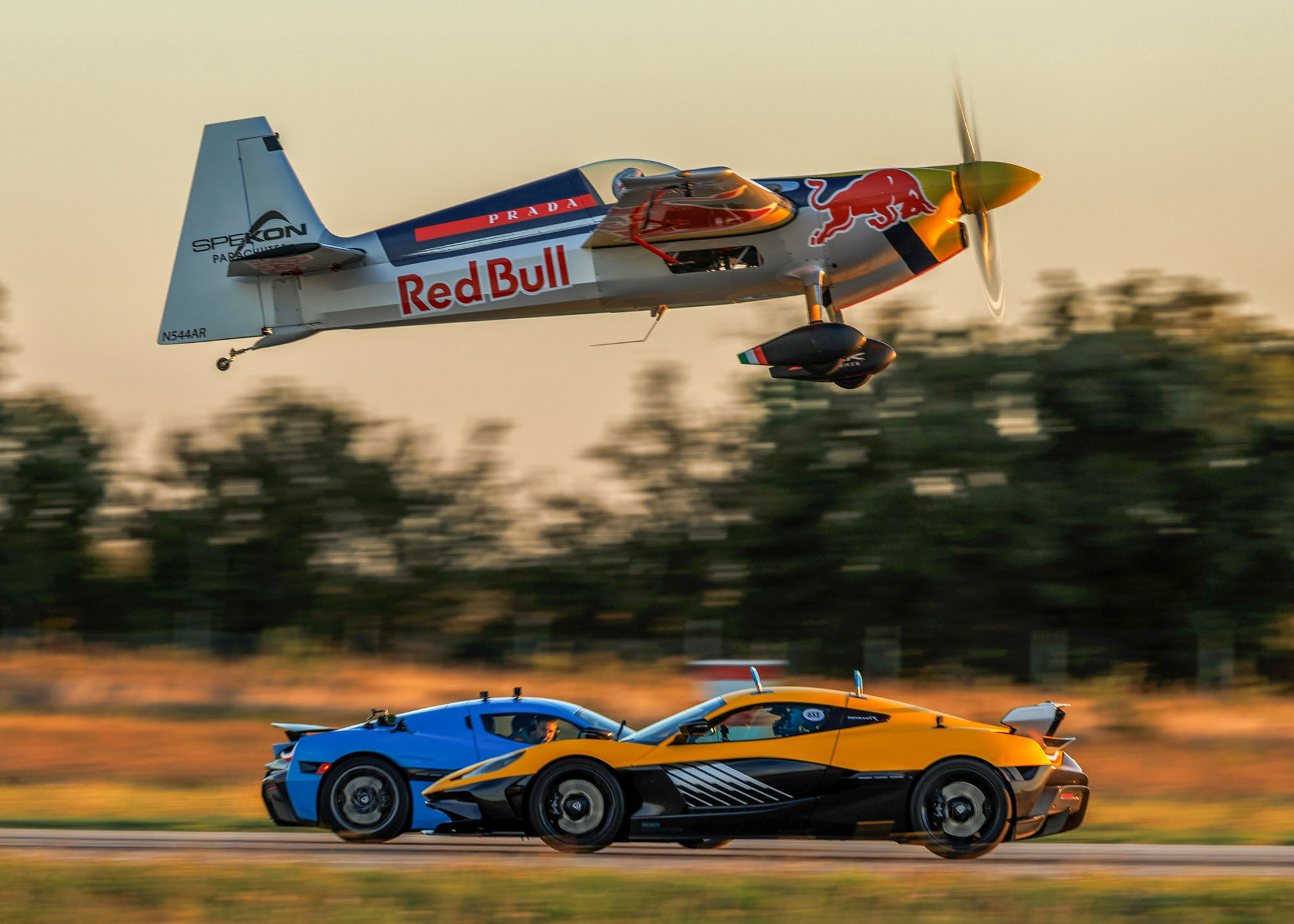
To prepare, Rimac worked with Costa on a three-day test program at Pula Airport, Croatia. The Nevera R — the fastest accelerating car ever built — and the Nevera hypercar were used as high-precision moving reference platforms, giving Costa a real-world moving surface against which to rehearse the cognitive and physical demands of landing almost completely blind on a moving target.
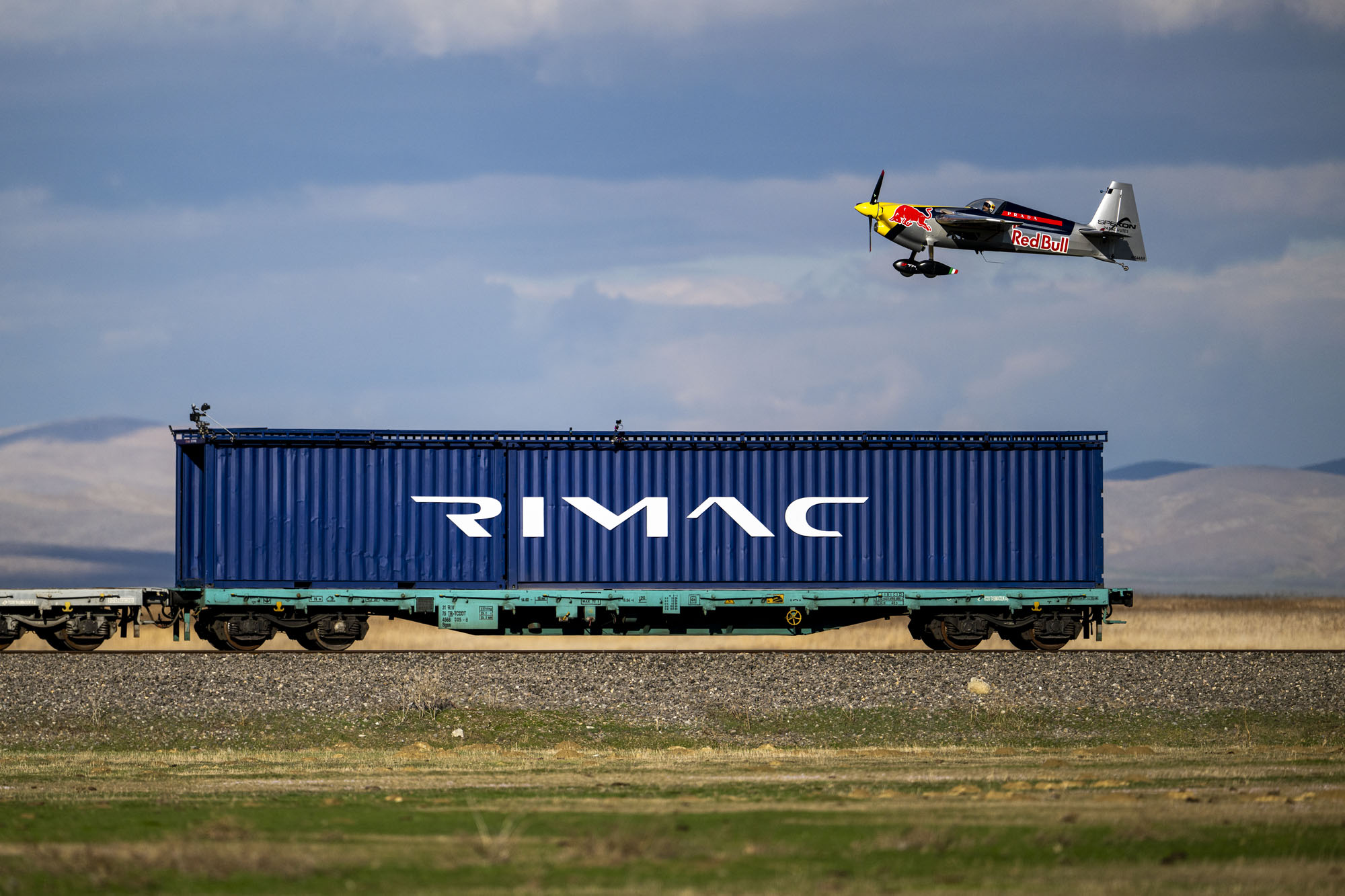
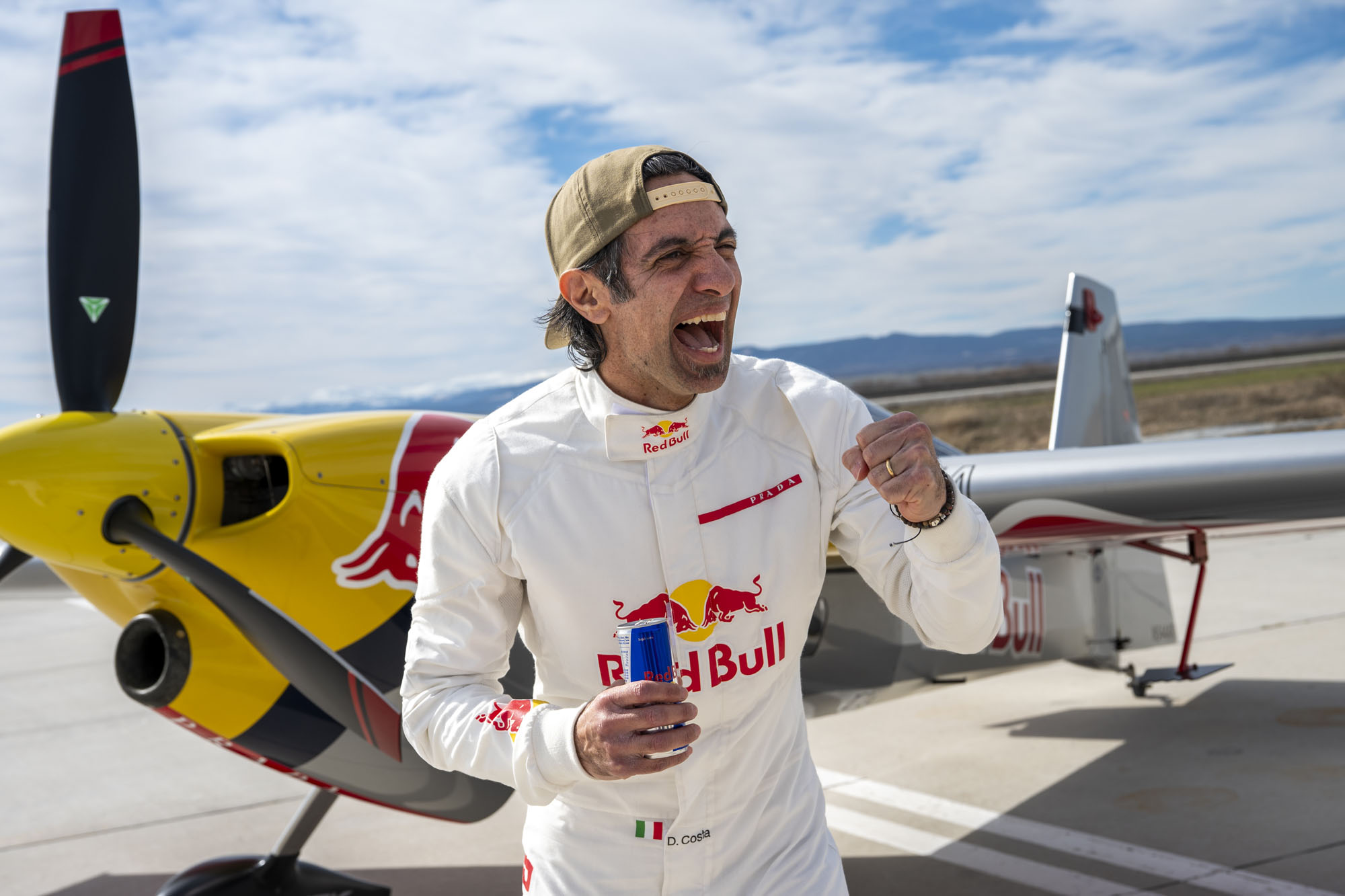
At speeds directly comparable to those required during the actual landing approach, the hypercars allowed Costa to train speed synchronization, alignment judgment, and reaction timing.
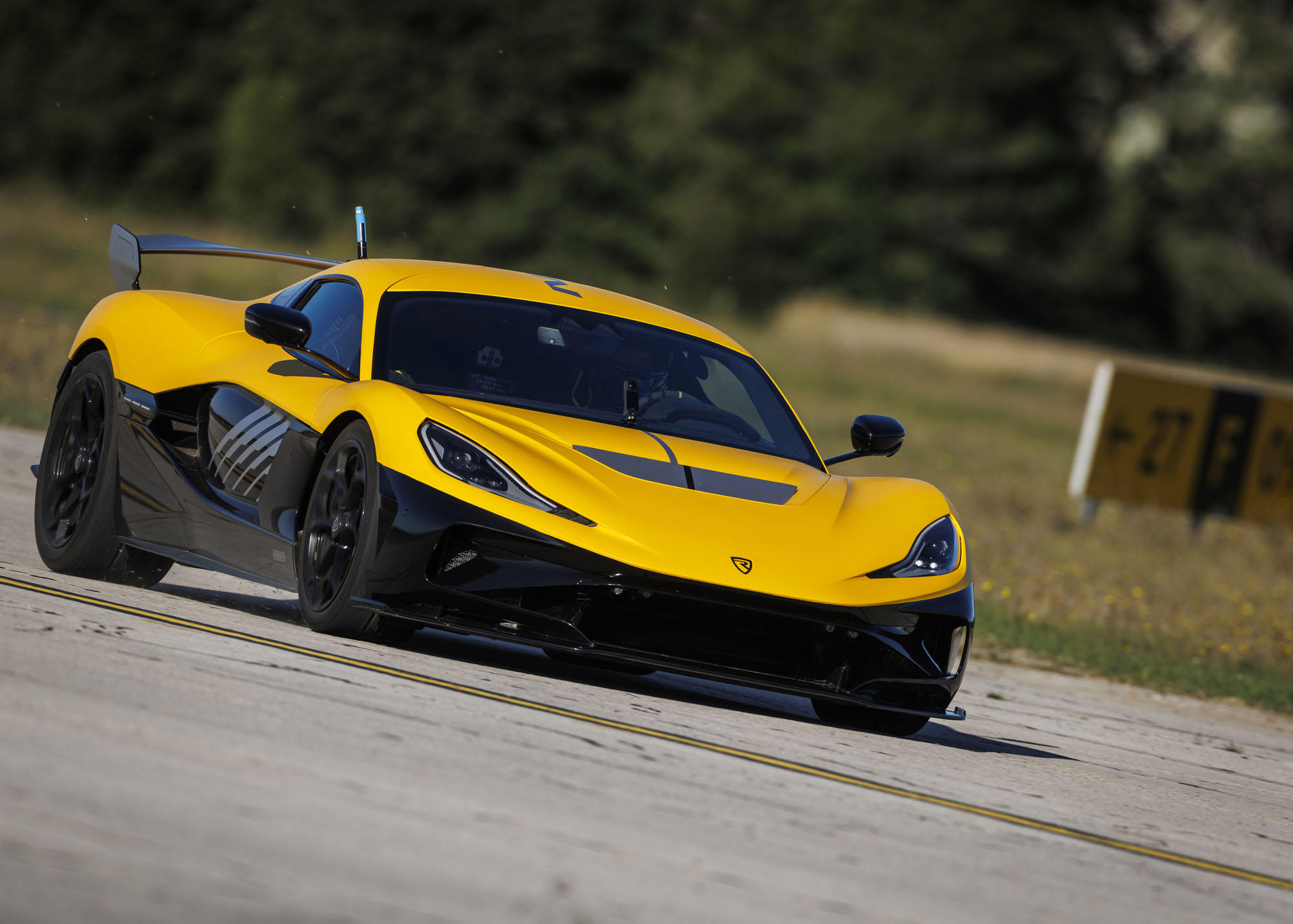
“This project is the perfect expression of what Rimac stands for. Dario needed to train something that had never been done before, which meant there was no established method or solution. Our hypercars gave him a real, moving, high-speed reference point; something only a handful of vehicles on the planet could provide at that precision and speed. When you are pushing into completely unknown territory, you need tools that match your ambition. We were proud to be part of that.” Mate Rimac, Founder and President of the Rimac Group, CEO of Bugatti Rimac and Rimac Technology
Rimac’s contribution extended beyond the vehicles it provided. The company’s engineering team, experts in composite structures and precision ergonomics from the work on Nevera, designed and produced a fully custom-fitted seat for Costa, developed from scratch to fit the extremely limited space in his aircraft’s cockpit.
The seat was molded precisely to Costa’s body shape and calibrated to his performance requirements: maximum stability, optimal control feedback, and reduced fatigue during extreme maneuvers. In a discipline where pilot input must be precise to within fractions of a second, the seat represents a meaningful engineering contribution, and, as far as is known, the first application of this level of precision seat engineering in a race aircraft.
Rimac engineers are also working with Costa on aerodynamic optimization of his aircraft canopy using the company’s CFD expertise; a collaboration that will continue into his upcoming projects.
“Red Bull and Rimac share the same spirit of pushing boundaries and exploring the impossible. This project was another bold idea born from that shared mindset, and a chance to do something truly unprecedented. At Rimac, innovation and performance are part of our DNA, so we were thrilled to collaborate with Red Bull by supporting Dario Costa during the preparation phase and contributing our technical expertise to elevate the project.” Roni Kert, Head of Sales and Marketing, Bugatti Rimac
Above content © 2026 Redbull /Rimac Group Ltd. reviewed and edited by Rex McAfee @rexmcafee