
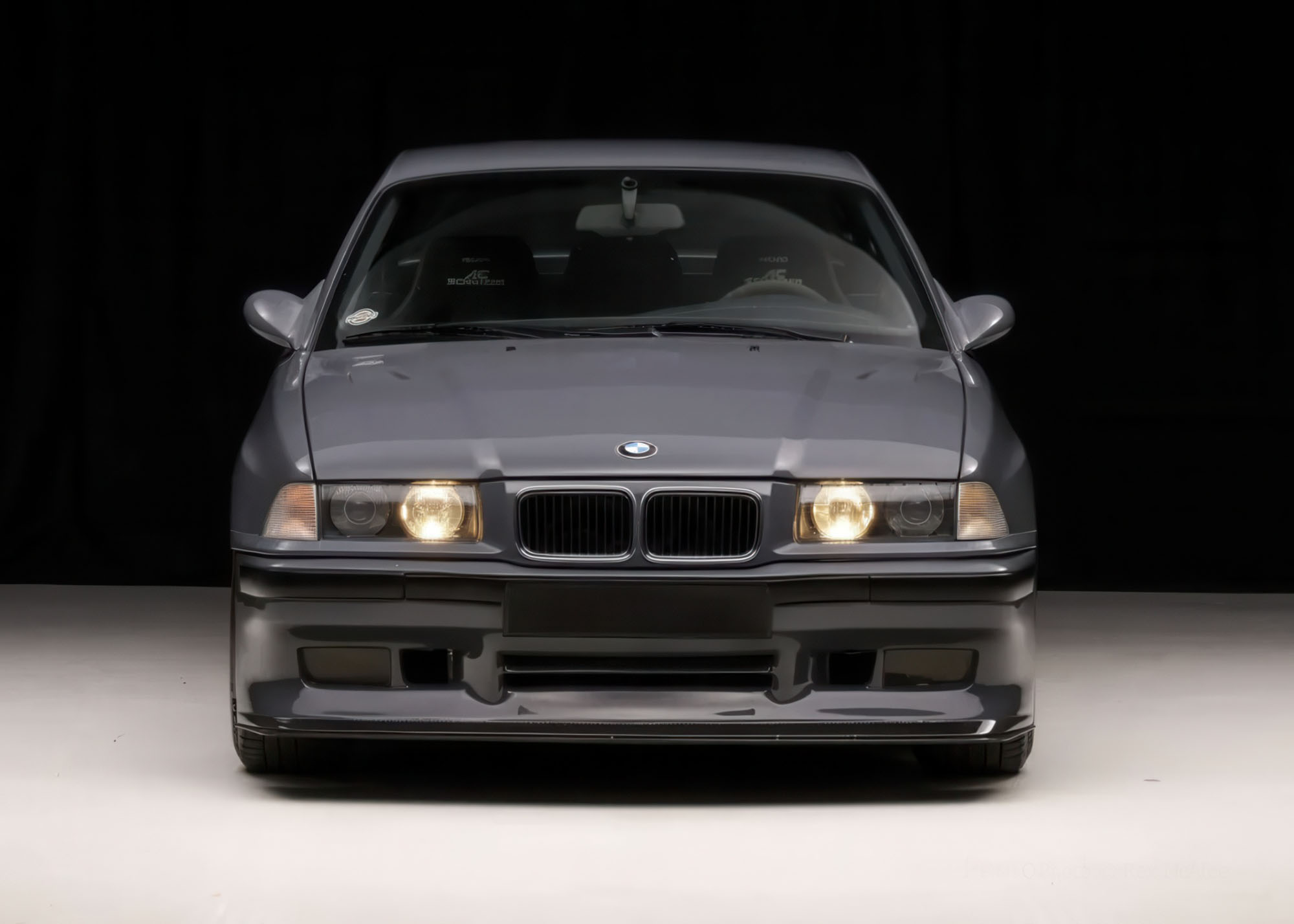

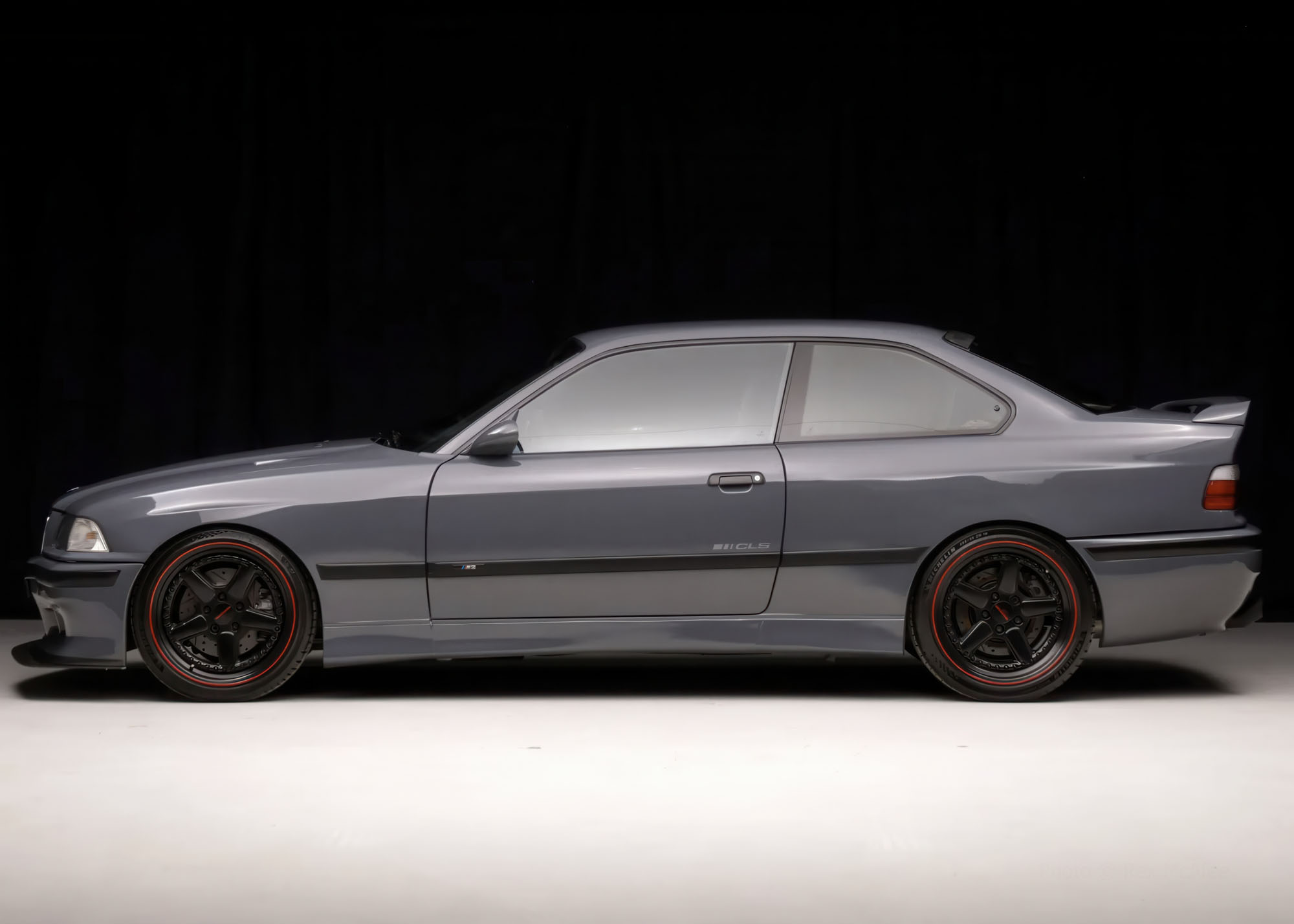
This 1995 BMW M3 is #7 of a reported 75 that were converted to ACS3 CLS (Coupe Lightweight Silhouette) specification by AC Schnitzer. The Aachen, Germany-based tuning company added their own exhaust system, camshafts, braking, adjustable suspension components, 18″ multi-piece wheels, and carbon-Kevlar body panels, aero equipment, and interior trim.
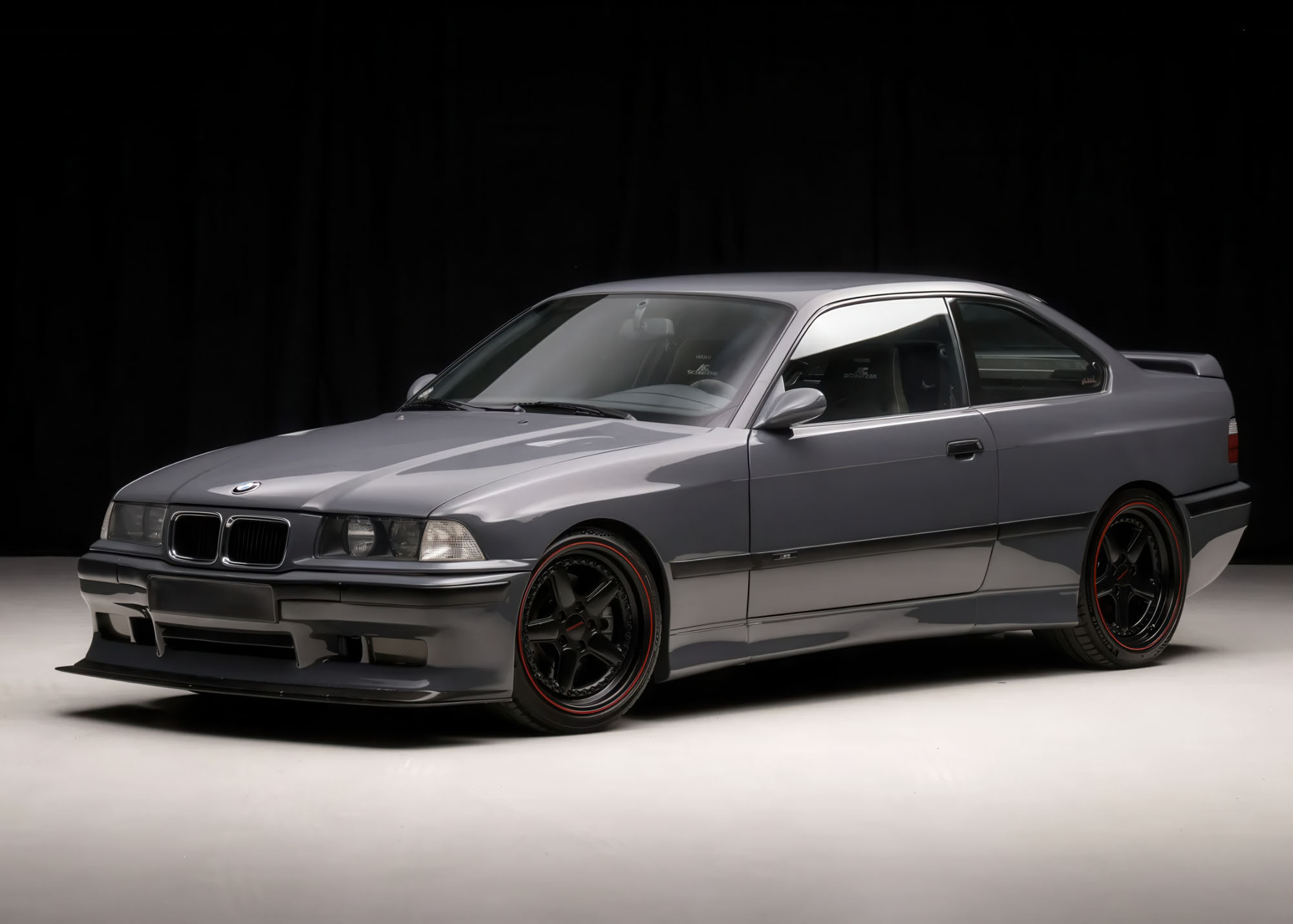
The car is powered by a 3.0-liter inline-six with individual throttle bodies, and the five-speed manual transmission is linked to a limited-slip differential. Inside, the cabin houses a trio of Recaro fixed-back carbon-Kevlar seats, along with amenities such as power windows, a Pioneer CD stereo, dual-zone climate control, and an alarm system.
The car spent time in England and Hong Kong before being imported into the US and subsequently purchased by the selling dealer in 2024. This left-hand-drive ACS3 CLS shows 30k miles, and it is now offered in North Salem, New York by 1600 Veloce, a BaT Local Partner, with tools and a Montana title.
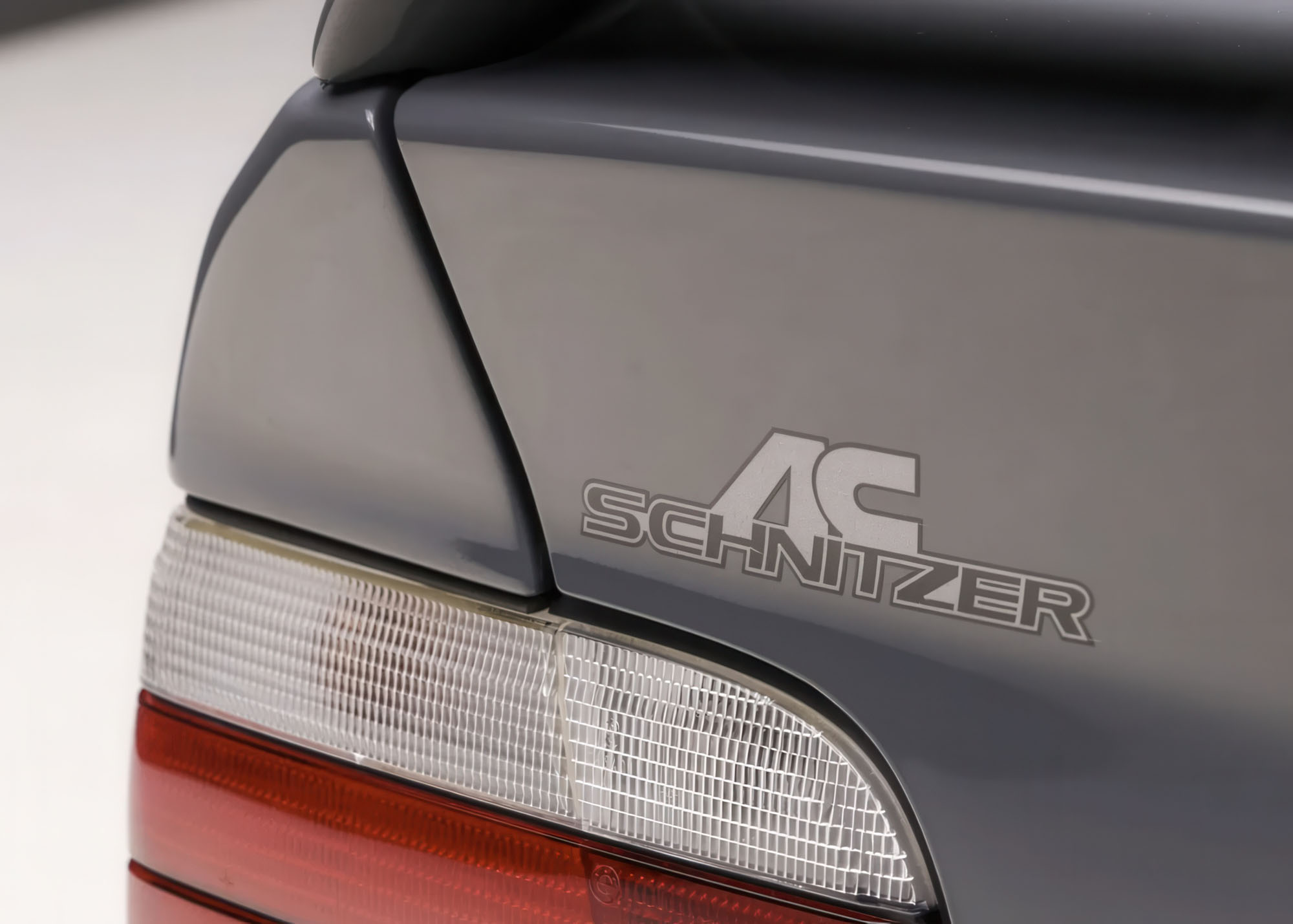
AC Schnitzer was founded in 1987 as an offshoot of Schnitzer Motorsport, a Bavarian motorsport team that had worked with BMW to develop competition cars since the 1970s – including the 3.0 CSL touring cars. The E36-based ACS3 CLS, or Coupe Lightweight Silhouette, was introduced in the 1990s as a showcase for the tuning company’s performance products.
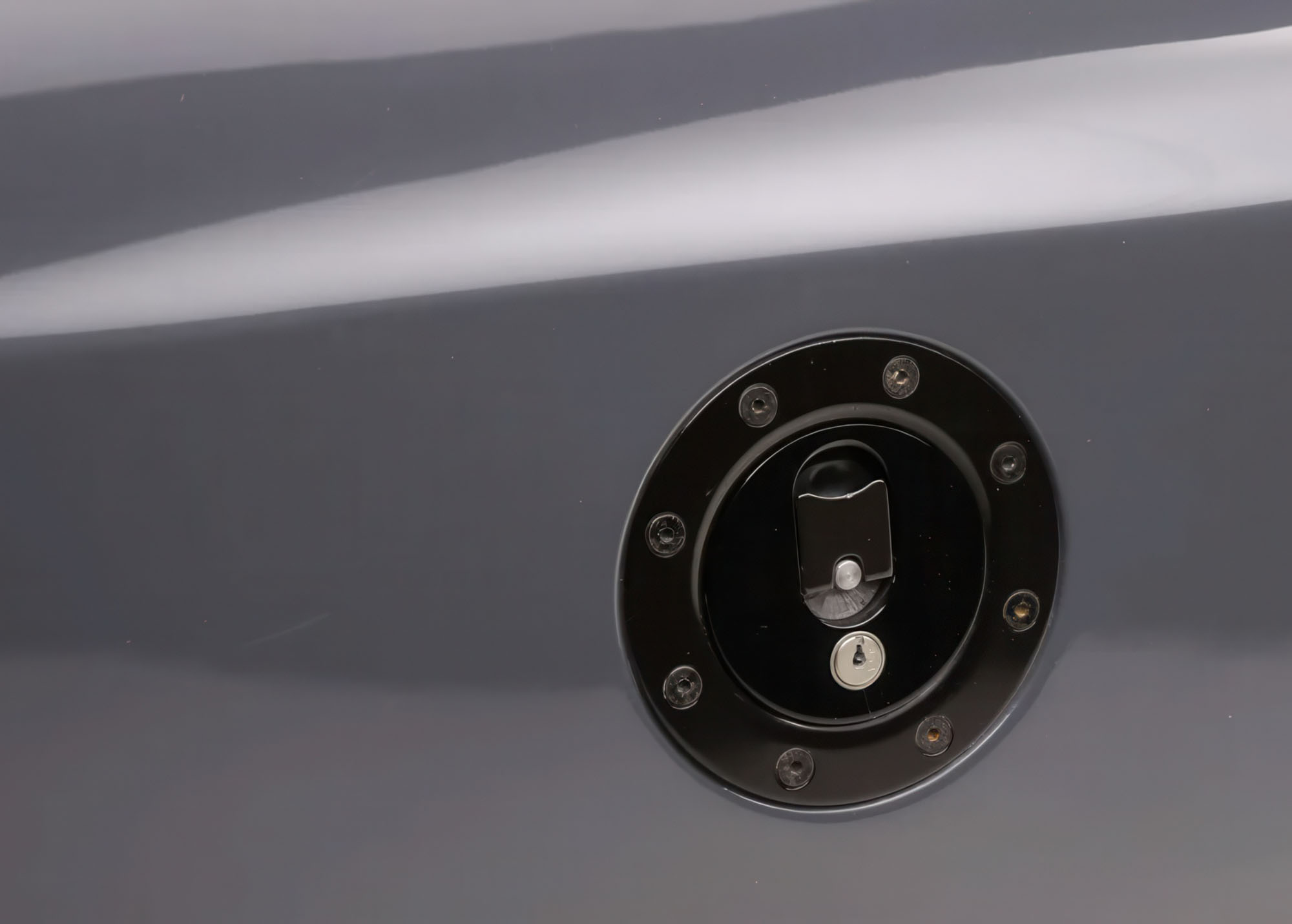
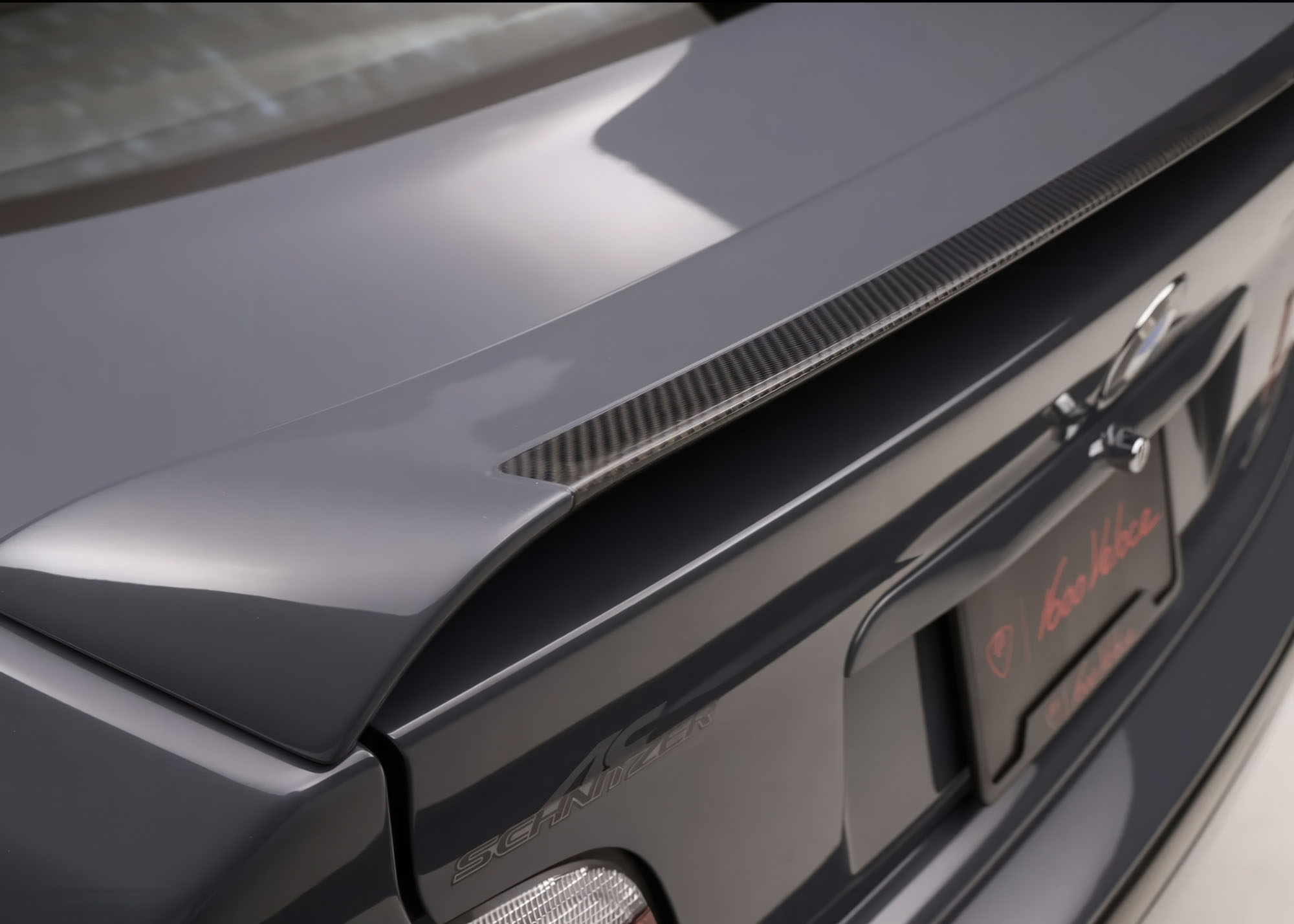
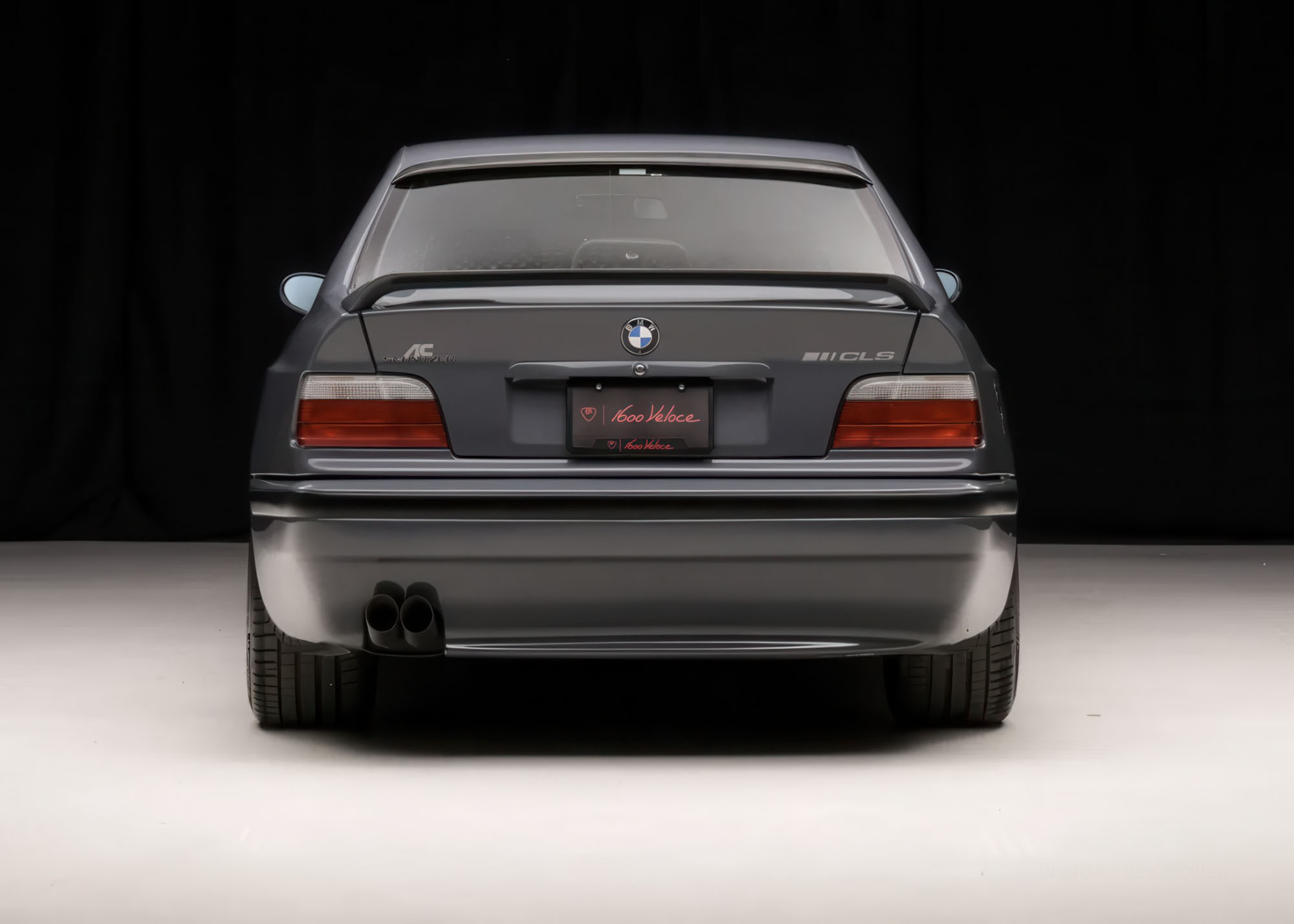
The cars feature a hood, bumpers, and boxed fenders and quarter panels constructed from carbon-Kevlar, along with matching lower bodywork, a raised rear spoiler, a splitter, an exposed locking fuel door, and streamlined side-view mirrors. The cars were advertised as approximately 160kg (~350 lbs) lighter than a standard M3.
Additional equipment includes CLS door and decklid graphics, pop-out quarter windows, and an upturned dual-exit exhaust. A collection of paint meter readings and BMW-branded glass etchings can be seen in the gallery, along with areas of imperfections in the finish.
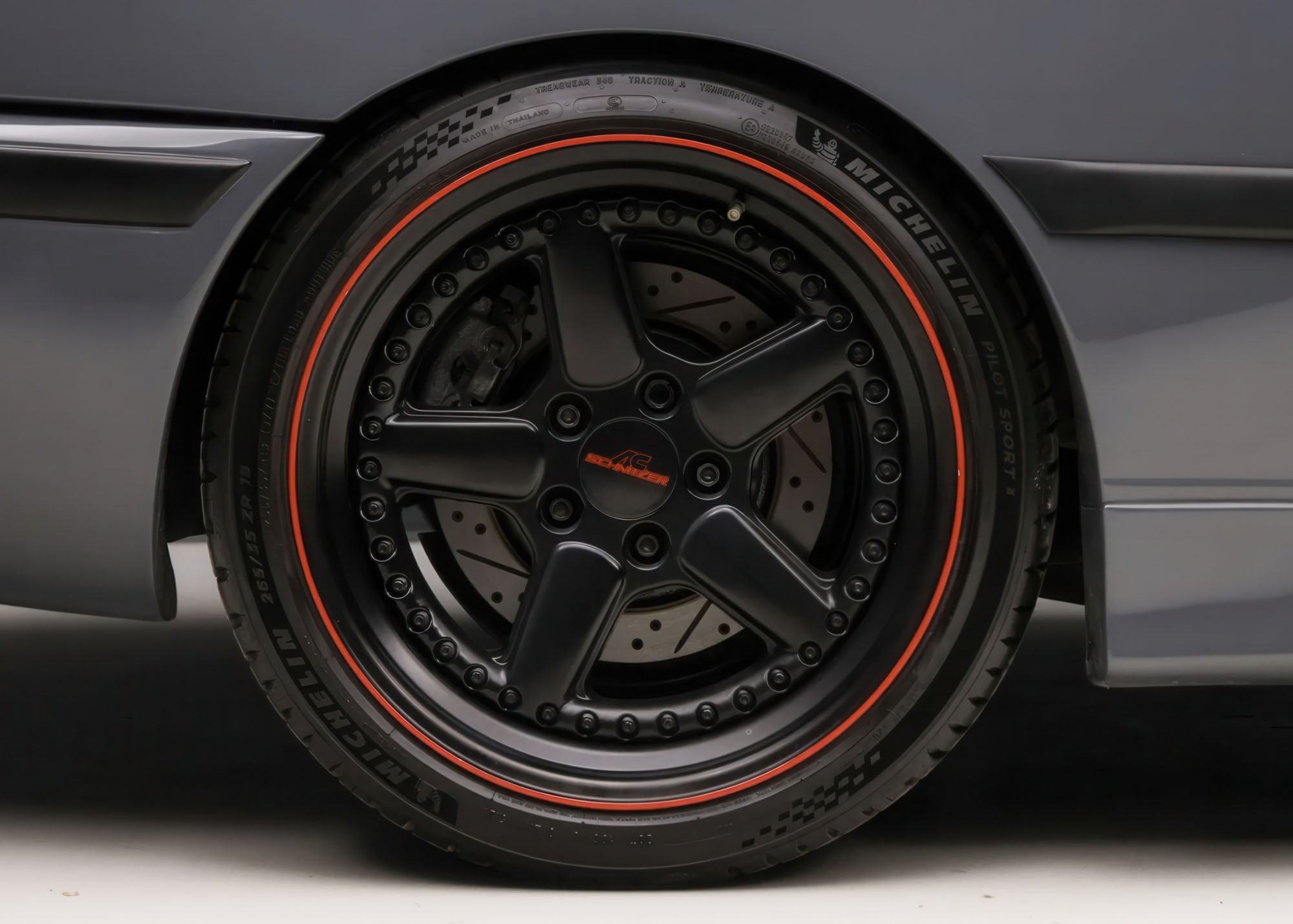
The 18″ multi-piece wheels are finished in black with red accents, and they are mounted with 225/40 front and 265/35 rear Michelin Pilot Sport tires. A silver-finished AC Schnitzer spare wheel with a Bridgestone tire is stowed in the trunk along with a tool kit.
The ACS3 CLS suspension features adjustable sway bars, height-adjustable rear spring perches, and front coil-overs with 25mm of height adjustment, and AC Schnitzer reportedly developed it via testing on the North Loop of the Nürburging. Braking is handled by slotted and cross-drilled rotors at all four corners.
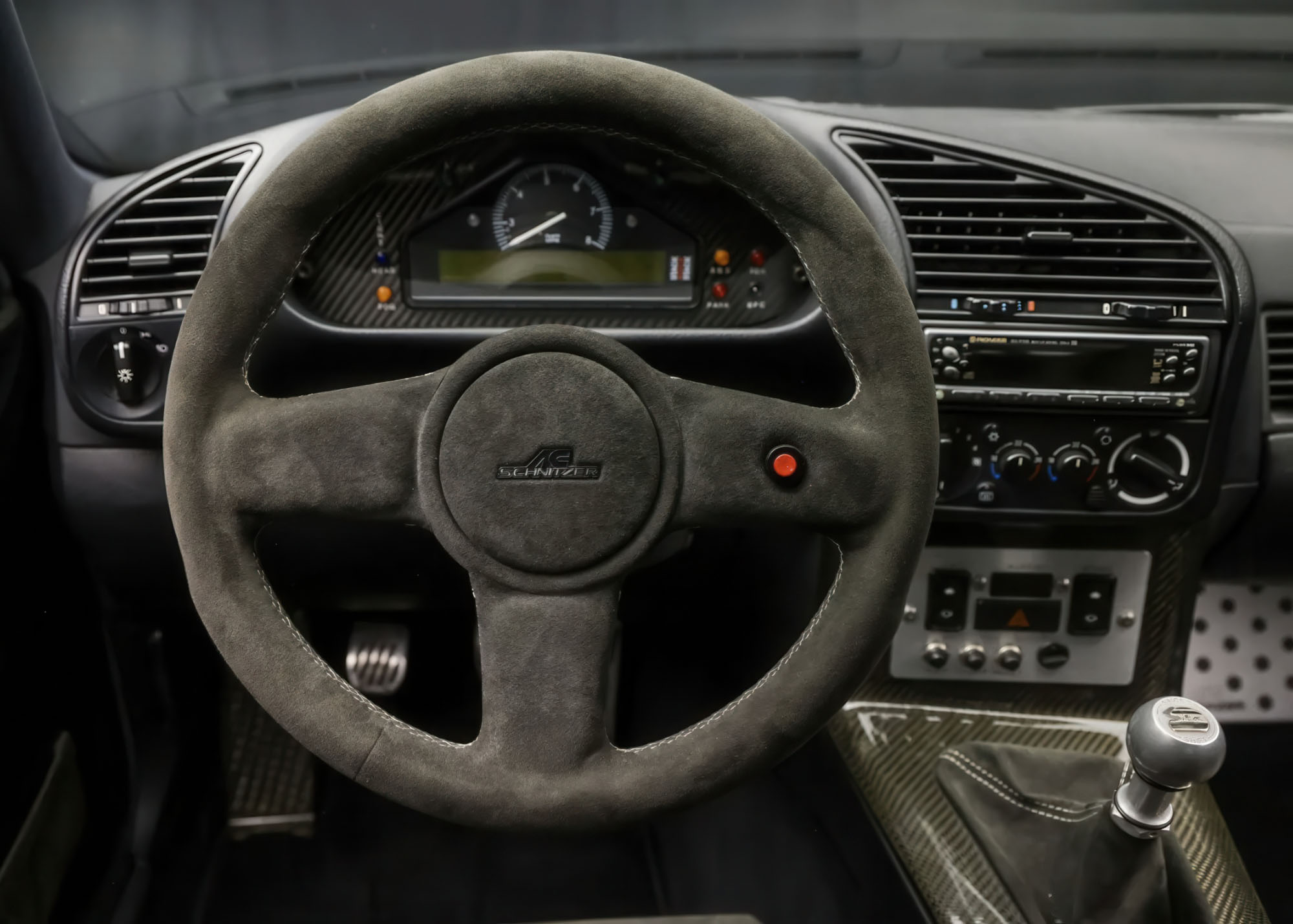
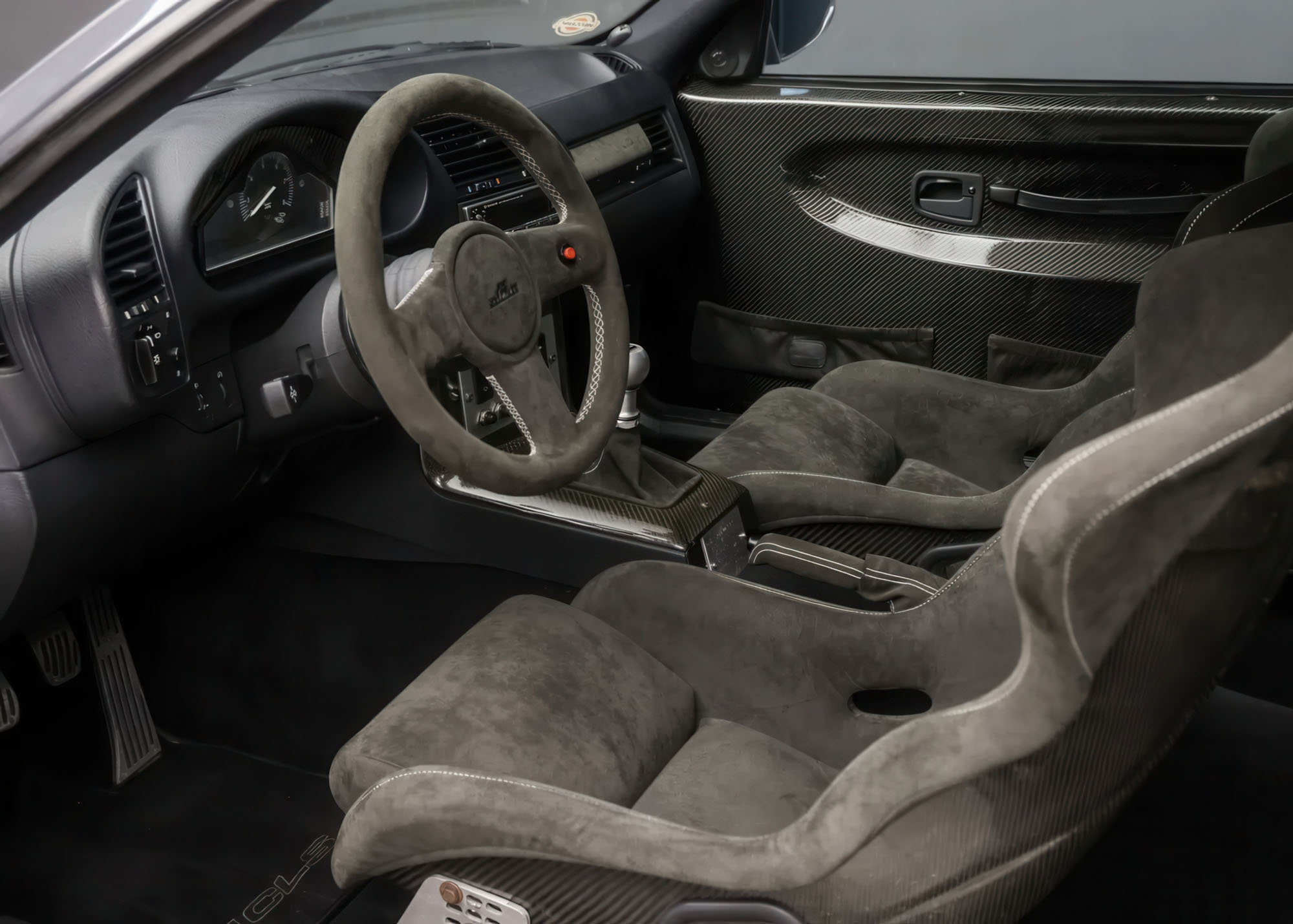
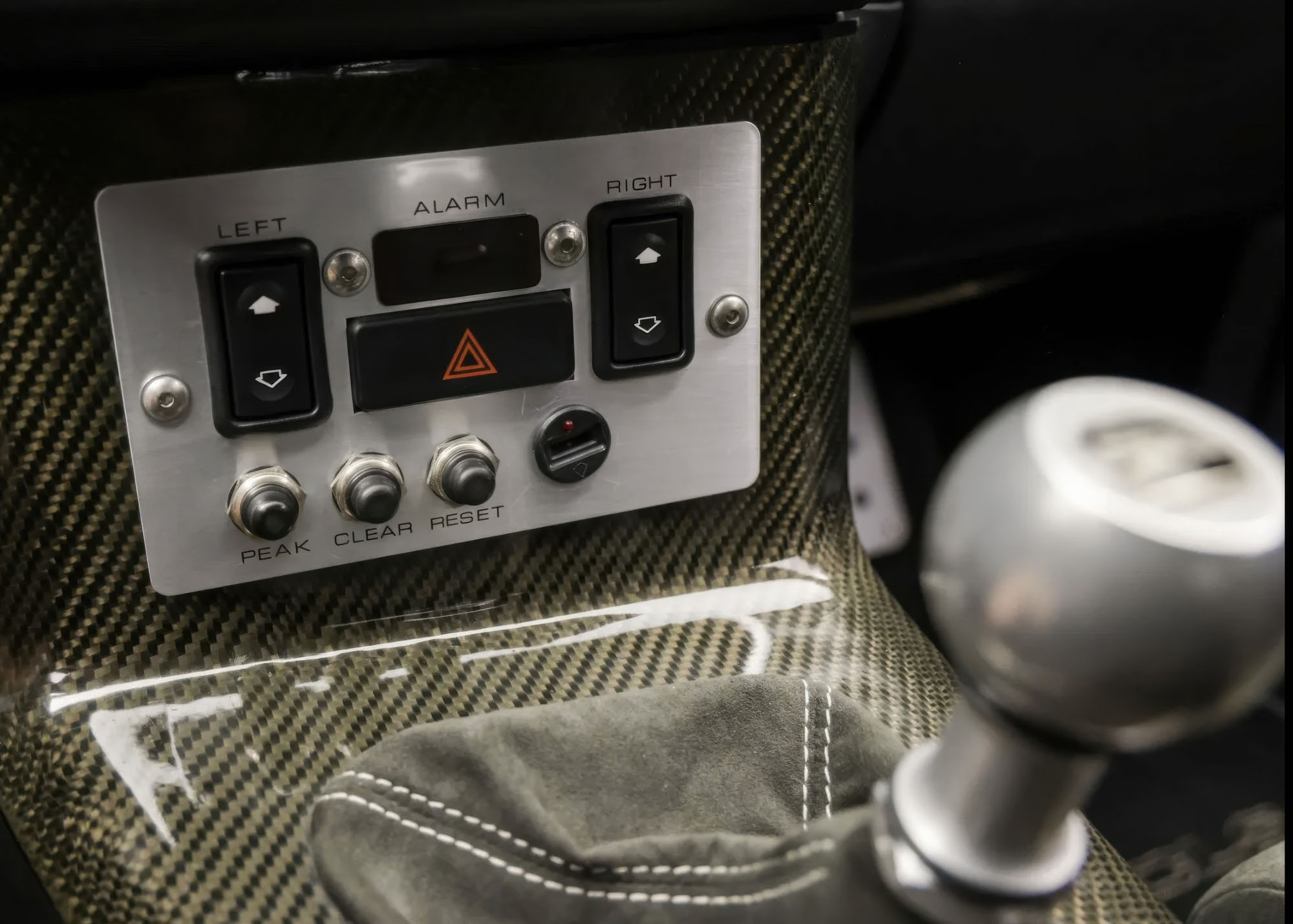
The cabin features a trio of fixed-back carbon-Kevlar seats trimmed in black microsuede with Recaro and AC Schnitzer stitching on the seatbacks. A carbon-Kevlar bulkhead replaces the rear bench seatback, and the material was also used to construct the center console, doors, and side panels. Additional equipment includes power windows, a Pioneer CD stereo, dual-zone climate control, an alarm system, aluminum pedals, and a drilled aluminum front passenger footrest.

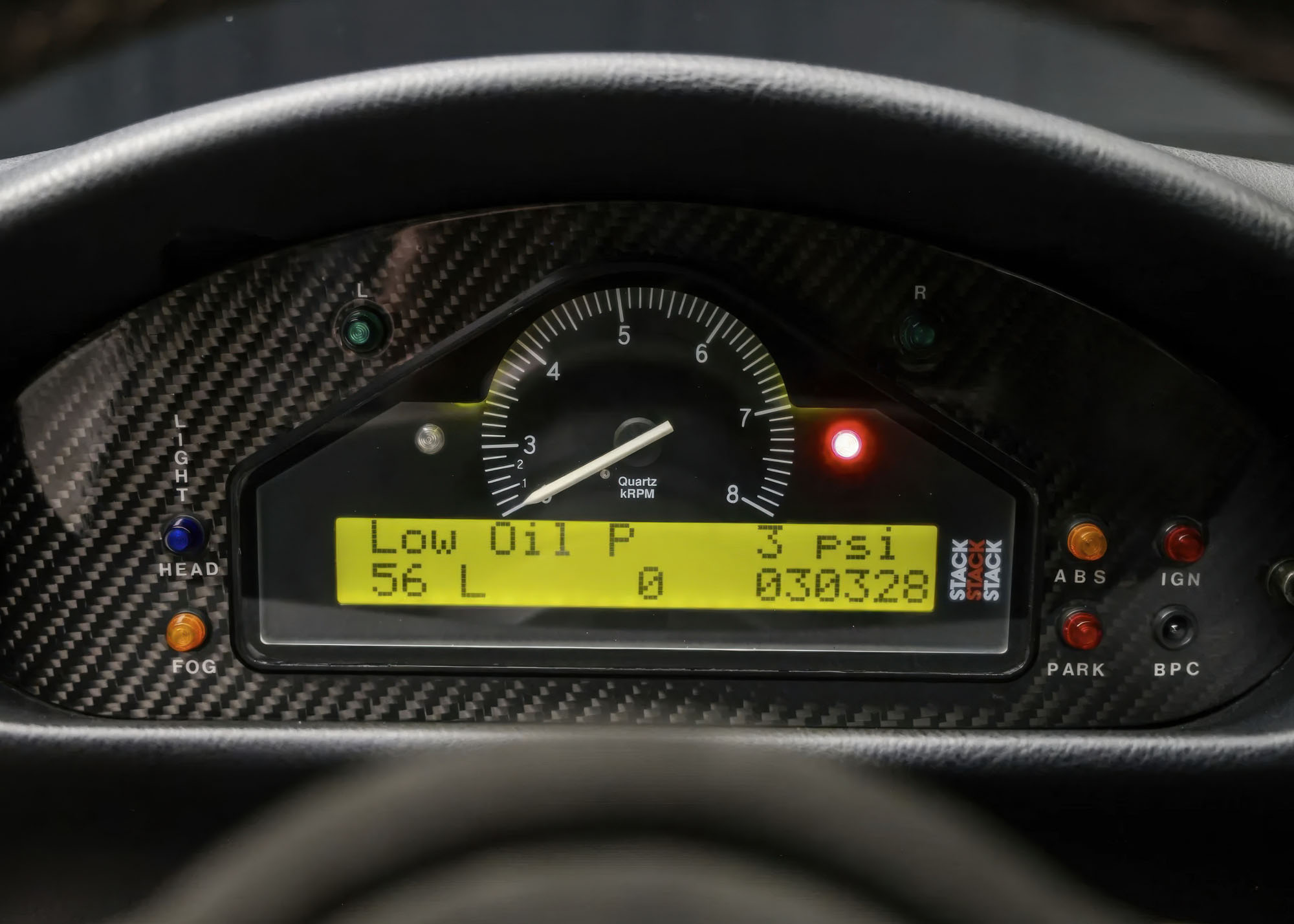
The microsuede-wrapped AC Schnitzer wheel frames a Stack 8k-rpm tachometer with an LCD screen that was reportedly shared with Schnitzer Motorsport-built Group A touring cars. The digital odometer indicates 30k miles, approximately 250 of which were added by the selling dealer.
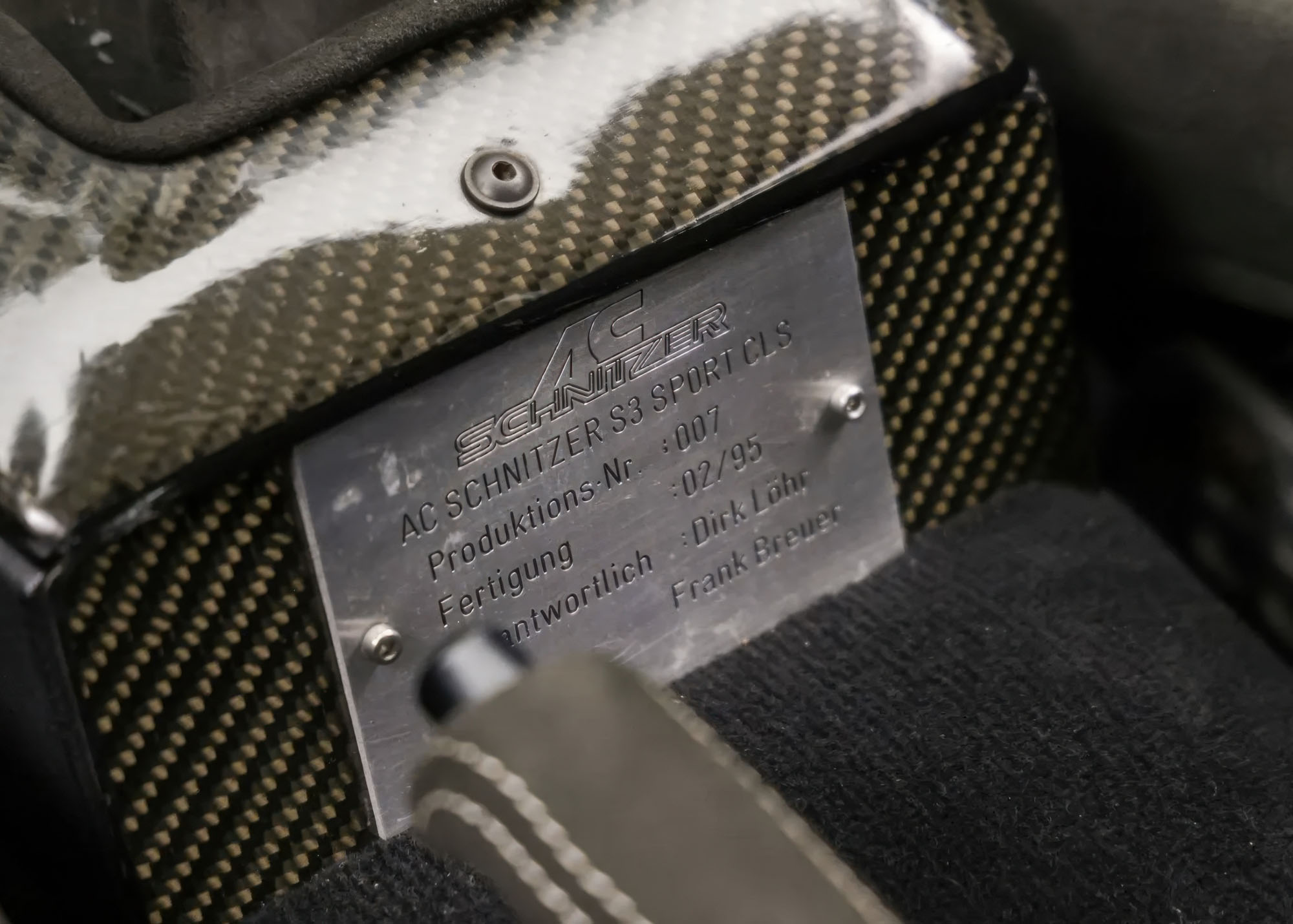
A plaque affixed to the carbon-Kevlar center console lists the car as #007, produced in February 1995.
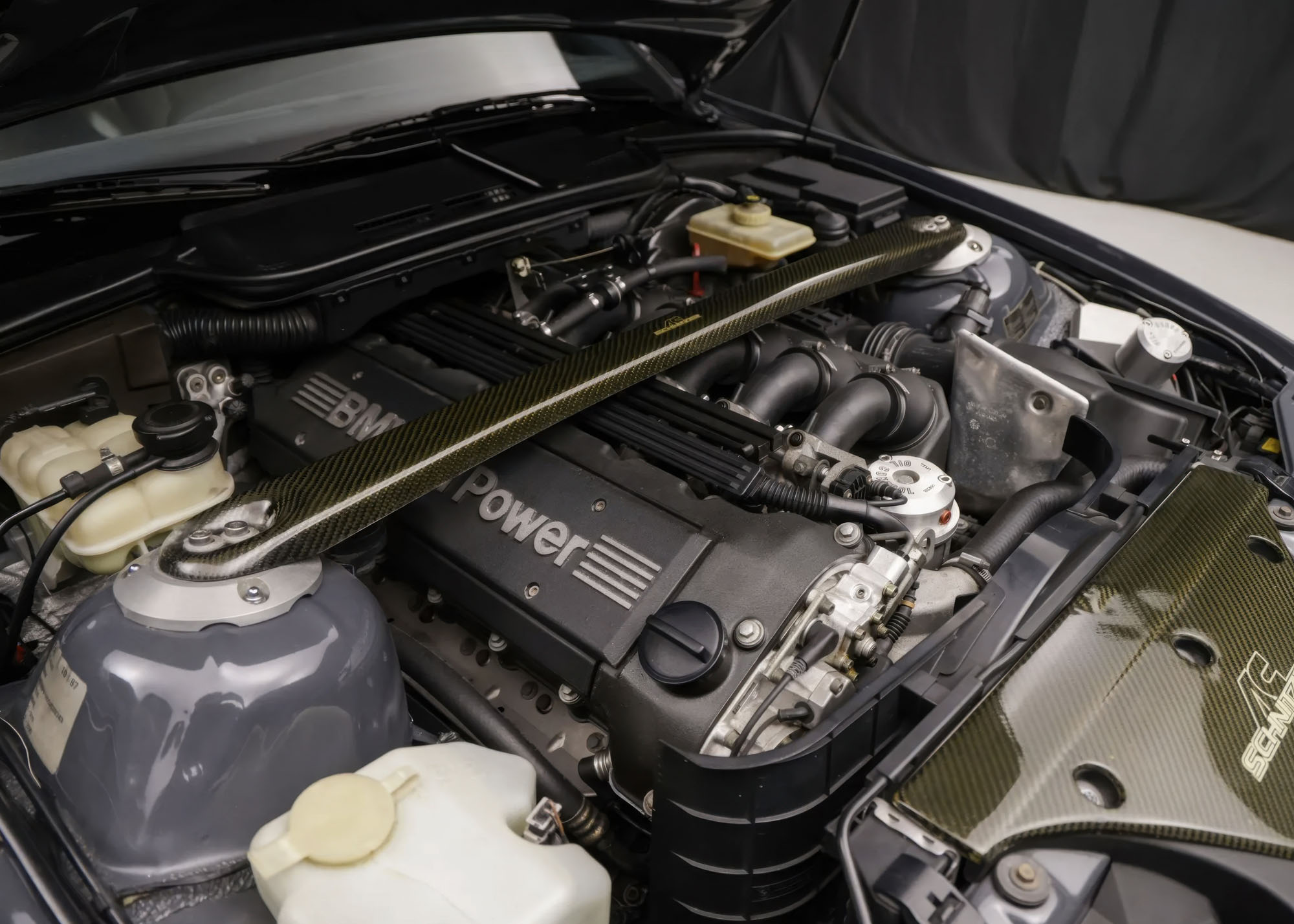
The 3.0-liter inline-six was modified by AC Schnitzer with the installation of sport camshafts and revised Motronic ECU mapping. A carbon-Kevlar strut brace and a branded radiator shroud were also added. Output was advertised as 320 horsepower at 7,000 rpm and 251 lb-ft of torque at 3,600 rpm.
A five-speed manual transmission is linked to a limited-slip differential, and Schnitzer installed their own exhaust system.
More Info
Go HERE