Credit: Adrian Flux

The Peugeot 205 Turbo 16 Is the Mid-Engine Hatchback That Won Group B

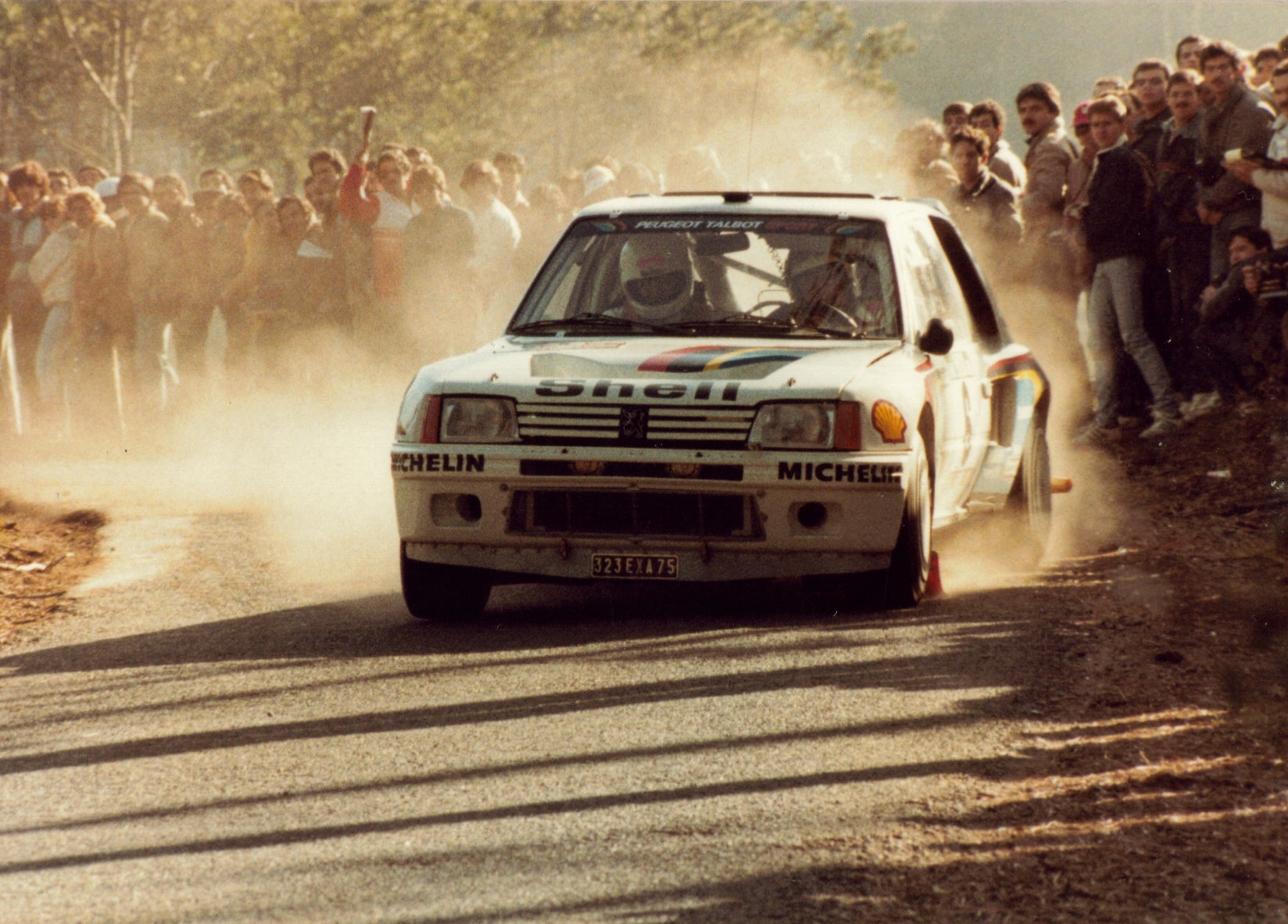
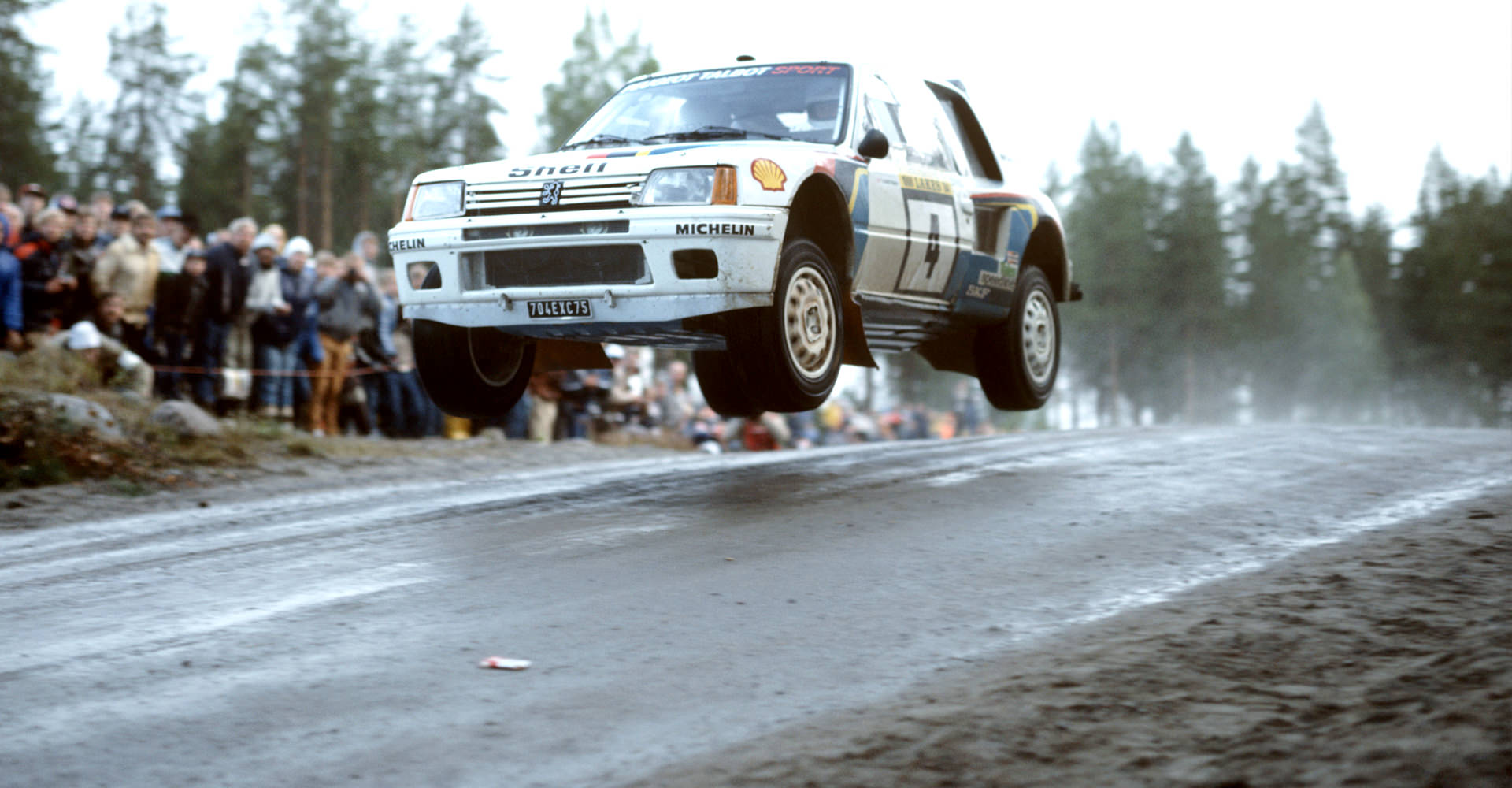
Look at a Peugeot 205 Turbo 16 and you would swear it was a hot version of the humble hatchback that shares its name. It is not. Almost nothing carries over between the two beyond the lights and the outline of the body. Everything else was thrown away and rebuilt for one job, which was to go rallying at the highest level the sport had ever allowed. What Peugeot ended up with was a mid-engine, four-wheel-drive competition car hiding inside an economy-car silhouette, sold in tiny numbers to satisfy the rulebook and priced like a Porsche. It went on to beat the best that Audi and Lancia could field. This is the story of how a small French hatchback became a Group B champion.

Born From the Ultimate Era of Rallying

Credit: Iso 50 Blog

Group B arrived in 1982 and was gone within five seasons, killed off because the cars had become faster than anyone could reasonably control. The formula asked almost nothing of manufacturers in the way of restriction, and they answered by building some of the wildest competition machines the sport has ever seen. Crowds loved the spectacle. Then came a run of tragic accidents, ending with the death of Henri Toivonen and his co-driver at the Tour de Corse in May 1986. Organizers cancelled the category before the season had even finished.

Credit: Sports Car Market

That short, violent chapter produced a handful of legends, and one of them started life as an economy car. Before the 205, Peugeot had a reputation for building sensible, conservative machinery. Cars like the 403 and the 504 were competent and unremarkable, the sort of thing you bought because it would not let you down. The 205 changed that. It was a small, cheap hatchback with genuine charm, and it gave Peugeot its first modern, image-making hot hatch.

Credit: Rally Web Shop

It also gave the company a place to start when it decided to go rallying. What Peugeot built on that foundation would win the Group B manufacturer’s championship in both years it competed, 1985 and 1986, the last two seasons the formula existed. Along the way it held off a serious challenge from the Lancia Delta S4 and dethroned the Audi Quattro, a car that had grown too big and too heavy to keep pace even in its shortened Sport Quattro form.

Two Hundred Cars, One Purpose

/m/loader/final_group_loader/265/TGE_265_p126-133_DAKARv3/ Tom Salt
Credit: Top Gear

The reason a car this extreme could exist at all comes down to the rulebook. Group B required a manufacturer to build just 200 road-going versions of a car to qualify it for competition. Group A, the formula that replaced it, demanded 5,000. That gap explains everything about how uncompromising the road cars could be. With so few examples needing to find buyers, there was no reason to soften anything. And the 205 Turbo 16 was not softened. It shares almost nothing with the standard 205 beyond the headlights and the general silhouette, which was the whole point of Group B homologation. Underneath the familiar shape sits an entirely different car.

Credit: Drive Vintage

Peugeot took a standard 205 body shell, cut away the whole rear section along with a good part of the front, then fitted completely new suspension. The engine, mounted transversely and driving the front wheels in every other 205, was moved to the middle of the car and connected to all four wheels. The result is a race car wearing a hatchback costume, and it was priced to match. A 205 Turbo 16 cost about as much as a Porsche 911 of the day, or roughly six times the price of a 205 GTI. It took a wealthy and fairly brave customer to sign up for one.

Forbidden Fruit

Credit: Gallery 123

Where some rivals got creative with their production figures to keep the homologation officials happy, Peugeot simply built the cars. The company produced 219 examples against the 200 required, and not one was offered in the United States. For American enthusiasts, that makes the 205 Turbo 16 forbidden fruit of a high order, a car most people on this side of the Atlantic have only ever read about.

Behind the Wheel, It’s Physical and Alive

Credit: Bonhams Cars

Climb in and the character announces itself before you have moved an inch. There is no power assistance anywhere, so the steering is heavy and the shifter feels mechanical and substantial in your hand. Everything about the car asks for physical effort. It is a demanding thing to operate at low speed, the kind of car that makes you work simply to place it where you want it.

Credit: Bonhams Cars

Put those control forces in context and they start to feel special rather than punishing. This is a more physical car to drive than a Ferrari 308 or any 911 of the era, sitting just a notch below the Lamborghini Countach, which remains the benchmark for sheer heaviness at the wheel. Yet the weight bleeds away as the speed rises. Somewhere between crawling and flying, the car settles into an easy rhythm, the steering lightens, and the chassis reveals what it can do.

Credit: Bonhams Cars

What it can do is rotate. The 205 Turbo 16 has a mobile, adjustable chassis that answers the throttle and lets the driver place the car with precision, all backed by the traction of four-wheel drive. Up to about seven or eight tenths it is confidence-inspiring and engaging, easy to control and genuinely rewarding to lean on. Shift the throttle mid-corner and the line moves with it, which gives the driver a useful tool for setting the car exactly where it needs to be.

Living With the Lag

Credit: Bonhams Cars

The engine is the one thing that keeps you honest. It runs a Bosch K-Jetronic mechanical injection system, which is not the most intelligent way to manage a turbocharger, and the result is a good deal of lag. Catch the motor off boost and it sulks. Around 200 horsepower does not sound like much now, but the delivery is what defines the experience. Boost builds progressively rather than exploding all at once, then lands as a healthy shove in the upper rev range. Unlike a lot of vintage turbocharged cars, this one never runs out of breath, pulling all the way to 7,000 rpm before a bang and a flash of flame from the exhaust marks each shift.

Credit: Bonhams Cars

Get everything working together and the low-speed clumsiness disappears. Hustled along a good road, the 205 Turbo 16 turns into a joyful sports car, one that puts just about every Ferrari of its era short of a 288 GTO or an F40 to shame. The brakes are heavy but effective, the pedals sit right for heel-and-toe downshifts, and the balance stays composed and adjustable as long as you respect what the car is asking of you.

Why the 205 Turbo 16 Still Matters

Credit: Bonhams Cars

Nothing about this car pretends to be something it is not. The 205 Turbo 16 is a homologated race car wearing license plates, and it delivers excitement and drama before you have even opened the door. The looks carry a lot of that on their own. The muscular, hunkered-down stance is unmatched by anything from any era, and it sits on a shape that is, at its core, still a humble hatchback.

Credit: Bonhams Cars

That contrast sums the car up. It is heavy and physical at low speed, then delicate and communicative once you are moving with intent. It looks like a mad science experiment and drives like a proper driver’s car. Above all, it is a road-legal piece of the ultimate machine from the ultimate era of rallying, and that is what keeps it magnetic decades after the formula that created it was shut down.