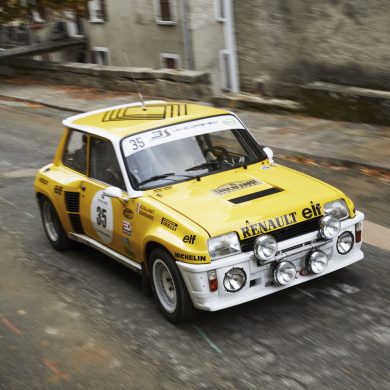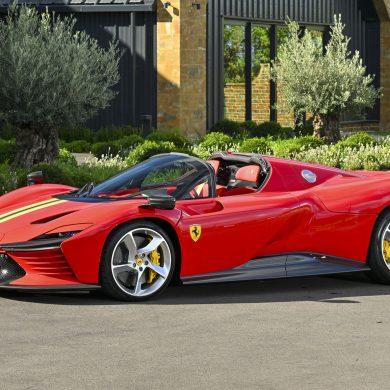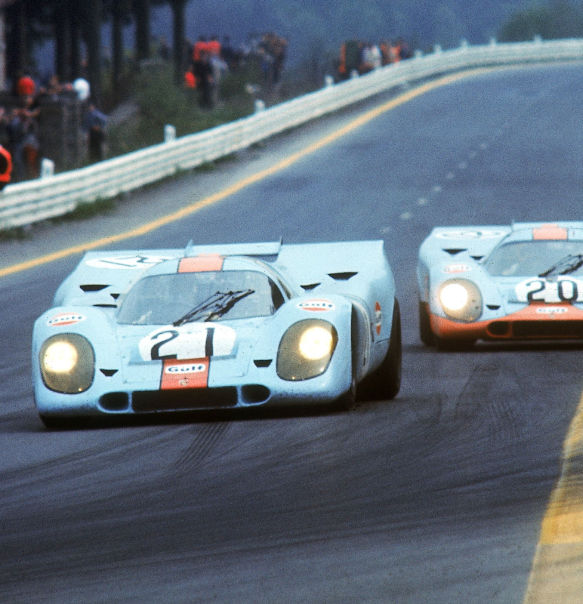


This past June, Sports Car Digest had the opportunity to attend “Caffeine & Carburetors” in New Canaan, Connecticut. A half-day event starting early in the morning, this is not your typical car show. Although it rained for most of the day, the weather had seemingly no effect on attendance. Sidewalks were full of spectators eager to see what this year’s event had in store; it did not disappoint. This event is truly one of the premier car events on the East Coast and a must-attend for anyone in the area. The show reportedly raised over $40,000 in 2024, nurturing a partnership with a number of non-profits and organizations such as the Waveny Park Conservancy, a nonprofit dedicated to preserving and enhancing Waveny Park by maintaining 130 acres south of the main driveway to keep the park a healthy and accessible green space for the surrounding community.
How it started
Caffeine & Carburetors started after Doug Zumbach moved to the town of New Canaan looking for a fresh start. He eventually founded Zumbach’s Gourmet Coffee downtown and the venture took off. Naturally, from a family of automotive enthusiasts, he decided to use his space to grow the passion for other generations by hosting meets. Doug began hosting Caffeine & Carburetors gatherings in 1995 as Sunday morning meetups centered on coffee, cars, and a scenic drive, attracting families and visitors from across the region. The vision later expanded into Caffeine & Carburetors Café, a year-round hub for automotive enthusiasts and coffee lovers that hosts events featuring industry news and products. Doug’s idea blossomed into truly one of the most exciting atmospheres for car enthusiasts in the New England region, drawing incredible cars from around the country. Here is a list of the rarest cars in attendance, the likes of you can count on seeing every year.
#1 Ferrari F40 GTE (1 of 7)
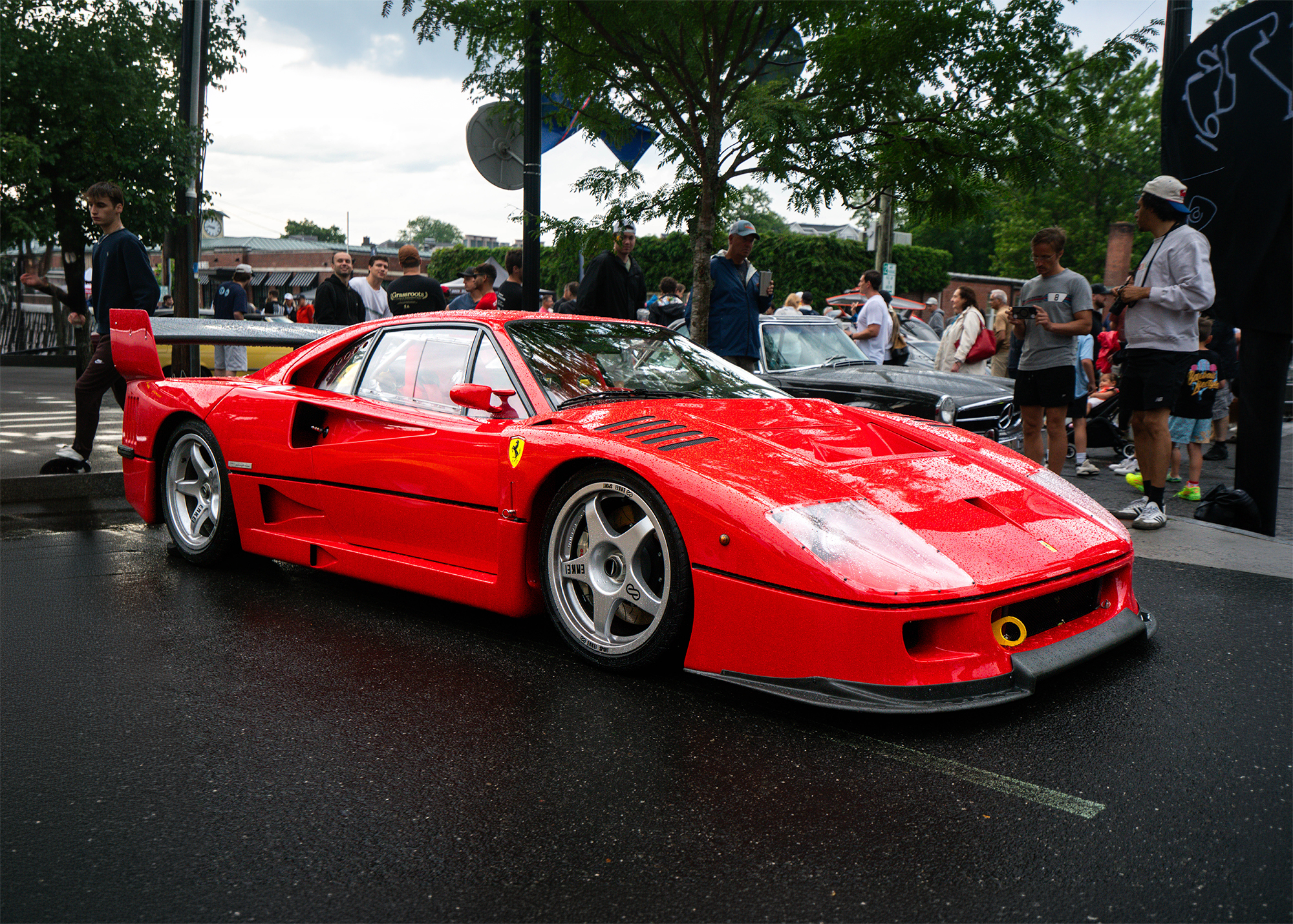
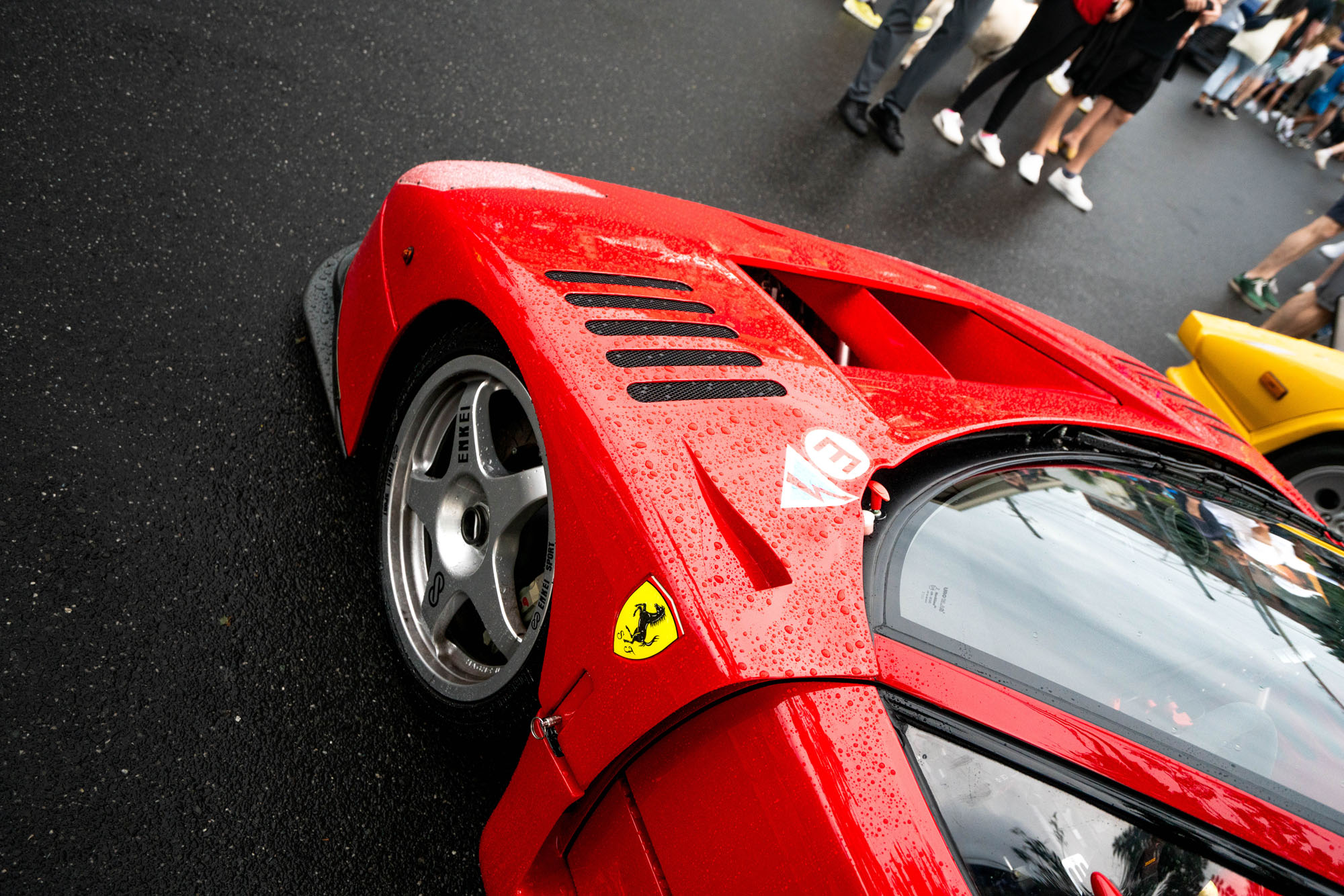
Nothing quite screams rarity like a race-built Ferrari flagship car. This 1 of 7 Ferrari F40 GTE is a unicorn in terms of retro Italian race cars, brought to C&C off the trailer of notable collection, 1600 Veloce. Many different configurations of the F40 raced in a variety of series throughout the 90s. Some examples being: The F40 IMSA GTO, the competitor in the famous American racing series that resembles the road going version the most due to all examples being converted from road-cars, as well as the F40 LM, which in 1994 was on the grid for international competitions against early example GT1 cars in the BPR Global GT Series and managed to secure a win at the 4 Hours of Vallelunga.
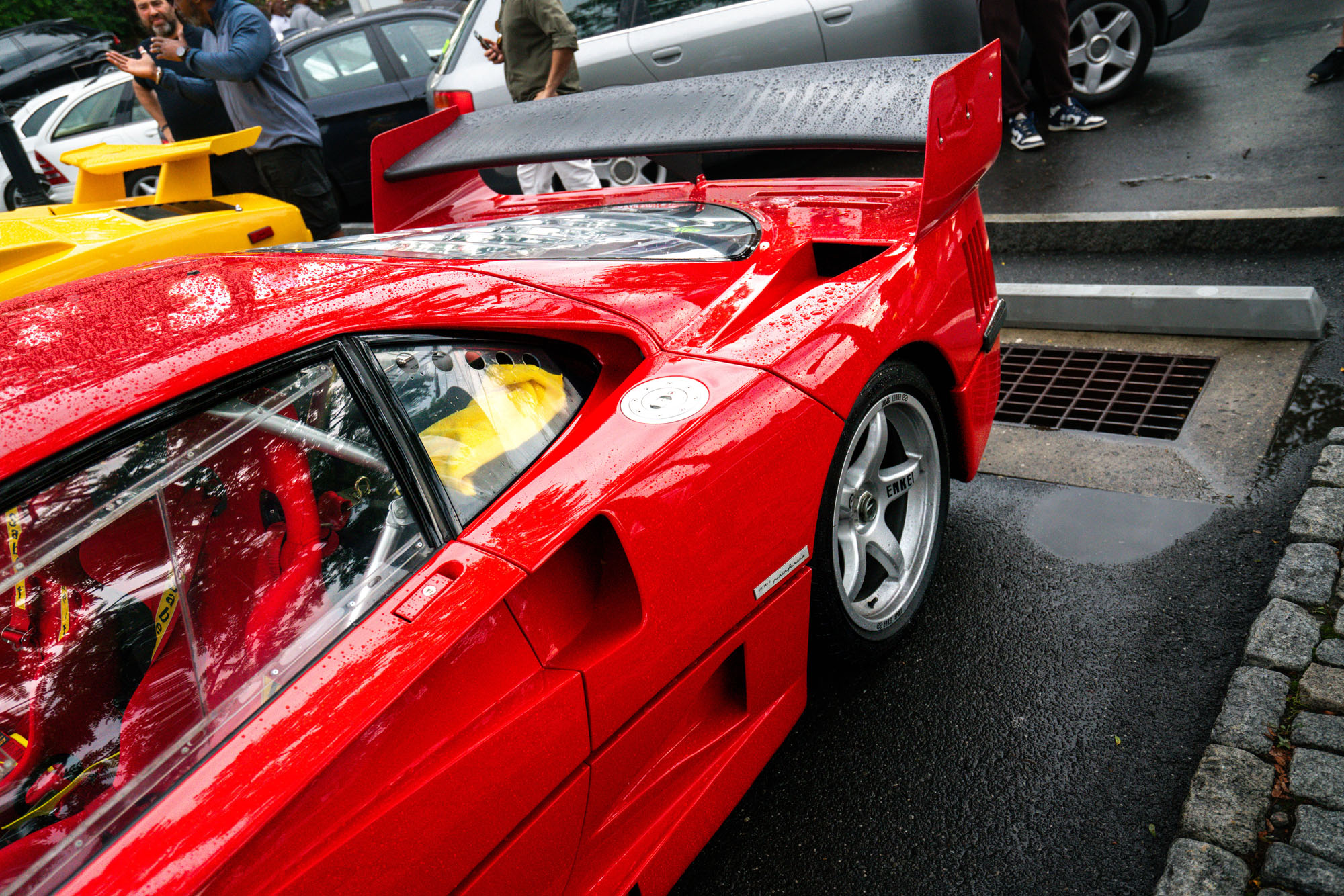
The GTE was in use from 1995 till 1997 and continued to race in the GT1 class in BPR and Le Mans. The new example featured engine upgrades from 3.0L to 3.5L (1995) and 3.6L (1996–97), producing around 620 bhp, along with updates such as a Magneti Marelli dashboard and heavy aerodynamic redesigns in 1996 including a new adjustable rear wing, splitter, diffuser, and revised air intakes (RossoAutomobili).
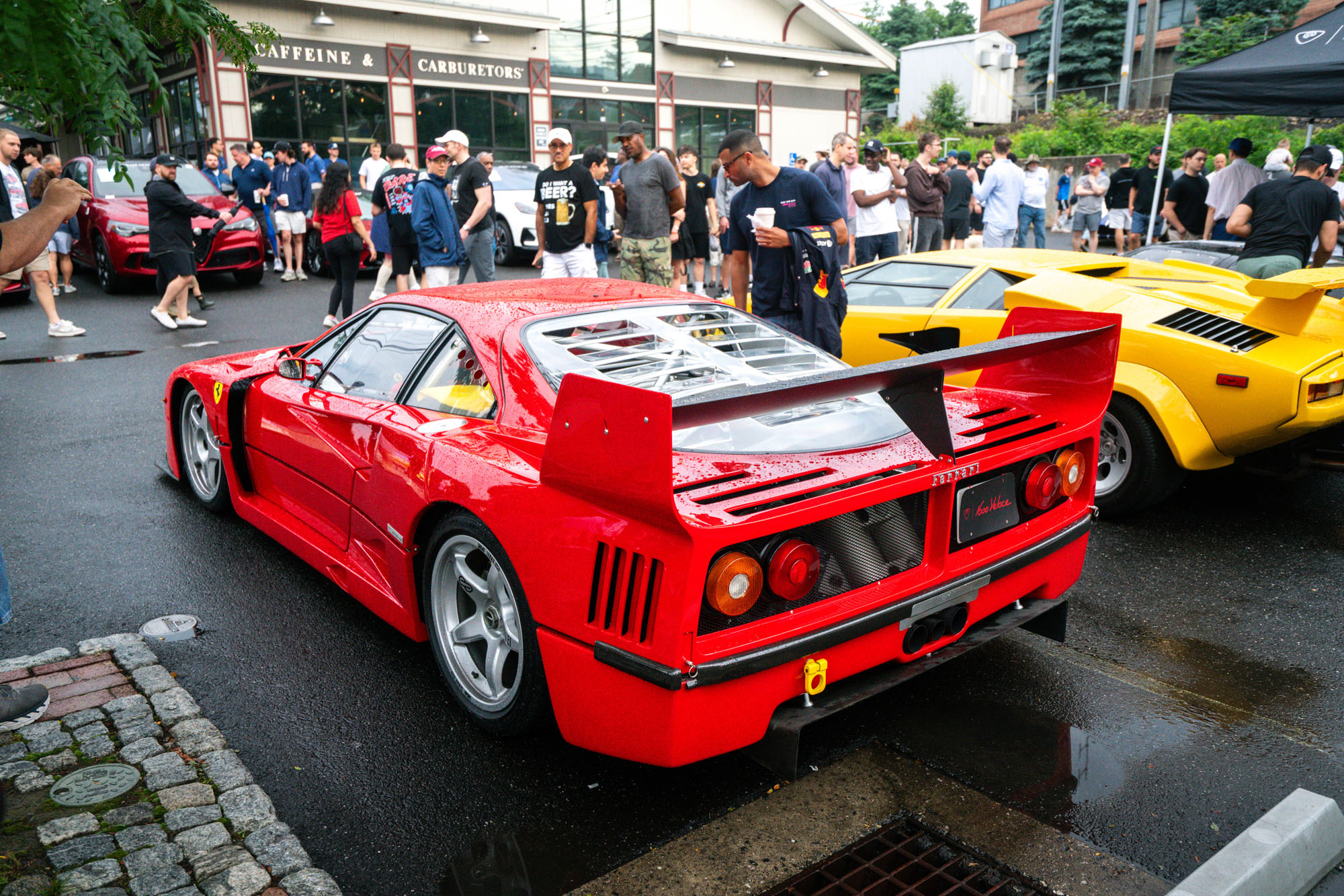
Converted by Michelotto, a mere seven F40s became GTEs. Built off of former LMs, GTs, and road cars, the GTEs retained LM-style features like optional front canards, multiple steering wheel options, and configurable rear bumpers. While fast and fairly competitive, seeing success when the F40 GTE (Pilot-Aldix Racing) won the 4 Hours of Anderstorp in the BPR Global GT Series in 1995, the 1995 Le Mans 24 Hours: A Michelotto-prepared F40 LM finished 12th overall and 2nd its GT class, as well as a 3rd place finish at Nogaro in 1996 again in BPR. However, ongoing reliability issues prevented the F40 GTE from achieving the same success as its predecessor, the F40 GT.
#2 Porsche Schuppan 962CR (1 of 6)
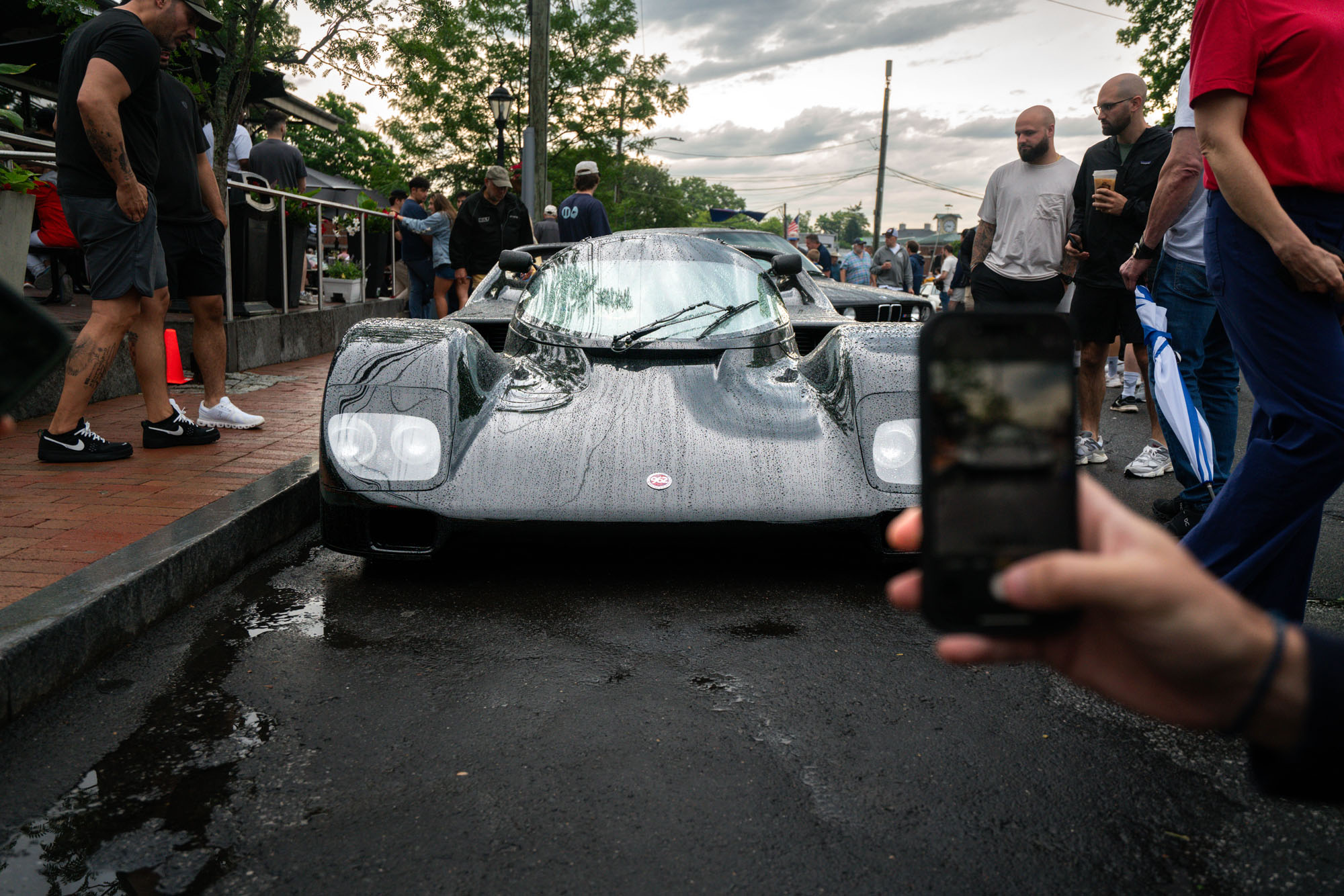
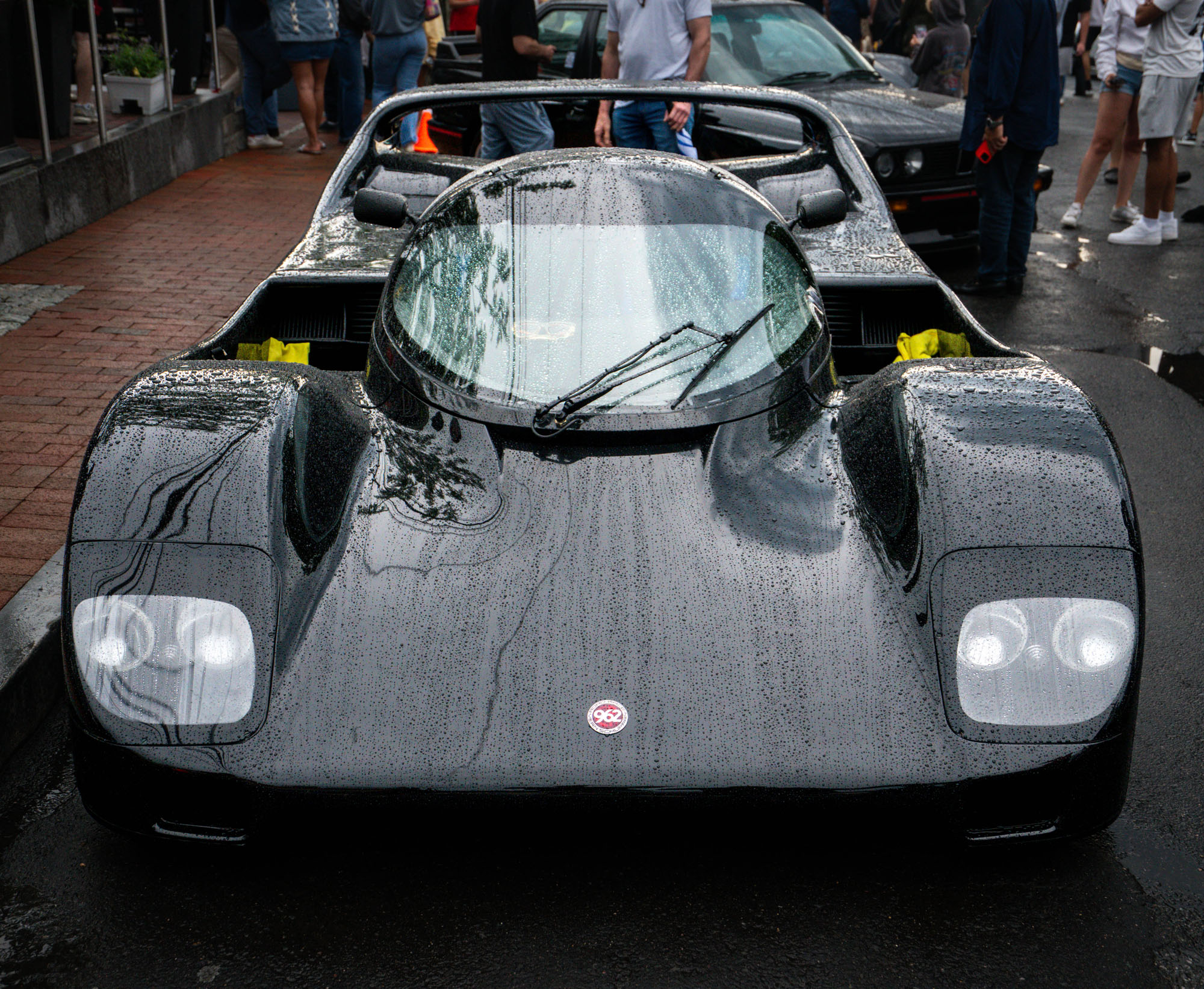
Many might be able to recognize this particular car due to its track-going counterparts’ success in the world of endurance racing. The Porsche 956 and 962 dominated the group C stage for years and can be argued as some of the greatest race cars of all time. These endurance monsters secured Porsche as one of the most prestigious manufacturers in motorsport after securing 4 straight LeMans wins with the 956 and three more later on with the 962. The track success of the 962 in the late 80s-90s begged the question, what if there was a 962 to conquer the street?
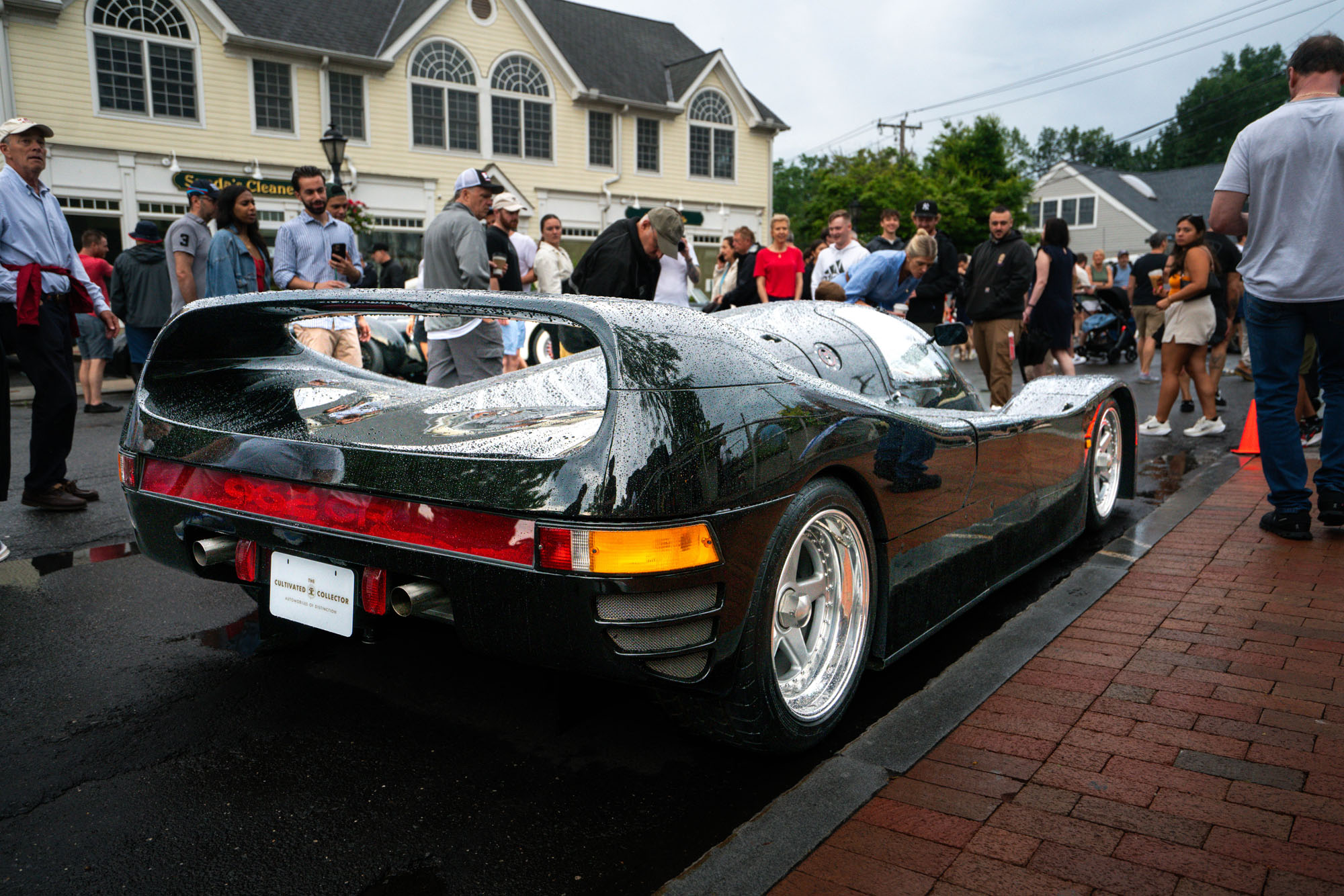
LeMans winning driver Vern Schuppan answered this question. Backed by Japanese investors, Vern set out to build the street-legal Porsche 962 as a tribute to his racing success and worked directly with Porsche to manufacture the carbon fiber monocoque.
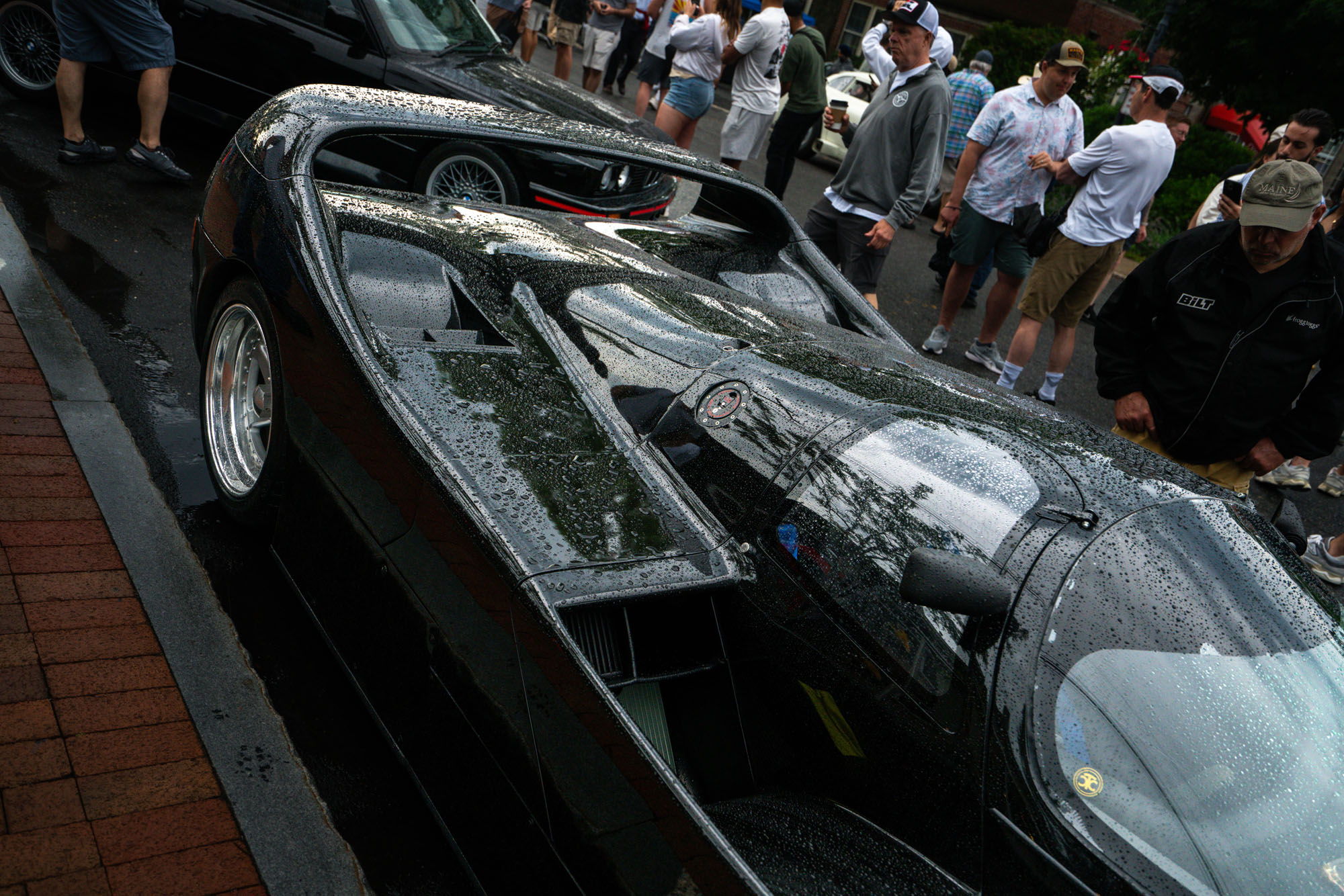
Each 962CR used a five-speed manual and a twin-turbo 3.3-liter Type-935 flat-six producing just over 600 hp, sourced almost directly from Porsche’s IMSA race cars. Performance was extreme, with a reported 0–60 mph time of 3.5 seconds and a top speed exceeding 230 mph.
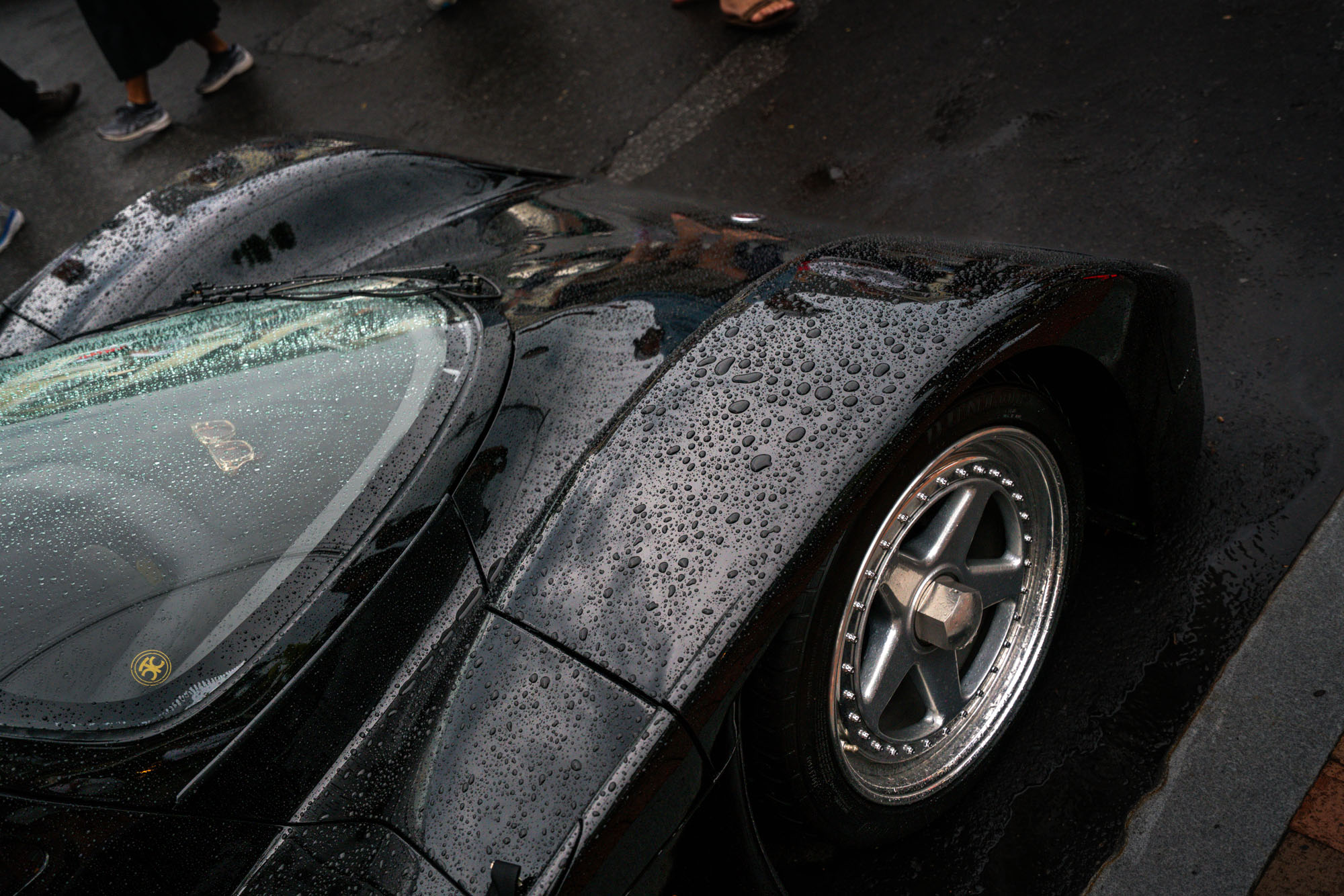
After two years and around $7 million in development and testing, the generously ambitious plan for 50 cars collapsed as only six 962CRs were built, largely due to a weakening hypercar market and the astronomical tag of $1.5 million. Financial trouble followed when payments failed to arrive from various customers, forcing Schuppan into bankruptcy. A true what-if story that I and I’m sure most reading wish ended in success. The 962CR is a marker of when the industry had true ambition and courage. To produce a factory backed road legal group C car is a feat achieved only a few times in examples such as the Jaguar XJR-15, which was essentially a road-going version of the LeMans winning XJR-9.
#3: 1987 Cramer Cobra (1 of 1)
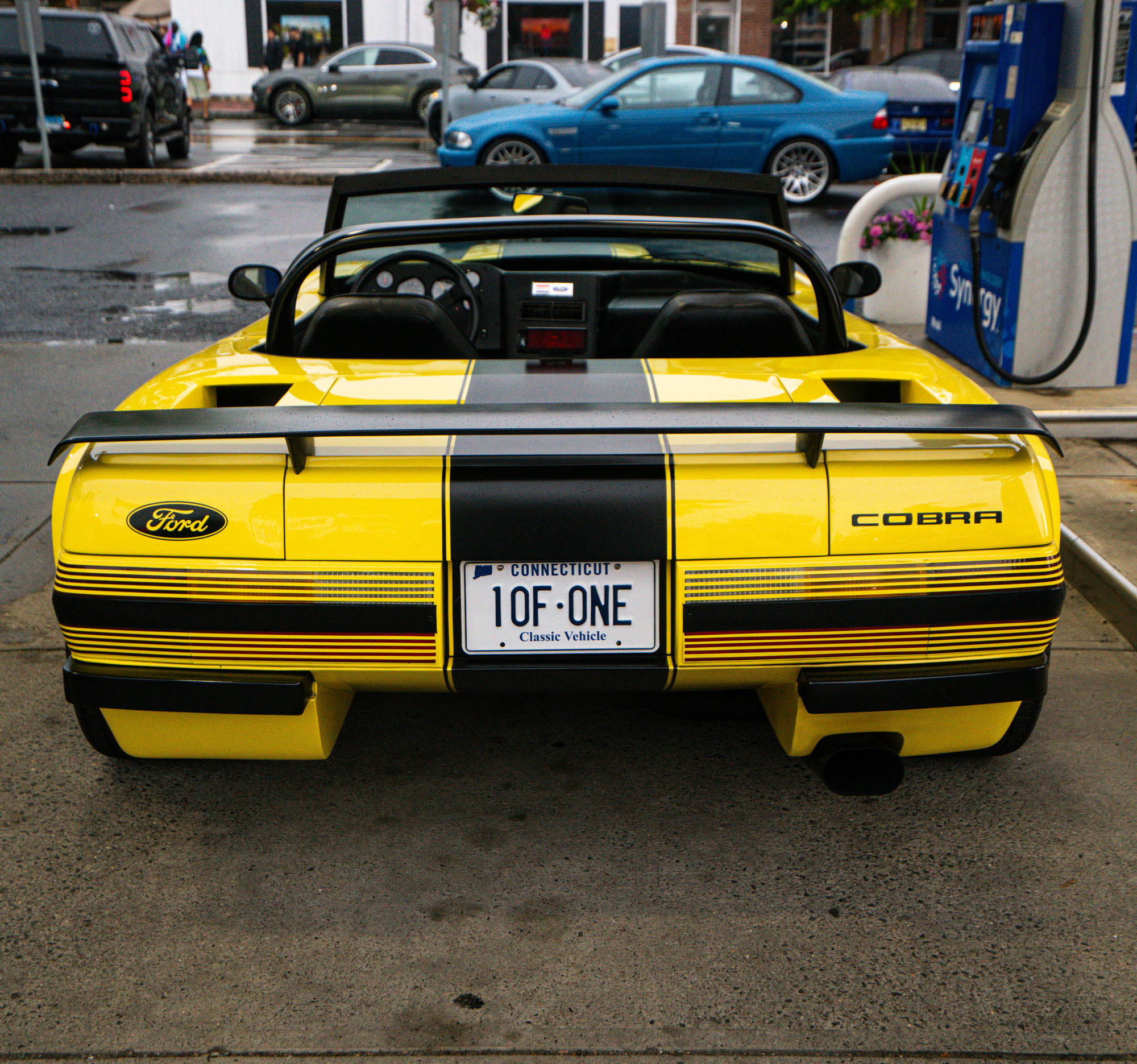
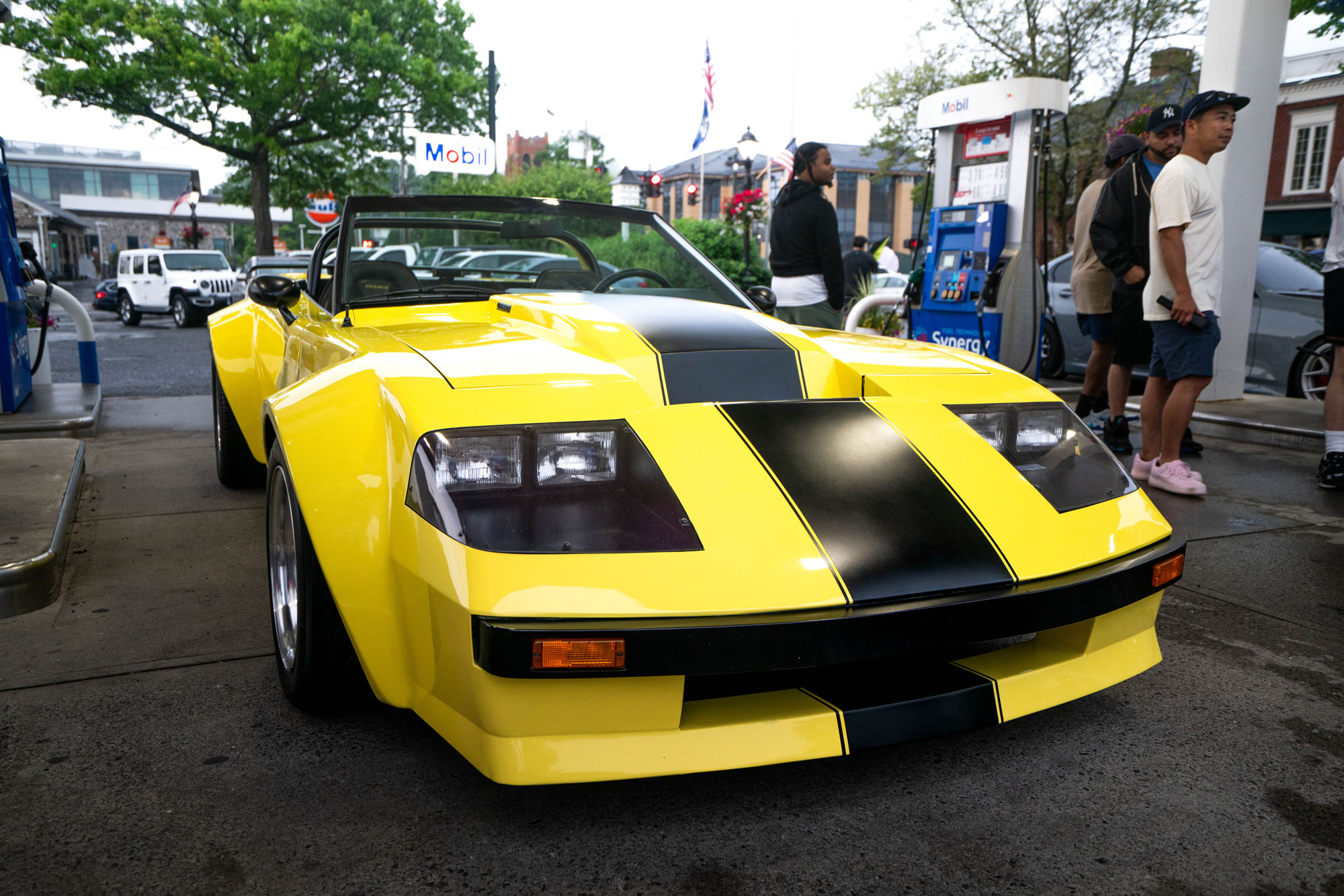
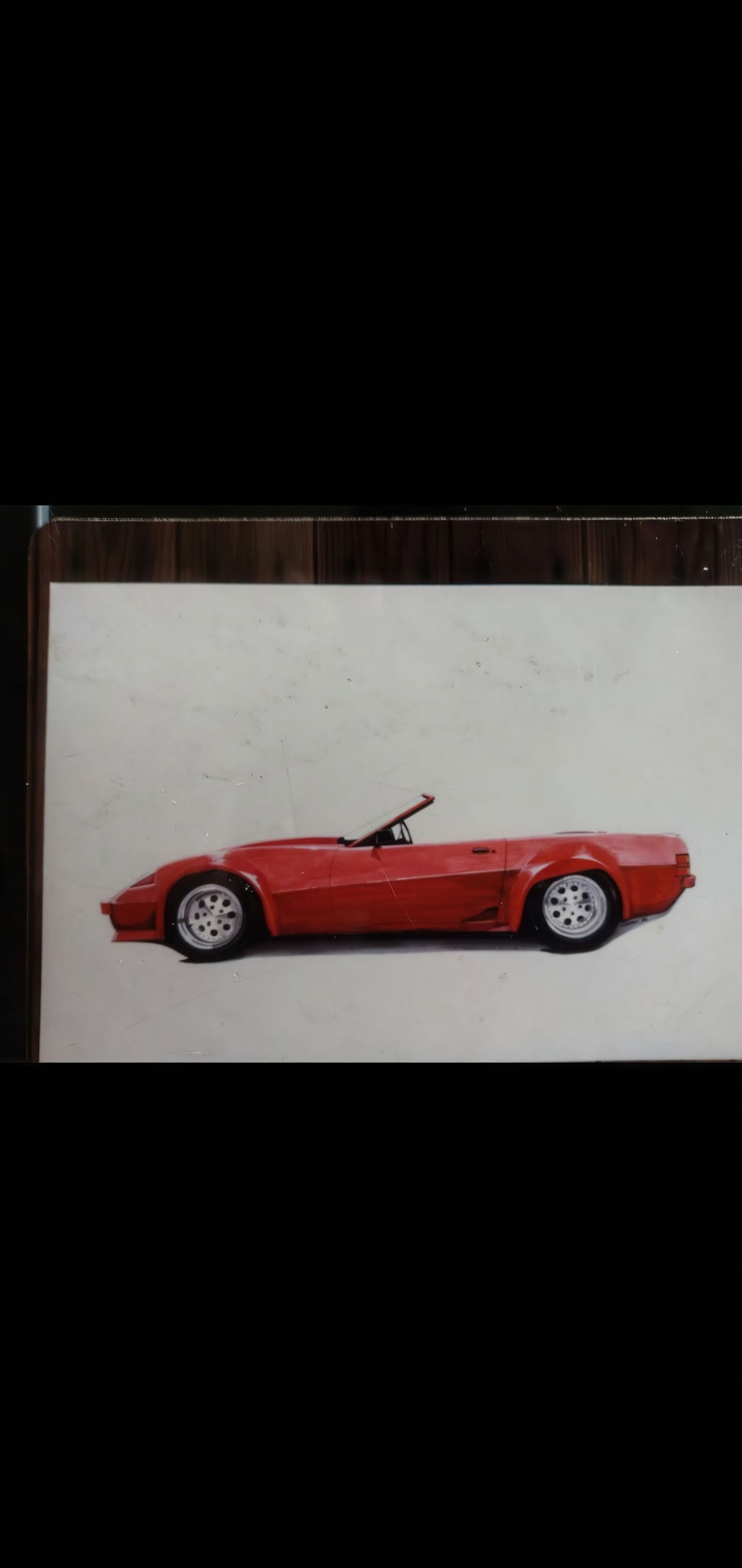
Introducing a car you have probably never imagined, let alone heard of. This is the Cramer Cobra currently owned by Michael Pratley from Orange, CT. In 1985, aiming to revive the Cobra into a more modern and aggressive entity, Gary Cramer designed and built his own dream from the ground up, finishing his creation in 1987. The car rides on a 95-inch wheelbase, measures 166 inches long, weighs 2,860 pounds, and uses a self-designed mild steel tube chassis with 3×4-inch main rails and 2-inch structural tubing, paired with a hand-formed aluminum body that took one year alone to shape according to Pratley.
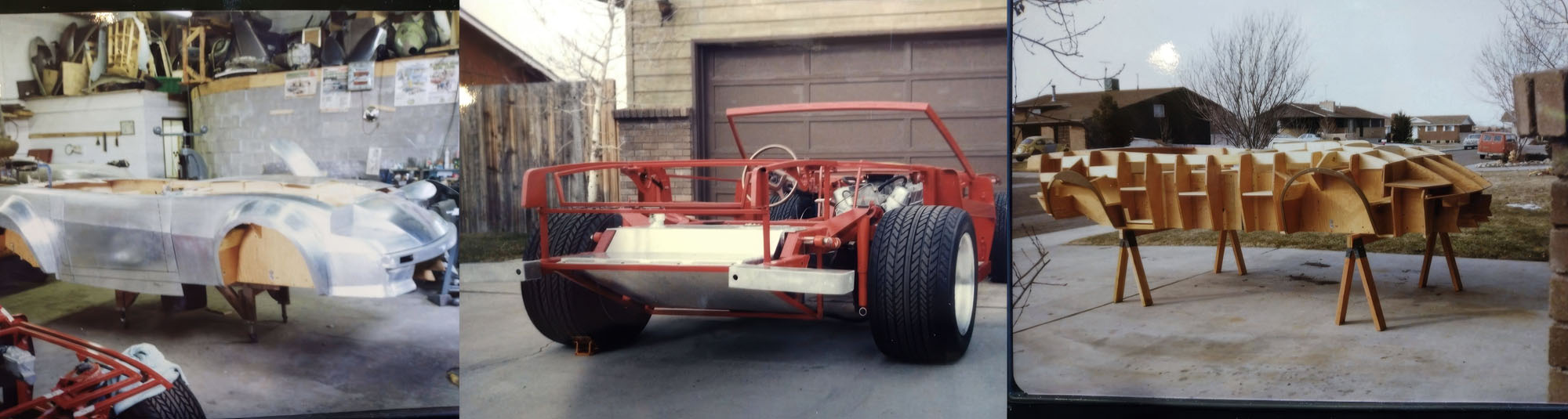
Power comes from a .030-over Boss 302 with mildly ported ’66 Hi-Po 289 heads, a Holley 600 cfm carb, and Ford Hi-Po aluminum intake, backed by a blueprinted C-4 automatic and 3.00:1 rear gears, delivering 0–60 mph in a blistering sub-5 seconds. Suspension includes SVO Mustang front components and a 9-inch Lincoln Versailles rear with disc brakes, while the car rolls on 15-inch Center Line wheels with 285/40-15 and 345/35-15 Pirellis.
M&G Restoration took on Cramer’s project because it involved legitimate coach-built aluminum bodywork, not fiberglass. Cramer, a 35-year-old high school teacher from Orem, Utah with an art and design degree from BYU (1975), dreamed of a fast, low, aerodynamic, and mechanically simple two-seat roadster, commissioning M&G for US $23,000–25,000 to form dramatic flared fenders over ultra-wide wheels, and including a 350-horsepower Shelby Mustang engine. With roughly US $65,000 invested personally and a $50,000 partner, Cramer envisioned limited production of 2 to 20 cars per year, a vision that never came to fruition.
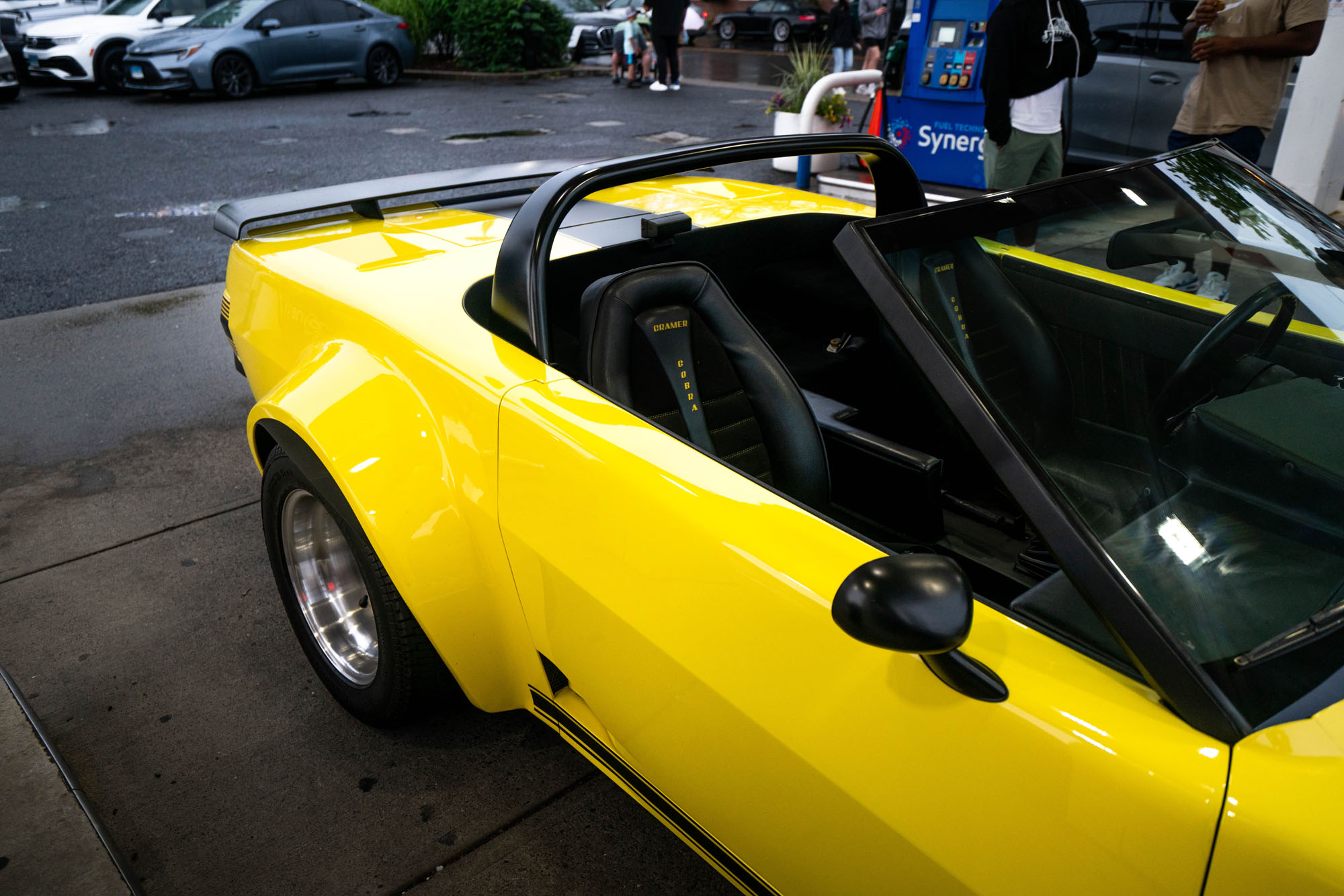
Later modifications include the handmade roll bar and wing that were added on in 2021. Additionally, the original automatic Mercury transmission was swapped out for a Tremtec T5 manual transmission. Cosmetically, and the final modification, the black stripes were added from front to back which I feel complete the aggressive and retro feel of the car.
#4 Lamborghini Murcielago SV (1 of 186)
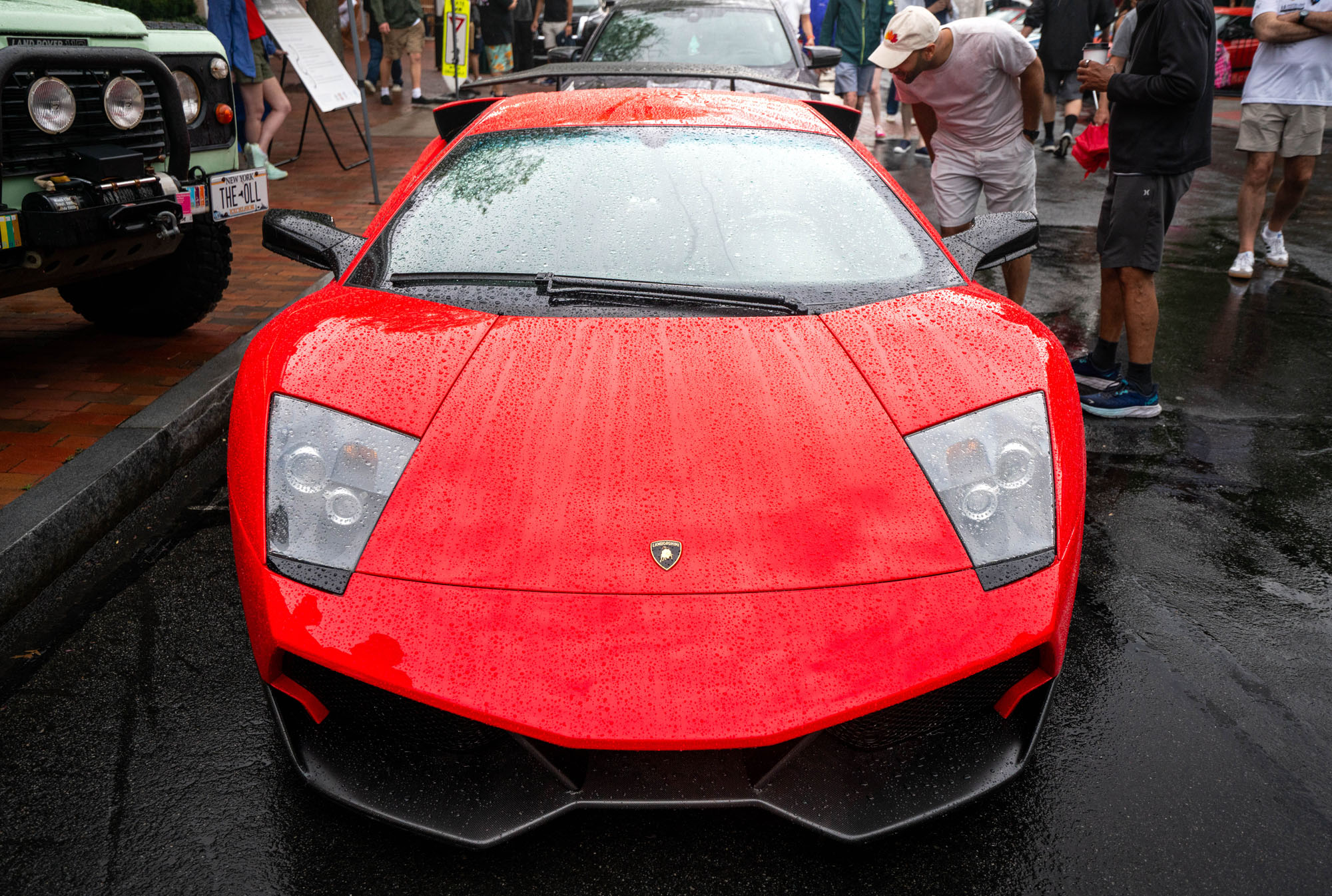
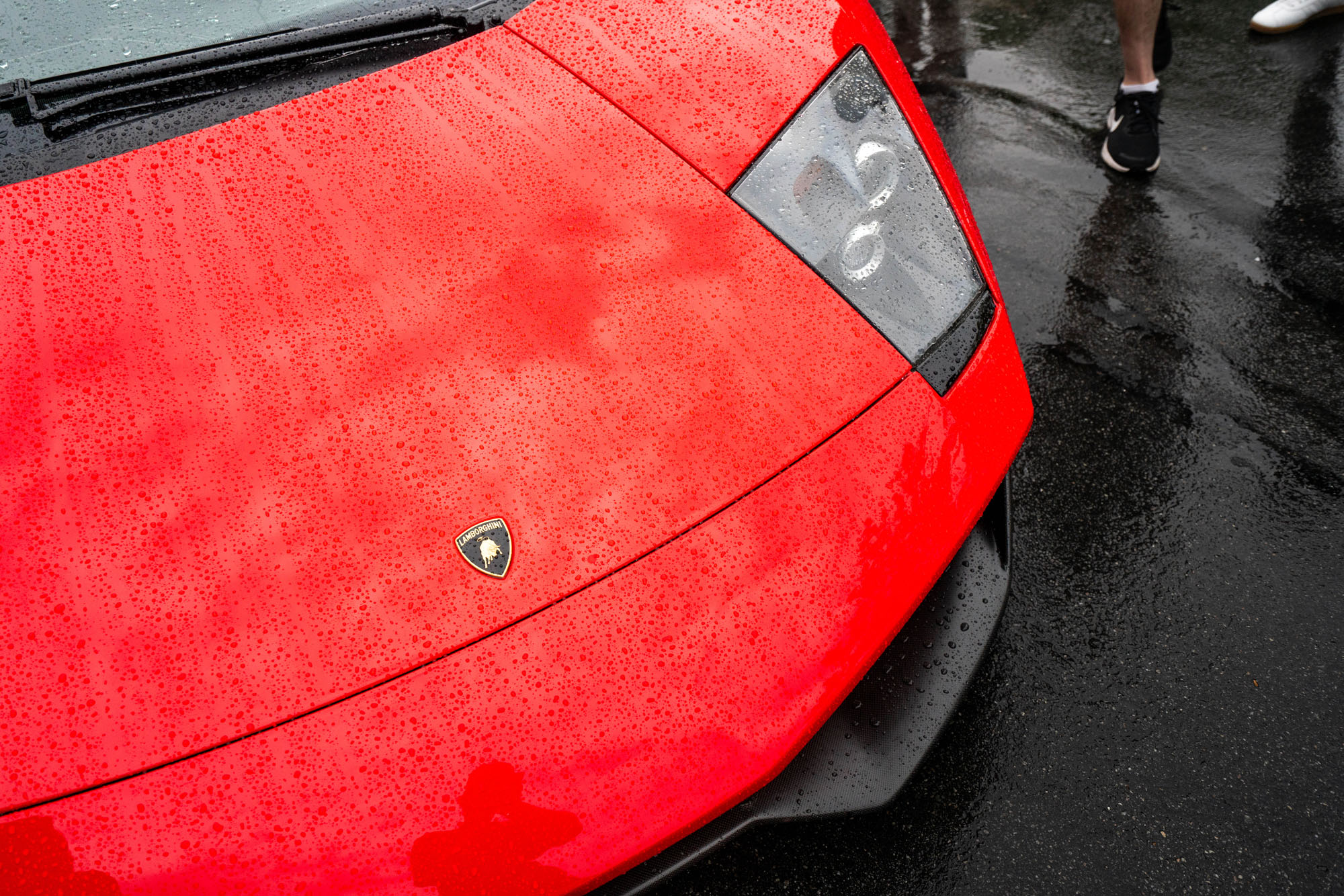
The streets of New Canaan were lucky enough to have been graced by the presence of truly legendary Italian design. The Murcielago SV is a highly limited and religiously sought after supercar. Its Batmobile-like aesthetic demands the attention of all eyes in the area. The confident, aero dynamic lines of the carbon fiber body conceal the screaming 6.5L V12 engine. This is just one of 186 Super Veloces produced from the batch of 350 that was planned. Production was cut short due to the early launch of the Murcielago’s successor, the Aventador.
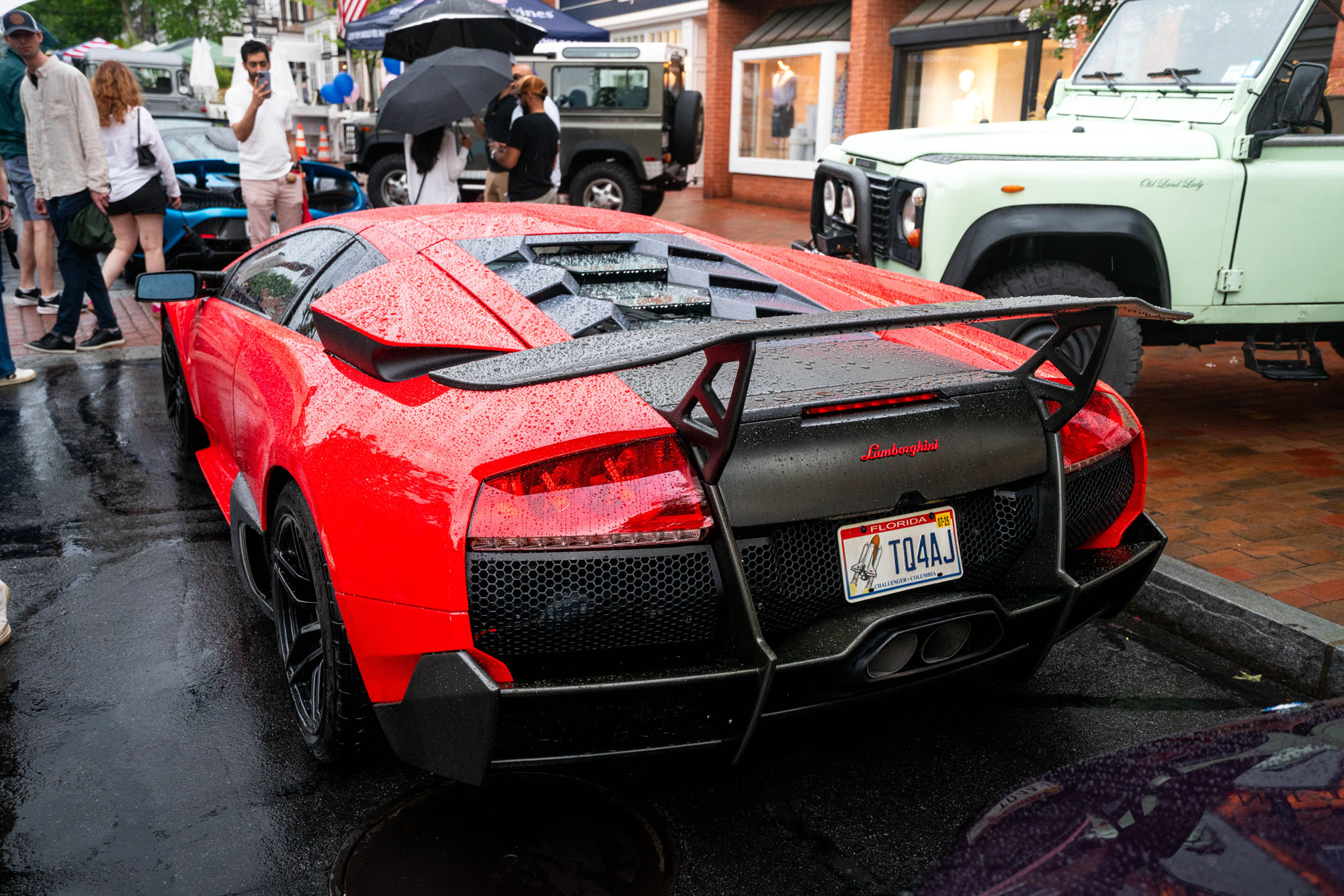
The 2010 LP640-4 SV is a mid-engine, all-wheel-drive, two-seat coupe with a current price tag that can reach from $800k all the way to the $1.5 million range for low mileage or special spec examples. The V12 power unit spits out 661 bhp at 8,000 rpm and 487 lb-ft of torque, paired with either a 6-speed manual or in only about 7 examples, a manual transmission. Weighing 3,850 lb, the SV propels from 0–60 mph in just 3.0 seconds, runs the quarter-mile in 11.2 seconds, and reaches a staggering 209–213 mph top speed. Although its shortcoming may be the 8–9 mpg city and 13–14 mpg highway, those who own such a beast likely don’t mind.
#5 Runge Veleno (1 of 1)
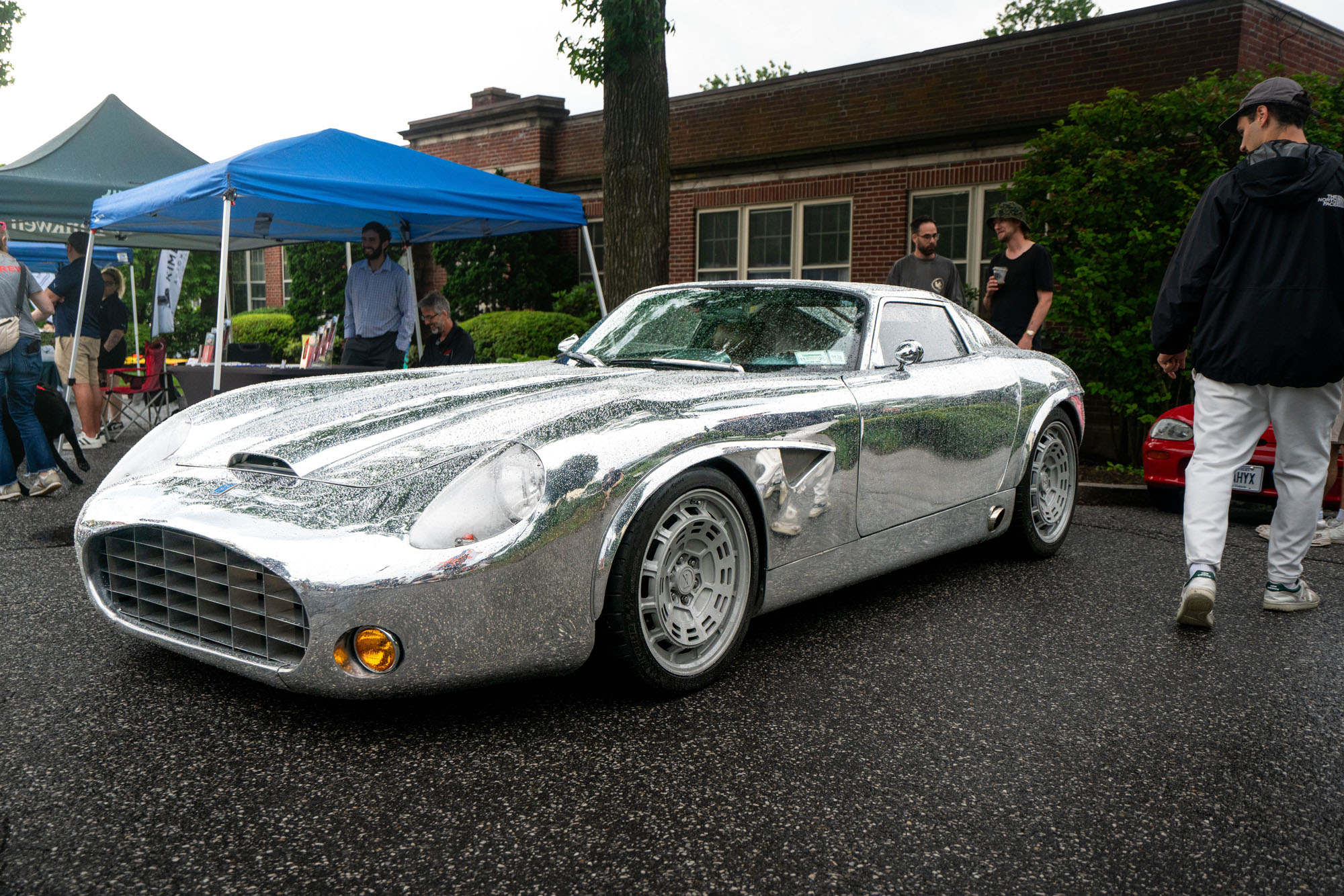
Parked in the mostly Porsche-designated area of the show, this car truly had me stumped at first glance. Everyone investigating the reflective machine repeated the same words: “what is this thing?” After a bit of digging, the Runge Veleno is now in everyone who attended C&C’s arsenal of “cars-you-shouldn’t-know-but-now-you-do.”
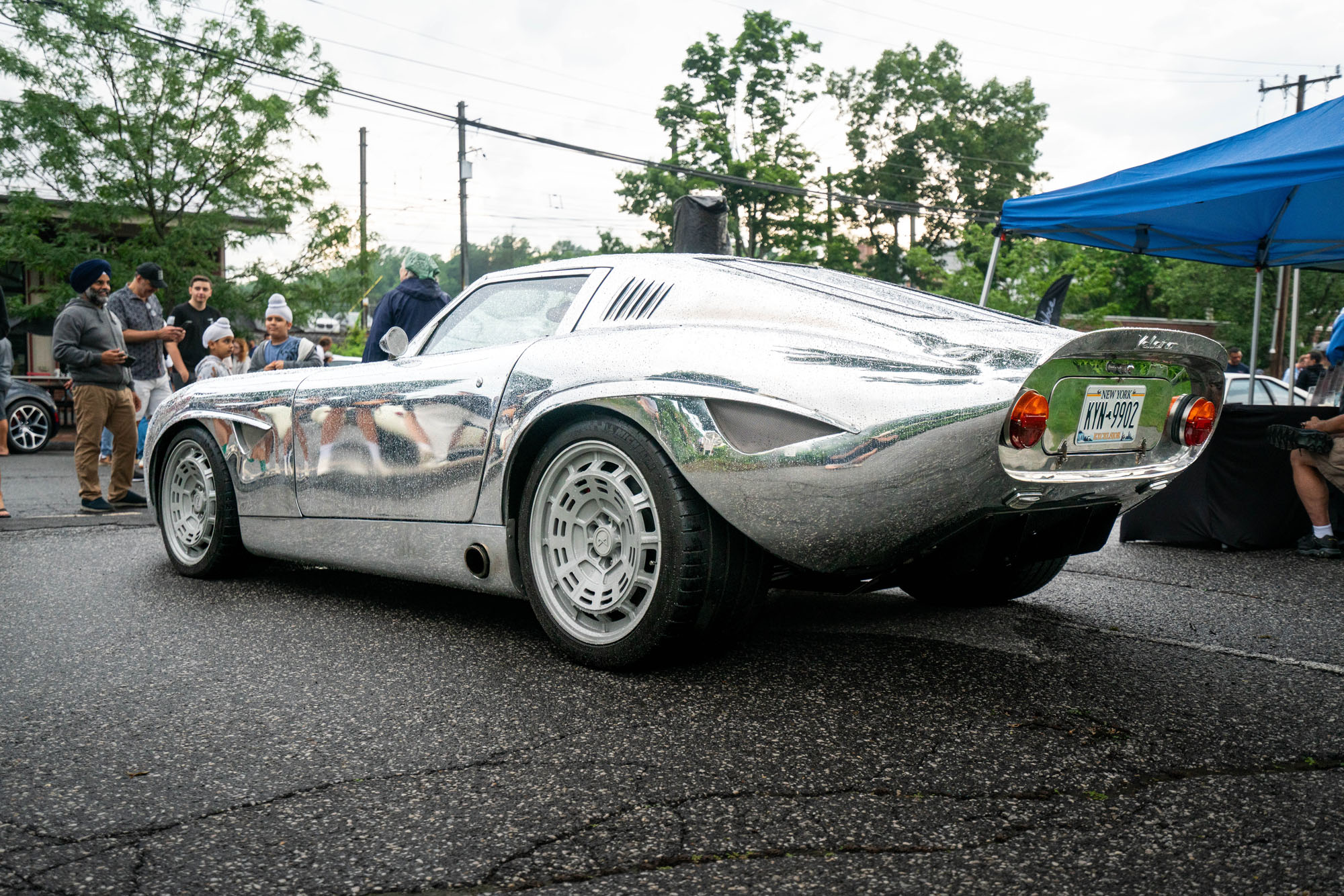
Runge Cars is a Minnesota-based coachbuilder focusing on traditional handcrafted, bespoke automobiles. All of their vehicles are shaped with hand-formed aluminum bodywork around a lightweight “Superleicht” aluminum tube frame. Their philosophies of tradition, quality, and craftsmanship are embodied by this, the Runge Veleno. This one-off modern classic is built on a Dodge Viper SRT10 platform, seamlessly blending American super-performance with Italian-inspired design, a process that reportedly required almost 5,000 hours of manual labor.
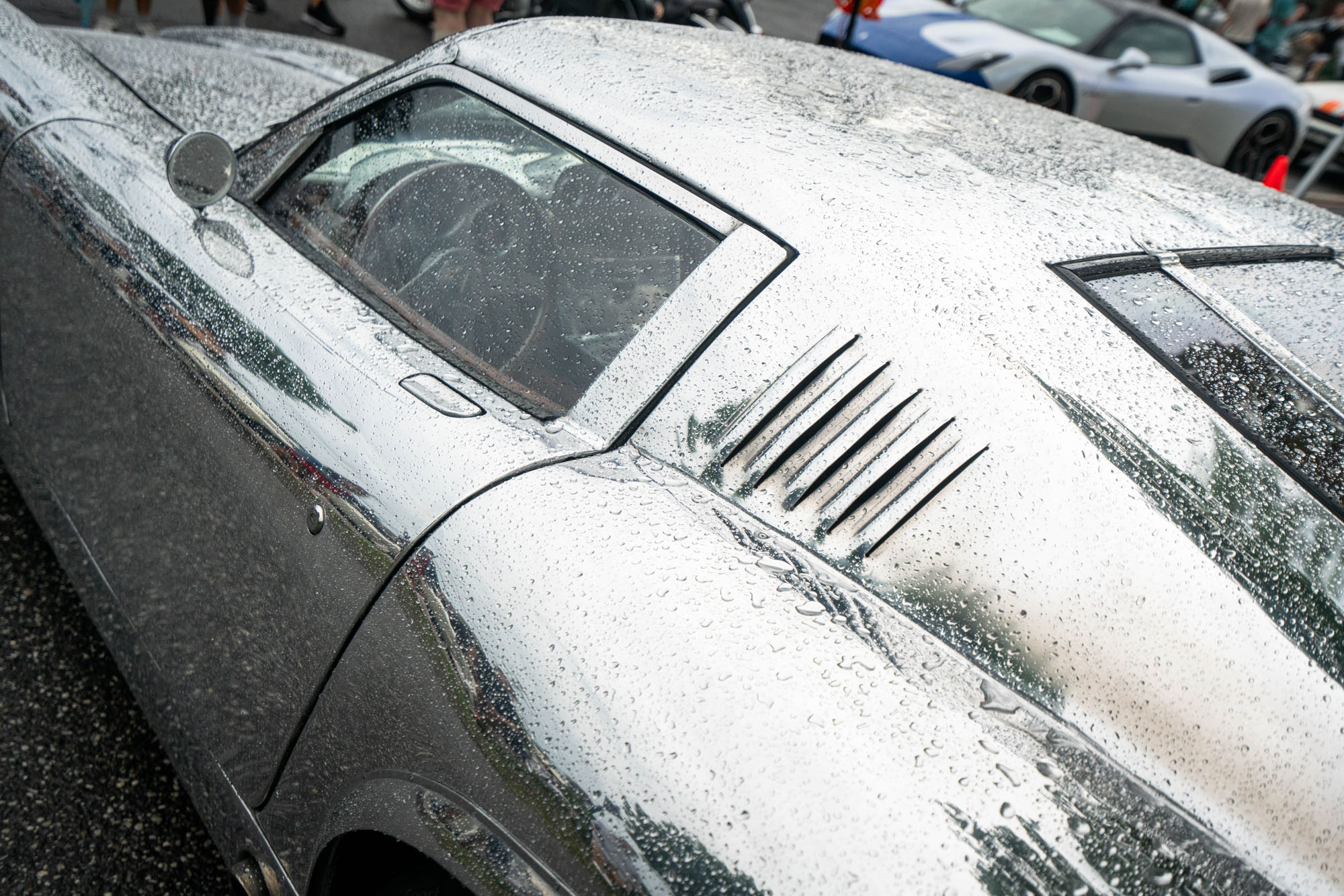
While the Veleno breathes through the Viper’s V10 engine and mechanical foundation, nearly everything else is fully custom-made, including its sleek, Padme-Naboo-spaceship-esque aluminum body, bespoke wheels, and a unique interior. The lightweight construction sheds roughly 250 pounds off of the Viper it’s built off, further enhancing performance, which is a difficult feat considering the raw performance of the Viper. Each Runge creation is built to customer specifications, positioning the Veleno as both a functional supercar and as many consider them, pieces of rolling automotive art.
*End*