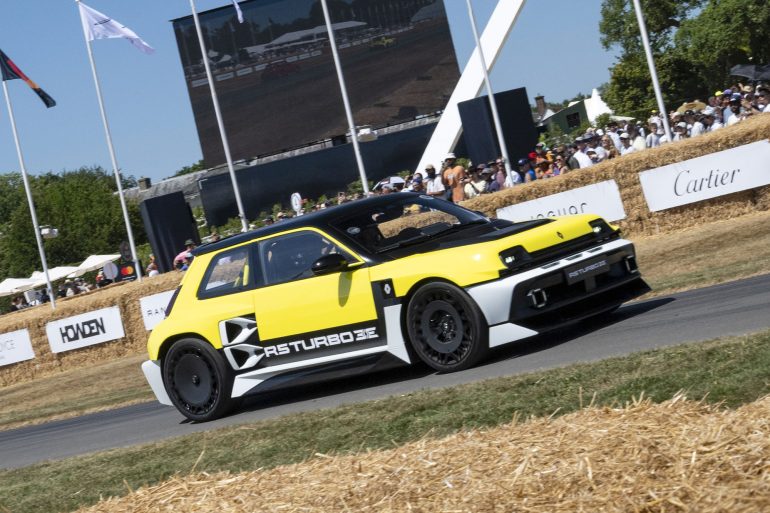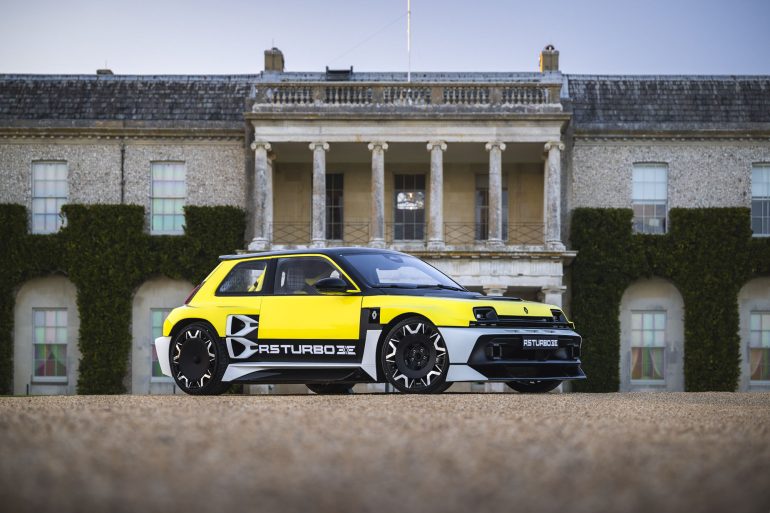
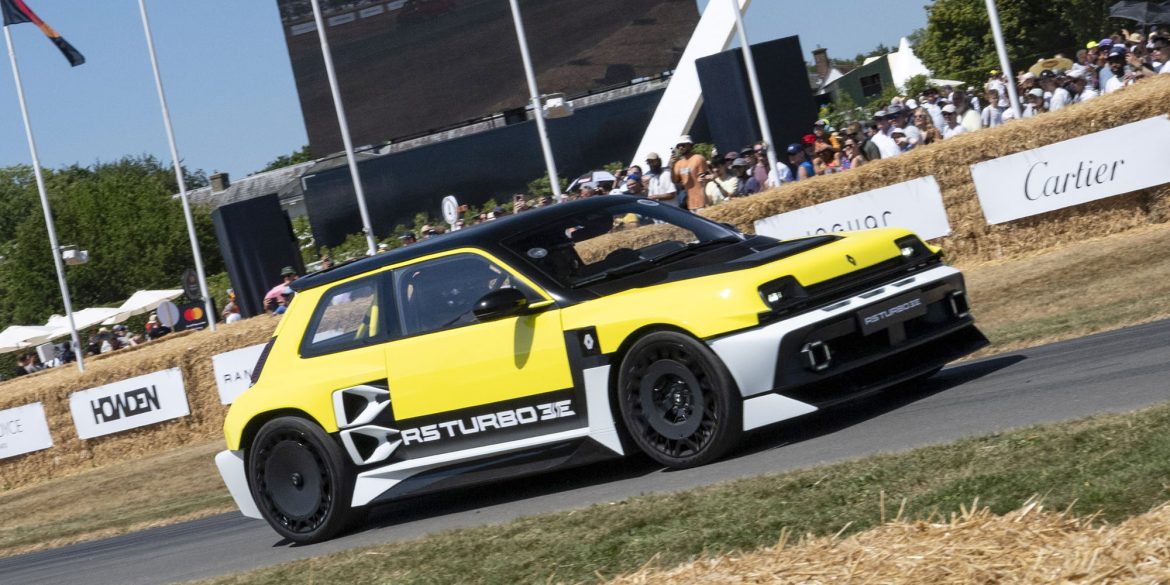
The all-electric Renault 5 Turbo 3E has made its UK public dynamic debut at the Goodwood Festival of Speed, tackling the famous hillclimb alongside the 1980 Renault 5 Turbo that inspired its creation.

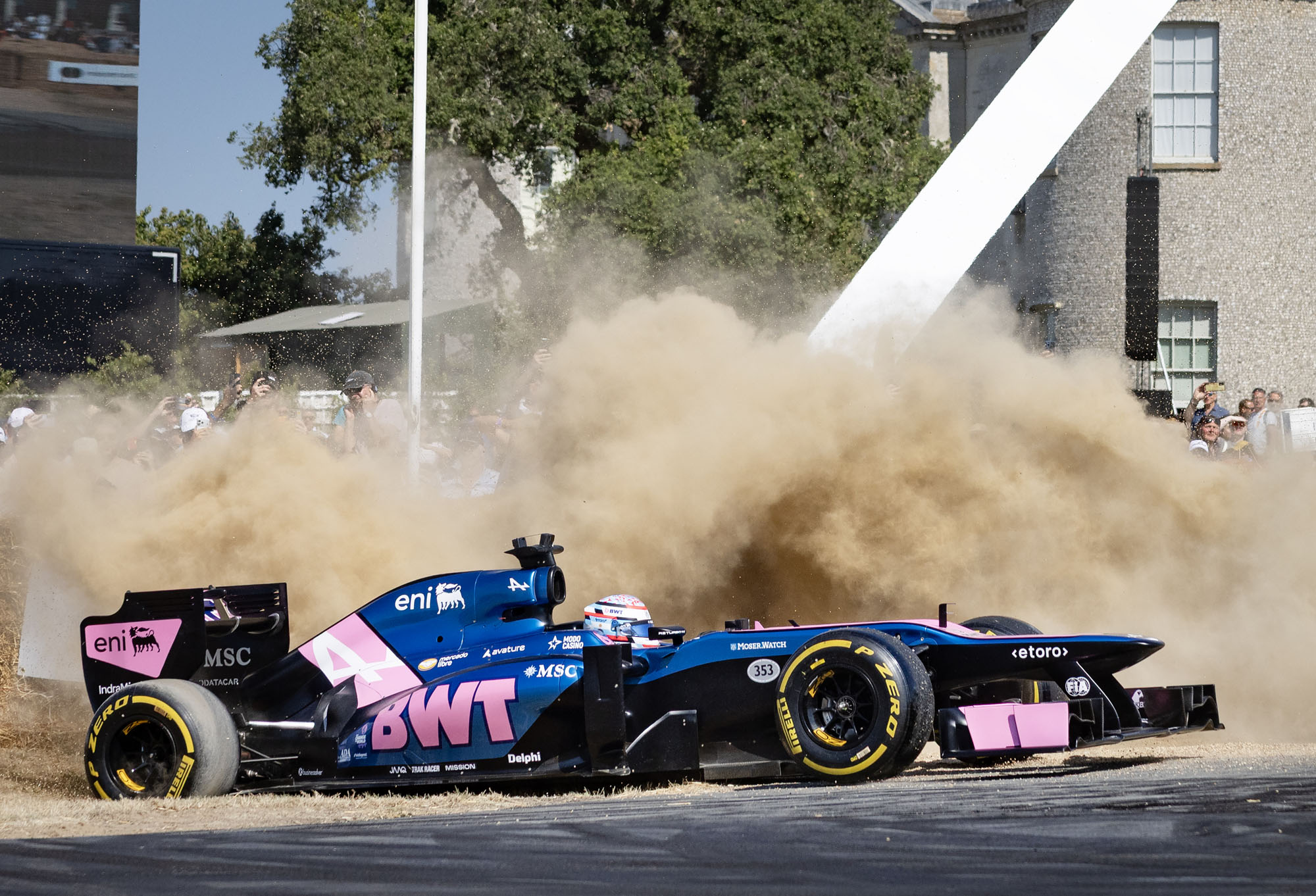
A wartime fighter station on a duke's estate in Sussex, turned into Britain's best-loved circuit in 1948 and closed in 1966; a hillclimb in front of the house that began in 1993 with a hoped-for crowd of five thousand and now draws two hundred thousand; and since 1998 the Revival, three days of racing in which everything, the cars, the clothes, the paddock and the people, is as it was before 1966. The archive has been going since the Revival's third year: Mike Lawrence, who lived two miles from the circuit, on its history and on Freddie March; Pete Lyons on the dark side of the 2000 Festival; Casey Annis's first Revival; and reports and galleries from every Festival of Speed, Revival and Members' Meeting since 2000.
The pieces to start with
Lawrence on the history, the airfield and Freddie March, Annis's first Revival, Lyons on the dark side of 2000, Evans going to Goodwood, the Kinrara grid and Dixon on the twenty-fifth Revival.
The 2006 Revival was the seventh, jacket and tie in the paddock. Mike Lawrence recalls 1948: bread rationed, the 30-miles-a-week petrol ration suspended until May, and nobody wearing Dior to a motor race.
Stirling Moss returned to St. Mary’s at Goodwood in 1998 for the first time since his 1962 crash and did not recognize it. Mike Lawrence on the wartime concrete pads under the grass that threw him.
Casey Annis went to his first Goodwood Revival in September: warbirds on the airfield, soldiers bivouacked by the paddock, Marilyn Monroe blowing kisses, and a circuit that has not changed since 1948, which makes it very fast and very dangerous.
Goodwood’s circuit is the perimeter track of RAF Westhampnett, laid over the winter of 1940–41 so fuel tankers could reach aircraft on concrete pads. Bader moved his squadron there for the golf. Mike Lawrence on the airfield, 70 years on.
John Dawson-Damer died when his 1969 four-wheel-drive Lotus 63 hit the finish-line gantry at the 2000 Goodwood Festival of Speed; marshal Andrew Carpenter died too, and Steve Tarrant lost a leg. Pete Lyons was a few hundred yards away.
Twelve thousand acres near Chichester, a 20-day horse-racing meeting, an organic farm, a flying school, and a perimeter road that Freddie, the racing Duke, opened as a circuit in 1948. Art Evans finally made it to the Revival in 2006.
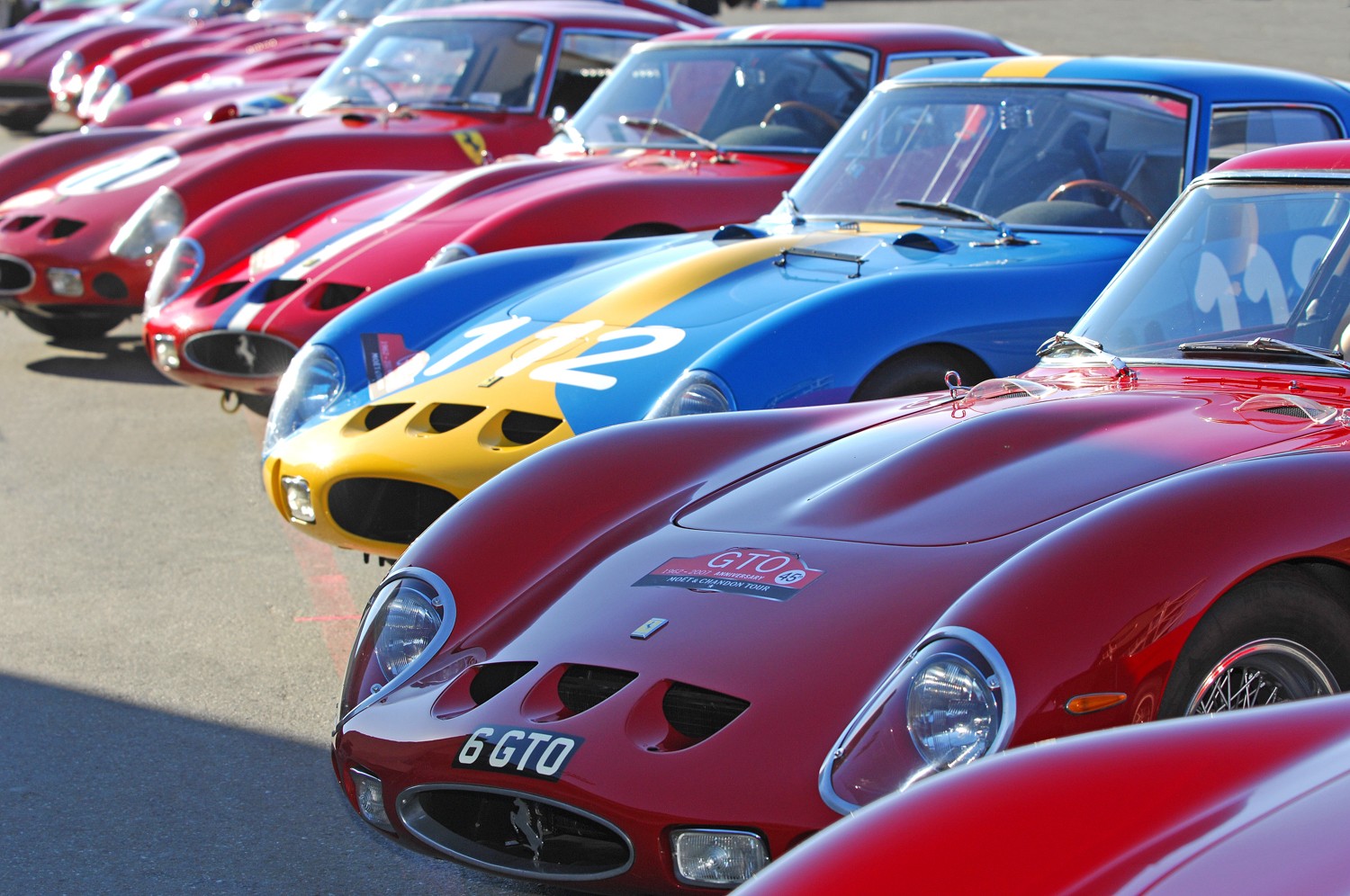
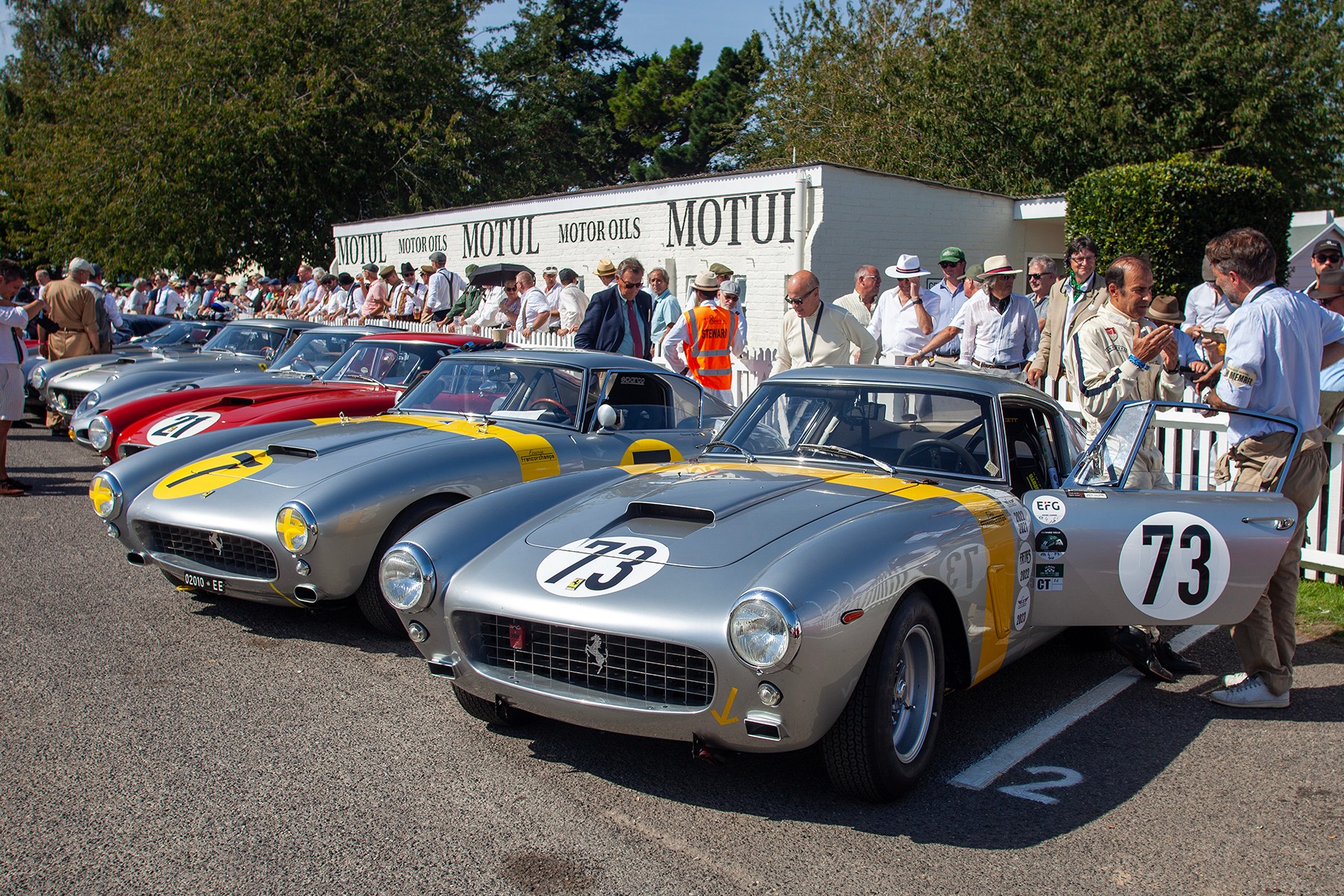
Eight Ferrari 250 SWBs, eight E-Types, four GTOs, four DB4GTs and a field worth close to half a billion dollars, raced flat out at Goodwood’s Kinrara Trophy. Casey Annis on why that spectacle is almost unique to one circuit.
Seventy-four Lotuses for the marque’s 75th, including Clive Chapman driving his father’s 1951 Mk III without its bonnet in the heat, and the turbine 56B running again. Roger Dixon at a Revival that also marked Carroll Shelby’s centenary.
The newest writing on Goodwood, as it is published.
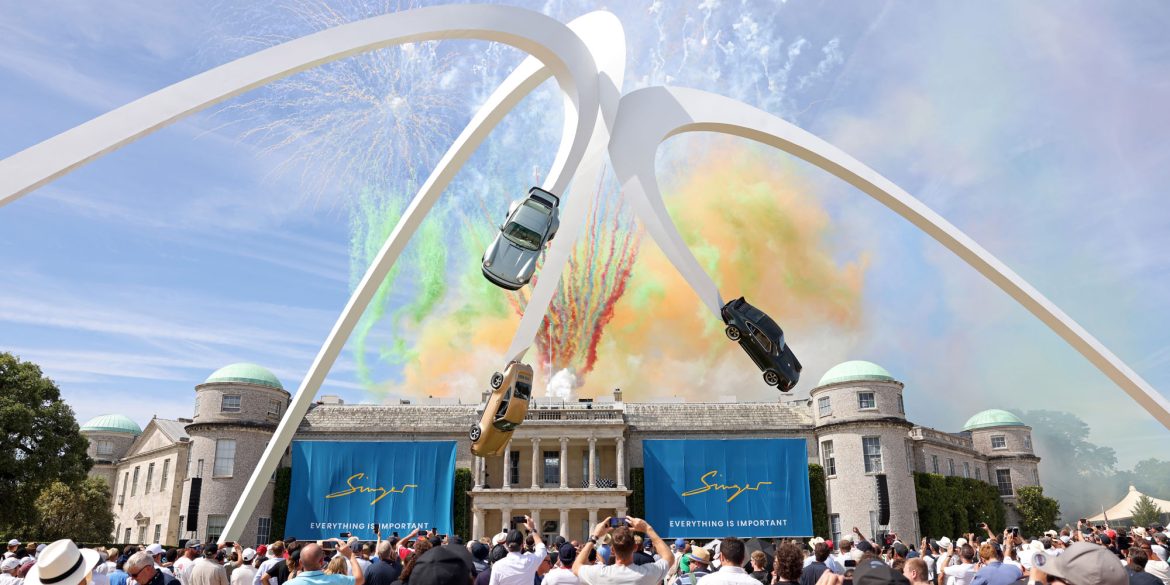
Goodwood is the 12,000-acre estate of the Dukes of Richmond near Chichester in West Sussex, an hour and a half south of London, and in motoring it means three things. The Goodwood Motor Circuit is the 2.4-mile perimeter road of the wartime fighter station RAF Westhampnett, opened for racing by Freddie March, the ninth Duke, on 18 September 1948, home to the Easter Monday meetings, the Nine Hours and the Tourist Trophy, closed to racing in 1966 and reopened in 1998 exactly as it had been. The Festival of Speed is the hillclimb up the drive of Goodwood House that Charles March, now the eleventh Duke, started in June 1993, and which has grown into the largest motoring garden party in the world, with every kind of car from 1900s Grand Prix racers to this year's Formula One cars and supercar launches running the 1.16-mile hill. The Revival is the September meeting on the circuit, run since 1998 for the cars that raced in its own era, 1948 to 1966, with the spectators, the mechanics, the paddock and the advertising dressed to match. The Members' Meeting, revived in 2014 as the 72nd in a numbering that began with the British Automobile Racing Club's members' days of 1949, opens the season in spring and lets in cars the Revival's cut-off excludes.
Between them the three meetings have made this piece of Sussex, in Lord March's words from the Festival's twentieth year, host to more of the greatest drivers and cars in the world than anywhere else. The circuit is where Stirling Moss won four Tourist Trophies in a row and where his career ended on St George's Day 1962, where Aston Martin won the Nine Hours three times and the world championship in 1959, and where Bruce McLaren was killed testing in 1970. The Revival is where the Ferrari 250 GTOs, the lightweight E-types, the Cobras and the DB4 GTs still race against each other for an hour into the evening, in grids the archive's editor priced at half a billion dollars. The archive's Goodwood coverage runs from the magazine galleries of 2000 to this summer's Festival, and this page puts it in order.
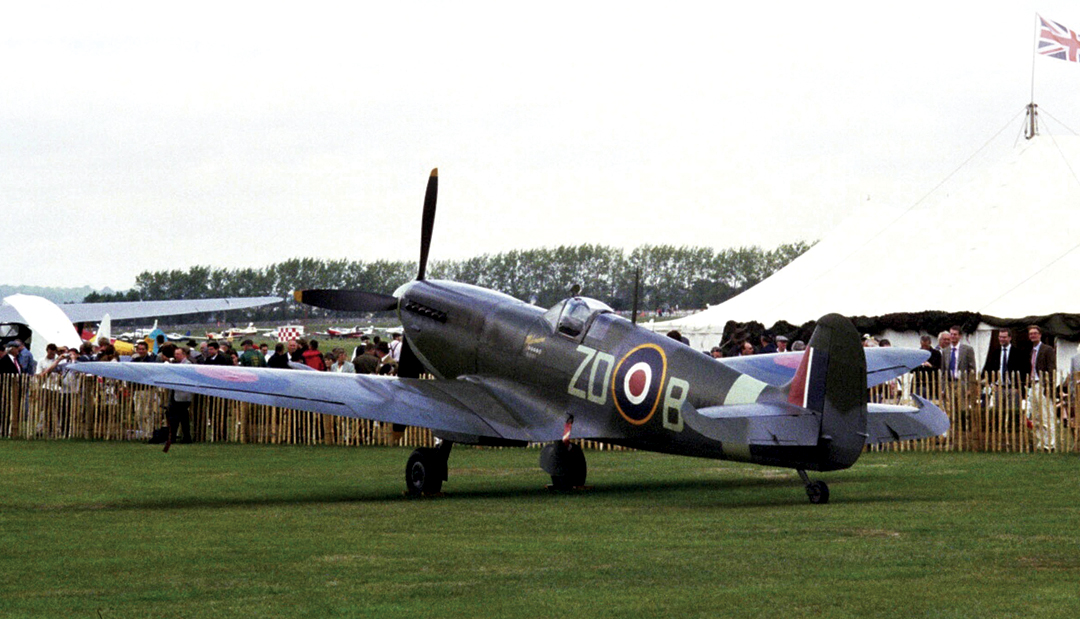
The circuit exists because of the Battle of Britain. Westhampnett was laid out in 1940 as a satellite grass airfield for Tangmere, and the perimeter track that is now the circuit was built over the winter of 1940–41 so that fuel tankers could reach the Spitfires and Hurricanes dispersed on concrete pads around the edge of the field; Mike Lawrence, in the archive's D-Day for Freddy, explains that when Moss returned to the circuit before the first Revival he was puzzled by stretches of concrete that turned out to be those pads, grown over and cleared again in the restoration. Douglas Bader flew from Westhampnett, and within weeks of D-Day in June 1944 the station was all but empty as the squadrons moved to France.
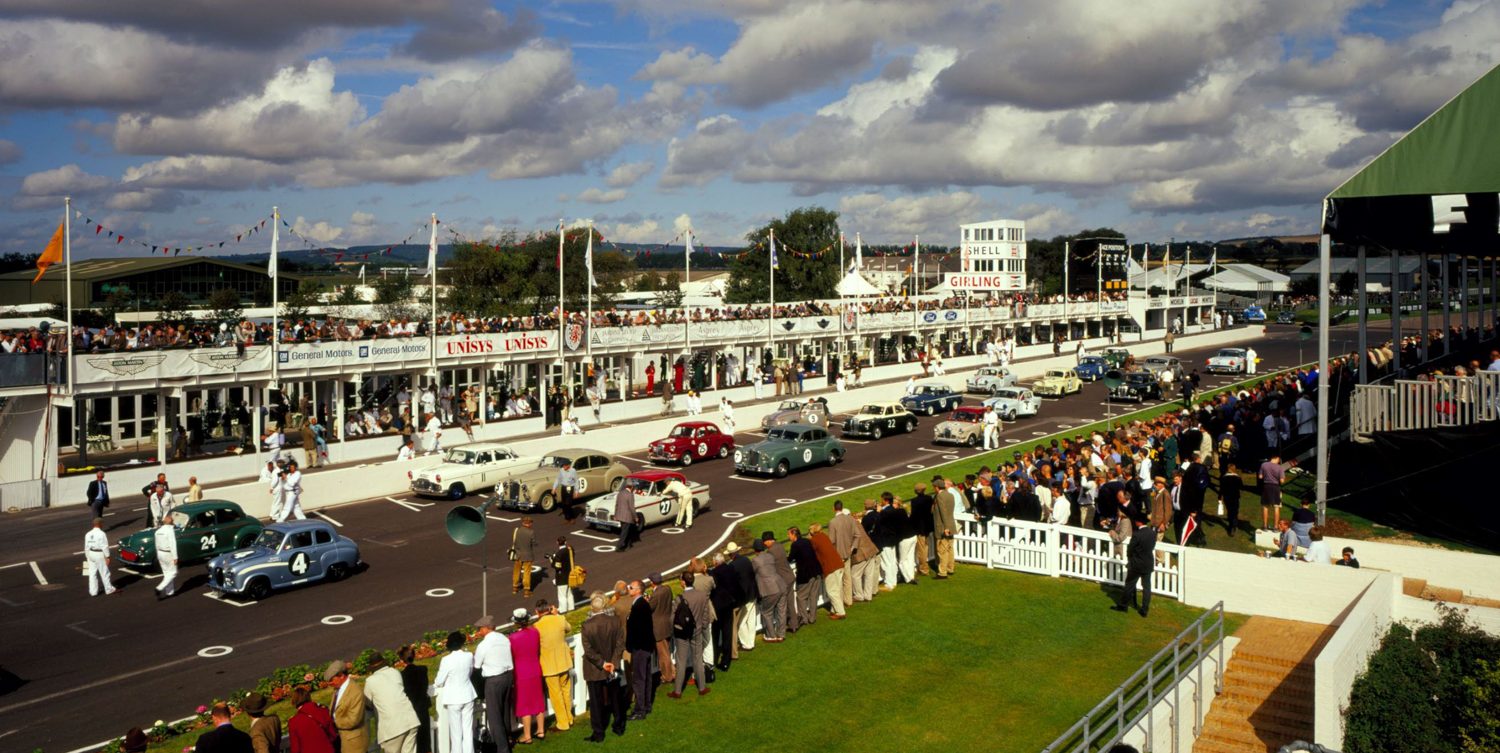
The land belonged to Freddie March, the ninth Duke of Richmond and Gordon, who had been a racing driver himself, a winner of the Brooklands 500 Miles for MG in 1931, and to whom Tony Gaze, the Australian Spitfire pilot who had flown from Westhampnett, suggested that the perimeter road would make a circuit. He opened it on 18 September 1948, with the Daily Graphic as sponsor and 15,000 people watching, the first permanent circuit to open in Britain after the war and a fortnight ahead of Silverstone; the archive's Klemantaski photograph of the first race shows six Healeys, an HRG and a Pycroft-Jaguar lined up with the haystacks still being carted to the back of the circuit. Reg Parnell won the day's main race, the Goodwood Trophy, in a Maserati 4CLT, and Goodwood had begun. Lawrence's RAF Westhampnett and Goodwood History carry the whole story from the airfield to the Revival, including the rationing-era Britain of 1948 that the Revival's frocks now recall.
The lap is 2.367 miles, 3.8 kilometres, and it has not changed in shape since 1948, which is the point of it: fast, open, and with nothing on the inside but grass and the airfield. From the start on the Lavant Straight past the pits, the road bends right into Madgwick, a long double-apex corner taken in fourth and the one the painters favour, then runs through the Fordwater kink, flat out with a crest that lightens the car, into the right-left of St Mary's, the hardest corner on the circuit, where the track falls away on the exit and where Moss crashed in 1962. Lavant is a long right of two parts leading onto the Lavant Straight, the fastest stretch, where McLaren's M8D shed its tail in 1970, and the lap ends at Woodcote, a fast right taken with the throttle wide, and the chicane, added in 1952 to slow the cars before the pits and now made of straw bales and painted bricks exactly as it was. Jim Clark and Jackie Stewart shared the period lap record at 1 minute 20.4 seconds, set at the 1965 Easter meeting in a Lotus 25 and a BRM; the Revival's modern lap times in the same cars are faster.
Art Evans's Going to Goodwood, written after his first Revival in 2006, is the archive's guide to the place around the circuit: the estate of almost 12,000 acres, the horse-racing course on the Downs above it that runs for twenty days a year, the 3,000-acre organic farm, the aerodrome inside the track with its flying school, the hotel and the forest. The circuit is still a working airfield, and the aircraft on the infield during the Revival, Spitfires among them, are not props.
For eighteen seasons Goodwood was the British calendar's second circuit after Silverstone and in many drivers' opinion its best. The Easter Monday meeting was its fixture: a non-championship Formula One race, the Richmond Trophy and later the Glover Trophy, with supporting races for sports cars, Formula Two and later Formula Junior, and the Lavant and Chichester Cups; the archive's Klemantaski photograph of the 1952 Woodcote Cup shows Froilán González winning in the V16 BRM, one of that car's few victories, with Farina's Thinwall Special between the two works cars at the start, and Bernard Reeves's painting records Moss winning the Easter Monday sports car race of 1956 in the works Aston Martin DB3S. Mike Hawthorn made his name here on Easter Monday 1952 in a Cooper-Bristol; Moss, Hawthorn, Collins, Brooks, Clark, Hill, Surtees and Stewart all won here.
The Goodwood Nine Hours of 1952, 1953 and 1955, run from three in the afternoon into the dark, was Britain's answer to Le Mans and an Aston Martin race each time: Peter Collins and Pat Griffith in the DB3 in 1952, Reg Parnell and Eric Thompson in the DB3S in 1953, Peter Walker and Dennis Poore in 1955. When the Tourist Trophy left Dundrod after the deaths of 1955, Goodwood took it from 1958, and the seven TTs run here between 1958 and 1964 are the races the Revival's headline race recreates: Moss and Brooks in the DBR1 in 1958, Moss again in 1959 after a pit fire destroyed his own car and he took over Shelby and Fairman's to win Aston Martin the world championship, Moss in Rob Walker's 250 GT SWB in 1960 and 1961 when the race turned to GTs, Innes Ireland's pale-green GTO in 1962, Graham Hill's Maranello Concessionaires GTO in 1963, which Dexter Brown painted at Madgwick, and Hill's Ferrari 330 P in 1964. The archive's Tourist Trophy hub has every one of them; the paintings and photographs are in the archive's Goodwood Legend, Graham Hill's GTO and Fast Exposure series.
The circuit's own years, then every Festival of Speed, Revival and Members' Meeting the archive has covered, with the year's report or gallery linked.
| Year | The event | What happened | In the archive |
|---|---|---|---|
| 1940–41 | RAF Westhampnett | The perimeter track that became the circuit is laid around a satellite field of Tangmere; Spitfires and Hurricanes dispersed on concrete pads | RAF Westhampnett |
| 1948 | 18 September: the circuit opens | Freddie March's Daily Graphic meeting; six Healeys, an HRG and a Pycroft-Jaguar in the first race; Parnell wins the Goodwood Trophy; Moss wins the 500cc race | The first Goodwood race |
| 1949 | Easter Monday | The Richmond Trophy and the BARC members' meetings begin; the Easter meeting becomes the circuit's fixture | |
| 1952 | The Nine Hours and the Woodcote Cup | Collins and Griffith win the first Nine Hours for Aston Martin; González gives the V16 BRM a win in the Woodcote Cup; Hawthorn's Easter Monday in the Cooper-Bristol; the chicane added | Woodcote Cup, 1952 |
| 1953 | Second Nine Hours | Parnell and Thompson, Aston Martin DB3S | |
| 1955 | Third Nine Hours | Walker and Poore, Aston Martin DB3S; the last of the three | |
| 1956 | Easter Monday | Moss wins the sports car race in the works DB3S, the subject of Bernard Reeves's painting | Easter Monday 1956 |
| 1958 | The Tourist Trophy comes to Goodwood | Moss and Brooks win in the Aston Martin DBR1, one-two-three for the works | The Tourist Trophy hub |
| 1959 | Tourist Trophy | Moss's car burns in the pits; he takes over Shelby and Fairman's DBR1 and wins Aston Martin the world championship | The Tourist Trophy hub |
| 1960–61 | Tourist Trophy, GT era | Moss in Rob Walker's Ferrari 250 GT SWB both years; Clark's DB4 GT Zagato fourth in 1961 | Goodwood Legend |
| 1962 | 23 April and the TT | Moss crashes at St Mary's in the Glover Trophy and never races again at the top; Innes Ireland wins the TT in the pale-green GTO | Green with Envy |
| 1963 | Tourist Trophy | Graham Hill leads Parkes home in the Maranello Concessionaires GTOs; Dexter Brown's painting at Madgwick | Graham Hill's GTO |
| 1964 | The last Goodwood TT | Graham Hill, Ferrari 330 P; the race moves to Oulton Park | The Tourist Trophy hub |
| 1965 | Easter Monday | Clark and Stewart share the lap record at 1:20.4 | |
| 1966 | 2 July: the last meeting | The estate closes the circuit rather than alter it; testing, sprints and track days continue | Goodwood History |
| 1970 | 2 June | Bruce McLaren killed on the Lavant Straight testing the M8D | Kiwis · McLaren's Dawn |
| 1993 | The first Festival of Speed | Charles March's hillclimb in front of the house: 5,000 expected, 25,000 came | The twentieth Festival |
| 1998 | 18 September: the first Revival | Fifty years to the day; Lord March opens it in his grandfather's Bristol 400; Moss returns to St Mary's | D-Day for Freddy |
| 2000 | Festival of Speed · Revival | Dawson-Damer and a marshal killed at the Festival; the archive's first Goodwood galleries | Festival of Speed · Revival |
| 2001 | Festival of Speed · Revival | Reports and galleries from the year's meetings | Festival of Speed · Revival |
| 2002 | Festival of Speed · Revival | Reports and galleries from the year's meetings | Festival of Speed · Revival |
| 2003 | Festival of Speed · Revival | Annis's first Revival: the last, real race track | Festival of Speed · Revival |
| 2004 | Festival of Speed · Revival | Reports and galleries from the year's meetings | Festival of Speed · Revival |
| 2005 | Festival of Speed · Revival | Reports and galleries from the year's meetings | Festival of Speed · Revival |
| 2006 | Festival of Speed · Revival | Reports and galleries from the year's meetings | Festival of Speed · Revival |
| 2007 | Festival of Speed · Revival | Reports and galleries from the year's meetings | Festival of Speed · Revival |
| 2008 | Festival of Speed · Revival | The archive's race-by-race Revival results begin | Festival of Speed · Revival |
| 2009 | Festival of Speed · Revival | The TT Celebration and the Barry Sheene Trophy reported race by race | Festival of Speed · Revival |
| 2010 | Festival of Speed · Revival | Surtees and BRM honoured at the Revival; the Festival's Moving Motor Show begins | Festival of Speed · Revival |
| 2011 | Festival of Speed · Revival | Fangio and Freddie March tributes; the E-type race; Indy 500 centenary on the hill | Festival of Speed · Revival |
| 2012 | Festival of Speed · Revival | Dan Gurney tribute, the Silver Arrows race, the Cobra race and twenty GTOs in one gallery | Festival of Speed · Revival |
| 2013 | Festival of Speed · Revival | The Festival's twentieth year; the GT40's fiftieth and the Jim Clark tribute at the Revival | Festival of Speed · Revival |
| 2014 | Festival of Speed · Revival · Members' Meeting | The Members' Meeting revived as the 72nd; Jackie Stewart honoured; the D-type race | Festival of Speed · Revival · Members' Meeting |
| 2015 | Festival of Speed · Revival · Members' Meeting | The Daytona Coupé race and the Graham Hill Trophy; Festival and Members' galleries | Festival of Speed · Revival · Members' Meeting |
| 2016 | Festival of Speed · Revival · Members' Meeting | The first Kinrara Trophy, Kristensen in the SWB; Group 5 at the Members' Meeting | Festival of Speed · Revival · Members' Meeting |
| 2017 | Festival of Speed · Revival · Members' Meeting | The 75th Members' Meeting; reports from all three | Festival of Speed · Revival · Members' Meeting |
| 2018 | Festival of Speed · Revival · Members' Meeting | The twentieth Revival; four GTOs in the Kinrara; Annis asks where the GTOs have gone | Festival of Speed · Revival · Members' Meeting |
| 2019 | Festival of Speed · Revival · Members' Meeting | The last full year before the pandemic | Festival of Speed · Revival · Members' Meeting |
| 2020 | Festival of Speed · Revival · Members' Meeting | No Festival or Revival; SpeedWeek behind closed doors, the Kinrara renamed for Moss | SpeedWeek |
| 2021 | Festival of Speed · Revival · Members' Meeting | The Revival returns; the Members' Meeting moved to October; Moss celebrated at every meeting | Revival · Members' Meeting |
| 2022 | Festival of Speed · Revival · Members' Meeting | Chilton's McMurtry takes the hill record; the 79th Members' Meeting | Festival of Speed · Revival · Members' Meeting |
| 2023 | Festival of Speed · Revival · Members' Meeting | The Revival's twenty-fifth year, Shelby at 100 and Lotus at 75; the 80th Members' Meeting | Festival of Speed · Revival · Members' Meeting |
| 2024 | Festival of Speed · Revival · Members' Meeting | The 81st Members' Meeting; Ferrari's six debuts on the hill | Festival of Speed · Revival · Members' Meeting |
| 2025 | Festival of Speed · Revival · Members' Meeting | Matty White's Members' Meeting and Revival; Ferrari on the hill | Festival of Speed · Revival · Members' Meeting |
| 2026 | Festival of Speed · Revival · Members' Meeting | The 83rd Members' Meeting; this summer's Festival | Festival of Speed · Members' Meeting |
The period rows are the circuit's racing life, 1948–66, and the two dates that frame the modern Goodwood. From 2000 each row links the archive's main report or gallery for that year's meetings; the race-by-race Revival reports of 2009–17 and the marque galleries are in the Revival and Festival feeds below.
No driver belongs to Goodwood as Moss does. He raced at the first meeting in 1948 in a Cooper 500 at eighteen, he won here in every kind of car for fourteen years, and four of his seven Tourist Trophies, a record nobody has approached, were won on this circuit in consecutive years from 1958 to 1961. Mike Lawrence's Sir Moss, written when the BRDC marked his sixty years of membership, puts his place in British life in perspective: his front-line career ended in 1962, before the Beatles had a hit, and he remained the most famous racing driver in the country for the rest of his life.
It ended at Goodwood. On Easter Monday, 23 April 1962, St George's Day, Moss crashed the UDT-Laystall Lotus-Climax at St Mary's during the Glover Trophy, for reasons that have never been established, and was unconscious for a month; he tested a year later, decided his reflexes had gone, and retired. Lawrence was with him, Ken Gregory and Tony Robinson when he went back to the spot for the first time, a few weeks before the first Revival in 1998, and tells it in RAF Westhampnett and D-Day for Freddy. Goodwood has honoured him ever since: the Revival's 2011 Fangio tribute and 2014 Jackie Stewart tribute had him at their centre, the Kinrara Trophy became the Stirling Moss Memorial Trophy at the SpeedWeek of 2020 after his death that April, and in 2021 every Goodwood meeting celebrated him.
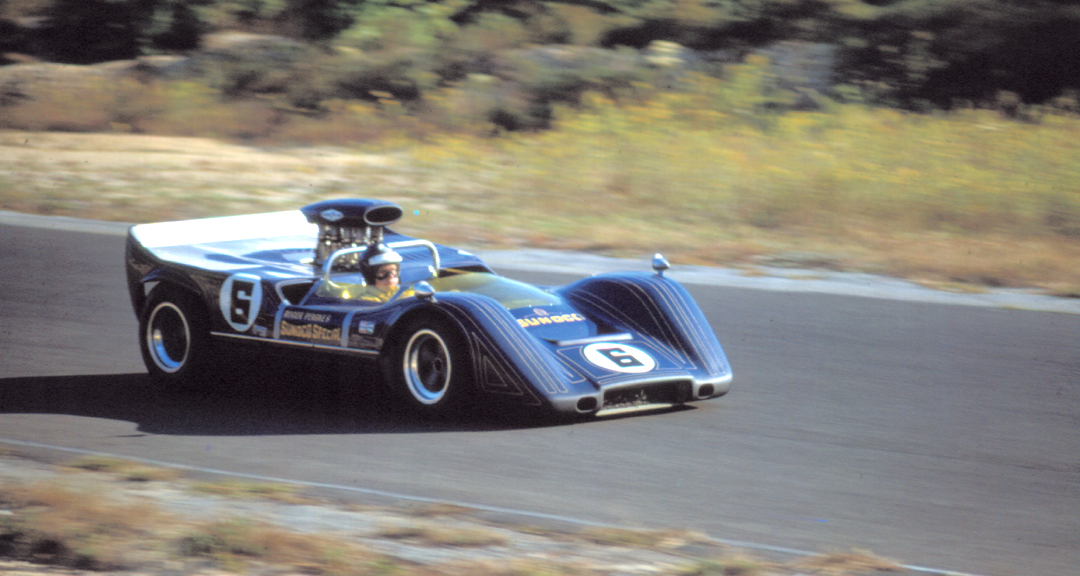
Goodwood held its last race meeting on 2 July 1966. The cars of the mid-1960s had outgrown the circuit's open, fast, unprotected corners, and rather than add the chicanes and barriers that would have spoiled it, the estate stopped racing; it is why the Revival can run the circuit as it was, and why its cut-off is 1966. The track did not go quiet. Lawrence records that Formula One teams tested here until 1982, Howden Ganley running the six-wheeled March in 1976 among them; there were club sprints, rallies, track days and a film set. On 2 June 1970 Bruce McLaren was killed on the Lavant Straight testing the Can-Am M8D when its rear bodywork came off at speed. The archive's Kiwis and McLaren's Dawn tell the McLaren story, and the Revival's Whitsun Trophy for the big sports-prototypes of the 1960s, in which McLarens and Lolas still run, is raced past the spot.
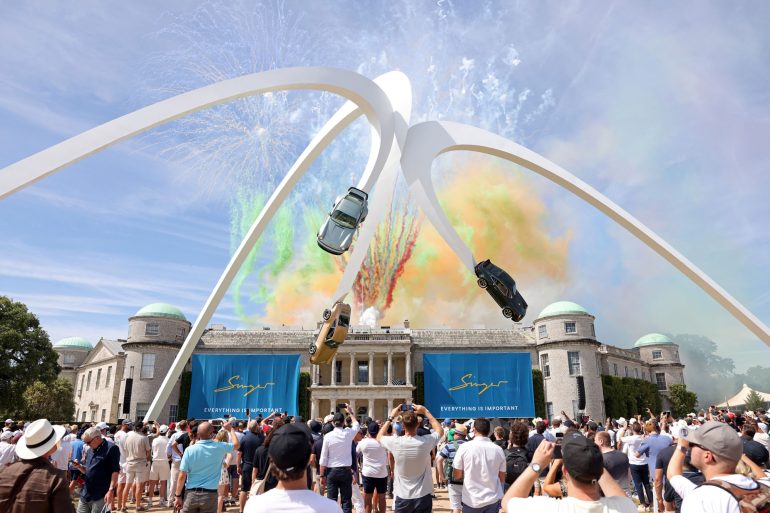
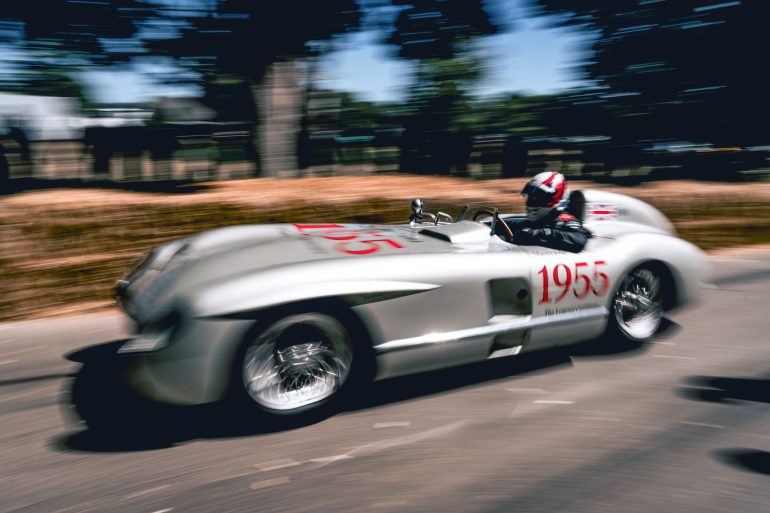
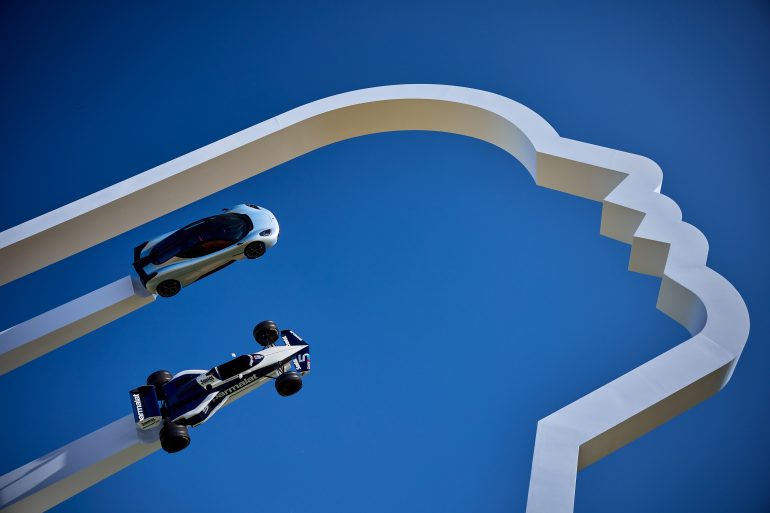
Charles March, the ninth Duke's grandson, had wanted to bring racing back to the circuit from the moment he took over the estate, and the Festival of Speed was his way in: a hillclimb on the 1.16-mile drive in front of Goodwood House, in June 1993, planned for 5,000 people. Twenty-five thousand came, many of them over the fences, and the archive's report on the twentieth Festival in 2013 records that by then the crowd was 185,000 and Lord March could claim that the 200 acres in front of the house had seen more of the great drivers and cars than anywhere else. The format has barely changed: a theme each year, a central feature sculpture on the lawn built around the year's honoured marque, batches of cars running the hill from the start by the house to the top of the Downs, the paddocks open to anyone who walks in, a Formula One presence that has grown as the sport's own events have closed off, the Cartier Style et Luxe concours on the lawn, which the archive covers each year, the Forest Rally Stage since 2005 and the Moving Motor Show since 2010, in which the manufacturers launch their cars by driving them up the hill.
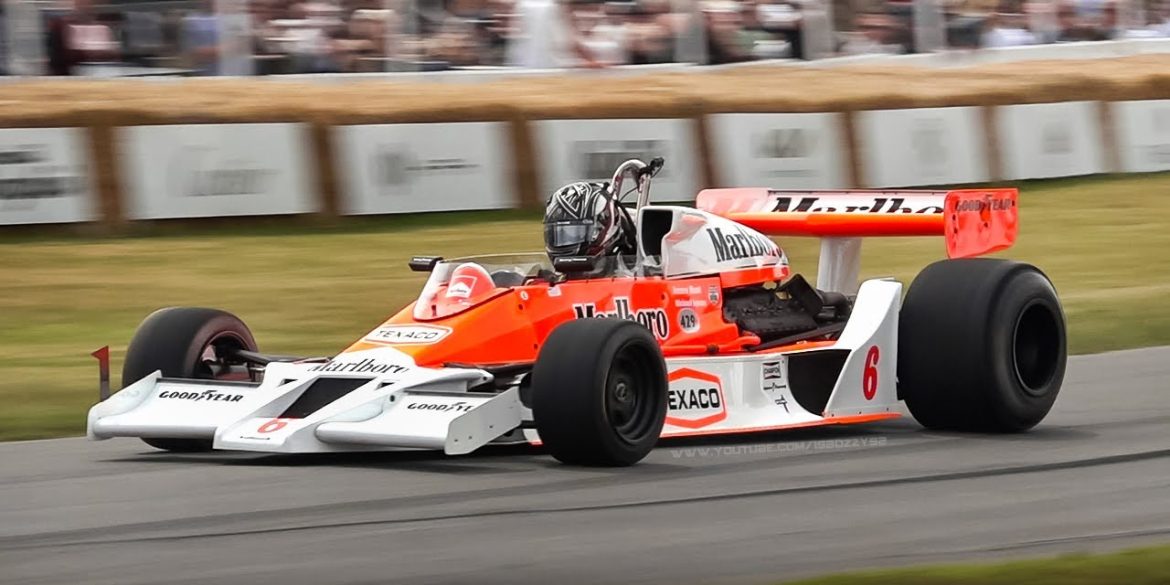
The hill record stood for twenty-three years to Nick Heidfeld's 41.6 seconds in a McLaren MP4/13 in 1999, after which Formula One cars were timed no longer; Max Chilton's electric McMurtry Spéirling beat it in 2022 at 39.08 seconds. The archive's Festival of Speed coverage goes back to the 2000 galleries and includes Pete Lyons's The Dark Side, written after that year's Festival killed the Australian collector John Dawson-Damer and a marshal when his Lotus 63 left the hill. From 2009 the reports are long: Top 20 and Top 30 Cars of Interest, the Style et Luxe, the marque galleries, and since 2022 a report every July.
Reports and galleries from the hill, newest first.
The Revival opened on 18 September 1998, fifty years to the day after the circuit, with Lord March driving the Bristol 400 his grandfather had used to open it. The idea was to race the cars of the circuit's own era, 1948 to 1966, on the circuit exactly as it had been, and to ask everyone present to look the part; the dress code, Lawrence writes in Goodwood History, started as a small gesture and became a feature, a jacket and tie for men in the paddock, period dress for anyone who wishes it, and a paddock in which the mechanics wear white overalls and the advertising, the shops, the programmes and the public address are all of the period. Casey Annis went for the first time in 2003 and called it, in The Last, Real Race Track, one of the automotive wonders of the world, an enormous automotive drama staged by tens of thousands of like-minded actors and extras over three days: warbirds parked on the airfield, soldiers bivouacked next to the paddock, Marilyn Monroe blowing a kiss. Lawrence, who had watched Derek Ongaro of the FIA walking the circuit years before the first meeting, credits all of it to Lord March in Goodwood's Good Bloke.
The racing is the real thing. Grids of the most valuable cars in the world are driven as hard as they were in period, by owners sharing with the best professionals of the day, Tom Kristensen, Emanuele Pirro, Jenson Button, Dario Franchitti, Jackie Oliver and the touring-car and GT drivers of now; the crashes are real too, and Annis's Where Have All the GTOs Gone, written after the 2018 Kinrara Trophy, is partly about watching a GTO rear-ended and E-types smashed on a grid he priced at half a billion dollars. The archive has covered every Revival since 2000, in the magazine galleries to 2008 and from 2009 in race-by-race reports with results and photographs; Roger Dixon's report on the twenty-fifth Revival in 2023, which had by then run seven years longer than the circuit's own racing life, and Matty White's on 2025 are the latest.
Reports, results and galleries from the circuit, newest first.
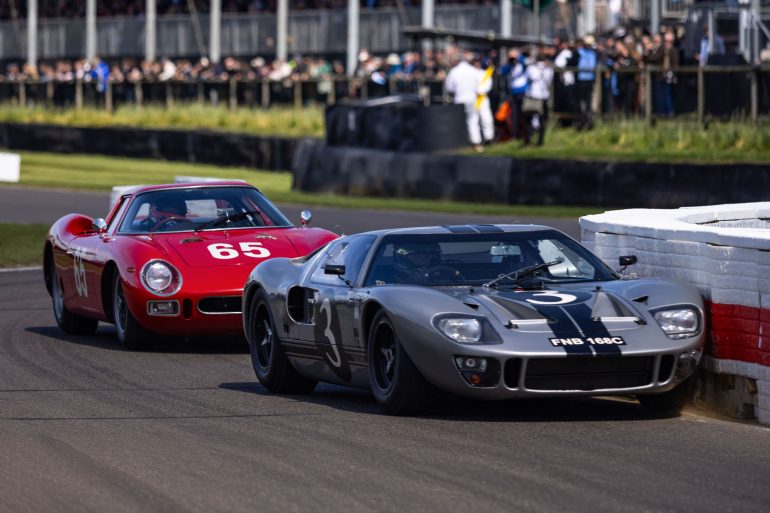
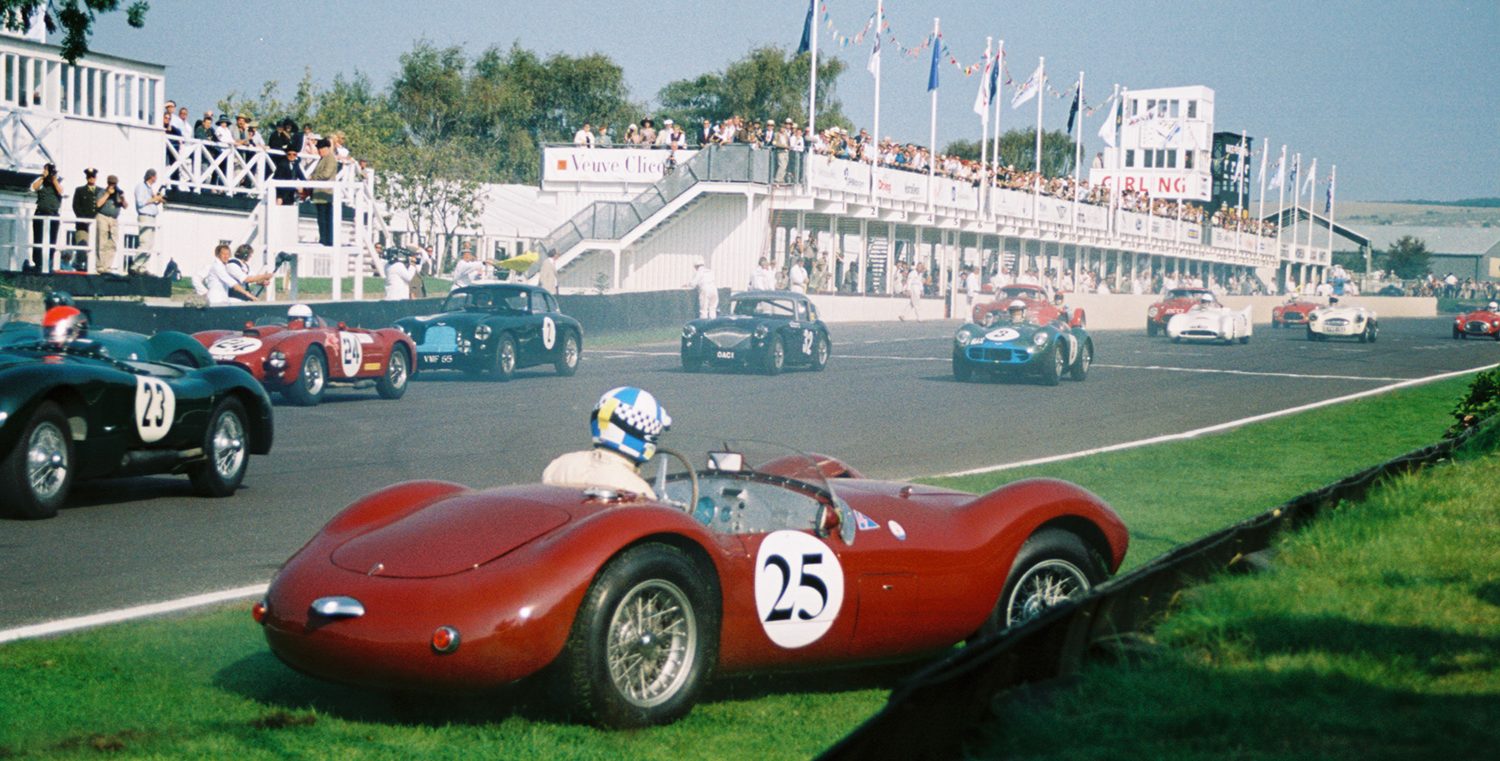
Each Revival race is named for a Goodwood race or a Goodwood person and takes a period of the circuit's history. The RAC TT Celebration, Sunday's hour-long two-driver race for the GT cars of 1960–64, is the headline, the Goodwood TTs of Moss, Ireland and Hill recreated with GTOs, lightweight E-types, Cobras, DB4 GTs and the rest; the Kinrara Trophy, added in 2016 and run into the dusk on Friday evening for the GTs of before 1963, is the other blue-riband GT race, won in its first year by Kristensen in Joe Macari's 250 GT SWB after the kind of fight the archive's report describes, and renamed for Moss in 2020. The Goodwood Trophy is for the Grand Prix and Formula Libre cars of 1948–54; the Richmond and Gordon Trophies for the front-engined Formula One cars of 1954–60; the Glover Trophy for the 1.5-litre Formula One of 1961–65; the Chichester Cup for Formula Junior; the Freddie March Memorial Trophy for the sports cars of the Nine Hours years, 1952–55, run as the Nine Hours was into the evening; the Sussex Trophy for the sports-racers of 1955–60; the Whitsun Trophy for the big prototypes of 1963–66, the GT40s, Lolas and McLarens; the Madgwick and Lavant Cups and the Fordwater Trophy for the production sports cars and GTs; the St Mary's Trophy, two races for the saloons of the 1950s and 1960s, one driven by professionals and one by owners, which is the race the crowd loves; the Brooklands Trophy for the pre-war cars; the Barry Sheene Memorial Trophy for the motorcycles; and the Settrington Cup for children in Austin J40 pedal cars. The archive's race-by-race reports from 2009 to 2017 cover each of them, and the one-make celebrations run alongside: the GT40 race of 2013 for the car's fiftieth year, the E-type race of 2011, the Cobra race of 2012, the D-type race of 2014, the Daytona Coupé race of 2015, the Silver Arrows demonstration of 2012.
The three weekends and six of the races that make them; each links to the archive's coverage.
Single-car stories that passed through Goodwood: the GTOs and the SWBs, the DBR1s, the GT40s, the cars that ran the hill.
The British Automobile Racing Club ran seventy-one members' meetings at Goodwood between 1949 and 1966, the low-key club days between the big events, and when Lord March revived the idea in March 2014 he numbered it the 72nd. It is the Revival without the dress code and without the 1966 cut-off: the Goodwood Road Racing Club's members and their guests, a spring weekend that opens the British historic season, grids for cars the Revival cannot take, Group 1 saloons of the 1970s in the Gerry Marshall Trophy, the sports cars of the 1960s in the Graham Hill Trophy, the Edwardians in the S.F. Edge Trophy, and high-speed demonstrations that have brought out the Group 5 silhouette cars, the GT1 cars, the Formula One turbos and the Group C prototypes, with the members divided into four houses, Methuen, Aubigny, Darnley and Torbolton, that compete for points across the weekend. The archive has covered it from the first, Julien Mahiels's report on the 72nd in 2014, through the Group 5 and GT40 fields of 2016 to the 83rd this year; Matty White's report on 2025 calls it the finest way to welcome a new season.
Every Members' Meeting since the 72nd, newest first.
Two dukes made Goodwood. Freddie March, Frederick Gordon-Lennox, ninth Duke of Richmond, was a racing driver, an aircraft engineer and a designer, who raced Austins and MGs at Brooklands, won the 500 Miles of 1931, and opened the circuit on his own land in 1948; the Revival's Freddie March Memorial Trophy and Spirit of Goodwood award carry his name, and Lawrence's D-Day for Freddy is his portrait. His grandson Charles, Earl of March and Kinrara and since 2017 the eleventh Duke, was a professional photographer before the estate called him home, inherited his grandfather's love of motor sport and photography, and built the Festival, the Revival and the Members' Meeting; the Kinrara Trophy takes his courtesy title. The drivers of the circuit's own years are the drivers of the Revival's race names and tributes: Moss above all, Mike Hawthorn, Peter Collins, Roy Salvadori, Tony Brooks, Jim Clark, Graham Hill, John Surtees, Jackie Stewart, Bruce McLaren, and the Americans who came for the TT, Shelby and Gurney among them. The Revival's annual tributes have honoured Surtees and BRM in 2010, Fangio and Freddie March in 2011, Dan Gurney in 2012, Clark in 2013, Stewart in 2014, Moss in 2020 and 2021, Shelby's centenary and Lotus's seventy-fifth in 2023; the archive's coverage of each is in the Revival reports, and the people themselves are on the site's People pages.
The Members' Meeting comes first, in late March or April, for members of the Goodwood Road Racing Club and their guests; the Festival of Speed runs over four days in late June or July, from Thursday's Moving Motor Show to Sunday's timed shoot-out, with the house, the hill, the paddocks, the Forest Rally Stage and the Cartier lawn open to all ticket-holders; the Revival is the second or third weekend of September, Friday to Sunday, with practice on Friday, racing all weekend, the Friday-evening Kinrara Trophy and the Sunday TT Celebration as the fixed points. The Revival asks for period dress and gets it from most of the crowd, and the paddock requires a jacket and tie; the Festival has no dress code. Chichester is the station and the town; the estate's own hotel, aerodrome and golf course sit beside the circuit; and the estate's other summer, Glorious Goodwood on the racecourse at the end of July, falls between the Festival and the Revival. The archive's visitor pieces, Evans's Going to Goodwood, Annis's first Revival and the gently titled How to Get Your Wife to Goodwood, are the practical reading; the galleries below are what it looks like.
Picture galleries from the hill, the circuit and the paddock, 2000 to now.
Circuit: 2.367 miles (3.809 km); opened 18 September 1948; last period meeting 2 July 1966; reopened 18 September 1998. Corners: Madgwick, Fordwater, St Mary's, Lavant, Woodcote, the chicane (1952). Period lap record: 1 min 20.4 s, Jim Clark (Lotus 25) and Jackie Stewart (BRM), Easter 1965. Goodwood Nine Hours: 1952 Collins / Griffith (Aston Martin DB3), 1953 Parnell / Thompson (DB3S), 1955 Walker / Poore (DB3S). Tourist Trophy at Goodwood: 1958 Moss / Brooks (DBR1), 1959 Moss / Shelby / Fairman (DBR1), 1960 and 1961 Moss (Ferrari 250 GT SWB), 1962 Ireland (Ferrari 250 GTO), 1963 G. Hill (250 GTO), 1964 G. Hill (Ferrari 330 P). Moss at Goodwood: four consecutive TTs, 1958–61; the crash, 23 April 1962. Bruce McLaren killed, Lavant Straight, 2 June 1970. Festival of Speed: first held June 1993 (5,000 expected, 25,000 came); 185,000 by 2013; hill 1.16 miles; records 41.6 s (Heidfeld, McLaren MP4/13, 1999) and 39.08 s (Chilton, McMurtry Spéirling, 2022). Revival: first held 18–20 September 1998; 25th in 2023; cars of 1948–66 only; Kinrara Trophy since 2016. Members' Meeting: 71 BARC meetings 1949–66; revived as the 72nd in March 2014; the 83rd in 2026. Estate: about 12,000 acres; the ninth Duke (Freddie March, 1904–1989) opened the circuit; the eleventh Duke (Charles, Earl of March until 2017) founded the three modern meetings. The archive: galleries from 2000, race-by-race Revival reports 2009–17, Festival and Members' Meeting reports every year since, 800-odd Goodwood posts in all.
Short answers, with the long ones above.
A three-day historic race meeting held every September since 1998 on the Goodwood Motor Circuit in West Sussex, for the cars and motorcycles that raced in the circuit's own era, 1948 to 1966, with the circuit, the paddock and the spectators presented as they were in that period.
The Festival of Speed (June or July, since 1993) is a hillclimb and motoring festival on the drive of Goodwood House, open to cars of every era including current Formula One and new supercars; the Revival (September, since 1998) is a race meeting on the circuit restricted to pre-1966 cars, with period dress.
The second or third weekend of September, Friday to Sunday. The Festival of Speed is held in late June or July and the Members' Meeting in late March or April; Goodwood publishes the dates about a year ahead.
Period dress is encouraged for everyone and most of the crowd wears it; in the paddock a jacket and tie are required for men. The Festival of Speed and the Members' Meeting have no dress code.
By the mid-1960s racing cars had become too fast for the circuit's open, unprotected corners, and the estate chose to close it rather than alter it with barriers and chicanes. That decision is why the circuit survives unchanged and why the Revival is restricted to cars of up to 1966.
At St Mary's, on Easter Monday, 23 April 1962, in the Glover Trophy, driving a UDT-Laystall Lotus-Climax. The injuries ended his front-line career; he had won four Tourist Trophies on the circuit in the four years before.
2.367 miles (3.809 km), with six corners, Madgwick, Fordwater, St Mary's, Lavant, Woodcote and the chicane, run clockwise. The Festival of Speed hill is 1.16 miles (1.86 km).
A spring race meeting on the circuit, revived in 2014 as the 72nd in the series of BARC members' meetings held from 1949 to 1966, for members of the Goodwood Road Racing Club and their guests, with grids and demonstrations for cars outside the Revival's pre-1966 limit.
On the Goodwood estate north of Chichester, West Sussex, on the south coast of England, about 65 miles from London; Chichester is the nearest railway station.
The whole archive on one thread, newest first.