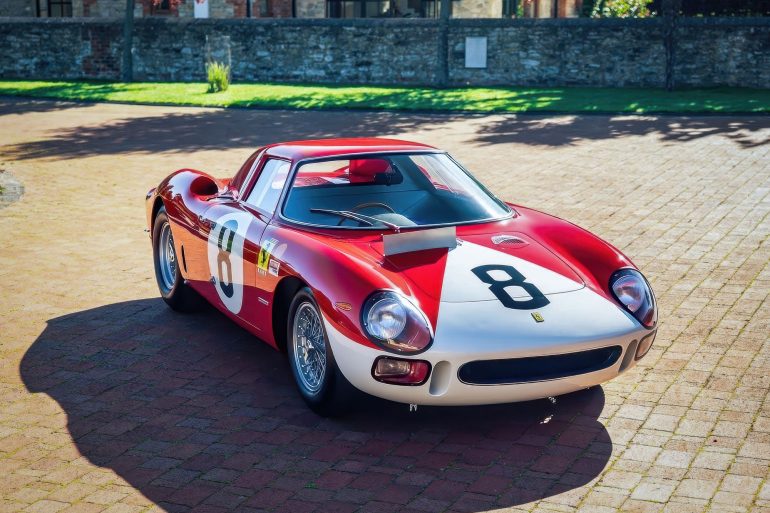
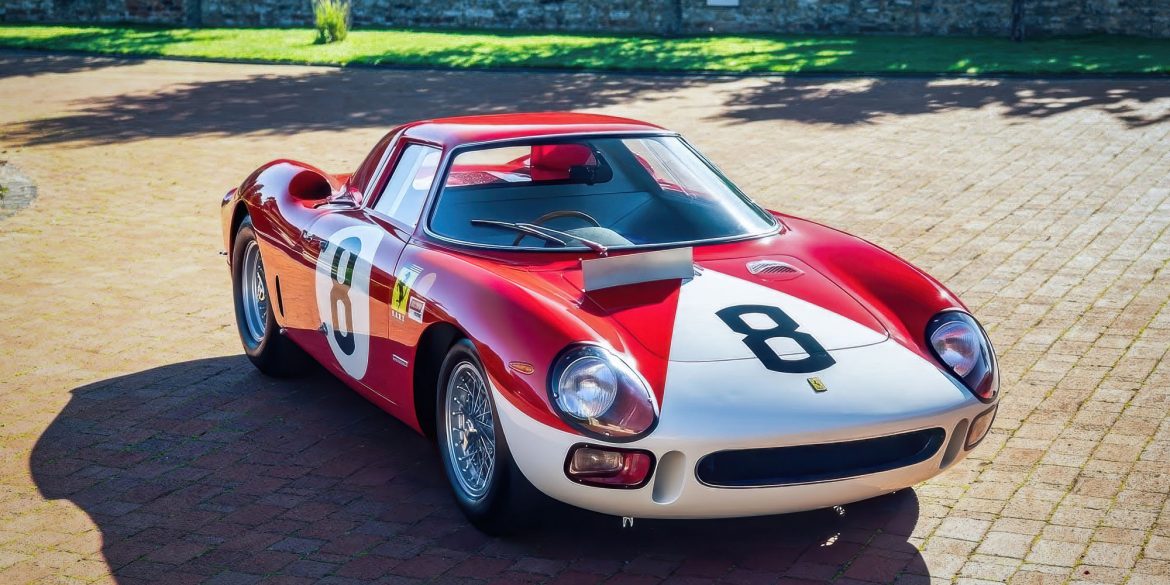
Unveiled at the Paris Salon in October 1963 as the roofed version of the 250 P, the 250 LM was booked to replace the 250 GTO and, Karl Ludvigsen writes, was "every centimeter the 250 P with a lid on."

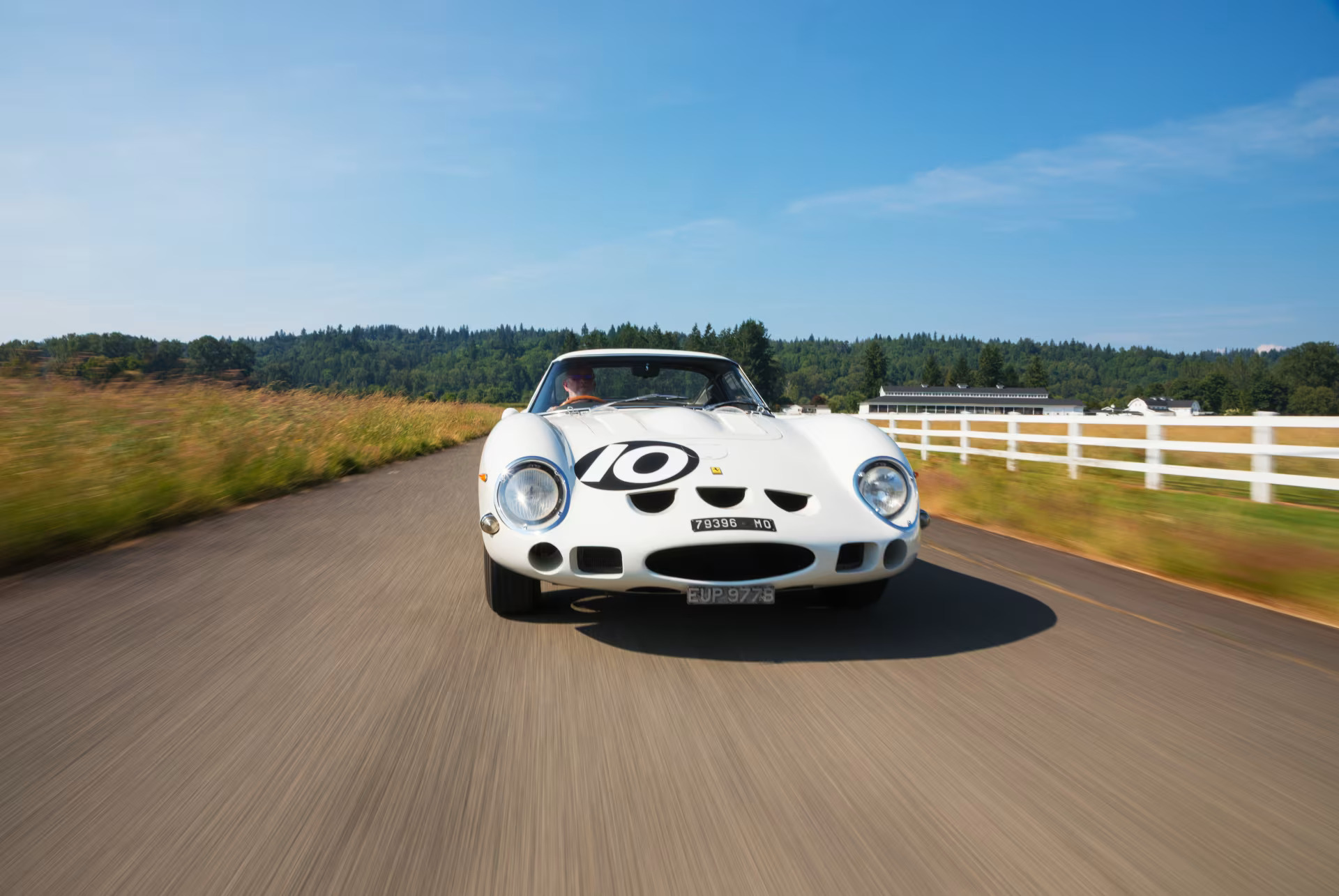
Thirty-six cars, built in Maranello between 1962 and 1964 to win a championship for grand touring cars, which they did three years running; a shape that Scaglietti's men beat out of aluminium without a drawing; and the most expensive car in the world, repeatedly, since 2012. The archive has driven it, raced it and watched it sell: Ed McDonough on the pale-green Tourist Trophy winner, Roy Salvadori on the car he called his greatest, Stephen Mitchell on four years of using one as daily transport, Graham Hill at Goodwood, and every record sale since the first thirty-million-dollar rumour of 2008.
The pieces to start with
McDonough on the green Tourist Trophy car, Salvadori on his greatest racecar, Mitchell's owner impressions and his GTO against the Breadvan, Graham Hill at Goodwood, Enzo's hot-rod SWB, Le Mans 1962, and Forghieri in his own words.
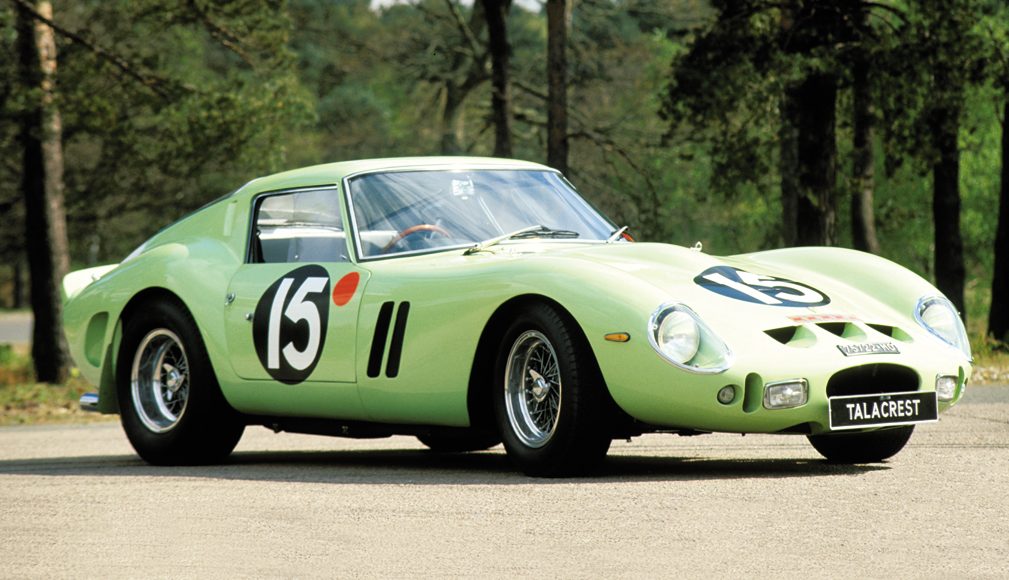
Ed McDonough promises no clichés or euphemisms, then admits the 250 GTO reduces newcomers and veterans alike to open-mouthed silence. Innes Ireland collected this one new in Italy and drove it home to Britain.
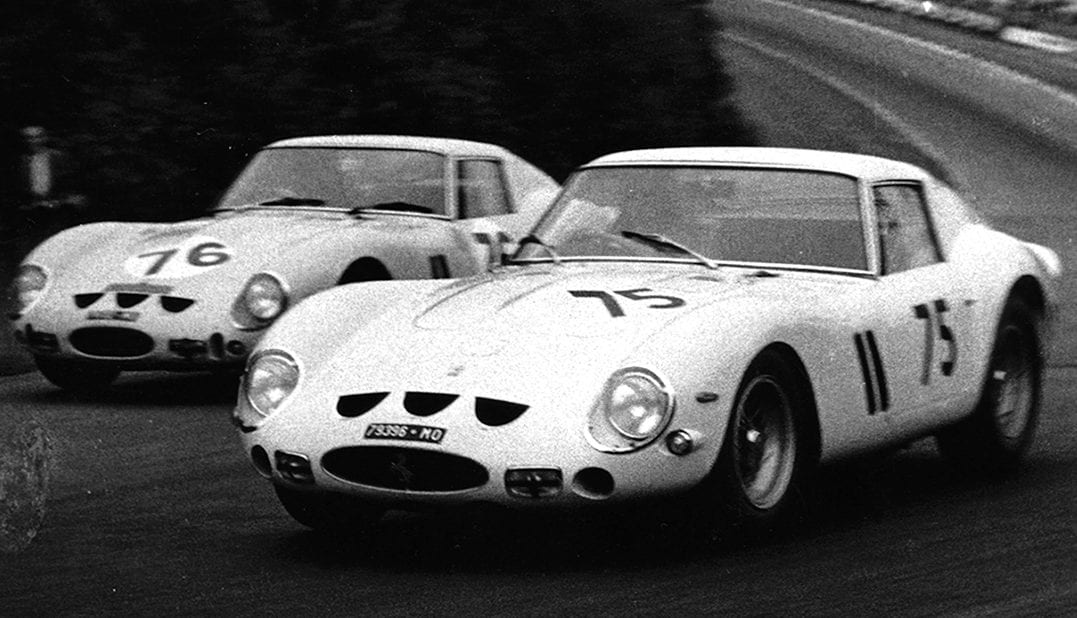
Roy Salvadori could have chosen his Le Mans-winning Aston Martin DBR1. Instead he picks John Coombs’s Ferrari 250 GTO and the 1962 Peco Trophy at Brands Hatch, six GTOs against Graham Hill’s E-type and Mike Salmon’s Aston Zagato.
The 250GTO #3987 was the third car I’d ever owned. The first was a 3.8 E-Type Jaguar. It was a beautiful car, but featured a low-revving six cylinder with an unsynchronized first gear that was like a granny…
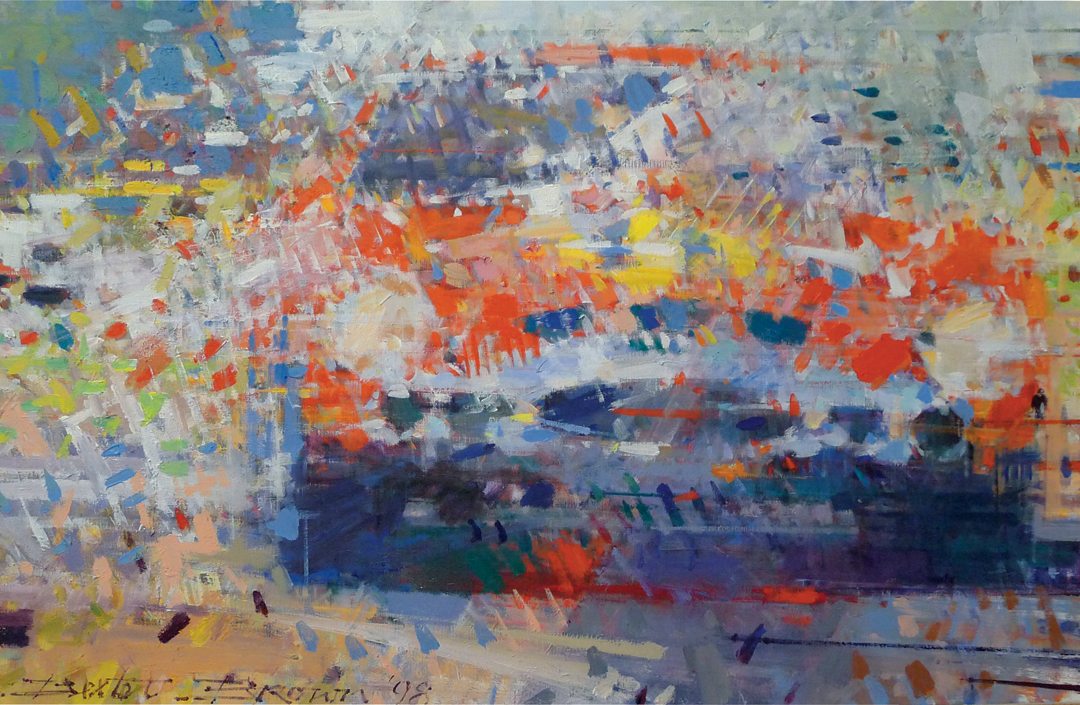
Dexter Brown’s acrylic of Graham Hill drifting the Maranello Concessionaires 250 GTO through Madgwick on the way to the 1963 Tourist Trophy, ahead of Parkes’s GTO and the Lightweight E-Types of Salvadori and Sears. Signed ‘98, £9,750 at Speedsport.
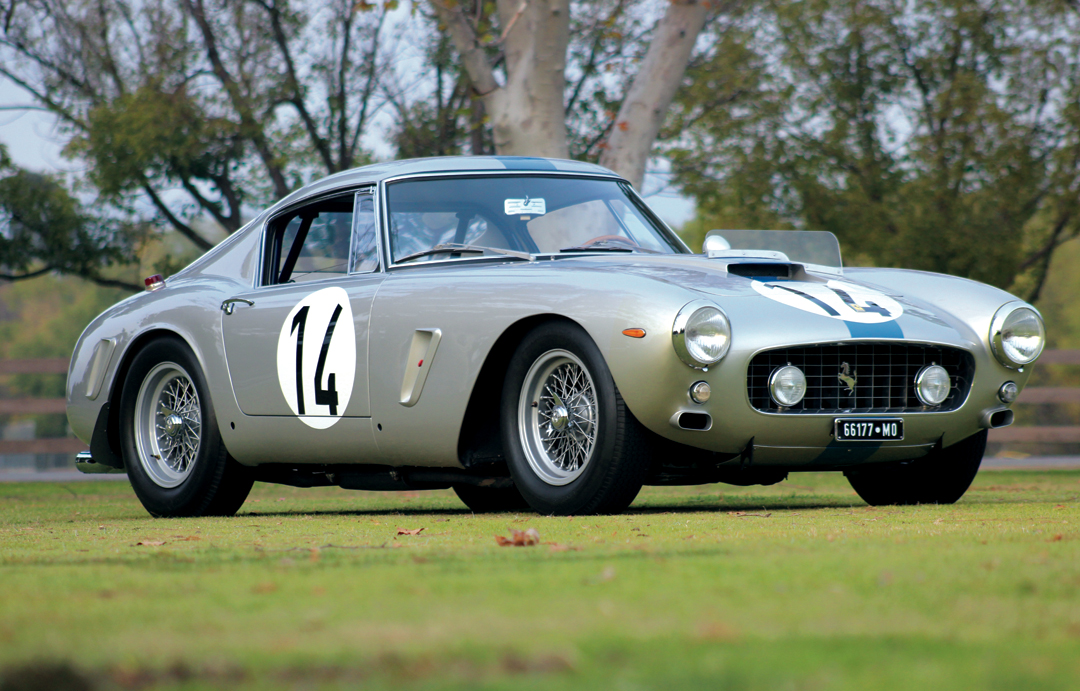
Ferrari’s nine Le Mans wins came in a 16-year burst, 1949 to 1965, but its GT-class record through the 1960s is less remembered. Casey Annis on a 1961 250GT SWB Competizione, built for that category.
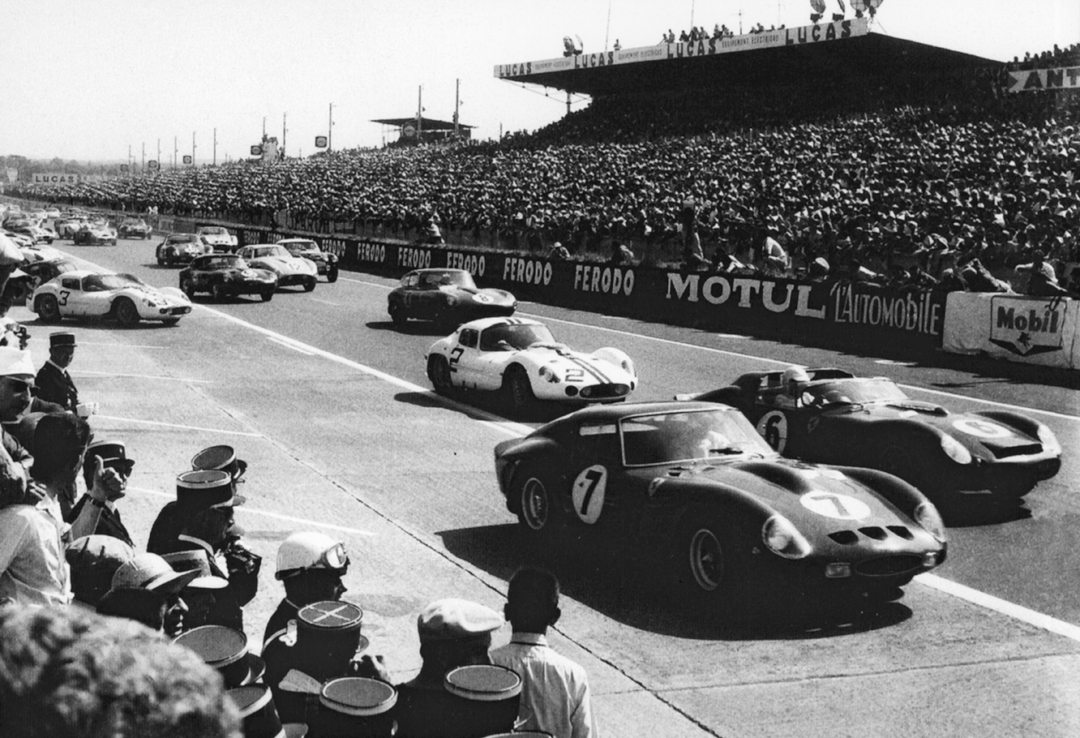
On 15 May 1961 the FIA made the 1962 championship GT-only; on 1 December the four big endurance races added an “experimental” class for 4-liter prototypes. How the rulebook shaped the 1962 24 Hours.
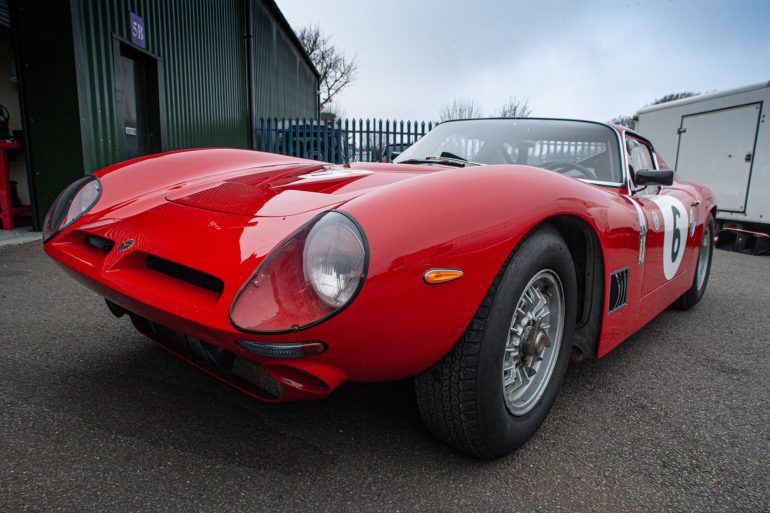
Reading through my friend Marc Sonnery’s book “Rebel Rebel” which deals with the life and times of the Ferrari 250 GT Breadvan, I was taken back to a period of my life when I saw the car several…
Mauro Forghieri’s father Reclus tuned engines at Scuderia Ferrari before and after the war, and Enzo Ferrari quizzed the Bologna engineering student to please him. The Ferraris Mauro designed won 11 world titles. Robert Newman begins the story.
The newest writing on the GTO, as it is published.
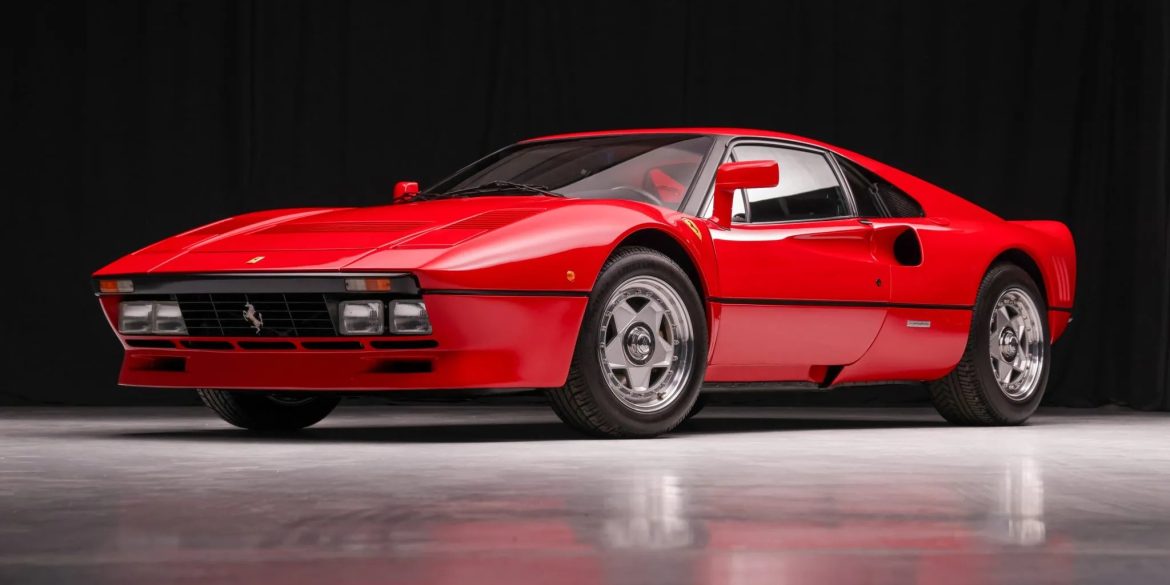
The Ferrari 250 GTO is the three-litre V12 berlinetta that Ferrari built for the 1962 season, when the FIA turned its world championship over to grand touring cars, and raced through 1964. Thirty-six were made with the three-litre engine, thirty-three of them in the first body style of 1962 and 1963 and three in the lower, wider shape of 1964, along with three near-identical cars with four-litre engines that are usually counted separately as 330 GTOs. The name stands for Gran Turismo Omologato: a grand tourer homologated for racing. Ferrari won the over-two-litre division of the International Championship for GT Manufacturers with it in 1962, 1963 and 1964, and the GTO took second and third overall at Le Mans in 1962, won the Tour de France Automobile twice, the Tourist Trophy twice, and class after class at Sebring, the Targa Florio, the Nürburgring and Daytona.
It was Giotto Bizzarrini's design, finished by a twenty-six-year-old Mauro Forghieri after Bizzarrini and most of Ferrari's senior staff walked out in November 1961; it carried the dry-sump Testa Rossa engine in a lengthened and lowered 250 GT SWB frame, and the body was shaped by Sergio Scaglietti's panel-beaters on a buck rather than on paper. Every one of the thirty-six survives, most of them with the people who own the best Ferraris in the world, and they meet every five years for a tour that has become the most valuable traffic jam on earth. Since 2012 the GTO has set and reset the record for the price of a motor car: $35 million, $52 million and $70 million in private sales, $38.1 million, $48.4 million and $51.7 million at auction. The archive's GTO stories run from the car's origins in the SWB to the Kinrara Trophy grids at Goodwood, and this page puts them in order.
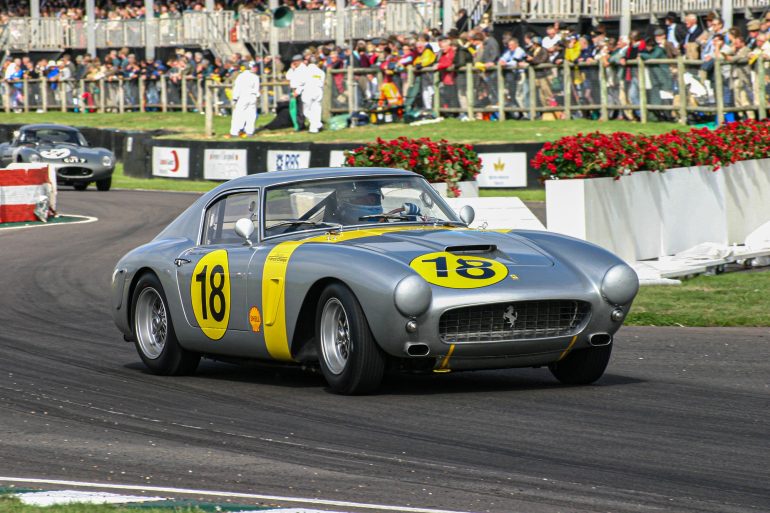
The GTO's parent was the 250 GT Berlinetta passo corto, the short-wheelbase car of 1959, which had already given Ferrari a run of GT wins and the first Tourist Trophies of the GT era at Goodwood, Stirling Moss driving Rob Walker's dark-blue car to victory in 1960 and 1961. The SWB was a road car that could be raced; the competition versions, lightened and tuned step by step, were known inside the factory by the year of their specification, and the archive's story of a 1961 Comp/61 car calls it Enzo's hot rod. By 1961 the SWB was being beaten in a straight line by the Aston Martin DB4 GT Zagato and threatened by the E-type Jaguar announced that March, and Ferrari's engineers knew that its upright glasshouse and tall nose cost it twenty miles an hour on the Mulsanne straight against a car of the same power.
What forced the issue was the rulebook. On 15 May 1961 the FIA's sporting commission announced that from 1962 the world championship would be contested by grand touring cars alone, in three classes by engine size, with the sports-racing prototypes that had carried the title since 1953 pushed into a sideshow. Ferrari's road to the championship therefore ran through a better GT, and through the homologation clause that defined one: a car of which a hundred had been built. Enzo Ferrari set Bizzarrini, who had come from Alfa Romeo in 1957 and had developed the SWB, to work on a lower, faster berlinetta that could pass as a development of the 250 GT.
Bizzarrini's test bed was a 1960 SWB, chassis 2643 GT, which he stripped and rebuilt through the spring of 1961 with the Testa Rossa's dry-sump Tipo 168 engine moved back and down in the frame, the driver moved back with it, and a long, low, hand-formed nose that earned the car the names Il Mostro, the monster, and la Papera, the duck. It ran at Le Mans in June 1961 in the hands of Fernand Tavano and Giancarlo Baghetti and retired; the lessons went into a new chassis, Tipo 539/62, which kept the SWB's 2,400-millimetre wheelbase and its live rear axle on semi-elliptic springs but added a Watt linkage to locate the axle, lowered the whole car, and set the engine so far back that the pedals sat close against the bulkhead: the GTO's famous shortage of legroom, which Stephen Mitchell describes in the archive with the resignation of a man who drove one every day for four years, was Bizzarrini's weight distribution.
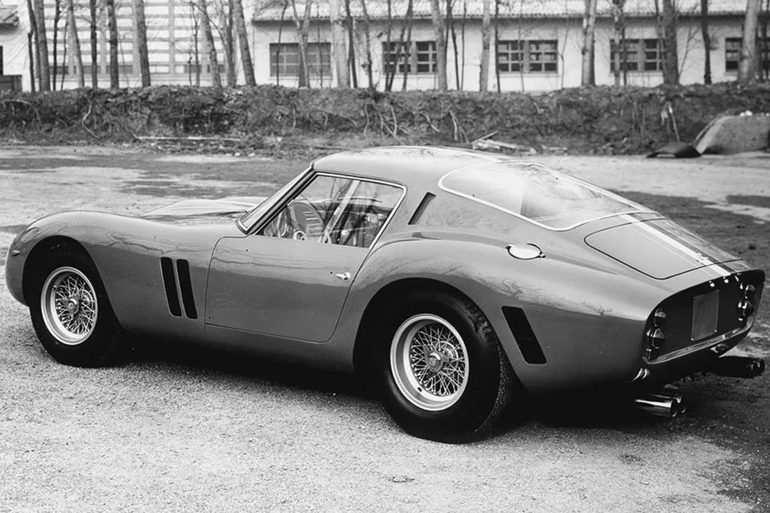
Then, in November 1961, the project lost its designer. In the quarrel over Laura Ferrari's role in the running of the company known ever since as the palace revolt, eight of Ferrari's senior men left at once, among them Carlo Chiti, the chief engineer, Romolo Tavoni, the team manager, Girolamo Gardini, the sales manager, and Bizzarrini himself. Enzo Ferrari handed the racing department to Mauro Forghieri, twenty-six years old and barely two years at the factory, whose father Reclus had been a Scuderia Ferrari tuner before the war; the archive's two-part Forghieri interview by Robert Newman tells how the boy from Modena came to run the whole of Ferrari's racing. Forghieri finished the GTO: he sorted the handling with Willy Mairesse at the wheel in winter testing, added the small rear spoiler that became its signature, and left the body to Sergio Scaglietti's shop in Modena, where the panel-beaters formed the aluminium over a wooden buck with no formal drawings, which is why no two GTOs are quite alike and why some cars have two cooling vents in each front wing and some three. The finished car, chassis 3223 GT, was shown to the press at Maranello on 24 February 1962, at the annual conference where Ferrari unveiled the year's racing cars, and the first customer car was delivered within weeks.
The FIA wanted a hundred cars. Ferrari built thirty-six, and never pretended otherwise. The argument, which the governing body accepted, was that the GTO was not a new model but an evolution of the 250 GT, of which several hundred had been made since 1954 in Tour de France, SWB and road-going forms; the engine was the same 2,953-cc Colombo V12, the wheelbase was the SWB's, and the new body and the five-speed gearbox were permitted developments. The homologation papers were filed under the 250 GT heading and the O was added to the name to say so. Rivals complained, and Carroll Shelby would make the same argument in reverse two years later when his Daytona Coupé was accepted as a Cobra. Ferrari's genius was to see that the rulebook rewarded whoever read it most closely, and the archive's Amelia Island preview of 2011 puts it well: the GTO is a tribute to the days when manufacturers built cars to suit the rulebook and satisfy the homologation process.
The result was a racing car with number plates. It had a full interior of a sort, a boot that held a spare wheel, and the lights, bumpers and horn the regulations demanded, but the seats were buckets, the windows were plastic, there was no speedometer in some cars and no insulation in any of them, and the price, about $18,000 in the United States, bought a car that Enzo Ferrari sold only to drivers he approved. The GTO's buyers in 1962 were racing teams and racing drivers: Luigi Chinetti's NART, Colonel Ronnie Hoare's Maranello Concessionaires, the UDT-Laystall team that Alfred Moss and Ken Gregory ran for Stirling, the Equipe Nationale Belge, Pierre Noblet, Jean Guichet, Jo Schlesser, John Coombs and David Piper. Ferrari kept a handful for the works to run in the big races and sold the rest to people who would win with them.
The results that won three GT championships, with the chassis that scored them. Drivers link to every story on the site about them.
| Year | Race | Drivers | Chassis | The story |
|---|---|---|---|---|
| 1961 | Le Mans, June | Tavano / Baghetti | 2643 GT (SWB test car) | Bizzarrini's Il Mostro, the GTO's prototype, retires |
| 1962 | Press conference, Maranello, 24 February | — | 3223 GT | The first GTO shown |
| 1962 | Sebring 12 Hours, 24 March | Phil Hill / Gendebien | 3387 GT, NART | The first race: 2nd overall, 1st in GT |
| 1962 | Targa Florio, 6 May | Ferrari customers | 3413 GT and others | The GT class; 3413 Phil Hill's test car, class winner in 1963 and 1964 |
| 1962 | Nürburgring 1000 km, 27 May | Parkes / Mairesse | 3765, 330 GTO, works | 2nd overall behind the Dino prototype |
| 1962 | Le Mans, 23–24 June | Guichet / Noblet; Elde / Beurlys | 3705 GT; 3757 GT | 2nd and 3rd overall behind the works 330 TRI/LM; Grossman / Roberts 6th in 3387 |
| 1962 | Peco Trophy, Brands Hatch, 6 August | Parkes; Salvadori 2nd | Six GTOs | Parkes wins in the rain; Salvadori's greatest racecar |
| 1962 | Tourist Trophy, Goodwood, 18 August | Ireland | 3505 GT, UDT-Laystall | The pale-green car built for Moss; first RHD GTO |
| 1962 | Paris 1000 km, Montlhéry, 21 October | Pedro Rodríguez / Ricardo Rodríguez | 3987 GT, NART | Ricardo's last win; Mitchell's and then Ralph Lauren's car |
| 1962 | Championship | — | — | First GT Manufacturers' title, over two litres |
| 1963 | Daytona Continental, 17 February | Pedro Rodríguez | 4219 GT, NART | Three hours; the GTO's first Daytona win |
| 1963 | Le Mans, 15–16 June | Beurlys / Langlois van Ophem | 4293 GT, Equipe Nationale Belge | 2nd overall behind the works 250 P |
| 1963 | Tourist Trophy, Goodwood, 24 August | Graham Hill; Parkes 2nd | 4399 GT, Maranello Concessionaires | Dexter Brown's painting; Piper 5th in his green GTO |
| 1963 | Tour de France Automobile, September | Guichet / Behra | 5111 GT | Outright win; 2nd in 1964; the $52 million car |
| 1963 | Championship | — | — | Second title |
| 1964 | Daytona 2000 km, 16 February | Phil Hill / Pedro Rodríguez | 5571 GT, NART | First win for the Series II body |
| 1964 | Spa 500 km, May | Parkes | GTO, Maranello Concessionaires | The Cobra Daytona Coupés arrive |
| 1964 | Le Mans, 20–21 June | Bianchi / Beurlys | 5575 GT, GTO/64, ENB | 5th overall, 1st in the three-litre GT class |
| 1964 | Tour de France Automobile, September | Bianchi / Berger | 4153 GT | Outright win; the $70 million car |
| 1964 | Championship | — | — | Third title; the Monza round cancelled; Shelby champion in 1965 |
| 1965 | Nassau Tourist Trophy, December | Grossman | 3387 GT | The first GTO to race wins its class in its last season |
Ferrari won the over-two-litre division of the International Championship for GT Manufacturers in 1962, 1963 and 1964. Chassis numbers are Ferrari's; the 330 GTOs ran the four-litre engine in the prototype class. The GTO made something over five hundred competition starts in all; these are the ones the archive tells.
The GTO raced for the first time at Sebring on 24 March 1962, days after the second car built, chassis 3387 GT, had been delivered to Chinetti in New York, and Phil Hill and Olivier Gendebien drove it to second overall and first in the GT class behind the works Testa Rossa. The archive's account of the car's later sale follows it through the rest of a long competition life: sold in June to Bob Grossman, sixth at Le Mans with Fireball Roberts, raced for three more seasons by Grossman and Mike Gammino, and still winning its class at Nassau in 1965. At the Targa Florio the GTOs took the GT class, with chassis 3413 GT, the car that would sell for $48.4 million in 2018, doing duty as Phil Hill's test car before it went on to win the class there in 1963 and 1964 and the Italian GT championship. At the Nürburgring 1000 Kilometres in May, Mike Parkes and Willy Mairesse brought the works four-litre car, chassis 3765, home second overall behind Hill and Gendebien's Dino prototype.
Le Mans in June, which the archive covers in Willem Oosthoek's account of Phil Hill's third win, was the race that made the GTO's name. The organisers, afraid of losing their crowd, had admitted an experimental class for prototypes up to four litres, and Hill and Gendebien won it in the 330 TRI/LM; behind them Jean Guichet and Pierre Noblet's GTO was second overall, Léon Dernier and Jean Blaton, racing as Elde and Beurlys, were third in another, and Grossman and Roberts sixth. A three-litre GT had beaten everything but the works prototype. In August, on the Bank Holiday Monday at Brands Hatch, six GTOs lined up for the Peco Trophy in the hands of Parkes, John Surtees, Innes Ireland, Piper, Colin Davis and Roy Salvadori; Parkes won in the rain and Salvadori, in John Coombs's car, finished second after a race-long fight with Ireland, and told the archive forty-five years later that the GTO was the greatest racing car he ever drove, a car one could drift the whole time. A fortnight later Ireland won the Tourist Trophy at Goodwood in the UDT-Laystall car, chassis 3505 GT, the first right-hand-drive GTO and the one built for Moss, painted the pale green that gives Ed McDonough's archive story its title; Moss's Goodwood crash in April had ended his career before he could race it. In October the brothers Pedro and Ricardo Rodríguez won the Paris 1000 Kilometres at Montlhéry in NART's chassis 3987 GT, weeks before Ricardo was killed in Mexico. Ferrari took the over-two-litre division of the championship by a distance, and the GTO had won or placed in every race that mattered.
The second season began at Daytona in February, where Pedro Rodríguez won the three-hour Continental in a NART GTO, and ran through class wins at Sebring and the Targa Florio to Le Mans, where Beurlys and Gérard Langlois van Ophem's Equipe Nationale Belge car finished second overall behind the works 250 P, the first of the mid-engined prototypes that would make the GTO obsolete. In Britain the Tourist Trophy at Goodwood in August was a GTO race from start to finish: Graham Hill led Parkes home in two Maranello Concessionaires cars, with Salvadori and Jack Sears third and fourth in the lightweight E-types and Piper fifth in his green GTO. Dexter Brown's painting of Hill drifting through Madgwick on the way to that win is the subject of one of the archive's shorter GTO pieces, and the car, chassis 4399 GT, went back to Maranello the following winter to be rebodied in the 1964 style.
In September Jean Guichet and José Behra won the Tour de France Automobile outright in chassis 5111 GT, the five-day marathon of circuits, hill-climbs and road stages that the SWB had owned since 1956; Guichet was second in the same car in 1964, and the archive reported the car's private sale for $52 million in 2013. The championship was Ferrari's again, and the only serious opposition had come from the lightweight E-types and, late in the year, from the first 289 Cobras.
Ferrari's plan for 1964 was to replace the GTO with the 250 LM, the mid-engined coupé derived from the 250 P, and to homologate it by the same argument that had served the GTO; the FIA, which had seen the trick once, refused. Ferrari withdrew its works entries in protest and fell back on the GTO, and Forghieri's department produced a stop-gap: a new, lower and wider body with a cut-off roofline borrowed from the 250 LM, fitted to three new chassis, 5571, 5573 and 5575 GT, and retrospectively to four of the 1962–63 cars, 3413, 4091, 4399 and 4675. These are the Series II cars, or the GTO/64, and the archive's picture of one at Le Mans in 1964 shows the shape: Lucien Bianchi and Beurlys's Equipe Nationale Belge car, fifth overall and first in the three-litre GT class.
The 1964 season was the GTO against Carroll Shelby's Cobra Daytona Coupés, Pete Brock's answer to the question of what a Cobra needed to beat a GTO on the Mulsanne, and the archive's history of the Daytona Coupé tells that side of the story. Phil Hill and Pedro Rodríguez won the Daytona 2000 Kilometres in February in NART's new Series II car, 5571 GT; the Daytonas took the GT class at Sebring and Le Mans; Parkes won at Spa; the GTOs won the Targa Florio class and the Nürburgring class; and Bianchi and Georges Berger won the Tour de France in chassis 4153 GT, the car that reportedly changed hands for $70 million in 2018. With the title in the balance going into the autumn, the Monza round that Shelby needed was cancelled, and Ferrari took the championship for the third year running. Shelby won it in 1965, by which time Ferrari had moved on to the 275 GTB and the GTO had finished its works career with something over five hundred competition starts across three seasons.
The thirty-six three-litre GTOs were built between February 1962 and the autumn of 1964, with chassis numbers from 3223 to 5575 GT in Ferrari's odd-numbered road-car sequence, which was part of the homologation fiction. Thirty-three carry, or carried, the 1962 body with its three nose slots, its low roof and its abrupt Kamm tail with the spoiler; seven of them, three built new and four rebodied, have the 1964 shape. The three 330 GTOs, built with the four-litre engine for the works team and the prototype class in 1962, look all but identical, and the archive's story of one of them, chassis 3765, which Parkes and Bandini drove at Le Mans and which sold for $51.7 million in New York in 2023, calls it the only factory-owned Series I car raced by the Scuderia. Count them all and the number is thirty-nine, which is why the archive's report from the 2012 Le Mans Classic parade says thirty-nine and the auction houses say thirty-six.
No two are alike. Some cars had two cooling slots in the front wings and some three; the spoilers, the vents behind the rear wheels and the tail shapes varied from car to car and from season to season as the works updated them; a handful were built right-hand drive for the British teams; and many were crashed, rebodied, repainted or reworked in period, so that the question of what is original on any given GTO occupies historians full-time. Every one of the thirty-six is accounted for, which for a 1960s racing car is remarkable in itself; most have been restored, five of them at once in Ferrari Classiche's workshop in Maranello when the archive visited in 2013, where the factory's original drawings and moulds allowed it to cast new engine blocks and heads to the 1962 pattern.
Nine of the thirty-six; each links to the archive's story of that car.
Single-car and chassis stories that carry the GTO: the record sales, the restorations, the tours and the cars that race.
The engine is the Tipo 168/62 Comp., Gioachino Colombo's short-block V12 at its 250 size, 2,953 cc from a 73-millimetre bore and a 58.8-millimetre stroke, with single overhead camshafts, two valves per cylinder, the dry sump and six twin-choke Weber 38 DCN carburettors of the Testa Rossa, and a factory figure of 300 horsepower at 7,500 rpm. The twelve velocity stacks under the bonnet bulge are the view every GTO driver remembers, and the sound they make, Mitchell writes, is a car breathing. Behind it is a five-speed all-synchromesh gearbox with the short lever a few inches from the wheel rim; behind that, the live axle on leaf springs and the Watt linkage, Koni dampers, Dunlop disc brakes at each corner and Borrani wire wheels. The frame is a ladder of oval steel tubes with a lighter tubular superstructure, the body aluminium, the weight about 880 kilograms by the factory's reckoning and rather more on a scale, and the top speed around 280 km/h, 174 mph, with the gearing the cars ran at Le Mans.
The archive's two owner-drivers agree on what it is like. Salvadori, who raced everything from Formula Junior to Le Mans Aston Martins, found it smooth, powerful, easy and fluid, a car that suited his style more than any other and that he could drift all day. Mitchell, who bought chassis 3987 with its engine in pieces in 1967 and used it as his principal transport in Los Angeles for three years, remembers the aircraft whine of the starter, the slow warm-up of the big dry-sump tank, the tachometer tell-tale he rarely pushed past 7,500, the gearing that let him pass the fastest freeway traffic before he needed second, and the pedals so close that a man of five foot ten drove with his knees splayed around the wheel: you adapt to the GTO, he says, it does not adapt to you, and the same was said of the Old Man. His comparison with the 250 GT Breadvan, Bizzarrini's own idea of what the next GTO should have been, which lived in a friend's garage across town, is the archive's best account of what the GTO's rear-set engine and five-speed gearbox were for.
GTO histories are written by chassis number, and a few numbers carry most of the story. 3223 GT is the prototype shown in February 1962. 3387 GT was the first to race, second at Sebring with Hill and Gendebien and still at it at Nassau in 1965. 3413 GT, the third car, was Phil Hill's Targa test car, won its class there twice and the Italian GT championship, was rebodied in the 1964 style, and became the most expensive car ever sold at auction when Gregory Whitten's two decades of ownership ended at RM Sotheby's Monterey sale in August 2018: Derek Bell drove it onto the block, bidding opened at $35 million and it hammered at $44 million, $48.4 million with the premium. 3505 GT is the pale-green UDT-Laystall car built for Moss, driven by Innes Ireland, Masten Gregory and Mairesse, the Tourist Trophy winner of 1962 and the $35 million private sale of 2012. 3765 is the works 330 GTO of Parkes, Mairesse and Bandini, second at the Nürburgring, Le Mans 1962, Amelia Island best of show and $51.7 million in 2023.
3851 GT was delivered to Jo Schlesser for the 1962 Tour de France, where he and the ski champion Henri Oreiller finished second, and became the first GTO to break the auction record when Bonhams sold it from the Maranello Rosso collection at Quail Lodge in August 2014 for $38,115,000, a figure that the archive, which was in the room, describes as the end of a bidding war that resembled a tennis match. 3987 GT was the Rodríguez brothers' Paris 1000 Kilometres winner, Mitchell's daily driver, and is Ralph Lauren's. 4153 GT won the 1964 Tour de France with Bianchi and Berger and is the car reported to have sold privately for $70 million in 2018, the highest figure ever attached to a motor car at the time. 4399 GT is Graham Hill's 1963 Tourist Trophy winner, rebodied for 1964. 5111 GT is Guichet's 1963 Tour de France winner, the $52 million car of 2013. And 3757 GT, third at Le Mans in 1962, has belonged to Nick Mason since the 1970s, which is why a GTO still turns up at race meetings in the hands of an owner who drives it as its makers intended.
The GTO was a customer car, so its drivers were the best privateers and semi-works men of the early 1960s rather than a single works line-up. Phil Hill and Olivier Gendebien gave it its debut at Sebring; Mike Parkes and Willy Mairesse were the works pairing in 1962, with Lorenzo Bandini partnering Parkes at Le Mans and John Surtees racing the Bowmaker car in Britain. Innes Ireland, Masten Gregory and Mairesse drove 3505 for UDT-Laystall; Graham Hill, Parkes, Jack Sears and Mike Salmon for Maranello Concessionaires; Roy Salvadori in John Coombs's car; David Piper in his own green ones; Pedro and Ricardo Rodríguez, Bob Grossman and Fireball Roberts for NART; Jean Guichet, Pierre Noblet, Jo Schlesser and Lucien Bianchi for France and Belgium; and Elde and Beurlys for the Equipe Nationale Belge. Behind them stand the men who made the car: Enzo Ferrari, who ordered it; Giotto Bizzarrini, who designed it; Mauro Forghieri, who finished it; Sergio Scaglietti, whose shop built it; and Luigi Chinetti, whose NART put the first one on a grid.
The drivers, engineers, owners and dealers of the GTO years, in profiles and interviews.

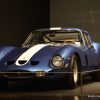
The archive's first GTO price story is a rumour from Monterey week in 2008, a private sale said to have reached $30 million, which the editor could confirm only as far as a man who knew a man who knew the buyer. Everything since has been on the record. In June 2012 Bloomberg confirmed that 3505 GT, the Moss car, had gone to Craig McCaw for $35 million, the most ever paid for a car; in 2013 5111 GT changed hands privately for $52 million; in August 2014 Bonhams sold 3851 GT at Quail Lodge for $38,115,000, beating the auction record set the year before by the Mercedes-Benz W196R; in June 2018 4153 GT was reported sold privately for $70 million; in August 2018 RM Sotheby's sold 3413 GT for $48,405,000, an auction record that stood until the Mercedes 300 SLR Uhlenhaut coupé in 2022; and in November 2023 RM Sotheby's sold the 330 GTO 3765 in New York for $51.7 million, the most ever paid for a Ferrari at auction. When Talacrest offered 3387 GT in 2016 the asking price was £45 million, and its president called the car a better investment than a painting on the wall, which is the comparison the archive itself reached for in 2008.
The archive's market reporting puts the numbers in context: Casey Annis watching four GTOs, eight SWBs and eight E-types race flat-out in Goodwood's Kinrara Trophy in 2018, a field he priced at half a billion dollars, and asking where all the GTOs have gone; the 2012 anniversary tour on which a GTO was rear-ended in France in what may have been the most expensive crash in history; and the 2010 sale of 4675 GT at RM's Monaco auction, when a GTO at auction was still news in itself. For anyone who wants the figures year by year, The Market's auction coverage carries every GTO that has crossed a block since the archive began.
The owners have met every five years since the car's twentieth anniversary in 1982, and the archive has covered the tours since the Moët & Chandon forty-fifth in 2007: the fiftieth in 2012, which ran through Champagne and brought about twenty GTOs to the Le Mans Classic for two parade laps of the full circuit, photographed by Tim Scott; the fifty-fifth in 2017; and the Amelia Island Concours of 2012 and the Pebble Beach Concours of 2011, where twenty-three GTOs stood together on the lawn. Tim Scott's day with a GTO, Dennis Gray's interview with Jon Shirley, whose collection includes one, and the Fred Peters and Charles Betz interview are the archive's portraits of the people who keep them. The cars race, too: the Tourist Trophy Celebration and the Kinrara Trophy at the Goodwood Revival, the Le Mans Classic and the Monterey Motorsports Reunion, where in 2011 a GTO race marked the fiftieth anniversary, all run with GTOs on the grid, and the archive's Revival galleries have them every September.
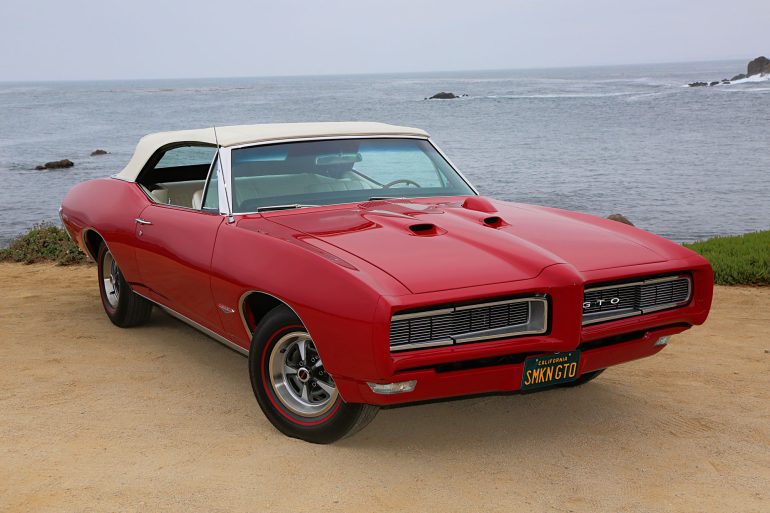
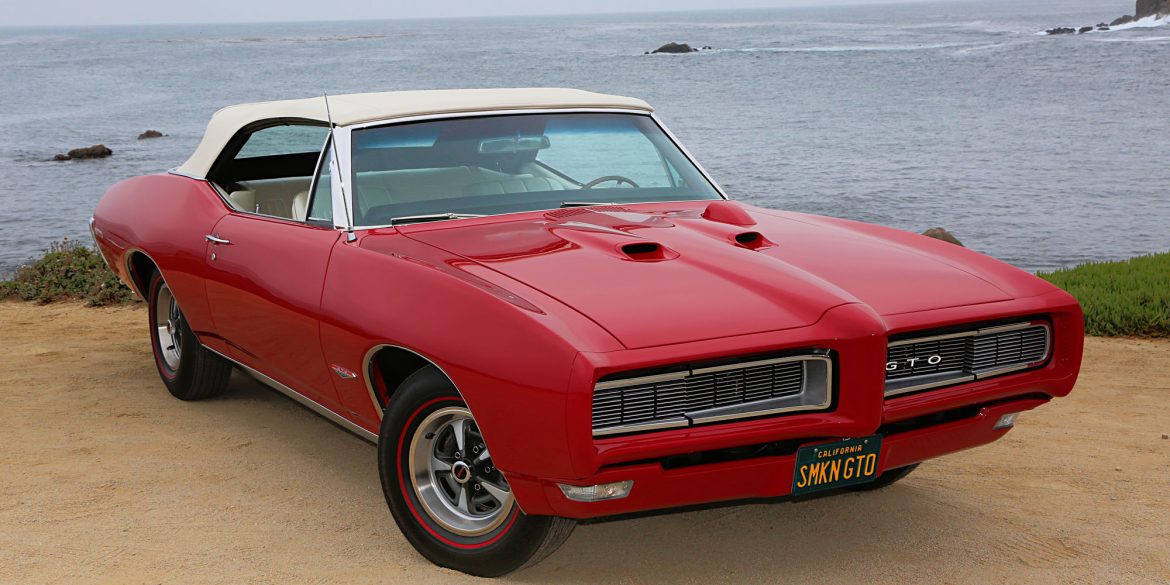
Ferrari has used the three letters twice since: on the 288 GTO of 1984, the Group B homologation special that became the first of the supercars and of which 272 were built, and on the 599 GTO of 2010; the archive's piece on the GTO legacy follows the line, and Ferrari's own 2024 Legacy Tour marked the 288's fortieth year. Pontiac borrowed the name in 1964, and Car and Driver's cover test of March 1964, which pitted the Pontiac against the Ferrari and declared the Pontiac quicker, is retold in the archive's report from Ferraris on the Vine, where the two cars met again. None of this has dented the original. The 250 GTO remains the car that every list of the greatest Ferraris, the greatest racing cars and the most valuable objects on wheels puts at or near the top, and the reason is the one McDonough gave in 2006: it was designed by Colombo, Bizzarrini and Chiti to be beautiful, to win races, and to be driven to them, and it did all three.
The GTO at Goodwood, Le Mans Classic, Pebble Beach, Amelia Island and on its anniversary tours.
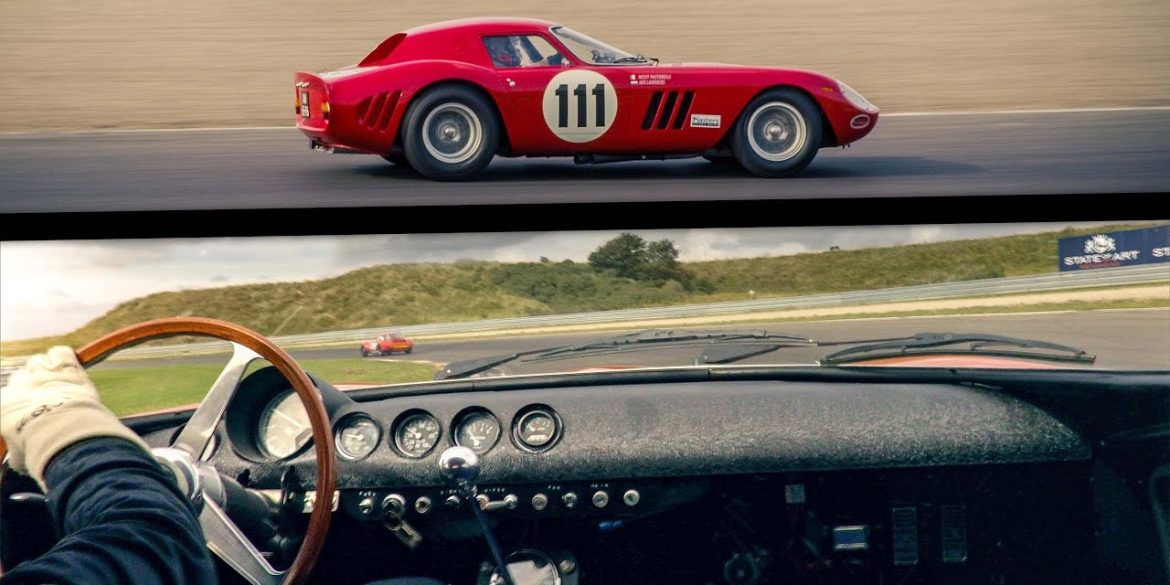
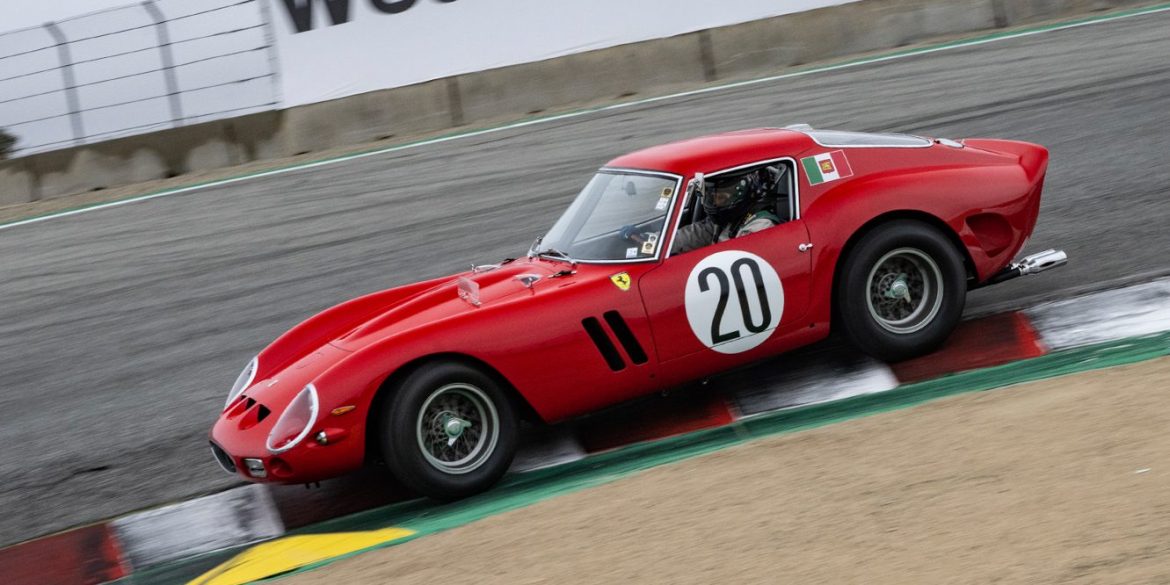
Built: 36 three-litre cars, February 1962 to 1964 (33 Series I, 3 Series II new), plus 3 four-litre 330 GTOs; 4 Series I cars rebodied as Series II (3413, 4091, 4399, 4675). Chassis numbers: 3223 to 5575 GT. Engine: Tipo 168/62 Comp. V12, 2,953 cc, 73 × 58.8 mm, single overhead camshafts, dry sump, six Weber 38 DCN, 300 hp at 7,500 rpm; 330 GTO 3,967 cc, about 390 hp. Gearbox: five-speed. Chassis: Tipo 539/62, 2,400 mm wheelbase, live rear axle with semi-elliptic springs and Watt linkage, Dunlop discs, Borrani wires. Weight: 880 kg (factory). Top speed: about 280 km/h (174 mph). Price new: about $18,000. Championships: International Championship for GT Manufacturers, over-two-litre division, 1962, 1963, 1964. Le Mans: 2nd (Guichet/Noblet) and 3rd (Elde/Beurlys) 1962; 2nd (Beurlys/Langlois) 1963; 5th and GT class (Bianchi/Beurlys, GTO/64) 1964. Tour de France: 1963 (Guichet/Behra, 5111) and 1964 (Bianchi/Berger, 4153). Tourist Trophy: 1962 (Ireland, 3505) and 1963 (Graham Hill, 4399). Daytona: Continental 1963 (P. Rodríguez), 2000 km 1964 (P. Hill/P. Rodríguez, 5571). Other: Sebring 2nd overall 1962 (Hill/Gendebien, 3387); Nürburgring 1000 km 2nd 1962 (Parkes/Mairesse, 3765); Paris 1000 km 1962 (Rodríguez brothers, 3987); Peco Trophy 1962 (Parkes); Targa Florio class 1962, 1963, 1964. Record prices: $35 million (3505, private, 2012); $52 million (5111, private, 2013); $38,115,000 (3851, Bonhams Quail Lodge, 2014); $70 million (4153, private, reported 2018); $48,405,000 (3413, RM Sotheby's Monterey, 2018); $51.7 million (3765, RM Sotheby's New York, 2023). Anniversary tours: every five years since 1982. Successors in name: 288 GTO (1984, 272 built), 599 GTO (2010).
Short answers, with the long ones above.
Gran Turismo Omologato, Italian for grand touring, homologated: a GT car approved by the FIA for racing in the GT category. Ferrari added the O to the 250 GT name to make the point that the car was a homologated evolution of the 250 GT rather than a new model.
Thirty-six with the three-litre engine, between 1962 and 1964: thirty-three in the 1962 body and three in the 1964 Series II body, with four of the earlier cars later rebodied in the 1964 style. Three more cars with four-litre engines, the 330 GTOs, bring the total to thirty-nine. All thirty-six survive.
Between about $40 million and $70 million, on the evidence of the sales since 2012. The auction record is $51.7 million for the 330 GTO chassis 3765 in November 2023; the highest reported private sale is $70 million for chassis 4153 in 2018.
Rarity, racing history, beauty and completeness. Only thirty-six exist, every one has a documented competition history from the three seasons in which Ferrari won the GT championship, each is different, and all survive, so that the ownership of a GTO is a closed club whose members rarely sell.
300 horsepower at 7,500 rpm from the 2,953-cc Colombo V12, with six Weber carburettors and a dry sump; the three 330 GTOs had a four-litre version of around 390 horsepower.
About 174 mph (280 km/h) with Le Mans gearing, and roughly 0–60 mph in six seconds. It was quicker than the SWB it replaced mainly because its lower body cut drag on long straights.
Giotto Bizzarrini laid it out in 1961 on a modified 250 GT SWB; after he left Ferrari in the November 1961 walkout, Mauro Forghieri completed the car and Sergio Scaglietti's works in Modena shaped and built the bodies. The engine was Gioachino Colombo's V12.
Not outright. It finished second and third overall in 1962 and second in 1963, each time behind a works Ferrari prototype, and won its GT class in 1962, 1963 and 1964. Its outright wins came in the Tour de France, the Tourist Trophy, the Paris 1000 Kilometres and the Daytona races.
The Series I is the 1962–63 body with the low roof, three nose slots and the small rear spoiler; the Series II, or GTO/64, has the lower and wider 1964 body with a cut-off roofline borrowed from the 250 LM. Three cars were built as Series II and four Series I cars were rebodied.
The whole archive on one thread, newest first.