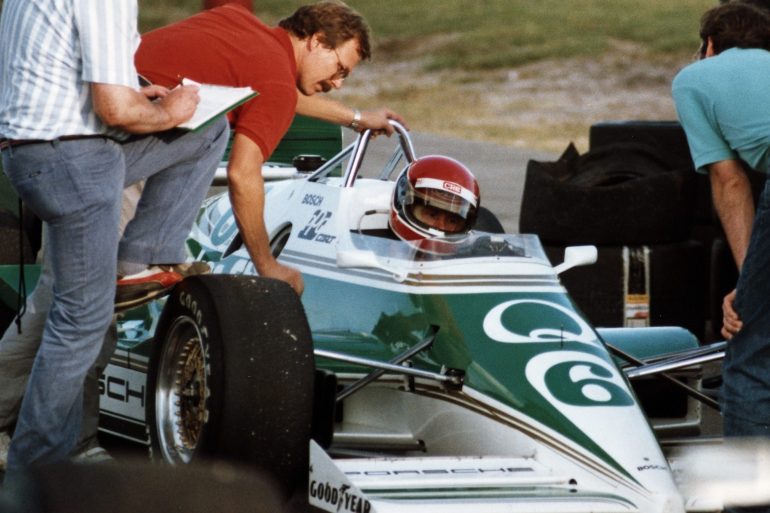
Editor's Note: This feature was reproduced with permission from our companion site SportsCarDigest for our Stuttcars readers. EARLY TRIES (AND A COUPLE OF FAILURES) Porsche's relationship with IndyCar is marked by a strange chain of events, which for…
The turbocharger made this era. From the Porsche 935 of 1976 to the Peugeot 905 of 1993, from the Audi Quattro to the Delta S4, forced induction turned sports-car and rally racing into the most powerful motor racing there had ever been: 800-horsepower silhouettes, 1,000-horsepower qualifying Group C cars, 500-horsepower rally cars on gravel. It was the age of the Porsche 956 and 962, the Jaguar XJRs, the Sauber-Mercedes Silver Arrows, IMSA GTP and Group B, and it ended in 1993 when the rules that created it were torn up. This is the whole story, and every linked piece is a source.
The era at a glance
- Years
- 1974–1993, from Matra's last Le Mans and the first turbocharged Porsches to the end of Group C and IMSA GTP
- The rulebooks
- Group 5 silhouettes and Group 6 prototypes (1976–81); Group C and Group B (1982); IMSA GTP (1981–93); Group A touring cars (1982)
- The defining cars
- Porsche 935, 936, 956 and 962; Jaguar XJR-9 and XJR-12; Sauber-Mercedes C9; Mazda 787B; Peugeot 905; Nissan GTP ZX-T; Toyota Eagle MkIII; Audi Quattro; Peugeot 205 T16; Lancia Delta S4
- The races
- Le Mans, Daytona, Sebring, the Nürburgring, Spa and Fuji 1000 Kilometres; the Monte Carlo, Safari, 1000 Lakes and RAC rallies; Bathurst
- The people
- Jacky Ickx, Derek Bell, Hurley Haywood, Al Holbert, Hans Stuck, Jochen Mass, Bob Wollek, Geoff Brabham; Norbert Singer, Tom Walkinshaw, Peter Sauber, Reinhold Joest, Erwin Kremer
- Fastest
- WM P88 Peugeot, 405 km/h (252 mph) on the Mulsanne, 1988; Stefan Bellof's 6 min 11.13 sec Nordschleife lap, 1983
- Most successful
- Porsche 956/962: six Le Mans wins, five Daytonas, every World Championship from 1982 to 1986 and three IMSA titles
- How it ended
- Group B banned after the deaths of 1986; Group C killed by the 3.5-litre engine rule of 1991–92; GTP abolished after 1993 when only Toyota was left
The pieces to start with
Essential Reading
McDonough on the 956 and 962, Norbert Singer interviewed, Ludvigsen on Le Mans 1977, the Jaguar XJR-9 and XJR-12, Annis's Toyota Eagle, Starkey's Nissan GTP, Newman on the Quattro and the 935 story.
- 01
1982 Porsche 956 & 1988 Porsche 962 – Alpha & Omega
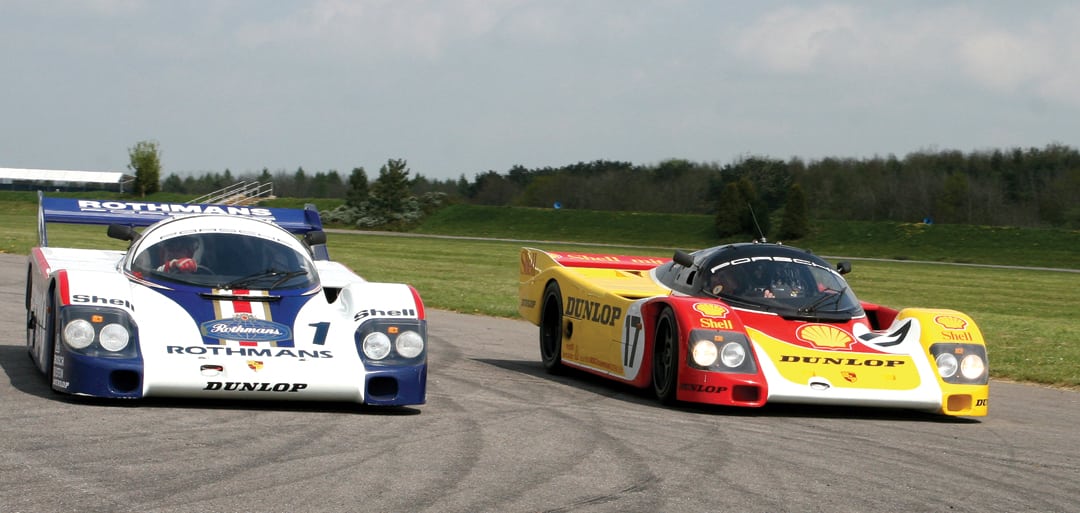
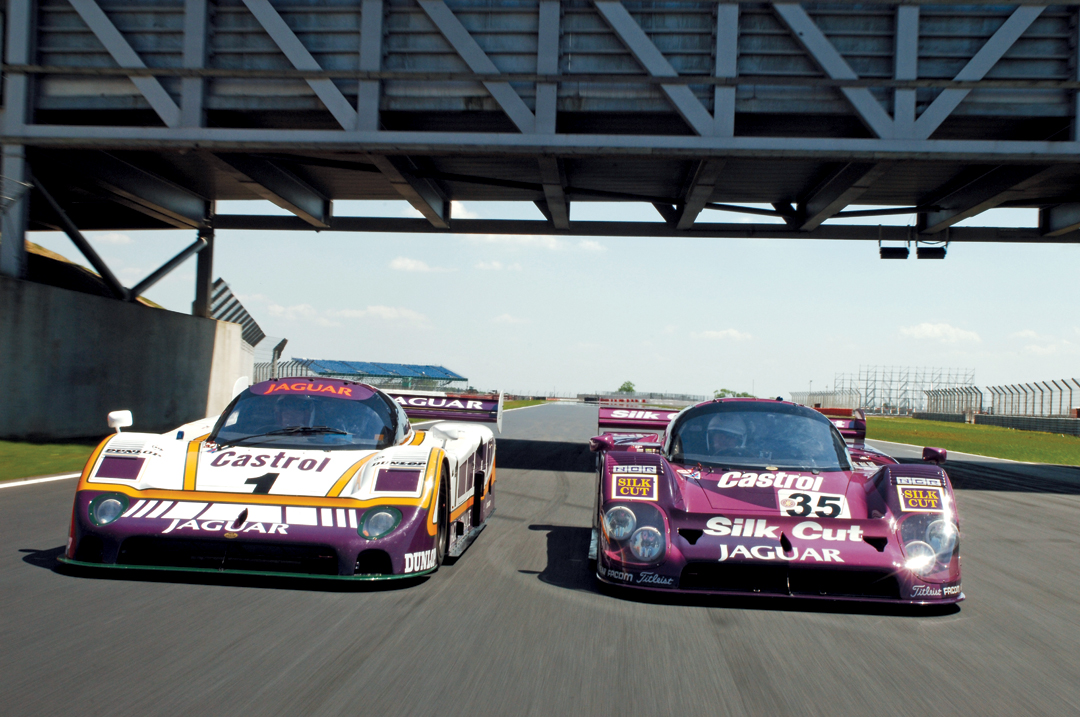
Chassis 956-001 was Derek Bell's first works Porsche and 962-010 his last. Ed McDonough drives both at Silverstone with Bell as his assistant, plus Norbert Singer, Jochen Mass and Vern Schuppan on how 13 seasons of domination nearly never happened.
- 02
Interview: Norbert Singer
Norbert Singer wanted the space race, not racing, but Germany's aeronautical budget was tiny. He joined Porsche in spring 1970 to fix 917 gearbox cooling and stayed through 16 Le Mans wins. Mike Jiggle talks to the finder of loopholes.
- 03
Against All Odds: Porsche's 1977 Le Mans Victory
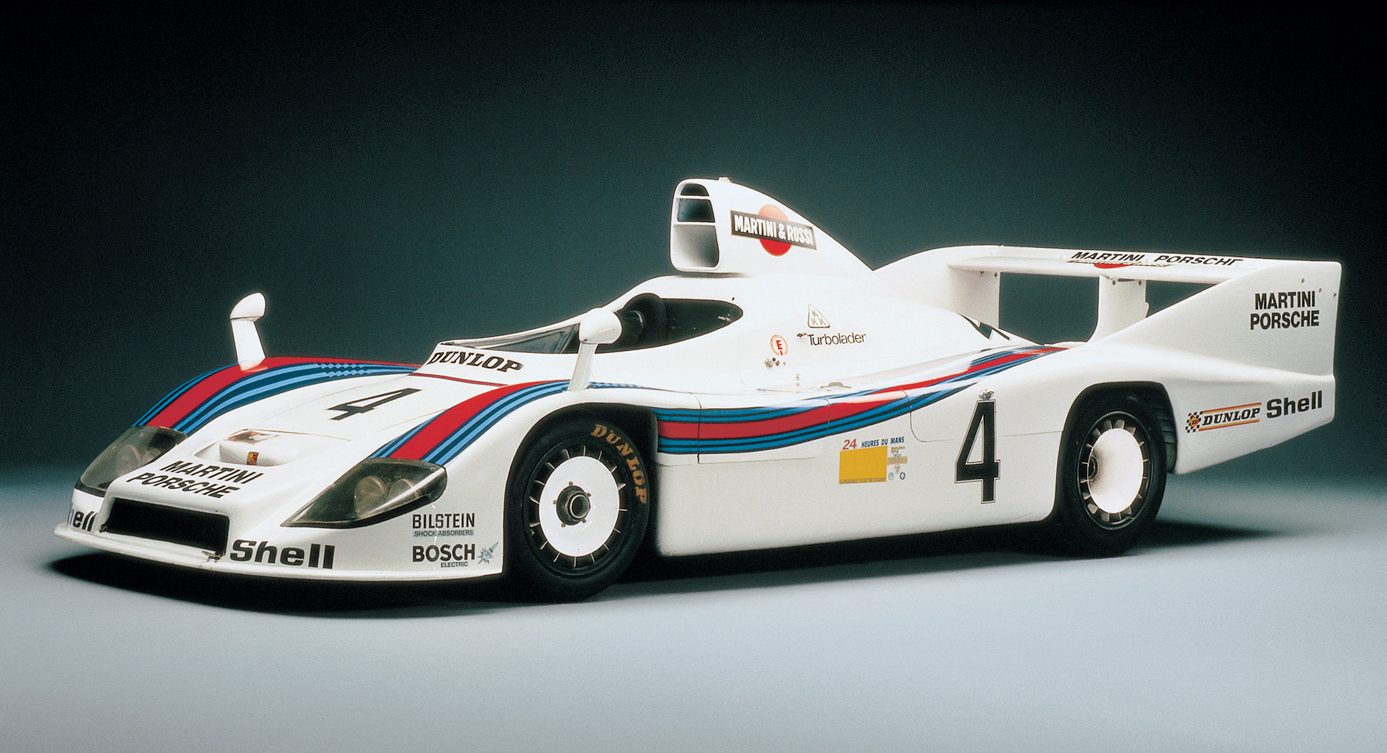
Porsche skipped the 1977 Group 6 season to defend Le Mans against four Renaults, narrowing the 936's track by 40 mm to cut frontal area for the Mulsanne. Karl Ludvigsen on the improvised car Ernst Fuhrmann built from spare parts.
- 04
1988 Jaguar XJR9 & 1991 Jaguar XJR12 – A Cut Above
Three XK120s at Le Mans in 1950, one running second before retiring, persuaded Jaguar to build a car to win there. Ed McDonough drives the Silk Cut XJR9 and XJR12 from the second campaign and traces the line back to the C-Type.
- 05
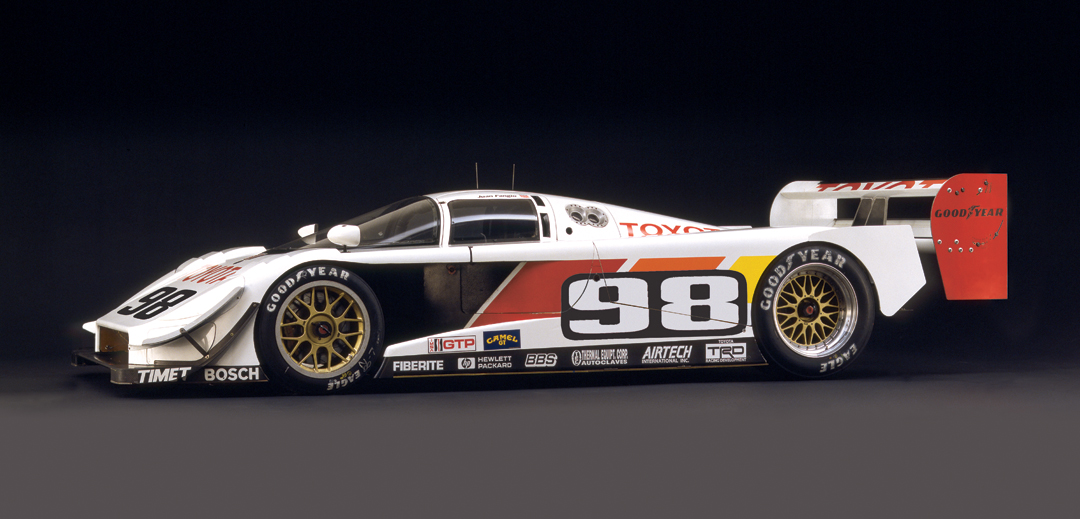
1991 Toyota Eagle MKIII GTP – Unstoppable Force
A Long Beach travel agent, Chris Pook, rang Dan Gurney about a street race; Toyota sponsored the 1976 Formula 1 event and found its American racing partner. Casey Annis on how a floundering Celica GTU program became AAR's GTP juggernaut.
- 06
Bullet Train
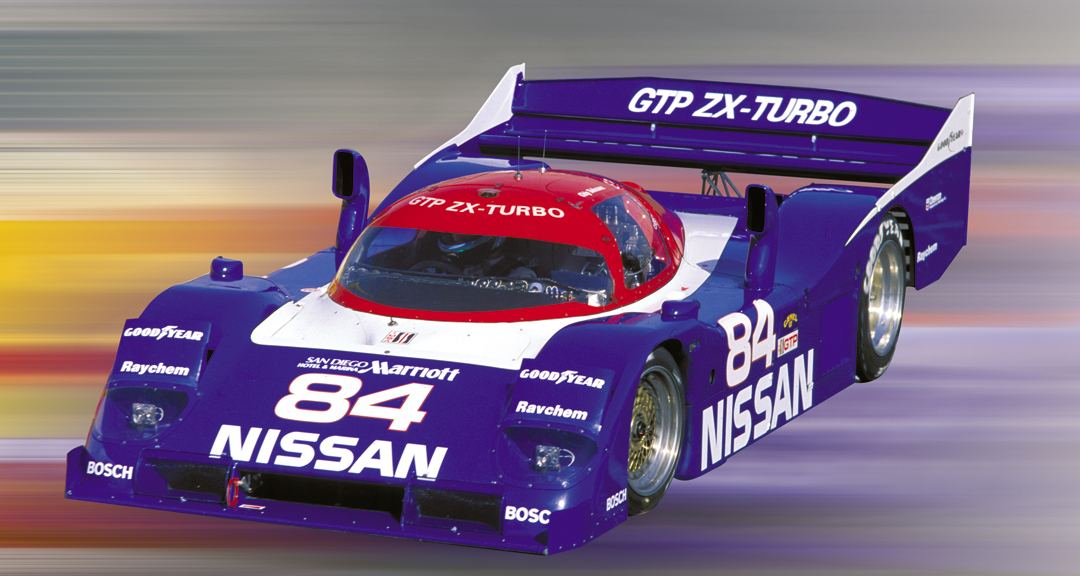
Don Devendorf mortgaged his house in 1974 to start Electramotive, and the 1971 BRE Datsun crew, Knepp, Caldwell, Harris and Suzuka among them, followed Nissan all the way to GTP. The story of the Electramotive/NPTI Nissan GTP ZX.
- 07
No Laughing Matter
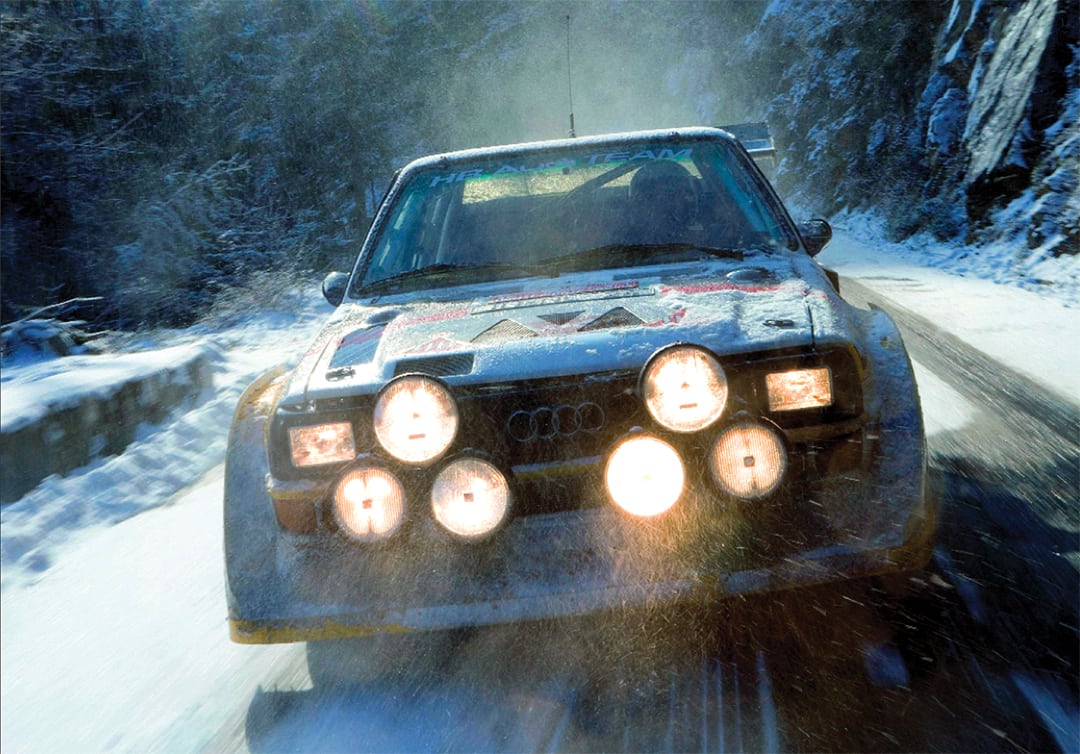
People laughed at Audi's four-wheel-drive rally car in 1980; Ford's Capri had tried it. Then a Quattro won the 1981 Janner Rally by 20 minutes and Mikkola took a minute a stage off everyone on the Monte. Robert Newman.
- 08
Porsche 935 – Sensational Racing Cars That Dominated Global Motorsport
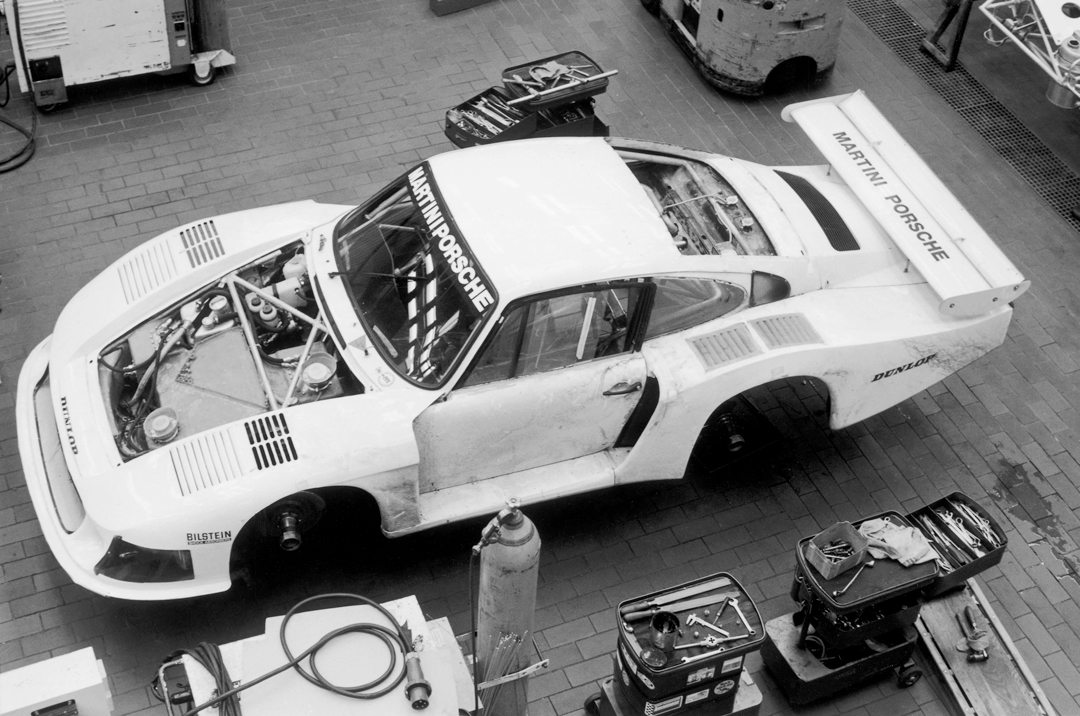
Slant-nosed, as big as a whale and very, oh so very turbocharged: Djordje Sugaris on the 935, the car that looked like a 911 and wasn't, Porsche's first step after the 917 and its test bed for forced induction.
Latest Features
The newest long-form writing on the era, as it is published.
What the Era Was
The twenty seasons between the oil crisis and the end of Group C were defined by three rulebooks. The FIA's Appendix J of 1976 created Group 5, the "silhouette" formula in which a production shape could hide a racing car, and gave the world the Porsche 935 and the BMW 320 and M1 Procar; its successor of 1982 created Group C, a prototype formula that limited fuel rather than engine size, and Group B, which did the same for rallying with a 200-car homologation minimum and no limit at all on power. Across the Atlantic, IMSA's Camel GT ran the 935 era and then, from 1981, its own prototype class, GTP, which became the best sports-car racing in the world in the late 1980s. All of it ran on turbochargers, and all of it ended within a few years: Group B was banned after the deaths of 1986, Group C was killed by a 3.5-litre engine rule in 1992, and GTP by its own costs in 1993. The Can-Am and the five-litre prototypes that came before are on Can-Am and the Unlimiteds and Ford, Ferrari and the Prototypes; the GT1 cars and the LMPs that followed are on GT1 to Hypercar; the road cars of the same years are on The Supercar Era. The Formula One turbo years, which ran in parallel from 1977 to 1988, are a chapter of the Grand Prix History hub.
1974 to 1978: After the Oil Crisis
Sports-car racing came out of the 1973 oil crisis thin and uncertain: Matra won Le Mans in 1974 and quit, Alfa Romeo took the 1975 championship with the 33TT12 and quit, and the Gulf-Mirage GR8 of Jacky Ickx and Derek Bell won a Le Mans in 1975 that had been run to a fuel-economy formula. Then Porsche, which had run the turbocharged Carrera RSR as a research project in 1974, came back for the new rules of 1976 with two cars: the 936 spyder for Group 6, which won Le Mans for Ickx and Gijs van Lennep, and the 935 for Group 5, a 911 Turbo with the headlamps moved into the bumper and 590 horsepower, which won the World Championship of Makes four years running. Ickx, Jürgen Barth and Hurley Haywood won Le Mans again in 1977 in a 936 that had been rebuilt in the pits and finished on five cylinders, against four works Renaults; Karl Ludvigsen's Against All Odds is the race, and the archive has Ickx in the 936. Renault's Alpine A442B won in 1978 for Didier Pironi and Jean-Pierre Jaussaud, the first turbocharged Le Mans winner, and Renault, having proved the point it needed for Formula One, left. In America, Peter Gregg's Brumos Carrera RSRs and 935s and the BMW CSLs of Brian Redman and Ronnie Peterson fought the IMSA Camel GT; Hal Crocker's two-part Peter Perfect is the Gregg story, the archive has Haywood and his memories, the 1974 Sebring that nearly didn't happen and BMW's 1975 Sebring win, and Ed McDonough's Matra M670B and Pescarolo's choice of it close the previous era.
1979 to 1981: The 935 Years
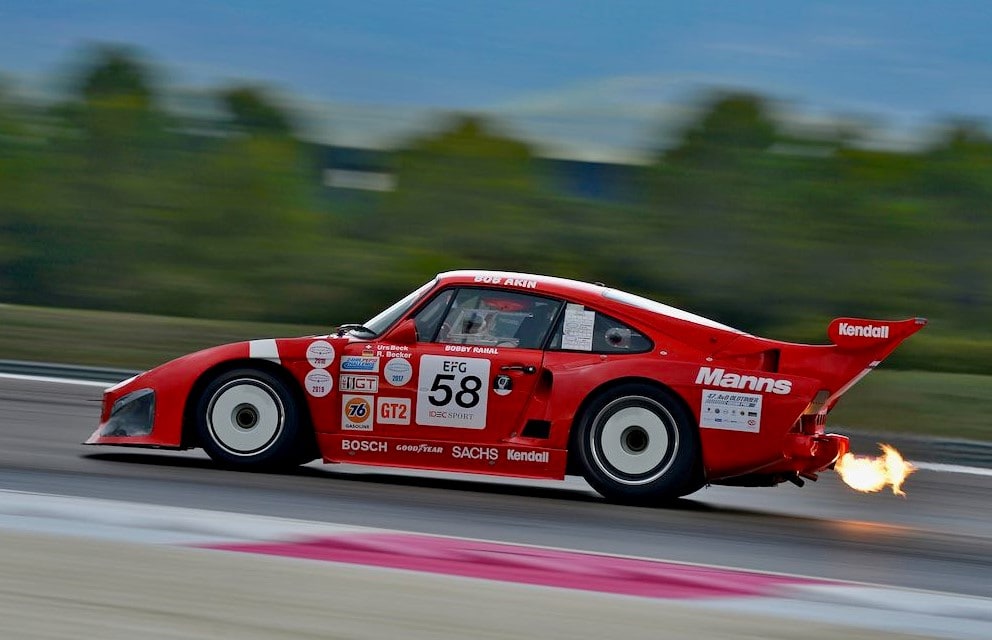
The 935 reached its peak in 1979, when a customer car — Kremer's K3, driven by Klaus Ludwig and the Whittington brothers — won Le Mans outright in the rain, the last production-based car to do so until the McLaren F1 of 1995, and when a 935 could be found on every grid from Daytona to the Nürburgring; Porsche's own 935/78 "Moby Dick", with its long tail and water-cooled heads, had already pushed the silhouette rules past breaking the year before. The archive's 935 history, the Le Mans-winning K3, the Amelia Island 935 class, Erwin Kremer interviewed and John Fitzpatrick, who won the IMSA title in one in 1980, cover the car; Daytona in the 1980s is six 935 wins in a row. Around it the formula filled out: Lancia's Beta Montecarlo Turbo took the makes championship in 1980 and 1981 on class points, BMW's M1 Procar series put Formula One drivers in identical supercars before the Grands Prix of 1979 and 1980, Ferrari's 512 BB LM, in McDonough's Shadow Boxer, and Porsche's 924 Carrera GTP, in Roy Smith's Flawed Excellence, ran at Le Mans, and Jean Rondeau became the only man to win Le Mans in a car bearing his own name, in 1980. Ickx and Bell won it again in 1981 in a 936 brought out of the museum, a year after the archive's BMW M1 and 3.0 CSL histories end.
The Winners, Year by Year
Le Mans, Daytona, the World Championship, the IMSA title and the World Rally Championship, season by season.
| Year | Le Mans 24 Hours | Daytona 24 Hours | World Sportscar Championship | IMSA Camel GT champion | World Rally Championship |
|---|---|---|---|---|---|
| 1974 | Matra-Simca MS670C — Pescarolo / Larrousse | Not held (fuel crisis) | Matra-Simca | Peter Gregg (Porsche Carrera RSR) | Lancia (Stratos) |
| 1975 | Gulf-Mirage GR8 — Ickx / Bell | Porsche Carrera RSR — Gregg / Haywood | Alfa Romeo (33TT12) | Peter Gregg (Porsche Carrera RSR) | Lancia (Stratos) |
| 1976 | Porsche 936 — Ickx / van Lennep | BMW 3.0 CSL — Gregg / Redman / Moffat | Porsche (935, Makes; 936, Sports Cars) | Al Holbert (Chevrolet Monza) | Lancia (Stratos) |
| 1977 | Porsche 936 — Ickx / Barth / Haywood | Porsche Carrera RSR — Haywood / Graves / Helmick | Porsche 935 | Al Holbert (Chevrolet Monza) | Fiat 131 Abarth; Sandro Munari (FIA Cup) |
| 1978 | Renault Alpine A442B — Pironi / Jaussaud | Porsche 935 — Gregg / Stommelen / Hezemans | Porsche 935 | Peter Gregg (Porsche 935) | Fiat 131 Abarth; Markku Alén (FIA Cup) |
| 1979 | Porsche 935 K3 — Ludwig / D. Whittington / B. Whittington | Porsche 935 — Haywood / Ongais / Field | Porsche 935 | Peter Gregg (Porsche 935) | Björn Waldegård (Ford Escort RS1800) |
| 1980 | Rondeau M379B — Rondeau / Jaussaud | Porsche 935 — Joest / Stommelen / Merl | Lancia (Beta Montecarlo Turbo) | John Fitzpatrick (Porsche 935) | Walter Röhrl (Fiat 131 Abarth) |
| 1981 | Porsche 936 — Ickx / Bell | Porsche 935 K3 — Garretson / Rahal / Redman | Lancia (Makes); Bob Garretson (Drivers) | Brian Redman (Lola T600) | Ari Vatanen (Ford Escort RS1800) |
| 1982 | Porsche 956 — Ickx / Bell | Porsche 935 — J. Paul Sr. / J. Paul Jr. / Stommelen | Porsche; Jacky Ickx | John Paul Jr. (Porsche 935 / Lola T600) | Walter Röhrl (Opel Ascona 400); Audi (Makes) |
| 1983 | Porsche 956 — Schuppan / Haywood / Holbert | Porsche 935 — Henn / Wollek / Foyt / Ballot-Léna | Porsche; Jacky Ickx | Al Holbert (March 83G Chevrolet / Porsche) | Hannu Mikkola (Audi Quattro); Lancia 037 (Makes) |
| 1984 | Porsche 956B (Joest) — Pescarolo / Ludwig | March 83G Porsche — van der Merwe / Martin / Duxbury | Porsche; Stefan Bellof | Randy Lanier (March 84G Chevrolet) | Stig Blomqvist (Audi Quattro) |
| 1985 | Porsche 956B (Joest) — Ludwig / Barilla / 'John Winter' | Porsche 962 — Foyt / Wollek / Unser Sr. / Boutsen | Rothmans Porsche; Derek Bell / Hans Stuck | Al Holbert (Porsche 962) | Timo Salonen (Peugeot 205 T16) |
| 1986 | Porsche 962C — Bell / Stuck / Holbert | Porsche 962 — Holbert / Bell / Unser Jr. | Brun Motorsport (Porsche); Derek Bell | Al Holbert (Porsche 962) | Juha Kankkunen (Peugeot 205 T16 E2) |
| 1987 | Porsche 962C — Bell / Stuck / Holbert | Porsche 962 — Holbert / Bell / Unser Jr. / Robinson | Silk Cut Jaguar (XJR-8); Raul Boesel | Chip Robinson (Porsche 962) | Juha Kankkunen (Lancia Delta HF 4WD) |
| 1988 | Jaguar XJR-9LM — Lammers / Dumfries / Wallace | Jaguar XJR-9 — Brundle / Nielsen / Boesel / Lammers | Silk Cut Jaguar (XJR-9); Martin Brundle | Geoff Brabham (Nissan GTP ZX-T) | Miki Biasion (Lancia Delta Integrale) |
| 1989 | Sauber-Mercedes C9 — Mass / Reuter / Dickens | Porsche 962 — Bell / Wollek / J. Andretti | Sauber-Mercedes (C9); Jean-Louis Schlesser | Geoff Brabham (Nissan GTP ZX-T) | Miki Biasion (Lancia Delta Integrale) |
| 1990 | Jaguar XJR-12 — Nielsen / Cobb / Brundle | Jaguar XJR-12 — Jones / Lammers / Wallace | Sauber-Mercedes (C11); Schlesser / Baldi | Geoff Brabham (Nissan NPT-90) | Carlos Sainz (Toyota Celica GT-Four) |
| 1991 | Mazda 787B — Weidler / Herbert / Gachot | Porsche 962C (Joest) — Haywood / Wollek / Pescarolo / Jelinski / 'Winter' | Silk Cut Jaguar (XJR-14); Teo Fabi | Geoff Brabham (Nissan NPT-91) | Juha Kankkunen (Lancia Delta Integrale 16v) |
| 1992 | Peugeot 905 Evo 1B — Warwick / Dalmas / Blundell | Nissan R91CP — Hasemi / Hoshino / Suzuki / Ogawa | Peugeot Talbot Sport (905); Dalmas / Warwick | Juan Manuel Fangio II (Toyota Eagle MkIII) | Carlos Sainz (Toyota Celica Turbo 4WD) |
| 1993 | Peugeot 905 Evo 1B — Hélary / Bouchut / Brabham | Toyota Eagle MkIII — P. J. Jones / Dismore / Moran | No championship held | Juan Manuel Fangio II (Toyota Eagle MkIII) — GTP abolished | Juha Kankkunen (Toyota Celica Turbo 4WD) |

Car names link to every story on the site about that car. World Championship: makes to 1981, teams and drivers thereafter. World Rally: manufacturers to 1978, drivers from 1979.
1982 to 1987: Group C and the Porsche 956
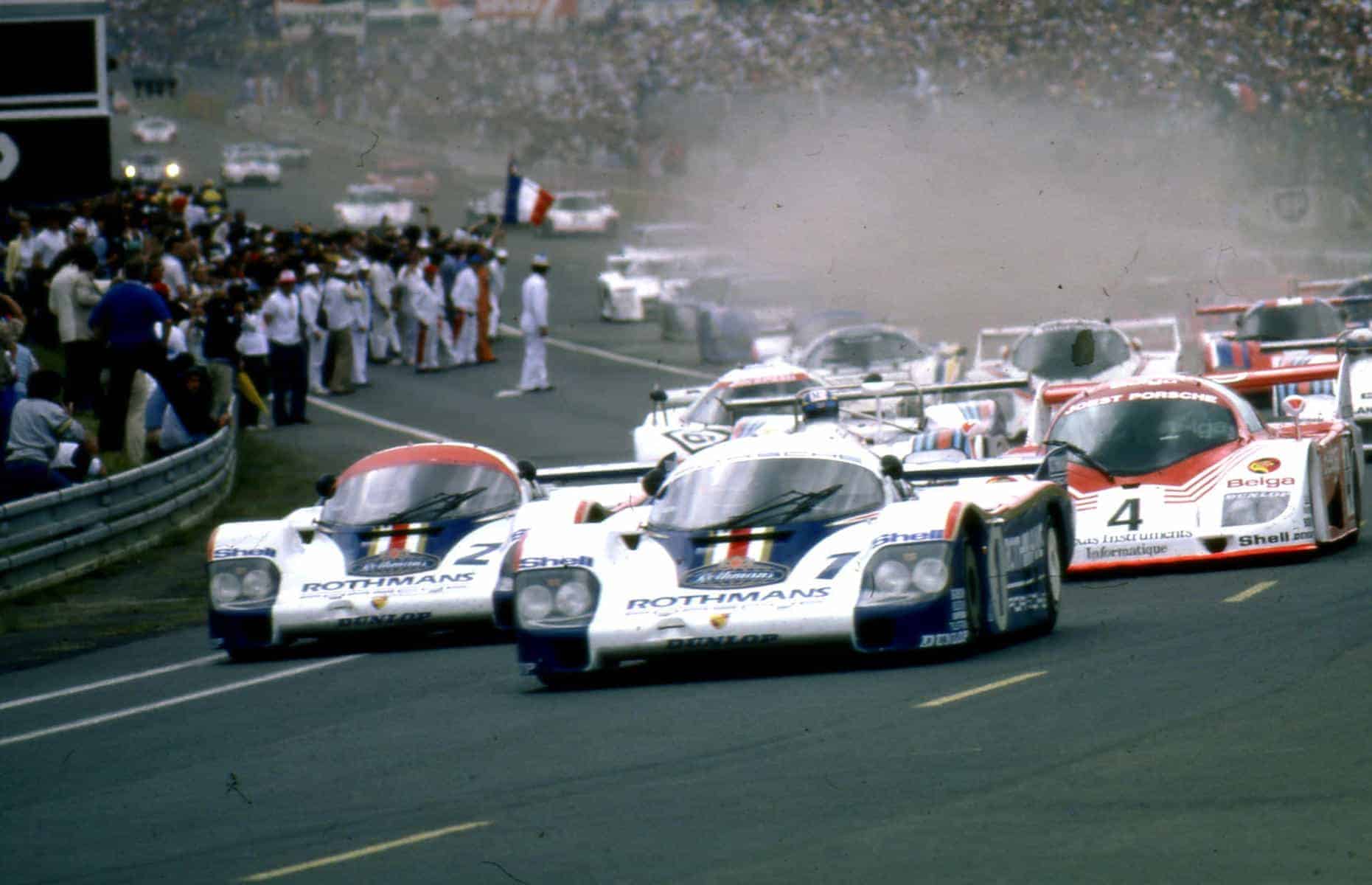
Group C arrived in 1982 and Porsche's answer to it, the 956 — an aluminium monocoque, ground-effect tunnels, the 2.65-litre twin-turbo flat-six from the Indianapolis project, and Norbert Singer's engineering — finished 1-2-3 at Le Mans on its first visit and was not beaten there for six years: Ickx and Bell in 1982, Al Holbert, Haywood and Vern Schuppan in 1983, Reinhold Joest's customer cars in 1984 and 1985, and the longer-nosed 962C of Bell, Hans Stuck and Holbert in 1986 and 1987. Porsche sold the car to anyone who asked, and the World Endurance Championship grids of the mid-1980s were twenty 956s and 962s in Rothmans, Jägermeister, New Man, Kenwood and Shell liveries, racing each other because nothing else could; Lancia's LC2, in McDonough's Fast & Fragile, was quicker and never lasted. Stefan Bellof set the Nürburgring Nordschleife's eternal lap record of 6 min 11.13 sec in a 956 in 1983 and was killed in one at Spa in September 1985. McDonough's Alpha & Omega on a 956 and a 962, Mike Jiggle's long interview with Norbert Singer, Porsche at Le Mans 1982 to 1987, Bob Harmeyer's 1982 Le Mans, the drivers' own choices of the 956 and 962 as their greatest cars, Derek Bell interviewed and profiled, Jacky Ickx, Hans Stuck, Jochen Mass and Bob Wollek are the archive's; the Spice SE87L in Dom Miliano's Spice of Life is the C2 class that ran underneath.
IMSA GTP, 1981 to 1993
IMSA wrote its own prototype rules a year before the FIA, without the fuel limit, and the result was a decade of racing the Europeans came to envy. Brian Redman won the first GTP title in 1981 in the Lola T600; Al Holbert's March 83G and Randy Lanier's 84G, in McDonough's African Assault, took the next two; then the Porsche 962, built for IMSA with a single turbo and the front wheels moved forward to meet the pedal-box rule, won Al Holbert the championships of 1985 and 1986 and Chip Robinson a third in Holbert's car, and the Daytona 24 Hours three years running, with Holbert's own team, Jim Busby's, Bruce Leven's, Rob Dyson's and Preston Henn's cars making up the field. Bob Tullius's Group 44 Jaguar XJR-5, the first Jaguar at Le Mans since 1963, is John Zimmermann's The Pride of Jaguar and the archive's interview with Tullius; BMW's turbocharged 1986 GTP, in Jiggle's Unfinished Business, won once and was withdrawn. From 1988 the Japanese took over: Electramotive's Nissan GTP ZX-T, in John Starkey's Bullet Train, won Geoff Brabham four titles in a row, and Dan Gurney's All American Racers Toyota Eagle MkIII, in Casey Annis's Unstoppable Force, won seventeen races in a row and the championships of 1992 and 1993 for Juan Manuel Fangio II, after which IMSA, with no one left to race, abolished GTP. TWR's Jaguar XJR-10 and XJR-12 and the Sauber-Mercedes never quite cracked America, but Jaguar won Daytona in 1988 and 1990. The archive has Jim Busby, Hal Crocker's Peter Gregg, IMSA on a Budget on the support series, Glen Smale's IMSA 1990–1999, the 1983 Sebring won by a privateer 935 and Bob Harmeyer's celebration of the Daytona 24 Hours.
1988 to 1993: Jaguar, Sauber-Mercedes, Mazda and Peugeot
Tom Walkinshaw's TWR Jaguars broke the Porsche run: the XJR-8 won the 1987 championship, the XJR-9 won Le Mans in 1988 with Jan Lammers, Johnny Dumfries and Andy Wallace in front of the largest British crowd the race had seen, and the XJR-12 won again in 1990 with John Nielsen, Price Cobb and Martin Brundle; McDonough's A Cut Above is the two cars, the archive has the XJR-9 LM, the XJR-14 and Jiggle's interview with Walkinshaw. Between the Jaguars came the Silver Arrows: Peter Sauber's Mercedes-engined C9s, which went to Le Mans in 1989, were timed at nearly 250 mph on the Mulsanne, finished first and second with Jochen Mass, Manuel Reuter and Stanley Dickens, and won the championships of 1989 and 1990 with a junior team of Michael Schumacher, Karl Wendlinger and Heinz-Harald Frentzen in the C11; the 1989 Le Mans recap is in the archive. In 1991, the first year of the 3.5-litre "Formula One engine" rules, the old turbo cars were allowed in under a weight penalty and Mazda's four-rotor 787B, the only rotary-engined car ever to win Le Mans, beat the Jaguars and the Sauber-Mercedes with Volker Weidler, Johnny Herbert and Bertrand Gachot; Mazda's Road to Le Mans Victory tells it, and the car's return to Goodwood the afterlife. Peugeot's 905, Jean Todt's V10 built for the new formula, won Le Mans in 1992 and 1993 and the last World Sportscar Championship; the archive's Peugeot and Le Mans history and Philippe Alliot's choice of the 905 cover it. Then there was nothing left: the 3.5-litre rules had cost more than the manufacturers would pay, the championship was cancelled for 1993, and sports-car racing started again from the GT cars.
Group B: The Rally Supercars, 1980 to 1986
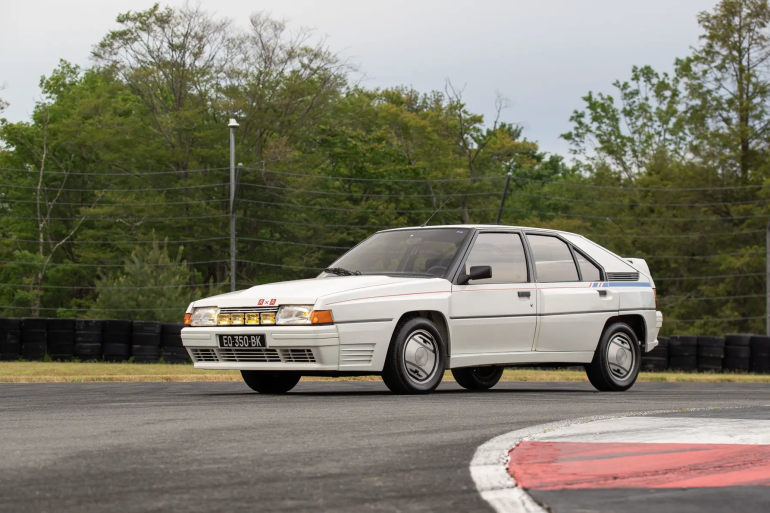
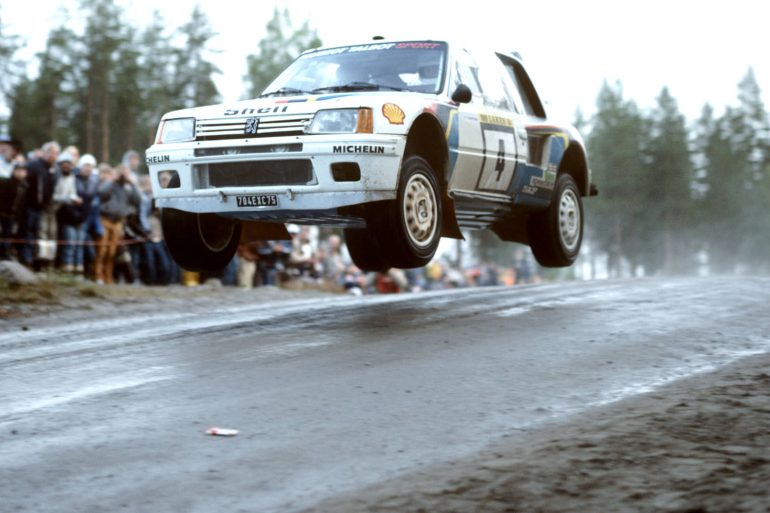
Audi's Quattro of 1980 put four-wheel drive and a turbocharged five-cylinder engine into rallying and made everything else obsolete within two seasons; Robert Newman's No Laughing Matter is the story of the people who laughed, and Ed McDonough's Beast of Burden is the short-wheelbase Sport Quattro E2 of 1985, 500 horsepower and more, with wings front and rear. The FIA's Group B rules of 1982 asked for only 200 cars and allowed almost anything, and in four years they produced the Lancia 037, the last two-wheel-drive car to win the championship, in 1983, in Peter Collins's Dealt an Ace; the mid-engined Peugeot 205 T16, which won the titles of 1985 and 1986 for Timo Salonen and Juha Kankkunen, profiled here; the supercharged-and-turbocharged Lancia Delta S4; Ford's RS200, MG's Metro 6R4, Citroën's too-late BX 4TC and Audi's S1. The cars were faster than the roads and the crowds could bear: three spectators died in Portugal in March 1986, Henri Toivonen and Sergio Cresto were killed in the S4 in Corsica in May, and Group B was banned at the end of the season, its successor Group A giving Lancia's Delta Integrale six championships in a row. The archive's rally material runs from Newman's Power & Pandemonium and the two-part Chargers history of world rallying to the Stratos that won three titles before the Quattro, the 037 Stradale, the Renault 5 Turbo, the Porsche 959 that won the Paris-Dakar in 1986 and 110 years of the Monte Carlo Rally.
Touring Cars: Group 2, Group A, Bathurst and the Trans-Am
Underneath the prototypes the saloons raced harder than ever. BMW's 3.0 CSL "Batmobile" won six European Touring Car Championships in the 1970s; Zakspeed's Capri turbos fought the 935s in the German DRM; Tom Walkinshaw's Rover SD1s, in Jiggle's Trail Blazer, fought the BMW 635s for the 1983 ETCC and were thrown out of the results on a technicality; and Group A, from 1982, gave the world the BMW M3 E30, in Jiggle's Simply the Best, which won the only World Touring Car Championship of 1987, the Ford Sierra RS500 and the Nissan Skyline GT-R. In Australia the Holden Torana L34 of Bob Morris and John Fitzpatrick won Bathurst in 1976, in Patrick Quinn's Bathurst Flyer, and Peter Brock, interviewed here, won it nine times; The Mount is the circuit's history. In America the Trans-Am became a tube-frame silhouette series and the IROC Camaros, in Jiggle's Rugged Equalizer, put the best drivers in the world in identical cars; the Detroit Muscle and Trans-Am page has the earlier years.
The Races and the Circuits
Le Mans was the centre of the era, as always: the Le Mans page has every winner, and the archive's Le Mans Classic coverage shows the cars back on the Sarthe. Daytona and Sebring were the American classics, with the Porsche 962 winning Daytona three years running and the Jaguars, Nissans and Toyotas after; Spa, the Nürburgring (the last 1000 Kilometres on the Nordschleife was in 1983, Bellof's year), Monza, Silverstone, Brands Hatch, Fuji and Suzuka were the championship; Riverside, Road Atlanta, Laguna Seca, Mid-Ohio, Watkins Glen, Lime Rock, Mosport and the street circuits of Miami, Columbus and Del Mar were IMSA's. The rally stages — the Col de Turini, the Safari, the 1000 Lakes jumps, the Corsican mountain roads — were the other half of the era's geography. Roger Dixon's Montjuich and Art Evans's Palm Springs 1985 are the archive's circuit pieces from the years.
The Racing
Le Mans, Daytona, Sebring, Group C, GTP, Group B and the touring-car wars, newest first.
The Cars
The cars of the era are the most raced historic cars of the moment, and the archive follows them: the Porsche 935, 936, 956 and 962 and 959; the Jaguar XJR-9 and XJR-12 and XJR-15; the Toyota Eagle MkIII, Nissan GTP ZX-T, March 84G, BMW GTP and Lancia LC2; the Audi Quattro E2, Delta S4, 205 T16 and Stratos; the BMW M1, 3.0 CSL and M3 E30; and the Ferrari 512 BB LM. Every car named here links to its tag archive in the table and cards below; the model pages come next.
The Cars of the Era
Each links to every story on the site about that car; the model pages come next.
1976–1981Porsche 935The 911 Turbo as a silhouette racer: 590 to 750 horsepower, four Makes titles, Le Mans 1979 and six Daytonas.1982–1985Porsche 956Norbert Singer's ground-effect Group C car: Le Mans four years running and Bellof's 6:11 Nordschleife lap.1984–1994Porsche 962The 956 lengthened for IMSA and then Group C; about 90 factory cars, three IMSA titles and Le Mans in 1986, 1987 and 1994.1986–1988Porsche 959The Group B homologation car that never rallied in Group B, won the Paris-Dakar instead and became the first 200-mph Porsche road car.1984–1986Audi Sport Quattro S1The short-wheelbase Quattro with 500-plus horsepower and wings at both ends: the loudest car Group B produced.1984–1986Peugeot 205 T16Jean Todt's mid-engined, four-wheel-drive hatchback that won the 1985 and 1986 championships and then the Paris-Dakar.1985–1986Lancia Delta S4Supercharged and turbocharged, 0–60 in 2.5 seconds on gravel; won on its debut and died with Toivonen in Corsica.1982–1984Lancia 037Abarth's supercharged, rear-drive Group B car and the last two-wheel-drive world champion, 1983.1978–1981BMW M1Giugiaro's mid-engined BMW, built for Group 5 and raced in the Procar series before the Grands Prix of 1979 and 1980.
Every Car Story From the Era
Single-car stories: 935s, 956s and 962s, Jaguars, Group B rally cars, M1s and the IMSA prototypes.
The People
The drivers were the last generation to race sports cars as a career rather than a stepping stone: Jacky Ickx, six Le Mans wins, Derek Bell, five, Hurley Haywood, three and five Daytonas, Al Holbert, 49 IMSA wins, Hans Stuck, Jochen Mass, Bob Wollek, Brian Redman, John Fitzpatrick, Jim Busby, Bob Tullius, Peter Gregg, David Hobbs, Marc Surer, Philippe Alliot, Peter Brock and Janet Guthrie, with Peter Collins's forty years of European women in motorsport for Michèle Mouton and the rest. The engineers and entrants: Norbert Singer of Porsche, Tom Walkinshaw, Erwin Kremer, Reinhold Joest, Peter Sauber, Dan Gurney of AAR, Bruce Canepa, who keeps the 962s running, and Hans Mezger, whose turbo engines powered most of it.
The People
Drivers, engineers, entrants and team owners of the turbo years.
Records and Numbers
Porsche won Le Mans seven years running, 1981 to 1987, and the 956/962 family won it six times, Daytona five times and Sebring four times; about 28 956s and 90 962s were built by the factory, and more than that again by customers rebuilding them. Stefan Bellof's 6 min 11.13 sec lap of the Nordschleife in 1983 stood as the outright record for thirty-five years. Roger Dorchy's WM P88 Peugeot was timed at 405 km/h, 252 mph, on the Mulsanne in 1988, the fastest speed ever recorded at Le Mans, and the chicanes went in two years later. The Toyota Eagle MkIII won seventeen IMSA races in succession in 1992–93; Al Holbert's 49 IMSA wins are still the record; Geoff Brabham won four GTP titles in a row for Nissan. Audi's Sport Quattro S1 E2 was quoted at 500 horsepower and ran at more in practice; the Delta S4 reached 60 mph in about 2.5 seconds on gravel. The Mazda 787B is the only car without pistons to win Le Mans, and the only Japanese winner until 2018. Group B lasted five seasons and was banned after a single spring; Group C lasted eleven and died of an engine rule; GTP lasted thirteen and died of success.
Questions People Ask
Short answers, with the long ones above.
What was Group C?
The FIA's sports-prototype formula from 1982 to 1992: closed two-seaters with a minimum weight and a fuel allowance per race rather than an engine limit, which produced the Porsche 956 and 962, the Jaguar XJRs, the Sauber-Mercedes C9 and the Mazda 787B. It was killed by a switch to 3.5-litre Formula One-type engines in 1991–92.
What was Group B?
The World Rally Championship's top class from 1982 to 1986, requiring only 200 production examples and placing no limit on power or technology. It produced the Audi Quattro S1, Peugeot 205 T16, Lancia Delta S4, Ford RS200 and MG Metro 6R4, and was banned after the deaths of 1986.
What was IMSA GTP?
The International Motor Sports Association's prototype class from 1981 to 1993, run without Group C's fuel limit. Porsche 962s, Jaguar XJRs, Nissan GTP ZX-Ts and Toyota Eagles won it, at Daytona, Sebring and a dozen American circuits.
What was a Group 5 silhouette car?
A racing car built under the 1976–81 rules that required only the production car's silhouette — roof, bonnet, doors and glass — to be retained. The Porsche 935, BMW 320 Turbo, Zakspeed Capri and Lancia Beta Montecarlo were the best known.
Who won Le Mans most in the 1980s?
Porsche, every year from 1981 to 1987, with the 936, 956 and 962. Jacky Ickx won in 1981 and 1982, Derek Bell in 1981, 1982, 1986 and 1987, Al Holbert in 1983, 1986 and 1987.
Why did Group C end?
The FIA replaced the fuel-allowance formula with 3.5-litre normally aspirated engines from 1991, hoping to align sports cars with Formula One. The costs drove out the privateers and most manufacturers within two seasons, and the World Sportscar Championship was cancelled after 1992.
What was the fastest car of the era?
On the Mulsanne, the WM P88 Peugeot at 405 km/h (252 mph) in 1988, and the Sauber-Mercedes C9 and Nissan R90CK at about 400 km/h in 1989–90. On a lap, Stefan Bellof's Porsche 956 at the Nürburgring in 1983.
Was the Porsche 962 the most successful racing car ever?
By races won, it has a claim: six Le Mans wins and five at Daytona for the 956/962 family, three IMSA titles, five World Championships, and victories from 1982 to 1994 in private hands. About 120 were built between the factory and its customers.
Every Story From the Era
The whole thread, newest first.