
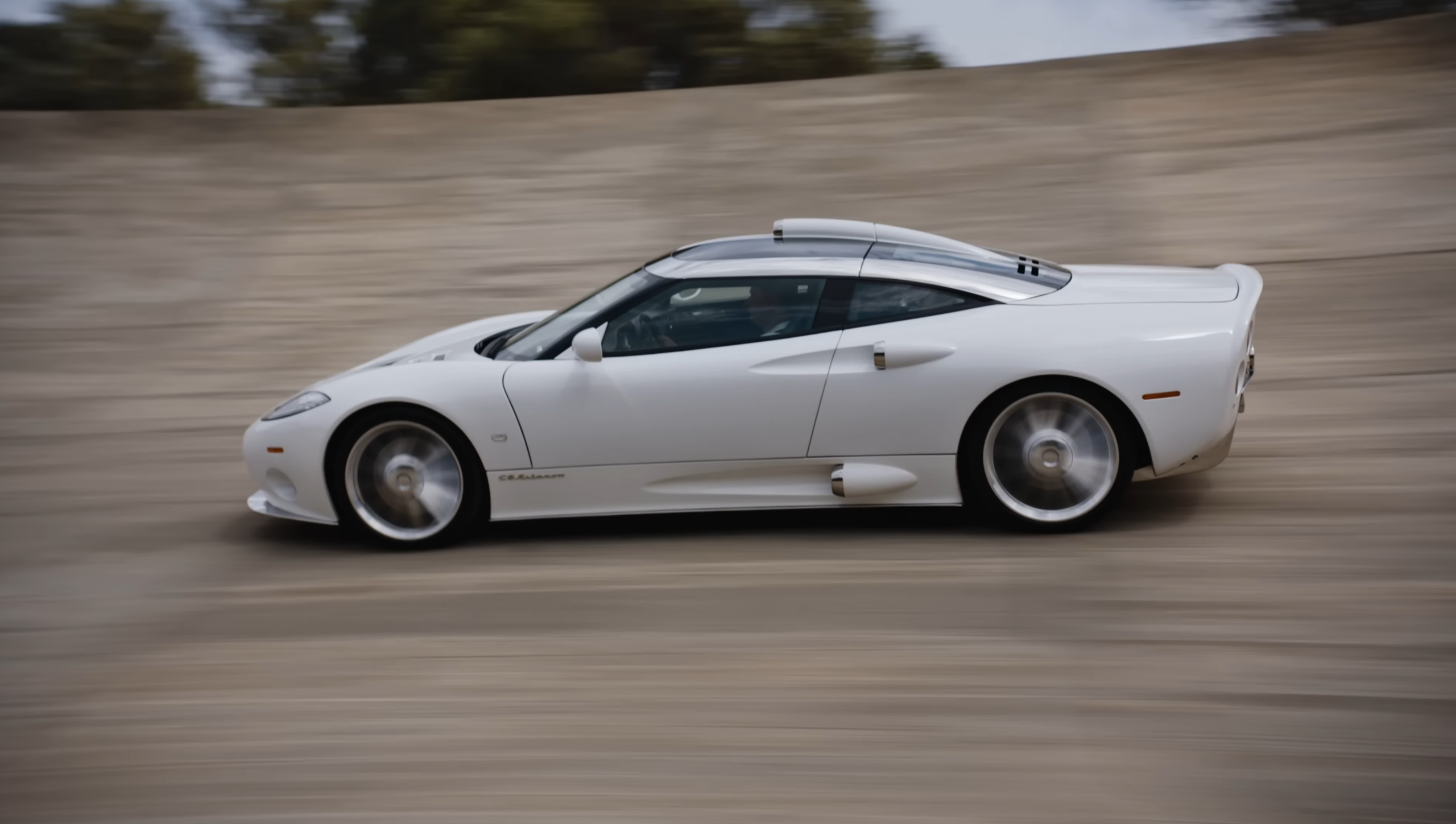

Most enthusiasts can name the great surviving banked circuits. Brooklands, Monza’s old oval, Montlhéry. Far fewer have heard of the one near Sitges, on the Catalan coast south of Barcelona, even though it predates almost everything else and arguably out-crazies all of them. The Autòdrom de Sitges-Terramar held exactly one Grand Prix, in 1923, and has spent the hundred years since as a ruin. This year it appeared on camera again, hosting the only white Spyker C8 Aileron ever built, in the debut English-language film from a new collector-focused media project called WBT Garage.
One Hundred Years of Almost Nothing
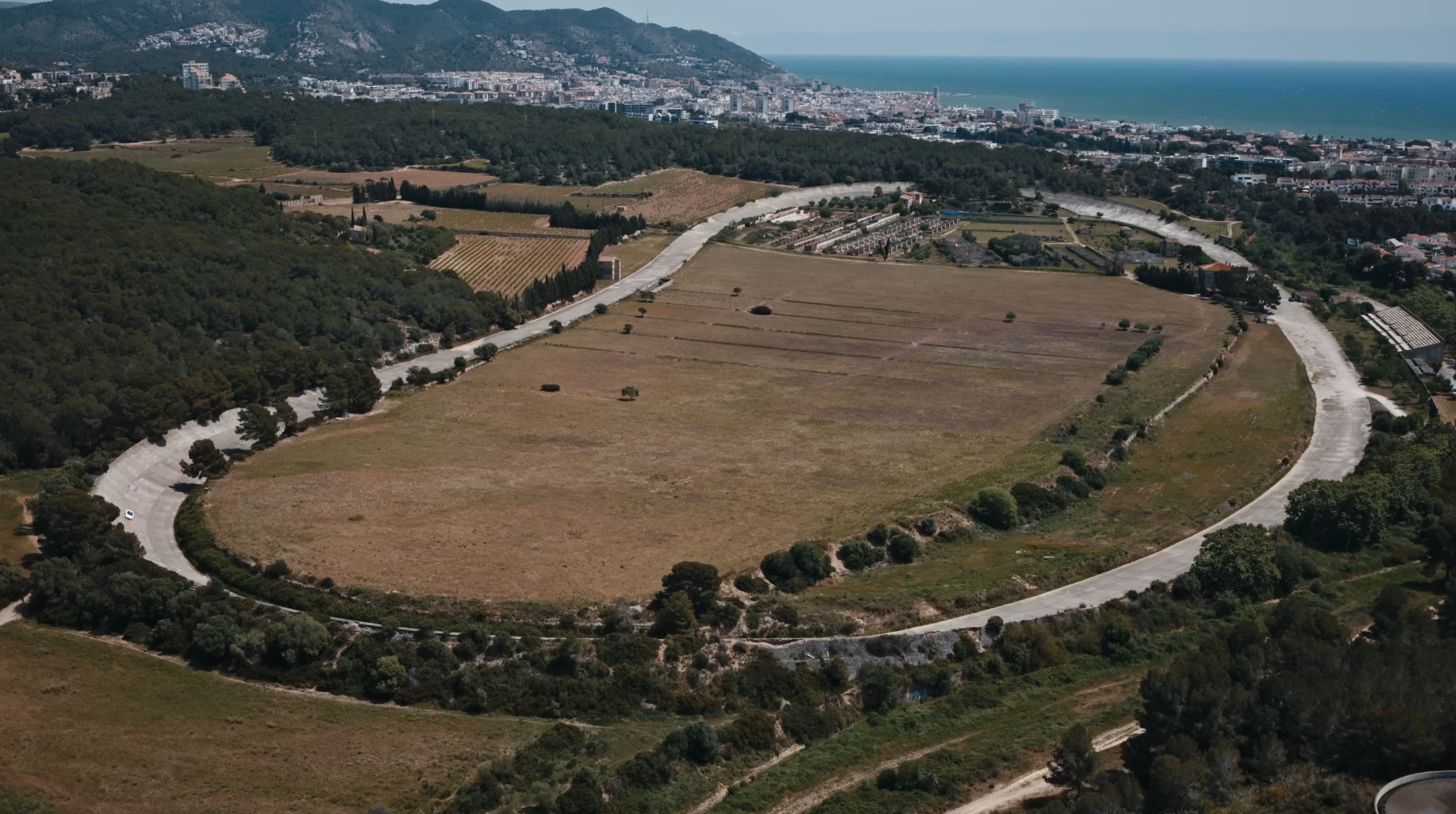
Terramar was built in roughly 300 days and opened in October 1923, at a moment when Europe had just two other purpose-built tracks, Brooklands and Monza. The layout is a two-kilometer concrete oval with corners banked to 66 degrees. Numbers like that are difficult to picture until you compare them with something familiar, so here: Daytona’s banking is about 31 degrees. Terramar more than doubles it. Cars didn’t so much corner there as run along a curved wall, with rock on the inside and a drop off the top edge.
The inaugural Spanish Grand Prix was held that same year and produced a genuinely good race, Albert Divo’s Sunbeam beating Louis Zborowski’s American Miller after a long fight. It was also, more or less, the end. The organizers couldn’t pay the prize money, the international governing bodies lost patience, and serious competition never came back. Minor events trickled on into the 1950s, then nothing. In the decades since, the property has done time as farmland, the banking has cracked and sprouted weeds, and the place earned its local nickname, the ghost of motorsport.
It never quite disappeared though. The Grand Tour filmed an episode there. In 2012 Red Bull cleared the overgrowth so Carlos Sainz could lap an Audi R8 LMS, breaking a track record that had stood since 1923. Restoration plans surface every few years and stall. The host of the WBT Garage film offers his own blunt prediction: in ten years, maybe less, nobody will be driving on it at all.
The Oldest Name Nobody Remembers
Which makes the choice of car oddly fitting, because Spyker has spent most of its existence being forgotten too. The Spyker brothers, Jacobus and Hendrik-Jan, started as carriage builders in the Netherlands in the 1880s. Their 1898 Golden Coach, finished in gold leaf, served the Dutch royal household for over a century. By the time Ford Motor Company was founded, they were already building automobiles, and in 1903 they produced the Spyker 60 horsepower racer, an astonishing thing for its day with a six-cylinder engine and four-wheel drive.
The First World War pushed the company into aircraft, and aviation became the thread that ran through everything afterward, including the badge. Peace brought no recovery. The original firm closed in the 1920s, and the name went quiet for seven decades.
Victor Muller and engineer Maarten de Bruijn resurrected it in the late 1990s with hand-built aluminum sports cars full of aircraft references. The revival was short and eventful: multiple Le Mans entries, a Formula 1 team in 2006 and 2007, then the acquisition of Saab in 2010, which proved far too heavy a lift. By around 2015 Spyker had stopped producing cars again.
The White Aileron
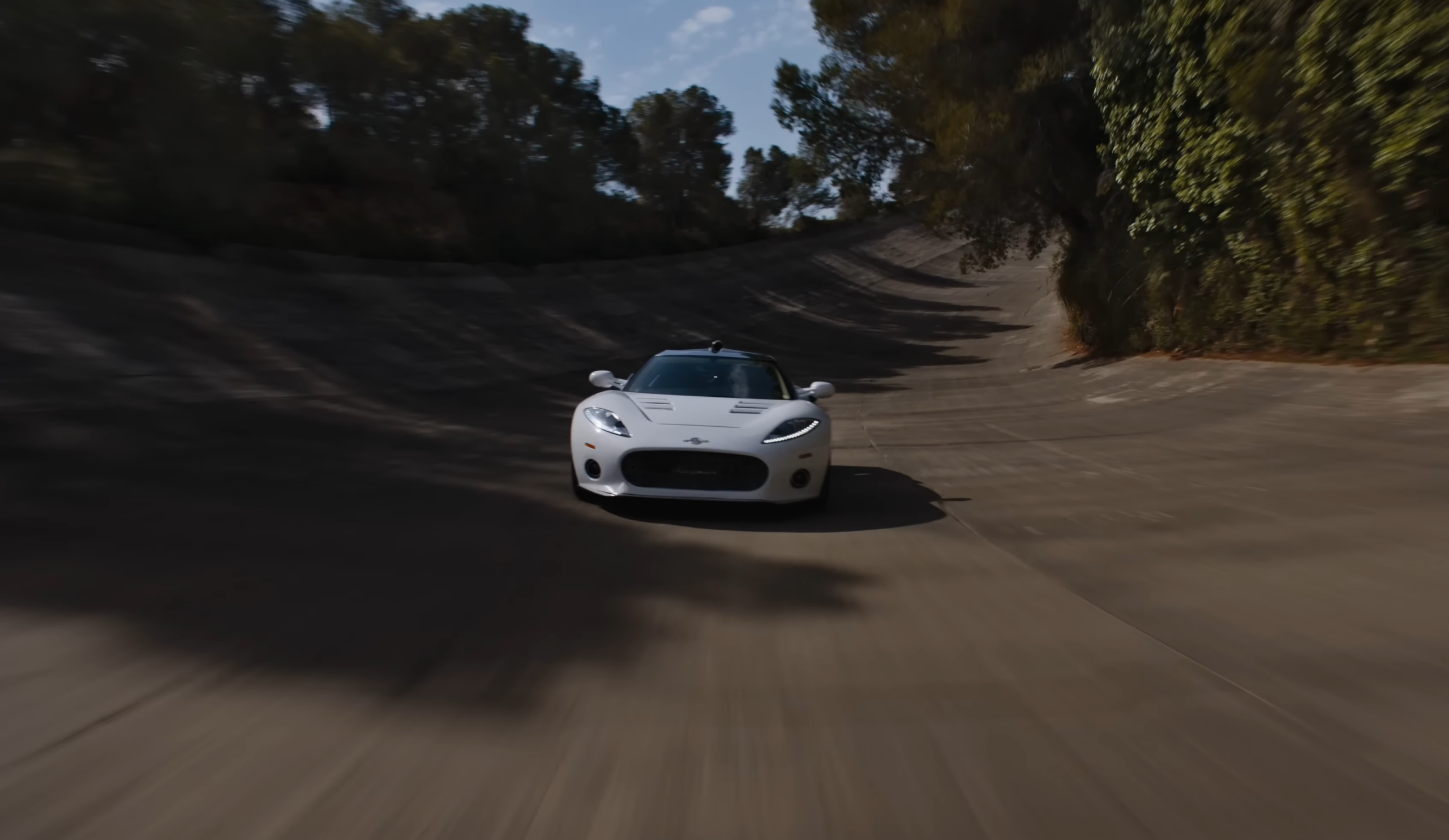
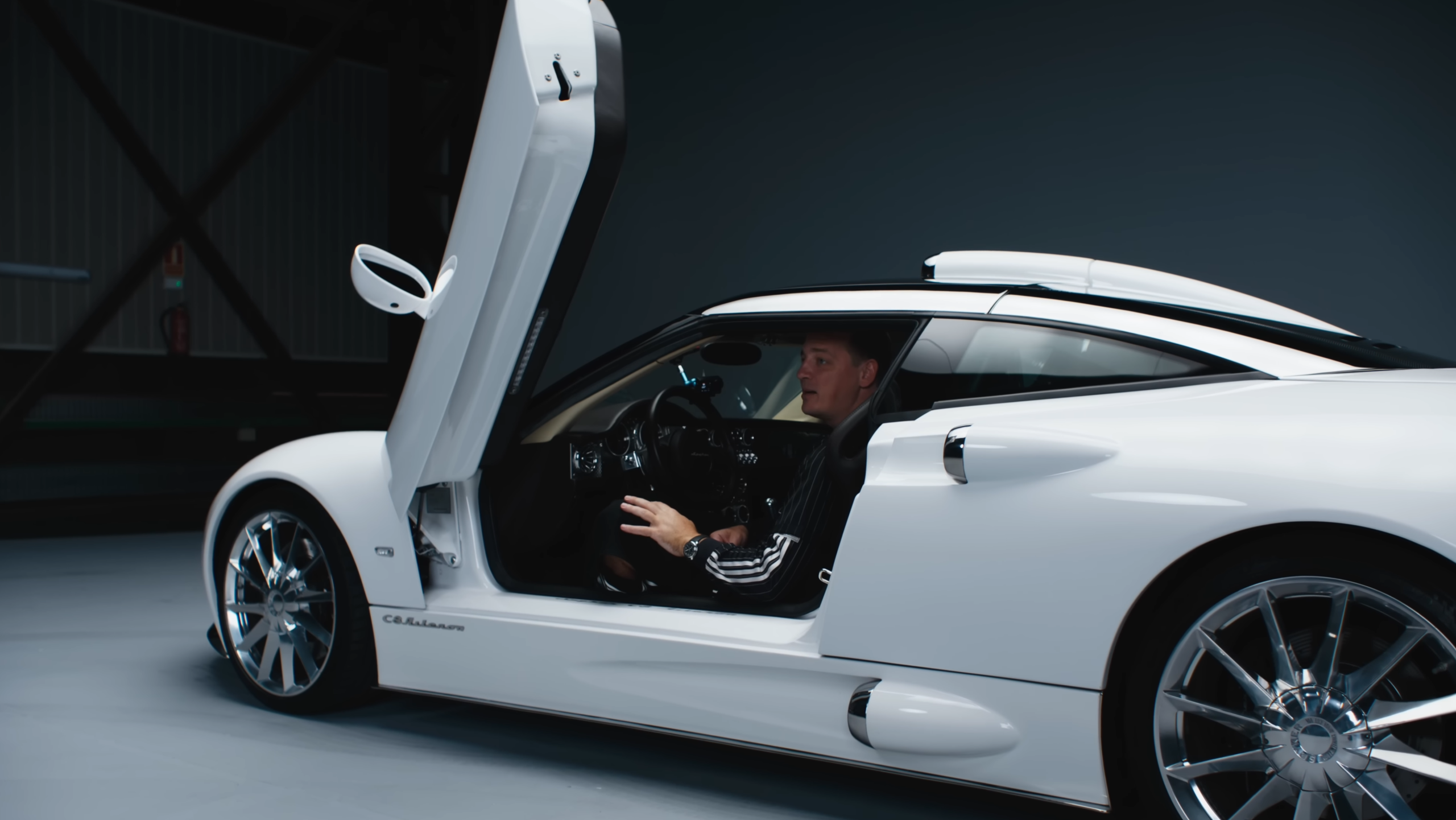
The C8 Aileron of 2009 is widely considered the best car of the revival years. The engineering was conservative where it counted, Audi’s 4.2-liter V8 and proven running gear, with the budget spent on hand-formed aluminum bodywork and a cabin closer to a vintage cockpit than anything contemporary. Toggle switches, an armed starter cover, paddle shifters shaped like small propellers. Louis Vuitton, which had supplied Spyker fitted luggage on and off since the carriage era, made sets for the modern cars too.
Production was tiny across the board, and per the film, just one Aileron was ever finished in white. That car belongs to the film’s host, which I’d argue is the most interesting fact in the whole production. This isn’t a borrowed press unit. He bought a 1:18 scale model of an Aileron years before he found the real one, kept it on a shelf, and anyone who has spent time around collectors knows that story usually only ends one way.
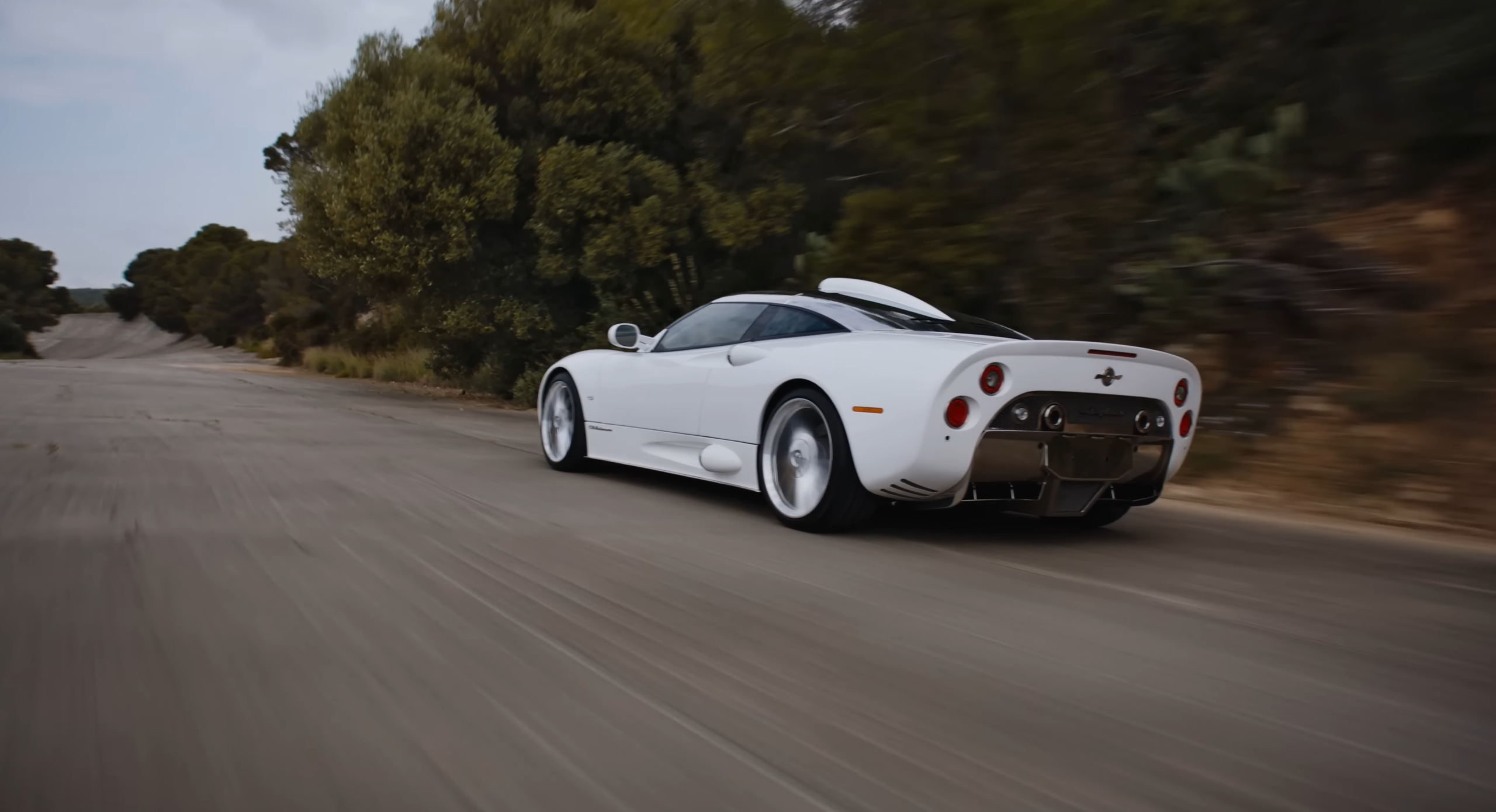
His observations carry the credibility of ownership. The leather still smells new after 16 years. The car rides Terramar’s broken concrete without complaint despite having no adaptive suspension, no carbon-ceramic brakes and very little electronic intervention. He takes it up the 66-degree banking anyway. One of one, driven like it owes him money.
Documenting What’s Disappearing

WBT Garage, the project behind the film, is the international expansion of an established Ukrainian automotive channel with millions of views, founded by entrepreneur and collector Volodymyr Nosov. The English-language effort is aimed at American audiences and built around documentary films rather than reviews: rare cars, private collections, analog engineering, all accessed through the collector world instead of manufacturer press fleets.
The Terramar film works as a statement of intent. A track that may be undriveable within a decade, a car from a manufacturer that has died twice, both recorded properly while recording them is still possible. For readers here, that preservation instinct will sound familiar. It’s the same one behind every concours restoration and every archive of period race photography.
A Postscript From the Present
There’s a twist the filmmakers couldn’t have fully planned. Spyker is attempting a third act right now. A new C8 Preliator with a twin-turbocharged V8 around 800 horsepower, and pointedly no electrification, is scheduled to debut at The Quail during Monterey Car Week this August. Past comebacks suggest caution, but the timing turns the film into something like a prologue. The last footage of the old Spyker era, shot on the first track Spain ever built, just before whatever comes next.