

The future never ends: highlights from 140 years of Mercedes-Benz history
- Innovation as a principle: progress at Mercedes-Benz is driven by consistent forward thinking
- High-tech becomes everyday reality: future technologies are systematically developed, tested and brought into series production
- A brand with charisma: quality, design and engineering expertise shape its unmistakable identity
- Heritage as a driving force: icons, expertise, community and a culture of innovation are highly valued
1886 and Beyond
Since Carl Benz registered his patent for the motor car (Motorwagen) in 1886 and Gottlieb Daimler built his motorized carriage (Motorkutsche) shortly afterwards, the history of Mercedes-Benz has known only one direction for 140 years: forward. From Bertha Benz’s legendary pioneering journey to speed records, early milestones in autonomous driving, vision cars and high-tech drive systems: the brand repeatedly demonstrates its unwavering determination to win and how it constantly rethinks the automobile.
In 2026, this DNA comes to the forefront: the 140th anniversary year is defined by the brand’s biggest product launch program to date. It starts with the world premiere of the new S-Class on January 29, 2026. Globally, over the next two years, Mercedes-Benz will launch more than 40 new models that blend tradition with innovation and set new standards across all segments. Every model embodies the brand’s promise: to build the world’s most desirable cars. Today’s Mercedes-Benz innovations carry heritage into the future – as a brand that understands progress programmatically, focuses on the needs of people and society, and continually redefines individual mobility.
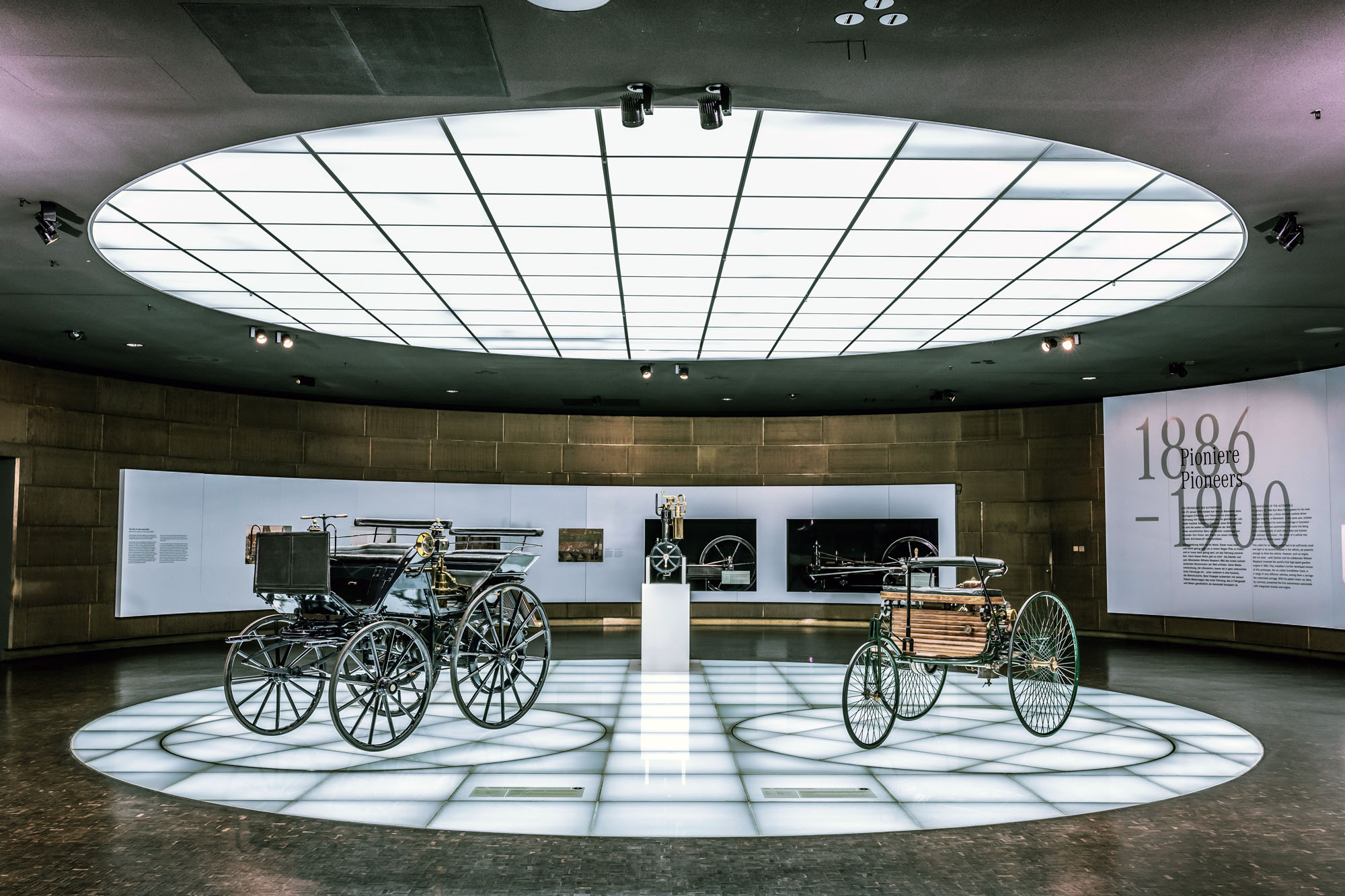
Two inventors, one goal – the automobile
On January 29, 1886, Carl Benz applied for a patent for his motor car. Shortly afterwards, Gottlieb Daimler built his motor carriage. Together, the two vehicles formed the first link of an unbroken chain of innovation. Since then, Mercedes-Benz has continued to reinvent the automobile.
Influencer with a hat pin: with courage and foresight, Bertha Benz embarked on the world’s first long-distance automobile journey in 1888. She drove from Mannheim to Pforzheim, demonstrating the potential of the automobile. Today, she would most likely be a mobility influencer. Bertha’s adventure also meant overcoming obstacles along the way. Some of them were small – yet carried a major impact: she cleaned a blocked carburetor on the road with her hatpin.
Rethinking the automobile
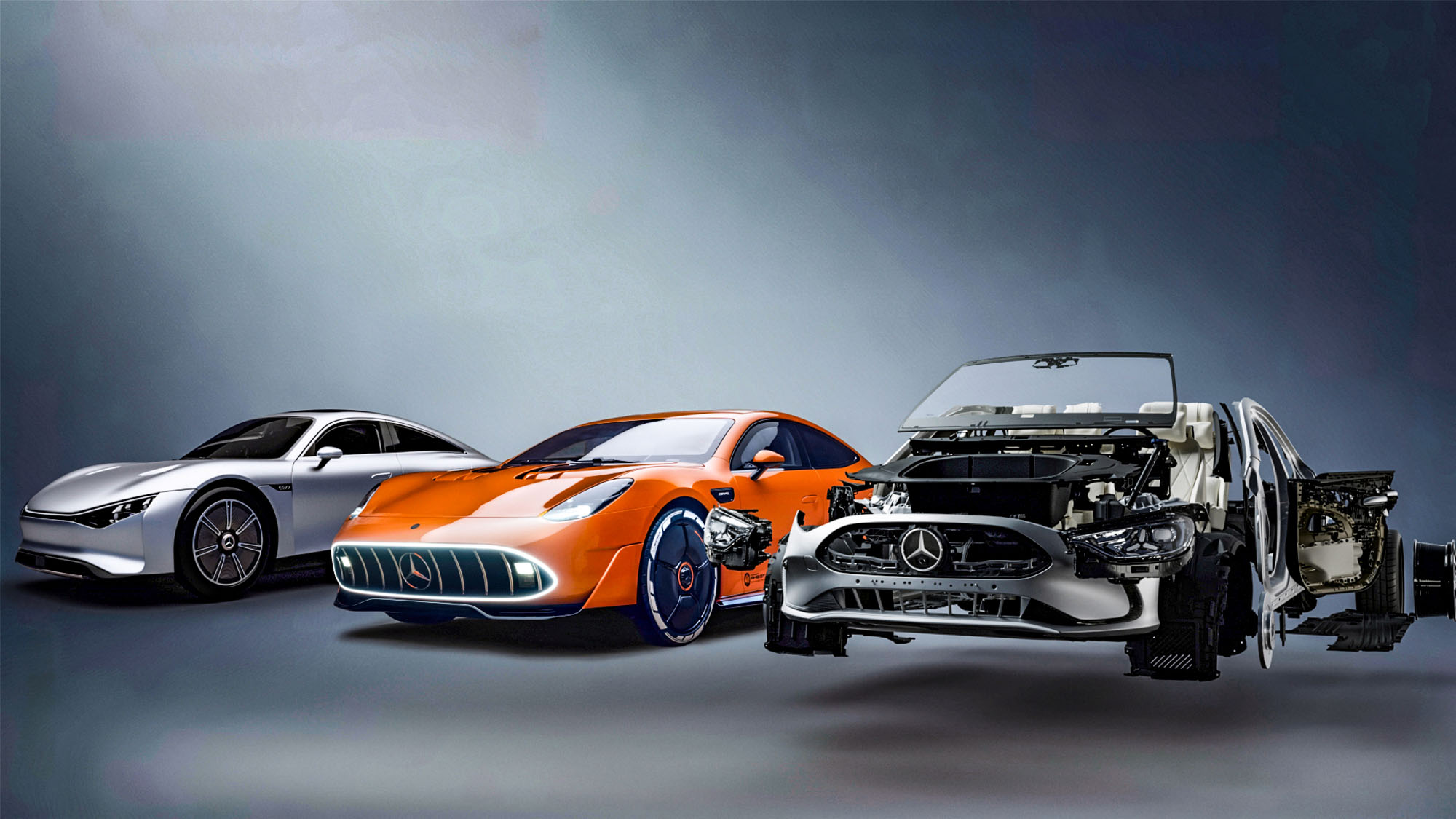
Wilhelm Maybach designed the Mercedes 35 hp in 1900. The vehicle was so technically different from the structural principle of a horse-drawn carriage that it ushered in a new era. This was reflected in its name: the 35 hp was the first Mercedes. Today, automobiles like the Mercedes-Benz VISION EQXX and CONCEPT AMG GT XX stand for the courage to embrace new concepts. The latest successive example: the new Mercedes-Benz CLA – the most intelligent and versatile Mercedes-Benz model of all time. The experts on the “European Car of the Year” jury voted it “Car of the Year 2026”.
Electric evolution
The success of current Mercedes-Benz vehicles with electric drive systems, such as the new fully electric GLC 400 4MATIC with EQ technology, is based on a strong track record. In 1906 following successful trials with hybrid and electric drives, the Austrian Daimler-Motoren-Gesellschaft presented the Mercedes-Électrique with wheel hub motors. It was designed by Ferdinand Porsche, then Technical Director of the Austrian DMG, based on the Lohner-Porsche system. The development of electric vehicles at Mercedes-Benz gained momentum in the 1970s in particular, after the company had established its own research department for alternative drive systems. A large number of test vehicles with electric drives and different battery concepts, fuel cell technology and hybrid drives were developed here. Highlights include a field trial on the island of Rügen in the early 1990s with battery-electric sedans (W 201) and vans (MB 100), and, from 1994, the NECAR series (“New Electric Car”) with fuel cell technology. In the new millennium, the battery-electric SLS AMG E-Cell from 2010 was a milestone. Pushing electric boundaries: Development continues apace. In 2022, the Mercedes-Benz VISION EQXX set a new record with a long-distance drive of 747 miles from Stuttgart to Silverstone on a single battery charge. Key technologies from the VISION EQXX are being brought into series production in the new, fully electric Mercedes-Benz CLA. The current state of the art has been impressively demonstrated in August 2025 by the CONCEPT AMG GT XX with its record-breaking drives in Nardò and a Mercedes-Benz EQS with a solid-state battery and a range of 749 miles on a demonstration drive from Stuttgart to Malmö.
A trademark for 100 years
The iconic Mercedes star logo encircled by a laurel wreath is recognized worldwide. It stands for innovative strength and premium quality. The hallmark was created in 1926 when Benz & Cie.from Mannheim merged with Daimler-Motoren-Gesellschaft (DMG) from Stuttgart. The first joint product range premiered at the German Motor Show in Berlin at the end of 1926.
Performance with efficiency
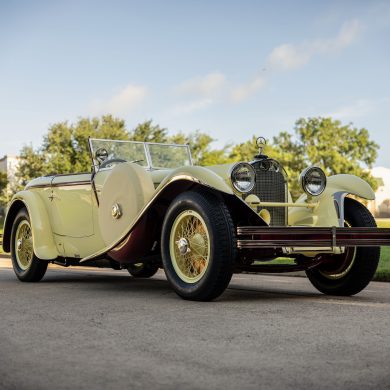
Since the 1920s, the supercharger has enabled Mercedes-Benz cars to extract more power from their engines, making models like the S-series (W 06) world-famous from 1927 onwards. Throughout the brand’s long history of innovation, numerous vehicles have redefined drive technology – for performance and efficiency. A revolutionary drive concept with three axial-flow motors will make its series debut in 2026 in the new electric Mercedes-AMG GT 4-oor Coupe based on the AMG.EA high-performance architecture.
Chancellor comfort
In the early years of the Federal Republic of Germany, there is a Mercedes-Benz called the “Adenauer”. This is the colloquial name given to the Mercedes-Benz 300 (W 186), because Federal Chancellor Konrad Adenauer swore by it as his official car from 1951 onwards. The successor to this first Mercedes-Benz representational sedan after the Second World War was the Type 600 “Grand Mercedes” (W 100). Today, S-Class representational vehicles from Mercedes-Benz and Mercedes-Maybach set benchmarks worldwide.
A dream car with racing technology
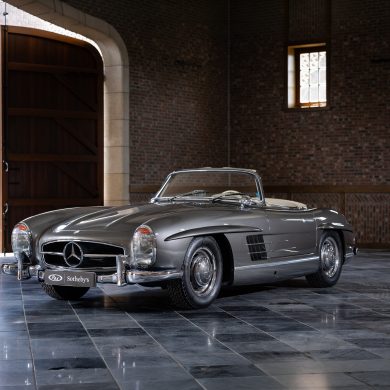
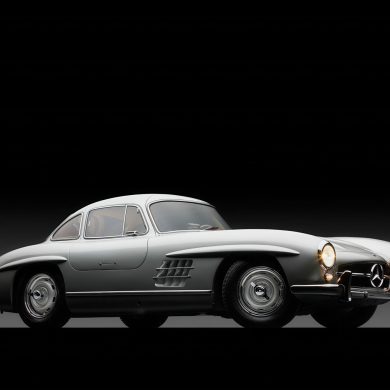
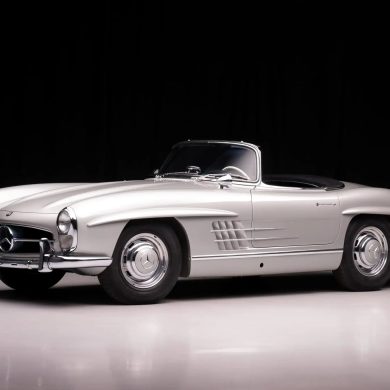
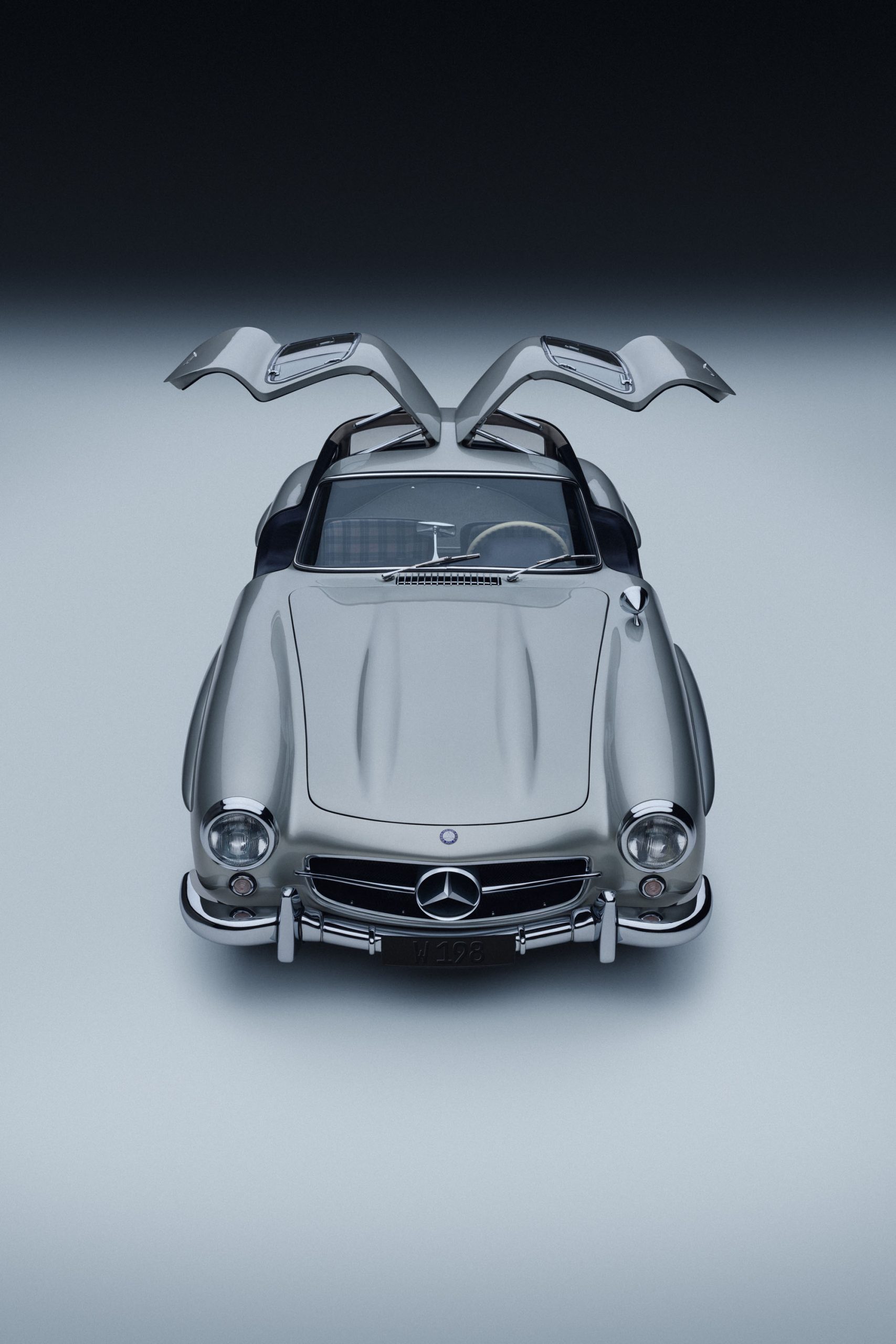
One of the brand’s icons is the 300 SL (W 198) from 1954, with its tubular space frame and the gullwing doors that were a design necessity. It has proved so enduringly captivating that an international jury of experts named it the “Sports Car of the Century” in 1999. The highly desirable coupe is derived from the racing sports car, the W 194 from 1952. The 300 SL serves as a model with its wheelbase: the axles of the racing car and the super sports car are exactly 94.5 inches apart. This gold standard was also followed by the 190 SL (W 121, 1955 to 1963), the “Pagoda” SL (W 113, 1963 to 1971) and the SLK (R 170, 1996 to 2004).
Crash safety
Energy-absorbing crumple zones at the front and rear, with a rigid passenger cell in between define the safety body invented by Béla Barényi. This milestone in passive safety debuted in 1959 with the “Fintail” sedans (W 111). In the same year, Mercedes-Benz began systematic crash testing. Throughout the years, safety has been reinforced as a core value of Mercedes-Benz. Today, active driver assistance systems such as the MB.DRIVE ASSIST can help prevent many accidents.
Fly me to the moon
In 1971, Apollo 14 astronauts took the Mercedes star with them to Earth’s satellite. Today, it is part of the Mercedes-Benz Group Archive collection. The star is the most popular spare part for classic vehicles of the brand: Mercedes-Benz Classic Original Parts stocks more than 40 different versions and sells around 20,000 stars every year.
Safety – with kind regards
Since 1978, the abbreviation ABS has stood for innovative active safety thanks to the Anti-lock Braking System. It made its debut in the S-Class. Mercedes-Benz continues to develop such systems and safety solutions that shape the entire industry. ESP® is another example, the Electronic Stability Program from 1995. MB.DRIVE driver assistance technologies are now carrying this tradition forward. With kind regards from Sindelfingen and Stuttgart.
Prestige in every class
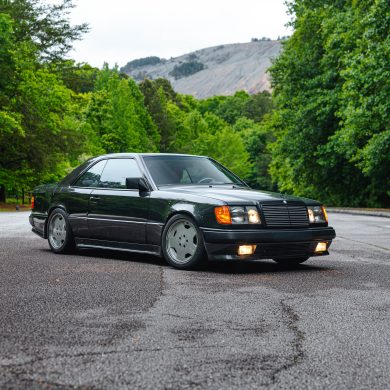
The brand’s dream cars are available across all price segments. One example is the 124 series, produced from 1984 to 1997, available as sedan, wagon, coupe and cabriolet – supplemented by a sedan with long wheelbase and a chassis for special bodies. A total of around 2.7 million vehicles were built. Due to this immense number, 124 models are still a common sight on the roads today – as everyday vehicles or cherished young classics. Ninety years before the 124 series, the Benz Velo marked the beginning of large-scale automotive production. From 1894 onwards, 1,200 vehicles were produced – the first bestseller.
Automotive aesthetics
Mercedes-Benz design fascinates. The list of iconic vehicles is long. One example of the highest level of design excellence in this century is the 2004 CLS, a four-door coupe (C 219). Whether it’s the 500 K/540 K “Autobahnkurier” (W 29, 1930s), the 300 SL “Gullwing” (W 198, 1954), the C 111 (1969), the G-Class (1979) or the S-Class of the 126 series (1979) – and many other vehicles since then – they demonstrate: perfect design shines eternally.
The DNA translated into architecture
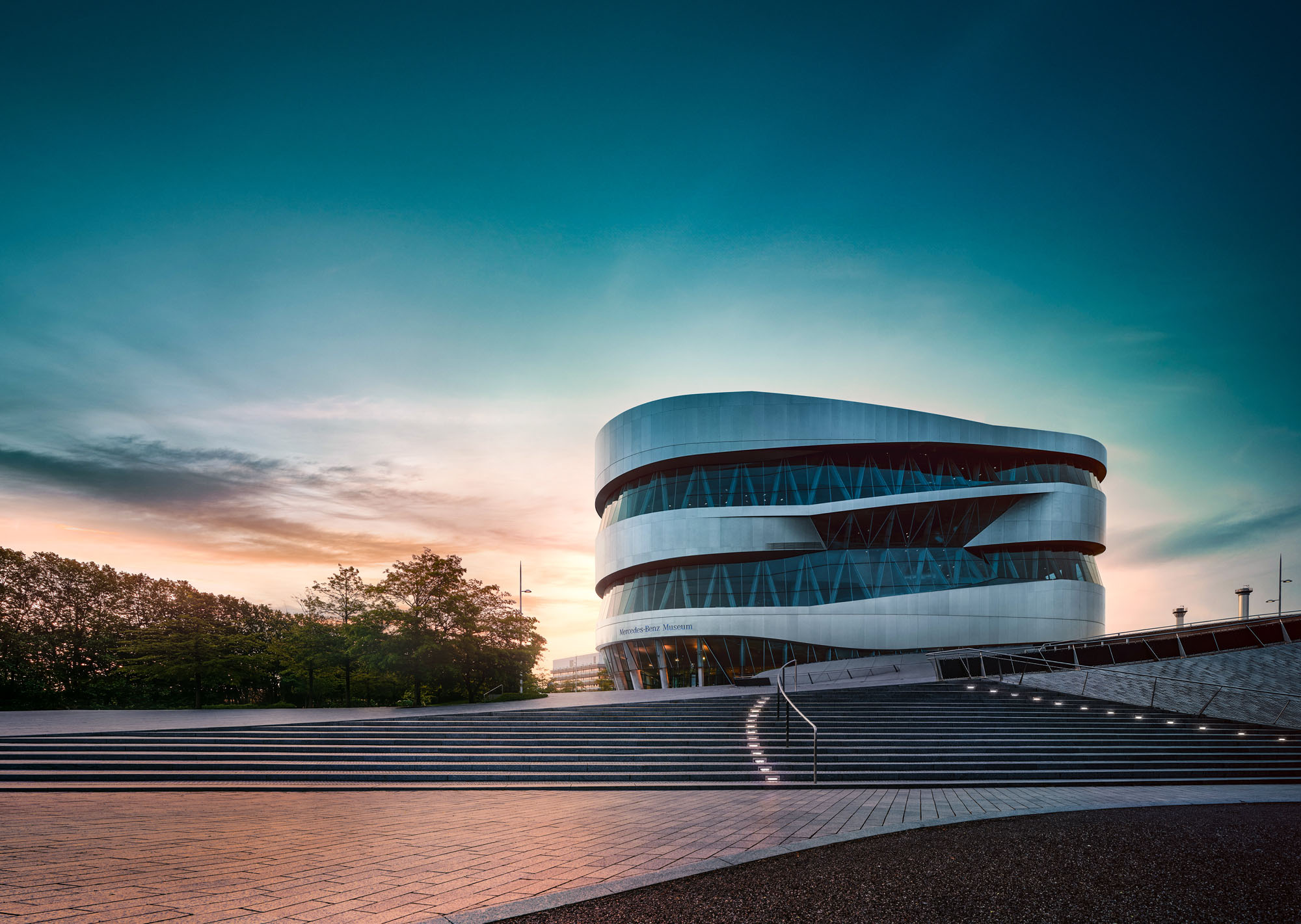
The entire history of the brand can be experienced at the Mercedes-Benz Museum. It opened 20 years ago on May 19, 2006. With more than 14 million visitors since then, it is one of the most popular museums in the automotive world. And like the brand’s cars, it is a masterpiece: the architecture takes up the principle of the double helix, the form of human DNA – because the museum tells the fascinating story of the Mercedes-Benz DNA. And in doing so, projects it into the future.
The Silver Arrows are in the lead
In motorsport, excellence is directly demonstrated by the stopwatch. The prerequisites for victory are the best racing cars, the best drivers and the best teamwork. As in the premier class of motorsport: Formula 1. Mercedes-AMG has been competing here since 2010. Never before has a team won so many titles in such a short span of time: seven Drivers’ Championships and eight Constructors’ Championships since 2014. In 2026, George Russell and Kimi Antonelli will compete for the three-pointed star in the new racing car Mercedes-AMG F1 W17 E. Since the beginning of motorsport in 1894, Mercedes-Benz and its predecessor brands have repeatedly stood on the podium across a wide range of motorsport disciplines. The legendary Silver Arrows celebrated their premiere in 1934 and made a comeback in the 1950s – and have been going strong ever since 2010.
Autonomous into the future
Automotive development is all about looking far ahead. Mercedes-Benz recognized the importance of autonomous driving as early as the 1980s and put its first research vehicles on the road. The S 500 Intelligent Drive marked an important breakthrough in 2013 when it followed in the footsteps of the historic Bertha Benz route. Today, autonomous driving at defined levels has long been a reality in series-production vehicles. The new Mercedes-Benz CLA will set new benchmarks with MB.DRIVE ASSIST PRO – providing SAE Level 2 support even in city traffic.
Perfection through endurance testing
New vehicles must prove themselves before they are delivered to customers as series models. Since 2015, Mercedes-Benz has been testing future models over millions of miles at the Immendingen Test and Technology Center. Around 80 percent of all test drives take place there. In 1928, the young Mercedes-Benz brand went to the then-young Nürburgring for testing, subjecting the new luxury model, the Type 460 (W 08) with an eight-cylinder engine, to the highest levels of stress. For 13 days, it was driven relentlessly around the circuit, covering 12,427 miles in the end – and passing the endurance test. As a mark of distinction, the model was given the additional name “Nürburg”.
Fascinatingly valuable
A brand that has been building automobiles at the highest levels for as long as Mercedes-Benz has is sure to produce true superlatives from time to time. Among the most recent is the Mercedes-AMG ONE, which uses Formula 1 technology and is produced in only 275 units from 2022, priced at 3.3 million euros. Or, in 1997, the Mercedes-Benz CLK-GTR: the 25 vehicles built were available for just under 2.7 million German marks each. Mercedes-Benz won the FIA GT Championship with its racing version. Today, prices for this rarity have broken the ten-million-euro barrier.
Works of art on wheels
At international auctions, the most valuable works of art command prices of many millions of euros. Only one automobile is in this absolute top tier: the Mercedes-Benz 300 SLR “Uhlenhaut Coupe”. It is the most valuable automobile in the world. In 2022, it achieved an auction price of 135 million euros. The Mercedes-Benz Group used the proceeds to finance the Visioneers Fellowship, which supports thousands of young people with knowledge, coaching and scholarships. The most valuable racing car ever sold at auction and, at more than 51 million euros, the second most valuable car in the world is also a Mercedes-Benz: the Silver Arrow W 196 R with a streamlined body.
Record-breaking achievements
Mercedes-Benz also repeatedly sets new benchmarks in record-breaking drives. Most recently, in August 2025, the electric CONCEPT AMG GT XX covered 3,404 miles in 24 hours on the Italian high-speed circuit in Nardò – a world record for vehicles with electric motors. Or in 2022, the Mercedes-AMG One with Formula 1 technology was the fastest production vehicle on the 13 mile Nürburgring Nordschleife. In 1938, Rudolf Caracciola set the absolute speed record for public roads at 269 mph – a record that stood for an almost unbelievable 80 years.
Passion in action
Today, there are 80 Mercedes-Benz brand clubs worldwide, officially recognized by the company, with a total of 120,000 members. They are supported by Mercedes-Benz Classic Club Management. As early as 1952, enthusiasts of the brand in the United Kingdom founded the first official Mercedes-Benz Club. This was a starting signal for the community of fans and drivers of classic Mercedes-Benz cars.
Excellent network
The Mercedes-Benz Classic Partners ensure a long and safe life for a classic car, even many years after series production has ceased. The network of expertise for work of the highest standard currently comprises 80 companies in 13 countries. Mercedes-Benz Heritage GmbH continues to expand it. International engagement has a long tradition within the company: just two years after the invention of the automobile, Émile Roger took over the Benz agency in France in 1888. In the same year, the Daimler Motor Company was founded in the USA, initially for the licensed production of engines.
Pioneering spirit in the DNA: Mercedes-Benz has been shaping automobile development since 1886
- On the 140th anniversary of the automobile, the new Mercedes-Benz S-Class marks the start of an extensive product launch program
- Carl Benz’s Patent Motor Car is the world’s first automobile in 1886
- In 1900, the Mercedes 35 hp marks the dawn of the modern era with pioneering technology
- The Mercedes-Benz brand is established in 1926
The year 2026 sets new benchmarks in the history of innovation at Mercedes-Benz: on January 29, 2026, the automobile celebrates its 140th birthday as Mercedes-Benz presents the new S-Class, extensively updated and refined in every detail. The premiere is a highlight of the company’s biggest product launch program in its history. More than 40 new Mercedes-Benz models will make their debut throughout the next two years, including pioneering electric vehicles and technological beacons such as the road-ready version of the electric, multi-record-breaking CONCEPT AMG GT XX. They demonstrate the very latest design, technology and innovation – combined in every car to give customers the “Welcome home” feeling of Mercedes-Benz.
Since the invention of the automobile, Mercedes-Benz has been driven by an unwavering determination to succeed, and by a spirit of innovation. This endeavor is deeply embedded in the company’s DNA and stands for pioneering power and engineering excellence at the highest level: for 140 years, Mercedes-Benz has been continuously shaping progress and mobility. In every decade, automotive icons provide answers to the challenges of their time, setting standards and repeatedly redefining individual mobility. This has resulted in innovations with a clear focus on people and their needs – opening new possibilities in comfort, safety, efficiency, performance and sportiness. The result is technically excellent products that inspire the future of the industry, bring brand values to life and foster a sense of belonging to the brand’s global community.
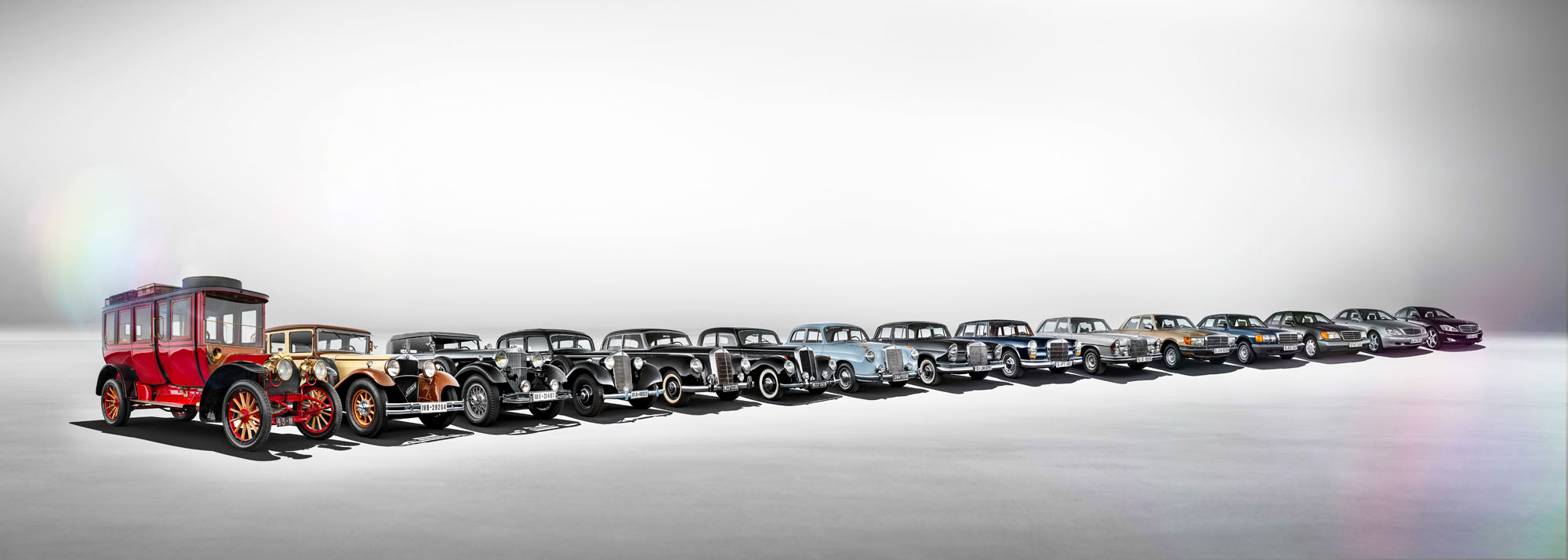
The origins of the pioneering spirit: 1886 and start-up spirit
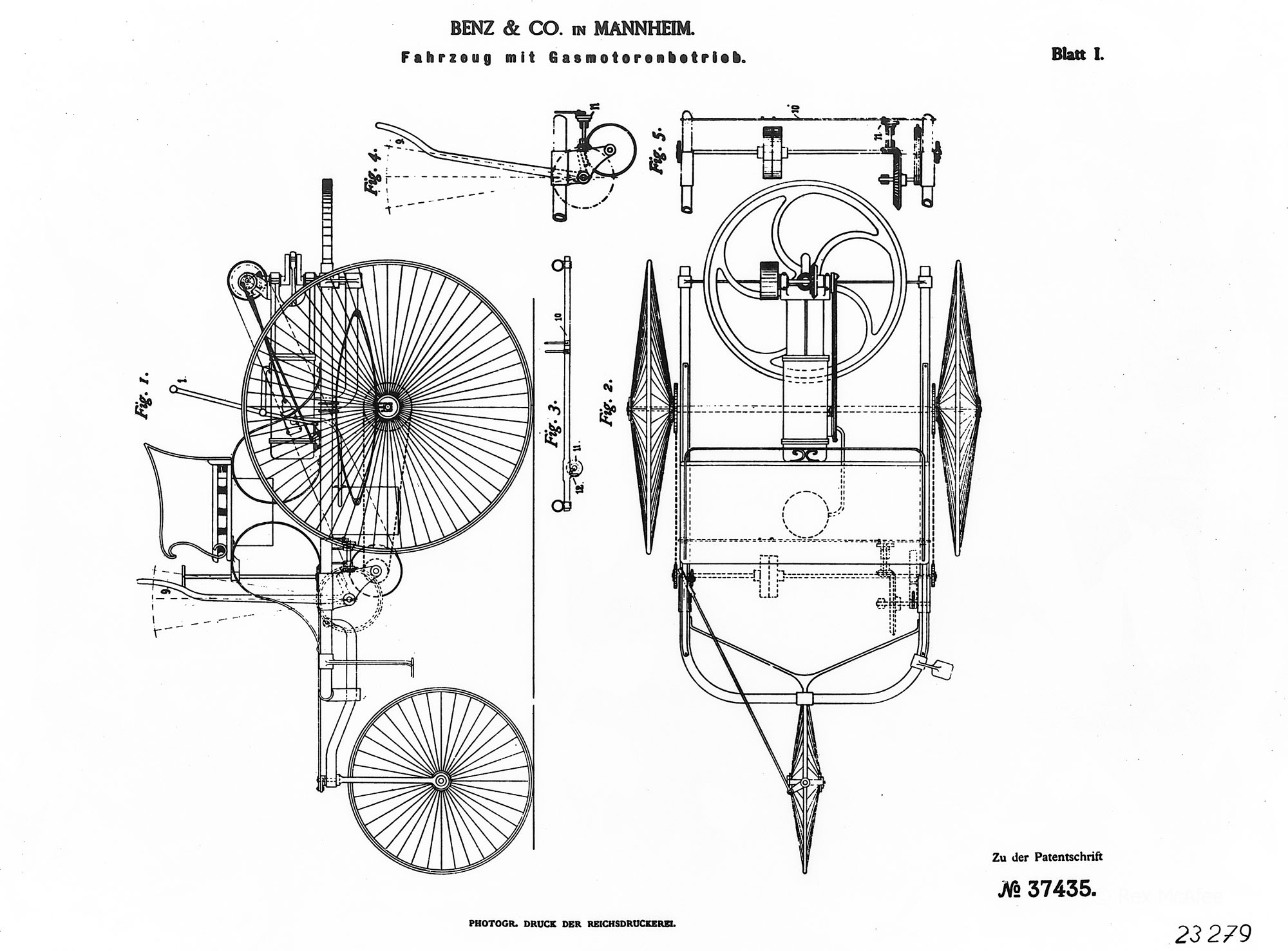
On January 29, 1886, Carl Benz applied for a patent for his three-wheeled motor car. Patent DRP 37435 for the “gas-powered vehicle” is widely regarded as the birth certificate of the automobile. It is now part of UNESCO’s Memory of the World Register and marks the beginning of modern individual mobility. Carl’s wife, Bertha, supported him from the very beginning. In 1888, she undertook the world’s first long-distance automobile journey – a significant milestone. Almost at the same as Carl Benz in 1886, Gottlieb Daimler installed the high-speed combustion engine he had developed together with Wilhelm Maybach, in a carriage. This is how the first four-wheeled automobile was created.
140 years ago, Benz and Daimler invented their automobiles in a productive environment where the time was ripe for groundbreaking mobility innovations. They never met personally and worked independently of each other, although only around 81 miles apart. Both were shaped by a regional, south-west German self-image and an attitude that consistently focused on quality and competence. Carl Benz was one of the early academically trained engineers in Germany, and the talented Gottlieb Daimler followed a similar path thanks to public scholarships – both embodying a modern German image of engineering that achieved world renown through a high level of training and innovative strength. Whether in Carl Benz’s workshop in Mannheim or in Gottlieb Daimler’s garden house in Cannstatt, this early phase was marked by a start-up spirit, unconventional solutions, high standards and the courage to take entrepreneurial risks with visionary ideas.
From pioneer to technology leader: continuity of progress
In 1926, Benz & Cie. and Daimler-Motoren-Gesellschaft merged to form Daimler-Benz AG. The Mercedes-Benz brand had already been registered in 1925 during preparations for the merger. Guided by the famous star logo, the company drove forward the triumphant advance of the automobile with pioneering technology that was always perfectly attuned to the needs of the times – from axle pivot steering for precise cornering to the supercharged vehicles of the 1920s and 1930s, numerous safety innovations since the 1950s to today’s digital systems such as MB.DRIVE ASSIST PRO and MB.OS. This continuous chain of innovation has shaped not only the company’s own products and the automotive industry, but also society and mobility culture – making the brand’s history a factor for the future: “Heritage Creates Future”. Building on this foundation, development continues swiftly: new technologies are already in the starting blocks.
Setting benchmarks: quality, safety, comfort, design, and lifestyle
Mercedes-Benz’s culture of innovation is reflected in the product features and shapes the overarching corporate values.
- Quality: every Mercedes-Benz automobile is developed and manufactured to the highest quality standards of its time. This consistent commitment to quality creates lasting value, strengthens trust in the products and has made Mercedes-Benz a reliable and trusted companion to its customers for decades.
- Safety: safety research is a defining theme in the company’s history. Mercedes-Benz sets milestones that shape the industry and mobility culture – from the safety body, Anti-lock Braking System ABS, airbag with belt tensioner and Electronic Stability Program ESP® to the concept of integrated safety. These and other innovations represent a systematic understanding of safety that goes far beyond individual solutions.
- Comfort and driving experience: advanced and intelligent technology is constantly redefining comfort systems – for an incomparable driving experience that focuses on support, relief and well-being for drivers and passengers. Comfort and sportiness are no longer mutually exclusive: superior performance and relaxed driving comfort come together in a perfect symbiosis. The result is luxury with the best possible passenger support.
- Design: the iconic Mercedes-Benz design stands for timeless elegance and technical precision. It unites emotion and function and has defined the aesthetics of automotive excellence across generations. Elements such as the classic Mercedes radiator grille sustain a design lineage stretching back more than 100 years, making the vehicles instantly recognizable as part of an established brand identity.
- Lifestyle and culture: for decades, Mercedes-Benz has been more than a technological benchmark. By embodying an attitude to life that actively shapes the era’s lifestyle, the brand has become a social and cultural reference point. Its vehicles stand for sovereignty, style and identity – reflected in fashion, music, architecture and, last not least, in iconic films. There, a Mercedes-Benz is far more than a prop: it becomes a character in its own right, a symbol of arrival, freedom or elegance. In this way, the brand becomes embedded in culture as an expression of the spirit of the times and reflects an attitude – remaining, across generations, a point of reference for what modern luxury can look and feel like.
Competition as a driver of innovation for the best technology
The will to compete is another expression of Mercedes-Benz’s innovative culture – and part of the brand’s DNA. It shapes the pursuit for the best technical solution as well as the company’s commitment to motorsport. The tradition ranges from dominance in the first automobile competition in 1894 through the triumph of the first Mercedes at the 1901 Racing Week in Nice, to the victories of the S-series supercharged touring sports cars from the late 1920s and the heyday of the Mercedes-Benz Silver Arrows in Grand Prix racing in the 1930s and 1950s. Since 1988 and continuing to this day, Mercedes-Benz has been successful in top-level motorsport – a commitment that sets new benchmarks and, at the same time, serves as a technological laboratory: the drive to prove oneself in competition inspires ideas and solutions for production vehicles. In this way, motorsport comes together with the development of cars suitable for everyday use.
From history to the future: innovation as the basis for lasting prosperity
For more than 140 years, inventive spirit, a commitment to quality and a culture of innovation have carried Mercedes-Benz to the forefront of automotive development. Today, Mercedes-Benz’s innovations take this heritage into the future – as a brand that understands progress as a guiding principle, focuses on the needs of people and society, and continually redefines individual mobility.
- Outstanding innovations make history and tell stories
- Pioneering inventions since 1886 epitomize the culture of innovation at Mercedes-Benz
- The “birth certificate of the automobile,” dated January 29, 1886, is part of the UNESCO Memory of the World Register
- Mercedes-Benz milestones push boundaries and shape the evolution of the automobile
Since the birth of the automobile in 1886, Mercedes-Benz has been writing an extraordinary story of innovation – across decades and generations, always driven by the aspiration to rethink mobility. The company looks back on a rich tradition of experience and pioneering achievements that have shaped automotive development: from early, bold technical breakthroughs to pioneering advances in driving dynamics and comfort, to safety solutions that turned the car into a protected space – and on to digital assistance systems and automated driving.
Pioneering inventions from 140 years of history mark important chapters in the history of Mercedes-Benz. Usually documented and protected by patents, they push the boundaries of what is possible and set new benchmarks. They stand as milestones that shape automotive development and society. Here are some outstanding examples.
Being a pioneer | The invention of the automobile, 1886
140 years ago, Carl Benz took a revolutionary step towards motorized individual mobility. He developed his motor car as a completely new, holistic system. The world’s first automobile came into being – with global significance. Patent DRP 37435 for the “vehicle with gas engine” is widely regarded as the birth certificate of the automobile and is now part of UNESCO’s Memory of the World Register. This drive to “being first” with groundbreaking inventions continues to shape the company’s spirit of innovation to this day: Mercedes-Benz Intellectual Property comprises more than 60,000 patents, trademarks, designs and domains.
Mastering curves | Axle pivot steering, 1893
Driving the ideal dynamic line through curves? Four-wheeled vehicles with turntable steering, adopted from carriages, can become unstable when steering sharply. This is why Carl Benz initially opted for three wheels for his patented motor car. In 1893, the Benz Victoria solved the fundamental problem of safe steering for four-wheeled automobiles: Benz patented the axle pivot steering system on February 28, 1893 (DRP 73515). It was an early milestone in improving driving safety – and its basic principle still characterizes steering systems today.
With high performance into the modern age | Mercedes 35 hp, 1900
A modern automobile with high driving safety and great performance: this was the demand made in 1900 by Emil Jellinek, business partner of Daimler-Motoren-Gesellschaft and the driving force behind the Mercedes brand name. Wilhelm Maybach rose to the challenge and defined the basic concept for the modern automobile: with a powerful and efficient drive, wide track, long wheelbase and low center of gravity, the Mercedes 35 hp broke with the design principle of the carriage. A key element was the honeycomb radiator, a water cooler with a honeycomb structure. Maybach applied for a patent for it on September 20, 1900 (DRP 122766). It played a decisive role in the success of the Mercedes 35 hp in the 1901 Nice racing week and was the basis for the iconic Mercedes-Benz radiator design.
Chassis technology for ever faster vehicles | Trapezoidal-link front axle, 1933
Following the merger in 1926, the company’s cars bore the name Mercedes-Benz. The new brand set new benchmarks with sporty, luxurious cars such as the famous supercharged touring cars of the S-series. The engines became increasingly powerful and the cars increasingly fast. Around 1930, Mercedes-Benz fundamentally rethought its chassis technology and introduced the trapezoidal-link front axle with parallelogram wishbones and coil springs in the 380 (W 22, from 1933 onwards) and 500 K/540 K(W 29, from 1934 onwards) models. This became a milestone for driving safety and comfort – and a global standard.
The automobile as a protected space | Safety body, 1959
The safety body invented by Mercedes-Benz engineer Béla Barényi made its debut in the Mercedes-Benz 111 series “Fintail” sedans. The concept was patented on January 23, 1951 (DE 854157 C): a three-part body with defined deformable zones at the front and rear and a rigid passenger cell in the center. This allows crash energy to be absorbed in a controlled way, providing the occupants with the safest possible space. This principle is the foundation of passive vehicle safety – and the starting point for many further innovations.
Steerable even during emergency braking | Anti-lock Braking System ABS, 1978
The first digital, electronically controlled Anti-lock Braking System ABS makes its world premiere in the Mercedes-Benz S-Class of the 116 series. It prevents the wheels from locking during emergency braking – the car remains steerable and evasive maneuvers are possible. As the first digital assistance system, it is developed in collaboration with Bosch with the shared goal of making driving safer. Further active safety and assistance systems are based on ABS. These include Brake Assist System (BAS) from 1996, which provides full braking force in critical situations even with slight pedal pressure.
Well cushioned | Airbag, 1981
The driver airbag celebrates its world premiere in a production vehicle in the 126-model series S-Class. Mercedes-Benz combines it with a seat belt tensioner for the front passenger. The airbag complements the seat belt, deploys automatically in the event of an accident and can further reduce the risk of injuries. Mercedes-Benz files the patent for this on October 23, 1971 (DE 2152902 C2). The front passenger airbag follows in 1988 – initially again as an optional extra for the S-Class, soon in other models. Airbags in various positions in the interior create a comprehensive system.
ESPecially for you | Electronic Stability Program ESP®, 1995
The Mercedes-Benz ESP® control system is a milestone in active safety. It can prevent skidding in critical situations and thus help to avoid accidents. It premiered in February 1995 in the S-Class 140 series and is standard equipment in the top-of-the-range S 600 Coupé. Mercedes-Benz continues to develop ESP® across all vehicle classes; an important patent for its adaptation to series production is DE 4123232 C2. ESP® soon takes off throughout the industry. In the years to follow, Mercedes-Benz vehicles are equipped with many further digital assistance systems.
Mitigating accident consequences | PRE-SAFE®, 2002
Preparing the car for an impending collision within seconds – that was the driving idea behind PRE-SAFE®, the revolutionary Mercedes-Benz system for anticipatory occupant protection. Based on patent DE 10121386 C1, it uses powerful sensors to detect critical driving situations and can help to reduce the severity of accidents with reversible measures. PRE-SAFE® made its debut in the S-Class 220 series. It shaped the concept of preventive safety and paved the way for the concept of integrated vehicle safety.
Relief thanks to integrated chauffeur | Highly automated driving (SAE Level 3), 2021
Mercedes-Benz was the first car manufacturer worldwide to receive international system approval for highly automated driving (SAE Level 3) in December 2021. Today, the brand is accelerating the development of Level 4 robotaxis based on the new S-Class, combining comfort and safety, with the support of partners. Mercedes-Benz has been offering advanced driver assistance systems (SAE Level 2) in its vehicles for years. They simplify everyday driving by assisting with speed and distance control, steering and lane changes, as well as parking and exiting parking spaces. With the introduction of MB.OS and MB.DRIVE, state-of-the-art driver assistance systems such as MB.DRIVE ASSIST PRO for inner-city point-to-point navigation are available in the latest Mercedes-Benz models. Over the next five years, Mercedes-Benz aims to offer a version that can reach speeds up to 81 mph.
Electric ranges of over 746 miles | Mercedes-Benz VISION EQXX, 2022
The Mercedes-Benz VISION EQXX technology concept car shows just how efficient an electric car can be. It has demonstrated ranges of more than 746 miles with consumption of less than 10 kWh per 62 miles on several documented long-distance journeys, including the routes from Sindelfingen to Cassis and from Stuttgart to Silverstone. At the same time, it serves as a blueprint for future models: optimized aerodynamics, consistent weight reduction, modern software architectures, and a resource-saving design all work together to achieve maximum efficiency without compromising everyday practicality.
The paradigm shift | MB.OS, 2025
Rather than many individual control units and fragmented software environments, the integrated MB.OS vehicle operating system bundles central areas such as infotainment, ADAS (Advanced Driver Assistance Systems)/automated driving, drive control and cloud services on a unified software and hardware platform. This revolutionizes the automobile, above all by providing a consistent user experience across different models, enabling faster development, new functions and over-the-air updates. The CLA, unveiled in 2025, is the first model to introduce this technology. The significance is considerable: MB.OS is to form the digital foundation for all future Mercedes-Benz vehicles. It will keep them up to date in the long term and bring new features to the fleet much more efficiently.
Mercedes-Benz shapes the future: innovations for a new age of mobility
The continuity of Mercedes-Benz’s spirit of innovation is evident not only in the 140-year history of the automobile but also in its current research activities, which are writing the next chapter in this success story. Shaped by the legacy of Carl Benz and Gottlieb Daimler, Mercedes-Benz is already researching innovations for a completely new age of mobility. Here are some examples:
- An innovative solar paint could offer a highly effective solution for longer ranges and fewer charging stops in the future.
- Neuromorphic computing mimics the functioning of the human brain and could make AI calculations significantly more energy-efficient – with the potential to reduce the energy required for data processing in autonomous driving by 90 percent compared to today’s systems.
- Biotechnologically produced materials – exquisite spider silk and high-quality leather alternatives made from recycled plastic – authentically combine sustainability with luxury and performance.
- The aerodynamic and virtually maintenance-free In-Drive Brake, integrated into the electric motor and transmission unit, shows hardly any wear, does not rust and eliminates fine dust emissions.
- An innovative power converter with cell-level control revolutionizes high-voltage architecture and opens new degrees of freedom in electric drive architecture.
- In the area of customer experience, Mercedes-Benz is exploring the potential of augmented and mixed reality to design vehicles as intelligent, hyper-personalized companions.
Brand ambassadors on wheels: Mercedes-Benz vehicle icons from 140 years
- Outstanding models and series have shaped the perception of the brand since 1886
- The innovative strength is evident in a fascinating range of automotive icons
- Exceptional tradition of the Mercedes-Benz S-Class
Since the invention of the automobile, outstanding vehicles have shaped the perception of Mercedes-Benz and its predecessor brands. Every single model since 1886 has represented the brand’s strengths in its own way. Time and again, individual models and model series stand out. They become automotive icons and represent in a special way what defines the brand – the innovative strength of Mercedes-Benz.
Benz Patent Motor Car, 1886
Mannheim engineer Carl Benz invents a revolutionary three-wheeled vehicle. His automobile is the first to combine the combustion engine 0.75 hp with a lightweight, modern chassis in a coherent overall concept.
Daimler motor carriage, 1886
In the early 1880s, Gottlieb Daimler and Wilhelm Maybach develop the high-speed combustion engine as a universal drive unit. Daimler dreams of using it for mobility “on land, on water and in the air”. His vision comes true: in 1886, the motor carriage is created as the first four-wheeled automobile in history. The engine is also used in the Daimler motorboat in 1886 and in airship propulsion for the first time in 1888.
Mercedes 35 hp, 1900
This luxurious sports and prestige vehicle is the first modern automobile ever built. It is created at the request of DMG’s business partner Emil Jellinek. Wilhelm Maybach develops the Mercedes 35 hp with a high-performance drive, long wheelbase and low center of gravity. This first Mercedes dominated the competition at the 1901 Racing Week in Nice. The Mercedes-Simplex models built on this design from 1902 onwards set new standards in terms of comfortable operation and high performance.
Mercedes-Benz SSK, 1928 (W 06)
To increase engine power and efficiency, Paul Daimler, son of company founder Gottlieb Daimler and then chief engineer, introduces supercharging at Mercedes. In the Mercedes-Benz S-series of sports touring cars, this technology becomes the hallmark of luxurious high-performance vehicles for discerning customers at the end of the 1920s. The S, SS, SSK and SSKL models, the latter built exclusively as racing cars, also celebrate outstanding sporting successes – from a one-two victory in the opening race at the Nürburgring in 1927 to Rudolf Caracciola’s victory in the 1931 Mille Miglia.
Mercedes-Benz 500 K, 1934 (W 29)
This dream car of the 1930s epitomizes the perfect combination of performance, design and craftsmanship. As the ideal masterpiece on wheels, most customers order their 500 K and 540 K with a factory-built Sindelfingen body. At the pinnacle of design and technology, this body is an expression of Mercedes-Benz’s high quality.
Mercedes-Benz 300 SL “Gullwing”, 1954 (W 198)
The “Sports Car of the Century” is based on the racing car of the same model designation (W 194), with which Mercedes-Benz makes a highly successful return to motor racing in 1952. With racing genes, the “Gullwing” is defined technically by the first four-stroke direct injection in a production car, and its lightweight construction with innovative tubular space frame also originates from the racing car.
Mercedes-Benz Silver Arrows of the 1950s
More than 70 years ago, Mercedes-Benz celebrates a string of overwhelming successes with the W 196 R Formula 1 racing car and the 300 SLR racing sports car (W 196 S). With this second generation of the Silver Arrows, the brand returns to top-flight motorsport. The W 196 R is built in two versions: with streamlined bodywork and with an open-wheeled body. In 1954 and 1955, Juan Manuel Fangio wins the Formula 1 World Championship in this legendary car. Closely related to it is the 300 SLR racing sports car (W 196 S), with its three-liter engine and two-seater body. With it, Mercedes-Benz wins the 1955 Sports Car World Championship – in a season for eternity.
Mercedes-Benz “Fintail” sedan, 1959 (W 111)
For the first time, Mercedes-Benz implements the pioneering principle of a safety body with energy-absorbing crumple zones in these luxury-class sedans. This marks a decisive departure from the classic “as rigid as possible” concept for car bodies. At the same time as the premiere of the “Fintail” sedans, Mercedes-Benz begins scientifically based accident research with systematic crash tests.
Mercedes-Benz 600 “Grand Mercedes”, 1963 (W 100)
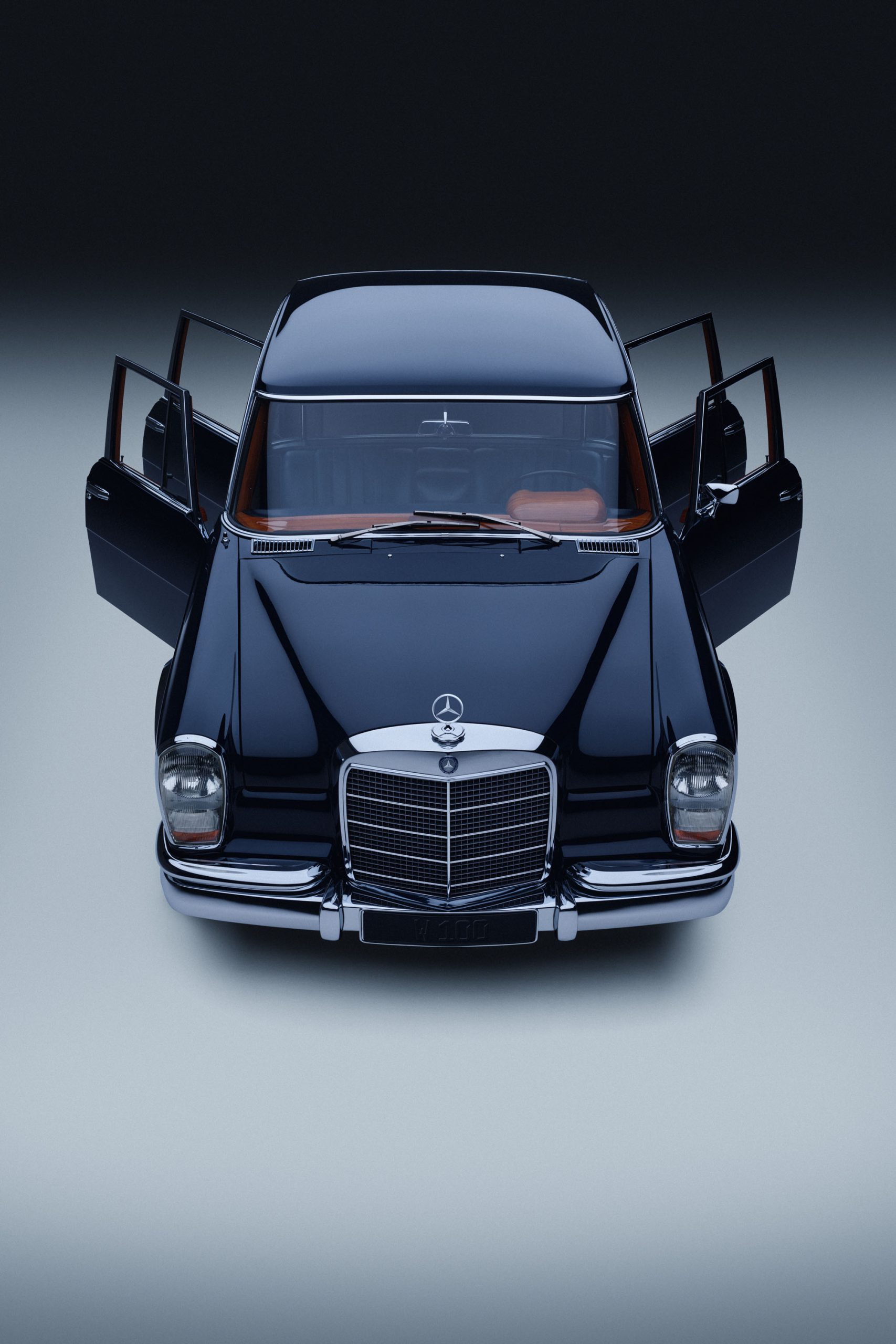
The representative vehicle with the first V8 engine in a passenger car of the brand showcases the technical possibilities of its time in automotive engineering and sets benchmarks for supreme comfort. Its systems include, among other things, a sophisticated and high-precision comfort hydraulics that control numerous functions. Like other Mercedes-Benz prestige vehicles before it, the 600 becomes the vehicle of choice for heads of state, dignitaries and stars around the world.
Mercedes-Benz C 111, 1969
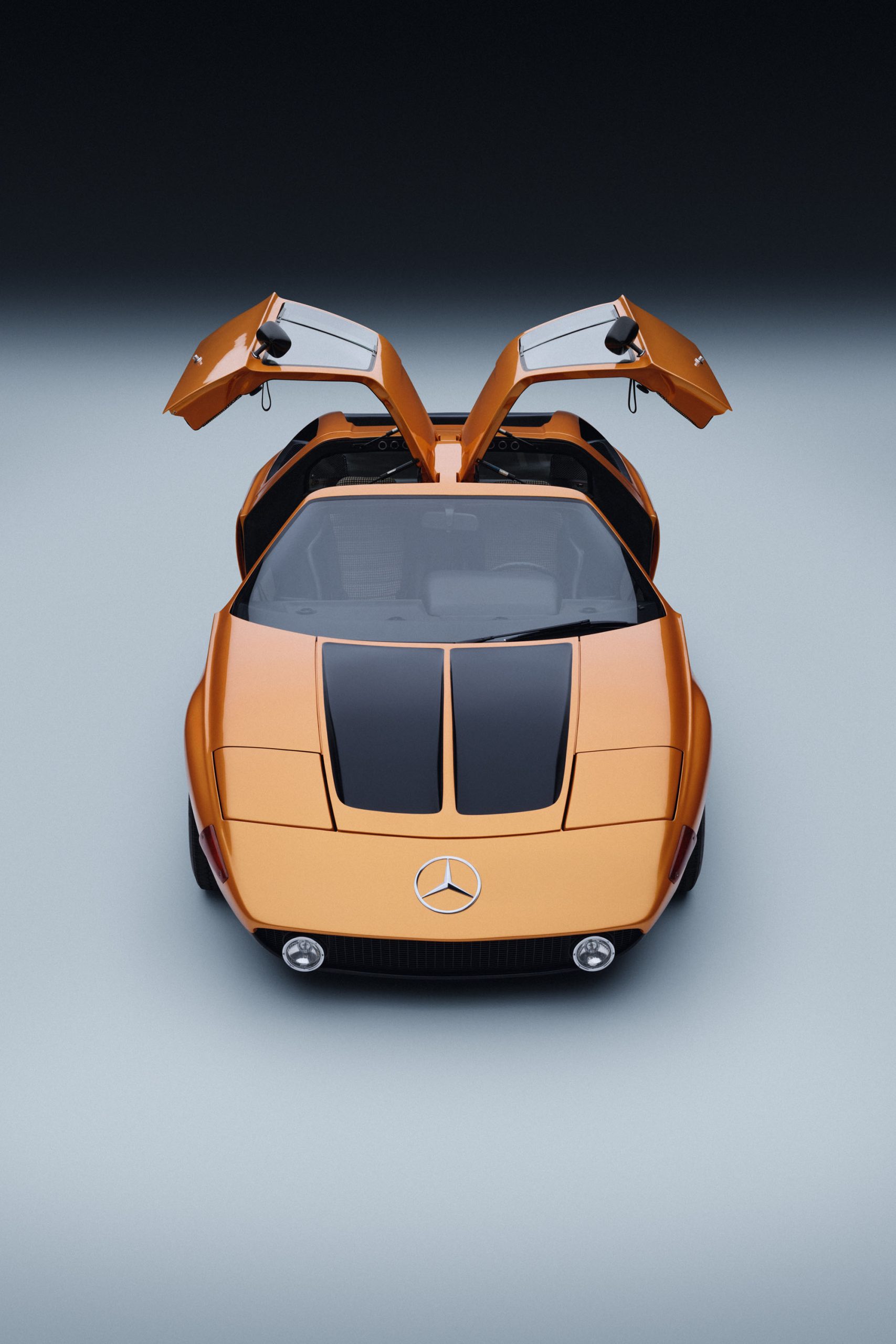
The sports car with a Wankel rotary engine and high-tech bodywork fascinates experts and the public alike at its premiere. Generous purchase offers made by enthusiasts of the brand’s super sports cars are legendary. But the “laboratory on wheels” was not for sale and is never put into series production. Both the C 111-I from 1969 and the C 111-II from 1970 mark the beginning of Mercedes-Benz research vehicles. Later, a series of outstanding record-breaking cars is developed on their basis.
Mercedes-Benz S-Class, 1972 (116 series)
This technically pioneering generation of Mercedes-Benz luxury-class vehicles is the first to bear the name S-Class. The flagship model 450 SEL 6.9 is hailed as “the best car in the world” by “auto motor und sport” magazine, for example. Mercedes-Benz rises to this challenge with every new generation of the S-Class. The sedans continue a tradition that begins as early as 1903 with Emil Jellinek’s luxurious Mercedes-Simplex 60 hp touring car. A technical milestone of the 116 series is the series premiere of the Anti-lock Braking System ABS, jointly developed with Bosch in 1978.
Mercedes-Benz G-Class, 1979 (460 series)
Mercedes-Benz develops the G-model jointly with Steyr-Daimler-Puch as an off-road vehicle with excellent off-road capabilities that can also be driven comfortably on the road. The G captivates demanding professional users right from the start, but its authentic DNA also appeals to a broader audience. The brand continues to develop the G-Class, with its top models fascinating as sporty, luxurious off-road vehicles. The launch is marked by the 500 GE V8 from the 463 series, the first G with a V8 engine. The G always remains true to its genes – in keeping with the motto “Stronger than Time”.
Mercedes-Benz S-Class, 1979 (126 series)
This generation of Mercedes-Benz luxury-class sedans once again represents a milestone in passive safety. The 126 model series is designed according to the latest findings in safety research at the time and is also optimized for offset crashes. In 1981, the driver airbag and seat belt tensioner celebrate their groundbreaking world premiere in the S-Class series production car. Once again, Mercedes-Benz sets a global industry standard.
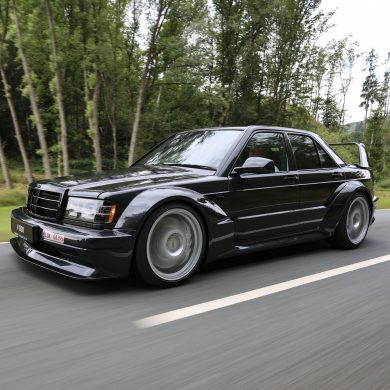
Mercedes-Benz 190/190 E, 1982 (W 201)
The compact Mercedes-Benz establishes a third model series family below the upper mid-range and luxury classes. The modern design impresses with Mercedes-Benz-level safety and efficiency in a smaller format. A family of models with four-valve technology demonstrates the sporting potential of the “Baby Benz”. Above all, the high-performance sedans 190 E 2.5-16 EVO (1989) and EVO II (1990) are developed into successful DTM racing touring cars.
Mercedes-Benz SL, 1989 (R 129)
The SL roadster of the 129 series is launched in 1989 with numerous innovations. A milestone in passive safety is the roll bar, which automatically extends in just 0.3 seconds in the event of an impending rollover. Together with the A-pillars made of high-strength steel, a double-shell front roof frame and the windscreen bonded to the body, this results in an extremely stable structural system. The R 129 continues to delight as a classic favorite thanks to its harmonious, elegant design and the combination of comfort and sportiness.
Mercedes-Benz S-Class, 1991 (140 series)
The sedans and coupes of the 140 series once again define the pinnacle of the upper and luxury classes. For the first time, Mercedes-Benz offers a twelve-cylinder engine in series production, which is used in the top models 600 SE, 600 SEL and 600 SEC. With Pullman sedans (from 1996) and special protection versions, Mercedes-Benz continues the brand’s great tradition of representative vehicles in the 140 series. A technical highlight in 1995 is the world premiere of the Electronic Stability Program ESP® in the S 600 Coupe.
Mercedes-Benz A-Class, 1997 (168 series)
The innovative design of the first A-Class with sandwich floor combines compact vehicle dimensions with a spacious and variable interior and excellent crash performance. This is made possible by arranging the drive system partly under the passenger compartment. From November 1997, Mercedes-Benz equips the A-Class as standard with the pioneering ESP® driver assistance system, which has made its debut just two years earlier as an optional extra in the S-Class. This sets new benchmarks for driving safety in the compact car segment. A few years later, it becomes standard in most cars from all manufacturers.
Mercedes-Benz CLS, 2004 (C 219)
The four-door Mercedes-Benz CLS coupe of the 219 series, with its passionate design, established a new body shape in the brand’s portfolio in 2004. Dynamic elegance meets a level of functionality and comfort usually associated with sedans. The designers continue the fascinating exterior design in the luxurious interior. The CLS provides important impetus for the development of four-door coupés throughout the industry.
Mercedes-Benz SLS AMG, 2010 (C 197)
The SLS AMG is a super sports car featuring high-performance technology derived from motorsport and the performance sector. For the first time, AMG develops a vehicle entirely in-house. The coupe and roadster of the 197 series are distinguished by an aluminum spaceframe construction and high-performance drivetrain. This also includes the drive system of the SLS AMG Coupé Electric Drive from 2012, featuring four permanent-magnet synchronous motors that together deliver 751 hp and 728 lb-ft of torque.
CONCEPT AMG GT XX, 2025
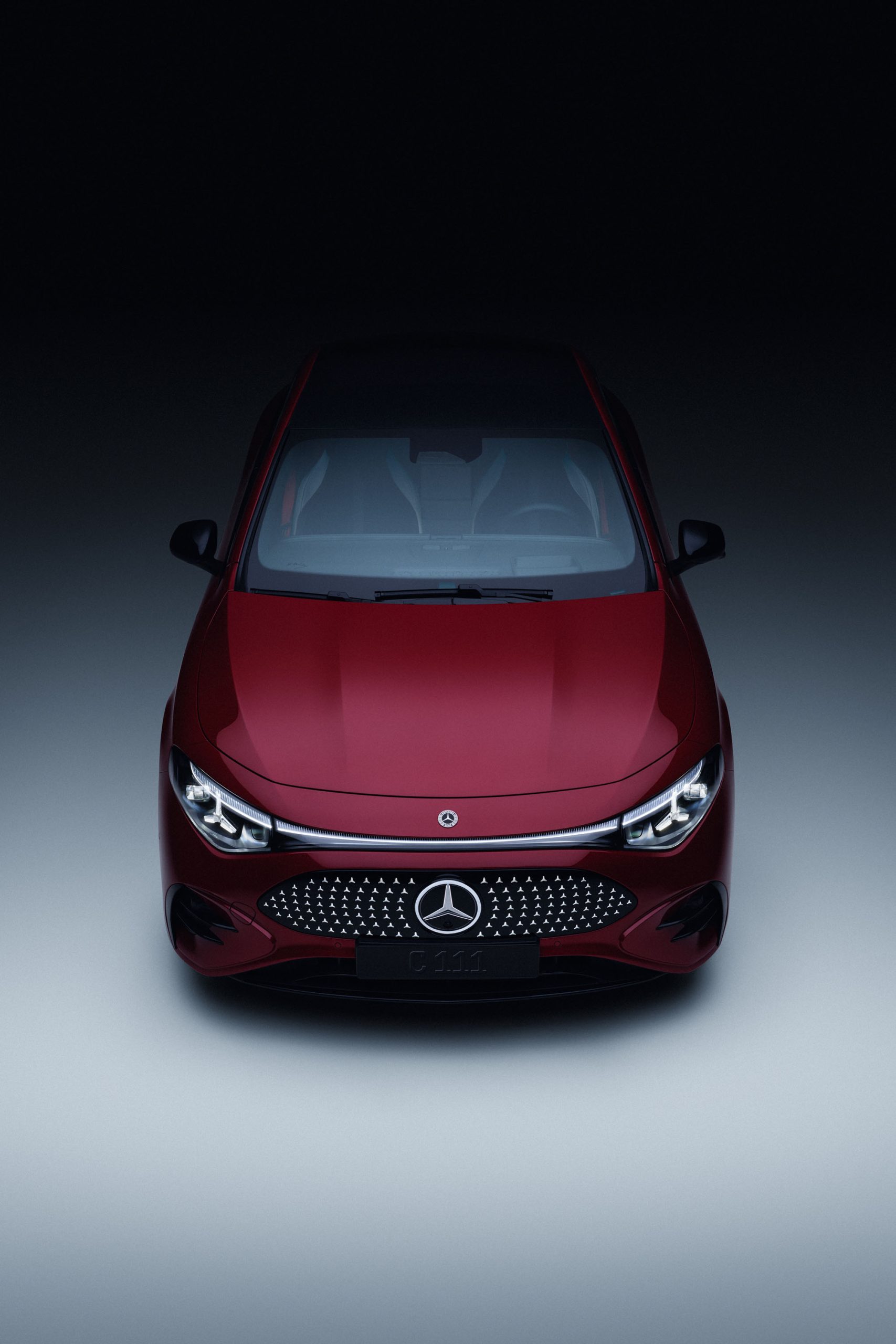
The technology study for future performance previews an upcoming four-door sports car from Mercedes-AMG. The CONCEPT AMG GT XX, with its emotive design, features an innovative drive system with axial-flow motors that together deliver more than 1,360 hp. The electric vehicle has a top speed of more than 224 mph. It proved its performance in 2025 with world record drives on the high-speed track in Nardò, Italy. The brand has already set many other records there in the past.
Above contents © 2026 Mercedes-Benz AG reviewed and edited by Rex McAfee , @rexmcafee