

Highlights
- Renault Filante Record 2025 electric demo car drove 1,008 km in less than 10 hours, at an average speed of 102 km/h, and a consumption of 7,8 kWh/100 km, with an 87 kWh battery.
- Wind-tunnel tests last spring led to a significant redesign, underlining the vital role of aerodynamics in the car’s efficiency.
- This lab-on-wheels to test electric-drive efficiency weighs only 1,000 kg and is packed with cutting-edge steer-by-wire and brake-by-wire technology, ultra-light materials, and 3D-printed components.
- An upcoming three-episode miniseries will take you behind the scenes.
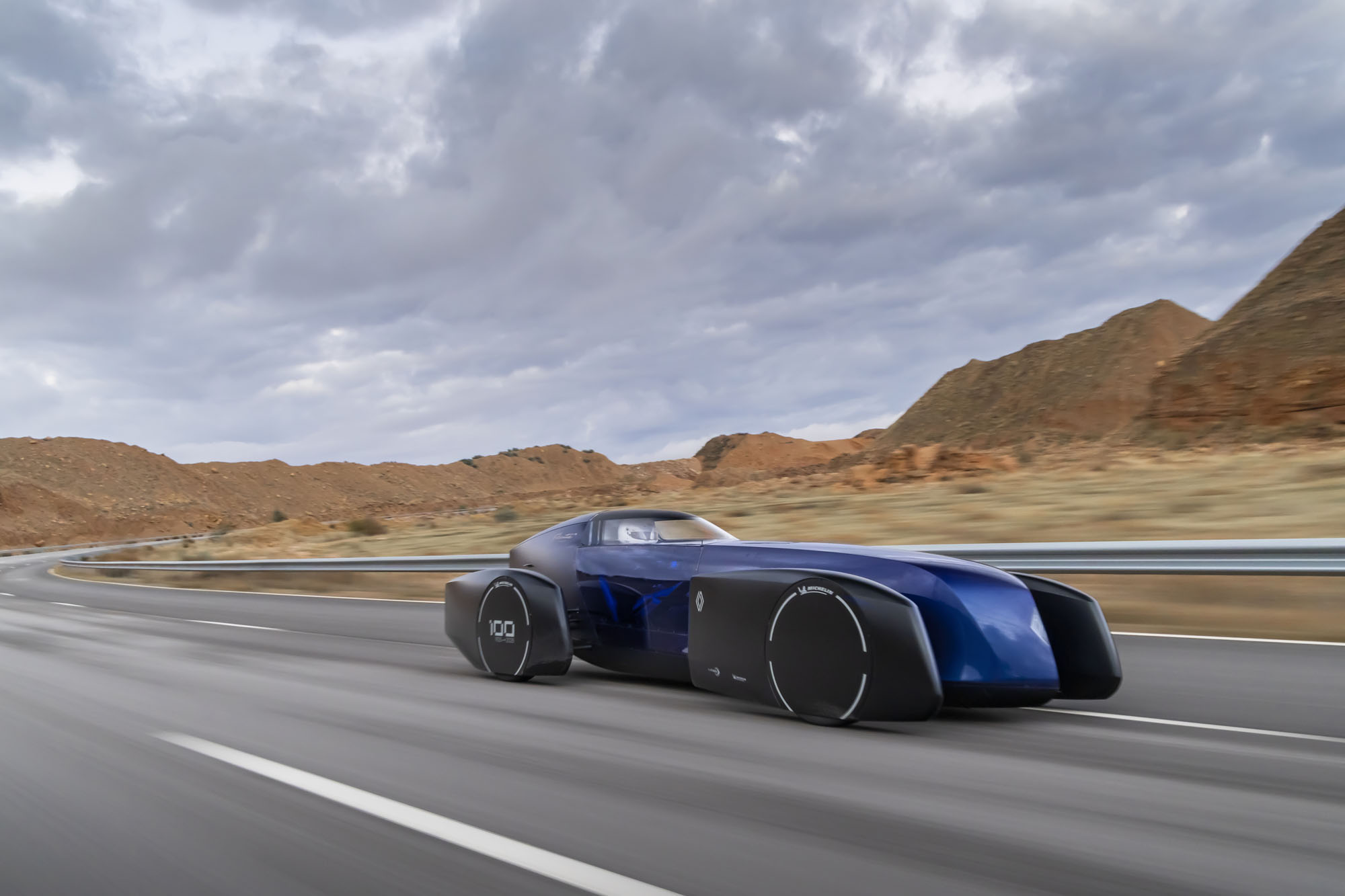
A record based on real-world conditions at an average speed of over 100 km/h
One challenge that Renault set itself at the beginning of 2025 was to drive an electric vehicle more than 1,000 km, with a battery the same size as Scenic’s, at realistic motorway speeds, without stopping to charge. The first attempt was scheduled in October but was called off at the last minute due to bad weather. The team finally pulled it off on 18 December at the UTAC test track in Morocco.
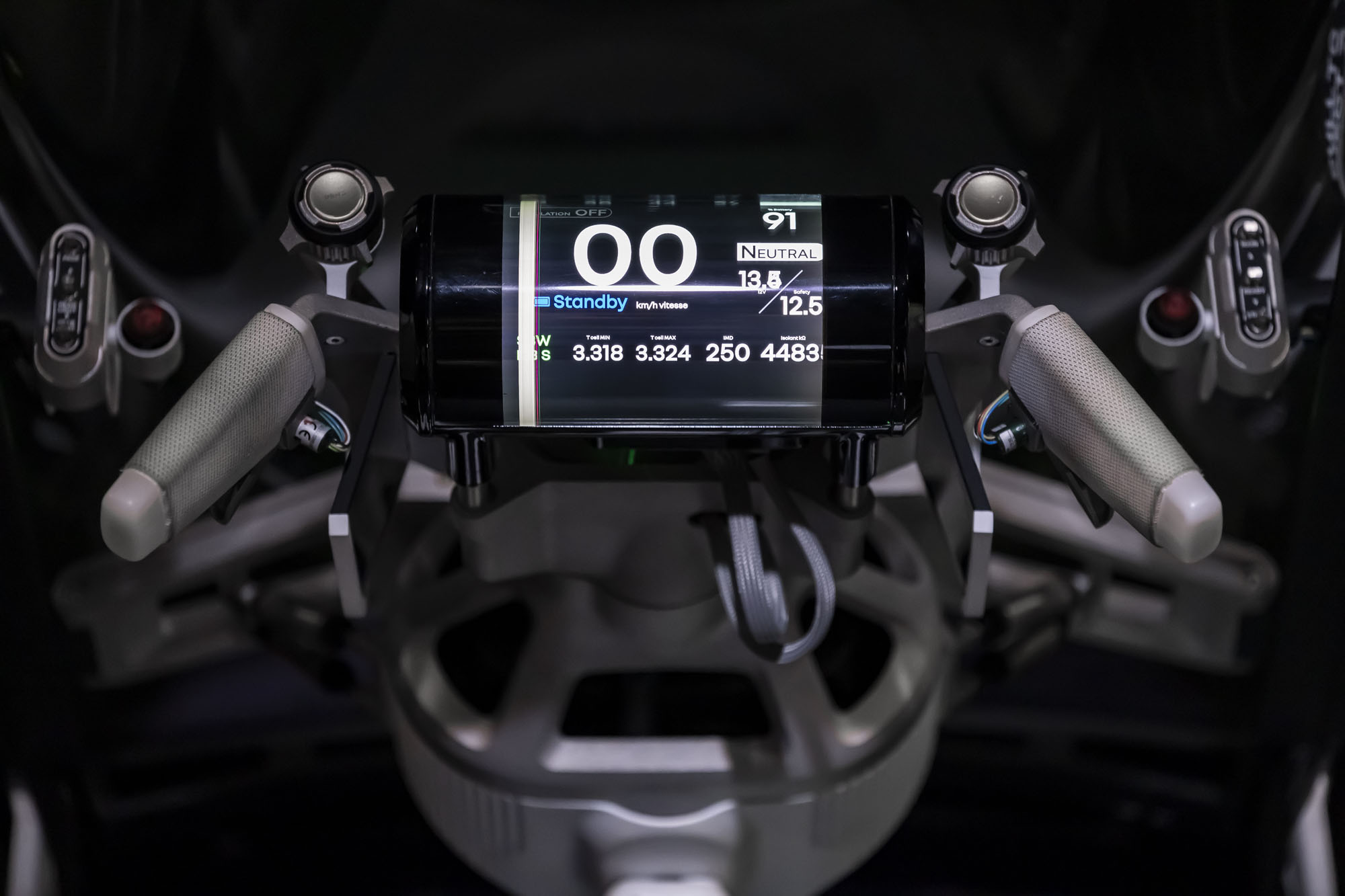
If their only goal had been to drive the longest possible distance between charges, the designers and experts could have fitted the car with a massive battery or driven it in eco mode at 30 km/h on average. But Renault was aiming much higher with its efficiency record: it powered Filante Record 2025 Record with a regular battery (87 kWh, like the one in Scenic E-Tech electric) and tasked the drivers with keeping its average speed of over 110 km/h. The objective: to cover more than 1,000 km in less than 10 hours, including technical stops and driver changes.
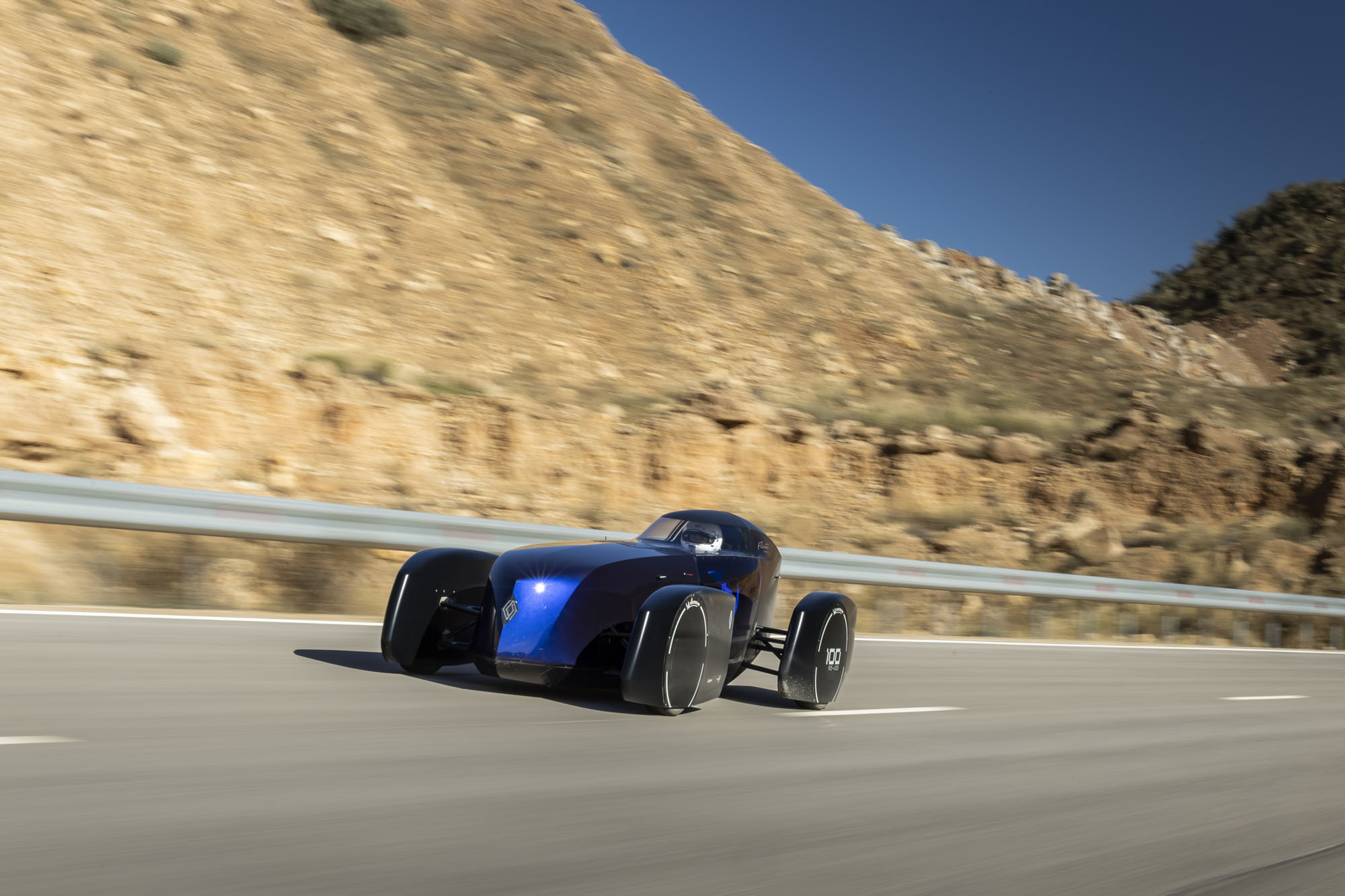
Mini-series: the story behind the efficiency record
Renault will be running a three-episode mini-series documenting the project, with a full immersion in the Filante Record 2025 story and its journey to setting the new electric-efficiency record.
- Episode 1 – The beginnings: a look back at Renault’s past records and the birth of a concept car engineered as a lab for innovation.
- Episode 2 – Under pressure: the extreme lightweighting, technical obstacles and how Renault overcame them to reach its performance target.
- Episode 3 – Now or never!: the inside track on the official attempt in Morocco, crowning months of relentless work under pressure.
The mini-series sheds light on the stakes, aims, and excellence behind Filante Record 2025’s efficiency record.
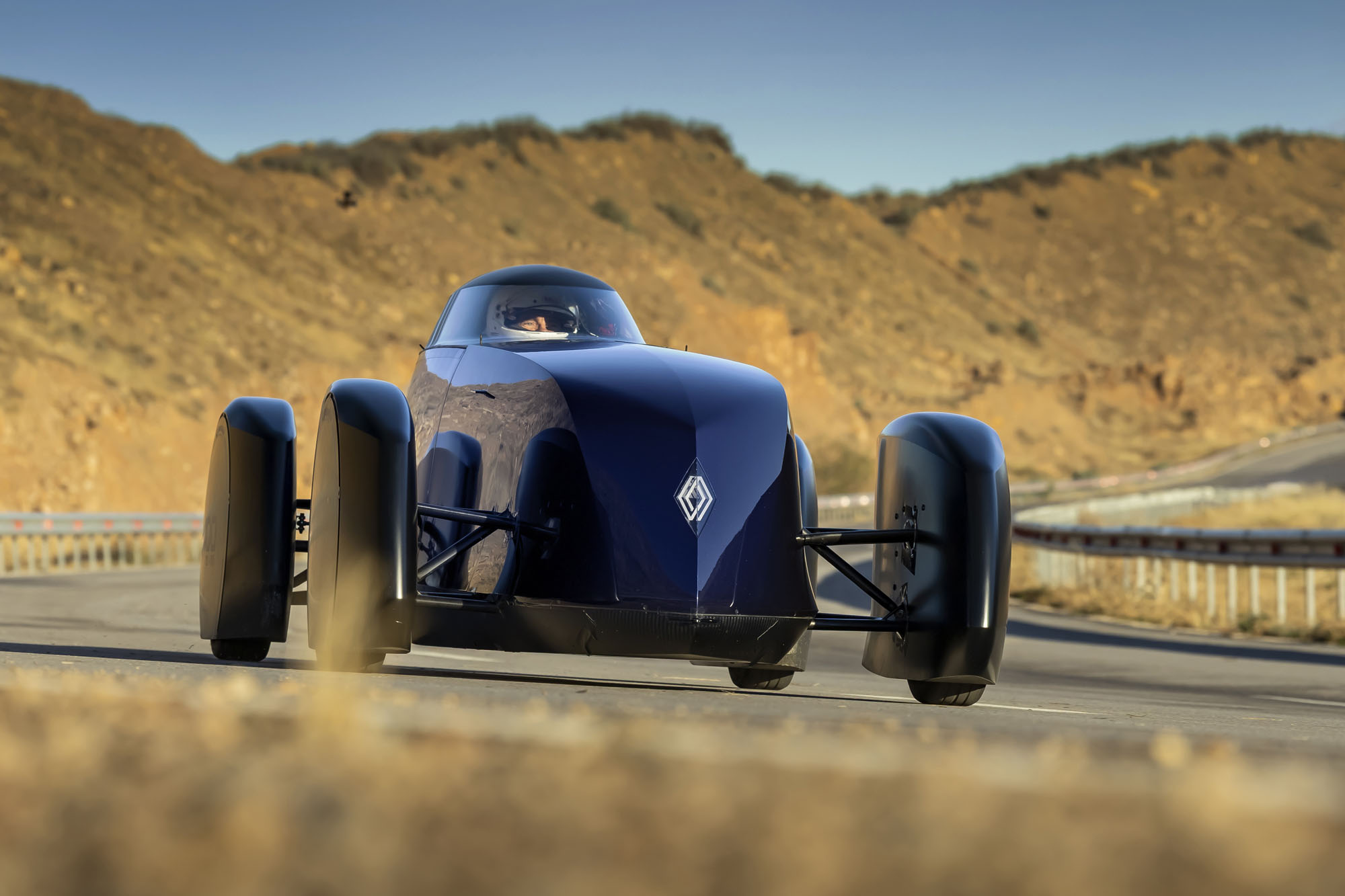
An aircraft-inspired tribute to Renault’s heritage
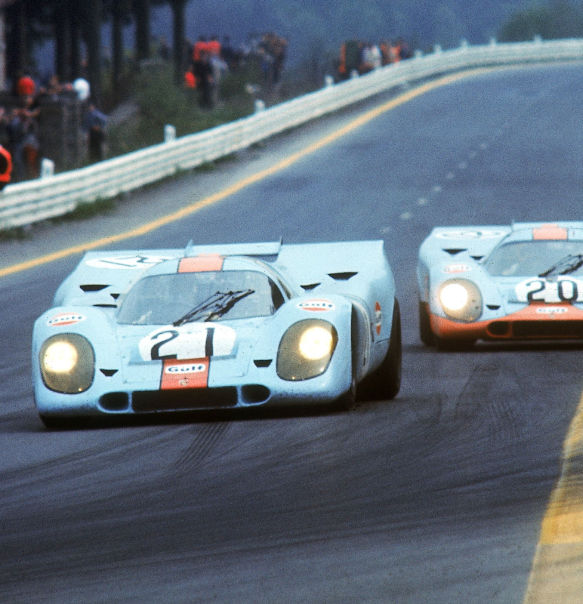
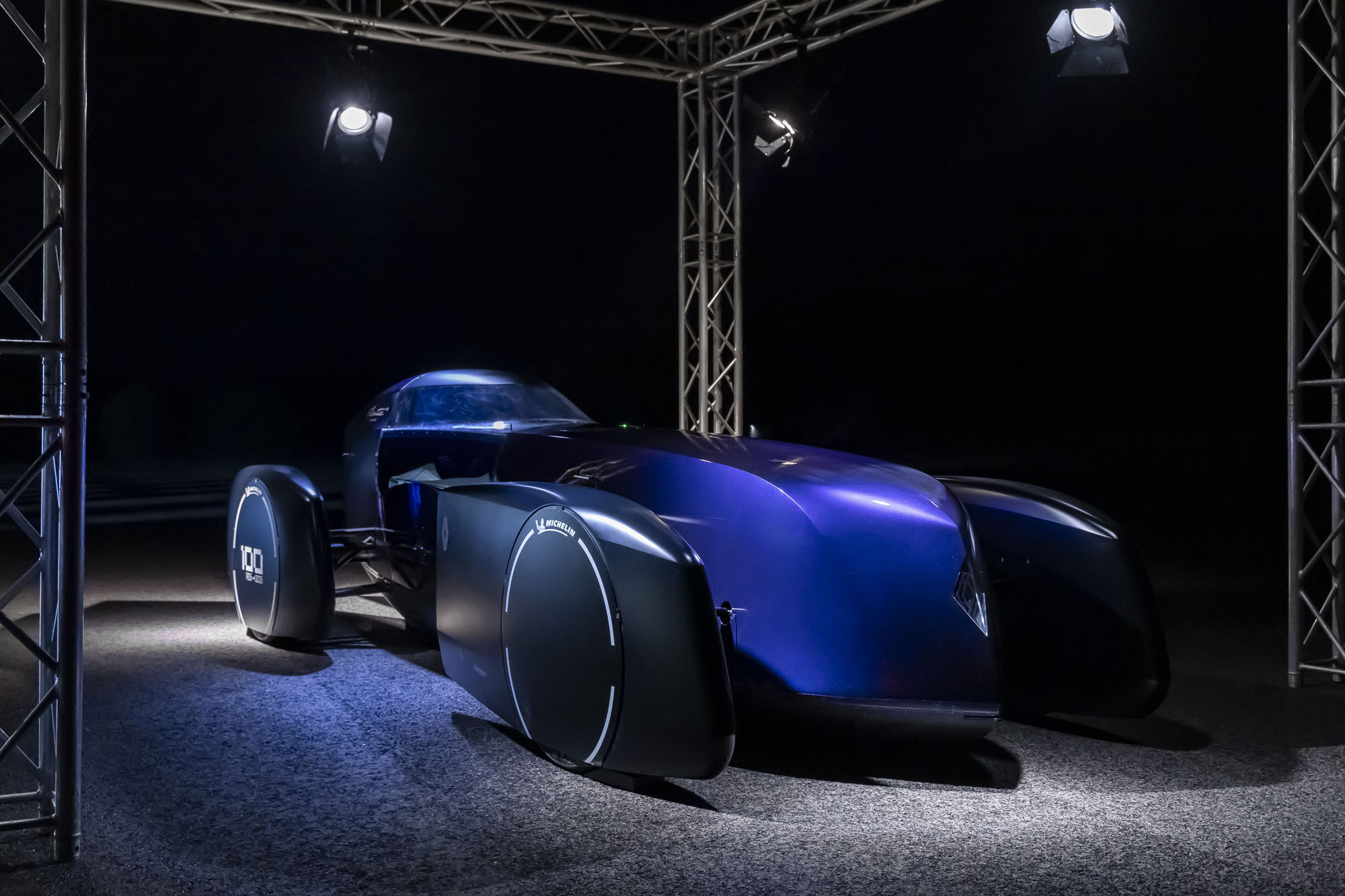
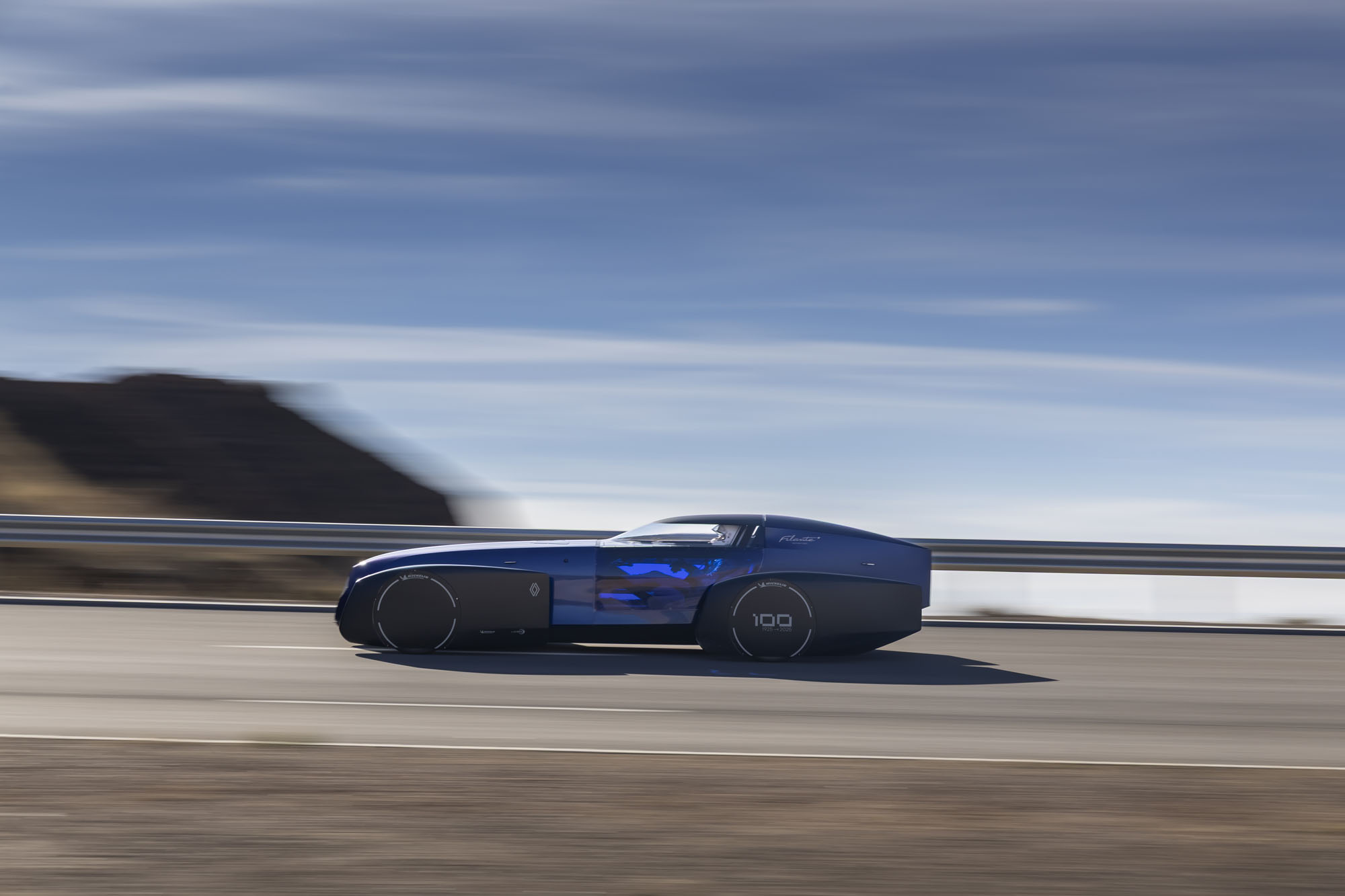
The car designed to break the record had to be both purpose-engineered and iconic. The designers combined striking looks with Renault’s lineage, drawing inspiration from the brand’s models that have set records for efficiency, speed and endurance to create a car that bridges yesterday and tomorrow. With its unique ultraviolet blue color, the Filante Record 2025 pays tribute, 100 years later, to the record-breaking 40 CV of 1925. It also gives a nod to the Étoile Filante.
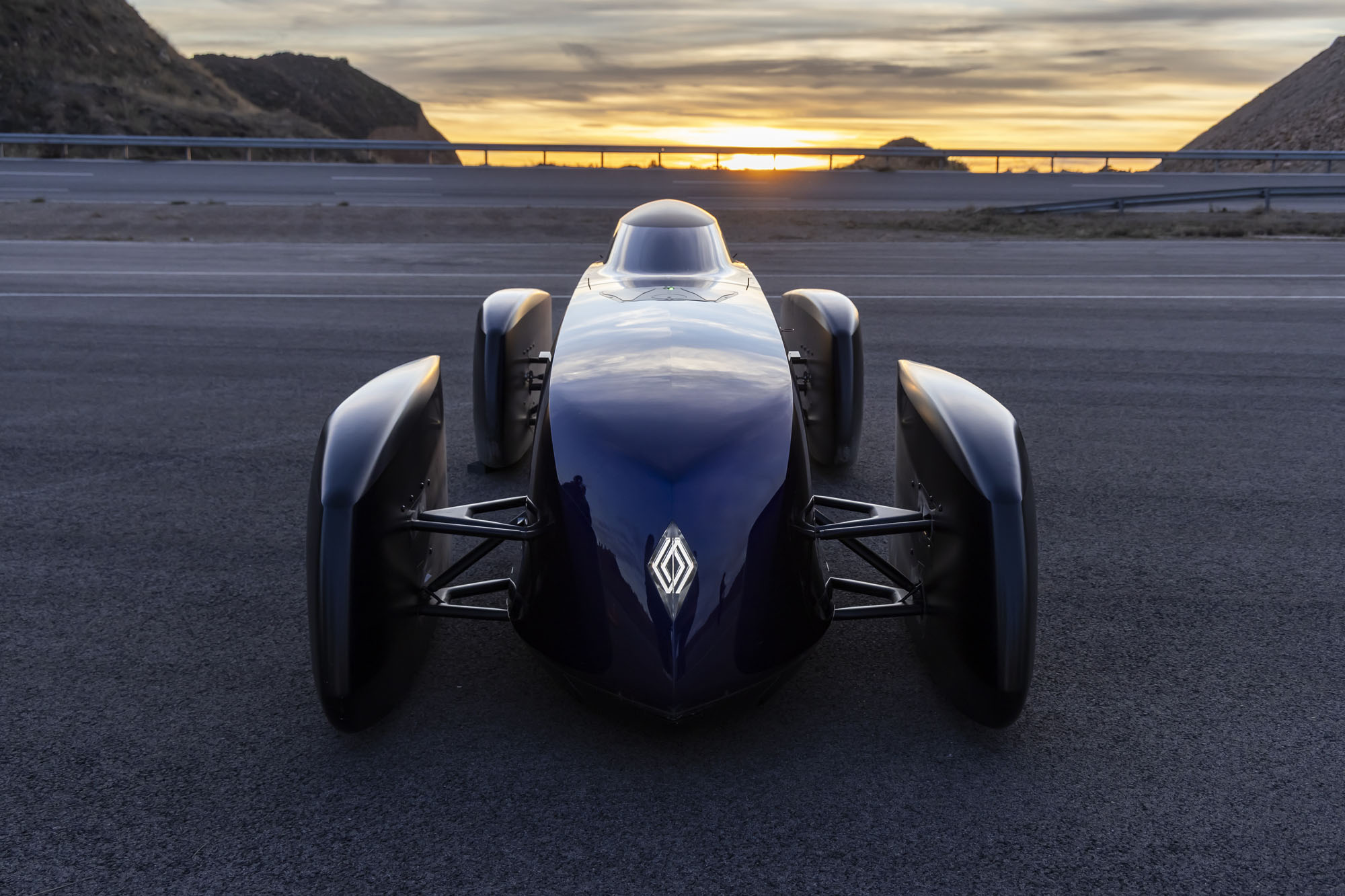
Beneath its all-new ultraviolet-blue finish, Filante Record 2025 pays homage, 100 years later, to the record-breaking 40 CV of 1925. It also gives a nod to the Étoile Filante of 1956, while weaving in hallmarks from the world of aviation. The protective bubble over the cockpit hints at a fighter jet and the driver’s position is modelled after Formula 1 single-seaters. The single principle that guided Filante Record 2025’s design and development was to maximize efficiency and minimize electricity consumption.
Forward-looking design for next-level efficiency
The first Filante Record 2025 version, unveiled at the Rétromobile trade show last winter, already featured a silhouette that intertwined aircraft-like lines and cues from Renault’s heritage models. The wind-tunnel tests last spring, however, revealed significant potential for optimization.
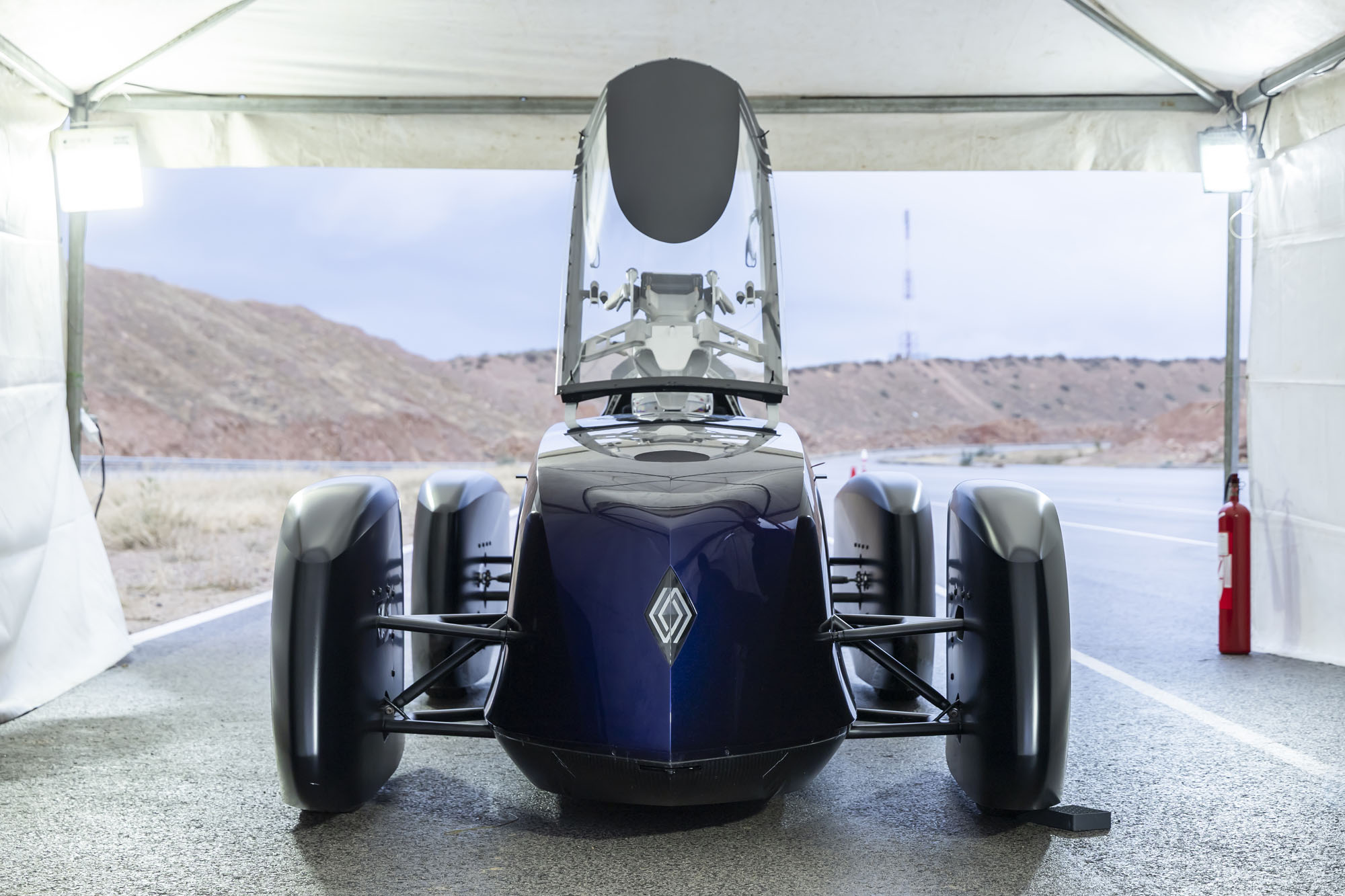
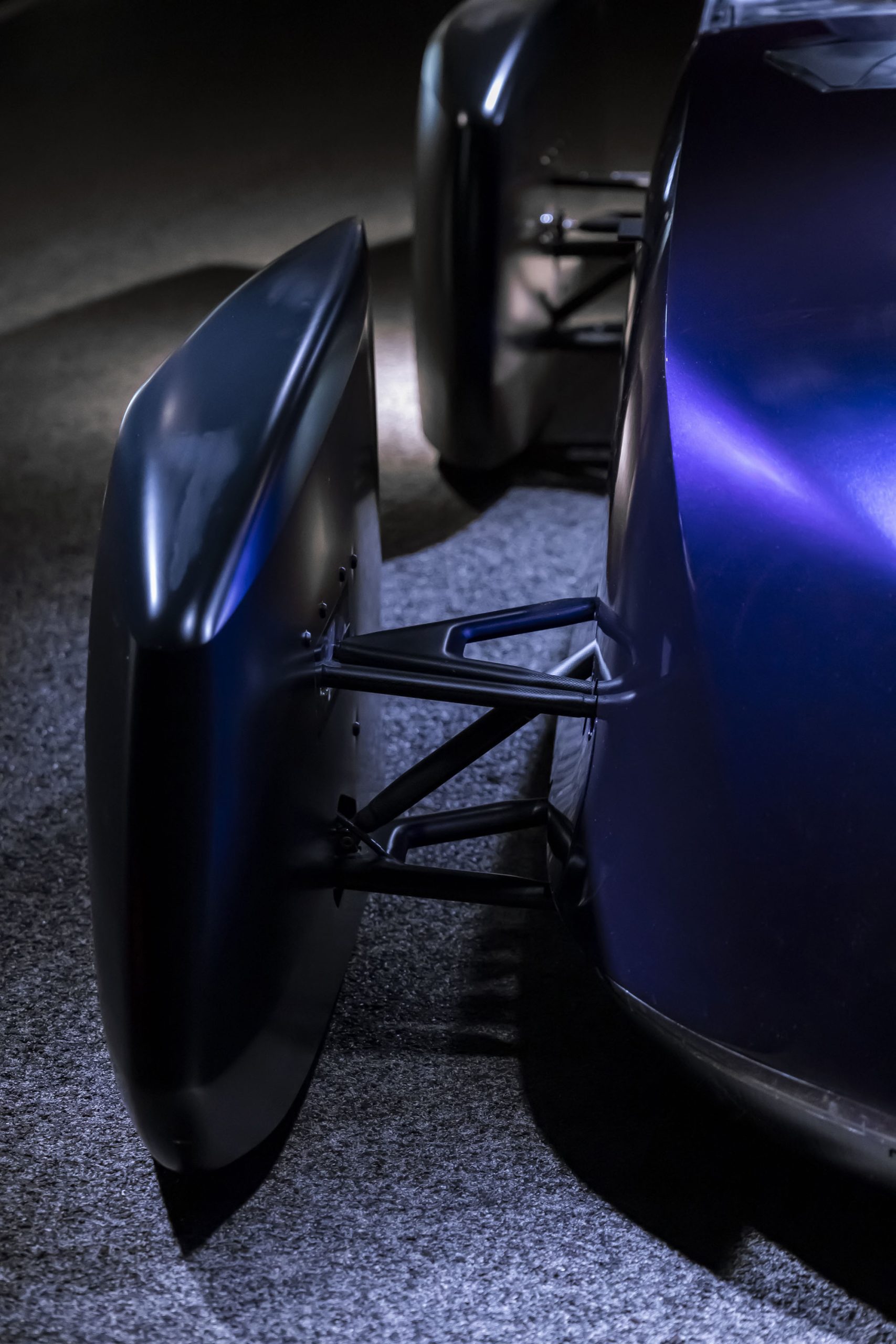
The teams therefore got back to work – as always to set the next record for efficiency. They reshaped the fairings, which they had initially designed to resemble the ones on the Étoile Filante, and mounted them directly onto the wheels. Besides making the silhouette look airier, this alteration considerably improved the car’s airflow.
The central structure was already close to ideal aerodynamically, so it remained practically unchanged. Most of the adjustments involved optimizing technical interface areas and reducing air intakes to limit any residual drag.
An array of leading-edge technology
Renault Filante Record 2025 is a lab on wheels showcasing several innovative features for the first time:
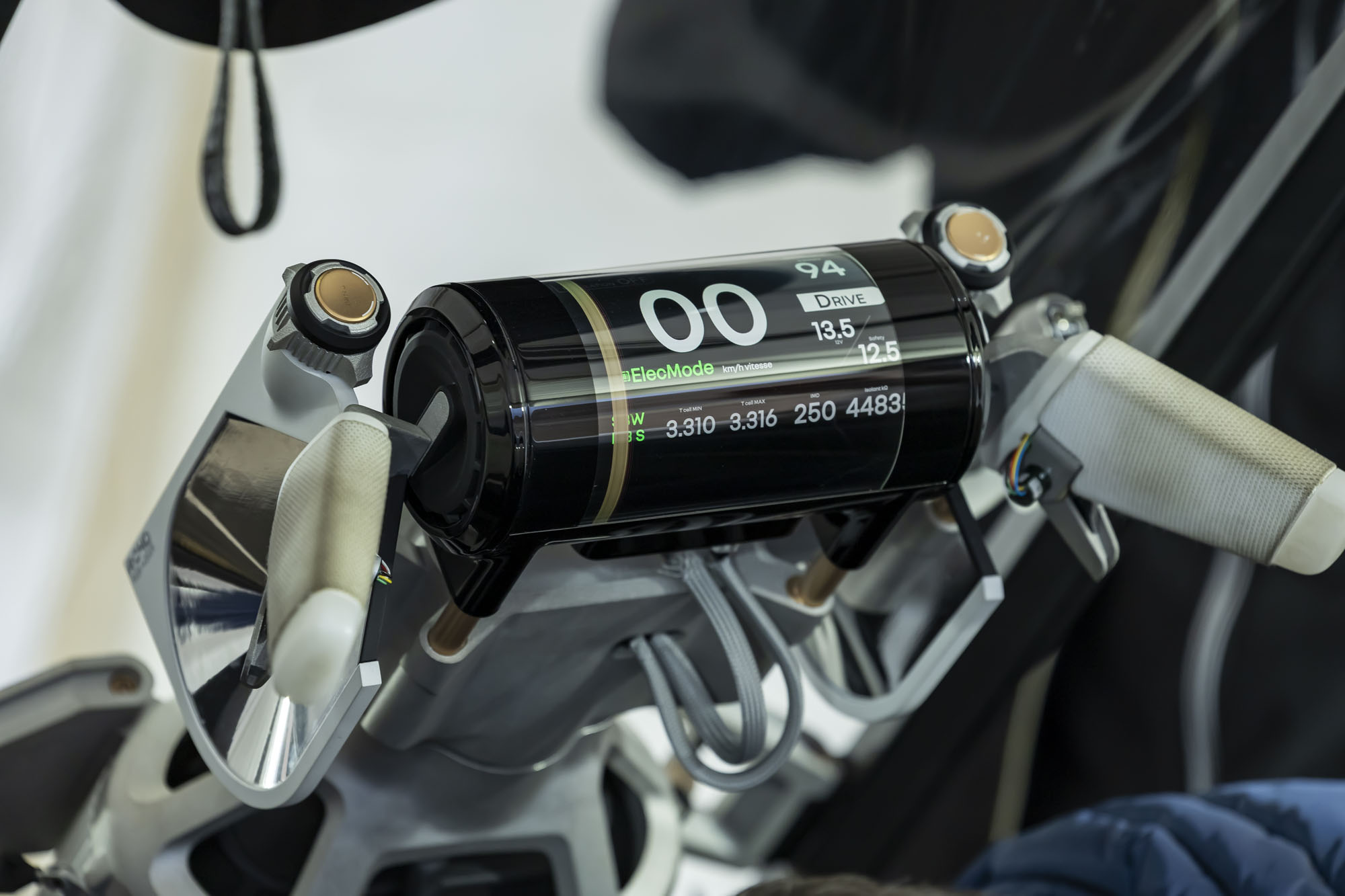
- All-electronic steering and braking systems (steer-by-wire and brake-by-wire), which open up more architectural possibilities while reducing weight.
- Extensive use of ultra-light materials (carbon fibre, aluminum alloys, 3D-printed Scalmalloy).
- Optimal component shapes and patterns (to only use materials where required).
- Custom-engineered Michelin tires that offer low rolling resistance and enhance aerodynamics.
Teamwork in action
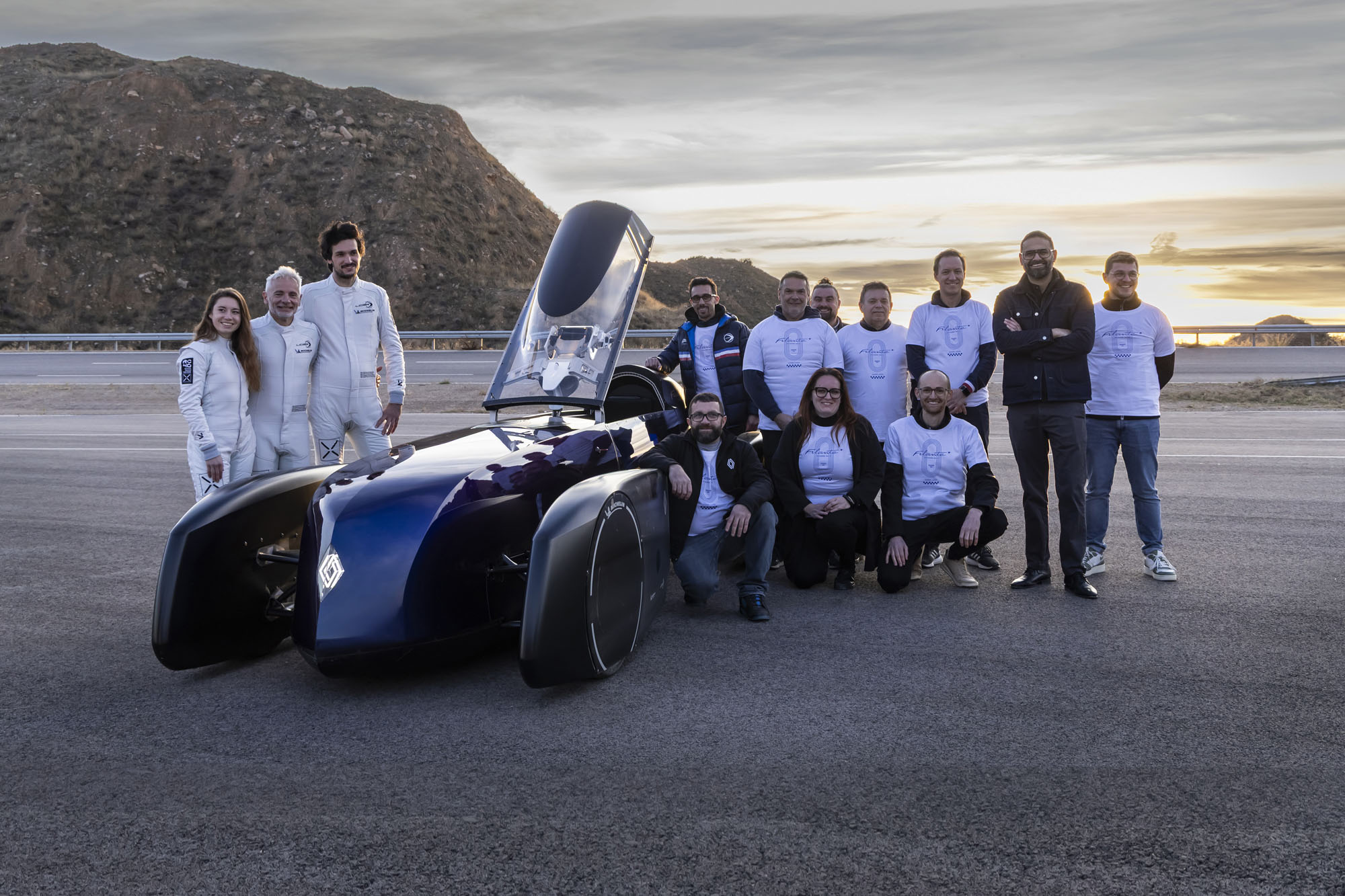
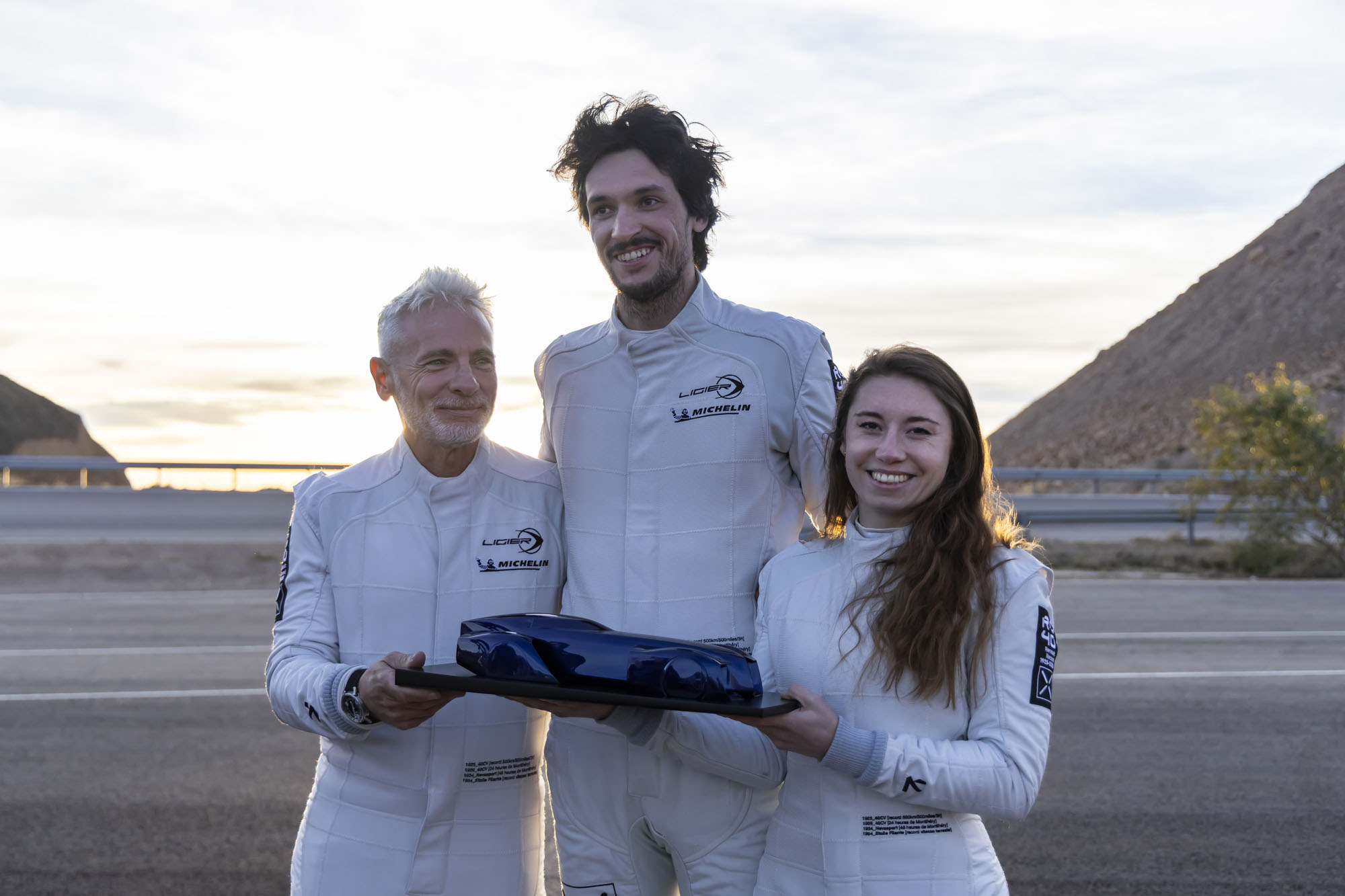
The people on this project were every bit as vital as the groundbreaking technology. Breaking this new record took more than setting a target and reaching it: it was a full-scale challenge that engineers, designers, partners, and three Renault Group drivers (Constance Léraud-Reyser, Laurent Hurgon, and Arthur Ferriere) tackled together. It showcases Renault’s expertise as well as its close collaboration with partners, including Ligier, which developed the powertrain and chassis, and carbon structure, and Michelin, which engineered the low-rolling-resistance tires specifically for Renault Filante Record 2025.
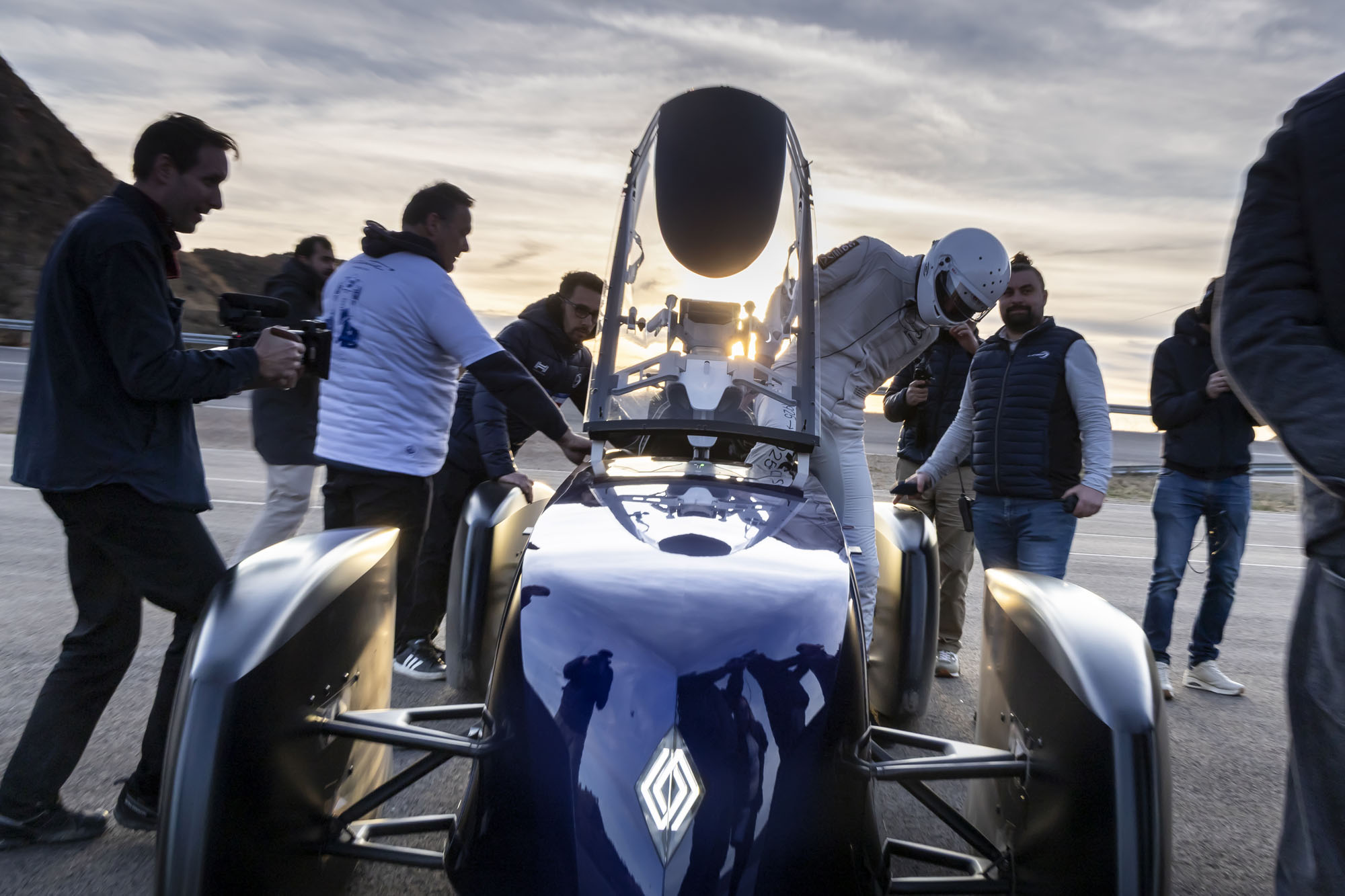
Last October in France, an initial record attempt was cancelled three days before the target date due to poor weather conditions. The teams rallied together to give Filante Record 2025 every chance of setting a new efficiency record before the end of the year. Now it’s time to head to Morocco. The development teams, engineers, partners, drivers, the UTAC circuit team… Everyone is on high alert.

After a few test sessions the day before, 18 December, the first technical teams are busy working on the concept car from 6.30am. It is 4 degrees; the weather is dry and there is no wind. The conditions and forecast are favorable: sunshine all day and temperatures reaching 13°C in the early afternoon. On the agenda: 10 hours of driving and 239 laps of a circuit just over 4 kilometers long.
Three drivers will take turns at the wheel of the demo car, in shifts of around two or three hours. At 7:50 a.m., Laurent Hurgon puts on his helmet, then his gloves. He gets into the car and the cockpit closes. The departure is scheduled for 8 a.m., as soon as the first light of day appears. It’s time for a real endurance test. Contact, first turns of the wheels, Filante Record 2025 speeds towards its destiny.
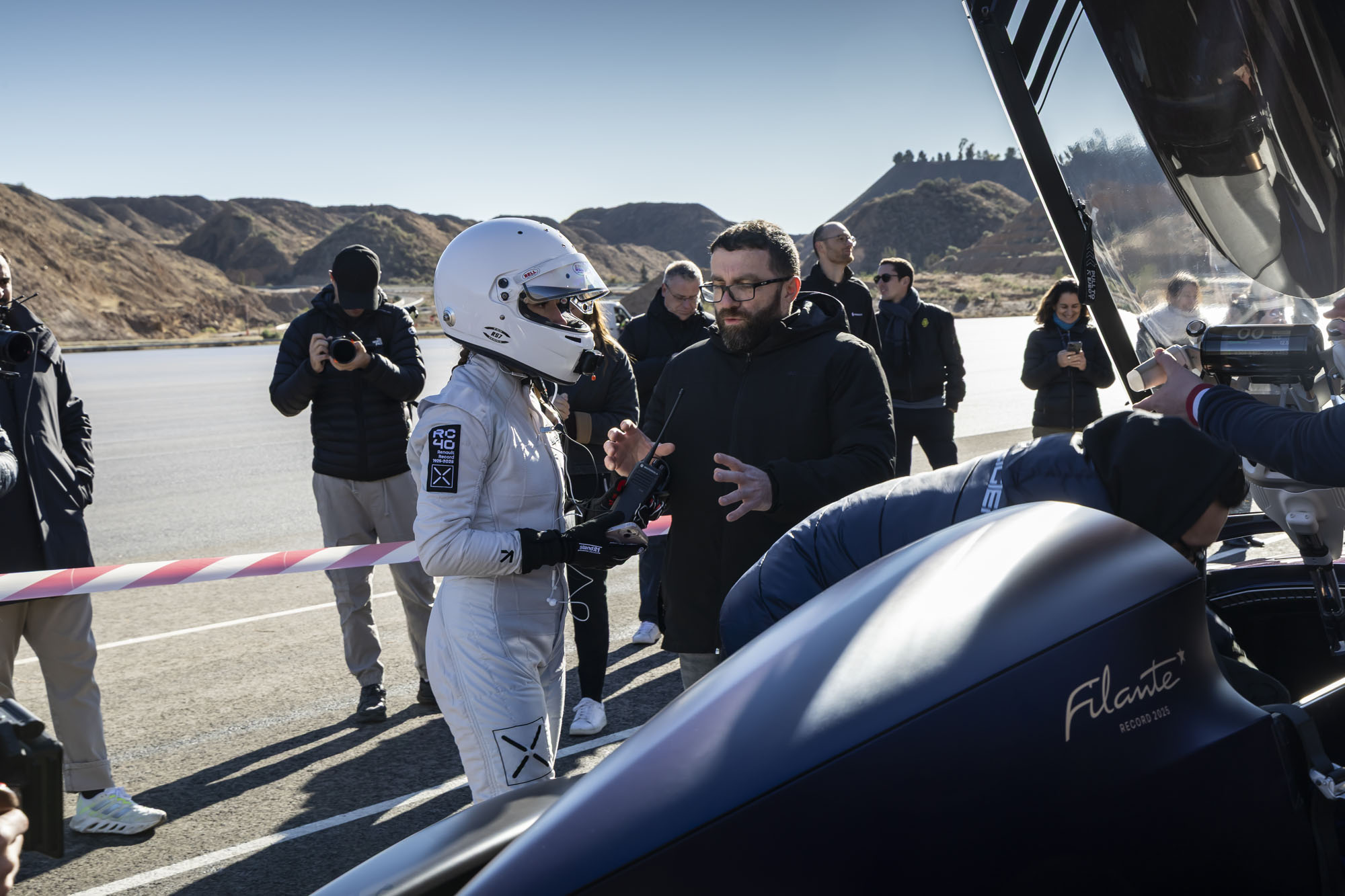
After 3 hours and 20 minutes, the first handover to Constance Léraud-Reyser. Following a 4-hour stint, Arthur Ferriere takes over to bring the challenge to a close at nightfall.
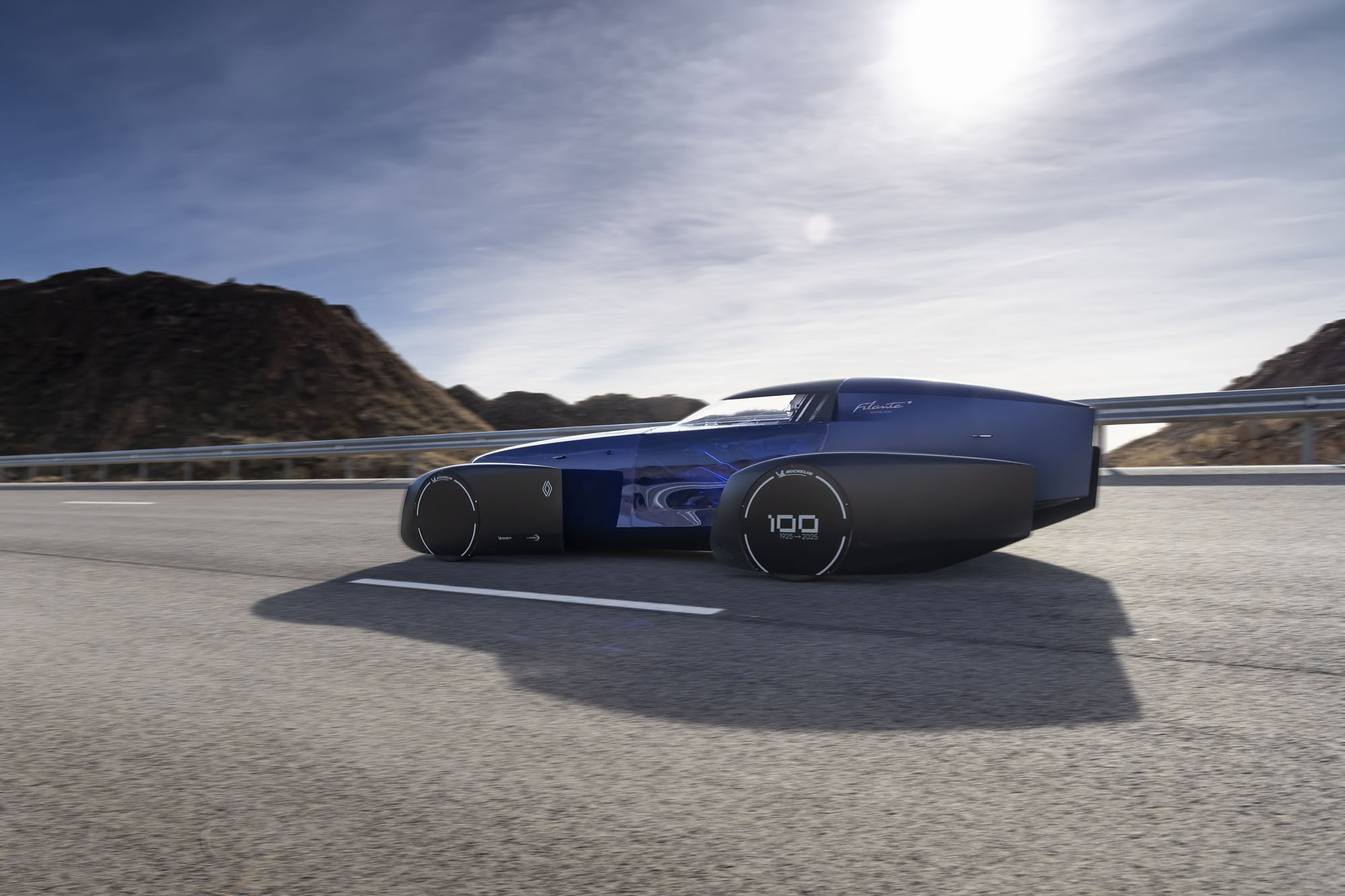
9 hours and 52 minutes later (excluding the 7 minutes driver change), the goal is achieved: 1,008 kilometres have been covered at an average speed of 102 km/h, without any recharging, representing consumption of just 7,8 kWh/100 km.
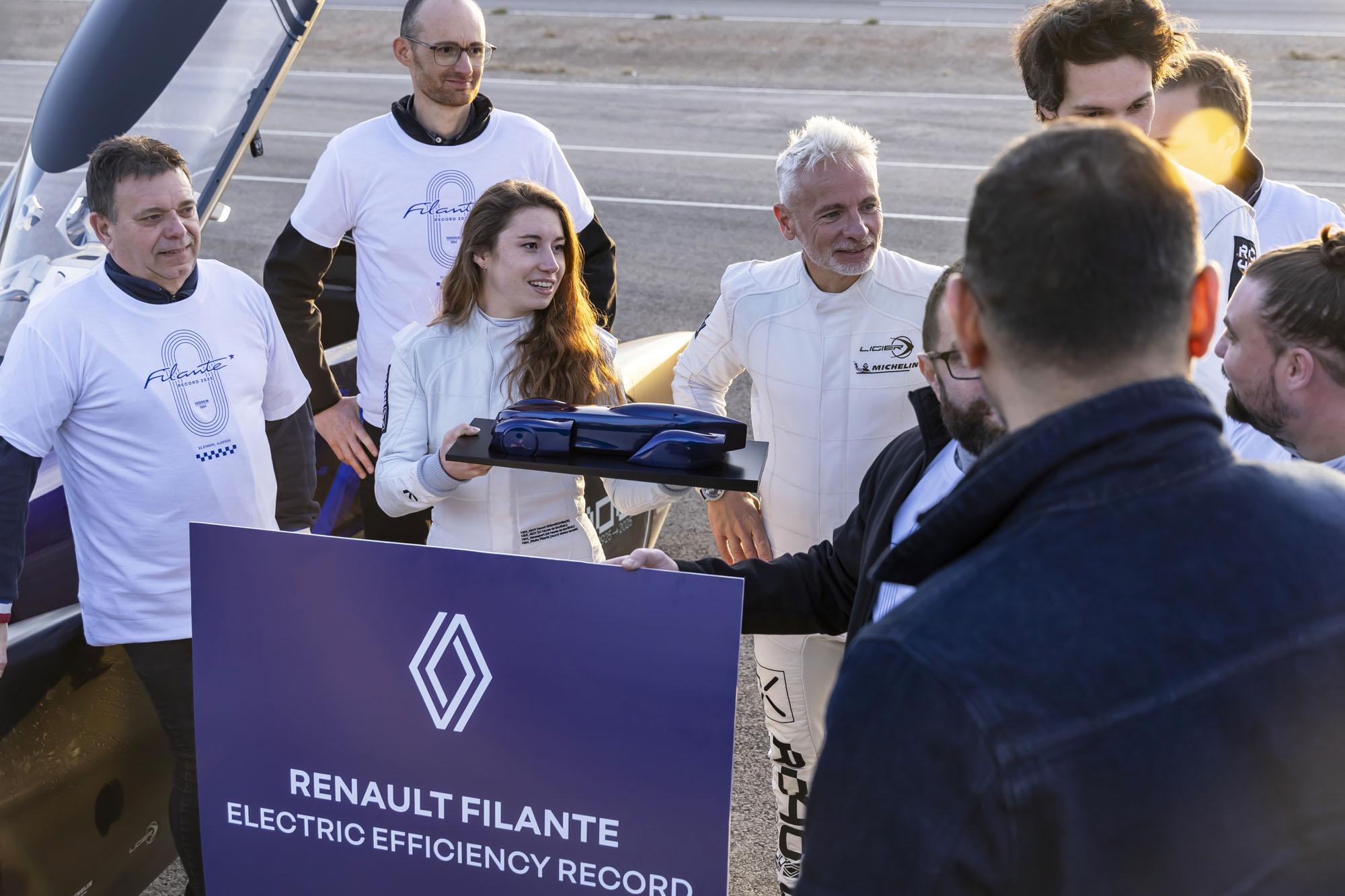
With 11% battery capacity remaining at the finish, Filante Record 2025 could have covered an additional 120 km at speeds exceeding 100 km/h.
A vision to shape the future, and the innovation to power it
Renault Filante Record 2025’s stylistic explorations, groundbreaking technology and proven real-world performance add up to far more than a simple engineering exercise: the findings from this venture will inform the development of future road-going electric models, enabling them to achieve ever higher levels of efficiency and meet customers’ real-life needs ever more closely – even in the most demanding conditions, such as sustained highway speeds.