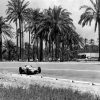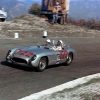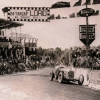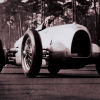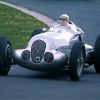
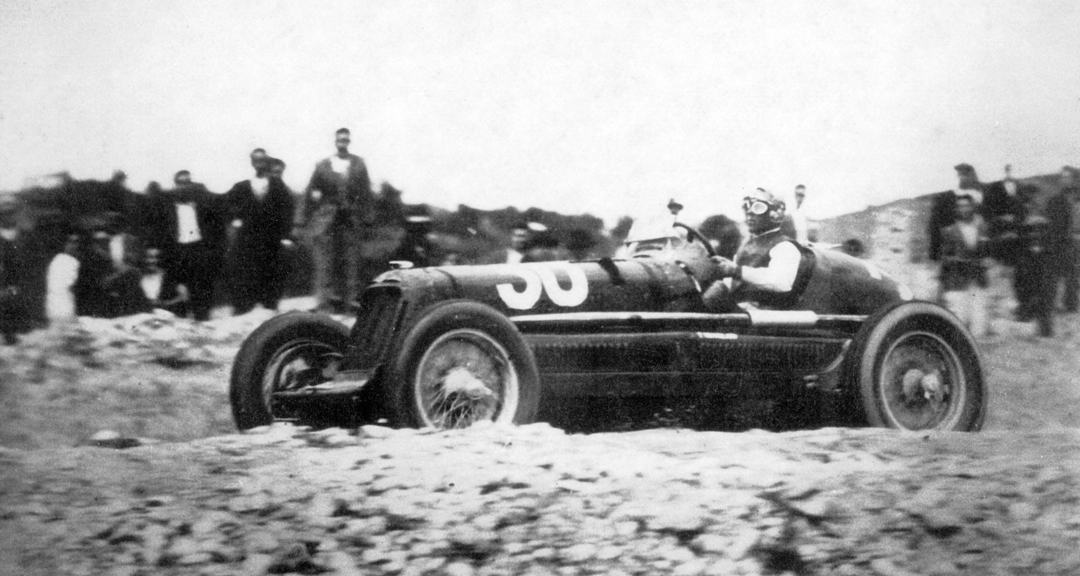
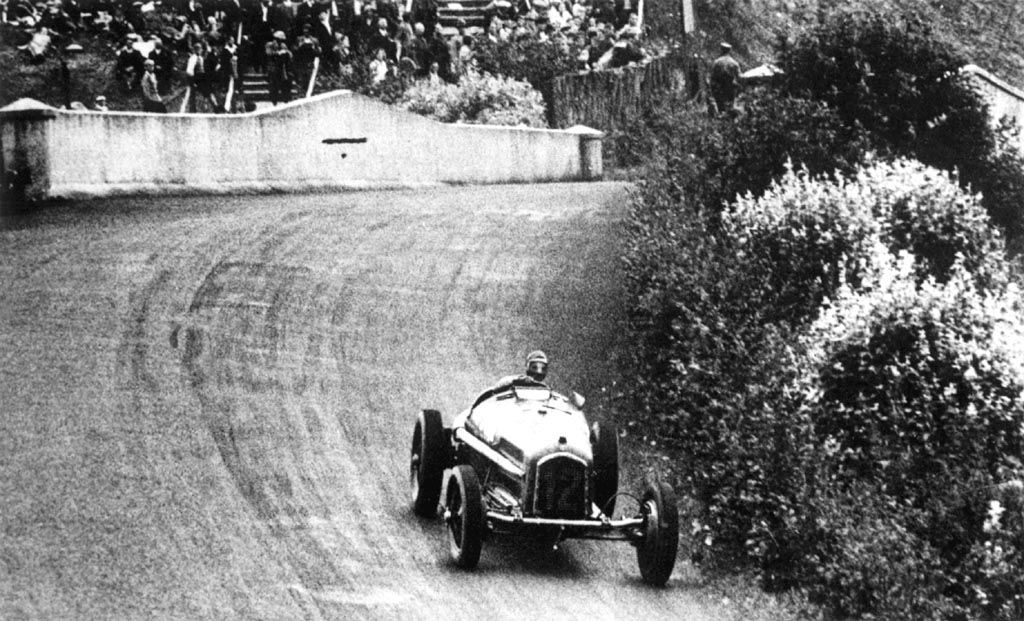
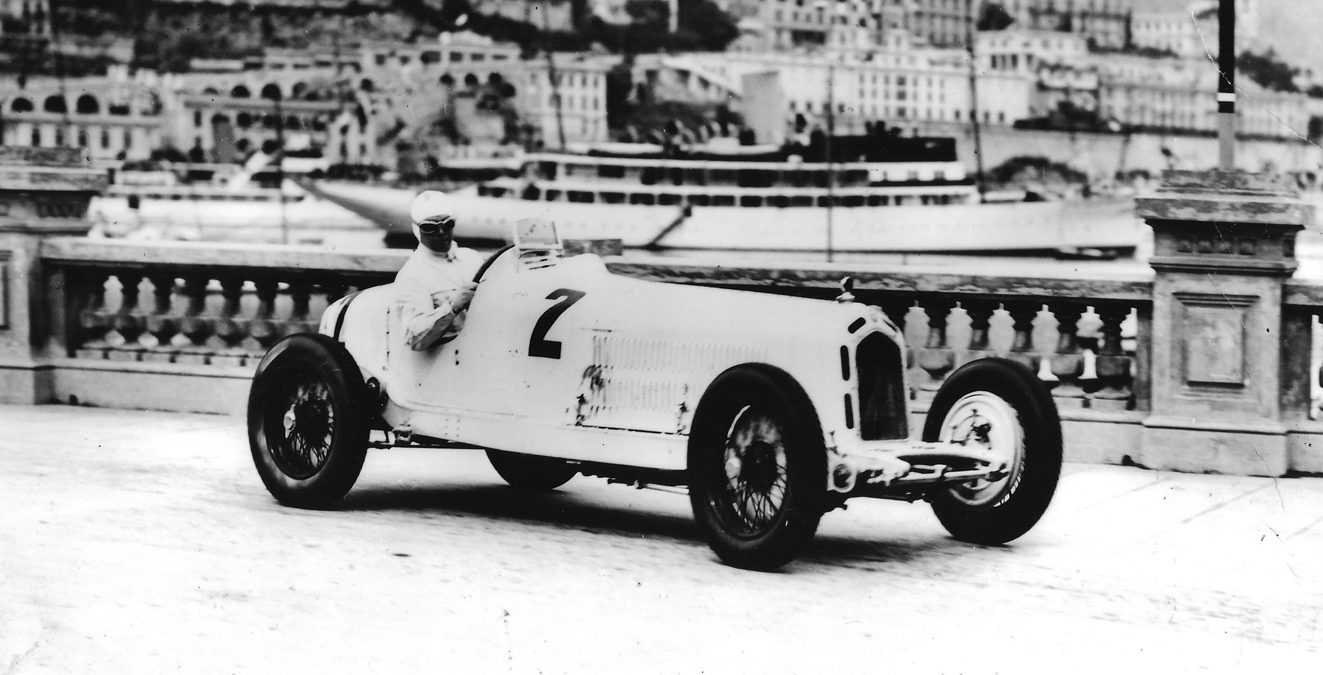
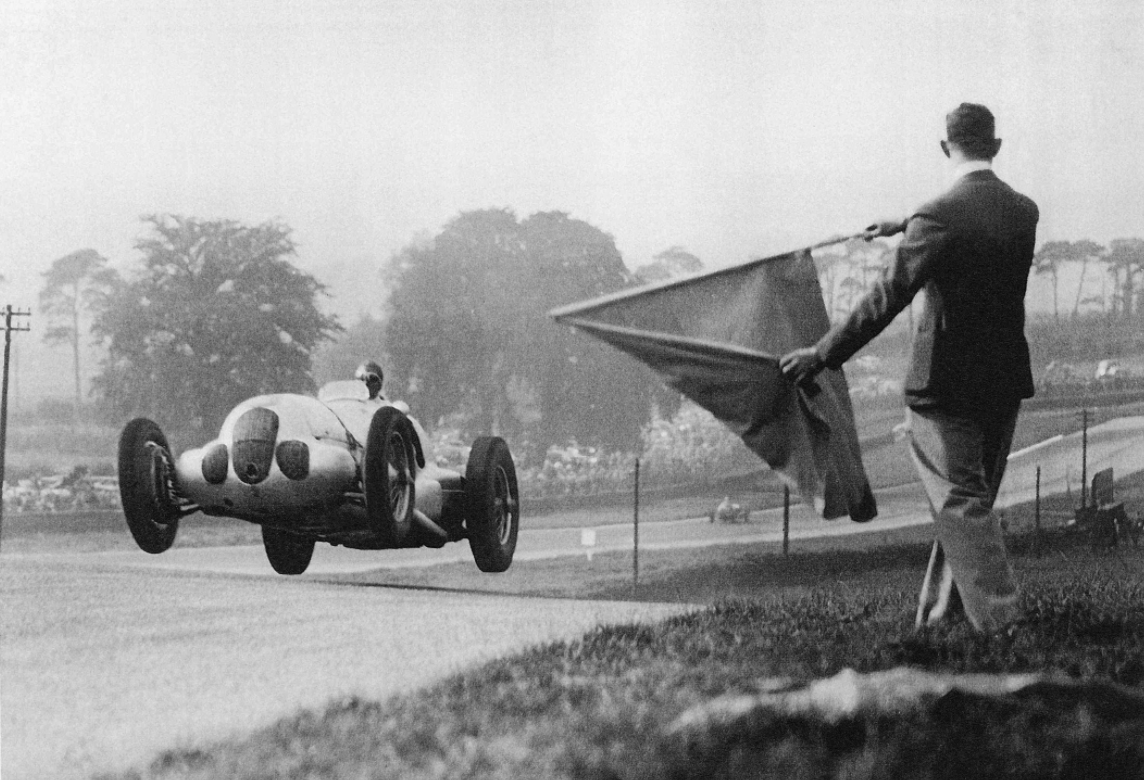
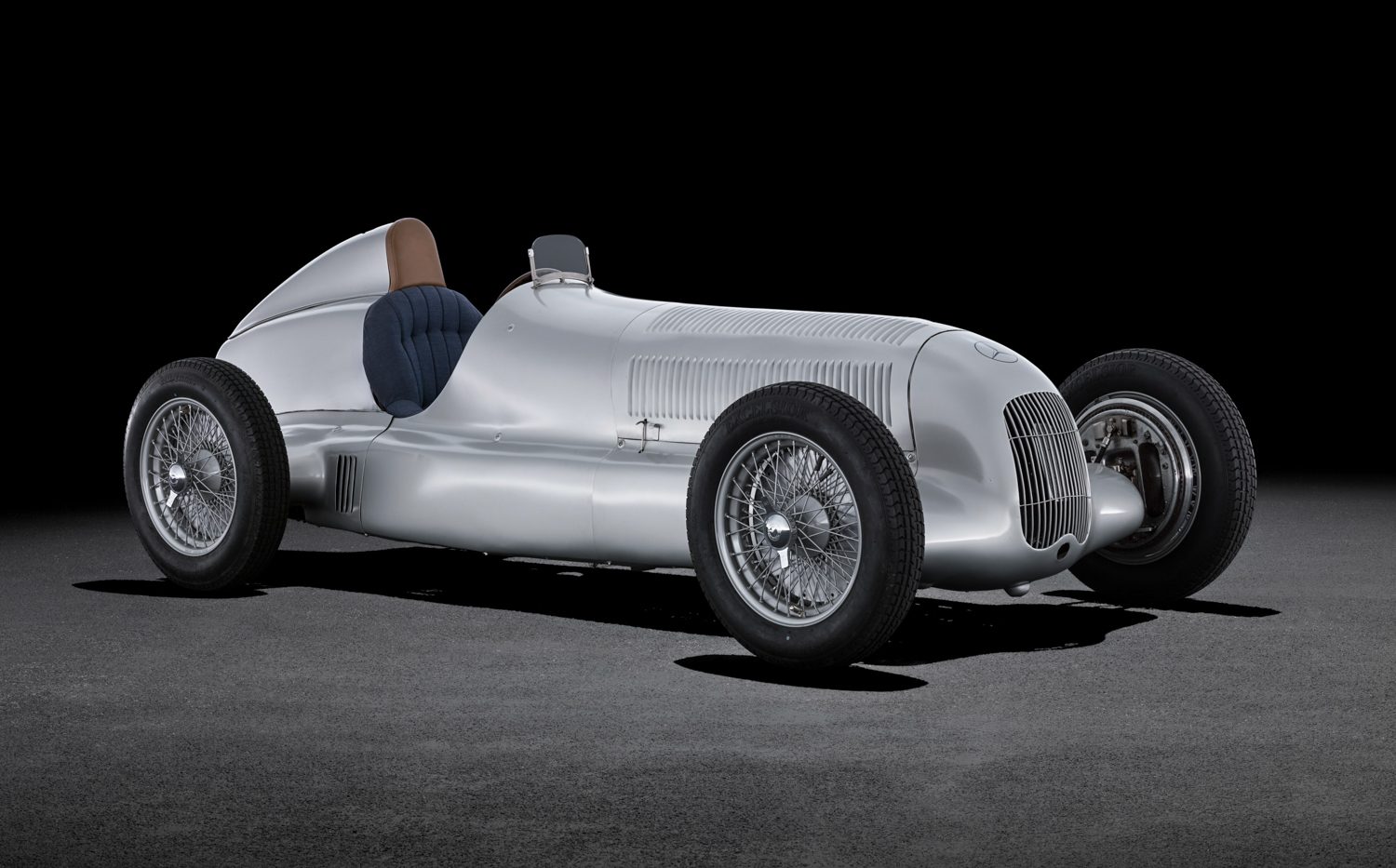
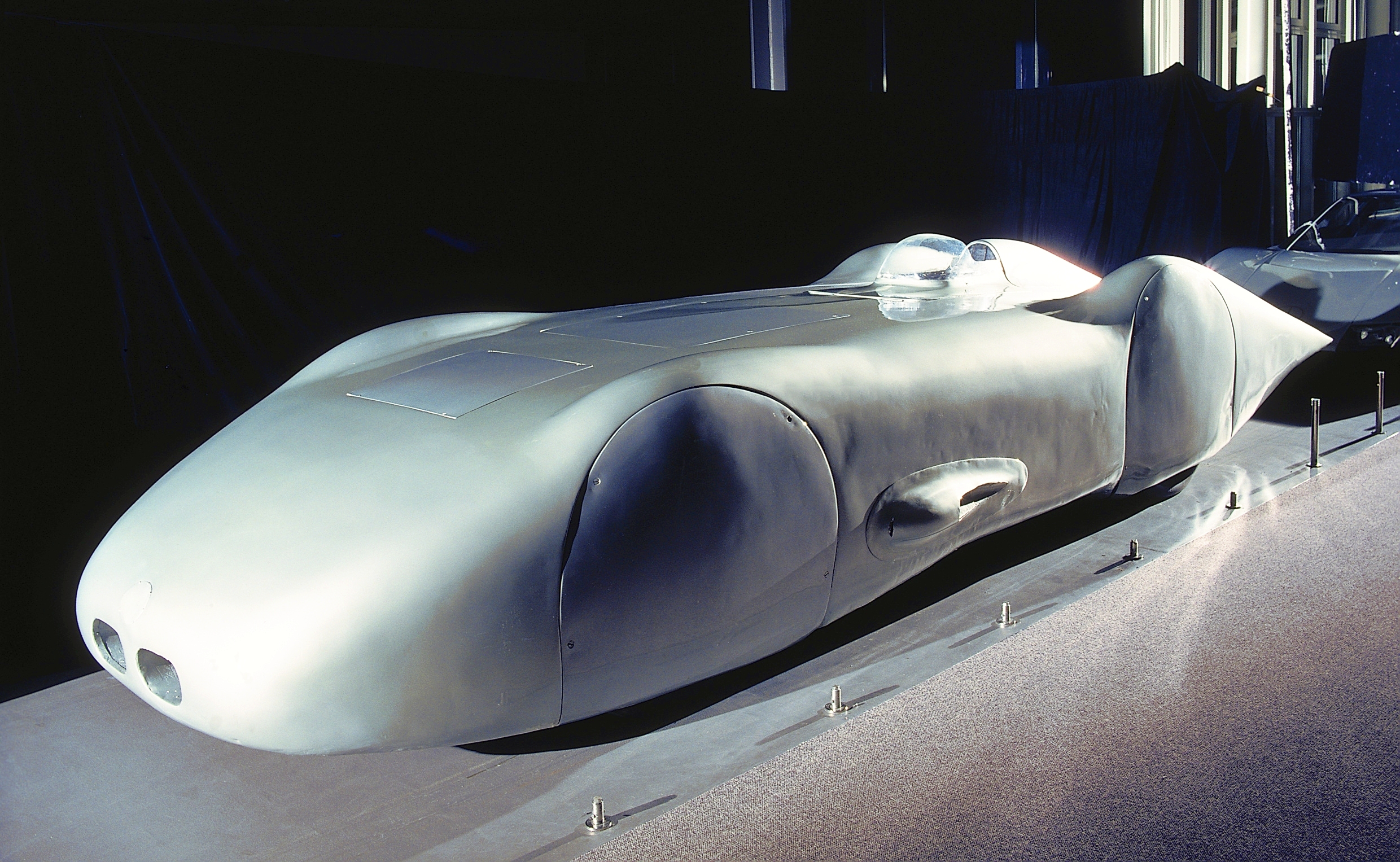
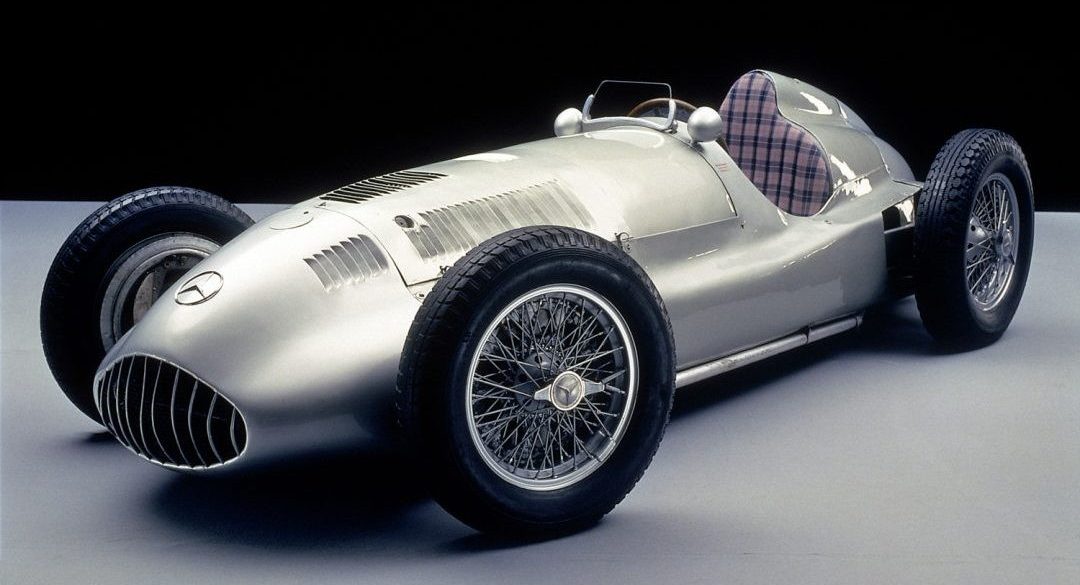
Italy restricted its 1939 races to 1½-liter cars to keep the Germans from winning Tripoli again after four straight silver victories. Karl Ludvigsen on how Daimler-Benz answered with the W165 voiturette for Italo Balbo's eight-mile Mellaha circuit.

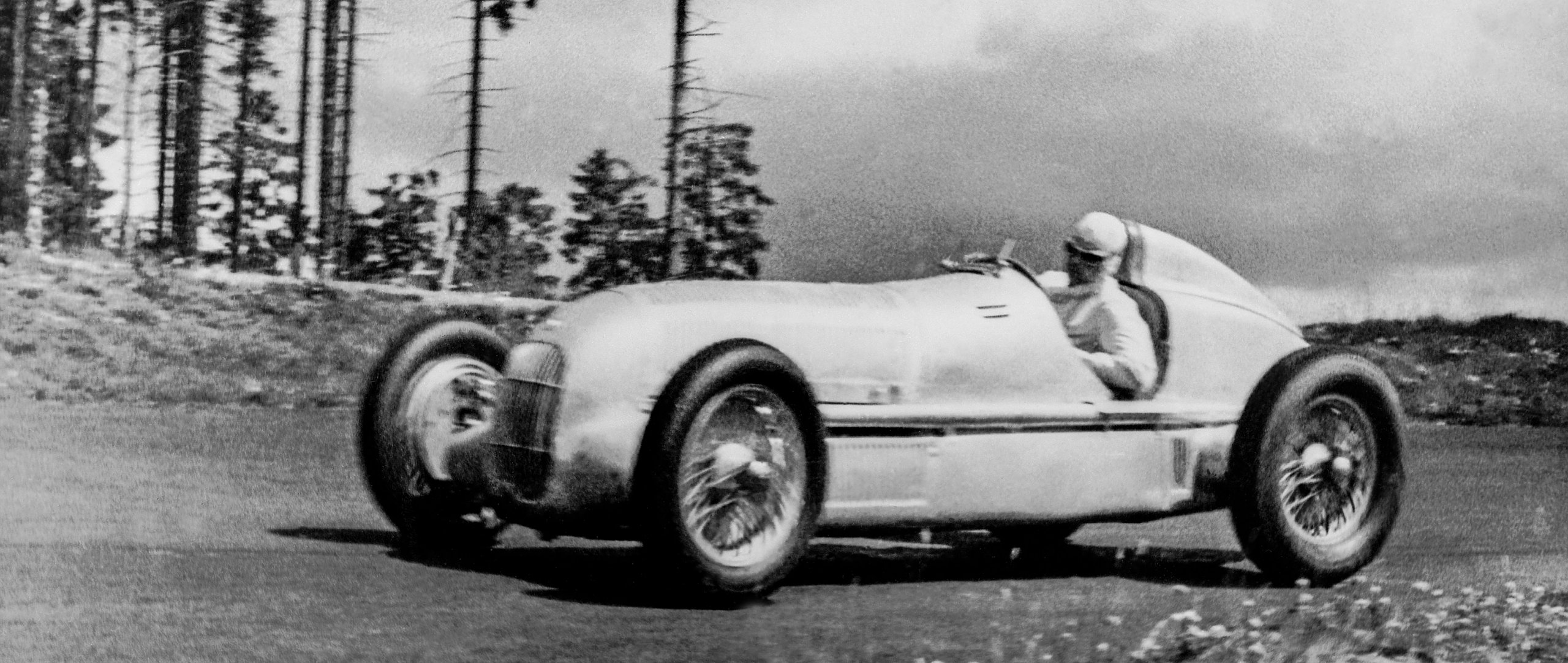
For six seasons, from the first Mercedes-Benz W25 at the Nürburgring in June 1934 to the last Grand Prix of peacetime at Belgrade in September 1939, two German teams raced each other for a state that paid them to win, and nobody else won anything that mattered. The Mercedes-Benz W25, W125 and W154 and the Auto Union Types A to D were the fastest racing cars the world had seen: 600 horsepower by 1937, 270 mph on the autobahn by 1938. Their drivers — Caracciola, Rosemeyer, Nuvolari, Stuck, Lang, Seaman — are the reason the 1930s are remembered as Grand Prix racing's heroic age. This is the whole story, and every linked piece is a source.
The pieces to start with
The archive's Silver Arrows story, Newman on how it began and on Nuvolari, the 1935 German Grand Prix, Caracciola's rise and fall, the Germans at Donington, Ludvigsen on the W25K and the record cars.
The Silver Arrows story told as a timeline, starting in 1932: the Lindbergh kidnapping, Hoover's five-day week, the Nazi election gains, and on 12 October the AIACR's 750 kg formula for 1934 that set Mercedes and Auto Union to work.
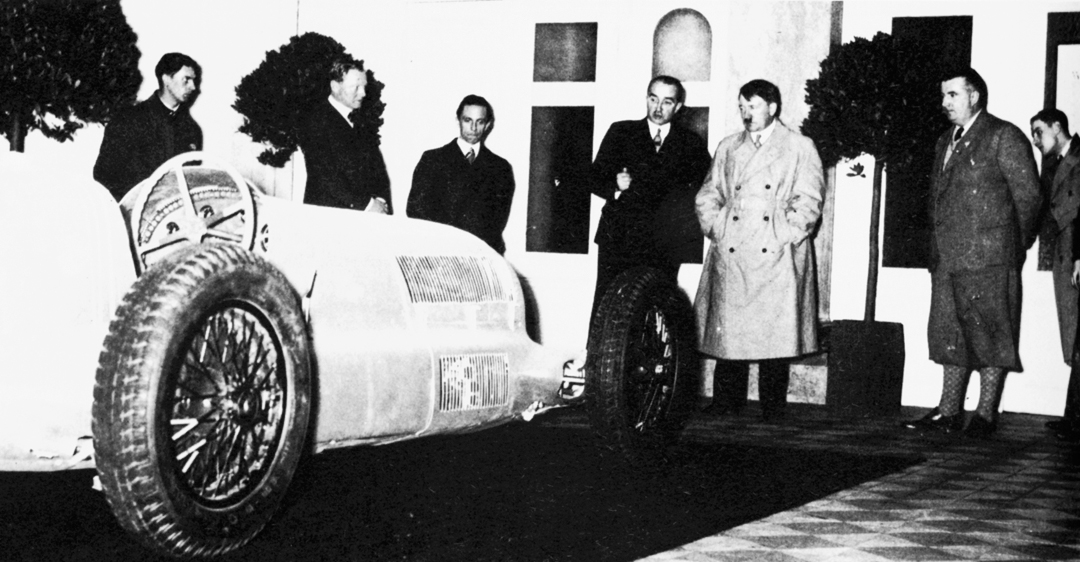
Hitler saw Varzi's Bugatti win the 1933 Avusrennen with no German car in the top three, and wanted that changed. In January 1934 he stood in the rain inspecting the Mercedes W25. Robert Newman on the Silver Arrows as propaganda.
Mantua, 13 June 1948: Ascari, Villoresi and Varzi came to race for a trophy named after the two sons Tazio Nuvolari had buried. That day he told Varzi he was retiring. Robert Newman begins a two-part life.
Nürburgring 1935, one lap to go: von Brauchitsch's 445 bhp Mercedes W25 leads Nuvolari's 330 bhp Alfa by 35 seconds, 300,000 spectators expect a German win, and the left rear tyre shows a white band. Douglas S. Brown's account.
Why should we always win the prizes for other people? Chiron asked. Monaco, 1933: he and Rudi Caracciola, dropped by their works teams in the Depression, arrived with two 2.3-liter Alfa Romeo Monzas as Scuderia CC.
October 1937: the German Grand Prix cars first came to Britain, to a Derbyshire pleasure park run by Fred Craner. Rodney Walkerley, who had followed them since 1934, remembers the journalists' remarks at the Hairpin more than the racing.
For 1936 Mercedes planned an SSK W25, shorter and lower, with Albert Heess's new 5,577 cc V12 estimated at 516 bhp on standard fuel and 598 on alcohol. The engine proved too heavy. Karl Ludvigsen on the Arrow that disappointed.
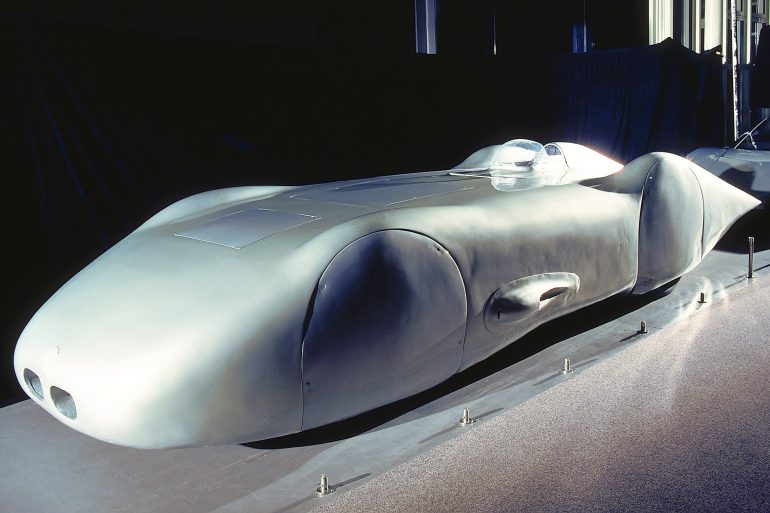
Auto Union took the world one-hour record in 1934 and Caracciola answered at Gyon and Avus that winter; the ONS then made the new Autobahns the stage for an annual Record Week. Karl Ludvigsen on Mercedes-Benz's record cars.
The newest long-form writing on the Silver Arrows, as it is published.

"Silver Arrows", Silberpfeile, was what the German press called the unpainted racing cars of Mercedes-Benz and Auto Union between 1934 and 1939, and the name has come to stand for the era itself: the 750-kilogram formula of 1934–37 and the three-litre formula of 1938–39, the European Championship that Rudolf Caracciola won three times and Bernd Rosemeyer once, and the fact, unprecedented and never repeated, that two teams from one country won every European Championship Grand Prix but one between 1935 and 1939. The archive's own series on the subject — The Story, The Cars, The Teams, the Key People, the Drivers and the Circuits — runs to twenty thousand words, and Robert Newman's Silberpfeile Rennen is the best short account of how it began. The Grand Prix racing that came before it is on The Vintage Years page, the coachbuilt road cars of the same decade on The Classic Era, and what happened when racing resumed in 1946 on The Postwar Sports-Racers.
In October 1932 the sport's governing body, the AIACR, announced the formula that would run from 1934: a Grand Prix car could weigh no more than 750 kilograms without fuel, oil, water and tyres, and had to be at least 85 centimetres wide at the cockpit. There was no limit on the engine. The intention was to keep speeds down by keeping engines small, on the theory that nobody could build a big engine into a light car; the result was the opposite, because Mercedes-Benz and Auto Union used aluminium, magnesium and the best metallurgy in Europe to put, by 1937, five- and six-litre supercharged engines of 500 to 650 horsepower into cars that weighed what the rule said. The second half of the equation was political. In February 1933, a fortnight after becoming Chancellor, Adolf Hitler opened the Berlin Motor Show with a speech on motorisation and a promise of state support for racing: about half a million Reichsmarks a year, which Mercedes-Benz had expected to have to itself until Hans Stuck, who had once given Hitler a lift, persuaded him to split it with the new Auto Union combine of Audi, DKW, Horch and Wanderer in Saxony. The subsidy covered a fraction of what the two companies spent, but it set the terms: the cars raced for Germany, and the NSKK's Adolf Hühnlein presided over the podiums. The archive's Teams and Key People pieces set out who paid and who decided, and the Grand Prix History series' pre-war overview places the formula in the longer story.
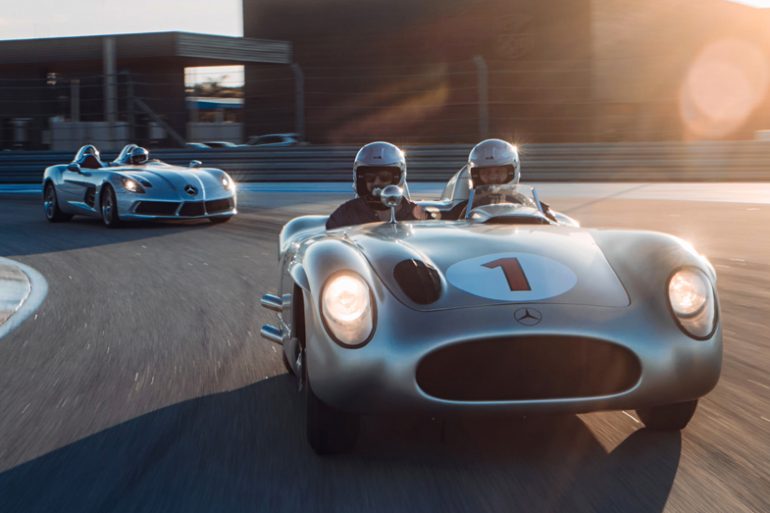
Mercedes-Benz's W25, designed under Hans Nibel, was conventional in layout — a supercharged 3.4-litre straight-eight in front of the driver, independent suspension all round, 354 horsepower — and was meant to debut at the AVUS in May 1934; it was withdrawn, and ran instead at the Eifelrennen on the Nürburgring on 3 June, where Manfred von Brauchitsch won. The story that the team scraped the white paint off overnight to get under 750 kilograms, and so discovered the silver, is Alfred Neubauer's, told in his memoirs twenty years later, and historians have never found a contemporary trace of it; the archive's anniversary piece tells the legend and another the race. Auto Union's car was stranger: Ferdinand Porsche's P-Wagen, a 4.4-litre V16 behind the driver, the fuel tank between driver and engine so that the balance did not change as it emptied, swing axles at the rear and a driver sitting far forward over the front wheels. It was fast and difficult, and it suited Hans Stuck, who won the German, Swiss and Czechoslovakian Grands Prix in it that first year; Neville Hay's Stuck Saga and the Type C and Type D profiles cover the cars. The Germans did not have it all their own way in 1934. Scuderia Ferrari's Alfa Romeo P3s won Monaco, Tripoli, the Targa Florio and, in front of the Germans at Montlhéry in July, the French Grand Prix, when every W25 and Auto Union retired and Louis Chiron led an Alfa Romeo 1-2-3; Barré Lyndon's account of that race, Giants in the Ring, is in the archive, as is Robert Newman's history of the P3 and its predecessors. Luigi Fagioli, the tough guy of Newman's two-part profile, won the Coppa Acerbo and the Spanish Grand Prix for Mercedes, and shared the Italian with Caracciola.
The European Championship was revived in 1935 and Rudolf Caracciola, back from the Monaco crash of 1933 that had shattered his right thigh and left one leg shorter than the other, won it in a four-litre W25: Tripoli, the Eifelrennen, the French, Belgian, Swiss and Spanish Grands Prix. The archive has his biography, The Rise and Fall of Caracciola and, in his own words, his report of the 1935 Tripoli Grand Prix, the richest race in the world, which Newman's Tripoli! covers from its lottery scandals onward. Fagioli won Monaco, the AVUS and Barcelona. Auto Union's season belonged to a newcomer, Bernd Rosemeyer, a motorcycle racer who had never driven a racing car before Auto Union tried him out at the Nürburgring in the autumn of 1934, nearly beat Caracciola at the Eifelrennen in his second race, and won the Czechoslovakian Grand Prix at Brno in September; the archive has two profiles of him. And on 28 July, at the Nürburgring, in front of three hundred thousand Germans and the entire leadership of the Reich, Tazio Nuvolari won the German Grand Prix in a three-year-old Alfa Romeo P3 with about 330 horsepower against nine Silver Arrows with 400 and more, taking the lead when von Brauchitsch's rear tyre burst on the last lap. The story goes that the organisers had no recording of the Italian anthem, and that Nuvolari had brought his own. The 1935 German Grand Prix is in the archive, with Newman's two-part Il Maestro, Nuvolari through the eyes of his friends and Neville Hay's portrait; Enzo Ferrari's answer to the German power, the twin-engined Bimotore, which Nuvolari drove to 200 mph on the Florence autostrada and which ate its tyres in every race, is there too.
The champion, the two German teams' cars and wins, and who else won, 1934 to 1939.
| Year | European Champion | Mercedes-Benz | Auto Union | The opposition | What happened |
|---|---|---|---|---|---|
| 1934 | No championship | W25 3.4 litres, 354 bhp · Eifelrennen (von Brauchitsch), Coppa Acerbo and Spanish GP (Fagioli), Italian GP (Caracciola / Fagioli) | Type A 4.4-litre V16 · German, Swiss and Czechoslovakian GPs (Stuck) | Alfa Romeo P3 · Monaco (Moll), Tripoli and Targa Florio (Varzi), French GP (Chiron); Bugatti Type 59 · Belgian GP (Dreyfus) | The 750 kg formula begins; the W25's paint legend is born at the Eifelrennen; Alfa Romeo humbles both German teams at Montlhéry |
| 1935 | Rudolf Caracciola (Mercedes-Benz) | W25B 4.0 litres · Tripoli, Eifel, French, Belgian, Swiss and Spanish GPs (Caracciola); Monaco, AVUS, Penya Rhin (Fagioli) | Type B 4.9 litres · Italian GP (Stuck), Tunis (Varzi), Czechoslovakian GP (Rosemeyer) | Alfa Romeo P3 · German GP (Nuvolari), Pau (Nuvolari); the Bimotore fails | The championship returns; Rosemeyer arrives; Nuvolari beats nine Silver Arrows at the Nürburgring on 28 July |
| 1936 | Bernd Rosemeyer (Auto Union) | W25K short chassis · Monaco and Tunis (Caracciola); the team withdraws after the German GP | Type C 6.0 litres, 520 bhp · Eifel, German, Coppa Acerbo, Swiss and Italian GPs (Rosemeyer); Tripoli (Varzi) | Alfa Romeo 12C-36 · Penya Rhin, Hungarian GP, Coppa Ciano, Milan GP, Vanderbilt Cup (Nuvolari); Donington GP (Ruesch / Seaman, 8C-35) | Rosemeyer's year, in fog at the Eifelrennen and everywhere else; Mercedes-Benz's worst season produces Uhlenhaut's racing department |
| 1937 | Rudolf Caracciola (Mercedes-Benz) | W125 5.66 litres, 646 bhp · German, Swiss, Italian and Czechoslovakian GPs (Caracciola), Monaco (von Brauchitsch), Tripoli and AVUS (Lang) | Type C · Eifel, Vanderbilt Cup, Coppa Acerbo and Donington GP (Rosemeyer), Belgian GP (Hasse) | Delahaye 145 wins the million-franc prize at Montlhéry; Alfa Romeo 12C-37 wins nothing | The most powerful season of the formula; the Germans come to Donington; Rosemeyer passes 400 km/h on the autobahn in October |
| 1938 | Rudolf Caracciola (Mercedes-Benz) | W154 3.0-litre V12 · Tripoli and Coppa Ciano (Lang), French GP (von Brauchitsch), German GP (Seaman), Coppa Acerbo and Swiss GP (Caracciola) | Type D 3.0-litre V12 · Italian GP and Donington GP (Nuvolari) | Delahaye 145 · Pau and Cork (Dreyfus); Alfa Romeo 308/312/316 and Maserati 8CTF lead and break | Rosemeyer killed on 28 January; the three-litre formula; Seaman wins at home for Mercedes; Nuvolari joins Auto Union and wins twice |
| 1939 | Hermann Lang (Mercedes-Benz), unratified | W154 (M163) · Pau, Eifel, Belgian and Swiss GPs (Lang), German GP (Caracciola); W165 1.5 litres · Tripoli (Lang / Caracciola 1-2) | Type D, two-stage supercharged · French GP (Müller), Yugoslav GP (Nuvolari) | Alfa Romeo 158 and Maserati 4CL in the voiturette races; ERA in Britain | Lang's five wins; Seaman killed at Spa on 25 June; Belgrade on 3 September, the day the war began, is the last race |
Car names link to every story on the site about that car. The European Championship was not held in 1934; the 1939 title was awarded by the German authorities and never ratified.
For 1936 Auto Union enlarged the V16 to six litres and 520 horsepower and called the car the Type C, and Rosemeyer, in his second season, became European Champion. He won the Eifelrennen in fog so thick that the other drivers slowed to a crawl and he did not, which earned him the name Nebelmeister; the German Grand Prix; the Coppa Acerbo at Pescara; the Swiss Grand Prix at Bremgarten; and the Italian at Monza, and in July he married the aviator Elly Beinhorn, which made them the most famous couple in Germany. Achille Varzi, who had joined Auto Union from Alfa Romeo, won Tripoli; Newman's profile and the archive's second follow Varzi's decline into morphine over the next two years. Mercedes-Benz's answer was the short-chassis W25K, and it was a disaster: Caracciola won Monaco in the rain and Tunis, and after the German Grand Prix the team withdrew for the rest of the season to rebuild. Karl Ludvigsen's Disappointing Arrow is the full account of that year and of what came out of it: a new racing department under the 29-year-old Rudolf Uhlenhaut, the engineer who could lap as fast as his drivers. Nuvolari, in Alfa Romeo's new 12C-36, won Penya Rhin, the Hungarian Grand Prix, the Coppa Ciano, the Milan Grand Prix and, in October, the Vanderbilt Cup on the new Roosevelt Raceway on Long Island, for the richest purse of the year; Art Evans's Vanderbilt Cup profile covers the 1936 and 1937 revivals.
The last year of the 750-kilogram formula produced the most powerful Grand Prix cars built until the turbocharged engines of the early 1980s. Uhlenhaut's W125 had a 5.66-litre straight-eight with 646 horsepower on the test bed and nearly 600 in the race, a long tubular chassis, a de Dion rear axle and soft springs with firm damping, the opposite of everything before it. Caracciola won the German, Swiss, Italian and Czechoslovakian Grands Prix in it and his second championship; von Brauchitsch won Monaco at the head of a Mercedes 1-2-3; Hermann Lang, the former racing mechanic who had been promoted to the driving staff in 1935, won Tripoli and then the AVUS race, run with streamlined bodies on the new banking at an average of 162 mph, the fastest motor race ever run until the Race of Two Worlds at Monza in 1958. The archive has a season history of the W125, its specification, John Surtees choosing it as his greatest racecar and Newman's Hermann Lang. Rosemeyer answered with the Eifelrennen, the Vanderbilt Cup, the Coppa Acerbo and, on 2 October, the Donington Grand Prix, the first time the German cars had raced in Britain; Rodney Walkerley's When the Germans Came to Donington and the archive's history of the circuit describe the day the Silver Arrows took off over the Melbourne Rise in front of fifty thousand people who had never seen anything like it. Dick Seaman, the Englishman who had dominated voiturette racing in an eight-year-old Delage, joined Mercedes-Benz that year, the only foreigner on the team; his driver profile and Newman's Dick Seaman tell his story.
Record-breaking had become the third front of the German rivalry. In October 1937, during the Reich's record week on the new Frankfurt–Darmstadt autobahn, Rosemeyer's streamlined Auto Union became the first car to exceed 400 km/h on a public road; Mercedes-Benz, beaten, came back on the morning of 28 January 1938 with a W125 in a fully enclosed body and a 5.6-litre V12, and Caracciola drove it through the flying kilometre at 432.7 km/h, 268.9 mph, a record for a public road that has never been broken. Auto Union's car was on the road that same morning. Shortly before noon, with a crosswind rising through the gap in the trees at Mörfelden, Rosemeyer's car left the road at something over 400 km/h and he was killed. He was 28, and he had been European Champion little more than a year before. Karl Ludvigsen's Need for Speed is the history of the Mercedes record cars, and the archive's second Rosemeyer profile begins on the autobahn that morning. Auto Union never fully recovered the spirit of the Rosemeyer years, and the Type D that followed was driven by Stuck, Rudolf Hasse, Hermann Paul Müller and, from the summer of 1938, Nuvolari.
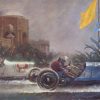
The three-litre formula of 1938 — three litres supercharged or four and a half unsupercharged, with a sliding minimum weight — was written to slow the Germans down and to let the French and Italians back in, and it did neither. Mercedes-Benz's W154 was a 60-degree V12 of 468 horsepower, laid low in a new frame so that the driver sat beside the propshaft; Ludvigsen's Heavy Arrow is the car's history. It won five of the season's seven major races: Lang at Tripoli and the Coppa Ciano, von Brauchitsch at Reims in a Mercedes 1-2-3 with the Klemantaski Collection's photograph to prove it, Caracciola at the Coppa Acerbo and in Switzerland, and Seaman, after von Brauchitsch's car caught fire in the pits while leading, the German Grand Prix at the Nürburgring, which the archive calls a Briton's finest hour and which Seaman accepted on the podium with a half-raised salute he could not avoid and did not enjoy. Caracciola won his third European Championship. Auto Union's Type D, Robert Eberan von Eberhorst's three-litre V12 with a de Dion rear end, was better balanced than the Type C and had no one to drive it until Nuvolari, who had quit Alfa Romeo after his car caught fire at Pau, joined in August; he won the Italian Grand Prix at Monza and then, on 22 October at Donington, in a race postponed three weeks by the Munich crisis, the Donington Grand Prix, at 45, from Lang and Seaman. The year's French victory came in April: René Dreyfus's unsupercharged 4.5-litre Delahaye 145, the car that had won the French government's million-franc prize at Montlhéry the summer before, beat Caracciola and Lang at Pau on fuel consumption, the W154s stopping for fuel and the Delahaye not; the archive has Newman's René Dreyfus and a painting of the moment.
Each links to every story on the site about that car; the model pages come next.
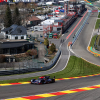
Lang, the mechanic, was the fastest driver in the world in 1939. He won Pau, the Eifelrennen, the Belgian Grand Prix, the Swiss Grand Prix and, in the most audacious piece of engineering of the whole era, the Tripoli Grand Prix. The Italians, tired of losing their richest race, had restricted it to 1.5-litre voiturettes, where the Alfa Romeo 158 and the Maserati 4CL were unbeatable; Mercedes-Benz built two W165s, scaled-down V8 W154s, in eight months, in secret, and Lang and Caracciola finished first and second. Ludvigsen's V for Voiturette tells the story, and Ed McDonough's Alfetta that of the car that had to wait until 1946 for its revenge. Caracciola won his sixth German Grand Prix, a record no one has matched. H. P. Müller won the French Grand Prix at Reims for Auto Union. And at Spa on 25 June, in the rain, leading the Belgian Grand Prix, Dick Seaman went off at the Clubhouse corner, hit a tree, and died that night of his burns; he was 26, and Mercedes-Benz sent a wreath from Hitler to the funeral in London. The last Grand Prix of the era was the Yugoslav, on the Kalemegdan park circuit in Belgrade on 3 September 1939, the day Britain and France declared war; Nuvolari won it for Auto Union from von Brauchitsch. The German sporting authority declared Lang European Champion; the AIACR never ratified the season, and by its own points Müller had won. Both teams' cars went into storage; the Auto Unions were found by the Red Army in 1945 and taken east, and Audi has spent decades buying them back.
Nobody else won a championship race after 1935, but the rest of the grid is where much of the archive's richest material sits. Scuderia Ferrari ran Alfa Romeo's works cars until 1938 — the P3, the 8C-35, the 12C-36 and 12C-37 and the hopeless Bimotore — and then Alfa Corsa took over with the Tipo 308, 312 and 316 and the voiturette 158; Newman's Century of Success covers the works effort, and the 8C 2900 sports cars that won the Mille Miglia three years running are profiled in McDonough's Road Warrior. Maserati's 8CM, 6CM and 4CM were the privateers' cars, and the 8CTF of 1938, which could lead a Grand Prix for a few laps and then break, went to Indianapolis and won the 500 twice for Wilbur Shaw. Bugatti's Type 59, the last and most beautiful of the Molsheim Grand Prix cars, is profiled here, and Jean-Pierre Wimille, who drove it and the 57G tank cars, here. France's real hope was the Fonds de Course million francs, offered for a French car that could lap Montlhéry at a set speed, which Delahaye's 145 won in August 1937 and which paid for Dreyfus's Pau victory; Newman's Sunset on French Luxury is the context. In Britain the 1.5-litre ERA — Raymond Mays, Peter Berthon and Humphrey Cook's English Racing Automobile of 1934 — owned the voiturette class, and Mike Jiggle's Arrested Development, McDonough's Humphrey on R11B and Neville Hay's two-part history of Prince Bira's ERAs, Romulus, Remus and Hanuman, are the archive's; the Bira profile and Bira's Toy complete the set.
The Silver Arrows raced on roads. The Nürburgring Nordschleife, 22.8 kilometres through the Eifel, was the German Grand Prix and the Eifelrennen and the place the cars were developed; the AVUS, two ten-kilometre autobahn straights joined by a flat hairpin and, from 1937, a brick banking at 43 degrees, was where they went fastest; Tripoli's Mellaha circuit, thirteen kilometres of palm-lined desert road built under Marshal Balbo with a grandstand the length of a street, was the richest race and the fastest road race of the decade. Bremgarten in Berne, the Swiss Grand Prix's circuit in the woods, was the most feared; Monza, Spa, Pescara's 25-kilometre Coppa Acerbo course, Montlhéry, Reims, Brno's Masaryk circuit, Livorno, Monaco and Donington made up the rest, with Roosevelt Raceway on Long Island for the two Vanderbilt Cups. The archive's Silver Arrows circuits piece gives the lengths and lap records, Heroes of AVUS the Berlin track, the Grand Prix History series' greatest circuits the long view, and Donington has its own history and Tim Parnell's family connections. The Monaco Grand Prix, the Mille Miglia and the Tourist Trophy, where Nuvolari won for MG in 1933 and the Germans never came, have pages of their own.
Race accounts and racing stories from 1934 to 1939, newest first.
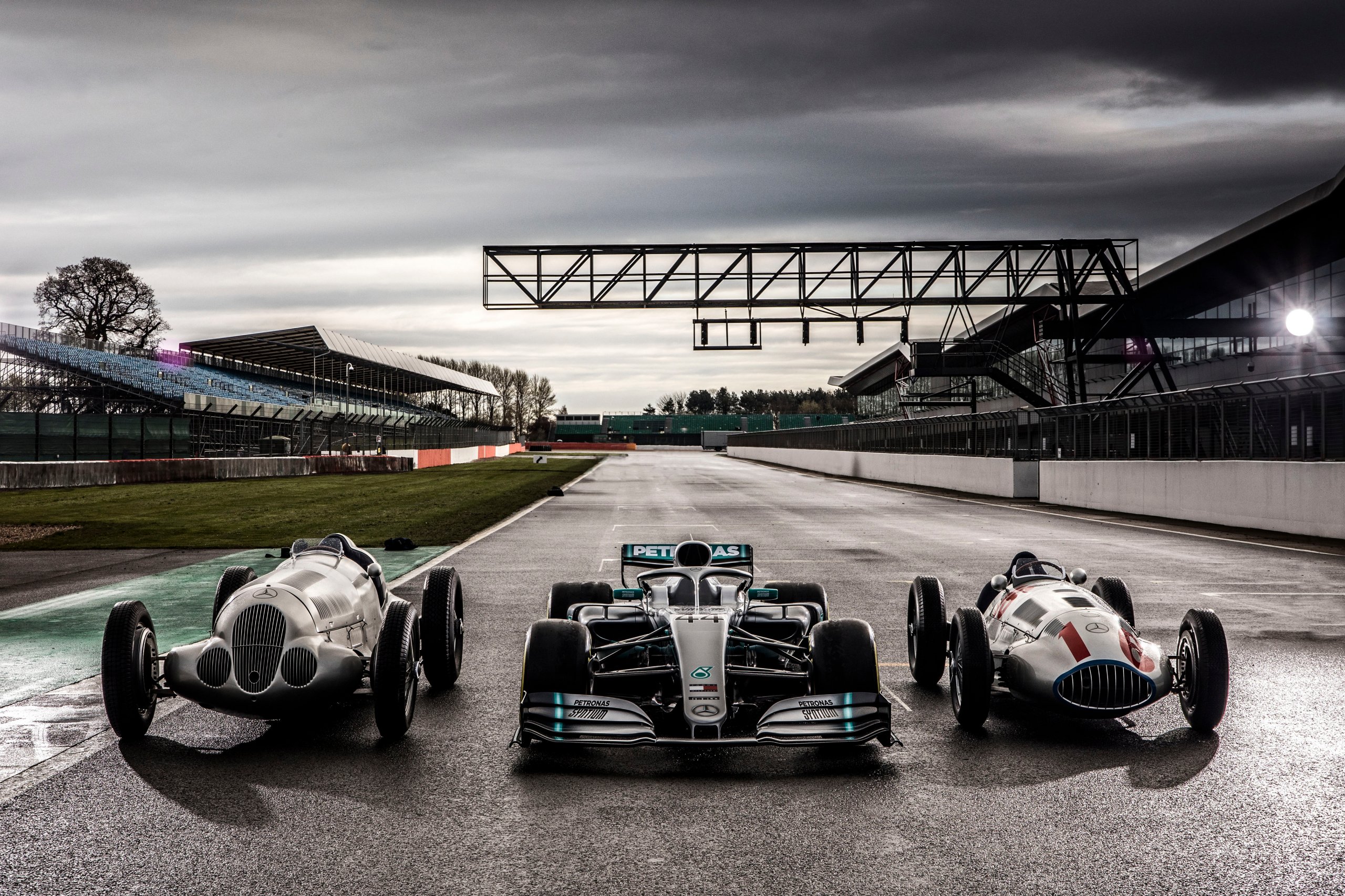
Mercedes-Benz built four Grand Prix cars in six years: the W25 of 1934–36 in 3.4-, 3.7-, 4.0- and 4.7-litre form (and the short-chassis K), the W125 of 1937, the W154 of 1938–39 (the 1939 cars, with the M163 engine, are often called W163) and the W165 voiturette; the archive has specification pages for the W25, W125 and W154, Ludvigsen's long studies of the W25K, W154 and W165, and the news of a W154 offered for sale and of W125 and W154 returning to Donington. Auto Union built the Type A (4.4 litres, 1934), B (4.9, 1935), C (6.0, 1936–37) and D (3.0 V12, 1938–39), all mid-engined, plus the streamliners for the AVUS and the records; the surviving cars are the rarest Grand Prix machines in the world, and Stuck's son drove one up Shelsley Walsh eighty years after his father. Ludvigsen's In the Beginning and Newman's Bridge Over Troubled Waters follow Porsche's own firm through the same years. Every car named here links to its tag archive in the table and cards below; the model pages come next.
Single-car stories: W25s to W165s, Auto Unions, P3s, 8C 2900s, Bugattis, Delahayes and ERAs.
Alfred Neubauer, who invented the job of team manager, and Uhlenhaut ran Mercedes-Benz; Ferdinand Porsche, genius rather than hero in Newman's phrase, Eberan von Eberhorst and the team manager Karl Feuereissen ran Auto Union. The drivers are the archive's great strength: Caracciola, Rosemeyer, Nuvolari, Varzi, Stuck, Lang, Seaman, von Brauchitsch, the unlucky bird who led so many races and won three, Fagioli, Dreyfus, Wimille, Bira, Carlo Pintacuda, the Mille Miglia winner, and Antonio Brivio, interviewed by Newman. Hans Ruesch, the Swiss privateer who won the Donington Grand Prix of 1936 in an Alfa 8C-35 with Seaman, gave the magazine an interview in his nineties. Paul Pietsch, Auto Union's junior driver of 1935, was the last of them when he died at 100 in 2012.
Drivers, engineers and team managers of the Silver Arrows years.
The W125's 646 horsepower was not exceeded by a Grand Prix car until the turbos of the early 1980s. Caracciola's 432.7 km/h on the autobahn on 28 January 1938 remains the fastest speed ever recorded on a public road. Lang's 1937 AVUS race was won at 261 km/h, 162 mph, with Rosemeyer's fastest lap at 276 km/h, figures no circuit race matched until the Monza 500 of 1958. Mercedes-Benz and Auto Union won 23 of the 24 races counting towards the European Championship from 1935 to 1939; the exception was Nuvolari's German Grand Prix of 1935. Caracciola's three titles, 1935, 1937 and 1938, were not matched until Fangio, and his six German Grand Prix wins remain the record. Rosemeyer won the championship in his second season of car racing. Nuvolari was 45 when he won at Donington in 1938 and 46 at Belgrade. Tripoli paid the winner more than any race in the world, and in 1939 Mercedes-Benz built an entire new car to win it once. Two of the era's champions died in it, Rosemeyer in 1938 and Seaman in 1939; Varzi survived it and was killed at Bremgarten in 1948, Caracciola fractured his skull at Indianapolis in 1946 and raced on until a crash at Bremgarten in 1952, Lang won Le Mans in 1952 at 43, Nuvolari raced until 1950 and died in bed in 1953, and von Brauchitsch lived until 2003.
Short answers, with the long ones above.
The unpainted silver Grand Prix cars of Mercedes-Benz and Auto Union between 1934 and 1939 — the W25, W125 and W154 and the Auto Union Types A to D — and, by extension, the era in which the two German state-backed teams won almost every major race in Europe.
The legend is that Mercedes-Benz scraped the white paint off the W25 the night before its first race in June 1934 to get under the 750-kilogram weight limit. The story comes from team manager Alfred Neubauer's memoirs and no contemporary source confirms it; bare aluminium was simply the lightest finish.
Rudolf Caracciola won three European Championships (1935, 1937, 1938) and six German Grands Prix; Bernd Rosemeyer won the 1936 title in his second season and was the fastest of them all before his death in January 1938; Tazio Nuvolari beat the Germans in an inferior Alfa Romeo in 1935 and then won for Auto Union in 1938 and 1939.
The German state paid Mercedes-Benz and Auto Union a subsidy of about half a million Reichsmarks a year between them from 1933, with bonuses for wins. It covered only a fraction of what the teams spent, but the programmes were run as national prestige projects and the cars raced under the Nazi flag.
The 1937 Mercedes-Benz W125 had about 600 horsepower in race trim and reached 190 mph on circuits; the 1937 AVUS race was won at an average of 162 mph. In record trim, Rudolf Caracciola's Mercedes-Benz reached 268.9 mph (432.7 km/h) on the Frankfurt–Darmstadt autobahn in January 1938.
The Grand Prix rules of 1934 to 1937: a car could weigh no more than 750 kg without fuel, oil, water and tyres, with no limit on engine size. Meant to slow the cars by forcing small engines, it produced the most powerful racing cars built until the 1980s.
Alfa Romeo won most of 1934 and Nuvolari won the 1935 German Grand Prix in a P3; René Dreyfus's Delahaye 145 beat the Mercedes team at Pau in 1938; otherwise the Germans won every championship race from 1936 to 1939.
The Mercedes-Benz cars survived in Stuttgart and are in the company's museum and collection; the Auto Unions were taken from Zwickau by the Soviet Army in 1945 and scattered, and Audi has since recovered or rebuilt several. Mercedes-Benz returned to Grand Prix racing with the W196 in 1954.
The whole thread, newest first.