
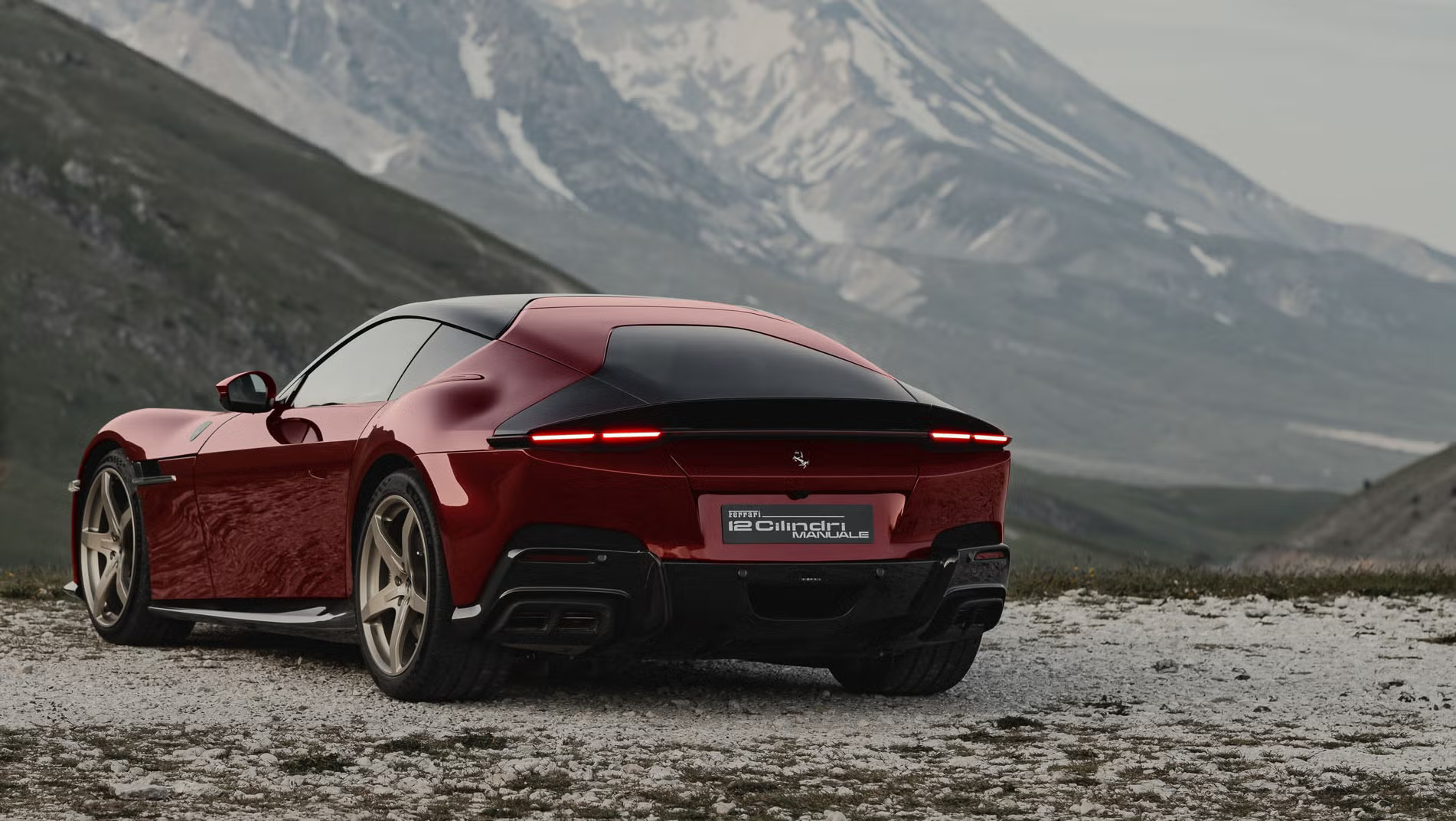

The open gate is back at Maranello. Ferrari revealed the 12Cilindri Manuale on July 3, a special series of 1,499 cars that restores the clutch pedal and the exposed metal shift gate to a front-engined V12 berlinetta. The linkage, however, is gone. Every movement of the driver’s hand and foot becomes an electronic signal through Manuale By-Wire, a system Ferrari developed entirely in-house and layered over the 8-speed dual-clutch transmission.
The company positions the car as a return to the character of its Gran Turismo models from the 1950s through the 1970s, when working a gated lever was simply part of owning one. Six forward gears and reverse answer to the driver’s hand. An automatic mode remains for when traffic or temperament demands it, and for the first time in many years, there are no paddles behind the wheel.
How the Manuale By-Wire System Works
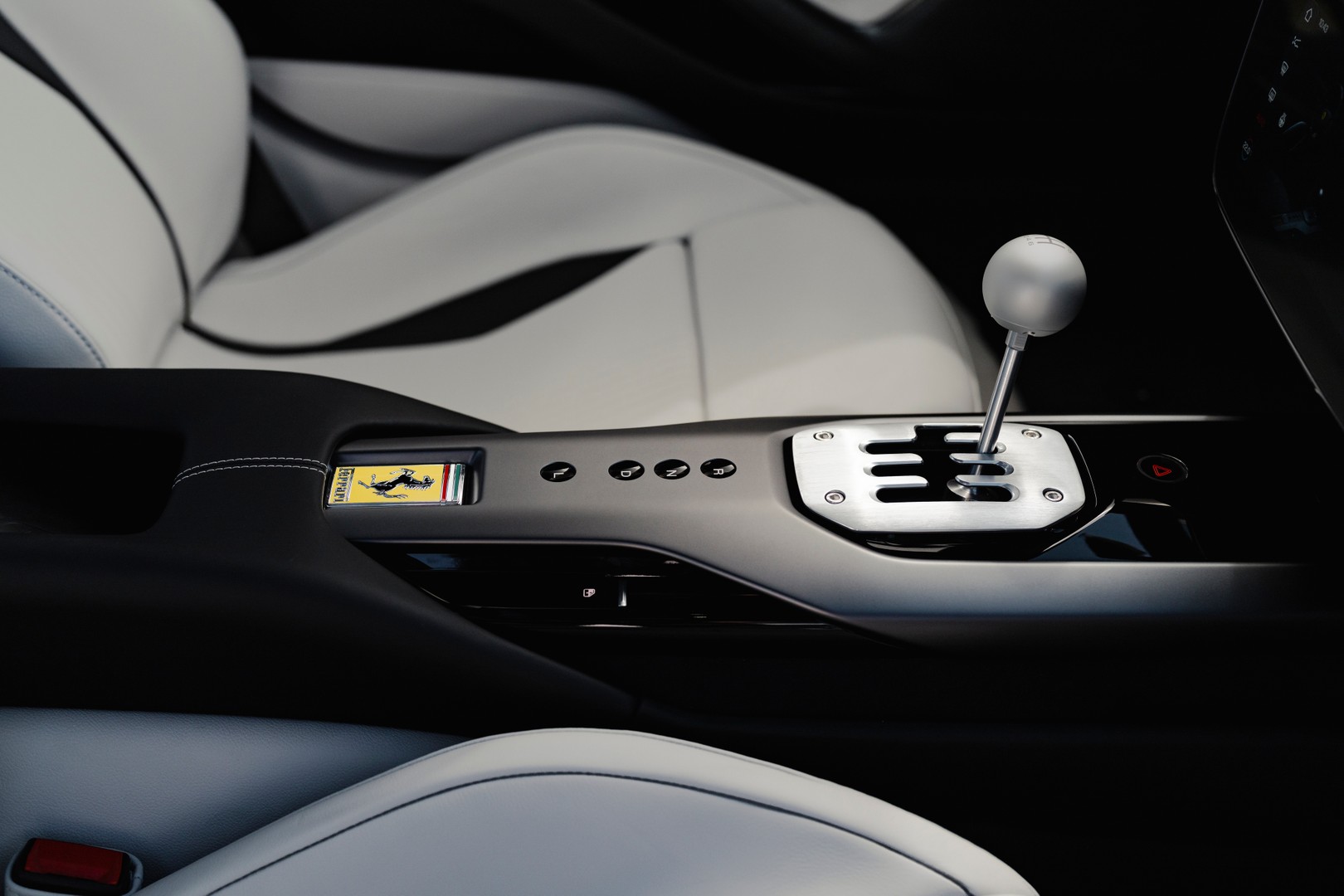
At the core of the manual command sits a module machined from solid material, weighing less than 3.5 kg (7.7 lbs). Selection and engagement run through a central rotating block in high-strength steel. Eccentric rollers return the lever to neutral, a profiled drum builds and releases load through the knob, and the result, Ferrari says, reproduces the synchronization forces of its classic gearboxes with a consistency the originals rarely offered. Anyone who has wrestled a cold Ferrari transaxle into second will appreciate the irony.
Two Hall-effect sensors read the lever across both axes and report to the gearbox control unit. The DCT’s own logic is untouched, and so are the engine and transmission themselves. A solenoid serves as the lockout, refusing engagement without the clutch depressed or when the chosen gear falls outside the engine’s range. Reverse occupies the top left of the gate and asks for the lever to be pressed downward first, exactly as period practice dictated.
The knob is solid anodized aluminum, backlit to show the six speeds and the active mode. Even the acoustics of the mechanism went through dedicated development.
The Clutch Pedal
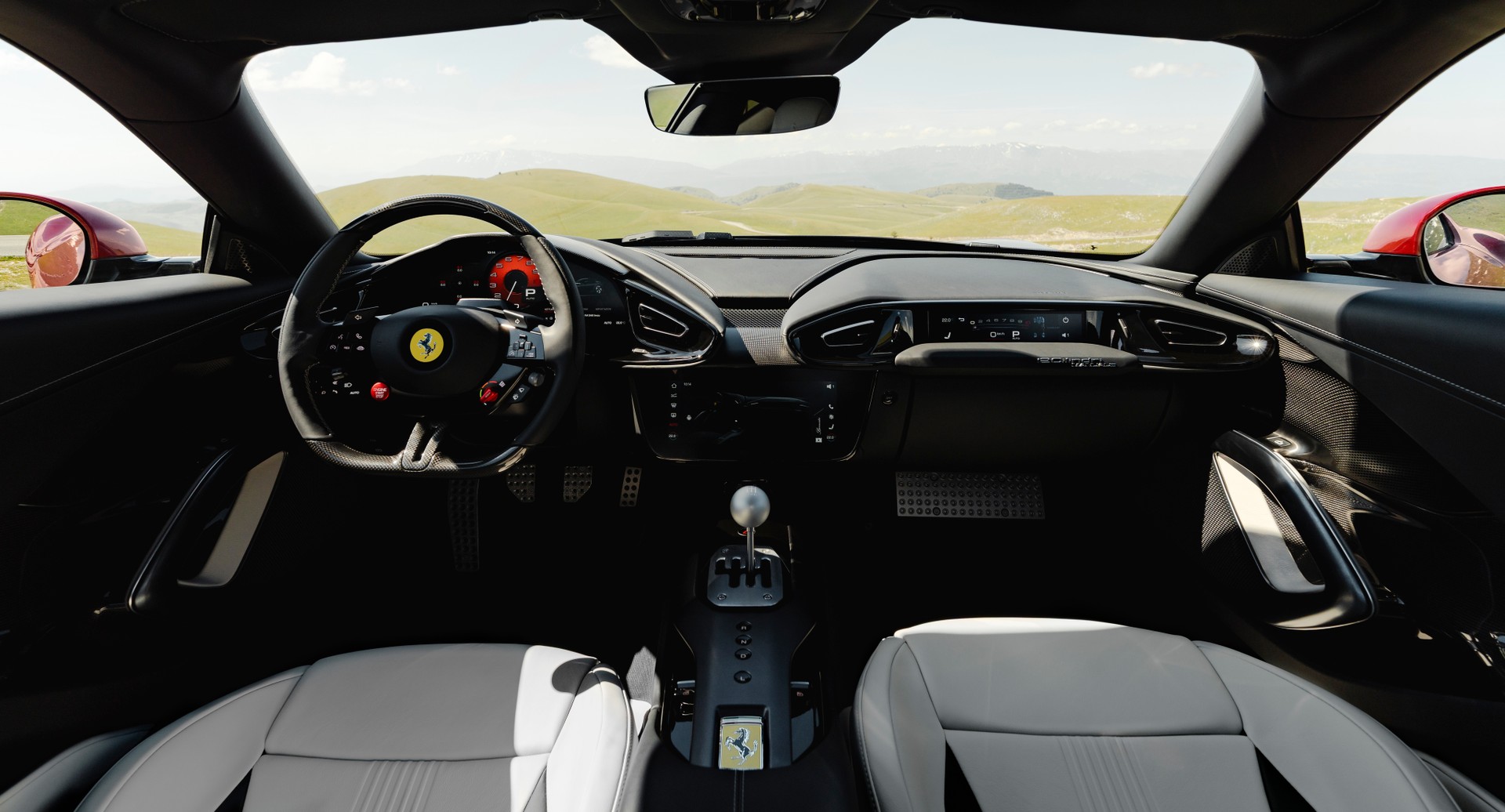
The three-pedal assembly was redesigned from scratch. An angle sensor follows the clutch pedal through its entire travel and commands hydraulic actuation of the clutch pack, while a preload spring, cam and roller give the pedal the weight and progression of a mechanical linkage. Ferrari built the consequences in deliberately. A well-timed shift goes through smoothly. A clumsy one stiffens, jolts or stalls the engine outright, the same penalties a 275 GTB would have handed out sixty years ago. Heel-and-toe technique carries over intact, and coasting logic brings the car down to idle without drama.
Same V12, Same Numbers

Ferrari left the 6.5-liter naturally aspirated 65-degree V12 alone. Output stands at 830 cv (819 hp) at 9,250 rpm and 678 Nm (500 lb-ft) at 7,250 rpm, with the limiter set at 9,500. The factory claims 0-100 km/h (0-62 mph) in 2.9 seconds, 0-200 km/h (0-124 mph) in under 7.9 seconds and a top speed beyond 340 km/h (211 mph). Dry weight is 1,565 kg (3,450 lbs).
Design and Exclusivity
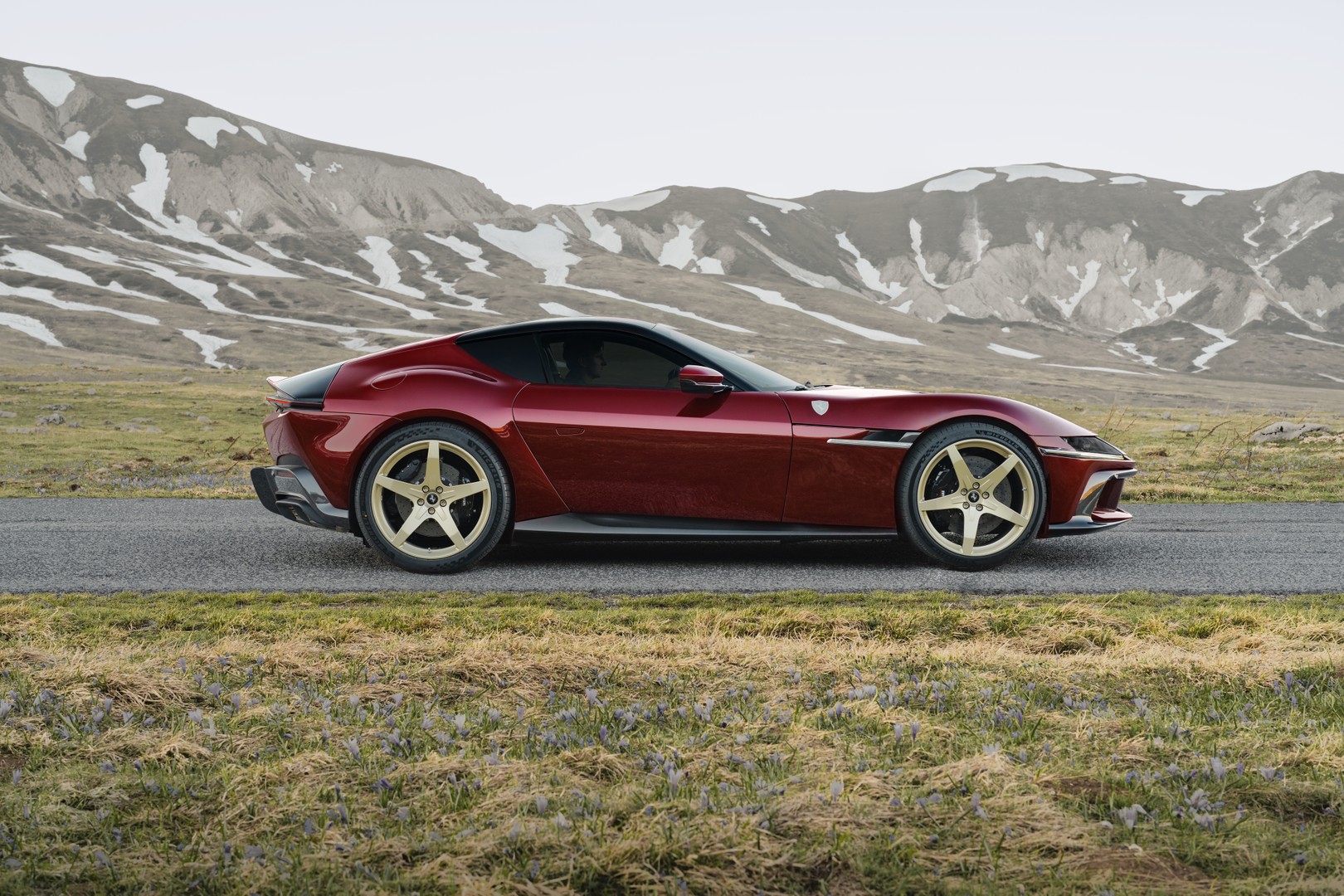
The run of 1,499 cars references the displacement of Ferrari’s first twelve-cylinder engine, built in 1947. Each example passes through the Tailor Made program with dedicated leathers, Alcantara trim and a palette of 25 colors rooted in the company’s history. Argento Nürburgring, Verde Zeltweg and Azzurro La Plata all appear on the list. The launch specification wears Rosso Rubino.
Details set the car apart at a glance for those who know where to look. The side badge is laser-etched. Pinstripe finishing on the splitter and rear wings recalls the 365 GTB4, the scudetto is embossed using a technique close to coin striking, and forged five-spoke wheels come in four finishes. Inside, a tuning-fork sculpture in anodized aluminum anchors the console while the seat trim carries six vertical grooves, one for each gear. Ferrari’s seven-year Genuine Maintenance program applies.