Can-Am Racing

The Canadian-American Challenge Cup Was The Greatest Racing Series Ever Created
Can-Am History (Every Year, Every Race)

We take you in-depth for a full history of the wildest racing in motorsports history

The Can-Am Race Cars

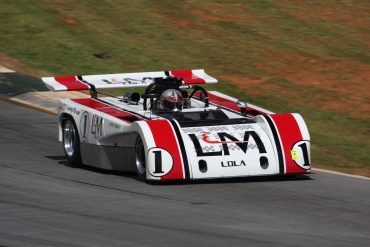
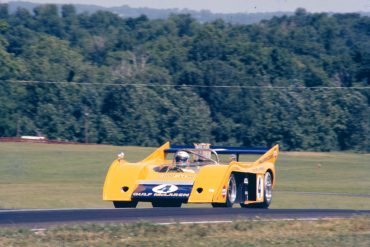
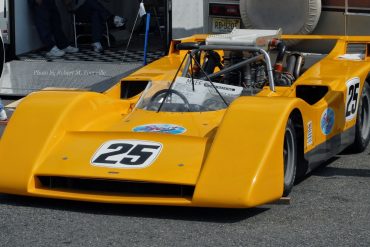
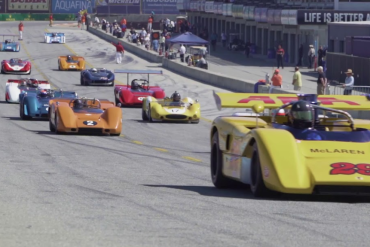
The Can-Am cars were fiercer and faster than F1 and Indy Cars of the day and would go on to be some of the most aggressive and iconic race cars ever created.

The Monterey Historic event saw the return of racing action between the Can-Am machines that includes McLarens, Lolas, Huffakers, and other cars. Enjoy five minutes of this remarkable race. https://youtu.be/sTNOyOAOQfo
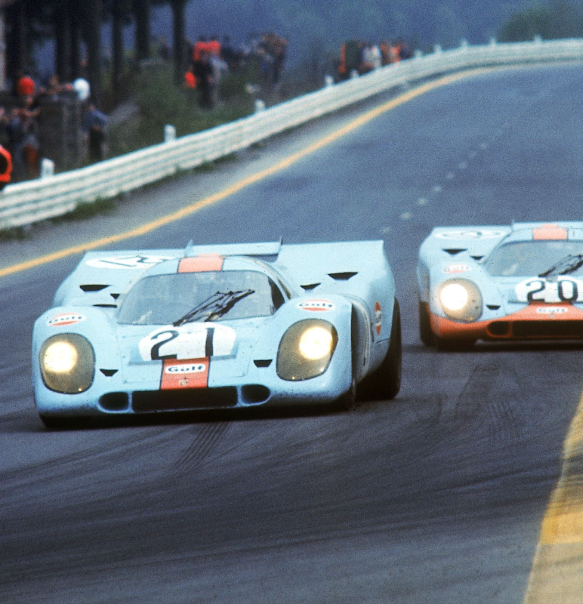
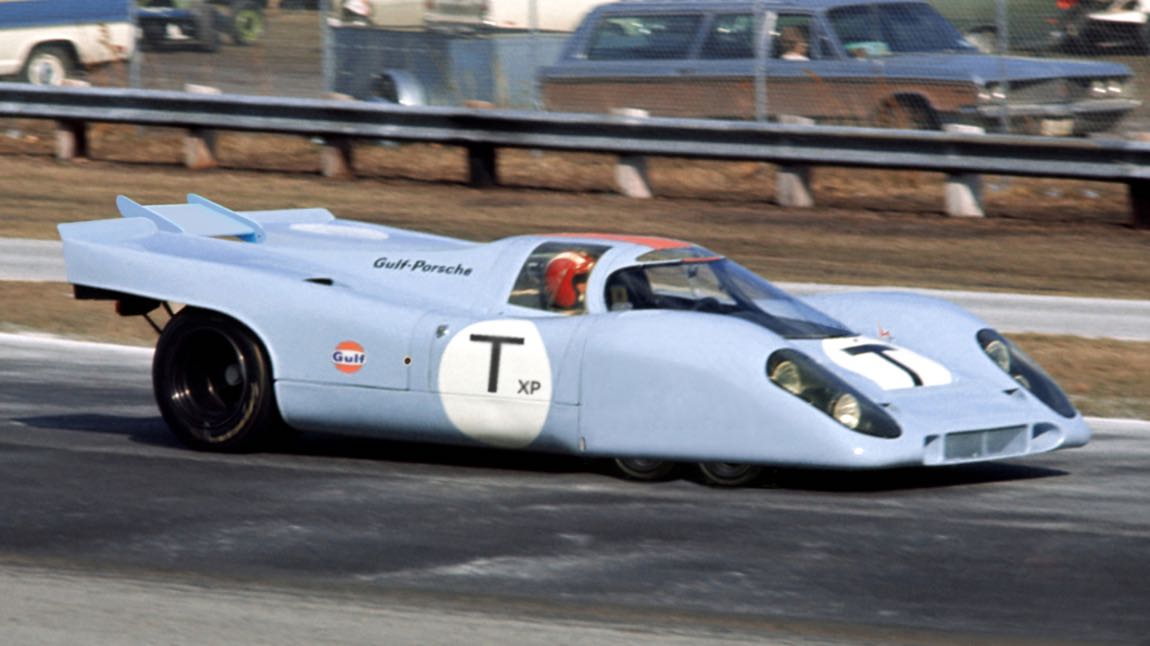
Porsche invited Roger Penske to a meeting over food and drink at Le Mans in 1971 and said it wanted to go Can-Am racing with a purpose-built car. Penske signed for sole rights to the result: the 917/10.
Marston drew the Lola T260 under Eric Broadley: a bonded and riveted alloy monocoque with 60 gallons of fuel in the sides, radiators behind the driver's shoulders fed by NACA ducts, and a bluff nose from Specialised Mouldings' wind tunnel.
M6A-1 was testing at Goodwood on 19 June 1967, three months before the Can-Am opener, and had 2,000 miles behind it by Elkhart Lake. Three works cars were built; 525 hp Bartz Chevrolets took McLaren to its first Can-Am title.
Roger Penske watched the 917/10 test at Weissach in 1972, before the buildings were up, and saw throttle lag. By Mosport 1973 the 917/30 had seven more inches of wheelbase, 1,200-plus hp on a boost knob, and Mark Donohue.
ti2
Peter Bryant welded his way into Lotus in 1957, worked for Mickey Thompson and Shelby, and lost his Lola job when Carl Haas cut back to one car in 1969. The titanium Autocoast TI22 was his answer to customer cars.
Gordon Coppuck took the rear of the McLaren M8A and Jo Marquardt the front, around a 620 hp ZL1 Chevrolet used as a stressed member. Testing fell from 2,000 miles to 500; two tyre marks stayed on the workshop floor.
With the turbocharged Porsche 917/10 coming for 1972, Gordon Coppuck started the McLaren M20 from a clean sheet, moving the radiators to side pods and keeping the normally aspirated 8-litre Chevrolet at over 750 bhp.
Don Nichols named his cars after a 1930s radio serial and dressed in black cape, black beard and toreador hat. The designer who told him his first Can-Am car was rubbish ended up drawing the DN1.
Ferrari 612 Can-Am
The Ferrari 612 Can-Am lasted 100 yards on its 1968 debut at Las Vegas before Chris Amon ended up in the desert with the throttles full of sand. "It was the story of my life at Ferrari."
brm_chevrolet_fos_goodwood_0_05121703
Tony Southgate's 1970 BRM Can-Am car ran a big-block Chevrolet and Hewland gearbox in an aluminium monocoque, with an 83-inch ducktail instead of a wing. It left for America in Castrol colours with almost no testing.
Eric Broadley built the T70 for American V8s, and John Surtees' Lola Racing Ltd made it work where the Lotus 30 and 40 failed. Surtees: a long-distance car "can't have something that rides on a knife-edge like a top F1 car".
Chaparral 2J
Jim Hall says the 2J started with a child's fan-mail drawing of a beanie-cap car with a propeller on top. With wings being banned, GM and GE helped him test suction downforce on a Chevrolet rig in Michigan.
fafad288abe746f1ce0c382dda8ecb38
Jim Hall conceived the Chaparral 2H as a narrow-track closed coupe without the high wing, and it never raced in that form. Competitors called it the blue whale. Why Hall's one failure, run by ex-Chevrolet engineer Mike Pocobello, still matters.
Chaparral 2E
The 1966 Chaparral 2E's wing sat high in clean air at 17 to 18 degrees, giving 240 pounds of downforce at 100 mph, with a left pedal to flatten it on straights. Hill and Hall finished 1-2 at Laguna Seca.

The Can-Am Drivers

Thanks to big prize-money and the promise of tough competition, Can-Am attracted the best drivers of the era. Names like John Surtees, Bruce McLaren, Phil Hill, Mark Donohue, Jim Hall, George Follmer, Peter Revson, Dan Gurney, Denny Hulme, Parnelli Jones, Jo Siffert, Mario Andretti and Pedro Rodriguez, to name but a few. In 1966, 17 drivers contested the season, but by 1969 the filed had swelled to 33 drivers.

hulme3
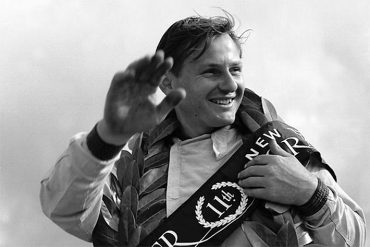
Denny Hulme's father Clive won the Victoria Cross as a sniper on Crete; Denny drove trucks on his lap, hauled sheep full-time at 17 and raced his first F2 Cooper barefoot for a better feel of the pedals.
John Surtees won his first race in his father's sidecar and was disqualified for being too young. The first solo win, at Aberdare Park, was when "the bike and I became one." The only champion on two wheels and four.
Phil Hill won the first Pebble Beach race in 1950 with no clutch and most of his brakes gone, bought a Ferrari from Chinetti at half price, and at Monza 1960 became the first American Grand Prix winner since 1921.
mclaren2
Bruce McLaren spent two years on a traction bed in Takapuna's Wilson Home with Perthes disease, going home on crutches at nine. His father then towed an Austin Ulster home behind his truck.
A month before Jim Hall entered Caltech, his parents and sister were killed in a plane crash. He and brother Dick went to Dallas in 1955 for a Porsche 550 and came home with a 3-liter Ferrari 750 Monza instead.
Banned by Hawaii's club racers as "too aggressive" after three races in a Morgan Plus 4, the Revlon heir lived out of a transporter in Europe in 1963 rather than take family money. Teddy Mayer rated him a top-six F1 driver.
Born in Phoenix in 1934, Follmer sold fire insurance in Pasadena before a $4,000 Lotus 23 kit and a $10,000 Porsche 904 engine, paid for with dealer Tom Nuckles, took him into the USRRC.
Donohue wanted a British sports car at Brown; his father steered him to a "sensible" Corvette, which won a hillclimb at Belknap, New Hampshire. An Elva Courier in F-Production brought him up against a Morgan driver named Peter Revson.
Dan Gurney was 28 when a New York Ferrari dealer put him in a car at Le Mans and the factory noticed. Porsche's first Grand Prix win and Brabham's first were his. Dennis David's profile.
Born in Montona in February 1940, a refugee-camp childhood, a 1954 trip to Monza to see Ascari, then dirt ovals around Nazareth in an old Hudson shared with twin brother Aldo. Dennis David on Mario Andretti's road to Indianapolis.

More Can-Am Racing Goodness

We dive into some of the races as well as more recent news and updates from the world of Can-Am racing.

Ted Seven aka Ted7
Denny Hulme's 1968 AAR Eagle, the 1993 AAR Toyota Eagle MkIII that won 21 of 27 IMSA races, Buddy Baker's 1969 Charger Daytona, the first to lap a closed course at 200 mph, at the Petersen.
Completed JM Special Can-AM on driveway
Jerry Shuck was at the 1965 Detroit Auto Show when the Mako Shark II, the Toronado and Bill Mitchell's Monza Junior go-kart rearranged his idea of what a car could be. The seed of his own Can-Am car.
The six-wheel Porsche 917K being driven by Jo Siffert at Daytona in 1970.  Composite Fred Lewis photo by Louis Galanos. Picasa
By Louis Galanos | Photos as Credited The late 1960’s and early 1970’s was a great time for motorsports especially for fans of Can-Am racing and international endurance racing like the Daytona 24 Hours and Sebring 12 Hours.
Jackie Oliver in the Ti 22 Mk II at the 1970 Laguna Seca Can-Am race (Photo: Pete Biro)
The Ti22 Mk II Can-Am car returns to the track at the Toyota Grand Prix of Long Beach April 7, 2017 in the Historic Motor Sports Association (HMSA) Can-Am Challenge race.
Rush Hour in the Corkscrew as Vic Elford goes inside with his Shadow (102) ahead of Bobby Brown, David Hobbs, Charlie Kemp, Ed Felter and Jody Scheckter in the 1973 Can-Am race.
Ground-pounding racers from the Can-Am series will be featured at the 2016 Monterey Motorsports Reunion, to be held August 18-21 at Mazda Raceway Laguna Seca in Salinas, California during Monterey Classic Car Week.
1972 Lola T310 Can-Am Side Peter Harholdt
After watching McLaren dominate the Can-Am series for four years, in 1971, Lola and its American team leader Carl Haas seemed to have it all: a World Champion driver in Jackie Stewart, huge sponsor dollars from L&M cigarettes…
NuArt CanAm - Unlimited Racing Championship
Catching the spirit of Can-Am is one of the goals of the new Unlimited Racing Championship (URC) that will feature identically built NuArt CanAm cars reminiscent of the wide-open racing series from the 1960-70s.
The Rolex Monterey Motorsports Reunion 2011 will be held August 19-21 at Mazda Raceway Laguna Seca. The list of race groups for the Monterey Motorsports Reunion have been announced, highlighted by the return of booming Can-Am race cars.
Ford's Honker II, named after a truck horn and painted Passino Purple, was 15 seconds off McLaren's pace on its Can-Am debut. Mario Andretti called it the worst car he ever drove and suggested Paul Newman take the wheel.
Can-Am Racing
John Bishop and Jim Kaser announced Can-Am at the Time-Life building on 15 February 1966: five races in nine weeks after the F1 season, $20,000 minimum purse at St. Jovite and $30,000 elsewhere, no appearance money paid. A series history.
Details: 509 ci 897 hp Kinsler injected Chevrolet V8 and Hewland 5-speed; Red and White (same scheme as raced in 1971) Price: The asking price is $275,000 Market: There were approximately five to seven Lola T222 built, depending…