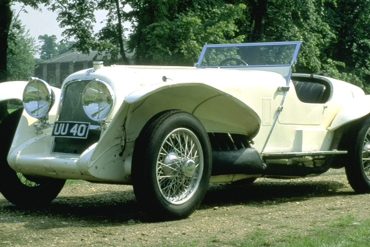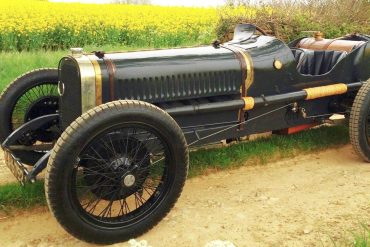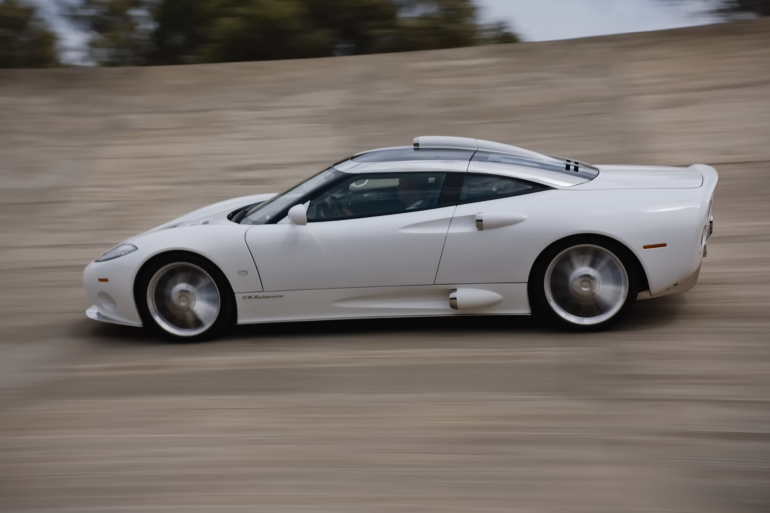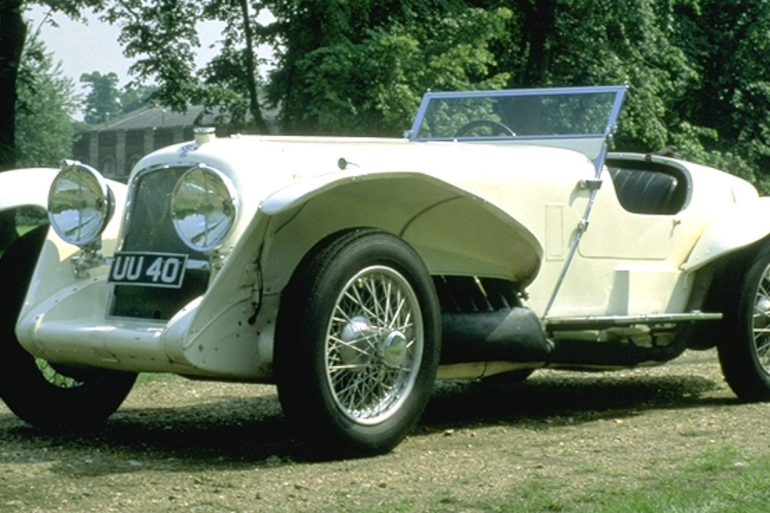

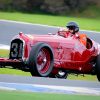
Pete Thelander's 1934 MG NE Magnette was built red for Tazio Nuvolari to drive in that year's Ulster Tourist Trophy. Jim Richardson's size 11 feet would not fit between its pedals, so he conceded he would not be driving it.

Racing came back from the Great War in 1919 with aero-engined monsters on Brooklands and Peugeots at Indianapolis, and by 1933 it had produced the Bugatti Type 35, the Bentley that won Le Mans five times, Jano's Alfa Romeos, the Mercedes SSK, Harry Miller's front-drive Indianapolis cars and the first 200 mph on a beach. The Vintage Sports-Car Club, founded in 1934, drew the line at 1930; this page runs the racing on to the end of 1933, when the Silver Arrows arrived and changed everything. Every linked piece is a source.
The pieces to start with
Newman on the Type 35, the Bentley Boys and the Maserati brothers, Collins's 8C 2300, McDonough's Blower, Ludvigsen on the 1921 Duesenberg and Fiat's Grand Prix years, and the Americans at Monza in 1925.
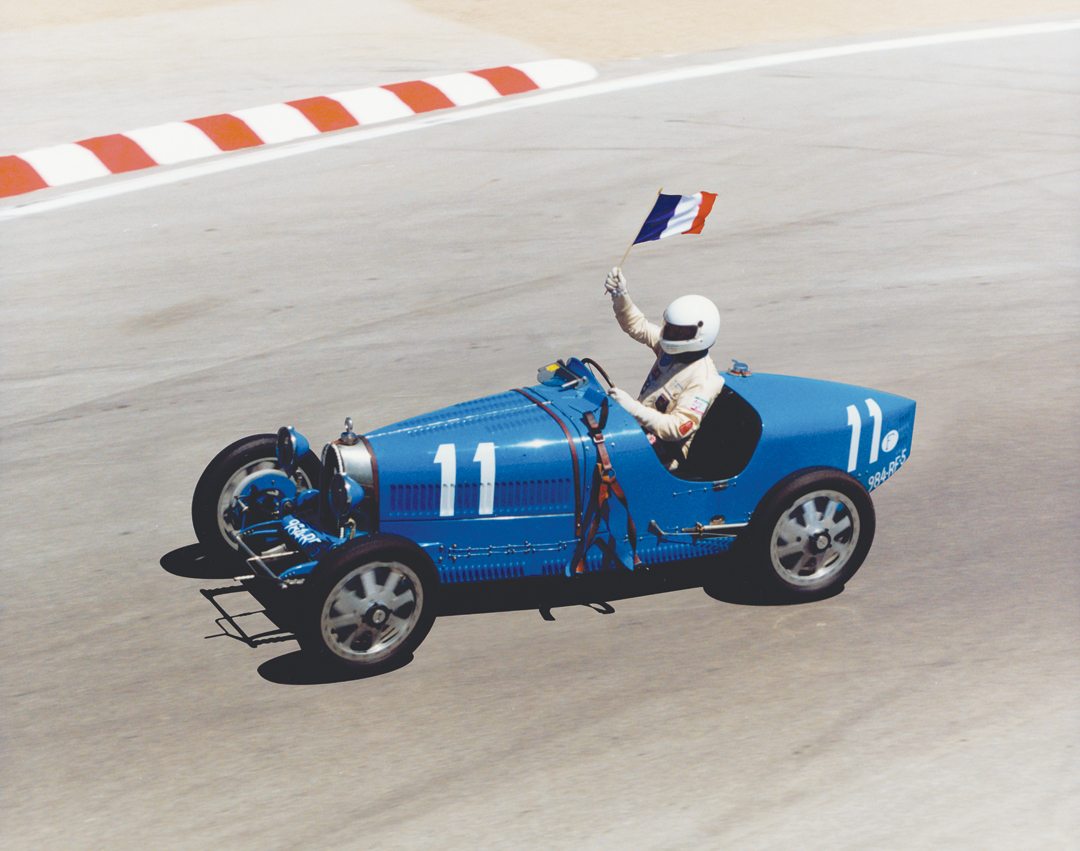
Six Type 35s were driven from Molsheim to Lyon for the 1924 French Grand Prix, with 45 staff housed in a tent with beds, baths and an ice-box. Two finished, 7th and 8th; the tires' treads came off. Robert Newman.
Mildred Mary Bruce drove a 4½-liter Bentley single-handed round Montlhéry for 24 hours at 89 mph in 1929, then flew solo round the world after 40 hours of lessons. Robert Newman on the 16 Boys, their fortunes and the women.
Vittorio Jano, a tracer at S.T.A.R. in Turin at 18, was spotted by Fiat's Guido Fornaca and became Carlo Cavalli's pupil before imposing iron military discipline at Alfa Romeo. Peter Collins on the 1931 8C 2300 and its designer.
Blower Bentley Number 2 sat in the Bentley hospitality center at Le Mans 2001 while two EXP Speed 8s qualified seventh and ninth and one finished third. Bentleys ran the race 14 times from 1923 to 1951, winning five.
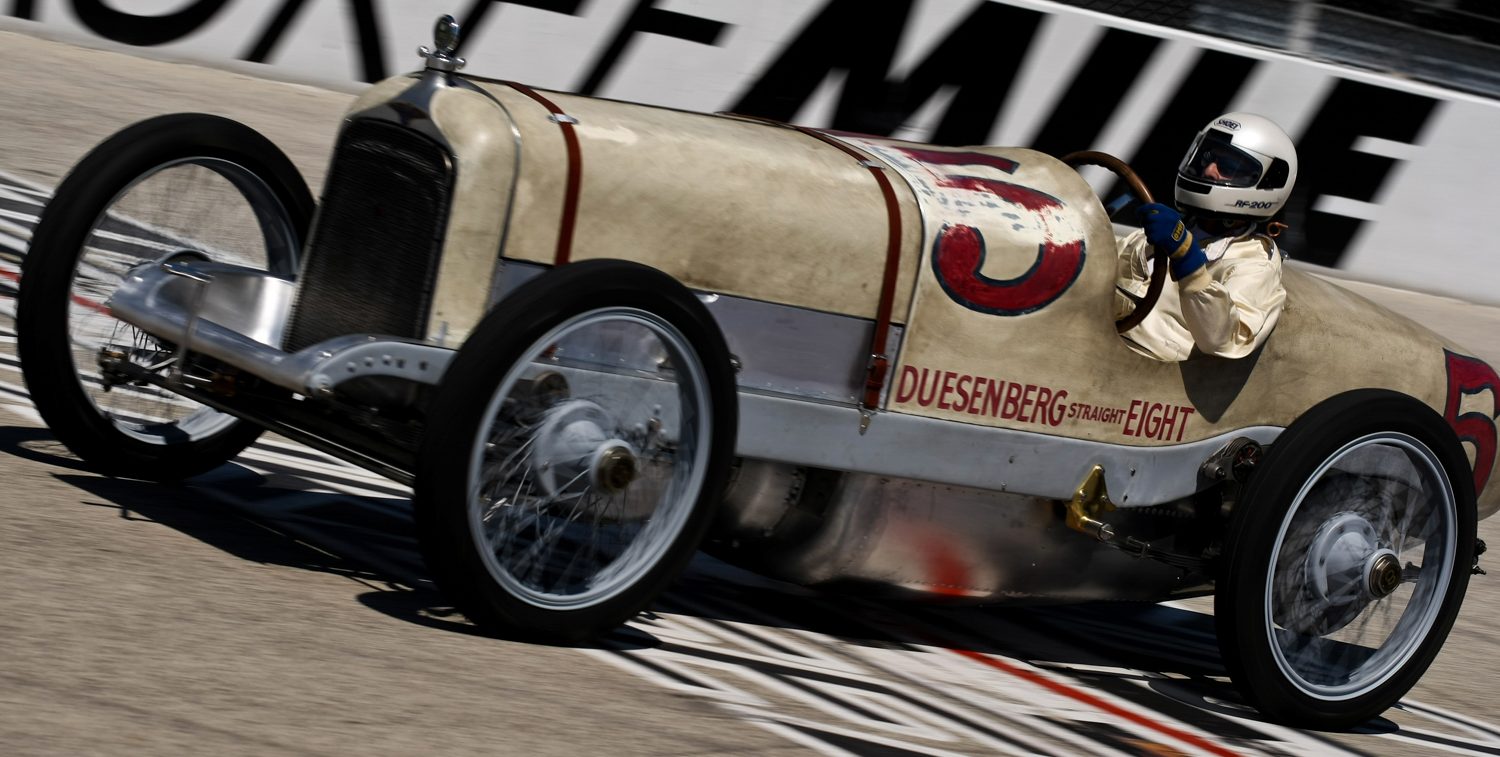
Jimmy Murphy won the 1921 French Grand Prix at Le Mans with a hole in his Duesenberg's radiator and almost no coolant, then ran a 10.7-mile safety lap. Karl Ludvigsen on the 3-liter straight eights from Indianapolis, a century on.
Fiat came out of the First World War with Lingotto, a five-story factory with a test track on the roof, and a lawyer-turned-draftsman, Carlo Cavalli, designing its Grand Prix cars. Karl Ludvigsen on Turin before Ferrari.
Alfieri Maserati resigned from Isotta Fraschini in 1914, having risen from mechanic to Grand Prix driver to technical director, to set up his own company. Robert Newman begins the story of six brothers of instinctive genius and no business sense.
Pete Kreis, from a wealthy Tennessee family, finished eighth at Indianapolis as a 1925 rookie in a Duesenberg and was picked to take the car to the Grand Prix near Milan. Milton, Miller and Hartz had seen him fly.
The newest long-form writing on the vintage years, as it is published.

The fifteen seasons between the Armistice and the arrival of the German state teams are the age the enthusiast clubs still call vintage: the decade when racing cars acquired superchargers, straight-eights, twin overhead camshafts, hydraulic brakes and single-seat bodies, when Le Mans (1923), the Mille Miglia (1927) and Monaco (1929) were invented, and when a Grand Prix car and a sports car were still close enough relatives that a Bentley could win at Le Mans on Saturday and drive home on Monday. Three formulas governed the Grands Prix — three litres in 1921, two litres from 1922 to 1925, 1.5 litres in 1926 and 1927 — and then, because the 1.5-litre rules had reduced the fields to a handful of Delages and Bugattis, the organisers gave up and ran their races for anything that turned up, which is how Bugatti came to win everything until Alfa Romeo and Maserati caught up in 1931. The Edwardian racing that came before is on The Pioneers page; the coachbuilt grand luxury cars that share these years are on The Classic Era; what followed is The Silver Arrows Years. The Grand Prix History series' pre-war overview and the archive's long essay on the evolution of race cars and race driving are the places to start on the whole period.
There was no Grand Prix in 1919 or 1920. Indianapolis ran again in May 1919, won by Howdy Wilcox in a 1914 Peugeot, and the Targa Florio in November, won by André Boillot, who crossed the line backwards after crashing into the grandstand and was sent back out to do it properly. Brooklands reopened in 1920 and Count Louis Zborowski's Chitty Bang Bang, a 23-litre Maybach aero engine in a pre-war Mercedes chassis, set the tone for the aero-engined specials that ruled the Outer Circuit; Robert Newman's Zborowski and the news of Babs joining the Chitty exhibition at Beaulieu are in the archive. The first post-war Grand Prix, the French, was run at Le Mans in July 1921 and won, to Europe's astonishment, by Jimmy Murphy's Duesenberg, a straight-eight with hydraulic brakes on all four wheels, the first win by an American car and driver in a European Grand Prix and the last until Dan Gurney's Eagle at Spa in 1967; Karl Ludvigsen's American Winner is the full account, and the archive has Murphy, who was killed on a dirt track in 1924. The Ballot that should have won is in An Honest Car; Sunbeam's 1921 Tourist Trophy car, the start of the STD combine's racing years, is Ludvigsen's Lucky Shoe; and the first British supercar, Parry Thomas's Leyland Eight, appeared at Olympia in 1920.
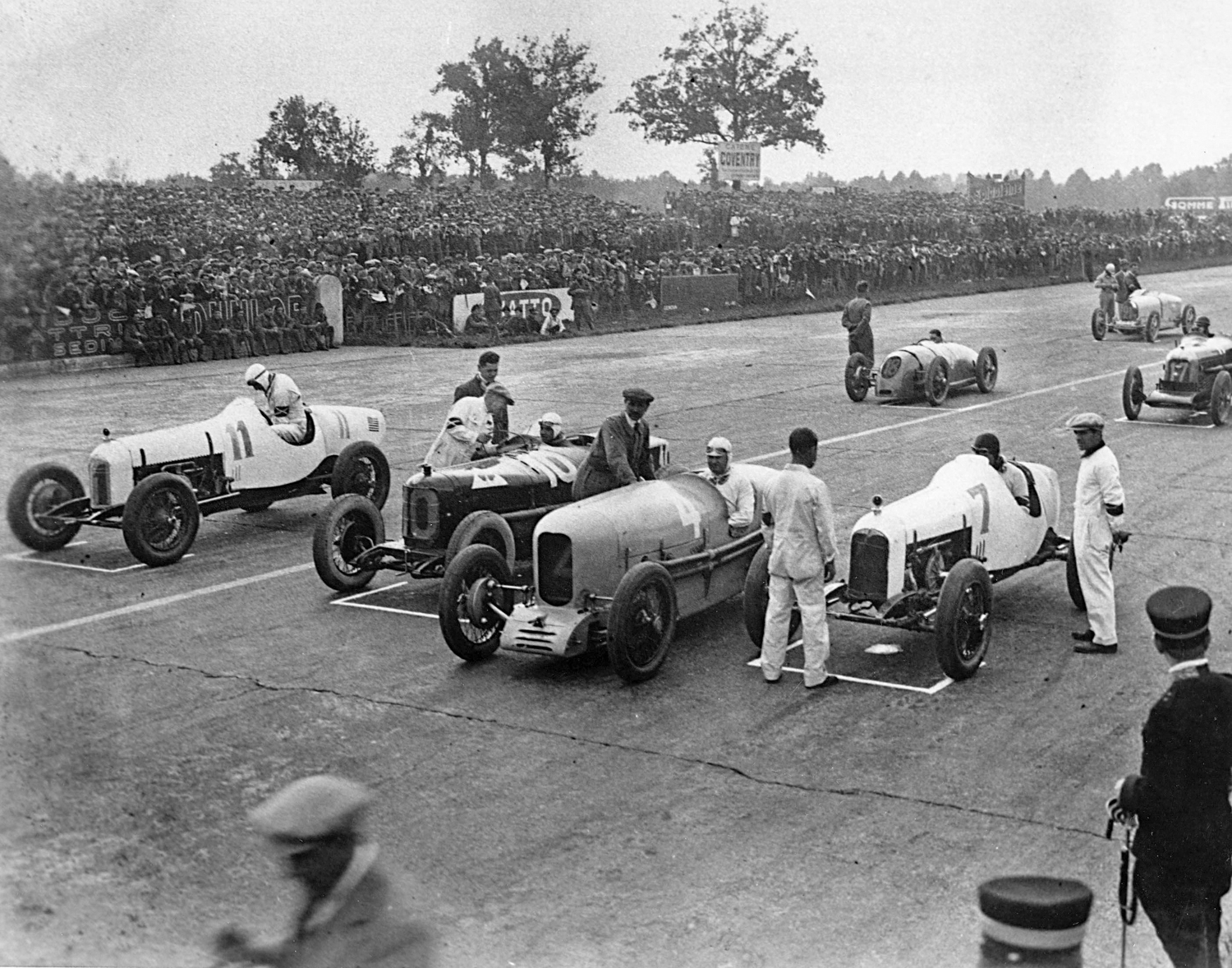
The two-litre formula of 1922 produced the first modern Grand Prix cars, and Fiat built them. The six-cylinder 804 won the 1922 French Grand Prix at Strasbourg for Felice Nazzaro; the straight-eight 805 of 1923, with a Roots supercharger, won the Italian Grand Prix at Monza for Carlo Salamano, the first supercharged car to win a Grand Prix, and the whole of the industry copied it — Sunbeam hired Fiat's designer Vincenzo Bertarione and won the 1923 French Grand Prix at Tours with Henry Segrave in what the French called the Fiat in green paint, the first British win in a Grand Prix. Ludvigsen's Fiat Sets the Pace and the archive's 804 specification cover Turin's years; Newman's Segrave the Englishman. Then Vittorio Jano left Fiat for Alfa Romeo, hired away by a young driver called Enzo Ferrari, and the P2 he designed won the French Grand Prix at Lyon in August 1924 with Giuseppe Campari, the Italian Grand Prix with Antonio Ascari, and in 1925 took the first World Championship for manufacturers; Ascari, leading the French Grand Prix at Montlhéry in July 1925, went off at 100 mph and was killed, and Alfa Romeo withdrew the other cars. The archive has Jano, the P2, Ascari, Campari and Newman's Enzo Ferrari: The Racing Driver. Lyon 1924 was also the race at which Ettore Bugatti unveiled the Type 35, which shed its tyre treads and finished nowhere; and the 1925 Italian Grand Prix was the one to which a wealthy young Tennessean brought a Duesenberg, told in Americans Invade Italy.
The Grands Prix, Le Mans, the Italian road races and Indianapolis, 1919 to 1933.
| Year | Grands Prix | Le Mans | Targa Florio · Mille Miglia | Indianapolis 500 | What happened |
|---|---|---|---|---|---|
| 1919 | None held | — | Targa: Boillot, Peugeot | Wilcox, Peugeot | Racing resumes with Indianapolis in May and the Targa Florio in November; Boillot crosses the line backwards |
| 1920 | None held | — | Targa: Meregalli, Nazzaro | Chevrolet, Monroe | Brooklands reopens; Chitty Bang Bang; the Leyland Eight at Olympia; Isotta Fraschini's Tipo 8, the first production straight-eight |
| 1921 | Duesenberg · French GP, Le Mans (Murphy); Ballot · Italian GP, Brescia (Goux) | — | Targa: Masetti, Fiat | Milton, Frontenac | Three-litre formula; an American car with hydraulic brakes wins the first post-war Grand Prix; Bentley's 3 Litre goes on sale |
| 1922 | Fiat 804 · French GP, Strasbourg (Nazzaro); Italian GP, Monza (Bordino) | — | Targa: Masetti, Mercedes | Murphy, Duesenberg-Miller | Two-litre formula; Monza opens; Sunbeam wins the Tourist Trophy; the Austin Seven and Lancia Lambda appear |
| 1923 | Sunbeam · French GP, Tours (Segrave); Fiat 805 · Italian GP (Salamano); Sunbeam · Spanish GP, Sitges (Divo) | Chenard & Walcker · Lagache / Léonard | Targa: Sivocci, Alfa Romeo RL | Milton, HCS-Miller | The first Le Mans 24 Hours; the first British Grand Prix win; the first supercharged Grand Prix winner at Monza |
| 1924 | Alfa Romeo P2 · French GP, Lyon (Campari); Italian GP (Ascari); Sunbeam · San Sebastián (Segrave) | Bentley 3 Litre · Duff / Clement | Targa: Werner, Mercedes | Corum / Boyer, Duesenberg | Jano's P2 wins its first Grand Prix; the Bugatti Type 35 appears at Lyon and sheds its tyres; Bentley's first Le Mans; the first Spa 24 Hours; Eldridge's Mephistopheles sets the last record on a public road |
| 1925 | Alfa Romeo P2 · Belgian GP (Ascari); Italian GP (Brilli-Peri); Delage · French GP (Benoist / Divo). Alfa Romeo world champion | Lorraine-Dietrich · de Courcelles / Rossignol | Targa: Costantini, Bugatti Type 35 | DePaolo, Duesenberg | Ascari killed at Montlhéry; the first 100 mph Indianapolis 500; the first of Bugatti's five Targa Florios; Pete Kreis takes a Duesenberg to Monza |
| 1926 | Bugatti 39A · French GP, Miramas (Goux); Spanish GP (Costantini); Italian GP (Charavel); Delage · British GP, Brooklands (Sénéchal / Wagner). Bugatti champion | Lorraine-Dietrich · Bloch / Rossignol | Targa: Costantini, Bugatti | Lockhart, Miller | 1.5-litre formula; three cars start the French Grand Prix; Daimler and Benz merge; Caracciola wins the first German GP at the AVUS; Maserati's first car; Babs at 171 mph |
| 1927 | Delage 15-S-8 · French, Spanish, Italian and British GPs (Benoist). Delage champion | Bentley 3 Litre · Benjafield / Davis | Targa: Materassi, Bugatti · MM: Minoia / Morandi, OM | Souders, Duesenberg | Delage wins everything and quits; the first Mille Miglia; the Nürburgring opens with a Mercedes S win; the White House crash; Segrave first past 200 mph; Parry Thomas killed |
| 1928 | Formule libre · Italian GP (Chiron, Bugatti); Materassi's crash kills 22 at Monza | Bentley 4½ Litre · Barnato / Rubin | Targa: Divo, Bugatti · MM: Campari / Ramponi, Alfa Romeo 6C 1500 | Meyer, Miller | The formula collapses; Mercedes-Benz SSK; the Tourist Trophy moves to Ards; Riley Brooklands; Campbell at 206 mph |
| 1929 | Monaco (Williams, Bugatti 35B); French GP (Williams); German GP (Chiron) | Bentley Speed Six · Barnato / Birkin, 1-2-3-4 | Targa: Divo, Bugatti · MM: Campari / Ramponi, Alfa Romeo 6C 1750 | Keech, Miller | The first Monaco Grand Prix; Bentley's greatest Le Mans; Caracciola's SSK wins the Ards TT; Golden Arrow at 231 mph; Scuderia Ferrari founded; Wall Street crashes |
| 1930 | Monaco (Dreyfus, Bugatti); Belgian GP (Chiron); French GP (Etancelin); Italian GP (Varzi, Maserati 8C 2500) | Bentley Speed Six · Barnato / Kidston | Targa: Varzi, Alfa Romeo P2 · MM: Nuvolari / Guidotti, Alfa Romeo 6C 1750 | Arnold, Miller-Hartz | Birkin's Blower versus Caracciola's SSK at Le Mans; Nuvolari's headlights; Barnato beats the Blue Train; Segrave killed on Windermere |
| 1931 | Monaco (Chiron, Bugatti Type 51); Italian GP (Campari / Nuvolari, Alfa Romeo 8C 2300 Monza); French GP (Chiron / Varzi); German GP (Caracciola, Mercedes-Benz SSKL) | Alfa Romeo 8C 2300 · Howe / Birkin | Targa: Nuvolari, Alfa Romeo 8C · MM: Caracciola / Sebastian, Mercedes-Benz SSKL | Schneider, Miller | Ten-hour Grands Prix; Jano's 8C 2300 begins four Le Mans wins; Caracciola the first foreigner to win the Mille Miglia; Bentley goes to Rolls-Royce; Campbell at 246 mph |
| 1932 | Monaco (Nuvolari, Alfa Romeo Monza); Italian and French GPs (Nuvolari, Alfa Romeo Tipo B); German GP (Caracciola, Tipo B). Nuvolari European Champion | Alfa Romeo 8C 2300 · Sommer / Chinetti | Targa: Nuvolari, Alfa Romeo · MM: Borzacchini / Bignami, Alfa Romeo 8C | Frame, Miller-Hartz | The single-seat Tipo B arrives and wins; Riley wins the TT; Birkin laps Brooklands at 137.96 mph; the 750 kg formula is announced for 1934 |
| 1933 | Monaco (Varzi, Bugatti 51, after the duel with Nuvolari); Tripoli (Varzi); French GP (Campari, Maserati 8CM); Belgian GP (Nuvolari, Maserati); Italian GP (Fagioli, Alfa Romeo P3); Spanish GP (Chiron, P3) | Alfa Romeo 8C 2300 · Nuvolari / Sommer | Targa: Brivio, Alfa Romeo · MM: Nuvolari / Compagnoni, Alfa Romeo 8C | Meyer, Miller | Alfa Romeo withdraws and Scuderia Ferrari takes the P3s; Nuvolari wins the TT in an MG K3; Campari, Borzacchini and Czaykowski killed at Monza; Campbell at 272 mph; the last season before the Silver Arrows |
Car names link to every story on the site about that car. The races themselves have pages: Le Mans, Mille Miglia, Targa Florio, Indianapolis 500, Monaco and the Tourist Trophy under Races.
The 1.5-litre formula of 1926–27 was meant to make the cars safer and made them, instead, the most sophisticated of the decade: supercharged straight-eights of 170 horsepower in cars weighing 700 kilograms. Only two firms really built them. Bugatti's Type 39A won the 1926 French Grand Prix at Miramas against no opposition at all — three Bugattis started — and took that year's title; Delage's 15-S-8, Albert Lory's twin-supercharged jewel, arrived in 1926 with an exhaust that roasted its drivers' feet and in 1927, with the exhaust moved, won every Grand Prix there was, the French, Spanish, Italian and British, all with Robert Benoist. Then Louis Delage, nearly bankrupt, withdrew, and the formula collapsed with him; from 1928 the Grands Prix were run under formule libre, for anything that would start. The archive has Louis Delage, the 15 S8, Benoist, who died in Buchenwald in 1944 as a hero of the Resistance, and Albert Divo, who shared the 1925 French Grand Prix win and then won the Targa Florio twice for Bugatti. The Grand Prix History series covers the formulas and the races in the 1921 French Grand Prix, the 1922 Grand Prix de l'ACF and the races of 1931.
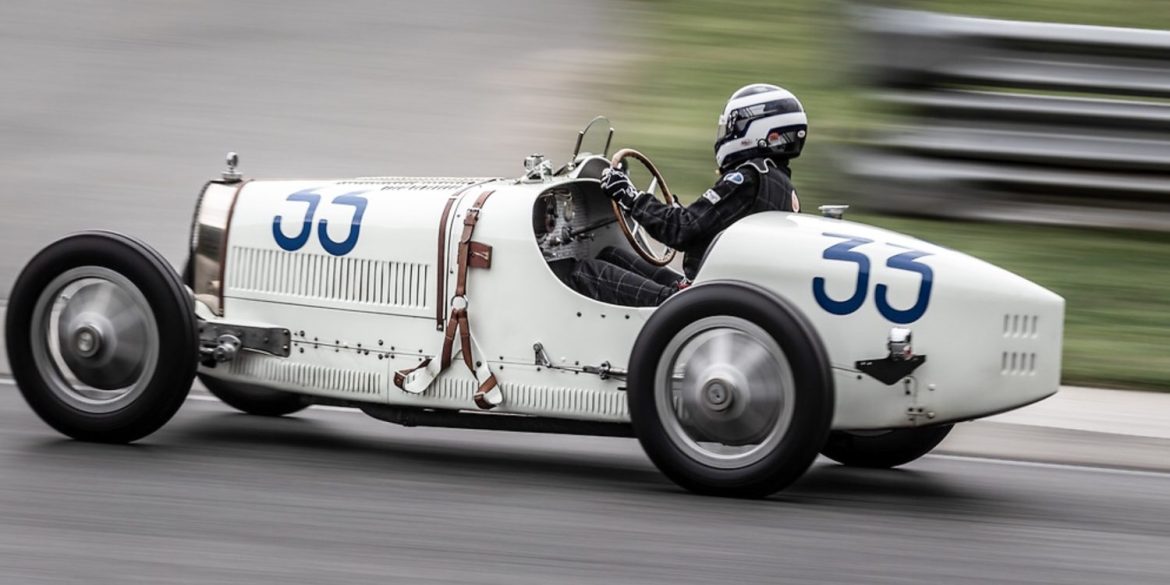
Nothing else of the era is so completely its symbol. The Type 35 — Ettore Bugatti's two-litre straight-eight in a horseshoe-radiatored body the width of a man's shoulders, with cast-aluminium wheels that carried the brake drums with them — flopped at Lyon in 1924, as Newman's The Superbugs says, and then won, by the factory's count, more than two thousand races in the next seven years. It won the Targa Florio five times running, 1925 to 1929, with Meo Costantini, Emilio Materassi and Divo; in supercharged 35B and 35C form it won the first Monaco Grand Prix in 1929 with the Englishman William Grover-Williams, who raced as "Williams", the French Grand Prix the same year and the 1930 Monaco for René Dreyfus, and as the twin-cam Type 51 of 1931 it gave Louis Chiron his home win at Monaco and Achille Varzi the great duel with Nuvolari there in 1933. Molsheim sold them to anyone with the money, so that in some races of the late 1920s the entire field was Bugattis, and the archive has the Type 35 told in pictures, its evolution, the 1928 35C, a 35B driven, the Type 13 Brescia that came before it, the Type 37A and Type 39 that shared its chassis, the Type 51 and Type 50 that followed, and Patrick Quinn's Le Pur-Sang des Automobiles on the road cars. Ettore Bugatti himself, Chiron and Newman's story of recovering a 1926 Bugatti from Sicily are there too.
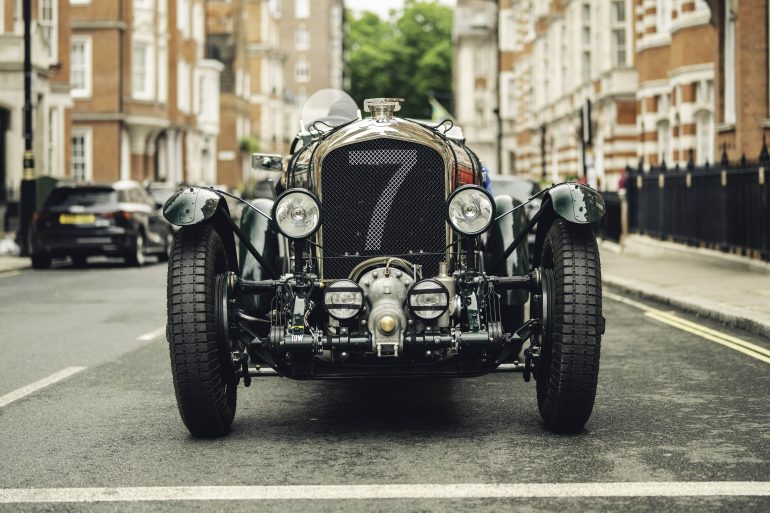
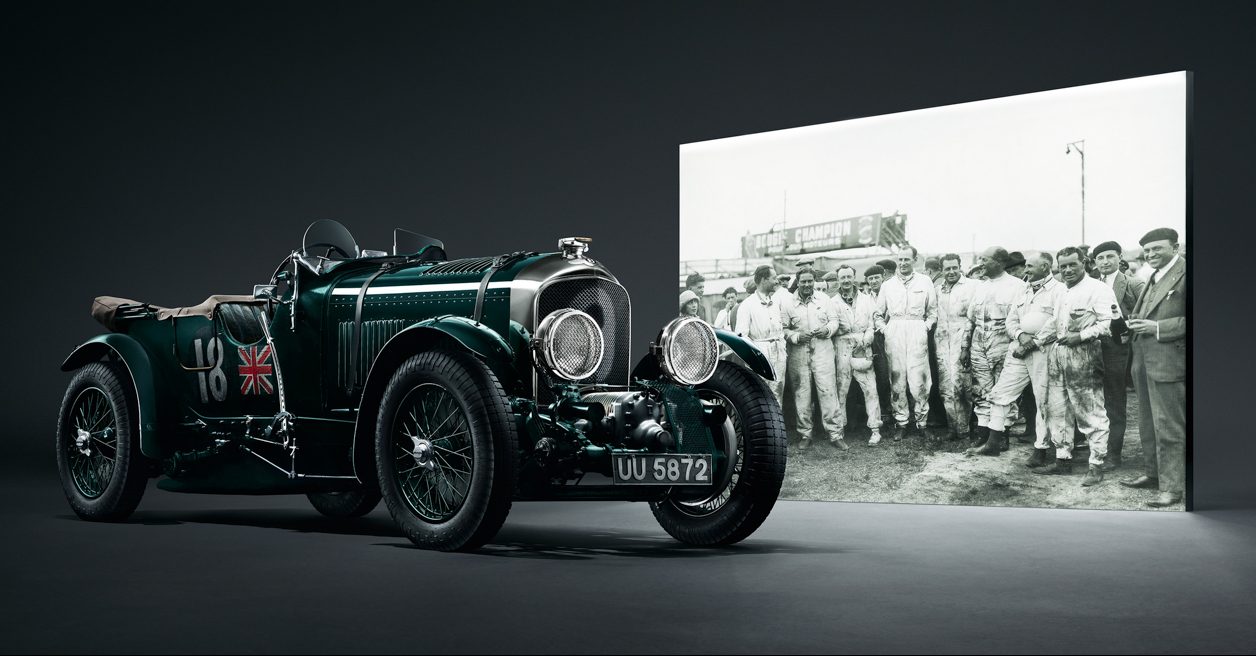
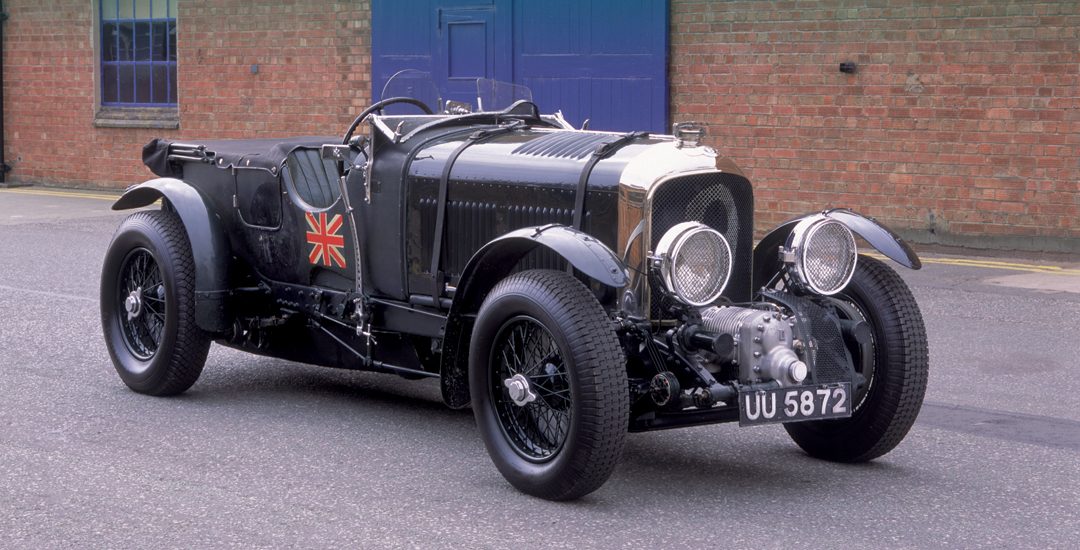
W. O. Bentley's 3 Litre went on sale in 1921, won the second Le Mans in 1924 with John Duff and Frank Clement, and so began the most famous association of a marque with a race until Porsche. The Bentleys lost in 1925 and 1926, won in 1927 after the White House crash had wrecked the team and Sammy Davis nursed the bent "Old Number 7" home, won in 1928 with Woolf Barnato and Bernard Rubin in the 4½ Litre, and in 1929, with the new Speed Six, finished 1-2-3-4 with Barnato and Tim Birkin leading. In 1930 Barnato and Glen Kidston won again, after Birkin's supercharged 4½ had run the Mercedes SSK of Rudolf Caracciola into the ground in the night; it was Bentley's fifth win in seven years, and its last, because the Depression ended the company and Rolls-Royce bought what was left in November 1931. The Bentley Boys — Barnato, the diamond millionaire who kept the firm alive from 1926 and raced a train across France in a Speed Six for a bet; Birkin, the baronet who built the Blower against W. O.'s wishes with the Hon. Dorothy Paget's money; Kidston, Benjafield, Davis, Dunfee, Clement, Duller — are the subject of Newman's The Bentley Boys… and Girls and Birkin & Bentley, the Sequel, of profiles of Barnato, Birkin, Davis and W. O. himself, interviewed by Newman in 1970. The cars: Ed McDonough's Birkin's Baby on the Blower, Patrick Quinn's Up for the Challenge on a Speed Six, Steve Natale's Dead Silent Speed on the 8 Litre, the Blower in profile, and the Le Mans page for the races.
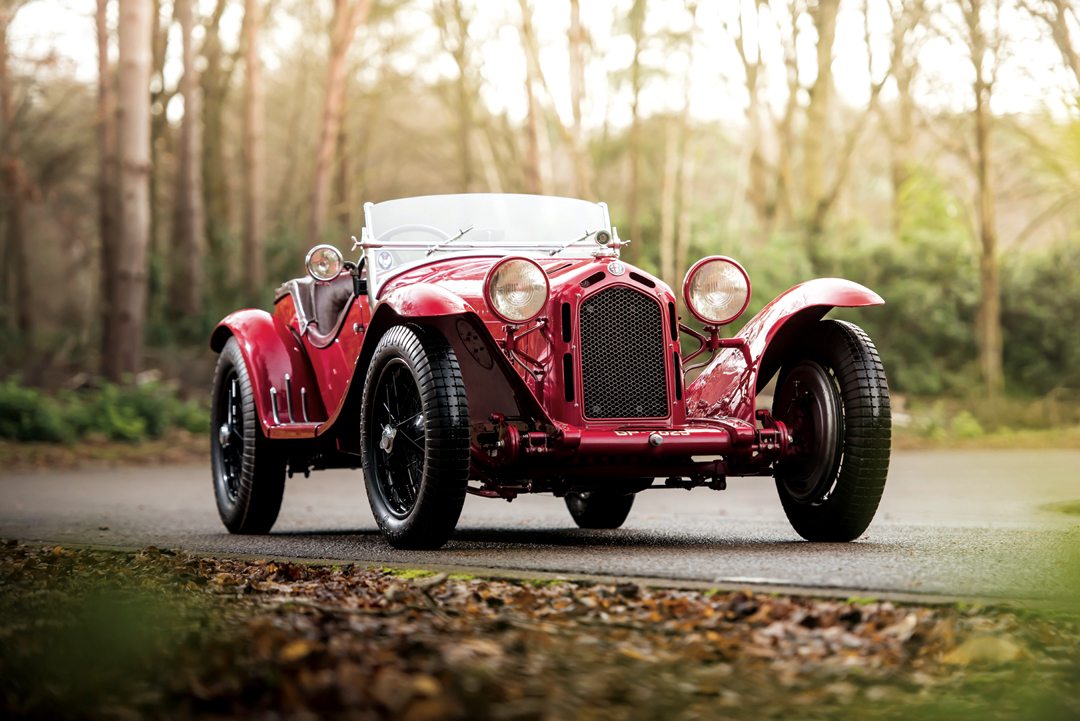
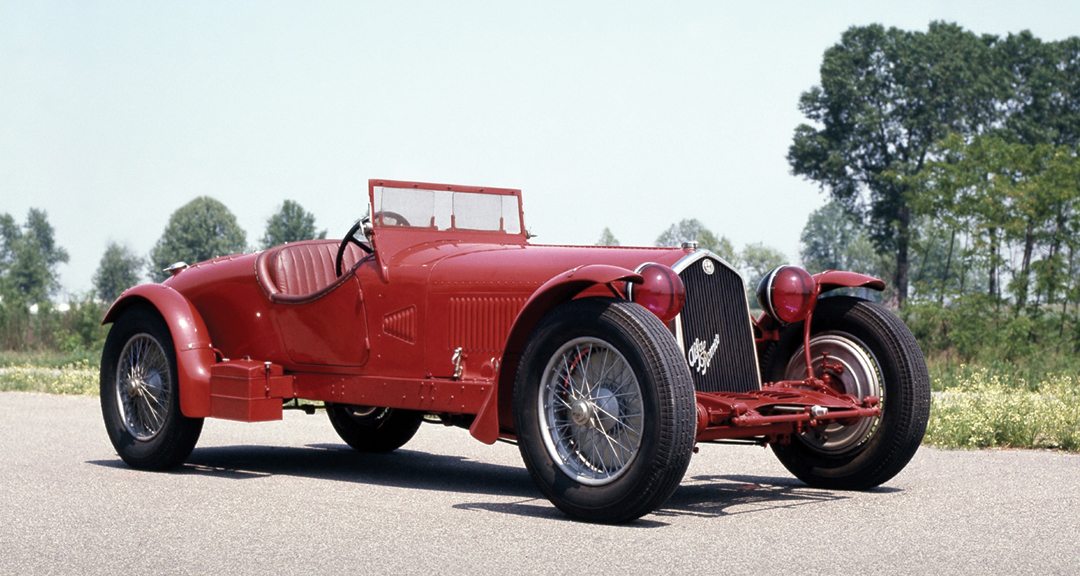
After the P2, Jano turned to road cars, and the 6C 1500 of 1927 and 6C 1750 of 1929 made Alfa Romeo the Italian Bentley: the 1750 won the Mille Miglia in 1929 with Campari and in 1930 with Nuvolari, who, the story goes, switched his headlights off in the dawn to creep up on Varzi; the 6C 1750 profile begins at that dawn. The 8C 2300 of 1931, Jano's supercharged straight-eight, then won Le Mans four years running, 1931 to 1934, the Mille Miglia in 1932 and 1933 and the Targa Florio three times, and in short-chassis form, named Monza after Nuvolari and Campari's ten-hour win in the 1931 Italian Grand Prix, was a Grand Prix car as well; Peter Collins's In Perfect Balance, Casey Annis's Iconic Swan Song and a Monza driven cover the car, and the 1931 Mille Miglia, the year Caracciola's SSKL broke the Italian run, is profiled. The single-seat Tipo B, the P3, followed in 1932, and Nuvolari won the Italian and French Grands Prix in it and Caracciola the German; Jano's Monoposto Mystery is about the car. Enzo Ferrari, who had won the Circuito del Savio and the Coppa Acerbo for Alfa Romeo in 1923–24, founded his Scuderia in Modena in November 1929 to run Alfa Romeos for paying drivers, and when the factory withdrew in 1933 the Scuderia became the works team; the Mille Miglia's first years, with OM's 1-2-3 in 1927, are on the Mille Miglia page and in Newman's Viva la Mille Miglia, and the Alfa drivers in Borzacchini, Campari — both killed at Monza on the same September afternoon in 1933 — Varzi and Newman's Il Maestro on Nuvolari.
Each links to every story on the site about that car; the model pages come next.
Daimler and Benz merged in 1926 and the new company's sports cars were Ferdinand Porsche's: the Model K of 1926, the S of 1927, which won the opening race at the new Nürburgring with the 26-year-old Rudolf Caracciola, the SS and the short-chassis SSK of 1928, and the lightened SSKL of 1931 — seven litres, a supercharger that screamed when the driver floored the pedal, and 300 horsepower in a car with the proportions of a locomotive. Caracciola won the first German Grand Prix at the AVUS in 1926 in the rain, the 1929 Tourist Trophy at Ards in a downpour, the 1931 Mille Miglia, the first by a foreigner, and the 1931 German Grand Prix at the Nürburgring against the Bugattis and Alfas, before the factory, broke, let him go to Alfa Romeo for 1932. The archive's Caracciola biography and The Rise and Fall of Caracciola cover these years, as do the SSKL, Newman's Ferdinand Porsche and the story of Count Trossi, Scuderia Ferrari's president, who raced an SSK before his Duesenberg. Count Giulio Masetti won the Targa Florio for Mercedes in 1922 and Christian Werner in 1924; the 1921 Targa Florio marks the centenary of Max Sailer's 28/95.
In the United States the 1920s were the board-track years, two-mile wooden ovals at Beverly Hills, Altoona and a dozen other towns where 1.5-litre cars lapped at 140 mph, and Indianapolis was the one race that mattered. Duesenberg won the 500 in 1922 (with a Miller engine), 1924, with the first supercharger, 1925, when Pete DePaolo became the first man to average over 100 mph, and 1927; Harry Miller's cars, the 122 and the exquisite 1.5-litre 91 of 1926–29, front-wheel-drive and supercharged, won the rest, and his engine became the Offenhauser that won Indianapolis into the 1970s. The archive has Murphy, Ralph DePalma, the 1915 winner who was still racing Millers in the 1920s, Harry Miller celebrated at Amelia Island, John Zimmermann's Three the Hard Way on Ted Horn, who began in the last board-track years, Gary Horstkorta's One Man's Dream on a Miller-based special, and the Indianapolis 500 page with every winner. The Americans came to Europe twice: Murphy in 1921 and Pete Kreis in 1925, and Zborowski took a Miller 122 to Lyon in 1924; Europe came to Indianapolis with Fiat, Ballot, Bugatti, Mercedes and, in 1923, Christian Lautenschlager, with less to show for it.
The land speed record was a British obsession in the 1920s and most of it was set on sand. Malcolm Campbell took the 350 hp Sunbeam to 146 mph at Pendine in 1924 and 150 in 1925; Parry Thomas's Babs, a 27-litre Liberty aero engine in Zborowski's old Higham Special, took 171 mph there in 1926 and killed him there in March 1927; Segrave went to Daytona Beach the same month with the twin-engined Sunbeam 1000 hp and became the first man past 200 mph, and in 1929 did 231 in the Golden Arrow; Campbell's Blue Birds answered with 206 at Daytona in 1928, 246 in 1931 and 272 in 1933. Ernest Eldridge's Fiat Mephistopheles, 21.7 litres of airship engine, set the last record on a public road at Arpajon in 1924, and Baconin Borzacchini's sixteen-cylinder Maserati V4 took the ten-kilometre record at Cremona in 1929 at 246 km/h. At Brooklands, Birkin's single-seat Blower lapped the Outer Circuit at 137.96 mph in 1932 and Kaye Don and John Cobb traded the lap record in aero-engined giants until the Napier-Railton closed the argument in 1935. The archive has Pendine Sands: a century of land speed records, Blue Bird's anniversary run at Pendine, Campbell's Sunbeam back in form, the 1000 hp Sunbeam's restoration, Mephistopheles, the speed records at Daytona Beach, Borzacchini's V4 and Ludvigsen's Reid Railton and the Arabs on the engineer behind Babs, the Brooklands Riley and the Napier-Railton.
Race accounts, records and racing stories from 1919 to 1933, newest first.
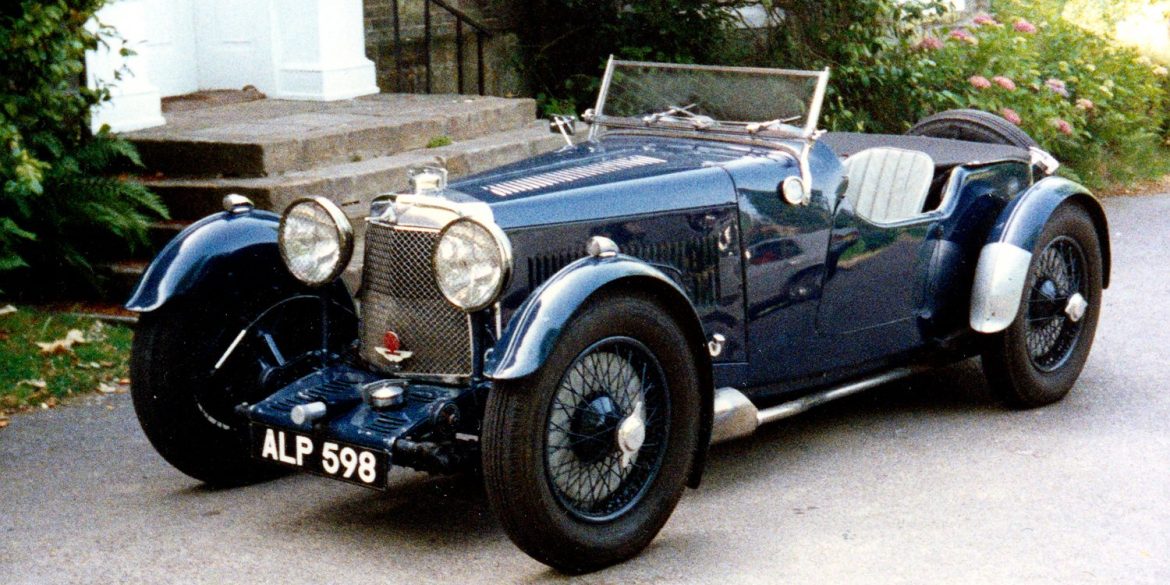
Below the Bentleys, Britain built the small sports cars that filled Brooklands, Shelsley Walsh and the Ards Tourist Trophy. Herbert Austin's Seven of 1922 put the country on wheels and, supercharged, won races; Cecil Kimber's MG Midgets grew from it in spirit, the C-type winning the 1931 Tourist Trophy and the supercharged K3 Magnette taking the team prize in the 1933 Mille Miglia and the Tourist Trophy that September with Nuvolari, who had never seen the car before practice. Percy Riley's Nine of 1926 became the Brooklands model with help from Parry Thomas and Railton and won the 1932 Tourist Trophy; Archie Frazer-Nash's chain-driven cars raced for fifteen years with four chains and no differential; Augustus Bertelli's Aston Martins won the Biennial Cup at Le Mans in 1931 and 1932; Donald Healey's Invicta 4½ won the 1931 Monte Carlo Rally; Kaye Don's Lea-Francis Hyper won the first Ards TT in 1928, and Georges Roesch's Talbots finished third at Le Mans in 1930 and 1931 without raising their bonnets. The archive is deep here: J. Michael Hemsley's Fit for a Prince on the Austin Seven and Casey Annis's Oy V.a.Y.! on the Austin specials, Patrick Quinn's MG K3 and MG Q-type and Jim Richardson on Nuvolari's MG, James Beckett's Riley Brooklands, Mike Jiggle's Aston Martin LM3 and Ludvigsen's 1933 Aston Martin Le Mans, Quinn's Invicta 4½, the Vauxhall 30-98, the fastest catalogued British car of 1919, Hemsley's Alvis 12/75, the front-drive pioneer, and the Tourist Trophy page for Ards.
France's light cars were the Amilcar CGSS and the Salmson, cyclecars grown up, which fought each other in the 1,100 cc class all decade; Ballot's 2LS of 1921 was the first production car with twin overhead camshafts; Gabriel Voisin's aluminium-bodied C7s, in Hemsley's Airplanes to Automobiles, were the strangest cars of the period, and Lorraine-Dietrich won Le Mans in 1925 and 1926 between the Bentleys. In Italy, Vincenzo Lancia's Lambda of 1922 introduced unitary construction and independent front suspension in the same car; OM's six-cylinder 665s finished 1-2-3 in the first Mille Miglia, and Hemsley's Brief Brilliance covers the Brescia firm; Isotta Fraschini's Tipo 8 of 1919 was the world's first production straight-eight, told in John Nikas's Heavenly Body and Hemsley's Intrepida Fides; and in Bologna the Maserati brothers, who had built Diattos, put their own name on a car in 1926, when Alfieri won the 1.5-litre class of the Targa Florio in the Tipo 26, and by 1930 Varzi was winning the Monza Grand Prix in the 8C 2500. Newman's two-part The Brothers and Others and Alfieri's Due tell the Maserati story; Robert Young's African Racing Adventure follows two American brothers and their butler to the 1930s Tripoli and the Mille Miglia.
The Grand Prix cars of the era — the Fiat 804 and 805, Sunbeam, the Alfa Romeo P2 and Tipo B, the Delage 15-S-8, the Bugatti 35, 39, 51 and 54, the Maserati 26M and 8C, the Mercedes SSK — survive in handfuls, and the archive's specification pages for the P2, 804, 15 S8, Type 51 and SSKL give the numbers. The sports cars are the ones people still race: the Bentleys in every form from 3 Litre to 8 Litre, the Alfa Romeo 8C 2300 and 6C 1750, the Mercedes SSK, the Bugatti Type 35 and Type 43, the Frazer Nash Chain Gang, the Austin Seven, the MG K3, the Riley Brooklands, the Aston Martin LM3 and the Invicta. Every car named here links to its tag archive in the table and cards below; the model pages come next.
Single-car stories: Bugattis, Bentleys, Alfas, Mercedes, Millers and the British light cars.
The drivers of the Vintage Years were gentlemen, mechanics and a few professionals, and the archive profiles most of them: Segrave, Zborowski, Murphy, DePalma, Goux, Ascari, Campari, Borzacchini, Benoist, Divo, Chiron, Varzi, Nuvolari, Caracciola, Barnato, Birkin, Davis and Enzo Ferrari as a driver. The builders are here too: W. O. Bentley, Ettore Bugatti, Vittorio Jano, Louis Delage, Ferdinand Porsche, the Maserati brothers, Reid Railton and, in Trains, Planes and Automobiles, W. O. again at his centenary.
Drivers, builders and engineers of the vintage years.

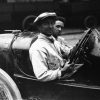
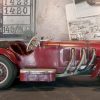
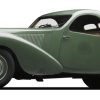

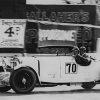

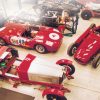
Bentley won Le Mans five times in seven years, 1924 to 1930; Alfa Romeo then won it four times running, 1931 to 1934. Bugatti won the Targa Florio five times running, 1925 to 1929, and, by its own count, more than two thousand races with the Type 35 family; about 340 Type 35s of all kinds were built. The Delage 15-S-8 won every Grand Prix of 1927. The Alfa Romeo P2 won the first World Championship for manufacturers in 1925 and was still winning the Targa Florio in 1930. Segrave's 203.79 mph at Daytona in March 1927 was the first land speed record over 200; Campbell's 272 mph in 1933 was the last of the era, and Parry Thomas the only man killed setting one. Pete DePaolo's 101.13 mph at Indianapolis in 1925 was the first 500 won at over 100; the fastest board-track lap of the decade, Frank Lockhart's, was over 147 mph in a 1.5-litre Miller 91. The first Monaco Grand Prix, in 1929, was won at 49.8 mph; the 1931 Italian Grand Prix ran for ten hours; the 1933 Monaco, the first race with a grid set by practice times, saw Nuvolari and Varzi swap the lead more than twenty times before Nuvolari's engine blew on the last lap. Of the drivers in this story, Ascari (1925), Murphy (1924), Parry Thomas (1927), Materassi (1928, into the Monza crowd, killing 22), Segrave (1930, on Windermere), Kidston (1931), Birkin, Campari, Borzacchini and Czaykowski (1933) all died within the era.
Short answers, with the long ones above.
By the Vintage Sports-Car Club's definition, a car built between 1919 and 1930. Cars built before 1919 are veteran or Edwardian; selected cars of 1931 to 1940 are "post-vintage thoroughbreds". This page follows the racing to the end of 1933.
The Bugatti Type 35 and its derivatives: five Targa Florios in a row, the first Monaco Grand Prix and, by Bugatti's count, over two thousand race wins between 1925 and 1931.
The wealthy amateur drivers who raced W. O. Bentley's cars in the late 1920s: Woolf Barnato, Tim Birkin, Glen Kidston, Dudley Benjafield, Sammy Davis, Jack Dunfee, Frank Clement and others. They won Le Mans in 1927, 1928, 1929 and 1930, after John Duff and Clement's first win in 1924.
The Depression. Bentley Motors, kept alive by Barnato's money since 1926, went into receivership in July 1931 and was bought by Rolls-Royce that November; the racing programme ended with the 1930 Le Mans win.
William Grover-Williams, an Englishman racing as "Williams", in a Bugatti Type 35B painted British racing green, on 14 April 1929.
The Fiat 805, which won the 1923 Italian Grand Prix at Monza with Carlo Salamano. Supercharging had failed on Fiat's cars at the French Grand Prix two months earlier and was universal in Grand Prix racing within two years.
It passed between Britons: Malcolm Campbell (146 mph, 1924, Pendine), Henry Segrave (the first over 200 mph, Daytona, 1927, and 231 mph in 1929), Parry Thomas (171 mph, 1926) and Campbell again (206 mph in 1928, 246 in 1931, 272 in 1933).
In 1931–32, when Jano's 8C 2300 began its four Le Mans wins and the single-seat Tipo B (P3) won the major Grands Prix of 1932 with Nuvolari; Maserati's 8C 2500 and 8CM were the other challengers until the German cars arrived in 1934.
The whole thread, newest first.