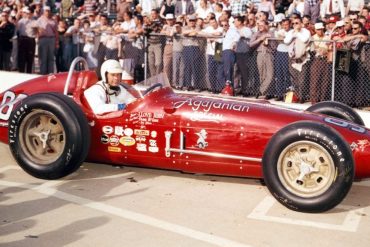
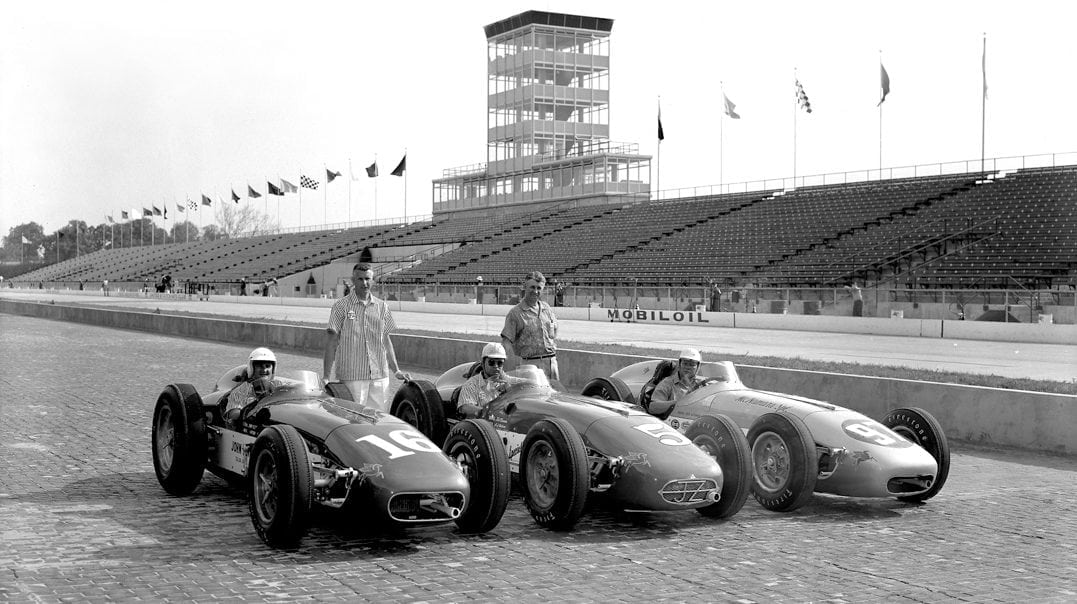
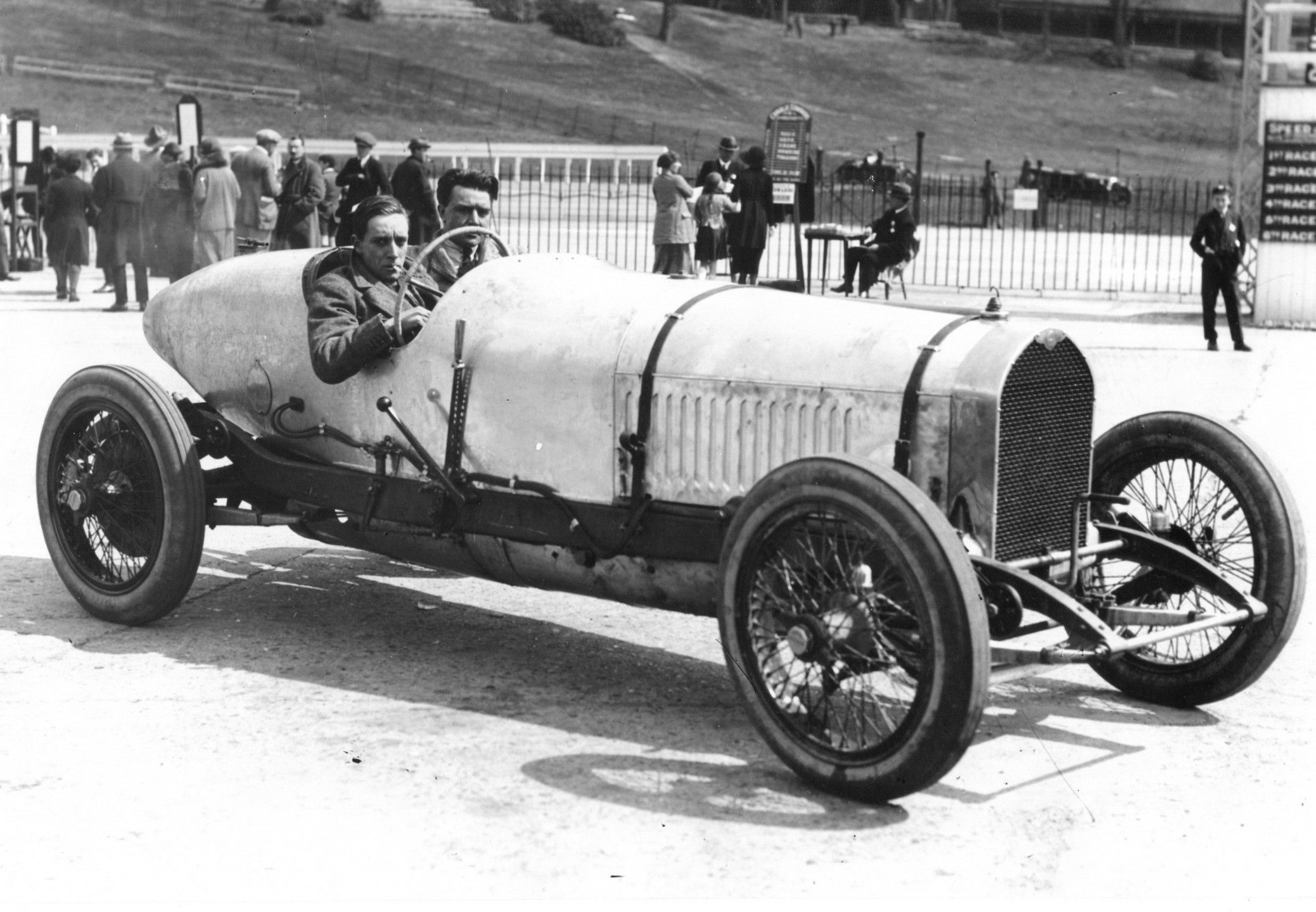
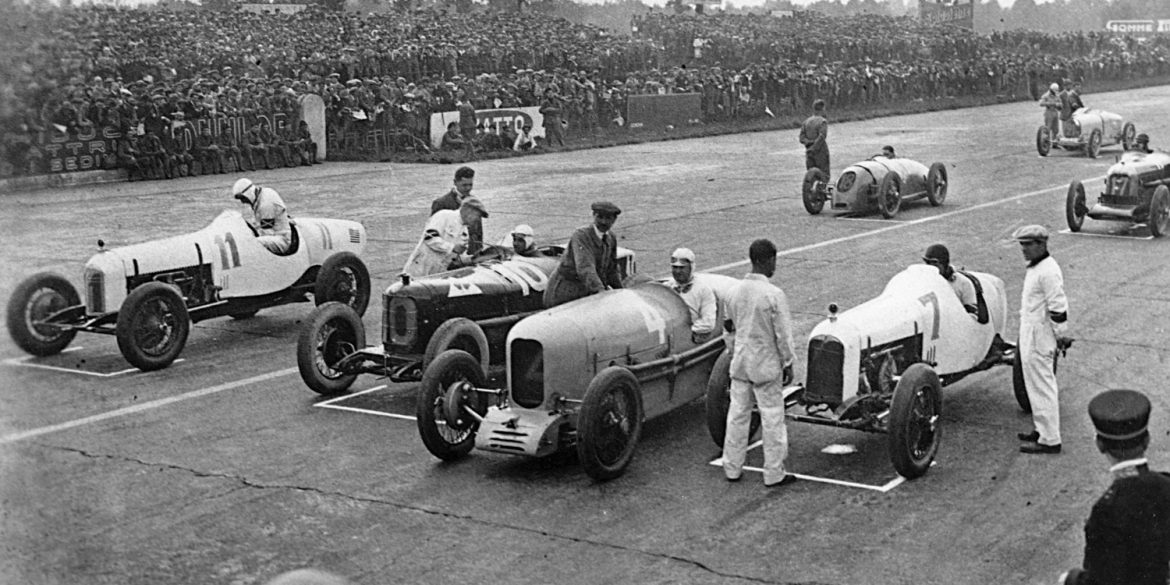
Pete Kreis, from a wealthy Tennessee family, finished eighth at Indianapolis as a 1925 rookie in a Duesenberg and was picked to take the car to the Grand Prix near Milan. Milton, Miller and Hartz had seen him fly.

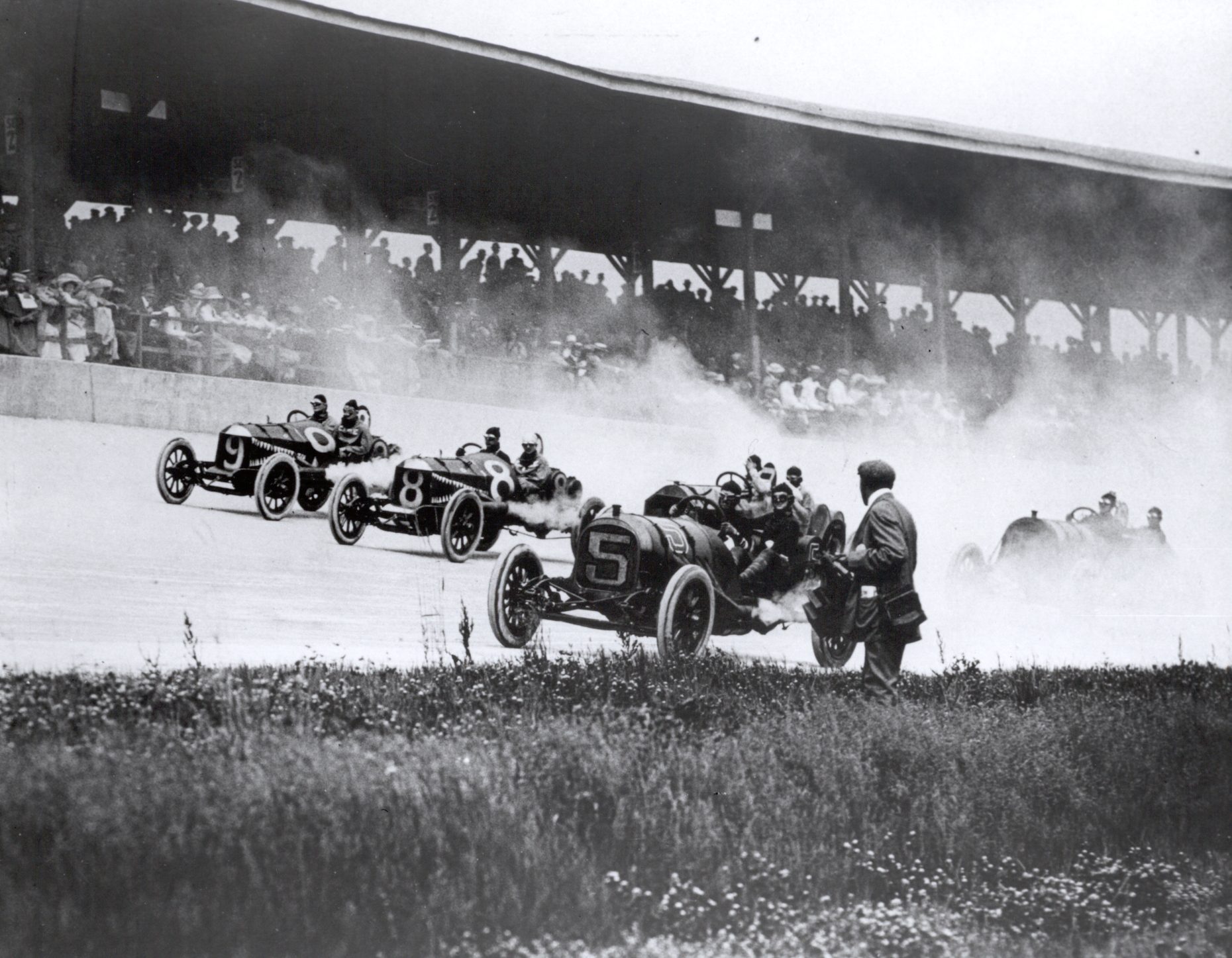
Two and a half miles of oval, four corners, five hundred miles on the last Sunday in May since 1911. It has been won by a Marmon with a rear-view mirror, a Peugeot, a Mercedes, a Maserati, a Novi that never won, a turbine that nearly did, and a Lotus that changed everything. The archive has the cars, the men who built them and a two-part history of the place; this page puts them in order.
The pieces to start with
Dorrington's two-part history, Hanks and Horn, the Novi, the turbines, the Watsons and the Bentley that went to Indy.
Indianapolis had 233,650 people in 1910, the 22nd largest city in America, in a state where 217 automakers had already set up shop. Leigh Dorrington begins a history of the 500 with the Indiana that built it.
Eighty thousand people watched Ray Harroun win the first Indianapolis 500 in the Marmon Wasp in 1911, and about 75,000 of them came by rail. Leigh Dorrington’s second part, from Carl Fisher’s farmland track through the pre-war years.
Sam Hanks won the 1957 Indianapolis 500 and retired in Victory Lane, as only Ray Harroun had before him. Midget titles, the 1953 AAA championship and a 1956 USAC stock car crown came first. John Zimmermann on a quiet man.
Ted Horn never won the Indianapolis 500 but never finished lower than fourth in nine starts after his 1935 debut, and with points awarded per mile that was enough for three straight AAA titles. John Zimmermann on strategy over speed.
Postwar sports car grids in America filled with European imports, and the hot-rodders who had run the Mojave dry lakes before the war answered with home-built specials. How the American special reached road racing in the early 1950s.
Le Mans offered 25,000 francs to the first turbine car to cover 3,600 km in the 24 hours, so Rover asked Cooper, who declined and pointed them to BRM. Michael Oliver opens his two-part turbine history with the 1963 Rover-BRM.
The twin nostrils that marked a Watson roadster were never wind-tunnel work: fabricator Wayne Ewing straightened a Daytona-crashed nose in 1959 and made it a twin-holer without asking. Richard Nisley talks to A.J. Watson, 83, last of the roadster builders.
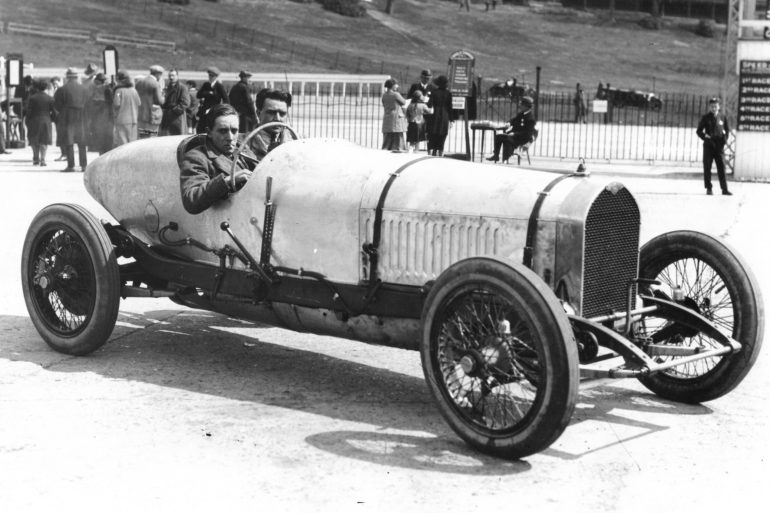
Douglas “Douggie” Hawkes raced a 15-litre 1912 Lorraine-Dietrich at Brooklands and knew W.O. Bentley’s new 3-litre was coming. Karl Ludvigsen on how a professional driver and mechanician talked Bentley into an entry at Indianapolis.
The newest long-form writing on the Indianapolis 500, as it is published.
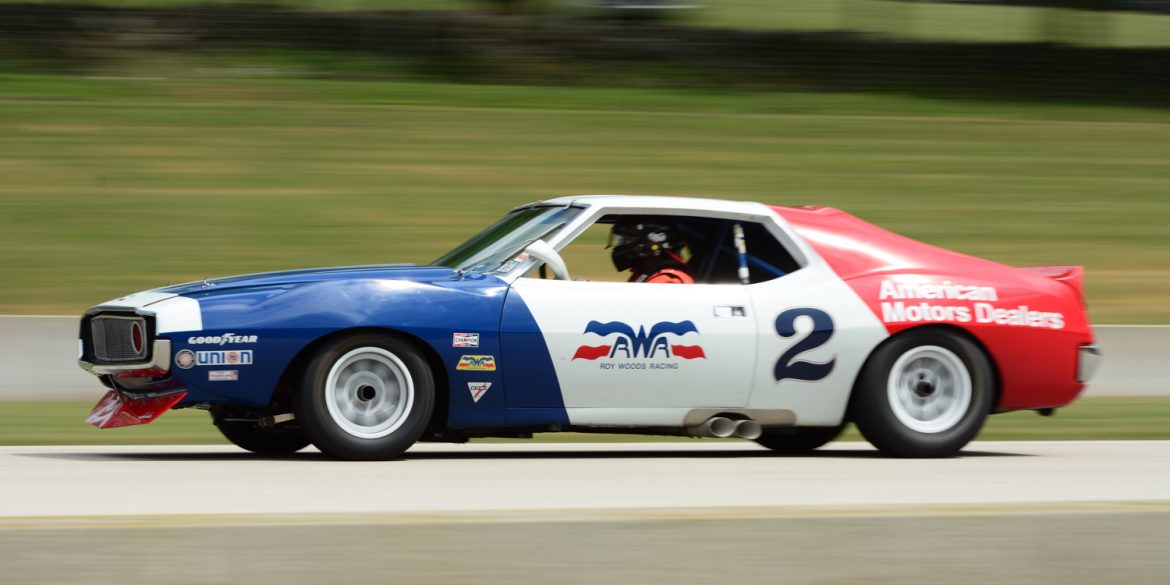
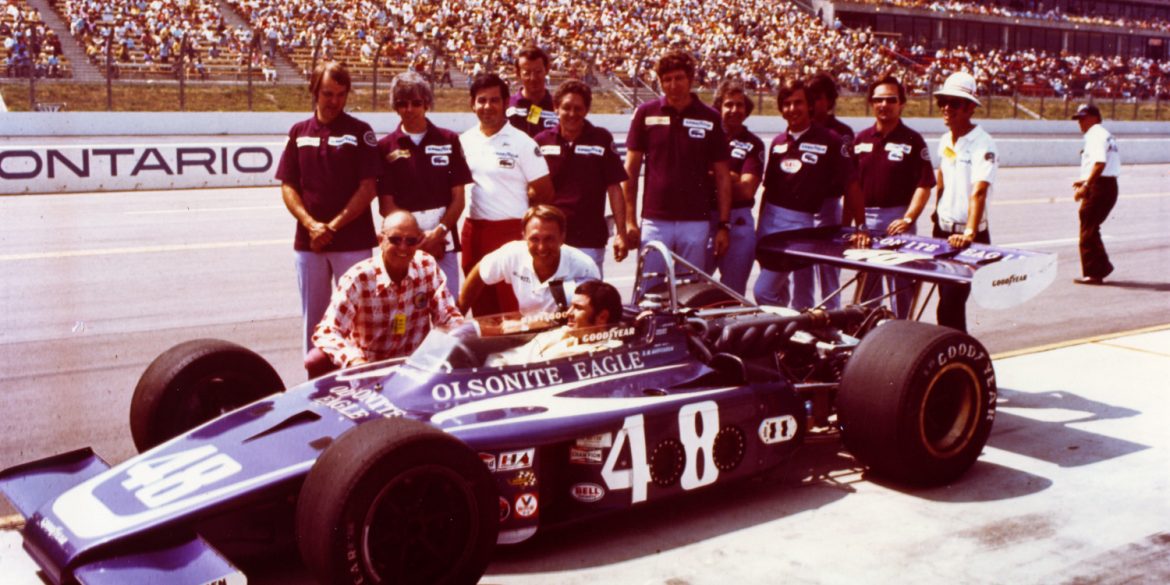
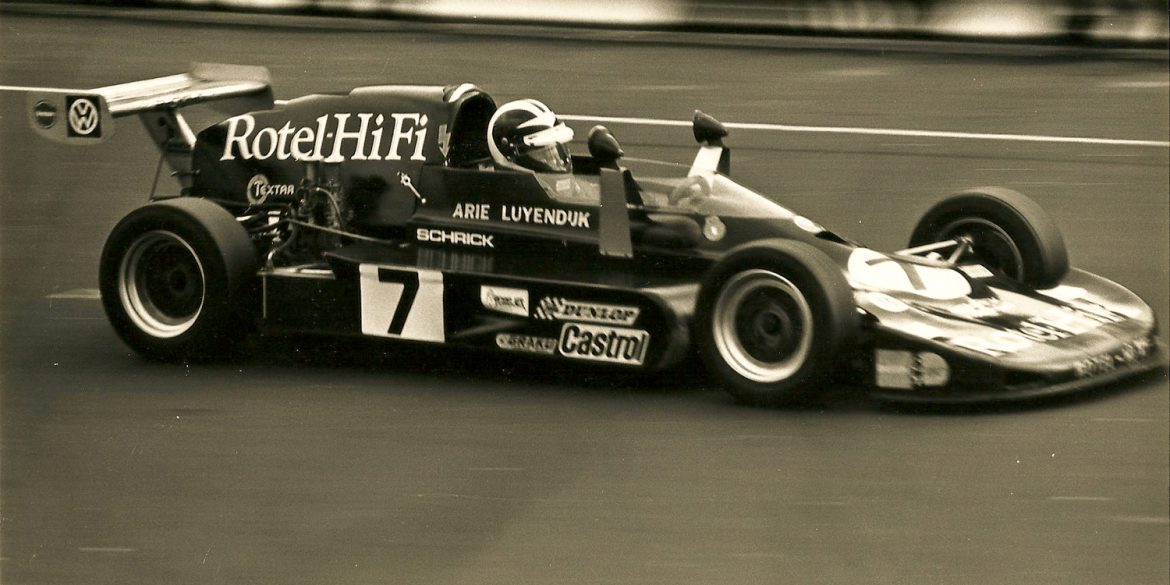
The Indianapolis 500 is a 500-mile race, two hundred laps of the two-and-a-half-mile oval of the Indianapolis Motor Speedway, run on the Sunday of Memorial Day weekend every year since 1911 except for the two world wars. It is the oldest major motor race in the United States, the largest single-day sporting event in the world, with more than 250,000 people in the grandstands and the infield, and with Monaco and Le Mans one leg of motor racing's Triple Crown. Thirty-three cars start in eleven rows of three; the fastest four-lap average in qualifying takes pole; the winner drinks milk, kisses the bricks and has his face sculpted onto the Borg-Warner Trophy. Four men have won it four times: A.J. Foyt, Al Unser, Rick Mears and Hélio Castroneves. Roger Penske's team has won it twenty times and, since 2019, owns the place.
The race has been the proving ground for everything from the rear-view mirror, which Ray Harroun fitted to the Marmon Wasp in the first one, to the twin-cam engine, the supercharger, front-wheel drive, the turbine, the rear-engined car and the turbocharged V8; and it has killed more drivers than any other race, which is also part of why it matters. The archive holds Leigh Dorrington's two-part history of the Speedway, John Zimmermann's portraits of Hanks and Horn, the histories of the Novi, the turbines, the Watsons and the Coyotes, Mears and Rutherford in their own words, Pete Lyons on when Indy was awesome, and the vintage laps and Legends Days in pictures. This page puts them in order.
Indianapolis in 1910 was the twenty-second city in America and already a motor town, with Marmon, National, Stutz and a couple of hundred smaller makers around it, and Carl Fisher was its loudest car dealer. He had hung a car from a balloon over the city to sell it, made a fortune in acetylene headlamps with James Allison, and wanted a track where Indiana's manufacturers could test and race at speeds the fairground ovals could not take. With Allison, Arthur Newby and Frank Wheeler he bought 328 acres of farmland northwest of town, laid a two-and-a-half-mile rectangle of crushed stone and tar, and opened it in August 1909. The surface broke up in the first meeting and killed five people; Fisher repaved it that autumn with 3.2 million bricks, and the name has stuck through every resurfacing since. Leigh Dorrington's History of the Indianapolis 500, Part One is the full story of the founders and the building; Part Two carries the race from there.
The idea of one long race instead of a programme of short ones came in 1911: 500 miles, a $25,000 purse, on 30 May, Memorial Day. Forty cars started in rows of five; eighty thousand people came, most by train. Ray Harroun, who had retired from driving, came back for Marmon in a single-seat yellow car called the Wasp, fitted a mirror so that he could do without the riding mechanic everyone else carried to watch behind, and won in six hours and forty-two minutes at 74.6 mph, with a relief driver taking a stint. Whether he had actually led at the end was argued for years because the scoring stand had been knocked over in a crash. He never raced again.
Every 500, with the year's one-line story. Car names link to every story on the site about that car.
| Year | Winner | Car | The race |
|---|---|---|---|
| 1911 | Ray Harroun | Marmon Wasp | The first; the rear-view mirror |
| 1912 | Joe Dawson | National | DePalma led 196 laps and pushed his Mercedes in |
| 1913 | Jules Goux | Peugeot | Won by 13 minutes, with champagne |
| 1914 | René Thomas | Delage | |
| 1915 | Ralph DePalma | Mercedes | Finished on three cylinders |
| 1916 | Dario Resta | Peugeot | 300 miles; no race 1917 to 1918 |
| 1919 | Howdy Wilcox | Peugeot | |
| 1920 | Gaston Chevrolet | Monroe-Frontenac | |
| 1921 | Tommy Milton | Frontenac | |
| 1922 | Jimmy Murphy | Duesenberg-Miller | First from pole; the first Miller engine |
| 1923 | Tommy Milton | HCS-Miller | First two-time winner |
| 1924 | L.L. Corum / Joe Boyer | Duesenberg | First supercharged winner |
| 1925 | Peter DePaolo | Duesenberg | First over 100 mph |
| 1926 | Frank Lockhart | Miller | Rain; 400 miles |
| 1927 | George Souders | Duesenberg | |
| 1928 | Louis Meyer | Miller | |
| 1929 | Ray Keech | Miller | |
| 1930 | Billy Arnold | Miller-Hartz | The Junk Formula; led 198 laps |
| 1931 | Louis Schneider | Stevens-Miller | |
| 1932 | Fred Frame | Wetteroth-Miller | |
| 1933 | Louis Meyer | Miller | 42 starters, the largest field |
| 1934 | Bill Cummings | Miller | |
| 1935 | Kelly Petillo | Wetteroth-Offenhauser | First Offenhauser win |
| 1936 | Louis Meyer | Stevens-Miller | Third win; buttermilk; the Borg-Warner Trophy |
| 1937 | Wilbur Shaw | Shaw-Offenhauser | In his own car |
| 1938 | Floyd Roberts | Wetteroth-Miller | |
| 1939 | Wilbur Shaw | Maserati 8CTF | |
| 1940 | Wilbur Shaw | Maserati 8CTF | Back-to-back; the Boyle Special |
| 1941 | Floyd Davis / Mauri Rose | Wetteroth-Offenhauser | No race 1942 to 1945 |
| 1946 | George Robson | Adams-Sparks | Hulman's first race |
| 1947 | Mauri Rose | Deidt-Offenhauser | |
| 1948 | Mauri Rose | Deidt-Offenhauser | |
| 1949 | Bill Holland | Deidt-Offenhauser | |
| 1950 | Johnnie Parsons | Kurtis Kraft-Offenhauser | Rain; 345 miles |
| 1951 | Lee Wallard | Kurtis Kraft-Offenhauser | |
| 1952 | Troy Ruttman | Kuzma-Offenhauser | Youngest winner, 22 |
| 1953 | Bill Vukovich | Kurtis Kraft-Offenhauser | The hot race; Carl Scarborough died of heat |
| 1954 | Bill Vukovich | Kurtis Kraft-Offenhauser | |
| 1955 | Bob Sweikert | Kurtis Kraft-Offenhauser | Vukovich killed while leading |
| 1956 | Pat Flaherty | Watson-Offenhauser | First USAC race |
| 1957 | Sam Hanks | Salih-Offenhauser | The laydown; retired in Victory Lane |
| 1958 | Jimmy Bryan | Salih-Offenhauser | Pat O'Connor killed on lap 1 |
| 1959 | Rodger Ward | Watson-Offenhauser | |
| 1960 | Jim Rathmann | Watson-Offenhauser | The duel with Ward |
| 1961 | A.J. Foyt | Trevis-Offenhauser | Golden anniversary |
| 1962 | Rodger Ward | Watson-Offenhauser | |
| 1963 | Parnelli Jones | Watson-Offenhauser | Clark's Lotus second |
| 1964 | A.J. Foyt | Watson-Offenhauser | Last front-engined winner; Sachs and MacDonald killed |
| 1965 | Jim Clark | Lotus 38-Ford | First rear-engined winner |
| 1966 | Graham Hill | Lola T90-Ford | Rookie; 11 cars out on lap 1 |
| 1967 | A.J. Foyt | Coyote-Ford | Jones's turbine failed with 3 laps left |
| 1968 | Bobby Unser | Eagle-Offenhauser | Lotus turbines failed with 9 laps left |
| 1969 | Mario Andretti | Hawk-Ford | Andretti's only win |
| 1970 | Al Unser | Colt-Ford | |
| 1971 | Al Unser | Colt-Ford | |
| 1972 | Mark Donohue | McLaren M16B-Offenhauser | Penske's first |
| 1973 | Gordon Johncock | Eagle-Offenhauser | Rain; Swede Savage's crash |
| 1974 | Johnny Rutherford | McLaren M16C-Offenhauser | |
| 1975 | Bobby Unser | Eagle-Offenhauser | Rain, 435 miles |
| 1976 | Johnny Rutherford | McLaren M16E-Offenhauser | Rain, 255 miles, the shortest |
| 1977 | A.J. Foyt | Coyote-Foyt | First four-time winner; Guthrie's first start; Sneva's 200 mph pole |
| 1978 | Al Unser | Lola T500-Cosworth | |
| 1979 | Rick Mears | Penske PC6-Cosworth | |
| 1980 | Johnny Rutherford | Chaparral 2K-Cosworth | Ground effect |
| 1981 | Bobby Unser | Penske PC9B-Cosworth | Decided on appeal in October |
| 1982 | Gordon Johncock | Wildcat-Cosworth | By 0.16 s over Mears |
| 1983 | Tom Sneva | March 83C-Cosworth | |
| 1984 | Rick Mears | March 84C-Cosworth | |
| 1985 | Danny Sullivan | March 85C-Cosworth | Spin and win |
| 1986 | Bobby Rahal | March 86C-Cosworth | Run a week late |
| 1987 | Al Unser | March 86C-Cosworth | Fourth win, in a show car |
| 1988 | Rick Mears | Penske PC17-Chevrolet | |
| 1989 | Emerson Fittipaldi | Penske PC18-Chevrolet | Touched Unser Jr on lap 199 |
| 1990 | Arie Luyendyk | Lola T90-Chevrolet | 185.981 mph, still the fastest |
| 1991 | Rick Mears | Penske PC20-Chevrolet | Mears's fourth |
| 1992 | Al Unser Jr | Galmer-Chevrolet | By 0.043 s over Goodyear |
| 1993 | Emerson Fittipaldi | Penske PC22-Chevrolet | Orange juice |
| 1994 | Al Unser Jr | Penske PC23-Mercedes | The pushrod engine |
| 1995 | Jacques Villeneuve | Reynard-Ford | After a two-lap penalty |
| 1996 | Buddy Lazier | Reynard-Ford | The first race of the split |
| 1997 | Arie Luyendyk | G-Force-Oldsmobile | Run on the Tuesday |
| 1998 | Eddie Cheever | Dallara-Oldsmobile | |
| 1999 | Kenny Bräck | Dallara-Oldsmobile | |
| 2000 | Juan Pablo Montoya | G-Force-Oldsmobile | Led 167 laps |
| 2001 | Hélio Castroneves | Dallara-Oldsmobile | Climbed the fence |
| 2002 | Hélio Castroneves | Dallara-Chevrolet | |
| 2003 | Gil de Ferran | Panoz G-Force-Toyota | |
| 2004 | Buddy Rice | Panoz G-Force-Honda | Rain, 450 miles |
| 2005 | Dan Wheldon | Dallara-Honda | Danica Patrick led as a rookie |
| 2006 | Sam Hornish Jr | Dallara-Honda | Passed Marco Andretti at the line |
| 2007 | Dario Franchitti | Dallara-Honda | Rain, 415 miles |
| 2008 | Scott Dixon | Dallara-Honda | The reunified series |
| 2009 | Hélio Castroneves | Dallara-Honda | |
| 2010 | Dario Franchitti | Dallara-Honda | |
| 2011 | Dan Wheldon | Dallara-Honda | Hildebrand hit the wall in the last corner |
| 2012 | Dario Franchitti | Dallara DW12-Honda | |
| 2013 | Tony Kanaan | Dallara DW12-Chevrolet | Record 68 lead changes |
| 2014 | Ryan Hunter-Reay | Dallara DW12-Honda | By 0.06 s over Castroneves |
| 2015 | Juan Pablo Montoya | Dallara DW12-Chevrolet | |
| 2016 | Alexander Rossi | Dallara DW12-Honda | The 100th running, on fumes |
| 2017 | Takuma Sato | Dallara DW12-Honda | |
| 2018 | Will Power | Dallara DW12-Chevrolet | |
| 2019 | Simon Pagenaud | Dallara DW12-Chevrolet | |
| 2020 | Takuma Sato | Dallara DW12-Honda | August, no spectators |
| 2021 | Hélio Castroneves | Dallara DW12-Honda | Fourth win, at 46 |
| 2022 | Marcus Ericsson | Dallara DW12-Honda | |
| 2023 | Josef Newgarden | Dallara DW12-Chevrolet | |
| 2024 | Josef Newgarden | Dallara DW12-Chevrolet | Penske's 20th |
| 2025 | Alex Palou | Dallara DW12-Honda | |
| 2026 | Felix Rosenqvist | Dallara DW12-Honda | The closest finish in the race's history |
No race 1917–18 or 1942–45. Co-drivers and relief drivers shared several early wins; the 1941 race was shared by Floyd Davis and Mauri Rose. Chassis-engine names follow the Speedway's own records.
The Indianapolis Motor Speedway is a rectangle with rounded corners: two straights of five-eighths of a mile, two short chutes of an eighth, and four identical turns a quarter of a mile long, banked at nine degrees and twelve minutes, which was as steep as the engineers of 1909 thought a car could stand. It has been that shape since Carl Fisher laid it out on 328 acres of farmland, and the only changes to the oval in more than a century have been to the surface: crushed stone and tar in 1909, 3.2 million bricks that autumn, asphalt over the turns in the 1930s and over everything but a yard of bricks at the start-finish line by 1961, and a full repaving every decade or so since, most recently in 2004 and 2018. The bricks give the place its name and the winners something to kiss. A lap at racing speed takes under forty seconds; the qualifying record is Arie Luyendyk's 237.498 mph for a single lap and 236.986 for four, set in 1996, and the race record is his 185.981 mph of 1990.
Inside the oval is the infield that holds the museum, the golf course, the 2.4-mile road course built in 2000 for Formula One and used since 2014 for the IndyCar Grand Prix, and Gasoline Alley, the garage area whose name predates the Speedway's. The Pagoda on the main straight, the control tower, was built in 2000 in the style of the originals of 1913 and 1925. The grandstands run the length of the straights and round the first and fourth turns, with permanent seating for about 235,000 and room in the infield for perhaps 100,000 more, which makes the Speedway the largest sports venue on earth. Since 1994 the oval has also held NASCAR's Brickyard 400, since 2008 the motorcycle Grand Prix for a few years, and each June the SVRA's Brickyard Invitational for vintage cars. The museum, rebuilt in 2025, holds most of the winning cars back to the Marmon Wasp.
Europe came in 1913 and won four of the next six. Jules Goux's Peugeot, with the twin-cam four-valve engine that was the template for every racing engine for fifty years, won 1913 by thirteen minutes and, by Goux's own account, several bottles of champagne taken at the pit stops. René Thomas's Delage won 1914 with a Peugeot second. Ralph DePalma, who had led the 1912 race for 196 of its 200 laps in a Mercedes before the engine broke and he and his mechanic pushed the car a lap to the line, came back in 1915 in another Mercedes and won it with two laps to go and a connecting rod through the crankcase. Dario Resta won 1916 for Peugeot; the war stopped the race for two years; Howdy Wilcox won the 1919 return in a Peugeot too. The archive's Overseas Influence is about those years, and the 1915 Mercedes is the car. A Bentley 3 Litre ran in 1922 with Douglas Hawkes, the only Bentley ever to start the race, and the archive has its whole story.
After 1919 the race was American for twenty years, and mostly the work of two shops. Jimmy Murphy won 1922 in a Duesenberg with a Harry Miller engine, the first of the Millers; from 1923 to 1929 the supercharged Miller 122s and 91s, with their jewellery finish and, later, front-wheel drive, won four times and filled the fields, at speeds past 100 mph. Then the Depression. Eddie Rickenbacker, the fighter ace who had bought the Speedway in 1927, rewrote the rules for 1930 to keep the entry up: big engines, two seats, riding mechanics back, no superchargers, which the purists called the Junk Formula. It let in Studebaker's factory team, and the archive's Indy Studebaker follows one of those cars; it let a man build his own car in his garage and enter it, which is the story of One Man's Dream; and it brought Louis Meyer his three wins, the third of them in 1936, when he asked for a glass of buttermilk in Victory Lane and started the tradition. The Borg-Warner Trophy arrived the same year. Wilbur Shaw won 1937 in his own car and 1939 and 1940 in a Maserati 8CTF, the only European car to win between the wars; the 1937 Miller-Gulf is what the home side was building at the time. Ted Horn, who finished in the top four nine years running without ever winning, is in Three the Hard Way.
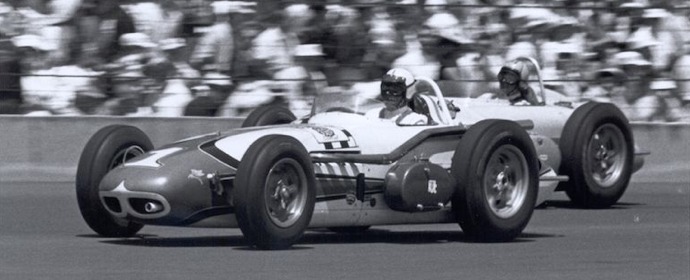
The Speedway was derelict after the war; Shaw persuaded a Terre Haute businessman, Tony Hulman, to buy it in November 1945, and the race ran again in May 1946. The next two decades belonged to the roadster, the long, low, offset front-engined car with an Offenhauser four laid over on its side, built by Frank Kurtis and then by A.J. Watson. Kurtis cars won five of the six races from 1950, including Bill Vukovich's two; Frank Kurtis' Ultimate Roadcar and the 1957 Kurtis 500G2 are the man and a car. Then Winners Drove Watsons: Pat Flaherty's in 1956, the first race run by Hulman's new USAC after the AAA walked away from racing in 1955; Rodger Ward's in 1959 and 1962, Jim Rathmann's in 1960; Parnelli Jones's in 1963, leaking oil; and A.J. Foyt's in 1964, in the last front-engined car to win. Foyt's first, in 1961, after Eddie Sachs stopped for a tyre with three laps left, was in a Trevis built to Watson's drawings. Sam Hanks, who won in 1957 at his thirteenth attempt and retired in Victory Lane, is in A Man Apart. Running against all of them was the Novi, the supercharged V8 that was the fastest and loudest thing at the Speedway for twenty-five years and never won; American Engine-uity is its history.
The 1964 race also killed Sachs and Dave MacDonald on the second lap, in a fire that stopped the race for the first time; MacDonald's son tells his own story in Belatedly Following in Dad's Footsteps. By then the end of the roadster was in sight. Jack Brabham had run a rear-engined Cooper to ninth in 1961; Dan Gurney, who is remembered here and whose five favourite Eagles include two Indy cars, took Colin Chapman to the 1962 race and introduced him to Ford; Jim Clark's Lotus 29 was second in 1963 and should have won, and Bobby Marshman, the American Jim Clark, led the 1964 race in a year-old Lotus until it broke.
Clark won 1965 in the Lotus 38, leading 190 laps, the first rear-engined winner and the first for a foreign driver since 1916; only six cars finished on the lead lap and all but one roadster was gone from the field. Graham Hill won 1966 as a rookie in a Lola after a first-lap pile-up took out eleven cars. Foyt won his third in 1967 in a car he had built himself, the first of the Coyotes, after Parnelli Jones's STP turbine, which had led almost all day, stopped with a failed gearbox bearing three laps from home; the Lotus 56 turbines did the same in 1968 with nine laps left. The archive's two-part Jet Set is the history of the turbine cars. Mario Andretti won 1969, his only one; Al Unser 1970 and 1971; Mark Donohue 1972 for Roger Penske, the first of the twenty; Johnny Rutherford 1974, as he tells it, 1976 and 1980. Tom Sneva was the first to qualify at 200 mph, in 1977, the year Janet Guthrie became the first woman to start the race and Foyt the first man to win it four times; the archive's Quest for 200 is the speed story from the bricks to Sneva, The Gasman's Day is Sneva, and No Challenge Too Great is Guthrie.
Rick Mears won four, in 1979, 1984, 1988 and 1991, all for Penske, and explains the last of them himself. Between them: Bobby Unser in 1981 after a penalty and an appeal that took five months; Gordon Johncock by sixteen hundredths of a second over Mears in 1982; Danny Sullivan's spin in front of Andretti in 1985, held and won; Al Unser Sr's fourth in 1987 in a year-old March that had been a show car in a hotel lobby; Emerson Fittipaldi in 1989, and again in 1993, when he drank orange juice in Victory Lane and was never quite forgiven; Arie Luyendyk's record 185.981 mph in 1990, still the fastest race; Al Unser Jr by 0.043 seconds over Scott Goodyear in 1992, the closest finish there had been. Penske and Mercedes read the rulebook better than anyone for 1994 and built a pushrod engine that was legal for one race, and Mercedes still celebrates Unser Jr's win in it. Jacques Villeneuve won 1995 after a two-lap penalty. Roberto Guerrero, who was second as a rookie in 1984 and spun on the pace lap from pole in 1992, calls it an honour just to have raced there.
In 1996 Tony George, Hulman's grandson, started the Indy Racing League around the 500 and the CART teams stayed away; the fields were thin for several years and the best drivers in American open-wheel racing did not race at Indianapolis until the sides came back together in 2008. Buddy Lazier won the first split race with a broken back; Juan Pablo Montoya came over with Ganassi in 2000 and led 167 laps; Hélio Castroneves won 2001 and 2002 as a rookie and a sophomore, climbed the fence both times, won again in 2009 and, in 2021, at 46, became the fourth man to win four. Dan Wheldon won 2005 and, in 2011, on the last corner of the last lap when J.R. Hildebrand hit the wall, and was killed that October. Dario Franchitti won three, and the archive's Ten Masters of Indy ranks the ones who did. The hundredth running in 2016 went to the rookie Alexander Rossi on fumes, and 100th Indianapolis 500, Behind the Wheel is the archive's view of it; Takuma Sato won 2017 and 2020, the second in August with no spectators. Penske bought the Speedway and the series from the Hulman family in November 2019. Josef Newgarden won 2023 and 2024 for him; Alex Palou took 2025; and on 24 May 2026 Felix Rosenqvist passed David Malukas in the closing laps for the closest finish in the race's history.
Dorrington's two-part history, the Ten Masters, 1974, the 100th and the anniversaries, newest first.
Qualifying is the race's own invention: each car runs four flying laps alone and the average speed of the four is its time, which is why pole has been decided by thousandths of a mile an hour and why Pole Day was once as big an event as the race. Thirty-three cars start, in eleven rows of three, a number fixed in 1934 on the AAA's reckoning of one car per 400 feet of track; when more than 33 enter, the slowest are bumped, which has happened to champions. The field takes the green from a rolling start behind the pace car after the parade laps, the command to start engines, the singing of "Back Home Again in Indiana" and the release of the balloons. Pit stops, with fuel, four tyres and a wing adjustment in under seven seconds, are where most races are decided; cautions bunch the field and have decided the rest. The race runs 200 laps whatever the weather allows, has been shortened by rain and, since 1964, stopped and restarted for accidents. The winner drives to Victory Lane, drinks from a bottle of milk because Louis Meyer asked for buttermilk in 1936, is draped in a wreath, and later kisses the bricks, a habit NASCAR's Dale Jarrett started in 1996 and the 500 adopted; his likeness is added to the Borg-Warner Trophy, which has carried every winner's face since 1936 and stays at the Speedway, the winner taking home a smaller replica. The month of May used to mean two weekends of qualifying and a fortnight of practice; it is now a fortnight, with the road-course Grand Prix at its start and Carb Day, the last practice, on the Friday before the race.
The winners' list is a history of the American racing car with occasional lessons from Europe. The first era was the manufacturers': the Marmon Wasp, the National, the Peugeots of Goux and Resta with their twin-cam engines, Thomas's Delage, DePalma's Mercedes. The 1920s were Duesenberg's and then Harry Miller's: the Duesenberg-Miller of 1922, the HCS-Miller, the supercharged Miller 122s and the front-drive 91s of Lockhart, Meyer and Keech, the most beautiful racing cars America built. The Junk Formula brought the big two-seaters, Wetteroth and Stevens chassis with Miller and the new Offenhauser fours, the Studebakers, Shaw's own car and the Maserati 8CTF that won twice. After the war came the Offenhauser roadsters, Deidt, Kuzma and Kurtis Kraft, then Watson's six winners and the Trevis, with the Novi V8 screaming behind them and never winning. Then the revolution: the Lotus 38 and the Ford V8, Hill's Lola, Foyt's Coyote, Bobby Unser's Eagle, the turbines of 1967 and 1968 that nearly won, the McLaren M16s, the Penskes, Cosworth power from 1978, the March 84C and its successors, the Lola T90 of Luyendyk's record, the Galmer, the Penske-Mercedes pushrod car of 1994, the Reynards of the split, and since 2012 the Dallara DW12 with Honda or Chevrolet power that every car on the grid now is. The nine cars below each link to every story on the site about that car; the feed after them carries the single-car stories that mention the race.
Nine from 115 years; each links to every story on the site about that car.
Single-car stories that carry the race: Millers, Kurtis and Watson roadsters, the Novi, the turbines, the Eagles and the Coyotes.
Four men have won four: A.J. Foyt (1961, 1964, 1967, 1977), Al Unser (1970, 1971, 1978, 1987), Rick Mears (1979, 1984, 1988, 1991) and Hélio Castroneves (2001, 2002, 2009, 2021). Louis Meyer, Wilbur Shaw, Mauri Rose, Bobby Unser, Johnny Rutherford and Dario Franchitti won three; Tommy Milton, Bill Vukovich, Rodger Ward, Gordon Johncock, Emerson Fittipaldi, Al Unser Jr, Arie Luyendyk, Dan Wheldon, Juan Pablo Montoya, Takuma Sato and Josef Newgarden two. Behind them stands the race's cast: Harroun and Goux, DePalma, Murphy and Lockhart, Ted Horn, who was in the top four nine years running and never won, Sam Hanks, who won at the thirteenth attempt and retired on the spot, Parnelli Jones, Clark and Chapman, Dan Gurney, Mario Andretti with one win and forty years of bad luck, Mark Donohue, Janet Guthrie, the first woman to start, Tom Sneva, the first past 200, Danny Sullivan and the spin, Scott Goodyear twice second by a car's length, Alexander Rossi on fumes, and the owners and builders, Fisher and Hulman, Miller and Offenhauser, Kurtis and Watson, Andy Granatelli and his turbines, and Roger Penske with twenty wins. The archive's portraits and interviews carry many of them; the feed below gathers the profiles that carry the race's tag.
Hanks, Horn, Gurney, Parnelli, Donohue, Guthrie, Sneva, Mears and the men who built for them.
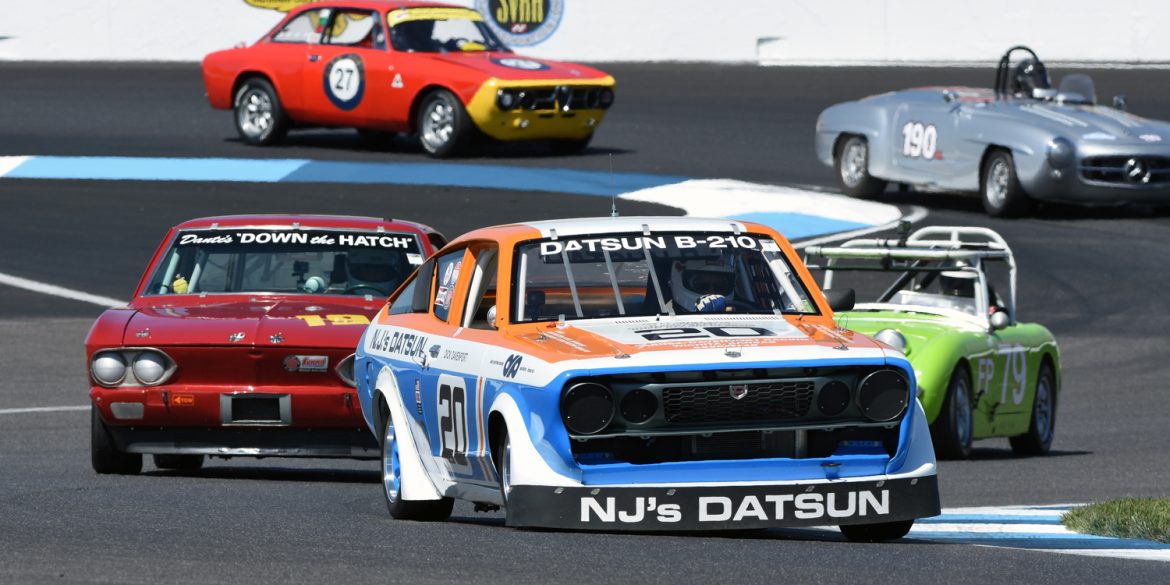
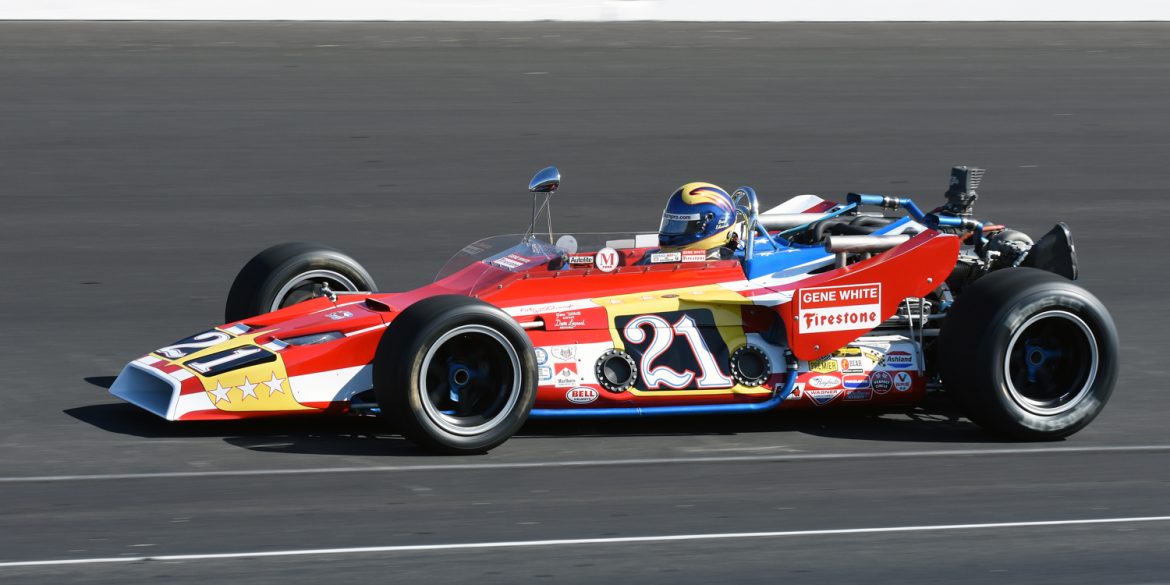
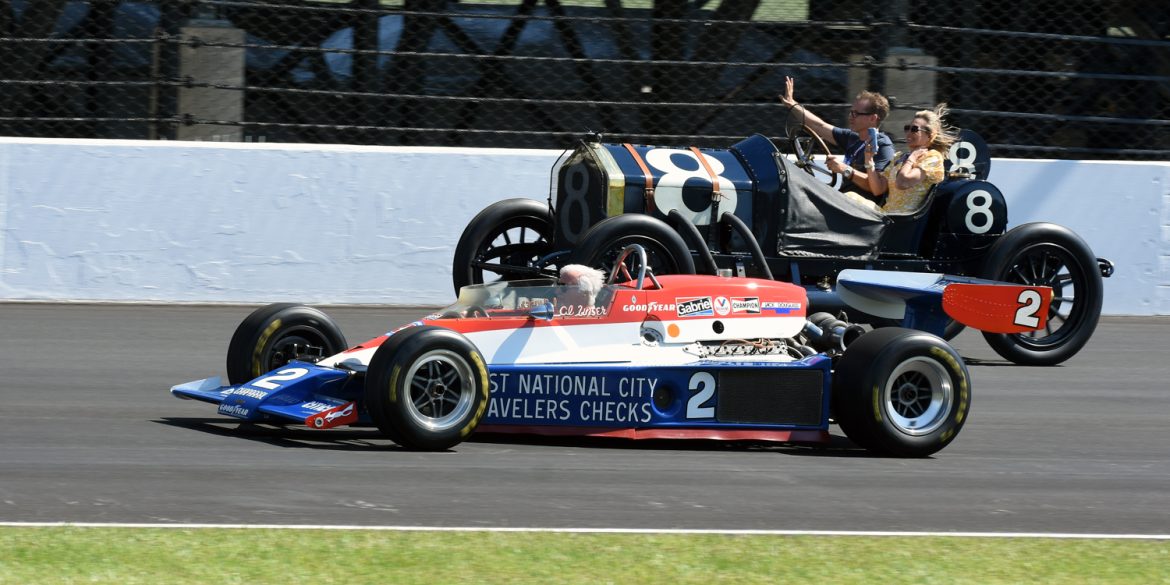
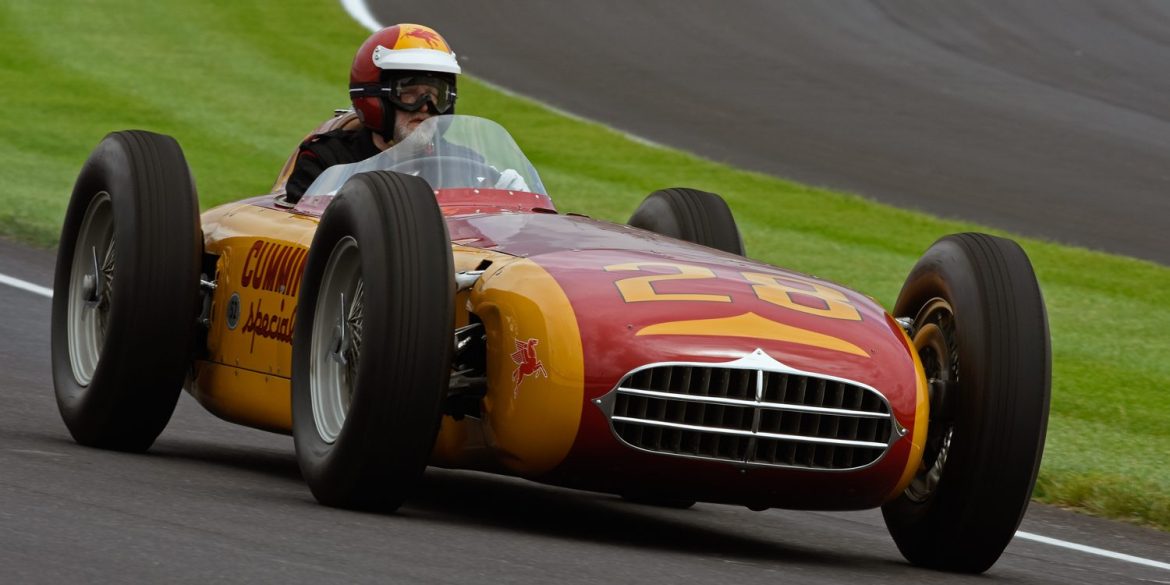
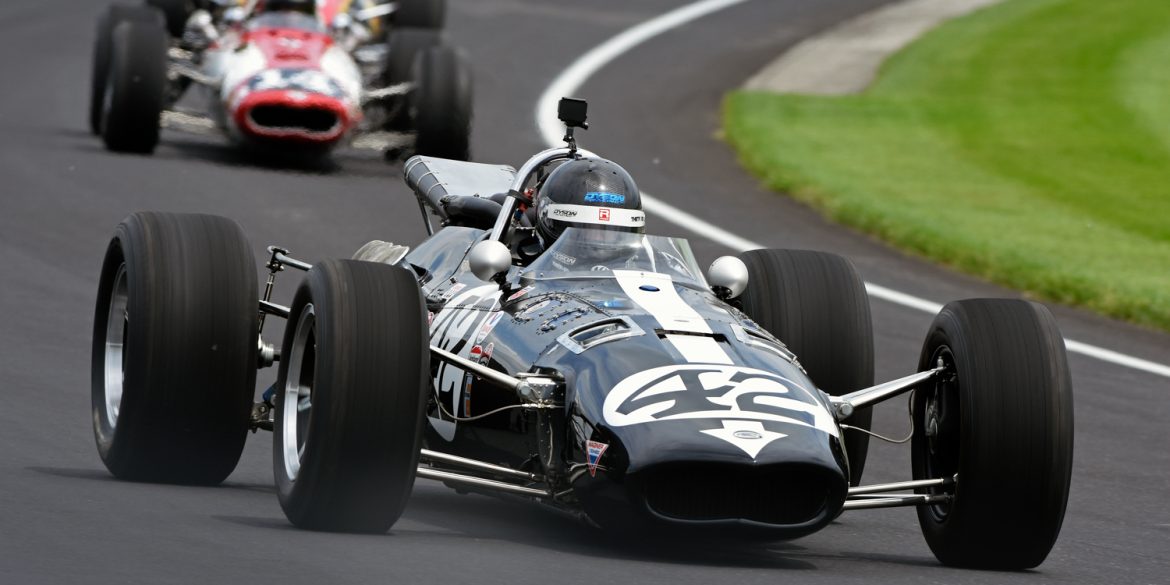
The old cars have their own May. The Speedway museum, inside Turn 2, holds most of the winners back to the Wasp; on race week the pre-war cars and roadsters run their Historic Laps and Legends Day parade, and in June the SVRA Brickyard Invitational puts vintage racing on the road course. The archive has the 2019 historic laps, Legends Day 2018 and the Brickyard Invitational in pictures, Mike Lawrence's The Indy Tradition on what the place means from outside, and Pete Lyons's When Indy Was Awesome on what it sounded like when the engines were all different. The Goodwood Festival of Speed has twice brought the Indy cars to England; the Speedway's own centennial brought everyone home.
Historic laps, Legends Day and the Brickyard Invitational, newest first.
Historic laps, Legends Day and the Brickyard Invitational in pictures.
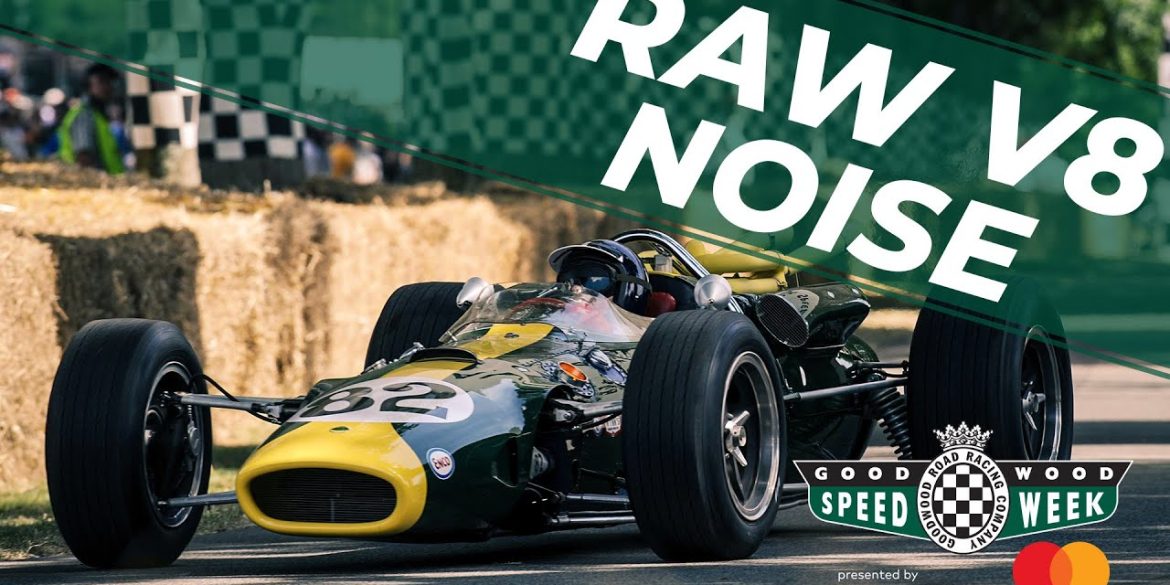
Races: 110, 1911 to 2026, with none in 1917–18 and 1942–45. Most wins, driver: Foyt, Al Unser, Mears and Castroneves 4; Meyer, Shaw, Rose, Bobby Unser, Rutherford and Franchitti 3. Most wins, owner: Penske 20. Most wins, chassis: Dallara 26; engine: Offenhauser 27 outright wins between 1935 and 1976. Fastest race: Luyendyk, 1990, 185.981 mph. Fastest qualifying: Luyendyk, 1996, 236.986 mph over four laps, 237.498 for one. First at 100 mph: Peter DePaolo, 1925; at 150: Jim Clark, 1965; at 200 in qualifying: Tom Sneva, 1977. Closest finishes: 2026, Rosenqvist over Malukas; 1992, Al Unser Jr by 0.043 seconds; 2014, Hunter-Reay by 0.060; 1982, Johncock by 0.16. Largest margin: 1913, Goux by 13 minutes. Youngest winner: Troy Ruttman, 22, 1952; oldest, Al Unser, 47, 1987. Most laps led without winning: Michael Andretti, 431. Rookie winners: Harroun, Goux, Thomas, Lockhart, Graham Hill, Montoya, Castroneves and Rossi among them. Women: Janet Guthrie first to start, 1977; Danica Patrick's third of 2009 the best finish. The turbines: 1967 and 1968, out within ten laps of the end both times. First rear-engined winner: Clark's Lotus 38, 1965; last front-engined: Foyt's Watson, 1964. The crowd: more than 250,000, the largest single-day sporting attendance in the world; 350,000 claimed for the hundredth in 2016. The Borg-Warner Trophy: every winner's face since 1936. The milk: since 1936, and every year since 1956.
Short answers, with the long ones above.
A 500-mile race of 200 laps on the 2.5-mile oval of the Indianapolis Motor Speedway, run on the Sunday of Memorial Day weekend every year since 1911 except during the two world wars. Thirty-three cars start, and it draws more than 250,000 spectators, the largest single-day crowd in sport.
Four drivers have four wins each: A.J. Foyt, Al Unser, Rick Mears and Hélio Castroneves. Roger Penske's team has won twenty times as an entrant, and Dallara has built 26 winning chassis.
Because Louis Meyer, a buttermilk drinker, asked for a glass after winning in 1936 and a dairy executive saw the photograph. The tradition lapsed after the war and has been kept every year since 1956; the winner chooses whole, two per cent or skimmed in advance.
The number was fixed in 1934 on the governing body's rule of one car for every 400 feet of track, which on a 2.5-mile oval gives 33. They start in eleven rows of three, and when more than 33 qualify the slowest are bumped from the field.
Qualifying laps average around 230 mph, with Arie Luyendyk's 1996 record at 236.986 mph over four laps; the fastest race average is Luyendyk's 185.981 mph in 1990. Top speed on the straights is about 240 mph.
Ray Harroun in 1911, driving a single-seat Marmon Wasp fitted with a rear-view mirror so that he could do without a riding mechanic, at an average of 74.6 mph over six hours and forty-two minutes.
The 36-inch strip of the original 1909 brick surface left exposed at the start-finish line when the rest of the track was paved. Winners kiss it, a habit that began with NASCAR's Dale Jarrett in 1996 and spread to the 500.
The whole archive on one thread, newest first.