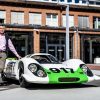
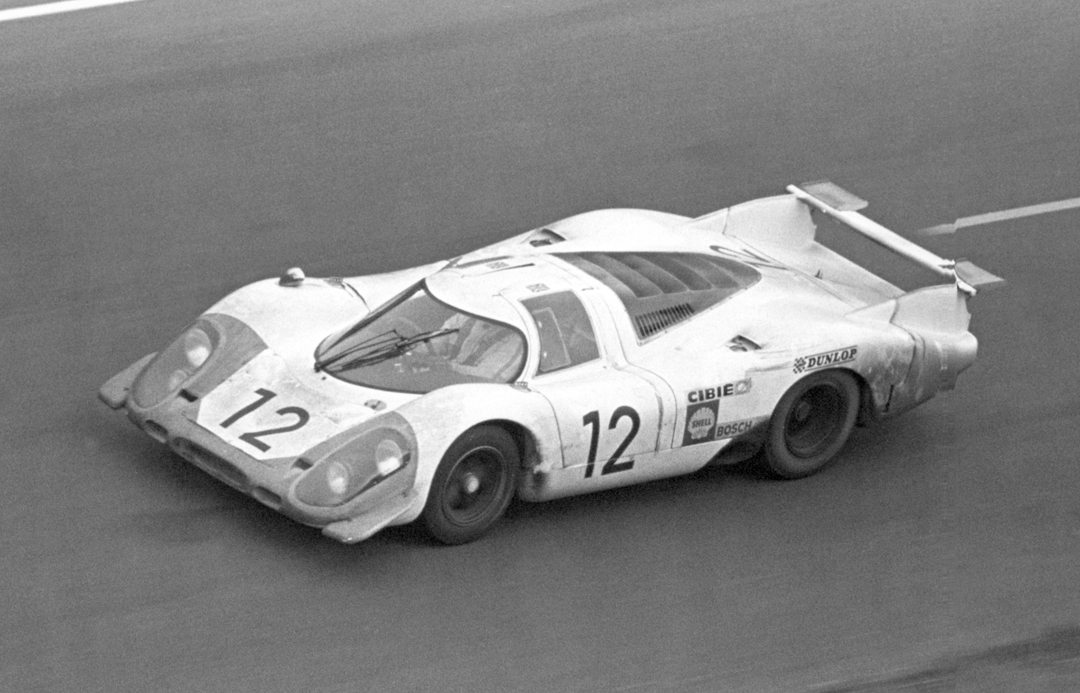
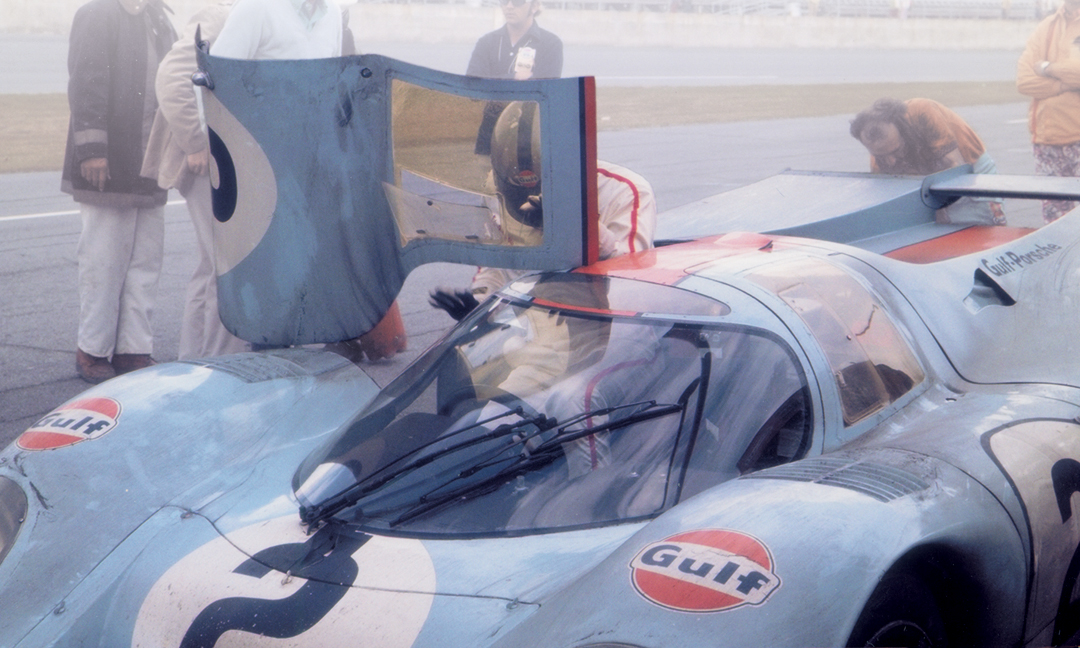
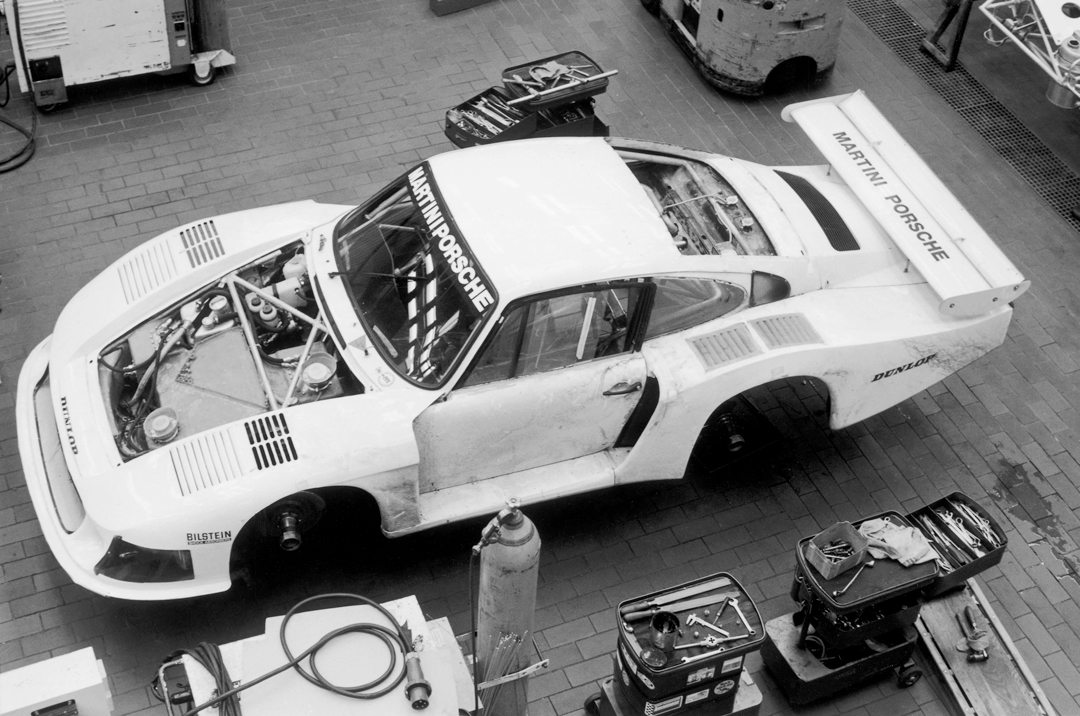
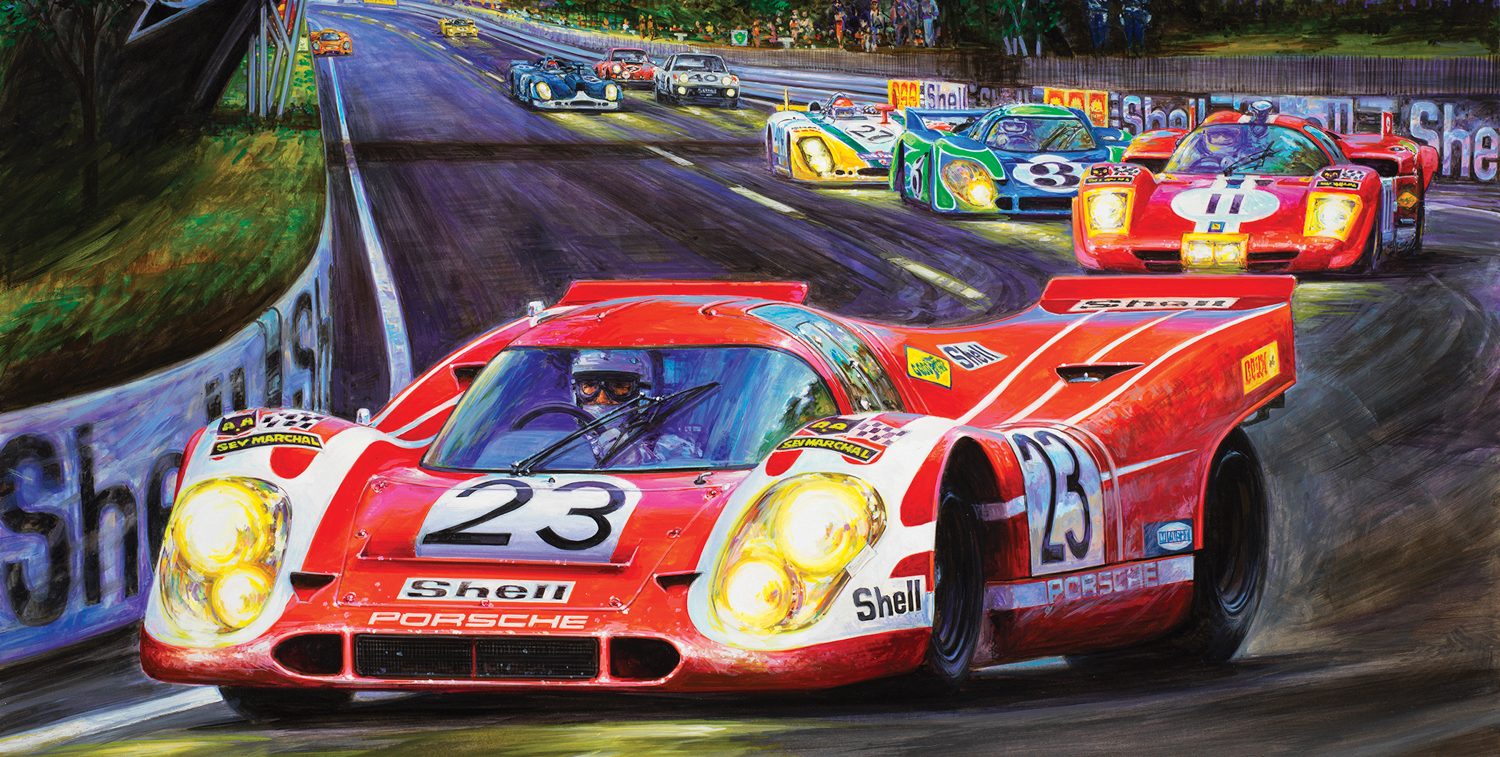
The Porsche 917 was quick in a straight line in 1969 and drivers didn't trust it in corners until the Wyer team cut its tail into the 917K. Flared arches, chin spoilers and tall wings all began as fixes.

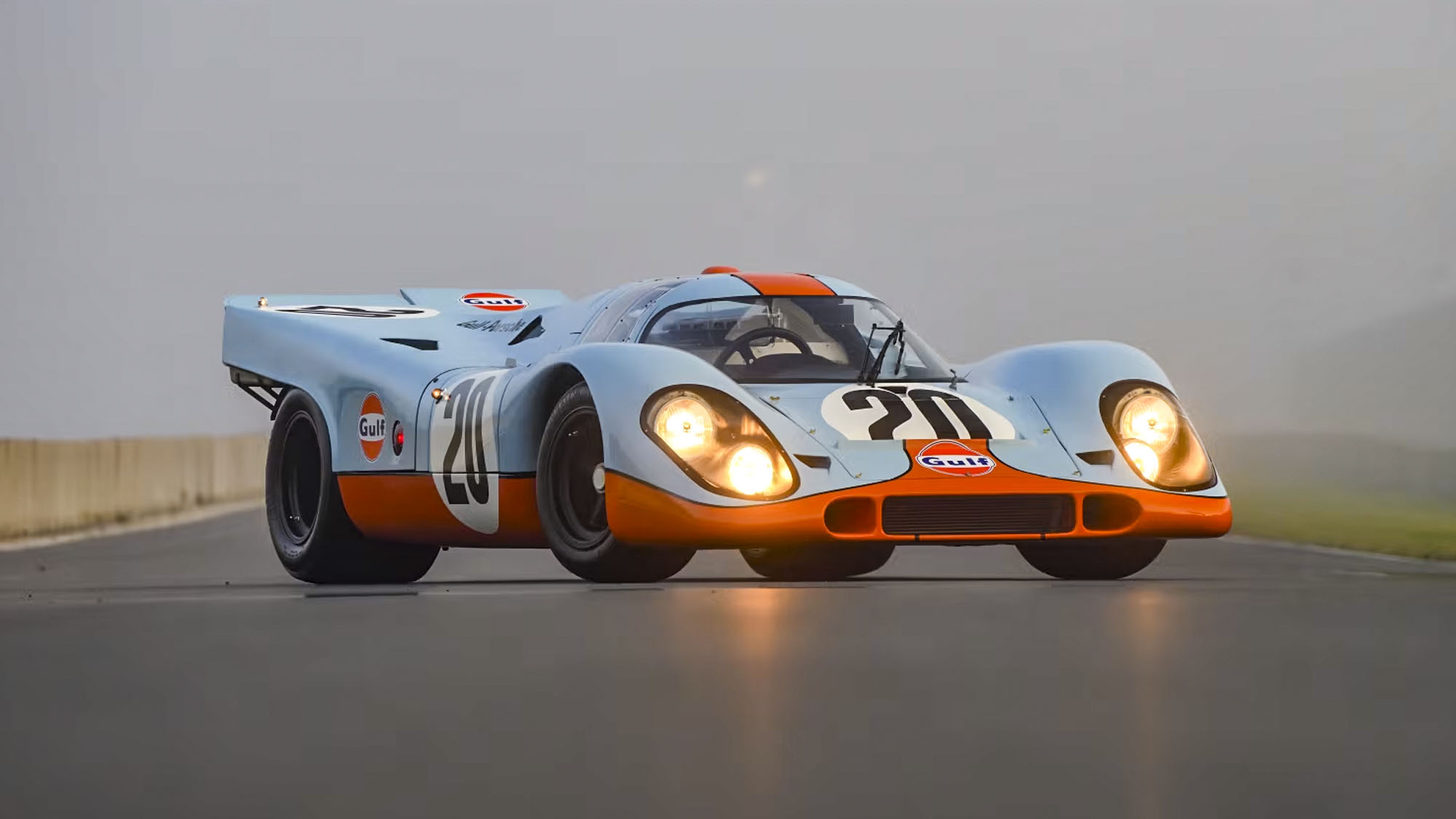
Built in ten months to a loophole, so frightening at first that nobody wanted to drive it, and within two years the fastest and most successful sports car in the world: two Le Mans wins, a distance record that stood for thirty-nine years, and, as a turbocharged Can-Am car, the most powerful racing car ever to run a season. The archive has the 917 from the inside: Harold Pace on the Le Mans breakthrough, Richard Attwood on his baptism by fire, Pete Lyons on Pedro Rodríguez and the Penske turbos, Norbert Singer interviewed, and the Penske Panzer at full length.
The pieces to start with
Pace on the Le Mans breakthrough, Annis on the long tail, the Penske Panzer, Attwood's baptism by fire, Lyons on Pedro and on the turbos, Norbert Singer, and the 1970 race.
The FIA’s 3-liter limit for 1968 was meant to suit Porsche, whose 2-liter 906s had followed the Fords home at Le Mans in 1966. Harold Pace on how the 917 came out of it, and the obstacle inside Porsche.
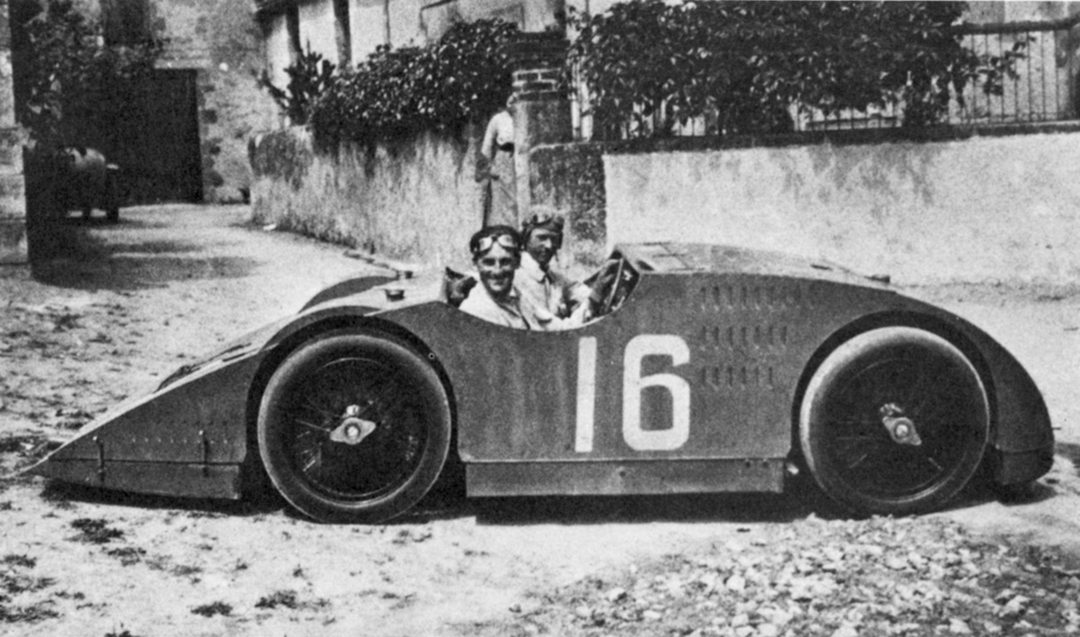
When the ACO cut Le Mans prototypes to 3 liters for 1968, Porsche, Alfa Romeo, Matra and Renault all reached for a design feature first tried in 1923, the year of the first 24 Hours. Casey Annis traces it back.
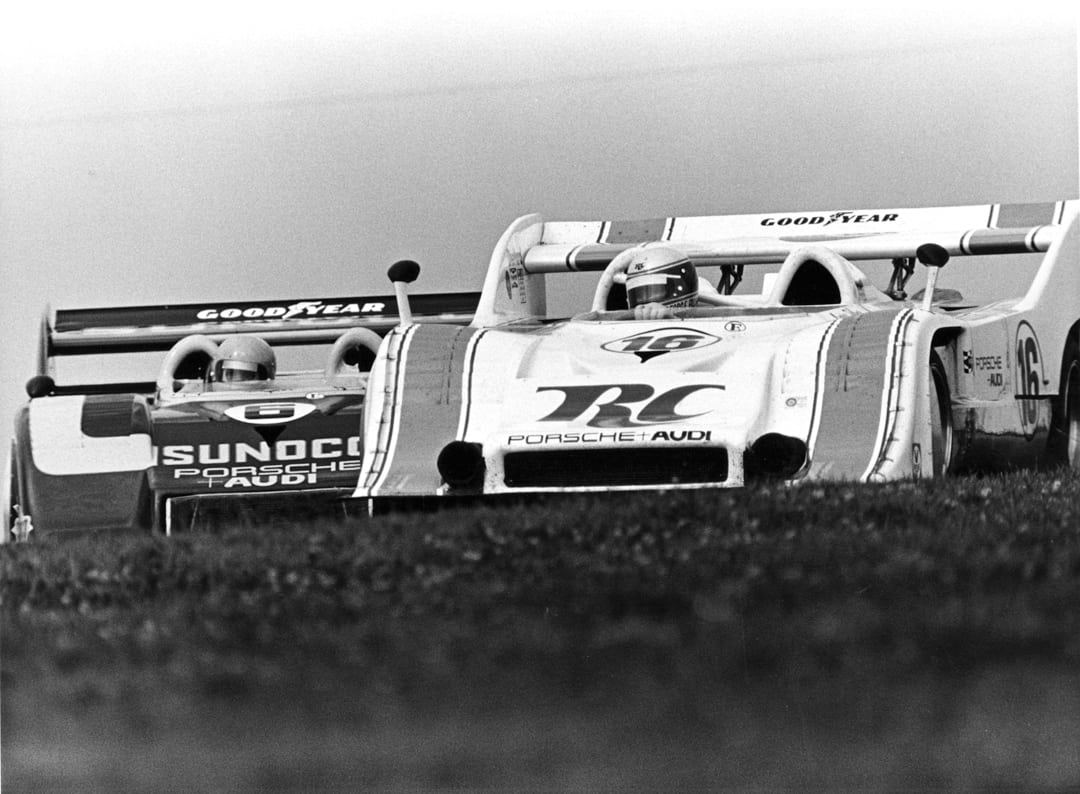
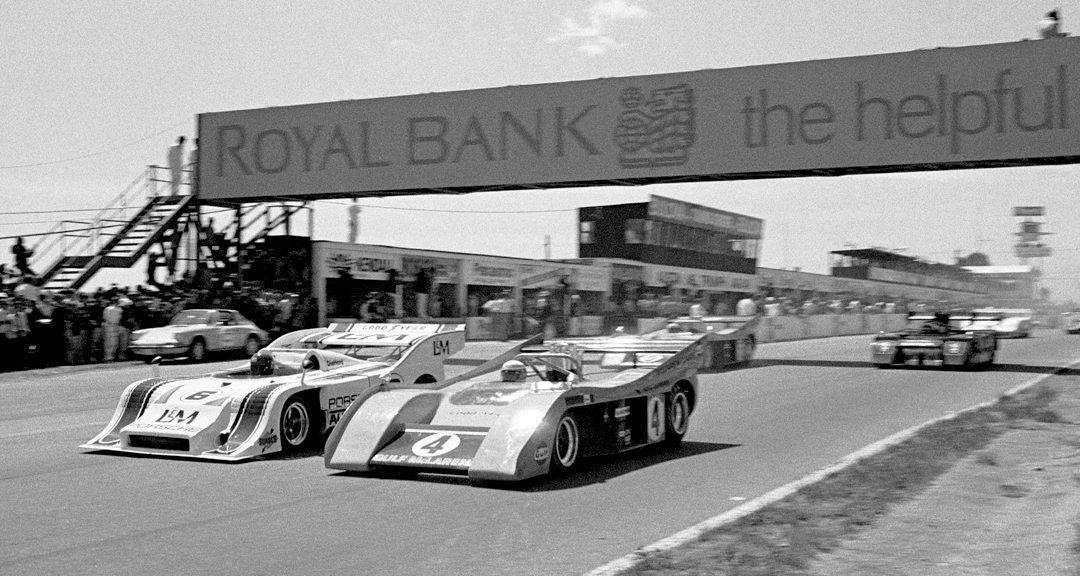
Porsche came late to the Can-Am and, with Penske, built the 917/10 and 917/30 that took the 1972 and 1973 titles so completely that the rules were rewritten against them. From the first 917 to the Panzer.
Nobody at Porsche wanted to drive the 917 in 1969; Mitter and Schütz lasted half a lap at Spa. Its first-time Le Mans driver learned only decades later that Vic Elford had nominated him. “My God, you bastard.”
Asked at the 2001 Rolex 24 what he thought, Pete Lyons answered before he could think. He went back to Autosport’s 1970 and 1971 Daytona reports, Pedro Rodriguez a winning 917 driver both years, to work out what he meant.
Penske-Porsche pulled the white engine cover off the new 917/10K at Mosport in 1972 and Pete Lyons circled it with his camera: two turbochargers, a plethora of pipework and Goodyears like shoulders. Nobody blocked his view; nobody answered questions either.
Norbert Singer wanted the space race, not racing, but Germany’s aeronautical budget was tiny. He joined Porsche in spring 1970 to fix 917 gearbox cooling and stayed through 16 Le Mans wins. Mike Jiggle talks to the finder of loopholes.
Rain fell almost throughout the 1970 Le Mans 24 Hours; of 57 starters 16 were running at the end, 12 of them Porsches, and seven were classified. Casey Annis put the protagonists together at Tertre Rouge in one imagined painting.
The newest writing on the 917, as it is published.
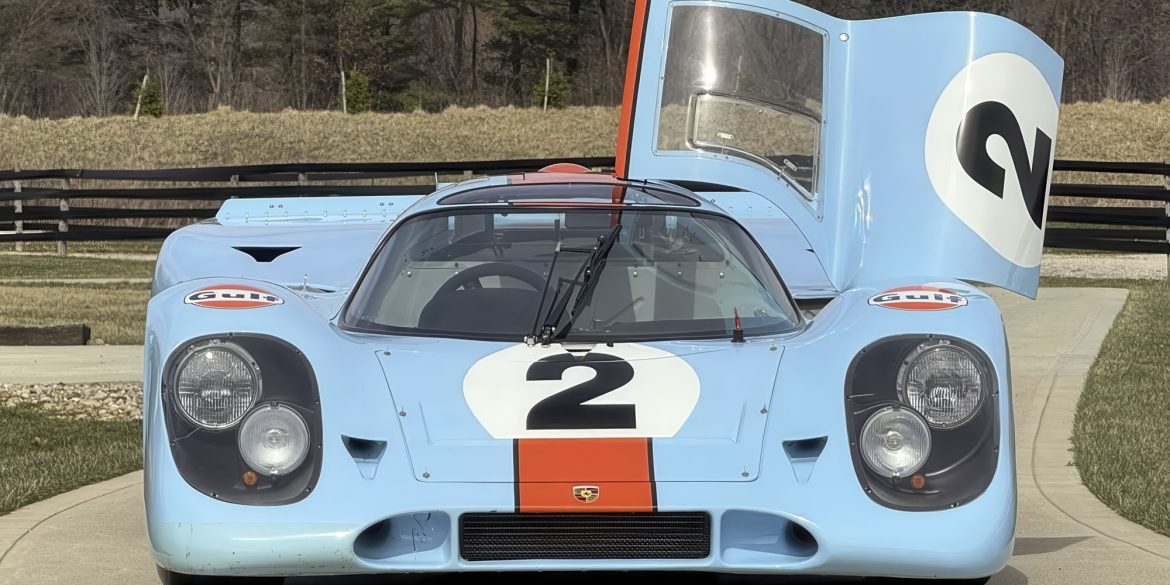
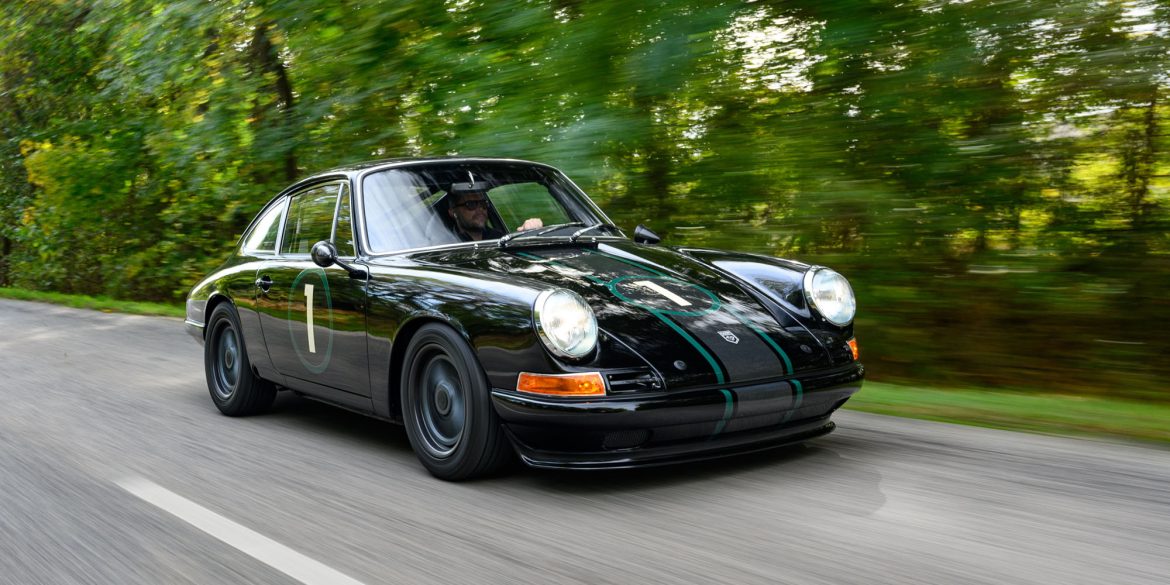
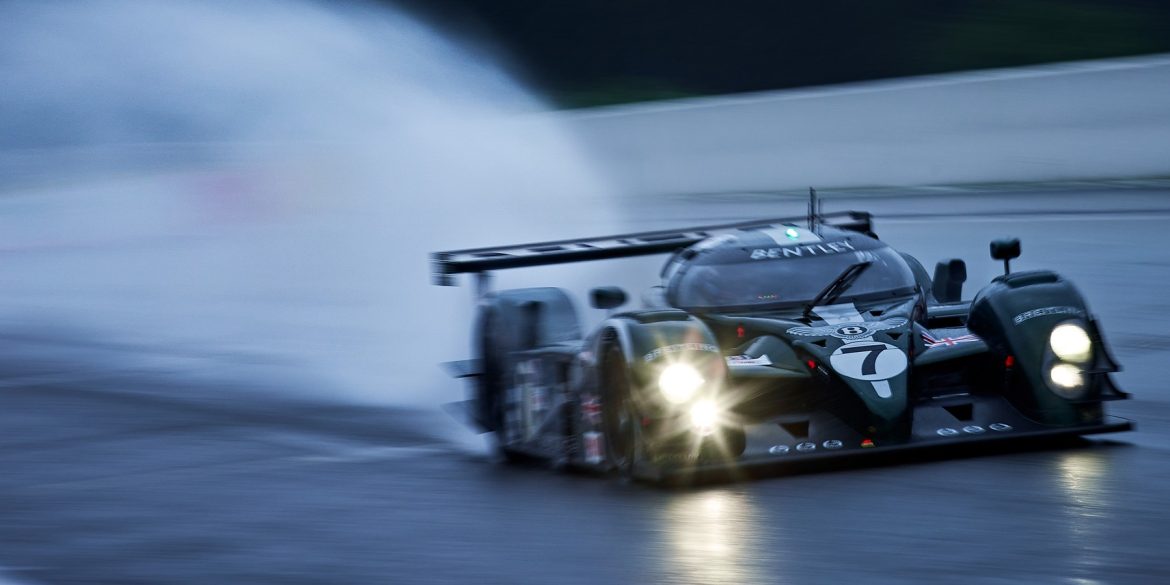
The Porsche 917 is the sports-racing car that Porsche built in 1969 to win Le Mans outright, which it did in 1970 and 1971, and which it then turned into the turbocharged 917/10 and 917/30 that won the Can-Am championships of 1972 and 1973 so completely that the series rewrote its rules to stop them. It was Ferdinand Piëch's project, Hans Mezger's engine, John Wyer's and Roger Penske's race teams, and the car in which Jo Siffert, Pedro Rodríguez, Vic Elford, Brian Redman, Richard Attwood, Hans Herrmann, Derek Bell, Helmut Marko, Gijs van Lennep, Mark Donohue and George Follmer did the best work of their careers. Around sixty-five were built in all its forms, from the original long-tailed coupé of 1969 to the 1,100-horsepower 917/30 of 1973 and the Kremer 917 that ran Le Mans in 1981.
Three numbers explain its reputation. The 4.5-, 4.9- and 5-litre air-cooled flat-twelve made 520 to 630 horsepower in a car that weighed 800 kilograms, which gave it 240 mph on the Mulsanne straight; the 917K of Marko and van Lennep covered 5,335 kilometres at Le Mans in 1971, a distance nobody beat until 2010; and the 917/30's twin-turbo 5.4-litre engine gave 1,100 horsepower in race trim and about 1,500 for qualifying, still the most of any road-racing car. It is also the car of Steve McQueen's Le Mans, of the Gulf blue and orange and the Martini stripes and the Pink Pig, and the one that made Porsche a builder of the fastest racing cars in the world rather than the best small ones. The archive's 917 stories run from the 1969 season to the Rennsport Reunions where the survivors still run, and this page puts them in order.
Harold Pace's The Le Mans Breakthrough tells the beginning properly. Porsche in the 1960s was the best builder of two-litre racing cars in the world, class winner everywhere and overall winner nowhere that mattered; the 906, 910, 907 and 908 had come within sight of Le Mans wins without taking one. In 1968 the CSI, trying to slow the seven-litre Fords, limited prototypes to three litres, and Porsche built the 908 for that; but the same rules allowed five-litre "production" sports cars in Group 4 if fifty had been built, and for 1969 the number was cut to twenty-five. Ferdinand Piëch, Ferry Porsche's nephew and from 1968 the head of the racing department after the sidelining of Huschke von Hanstein, read that as an invitation: build twenty-five five-litre cars at once, at a cost nobody at Porsche wanted to count, and go for the overall win.
The car was designed and built between July 1968 and March 1969. Hans Mezger drew the engine, the Type 912, a 4.5-litre air-cooled flat-twelve with two overhead camshafts per bank, a central power take-off from the middle of the crankshaft to keep the long crank from twisting, and a horizontal cooling fan on top, 520 horsepower at first. Helmut Flegl and Peter Falk's chassis was a spaceframe of aluminium tubing weighing 42 kilograms, pressurised with gas so that a drop in pressure would show a cracked tube; the body was fibreglass, the whole car weighed 800 kilograms, and the driver sat so far forward that his feet were ahead of the front axle line, with the gear lever on the right. The 917 was shown at the Geneva Salon on 12 March 1969 with a price of 140,000 Deutschmarks, and on 20 April the CSI's inspectors arrived at Zuffenhausen to find twenty-five cars lined up in the yard, some of them assembled days before from parts and pushed into line. Homologation was granted the next day. Robert Newman's portraits of Piëch and Mezger are the two men.
The first 917 was a frightening car. Its long tail, designed for speed on the Mulsanne, generated lift at the rear, and the aerodynamics that had worked on the 908 did not scale; at 200 mph the car wandered, and the works drivers, who had the 908 to race, avoided it. Richard Attwood's own account, A Baptism by Fire, begins with the admission that the first time he drove a 917 was in qualifying for Le Mans 1969, that nobody had wanted to, and that Vic Elford had nominated him without telling him. The car's first race was the Spa 1000 km in May, where Gerhard Mitter and Udo Schütz lasted half a lap; it ran at the Nürburgring with hired drivers; and at Le Mans in June three started. John Woolfe, a British privateer in his own car, crashed and was killed on the first lap at Maison Blanche, a death that hastened the end of the Le Mans start. Elford and Attwood led for most of the night and into Sunday morning, more than fifty miles clear, until the gearbox bellhousing cracked after twenty-one hours; Stommelen and Ahrens had gone earlier. The race went to the Gulf GT40 by a hundred metres from Herrmann's 908.
Two things changed the car's fortunes that summer. Siffert and Kurt Ahrens won the Österreichring 1000 km in August, the 917's first victory, in a car entered under the name of Freiherr von Wendt. And Porsche, unable to afford another season of running its own team, handed the works programme for 1970 to John Wyer's JW Automotive, the Gulf team that had just beaten it at Le Mans, and sold cars to Porsche Salzburg, the Austrian importer owned by Piëch's mother Louise, and to the Martini team. Wyer's condition was a test at Zeltweg in October.
Every World Championship win, both Le Mans, the Can-Am seasons and the records, year by year. Drivers link to every story on the site about them.
| Year | Race | Drivers | Car | The story |
|---|---|---|---|---|
| 1969 | Spa 1000 km, 11 May | Mitter / Schütz | 917 | The first race: half a lap |
| 1969 | Le Mans, 14–15 June | Elford / Attwood | 917 LH | Led for 21 hours, more than fifty miles clear, until the bellhousing cracked; John Woolfe killed on lap one |
| 1969 | Österreichring 1000 km, 10 August | Siffert / Ahrens | 917 | The first win |
| 1969 | Zeltweg test, October | Redman, Ahrens | 917 → 917K | Horsman's short tail: two seconds a lap |
| 1969 | Can-Am | Siffert | 917PA | Fourth in the championship against the McLarens |
| 1970 | Daytona 24 Hours | Rodríguez / Kinnunen (Redman) | 917K, Gulf | Gulf 1-2; Pedro and the 917 |
| 1970 | Brands Hatch 1000 km | Rodríguez / Kinnunen | 917K, Gulf | Rodríguez laps the field in the rain |
| 1970 | Monza 1000 km | Rodríguez / Kinnunen | 917K, Gulf | |
| 1970 | Spa 1000 km | Siffert / Redman | 917K, Gulf | |
| 1970 | Le Mans, 13–14 June | Herrmann / Attwood | 917K 4.5, Porsche Salzburg | Porsche's first overall win, by five laps from the Martini Hippie long-tail; Herrmann retires |
| 1970 | Watkins Glen 6 Hours | Rodríguez / Kinnunen | 917K, Gulf | |
| 1970 | Österreichring 1000 km | Siffert / Redman | 917K, Gulf | Porsche's first manufacturers' championship |
| 1971 | Buenos Aires 1000 km | Siffert / Bell | 917K, Gulf | |
| 1971 | Daytona 24 Hours | Rodríguez / Oliver | 917K, Gulf | Galanos's race profile |
| 1971 | Le Mans test, April | Oliver | 917LH | 386 km/h, 240 mph, on the Mulsanne |
| 1971 | Monza 1000 km | Rodríguez / Oliver | 917K, Gulf | |
| 1971 | Spa 1000 km | Rodríguez / Oliver | 917K, Gulf | Pole at 162 mph on public roads |
| 1971 | Le Mans, 12–13 June | Marko / van Lennep | 917K, Martini | 5,335 km, the record until 2010; Siffert's pole 3:13.9; the Pink Pig fifth until it crashed |
| 1971 | Österreichring 1000 km | Rodríguez / Attwood | 917K, Gulf | Second manufacturers' title; the last five-litre season |
| 1972 | Can-Am | Follmer, Donohue | 917/10K, Penske L&M | Follmer champion with five wins after Donohue's testing crash; Donohue wins Edmonton; McLaren leaves |
| 1973 | Can-Am | Donohue; Follmer, Kemp | 917/30 and 917/10, Penske Sunoco | Donohue wins six of eight and the title; 917s win every race; the fuel rule follows |
| 1975 | Talladega, 9 August | Donohue | 917/30 | 221.12 mph, the closed-course record for eleven years |
| 1981 | Le Mans | Wollek and co-drivers | 917K-81, Kremer | The last 917 to race; top ten until it broke |
The 917 also won the Interserie championships of 1971–73 with Leo Kinnunen and the Can-Am races listed by season; the 908/3 took the Targa Florio and Nürburgring rounds of 1970 and 1971 for Porsche where the 917 was the wrong car for the road.
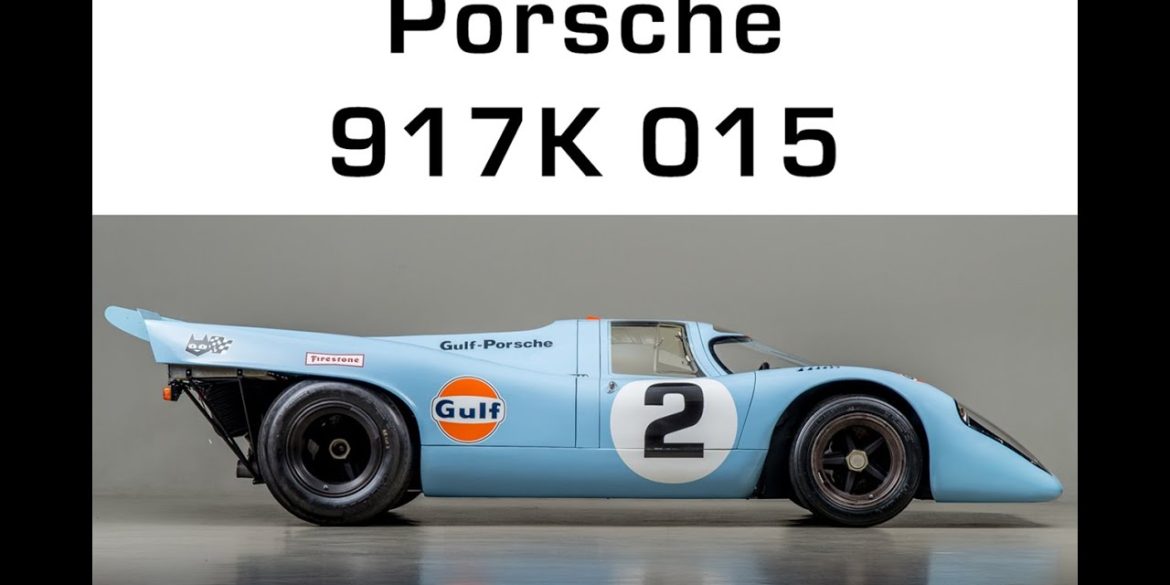
At the Österreichring in October 1969 the Wyer team, Porsche's engineers and Brian Redman and Ahrens tried the 917 on a flat, fast circuit and found that it would not go straight. Redman's account in the archive's interview and the story told in every history since has John Horsman, Wyer's engineer, noticing that the tail of the car was clean of dead gnats where the front was covered, which meant the air was not touching it, and building up a short, upswept tail from aluminium sheet and tape overnight. The next morning the car was two seconds a lap faster and the drivers wanted to drive it. Porsche's own engineers had been working toward the same answer; the short-tailed car, the 917 Kurzheck or 917K, became the standard 1970 car, and the long tail, reworked, came back only for Le Mans. Casey Annis's A Long Tail of Evolution follows the aerodynamic argument from the 1969 car to the 1971 Langheck; Norbert Singer, who joined the racing department in 1970 and ran the 917 programme's engineering through the Can-Am years, tells his side in the archive's interview.
With the 917K and a 4.9-litre engine of 600 horsepower, 1970 was the 917's year. The Gulf cars of Siffert and Redman and of Rodríguez and Leo Kinnunen, and the Salzburg cars of Elford and Ahrens and of Herrmann and Attwood, won seven of the ten championship races, with the 908/3 winning the Targa Florio and the Nürburgring where the big car was wrong for the road, and Ferrari's 512 S, built to the same loophole, taking only Sebring. Rodríguez and Kinnunen won the Daytona 24 Hours in January, the race Pete Lyons remembers in Pedro and the 917 and Louis Galanos profiles at full length in 1970 24 Hours of Daytona; Rodríguez won the Brands Hatch 1000 km in rain so heavy that he lapped the field, after a brush with the officials over a yellow flag on the way; Rodríguez and Kinnunen won Monza and Watkins Glen, Siffert and Redman Spa and the Österreichring. Mario Andretti's Ferrari beat the 917s at Sebring in the race the archive calls the greatest endurance race of all.
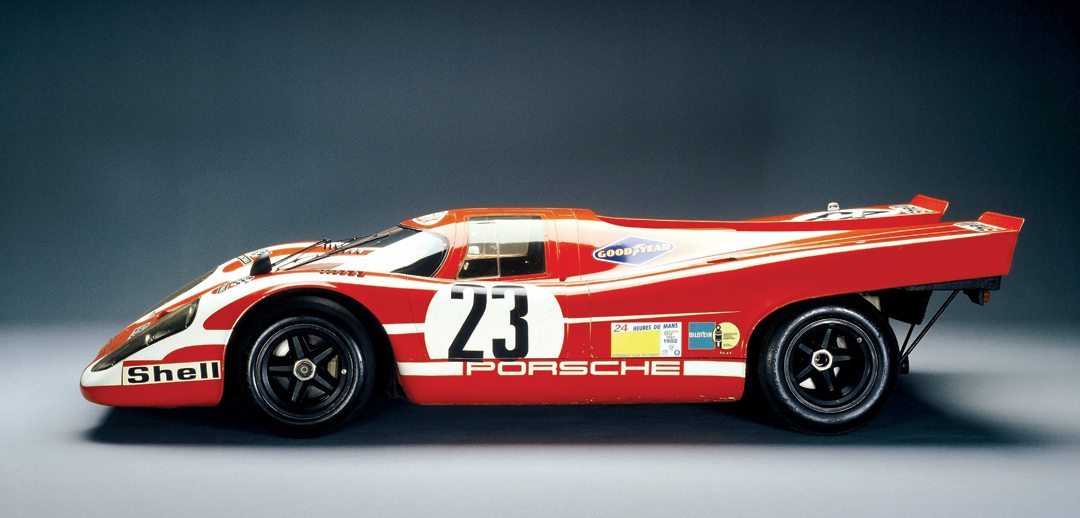
Le Mans, in June, rained for most of the night. Seven 917s started, several of them long-tails; the Gulf cars broke, Elford's Salzburg Langheck broke, and the 4.5-litre Salzburg 917K of Hans Herrmann and Richard Attwood, number 23, red and white, the slowest 917 in the field and chosen for that reason, won by five laps from the Martini long-tail of Gérard Larrousse and Willi Kauhsen, the psychedelic "Hippie" car, with a 908 third. It was Porsche's first overall win at the twentieth attempt; Herrmann retired from racing the next day, as he had promised his wife. Casey Annis's The 1970 Le Mans Race carries it; Steve McQueen's cameras, on the Gulf 917K that was running as a camera car, carried the rest of the world. Porsche won the manufacturers' championship, its first, and the 917 was the fastest racing car on earth.
The 1971 car had the five-litre engine, 630 horsepower, a fin on each side of the tail for stability, and, for Le Mans, the definitive Langheck, which Jackie Oliver took to 386 km/h, 240 mph, on the Mulsanne straight in the April test, the fastest a car had gone there. The season went the way of 1970: Rodríguez and Oliver won Daytona, Monza and Spa, where Rodríguez's pole lap averaged 162 mph on public roads, Siffert and Bell won Buenos Aires, Rodríguez and Attwood the Österreichring; Alfa Romeo's 33/3 took Brands Hatch, the Targa and Watkins Glen and the 908/3 the Nürburgring, and Porsche won the championship again. The archive has Galanos's 1971 Daytona and 1971 Sebring profiles, Redman's My First Three at Spa and the magazine's Spa and Fast 917s.
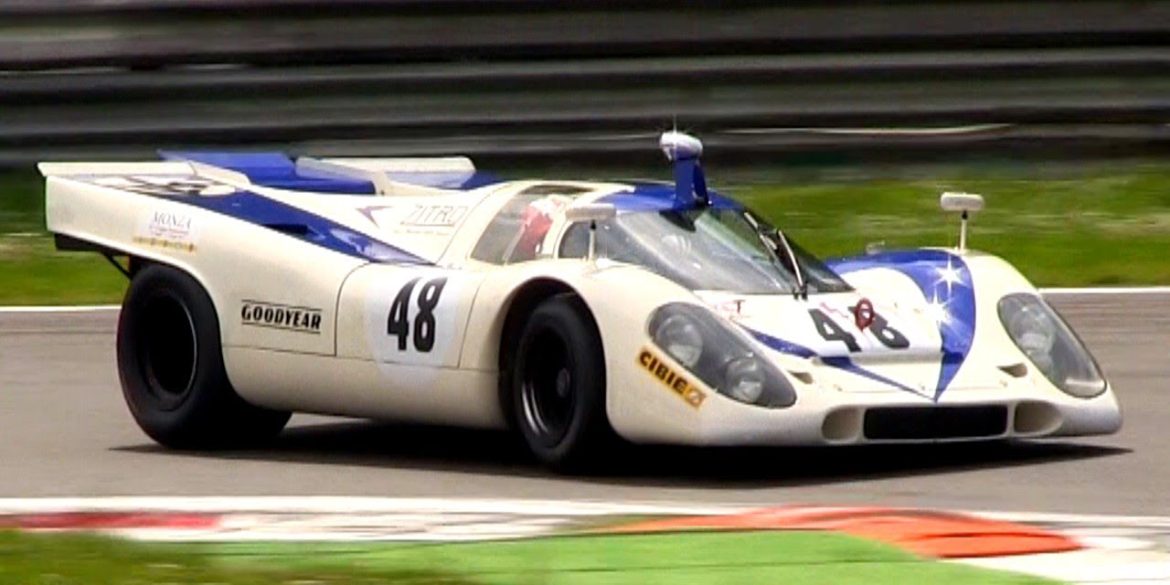
Le Mans 1971 had the most 917s ever entered: the Gulf cars, the Martini cars, and the 917/20, the wide, short experimental car painted as a butcher's chart of pork cuts by Anatole Lapine's studio, the Pink Pig, which Kauhsen and Reinhold Joest ran fifth before it crashed. Siffert put the Langheck on pole at 3 minutes 13.9 seconds, 250 km/h for the lap. The long-tails and the Gulf cars broke, and the Martini 917K of Helmut Marko and Gijs van Lennep, with a magnesium frame that made it the lightest 917 built, won from the Gulf car of Attwood and Herbert Müller, covering 5,335 kilometres at 222 km/h, 138 mph, a distance that stood as the Le Mans record until Audi's R15 in 2010. It was the last race for the five-litre cars: the CSI had already ruled them out for 1972, and Jo Siffert was killed at Brands Hatch in October and Pedro Rodríguez at the Norisring in July, the 917's two greatest drivers gone within four months of each other. Robert Newman's Jo Siffert and Lyons's Pedro and the 917 are their portraits.
Porsche had tried the Can-Am in 1969 with the 917PA, an open spyder that Siffert drove to fourth in the championship against the McLarens, and Siffert ran a 917/10 in 1971. Banned from Europe for 1972, the 917 went to America properly: Roger Penske's team, Mark Donohue as driver and development engineer, L&M as sponsor, and the 917/10K, the Kompressor, with two turbochargers on a five-litre flat-twelve giving around 850 horsepower on a car McLaren's 8.1-litre Chevrolets could not touch once the throttle lag had been tamed. Donohue broke a leg in a testing crash at Road Atlanta and George Follmer, drafted in, won five races and the 1972 championship; Donohue came back to win at Edmonton; Pete Lyons, who was in the paddock, describes trying to work out what was under the engine cover in The Komplizierte Kompressoren. McLaren withdrew from the series at the end of the year.
For 1973 Porsche and Penske built the 917/30: a longer wheelbase, a long-tailed body shaped in the Weissach wind tunnel, a 5.4-litre twin-turbo engine of 1,100 horsepower in race trim and 1,500 or more with the boost turned up, and a fuel tank of 400 litres to feed it. Donohue won six of the eight races and the championship by a street; Follmer and Charlie Kemp won the other two in 917/10s, so a 917 won every Can-Am race of 1973. The archive's long account is The Penske Panzer, with Dennis David's 917/30 and 917/10 profiles, Mark's Moment and the Donohue profile; the Can-Am era page has the season by season. For 1974 the SCCA imposed a fuel-consumption limit that was aimed at one car, Penske withdrew, and the Can-Am itself was dead within the year. The 917/30 had one more run: in August 1975 Donohue took it to Talladega and set a closed-course record of 221.12 mph that stood for eleven years, a week before he was killed in practice for the Austrian Grand Prix. In Europe the 917/10s ran on in the Interserie, Leo Kinnunen winning three championships in a row, and the last 917 to race was the Kremer brothers' 917K-81, built from spares for Le Mans in 1981, where Bob Wollek ran it in the top ten before it broke.
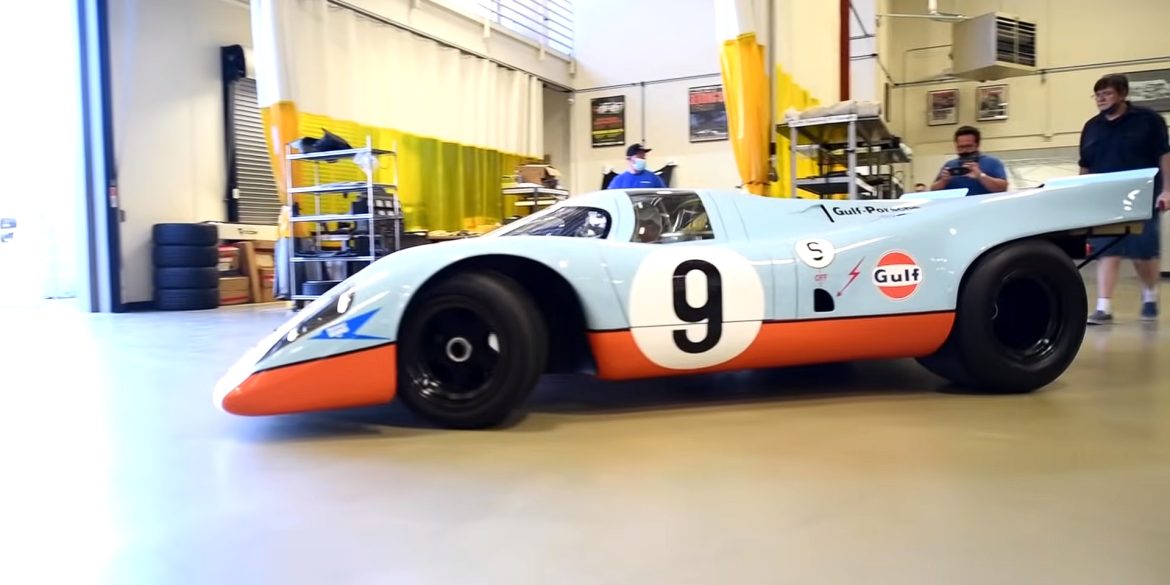
The family is simpler than its numbers suggest. The 917 of 1969 was the long-tailed coupé of the homologation run, 4.5 litres, the car that nobody wanted to drive. The 917K, Kurzheck, was the short-tailed car from the Zeltweg test onward, the standard racer of 1970 and 1971 with 4.5-, 4.9- and 5-litre engines, the winner of both Le Mans and most of the championship races; the 1971 cars had the twin tail fins. The 917LH, Langheck, was the long-tail rebuilt for Le Mans in 1970 and again, with the suspension of the K and the fins, in 1971, the fastest 917 in a straight line and never a winner. The 917PA was the open spyder built for the Can-Am of 1969. The 917/20 was the one-off wide car of 1971, the Pink Pig, an attempt to combine the K's stability with the LH's drag, memorable for its paint. The 917/10 was the Can-Am spyder of 1971 and 1972, normally aspirated and then turbocharged as the 917/10K, the car of Follmer's championship; and the 917/30 was the 1973 car, longer, more powerful than anything before or since, Donohue's. Around sixty-five chassis were built across the range, and the survivors are the most valuable Porsches there are: the Gulf 917K that was McQueen's camera car and the 1970 Le Mans pacemaker, chassis 024, sold for $14 million at Pebble Beach in 2017, and the 917/30s and the Le Mans winners are in the Porsche Museum or private collections that lend them to Goodwood and Rennsport. The nine cars and chassis below each link to every story on the site about them; the feed after them carries the single-car stories.
Nine cars and variants; each links to every story on the site about it.
Single-car and chassis stories that carry the 917: the Gulf and Salzburg cars, the long tails, the Can-Am spyders and the survivors.
The 917's drivers were the best sports car drivers of their day, and the archive has most of them in their own words. Jo Siffert, the Swiss who gave the car its first win and its last pole at Le Mans; Pedro Rodríguez, who was unbeatable in it in the wet; Vic Elford, who led Le Mans in it twice and never won there; Richard Attwood and Hans Herrmann, who won the race that mattered; Brian Redman, Siffert's partner in the Gulf car, who also has his Porsches in the archive; Kurt Ahrens, Leo Kinnunen, Jackie Oliver, Derek Bell, whose 917K the archive calls a greatest racecar, Gérard Larrousse, Willi Kauhsen, Reinhold Joest, Helmut Marko and Gijs van Lennep; and in America Mark Donohue, George Follmer, Charlie Kemp and the Can-Am legends interviewed by Pete Lyons. Behind them: Piëch, Mezger, Flegl, Falk and Singer at Weissach, John Wyer, John Horsman and David Yorke at Gulf, Roger Penske and Don Cox at Penske, and Huschke von Hanstein, whose removal made the car possible. The feed below gathers the profiles and interviews that carry the 917's tag.
The drivers, engineers and team owners of the 917 years, in profiles and interviews.
The 917 is the most famous racing car Porsche built partly because of a film that nearly failed. Steve McQueen came to Sebring in March 1970 and finished second in a 908 with Peter Revson, then spent the summer at Le Mans making Le Mans, with the Gulf 917K he had bought as his car and a 908 fitted with cameras running in the actual race. The production went through directors and money, the film did poorly in 1971 and has been watched ever since; the archive's McQueen and the 917, Steve McQueen's Le Mans and the portrait of the racer Harvey Mushman tell it. The liveries did the rest: Gulf's powder blue and orange on the Wyer cars, the Martini silver and stripes and the Hippie's purple and green on the Salzburg long-tail, the Pink Pig, the white, red and blue of Penske's L&M and Sunoco cars. No racing car has sold more models, and when Porsche brought the survivors together for the 917's fortieth birthday at Goodwood and the Rennsport Reunions, the archive was there: Porsche 917 Turns 40, the Goodwood 917 party and the Rennsport Reunion galleries are below.
The 917 at Goodwood, Rennsport Reunion, Le Mans and the concours lawns.
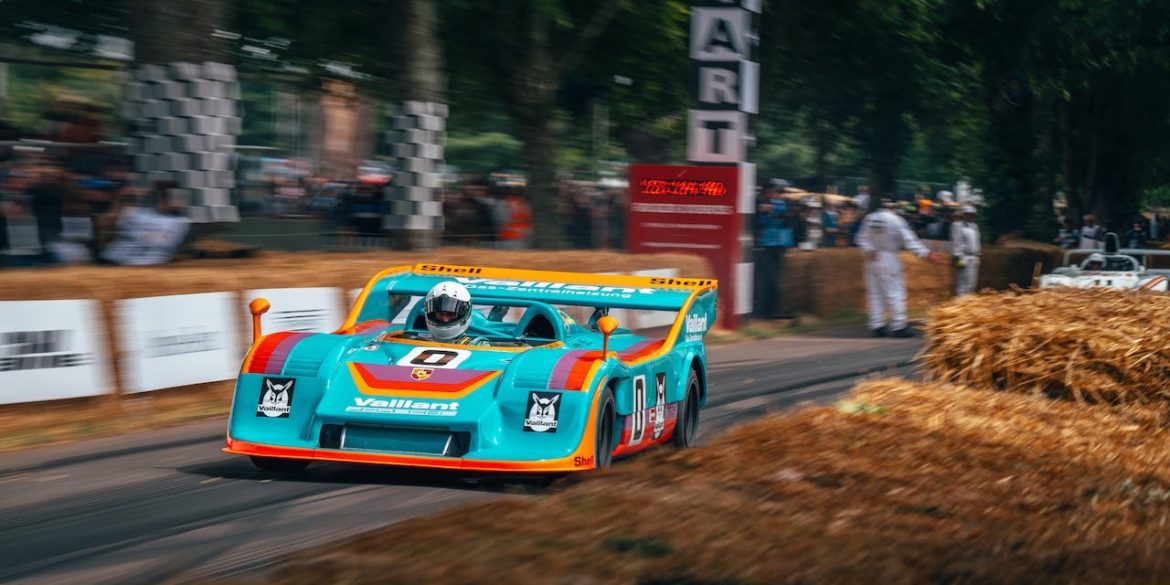
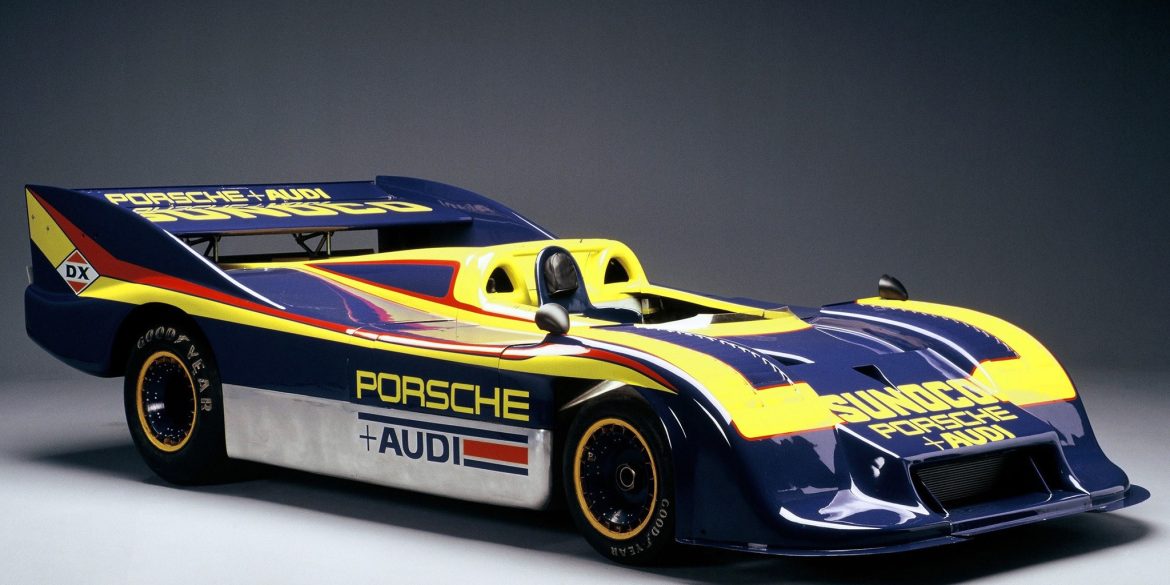
Built: about 65 chassis of all types, 1969–73, plus the Kremer 917K-81 of 1981. Engines: Type 912 flat-twelve, 4.5 litres and 520 hp (1969), 4.9 litres and 600 hp (1970), 5.0 litres and 630 hp (1971); 917/10K 5.0-litre twin-turbo, about 850 hp (1972); 917/30 5.4-litre twin-turbo, 1,100 hp in the race and up to 1,500 for qualifying (1973). Weight: 800 kg for the coupé; the frame 42 kg. Top speed: 386 km/h (240 mph), Jackie Oliver, 917LH, Mulsanne, April 1971; 362 km/h in the race. Le Mans: wins in 1970 (Herrmann/Attwood, Salzburg 917K) and 1971 (Marko/van Lennep, Martini 917K); the 1971 distance of 5,335.313 km, 397 laps at 222.3 km/h, the record until 2010; Siffert's 1971 pole, 3:13.9. World Championship: 14 wins from the 21 races of 1970 and 1971 and both manufacturers' titles; first win, Österreichring, 10 August 1969. Can-Am: Follmer champion in 1972 (917/10K, six wins for the type), Donohue in 1973 (917/30, six wins; 917s won all eight races). Closed-course record: Donohue, 917/30, Talladega, 9 August 1975, 221.120 mph. Interserie: Kinnunen champion 1971, 1972, 1973. Price new: 140,000 Deutschmarks in 1969. Price now: $14,080,000 for chassis 024 at Gooding's Pebble Beach sale, August 2017, the most paid for a Porsche at auction. The film: Le Mans, 1971, Gulf 917K chassis 024 as McQueen's car. The name: Porsche skipped from 909 and 910 to 917 to clear the 911–916 road-car numbers, so the story goes; the 917's successors in the works' numbering were the 936, 956 and 962.
Short answers, with the long ones above.
Porsche's five-litre sports-racing car of 1969 to 1973, built to a rule that allowed "production" sports cars if twenty-five were made. It gave Porsche its first two Le Mans wins, in 1970 and 1971, and as the turbocharged 917/10 and 917/30 won the Can-Am championships of 1972 and 1973.
520 from the 4.5-litre flat-twelve of 1969, 600 from the 4.9 of 1970 and 630 from the 5-litre of 1971. The turbocharged Can-Am cars made about 850 (917/10K, 1972) and 1,100 in race trim, up to 1,500 in qualifying (917/30, 1973).
240 mph (386 km/h) on the Mulsanne straight in the long-tailed 917LH in 1971, the fastest any car had gone at Le Mans to that date. The 917/30 set a closed-course record of 221 mph at Talladega in 1975.
It was not banned by name. The CSI ended the five-litre sports car class after 1971, which retired the 917 in Europe; the SCCA then imposed a fuel-consumption limit on the Can-Am for 1974 that made the turbocharged 917/30 uncompetitive, and Porsche and Penske withdrew.
Jo Siffert, Pedro Rodríguez, Brian Redman, Leo Kinnunen, Jackie Oliver and Derek Bell for Gulf; Vic Elford, Kurt Ahrens, Hans Herrmann and Richard Attwood for Porsche Salzburg; Gérard Larrousse, Helmut Marko and Gijs van Lennep for Martini; Mark Donohue and George Follmer for Penske in the Can-Am.
About sixty-five of all types: the twenty-five homologation cars of 1969 and the further coupés, the 917PA and 917/20 one-offs, the 917/10s and the 917/30s. Most survive, in the Porsche Museum and in private collections.
The Gulf 917K that was Steve McQueen's camera car in Le Mans, chassis 024, sold for $14.08 million at Pebble Beach in 2017, the record for a Porsche at auction. Other 917s have changed hands privately for sums reported to be higher.
The K (Kurzheck, short tail) had the upswept short tail developed at the Zeltweg test of October 1969, which made the car stable and won both Le Mans; the LH (Langheck, long tail) kept the low-drag long body for the Mulsanne straight, was faster in a straight line and never won a race.
The whole archive on one thread, newest first.